Friday 12th of June 2026

Nairobi, Kenya

Covid Or Not, The Show Must Go On: New York Fashion Week Kicks Off

Fall/Winter 2022 shows get underway at New York Fashion week with Proenza Schouler and Christian Cowan showing their lively collections.

Experimentation, play, and glitter: a coronavirus-impacted New York Fashion Week got underway on Friday with Fall/Winter 2022 shows by Proenza Schouler and Christian Cowan.

Experimentation’ At New York Fashion Week

In its collection, presented in an art gallery in Manhattan’s trendy East Village, New York brand Proenza Schouler played with shape, contrasting fitted waists with loose or slightly rounded skirts.

Designer Lazaro Hernandez said the idea was to exaggerate and juxtapose different forms to respond to “this whole body obsession these days with social media and everyone showing the body.”

https://www.instagram.com/tv/CZ5bKKIlLe3/?utm_source=ig_web_copy_link

Model Bella Hadid wore an outfit featuring buttoned sleeves, accentuated shoulders, and a black velvet hooded top – giving off a Catwoman vibe.

“Experimentation and play are key, perhaps now more than ever,” Proenza said of its collection.

Christian Cowan Showcases ‘glamour’ At New York Fashion Week

Christian Cowan – who has dressed Lady Gaga and rappers Cardi B and Lil Nas X – presented his collection in the observatory atop the One World Trade Center skyscraper that replaced the Twin Towers felled on 9/11.

The show had the atmosphere of a nightclub, highlighting the British designer’s taste for glitter and glamour.

Ahead of the runway, the label teased fans with what might be in store by posting an image of the “Freedom Tower” all in pink on its Instagram page.

Tom Ford Cancels New York Fashion Week Show

Despite pandemic restrictions and the Omicron variant upsetting preparations, several other brands have opted for in-person shows, including Michael Kors, Altuzarra, Tory Burch, Brandon Maxwell, and Telfar.

A notable absence was Tom Ford, chair of the Council of Fashion Designers of America (CFDA) that organizes the event.

He was due to close the week next Wednesday but canceled at the end of January due to a surge of COVID-19 cases among his team.

“We have tried everything possible to avoid canceling our New York show but ultimately are faced with the sad fact that we will simply not have a completed collection in time,” he said.

Opportunity For Emerging Talents To Showcase At New York Fashion Week

For several years now, New York has had to deal with big names deciding to skip the event in favor of displaying their latest collections elsewhere.

Some designers are also choosing to eschew the classic runway calendar, with growing criticism that the frantic pace of fashion is out of step with sustainability.

The absence of top creators like Christopher John Rogers – the CFDA’s women’s designer of the year 2021 – and Kerby Jean-Raymond’s Pyer Moss brand, also provided an opportunity for emerging talents to grab the headlines.

Or at least that is the hope of labels such as Melke and Dauphinette, which promote sustainable and ethical fashion.

“It is really rewarding realizing that people can see the work that I’ve been doing and they think that it deserves a place amongst a bunch of other very successful brands,” 26-year-old Emma Gage, who founded Melke during the pandemic, told AFP.

“It kind of really solidifies you as someone that people know is going to be around for a long time,” she said inside her small studio in Bushwick, Brooklyn.

Content Courtesy of AFP, The South African & NFH 

The Top Emerging Black Designers to Know Now

There are countless Black designers leading the current cultural conversations surrounding fashion and in the process, they are generating the culture itself. Their genius trickles down to the mainstream (as has historically been the case for designers including Ann Lowe, Willi Smith, Stephen Burrows, and many more) and becomes the industry standard.

Telfar Clemens’s label Telfar has redefined the “It” bag and created an “It” label in the process; Theophilio bakes community work and activism into its design ethos and brand codes; and Christopher John Rogers brings his Southern roots to a new kind of red carpet couture (inspired, always, by his mother’s church looks).

In addition to these established labels, there is a whole new guard of designers making fashion and setting trends through their own, idiosyncratic visions. Many of them have shown at the various fashion weeks, while others are still indie brands garnering cult followings in their own right. All are worth your attention.

1. Connor McKnight

Connor McKnight showed his second collection ever at New York Fashion Week in September 2021 after having launched the brand in the trying year that was 2020. Despite his label still being in its fledgling stages, the offerings which include sleek knits, tailored garments, and one very sexy leather jacket demonstrate the Brooklyn-based designer’s prowess and far-reaching vision.

https://www.instagram.com/p/CItjcBfAuHg/?utm_source=ig_web_copy_link

2. Khiry

Khiry jewelry designer Jameel Mohammed is not yet 30 years old and already, he’s created pieces worn by the likes of Tessa Thompson, Serena Williams, Megan Thee Stallion, and Michelle Obama, who donned Khiry’s Isha Rose Quartz Hoops with a matching ring during her Becoming book tour. Mohammed, a 2021 finalist for the CFDA/Vogue Fashion Fund Award, is a Chicago native now based in New York City. His finely wrought gold and silver rings, collars, and pearl-studded earrings pay homage to the African diaspora.

3. Tia Adeola

Arguably one of the buzziest brands to hit New York Fashion Week this year, Tia Adeola draws from designer Teniola “Tia” Adeola’s background in art history and her deep interest in the Renaissance period. Along with her signature proclivity for feminine ruffles, Adeola’s creations also tap into of-the-moment, updated trends like corsetry and screen-printed graphics. Adeola, who was born in Nigeria and raised in London, officially kicked off NYFW on February 10th with the debut of her fall 2022 collection, which drew from her thoughts, anxieties, and musings during the End SARS movement in Nigeria.

4. Roop

Manchester-based designer Natasha Fernandes-Anjo is taking sustainability into her own hands. With her accessory label Roop, Fernandes-Anjo recreates cast-off textiles and deadstock fabrics into sweet handbags and scrunchies all at an accessible price point.

5. Kenneth Nicholson

You’ve never seen menswear like Kenneth Nicholson’s. The Los Angeles-based designer’s clothes always draw upon a historical reference of some kind you’ll often hear him referencing Biblical stories or the 1800s when discussing his brand. The Houston native was awarded a scholarship to San Francisco’s Academy of Art before serving in the U.S. Navy. Afterward, he moved to Los Angeles to start his eponymous brand. “I don’t think I’m redefining [masculinity],” Nicholson told the L.A. Times in 2021. “I’m recalibrating what was already there.”

6. Head of State

Taofeek Abijako’s first exposure to the world of fashion came from his father, who was a designer in Abijako’s hometown of Lagos, Nigeria. In the elder Abijako’s studio, people from all walks of life came to purchase bespoke clothing. Once Taofeek’s family moved to the United States in 2010, he taught himself to sew and, six years later, launched Head of State, which has become a favorite among the fashion set.

7. Labrum London

Designer Foday Dumbuya has always aimed to bridge the gap between Great Britain and its West African diasporic communities. Through his label, Labrum London, the East London-based artist (who was raised between Sierra Leone, Cyprus, and England,) marries traditional British tailoring with the patterns and fabrics of West African attire.

8. Bernard James

Although the jewelry designer Bernard James first launched his label in 2010 with the intent of filling the gaps he saw in the men’s jewelry market, he has since expanded Bernard James into a unisex brand one that’s become a top favorite, especially among the editors here at W. We’re huge fans of the chain-link bangles and bracelets (shown above in the form of a necklace), and, of course, the show-stopping mirror gem earrings.

9. Who Decides War

Everard Best (who goes by the moniker Ev Bravado) and Téla D’Amore cite Ralph Lauren as one of their main sources of inspiration. Their label, Who Decides War, however, is anything but your stock Americana. Although the Who Decides War runway show for spring 2022 offered lots of denim, Western-Esque vests, and deconstructed sweaters knitted with United States flag emblems, the designers completely remixed what the standard approach to American fashion has historically looked like.

Content Courtesy of W Magazine & NFH 


Common Threads Contemporary African Fashion

Meet the new generation of African creatives taking the continent’s textile culture into the future. Helen Jennings reports.

 “Cloth is to Africans what monuments are to Westerners… Their capacity and application to commemorate events, issues, persons, and objectives outside of themselves are so immense.” El Anatsui, 2005

These wise words from Ghana’s most celebrated fine artist sum up Africa’s gloriously storied textile heritage, which not only speaks to generations of artisanal mastery but also to the significant cultural communication performed with a cloth across the continent. And over recent decades, African fashion designers have elevated these treasures still further through their designs. Early pioneers include Shade Thomas-Fahm who revolutionized Nigerian fashion in the 1960s by using handwoven aso-oke. In the 1980s, Malian Chris

Seydou was the first designer to consider bògòlanfini mud cloth. And in 1990s Ghana, Kofi Ansah modernized ceremonial kente cloth.

Today many heritage fabrics face being lost as older generations of makers pass on. This does not mean, however, as commonly believed, that African fabric and weaving traditions belong to the past, unchanging relics of a by-gone era. In fact, they remain ever-evolving tools for creating employment, empowerment, and innovation.

For example, the Ethical Fashion Initiative, a program of the International Trade Centre, works with co-ops in several countries to finance their valuable skills, whether silk screening, sewing, dying, or weaving, and develop ethical supply chains.

But it is the current generation of sought-after African designers and entrepreneurs who are the ones using new thinking to take ancient textiles into the future. In Nigeria, Emmanuel Okoro of Emmy Kasbit focuses on re-imagining akwete, a loom-woven cloth made by Igbo women in eastern Nigeria. “There are over 100 traditional motifs and it’s said that each one came to its maker from the spirits in their dreams,” says Okoro. “For me, it comes down to preserving the culture of our forefathers in a modern way. Storytelling is at the forefront of putting African fashion on the global stage, so we cannot tell our stories with western fabrics.”

Each season, the Lagos-based designer develops his own patterns based on Nsibidi hieroglyphics and then delivers his yarns and designs to his cherished weavers. His boldly tailored men’s and women’s looks for SS21 speak to ideas of unity and strength and were debuted at Vogue Italia Talents during Milan Fashion Week. “I’m interested in community upliftment and boosting a craft that had become forgotten,” he adds. “I want to see these women win, and I’m letting the world know that this is what African luxury looks like.”

Fellow Nigerian Nkwo Onwuka’s approach is informed by her interest in ethical fashion. The Abuja-based designer has developed dakala, a handmade cloth made from denim offcuts. “Nigeria has a lot of markets trading in second-hand garments and a strong culture of clothing being made by small-scale manufacturers and dressmakers, which results in a huge amount

of textile waste,” Onwuka explains. “I started to see how I could prevent dead stock and old clothes from ending up in landfills or being incinerated by using them as a raw material. Through experimentation, I developed a technique of stripping, braiding, and sewing together textile waste to form a new fabric that has the look and feel of our traditional woven fabrics.”

Dakala was shortlisted for the Design Museum’s Beazley Designs of the Year 2020 award and her studio continues to develop the technique with the next step being a loom-spun version. Her current collection, entitled No Planet B, features ponchos and apron corsets made from multiple strings of dakala. “For me, success is making sure that I can take care of everyone in my small circle with the hope that this care ripples

out to form a larger circle,” she says. “I want to make sure that each person feels valued. The community has to be the fuel that fires what we do.”

Johannesburg-based designer Thebe Magugu is embracing the latest technology to create experiential fabrications from ancient inspirations. The 2019 LVMH Award winner is passionate about investing his directional yet elegant womenswear with cultural value.

For example, his clothing labels are fitted with microchips. “If any smartphone taps them, it opens a webpage that showcases the story of the collection as well as photographs of everyone involved in the making of the garment, from the fabric weavers in Cape Town to the tailors in Joburg. I love the full transparency and the idea of bringing culture and technology together,” he says.

For his AW21 collection, entitled Alchemy, Magugu immersed himself in African spirituality, which led to a collaboration with traditional healer Noentla Khumalo for his headline print featuring the tools of her trade – goat knuckles, a police whistle, pencil sharpener, red dice, and shells. “Noentla, who uses various objects as her medium to communicate with the ancestors, threw these objects onto a straw mat, which were then photographed, abstracted, and printed onto wool suiting. Before she threw the bones, Noentla asked ‘What now?’ and what lays on this garment is the answer.”

The rising star, who’s currently shortlisted for The Woolmark 2021 Prize, also worked with South African eco-printmaker Larissa Don who used cannabis and imphepho (the plant healers burn during their ceremonies) to transfer botanical prints onto merino wool. “It is about the idea of modernity through the indigenous,” he adds. “Wool is one of the most sophisticated fabrics available – from its odour-absorbing properties and natural heat-management to its inherent sense of luxury, which all speak to the unparalleled power of the natural world.”

While bright ideas in the high fashion space abound, there remain steep challenges facing more widely available fashion fabrics due to the lack of textile manufacturing facilities on the continent. The industry dwindled in the 1990s in the face of international competition including hugely popular

wax print fabrics from Europe. While infrastructure is surely improving today, there is still far to go. This is an area Kenyan fashion curator Sunny Dolat is addressing.

“As Africans, we have been lucky to be born into a wealth of textile culture. I believe we have a duty to grow and add to this heritage,” says Dolat, who is co-founder of The Nest Collective and creative business incubator, the HEVA Fund. “Many parts of Africa still have communities, albeit reduced, of spinners, weavers, and dyers who carry this cultural memory in their hands. The work I’m exploring now seeks to marry these sustainable practices with contemporary insights, ideas, and materials, which I believe could support many artisans across the continent.”

Due to Kenya’s colonial history, the country’s homegrown textile heritage is severely diminished compared to other parts of Africa. This fact is what originally stirred Dolat to take action. “All the textiles that we have are versions of textiles from other cultures. Maasai shuka blankets came from Scottish missionaries, kikoi is an update on an Omani wrapper, and kanga is based on the Portuguese lenço scarf. They all started off being made locally but, as with most things, much of it is now brought in from Asia. This got me thinking, what could a truly Kenyan textile look like?”

Dolat visited artisanal communities around the country to research organic dyes and fibers and then moved on to developing a new visual language with graphic designers Lulu

Kitolo and Monica Obaga. The result is Nanga (Swahili for anchor), a range of prints inspired by Kenya’s natural and urban landscapes, which have been produced on silk, chiffon, and cotton and are entering Nairobi’s downtown fabric stores this year. “We’re not going to announce them or give them to designers. Instead, we’re putting them in the mass market to see if they sell. That would be the true measure of success.”

He cites Green Nettle as a benchmark for the kind of new approach that could take African fashion innovation to the next level.

This Kenyan start-up won the H&M Foundation Global Change Award for its environmentally-friendly fabric made from nettles – a plant that thrives in even the most barren areas of the country. “My hope is that more designers

and companies begin to develop their own interventions into the textiles. Last year, the pandemic disrupted everyone’s access to textiles overnight. This taught us not to rely on imports and many found local alternatives instead. It would be amazing if that way of working can continue to be fostered and grow.”

Content Courtesy of TL Magazine & NFH 

African Development Bank’s Fashionomics Africa, Partners, Launch New Sustainable Fashion Competition With $6,000 in Cash Prizes

The African Development Bank Fashionomics Africa initiative’s second online competition is offering $6,000 total in cash prizes, mentoring, new branding packages, and other support for winning African designers of sustainable and circular fashion.

Fashionomics Africa, in collaboration with the United Nations Environment Programme, Parsons School of Design, strategic consulting and communications agency BPCM, and the Ellen MacArthur Foundation, invite interested African fashion brands to apply to the sustainable fashion online competition. Entrants must be pursuing environmentally friendly measures, sustainability, and circular economy actions to qualify. The designer or design team submitting the “best sustainable design” will win $3,000 along with other prizes. Two other competition finalists will take home $1,500 each, plus other support.

The competition celebrates African fashion brands that will change how we produce, buy, use and recycle fashion and that encourage a more sustainable shift in consumer practices.

“Sustainability is the present, not the distant or even the near future. It is where we are now, and it is vital that we open our eyes to what the fashion industry already has to offer. By embracing the industry’s existing resources, we are promoting circularity at the most fundamental level,” said Amel Hamza, Acting Director for Gender, Women and Civil Society at the African Development Bank.

“With the second edition of the Fashionomics Africa contest, the Bank aims to continue highlighting the ingenuity that African fashion designers consistently demonstrate through the strength of their culture and heritage,” she added.

The textile and fashion industry accounts for nearly 2% to 8% of global carbon emissions, the sector ranks as the world’s second-largest industrial polluter after the oil sector, according to the United Nations Environment Programme. However, this industry also provides important levels of employment, foreign exchange revenue, and products essential to human welfare.

The competition targets textile, apparel, and accessories entrepreneurs from Africa, aged 18 years or older, who have launched fashion businesses (up to a maximum of 50 employees), and whose sustainable designs have been produced within the last five years. Qualifying applicants will submit pictures of their products, detail their sustainable business model, and explain how their startup is environmentally friendly and innovative.

Examples of sustainability and circularity elements might include materials used, the design process, cleaner or greener production processes – including shipping methods or ways to reduce carbon footprint.

A five-person judging panel representing the African Development Bank and competition collaborators will announce the three finalists by 22 March 2022. The finalists’ entries will be posted on the Fashionomics Africa digital marketplace and mobile application for a public vote between 22 March 2022 and 7 April 2022. Polls close on 7 April at 23:59 GMT.

In addition to the cash prize, the winning fashion brand will receive a certificate and the opportunity to showcase its creation by taking part in online events and sharing insights on key sustainability challenges facing the industry. The winner will have access to a network of media insiders and industry experts and receive mentoring and networking opportunities from competition collaborators.

To learn more about the Fashionomics Africa online competition or to submit an entry, click here. Applications must be received by 1 March 2022 at 23:59 GMT.

Fashionomics Africa is an African Development Bank initiative increasing Africa’s participation in the global textile and fashion industry value chains.

Content Courtesy of Fashionomics Africa & NFH

South African Fashion Week Announces New Talent Search Finalists

South African Fashion Week has announced the six finalists of the 2022 New Talent Search. Competing in the country’s most prestigious fashion award for rising stars are:

• Thando Ntuli – MUNKUS • Nichole Smith – Ipikoko • Mikhile du Plessis – MeKay Designs • Calvin Lunga Cebekhulu – Czene.24 • Sanelisiwe Gcabashe – Gjenelo Couture • Mimangaliso Ndiko – Sixx6

Now in its 24th year, the winner will be announced on the 28th of April during the SAFW Spring Summer 22 Collections where the selected designers will feature their signature entries together with the debut capsule collection of the 2021 winner, Artho Eksteen.

The overall winner will receive R20 000.00 prize money towards developing their debut collection as well as a free runway show at SAFWSS 23 to launch this collection.

According to the SAFW director, Lucilla Booyzen, all the participating finalists are winners because the platform’s visibility to the media and fashion buyers ensures the national and international exposure that allows any fledgling career to gain the necessary entrepreneurial traction.

SAFW’s New Talent Search has consistently unearthed future talent and served as a launchpad for many of the local industry’s most respected names since its inception in 1998. These include MmusoMaxwell, Jacques Bam, Fikile Zamagcino Sokhulu, Michael Ludwig Studio, Saint Vuyo, and Sipho Mbuto.

Content Courtesy of  Fashion United & NFH

The Louis Vuitton And Nike Expression Of The “air Force 1” By Virgil Abloh

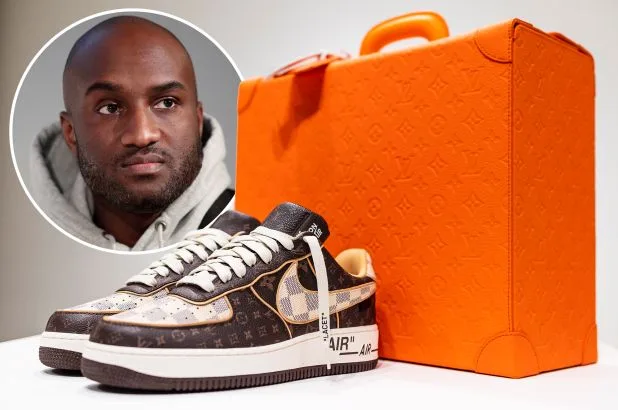
The Nike Air Force 1, celebrating its 40th year, was designed in 1982 and is one of the most successful and iconic shoes ever created. On the occasion of the Louis Vuitton Men’s Spring-Summer 2022 runway show, Virgil Abloh collaborated with Nike to design 47 pairs of bespoke Air Force 1s, fusing the trainer’s classic codes with the insignia and materials of Louis Vuitton in homage to the hip-hop culture that shaped him.

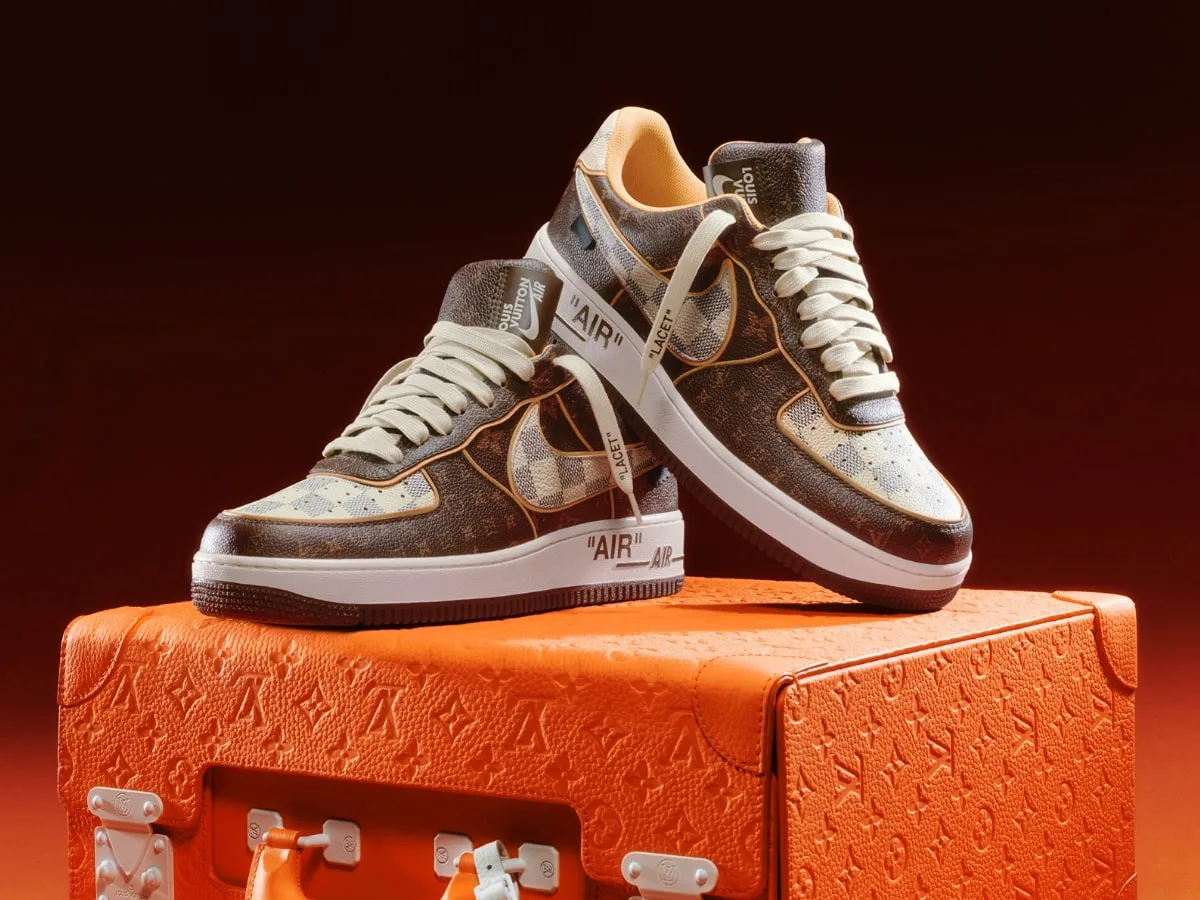
The sneakers were made with materials employed in Abloh’s Louis Vuitton men’s collections, and styled with his signature quotation marks, echoing the written graphics Abloh often used in his work. The individual styles designed for the show were made by Louis Vuitton in its shoe manufacture in Fiesso d’Artico, Italy.

A total of 200 pairs are being made available for this auction in an exclusive colorway and in a range of sizes. The sneakers, entirely made in leather, are embellished with Louis Vuitton’s emblematic Monogram and Damier patterns with natural cowhide piping. Each pair will be sold with a Louis Vuitton pilot case, also from the Louis Vuitton Spring-Summer 2022 collection, which was reinterpreted from Maison’s archive in an iconic orange colorway and made of Monogram Taurillon Leather.

The pilot case features Louis Vuitton’s classic S lock closure in white metal finishing and includes a luggage tag in the shape of the Nike Swoosh. The pilot case adapts to every shoe size, based on an internal cushion system. It will be sold exclusively in this auction

Louis Vuitton’s proceeds from the sale* will benefit The Virgil Abloh™ “Post-Modern” Scholarship Fund, which in partnership with the Fashion Scholarship Fund, supports the education of academically promising students of Black, African American, or African descent

In this size – 7 – only 20 pairs will be produced by Louis Vuitton. The fit is true to other Nike Air Force 1 models.

The lot is in new condition and is being manufactured concurrently with the auction. All lots are sold directly by Louis Vuitton. Due to variations in the manufacturing process as well as sizing, there may be small, immaterial differences as compared to the provided photos and display. This lot is currently scheduled to ship in the first half of 2022, but the timing is subject to change.

100% of the Hammer price is being donated by Louis Vuitton to The Virgil Abloh™ “Post-Modern” Scholarship Fund. The Buyers Premium and Overhead Premium will be retained by Sotheby’s. No portion of the purchase price is tax-deductible.

Content courtesy of NFH Digital Team 

Noni Styles Celebrates African Fashions and Fabrics

Noni Styles is a unique and trendy African fashion line that offers ready-to-wear and custom-made attires for women, men, and children. It was founded by Nonye Anyadiegwu, also known as “Noni,” in 2001.

Noni was born in Lagos, Nigeria, and was one of eight children. She came to the United States when she was 18 years old to pursue a college education. Noni had always had a passion for fashion and knew that she would want to be a fashion designer as an adult. After college and securing a few prominent corporate jobs, Noni decided it was time to pursue her dreams. She opened up her first business, an African clothing store called “Noni,” to the public in Brooklyn, NY.

The vision behind “Noni” is to merge the rich, colorful, and vibrant patterns of African fabrics and designs with the contemporary style of the western world. Noni’s goal is to dress her customers in a way that will make them look and feel like royalty in every sense of the word.

Content courtesy of Noni Style & NFH

Meet the Top 20 Finalists Competing at Future Face Africa’s Grand Finale

After a thorough rigorous vetting process, 20 models have been selected as finalists to compete at Future Face Africa‘s grand finale, which takes place at Eko Hotels & Suites on Sunday, the 30th of January 2022.

This maiden competition proves to be a remarkable one as models from eight African countries plus thousands of digital applications worldwide compete for a chance to win the title of Africa’s next future face. Two winners will emerge from the 20 finalists. They will each receive a two-year international modeling contract with a top international modeling agency, as well as a cash prize of five thousand dollars.

https://www.instagram.com/p/CZPUec0qPP6/?utm_source=ig_embed

The FFA project is spearheaded by none other than Elizabeth Isiorho, a pioneer in the African modeling industry and the founder of Beth Model Management Africa, Africa’s largest modeling agency, and the organization behind Future Face Africa. Over the past 17 years, Beth Model Management has served as an industry pacesetter, helping to launch the careers of dozens of internationally placed models, and has cultivated some of the best talents in the industry, such as Mayowa Nicholas and Davidson Obennebo.

https://www.instagram.com/reel/CZWT1wbIX5N/?utm_source=ig_web_embed

FFA will be equipping selected models with the knowledge and skills to achieve international success and to have long-lasting careers in a very competitive industry. Models participating in the FFA will have the chance to change their lives forever through a once-in-a-lifetime opportunity.

Here are the 20 FFA finalists (divided into male and female categories) competing at the grand finale:

1. Ana Campos

2. Ebiere Macaulay

3. Winifred Esi Sam

4. Eleanor Musangi

5. Juliana T Rugumisa

6. Kimberly Martha Amanya Ngabirano

7. Blessing Endurance

8. Nze Sandra chinecherem

9. Lerah James

10. Oluchi Diamonds

1. Nziza Ken

2. Eneh Michael

3. Akinsiku Chukwuka David

4. Awoliyi Mayowa

5. Ohanado Ikechukwu

6. Alokpesi Frank

7. Okonkwo Sunday Chibueze

8. Echetama Wilson Elochukwu

9. Dike Alex Emmanuel chinweotito

Content courtesy of Future Face Africa 

Louis Vuitton and Nike “Air Force 1” Sneakers by Virgil Abloh Beating Auction Estimates

The sale, which the Louis Vuitton creative designer helped to plan before his death from cancer at age 41 in November, will benefit The Virgil Abloh “Post-Modern” Scholarship Fund for Black, African-American and students of African descent in the fashion industry.

Bids for 200 pairs of Nike/Louis Vuitton “Air Force 1” sneakers designed by Virgil Abloh are running well beyond Sotheby’s initial estimates in an auction with a week to go.

The sale, which the Louis Vuitton creative designer helped to plan before his death from cancer at age 41 in November, will benefit The Virgil Abloh “Post-Modern” Scholarship Fund for Black, African-American and students of African descent in the fashion industry.

“We’re currently at around $6.1 million in hammer price,” said Sotheby’s head of streetwear and modern collectibles, Brahm Wachter, on Tuesday, when bids ran as high as $60,000.The original total estimate was $1 million to $3 million for the Jan. 26 to Feb. 8 auction.

The leather sneaker features Abloh’s signature quotation marks and Louis Vuitton’s emblematic patterns. Each comes with a limited-edition orange pilot case.

“On a size 5, there’s just one pair and a size 18, again, there’s just one pair. When you get to a size 10 or a size 8, there are more,” Wachter said.

The sneakers were the first official collaboration between Nike and Louis Vuitton.

“It’s really bringing together two of the great Goliaths of the industry. And of course, the genius of Virgil Abloh, who so many people love and respect and miss,” Wachter said.

“Bringing all three of these worlds together is really an incredible thing, which I think is driving global interest.”

Abloh, one of the highest-profile Black designers, had been the creative mind behind Louis Vuitton’s menswear collection since 2018. In July 2021, LVMH mandated him to launch new brands and partner with existing ones in non-fashion sectors such as furniture and luggage.

Content courtesy of NFH Digital Team 


Lukhanyo Mdingi Debuts His AW22 Collection at Paris Fashion Week

Multi-award-winning South African designer Lukhanyo Mdingi is starting the new year on a high note as he launches his Autumn/Winter 2022 collection in Paris.
Mdingi was set to debut the Bodyland AW22 collection at Paris Fashion Week on Tuesday, January 18.

In this collection, he wants to celebrate the human hands that work tirelessly in creating different designs.
Emerging menswear designers showing in Paris this month have faced difficult choices in the countdown to the Autumn/Winter 2022 season.

When the Federation de la Haute Couture et de la Mode announced a go-head for Paris Fashion Week Men (18–23 January), it was easy enough for major luxury brands to mobilize their resources. With limited funds, emerging designers, however, have had to calculate carefully. While foreign emerging designers have been wary of the costs of physical shows, home-grown designers based in Paris have generally been ready to plow ahead.

While Parisian brands can plan physical shows in uncertain times and develop contingency plans, international young designers showing at Paris Fashion Week have had to get creative to present their Autumn/Winter 2022 collections. It’s one of many hurdles for the new generation of men’s designers who still see Paris and Milan as worthwhile.

Rhuigi Villasenor, the 29-year-old founder of LA label Rhude and newly announced creative director of Swiss heritage brand Bally, was originally excited to show in Paris this season for the first time since the pandemic. When he launched his brand in 2015, making hoodies and T-shirts, he considered Paris “the main stage” of fashion, inspired as a child by flipping through magazines he couldn’t afford in the bookstore, Barnes & Noble.

However, a flip-flopping of travel restrictions and rising Omicron cases forced the designer to reconsider. “Weeks ago we were planning to go to Paris and show. We were looking at venues and the production. And then in just a matter of days, I decided to pivot,” he says. “Taking off my designer cap and putting my CEO cap on, it’s quite a big expense for me not to have the certainty whether we’ll be able to even actually show, let alone have an audience. I had to make the proper choices to pull back from a physical show and do something that feels a bit safer.”

Instead, Rhude has presented his collection digitally with an accompanying showroom, maintaining a laser-like focus on the clothes. Known for hoodies, T-shirts, and bold logo jackets retailing for up to $2,500, Villaseñor is looking to more classic styles for this season, says the designer, who aims to create what the new version of the power suit looks like for today’s Gen Z investor.

South African designer Lukhanyo Mdingi arrived in Paris on 13 January, just five days before his first-ever presentation at Paris Fashion Week, showcasing his bold artisanal and textured prints. Without a network of collaborators in Paris, the young designer found it tricky to organize the components of a fashion presentation, from venue to lighting.

“In South Africa, when you’re part of the fashion week, you pay a set fee and the whole production is pretty much-taken care of and includes hair, makeup, casting, and producers,” Mdingi says. “You walk in with your collection and that’s pretty much it.”

Mdingi, who founded his business in 2013, launched Ssense, and Net-a-Porter’s Vanguard program after Autumn/Winter 2021. He hopes his presentation and showroom will attract more stockists and further growth. Mdingi was invited to show at Paris Fashion Week after winning LVMH’s Karl Lagerfeld Prize 2021, shared with New York’s KidSuper and Shanghai brand Rui. Each designer received €150,000.

Physical shows, with extra, can work for local talent

Many of the menswear designers who are based in Paris have considered a physical show to be the right option. Florentin Glemarec and Kevin Nompeix, the duo behind gender-free brand Egonlab, showed on Monday, following their Pierre Bergé Prize win at Andam 2021. Running parallel to the show was Egomanati, a metaverse experience accessible via the brand’s website featuring NFTs from Egonlab, in collaboration with Crocs.

“I think for young brands, the physical show is an important thing because it’s a validation of our business,” says Nompeix. “We want a real show to meet people, to meet our community, to feel a real energy with the models a real experience.”

Egonlab built a strong online community during the pandemic, Nompeix says (the brand has over 90,000 Instagram followers). Now, as the brand broadens to include womenswear, the new show, and NFT activation are intended to provide a new marketing boost.

French designer Louis Gabriel Nouchi was also set on a show for AW22. Launched in 2017, the brand’s sales have doubled since 2020, bolstered by a store in Paris. Now, he’s keen to win stockists and further press attention with an in-person runway show on Saturday at Palais de Chaillot.

Nouchi’s show for Spring/Summer 2022, staged in July, was an easier challenge because it was held outdoors, he says. Despite the social distancing demands on guests and complex organizing backstage, he was still determined to proceed with AW22. “After making so many videos, it’s really complicated to transmit an emotion through digital,” he says. “Everybody’s going to watch it on their phone it’s not a movie screen. You lose a lot of the atmosphere and the immersive effects. For me, if we’re able to respect all the conditions, let’s do it!”

Pre-pandemic, designers had relative flexibility, confirming show venues three weeks before the event. Now, the lead time is closer to three months, Nouchi says. “It takes longer to source materials, and also we have to have a Plan B, Plan C, and Plan D.” The designer has planned a video and exhibition as backup ideas in the event that the physical fashion show is scuppered. “We’ve had to be very fluid in our planning,” he sighs. “It’s been like this for two years.”

Trialing new formats

For this season, the focus of Rhude’s Rhuigi Villasenor is on the clothes, contrasting with the star-studded show–party the brand held for SS22 in LA, which featured A-list celebrities and a champagne tower. Villaseñor wants to ensure the foundations of the business are solid before taking on new retailers or partnerships. “I’m championing the clothes and the design and the hard work that the team and I put in,” he says.

Rhude has maintained a year-on-year rapid growth rate of around 50 percent. It’s important to take stock at this juncture, says Villasenor. “It’s very easy to be dictated by the consumer. And then you end up on this train where you don’t have control.”

Egonlab’s metaverse project reflects how brands want to extend their online presence. “We want people to find refuge online,” Nompeix says. “You can move through and touch things, or walk through a door and find our collaboration with Crocs.” To date, Crocs has dabbled in the metaverse with the NBA and Minecraft, but this marks its first NFT project, says Yann Le Bozec, senior marketing director EMEA at Crocs. Egonlab reflects Crocs’ gender-free ethos, he adds.

Meanwhile, Lukhanyo Mdingi is strengthening a connection with the Ethical Fashion Initiative. Mdingi and his team went to Burkina Faso to meet artisans who create fabrics for their collections. After the visit, Mdingi decided to invite one of the artisans, Veronique Ouedraogo, to join him in Paris, participating in the presentation and meeting press and buyers.

“Being in that space and really understanding the provenance of the craft and the human beings behind it really ignited something within us,” Mdingi says. “That in itself will add a layer to understanding the genesis of the clothes. And help people recognize that there’s a human behind them.”

Key Takeaway: The pandemic is teaching emerging brands that physical fashion shows aren’t the only route to building brand awareness or winning stockists. Emerging designers are responding to the wants of their individual fanbases, to deliver unique collection experiences, from pared-back presentations to metaverse experiments and NFTs.

Content courtesy of Vogue Business, IOL & NFH

Fashion Is An Industry Capable Of Fundamental Economic Transformation For Africa

Fashion as the second-largest sector in the developing world after agriculture, the fashion, textile, and clothing industry has the potential to transform lives, particularly for women and youth. Global value chains are integral to inclusive growth across the world, and a clear indicator of economic transformation.

In Africa, despite this potential, challenges remain. The majority of fashion businesses across the continent are informal, with limited access to finance for growth and high costs of shipping and transportation of raw materials. But though there remains work to be done in strengthening the value chain of the African fashion industry, the rapidly rising awareness and recognition of our extraordinary creative talent on the global stage is something to be celebrated and nurtured.

This starts with our young people. Over 60% of our 1.25 billion population is currently under the age of 25, and by 2050 two in every five children will be born in Africa. This opportunity is staggering, and it is limitless. The task that we as educators always come down to is twofold: skills and jobs. Much has been written about this urgent need, but little is cited about fashion’s contribution to the mounting task.

The fashion industry is a creator and provider of meaningful employment. An industry encapsulating multiple vertical sectors and business skills, from manufacturing to retail, marketing to design. These are now powered by a global focus on sustainability and innovation, led by a more engaged youth stepping forth with courageous optimism towards building a better world. As we know, all the more important living amidst the shifting pandemic environment.

With 13 million young Africans joining the labor market every year, the development of labor-intensive sectors is imperative for a prosperous Africa. This is reflected in the African Development Bank’s initiative Fashionomics, launched in 2015 to promote investments in the fashion sector, increase access to finance for entrepreneurs and incubate and accelerate start-ups. As part of the African Union’s Agenda 2063, and in support of the recent African Continental Free Trade Agreement, this actively stimulates job creation in the fashion industry in Africa, heightening regional and global integration with the unique selling point of African culture and creativity.

Perhaps ahead of our time, we founded FEDISA Fashion School in 2005 shortly after the launch of the Woodstock Creative Hub, a booming transformation of a once dilapidated area of Cape Town, South Africa that now serves as an inspiration for arts, food, and crafts for local and international creatives. Now entering our 18th year with an additional campus in Sandton, our industry-leading institution has trained more than 1,000 young people in fashion and design tertiary education, providing them with work-ready skills for high-impact employability across the world.

FEDISA offers a range of specialized accreditations in a holistic approach to the business of fashion, connecting advertising, design, and marketing. This provides our graduates with a readiness for a variety of positions, whether they wish to be designers, entrepreneurs, creative directors, archivists, buyers, or marketing executives. The preparation of our exceptional young talent in Africa gives future professionals the ability to add value and expertise to the rapidly growing e-commerce sector in Africa, estimated to be worth $20 billion – supported by the rise in African consumer spending power.

An increasing focus on the theme of return from the African diaspora who seek authentic African-made apparel powers attention to digital innovation for creatives on the continent, who diligently drive to build a more reliable and well-equipped sector, capitalizing on extremely high mobile saturation rates through the use of social media and e-commerce platforms. Internationalization is a mission close to our own purpose, with our alumni representing over 34 countries – graduates who take the tailored, transformative education to their home countries along with globally relevant, African-centric design and creativity.

As we harness this movement into the FEDISA curriculum, we now embark on the next stage of our growth with an organization aligned in purpose. Becoming part of the pan-African Honoris United Universities network is a milestone moment for us at FEDISA, connecting us to the educational group’s 14 further world-class institutions across the continent and the collaborative intelligence of the 61,000+ students and 3,500+ faculty members.

As founders ourselves, one of the most anticipated areas of this new partnership is preparing students for entrepreneurship. At FEDISA, we do things a little differently, encouraging students and staff to continue side projects and businesses aligned to their passion for fashion and design. For our faculty, this means the application of what they are teaching is up-to-date, relevant, and innovative in today’s context. We could not have found a better partner to assist us in this mission, as Honoris continues to provide students with a competitive advantage in the world of work to allow them to succeed in the ever-changing, demanding, and increasingly digitized labor and start-up markets.

We believe in excellence and opportunity, in the power of moulding culture through the fabric and creating the limitless potential to transform lives. The fashion industry holds the considerable capacity to motivate and bring change to some of the most disadvantaged people, especially women and youth, and plays an important role in Africa’s economic revolution. Through the power of partnership, we can’t wait to do more alongside Honoris.

Content courtesy of How We Made It In Africa & NFH Digital Team 

Honey TV’s Wawu That’s My Dress Returns to Kenya for a Second Season

The popular format of the wedding show sees brides from all over the country descend on Nairobi to look for their perfect wedding dress. In the presence of their loved ones, they each have the chance to try on different dresses to determine which style suits them or not.

Kenyan Media Maven – Amina Abdi Rabar is back as the show’s host. Rabar is one of East Africa’s most popular celebrities with just over a million followers on Instagram alone. It brings spirit and a touch of modernity to the wedding fair. The Kenyan season is produced by Fareed Khimani’s Nusu-Nusu Productions.

https://www.instagram.com/p/CYlJtYMMuzG/?utm_source=ig_embed

The wow, that’s my dress The format has traveled across the African continent having started in Nigeria with a famous stylist – Dami Oke as host, Kenya with Amina Abdi Rabar, and more recently Zambia with musician Esther Chungu as host. The show has become a popular format for the channel as a continuation of their focus on weddings in the lifestyle television format.

The bride’s dress is the centerpiece of any wedding and can make or break her day.
A Kenyan boutique is a hot spot for a bride who is looking for the perfect dress for her big day. Hosted by Amina Abdi, Wawu, That’s My Dress: Kenya follows all the activity at this boutique as brides and their loved ones swing by to meet the in-house team that is ready to help them find the perfect wedding dress.

Catch Amina Abdi Rabar on Wawu, That’s My Dress: Kenya and other pan-African lifestyle show on DStv’s HONEY channel (173).

Content courtesy of Honey TV & NFH Digital Team

Ad