Wednesday 3rd of June 2026

Nairobi, Kenya

The Fight Against Covid-19 Kenya Fashion Council Community Spirit

In an effort to further curb the spread of the COVID-19 virus, the Kenyan government has directed all citizens to wear masks when in public spaces.

On March 30th, Kenya Fashion Council put out an appeal on social media, requesting designers and fashion industry members to share information on their capacity to produce face masks and PPEs.


Within 24 hours, the Kenya Fashion Council had received more than 800 emails from individuals and businesses. By the following day, there were 1,520 emails in total. KFCO also went ahead and created a manual for public use on the creation of a reusable cloth face mask. The same was shared with designers and tailors, enabling them to continue with a form of production and income generation in a time of crisis.

Kenya Fashion Council is working with all the relevant stakeholders to not only provide safe masks for the population but income generation strategies for its designers and tailors whose businesses have been hit hard during this pandemic.

Sterilization Centre – The Safe Masks For All Initiative
Kenya Fashion Council has created an opportunity for its members to produce safe masks for the public by partnering with a sterilization centre. This partnership allows members to drop their cloth face masks at the centre where quality check is performed before sterilization, packaging and labeling.

The already tested, state of the art sterilization centre is well equipped and has the capacity 10 sterilize 4,800 face masks per day.

A customer in receipt of the KE-2 mask can rest assured that it is safe for use and free from contaminants. Designers who would like to use the sterilization centre should have the capacity to deliver a minimum of 120 labeled masks. The quality assurance step ensures that only quality masks are accepted for this process, upholding excellence in production.

The masks produced illustrate the KFCO spirit of innovation and excellence as every mask is individually sterilized, packaged and labeled. KFCO has partnered with Brand Kenya and these high quality, safe, reusable cloth face masks are proof that as Kenyans, we are more than capable of impacting, innovating and producing quality goods! We have the answer to our problems and creative strategies are within.

Get Your Ke-2 Face Mask Delivered To You!
The Kenya Fashion Council team has been working day and night to not only coordinate production efforts of face masks but also seek distribution channels to ease accessibility of the same. Kenyans can now conveniently place an order online via JUMIA Kenya and receive the high quality KE-2 masks at their doorstep.

The council has negotiated rates for its members with JUMIA Kenya , which means Kenya Fashion Council Members can now set up shop and sell their masks online,  automatically increasing their customer reach. KFCO is working towards multiple distribution channels to ensure Kenyans have access to quality reusable cloth face masks.

Kenya fashion council mask available here on Jumia link

Are You A Member?
Due to the current global situation as a result of the COVID-19 Pandemic, Kenya Fashion Council has extended its introductory offer on 90% off membership till 31st May 7020! Membership registration starts from as little as KES 2,500. As a member you can access the great rates KFCO has negotiated with JUMIA Kenya and reach your customers online with just a few steps!

SIGN UP TODAY
Website:  kenyafashioncouncil.co.ke to access discounted membership and join the family! Begin your journey to your online store!

Join The Fight
Kenya Fashion Council is committed to reach every comer of society and provide safe masks to all Kenyans. We have partnered with NYS to enable mass face mask production. NYS engaged a total of 53 tailors from Jericho, Ngara, Taveta court, Kibra and Nairobi Textile.

The work commenced on 28th of April and as at 4th of May 16, 122 masks had been produced. We are looking into further developing patterns for other PPEs as well. The community spirit has been strong and a good example of this is David Juma, pictured below.

Mr Juma received support from the Kenya Fashion Council family who donated cloth and elastic materials totaling 30 meters. Mr Juma also received the KFCO manual which has guidelines on face mask creation and uses this to train others.

Get in touch if you would like to join us in our community efforts! Lets join hands and fight this pandemic together. We are stronger together.

Content courtesy of Kenya Fashion Council

Dubai’s luxury Fashion Designers to make PPE Masks

Dubai Design District (d3) has joined the Arab Fashion Council in a campaign to combat COVID-19, with seven partners poised to create thousands of protection gowns and surgical face masks for frontline medical workers.

Dubai fashion designers
The campaign calls on UAE-based fashion designers to use their craftsmanship and haute couture flair to make surgical attire for the UAE’s health care industry, demonstrating the value of fashion and design in Dubai.

d3, Dubai’s heart of creative design, home to more than 9,000 people and 385 companies, has pledged its support to #AThread4Cause a campaign calling on UAE-based fashion designers to use their craftsmanship and haute couture flair to make surgical attire for the UAE’s health care industry.

Seven business partners with more than 50 tailors and pattern makers, will make the medically certified garments. To facilitate logistics, d3 is set to host a unified distribution center, to store and deliver the protection gowns and surgical masks produced by d3 designers as well as other designers based in the UAE.

This will turn the d3 community into a strategic hub for personal protective equipment (PPE) made by luxury brands.

Khadija Al-Bastaki, executive director of d3, said: “As the fashion capital of the Middle East, d3 is both humbled and delighted to support #AThread4Cause. With six d3-based designers, we aim to aid the lifesaving work of vital medical staff by contributing to the UAE’s stockpile of gowns and face masks. d3 is well placed to be able to cater to the needs of the local population, as well as export to the rest of the world, heralded by the strong logistics and infrastructure of Dubai.

This will enable #AThread4Cause to quickly receive the PPE carefully produced by highly skilled, luxury fashion designers across the emirate.”

“The Arab Fashion Council is proud of d3’s remarkable support to #AThread4Cause campaign by joining forces with us and its readiness to strengthen the emergency network of creative force,” said Jacob Abrian, founder and CEO of the Arab Fashion Council.

Dubai fashion designer
Michael Cinco’s ‘The Impalpable Dream of SWAN LAKE’ collection is the fulfillment of the fashion designer’s dream to create a collection based from the popular folk tale. Photos by Bethoven Filomeno.

Dubai-based couture label, Michael Cinco, is among the seven d3 business partners taking part in the initiative. Cinco and his business partner Sayed Ali said in a joint statement: “We need to demonstrate the sense of belonging, community spirit and light that only fashion can bring to our world.

We are proud to be part of d3’s response to #AThread4Cause and believe it demonstrates the value of fashion and design in Dubai.”

Yasmine Yeya, founder and creative director of Maison Yeya, added: “The UAE has worked extremely hard to address the current situation and the creative community stands ready to support these efforts because it’s our duty to stand united against this challenge.”

Dubai fashion designer
Queen of bridal couture, Yasmine Yeya, Gowns ranged from the straight up lavish meringue-esque creations to slinky stunners with appliqués and elaborate backs, to that signature Yeya hi-lo style.

Cinco and Yeya are joined by Furne One of couture label Amato, Emirati designer Yara bin Shakar, Egypt’s Marmar Halim, Arab/American designer Zaid Farouki and women’s clothing retailer Si Fashion.

To provide the designers with ample material and to support local suppliers, d3 has established a partnership with a Dubai-based Saudi fabric manufacturer who will supply over four tons of technical fabric to the participating brands.

Content courtesy of Arab News 

It’s official, there will be no Met Gala this year 2020

It’s now official: There will be no Met gala in 2020. The Metropolitan Museum of Art, which has been closed since mid March, announced today that the Met gala, often called the party of the year, has been canceled for 2020.

In a statement issued this afternoon, the museum said that the gala had been canceled “due to the global health crisis.

In a statement to Vogue, the Met said fashion’s big night has officially been called off “due to the global health crisis.” The Met Gala typically happens on the first Monday in May.

The Met gala, typically held on the first Monday in May, is both the most star-studded social event of the spring and a critical fundraiser for the Costume Institute, acting as the main source of annual funding for exhibitions, publications, acquisitions, and capital improvements. Last year, the gala for the exhibition “Camp: Notes on Fashion” raised a reported $15 million.

This year’s exhibition at the Costume Institute, “About Time: Fashion and Duration,” will trace a century and a half of fashion from 1870 to the present on the occasion of the Met’s 150th anniversary. It is scheduled to open on October 29 and run through February 7, 2021. The majority of objects in the show will be drawn from the Costume Institute’s collection, including major gifts from designers as part of the Met’s 2020 Collections Initiative.

In addition to today’s announcement about the Met gala, the museum updated its status on its planned reopening, saying it would now take place in mid August “or perhaps a few weeks later.”

Daniel H. Weiss, president of the museum, said: “The Met has endured much in its 150 years and today continues as a beacon of hope for the future.

This museum is also a profound reminder of the strength of the human spirit and the power of art to offer comfort, inspiration, and community. As we endure these challenging and uncertain times, we are encouraged by looking forward to the day when we can once again welcome all to enjoy the Met’s collection and exhibitions.”

The days and hours that the Met will be open to the public will likely be reduced at first. And to maintain social distancing requirements, the museum will not have tours, talks, concerts, or events through calendar year 2020. The museum said it expects to resume these activities in 2021, “including a belated celebration of its 150th anniversary.”

Content courtesy of Vogue

Africa E-commerce Game Changer

Moulaye Taboure, founder of Afrikrea, a e-commerce marketplace for African fashion designers. Even though the platform predominantly services clients in Europe and the US, Taboure says orders from customers on the continent tripled on the platform over the past two months.

Further, Taboure says more designers in African cities with tougher movement restrictions are now signing up to the platform.

“This is definitely a game changer in Africa,” says the founder of Afrikrea, a fashion e-commerce marketplace in Abidjan.

Much of the demand shift is due to lockdown restrictions which have left brick and mortar retail outlets closed as governments attempt to curb the spread of Covid-19. In addition, reduced vehicular traffic also means deliveries can happen much faster in cities known for notorious traffic jams a boon for customer retention.

Put together, these coronavirus induced effects are “already positively impacting” e-commerce players in Africa, says Maxime Bayen, company builder at startup investment firm, GreenTec Capital.  “The companies we are talking with in that space have seen their sales gone up clearly.”

It’s an effect that plays out even for business-to-business (B2B) enterprises.  Sokowatch, which operates in in Kenya, Tanzania, Rwanda and Uganda and supplies informal shops and kiosks in low-income communities with products, is signing up more shop partners and reporting a higher share of stock in local shops compared to traditional suppliers. “We are a technology-enabled supplier that provides same day delivery to their shop, it’s not an option that they have with traditional suppliers to the store,” says Sokowatch founder Daniel Yu.

Taking advantage

The dominant view among e-commerce players on the continent is the boon will last a while longer even after lockdown measures are eased. With physical distancing measures likely to remain in place in different forms, there’s a strong possibility of a drop in foot traffic at normally crowded shopping malls and stores. Taboure says Afrikrea is already tweaking its model to make it cheaper for designers based in Africa to sign up so as to cater for an expected growth in orders from across the continent.

And he’s not the only betting on riding the wave, Only the flexible will survive. Every business has to learn how to do things very differently.”

Pan-African payments giant Flutterwave has set up an e-commerce portal that allows merchants set up online shops that it will power payments for. Essentially, Flutterwave is positioning to facilitate and take advantage of any recourse to e-commerce by offline stores and merchants.

In Kenya, Twiga Foods, a marketplace which supplies retailers with fresh produce from farms, has partnered with Jumia to widen the scope of its reach, allowing households order and receive foodstuff without visiting supermarkets.

Similarly, FarmCrowdy, a Nigerian agri-tech platform that allows people invest in existing farms for a share of profits, has also launched a e-commerce platform for fresh produce. In addition to expanding the scope of market access for farmers within its network, the platform is also an obvious play to provide middle-class Nigerians with an alternative to crowded open-air markets that are likely viewed as high-risk for Covid-19 infections.

Established traditional businesses are also turning to e-commerce out of necessity. Eko Hotel, arguably the biggest hotel brand in Nigeria, has launched an online food delivery service, ostensibly to shore up revenue deficits given the impact of the pandemic on hospitality businesses.

“Only the flexible will survive,” says Victor Asemota, veteran tech investor. “Every business has to learn how to do things very differently. Those who have gained will want to sustain the momentum and those who have lost will die if they don’t change drastically.”

It’s not entirely a home-run for e-commerce businesses though. Supply chain disruptions could yet result in an inability to fulfill orders, especially in countries with strict lockdown measures. For instance, Jumia suspended delivery of all fashion items in South Africa last month. Poignonnec has also admitted to challenges being faced with fulfilling orders particularly for products sourced from China.

Then there are also concerns over the sustainability of the company’s reliance on groceries as an anchor for sales. “It’s not a very profitable vertical for a general merchandise e-commerce platform without specialized value chain for groceries,” says Laolu Sameul-Biyi, former financial analyst at Jumia. For his part, Poignonnec hopes that ongoing consumer adoption amid the outbreak “will accelerate the long-term shift to e-commerce” among local users.

Given the short-term boon amid a lack of options for customers, “the main question is whether or not this trend will stick in a post-COVID era,” Bayen says. For Taboure however, it’s up to e-commerce companies to ensure that answer is affirmative by solving problems around ease of use and building trust. “If it’s not easy to buy online [then] we need to find solutions,” he says.

Content courtesy of Quartz Africa and Afrikrea


Free trade to help Africa rebuild after virus, even if delayed

The first commerce under an Africa-wide free-trade pact will provide new stimulus to countries on the continent to overcome the economic damage of the coronavirus, even if it could be delayed for around six months, according to the most senior official of this agreement.

The secretariat of the African Continental Free Trade Area is exploring the feasibility of moving talks involving more than 50 countries and real-time translation into four languages online. However, full border closures by some 30 nations aimed at limiting the spread of the virus is likely to restrict trade flows over the coming months, Wamkele Mene, the secretary-general said in an interview.

While the agreement entered into force legally last year, protocols for trade in goods, including tariff concessions, need to be agreed for its implementation and commerce to start on July 1. Disruptions caused by the pandemic have set negotiations back by two and half months.

“The consideration for postponement doesn’t mean that there no longer is political will and that there is no longer political commitment,” Mene said by phone from Addis Ababa on Wednesday. “We have to adjust to conditions that unfortunately nobody could have anticipated and we have to give the space to governments to solve the public health crisis as a matter of priority.”

Customs Union
Africa lags other regions in terms of internal trade, with intracontinental commerce accounting for only 15% of the total, compared with 58% in Asia and more than 70% in Europe. The agreement is meant to help change that, aiming to lower or eliminate cross-border tariffs on 90% of goods, facilitate the movement of capital and people, promote investment and pave the way for the establishment of a continent-wide customs union.

When fully operational by 2030, it will be the world’s biggest free-trade zone by area, with a potential market of 1.2 billion people and a combined gross domestic product of $2.5 trillion.

The pandemic underscores the need for regional value chains across Africa and enhanced manufacturing capacity on the continent, Mene said.

“If anything, this crisis has demonstrated the need for us to reconfigure our supply chains, to reconfigure our trade links and to establish regional value chains in Africa that will advance our own African industrial development capacity without completely disconnecting from the rest of the world.”, he said. “The reliance on global supply chains presents one with challenges/ When you have a global supply chain disruption, you actually become very very exposed.”

The outbreak has also highlighted the need to address the extent to which intellectual property rights on the continent allow it to respond to a pandemic and set up a generic drug industry that can service industrial development and public health priorities, he said.

Photo courtesy of IOL Africa Business Chief , The Times of Africa & Bloomberg 

This article originally appeared on Bloomberg

Naomi Campbell Makes ESSENCE History As Her Own Photographer For Our 50th Anniversary Issue

Supermodel Naomi Campbell has proven she’s not only talented in front of a camera, but also behind one with her latest cover work for the 50th-anniversary issue of Essence Magazine dressed in a Ghanaian fashion designer Stevie Frenchie a African attire.

On Tuesday, May 5, the 49-year-old supermodel, who has been a powerhouse in the modeling industry since the age of 15, posted a tweet featuring a history-making photo shoot she did for the magazine with her iPhone while being self-isolated at home dressed in African attire design by African attire.

Naomi Campbell was also responsible for her own styling, hair, and makeup #ESSENCE50.


It was a very special honor and unusual experience for me to be able to shoot and style my own cover for Essence’ 50th anniversary issue.

The cover featured Campbell wearing a flowing white dress accented with triangular and circular patterns in black, red, green, and brown. The garment also had a loosely tied black bow that resembled a satin material that sat below her bosom.

In the cover photo, Campbell was sitting on a light wood set of stairs with a backdrop resembling a cloudy blue sky. She noted that the vintage garment was designed by Karl Lager-field for the luxury Parisian fashion brand Chloe in an Instagram post.

The cover also included the title of Campbell’s feature in the issue – “Self-Portrait In Isolation.”

Through an Instagram video posted on Essence’s profile, fans learned the magazine’s Chief Content and Creative Officer MoAna Luu and Campbell collaboratively video chatted through Face Time to work on the shoot.

The issue will also feature an article titled “The New Normal: How COVID-19 Shifted Our Reality.”

According to the Essence Instagram post, Campbell shot other looks for the anniversary issue as well which included a layered tangerine-colored dress with red and black patterns throughout and a navy blue, periwinkle, aquamarine, and white headdress.

Campbell’s announcement tweet, in which she mentioned that she was honored to participate in the shoot, received over 2,000 retweets and over 13,000 likes, with many comments rejoicing the creativity, innovation, and overall hard work she has displayed throughout her years in the modeling industry.

Content courtesy of Essence 


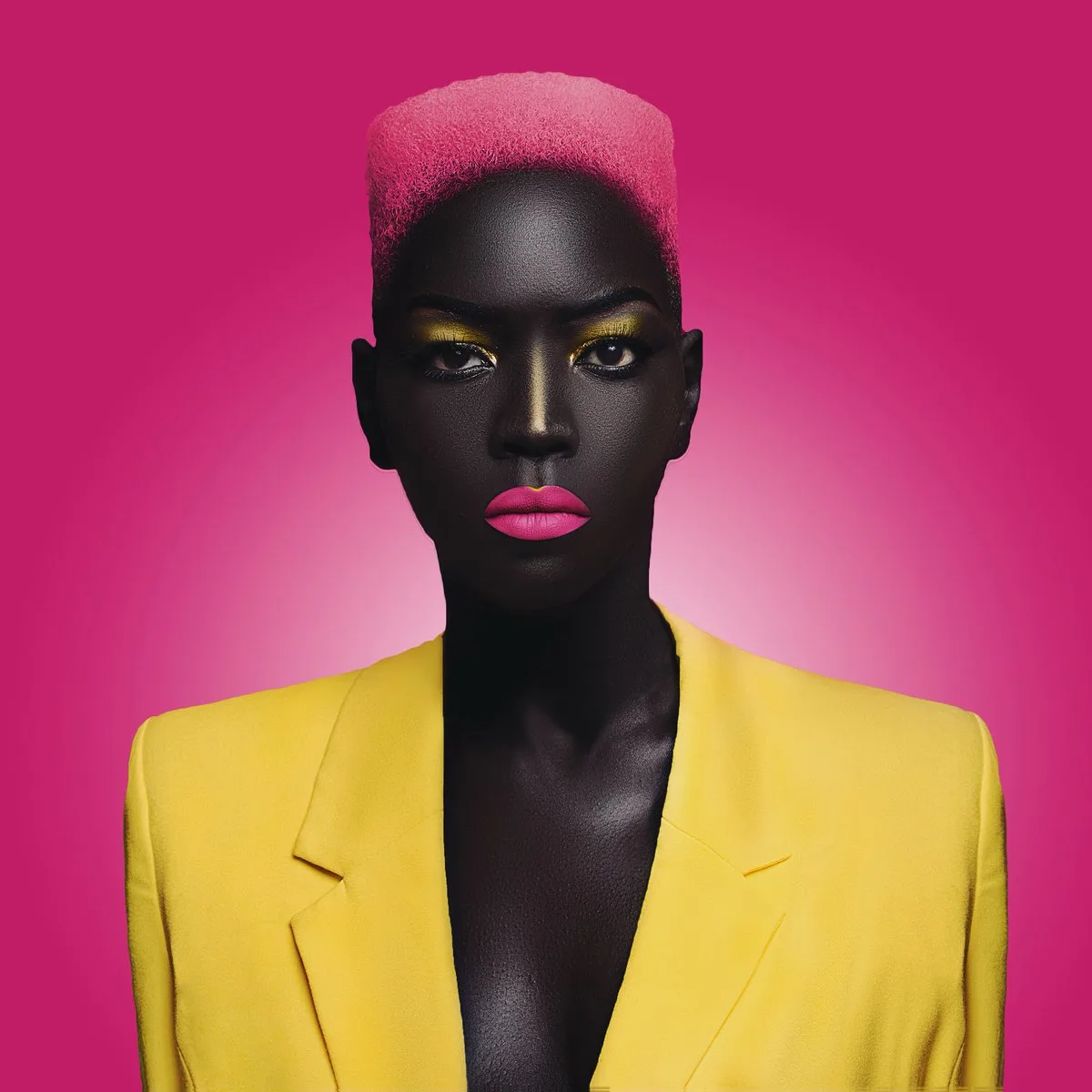
Sudanese Model Nyakim Gatwech Enters Guinness Book Of Records For Having The Darkest Skin Tone On Earth

Sudanese Model, Nyakim Gatwech is the latest in the Guinness Book of Records,Nyakim is known for her naturally dark skin color and has been nicknamed the Queen of the Dark, Nyakim has faced self-esteem issues and comments from people who promote bleaching to lighten skin color, but learned to embrace her beauty and pigmentation with love and support from her fans.

While millions of women across the globe are paying the high price for bleaching, Nyakim Gatwech got recognized by the Guinness book of World records for having the darkest skin tone on earth.

The model has graced covers of countless magazines as her alluring and uniquely black yet divine skin tone redefines the very definition of beauty, Nyakim has set the standard for many African ladies who have felt insecure about their different skin tones and whenever she walks the red carpet or runway, she commands the attention of everyone and steals the moment without an apology.

Nyakim Gatwech is best known as a Model. Model known as Queen of the Dark who found acclaim with her distinctive dark complexion. She was born on January 27, 1993 in Sudan. Another model named Shaun Ross shattered beauty expectations in the world of fashion with his skin pigment. She has faced discrimination for her skin since moving to the United States.

[taq_review]

She is one of the successful African Model , She has ranked on the list of those famous people who were born on January 27, 1993. She is one of the Richest Model who was born in Sudan.According to Trending Celebs Now, Nyakim Gatwech’s estimated Net Worth, Salary, Income, Cars, Lifestyles & much more details has been updated below. Let’s check, How Rich is Nyakim Gatwech in 2020?

Estimated Net Worth in 2019$1 Million – $5 Million (Approx.)
Previous Year’s Net Worth (2018)$100,000 – $1 Million
Annual SalaryUnder Review.
Income SourcePrimary Income source Model (profession).


According to Boredpanda, African model and fashion icon, who now lives in Minneapolis, Minnesota, Nyakim Gatwech she proud and  not shame about her melanin, and she makes sure the world is aware. She once said while captioning one of her photos on Instagram that her Chocolate is elegant and she represents a nation of warriors.

Content  courtesy of Nairobi fashion hub Digital Team 

Power of E-commerce in Rapid Expanding African Fashion Sector  

Thirty-two-year-old Gambian economist Marie Ba used to buy most of her clothes online from British fashion retailer ASOS. But when she wanted to update her closet with some tailored wax print African dresses, she took a chance ordering through Ghana’s KIKI Clothing platform.

“I was looking for something well designed and fitted, and it’s lovely to support brands based in West Africa, while looking quite unique in their pieces,” she says.

Online revenues for the African fashion sector are predicted to grow by over 14% annually over the next four years.

Within five working days the clothes were delivered by DHL from Accra, to her door in Gambia’s largest city, Serekunda. And Ba became part of a growing ecosystem of fashionistas purchasing their clothes within the expanding African e-fashion market.

African fashion has revelled in tremendous media interest recently. Beyoncé helped propel Senegalese designer Sarah Diouf’s Tongoro brand to international fame when the singer wore a patterned dress and wide-leg pants on holiday last year. Naomi Campbell and Alicia Keys are other megastars spotted wearing African-designed clothes.

Sub-Saharan Africa’s clothing and footwear market is worth $31bn, according to Euromonitor. The growth has prompted the expansion of foreign and local brands into the African clothing market. Companies are fulfilling increasing orders from the African diaspora, particularly in Europe and America, while sales of Ankara gowns and African print dresses are also popular among non-African consumers. This has led to the creation of African-based e-fashion platforms.

“We export African culture no matter where you are,” says Malian-born Moulaye Tabouré, the CEO of Afrikrea, an online marketplace that allows users to sell African clothing to over 100 countries. The Abidjan-based tech startup secured an additional $1m funding round in February, money Tabouré says will allow the business to grow its developer team, and expand its mobile technology and marketplace.

The company boasts a minimalist and user-friendly website, and says 5000 designers use its platform. These designers build an online “shop” with digital tools provided by Afrikrea. They then set the prices and communicate directly with customers, who are able to stagger their payments.

Afrikrea then deducts a commission of 10-15% per sale, and says it has facilitated over 4m sales since the company’s 2016 inception. The biggest market is the US, followed by France and the rest of the EU.

“Our target is to get the infrastructure growing, so we get at least 50% of our sellers from Africa,” says Tabouré. “The idea is to get people in Africa to say, ‘Maybe this is the best place to set up my business.’ But the biggest issue is to be able to organise, and sustain the growth.”

E-commerce in sub-Saharan Africa is in its nascent stage but it’s showing enormous potential as smartphones proliferate across one of the world’s youngest and fastest-growing populations.

A 2017 report by Statista estimated the e-commerce sector in Africa generated $16.5bn in revenue that year. The research firm currently predicts that revenue in the sector will reach $27.7bn in 2020 and rise to $47bn by 2024.

Online growth is being driven by the under-35s. Rubab Abdoolla, senior analyst of beauty and fashion at Euromonitor, says the e-commerce sector is being driven by “the increasing number of working mothers who are being supported by rapid adaptation to internet retailing”.

The wider African e-commerce landscape is being pushed by sales in fashion. Statista predicts revenue at $8.3bn in 2020 and projects an annual growth rate of 14.2% between 2020 and 2024. But this expanding e-fashion market faces major challenges.

Overcoming challenges

West Africa is a major cotton-growing region, but its textile industry struggles to compete with cheap clothes made in Asia. Since the 1980s, most of Africa’s textile industries have been wiped out and a generation of skilled workers have been lost.

Textile manufacturing in the region is estimated to have fallen by more than 75% in that time. Transporting clothing within the continent and beyond can be problematic, with expensive export costs and border difficulties.

“The number one business constraint I have is definitely the customs,” says Tabouré. “If African governments would realise the potential of having free trade between African countries, and facilitating customs for people shipping outside of Africa – especially with Europe – then there would be an extremely good advantage.

“In the US, we have an agreement [the US’s African Growth and Opportunity Act] that allows us to ship without customs up to $700. If we could have the same agreement with Europe, then that would change the game.”

These challenges are not stopping self-taught Ghanaian designer Felicia Parker. The Afrikrea user is able to sell her La Mode Afrique brand of kente cloth styles and other items to a growing customer base in London, Paris and elsewhere on the continent.

“When an order is placed, DHL will come to pick up the clothing from my door, and take it to most places in the world,” she says.

“The internet has made it really easy for anyone to purchase whatever designs they want, in the comfort of their home and workplace In the next five years, I hope I’ll have a big factory here in Ghana, and shop branches worldwide, that are full of African print fashion.”

This article originally appeared on African Business 
Written by WIlliam McBain

Ankara Miami

Ankara Miami, Inc. is a South Florida-based event planning company committed to “Redefining African Cultural Trends.” Since its creation in August 2011 by Founder/CEO, Evelyn Onyejuruwa (Miss Nigeria Florida 2011-2012).

The company has continued its mission to promote progressive people and trends within the African Diaspora. Ankara Miami’s launch event, Ankara Miami 2012.

Founder and CEO of Ankara Miami In Evelyn Onyejuruwa (Miss Nigeria Florida 2011-2012)

1st Annual Ankara Fashion & Cultural Show, showcased emerging and established designers from the African Diaspora and their use of Ankara (a well-known West African fabric) as well as other African fabrics and prints in mainstream Western fashion.

Since its inception, Ankara Miami has also made social and financial contributions to entities such as the African Heritage Cultural Arts Center, HANDY, Inc., the Nigerian American Foundation, Embrace Music Foundation, and Honey Shine, Inc. Its year-round events have included toy drives, networking mixers, and consulting/event management for other African and African-inspired events.

Ankara Miami is the FIRST & LARGEST major runway production in Florida featuring designers, live entertainment, and visual art solely from Africa and the African Diaspora.

The company has worked closely with notable corporate and culturally-based brands (e.g. Macy’s, Arik Air, Inglot Cosmetics, Greater Miami Convention & Visitors Bureau, Diaspora Arts Coalition, Fela! On Broadway, Toyota of North Miami, Natural Trendsetters Salon, and the African-American Research and Cultural Center) as well as local and international media (e.g. HOT 105, The Beat 103.5, Huffington Post Miami, SouthFlorida.com, The Miami Times, Black Enterprise, Essence Online, Cool FM (Nigeria), Complete Fashion (Nigeria), Zen Magazine (Nigeria), and Tropics Magazine (South Africa).

In February 2015, Ankara Miami expanded its signature, red-carpet event from Ankara Fashion & Cultural Show to Ankara Miami: Florida’s FIRST African Fashion Week.

In its exciting journey, Ankara Miami organizers will continue to feature even more talent from Africa, Europe, the Caribbean, and throughout the United States, and provide a medium that encourages buyer/investor relationships, highlights talent and progression within the African Diaspora, and facilitates networking opportunities between established industry professionals and aspiring newcomers.

Stay connected as Ankara Miami continues to heighten the awareness of the modernization of African culture on a local, national, and international platform.

Content courtesy of Ankara Miami Inc

Africa’s Multi Billion Dollar Fashion Industry ( $15 Billion ) Business Empire 

The African fashion industry has been evolving significantly over the last years. Many African designers have been seen participating on the international stage showcasing their creativity and designs and being applauded by fashion lovers worldwide.

Their representations in magazines and fashion events have put the spotlight on the growing fashion scene of the African continent.

Not only the unique fabrics and designs, but also the African culture, heritage and beauty have left a long-lasting impression on the international fashion stage. The number of models of African origin being casted by the big fashion brands has risen significantly and they are frequently featured in leading fashion magazines and campaigns.

Africa’s creative industry overall has started gaining notice both regionally and internationally. Several local fashion brands have earned global recognition due to the talent and artistry of their designers. One remarkable award-winning designer is Folake Folarin- Coker.

Her brand Tiffany Amber has particularly become popular during the New York Fashion Week. In the meantime, her collection has been displayed in London, New York and Paris. Another upcoming artist, Deola Sagoe has dressed international artists like Rihanna and Solange Knowles.

The African footwear industry is still in the nascent stage. The continent is abundant in raw materials, skill and labour which are imperative for the growth of any industry. Several countries on the continent are contributing to the African footwear revolution, including Ethiopia, Ghana, Kenya and Nigeria.

The Journey of a Made in Kenya Shoe Brand Enda Sportswear.

Ethiopia for instance, is ranked in the top ten of leather exporting countries worldwide and has been able to generate considerable income from shoe exports in 2018.

The global fashion industry is estimated to be worth around $1.5 trillion, there are however no official estimates about Africa’s fashion industry. This is due to the fact that it has historically not been seen as a lucrative sector. There is however a growing realization of its untapped potential in terms of job creation and economic development.

As of today, only selected African universities offer reputable master degrees in fashion and design. As the perception of the fashion industry is however shifting within the continent itself, more and more fashion courses are being offered in order to support the local talents.

At present, Africa has a population of 1.2 billion people. The future estimates of the growth of the population is 2 billion by 2050 and 4 billion by 2100. This gives a huge opportunity in the form of a large market size for investors to leverage on. Fashion brands with the right marketing strategy have good chances to flourish.

Another important demographic feature about Africa is that there are about 200 million people between 15 and 24 years old, which makes Africa the youngest continent in the world.

With technological development showing its vibrance in Africa, the youth are increasingly using Facebook, Instagram and other kinds of social media to keep their followers updated with the latest trends and launches in the line of fashion. This has not only given local brands more visibility internationally, it has also increased their business rapidly.

In addition, the rapid increase in African middle-class households has increased the market for luxury goods as there is demand for better quality products due to growing disposable income. The African markets are moving from basic commodities to modern lifestyle economies.

This change in African buying habits has caused a boost to the sales of the fashion brand segment, and provides vast opportunities for investors, fashion houses as well as fashion and beauty professionals looking to expand internationally.

This article originally appeared on African Cube 

Photo courtesy of Coco lili Africa , Ankara Miani Inc , Enda Sportswear , Just Imagine Africa

South Africa Government guarantees 80,000 garment & textile workers full pay for six weeks during COVID-19 lockdown

The clothing and textile sector’s 80,000 workers have been guaranteed full pay for six weeks during and after the Covid-19 lock down in a ground-breaking agreement by stakeholders.

On Monday night, President Cyril Ramaphosa announced a 21-day national lockdown to limit the coronavirus outbreak. It will take effect from midnight on Thursday, and will impose stringent restrictions on the movement of people. People will be confined to their homes and will only be allowed to leave to shop for essentials such as food and medicines, to seek healthcare, or collect social grants.

The National Bargaining Council for the Clothing Manufacturing Industry announced that industry stakeholders had reached the deal that would see workers getting their full wages during the lockdown.

On Tuesday, the National Bargaining Council for the Clothing Manufacturing Industry in SA announced that parties in the industry have reached a “ground-breaking agreement” that will see workers getting their salaries during the lockdown period.

The signatories to the agreement include the SA Clothing and Textile Workers’ Union (Sactwu), the Apparel & Textile Association of SA (Atasa), and the SA Apparel Association (Saaa).

According to the agreement, payment to the industry’s 80,000 workers will be made up of workers’ Unemployment Insurance Fund (UIF) monies and employers funds, and that the clothing industry bargaining council will be the institution for the UIF distribution payments to workers through company payroll systems.
The bargaining council said the agreement had been submitted to the department of employment and labour for an “emergency gazette and extension to non-party companies in the clothing industry”.

“The parties to the bargaining council, working together with the UIF and the department of employment and labour are now focusing on the practical modalities of implementation of the agreement.”

A clothing industry Covid-19 lockdown rapid response task team has been established to manage immediate “practical implementation matters arising from the conclusion of the agreement”.

In a media briefing in Pretoria on Tuesday, employment and labour minister Thulas Nxesi said employers and bargaining councils will be used to distribute new UIF benefits.

Nxesi said the government would not put a number on the table as to the size of the national disaster benefit as it might unfairly raise expectations.

“We do not want to talk about figures. We can’t announce something that we cannot fulfil. Our actuaries are busy looking at the numbers.”

The UIF was anticipated at the time of the February budget to have R3.6bn in surplus contributions over the next three years. In addition, to this it also had about R60bn in investments with the Public Investment Corporation (PIC).

Both these numbers are completely out of date, as contributions to the fund will now change significantly and investments will have diminished considerably.

Meanwhile, SA’s tally of Covid-19 cases have risen to 554 and the number is expected to continue to rise for at least another fortnight, health minister Dr Zweli Mkhize has said. He said it will take time for the 21-day national lockdown to have an effect and reduce the spread of the disease.

This article originally appeared on BL 

Women’s world show in Kenya a show that travels around Africa for the hit segment ” Making of Entrepreneurs “

Clara Kronborg, Founder and Host of Women’s world show arrived to Kenya for the making of entrepreneurs in the show. This took place in Nairobi on the 4th of December 2019 in collaboration with Delight Tailoring fashion and design Academy (known as Delight Africa Kenya)

Clara Kronborg, Founder and Host of Women’s world show

Making of entrepreneur in women’s world show is focused on promoting the positive impact /role of skilled African women in the socioeconomic development of Africa.


By supporting as little as we can in bridging the constraints lack of capital and supporting a woman with no means of education with our strategy FUNDING, BRANDING AND MENTORING. In doing so, we hope to accelerate the number of Female entrepreneurs throughout Africa and strengthen African female entrepreneurial ecosystem.

For this segment, ‘’ making of entrepreneurs ’’, we travel around African countries, where we choose a certain skill depending on hand works women
are involved in within the country. We collaborate with organizations, companies or individuals whose goals aligns with ours for this process. It is done by setting a mini competition among 5 to 10 women, where the winner wins a start up fund and cash value if 1000 USD.

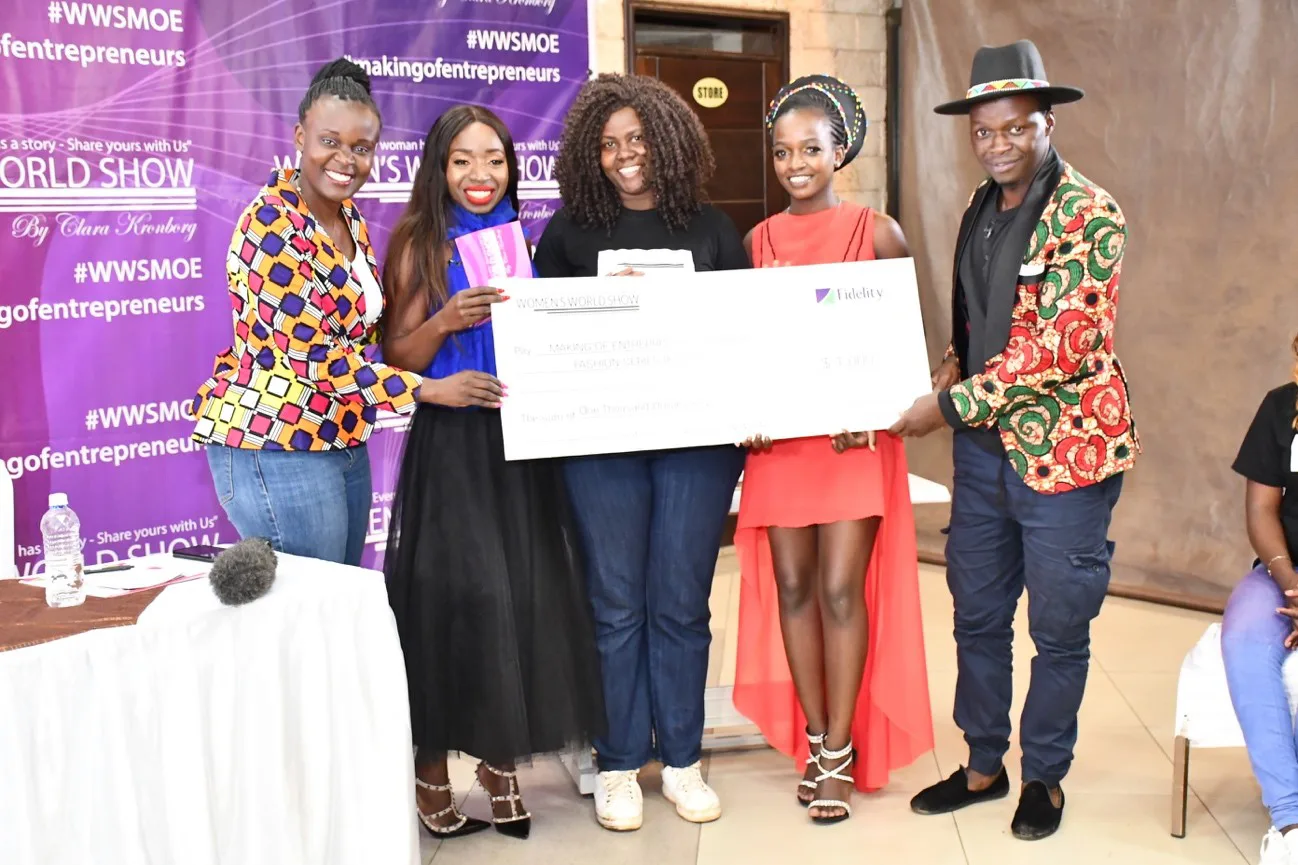
The Theme for the fashion designer series in Kenya was a Cocktail dress with a significant touch of Kenya. Where Miss Debra Ang’awa emerged the winner of women’s world show Making of entrepreneurs, Kenya edition, the Fashion designers series 2019.
She stood out with her creative skill but mostly for her Business strategy to stand out in fashion industry in Kenya and beyond.

‘’ We are coming back to Kenya ’’, Clara says, because the young women here are filled with zeal and desire to add to the development of Africa. And our return will be bigger, as we will be making more than one woman this time.
Our plan starting 2020,


The goal is to make 50 entrepreneurs per annul for the next 5 years, by visiting 6 African countries every year, invest $10000 on 10 female entrepreneurs in each country, with the sum total of $60000 on 50
female entrepreneurs annually.
All these are made possible through our investors, partners, collaborators and we want to say thank you to all of them all, as we continue to play our little part to the development of Africa through entrepreneurship.

Content courtesy of Women’s world show, Jw Show & Nairobi fashion hub

Ad