Wednesday 3rd of June 2026

Nairobi, Kenya

How This Black Icon Infused Fashion Line Found Success Amid Covid-19

‘We’ll continue to rise’: How this Black-icon-infused fashion line found success amid Covid-19

Johanne and Terrance Wilson, owners of COOL Creative, recently won Comcast’s RISE contest, which invited Black small business owners who were hit hardest by the pandemic the chance to win consulting, media services, or a technology makeover.

Models wearing COOL Creative apparel. Courtesy of Comcast.

Several years ago, Johanne and Terrance Wilson, of Hollywood, Florida, celebrated African-American icons in a meaningful way, by passing on their inspiring stories to their daughter, who was 6 years old at the time.

Terrance, an illustrator, brought influential Black figures from Martin Luther King and Maya Angelou to Notorious B.I.G. and Lauryn Hill to life through storytelling and sketching portraits. One day, Johanne had an epiphany these beautiful portraits created by her husband within the walls of their own home should be shared with the world. And so COOL Creative, a unique boutique that offers apparel and accessories with African-American icons displayed on them, was born.

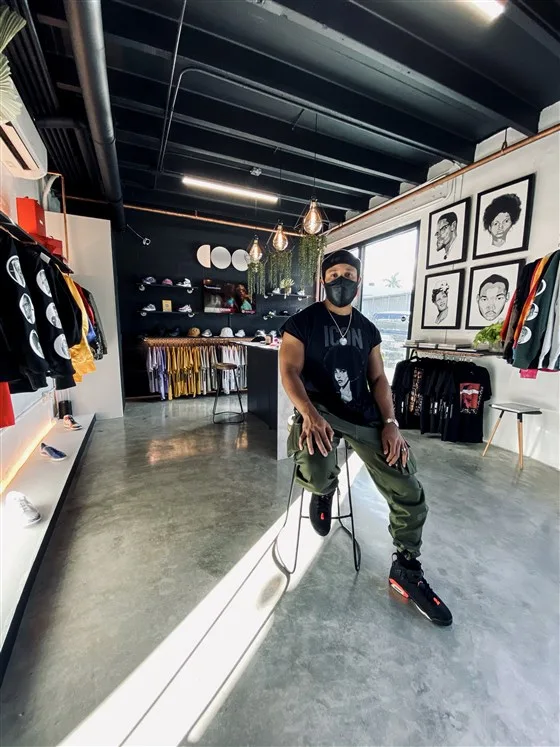
COOL is an acronym for Create Out Of Love, because for the Wilsons, their brand design and digital agency isn’t just a business, it’s a family. The Wilsons worked hard to expand and lay the groundwork to open a brick-and-mortar store to sell their apparel in Little Haiti, a neighbourhood of Miami, Florida.

Models wearing COOL Creative apparel. Courtesy of Comcast.

Despite the strides the family took to grow their business, they recently experienced the major setbacks as a result of the coronavirus pandemic. After pouring countless resources into opening a store, they could not physically open due to lockdown orders and delays from manufacturers. Ironically, during a time when racial inequality and #BlackLivesMatter protests echoed in cities around the country, COOL Creative was also fighting for a lifeline.

The Wilsons are certainly not alone. African-Americans have been disproportionately impacted by Covid-19 from every angle, from systemic health inequities that put them at greater risk of the virus to the fact that Black-owned, small businesses are nearly twice as likely to shutter during the pandemic.

https://www.instagram.com/p/BbAuGtRBX83/?utm_source=ig_embed

A model in COOL Creative apparel. Courtesy of Comcast.

Between February and April 2020, the number of active Black-owned businesses declined by 41 percent, compared to 21 percent for the general population, according to the National Bureau of Economic Research.

Unwilling to back down from their dream, the Wilsons carried on. With the same tenacity and grit that Johanne once had as a young student applying for numerous grants and scholarships to finance her college education, she set out to find assistance that might help COOL Creative rise above the overwhelming pressures that came from the pandemic.

That’s when she found the Comcast RISE contest, which invites Black small business owners who were hit hardest by the pandemic to apply for a chance to win consulting, media services, creative production or a technology makeover. RISE targets the pioneers of legacy, the curators of culture, the family franchise and more.

Comcast RISE which stands for Representation, Investment, Strength and Empowerment stemmed from Comcast’s $100 million Diversity, Equity and Inclusion initiative that launched this past summer. The contest awarded COOL Creative with significant media services, including a commercial for 90 days and a recent appearance in November on “The Kelly Clarkson Show.”

“It’s more important than ever to stand with the Black community and amplify Black voices,” Clarkson said during her segment. The contest awarded several other Black small business owners, including LeDay Grant, owner of an ice cream shop that provides space for community engagement in Denver, and Alicia Goodwin, owner of Lingua Nigra Jewelry in Chicago.

“We’re really excited to take advantage of the promotion and to get a commercial for 90 days,” Wilson said. “Our goal is to drive people to the website and also to the store and make up for all the sales that we lost over these past months,” she added.

Terrance Wilson, co-owner of COOL Creative, at his store Little Haiti, a neighbourhood of Miami, Florida. Courtesy of Comcast.

Teresa Ward-Maupin, SVP for Digital and Customer Experience at Comcast Business, said that RISE came from a deep desire to help people on a more granular level and to recognize those who have been most impacted by Covid-19. “We set out to determine how we can make the biggest impact, not just during this moment in time but to help businesses recover and prosper for the long term. We set out to truly lift businesses up.”

While the first phase of RISE focused on Black small business owners, the contest is now accepting entries from BIPOC small business owners. In all, Comcast will award around 700 small businesses in need among various categories.

A model is COOL Creative apparel.Courtesy of Comcast.

“When the thought of losing COOL Creative hit us, we kicked into fight mode,” Wilson said. “During a time of racial inequality and protests, we need fashion lines like ours more than ever. It really speaks to the struggle and truly connects people,” she explained, adding that she hopes their Little Haiti store will be a space for people to engage and connect within the community.

“Our fashion speaks to a nation that has been hurting,” Wilson said. “We’ll continue to rise.”

Written By 

Content courtesy of NBC News & Nairobi fashion hub 
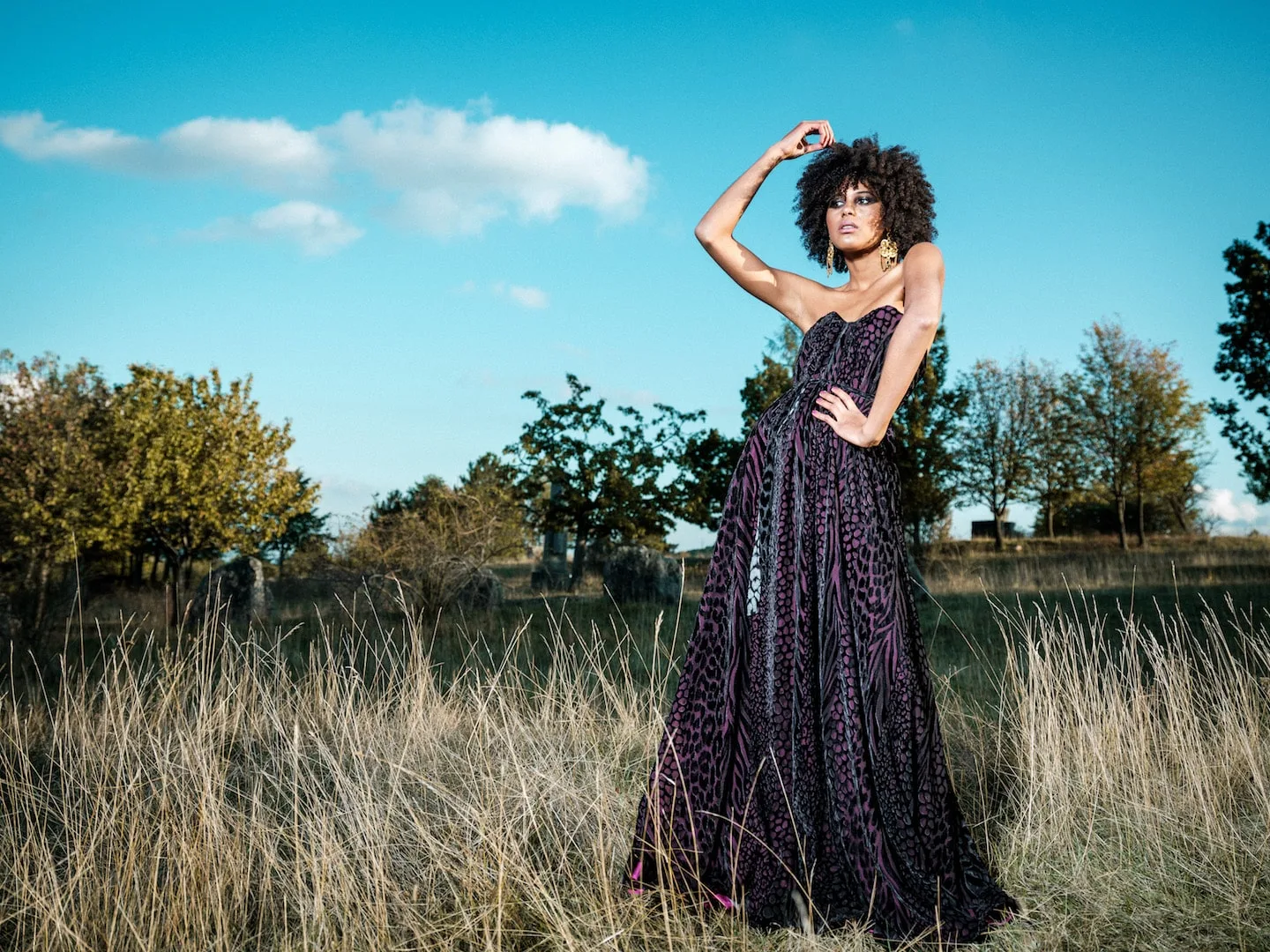
Nigerian Fashion Brand Imaatu Debuts ” Adire Tuntun ” Collection 2021

Vietnam based Nigerian fashion brand has lifted the veil on their fall/winter collection titled “Adire Tuntun”.
According to the elegant creative director, Omaatu, ‘Adire Tuntún’ which simply means “New Adire” births a dazzling array of ready to wear pieces and evening gowns, with striking emerald and shadowy patterns.

https://www.instagram.com/p/CGA7e3snfdp/?utm_source=ig_embed

Omaatu has a special place in her heart for African prints and African fashion which she fuses into modern style, like seen in this collection.

Highlighting the indigo-dyed pattern, originated in Nigeria, which is the primary drive of the collection, its her way of paying homage to the African culture, accentuating cross-cultural fashion.

The designer, Omatu, who believes her works should be more popular than her personality said that the dresses are comfortable and youthful yet very stylish.

https://www.instagram.com/p/CHbEbyGnzWv/?utm_source=ig_embed

Imaatu, whose fashion brand is formerly known as Fulani, started her fashion works in Vietnam and launched in 2003.
The designer and creative director who prefers to be called by her first name, Omatu, celebrates women globally and empowers them through her creations to emphasize their feminine charms.

https://www.instagram.com/p/CF7nQ4vnR3S/?utm_source=ig_embed

Her designs radiates self-confidence through colorful fabrics, with great importance to unique cuts that do not limit the wear ability of each piece.

Content courtesy of New Telegraph & Nairobi fashion hub 

Arise Fashion Week 2020 Unveils ‘30 under 30’ Designers Vying for $500,000

Africa’s premier fashion show, the ARISE Fashion Week, is set to deliver one of its most exciting line-ups to date, with the unveiling of the ‘30 under 30’ fashion designers who will be competing for $500,000 in prize money.

The list which includes designers from not only Nigeria but other parts of Africa and Europe, boasts fresh talent alongside some acclaimed international names in fashion.

Known for breaking records, ARISE Fashion Week has raised the ante even further by celebrating a new brand of designers – ‘30 under 30’ with a cash prize of $500,000 to be shared amongst the winners.

The weeklong virtual event is first of its kind on the African continent and is an avenue to unveil new stars in the global fashion industry.

According to co-producer Arise Fashion Week, Ruth Osime, “We look forward to this experience and feel truly honoured to play a role in turning the dreams these designers into reality.”

Following on from the successes of previous events, the Arise Fashion Week 2020 promises to be an exciting experience, with its prestigious location – the Lakowe Beach and Golf Resort, Lagos – just one of the markers to a one-of-a-kind event.

The weeklong event will be held from December 5-12, 2020, with live shows available to a global audience from the 9th to the 12th.

The virtual show will be broadcast to a worldwide audience on the new ARISE PLAY streaming service and other ARISE and THISDAY digital platforms which include an array of social media channels.

Among the list of the 30 selected designers drawn from across the world in alphabetical order are: Bibi, Bloke, Boyedoe, Clan, Colrs, Dna By Iconic Invanity, Elfreda Dali, Fruche And Geto.

Others include; Ilham.g_ng, Jawara Alleyne, Kenneth Ize, Kiko Romeo, Ladunni Lambo, Lagos Space Programme, Mazelle Studio, Moon By Me, Mmuso Maswell, Muyishime, Onalaja And Pepper Row.

Completing the line-up of precocious talents are Re Lagos, T.i. Nathan, Tjwho , Tzar Studios, Vicnate, Weiz Dhurm Franklyn, Wuman, And Ziva Lagos.

For more information and enquiries on the latest edition of Afirca’s biggest and most enthralling fashion show, log on to www.arisefashionweek.world and follow on Instagram: @arisefashionweek and @thisdaystyle

You can also contact Konye Nwabogor , Editor thisdaystyle.ng at konye.nwabogor@thisdaylive.com; Bolaji Animashuan, Line Producer, ARISE Fashion Week at bolaji@arisefashionweek.world and Sakina Renneye, Line Producer, ARISE PLAY at sakina@arisefashionweek.world

Content courtesy of ARISE Tv & Nairobi fashion hub

Top 10 Fashion brands from Africa and the African Diaspora that are enriching the fashion industry

In the wake of fashion’s racial reckoning, Farfetch, the e-commerce platform that merges more than 700 boutiques from 50-plus countries into one global marketplace, debuts its partnership with The Folklore, a New York–based online retailer of brands from Africa and the African diaspora.

“We are excited to welcome The Folklore to the Farfetch platform,” Holli Rogers, chief brand officer of Farfetch, tells BAZAAR.com. “We are committed to improving the representation of Black-owned businesses on Farfetch.com and are thrilled to provide increased global exposure to 10 new designers from Africa and the diaspora, opening doors to fashion and fashion lovers everywhere.”

The chosen designers are Nigeria-based brands Andrea Iyamah, Clan, Fruché, Lisa Folawiyo, Onalaja, Orange Culture, and Tokyo James; and New York–based labels William Okpo, EDAS, and Third Crown. Although they might not yet have global name recognition, all have distinct points of view and offer forward-thinking collections that enrich the fashion industry.

Since launching The Folklore in 2017, Amira Rasool, a lifestyle writer and entrepreneur, has been promoting Black-owned luxury labels that, for too long, have not gotten the global recognition they deserve. Now, with the resources and exposure that Farfetch provides, she is hopeful that they will soon become household names.

“A partnership like the one we have cultivated with Farfetch can truly be a career-defining moment for some of our designers,” Rasool says. “Being able to have designers from Africa and the diaspora on a platform as big as Farfetch is a huge thing in terms of visibility. Seeing Orange Culture or Onalaja sold next to Alexander McQueen or Gucci helps condition consumers and retail buyers to recognise that these brands are in fact luxury.”

Ahead of the launch, BAZAAR.com asks the founders of each brand to give us insight into their creative process and the diverse stories they hope to tell with their designs.

1. Adebayo Oke-Lawal, Orange Culture

Orange Culture references a story I wrote for a class about the orange boy. It details his experiences of toxic masculinity. I saw the colour orange as an alternative to more typical masculine shades like red or blue. I grew up very different to most boys.

I went to an all-boys school, a very hyper-masculine all-boys school, and I was very tiny and I had big glasses. People would say, “Talk louder, talk like a man,” and, “Do this, do that.” There was always aggravation towards me just because of the way I presented myself. I was bullied a lot.

The orange boy was an individual. He was unique, he didn’t really fit in, but he celebrated his difference in spite of this. It was about saying that whatever society had called me to be wasn’t who I wanted to be, and that’s fine. There wasn’t only one type of man. There wasn’t only one yardstick to measure a man’s masculinity. There were various ways you could be a man. I could be a man, at that time, in a pink suit and I wouldn’t be thought of as less than.

That was the narrative behind the orange in Orange Culture a culture that represents accepting individual expressions of self without limitations. Orange Culture is a brand that fights for individuality and celebrates a new age of liberation. Our brand in entirety is a mixed celebration, conversation, and confrontation of Nigerian culture from our silhouettes to our prints to our vibrant colours and stories. Our supply chain in itself is a celebration of Nigerian culture.

2. Kanyinsola Onalaja, Onalaja

I would describe Onalaja as a contemporary womenswear brand that experiments with demi-couture elements. Onalaja represents an imaginative concept of culture, heritage, luxury, and a contemporary appreciation of beauty through its highly crafted pieces that explore texture clashes, a play on proportions, colour, and textile manipulation.

An underlying concept within all pieces always remains, “Our heritage reimagined: the Africa we don’t see.” Reimagining heritage and the language of tradition is an aspect key to the DNA of the brand, which is brought to life with traditional craft techniques and collaborations with local artisans who create stories with their hands. Every piece gets the attention befitting of the discerning wearer, a cosmopolitan woman with an appreciation for intricately made items.

3. Teni, Aba, and Tiwa Sagoe, Clan

Clan is a premium ready-to-wear brand established in 2011 in Lagos, Nigeria. The name Clan stands for our ability to engage with communities far and near. Clan uplifts women through the expression of dress, strongly communicating power and confidence.

As such, our clothing is typically categorised by triangles, which represent female energy and strength. We are dedicated to providing the modern-day woman with versatile staples that feature a contemporary, hard-t0-miss edge.

4. Tokyo James

In one word, Tokyo James can be described as an intersection. It’s a brand where many worlds meet, where Africa meets Europe, where simplicity meets complexity. It’s a world where people come to find commonality in what their differences are.

https://www.instagram.com/p/CCisoFQHHf2/?utm_source=ig_embed

5. Kristin and Kofi Essel, Third Crown

Our brand, Third Crown, is a contemporary jewellery brand. We make bold and genderless pieces that are everyday. From an everyday look to an evening look, our brand represents unity, love, and powerfulness.

6. Andrea Iyamah

My brand is inspired by a cultural story. It is born and bred in Nigeria by a Nigerian who grew up in the country and was brought up by parents who were exposed to traveling.

They believed that travel was a form of education. This is the basis of the brand, giving people that experience through fabric and texture; looking at the culture and appreciating everything that it has to offer aesthetically, while also understanding the nuances in the pieces.

7. Lisa Folawiyo

We are a global womenswear brand based in Nigeria. Our signatures are detailed and intricate hand craftsmanship by local artisans, the play on colour and textures, and designing custom prints alongside the manipulation of local and traditional fabric applications.

Our brand continues to have an edge with its very cool and refined design aesthetic a distinct, strong, and forward-thinking point of view. Every collection is designed and manufactured in Nigeria, and through these collections, we are able to tell our authentic African story as we connect with people all over the world.

8. Sade Mims, EDAS

We are an accessories brand based in Brooklyn. I identify as a multidisciplinary artist who does various mediums. I love working with my hands and being explorative with my artistry and storytelling. I love incorporating culture, fashion, and style all the things that I really love with designing and being an artist.

My dream, and my goal, for EDAS is to continuously grow and tell stories that are important. I dream of making it a house, where we dive into the art realm with paintings, shoes, housewares, and furniture. EDAS is rooted in ethics, sustainability, consciousness, storytelling, and community building.

9. Frank Aghuno, Fruché

Fruché is a contemporary Nigerian brand. We like to infuse modern contemporary design with our traditional Nigerian artisanal techniques. We use different applications and dying techniques.

We are a very radical and progressive brand. We like to tell stories of culture and progressive stories of our culture, which I mix with my personal life. Each collection is like a page in a diary of my life.

10. William Okpo

Darlene and Lizzy Okpo named their brand after their stylish Nigerian father, who immigrated to New York in 1976 with just $80 in his pocket. The label launched with womenswear, but has recently expanded into beauty. Expect vibrant colours, exaggerated silhouettes and buckets of playfulness.

Content courtesy of Harper Bazaar & Nairobi fashion hub 

South Africa fashion is going local, and it’s a good thing

Largely due to global supply chain disruptions brought about by Covid-19, more big South African fashion brands are committing to producing fashion at home. What are the implications?

Established local brands, like the iconic Madiba shirt producers Lontana Apparel, have long pioneered locally produced fashion. Dylan Rothschild, Managing Partner at Lontana, says, “We’ve always been a proudly South African manufacturer, and have committed ourselves to empowering our local community and providing much-needed jobs at home.

“During lockdown we shifted our focus to producing masks to meet Covid-19 needs, and worked with over 20 external CMT manufacturers, providing over 1,000 people with work.”

With large local brands now beginning to follow suit, here’s what South Africans can expect for the future of fashion.

https://www.instagram.com/p/CHsco8bL2kS/?utm_source=ig_embed

What can we expect?

For years, South African retailers have relied on fashion imports from Asia, particularly China. But large clothing brands, including Mr Price, The Foschini Group (TFG), Truworths, and Woolworths have recently announced their intentions to manufacture more of their items locally. As Covid-19 and the associated lockdowns have negatively affected the garment manufacturing sector, leading to job losses, factory closures and cancellations of stock, the shift towards local manufacturing has become a necessary step in reviving the local economy.

  • Mr Price currently sources 35% of its total merchandise units locally. The clothing brand has committed to reducing its reliance on Chinese imports, which still account for 48.5% of its orders, and refocusing to manufacturing in African countries. Mr Price has also announced that via membership to the South African Cotton Cluster (SACC), it will procure 1,357 tons of cotton from local producers.
  • TFG Africa, which used to import around 80% of its products from Asia, currently sources 35% of clothing locally and has announced a strategic imperative to reduce reliance on suppliers like China.
  • Truworths also has plans to move towards more locally produced fashion and announced their intention to increase local textile purchases to 50% in the coming years.
  • Woolworths has also committed to sourcing more fashion locally, and currently purchases over 50% from the SADC region.
  • Other well-known local brands are also committing to locally sourced fashion. Pick n Pay clothing will be embarking on collaborations with South African designers and local production, and Pep Clothing plans to expand, offering more jobs to local workers and producing disposable PPE items to aid in Covid-19 efforts.

Benefits

“There are many benefits associated with producing fashion locally. Local fashion promotes community enrichment, feeds into the local ‘eco-system’, and promotes environmental sustainability,” says Dylan.

Local manufacturing allows fashion to retailers to respond quickly when it comes to trends and weather changes. Whereas previously it may have taken months for imported clothing to reach South African shores, locally made items can be manufactured and on shelves within weeks, while they’re most relevant. This shorter lead time could equal greater profit for clothing brands, as they’re better able to deliver what customers want, when they want it.

https://www.instagram.com/p/CHp7CwPLV6r/?utm_source=ig_embed

Local manufacturing also insulates the South African market against global disruptions, such as the pandemic and ongoing trade wars between major exporting countries. This, as well as an increase in jobs in local communities, could provide a much-needed boost to the local economy.

Challenges

“With the benefits of local production come some challenges. We’ve weathered and successfully overcome various difficulties as a proudly South African manufacturer, but it definitely isn’t for the faint-hearted,” says Dylan.

South African manufacturers face many challenges, not least of them the rising cost of electricity and an often-unreliable power source. As a nation, South Africa is are also faced with uncertainty regarding the unstable Rand, as well as an ageing skilled work force. When it comes to fashion, specifically, South Africa struggles to produce certain fabrics locally, still relying on imports, especially for winter garments.

What do these changes mean for brands that have always manufactured locally?

“Cheap imports from abroad have long been flooding our South Africa market. They are often low-quality items, which promote ‘fast fashion’, leading to environmental disasters such as overflowing landfills and the use of environmentally damaging fossil fuels for transport,” explains Dylan.

https://www.instagram.com/p/CHkEwJbl-Lj/?utm_source=ig_embed

As well as being detrimental to the environment, these imports have posed as competition to quality local brands, who have had to compete with disposable, low-priced items – especially in South Africa where the clothing market is characterised by a demand for variety.

https://www.instagram.com/p/CHkphUXlstU/?utm_source=ig_embed

With brands set to increase local manufacturing, established local brands should see a greater equalisation in pricing and quality. The local, ethical production of clothing, free from exploitation and sweatshops, means pricing should come more into line with established local brands.

https://www.instagram.com/p/CHkIEjElINQ/?utm_source=ig_embed

A greater interest in local manufacturing and production could also lead to new opportunities for local textile factories and brands, as large brands looking to go local search out established, tested, quality manufacturers to include in their stores.

https://www.instagram.com/p/CHkGVBQFmaL/?utm_source=ig_embed

“We welcome the increase in local clothing manufacturing, and hope to see more communities flourish as a result. Lontana remains committed to producing quality local apparel with South Africans in mind, and we look forward to more manufacturers doing the same,” concludes Dylan.

Content courtesy of Biz Community & Nairobi fashion hub 

Bombchel, A West African Clothing Store, Employs Refugees Living In Atlanta

The phrase “ethical fashion” covers a range of issues such as working conditions, exploitation, the environment and animal welfare.

Bombchel, an ethical fashion brand offering contemporary West African clothing and merchandise made in Liberia, has opened its first shop in the United States. The store opened in October and is located in Ponce City Market.

Archel Bernard is the owner and founder of Bombchel (both the factory in Liberia and the store in Atlanta). She joined “City Lights” host Lois Reitzes to talk about her factory, which employs women affected by the Ebola crisis, and the store, which employs refugees residing in Atlanta.

Interview Highlights

Why she moved to Liberia after graduating from Georgia Tech:

“My family is Liberian refugees. My mother and father grew up there and left because of the war, and my grandfather stayed in Liberia for a long time. For me, when I graduated, I wanted to connect with home. In so many ways, I feel like I went back to hopefully see him, even though he had passed. So as I build my business, sometimes I have conversations with him in my head like, ‘Would he be proud of the way I’m doing things?’ Liberia was once such a shining example of an independent African republic, and now we’re consistently the poorest. I know that we as a people are stronger and better than what we may seem to be right now, and I wanted to be a part of that story.”

Why she employs an all-female staff of Ebola survivors in Liberia:

“When the Ebola crisis started to slow down, I returned to Liberia. I opened the Bombchel Factory in 2016 so that I could hire and train women from backgrounds of poverty who wanted to work in fashion, but maybe didn’t feel like they could … similar to me because we were in Liberia. For me, I’m so sincerely proud to be a Liberian woman, and I wanted to bring other women that look like me into this fashion space. I felt like it was the way I could do my part.”

The garments and fashion offered at Bombchel:

“I think every woman should be able to wear this African clothing, but she should be so comfortable. We don’t do any zippers, just a lot of elastic, a lot of wraps and ties, so that things can fit a bunch of different body types in a way that is flattering to you. I feel like we’ve really reimagined the way people can wear African clothing, so you can wear it casually in your home or step out for the night. We just really try to fit a whole bunch of different lifestyles, ethnicities, skin tones and body types.”

Her mission for giving back to the Atlanta refugee community:

“I’m a refugee, and I think when people look at me, they don’t see it. I’m hiding in plain sight, and as I sit in the background and hear conversations around me about what refugees are, and where they should be allowed to go, and how they should be allowed to get there, I think about what my family was able to offer me because they sought a better life. I want us to normalize working around refugees, shopping with immigrants, people of color. I feel like we don’t really know everybody’s background, and I think the more we know, the more we can

Bombchel is located on the second floor of the Central Food Hall, next to Cobbler Union.

Content courtesy of WABE & Nairobi fashion hub  

Whitney Madueke Re-envisions Traditional Nigerian Fabrics for a New Generation

Growing up, Whitney Madueke watched on the sidelines as her parents got dressed up for Nigerian weddings and parties. “My dad would play pretty background music and you knew he was getting ready to go out,” she says, laughing. “I was mesmerized at how my parents would pair their traditional Nigerian attire with modern pieces from the Western world tradition, mixed with, like, a pair of Gucci sunglasses,” she quips.

https://www.instagram.com/p/CGxyTb_FLxn/?utm_source=ig_embed

As a student in England, Madueke realized that her own cultural encounters started influencing her fashion choices in the same way as her father a mix of trendy and time-honored pieces. “I started mixing Nigerian pieces like a Buba blouse, a top with long loose style sleeves, with a pair of jeans.

https://www.instagram.com/p/CBL3ax6HI2z/?utm_source=ig_embed

Or I’d find myself mixing traditional silk fabrics with more modern materials,” she says. Drawing on her African background and her love of fashion, Madueke, 26, set out to launch her own eponymous fashion line, which went live on her website and on Instagram in June. Currently living in New York, Madueke frequently travels back to London to visit her siblings and spends winters with her parents in Nigeria, where her line is based.

https://www.instagram.com/p/CG8FTUDFEi6/?utm_source=ig_embed

Here, we chat with Madueke about her own style, her clothing line, and her favorite designers to shop now.

https://www.instagram.com/p/CEzoNONlN6S/?utm_source=ig_embed

Marie Claire: How did you get your start in fashion?

Whitney Madueke: Since I was little, I’ve had an interest in fashion and fashion design. I wanted to study fashion in college, but I figured my parents would say no to that, so I went to college in England to study law. I needed a creative outlet there, so I started a fashion and beauty YouTube channel and an Instagram but I wasn’t really happy with law. I was like, What is my life? What’s my next step? I needed to do something that would make me happy, so I decided to move to New York to study fashion design at Parsons in their Associate’s Degrees for Professionals program. Last year, I started working on the launch of my clothing brand, Whitney Madueke.

MC: What was the inspiration behind your new fashion line?

WM: Nigerian fashion represents the people, but it also tells the story of the country and its surrounding nature. I wanted my clothing line to tell more African stories and to expand on who I am as a Nigerian and African woman in the fabrics, the silhouettes, and the vibrant colors.

MC: Tell us about Lagos Fashion Week.

WM: Just like New York, Lagos fashion week is a great way for the fashion community to connect with one another. Designers tell stories through their collections using traditional Nigerian fabrics like Adire fabrics, Kente and Akwete cloths. As a Nigerian fashion designer, I love celebrating a diverse group of designers telling the story of home. Lagos Fashion Week was scheduled for late October this year, but in light of the #EndSARS protests [centered around police brutality in Nigeria], the event has been postponed.

MC: How do you get dressed in the morning?

WM: It depends on how I feel that day, but I tend to gravitate towards bright colors, especially vibrant, primary colors that stand out in a room. I also love versatility I’m always looking for great basics that I can pair in numerous different ways.

MC: Who are some of your favorite designers right now?

WM: Social media has made it so much more accessible for global designers to have a voice, and I’m able to actively find and support more African designers. Two of my favorites are Abiola Olusola and Onalaja. Both are Black women designers that embody timeless fashion. Their pieces are crafted from African textiles and include intricate beading techniques.

Written By Marie Claire

Content courtesy of Marie Daire & Nairobi fashion hub 

Couture Africa Style Awards Gala Night Set For This Weekend

Couture Africa Ltd who are the publishers of Couture Africa Magazine announced nominees of Kenya’s most stylish personalities a few weeks ago. The stylish individuals were grouped in a number of categories including media, entertainment, corporate, politics, and even sports. Having a great understanding and appreciation of the space, the nominees on each of the categories were mostly spot-on.

The list really does cover almost all the well known stylish Kenyans we love such as Charles Njonjo, Chef Ali, Kate The Actress, Diana Opoti, King Kaka, Amina Abdi, Sonia Mehrali, Mulunda Kombo, Joy Kendi, Governor Joho just to mention a few.

The nominations were done by celebrity image consultant Derek Bbanga and media personalities Dr. Ofweneke and Sheila Mwanyigha.

“The Couture Africa Style Awards 2020 Nominees were selected through a vigorous vetting process by our esteemed Nomination Panel with assistance from the Couture Africa Editorial Teams. The focus was on individuals who have a distinct, consistent, and outstanding sense of style,” reads part of the press statement.

Voting officially ended yesterday. Tomorrow October 31st, the winners will be announced at the plush Emara Hotel. The event will also be streamed LIVE to the public on their social media platforms.

Follow the Conversation #CAStyleAwards. Check out the nominees Here

Content courtesy of Couture Africa Limited & Nairobi fashion hub 

Couture Africa Style Awards 2020 Full List of Nominees

The list for the 2020 Couture Africa Style Awards is out and heavy weights in the media, music, film and corporate industry will be battling for the prestigious Awards in different Categories.

Citizen TV Swahili news anchor Lulu Hassan has been nominated in the, Most Stylish TV and Radio personality (Female) Category, where she will be competing with; NTV’s Tracey Wanjiru, Amina Abdi Rabar, Talia Oyando, Beatrice Marshall and Jane Ngoiri.

The Male Category for Most Stylish TV and Radio Personality will see KTN’s Jamal Gaddafi face-off with Michael Gitonga, James Smart, Muthee Kiengei, MC Jessy and Miano Muchiri.

The voting process is currently ongoing via castyleawards.com under the slogan “…because life is too short to wear boring clothes”.

The battle for the Most Stylish Entertainer (Male) has been narrowed down to; King Kaka, Otile Brown, Lenana Kariba, Willy Paul, Chimano and Khaligraph Jones.

Full List of Nominees & Categories:
Most Stylish Entertainer (Famale)

Akothee
Fena Gitu
Catherine Kamau
Brenda Wairimu
Teacher Wanjiku
Muthoni Drummer Queen

Most Stylish Content Creator

Joy Kendi
Maureen Waititu
Maxine Wambosha
Farhana Oberson
Nyawira Mumenya
Fashionable Stepmum

Most Stylish Content Creator
Chef Ali Mandhri
Vinnie O
Eric Omondi
Muriuki Kagiri
Eli Mwenda
Mulanda Kombo

Most Stylish Sports People

Emily Muteti
Evelyn Okinyi
Sabrina Simadar
Hellen Obiri
Naomi Wafula
Janet Wanja

Most Stylish Sports People

David Rudisha
Billie Odhiambo
Eliud Kipchoge
Ronald Okoth
MacDonald Mariga
George Manangoi

Most Stylish Public servant

Nadia Ahmed
Judge Mumbi Ngugi
Hon. Gladys Shollei
Achie Ojany Alai
Hon. Naisula Lesuuda
Hon. Amina Mohamed

Most Stylish Public servant

Hon. Ababu Namwamba
Sen. Joshnson Sakaja
Gov. Hassan Joho
Hon. Otiende Omollo
Hon. Abdulswamad Shariff
Hon. Najib Balala

Most Stylish Person of the year

Julie Gichuru
Catherine Kamau
Sylvia Mulinge
Hon. Joyce Lay
Diana Opoti
Sonal Maherali

Most Stylish Person of the year

Sir. Charles Njonjo
Zeddie Loky
James Maina
Martin Keino
Vinnie O
King Kaka

Most Stylish Entrepreneur

Michelle Ntalami
Carol Kinoti
Rita Muchiri
Dr. Jennifer Riria
Jennifer Barasa

Most Stylish Corporate (Famale)

Rabecca Miano
Carol Ndungu
Beth Muthui
Brenda Mbathi
Sheila M’Mbijiwe
Dr. Betty Radier

Most Stylish Corporate (Male)

Kris Senanu
Joshua Oigara
Captain Ronald Karauri
Jimi Kariuki
Geoffrey Odundo
Dr. David Wachira

Most Stylish TV and Radio Personality (Female)

Amina Abdi
Beatrice Marshall
Jane Ngoiri
Lulu Hassan
Talia Oyando
Tracy Wanjiru

Most Stylish TV and Radio Personality (Male)

Jamal Gadafi
James Samart
Mc Jessy
Michael Gitonga
Miano Muchiri
Muthee Kiengei

The People’s Choice Award (Female)

Ms Fawwie
Christine Obiero
Lynne Wangui

The People’s Choice Award (Male)

Kiptala
Amar Jonathan
Mike Mwaura

Content courtesy of Couture Africa Limited & Nairobi Fashion hub

Tshego Manche from a small town of Klerksdorp with Big Dreams For African Fashion

Tshego Manche grew up in Klerksdorp and found sartorial visibility in big city Johannesburg, Born in Klerksdorp, a small town in the North West Province of South Africa, Tshego Manche was raised in a business-oriented family.

Her parents owned a salon and cosmetic store in the township for over 20 years before venturing into other businesses.

“Coming from that environment, I already knew I wanted to be an entrepreneur,” says the 30-year-old fashionista today. “I aimed for what I am passionate about. Growing up, I always said I am a small town girl with big city dreams.”

Manche, known for her sartorial sense among friends, studied for a BCom degree in Marketing Management and whilst in varsity, worked at Pulsate, a fashion store in Africa’s richest square mile, Sandton, in Johannesburg.

“Two weeks after being employed, the owner flew down and said he had to meet me as there was a spike in sales. I was never afraid to approach people and tell them about the store, and also interact with customers. I then learned customer and marketing skills, and developed a deeper love for fashion which led me to want to start my own brand,” says Manche.

La Manche clothing was registered in early 2012 and was ready to put the all the theory into practice. Manche dropped out of varsity during her third year and went on to start selling on a small scale to friends and family, and she opened her physical store end of 2012.

Her mother contributed immensely to her startup and invested in clothing, packaging, and also paid for her flights and accommodation to look for stock in China and Turkey. The brand started growing. In 2014, she employed three workers, teamed up with stylists and magazine editors and the brand grew with sales doubling, she says.

“In 2015, we hit our million mark [offering local and international clothing]. From 2016 onwards, we hit a decline in sales as new entrants in the market came; rental for my space was also high and the location remote.

In 2017, I started 100% custom-making; growth had been slow yet steady and I had nine employees by the end of 2019. I decided to close my physical store in April 2019 and stay with one employee. Now in 2020, we are focusing solely on the online space we have rebranded and restructured.”

https://www.instagram.com/p/B89ZlRijA4o/?utm_source=ig_emebed

The coronavirus also had an impact on business but this has taught her that digitizing the business is the best way to go. She also took to social media, encouraging other entrepreneurs during the tough times.

“I invited different people from different industries to come talk to people and engage about entrepreneurship every Monday for 10 weeks. We had one livestream with over 10,000 viewers,” says Manche.

Who would have thought a small town girl would encourage entrepreneurs in a big city to keep pushing ahead in the hard times.

Content courtesy of Forbes Africa  & Nairobi fashion hub 

Kenyan Socialite Huddah Monroe excited after featuring on Harpers Bazaar US Magazine

Kenyan socialite, Huddah Monroe is making money moves back in the US  and this time, it’s all in the name of high fashion as one of L.A.’s most stylish global transplants.

Huddah Monroe in Michael Kors Collection jacket and dress; Hermès bag; Jimmy Choo sandals; Mark’s Garden floral arrangement; Martone Cycling Co. bike.


The C.E.O of the famous Huddah Cosmetics, is gracing the Harper’s Bazaar’s limited edition September 2019 issue, posing in a stunning gown to look like the ‘Crazy Rich Asians’ movie women.

The cover shot captures Huddah in a faux fur purple shiny gown posing on a bike with a basket of flowers. Huddah also goes African with her short natural hair look,Monroe is rocking a Michael Kors Collection jacket and dress; Hermès bag; Jimmy Choo sandals; Mark’s Garden floral arrangement; Martone Cycling Co. bike.

Also living in the here and now is Huddah Monroe, a beauty entrepreneur who shot to fame when she appeared on Big Brother Africa in 2013. Although her home base is Nairobi, she seems to exist in perpetual motion. Whether Abu Dhabi or Monaco or Atlanta or Shanghai, she’s never in the same place for long. But these days, L.A.

(where next year she plans to open a Huddah Cosmetics U.S. flagship stocking her popular liquid lipsticks and eye shadow palettes for darker skin tones) is like a second home to her. During the shoot, as crowds of onlookers gawk, she looks perfectly at ease bicycling along the beach with a flower-filled Birkin in a sequined Michael Kors Collection dress that shimmers in vivid violet hues.

Left: Kevin Kwan with (from left) Adinda Bakrie, Huddah Monroe, and Mireya Rios. Dresses (from left): Etro, Ralph Lauren Collection, and Prada. Jewelry, their own.

With 1.7 million Instagram followers and her face plastered all over billboards, Huddah, 27, is one of Kenya’s most talked-about personalities. She keeps a compound in Runda Estate, Nairobi’s poshest neighborhood, and has spent the past several months in one of downtown L.A.’s glittering new high-rises, where a posse of basketball stars forms her chosen family.
https://www.instagram.com/p/B1N-w1lD45S/?utm_source=ig_web_copy_link

It doesn’t hurt that she’s as photogenic as Iman, but Huddah’s success is still a remarkable achievement for a girl born and raised in the slums of Nairobi.

“I grew up in a very nice environment,” Huddah deadpans, her deep smoky accent sounding like a cross between Lauren Bacall and Karl Lagerfeld. “

The only thing we had was poverty. The only thing we didn’t have was food. I knew from a young age that I wanted to be an independent woman, and I saw an opportunity to start my own business and help other women feel beautiful.”

When we meet later for a drink, she is sheathed in a figure-hugging champagne- colored cocktail dress that I mistake for Alexandre Vauthier. “This is Forever 21,” she announces breezily. “I love pairing fast fashion with beautiful accessories.” Huddah loves local hot spots like Nobu Malibu and the Lone Wolf Cigar Lounge (she has her own line of flavored cigars—the band reads hbc, for Huddah the Boss Chick). “L.A. has become so international and so welcoming,” she says. “It gives me the chance to dress up. Every day is like going to an awards show.”

Content courtesy of Harpers Bazaar US Magazine , Huddah Monroe & Nairobi Fashion Hub 

Bettinah Tianah

The face of everything young, fresh and modern in Uganda. I started out in the Ugandan entertainment at the age of 15 as the host of “Youth Voice” followed by popular television shows “Be My Date” and “About Town”, I also became a respected actor after landing the lead role as Rhona in the Hostel serenity season 4 that aired on  Uganda’s NTV.

I’ve also been a spokesperson for many campaigns here in Uganda and regularly featured on the best dressed lists. All this while completing a degree in Public Relations and media management at CUU

Currently a panelist on the Ntv Style Project a show that aims at edutaining about current trends beauty and fashion which airs every Friday at 7:35pm. In 2017, I emerged as a winner for the best dressed female media personality Uganda in the Abryanz Style and Fashion Awards also landed multiple nominations in the Starqt  and  Hipipo Awards.

Bettinah Tianah born Betty Nassali, 10 November 1993 is an Ugandan television personality, actress, model, and fashionista. She is known for hosting television programs like Youth Voice, Be My Date, and The Style Project. She also played a lead role (Rhona) in The Hostel television series.

At the age of 15, Tianah started working at NBS Television as the host of Youth Voice. She later hosted a matchmaking television show called Be My Date in 2015, replacing Anita Fabiola, and has hosted a fashion show called The Style Project since 2017. Tianah landed her first acting role as Rhona, a “bad girl” on the Ugandan television series The Hostelin its fourth and last season.

Tianah hosted the red carpet event at the UNAA Convention in Washington D.C., becoming the first Ugandan to host the event. She is also a model, having signed with Creative Industries Group in 2017. She held her first photoshoot in Paris.

Tianah holds a degree in Journalism from Cavendish University. She had earlier enrolled for a degree in Human Resources Management at Makerere University Business School (MUBS), but dropped out to pursue a journalism career.

Content courtesy Of Bettinah Tianah & Nairobi Fashion Hub 


Ad