Thursday 4th of June 2026

Nairobi, Kenya

“My Brother’s Keeper”: A Testament to Nigerian Heritage and Local Craftsmanship in Fashion

In an era where the global fashion industry often overshadows local creativity and production, Badesere Lagos introduces “My Brother’s Keeper,” a pioneering fashion collection that brings the spotlight back to Nigerian heritage and local craftsmanship.

Spearheaded by the visionary Badesere Aboyade-Cole, this collection is a vibrant celebration of Nigeria’s resilience, beauty, and rich cultural tapestry, offering a fresh perspective on African fashion through the lens of local production and exceptional artisanship.

Embracing Local Fabrics with Global Appeal
At the heart of “My Brother’s Keeper” is a commitment to utilizing locally sourced fabrics, a choice that not only highlights the unique textures and patterns inherent to Nigerian culture but also supports the local economy and the artisans behind the scenes. This collection stands as a bold statement against the conventional reliance on imported materials, showcasing the untapped potential of Nigerian resources. Each piece in the collection is meticulously crafted, reflecting the intricate details and high-quality workmanship of Nigeria’s skilled artisans.

Innovating African Fashion
Badesere Aboyade-Cole’s approach to the “My Brother’s Keeper” collection is revolutionary, focusing on versatility and innovative construction techniques that challenge the status quo of African fashion. The collection’s designs transcend traditional boundaries, offering wearers pieces that are not only culturally significant but also align with contemporary fashion sensibilities. It is a harmonious blend of tradition and innovation, embodying the spirit of progress that drives the Nigerian community forward.

A Call to Collective Empowerment
The ethos of “My Brother’s Keeper” extends beyond the realm of fashion; it is a clarion call for unity and collective empowerment. Badesere Aboyade-Cole’s message is clear: by supporting local manufacturers and embracing our indigenous beauty, we can forge a brighter, more sustainable future for our communities. This collection serves as a reminder of the strength found in solidarity, echoing Frederick Douglass’s words that, without struggle, there can be no progress. It is an invitation to Nigerians and the global community to stand together in support of local production, thereby fostering economic growth and self-sufficiency.

Beyond Fashion: A Movement for Change
“My Brother’s Keeper” is more than a fashion collection; it is a movement towards empowerment, sustainability, and progress. It challenges us to rethink our consumption patterns, value the craftsmanship of our local artisans, and take pride in our cultural heritage. In doing so, it offers a pathway to a future where the fashion industry not only celebrates beauty in all its forms but also contributes to the well-being of the communities it touches.

Join the Journey
The launch of “My Brother’s Keeper” marks a significant milestone in the journey towards a more inclusive and sustainable fashion industry. Badesere Lagos, under the creative guidance of Badesere Aboyade-Cole, invites everyone to experience the beauty and craftsmanship of Nigerian fashion. By embracing this collection, you become part of a movement that values heritage, supports local production, and believes in the power of community to drive change.

Follow the journey and explore the collection: Badesere Aboyade-Cole @Badeserelagos.

In embracing “My Brother’s Keeper,” we not only witness the evolution of African fashion but also contribute to building a legacy of innovation, resilience, and unity. This is more than fashion; it’s a celebration of our identity, a nod to our past, and a step towards a future where every thread tells a story of empowerment and progress.

Content  courtesy of Badesere Aboyade-Cole, Mo AfricanPR & NFH Digital Team 

Milan Fashion Week’s Fall/winter 2024–2025 Collection Fights Discrimination And Shines A Light On Black Designers

In a world where fashion serves as a mirror to society’s evolving norms and values, Milan Fashion Week’s fall-winter 2024-25 collection has emerged as a beacon of progress and inclusivity. The prestigious event, long revered for its influence in setting global fashion trends, took a bold step forward this season by casting a spotlight on black designers, who have historically been underrepresented in the industry. This initiative is not just a nod to diversity but a comprehensive effort to combat discrimination, signaling a seismic shift in the fashion landscape.

A Platform for Underrepresented Talent

Milan Fashion Week has always been a stage for the world’s most renowned designers to showcase their artistry. However, this year’s focus on black designers marks a pivotal moment in the event’s history. By providing a platform for these talented individuals, the week not only celebrated the richness of their cultural heritage but also underscored the importance of diversity and representation in fashion. This move is a clear acknowledgment of the unique perspectives and creativity that black designers bring to the table, enriching the industry with their diverse narratives and aesthetics.

Combatting Discrimination Through Collaboration

The initiative to spotlight black designers was accompanied by a significant partnership between the Italian Fashion Council, a governmental anti-discrimination office, and a nonprofit organization dedicated to promoting African fashion. This collaboration is a testament to the power of unity in driving social change. By signing an agreement to trace, identify, and fight against discriminatory practices, these organizations have laid down a comprehensive strategy aimed at fostering an environment of equality and respect within the fashion industry.

A Step Towards Inclusivity

The fall-winter 2024-25 collection at Milan Fashion Week serves as a critical step towards inclusivity in fashion. It goes beyond mere representation; it is about acknowledging and addressing the systemic barriers that have hindered black designers and other marginalized groups from receiving the recognition they deserve. This initiative sends a powerful message that fashion is for everyone, irrespective of their race and that the industry is committed to breaking down the walls of discrimination.

The Impact on the Industry

The spotlight on black designers at Milan Fashion Week is expected to have a ripple effect across the global fashion industry. It challenges other fashion weeks and designers to reflect on their practices and consider how they can contribute to a more inclusive and equitable industry. Moreover, it encourages consumers to support and celebrate diversity, not just in fashion but in all aspects of life.

Looking Forward

While the initiative at Milan Fashion Week is a significant milestone, it is just the beginning of a long journey towards full inclusivity in fashion. The success of this initiative should serve as a catalyst for continued efforts to ensure that all designers, regardless of their background, have equal opportunities to showcase their work and influence global fashion trends. The fashion world is watching, and the message is clear: the time for change is now.

In conclusion, Milan Fashion Week’s fall-winter 2024-25 collection has not just set the stage for the latest fashion trends but has also paved the way for a more inclusive and equitable industry. By shining the spotlight on black designers and launching an initiative to combat discrimination, the event has underscored the essential role of diversity in driving creativity and innovation in fashion. This landmark moment is a powerful reminder that fashion, at its best, is an expression of all of humanity’s rich tapestry, and everyone deserves a place on the runway.

Content courtesy of NFH Digital Team 

The 5 African Designers Showing At Paris Fashion Week Men’s

The men’s Paris Fashion Week has begun. Runway presentations take place back-to-back at various venues from January 16 to 21 to contribute to the collection’s narrative. Seldom do we see black designers at PFW Men’s, much less at other fashion weeks like Milan or London. Out of over 60 designers, only five black designers are included on this specific calendar this year.
We are aware of the large number of black designers who would have contributed significantly to the official calendar; thus, this is extremely disappointing.

For example, it would have been wonderful to have Ozwald Boateng, Martine Rose, and Bianca Saunders in the starting lineup this season.

Well-known companies like Wales Bonner and up-and-coming companies like Lagos Space Programme will showcase their newest collections in the coming days. Bonner’s structured suits and frequently Jamaican-inspired items have benefited greatly from her research-based design approach. According to WWD, Balmain, the brand led by Olivier Rousteing, will make a comeback to the Paris Fashion Week schedule with its final presentation on Saturday, the 20th.
The men’swear collection of the firm will be highlighted in the exhibition. From his beginnings at Robert Cavalli in 2003 to his position as creative director at Balmain, Rousteing’s trajectory has served as a source of inspiration for several young black designers.

1. Botter
The gender-neutral Caribbean brand, which was co-founded in 2017 by Rushemy Botter and Lisi Herrebrugh, was a nominee for the LVMH award in 2018 and received the Andam prize in 2022. The brand is well-known for its “Caribbean couture” design guidelines, which feature vivid hues and creative concepts like dressing pants like sweaters.

Herrebrugh attended the Amsterdam Fashion Institute, while Botter studied design at the Royal Academy of Fine Arts. Because of the viral success of their Spring/Summer 2023 runway show featuring models wearing floaty condom gloves, the duo’s display this season promises to be nothing short of extraordinary.

2. Wales Bonner
In only a few short years since Grace Wales Bonner founded the menswear brand in 2014, it has grown from a startup to established status. Numerous rappers, including Tyler, the Creator, and Kendrick Lamar, have expressed interest in her designs.
In addition, Bonner draws influence from her Jamaican background for items that have an island vibe.
The presentation by Wales Bonner is scheduled for January 17 at 6:30 p.m. local time.

3. Lagos Space Programme
Designer Adeju Thompson founded the Lagos Space Program in 2018. The non-binary luxury company has seen significant growth over the past several years. Thompson’s brand philosophy revolves around African design codes, blackness, and the harmony between beauty and masculinity.
Thompson, who was raised in the UK and was born in Lagos, began their career in 2013 as an apprentice at the Lagos-based Maki Oh label before starting their label.
Following that, Thompson was shortlisted for the LVMH Prize for Young Fashion Designers in 2021 and went on to win the International Woolmark Prize in 2023. Additionally, Thompson’s creations were included in the “Africa Fashion” exhibition at the Victoria and Albert Museum.

Lagos Space Programme will be presenting on January 19 between 11 a.m. and 2 p.m. local time.

4. Winnie New York
Idris Balogun created Winnie New York in 2018, intending to dismantle luxury. Balogun’s Nigerian background greatly influences his design techniques; each piece he creates incorporates a personal narrative. Before starting his own company, he worked as an apprentice for Tom Ford and Burberry. With that knowledge, Balogun has concentrated on making perfectly-made, high-quality items that last. At the next runway presentation, don’t expect transient gimmicks but rather superb suiting.
The presentation by Winnie New York is scheduled for January 21 at 11:30 a.m. local time.

5. Balmain
At the age of 24, Olivier Rousteing has held the position of creative director at Balmain since 2011—a remarkable accomplishment for many black designers. Even in and of itself, his career’s durability at such a young age is inspirational.
For over 13 years, he radically altered Balmain’s look from that of his predecessor to include a stronger couture component. Notable accomplishments include reviving a fashion brand and designing special ensembles for Beyoncé’s most successful tour.
Rousteing’s ability to adapt and shift perceptions as a black designer in the fashion world has not gone unnoticed. Balmain’s next collection marks the brand’s independent menswear debut and adds to Rousteing’s library of avant-garde concepts.


Content  courtesy of Essence Magazine & NFH 


“Africa Can Be Transformed By Fashion”: The Trailblazing Designers Seeking Unimaginable Opportunities

Style and skill abound, but experts claim that until Africa invests in its textile sector, it will never reach its full potential.
The designers and tailors at a tiny Lagos fashion company are hard at work carving precise lines through the large rolls of cloth. Designer Oroma Cookey-Gam, co-founder of This is Us, says, “Cotton T-shirts were the first item we produced.”
The company uses locally grown cotton to create modern Nigerian designs, such as oversized shirts, jumpsuits, and kaftans.
Cookey-Gam travels to the Funtua textile mill, one of the few fully functional mills in the nation, in Katsina, the northern region, once a month to get the cotton.

The cloth is then hand-dyed into colors of indigo for up to eight hours in the Kofar Mata dye pit in Kano, the oldest pit in Nigeria, a three-hour trip away.
Cookey-Gam used to buy cotton from Turkey and Morocco, but she started a year-long quest in 2016 to find suppliers inside her nation.
Even though cotton is grown in two-thirds of African countries, with some of the continent’s biggest producers located in West Africa, more than 81% of it is exported from sub-Saharan Africa, leaving little for domestic use.
According to recent Unesco research, the region’s economic prospects were being negatively impacted by exports, which were limiting the expansion of the textile and apparel sectors.

Ernesto Ottone is the assistant director-general for culture at Unesco. “Africa is exporting something that could create a huge industry and an enormous number of jobs,” Ottone adds.
Like other African countries, Nigeria’s textile sector flourished in the 1960s and 1970s before collapsing when a flood of secondhand and foreign-made clothing entered the continent as a result of trade liberalization measures.
Nowadays, sourcing materials presents significant hurdles for companies such as This is Us.

According to Cookey-Gam, Nigerian ginsneries, which extract the seeds from cotton, deal with big orders and are hence less interested in selling to fashion companies. “The mill didn’t take us seriously when we initially visited there. She explains how she teamed up with other businesses to generate large purchases, saying, “They said they can’t work with fashion because the orders are not big enough.”

African-made products have become more and more popular throughout the world in recent years, thanks to the rise of Afrobeats and contemporary cultural representations of the continent like the Black Panther movies. Beyoncé, Naomi Campbell, and Chimamanda Ngozi Adichie are among the well-known black individuals who have supported the work of regional and diaspora designers.

Younger people have adopted modern twists in African architecture and materials in fashion. Burkina Faso-born designer Sébastien Bazemo has contributed to the resurgence of fashion for the vibrant Kôkô Dunda cloth. Additionally, there are currently over 30 fashion weeks held annually around the continent.

According to businesswoman Omoyemi Akerele, who oversees Lagos’s yearly fashion week, “it’s a season of ownership.” “In the past few years, creators and designers have doubled down to communicate and re-emphasize who they are in a way that’s true to themselves and the communities they represent. Before now, [the African fashion industry] pandered a bit to the Eurocentric gaze.”

“Made in Africa” campaigns have gained popularity recently, particularly among the continent’s expanding middle class. However, African designers claim that their creations are still too expensive for many Africans to purchase because of the high expenses associated with producing and importing basic materials, which has an impact on final prices.
The primary customer base for This is Us comprises African diaspora residents and Nigerian creatives, with items priced between 50,000 and 150,000 Nigerian naira (£50 and £150).
Famous Nigerien designer Alphadi (Sidahmed Seidnaly) is in favor of proposals for African nations to increase the production of non-cotton textiles and restrict textile imports.
Even though the fashion industry on the continent is becoming more well-known, he claims that policy and investment assistance are still lacking.

Citing well-known European designers, he claims that “investors, buyers, and policymakers, who can make African fashion take off, do not understand the difficulty of being an African designer.” “People wager on them, and in this industry, that can mean the difference between success and failure.”

The designer, who operates in the city of Niger, Niamey, as well as in the Ivory Coast and Morocco, claims that he has had to invest a significant amount of his cash to continue in business, even though he is one of the continent’s fashion pioneers.

African fashion investors claim that while funding individual designers is popular, fundamental problems like local manufacturing capacity that financiers and legislators need to address for the sector to thrive are not addressed. They assert that in the absence of such steps, investments would only result in transient success as opposed to long-lasting, expandable companies.
“We need to look at building the infrastructure and giving the capacity for designers to thrive—for them to access different textiles locally,” says Roberta Annan, creator of the Impact Fund for African Creatives (IFFAC), an organization that invests in creative enterprises across Africa.

To grow the industry, IFFAC provides grants and investments of up to £1.7 million to sustainable fashion enterprises. To boost domestic textile production, it recently purchased a government-owned mill in Ghana.
Such initiatives, according to designers, have the potential to be revolutionary.
According to Cookey-Gam, “African fashion is still very young, and we need [various] elements to make things at high quality.” “Fashion is a tool we can use to improve people’s lives and employs a lot of people.” It has the power to alter the continent.

Content Courtesy of The Guardian & NFH

Africa Fashion Week 2023 And The Designers Who Showcased At The Event With Their Brands, Including The Models

Africa Fashion Week 2023: A Celebration of Diversity, Creativity, and Talent

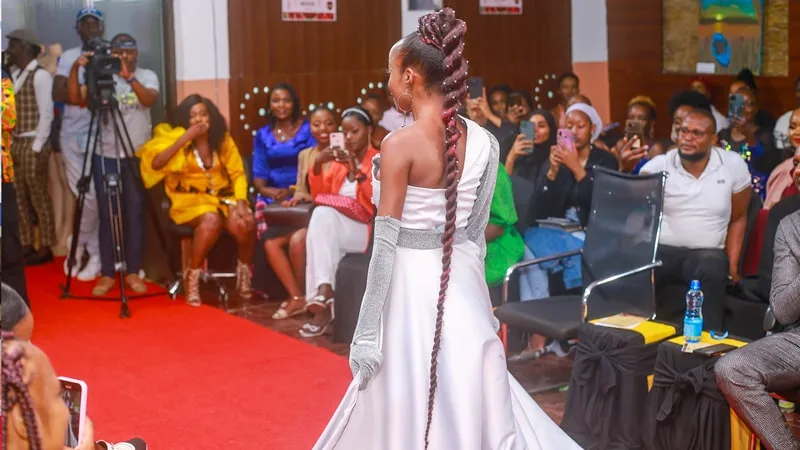
Africa Fashion Week 2023 took center stage, bringing together a spectacular array of designers who captivated audiences with their unique styles, innovations, and cultural expressions. The event, held in Nairobi, Kenya, showcased a diverse range of talents, with each designer bringing their narrative to the runway.

Let’s take a closer look at the remarkable designers and their outstanding collections that graced the first runway.

1st Runway: A Kaleidoscope of Creativity

1. Riel Marial – Rieldo Fabrics
Brand Name: Rieldo Fabrics
Number of Outfits: 6
Models: Machar Duor, Victorious Mumo, Felix Orina, Dickson Oenga, Mercy Ndolo, Bol Deng, Ayra Mumbi

Riel Marial opened the show with a stunning collection that showcased the versatility of Rieldo Fabrics. From traditional to contemporary, each outfit was a masterpiece, worn with grace by a lineup of talented models.

2. Judith Akinyi – The Greatadorn Fashion
Brand Name: The Greatadorn Fashion
Number of Outfits: 5
Models: Sashley Musibenga, Yakatrina Omtere, Lucy Ngolo, Merveille Wanjala, Yvette Olel

Judith Akinyi’s collection was a testament to elegance and sophistication. The Greatadorn Fashion wove a tapestry of style, combining modern trends with a nod to African traditions.

3. Morgan – Kenyan Raw
Brand Name: Kenyan Raw
Number of Outfits: 5
Models: Omosa Cadonie, Machar Duor, Bol Deng, Otieno Stephen, John Olima

Morgan’s collection, aptly named Kenyan Raw, celebrated the raw beauty and authenticity of African fashion. Each outfit exuded a sense of pride and cultural richness.

4. Brunah Ogutu – Flamingo-Kids254 Closet
Brand Name: Flamingo-Kids254 Closet
Number of Outfits: 7
Models: Ayra Mumbi, Risper Juma, Melissa Trevor Ushindi, Trinity Nita, Favor Bridgit, Mercy Hope

Brunah Ogutu’s vibrant and playful collection for Flamingo-Kids254 Closet brought joy to the runway. From children to adults, the designer showcased a range that catered to all ages.

5. Loter Lodukae – House of Sons
Brand Name: House of Sons
-Number of Outfits: 3
-Models: Mishelle Mutindi, Jackline Amondi, Lucy Ngolo, Wendy Nyaoke, Dorcas Khatiala

Loter Lodukae’s House of Sons presented a concise yet impactful collection, highlighting the designer’s commitment to quality and attention to detail.

6. Samuel – TXL
Brand Name: TXL
Number of Outfits: 3
Models: Lovejoy Achieng, Jasmine Malia, Cynthia Too, Sharlene Nekesa, Joyce Owiti

Samuel’s TXL collection was a fusion of boldness and elegance. The designer’s keen eye for creating outfits that make a statement was evident in every piece.

7. Dennis Alvis – Corban A
Brand Name: Corban A
Number of Outfits: 5
Models: Oenga Cliff, Victorious Mumo, Joyce Mwangi, Yut Bawar, John Olima

Dennis Alvis’s Corban A collection exuded sophistication, with each outfit telling a story of modernity and cultural pride. The attention to detail and craftsmanship were commendable.

8. Cherina Alastair – Kebre
Brand Name: Kebre
Number of Outfits: 5
Models: Brenda Chepkorir, Mercy Museve, Blonne Atula, Sylvia Kimathi

Cherina Alastair’s Kebre collection captivated the audience with its chic and contemporary designs. The fusion of traditional African elements with modern aesthetics was a standout feature.

9. Sheila Opiyo/Apiyo – Sheila’s Affordable Collection
Brand Name: Sheila’s Affordable Collection
Number of Outfits: 3
Models: Vivian Gathoni, Avitus Nyambura, Merveille Wanjala

Sheila Opiyo/Apiyo presented an affordable collection without compromising on style. The designer proved that fashion can be accessible to all without sacrificing creativity.

10. Catherine Kabura – Kabura Designs
Brand Name: Kabura Designs
Number of Outfits: 5
Models: Nicole Otieno, Linet Yar, Cynthia Too, Dorcas Khatiala, Joyce Mwangi

Catherine Kabura’s Kabura Designs showcased a collection that seamlessly blended tradition with modernity. Each outfit was a work of art that celebrated the richness of African culture.

11. Hellen Njenga

Brand Name:
Number of Outfits:
Models: Vivian Gathoni, Joyce Owiti, Mishelle Mutindi, Sashley Musibenga, Yut Bawar

Hellen Njenga’s collection added a touch of glamour to the runway, with each outfit designed to make a statement. The models exuded confidence, bringing the designer’s vision to life.

2nd Runway: A Symphony of Style Continues

12. Joyce Oingo – Custom Threads

Brand Name: Custom Threads
Number of Outfits: Not specified
Models: Lisper Mathenge, Debrah Atieno, Lovejoy Achieng, Joyce Mwangi, Daisy Chepng’eno

Joyce Oingo’s Custom Threads continued the fashion extravaganza with a collection that was a perfect blend of tradition and modernity. The designer’s attention to detail and craftsmanship were evident in every piece.

13. Bridgette Mogusu – MOGUSU

Brand Name:

Number of Outfits: 5
Models: Peter Marial, Oenga Cliff, Mercy Museve, Brenda Chepkorir, Trinity Wambui

Bridgette Mogusu’s MOGUSU collection was a visual feast, with each outfit telling a unique story. The designer’s creativity shone through, creating a collection that left a lasting impression.

14. Tracy Guantai – Thread Africa Makena

Brand Name:

Number of Outfits: 5
Models: Nicole Otieno, Grace Wambugi, Merab Achieng’, Risper Juma, Omosa Cadonie

Tracy Guantai’s Thread Africa Makena brought a fresh perspective to the runway with a collection that blended bold patterns and colors. The designer’s innovative approach to fashion was well-received by the audience.

15. Christie Obiero – Chic Clique

Brand Name:
Number of Outfits: 5
Models: Linet Yar, Lisper Mathenge, Shirleen Nekesa, Sylvia Kimathi, Mercy Ndolo

Christie Obiero’s Chic Clique collection epitomized sophistication, with each outfit exuding timeless elegance. The designer’s commitment to creating fashion that stands the test of time was evident in every piece.

16. Maureen Kanini – Wira House Design of

Brand Name: Wira House Design of
Number of Outfits: 5
Models: Grace Wambugi, Merab Achieng’, Wendy Nyaoke, Melisa Amina, Trevor Ushindi

Maureen Kanini’s Wira House Design of showcased a collection that was a visual treat, with each outfit crafted to perfection. The designer’s attention to detail and use of high-quality fabrics were commendable.

17. Jackline Karwitha – K Creations

Brand Name: K Creations
Number of Outfits: 4
Models: Daisy Chepng’eno, Brenda Chepkorir, Debrah Atieno, Jackline Amondi

Jackline Karwitha’s K Creations added a touch of glamour to the runway, with each outfit designed to make a statement. The models exuded confidence, bringing the designer’s vision to life.

18. Sayo Maureen – Elgon Designs

Brand Name: Elgon Designs
Number of Outfits: 4
Models: Dickson Oenga, Felix Orina, Vivian Gathoni, Dorcas Khatiala, Lovejoy Achieng’

Sayo Maureen’s Elgon Designs celebrated the beauty of simplicity, with each outfit making a powerful statement. The designer’s use of clean lines and understated elegance set the collection apart.

19. Nyibol Kuir – Nyibol Collection

Brand Name: Nyibol Collection
Number of Outfits: 4
Models: EllaMay Kanini, Debrah Atieno, Sylvia Kimathi, Sharleen Nekesa, Avitus Nyambura

Nyibol Kuir’s Nyibol Collection showcased a fusion of tradition and modernity, with each outfit telling a unique story. The designer’s creativity and use of vibrant colors added a dynamic element to the runway.

20. Ann Nthenya – Allure by Annia

Brand Name: Allure by Annia
Number of Outfits: 4
Models: Jackline Amondi, Mitchelle Mutindi, Lisper Mathenge, Yvette Olel, Merab Achieng’

Ann Nthenya’s Allure by Annia collection brought a sense of romance to the runway, with each outfit designed to captivate the audience. The designer’s attention to detail and use of flowing fabrics created a dreamlike atmosphere.

21. Lucy Ngolo

Brand Name:

Number of Outfits:
Models: Merveille Wanjala, Ella May Kanini, Victoria Mumo

Lucy Ngolo’s collection was a celebration of femininity, with each outfit designed to enhance the natural beauty of the models. The designer’s use of soft fabrics and delicate embellishments created a sense of ethereal charm.

22. Triza Akoth – Tash Designs

Brand Name: Tash Designs
Number of Outfits: 5
Models: Favor Bridgit, Tanveen Onyango, Wendy Nyaoke, Nicole Otieno, Linet Yar

Triza Akoth’s Tash Designs brought a burst of energy to the runway, with each outfit featuring bold colors and dynamic patterns. The designer’s use of unique fabrics and innovative silhouettes added a contemporary twist to traditional African fashion.

23. Mariah Paulo – Mariah Paulo

Brand Name: Mariah Paulo
Number of Outfits: 3
Models: Lucy Ngolo, Lovejoy Achieng, Jeslove Karanja, Moses Mutiga, Yut Bawar

Mariah Paulo’s collection was a testament to the designer’s versatility, with each outfit showcasing a different facet of fashion. The use of unconventional materials and avant-garde silhouettes created a sense of intrigue on the runway.

3rd Runway: Grand Finale of Fashion Extravaganza

24. John – DK-Heritage

Brand Name: DK-Heritage
Number of Outfits: 5
Models: Machar Duor, Moses Mutiga, Grace Laura, Mervel Wanjala, Cynthia Too

John’s DK-Heritage collection marked the grand finale of the fashion extravaganza, leaving a lasting impression on the audience. The designer’s use of bold patterns and intricate details created a collection that was both visually striking and culturally rich.

25. Cinqamis

Brand Name: Cinqamis
Number of Outfits: 5
Models: Marial Peter, Ayra Mumbi, Yut Bawar, EllaMay Kanini, Lucy Ngolo

Cinqamis brought a sense of drama to the runway, with each outfit making a bold statement. The designer’s use of unconventional fabrics and avant-garde silhouettes created a collection that pushed the boundaries of traditional fashion.

26. Dona Adhiambo – Donnie Crotchets

Brand Name: Donnie Crotchets
Number of Outfits: 5
Models: Debrah Atieno, Brenda Chepkorir, Mercy Museve, Blonne Atula, Nicole Otieno

Dona Adhiambo’s Donnie Crotchets collection celebrated the art of crochet, with each outfit showcasing the designer’s mastery of the craft. The use of intricate patterns and textures added a touch of bohemian chic to the runway.

27. Stephen Warui – Single Needle

Brand Name: Single Needle
Number of Outfits: 5
Models: Tanveen Onyango, Otieno Stephen, Mercy Museve, Sashley Musibenga, Vivian Gathoni

Stephen Warui’s Single Needle collection was a symphony of elegance and simplicity. The designer’s use of clean lines and understated details created a collection that exuded timeless sophistication.

28. Kevin Ochieng’ – Versatile Brand Ke

Brand Name: Versatile Brand Ke
Number of Outfits: 6
Models: Sharleen Nekesa, Jeslove Karanja, Grace Laura, Marial Peter, Debrah Atieno, Jackline Amondi

Kevin Ochieng’s Versatile Brand Ke brought a sense of versatility to the runway, with each outfit showcasing the designer’s ability to blend different styles seamlessly. The use of bold colors and innovative silhouettes added a contemporary edge to the collection.

29. Sarafina Julius

Brand Name:
Number of Outfits: Not specified
Models: Dickson Oenga, Trinity Nita, Lisper Mathenge, Cynthia Too, JesLove Karanja

Sarafina Julius brought the runway to life with a collection that was a perfect fusion of tradition and modernity. The designer’s use of vibrant colors and dynamic patterns added a sense of excitement to the fashion showcase.

30. Rose Alinda – L’alfa Collection

Brand Name: L’alfa Collection
Number of Outfits: 6
Models: Mercy Ndolo, Victorious Mumo, Taliah Wangui, John Olima, Bol Deng, Yakatrina Omtere

Rose Alinda’s L’alfa Collection closed the Africa Fashion Week 2023 with a bang, leaving the audience in awe. The designer’s use of luxurious fabrics and intricate embellishments created a collection that epitomized glamour and sophistication.

31. Joyce Oingo – Custom Threads

Brand Name: Custom Threads
Number of Outfits: Not specified
Models: Lisper Mathenge, Debrah Atieno, Lovejoy Achieng’, Joyce Mwangi, Daisy Chepng’eno

32. Brenda Mwendwa – Eunike Fashion House

Brand Name: Eunike Fashion House
Number of Outfits: 5
Models: Blonne Atula, Sylvia Kimathi, Jeslove Karanja, Victorious Mumo, Lucy Ngolo

33. Amina Arif – Kader Atelier

Brand Name: Kader Atelier
Number of Outfits: 5
Models: Grace Wambugi, Merab Achieng’, Merveille Wanjala, Joyce Mwangi, Dorcas Khatiala

34. Pioneer Atieno – PioneerPye

Brand Name: PioneerPye
Number of Outfits: 6
Models: Lisper Mathenge, Linet Yar, Yvette Olel, Marial Peter, Taliah Wangui, Sashley

A Tapestry Woven with Talent

Africa Fashion Week 2023 was more than just a showcase of clothing; it was a celebration of Africa’s rich cultural heritage and the incredible talent within the continent’s fashion industry. The designers and models who graced the runway not only presented stunning collections but also contributed to the narrative of a thriving and evolving fashion landscape in Africa. As the fashion world continues to evolve, events like Africa Fashion Week play a crucial role in fostering creativity and inclusivity and pushing the boundaries of what is possible in the world of fashion.

The legacy of the 2023 edition will undoubtedly linger in the minds and hearts of fashion enthusiasts, leaving them eagerly anticipating the next chapter in Africa’s fashion journey.

Content courtesy of  Delight Fashion School, African Fashion Week & NFH 


An African Royalty Fashion Show Will Take Center Stage, on December 9th 2023

The African Student Association is hosting its inaugural African Royalty Fashion Show, a cultural event aimed at educating, enlightening, and embracing African beauty and variety. It is open to students, professors, staff, and the community. Everyone is urged to dress to impress by the organizers.
In previous years, the Tour of Africa was our yearly hallmark event that featured a night of entertainment and cultural celebration, including a fashion display that lasted for maybe five minutes at most.

However, it wasn’t a fair representation of it, according to ASA vice president Ojuolape Folarin.
We’ve made African fashion a stand-alone major event this year. We have the chance to highlight African design from throughout the diaspora at this unique event, which also explores what it means to be black or African in the United States, said Folarin.

On Saturday, December 9, at 7 p.m., the UMC Glenn Miller Ballroom will open. Guests may enjoy traditional meals made in the Ghanaian, Nigerian, Kenyan, and Ethiopian styles. As the presentation rotates between fashion, music, and dance acts, four distinct groups, including Alpha Phi Alpha, will stroll down the runway after the olfactory feast.

At 8 p.m., Emmanuel Nwaneto (E.M.E.) performs his newest song, “Drago,” backed by dance choreography by Yasmine Lawson, to begin the evening’s fashion and performance segment. Four fashion walks will be followed by one-of-a-kind performances.

At the conclusion of the free event, which is supported by the Cultural Events Board of CU Boulder, everyone will be invited to celebrate with Boulder’s very own DJ Ambitious Boy.

Participate in ASA activities
African students at CU and anybody else looking to network with like-minded individuals come together through the African Student Association.
The ASA promotes gathering, sharing, and enjoyment of culture. “Very tight with African Americans, respecting that we are all brothers and sisters,” is how the organization characterizes itself.
The ASA meets every other Wednesday in Abrams Lounge (third floor of the C4C). Information about meetings and events can be found on Instagram and TikTok: @asacuboulder.

Content courtesy of The University of Colorado & NFH

Africa Fashion Week Kicks Off in Nairobi, Kenya, Highlighting Indigenous Costumes

Amidst the vibrant pulse of Kenya’s capital, the second edition of Africa Fashion Week unfolded, a captivating fusion of fashion, culture, and creativity. From December 4th to 9th, 2023, the event served as a radiant platform for designers from across the continent to showcase their exquisite indigenous creations, celebrating the rich tapestry of African heritage.

At the heart of Africa Fashion Week lies a profound mission: to foster the growth of creative talent, entrepreneurship, and innovation while expanding the global reach of Africa’s indigenous apparel. As Saitoti Meitamei, the event’s Chief Executive Officer, eloquently stated, “The Africa Fashion Week is about reclaiming our pride, ensuring that Africans are filled with a sense of belonging and appreciation for the exquisite garments crafted on our continent.”

Over 30 African fashion designers graced the runway, each presenting their unique interpretations of traditional attire imbued with a modern sensibility. More than 60 models captivated the audience with their graceful strides, adorned in locally sourced and crafted ensembles. Fashion design students from Nairobi-based Delight Technical College, the event’s convener, also showcased their promising creations, garnering recognition and potential buyers.

The theme of “Celebration of Cultures, Creativity, and Colors” resonated throughout the event, as designers from the Democratic Republic of the Congo, South Sudan, Ethiopia, Rwanda, Burundi, and Kenya showcased their distinct sartorial traditions. Each garment exuded a profound sense of cultural identity, weaving together intricate patterns, vibrant hues, and traditional techniques passed down through generations.

Wairimu Wangu, the event coordinator, emphasized the transformative power of Africa’s indigenous fashion, noting its ability to empower young designers and generate sustainable revenue streams. This year’s Africa Fashion Week, she explained, was meticulously organized to provide a platform for designers to connect with local and international clientele, foster meaningful partnerships, and expand their market reach.

Social media and digital commerce platforms have become indispensable tools for African fashion designers, enabling them to market their creations to a wider audience. As Wangu observed, designers are increasingly leveraging these platforms to showcase their artistry and cultivate a global clientele. Moreover, peer learning has fostered a spirit of camaraderie among designers, enhancing their business acumen and propelling their entrepreneurial endeavors.

Millicent Oluoch, a fashion designer and tutor, expressed enthusiasm for the event’s ability to attract aspiring designers from across Africa, providing them with a stage to showcase their talent and forge new business opportunities. Brian Obukui, a fashion tutor and member of the organizing committee, echoed this sentiment, highlighting the transformative impact of young stylists who are revolutionizing Africa’s indigenous wear, creating employment opportunities, and securing sustainable livelihoods.

As Africa Fashion Week draws to a close, it will leave an indelible mark on the global fashion landscape, reaffirming Africa’s position as a vibrant hub of creativity and innovation. The event’s legacy lies in its unwavering commitment to preserving and celebrating Africa’s rich cultural heritage while empowering the next generation of designers to carry this legacy forward, weaving their unique narratives into the ever-evolving tapestry of African fashion.

A Celebration of Africa’s Cultural Heritage

Africa Fashion Week serves as a platform for showcasing the continent’s diverse cultural heritage, bringing together designers from various African countries to present their unique creations inspired by traditional attire. The event provides an opportunity to celebrate the artistry and craftsmanship embedded in indigenous costumes, highlighting the intricate designs, vibrant colors, and symbolic elements that reflect each region’s distinct cultural identity.

Fostering Growth and Innovation in the Fashion Industry

Beyond showcasing the beauty of traditional African attire, Africa Fashion Week aims to foster growth and innovation within the continent’s fashion industry. The event provides a platform for designers to network, exchange ideas, and learn from one another, fostering collaboration and knowledge sharing. Additionally, the event attracts international buyers and media attention, offering designers exposure to new markets and opportunities.

Expanding the Market for Indigenous Clothing

The Africa Fashion Week also seeks to expand the market for indigenous clothing, promoting its adoption both within Africa and on the global stage. By highlighting the versatility and adaptability of traditional garments, the event encourages the integration of indigenous designs into contemporary fashion trends. Moreover, the event promotes the economic potential of the fashion industry, emphasizing its role in job creation, economic empowerment, and sustainable development.

A Fusion of Fashion, Culture, and Creativity

Africa Fashion Week stands as a testament to the continent’s rich cultural heritage and its burgeoning fashion industry. The event serves as a vibrant fusion of fashion, culture, and creativity, showcasing the ingenuity and artistry of African designers while promoting the continent’s unique cultural identity. As the event unfolds, it is anticipated to generate excitement and anticipation within the global fashion community, further solidifying Africa’s position as a source of inspiration and innovation in the world of fashion.

Content courtesy of Delight Fashion School & NFH

Would You Like to Don a Kaunda Suit? Not Inside the Parliament of Kenya.

President William Ruto’s favored outfit was outlawed for breaking legislative dress regulations, along with other traditional African clothing.
The speaker declared that a Western suit and tie are appropriate clothing. In recent years, the Kaunda suit has gained popularity among African politicians, celebrities, and the elderly. William Ruto, the president of Kenya, is one such convert.
Primarily worn with matching pants, the single-breasted safari jacket features patch pockets and either long or short sleeves. It gained popularity in the 1960s thanks to Kenneth Kaunda, the first post-colonial president of Zambia.

However, last week, the Kenyan Parliament outlawed the Kaunda suit as well as other traditional African attire, including women’s form-fitting apparel. The speaker of the Kenyan parliament declared that this kind of clothing is not allowed under the code, which mostly follows the fashions of a contemporary Western working wardrobe.

The Speaker of the Parliament, Moses Wetangula, stated in a speech on Tuesday that a fashion trend such as the Kaunda suit “does not accord with the seriousness of the proceedings of the house and its committees.”
He stated that “a coat, collar, tie, long-sleeved shirt, long trousers, socks, shoes, or service uniform” is appropriate attire for males entering the legislative chambers.

The decision incited a social media backlash, with many people questioning why suits and ties linked with colonial powers would be preferred in an African government building over proudly African garb.

A Kenyan human rights activist named Abdullahi Halakhe said in Swahili on X, previously Twitter, “Truly, colonialism is still deeply embedded in our minds.” He included a link to an article that featured a picture of the speaker of Parliament donning the white robe and wig that date back to the British colonial era.

The flap occurs at a time when Afrocentric fashion is becoming increasingly popular on the continent and beyond, on movie screens, runways, and among consumers who are drawn to black culture and style.

The Kenyan speaker also declared that women should wear business, professional, or smart casual attire with skirts and dresses that fall below the knee, and she outlawed headgear and caps in the legislature. He said it was forbidden to wear sleeveless blouses. Both lawmakers and visitors to Parliament are subject to the restrictions.

“I am aware that some of you may find these instructions uncomfortable,” Mr. Wetangula, 67, stated. Nonetheless, pain is required for members’ comfort, security, and order.
One of the edict’s most notable targets did not seem to be paying attention.

President Ruto met with the CEO of NBA Africa the day following the announcement in Parliament. In June of this year, President Ruto donned his first Kaunda suit in public.
One day following the declaration made in Parliament, President Ruto who had worn a brown Kaunda suit for the first time since taking office in June of this year met with the CEO of NBA Africa. He wore a variation in sky blue to a government ceremony on Thursday.
Wearing a pink Kaunda suit has made him stand out.

It has become evident to many contemporary African leaders that people value politicians who are prepared to publicly embrace their ethnic background and traditional garb.
Although Goodluck Jonathan, the former president of Nigeria, frequently wore a wide-brimmed fedora-style hat that was favored by the tribal leaders in his area, Nelson Mandela, the former president of South Africa, was known for wearing his characteristic “Madiba” shirts in bold designs.

In an effort to promote the “Made in Rwanda” initiative, President Paul Kagame of Rwanda dons apparel created by local designers.
The short-sleeved suit was adopted by Mr. Kaunda of Zambia, the leader of his country in Southern Africa from 1964 to 1991, as a representation of African freedom and independence. The fashion had its beginnings in Australia and bore a striking resemblance to a Chinese silhouette that Chairman Mao popularized.

The Kenyan legislative speaker, Mr. Wetangula, referred to the Kaunda suits as “Mao Zedong coats” when he banned them.
The speaker is a former senator who held the position of foreign affairs minister for ten years until stepping down due to accusations of corruption. Mr. Ruto, 56, a former vice president who became well-known for being a cunning political operative and businessman, has had him as an ally.

In September of last year, he took office following a close electoral victory.
Amidst mounting public outrage and demonstrations about his administration’s performance—particularly in light of the soaring cost of food and gasoline and rising taxes—there is a ruckus in Parliament regarding the clothing code.
The president’s preference for Kaunda suits, according to Mr. Ruto’s tailor, Ashok Sunny, stems from a desire to support regional producers and designers.

He’s demonstrating that we don’t have to spend our days in suits. In an interview with TV47 in Kenya this year, Mr. Sunny stated, “We can wear the African cut, representing the African look.” “They call it the dictator look most of the time because the Kaunda suit was once popular with most old dictators,” he continued.

Fashion decisions have caused controversy in Kenya’s parliament before.
Former Nairobi governor and senator Mike Sonko was expelled from Parliament in 2011 for using ear piercings and sunglasses.
At the time, Mr. Sonko, a colorful politician renowned for his opulent lifestyle, denounced the decision, claiming he was dressing like the nation’s youth.

Content courtesy The New York Times & NFH


Africa Has the Potential to Influence Global Fashion in the Future.

Despite a number of obstacles, the continent offers a number of distinctive qualities that might help it succeed.
Editor’s Note: As African designers become more well-known for their distinct aesthetic and creative application of regional materials, fashion weeks and trade exhibitions serve as venues. China Daily examines the prospects and difficulties confronting the rapidly expanding sector.
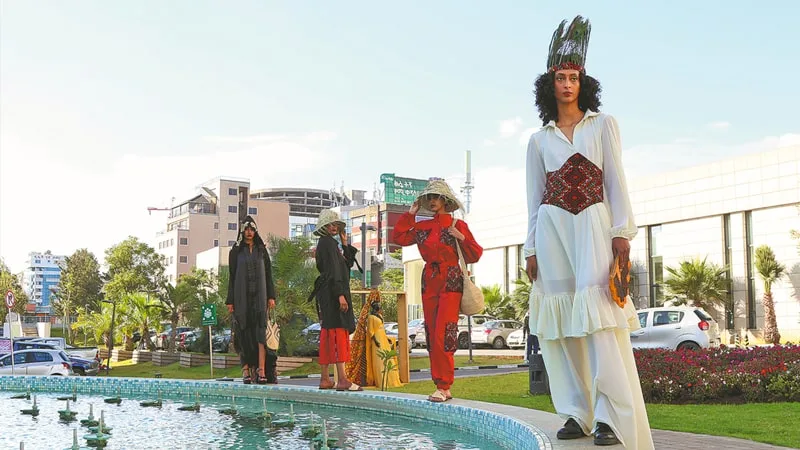
Award-winning Kenyan designer Aulga Nato was thrilled to present her works during this month’s Africa Sourcing and Fashion Week in Ethiopia.

Models wearing creations by Nato and her other designers walked an outdoor catwalk at the Skylight Hotel during the four-day fashion spectacle in the Ethiopian capital, Addis Ababa. 5,150 people attended the event, which is regarded as one of the best fashion exhibitions on the continent, according to the organizers.

“African fashion is just now becoming more well-recognized. I have witnessed African aesthetics that are radically unlike global examples,” stated NATO. “Africa is bringing new and innovative ideas, while the rest of the world is merely copying designs. Additionally, I think that we are in right now.”

Nato is well aware of this, having won the African Icon Hope Awards’ African Emerging Designer of the Year title the previous year. Africa, in her opinion, will serve as the center of the world’s fashion in the future.

The fashion industry in Africa is poised to take the lead in the world fashion scene, according to a UNESCO research published in October titled “The Fashion Sector in Africa: Trends, Challenges, and Opportunities for Growth.”

“The African fashion industry is being driven by a number of causes, including the continent’s youthful, inventive, and expanding population, a burgeoning middle class, fast urbanization, and more government assistance. The study said, “The potential is enormous, not just for the economy but also for the inclusion of young people, the empowerment of women, and the global resonance of African culture.”

The majority of fashion businesses in Africa are micro, small, or medium-sized enterprises that cater to the hyperlocal market by offering ready-to-wear and made-to-order clothing. However, the report also noted an increasing number of high-end brands that are centered in important markets like Senegal, Cote d’Ivoire, Ghana, Kenya, Nigeria, Rwanda, and South Africa. These cater to a select clientele of wealthy local and foreign consumers by offering luxury goods.

One such company is owned by Grace Mbugua, who concurs that the African fashion market has the potential for expansion.
Mbugua, who was present during the Addis Ababa fashion week, stated that occasions like this will significantly contribute to drawing attention to African design globally.
“Business growth is one of the advantages of these fashion fairs; this is achieved through partnerships, exposure, and learning about current trends and global demand.
Mbugua, who owns J-Lo Collections, a company that produces leather, textiles, and home décor items, stated that Ethiopia is one of the world’s top producers of leather goods.
“I have had the chance to see some of the leather they have,” she added. “They have beautiful and refined leather, and I am looking forward to getting to Kenya.”

Ducks in a row
Even though she was impressed by Ethiopia’s leather business, other attendees of Fashion Week said that in order for Ethiopia and Africa as a whole to fully profit from the fashion industry, they must first get their houses in order.
The quality of leather goods such as shoes, purses, and gloves has improved over the past ten years across Africa, according to Mishamo Wakaso, CEO of Ethiopia’s Ministry of Trade and Industry’s Leather Research and Development Center. With exports worth over $140 million, Ethiopia ranks as Africa’s fifth-largest exporter of leather and leather goods.
But supply, according to Wakaso, is the biggest issue confronting the leather sector in Africa.

Animal skins are sourced from Africa’s vast cattle population, but there are issues with access to the chemicals, equipment, and supplies needed to process the skins.
“Europe, China, and India import the majority of the chemicals used in leather manufacturing that are utilized in Africa. Due to this, there is a severe shortage on the continent and high demand, according to Wakaso.
According to Wakaso, African governments must make investments in the sector to raise the caliber of goods if they want to see Africa take its rightful place in the world of fashion.
He thinks African fashion has the potential to expand rapidly despite its early setbacks, particularly if the continent’s 1 billion people were to seek inside for a market.

“We as Africans must integrate and foster market integration in order to lessen these difficulties. Because of our trade restrictions, we are selling to Europe and India but are not taking advantage of the enormous market in Africa,” he stated.
“The African Continental Free Trade Agreement needs to be fixed in order to draw in investors. For instance, a business that manufactures chemicals may locate its plant in Ethiopia and engage in business with Tanzania, Kenya, Sudan, and other African nations.”

According to Wakaso, 37 of Africa’s 54 countries grow cotton, making the continent a key supplier of raw materials for the fashion industry. The average annual value of textile exports from the continent is $15.5 billion.

According to Mbugua, African governments need to play a more significant role in facilitating local commerce in the leather and textile sectors by integrating markets and building the required infrastructure.

“African governments have the ability to facilitate cross-border travel by making it easier for individuals to move between their countries. Even if travel and visa restrictions between nations continue to be problems, I hope that things will improve. Rwanda has eliminated the need for Africans to have a visa, and Kenya has committed to doing the same by December. These developments thrill me,” Mbugua stated.

According to Mbugua, occasions such as Ethiopian Fashion Week provide African business participants with a chance to establish networks and cooperate on a continental scale.
With these gatherings, we hope to develop as individuals and to create Africa and East Africa together, since there are a lot of amazing opportunities right now. Our goal is to help our members build themselves in order to access markets and ensure that we are competitive in unity; therefore, we would love to create African Fashion Week chapters throughout Africa and then grow our companies,” she stated.
The fact that Africa’s textile imports, including apparel and footwear, are valued at $23.1 billion annually, nearly double the value of exports, indicates that African fashion entrepreneurs do not have access to the continent’s market.

“Trade exhibitions, industry gatherings, and joint ventures are being organized by African nations more and more.
One such instance is Africa Sourcing and Fashion Week, according to the article.
According to NATO, occasions like Africa Sourcing and Fashion Week provide a platform for the global community to engage with the finest of African culture.
“Authenticity and individuality are what set African fashion apart. You can see that most fashion firms throughout the world have done so much that their current offerings lack originality. Africa, on the other hand, produces a lot of fabric, grows a lot of cotton, and is wealthy in every manner.

That’s how we dress. “I believe we are the next big thing if the world will focus on us,” stated Nato, who owns the upscale brand Nato Design House.

Market-oriented
She counseled industry participants to put their all into their work and strive to become masters, notwithstanding the difficulties encountered by young designers on the continent.
“As an upcoming designer, you should strive to learn and understand your clients,” Nato said. “Listen to your clients, listen to what the market wants as opposed to what you want.”

The majority of those involved in the African fashion business also think that the continent can set the standard for sustainable practices and fashion worldwide. Because Africa is not a wasteful continent, NATO thinks that little actions like gathering rubbish and repurposing or redesigning it might help cut down on waste.

“Personally, I get to check back on some of my designs that did not move and redesign them before putting them back on the market,” Nato said.
“Some of my clients purchase dresses from me for certain events, and after they wear them, they are unable to reuse them. When this occurs, I am able to persuade my clients to return the dresses, and I then resell the gowns to buyers who can afford to purchase and wear them once again.”

Mbugua thinks that by enacting laws to create secure tannery systems for the leather sector, African nations are setting the standard for sustainability.

“We employ vegetable tannins to preserve, reinforce, and color our hide in Kenya, for example. This practice is known as vegetable tanning. Chemicals are harmful to the environment and have an impact on water systems, which is why this is.
According to her, we also want our suppliers to have the same degree of environmental consciousness.
Exhibiting at the Ethiopian Fashion Week and Fair is Ghanaian Solomon Dodoo, who claims that a tour of the booths highlights how colorful and dynamic African fabrics are, as well as how they embrace the richness of African culture.

“Going through the items on display at this fashion event, you notice that every single fabric is unique, and there are no two fabrics that look alike,” said Dodoo.
“Africa is providing the world with exquisite textiles, and I hope that people would take advantage of this and believe that Africa truly has a wonderful culture when it comes to textiles.
We are the designers of tomorrow.”

Content courtesy of China Daily & NFH

Nairobi Street Fashion Season 2: The Royal Invite

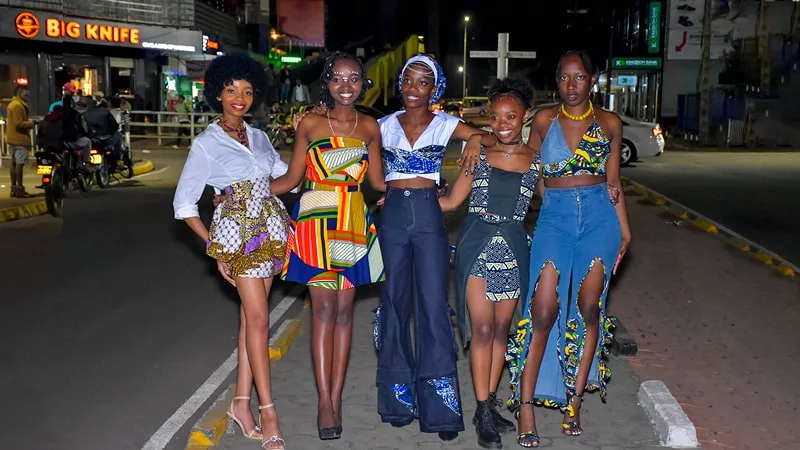
Nairobi, a city known for its vibrant culture and dynamic street fashion, is gearing up for an extraordinary event: Nairobi Street Fashion SN 2. This unique platform has gained recognition for successfully merging the worlds of art and fashion, culture and contour, and is set to take things up a notch with its second installment. Scheduled for Sunday, November 12, from 3 to 7 p.m. EAT, the event will be hosted at the Delight Tailoring Fashion & Design School, located in Nairobi Central, Nairobi County.

Nairobi Street Fashion Season 2 promises to be an unforgettable experience, bringing together a diverse group of fashion enthusiasts, designers, and artists. The theme of this edition is “The Royal Invite,” and it’s a celebration of the city’s creative spirit and the fusion of different styles and influences that shape Nairobi’s unique street fashion scene.

The Venue: Delight Tailoring Fashion & Design School

Delight Tailoring Fashion & Design School, the chosen venue for Nairobi Street Fashion SN 2, is an ideal setting for the event. Located in the heart of Nairobi Central, this school has been a hub of creativity and innovation in the world of fashion. The school is renowned for nurturing young talent, making it the perfect host for an event that aims to celebrate the city’s vibrant street fashion culture.

The Royal Invite: A Theme of Elegance and Creativity

“The Royal Invite” theme for Nairobi Street Fashion SN 2 is all about embracing the elegance and creativity that the streets of Nairobi exude. Attendees are encouraged to explore their inner royalty and showcase their unique interpretation of this theme through their fashion choices.

Whether it’s blending traditional African fabrics with modern designs, infusing a royal touch into everyday streetwear, or even experimenting with avant-garde outfits, the theme encourages participants to push the boundaries of fashion. In doing so, it celebrates the rich tapestry of styles that define Nairobi’s streets.

A Platform for Amateurs and Masters

One of the most remarkable aspects of Nairobi Street Fashion SN 2 is its inclusive nature. The event provides a platform for both amateur and experienced designers and artists to come together, share their creativity, and learn from one another. This fusion of perspectives leads to the birth of fresh ideas and the expansion of horizons.

Fashion enthusiasts, whether they’re young designers looking to make a mark in the industry or individuals who simply love expressing themselves through clothing, will find a welcoming space at this event. It’s an opportunity to learn, network, and, most importantly, to be inspired.

Wisdom in the Streets

The tagline of Nairobi Street Fashion SN 2, “Wisdom is in the streets,” highlights the fact that the streets of Nairobi are not only a place for fashion but also a source of inspiration, knowledge, and cultural exchange. Street fashion is an expression of individuality and collective identity, embodying the wisdom of the city’s people and their diverse backgrounds.

This event is a celebration of the melting pot that is in Nairobi, where traditional, modern, and global influences merge to create something entirely unique. It encourages attendees to seek out this wisdom in the streets and incorporate it into their own fashion choices.

Nairobi Street Fashion SN 2: The Royal Invite is a must-attend event for anyone interested in fashion, culture, and art. With a vibrant theme, an inclusive platform, and a rich cultural backdrop, this event promises to be a melting pot of creativity and inspiration.

As the streets of Nairobi continue to evolve and redefine fashion, this event serves as a testament to the city’s unique spirit and the limitless possibilities of self-expression through clothing. The streets of Nairobi have always been a place of wisdom, and on Sunday, November 12, that wisdom will come to life through the medium of fashion, making it an event not to be missed.

Content courtesy of Delight Tailoring Fashion & Design School, NFH

Victoria’s Secret Fashion Show Returns With Black Designers’ Designs On The Runway

After a five-year sabbatical, the Victoria’s Secret fashion show is making its eagerly awaited return and is now live on Amazon Prime.
The work of 20 exceptional creatives from thriving cities including Bogota, Lagos, London, and Tokyo will be featured in this year’s show, which spans a variety of industries including fashion, cinema, design, music, and the visual arts.
Bubu Ogisi, the creator of IAMSIGO and a fervent supporter of African fashion created by Africans in Africa, is one of the designers engaged. In addition to defying conventional notions of African companies, Ogisi’s collection for the event demonstrates her dedication to celebrating African ideologies, textiles, and manufacturing methods.

The show will prominently feature model Mayowa Nicholas, who went from being an accounting student to dazzling runways all over the world.
Mayowa, a native of Nigeria, never thought of making modeling her career.
Like many Black children in the nation, she was urged to prioritize her education and look for conventional employment. Mayowa, who was raised by a single mother, thought that studying accounting was a sensible way to ensure her financial security.
She was approached on the street to take part in a modeling competition with Elite Models, which caused her perspective to change.
She made the decision to compete despite feeling unqualified in comparison to experienced models, and she ultimately took first place.

This surprising triumph brought her a modeling contract in China, where she encountered prejudice and went through a culture shock. Nevertheless, Mayowa persisted, and she and 14 other girls were given contracts.
She made the painful decision to leave school and her family behind, traveled to Paris, and walked in Schiaparelli’s debut presentation during Couture Fashion Week.
After a while, Mayowa’s agency offered her the chance to try out for Victoria’s Secret while she was in New York. She initially declined out of fear, but the next year she jumped at the opportunity. She attempted to travel to China for the show but unfortunately ran into visa problems.

The next year, however, Mayowa had the pleasure of having her mother in New York to see her accomplishment in addition to getting the chance to walk the Victoria’s Secret show. It frequently happens that parents of people who work in creative industries can only fully appreciate their children’s work after seeing it for themselves.
Through group chats and social media, Mayowa’s mother happily informed loved ones about the accomplishments of her daughter.
At the beginning of her work, fashion designer Bubu Ogisi was passionate about studying fibers, materiality, and traditional methods.
She experienced growing up in several nations, including Nigeria, Ghana, and England, as well as going to school in Paris. She was particularly impressed by Nigerian weddings and festivals, which featured an abundance of textiles and materials.

Her exploration of fiber techniques, reading skills, and the real materiality of fabrics were all influenced by this encounter.
She was further exposed to the commonalities in these methods used in several nations, whether they are Anglophone, Francophone, or Portuguese-speaking, even though they go by different names while attending school in Ghana.
Ogisi found it fascinating to see how different weaving techniques are carried out, such as Asha key in Nigeria, kente in Ghana, and Heat kita in Ghana, in different ways and with individual variances.
Her work was shaped by her understanding of these parallels and differences, which allowed her to highlight the complex fiber research and the enchantment that can be made with one’s hands even in unnoticed locations.

Ancient, historical, and mythological tales are frequently the source of Bubu’s inspiration since she thinks that by recounting these tales, we may decolonize minds and introduce fresh perspectives. The world has frequently accepted some myths as true while ignoring others. Bubu uses language as a medium to fabricate stories that have not yet been spoken in order to shed light on them.
When contacted by Victoria’s Secret, Bubu initially chose not to reply but subsequently made up her mind to pick up the phone and speak with the entire team. When working with others, Bubu loves collaborative energies that are harmonious and in line with everyone engaged. Bubu was thrilled to have this opportunity to continue presenting a narrative to which she has been deeply devoted.

Bubu viewed this as an opportunity to tell Victoria’s Secret about her experiences, particularly in respect to the idea of Victoria and its association with legendary figures.
She wants to share the African myths and legends through her own culture, nation, and continent. Numerous studies have been done on the cosmological and mythical tales of Nigeria and other African nations.

The collection is influenced by Roman and Greek myths, with a special emphasis on the goddess Nike.
The purpose of Bubu is to present the tales of ten to eleven unisex deities, such as the God of War, the God of Space and Time, and the God of Water. The idea has been greatly influenced by the Nigerian-derived European Edo mythology.

The secret stone in the necklace serves as a representation of the goddess in the entire concept, which centers on exhibiting the feminine divine. Each deity is linked to particular substances, hues, and superpowers. locating and making the components needed to cross the continent.
Mayowa and Bubu have a history of collaboration; when she was 16 years old, Mayowa modeled for Bubu. For both of them, getting back in touch at age 25 was a pivotal and meaningful point in their professional relationship.
Hugging occurred occasionally throughout the process, demonstrating their close relationship.

Intricate styles that were genuinely one-of-a-kind and unlike anything Victoria’s Secret had done before were the outcome of Bubu’s concept for the project, which included hairstyles that paid reverence to the ancestors.

Content courtesy of Ebony & NFH 

African Fashion Spaces Introduces The Mother City To A New Era Of Fashion.

African Fashion Space entertained Capetonians at a fashion display on September 16.
In addition to magnificent surroundings, African Fashion Spaces Cape Town showed a blend of high fashion and culture as Sinchui and Fuata Moyo displayed their exquisite designs.

“The 16th September 2023 was an exciting prelude to what’s yet to happen over the next couple weeks as we rollout the few exhibition collaborations we have with some of the most exciting designers, brands, and platforms associated,” said Jay Kayembe, creative director and co-found of African Fashion Spaces (AFS).

It’s not a typical fashion show; it’s more like strolling through an outstanding art exhibition showcasing Africa’s incredible ability and creativity via its many varied cultural lenses. It’s never been about maintaining the status quo.
Both Sinchui and Fuata Moyo presented their collections in front of a crowd of fashion aficionados, designers, trendsetters, clients, partners, friends, and family while the stars twinkled above Table Mountain.

Sinchui opened the presentation by showcasing their “Everything in the Divine Time” collection, which was hip-hop-inspired.
Like Pharrell did when he turned his music into fashion, the urban cool ensembles with trendy jackets took the stage and revived the golden age of hip-hop.
The collection “ROOTS/ROUTES” by Fuata Moyo was all about commemorating South African ancestry.

Each piece of clothing served as a brushstroke, creating a clear picture of the harmony between our past and our present.
The exhibit demonstrated that we can be both proud of our past and enthusiastic about the future.

The day-night exhibition had the atmosphere of a New York Rooftop mixer but was held in Cape Town, South Africa, where Table Mountain served as a backdrop for the starry nighttime event. Fashion aficionados, designers, trendsetters, clients, partners, and friends and family of the two fashion collectives Sinchui & Fuata Moyo attended the fashion exhibition.
Everyone was anticipating two amazing fashion presentations that would completely change how the fashion world is presented today. It was like a gigantic fashion party.

Mixing street style and old-school hip-hop in the showcase (Show 1)
The first brand was Sinchui, which is renowned for its daring street flair and a hint of hip-hop nostalgia. Cool urban clothes were showcased on the runway, fusing current fashion trends with the essence of street style. In a similar way to how Pharrell incorporated his music into fashion, the models strutted down the rooftop runway while in a groove, reviving the golden age of hip-hop.
The music perfectly complemented the collection, making it an unreal experience.

The runway’s rooftop and mountain backdrop came to life with the music, heightening the excitement of the entire experience. Each ensemble seems to overflow with joy.

Show 2 of the Fuata Moyo Showcase: Celebrating Our History and Dreams
Fuata Moyo presented a compilation titled “ROOTS/ROUTES” after that. It seemed as though we were staring into a history that was still present. ‘ROOTS’ was all about paying homage to our roots and honoring our family, home, and origins, but ‘ROUTES’ was about forging ahead and chasing huge dreams.

The runway resembled a wonderful scene from a Harry Potter novel from Wakanda, yet it was set in Cape Town and told stories of African culture and aspirations.
Each piece of clothing served as a brushstroke, illuminating the harmony between our past and our voyage into the future.
The exhibit demonstrated that we can be both proud of our past and enthusiastic about the future.

Content courtesy of IOL, Urban Lifestyle SA & NFH


Ad