Wednesday 3rd of June 2026

Nairobi, Kenya

Naomi Campbell ‘I didn’t think I’d still be working past 25 Years, let alone 50’

Even in quarantine, Naomi Campbell is very busy. The supermodel, speaking from the hotel in Nigeria where she’s quarantining pending a negative Covid test, has a schedule stacked with press engagements, Zoom meetings and shoots for her YouTube channel.

“It’s full-on here,” she says, her voice like honey down a crackly phone line from Lagos. “It’s kind of strange trying to get used to being back in the groove. It’s taking a minute for my mind to switch back into the hustle and bustle of it all.”

For Campbell, the hustle and bustle never really stopped. She’s in Lagos to support Arise Fashion Week, an event she’s backed since its 2018 launch. This season, the main attraction is the “30 Under 30: The New Stars” competition, a showcase of work by emerging designers who will present collections in livestreamed catwalk shows and compete for a grand prize worth $100,000.

“The stuff I’ve seen so far, I’m really happy with,” she says. “Although this has been a pandemic and a time of loss and sadness for many, it’s also been a time of people really using their minds and being so creative.”

https://www.instagram.com/p/CExfoqNHD1I/?utm_source=ig_embed

Lagos has become something of a second home for Campbell. Usually she spends five to six weeks a year in Africa, but her usual travel plans, like everyone else’s, were disrupted by Covid. This is the first time she’s been able to make the trip since January. “I’ve missed Africa so much, I can’t tell you.”

Campbell may have been more prepared than most for travel in the age of contagion. Last summer, long before the term “social distancing” entered the lexicon, Campbell posted a video detailing her pre-flight cleaning routine to her YouTube channel. She donned gloves, used Dettol wipes to “clean[s] everything you touch” and draped her first-class seat in a protective cover.

https://www.instagram.com/p/CDUqikcH-_j/?utm_source=ig_embed

Her routine has only become more intense since the start of the pandemic. In May, she wore a mask, gloves, goggles, face shield and full hazmat suit to fly from London to Los Angeles. She finished her outfit with a Burberry cape. “A museum wanted an outfit that depicted 2020, and they asked me for my outfit with my Burberry cape, my hazmat suit, my gloves, my mask. So I donated it.”

This time, “I flew the way I always fly, covid or no covid. I flew with my mask… Now I have a few extra bags of PPE and cleaning supplies, a few extra additions. But it’s all good. I’m very cautious.”

https://www.instagram.com/p/CDUd0unn2Yz/?utm_source=ig_embed

Really she would have done anything to make it to Lagos for the young designers she’s there to support. “I was very happy to come here and to be here for Arise and for these young designers. This is what I care about. I’m thrilled that it worked out.”

Designers participating in 30 Under 30 include Bibi, Lagos Space Programme, Ghetto and Elfreda Dali. For international fashion fans, the most familiar name on the list will be Kenneth Ize.

Ize, a 2019 LVMH Prize finalist and Arise’s designer of the year, creates vibrant, handwoven designs drawing on the artistry and expertise of weavers at his factory in Ilorin, in Western Nigeria. Campbell walked in his Arise-winning show and has become one of Ize’s highest-profile champions.

“I feel great wearing Kenneth’s designs. They’re authentic, they feel easy, I feel like I’m wearing the clothes and can put my own spin on it. I love that he uses the authentic artisan way of making his clothes and making his culture modern for the world,” she says.

“Kenneth has had a lot of great attention. It’s been wonderful how he’s been embraced. But we still have a lot to do in terms of getting him set up and recognised worldwide in the way designers should be.”

Campbell’s ambition is for the world to know a fashion week roster’s worth of African designers, not just celebrate one or two leading lights. “I want to see the fashion world embrace African designers and all these young designers from emerging markets. They need to be accepted and given a platform. Whatever I can do to help make that happen, that’s why I’m here, that’s what I’ll do.”

Speaking about African fashion, Campbell is fully in advocate mode – not a role she foresaw for herself even a few years ago. “All of it is a surprise in a way. There was no strategy or plan.”

But then, so much about her story is unexpected. That a girl from Streatham would go on to become a monomial star outshining and outlasting her peers over a three-decade-plus career wasn’t expected. Nor were her long working relationships with Azzedine Alaia, Karl Lagerfeld, the Versace family… None of it guaranteed or given to her, especially in light of received wisdom about a fashion model’s limited career longevity in the Eighties.

“I didn’t think I’d still be working as a model, because we were always told we would never work past 25 years.”

She’s still at the top of her game at 50, but still not making plans. She doesn’t even know where she’ll be for Christmas.

“I have no idea…. Wherever I’ll be, I just want to be still,” she says. “I’m looking forward to the new year, though. It’ll be nice to see friends and be able to hug them. Not being able to hug people you love is tough. I know we’ll get there.”

Content courtesy of Telegraph Uk & Nairobi fashion hub 

Rwanda Cultural Fashion Show and Africa Fashion Stakeholders to discuss future of fashion industry in Africa

Rwanda Cultural Fashion Show (RCFS) will on December 18, hold a virtual conference during which players in the fashion industry will discuss the current state of the African fashion industry.

Dubbed “The Future of Fashion Industry in Africa”, the webinar will bring together different stakeholders of the fashion industry to share experiences and discuss how private and public institutions can support Africa’s growing fashion industry.

The webinar will include discussions which will be in the form of a series of a thought-provoking panel. Key speakers of the event will include renowned fashion designers, fashion promoters, experts in textiles and fabric dyeing, fashion school teachers and some government representatives.

Celestin Ntawirema, the brains behind RCFS and organiser of the webinar told The New Times that participants in this webinar will share experiences on how to establish a successful fashion concept business, discuss challenges facing the industry and propose some solutions.

Mr Celestin Ntawirema & Miss Rwanda 2020 Umutesi  Denise

“Though Covid-19 halted most activities in the industry, we thought of creating a platform that will bring players in the fashion industry to share experiences and best practices so we can learn from each other how best we can push our fashion industry to another level. We also want to see how designers can go global through African networks,” Ntawirema said.

The African fashion sector is already impressing in the global market, something that industry players hail as a motivation despite the challenges they have faced in the journey.

Ntawirema, who has been promoting fashion for over the past eight years said that, from his experience,  many brands from all over the continent had established themselves among the best globally and are now selling big on the international fashion markets compared to Western fashion despite having few fashion schools that can drive the industry to greater heights.

https://twitter.com/RCFSRW/status/1331872908633845760?s=20

He, however, lamented that investors are still reluctant to put their money in fashion-related projects because protection of fashion copyrights and fashion innovations is still low due to the gap in fashion literacy.

The webinar, he said, will be an opportunity for fashion players to show both the public and private sectors the potential that fashion has at its disposal so as to attract their investment and, on the other hand, call for support from the governments to create a conducive environment for fashion to flourish and become a sector which can contribute to the national economic development.

Some of the speakers expected for the webinar include Ruth Jackob, senior lecturer in fashion marketing Eastern London, Karen Uwera, the President of Rwanda Designers Association, John Bunyeshuri, the CEO and Founder of Kigali Fashion Week and Kenyan fashion guru Vinn Clizz, the Managing Director of Vinn Clizz among others.

https://twitter.com/RCFSRW/status/1329023863527714818?s=20

Mrs Karen Uwera

https://twitter.com/RCFSRW/status/1329023524950978561?s=20

Mr John Bunyeshuri

https://twitter.com/RCFSRW/status/1329022941334474753?s=20

Mr Vinn Clizz

Challenges

Though Rwanda’s fashion industry is being contextualized with the ‘Made in Rwanda’ policy but Ntawirema said that it’s a shame that One of the biggest challenges we have is that we have no fashion school that can prepare and raise future designers, models, or fashion promoters by profession.

“This is all down to the fact that Rwanda has no forum bringing together designers, models, promoters and other stakeholders to discuss to the future of this industry. We also need an umbrella or a fashion watchdog for all players in the fashion industry to ensure that the protection of our works is guaranteed,”

Rwanda may have local designers who are becoming successful but under hard conditions which the webinar is also looking forward to tackling.

The webinar outcomes are expected to respond to questions raised around African fashion industry from “who can design?”, “who can sell locally-made clothes”, and “who promotes fashion?” or even “who can basically support fashion sector?”

“We hope the webinar will find share responses to these questions together with the speakers. We also value new ideas from the public from which the future styling and fashion business in Africa can rely on,” he added.

Content courtesy  of The New Times Rwanda & Nairobi fashion hub 

Designer and Teacher Diarra Bousso Fuses Math and Art to Create Her Fashion Collections

Diarra Bousso isn’t your average designer. She’s a mathematician, an artisan, and a former Wall Street trader, and all of those experiences have led to the creation of her lifestyle brand, Diarrablu. Her designs celebrate her rich culture, with every pattern and piece telling a story.

“I grew up in Senegal, and I wanted to be the perfect student. I was never a cool girl or an ‘It girl,’ I was a nerd,” Bousso told POPSUGAR. Bousso is from a family of artisans. “In the summers, when I would go to my dad’s village, I’d see that work, and it’s so rich and beautiful,” she explained.

Splitting her time between visiting her dad’s village and attending a private French school in the city, Bousso explained she wasn’t sure how to connect her two worlds. “I always knew that I was going to do something at the intersection of those two worlds, but I didn’t know how to do it.”

She moved to the United States to attend graduate school at Stanford University, graduating with a degree in math education and research. Bousso didn’t want to work in tech upon graduation and found herself trying to figure out how to fuse her background in math with her love of fashion.

She began doodling in her free time and realized, “I can doodle, and I can also write math code to do the doodles for me.” It isn’t common for designers to code their designs, but Bousso is creating her own rules.

“Once you write a couple of equations, by just changing a few numbers, you can create a new print very quickly. So it makes the process of drawing now very efficient because you can draw one thing, then actually create thousands by just changing the numbers,” she explained.

“Algorithms allow me to solve a very important problem in fashion in terms of sustainability. They also allow me to really explore creativity beyond what’s available, because there are no limits to what you can make.”

The equations Bousso writes create afrocentric shapes and prints that tell stories, centering on the diversity of Africa. She described the process as empowering, as she owns the production of the prints and no longer has to attend markets or trade shows for fabrics.

Additionally, there’s a sustainable element to her approach which allows her to save money without wasting fabric. “Algorithms allow me to solve a very important problem in fashion in terms of sustainability. They also allow me to really explore creativity beyond what’s available, because there are no limits to what you can make.”

This new technique has also allowed her to engage with her audience in real time, creating polls to find out which designs they prefer. “We produce what people want. There’s no excess inventory,” she said. Once she has the pattern in fabric form, she cuts it to maximize the amount of pieces produced, creating a dress, a necklace, shoes, and a face mask from three yards of fabric. “We keep iterating until there is nothing left,” Bousso explained.

Her 2020 Joal collection is rooted in wanderlust, the idea of freedom and travel, and her love for Senegal and celebrating the destinations in Africa that people don’t know. It pays homage to a small village on the coast of Senegal, Joal Fadiouth, an island covered in clam seashells. Joal was designed for being comfortable at home, mixing lightweight prints with solid-colored pieces.

Her newest collection, Dall (the Wolof word for stillness and serenity), “celebrates the magic in peace and stillness at home,” Bossou said in a press release. “Dall is an escape; a feeling; a destination; a daydream; a pause; an escape in time; a retreat in space,” she explained.

The holiday collection features sustainable, solid pieces like palazzo pants and maxi dresses made from ecofriendly lyocell fabric, coming in olive green, navy blue, rust, and evening noir colors. There are also bold pieces, such as kimonos and minidresses, inspired by mindful moments and the Tanzanian Serengeti, celebrating the beauty of movement in stillness.

The Diarrablu brand is known for its oversize kaftans and dresses that can be wrapped in 19 different ways, in addition to jumpsuits, swimsuits, kimonos, and mules. Each garment is custom adjusted to one’s height, per the African bespoke garment-making tradition, and ranges in size from XS to 3XL.

Every item is created to be worn for a lifetime and throughout all the changes the body will go through. “It’s always going to fit because everything is elastic and wraps,” she said.

Bousso’s designs are coveted for both the comfort and understated luxury. “It looks expensive but it’s not trying too hard.” Her collections are timeless, and with each design, you’ll be transported to a place of peace, freedom, and stillness.

Content courtesy of Pop Sugar & Nairobi fashion hub 

Africa’s Biggest Red Carpet (Asfas) To Return In 2021

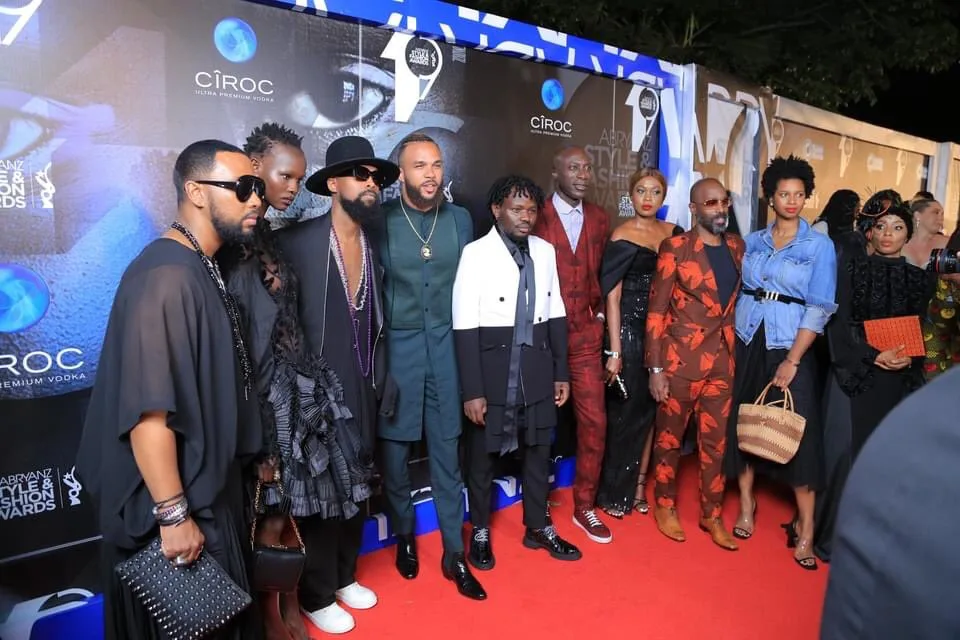
The Abryanz Style & Fashion Awards (ASFAs), Africa’s biggest red carpet fashion awards have announced that the awards will not take place this year. This is the first time since its inception in 2013 that the event is pushed forward.

The Abryanz Style and Fashion Awards also known as the ASFAs are continental fashion awards presented annually in Uganda to recognize excellence and outstanding achievement in the fashion industry in Uganda and Africa. More than 2,000 people grace the event annually.

https://www.instagram.com/p/CIgWqPon7bt/?utm_source=ig_embed

Brian Ahumuza founder of the ASFAs states: “The Abryanz Style & Fashion Awards were started on the idea of people coming together to socialize, network and interact with one another, in the name of celebrating something we all love and support; Fashion. Our team did have a sit down, and we did weigh our options, in as far as embracing the new normal goes.

But we have never envisioned the ASFAs being a virtually produced show, as this ruins the idea and concept on which the ASFAs started. People coming together, in one room, with all the oomph, flair and glam is what has made the ASFAs what they are today. So, after much consideration, putting into account the safety of our fans and guests, and also the need to give you a show that will be as remarkable and unforgettable like the last 8 years, we have made the tough decision to postpone the event to 2021.

This year and the year to come will be maximized in planning, together with our partners at Talent Africa, to ensure that we deliver a show that will be the best you have ever experienced. To our loyal fans and the supporters of the ASFAS, we do apologize for any inconveniences this may cause, but you can be sure to experience the ASFAs like never before, come 2021! Thank you for your unwavering support in the last 8 years, and get those outfits and the flair ready.

Aly Allibhai from Talent Africa Group states “with the current health guidelines and ban of public events due to the pandemic it would have been impossible for the ASFAs to give our guests the same A-list red carpet fashion experience through an online or virtual experience, so we have decided to come back next year with a bigger and bolder experience”.

The team from the ASFAs wishes you a safe and happy festive season ahead.

Content courtesy of ASFAs & Nairobi fashion hub 

How can Private and Public Institutions Support Africa’s Growing Fashion Industry?

This is the topic that will be discussed during the virtual conference entitled “The Future of Fashion Industry in Africa”. It will be in the form of a series of thought-provoking panel discussions about the textiles and fashion industry in Africa. It is scheduled on Friday, 18th December 2020, from at 10:30 am to11:30 am (GMT-KIGALI).

Rcfs 2020 Webinar Speakers

Rwanda Cultural Fashion Show Webinar 2020 Register Here To Participate  or Send your registration via e-mail: info@rcfs.rw 

It is organized by the Rwanda Cultural Fashion Show known as the RCFS. This is a Rwandan company which had been working in the fashion industry about 8 years ago. The RCFS was founded in 2012 to promote fashion designers and create public awareness of the talent and quality designs in Africa.

Since the start, may Africans men and women have been promoted through the RCFS events. It assists in marketing, promotion and branding especially for the upcoming fashion designers who are starting small businesses in fashion. According to the examples from the RCFS’s 8 years’ experience, many brands from all over the continent had been established and some are now selling even on the international fashion markets.

https://twitter.com/RCFSRW/status/1329388178655096833?s=20

This is a magnificent step which shows that the Africa fashion industry had been achieving in a short time. For example, Africa has few fashion schools comparing to the countries where modern fashion is coming from like in the USA, India and Europe etc. But many Africans fashion designers had been invited to showcase in Western and Europe fashion weeks and this is a great full for the Africa fashion sector.

The journey of the fashion industry in Africa started about 20 years ago. It was the revolution of the textiles and fashion industry on the continent which the RCFS sees as an example for the Africans and friends of Africans to feel the pride from our various cultures in styling.

https://twitter.com/RCFSRW/status/1329384864576057344?s=20

According to the African Development Bank, demand for African textiles and garments is increasing globally, and African patterns are gaining international recognition as fashionable and iconic pieces, with international fashion houses now integrating more and more African influences in their latest collections. As President Zewde stated: “Globally, Africa’s cultural colours and clothing are increasingly being embraced.

Another example, there are several continental initiatives which are supporting the African fashion industry to develop and sell their products. The Fashionomics Africa initiative of the African Development Bank, together with the African Union, the AfroChampions initiative, and other institutional partners and private operators, launched the Pan-African Fashion initiative on 9 February during the recent AU meetings in Addis Ababa.

https://twitter.com/RCFSRW/status/1329023863527714818?s=20

Pan-African Fashion initiative is a platform for stakeholder engagement, dialogue, strategy and policies to advance the African fashion industry within the context of the African Continental Free Trade Area (AfCFTA), which aims to remove trade barriers between African nations and thus expand intra-Africa trade by about $35 billion per year. Intra-African imports and exports currently account for just 15% of all trade on the continent.

Content courtesy of Rwanda cultural Fashion show & Nairobi fashion hub 

Arise Fashion Week 2020 Unveils ‘30 under 30’ Designers Vying for $500,000

Africa’s premier fashion show, the ARISE Fashion Week, is set to deliver one of its most exciting line-ups to date, with the unveiling of the ‘30 under 30’ fashion designers who will be competing for $500,000 in prize money.

The list which includes designers from not only Nigeria but other parts of Africa and Europe, boasts fresh talent alongside some acclaimed international names in fashion.

Known for breaking records, ARISE Fashion Week has raised the ante even further by celebrating a new brand of designers – ‘30 under 30’ with a cash prize of $500,000 to be shared amongst the winners.

The weeklong virtual event is first of its kind on the African continent and is an avenue to unveil new stars in the global fashion industry.

According to co-producer Arise Fashion Week, Ruth Osime, “We look forward to this experience and feel truly honoured to play a role in turning the dreams these designers into reality.”

Following on from the successes of previous events, the Arise Fashion Week 2020 promises to be an exciting experience, with its prestigious location – the Lakowe Beach and Golf Resort, Lagos – just one of the markers to a one-of-a-kind event.

The weeklong event will be held from December 5-12, 2020, with live shows available to a global audience from the 9th to the 12th.

The virtual show will be broadcast to a worldwide audience on the new ARISE PLAY streaming service and other ARISE and THISDAY digital platforms which include an array of social media channels.

Among the list of the 30 selected designers drawn from across the world in alphabetical order are: Bibi, Bloke, Boyedoe, Clan, Colrs, Dna By Iconic Invanity, Elfreda Dali, Fruche And Geto.

Others include; Ilham.g_ng, Jawara Alleyne, Kenneth Ize, Kiko Romeo, Ladunni Lambo, Lagos Space Programme, Mazelle Studio, Moon By Me, Mmuso Maswell, Muyishime, Onalaja And Pepper Row.

Completing the line-up of precocious talents are Re Lagos, T.i. Nathan, Tjwho , Tzar Studios, Vicnate, Weiz Dhurm Franklyn, Wuman, And Ziva Lagos.

For more information and enquiries on the latest edition of Afirca’s biggest and most enthralling fashion show, log on to www.arisefashionweek.world and follow on Instagram: @arisefashionweek and @thisdaystyle

You can also contact Konye Nwabogor , Editor thisdaystyle.ng at konye.nwabogor@thisdaylive.com; Bolaji Animashuan, Line Producer, ARISE Fashion Week at bolaji@arisefashionweek.world and Sakina Renneye, Line Producer, ARISE PLAY at sakina@arisefashionweek.world

Content courtesy of ARISE Tv & Nairobi fashion hub

Destination wonder: a journey through Ghana’s feelgood fashion world

With Mercedes-Benz Fashion Week Accra’s fashion week cancelled due to coronavirus, photographer Carlos Idun-Tawiah captures the talent of the new wave of designers who would have been showcasing their work

Against the backdrop of West Africa’s heritage, Ghana’s fashion scene is culturally rich and diverse. Nestling between Togo and Ivory Coast, it oozes with vital energy. It was once home to the celebrated Yaa Asantewaa, queen mother of the Edweso tribe of the Asante (Ashanti).

As Ghana’s history continues to unfold, its precolonial past has woven its essence into the work of its modern artists. Today’s generation of designers explores the depths of the nation’s heritage, without trivialising its value. Through experimentation and by devoting their tradition to the streets of Accra, young designers are bringing Ghana’s colourful culture into sharp focus.

With Accra fashion week postponed due to Covid-19, Mercedes-Benz has worked with five next-gen designers and the photographer Carlos Idun-Tawia to showcase Ghana’s emerging talent and the country’s tradition of sharing skills from one generation to the next through storytelling.

Chloe Asaam uses ideas and experimentations to create timeless pieces for women who want to stand out. “I’m inspired by many things, but usually I draw from the women in my life – the matriarchs in my family and community,” she says. Imbuing a versatile spirit, the label designs clean-cut staples that exude comfort and fuss-free wearability.

On the subject of working as a creative in Ghana, Asaam thinks that “the dynamics of practising as a fashion creative in Accra is both exciting and frustrating. From access to support, sourcing material, visibility and making a living… basically getting access to things that can help you grow your craft.

My colleagues and I often have conversations around possibilities. Things we could do if there weren’t so many constraints. But we find a way to make do with what we have. And I think there is beauty in that – to be able to make magic with limitations.”

Menswear label Atto Tetteh belives Africa has a story to unfold. “Ghana is an incredible place where you find inspiration everywhere. The most thrilling aspect of being a creative in Ghana is the freedom to create and the vast pool of inspiration all over the country.”

Crafting sharp tailoring and bold colour-blocking, the label seeks to provide quality clothes with a cultural appeal. “Tradition plays a pivotal role in the sense it is easy to draw inspiration from our local fabrics and symbols, as well as our local colours.”

Founded as an accessories line in 2012, Larry Jay is a unisex Ghanaian ethical label that seeks to celebrate 70s culture with an aim to craft timeless and unusual staples that represent both genders. “I am generally inspired by nature, multiple African cultures and arts,” says Jay. “However, the timeless style of my parent’s fashion from the 1970s and the community environment where I was born and bred is a big influence on my design aesthetic, that makes it unusual and timeless.”

As an Islamic devotee, the designer is keen to reflects the concepts in the garments. “My traditions are rooted in Islamic ideals and culture. I allow myself to be influenced by this and it reflects so much in the clothes I make.”

Hassan Alfaziz Iddriss’ brand, known as Hazza, is a contemporary uniform of gender-neutral clothing based in Ghana and inspired by heritage and culture. “As an ethical fashion brand, our clothes are made using eco-friendly materials that are mostly not readily available in the market and are scarce now.”

“The few that are available do cost more so we had to improvise through the usage of discarded materials and lots of DIYs.” Established in 2013, the brand prevailed against the financial odds that came from the pandemic. “Our brand went on a hiatus to re-strategise. For us this would have been a good time to launch our new collection, but we look forward to a show when we all can travel again.”

https://www.instagram.com/p/CHgGNNep8IE/?utm_source=ig_embed

Gucci fellow and Naomi Campbell aficionado, designer Steve French has always used his fashion to tell stories and mark profound statements. “I think the most thrilling aspects of been a creative in Ghana is being able to produce amazing stuff with little resources. Also, most creatives have a deep connection to a land that is so beautiful,” he says.

For his SS16 collection, he impressed the world while dealing with mental illness, which turned out to become something Naomi Campbell wore for Essence’s 50th anniversary issue. “Tradition cannot be changed as it is old, authentic, genuine and beautiful and we don’t alter we just add,” he reflects. “As a designer, I am usually drawing inspiration from my history, culture and music.”

https://www.instagram.com/p/CHgGWNQpzNM/?utm_source=ig_embed

French’s label is contemporary and is characterised by abstract patterns and distinct silhouettes.

Written by Chidozie Obasi

Content courtesy of The Guardian & Nairobi Fashion hub  

The Journey of African Fashion to the global market

On November 19th 2020, the Intra-African Trade Fair (IATF2021), will present an expert panel discussion focused on African Fashion: The Journey to the Global Market.

This online event, designed for the emerging African Fashion sector is part of a series of digital events supporting the creative programme that will take place at the second edition of the Intra-African Trade Fair (IATF2020) in Kigali, Rwanda, from September 6th to 12th, 2021, under the theme “Building Bridges for a Successful AfCFTA”.


It will be presented by The African Export-Import Bank (Afreximbank), in collaboration with the African Union Commission (AUC) and the Government of the Republic of Rwanda. IATF2021 will include a comprehensive creative programme with fashion being a key pillar.

The conversation will focus on some of the key links in the fashion value chain, specifically  creativity (and protecting it through IP policy), global reach and distribution, and access to finance.

A range of successful fashion icons on the panel will share their journeys to global success through this filter, unpacking how they were able to secure the financing and global reach to support their creative visions.

The panel will also include representatives from Afreximbank and The African Development Bank. They will provide further insights on how the sector can access some of the resources required to build the monetisation ecosystem in this viable sector.

This engaging and interactive discussion is aimed at emerging fashion entrepreneurs across the fashion industry value chain and is free to attend, although pre-registration is essential.

Panellists

Kibonen Nfi – Founder & Creative Director KibonenNY

Lulu Shabell – Co-Founder African Youth Mentorship Network

Emanuela Gregorio – Economist and Fashionomics Africa Coordinator at the African Development Bank Group

Abisade Adenubi – Founder and CEO of Heritage Apparels

Register here for live webinar 

Content courtesy of Intra African Trade Fair & Nairobi fashion hub 

Whitney Madueke Re-envisions Traditional Nigerian Fabrics for a New Generation

Growing up, Whitney Madueke watched on the sidelines as her parents got dressed up for Nigerian weddings and parties. “My dad would play pretty background music and you knew he was getting ready to go out,” she says, laughing. “I was mesmerized at how my parents would pair their traditional Nigerian attire with modern pieces from the Western world tradition, mixed with, like, a pair of Gucci sunglasses,” she quips.

https://www.instagram.com/p/CGxyTb_FLxn/?utm_source=ig_embed

As a student in England, Madueke realized that her own cultural encounters started influencing her fashion choices in the same way as her father a mix of trendy and time-honored pieces. “I started mixing Nigerian pieces like a Buba blouse, a top with long loose style sleeves, with a pair of jeans.

https://www.instagram.com/p/CBL3ax6HI2z/?utm_source=ig_embed

Or I’d find myself mixing traditional silk fabrics with more modern materials,” she says. Drawing on her African background and her love of fashion, Madueke, 26, set out to launch her own eponymous fashion line, which went live on her website and on Instagram in June. Currently living in New York, Madueke frequently travels back to London to visit her siblings and spends winters with her parents in Nigeria, where her line is based.

https://www.instagram.com/p/CG8FTUDFEi6/?utm_source=ig_embed

Here, we chat with Madueke about her own style, her clothing line, and her favorite designers to shop now.

https://www.instagram.com/p/CEzoNONlN6S/?utm_source=ig_embed

Marie Claire: How did you get your start in fashion?

Whitney Madueke: Since I was little, I’ve had an interest in fashion and fashion design. I wanted to study fashion in college, but I figured my parents would say no to that, so I went to college in England to study law. I needed a creative outlet there, so I started a fashion and beauty YouTube channel and an Instagram but I wasn’t really happy with law. I was like, What is my life? What’s my next step? I needed to do something that would make me happy, so I decided to move to New York to study fashion design at Parsons in their Associate’s Degrees for Professionals program. Last year, I started working on the launch of my clothing brand, Whitney Madueke.

MC: What was the inspiration behind your new fashion line?

WM: Nigerian fashion represents the people, but it also tells the story of the country and its surrounding nature. I wanted my clothing line to tell more African stories and to expand on who I am as a Nigerian and African woman in the fabrics, the silhouettes, and the vibrant colors.

MC: Tell us about Lagos Fashion Week.

WM: Just like New York, Lagos fashion week is a great way for the fashion community to connect with one another. Designers tell stories through their collections using traditional Nigerian fabrics like Adire fabrics, Kente and Akwete cloths. As a Nigerian fashion designer, I love celebrating a diverse group of designers telling the story of home. Lagos Fashion Week was scheduled for late October this year, but in light of the #EndSARS protests [centered around police brutality in Nigeria], the event has been postponed.

MC: How do you get dressed in the morning?

WM: It depends on how I feel that day, but I tend to gravitate towards bright colors, especially vibrant, primary colors that stand out in a room. I also love versatility I’m always looking for great basics that I can pair in numerous different ways.

MC: Who are some of your favorite designers right now?

WM: Social media has made it so much more accessible for global designers to have a voice, and I’m able to actively find and support more African designers. Two of my favorites are Abiola Olusola and Onalaja. Both are Black women designers that embody timeless fashion. Their pieces are crafted from African textiles and include intricate beading techniques.

Written By Marie Claire

Content courtesy of Marie Daire & Nairobi fashion hub 

Archel Bernard Making Bold Moves in Africa Fashion Industry 

“I’m sort of from everywhere.”

That was Archel Bernard’s response when asked where she’s from. The journey of life sometimes takes unexpected detours.

Born in Liberia, as a child Bernard came to Georgia with her family, refugees of war. “We were the only Black family in the neighborhood, the only African family, the only refugees. We were the only.”

She attended high school in Metro Atlanta and then enrolled at Georgia Tech. “It was the first school I was admitted to that my mother was really excited about. My grandparents never thought anyone in my family could go to school like Georgia Tech,” Bernard said.

She was very active on campus, including working at the Georgia Tech Cable Network reporting on stories about life at Tech.

After earning her degree in history, technology, and society from the Ivan Allen College of Liberal Arts in 2011, Bernard decided to try her hand at returning to Liberia and continuing to hone her television skills. “I wanted to be the West African Oprah Winfrey.”

She thought she’d work for a year or two in Liberia and return to the U.S. to work in the entertainment industry. But something changed. “I started getting more calls about what I was wearing on television than calls for TV gigs,” she said.

Because shopping options were limited in Liberia’s developing economy, Bernard made her own clothes. She couldn’t afford the wardrobe she wanted to wear, so she developed her own custom dresses from bold African fabrics.

Many African garments are made from rigid fabrics and require large zippers because they are form-fitting. Bernard’s designs buck that trend. “They focus on comfort. Casual, but with contemporary appeal,” Bernard said.

She seized the opportunity and launched her own business in Monrovia, the capital of Liberia. She helped teach women to sew her designs and opened a small factory. Her staff is made up of women earning salaries for the first time in their lives and includes Ebola survivors, victims of sexual abuse, and women with hearing impairments.

Together they opened a small boutique.

“Every time I’d sell one dress, I’d reinvest and make two more,” Bernard said. She called the operation “Bombchel” a play on Archel’s name.

“Georgia Tech stretched my mind in terms of what I thought I could accomplish. So many of my peers started businesses and were doing big things. Thinking about that made me feel like I was capable too.”

The internet and social media helped Bernard expand her designs. After posting pictures and photos on Instagram and developing a website, her customer base grew  and the relationships she built at Tech also helped the business grow.

“Many of my first customers were my friends from Georgia Tech,” she said. “The most invaluable thing has been all the connections I made. Now I’m able to lead in my community.”

Disheartened by a shortage of Black-owned businesses, she reached out to Ponce City Market. They responded and asked how they could do better. After sending her proposal, she now has her own storefront.

“Some of my first customers here were people from Georgia Tech who supported me all along the way,” she said.

The journey has come full circle for Bernard in so many ways.

As a child, Bernard remembered feeling embarrassed when her mother would dress in traditional African garments to pick her up from school. Now, she’s empowered by those colorful patterns and making people feel special wearing them. “It’s important that we see African fashion on everybody,” she said. “We need people to know their purchases matter, and that you can make an impact when you choose to spend money.“

The purchases from Bombchel will continue to support women in Liberia. Each garment has a tag to identify who crafted the custom, handmade item.

“We are making tangible change in the lives of women who work for us.“ It’s change inspired by Bernard’s journey and all the people who have been part of it. Her grandmother, after fleeing Liberia, worked long hours in retail at a J.C. Penney until she couldn’t work anymore. She was at the grand opening of Bombchel.

“Now I own the place. I work for myself in a building that my grandmother once couldn’t shop in,” Bernard said. “It’s my legacy and my family’s legacy.”

Content Courtesy  of Georgia Tech News Center & Nairobi fashion hub 

South Africa’s premier fashion and textile trade fair goes virtual

AllFashion Sourcing, Messe Frankfurt South Africa’s annual trade show for the apparel, textile, footwear and leather industry, will this year be hosted on a virtual platform from 3-5 November due to the Covid-19 pandemic.

An important event on the industry calendar, the exhibition serves to help forge connections between local and international players in the broader textile and fashion value chain.

Instead of postponing the event, the decision was taken to shift AllFashion Sourcing to a digital format to help support southern African manufacturers, retailers and suppliers who are faced with the challenges of doing business during a pandemic and a strained economic climate.

Virtual networking
The trade fair, which used to be known as the ATF Expo and Source Africa, was rebranded to AllFashion Sourcing earlier this year, but the event will retain its winning mix of fashion shows, exhibitors, insightful seminar content and networking opportunities, despite being hosted online.

Messe Frankfurt’s artificial intelligence-powered virtual platform boasts intelligent business-to-business matchmaking capabilities linking buyers to relevant sellers. It also allows for scheduled video meetings between visitors and exhibitors and integrated live streaming of seminars.

AllFashion Sourcing show director Kathryn Frew points out that there are important upsides to the event being held virtually this year, especially when it comes to affordability and reach. It allows exhibitors to market products and services in a more cost-effective manner, and attendees save on associated costs like travel and accommodation.

The AllFashion Sourcing virtual platform will also be live for 3 months, providing lasting value for exhibitors and enabling visitors from around the globe to access the marketplace and seminar content for a far longer period than they would with a traditional exhibition.

Seminar highlights
Topics on the agenda during the AllFashion Sourcing 2020 seminar include:

• The state of the African textile and leathergoods industry
• Why African fashion matters
• Sustainability-led fashion – myth or reality
• Womenswear and menswear 2021 trend forecasts by trend analyst Nicola Cooper
• AGOA (Africa Growth and Opportunity Act) unpacked – the trade benefits, textile-related categories and partner country benefits
• Exporting products to the United States – What U.S. buyers look for
• AllFashion Sourcing Cape Town Young Designers Awards 2020 showcase

“The showrooms and seminar content have been carefully crafted to enhance both the exhibitor and visitor experiences and we are really looking forward to engaging on the virtual destination that we’ve put together,” says Frew.

Below, Frew shares more on what the virtual edition of AllFashion Sourcing can offer attendees, and elaborates on the shift to a digital platform and the post-Covid future of events.

AllFashion Sourcing is free to attend and is taking place online from 3-5 November 2020. Click here for registration and more information on the event.

Content courtesy of Biz Community & Nairobi fashion hub 

The Twyg Sustainable Fashion Awards 2020 Finalists Announced

Twyg has announced the finalists of its Sustainable Fashion Awards for 2020. The annual awards celebrate South African designers leading sustainable, ethical, circular and regenerative practices in the fashion industry.

The designers recognised are intentionally improving fashion’s relationship with nature and people and reflect that fashion can be at the forefront of positive ethical, social and environmental change.
The winners of this year’s awards will be announced on 19 November 2020.

Judging process
The Twyg Sustainable Fashion Awards 2020 judging panel includes content creator Kelly Fung; Cyril Naicker, national co-ordinator of Fashion Revolution; Aaniyah Omardien, founder of The Beach Co-op; Desiree Smal, vice dean Faculty of Art, Design and Architecture at the University of Johannesburg; and Fezile Mdletshe-Mkhize, founder and director of Fezile Fashion Academy.

The judges selected three finalists in each of the Accessories, Trans-seasonal, Nicholas Coutts, Student, Retail and Influencer categories. A fourth finalist was included in the Innovative Design and Materials categories.

The Changemaker Award was not open for nominations. Instead, winners of the Accessory, Innovative Design and Materials, Nicholas Coutts, Trans-seasonal and Student categories will be judged against the criteria set for the Changemaker Award. This category is supported by Country Road which has sponsored R100,000 in prize money to the winner. Country Road’s head designer Maria Rinaldi-Cant will join the panel for the judging of this category.

Twyg consulted WWF South Africa on the criteria for the categories, and the rigorous two-day judging process was independently audited by attorney Elisabeth Makumbi.

2020 finalists
Innovative Design and Materials Award

• Anmari Honiball
• Lara Klawikowski
• Sealand Gear
• The Sewing Café

This award seeks to recognise a designer or brand who uses techniques that minimise textile waste through innovative pattern cutting, the use of pre- and post-consumer fabric waste, and / or reconstruction techniques. The award also seeks to recognise a commitment to using sustainable fabrics in a collection.

Trans-seasonal Fashion Award

• African Renaissance Designs
• Fields
• Tshepo Jeans

This award recognises a designer, brand or collection that promotes trans-seasonal and versatile style. It rewards quality garments whose design aspires to be timeless and which are made to last. This category also recognises brands that remain invested in garments after their sale, for example, through the provision of lifetime guarantees or repair services.

Accessory Award

• Ivy Grace
• Matsidiso
• The Wren Designs

This award recognises an accessory or accessory brand which implements ethical labour practices, limits toxic chemicals and uses sustainable materials to create a quality item and considers end-of-life. Ideally it should be made of compostable materials, but, if not, it should be made using recyclable or recycled materials.

Retail Award

• Chic Mamas Can Do
• Convoy
• Mungo

This award recognises a retailer or a retailing initiative that enhances sustainability, including pre-loved/gently worn, “swop shops”, garment rental, and similar activities. The award is also open to retailers who support local producers, and sustainable design and manufacturing.

Student Award

• KQ_Made
• Loskop
• Vanklan

This award goes to a student who has produced a garment or collection that addresses the challenges of sustainability in fashion in the most innovative, beautiful and practical way.

Nicholas Coutts Award

• Beagle & Basset
• The Seen Collective
• Viviers Studio

This award recognises a designer who uses artisanal craft techniques such as weaving, embroidering or botanical dyeing to make fashion that foregrounds, celebrates and values the skills of the person who makes the garment.

Influencer Award

• Nomfundo Liyanna Basini
• Yasmin Furmie
• Zolani Mahola

This award recognises a personality who has actively promoted sustainable fashion over the last 12 months and who has sparked relevant conversations. On social media and other platforms, the influencer has explained sustainable issues factually and has cautioned against unsustainable fashion habits. The influencer supports conscious brands while promoting the Rs (reduce, reuse, recycle).

Positive design practices and social impact
“The judges’ decisions emphasise exciting directions in fashion such as the made-to-order manufacturing model, trans-seasonal clothing, the upcycling of plastic and textile waste, and increasing the use of handcraft and natural dyes. The attention to collaboration and the healing of our environment is inspiring,” commented Twyg founder and director Jackie May.

In addition to the design practices, the judges appreciated social impact through upskilling and working in collectives.

“We would like to thank the designers and the members of the public for the nominations. And finally from my team and I, congratulations to all the finalists!” said May.

The winners will be announced at a small event (which will be livestreamed) co-hosted with the textile recycling company, Rewoven on Thursday, 19 November 2020 in Cape Town.

Content courtesy of TWYG, Biz Community & Nairobi fashion hub 

Ad