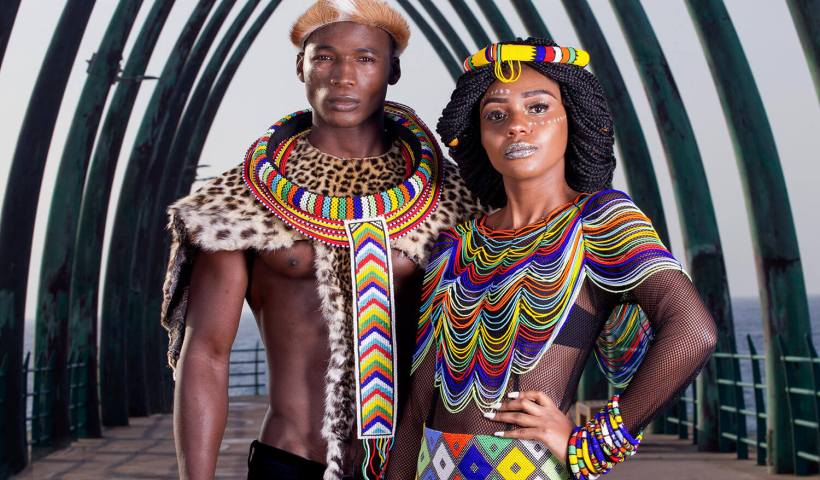
Haute Afrika, (Haute “meaning high standards, class, and elegance in French”), is an Award winning and internationally nominated contemporary African print brand founded in 2016 by Gracia Bampile. Her aim was to promote African sophistication and elegance by catering for a growing continent.
The brand embodies a modern culture and celebrates Africa’s heritage and shares the story one print at a time. Motivated to break societies stereotypes by infusing art through fashion and sharing the ethnic culture of Africans.
Haute Afrika brand is colorful, significant and explores the African roots and uniqueness that are engraved in Africa as part of its identity. Some of our textiles and fabrics are from different African nations and others are specifically created and printed by Haute Afrika to celebrate Africa as a whole as well as to cater for a more diverse audience by taking Africa to the world.
They believe that clothing can empower confidence, evoke topics and promote Africanism because “when you look good,you feel good.”
In the world of pop culture Haute Afrika maintains African print as its trademark and stand firm in breaking boundaries in order to merge cultures of artistic mindsets together.
They seek to make the availability of quality ready to wear outfits and the conceptualizing of custom made outfits a breeze. A lot of craftsmanship is actually put into every single outfit we make.
Haute Afrika strongly believe there is something about bold African prints that everyone can get to enjoy. Based in South Africa, our clothing has found its way on prominent people in different industries as well as celebrities.
Their emphasis is and will forever be to give you unique, enjoyable and quality clothing that you will treasure forever.
Not many can say they discovered their ‘why’ before they turned 10. I would like to introduce you to, and request an interview with, Gracia Bampile a fashion entrepreneur who has a beautiful story to tell and is about to release a new HOT collection.
This formidable entrepreneur, who holds an International Relations Degree, has no formal fashion training background, yet she has inserted herself as a trendsetter in an industry booming with talent. She has dressed the likes of Boity Thulo, Maps Maponyane, Mihlali Ndamase, Amanda Black, Thabsie,Zamani Mbatha, Kwesta and many more.
Her latest collection is set to wow fashion lovers at this year’s fashion shows and catch the eye of influencers and the world press. She has already caught the eye of BBC World News and Vogue.
Born in July 1991, on her birthday, Gracia Bampile had what Oprah calls an “Aha moment”. Her parents had bought her what she calls an ugly African print dress to celebrate. It was so bad that it inspired her to start making clothes of her own at just eight years old.
Gracia spent hours watching her seamstress grandmother make clothes until she mastered the art. As she grew older, she became concerned about how people didn’t like to wear African print designs especially as day to day wear. She says people had a perception that they can only wear African print clothes when attending events. So, she took it upon herself to disrupt the norm.
In 2015, she founded Haute Afrika, the home of her day to day African print designs made to change the narrative around African fashion. She travels the continent in the hunt for high quality materials to create designs inspired by Africa’s history, heritage and stories for Africans from Cape to Cairo.
Content courtesy of Haute Afrika & Nairobi fashion hub
In the wake of #CoronaVirus and being confined at home, all prospects of enjoying the glitz and glam that is SA Fashion Week soon became a dream more than a reality.
It is the event on my calendar that I anxiously await, relishing in the fashion from both new-comers and well known designers. For the last 3 years, I managed to have the perfect Birdseye view of the best in the business, and I was sure that 2020 wouldn’t disappoint.
That was until Covid-19 hit our shores, harder than the new Versace release or a sale at Louis Vuitton (another pipe dream).
All prospects of the event, which will be celebrating it’s 21st year flew out of my social calendar, because you know, social distancing and no gatherings bigger than 100. And let’s be honest, not even the hottest fashion is worth the risk of this pandemic.
Fashion Week is going ahead, but just a little differently this year.
In the words of Lucille Booyzen, the CEO of Fashion Week: Change, change, change. The thing we embrace and fear with equal measure.
The press release shed light on the recent speech by our President, and with that in mind the team at SAFW made a Plan B for the upcoming Spring/Summer 2020 showcase. And boy is it a plan. A climate-friendly, green-friendly, COVID-19 respectful, digital-only SA Fashion Week. This will be the first of its kind, and it is both smart and bold. Everything we expect from SAFW.
She went further to say, that this state of disaster has in fact paved the way for something unique and beautiful to happen. she goes on saying that it was the push they needed, as they have wanted to push change and the agenda.
Refreshing and relevant new stories from the designers will be told and the sponsors and other stakeholders will all be part of the bigger, global audience.
As the 23rd SAFW, this will indeed be the most important one, taking place 22 – 25 April 2020.
And just like that my excitement is restored. I may not get the chance to dress-up and photo-op, but I can watch it digitally.
Thursday’s opening night of South African Fashion Week (SA Fashion Week) Twenty Twenty Digital Collections, which was the first virtual showcase, was unique and organised.
Even the way the models strutted their stuff on the ramp, which was set up in the parking lot of Mall of Africa, you could see that they were at ease.
Gert-Johan Coetzee was the first to exhibit his latest work titled “Kraal Couture”, a collection inspired by the farms.
With blue and black being the dominant colours, the collection consists of beaded cowl skirts, smart pants with cow prints, a peplum tulle skirt, and ball gowns, some made of plastic.
Under the Diamond Fibre Collections, Mmuso Maxwell, Judith Atelier and Lukhanyo Mdingi brought nostalgia to the runway.
Maxwell presented their “Imbokodo” collection, a range that seeks to challenge the narrative of a woman’s place in society, especially in the African culture.
Some of our favourite pieces from the collection include the forest green side pleat jacket, the asymmetrical olive wrap jacket and matching pants, wool-side mustard pleat dress and the spiral knitted dress made of kid mohair.
Atelier introduced the brand to the luxurious world of mohair, which plays a big part in this collection.
Titled “ I am because we are”, the range includes appliqué skirts and dresses, with red and blue being the dominant colours and sometimes fused to create purple pieces.
In collaboration with Ginger Maggie, they also presented their SS21 jewellery collection using fine details such as macrame tassels, copper rings, polymer clay and copper rods that have been combined to create a unique new range.
Lukhanyo Mdingi presented a monochrome collection, rich in brown. His statement pieces include a sleeveless bike jacket made of felted kid mohair and pure merino wool blend gilet. Titled “Relic”, the collection is an extension from his previous works.
“The collection is an extension from what we’ve created in the past. The true provenance of what we do is that we’re always looking at the essentials and we’re always looking at our archives and that stems from really trying to execute what good design means to us because that’s what inspired us,” said Mdingi.
The Research Unit followed with their “Transformative” collection. As a brand that usually focuses on handbags, they collaborated with handweavers and the beaders from Kids Positive to push boundaries.
About the collection that had lots of coding, Erin-Lee Peterson, the founder of the brand, said: “We tried to push the boundaries as much as we could. Not just make it look African or beaded, or weaved, but we created shorts out of the handwoven scarf. We took our beadwork and created morse-code out of it. The smiley face on one of the tops was made through thinking about African masks, such as the one that has the six eyes”.
The range also included micro sling bags, travelling bags, as well as beach bags.
Paying homage to the Indian culture, Etka Kalan of Ekta played with colour and geometric shapes to create unique patterns.
On the inspiration behind the collection, she said: “My latest collection is called ‘Who am I’? It’s an exploration of identity and how we see ourselves. If you look at each person, their environments, their family life, their ethnicity, as well as the country where they live in, all plays a specific role in how they see themselves.
“I looked at my life and upbringing, taking being a South African Indian, loving being South African, but also deep-rooted into Indian culture. My collection looks at formlessness, as well as form. I took a sari, which is 5 metres of fabric, once wrapped into the wearer, takes shape and a form. Then taking this complete structured shirt and structured clothes such as a shirt and trousers, which is a complete western concept and fusing the two cultures to create a new collection and a new form.”
Closing the show was Helon Melon with a subtle, collection of white dresses. Titled “All Dressed Down and Everywhere To Go”, she had the lockdown in mind when creating the collection. To add some colour, she defined it with neon stitches and some art inspiration from Mary Sibande.
When asked why she called in “All Dressed Down and Everwhere To Go”, Melon said: “During the lockdown, we all dressed down. And the most exciting thing is that it is a dress downrange, but you can dress it up however you like. There are lots of whites, I’ve done everything in white cotton and added a few accent colours to the range. Lots of dresses, I’ve done a very chick cashmere suit, and I had to put it in because of what we’ve been through. It’s comfortable with South African influences in it, from the house that I saw in the Transkei over 20 years ago to our fabulous SA artists like your Mary Sibande.”
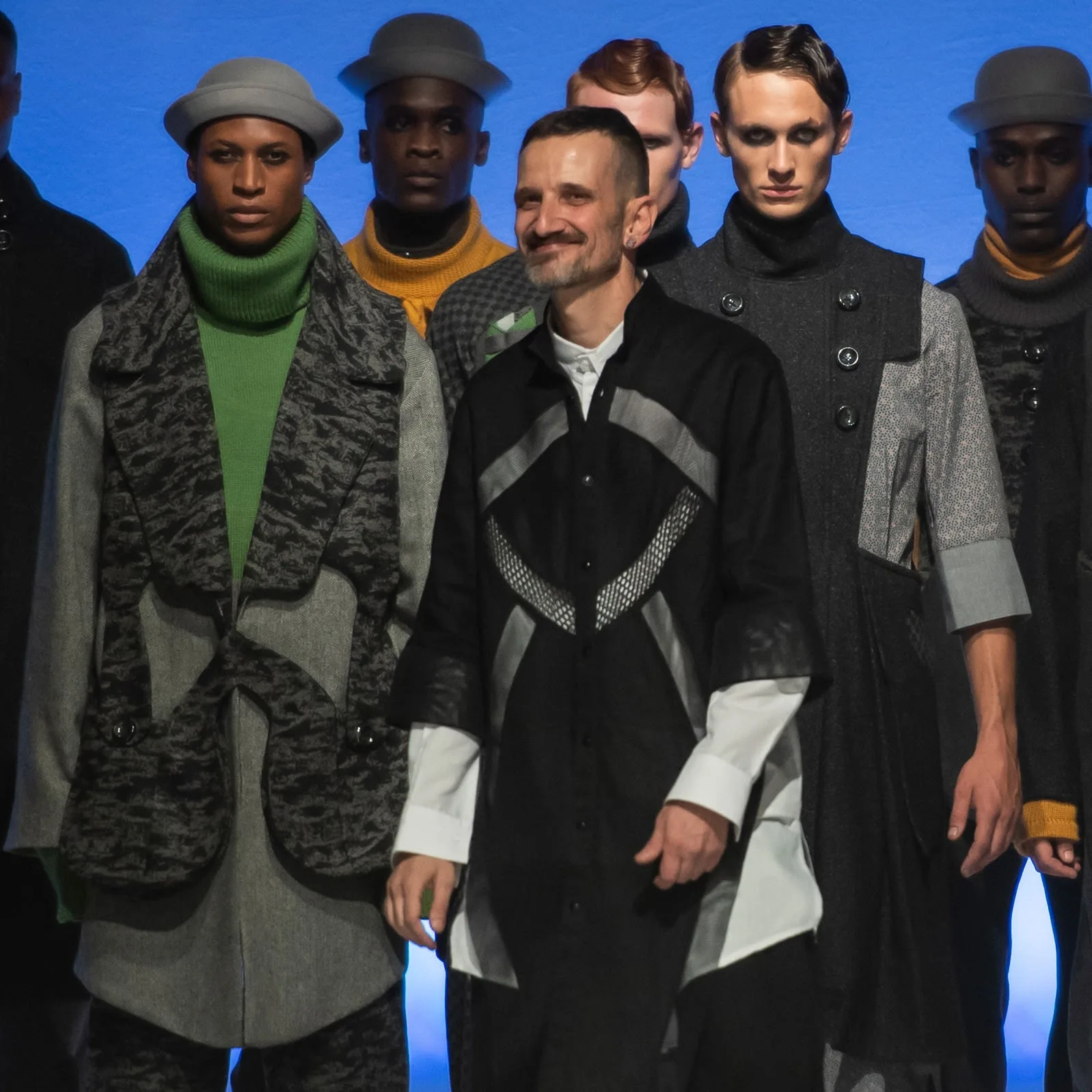
The South African fashion industry is devastated and in shock after the passing of leading South African designer Coenraad de Mol.
De Mol passed away on Tuesday.
“Coenraad was a highly gifted and knowledgeable industry leader who derived great joy from the creative process which he expressed in his cutting-edge De Mil menswear label which was most recently seen at the Cape Wools and Mohair SA Designer Challenge show at SA Fashion Week in October 2019,” said Lucilla Booyzen, director of the South African Fashion Week.
“He was a perfectionist, exceptionally generous with his expertise and took great delight in his role as design and production technology tutor of SAFW’s 21 Steps to Retail Designer Programme”, she added.
De Mil was established in 1997 and moved into male-inspired, gender-neutral clothing in 2007. The designer said he did not regard gender neutrality as just a theme but “It’s what I do,” he would say.
His designs catered to those who don’t have a place as well as those who choose not to be boxed-in by societal norms or conventions.
Photographer Eunice Driver expressed her sadness on SA Fashion Week’s Instagram post saying: “What a loss for humanity and SA fashion”.
While Paul Tilsley took to Twitter to pay his respects, “Devastated. It turns out this was his final bow. Cenraad de Mol, known for his label DE MIL, at @safashionweek AW20. Coenraad passed on last night. A real friend, gone. A real creative force, lost to this world.”
Renowned South African Designer, Coenraad de Mol, Passes Away
The passing away of leading South African designer, Coenraad de Mol on Tuesday 19 May 2020, has left the local fashion industry devasted, says Lucilla Booyzen, director of the South African Fashion Week. pic.twitter.com/WY3dalsKba
African fashion has for the past years earned popularity in most western countries and beyond. This is a result of how unique the prints and fabrics of the clothes are. This is one of the reasons that has kept African culture alive.
All this is a result of the effort that designers have put in place to ensure that they can secure a position in the world of fashion. The efforts of these humans cannot go without appreciation.
These are by far the best South African designers who are setting the pace in the industry.
Amanda Laird Cherry Amanda Laird Cherry is a much-loved South African fashion label that produces beautiful apparel for both women and men. Durban-based designer Amanda studied clothing design and gained ample experience in the industry before launching her own label. Her items have been exhibited at London Fashion Week and can be found in The Space stores nationwide as well as online at SPREE.
Michelle Ludek Michelle Ludek is another icon on the list of the richest fashion designers in South Africa. The latter has a history in North America where she earned her skill in commercial fashion design. Her style stands out as it varies from netty sweaters to lazy shift dresses. She is more into the chic kind of style.
Nkhensani Nkosi (Stoned Cherrie) Stoned Cherrie was established in 2000 and has, since then, become one of the most notable fashion labels in South Africa. The brand is especially known for its quirky use of crochet and pop-art style images of South African icons, like Steve Biko. The label draws inspiration from the Afro-urban lifestyle and founder Nkhensani Nkosi succeeded in creating an African brand that celebrates the country’s sense of identity in a creative way.
Nkhensani Nkosi is the brains behind Stoned Cherrie which she brought into existence in 2000 and is currently among the award-winning clothing labels in South Africa. The brand has told its story through the bespoke fabric to various woven pieces that have been embraced in the continent and beyond. The highlight of the humbling journey is that the brand has been breaking the waves and has made it to the runway and gone to the extent of representing the country in competitions. All these achievements are as a result of the hard work that Nkhensani Nkosi has put towards her passion that she turned into a career.
Laduma Ngxokolo’s MaXhosa Laduma hails from the Xhosa community, and as a result, he draws inspiration for his style from his cultural background. His style is distinct as it comes out in the form of abstract patterns in his knitwear. He is one of the few designers in the fashion world in South Africa who have chosen to do things locally by buying some of the locally available materials for his line.
Mzukisi Mbane (Imprint) The Cape Town-based label was established in 2011 by Mzukisi Mbane under the name Swagger Diariez. Mbane started off without any formal training and only his mother’s sewing machine. Today, Imprint is a clothing brand that fuses South African streetwear with vintage designs. The label strives to live up to its name with an ethos of “leaving a mark” through its designs.
Jacques van der Watt (Black Coffee) Jacques van der Watt flawlessly incorporates traditional South African design patterns into his modern creations and pays a large amount of attention to detail. Van der Watt showed his first collection at South African Fashion Week in 1999 and since then his label has become synonymous with cutting edge, local fashion design. Black Coffee is mainly characterized by its structural designs combined with complex shapes, and the installation shows are often hosted at unusual venues, such as Constitution Hill in Johannesburg.
Cari Stephenson Cari Stephenson is another designer based in Cape Town’s business world South Africa and the brains behind Tart designs. Her style is a little different from the rest as she expresses her creativity through ethnic prints and classic silhouettes. The best term that could be used to describe her style is simple but sophisticated. The other thing that makes the line stand out is its color scheme that is eclectic.
Anisa Mpungwe (Loin Cloth & Ashes) Loin Cloth & Ashes was launched in 2008 by Johannesburg-based fashion designer Anisa Mpungwe, who designs modern clothing with an African twist. Her items are all inspired by African traditions and the people that inhabit the country, which ensures that her designs are completely unique. In 2010, Anisa showed at the Mercedes-Benz Fashion Week in New York and her store in Maboneng is perfect if you’re after a stand-out outfit.
Born in Tanzania, Anisa was raised in South Africa, and she took advantage of the opportunities in the country to build her brand in the design industry. As young as 19, she was already building her career. She started working for various fashion magazines, houses, and factories. This helped her groom her skills, and within no time, she was already working on her brand.
She has showcased her work in various fashion weeks on various platforms in Mozambique, New York, Italy, Sweden, to mention a few. Loin Cloth & Ashes is the name of Anisa’s brand. It can be described as a sophisticated blend of African print and a bit of modern print. Anisa believes that she has been able to tell her story through her brand. The most notable collaborations that the latter has done include brands like Samsung, Bobbi Brown, and MRP. These collaborations speak volumes about her.
Bongiwe Walaza Bongiwe Walaza is the perfect definition of ‘the apple does not fall away from the tree. The latter learnt the skill from her mother who was a seamstress. She perfected on it and ended up becoming the international designer that she is. She has worked with textile companies like Da Gama textiles that are notable for producing shweshwe fabric. The fabric has great influence in her design as her style is described as earthy.
David Tlale The David Tlale label has received international recognition and is a favorite among South African celebs and socialites. In 2009 David Tlale was awarded Fashion Designer of the Year at the Africa Fashion Awards in Johannesburg. In 2011 he presented a collection titled “Made In The City” which celebrated Nelson Mandela’s 92nd birthday.
In this showcase, 92 models used the Nelson Mandela bridge as their runway, donning Tlale’s clothing. Tlale was also the first South African fashion designer to showcase solo at the Mercedes-Benz Fashion Week in New York in September 2012.
Zahnri Gertse Zahnri Gertse is one of the youngest fashionest designers in South Africa. She launched her label in 2018. Her brand, Virtue SA, encompasses street-wear whose aesthetic is dictated by comfort. She took part in Edcon Design Innovation Challenge during the South African Fashion Week AW19 where she emerged as the winner.
These are some of the most influential South African designers that are breaking the waves in the art to come up with the most unique pieces. Some have worked on hippie clothing in South Africa whereas others have let comfort dictate their style.
Linda Gale (Stitch & Steel) Stitch & Steel, founded by Linda Gale, is a Johannesburg-based fashion label that creates quirky items made from authentic fabrics sourced from all over Africa. The label’s main focus is women’s clothing but they also have a men’s range, which includes ties and patterned shirts. Only a few of each garment is created, so you’ll be the proud owner of a very exclusive piece.
Stitch & Steel Linda’s style incorporates a striking array of brightly-colored fabrics that bring out the African feminine beauty. Quality is another key area of concern for Linda.
Thula Sindi Thula Sindi is not a name to associate with the local designers in South Africa because he is more than skilled in art. He has a background in fashion as he is an alumnus of the London International School of Fashion. Thula Sindi is one of the most promising SA designer names because of his wealth of experience in working with a textiles company that prompted him to work on his brand. His clothes are his center of attraction.
Marianne Fassler Marianne Fassler is a well-known name in the South African fashion industry and rightly so, as she’s spent more than three decades in the business. Fassler opened her first store in 1976 and today her label, Leopard Frock, is based in Saxonwold, Johannesburg.
Her designs offer creative, beautifully made clothing items and she’s well known for her unique wedding dresses.
Palesa Mokubung (Mantsho) Manthso means “a beautiful complexion” in Sesotho and the label was founded by Palesa Mokubung in 2004. Palesa uses traditional African fabrics and combines them with modern silks and weaves to create edgy clothing items. She worked as a designer at iconic local label Stoned Cherrie before going off on her own and starting Mantsho. Her label has been showcased all over the world including New York, India, Nigeria, and Greece. Mantsho has a stand-alone store in Melville, Johannesburg (27 Boxes) and is also sold online through Spree.
This is one of the brands that has had some of the best breaks in the industry. The brand has been in the industry for more than a decade, and the baby steps are finally yielding fruits. Palesa had the honour of working with one of the most coveted labels: H&M. This comes after the fashionista landed the opportunity to share a platform with some of the most established giants from countries like India, China, Russia, and Brazil.
Mzukisi Mbane Mzukisi Mbane is another icon who is setting trends in the industry in Cape Town. The latter is a graduate with a Bachelors’s degree in Commerce who chose to follow his passion and establish his brand, Swagger Diaries way back in 2011. Mzukisi has no background or any form of training in the field but manages to create 80% of his work. Swagger diaries is a brand of a kind as it aims at narrating the tales of the African ancestors through the fabric designs and unique prints. The brand has diversified to work on shoes and some of the most unique accessories.
Wandile Zondo (Thesis Lifestyle) Thesis Lifestyle is not only a street wear label, but also a brand that hosts events and activities, such as Social Run and Ride – a free fun run in Soweto. Thesis Lifestyle is also well known for its Thesis Social Jam Sessions, held on Sundays, which brings creatives from all over the city (and country) together. The label is passionate about collaborations and encourages its followers to go out into the streets and open their eyes to the many possibilities that surround them.
Content courtesy of Brie fly & Nairobi fashion hub