Wednesday 29th of April 2026

Nairobi, Kenya

Disconnect Movie Coming Soon On Koko Africa

Disconnect is a new Kenyan movie starring most talented celebrities stars in Kenya Brenda Wairimu , Patricia Kihoro , Catherine Kamau , Bridget Shighadi , Nick Mutuma , Pascal Tokodi , Brian Ogola  and Illya Frank

Disconnect Movie Coming Soon On Koko Africa

[taq_review]

Produced By : Iman Mueke

Assistant Producer : Robert Umija , Njiiri Karago

Associate Producer : Nick Mutuma , Brenda Wairimu , Linda Karuru , Ledama Sempele and Ezy Onyango

Director Of Photography : Andrew Mageto

Production Designer : Naima Mungai

Costume : Fortune Ngoiri , Pendu Tsinat

Music :
Alex Tharao , Ibrahim Sidede

Sound : Lee Smith

Casting : Zhuri Agency

Original Story : Safina Iqbal

Screen Play : Natasha LiKimani

Written By : Silas Miami

Executive Producers : Sheila Kaaya ,Gitonga Kimenyi ,Waruhiu Katanu Mwosa ,Elizabeth Onyango , Njeri Karago , Tosh Gitonga

Co-Director : Michael Jones
Directed By : Tosh Gitonga

Content Courtesy Of  Nairobi Fashion Hub , Film Crew In Africa , BLINK , Koko Africa , & Primary Pictures

Neophobia Film

Neophobia is a Kenyan short film based on a modern day fairy tale, tells the story of a young woman obsessed with old routine and an unwillingness to try new things. When she unexpectedly finds an appreciation for a modern hair dryer, she is forced to completely rethink -and overthink -her life.

Neophobia Kenyan Film 

Awards Won Neophobia which scooped four awards at the UDADA film festival event which celebrates women filmmakers. The film won awards in the Best Male Director, Best Production Design, Best Sound & Score and Best Short The awards were received by the film’s D.O.P Marvin Kariuki and Mark Maina. Taking to his social media page to express his excitement, Neophobia writer and director Mark Maina wrote this, “Winning! My goodness. Neophobia just scooped four awards at the UDADA Film Festival. I’m short of words. Neophobia team, this one’s for you, you are all awesome. I am most humbled.” Earlier last year in May2017, Neophobia was screened at the prestigious 70th Cannes Film Festival in France. It was the only African movie chosen for this year’s Cannes festival. The film will be screened at Alliance Francaise on 4th December.

[taq_review]

Director: Mark Maina
Writer: Mark Maina
Stars: Joyce Maina, Brian Ogola, Cate Sidede

Content Courtesy Of Nairobi Fashion Hub


Mully Movie

The rags to riches story of Charles Mully, one time Kenyan business tycoon turned founder of Mully Children’s Family, the largest children’s rescue, rehabilitation and development organization in Africa.

This humble man from Africa has discovered the answer that Bill Gates and Bono have been searching for. MULLY is tackling huge problems with huge heart. You have to see this story to believe it. –Kirk Cameron, Actor, Two Time Golden Globe Nominee

Charles Mulli (Mully Movie )

A powerful, focused documentary whose turns will surprise those unfamiliar with its subject’s life. –Los Angeles Times

[taq_review]
Mully leads us on a ledge between dreams we fear and those we hardly dare hope. It is a feast that blends the most unlikely elements: wealth and heartache, poverty and hope, rash idealism and impossible outcomes. Ultimately, Mully helps us see that any aspiration that does not account for God s power is far too small. –Christian Alliance for Orphans

Read more  no next  page

 Togeterness Supreme Film

Based on actual events, Togetherness Supreme is the story of Kamau, an artist, searching for change in the midst of tribal tension in the slums. Kamau stands up against his father and his tribe to join the other side with his friend Otieno. Kamau and Otieno fight for political change for those living in dire poverty, but they are caught up in the middle of the ethnic conflict that tears apart their country and, furthermore, they are rivals for the love of Alice, a preacher’s daughter. After a contested presidential election (Kenyan presidential election of December 2007), the slums erupt in violence and Kamau’s world collapses around him.

This film paints a true reflaction of tribalism in kenya after violence followed the Kenyan August elections in 2007. One of the flashpoints was the massive shantytown of Kibera. This film tells the story of the post-election violence through the eyes of those who witnessed it

Togeterness Supreme has won several International Awards.

  • African Movie Academy Awards 2010: 2 awards
  • Best International Feature Film – Santa Barbara International Film Festival 2011
  • Global Landscape Award – Cinequest Film Festival 2011

Directed by  Nathan Collett
Initial release  5 October 2010
Music director  Eric Musyoka
Cinematography  Andrew ‘Dru’ Mungai
Director  Nathan Collett
Copy Right Alchetron
Content Courtesy Of Digital Team 

Stunning New Images Celebrate Kenyan Female Icon who Stood up to Colonialists, Mekatilili wa Menza

CNN How do we immortalize people who have impacted the world and made it better in a significant way?

Two photographers, Rich Allela and Kureng Dapel, show us how in a series of images in a project titled “African Queens.”

They recreated the life of a female Kenyan icon Mnyazi wa Menza, who was popularly known among her people as Mekatilili wa Menza.

Mekatilili is celebrated in Kenya for challenging oppressive colonial policies in the early 1900s.

She was fearless and was even said to have slapped one of the British colonial masters in a heated argument in August 1913, according to The Star, a local newspaper in Kenya.

Commenting on the project, Allela said it “represents the strength of womanhood, and inspires the African woman to rise above the inequality and discrimination faced every day.”

Story highlights
Photographers Rich Allela and Kureng Dapel celebrate female African icons in a bold photography project themed “African Queens”
In this collection, they re-imagine fearless Kenyan woman Mnyazi wa Menza (Mekatilili) who challenged colonialism in Kenya
Here are some of our favorite images from the collection.

Mnyazi wa Menza a.k.a Mekatilili was a strong woman known for her fierceness and resistance of colonial rule in Kenya. This photography project represents her life in the Giriama region of Kenya where she lived from the1840s to 1924, according to local sources.

In this reimagination, a fearless Mekatilili is pictured readying for battle, defying the age-long patriarchal norms in Kenyan (and generally, African) societies. Women were not known to be headstrong during that time, but Mekatilili could not be silent about the colonial oppression in her community. While celebrating her achievements, Kenyan newspaper, Daily Nation, described her as the “mad woman who rattled the British.”

Infuriated by the exploitative practices of forced labour and over-taxation by colonial masters in the Giriama community, Mekatilili challenged colonial rule. It is documented that she once slapped a colonial master during a heated exchange over demands made by him from her community. She stood strongly for traditional religious practices and preservation of native customs and traditions, says Kenya’s The Standard.

Read more  no next  page

Soul Boy Film

Soul Boy is a 2010 Kenyan drama film, written by Billy Kahora and directed by Hawa Essuman. It developed under the mentorship of German director and producer Tom Tykwer in Kibera, one of the largest slums in the African continent, in the middle of Nairobi, Kenya. The film has received five nominations at the 2011 African Movie Academy Awards.

[taq_review]

The film originated in a workshop for young film enthusiasts from Nairobi, guided by German director Tom Tykwer.

Nairobi, Kenya. 14-year-old Abila lives with his parents in Kibera, one of the largest slums in East Africa. One morning the teenager discovers his father ill and delirious. Someone has stolen his soul, mumbles the father. Abila is shocked and confused but wants to help his father and goes in search of the right remedy. Supported by his girlfriend Shiku, he embarks on an adventurous journey that leads him right to the heart of the microcosm that is his hometown.

Content Courtesy Of  Nairobi Fashion Hub Online Digital Team

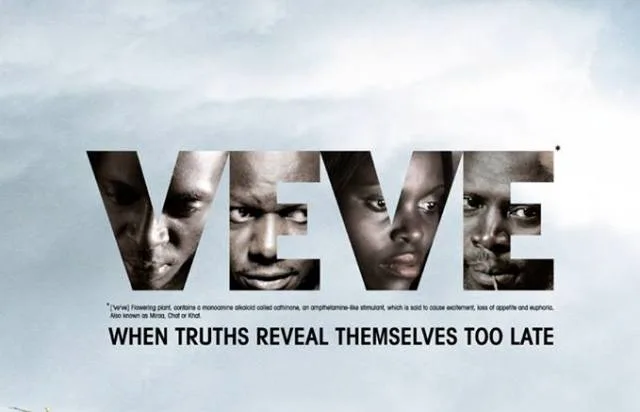
Veve Film

Amos, an unscrupulous local Member of Parliament, wants to become Maua’s Governor in the upcoming elections whilst expanding his business interests. He is a key supplier to the exporter of veve, Wadu, a shrewd businessman, who commands a sizeable share of the business.

Following a conversation with his backdoor accountant, Amos sees an opportunity to upgrade his working relationship with Wadu and acquire a bigger stake in the business. He shares his plan with his right-hand man Sammy, who has been instrumental in building Amos’ influence, doing the dirty work for him. But Sammy’s penchant for such assignments is waning. Still mourning his wife’s death despite the passage of a few years, Sammy is struggling to connect as a father with his rebellious, glue-sniffling son Kago.

Amos’ bold plan hits a snag when Wadu brushes off his proposal, driving Amos into taking things by force. He puts in motion a chain of events to drive Wadu out of business. Meanwhile, veve farmers in Maua who get peanuts for their crop want to better their lot by forming a union, led by the elder man Mzee.

Amos’ ambition has gradually led to a flagging marriage with his wife Esther, though he does not seem to notice this. Esther enjoys the comfort of the wealth he has but misses out on the affections of a loving man. When she discovers he is sleeping with other women, she does not take it lightly anymore.

Kenzo, an ex-convict, is a bitter man seeking revenge by hunting down the man who killed his father: Amos. He attempts to assassinate Amos at a campaign rally and fails. Undeterred, he seeks the help of fellow ex-convict Julius, and they hatch a multi-pronged plan to attack the business interests of both Wadu and Amos simultaneously, triggering a fatal clash between the two and ultimately destroying Amos.

In a twist of events, Esther’s and Kenzo’s paths cross and she ends up finding solace in his arms, totally oblivious that she is falling for her husband’s grim reaper. Elsewhere, Wadu suspects that his troubles have something to do with a competitor.

Sammy burns down Mzee’s farm as a lesson to the unionists. As Mzee’s grandson Morris wonders what to do next, his impulsive friend and wannabe documentary filmmaker Clint tries to confront Amos, which only makes matters worse.

Inevitably, things boil over. Kenzo and Julius raid both Amos’ and Wadu’s business interests, and Julius pays with his life. Amos hunts down Kenzo as Sammy is torn between obeying his orders and finding his son who has run away from home. Esther struggles between being faithful to the man she married and saving the man she just met. Wadu’s patience runs out after he finds out the source of his troubles, and he hires an assassin to finish off Amos.

[taq_review]

Background

Following the success of the feature film Soul Boy, One Fine Day Films and Kenyan-based production company Ginger Ink partnered with DW Akademie to design a two-module training initiative: One Fine Day Films Workshops.

The first module, a classroom-like “mini-film school”, deepens and expands the skill set and cinematic language of already practicing African filmmakers. It widens cinematic perspectives, exposure, and vocabulary. From 18–29 June 2012, the third ONE FINE DAY FILM Workshops were held in Nairobi, Kenya.

56 participants from eleven African countries were invited to enhance their skills in the fields of directing, production, scriptwriting, editing, sound, production design, and cinematography under the mentorship of experienced film professionals.

Out of those participants, a creative team from all departments was formed to shoot VEVE nine months later: Simon Mukali from Kenya was selected to direct the movie, mentored by Sven Taddicken. Egyptian participant Mayye Zayed and Kenya’s Shiv Mandavia as the cinematographers and many more in various departments – Veve was born. Written by Kenyan Scriptwriter Natasha Likimani, it is a high-octane multi-character story that gives a glimpse of the contemporary realities within the Khat trade in Kenya.

Content Courtesy Of Digital Team

House Of Lungula Official HD Trailer

House of Lungula is a 2013 Kenyan comedy film directed by Alexandros Konstantaras. It focuses on the sex life of typical Kenyans. The word “lungula” means “sex” in Kenyan slang, Sheng. The film stars Gerald Langiri, Lizz Njagah and Ian Mbugua. Langiri plays a hardworking man who needs money to pay for his fiancé’s dowry, while Njagah plays a wife who decides to play a tit-for-tat game when she finds out that her husband had a mistress. Mbugua plays a man who maintains a secret relationship with a younger woman, played by Sarah Hassan, who in turn represents girls who date older men for money.. The film was rated 18+ by the Kenya Film Board Association.

[taq_review]

Plot
Harrison (Gerald Langiri) urgently requires money to pay for the dowry of his fiancée, Charity (Nice Githinji). Through his boss, Mr. Taylor (Ian Mbugua), he gains access to a huge house belonging to their company’s CEO, Mr. Lungula. He is charged with cleaning the house for a fee. A posh empty house presents an opportunity and under the right circumstances could generate some quick cash. Alex (Lenana Kariba), Harrison’s friend and co-worker, is looking for a place to entertain a ‘client’ for a day. For the right fee, he gains access to the house of Lungula, but with conditions of course. Mr. and Mrs. Taylor’s (Lizz Njagah) marriage is rocky, and she has suspicions that her husband is cheating. Sahara (Helena Waithera) provides a solution, an eye for an eye. To be fair, these suspicions are not entirely unfounded as Mr. Taylor is a very naughty man, slinging around the beautiful Chichi (Sarah Hassan) while he’s supposed to be at the office. Chichi on the other hand also has a lover, Tito (Gitau Ngogoyo), to make the plot even more complex. Surprisingly all the characters land at the house of Lungula. The secrets are revealed and relationships are at stake.

Read more  no next  page

The First Grader

The First Grader is a 2010 biographical drama film directed by Justin Chadwick. It stars Naomie Harris, Oliver Litondo, and Tony Kgoroge. The film is based on the true story of Kimani Maruge, a Kenyan farmer who enrolled in elementary school at the age of 84 following the Kenyan government’s announcement of free universal primary education in 2003.

[taq_review]

n 2003, a disc jockey announces over a Kenyan radio station that the government is offering free primary school education to all natives who can prove citizenship with a birth certificate. Kimani Maruge (Litondo), an 84-year-old villager, hears this and decides to take it upon himself to seek an education. Arriving at his local school, he meets Jane Obinchu (Harris), the principal and teacher. He expresses his desire to learn how to read. Her teaching colleague Alfred (Munyua), ridicules him and demands he leave. Later, Jane informs her husband Charles (Kgoroge) about Maruge. He discourages her in supporting his educational endeavor.

After beginning his initial classes, Maruge is plagued by memories of his service during the Mau Mau Uprising against the British in the 1950s. He begins to hallucinate and becomes confrontational with the students, struggling to continue his academics. Controversy begins to stir over Maruge’s education. Soon enough, the story that an elderly man going to school becomes national headlines. Mr. Kipruto (Kunene), a superintendent of the school district, is alerted to the situation and strongly disapproves of Maruge’s predicament and suggests that he go to an adult educational facility.

Meeting with the head of the education board to plead Maruge’s case, Jane is overruled. It is explained to her that if an exception is made to keep Maruge in the school, others will follow, and many schools will eventually become filled with older people sitting aside children. Maruge is forced to attend an adult learning centre, where he soon finds himself surrounded by people with no motivation or ambition to study. Maruge vows to never go back to the adult institution. Jane later decides to offer him a reprieve, to work as her teaching assistant. As Maruge’s story gains publicity and attention, the local press descend on the school, causing friction among the parents. The villagers believe Jane and Maruge are seeking fame and fortune at the expense of the children. Following negative feedback and random acts of violence against the school, Jane soon receives a letter that she is to be transferred to another educational institute a few hundred miles away.

Jane reveals to Maruge that she is relocating, and then commences an emotional goodbye with the children. Following protests and disobedience on part of the students towards their new teacher, Maruge is motivated to travel to Nairobi to appeal himself to the education board. Jane is reinstated at the school, where Maruge and the children are there to welcome her. The film’s epilogue displays a series of graphics stating that at age 84, Maruge is the oldest person to start primary school according to the Guinness Book of World Records. Supplementally, he was invited to make a speech before international leaders at the UN in New York regarding the power of education. He inspired a whole new generation of people to go to school for the first time. Maruge later died in 2009.

Content Courtesy Of Digital Team

I want to Be a Pilot Film

I Want to Be a Pilot is a 2006 award winning Kenyan – Mexican short film docufiction written and directed by Diego Quemada-Diez. The movie has earned more than 50 international prizes, including the Audience Award at the Los Angeles Film Festival and has participated in over 200 film festivals such as Sundance, Locarno, Telluride, Edinburgh, Amiens, Los Angeles, São Paulo, Manhattan, Silverdocs, Bermuda, San Francisco.

I want to be a pilot has won several international awards

[taq_review]

Plot
The film tells the story of a poverty stricken boy in one of the poorest parts of Kenya who looks up towards the heavens and dreams of being an airline pilot, of being able to fly.
Cast

  • Joseph Kyalo Kioko
  • Kepha Onduru
  • Collins Otieno Omondi
  • Gaudencia Ayuma Schichenga

Content Courtesy Of Digital Team

Ndoto za Elibidi Film

“The story pivots around the theme of acceptance and love as its colorful protagonists (parents, four daughters and their lovers) come to terms with HIV and ghetto life.”

Dreams is the story of two brothers who travel to Nairobi to find work. Interspersed with songs and plenty of broad comedy, the play follows their fortunes and that of their children as they struggle with issues of love, loyalty, ignorance and forgiveness against the backdrop of the teeming city. In 2009, Dreams was produced as S.A.F.E’s first feature film with the aid of a grant from Keep A Child Alive. The film tells the story of George Elibidi and his family’s survival and final triumph over HIV, and in the process covers issues such as PEP treatment for rape victims, ARV use, stigma and discrimination, condom use and circumcision.

Ndoto Za Elibidi, S.A.F.E.’s first full-length feature, is many things at once: a stage play turned into a feature film, a documentary and a testimony on the impact of the plays message. It was devised originally as a stage play with actors from the Nairobi slums. The story pivots around the theme of acceptance and love as its colourful protagonists – parents, four daughters and their lovers – come to terms with HIV and ghetto life. Cutting back and forth from fiction to documentary, from the original stage play to the actual locations, it takes us on two parallel journeys: we watch the film, but we are also watching it through the eyes of the ghetto audience as they watch the play tell the story of their lives. This extraordinary position gives us a double pay off.

The play was performed for over five years throughout the Nairobi slums, reaching over half a million people. The film version was made after repeated requests from partnering schools and clinics for a DVD version of the performance.

[taq_review]

Ndoto za Elibidi has won several International Awards 

Zanzibar International Film Festival 2010
Golden Dhow for Best East African Talent
Ousmane Sembene Award Commendation

Kenya International Film Festival, Nairobi 2010
Special Jury Prize ‘for speaking powerfully and critically across class, gender and national divides’

Festival of African Cinema, Verona 2011
Verona Award for Best African Film

Kalasha Film and Television Awards 2010
Best Feature Film
Best Editing
Best Supporting Actress

Kerala Film Festival 2011
Official Selection

Tarifa Film Festival 2011
Official Selection

Africa In The Picture Film Festival, Netherlands, 2012
Audience Selection: Best Feature Film

Publication date
2010
Copyright date
2010
Title Variation
English language title: Dreams of Elibidi
Note
Copyright notice on video: S.A.F.E. ; 2010.
Originally produced in Kenya as a motion picture in 2010
Wide screen.
Production Credits
Director of photography, Guy Wilson ; edited by Carole Gikandi Omondi ; sound, Willie Kiumi, David Kinyanjui ; original music, Eric Wainaina, Jeffrey Weeks Harrison.
Participant
Juma Williams, Sharleen Njeri, Mercy Wanjiru, Krysteen Savane, Ednah Daisy, Ummul Rajab, Godfrey Ojiambo, Jacquey Nyaminde, Joseph “Babu” Kimani, Paul “Kadez” Njogu, Eric Ndung’u, Triza Kabue, Sam Kihiu, Alfred Calypso, Irungu Wairimu, Caroline Midimo, Kamau wa Ndung’u, Lucy Waithaka, Melissa Ommeh, Mercy Makokha, Peter King, Small Ogutu, Stevejones Mugo, Elly Yang, Eunice Njoki, Badiza, Doreen Mwajuma, Miles Lekan Kihiu, Erica Winnie Wairimu, Christabell Calypso, Eileen Ojiambo, Zelma Kiruma, Itch “The chairman”, Eric Wainaina.
Funding Information
Funded by Keep a Child Alive
Format
Disc characteristics: Recorded DVD.

Content Courtesy Of Digital Team & Safe Kenya Org

Ad