Wednesday 6th of May 2026

Nairobi, Kenya

The Sixth Annual Africa Day Celebrates The Resiliency

The Organization of African Students paid homage to various African cultures with a virtual show

The Organization of African Students hosted Africa Day on Friday, April 16 in the Amphitheater an annual event that celebrates the many cultures found on the African continent. Last year, Africa Day was canceled because of the COVID-19 pandemic.

The performances had been filmed at different locations and were presented on a projector. The performances included dances, fashion, cast member games, an homage to Africa Day 2020, a flag presentation, and a segment that asked what Africa Day meant to students.

The theme of this year’s event was #IFARADA. Ifarada means resiliency in Yoruba a West African language. The theme was influenced by the many African youth movements that have occurred this past year. These movements have sought social and civil rights and have taken to social media to organize and spread their message. Their slogans have been hashtagged and were seen by people all over social media.

Examples include #EndSars in Nigeria, #CongoisBleeding in Congo, #ShutitAllDown in Namibia, and many more.

Jasmine Obule, fourth-year College student and Africa Day creative director, wanted to draw attention to the reliance in the face of such adversity.

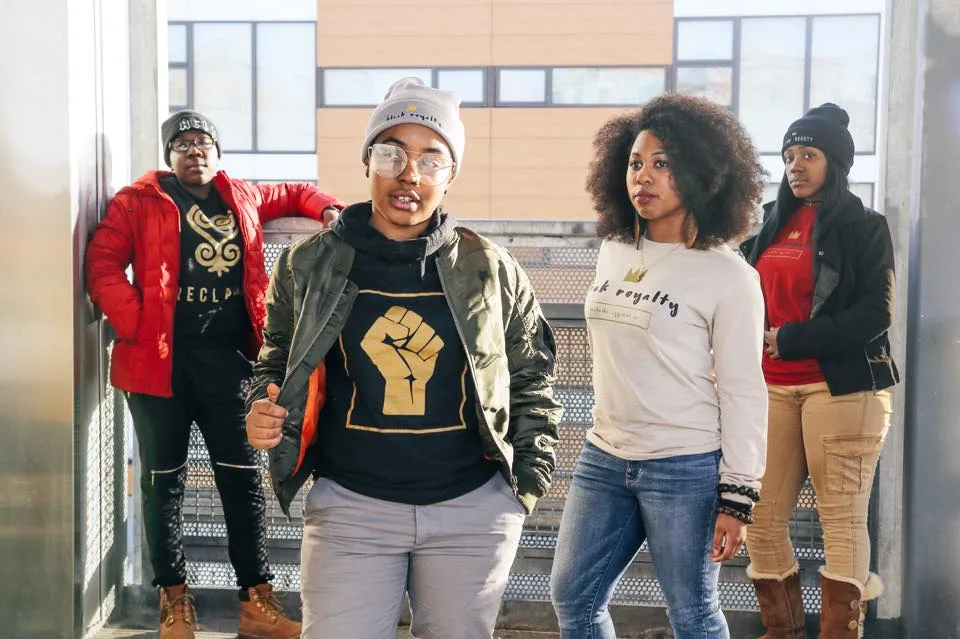
“The show is titled #IFARADA to show that throughout it all, the African community has remained resilient, courageous, bold, confident, and strong,” Obule said. “We sought to show through our clothing and our powerful walks how bold and fearless we can be. We showed through our clothing and walks that we are not easily intimidated.”

In deciding whether to put on the show this year, Nma Okafor, fourth-year College student, and OAS president said that the executive board took into account the lack of social interaction and difficult mental health situations that students were facing. Africa Day was needed to provide students a social outlet and a break from reality.

Okafor said the format of the event was changed this year because of the uncertainty of the pandemic. The board decided that they wanted a video show in case they were not able to do anything in person. Due to the switch to a video show, the team had to take on nontraditional roles in addition to their regular roles.

Planning for the event normally starts the summer before, but this year planning began in January. The team met regularly over Zoom to plan and coordinate how they were going to film and produce Africa Day. Okafor said the show was filmed over a month before Africa Day and the filming happened over the course of a weekend.

“Everybody was booked Friday, Saturday, Sunday of that weekend and we were awake from 6 a.m. to 10 p.m. some people later than that,” Okafor said.

Okafor explained that organizing this event meant keeping up with a lot of moving parts. The person team was composed of models, photographers Nathaniel Diemer and Omer Gorashi, videographers Raed Gilliam and Demetri Workman, and a make-up team.

“We had to make sure that everyone had a negative COVID-19 test and was quarantining correctly for 14 days prior to filming,” Okafor said. “During filming, we had to make sure we fed everyone for a whole weekend.”

The video format allowed for new ideas to the show but also brought forth many edits.

“We decided that the show would be more interactive if models used the different locations they were provided and brought their creativity to the video while walking and posing in that setting,” Obule said. “We were able to record things multiple times to make sure we were putting out our best work.”

Okafor said the team worked hard to make sure the presentation of their work in the Amphitheater was safe and enjoyable. There were staggered arrival times for the audience and seats were also spread apart.

The night began with a celebration of the recipients of an OAS scholarship and it proceeded with speeches from Okafor and Obule. There was then a presentation of the flags for the 54 countries in Africa.

Afterward, there was a presentation about the theme of this year’s show #IFARADA. Boule explained to the audience what Ifarada meant and why it was chosen. They also highlighted many youth movements for civil rights happening on the continent.

The night continued with the different sections of the show which had their own subtheme.

Fashion was a major part of the show, as demonstrated by the traditional prints the models wore. Okafor said the prints were beautiful, but she wanted to emphasize that a lot of the prints seen in this year’s show are West African prints and not representative of the entire continent. A lot of the prints were transferred from last year’s canceled show. The vibrant prints came from many West African countries. They were worn in both traditional styles and more Western clothing. The prints were vibrant and incorporated red, gold, pink and blue among some of the notable colors.

The prints were not the only reference to Africa Day 2020, the show included a tribute to last year’s Africa Day with a section called “Dear Africa Day 2020.”

In other years the intermissions in the live shows were performances by student singers and rappers, but this year, the intermissions allowed the audience to better know the models. The models played a game where they were shown another model’s baby picture and had to identify the person. Another intermission saw the models describe what Africa Day meant to them in one word. The answers included “family,” “necessary,” “dynamic” and “Umoja”  the Swahili word for unity.

Obule said that Africa Day, while informative and important, can only provide a glimpse into the beauty of African cultures.

“We were able to show a glimpse of Africa, the beauty of our culture, clothing, and people,” Obule said. “However, it’s important to mention that this is not a representation of all of Africa as this is very hard to do in an hour and 10-minute show.”

For those more interested in learning more about Africa, Okafor said that the OAS is eager to help. Africa Day is one of the many events OAS produces to educate people about Africa’s numerous cultures and discredit myths about the continent. Okafor stressed that the organization is open to anyone with an interest in Africa.

“OAS is very inclusive to Africans as well as non-Africans who are interested in learning about the various cultures here that we have to offer,” Okafor said.

More information about OAS can be found on its website www.oasatuva.org.

Content courtesy of  Cavalier Daily & Nairobi fashion hub 

Explore African Culture Right in Metro Detroit

Metro Detroit is home to a growing community of Africans from countries all across the continent. Though not as visible as Polish culture in Hamtramck or Arab influences in Dearborn, African cultures abound in metro Detroit, making it easy to sample the richness of the continent right here at home.

Seydi Sarr, a Senegal native and executive director of the African Bureau of Immigration & Social Affairs (ABISA) in Detroit, says the city attracts a steady flow of African immigrants from larger metropolitan areas such as New York and Washington, D.C., who come here to settle down, raise families, and establish businesses. As of 2000, there were nearly 17,000 African-born people in Michigan. By 2016 that number had risen nearly 63 percent to a little over 27,000, according to the U.S. Census.

More than half of the state’s African-born population at that time lived in the Detroit-Warren-Dearborn area. They represent a diverse mixture of people who hail from Senegal, Guinea, the Democratic Republic of Congo, Uganda, Togo, Cameroon, the Ivory Coast, and elsewhere, says Zaini Itito, a Togo native who serves as shelter and client services manager at the nonprofit Freedom House Detroit, a temporary home for asylum seekers.

“It’s definitely diverse because you have Senegalese, you have Gambian, you have the Ivory Coast, you have Benin, you have Togo, you have Mali, you have Nigeria, you have Uganda … you have Burundi in here. It’s very, very diverse,” Sarr says of African influences in the region.

There are plenty of ways to experience the diversity of African culture right here in metro Detroit if you know where to look.

Don’t Miss 

A great place to start is with a trip to Dabls Mbad African Bead Museum. Museum owner, curator, and visual storyteller Olayami Dabls began collecting African beads in the ’80s. He opened his museum in 2002 on an entire city block in Detroit with the goal of connecting the local community to African history and material culture, free from the constructs of European museums. The walls of the bead gallery and shop are covered from ceiling to floor in hand-carved bone, glass, brass, and ceramic beads from all around the continent. The campus also includes 18 outdoor mosaic and mural installations, including the “N’kisi House” and the “African Language Wall,” which features 25 of the continent’s languages painted in multiple colors.

The African World Festival is a highly anticipated annual event in Detroit. During a three-day weekend each August, the festival brings live music and dance performances, art, clothing, more than 200 authentic African and Caribbean food vendors, and more to crowds that surpass 125,000 in non-pandemic years. The event has been held at the Charles H. Wright Museum of African American History for the past decade, but it’s scheduled to return to its original home base, Hart Plaza, from Aug. 22 to 24 this year.

At the Detroit Institute of Arts, local historian Jamon Jordan guides guests through the museum’s ancient Egyptian and African exhibits as part of the Royal African Tour. ABISA’s Sarr, meanwhile, teaches West African dance classes at the N’Namdi Center for Contemporary Art’s Movement Center.

The Real Deal

Several shops with authentic African apparel and accessories line the Livernois Avenue of Fashion in Detroit. Love Travels. Imports. offers handcrafted artisan goods created by makers in South Africa, Guatemala, Peru, and Haiti, including apparel, accessories, textiles, and body products. The shop is a culmination of owner Yvette Jenkins’ travels to those places. Nearby Akoma is an art gallery, shop, and co-op space for local women artists and makers, featuring African textiles including indigo-dyed cotton and hand-dyed mud cloth from Mali. Other notable shops on the avenue include African Fabrics & Fashion and Prisca’s African Fashion for Less.

Sarr recommends a visit to Detroit’s Djenne Beads and Art, owned by Mali native Mahamadou Sumareh, for African beads, perfumes, shea butter, and clothing. Also worth a visit is Sun’s Crystal and Bead Supply, which stocks a selection of brass, carnelian, coconut heishi beads, and more. Zarkpa’s, owned by Liberia native Tracy Garley, offers vibrant tops, dashikis, skirts, dresses, masks, and headwraps handmade with
fabrics from Ghana, Nigeria, and Liberia.

At African Fashions by Classic Expressions in Oak Park, Nigeria native and designer Yemisi Bamisaye designs ready-to-wear garments and custom pieces with fabrics from Nigeria, Angola, Ghana, and Cote d’Ivoire. Stereos International Boutique in Detroit is internationally known for its geles, a traditional Nigerian head wrap.

For more products with African roots, check out Diop, a “diaspora-inspired streetwear” brand founded by first-generation American Mapate Diop. The brand’s vibrant apparel and accessories are made of Ankara fabric, a material that Diop’s mother brought home after visiting her native Nigeria that inspired Diop to start his business. And Chinyone Akunne’s beauty brand Ilera Apothecary features collections of plant-based, ethically sourced cleansers, moisturizers, and body butter influenced by Akunne’s Nigerian roots.

Detroit’s west side is also home to many grocers Darou Salam African MarketAfrican Village MarketFamily African Market, and United African Market among them that sell African foods, herbs, organic products, oils, butter, cosmetics, and similar products.

Tastes

Authentic African fare is plentiful in metro Detroit. At Maty’s African Cuisine, chef Amady Guere whips up Senegalese dishes such as chicken yassa; deep-fried fataya pastries; and maafe, a West African stew. Located in Detroit’s Old Redford neighborhood, the restaurant is the first of its kind in the city. KG’s African American Grill in Garden City also serves traditional Senegalese fare, including various takes on the national dish, thiéboudienne, along with burgers, chicken sandwiches, and other American classics.

Afro-Caribbean eatery YumVillage, founded by chef Godwin Ihentuge, specializes in Hot Bowls filled with flavorful proteins, rice, and veggies including mango curry chicken, guava Tahini chicken, lemon pepper jerk chicken, jollof, coconut or turmeric rice, and spicy plantains. Not far from YumVillage in Detroit’s New Center neighborhood is Baobab Fare, a highly anticipated East African restaurant founded by the husband-wife duo and Burundi natives Nadia Nijimbere and Hamissi Mamba. This, the area’s newest African dining spot, opened in mid-February.

Kola Restaurant & Ultra Lounge in Farmington Hills offers Afro-Caribbean eats paired with live Afrobeat, reggae, and jazz music performances as well as comedy and dance shows. The Blue Nile in Ferndale and Ann Arbor and Taste of Ethiopia in Southfield offer Ethiopian meat and vegetarian dishes. Other spots to check out include Detroit’s Kalahari African Cuisine and the Fork in Nigeria food truck, which offers flavorful dishes rooted in chef-owner Prej Iroebgu’s native Nigeria.

Did You Know?

Afrobeat is a genre that combines elements of West African music such as Nigerian fuji music, traditional Yoruba music, and Ghanaian highlife with American jazz and funk. The Odu Afrobeat Orchestra, a Detroit-based, 15-piece ensemble, is one notable example of local Afrobeat talent.

A legendary Afrobeat performance was recorded live at the Fox Theatre in 1986. The late Fela Kuti a Nigerian multi-instrumentalist and activist regarded as the pioneer of Afrobeat performed there less than a year after he was released from his 20-month imprisonment in Nigeria. The four-song set lasted nearly two and a half hours and was released as the album Live in D. 

Content courtesy of Hour Detriot & Nairobi fashion hub 

Pan-African Influenced Lifestyle Brand The Malaika Collective Launches Crowdfunding Campaign on iFundWomen

The demand for a premium apparel brand that celebrates the culture, style, and community of the Pan-African diaspora is tremendous. The Malaika Collective has stepped up to answer the call.

The African diaspora radiates beauty, reality, and undoubted resilience. Not surprisingly, all of these qualities, and more, have made their way into the style of apparel embraced by African people no matter where they live worldwide. In exciting news, a new lifestyle brand is celebrating this magic to help empower and inspire the fashion and community conscious, while also encouraging communication and networking.

Enter The Malaika Collective. The Malaika Collective is a new brand aimed at creating a multicultural home for Black and Brown people from all parts of the African diaspora and their friends and allies alike. As a collective, the brand’s apparel pays homage both to the traditional homelands where the diaspora finds its origins, as well as of the new countries and fresh beginnings that promise so much for the future. Currently, The Malaika Collective is running an exciting crowdfunding campaign on iFundWomen to help bring its first collections to market. All are encouraged to show support.

“The Malaika Collective is a culmination of a five-year venture of innovative storytelling through fashion, media, and education,” commented founder Rita Bunatal. “I found inspiration and empowerment through my Ghanaian and Kenyan heritage. We have seen success with our early, sold-out, t-shirts. And now we look forward to taking things to the next level and having a positive impact on fashion and the world.”

Beyond simply an apparel effort, The Malaika Collective has much larger plans that are emerging to help empower the community. A key part of this is scheduled for Summer 2022 when The Malaika Collective will launch its first flagship location in Brooklyn. This space will double as a retail store, as well as being an immersive, membership-based innovation hub for Black creators and entrepreneurs.

Planned highlights of the sure-to-be exciting location will include interactive educational walls, a kitchen that prepares Afro-fusion-inspired dishes, and a co-working + co-creation space along with a separate event space to host events celebrating the heart, culture, and traditions of both Brooklyn and the pan-African diaspora. The co-creation space will be available to the members of The Malaika Collective community.

The iFundWomen campaign will help make all of this, and much more, a reality.

A number of different perks are available depending on donation size related to the iFundWomen campaign. The iFundWomen Malaika Collective page also goes into great detail about recent activities from the collective and its recent challenges faced, including the last year in the face of Covid-19.

Support the Malaika Collective crowdfunding campaign here. Be sure to visit the official website at https://www.malaikaapparel.com.

Content courtesy of PR Underground & Nairobi fashion hub 

World Fashion is Embracing New Kente Fabric Trend from Africa

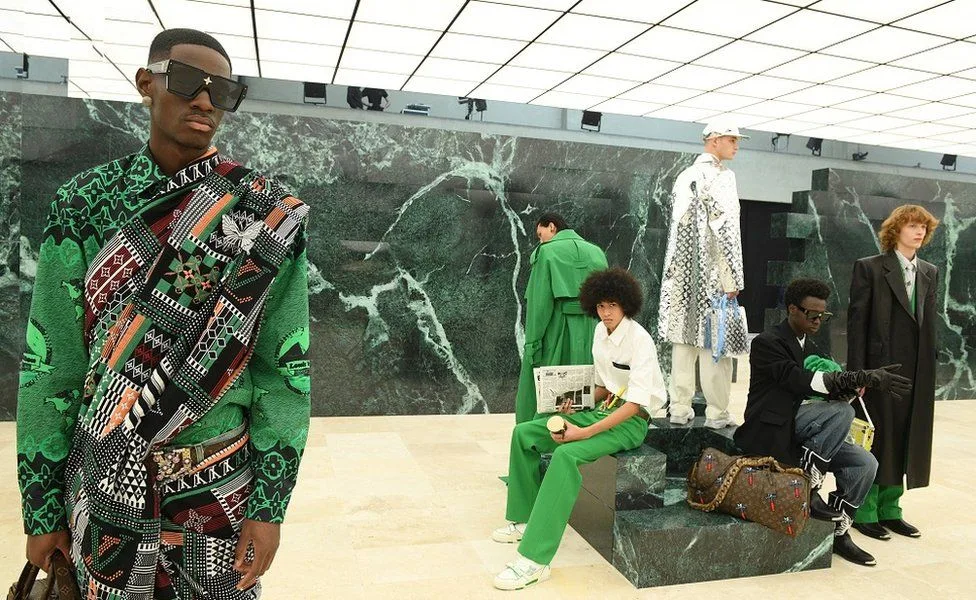
A 15-minute exclusive show revealing the 2021 autumn-winter men’s collection from Louis Vuitton. Shown via a video shared on YouTube in particular, the collection is composed of several original styles but some of them drew more attention. These were the designs in Kente, which have very rapidly become the subject of debate on Twitter. On the internet, there are two opposing camps: those who praise the creative genius of Virgil Abloh, the artistic director of men’s fashion at Louis Vuitton, and those who criticize the appropriation of Ghanaian culture by Louis Vuitton.

“Virgil Abloh comes from Ghana and he is also the artistic director of a major clothing brand, so the use of Kente permits him to make reference to his own African origins. I think it’s entirely legitimate to use a fabric that belongs to his culture, to his African identity. I think it’s important that Virgil Abloh is doing this to introduce our culture into this pantheon of international fashion”, explains Aristide Loua, the founder of the Ivorian Kente Gentleman brand.

However, the controversy is nothing compared with the popularity that these items of clothing are enjoying. It leaves room for the real subject: fashion beyond borders. The ultimate accolade for the designer is that one of his items in Kente is being worn by the Afro-American poet and new sensation Amanda Gorman on the cover of the May edition of the very powerful Vogue US.

One year before, Kente was worn by members of the American Congress to denounce racism in American society following the murder of George Floyd by a white policeman. For Afro-Americans, Kente is a symbol of their “African identity”.

But what is Kente and why is this fabric creating such a stir? To understand the symbolic and cultural value of Kente, also known as Kita, you have to go a long way … To travel about 6,000 km from France, to Ghana and Ivory Coast! It’s there that the story of this pagne began among the Akan and Kru people, for whom Kente symbolizes power and nobility.

This is a fabric once worn by the bourgeoisie at grand ceremonies. It’s usually men who weave Kente, mixing several threads of silk and cotton of different colors. Methods of weaving vary from one region to another. Take care when choosing Kente. The colors are significant! Yellow stands for money and wealth, green for prudence and white represents peace and purity.

“Traditional pagnes are seen as those that are only worn at traditional ceremonies or events. It is precisely this assertion that I reject with my brand by offering modern clothing made with our traditional pagnes”, confides Marthe N’Guessan, the founder of the Céchémoi brand.

It’s our identity, it’s our culture and we owe it to ourselves to promote and make the most of it now by offering modern clothing with these traditional fabrics. Céchémoi has existed for almost four years and today I can say that fashion is changing, demand for clothing made with traditional pagnes is strong and we can only be glad about that”.

Kente, an emblem of the local culture?

“We are continuing to promote it since one of our aims is for public administrators and even their agents and official representatives of the country to wear this clothing in service,” explains Marthe N’Guessan. This is a goal that might be realized in Ghana well before Ivory Coast.

In August 2020 the Ghanaian government announced the creation of a Kente handicraft village so as to boost production of this fabric and so as to better serve the local and international markets too. This project, managed by the Royal Kente Weavers and Sellers Association, is still in progress.

An ambitious initiative that recalls the one set up in Burkina Faso in 2019. The Faso Dan Fani (“traditional national woven pagne” in the Dyula language), a traditional Burkinabe pagne, was labelled by the Minister of Commerce and Handicraft. This is one way for the country to exploit this fabric made from 100 percent cotton and at the same time to combat counterfeits and to also better control a market that brings in over 50 billion CFA Francs (or over 76 million Euros) a year.

Content courtesy of Fashion United & Nairobi fashion hub 

Inside Naomi Campbell’s Luxury Villa In Kenya Open Door Architectural Digest

Whenever supermodel Naomi Campbell needs to unplug, she heads to her luxurious, airy villa in Malindi, Kenya

Over the course of her remarkable 35-year career, supermodel Naomi Campbell has blazed trails, stormed catwalks, and graced countless magazine covers. And while most of her legendary peers have long since retired and retreated from the spotlight, at 50 Campbell is as in demand as ever and enjoys a level of visibility models half her age would envy.

She recently closed Fendi’s spring 2021 couture show at the Palais Brongniart in Paris, new artistic director of womenswear Kim Jones’s first for the venerable Roman fashion house. Images of Campbell slowly sauntering down the runway in a sublime silver cape and matching imperial gown set the internet ablaze and left little doubt that she remains one of the most significant models of all time.

In recent years, she’s become the face of Nars (her first beauty campaign ever) and appeared in Burberry and Saint Laurent advertisements, Beyoncé’s beloved “Brown Skin Girl” video, and Amazon’s fashion competition series Making the Cut. To the delight of millennials and Gen Z’ers, she’s also a constant presence on social media, regularly updating her more than 10 million Instagram followers (and nearly 500,000 YouTube subscribers) with archival images from her storied career, one-on-one chats with her famous friends for No Filter With Naomi, and videos from her far-flung travels.

Yes, her schedule is relentless, but work fuels her and continues to bring her joy. “First and foremost, never rest on your laurels, and I still like what I do,” Campbell says when asked about her refusal to slow down. “I use myself as a gateway, a connector to uplift and guide my culture on the right path and the direction that they need to be. This drives me.”

But even icons need rest. And when it’s time to fully unplug, Campbell decamps to her villa in the tranquil seaside town of Malindi, Kenya. Overlooking the Indian Ocean, her idyllic retreat is the epitome of indoor-outdoor living and for more than 20 years has served as her chosen haven from the breakneck pace of her native London and adopted New York City. Bathed in natural light and brimming with warm earth tones, the wide-open expanse is an ode to laid-back opulence. “It’s a very calming place,” she says. “You don’t really want to be on the phone. You’re not trying to find a television. You just want to read and be with yourself. It’s nice to just have the silence and the crickets.”

Campbell first visited Malindi in the mid-1990s and returned again a few years later with a longtime friend, the owner of this Kenyan luxury resort, which houses a handful of private residences, including Campbell’s getaway. Just over an hour’s flight from Kenya’s capital city, Nairobi, Malindi has long been a favorite of the Italian jet set. “All the locals speak Italian,” Campbell shares. “It’s like Little Italy in East Africa.”

https://www.instagram.com/p/CNPujRgJ_7-/?utm_source=ig_embed

The saltwater pool that extends outdoors from the center of her living room is ideal for a quick morning dip. When the model is in the mood to entertain, twin voile-curtained pergolas serve as the perfect space for family-style dinners. The vaulted cathedral ceilings and makuti thatched roof, made from the sun-dried leaves of the coconut palm, are an awe-inspiring favorite of Campbell’s. Makuti roofs, she explains, have been a staple in East Africa for centuries and are hand-sewn in an intricate layering process.

“We’ve had this one for at least 12 years, and it’s still in good form,” she says proudly. “Because of the air, wind, and sea salt, things can break down very quickly here, but it’s held up so well, and it’s just like a piece of art in itself.” The oversized Latika lanterns that hang from the rafters hail from Morocco and Egypt and are as dazzling as they are grand. Campbell enjoys furniture shopping throughout Africa but has found great success in Marrakech and Cairo (like Murano, Italy, the ancient Egyptian city is renowned for its handblown glass). Senegal, she adds, is another must-visit when she’s on the hunt for one-of-a-kind treasures. “Senegal has amazing furniture,” she gushes. “Every time I go, I buy furniture, and I just collect it and store it away.”

https://twitter.com/ArchDigest/status/1381959787777306625?s=20

For remarkable woodwork, Campbell doesn’t have to travel far. “A lot of the wood furniture that we have in the house is made in Malindi,” she says. “In fact, we used to have a workshop at the back of the house.” The hand-carved wooden doors depicting two men dancing in traditional ceremonial dress were designed by Armando Tanzini, an award-winning artist who has lived and worked in Malindi for many years. They’re decades old and have proved to be reliable conversation starters. Tucked around the house are more works by Tanzini, including several large-scale tableau maps of Africa.

Some of Campbell’s fondest memories are tied to Kenya: lunches on sandbanks in the middle of the Indian Ocean; camping with the nomadic Samburu tribe; summer safari outings to watch the annual Great Migration. “It’s wonderful to go in July,” she advises. “All the animals are crossing over from Kenya to Tanzania, and you see everything. It’s incredible. It’s like seeing National Geographic come to life right in front of your face.”

These days Campbell, who was recently appointed Kenya’s official tourism ambassador, says she’s committed to using her considerable platform to champion all of Africa’s 54 countries. “I love all of the African continents; there isn’t one country I love more than another, and I want that to be clear,” she declares. “Each place in Africa has something magical about it.”

Writen By Lola Ogunnaike
Photography by Khadija Farah
Styled by Edward Ngera

Content courtesy of Architectural Digest & Nairobi fashion hub 

LVMH Prize Semifinalists Herald New Era of ‘Expansive Expression’

PARIS  Held online for the first time due to the coronavirus pandemic, the LVMH Prize showroom provided a tantalizing glimpse of what’s in store once the world returns to normal, and when it comes to fashion, it seems that anything goes.

Working under the toughest economic conditions in recent industry memory, this year’s 20 semifinalists presented eclectic collections rooted in their personal culture and identity. The ban on international travel only served to highlight the geographic diversity of the participants, including the first Arab woman to make the shortlist.

“This year, there was a lot of color and knitwear. Two or three years ago, the big story was streetwear. That’s less the case now. There is a growing trend for gender-fluid fashion, and sustainability remains a core concern,” said Delphine Arnault, second-in-command at Louis Vuitton and a key talent scout at LVMH Moët Hennessy Louis Vuitton, the parent company of brands including Louis Vuitton, Dior, and Fendi.

“It really reflects the state of fashion at any given time. It’s like a snapshot of society,” she added.

That image has never felt more fractured. American designer Christopher John Rogers, known for dressing celebrities like Cardi B, Rihanna, and Lizzo in his colorful creations on the red carpet as well as Vice President Kamala Harris at the Biden inauguration described the era of fashion as one of “expansive expression” in his presentation at the digital showroom, which ran from April 6 to 11.

“I want to be a part of this league of talent that is breaking down this traditional aesthetic hierarchy of what we expect luxury clothes to look like,” he told WWD in a Zoom interview from New York City.

“We’re in an era where someone who’s doing this really beautiful double-felted cashmere coat in gray that work can be just as chic as this rainbow intarsia knit fantasy, you know? It’s kind of the same thing. It just depends on what your preference is, and it doesn’t have to be on some scale. That’s something I really believe in, and I think that this year’s crop of semifinalists definitely are proof of that,” he added.

Like many emerging designers, he’s gearing up for an era of freedom once the COVID-19 crisis subsides.

“Everyone’s kind of anticipating another Roaring Twenties moment where everyone’s craving to get out, craving to just let loose and not really care too much about everyone else’s opinions about how they look,” he said. “Everyone’s going to want to present themselves differently, but I think the one universal vibe is just going to be, like, ‘insanity.’”

London-based designer Alicia Robinson, whose AGR label is known for rainbow-hued knitwear and patchwork cargo pants, echoed the sentiment.

“The new era of fashion has definitely changed, we no longer have to follow those traditional paths. You can create your own platform. You can talk to your consumers directly and that’s all due to technology,” she said in her filmed presentation.

In the meantime, designers are dealing with hurdles ranging from closed stores to presenting their collections to buyers online. While the physical LVMH Prize showroom, traditionally staged during Paris Fashion Week in early March, normally gives them instant access to a wide range of industry luminaries over a 24-hour period, there was no such rush of adrenaline this time around.

“It’s really strange, because this whole prize is centered around something that’s quite physical, which is clothes, and we’re doing it all digitally,” said Cynthia Merhej, the Lebanese designer behind the Renaissance Renaissance label. “I think they did a really great job with the platform. It looks amazing.”

Cerebral yet sensual, her designs are rooted in rebellion against Lebanon’s patriarchal society with not a sequin in sight. “The pieces are not meant to be Instagram pieces. That’s not the philosophy behind it at all, so they really need to be seen and touched,” she argued.

Arnault said the showroom event was pushed back by a month to give organizers time to create an enhanced site, with content including videos and 360-degree views of key outfits. For the first time, members of the public are being asked to select their favorite, with 10,000 votes registered by midday on Friday.

“It’s always interesting to touch the fabrics, see the quality of the products and the creativity of the cuts. That’s not as easy to do online,” the executive noted. “Our teams have done a tremendous job to try to render as faithfully as possible a meeting with the designer.”

It represents a digital leap for the event. “It gives them visibility, and for the next editions, it will allow us to combine, hopefully, a physical event with this existing digital platform that we can build on in the future. It’s also great for the public, so it will give us the best of both worlds,” Arnault said.

LVMH hopes designers will be able to physically attend its prize-giving ceremony, tentatively scheduled for September. Last year, it divided the 300,000-euro prize money between the eight finalists, in addition to creating a solidarity fund for previous winners.

“We hope it will be a physical event, but if that’s not possible, we will rethink the format of the prize. We may do something similar to last year, or we might have a new idea. But right now, we are very much hoping to have a live final,” Arnault said.

Even experienced remotely, being short-listed for a prize is a lifeline for many of the smaller designers selected. Merhej, whose label is stocked exclusively at Net-a-porter, described it as “a huge ray of sunshine” after a year marked by a deep economic crisis, successive lockdowns, and a devastating explosion in Beirut in August.

“I know it’s really meaningful for everyone in Lebanon, because we really need a win, in a way. We need something positive to look forward to,” she said. “Since last year, we’ve been going through what I can only call a nightmare mixed with hell.”

As the first Arab woman to make the cut since the prize was launched in 2015, she hopes to open the way for other Middle Eastern designers and change preconceptions about her culture.

“We feel others are telling our stories in ways that don’t really feel familiar to us, or we keep being pigeon-holed into certain narratives,” she explained. “Lebanon means nice food, beach, Botox, embellished gowns, everything over-the-top and crazy, but that’s not the Lebanon I personally know. Yeah, I think that exists, but there’s also a huge chunk of us that aren’t like that.”

Adeju Thompson, the Nigeria-born founder of the Lagos Space Programme, similarly wants to challenge the image of African fashion. A nonbinary, queer, Yoruba, and Black designer, who goes by the pronouns they/them, their multilayered creations stand out in a city known for its status dressing.

“Even though a lot of what I do is informed by my identity as an African, I’m more than that. I’m a global designer,” said Thompson, who cites designers like Yohji Yamamoto and Rei Kawakubo as early influences. “In my work, that’s something that I’m always hyper-aware of, you know  just trying to break up misconceptions about what design coming from the continent looks like.”

There’s a strong political dimension to it, too. In 2019, Thompson was assaulted by the Special Anti-Robbery Squad, a notorious unit of the Nigerian police with a long record of abuses. “I was detained for five hours because of how I dressed,” they recalled.

“I think it was in that moment when I started to see Lagos Space Programme and the work I do as a form of protest,” Thompson said. “When I’m exploring my identity as a queer person, in the West, this is normal, and I guess so many designers could do this. Where I come from, I could get into trouble. For me, it’s so important that I speak up for myself.”

Sold exclusively at the Lagos concept store Alara, the label has caught the attention of overseas buyers following its recent presentation during Milan Fashion Week, but Thompson is taking it slow. “I’ve never been someone who is very comfortable with the limelight. I don’t want to be a celebrity designer. I am very happy to be not seen, and for my work to speak for itself,” they said.

Chinese designer Shuting Qiu, another cross-cultural creative, believes the LVMH Prize has the potential to break down barriers. Born in Hangzhou, she left at 19 to study at the Royal Academy of Fine Arts in Antwerp, Belgium.

“If I win, for the cultural communication it really helps because I’m contemporary Chinese: I have my Asian culture, but I also understand European culture,” she said, noting that China has yet to launch a breakthrough designer on the international stage.

“Chinese design is getting better and better, so I really can help. I can do something in my generation,” Qiu mused. “I really feel like I have a responsibility to do this. It’s also my dream  it’s pushing me to really work hard to go forward.”

Used to traveling across the world to gather inspiration, she has refocused her attention on Chinese destinations and is also sourcing more fabrics domestically, like the silk jacquards that she likes to pair with clashing prints and colorful embroideries.

“I think people want to wear something more colorful, cheerful and easy more casual maybe, something light,” she said of the mood one year into the pandemic.

“I never want to see a pair of jeans again,” offered Merhej, noting that Lebanese women are experts at using fashion to beat the blues. ”Life there is quite difficult, so the only thing we have that cheers us up, and makes us feel good and better about our reality, in a way, is getting dressed up.”

The class of 2021 could well usher in a new era of individuality in fashion. “Christian Dior created his house in 1947 after World War II. After very challenging periods, you always see a surge in creativity. I’m curious to see what will come out of this pandemic,” Arnault said.

Content courtesy of WWD & Nairobi fashion hub 

Hollywood’s Afrofuturism Role of African Heritage Fashion in Film 

She is Hollywood’s queen of Afrofuturist costumes: For 40 years, designer Ruth E. Carter has been developing fashion for major motion pictures, including “Black Panther.”

It is the most commercially successful Afrofuturistic US work to date: the Marvel blockbuster Black Panther was nominated for an Oscar in seven categories in 2019, ultimately winning three of the awards including for best picture and best costume design.

The Oscar-winning designer of the film’s groundbreaking costumes was Ruth E. Carter.

Carter, who was born on April 10, 1960, in Springfield, Massachusetts, had originally planned to pursue a completely different career path: She wanted to become an actress.

But it was when she started helping out in the costume department of her student theater group at Hampton University that she found a new calling. So after graduating from university, she trained as a costume designer at the Santa Fe Opera in New Mexico, subsequently moving to Los Angeles.

For more than 40 years now, Ruth E. Carter has been designing costumes for independent films and Hollywood blockbusters alike, working with Stephen Spielberg, Denzel Washington, and Samuel L. Jackson, among many others.

Using fashion to communicate African heritage

The outfits of the Black Panther protagonists are currently on show at the SCAD FASH Museum Fashion + Film in Atlanta, which runs until September 2021.

The 61-year-old Carter says she purposefully designs Afrofuturist costumes to convey messages on Black identities. For her, Afrofuturism means “to unite technology with imagination and self-expression to advance a philosophy for Black Americans, Africans, and Indigenous People that allows them to believe and create entirely without the barriers of slavery and colonialism.”

This approach to Afrofuturism is still relatively young and somewhat utopian, explains Natalie Zacek, a lecturer in US history and culture at the University of Manchester.

With Afrofuturism existing for over 25 years now, there are many different definitions of what image of African identities it is designed to convey: “Afrofuturism is often about imagining a world where the transatlantic slave trade has never taken place, without the European colonization of the African continent. What would have become of African cultures and societies then, artists wonder?” Zacek explains.

Afrofuturism between Hollywood and Nollywood

These visions of African identities, however, often differ between artists from the United States and those on the African continent: For decades, African authors have been writing science fiction stories, most of which are classically set in outer space or in a futuristic city. In recent years, the theme of the climate crisis has also been added into that fold.

But American and British storytellers often still focus on the past: “For artists in the US and the UK, the experience of the slave trade is always in the foreground of the diaspora experience,” Natalie Zacek told DW. The continent of Africa, she says, as a place of ancestors, is an almost mythically charged place from the past for many People of Color who live in the West. This is different, she says, for African artists, who live in Ghana or Nigeria, for example.

While African filmmakers are confidently venturing into genres like science fiction, they can often only dream of having the kinds of budgets that Hollywood productions do.

“The only film funding an African filmmaker can get usually comes from Europe, and European producers usually choose the kind of material that they think will do well at film festivals. That is content that deals with supposedly African issues like AIDS, genocide, the climate crisis and famine,” author and filmmaker Dilman Dila wrote in the international science fiction and fantasy magazine Mithila Review in 2017.

At that time, his science fiction film Her Broken Shadow hit the silver screens of Africa but was aesthetically more reminiscent of Blade Runner than of Black Panther.

Changing perceptions through art and design

In contrast to the films produced by African directors such as Dilman Dila or Jean-Pierre Bekolo, Black Panther grew into a global success, proving to Hollywood that a film in which hardly any white actors appear can make it big at the box office.

Carter was among the artists who contributed to the global success of the blockbuster. Throughout her career as a costume designer, she has primarily focused on the African-American experience, as the Atlanta exhibition makes clear, featuring 60 designs of her costumes over the decades.

Film director Stephen Spielberg hired her to design costumes for American slaves and slaveholders in the 19th century, for his blockbuster movie Amistad.

Spike Lee had her dress as an African-American action hero, and in Selma, she designed the look of civil rights icon Martin Luther King.

For Black Panther, Carter says she set out to introduce a radical change of perspective to the American public: “I think people will be able to contextualize and appreciate African art very differently now. That’s what we’ve done: We’ve appreciated it, we’ve reimagined it, we’ve evolved it and taken it to a different place.”

Content courtesy of Dw & Nairobi fashion hub 

Jendaya, a New Luxury e-Commerce Platform Focused on Africa

Prada, Givenchy, and Marine Serre are just some of the labels that will be available on this new luxury platform aimed at African consumers, alongside local labels such as Rich Mnisi, AAKS, and Imad Eduso. The launch is scheduled for July 1, by invitation only.

Meet the needs of African consumers looking for luxury clothing and highlight designers from the continent: these are the main objectives of the e-commerce platform Jendaya, which will soon offer ready-to-wear pieces, accessories, and luxury beauty products for men and women. A launch that aims to alleviate various problems faced by African consumers, such as the long delivery times of online retailers who already have visibility on the continent, as highlighted by Women’s Wear Daily (WWD).

While he wants to focus on Africa, Ayotunde Rufai, CEO of the London-based platform, has chosen not to exclude buyers from the rest of the world. From its launch, Jendaya will therefore allow consumers from other continents to purchase clothing and accessories from leading African and Western fashion houses. “The next generation luxury fashion experience, for Africa and beyond,” the new e-commerce player indicates on its Instagram account.

Jendaya presents itself as a set of multi-brand e-shops dedicated to luxury, along the lines of Net-a-porter and Mytheresa. In addition to the e-commerce part, there will also be editorial content focused on African fashion. There are already several articles available on African models and the latest Fashion Weeks, as well as an interview with the CEO of Thrill Digital on technology and fashion.

According to WWD, Jendaya is set to launch in July, but in a pilot phase; in other words, only consumers who receive an invitation will have the opportunity to discover the dozens of Western and African brands present on the platform. In addition to the collections of each brand, Jendaya will also unveil over time exclusive collaborations and capsules and will offer its customers the opportunity to enjoy a personalized styling service.

Beyond the possibility for continental African consumers to have easier access to luxury labels, whether local or Western, this new platform will give greater visibility to the expertise and young talents of a continent that has, until now, been under-promoted in the fashion industry.

The Next Generation Luxury Fashion Experience for Africa and Beyond, From AAKS to Zegna, JENDAYA delivers luxury fashion to Africa and beyond. We are building the next generation experience where you can discover exciting brands, digest the latest, and shop the best. Currently, we are preparing for our pre-selected community of stylish and savvy shoppers to test our platform. We’re coming soon. Be the first to know.

Content courtesy of Jendaya, Premium Beauty News & Nairobi fashion hub 

Ndara’s Jewels Boutique Launches Their New Matrix Culture Collection

Luxury face mask and accessories brand, NdaRa’s Jewels, announces the launch of the Matrix Culture Collection, a new range of Africa-centric fashion-forward pieces

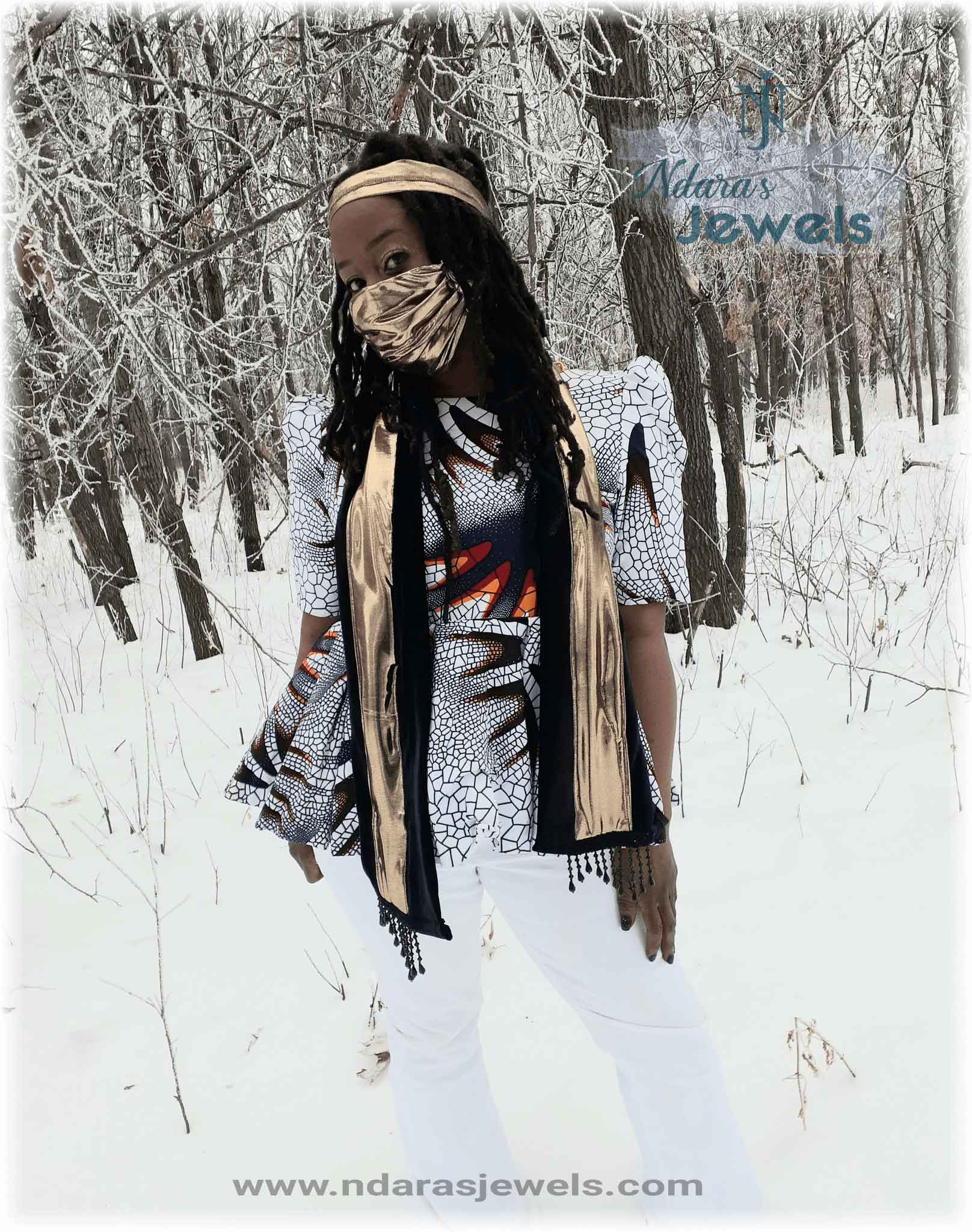
Gogo Nyadze Ndara and her team at Ndara’s Jewels Boutique are not resting on their oars of disrupting the global fashion market with their range of exceptional products, including the recently launched Matrix Culture Collection. The brand was initially created as a fashionable facemask company in the midst of the covid-19 pandemic to bring some touch of style to wearing face masks. However, the brand has become increasingly popular and has evolved to making accessories for hair and sparkling jewelry.

The global fashion industry has undoubtedly exploded over the years to feature thousands of brands from different parts of the world providing fantastic products to meet the needs of consumers. There has also been the emergence of fashion brands that seek to integrate the rich African culture into their works, leveraging the amazing prints and vibrant colors of African fabrics to create stunning pieces.

Unfortunately, only a few brands have been able to offer a seamless integration of the beautiful African garment into contemporary fashion. However, Ndara’s Jewels Boutique has been able to change this narrative in the space of one year.

The recently launched Matrix Culture Collection will include Masks, Apron Dress, and Bangle, to offer a complete matching outfit to women and other customers. The brand has carved a niche in the highly competitive market for their unique handmade fashion collection, with the masks made with polypropylene material for extra safety.

The latest collection will be available on Bread, a unique pop-up market, and the NdaRa’s Jewels Boutique website on April 3rd. Gogo Nyadze Ndara will be vending in person at Bread A unique pop shop in the Maplewood Mall Mn on Saturdays and Sundays.

The exclusivity of the products from NdaRa’s Jewels Boutique, particularly with their handmade products, has endeared the brand to fashion lovers, with the Exclusive Elegant Apron Dresses featuring beautiful African Garment fabric and Bling sparkling fabric becoming a hit in fashion outlets.

Content courtesy of Ndara’s Jewels Boutique, Virtual Strategy & Nairobi fashion hub

Amanda Gorman Face Of Vogue Magazine Cover May 2021, The Rise and Rise of Amanda Gorman

Deep in Amanda Gorman’s closet sits a doll that may or may not have stolen the facts of her reluctant owner’s life. A month after the 23-year-old poet eclipsed the transfer of power at President Biden’s inauguration with an energizing performance of her song of a nation, “The Hill We Climb,” she was thinking about an earlier, discomfiting booking at the American Girl boutique at the Grove in Los Angeles.

We were at a green space a stone’s throw from Gorman’s spot in L.A., a one-bedroom in an apartment building the color of sherbet. Reclining on blankets she spread over a manicured knoll, she tilted her head, birdlike, and groaned softly, “They might get angry at me for saying this.”

The Mattel brand had invited Gorman to do a reading celebrating the arrival of Gabriela, the latest “Girl of the Year,” to expectant young customers. This was New Year’s Day, 2017, and Gorman was an 18-year-old freshman at Harvard, home on winter break, decompressing from the surprise of New England frost. At the time, Gorman had already been named Youth Poet Laureate of L.A. (the first one ever) and was a known and admired figure on the national spoken-word circuit.

The night before the event, the American Girl team briefed her on the biography of the doll. It was like a horror movie Peele-Esque, we agreed after she told me the story. “Gabriela loves the arts and uses poetry to help find her voice so she can make a difference in her community,” the website for the defunct toy reads. Gorman loves the arts and uses poetry to help find her voice so she can make a difference in her community.

Gabriela is brown-skinned with curly hair. Amanda is brown-skinned with natural hair. “She was a Black girl with a speech impediment!” said Gorman (referring to her own speech impairment), playfully clawing at the beautiful hive of twists atop her head, adding that her twin sister’s pet name is also, can you believe it, Gabby.

Gorman did the reading anyway. American Girl told me that the doll was not inspired by Gorman’s life, and sent me a photo of Gorman, mid-performance, costumed in Gabriela’s exact outfit. “I felt like if I backed out of the event, I would have been failing the girls who would have this Black doll,” Gorman said. The rest of the year, when advertisements for Gabriela crept into her view, or friends would text her excitedly that they had seen her doll, she would avert her gaze, thinking on the mad vinyl thing she had locked away out of sight at home.

Gorman, good-naturedly, doesn’t want to make a big deal out of the experience, but years later, the notion that “a public figure’s life” could be mined without her consent still rankles, principally because this sort of heated adulation is now inextricable from her ascendant writing career. “I built up this narrative in my head that, you know, I had to be some type of,” she paused, raising her hands from her lap to air-quote, “ ‘role model.’ ”

It was the middle of a February day, and the weather, even for an L.A. winter, was shockingly warm, giving our meeting the conspiratorial feel of hooky. Midafternoon was the only time Gorman could steal away from her overstuffed schedule. Last week there had been a guest spot on the Hillary Clinton podcast, and next week there would be a panel with Oprah.

It was Gorman who remembered to bring the blankets, and hers was embroidered with astrological signs. (“As a twin, I love being a Pisces, because it’s the two fish,” she said. She and her sister are best friends.) Her smallness is formidable. The next time we met, she brought her lunch a veggie burger in Tupperware, and snacks for me: artisanal popcorn, gummi bears, a caramel. A meal gave me occasion to glimpse her unmasked, under a face shield. Her profile sends you back to the golden age of the supermodel.

Her laughter is a great ringing noise. As we took in the sun on our patch of lawn, Gorman reflected on the long journey of her short life: “It took so much labor, not only on behalf of me but also of my family and of my village, to get here.” A toddler in tie-dyed leggings waddled dangerously near to us. Gorman paused and leaned back faux-dramatically.

The kid tittered. I had no way of knowing apart from the telltale stretch of the two masks that covered most of Gorman’s face but it looked like she was grinning.

“It took so much labor, not only on behalf of me but also of my family and of my village, to get here”

“Are you going to start the story with  ‘One day, I met Amanda Gorman in Los Angeles’?” she teased. The acute enjoyment she takes in words is palpable. Her speech quickens whenever she realizes that a sentence she is constructing amounts to interesting assonance which is often as when she described the oratorical styles of Revs. Ralph Abernathy and Martin Luther King Jr:

“The way they let their words roll and gain momentum is its own type of sound tradition.” She takes it upon herself to fill silences, sometimes with words and other times with sound effects. “Do do do do do doooo,” she bounced as her mind worked on a response to a question about her relationship with Clinton, whom she’s known personally for some years. “Such a grandma,” she said affectionately.

Other figures of the Democratic Party, whom she chatted with after the January ceremony, were described in similarly familial terms: Barack Obama, dadlike; Michelle Obama, the cool auntie. In the weeks after we met, Gorman, or radiations of Gorman, were everywhere:

on a February cover of Time, posed in her yellow, and inside the magazine, holding a caged bird, invoking Maya Angelou, interviewed by Michelle Obama; performing virtually at “Ham4Progress Presents The Joy in Our Voices,” a Black History Month celebration from the people behind the Hamilton phenomenon; on an International Women’s Day panel with Clinton, House Speaker Nancy Pelosi, and Chrissy Teigen; in media headlines, nearly every time she tweeted her opinion on a current event; memorialized on vibrant murals in D.C. and Palm Springs that reminded me of Shepard Fairey’s Obama posters.

After the inauguration, she completed a tour of the big talk shows, remotely, from her L.A. apartment. It was a scene. The Trump years and the pandemic had starved the circuit of joy, elegance, positivity, intelligence, hope. But when Gorman came onscreen it was as if DeGeneres, Corden, and Noah had sprung alive from a slumber. She matched the comedians’ wit, the embodiment of spring in her teal.

On his nighttime news digest, Anderson Cooper 360, Cooper asked Gorman to repeat the rhyming mantra she recites before she steps on stage: “I am the daughter of Black writers who are descended from Freedom Fighters who broke their chains and changed the world. They call me.” Cooper visibly reddened at her recitation, his composure utterly destroyed. “Wow,” he almost babbled. “You’re awesome.”

“I have yet to see her finish without a standing ovation,” observed Aaron Kisner, a stage director who has worked with Gorman on a few of her public performances. The friends, colleagues, and family of Gorman’s that I spoke to all unilaterally said that they weren’t surprised by her success. If you book Amanda Gorman, her mother, Joan Wicks, told me, “you don’t feel like you are taking a chance.

” The audience, for Gorman, is not an abstraction but a collaborator in her mode of rousing, outward-facing, and civic-minded poetical speech. She is something of a caring instructor, translating critical race theory for the benefit of eager Americans. Gorman works in the affirmative mode of reaction and response; I spent hours absorbing her poems, which is to say, viewing her performances of them on YouTube.

For the dying climate, she has written “Earthrise.” For the modern crisis of white-supremacist violence, in all its forms, she wrote “In This Place (An American Lyric),” her most ambitious work, a poem she delivered at the inauguration of Tracy K. Smith as the poet laureate of the United States. In 2017, Gorman herself was named the first National Youth Poet Laureate.

Yellow is Gorman’s color, and it had been before the iconic Prada coat. On Instagram, I find that some of her fans have knitted amigurumi, or Japanese crocheted dolls, in her likeness. When we first met, Gorman was wearing a coordinating sweatsuit by Clare V., white with big splashes of tie-dyed marigold. “I feel very Billie Eilish,” she said, almost singing.

She is protective of her writing. There’s pressure. She wondered aloud, “How do you meet the last thing you’ve done?”

Gorman could not stir a moral panic if she tried. “God, I’m just the most squeaky-clean person,” she told me. The importance of maintaining a wholesome image was impressed upon her by her mother, a middle-school English teacher in Watts.

The Gorman family is united in their vision of literary and social success. And success means touching as many readers as possible. Gorman prefers not to curse, or at least not on the record, but when I did in her company, out of habit, she commiserated with very deep nods. If some stimulus disturbs her cool so profoundly that she must reach for a four-letter word, she spells it out loud, always censoring the vowel, as in “s-h-asterisk-t.” What Eilish and Gorman may have in common, I think, is immediately recognizable and conceptually enticing worldviews.

There is a want for cultural saints. A number of secular sects, overlapping around a shared value of multicultural liberalism, seek to draft Gorman to the mantle. And what does Gorman want? For the immediate future? The time and the quiet to finish two books a picture book titled Change Sings A Children’s Anthem and a highly anticipated collection, The Hill We Climb and Other Poems both due in September, both already best-sellers. Asked if she might share from either, Gorman hedged.

The work is not finished yet. She has readers, but she is protective of her writing. There’s pressure. She wondered aloud, “How do you meet the last thing you’ve done?”

The Biden Inaugural Committee informed Gorman that she had been chosen to be the ceremony’s poet in late December. First, she was flattered. She flung herself into research, diagramming the verse of speakers before her, like Angelou, her self-professed “spiritual grandmother,” and Elizabeth Alexander, who read at the first inauguration of President Obama. And then she was concerned. Gorman hadn’t really left her apartment since March when she traveled back to L.A. from the Harvard campus (where she would graduate cum laude that spring). As the virus surged in her city, the thought of getting on a plane terrified her. The January 6 insurrection at the Capitol only augmented her fear. Gorman knows what to expect from certain crowds. The inauguration would be different, unpredictably so, and on an incomprehensible scale.

Gorman described all this with some dissociative distance, as if, that day, she’d been a member of the at-home throng and not on the platform at the West Front. “Not that no one else could have done it,” she told me. “But if they had taken another young poet and just been like, ‘A five-minute poem, please, and by the way, the Capitol was just almost burned down.

See you later.…’ ” She drifted off, her booming voice diminished to a whisper, and then returned. “That would have been traumatizing.”

She asked her advisers. Oprah who’s been a fame doula to Gorman since they first met on John Krasin­ski’s YouTube show Some Good News in May of last year told her to look to the example of Angelou. (“Every time I text Oprah, I have a mini–heart attack,” Gorman jokes, holding her iPhone at arm’s length.) Wicks, who met with me over Zoom after a long day of teaching, encouraged her daughter to keep the appointment because she sees Gorman as a writer who is duty-bound to serve democracy.

“I did have Amanda practice,” Wicks said and lifted her eyes to the ceiling for a few seconds, “how, in a second’s notice, I could become a body shield.” She described crouching over her child in the hotel room the night before.

Just five days before the inauguration, Gorman texted someone at Prada, back then the one fashion house with which she had a connection, and they sent over the outfit and the headband. The red accessory had looked silly, placed at the fore of her head, so her mother suggested Gorman wear it like “a tiara, a crown.” Gorman did her makeup herself.

It snowed lightly the morning of the inauguration. On the stage, Wicks warmed her daughter with blankets. She was shivering. And then, all of a sudden, she was not. “Her nerves don’t show up” in the moments leading to showtime, Kisner, the stage director, told me. “They’ve been processed and dealt with before she walks in the door.”

With all the commotion following the performance, it took Gorman an hour to get back into the hotel. On our patch of green space, she pulled a journal from her tote. Clearing her throat, she read from the entry she wrote that night, redacting a few lines as she went: “I’ve learned that it’s okay to be afraid. And what’s more, it’s okay to seek greatness. That does not make me a black hole seeking attention. It makes me a supernova.”

In one’s memory of the reading, it is the delicate pair of hands, whirling like those of a conductor, that stand out. Gorman developed the movements as a guardrail of sorts, to remind her to slowly pronounce any consonants she has difficulty with. They flutter downward on “descended from slaves,” and tickle up, on “raised by a single mother.”

“Skinny Black girl,” in the single autobiographical line, is the thrillingly out-of-place phrase, for me. All of a sudden, this galvanizing appeal, tailored to move the populace, constricts to the perspective of the individual. The “we” of the poem goes dormant, and we can see into the personal life of the speaker. “They are like essays,” she told me of the work she writes for big audiences. “They have a thesis, an introduction, and a conclusion.”

The argument put forth was this: “But while democracy can be periodically delayed, / it can never be permanently defeated.” To many, depleted of optimism, that pair of lines was a purging of Trumpism. Her publisher, Viking, rushed to package the text of “The Hill We Climb” as a paperback keepsake. On the page, the verse reads differently, less urgently.

The words require her crisp and enunciating powers to feel vivid. Wicks knows that Gorman’s chemical presence is the key. “You could have two poets,” she said, “and one can actually have more talent. But Amanda’s the one who is going to work the room.”

Gorman has now been recruited into that cultural imagination. Does the nature of her introduction to a larger readership cast her like a satellite of the Biden administration? Does the poet who speaks from the corridors of power concede something? There is the classical idea of the poet as the gadfly, who lives outside society. Because Gorman is a public figure, all of these projections and strong feelings she engenders are a part of her work. “I wonder what the journey is for a political poet,” Smith said. “I hope we don’t limit her to that poem. I hope we don’t think that she’s always got to talk to everybody.”

Gorman has said that she wants to be president. She notes that she has the unofficial endorsements of Hillary Clinton and Michelle Obama

Following the inauguration, Gorman’s phone, blowing up with notifications, was too hot to touch. Her follower counts on social media ballooned by hundreds of thousands. In one of our conversations, she cautiously brought up a Washington Post article that had been written on her phenomenon, aware that she might sound self-involved. “Skip over the parts about me,” she said.

“The great part is where they’re talking about how, historically, poets have been pop stars.” She listed Longfellow and Wheatley. To Gorman, the concentration of attention, and resources, on the form she loves is a net gain, although she is aware of the inevitable drawbacks of a consumerist and capitalistic dynamic.

You know how it is. A young woman is clear about what she cares about, makes compelling work, and the power brokers don’t know how to act. They venerate her voice to oblivion. The celebrity of Gorman and other comparable young figures, who become vaunted for their erudition and moral clarity and their bright elucidation of global pain, is a new, and complicated, kind of fame.

“It’s like they made her poetry,” said the poet Danez Smith of the ravenous media response to Gorman. Smith has seen Gorman perform and admired the “political heart and mind and attention to history and community” evident in all her work. The first true piece of poetry criticism Gorman ever published, for the Los Angeles Review of Books, was an exacting close reading of Smith’s “Homie,” in which Gorman identified the “fetishization of suffering and violence” rampant in the liberal imagination.

The writer and performer Tavi Gevinson, who knows something about popularity and fetish, met Gorman in Milan at a weekend-long Prada event two years ago. She told me she’d felt relieved to have someone with whom she could talk books. In that overwhelming press cycle after the inauguration, Gorman became a magnet for the “escapist fantasy,” Gevinson said, of the fragile-but-intimidating young woman who saves the world. Gorman is becoming increasingly careful of situations that would make her seem like a token. “I don’t want it to be something that becomes a cage,” she said, “where to be a successful Black girl, you have to be Amanda Gorman and go to Harvard. I want someone to eventually disrupt the model I have established.”

Gorman wanted to show me her quarantine world. She joked that its circumference couldn’t be more than a mile-and-a-half long. We were to walk a winding trail that would take us through some manicured brush and wetlands, only to deliver us to one of the best views of L.A. anyone could find. Gorman was running a little late. She texted me her apologies along with a funny duck-face selfie; her face was covered in the white film of crappy drugstore sunscreen. The day before, she’d gotten a minor case of the dreaded face-mask sunburn, which got us talking about how annoying it is to find protection tailored to our skin.

When she met me near the trail, I told her that the selfie made me think of that episode of Donald Glover’s surrealish FX comedy Atlanta, the one where Antoine Smalls deadpans, “I’m a 35-year-old white man.” Giggling as I explained the episode’s plot, on whiteness and Blackness as inherent farce, she revealed to me that she hadn’t seen Glover’s series.

Or much television, actually. It “was The Munsters and The Honeymooners,” she said, when she was growing up in West L.A. If she wanted to watch something from the 21st century Disney’s animated action-comedy Kim Possible, say she had to make an argument to her mom that the show had good politics.

The third time the television sizzled out in Gorman’s childhood home, Wicks decided not to fix it. The girls were livelier, more creative when they found ways to entertain themselves. There were plays, homemade films, and botched science experiments. All the while Wicks was pursuing a doctorate in education at Loyola Marymount University.

The family sometimes struggled financially. The twins were born prematurely; when she was a baby, Gorman’s head was too heavy for her body, and so she devised a way to push herself along, flat on her back, from the torso, like a belly-up flounder, which she demonstrated to me the day we hung out on the green. The twins both had difficulties with speech.

Because Amanda also had an auditory processing disorder, she could not pronounce the letter r. The family tried therapy, tongue depressors; Gorman exiled words that used the consonant. But there was always a surname, always the word poetry. Education, for Wicks, was paramount. The girls attended New Roads, a progressive learning institution in Southern California.

Growing up, Gabrielle, a talented filmmaker in her own right, was physically stronger than her sister. Amanda was the writer, compulsively, from about age five, stealing time from her sleep to draft short fiction, inspired by Anne of Green Gables. “My mom had to give me a quarter so I’d sleep past 5 a.m.,” she told me on our hike. She applied for L.A. Youth Poet Laureate when she was 16. “I was like, ‘Well, I guess, I’m a poet.’ ” Her early performances were for live shows like WriteGirl,

The Moth, and Urban Word and conferences like TED Talk and Vital Voices the leadership organization for young women that once gave her a fellowship and counts Clinton as a founder. “Roar,” at The Moth, is a charming retelling of the time she auditioned for Broadway’s The Lion King. The poem is riddled with r words, and Gorman takes joy in the effort of pronunciation. Her delivery is rather like a comedian’s; to better illustrate a point about hyenas, she abruptly flips and does a walking handstand.

Gorman spent her college years balancing classes in English, sociology, and the writing workshop she founded, Lit Lounge, with speaking gigs and poetry performances that took her everywhere from the White House to Slovenia. For Gorman, who is grounded by the principles of Black feminism, writing and activism were always linked.

At 16, she founded One Pen One Page, a youth literacy program. Now, after years of commissions and prestigious fellowships, she can afford to rent her apartment situated in its lush, middle-class environs. “I’m trying not to judge myself,” she said, chewing on the gummi bears she’d brought. “When you’re someone who’s lived a life where certain resources were scarce, you always feel like abundance is forbidden fruit.”

That day’s outfit: a cap-sleeve sports dress, sneakers, and a sweater, all by Nike. Putting on the crewneck as the pre-dusk chill set in, she yelled, heartily, “I’m not a BRAND AMBASSADOR or anything!” Gorman loves clothes, loves how they help her shape her image, but she is wary about being perceived as a model, especially after the timing of the announcement of a deal with IMG, which had been in the works long before the inauguration. “When I’m part of a campaign,” she told me, “the entity isn’t my body.

It’s my voice.” Fashion brands are clamoring to be associated with Gorman. One of the members of her team recently sent out a request that companies stop sending her flowers. The unending deliveries had filled Gorman’s apartment, possibly triggering an allergic reaction severe enough to warrant a trip to urgent care.

Gorman gets recognized at doctors’ offices and in the dog park, where she takes her 15-year-old mini poodle, Lulu. Maybe it’s that beautiful hair, piled up high. The life of a poet is not typically one of recognition, or comfort, for that matter. There are a few ways to eke out a living. There’s academia, where the jobs for poets are few and far between.

There’s copywriting or maybe touring if you’re a prolific performer like Gorman. Note that she had been offered the unprecedented spot at the Super Bowl before the inauguration. The poem she read, “Chorus of the Captains,” was an exultant ode to the essential worker. I asked if she felt ambivalent about writing for the NFL, following its treatment of activist Colin Kaepernick. For Nike, last year, she’d written a manifesto in celebration of the legacy of activist Black athletes. “It’s always complicated,” she said. “I said yes, not even for the money. I made so little money doing that shoot. I did it because of what I thought it would mean for poetry in the country, to have poetry performed, for the first time in history, at the Super Bowl.”

She estimated that she’s recently turned down $17 million in offers. “I didn’t really look at the details,” she said of one massive offer from a brand, “because if you see something and it says a million dollars, you’re going to rationalize why that makes sense.” Companies have expectations, which might not always align with Gorman’s goals.

“I have to be conscious of taking commissions that speak to me,” she said. Gorman described once getting feedback after turning in a poem. She’d included a line about Dreamers, and “some people” at the institution, one she didn’t want to name, suggested she remove it. Instead, she arranged certain words so that the letters made an internal sound “DACA.”

We weren’t quite hiking, more like dawdling, next to runners. A middle-aged white woman galloped toward us, shouting a greeting. We turned to each other in silent, know-it-when-you-see-it understanding. We’d been the only Black people either of us had seen over the course of two days. Was that genuine friendliness or a warning? For the next runner, Gorman nudged me and bellowed a loud and preemptive hello.

The greenery might not have a more impressive docent than Gorman. She led me down a path of flora, defining the qualities of eucalyptus and holly berries better than the trail placards. “This is why Hollywood is called Hollywood.” The area had once been the home of the Tongva people, Gorman noted, pre-colonization. We approached a large wooden replica of an Indigenous housing structure, where we sat for a few minutes.

Gorman loves Lin-Manuel Miranda, with whom she’s messaged for a while. “The Hill We Climb” interpolates a rhyme from Hamilton. Miranda recorded a note of gratitude for Gorman, aired on a segment with her on Good Morning America, that made her swoon. I asked her what she thought of the critique, recently expressed in the novelist Ishmael Reed’s play The Haunting of Lin-Manuel Miranda, that Hamilton is a damaging, revisionist work. “Ishmael,” she said. “He’s a little intense.” If you want to be Gorman’s friend, you’ve got to pass the application process. Have you read Harry Potter? Have you listened to Hamilton, or are you open to listening to Hamilton? Are you an intersectional feminist? Have you registered to vote?

Gorman has said that she wants to be president. She notes that she has the unofficial endorsements of Hillary Clinton and Michelle Obama. That’s why you won’t find any “negativity” on her social media, to quote Wicks; any image, of her “at a party” or “in a bathing suit,” that might be construed by future pundits as less than savory. Black women will know this form of adaptation. It’s an accommodation to a scrutinizing eye, and it’s now natural for Gorman. She finds satisfaction in being able to set boundaries.

When she’s writing, Gorman told me, she usually looks for water. In a different timeline, she probably would have been a biologist of some sort. On our trail, we found mallards resting in the watery part of the marsh. There was a flimsy, wooden fence Gorman gamely jumped over. To get as close as she wanted to the edge, she’d have to skid down a little hill. She held on to me for balance. “It’s great in spring because they’re all babies. And then they grow up and become rapists,” she said matter-of-factly. “Thankfully, I’m not a female duck.” We laughed at the dark joke.

We looped up and up to where we could see beyond the mountains of the Central Valley, Culver City, Century City, the ocean. “I like coming up here,” she said, “and, in my head, I walk through L.A. and all the places I haven’t seen in literally a year-and-a-half.” She stared at the freeway. “I don’t know if you watched Kimmy Schmidt. Do you know the premise? She’s in a bunker, and then when she comes out, she’s like, ‘Oh, my God, everything’s still here!’ Because she thought everything had been bombed. That’s kind of my mentality when I come up to the mountain. I’m like, ‘Everything’s still here!’ ”

Content courtesy of Vogue & Nairobi fashion hub 

Ananse Africa partners Mastercard Foundation, DHL to connect 1,000 African fashion designers, artists to global markets

Ananse Platform Simplifies Global And Local Transactions For African Designers, Artists, And Artisans

Africans are born storytellers, since the time of old. Ananse (/əˈnɑːnsi/) Africa is the meeting place for authentically African, independent brands to tell their stories.

Storytelling in African cultures has been a way of passing down traditions, keeping cultural practices, as well as maintaining a sense of community. The story of Ananse can be traced back to West African folklore from the Ashanti Region of Ghana. An ode to the origin, Ananse Africa is a digital platform for brands to tell their stories through our e-commerce marketplace.

Beautiful things, made by Africa, delivered globally. This is how best to summarize Ananse Africa, a startup eCommerce platform, launched today, in Johannesburg and Lagos, connecting African designers with local and international consumers. The platform showcases the rich and diverse

https://www.instagram.com/p/CNMW70Dj5go/?utm_source=ig_embed

tapestry of Africa’s creative talent and simplifies international eCommerce payments and logistics for creative entrepreneurs on the continent. Ananse has partnered with the Mastercard Foundation and logistics market leader DHL, to roll out the ‘most comprehensive, pan-African eCommerce platform’ to support creative entrepreneurs like fashion designers and artists to enable them to grow their businesses.

“The Mastercard Foundation partnership with Ananse will enable African fashion brands to sell over 1 million garments over the next three years with 75%   sourced from   African suppliers and 70% participation from women.

This will provide a significant boost to the creative economy sector, ” said Mastercard Foundation Country Head, Nigeria, Chidinma Lawanson.

This valuable business tool will enable artists, fashion designers, artisans, and small businesses along the fashion and art value chains, conduct trade and expand their businesses, leveraging the power of the internet in a cost-effective way.

https://www.instagram.com/p/CMmgboghGQ3/?utm_source=ig_embed

With countries around the world imposing COVID-19 restrictions on physical retail and international travel, consumers are increasingly switching to online shopping, resulting in a sizeable decrease in the revenues of small businesses like tailors and fashion designers.

“We are not only making it easy for consumers around the world to shop from fashion designers and artists across Africa but also making it straightforward for creatives to manage the payments and logistics functions necessary to complete an eCommerce order,” said the company’s founder Sam Mensah, a Ghanaian ex-Silicon Valley executive and fashion entrepreneur.

Ananse’s eCommerce and POS solutions are simplifying trading in both the physical and digital worlds for creative entrepreneurs in Africa. Ananse provides creative merchants with full support, including production training, quality assurance, online payments, order processing, and packaging.

https://www.instagram.com/p/CNI2eubDHCy/?utm_source=ig_embed

The technology solution aims to solve the key problems that prevent African fashion designers, artisans, and artists from being commercially viable and successful.

Speaking at the Ananse launch, Leendert van Delft, DHL Vice-President for Global eCommerce spoke of the company’s experience as the fashion retail and art industry’s leading global logistics partner. “For decades, we have pioneered solutions to meet the needs of artists, designers, retailers, and customers by making it our mission to provide these businesses with exceptional service that translates to a competitive edge.

https://www.instagram.com/p/CNMWKNjjUpg/?utm_source=ig_embed

Through our collaboration with Ananse, we are delighted to offer fast and efficient international logistics solutions that have proven critical to countless startups over the years,” said van Delft. Furthermore, Ananse announced that it has also formed a strategic media partnership with Trace TV to promote the work of African fashion designers, artists, and artisans to its millions of viewers globally.

Curated content on ananse.com will enable shoppers to explore, get inspired, and enjoy the work of African fashion designers and artists in an engaging manner.

Content courtesy of Van Guard & Nairobi fashion hub 


Pocket-friendly African Clothing that celebrates Womanhood Every day

Africans are a race that is proud of their heritage, culture, music, and food but when it comes to modern African clothing, one certainly cannot expect the modern African woman to be seen wafting around in traditional African clothing such as bright kaftans or dashikis everywhere they go! While any African will not ditch their heritage, the modern African woman knows how to carry herself with aplomb and be a trendsetter even with affordable clothing.

For the modern African woman seeking the best in quality clothing and accessories that do not burn a hole in the pocket, RosFancy is the perfect online destination. Established with a crystal-clear vision of providing the latest in designs in African clothing that are at once value for money and yet unique in presentation, RosFancy is every modern African woman’s dream come true.

At RosFancy, there is a wide array of choices from women’s tops, jeans, casual, and party dresses to suit every pocket and every occasion. If there is one phrase to describe the design philosophy of RosFancy, it would be “catering to individual taste”. Every woman inspired by African clothing thus has a unique opportunity to find herself at RosFancy.

A quick tour of the RosFancy website will reveal that it is a platform that does not highlight a particular body type, thus inadvertently shaming others, but an online marketplace that celebrates womanhood for what it is, bold, beautiful, and unfettered!

RosFancy offers numerous choices in African clothing categories such as one-piece, two-piece, dresses, swimwear, lingerie, and plus size wear. There is literally one for everyone at RosFancy. For example, for the African diva who is modern in appearances but will not for a minute let down her African heritage, there are brightly colored tie-dye printed drawstring hoodies, sweatpants, and tracksuits or leopard print one shoulder high-low blouse top that are sure to draw the attention of anyone who lay eyes upon them!

For those wanting to keep it casual, there are smart long sleeve two-piece pant sets or long sleeve pullover and zipper leg drawstring pantsuits that will make every woman stand out even in the most understated manner! The fashion-conscious woman swears by shorts, the one-tone t-shirt and ripped biker shorts combination is a must-have! For the sporty girls who like to keep it cool, the two-piece PINK lettered tank top and spliced short combination promises to be love at first sight.

For a woman craving sexy lingerie in African clothing, RosFancy has more than what her heart desires!

Take, for instance, the lace mesh print tube see-through sleeveless lingerie set in a range of colors like black, red, blue, purple, and orange that is a super hit with RosFancy customers or the all strapped set that is a perfect choice for the bold and adventurous woman who wants to make an indelible style statement with her innerwear.

One cannot but talk about lingerie in African clothing without the mention of snake print one-shoulder bodysuit that only a woman of African origin can bring glory to! Thus, to reiterate the obvious, RosFancy is the place to be, if modern African clothing is what you seek on a budget!

Media Contact
Company Name: Rosfancy Clothing Inc.
Email: mia@rosfancy.com   lauren@rosfancy.com 
Phone: +8615392151983
Address: Donghai Industrial Zone, Fengze District
City: Quanzhou
State: Fujian
Country: China
Website: https://www.rosfancy.com

Ad