Saturday 26th of September 2026

Nairobi, Kenya

Ankara Miami

Ankara Miami, Inc. is a South Florida-based event planning company committed to ā€œRedefining African Cultural Trends.ā€ Since its creation in August 2011 by Founder/CEO, Evelyn Onyejuruwa (Miss Nigeria Florida 2011-2012).

The company has continued its mission to promote progressive people and trends within the African Diaspora. Ankara Miami’s launch event, Ankara Miami 2012.

Founder and CEO of Ankara Miami In Evelyn Onyejuruwa (Miss Nigeria Florida 2011-2012)

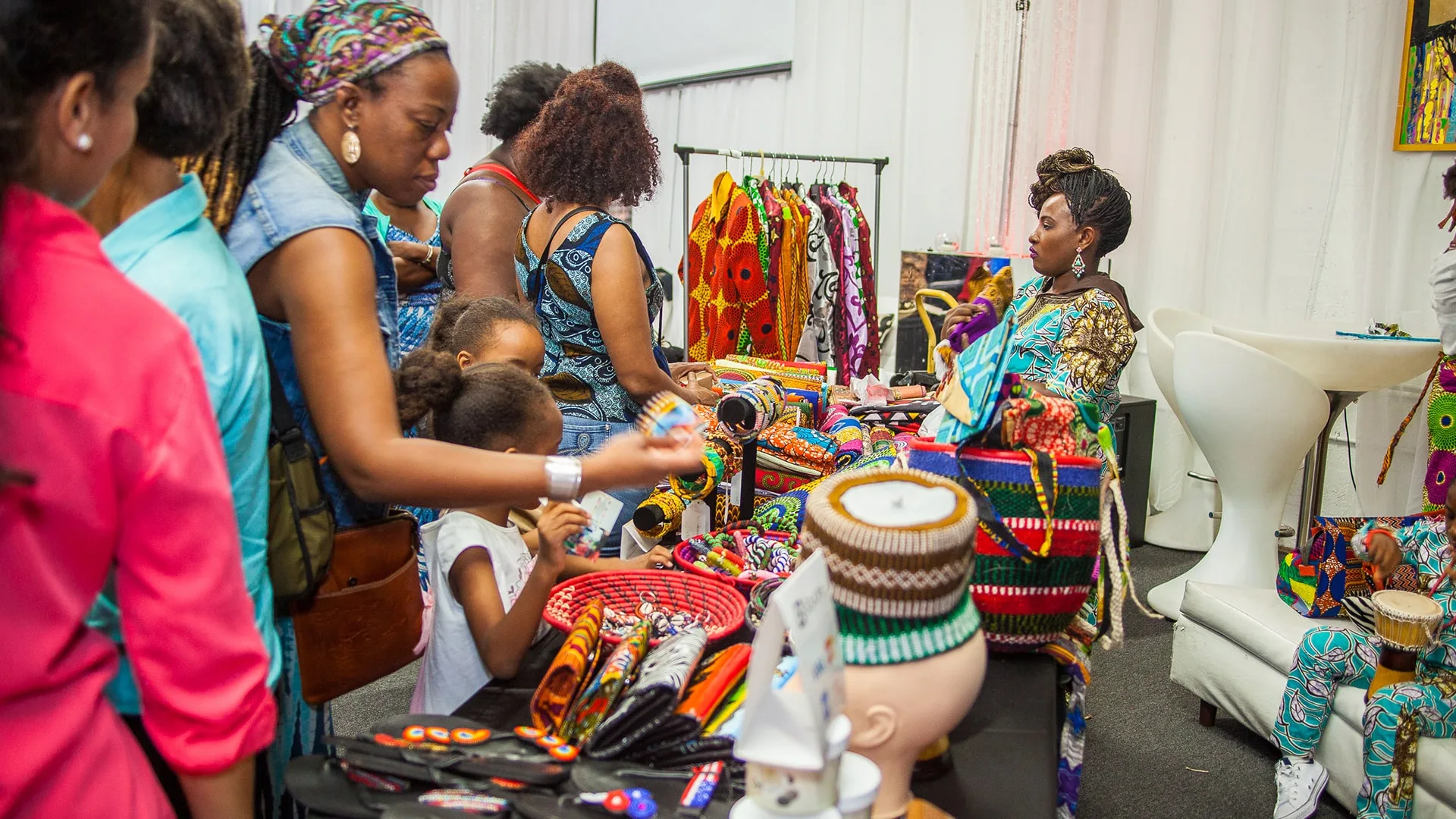
1st Annual Ankara Fashion & Cultural Show, showcased emerging and established designers from the African Diaspora and their use of Ankara (a well-known West African fabric) as well as other African fabrics and prints in mainstreamĀ Western fashion.

Since its inception, Ankara Miami has also made social and financial contributions to entities such as the African Heritage CulturalĀ Arts Center, HANDY, Inc., the Nigerian American Foundation, Embrace Music Foundation, and Honey Shine, Inc. Its year-round events have included toy drives, networking mixers, andĀ consulting/event management for other African and African-inspired events.

AnkaraĀ MiamiĀ is the FIRST & LARGEST major runway production in Florida featuring designers, live entertainment, and visual art solely from Africa and the African Diaspora.

The company has worked closely with notable corporate and culturally-based brands (e.g. Macy’s, Arik Air, Inglot Cosmetics, GreaterĀ MiamiĀ Convention & Visitors Bureau, Diaspora Arts Coalition, Fela! On Broadway, Toyota of North Miami, Natural Trendsetters Salon, and the African-American Research and Cultural Center) as well as local and international media (e.g. HOT 105, The Beat 103.5, Huffington PostĀ Miami, SouthFlorida.com, The Miami Times, Black Enterprise, Essence Online, Cool FM (Nigeria), CompleteĀ FashionĀ (Nigeria), Zen Magazine (Nigeria), and Tropics Magazine (South Africa).

In February 2015, Ankara Miami expanded its signature, red-carpet event from Ankara Fashion & Cultural Show toĀ Ankara Miami: Florida’s FIRST African Fashion Week.

In its exciting journey, Ankara Miami organizers will continue to feature even more talent from Africa, Europe, the Caribbean, and throughout theĀ United States, and provide a medium that encourages buyer/investor relationships, highlights talent and progression within the African Diaspora, and facilitates networking opportunities between established industry professionals and aspiring newcomers.

Stay connectedĀ as Ankara Miami continues to heighten the awareness of the modernization of African culture on a local, national, and international platform.

Content courtesy of Ankara Miami Inc

Africa’s Multi Billion Dollar Fashion Industry ( $15 Billion )Ā Business EmpireĀ 

The African fashion industry has been evolving significantly over the last years. Many African designers have been seen participating on the international stage showcasing their creativity and designs and being applauded by fashion lovers worldwide.

Their representations in magazines and fashion events have put the spotlight on the growing fashion scene of the African continent.

Not only the unique fabrics and designs, but also the African culture, heritage and beauty have left a long-lasting impression on the international fashion stage. The number of models of African origin being casted by the big fashion brands has risen significantly and they are frequently featured in leading fashion magazines and campaigns.

Africa’s creative industry overall has started gaining notice both regionally and internationally. Several local fashion brands have earned global recognition due to the talent and artistry of their designers. One remarkable award-winning designer is Folake Folarin- Coker.

Her brand Tiffany Amber has particularly become popular during the New York Fashion Week. In the meantime, her collection has been displayed in London, New York and Paris. Another upcoming artist, Deola Sagoe has dressed international artists like Rihanna and Solange Knowles.

The African footwear industry is still in the nascent stage. The continent is abundant in raw materials, skill and labour which are imperative for the growth of any industry. Several countries on the continent are contributing to the African footwear revolution, including Ethiopia, Ghana, Kenya and Nigeria.

The Journey of a Made in Kenya Shoe BrandĀ Enda Sportswear.

Ethiopia for instance, is ranked in the top ten of leather exporting countries worldwide and has been able to generate considerable income from shoe exports in 2018.

The global fashion industry is estimated to be worth around $1.5 trillion, there are however no official estimates about Africa’s fashion industry. This is due to the fact that it has historically not been seen as a lucrative sector. There is however a growing realization of its untapped potential in terms of job creation and economic development.

As of today, only selected African universities offer reputable master degrees in fashion and design. As the perception of the fashion industry is however shifting within the continent itself, more and more fashion courses are being offered in order to support the local talents.

At present, Africa has a population of 1.2 billion people. The future estimates of the growth of the population is 2 billion by 2050 and 4 billion by 2100. This gives a huge opportunity in the form of a large market size for investors to leverage on. Fashion brands with the right marketing strategy have good chances to flourish.

Another important demographic feature about Africa is that there are about 200 million people between 15 and 24 years old, which makes Africa the youngest continent in the world.

With technological development showing its vibrance in Africa, the youth are increasingly using Facebook, Instagram and other kinds of social media to keep their followers updated with the latest trends and launches in the line of fashion. This has not only given local brands more visibility internationally, it has also increased their business rapidly.

In addition, the rapid increase in African middle-class households has increased the market for luxury goods as there is demand for better quality products due to growing disposable income. The African markets are moving from basic commodities to modern lifestyle economies.

This change in African buying habits has caused a boost to the sales of the fashion brand segment, and provides vast opportunities for investors, fashion houses as well as fashion and beauty professionals looking to expand internationally.

This article originally appeared on African CubeĀ 

Photo courtesy of Coco lili Africa , Ankara Miani Inc , EndaĀ Sportswear , Just Imagine Africa

South Africa Government guarantees 80,000 garment & textile workers full pay for six weeks during COVID-19 lockdown

The clothing and textile sector’s 80,000 workers have been guaranteed full pay for six weeks during and after the Covid-19 lock down in a ground-breaking agreement by stakeholders.

On Monday night, President Cyril Ramaphosa announced a 21-day national lockdown to limit the coronavirus outbreak. It will take effect from midnight on Thursday, and will impose stringent restrictions on the movement of people. People will be confined to their homes and will only be allowed to leave to shop for essentials such as food and medicines, to seek healthcare, or collect social grants.

The National Bargaining Council for the Clothing Manufacturing Industry announced that industry stakeholders had reached the deal that would see workers getting their full wages during the lockdown.

On Tuesday, the National Bargaining Council for the Clothing Manufacturing Industry in SA announced that parties in the industry have reached a ā€œground-breaking agreementā€ that will see workers getting their salaries during the lockdown period.

The signatories to the agreement include the SA Clothing and Textile Workers’ Union (Sactwu), the Apparel & Textile Association of SA (Atasa), and the SA Apparel Association (Saaa).

According to the agreement, payment to the industry’s 80,000 workers will be made up of workers’ Unemployment Insurance Fund (UIF) monies and employers funds, and that the clothing industry bargaining council will be the institution for the UIF distribution payments to workers through company payroll systems.

The bargaining council said the agreement had been submitted to the department of employment and labour for an ā€œemergency gazette and extension to non-party companies in the clothing industryā€.

ā€œThe parties to the bargaining council, working together with the UIF and the department of employment and labour are now focusing on the practical modalities of implementation of the agreement.ā€

A clothing industry Covid-19 lockdown rapid response task team has been established to manage immediate ā€œpractical implementation matters arising from the conclusion of the agreementā€.

In a media briefing in Pretoria on Tuesday, employment and labour minister Thulas Nxesi said employers and bargaining councils will be used to distribute new UIF benefits.

Nxesi said the government would not put a number on the table as to the size of the national disaster benefit as it might unfairly raise expectations.

ā€œWe do not want to talk about figures. We can’t announce something that we cannot fulfil. Our actuaries are busy looking at the numbers.ā€

The UIF was anticipated at the time of the February budget to have R3.6bn in surplus contributions over the next three years. In addition, to this it also had about R60bn in investments with the Public Investment Corporation (PIC).

Both these numbers are completely out of date, as contributions to the fund will now change significantly and investments will have diminished considerably.

Meanwhile, SA’s tally of Covid-19 cases have risen to 554 and the number is expected to continue to rise for at least another fortnight, health minister Dr Zweli Mkhize has said. He said it will take time for the 21-day national lockdown to have an effect and reduce the spread of the disease.

This article originally appeared on BLĀ 

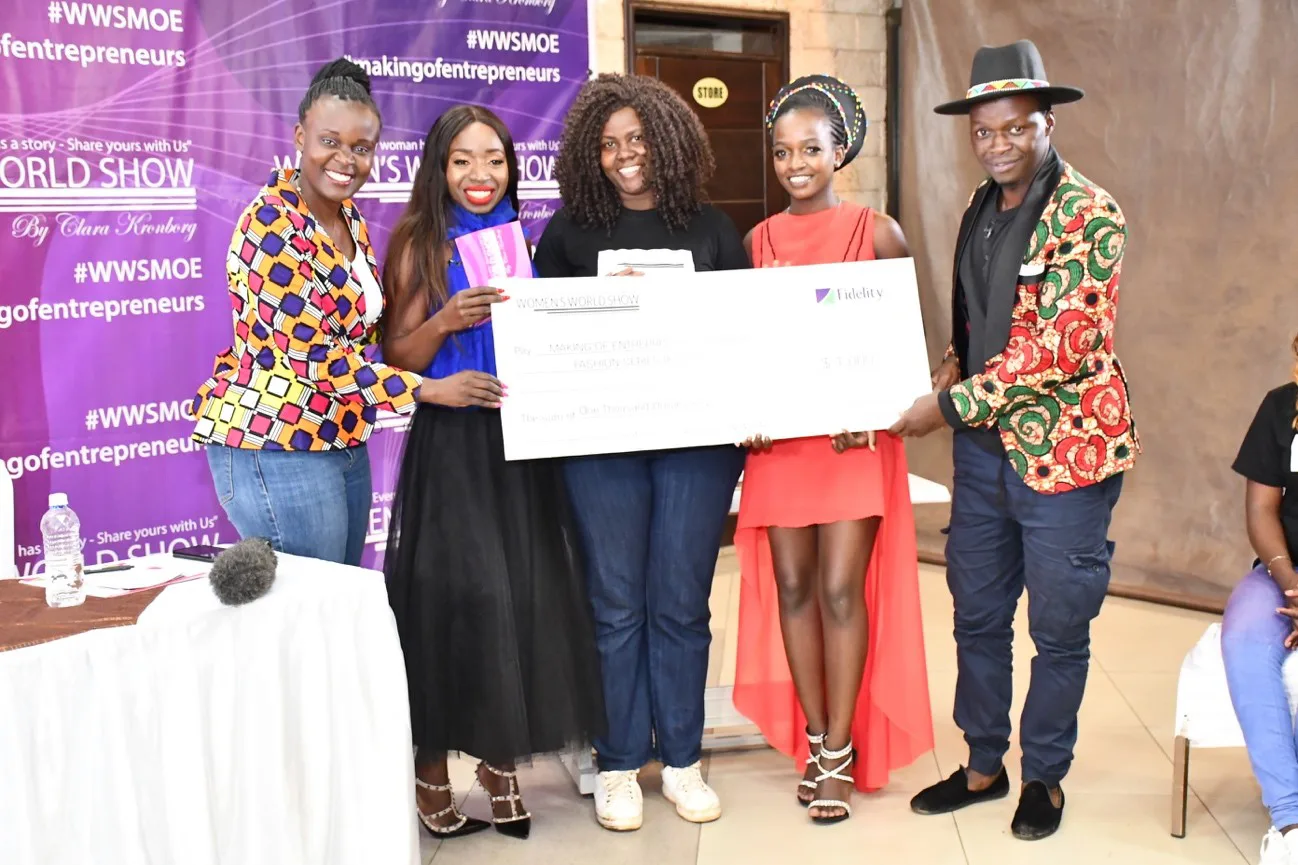
Women’s world show in Kenya a show that travels around Africa for the hit segment ” Making of Entrepreneurs “

Clara Kronborg, Founder and Host of Women’s world show arrived to Kenya for the making of entrepreneurs in the show. This took place in Nairobi on the 4th of December 2019 in collaboration with Delight Tailoring fashion and design Academy (known as Delight Africa Kenya)

Clara Kronborg, Founder and Host of Women’s world show

Making of entrepreneur in women’s world show is focused on promoting the positive impact /role of skilled African women in the socioeconomic development of Africa.


By supporting as little as we can in bridging the constraints lack of capital and supporting a woman with no means of education with our strategy FUNDING, BRANDING AND MENTORING. In doing so, we hope to accelerate the number of Female entrepreneurs throughout Africa and strengthen African female entrepreneurial ecosystem.

For this segment, ā€˜ā€™ making of entrepreneurs ’’, we travel around African countries, where we choose a certain skill depending on hand works women
are involved in within the country. We collaborate with organizations, companies or individuals whose goals aligns with ours for this process. It is done by setting a mini competition among 5 to 10 women, where the winner wins a start up fund and cash value if 1000 USD.

The Theme for the fashion designer series in Kenya was a Cocktail dress with a significant touch of Kenya. Where Miss Debra Ang’awa emerged the winner of women’s world show Making of entrepreneurs, Kenya edition, the Fashion designers series 2019.

She stood out with her creative skill but mostly for her Business strategy to stand out in fashion industry in Kenya and beyond.

ā€˜ā€™ We are coming back to Kenya ’’, Clara says, because the young women here are filled with zeal and desire to add to the development of Africa. And our return will be bigger, as we will be making more than one woman this time.
Our plan starting 2020,


The goal is to make 50 entrepreneurs per annul for the next 5 years, by visiting 6 African countries every year, invest $10000 on 10 female entrepreneurs in each country, with the sum total of $60000 on 50
female entrepreneurs annually.
All these are made possible through our investors, partners, collaborators and we want to say thank you to all of them all, as we continue to play our little part to the development of Africa through entrepreneurship.

Content courtesy of Women’s world show, Jw Show & Nairobi fashion hub

Unearthing Fabrics : Cotton

Unearthing Fabrics is a new series that looks at the history of your favourite fabrics before you started wearing them on your backs.

Of course, cotton t-shirts always feel airy & comfortable when you wear them.

Discovery of cotton?

Pieces of a 4000-year-cloth of have been found in Pakistan & Peru. Also, Ancient mummies were once wrapped in cotton in Peru. Egypt & Mexico also have old samples of cotton.

Indeed, Gossypium herbaceumĀ andĀ Gossypium arboretumĀ  are two species of cotton that originated in India and Africa.


Growing Cotton?

Cotton plants are found in hot countries like Kenya because they need need heat & water.

Puffy, cotton fluff of seed pods grow on members of the mallow family.

The seed is planted. Two months,Ā Ā the plant is about a foot high, flowers develop from buds called ā€œsquares.” The flowers are initially white but turn red on the second day.Ā  Petals fall off on the third day & leave behind undeveloped, flattened green pods called boll.

This boll needs 45 to 60 days to mature into an egg-shaped pod. It’ll be about an inch in diameter and an inch and a half long. ‘Locks’ are three to five cotton-filled compartments that live inside mature pods. Moreover, seven to ten seeds can be found inside a pod. Each with thousands of fluffy white cotton fibers are attached.

Months later, fluffy cotton balls form on full-grown plants.Ā Ā It can be harvested either by hand or by machine. The cotton fibers are separated from the cotton seeds. Cotton fabric is made from cotton fibers. The seeds can be replanted or used to make cottonseed oil.


Processing Cotton?

Certainly, cotton fibers are developed through a few processes including spinning, plying, combing & carding.

Firstly, cotton needs to be spun into yarn first. A machine is used to spin the fibers together called a spinning mill. At this point, synthetic fibers made through chemical processes can be added. Alternatively, purely cotton can be spun.

Secondly, ā€œplyingā€ happens and two single threads are twisted together. Twisting determines the structure of the yarn & how the finished product will look.

Thirdly, combing or carding can be used to prepare the cotton.Ā 

During combing, cotton fibers are placed through a series of straight metal teeth. To ensure that all fibers are parallel to each other. Hence, it’s expensive but the fabric has a softer, smoother finish.

Meanwhile, carding is where two hands or two machine cards with numerous teeth are used. They separate fibers and remove broken fibers or impurities without making them parallel. In short, carded cotton feels fluffier and rougher to the touch.

Next weaving happens and this usually done on a loom. They work quickly by interlacing lengthwise yarn (warp) and crosswise yarn (filling). Consequently, a woven fabric called grey goods is created.

The basic fabric can be dyed, another layer can be added or designs can be printed on it. In addition, one dying technique is having the fabric turning in a tumbler with the colour dye.

Finally, the fabric is chosen and sown into a t-shirt. This can either be done by hand or in a big factory.


Facts About Cotton

Cotton has several uses from t-shirts, underwear to towels, shoe strings & jeans.

Cottonseed is crushed to separate three main things: cottonseed oil, meal and hulls. For example, cottonseed oil is used to cook food & can be added to cosmetics.Ā 

Similar, meal and hulls can as a fertilizer for fish feed, livestock & poultry. Lastly, stalks and plants are planted so they can enrich the soil.


Why Love Cotton?

Cotton is super breathable and it easily absorbs moisture and allows it to evaporate. This is a pro for underwear, sleepwear & exercise clothes.

It’s soft. It stays cool in the summer & insulates you well in the winter. Being a natural fibre, its hypoallergenic just like silk. Perfect for babies. It’s strong, super versatile & easy to dye.

Alternatively, Cotton shrinks and wrinkles easily. It can easily damage and fade because of the sun. Dye can easily run from cotton garments and stain other clothes.


Looking After Cotton

Cotton should be washed in cold water that isn’t more than 30°C . Gently stretch them after you’re done washing so they return to their original shape. Always hang your clothes outside in the sun. Always to refer to the care label whenever you want to iron your clothes. Cotton irons well when its slightly damp or when using a steam iron.


Different Types Of Cotton

Cotton is used to make other fabrics that people love. The list includes denim, corduroy, lace, flannel, fleece, mesh, velour and velvet.


Ad