Monday 20th of April 2026

Nairobi, Kenya

Odefille Enthralls At The 2023 Accra Fashion Week

Odefille, an urban C-Suite women’s fashion brand that reinvented elegance with its own combination of heritage and innovation, had a dazzling premiere at Accra Fashion Week 2023. Under the mesmerizing direction of the great Paulina Oduro, models strode down the catwalk in provocative ensembles that left observers spellbound.

Known for its elegant pieces made for the contemporary power player, Odefille shocked and pleased the audience with a collection that expanded on its distinctive aesthetic. Vibrant, modern shapes were used to recreate traditional Ghanaian fabrics, which included asymmetrical cutting, vivid fabric combinations, and surprising color pops.

“Your title is not the only factor that determines your authority in the C-Suite. It is interwoven into the very fabric of who you are. “At Odefille, we think African fashion is the ideal language for today’s leaderless—a colorful tapestry of tradition and style that speaks volumes about your confidence, heritage, and sophisticated taste,” said Nadia Asantewaa Nkandobi, the company’s founder and CEO.

Our goal was to convey a tale of creativity and legacy. We think that the rich heritage of Ghanaian fashion may inspire audacious, progressive designs that appeal to a worldwide clientele. We were able to present this mix on a large scale by participating in Accra Fashion Week,” she continued.

The choice was incredibly profitable. Both reviewers and fashionistas gave Odefille’s show excellent marks.

Although Nadia is overjoyed with the response, she noted that it is only the beginning. “We are immensely appreciative of the affection and assistance.
Our goal of building a worldwide fashion brand that pushes the envelope and honors African history is furthered by this accomplishment.
In the upcoming year, Odefille will likely release even more interesting news. One gorgeous item at a time, we want to redefine power dressing.

About Odefile
Your style is your quiet weapon in the C-Suite, where power is paramount and decisions have global consequences. Odefille enables the contemporary lady to use African fashion to flaunt her history, leadership, and unflinching self-assurance.
We at Odefille do more than merely outfit ladies in C-suite positions. We give her power a coat. With the bright confidence of an African queen, own your narrative, embrace your history, and dominate the room.

Content courtesy of Odefile, The BFT Online & NFH 

An African Royalty Fashion Show Will Take Center Stage, on December 9th 2023

The African Student Association is hosting its inaugural African Royalty Fashion Show, a cultural event aimed at educating, enlightening, and embracing African beauty and variety. It is open to students, professors, staff, and the community. Everyone is urged to dress to impress by the organizers.
In previous years, the Tour of Africa was our yearly hallmark event that featured a night of entertainment and cultural celebration, including a fashion display that lasted for maybe five minutes at most.

However, it wasn’t a fair representation of it, according to ASA vice president Ojuolape Folarin.
We’ve made African fashion a stand-alone major event this year. We have the chance to highlight African design from throughout the diaspora at this unique event, which also explores what it means to be black or African in the United States, said Folarin.

On Saturday, December 9, at 7 p.m., the UMC Glenn Miller Ballroom will open. Guests may enjoy traditional meals made in the Ghanaian, Nigerian, Kenyan, and Ethiopian styles. As the presentation rotates between fashion, music, and dance acts, four distinct groups, including Alpha Phi Alpha, will stroll down the runway after the olfactory feast.

At 8 p.m., Emmanuel Nwaneto (E.M.E.) performs his newest song, “Drago,” backed by dance choreography by Yasmine Lawson, to begin the evening’s fashion and performance segment. Four fashion walks will be followed by one-of-a-kind performances.

At the conclusion of the free event, which is supported by the Cultural Events Board of CU Boulder, everyone will be invited to celebrate with Boulder’s very own DJ Ambitious Boy.

Participate in ASA activities
African students at CU and anybody else looking to network with like-minded individuals come together through the African Student Association.
The ASA promotes gathering, sharing, and enjoyment of culture. “Very tight with African Americans, respecting that we are all brothers and sisters,” is how the organization characterizes itself.
The ASA meets every other Wednesday in Abrams Lounge (third floor of the C4C). Information about meetings and events can be found on Instagram and TikTok: @asacuboulder.

Content courtesy of The University of Colorado & NFH

The Inside Look at Lagos Fashion Week’s Focus on Domestic Pan-African Design Growth

Nigeria hosted the Spring/Summer 2024 edition of Lagos Fashion Week, the premier industry exhibition on the continent, which brought together designers from all around Africa. With around 50 runways and presentations throughout the 25–29 October event, which aimed to establish itself as a Pan-African event that could make a significant impact on the global industry agenda, the event has attracted a new wave of creative talent.
Kenya’s Lilabare, Ghanaian minimalist company Ajabeng, and Ivorian designer Aristide Lour, proprietor of Kente Gentleman, were among the new attendees on the itinerary. Distinguished returnees Orange Culture, Iamisigo, Emmy Kasbit, Elie Kuame, Sisano, and Ugo Monye presented a show that defied convention by incorporating theater productions and live vocal performances.

Highlights include the Kente Gentlemen’s performance, which drew inspiration from Robin Givens’s role in the 1992 movie Boomerang, and the trunk displays of Malian designer Awa Meité, which were arranged by Alara, the largest luxury boutique in Lagos.
The British-Nigerian fashion writer and creative consultant Eniafe Momodu, whose previous clients include Casablanca and Grace Ladoja’s well-known Nigerian streetwear event Homecoming, adds, “This has been the best Lagos Fashion Week that I’ve been to.”

“The main runway shows are always incredible, but it’s great to see more well-known designers branching out and producing their shows. This allows them greater creative control over set designs, audience, models, lighting, and other aspects of the show, and it also allows them to curate something that is slightly more tailored to their vision.
The tiny things do have a big impact.

After the epidemic, which subdued the vibrant fashion industry in the city and compelled designers to switch to online activations, Lagos Fashion Week has been trying to recover. This month, the Nigerian naira hit an all-time low of 26% versus the US dollar, a result of the epidemic and socioeconomic reasons such as inflation and the cost of living. These circumstances have had a significant impact on designers.

“Rebuilding has been difficult. It seems as though we are swimming against the stream as a result of the socioeconomic difficulties that are severely affecting the creative sectors. Founder of Lagos Fashion Week, Omoyemi Akerele, adds, “Thanks to partners, it’s a miracle we were even able to pull off Lagos Fashion Week this year.” The political, social, and economic landscapes have all undergone significant transformation.


Lagos Fashion Week boasted an unprecedented number of sponsors this year, including telecom giant MTN, cosmetics brand Bioderma, Ivorian e-commerce platform Anka, and major sponsor Heineken. The event is gradually recovering, according to the organizers, even if attendance and show count haven’t yet returned to pre-pandemic levels.
The five-day event drew over 4,400 people this year, compared to about 3,900 last year.
There was no shortage of press, well-known photographers, and prominent influencers.

International buyers, who have never attended Lagos Fashion Week in large numbers, are still absent. Rather, they view it as a chance to establish relationships with nearby retailers and establish a connection with their domestic clientele.
Major Lagos-based luxury stores, including Alara and Temple Muse, were in attendance.

African designers, such as Christie Brown of Ghana, Maxhosa Africa, and Imprint of South Africa, have been invited to participate in Lagos Fashion Week since 2012.
But younger, up-and-coming designers are starting to prioritize it because they think it may help them establish their brand in one of Africa’s most fashionable cities.

This year’s off-site shows by over ten designers meant that the production, casting, and venue arrangements were handled outside of Lagos Fashion Week. Designers have access to those amenities if they choose to present their collection at the Federal Palace Hotel in Lagos, which serves as the major venue.

Expanding the range and caliber of talent on display at the event was Akerele’s mission as the founder. “This update was planned out. We cannot have the same designers present after 12 or 13 years. They will always have a place, but there is also always room on the schedule for young designers to be supported, she claims.

A Unesco conference was held in conjunction with Lagos Fashion Week, coinciding with the publication of the most recent African fashion report. Unesco presented the possible prospects and problems in the African market to a room full of designers, government officials, and business executives.

Designers joined the stage to share their experiences of creating a brand in Africa in addition to the discussion held by Akerele and Toussaint Tiendrebeogo, secretary of the Unesco 2005 convention on the conservation and promotion of a variety of cultural expressions.
The roundtable conversation featured seven designers and entrepreneurs, including Imane Ayissi, the founder of his own couture house in Cameroon, and Nelly Hagen-Deegbe, the creator of the luxury womenswear brand Duaba Serwa in Ghana.
According to Akerele, the occasion strengthened Lagos Fashion Week’s resolve to feature designers from the continent.
This season’s Lagos Fashion Week served as a reminder of our dedication to the continent.

The research effectively highlights the dynamic nature of the continent’s fashion ecosystem, which can play a pivotal role in propelling sustainable development, the speaker continues. “[Unesco’s] goal and our goal at Style House Files and Lagos Fashion Week have some synergy.”

Organizing an event featuring Pan-African fashion
Designers traveled to Lagos for their fashion week debuts, hoping to capitalize on the hype surrounding the event and increase brand recognition from Kenya to the Ivory Coast.
The Nigerian city is well-known for serving as a launching pad for up-and-coming designers like Lagos Space Programme, and it is home to some well-known designers including Mowalola and Kenneth Ize. African designers get a chance to present their creations on the runways of Lagos Fashion Week.

inside The goal of the Lagos Fashion Weeks is to promote domestic Pan-African design.

Launched in 2020, Ajabeng, a company specializing in Afro-minimalism from Ghana, viewed displaying as a chance to highlight the subtleties of African culture and design while offering a fresh viewpoint on one of the largest runways in West Africa.
Following the brand’s performance, chief executive Kwabena Kwabi Owusu-Adjei told Vogue Business backstage, “Minimalism is a big part of African culture, and the story of African fashion isn’t always maximalism.”
We believe it would be unfair to categorize it as maximalist; thus, what we’re presenting here is an alternative viewpoint:

softer, more subtle styles that are nonetheless distinctly African. It aims to raise awareness of an underappreciated African tale.
The collection by Travis Obeng-Casper, creative director of Ajabeng, had a variety of straight-cut shirts and pants in shades of gray and brown.

Lagos Fashion Week has always been a major goal and a venue for Kenyan-Indian designer Ria Ana Sejpal, the creator of the sustainable Kenyan brand Lilabare, to display her uniqueness. “The rite of passage is Lagos,” the woman claims. It’s the fashion center of Africa. The event is well-known, credible, and has a strong brand.
Since Lagos Fashion Week is well-known and watched, I only wanted to make my debut when we were prepared from start to end.

Her collection included crochet gowns and embellishments, as well as beaded tops created by the Maasai culture in Kenya using a method they learned from Indian beaders.

After showcasing in previous New York and Paris Fashion Weeks, Aristide Lour of Kente Gentlemen felt it was time to focus on the happenings in Africa. Behind the scenes, he remarks, “It’s only fair that I also do the fashion weeks that are on the continent.”
“I regret to inform you that the majority of our clients are located outside of the continent.
However, I do want to be here and have a space. One of the most reputable venues on the continent for attracting journalists and buyers is Lagos Fashion Week.

It was also a way for us to cross this off. We have completed Lagos Fashion Week after Paris.
According to Lour, the objective is to establish brand recognition throughout the continent, starting with Nigeria, by leveraging the Lagos fashion sector.
Later this year, he intends to travel with the collection to other African towns.

Well-known designers generate buzz
For well-known companies, Lagos Fashion Week is more of a chance to honor their hometown than it is to find local designers and spread awareness.
It’s a chance to show more courage and throw a party for brand enthusiasts. On Sunday night, Nigerian designer Sisano summoned live vocalists to start his presentation.
A modern dance performance came next.

Orange Culture made a comeback to the Lagos Fashion Week lineup following a two-year break. Adebayo Oke-Lawal, the founder, declares backstage, “I’m happy to be back.” “I had to come back and show because Lagos is important to our story and because Lagos Fashion Week is important to our journey.”
According to event founder Akerele, mentoring and advice have been crucial in assisting the brand’s evolution from a Lagos-based company to a worldwide one.
That inspired me to return and honor Lagos Fashion Week and the contributions it makes to the local creative community.
I did, however, also want to commemorate my people, and that is the purpose of an Orange Culture concert.

Designer Emmanuel Okoro drew sizable audiences that filled the arena to full, while Lagos brand Emmy Kasbit ended the event. The Ukara fabric, a textile that is owned by a group of men in Igboland, southeast Nigeria, and represents wealth, power, and dignity, served as the inspiration for this season’s design.
With this collection, which included about thirty pieces, the company included trademark prints for the first time in its fourteen-year existence.
Governor Babajide Sanwo-Olu, who Okoro ended the event with, stunned many of the spectators by endorsing a young designer.

Men’s tailoring behemoth Ugo Monye, sometimes referred to as “Savile Row of Nigeria,” ended Friday night’s performances. He may highlight the wide range of customization his label offers by showcasing at Lagos Fashion Week.
Even if the majority of his clientele are from West Africa, there is a chance to make enough of a stir that the global market would take note.
Even if his runway performances are quite dramatic, he still wants to establish a connection with the global market.
Monye declares, “I’m trying to bring the West and Africa together.” “We combine our African fabrics or our distinctive patterns with readily wearing outfits for them.

I try to find a middle ground where people from the West and Africa may wear our items together. This includes a variety of baggy shirts and pants and men’s abayas.

To increase the export of African fashion labels, Akerele is eager to work with creative partners. Anka, an Ivorian marketplace that aims to establish an Amazon-like empire in Africa, took advantage of Fashion Week to meet designers and integrate them into the Anka platform.
The objective, according to co-founder Moulaye Tabouré, is to boost African businesses’ sales on the global market.
Merely 5% of Anka’s sales take place inside the continent; the remaining 95% are exported, with the US market accounting for the majority of these sales.

Anka raised $5 million in funding in September and has already generated $50 million in sales.

Like the previous year, New York-based store Moda Operandi did not physically attend the five-day event, but it is still supporting designers by showcasing designers from past seasons, including industry titans Orange Culture and Lisa Folawiyo, in their yearly Lagos Fashion Week capsule.
Folklore Connect was also absent from this year’s festival, but the platform claims it will keep an eye on the designers exhibiting to find fresh talent for their platform.

Even if the goal of Lagos Fashion Week is to revitalize the African retail sector, it’s also important to reach a global audience.
Lagos Fashion Week is unable to bring in international buyers, unlike other fashion weeks outside of the major four, such as Copenhagen. Rather, the event makes use of alliances with foreign retailers.
While Folklore Connect utilizes Lagos Fashion Week to find up-and-coming talent from abroad, Moda Operandi hosts a Lagos Fashion Week capsule on its website.
A “Woven Threads” pop-up featuring 17 African companies was held at Selfridges.

Big and small designers alike have a chance to become well-known worldwide. Momodu, a consultant, claims that Nigerian and African designers aren’t restricted to a certain style or area.
“As global designers who are creating from a worldwide perspective, they do not consider themselves to be exclusively Nigerian designers.
Whether someone, somewhere in the globe, will be able to relate to your pieces is ultimately what matters, not where you live or where you are geographically situated.
Every designer should not be restricted by the nation of their birth because we live in a globalized society.

Content courtesy of  Vogue Business & NFH 

Africa Fashion Week Kicks Off in Nairobi, Kenya, Highlighting Indigenous Costumes

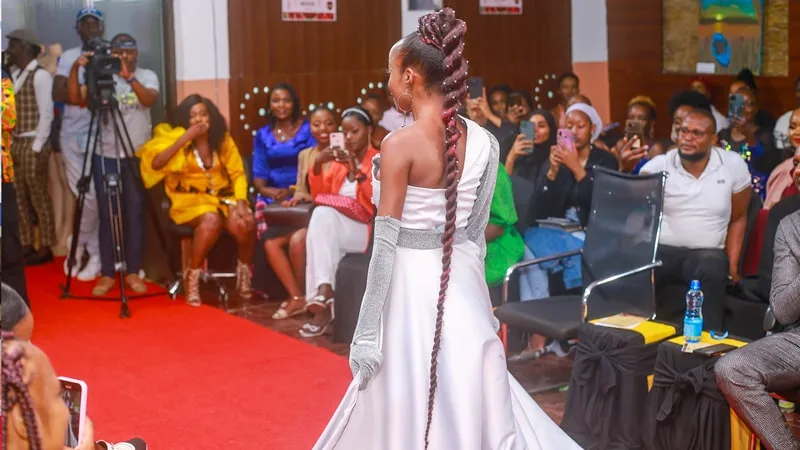
Amidst the vibrant pulse of Kenya’s capital, the second edition of Africa Fashion Week unfolded, a captivating fusion of fashion, culture, and creativity. From December 4th to 9th, 2023, the event served as a radiant platform for designers from across the continent to showcase their exquisite indigenous creations, celebrating the rich tapestry of African heritage.

At the heart of Africa Fashion Week lies a profound mission: to foster the growth of creative talent, entrepreneurship, and innovation while expanding the global reach of Africa’s indigenous apparel. As Saitoti Meitamei, the event’s Chief Executive Officer, eloquently stated, “The Africa Fashion Week is about reclaiming our pride, ensuring that Africans are filled with a sense of belonging and appreciation for the exquisite garments crafted on our continent.”

Over 30 African fashion designers graced the runway, each presenting their unique interpretations of traditional attire imbued with a modern sensibility. More than 60 models captivated the audience with their graceful strides, adorned in locally sourced and crafted ensembles. Fashion design students from Nairobi-based Delight Technical College, the event’s convener, also showcased their promising creations, garnering recognition and potential buyers.

The theme of “Celebration of Cultures, Creativity, and Colors” resonated throughout the event, as designers from the Democratic Republic of the Congo, South Sudan, Ethiopia, Rwanda, Burundi, and Kenya showcased their distinct sartorial traditions. Each garment exuded a profound sense of cultural identity, weaving together intricate patterns, vibrant hues, and traditional techniques passed down through generations.

Wairimu Wangu, the event coordinator, emphasized the transformative power of Africa’s indigenous fashion, noting its ability to empower young designers and generate sustainable revenue streams. This year’s Africa Fashion Week, she explained, was meticulously organized to provide a platform for designers to connect with local and international clientele, foster meaningful partnerships, and expand their market reach.

Social media and digital commerce platforms have become indispensable tools for African fashion designers, enabling them to market their creations to a wider audience. As Wangu observed, designers are increasingly leveraging these platforms to showcase their artistry and cultivate a global clientele. Moreover, peer learning has fostered a spirit of camaraderie among designers, enhancing their business acumen and propelling their entrepreneurial endeavors.

Millicent Oluoch, a fashion designer and tutor, expressed enthusiasm for the event’s ability to attract aspiring designers from across Africa, providing them with a stage to showcase their talent and forge new business opportunities. Brian Obukui, a fashion tutor and member of the organizing committee, echoed this sentiment, highlighting the transformative impact of young stylists who are revolutionizing Africa’s indigenous wear, creating employment opportunities, and securing sustainable livelihoods.

As Africa Fashion Week draws to a close, it will leave an indelible mark on the global fashion landscape, reaffirming Africa’s position as a vibrant hub of creativity and innovation. The event’s legacy lies in its unwavering commitment to preserving and celebrating Africa’s rich cultural heritage while empowering the next generation of designers to carry this legacy forward, weaving their unique narratives into the ever-evolving tapestry of African fashion.

A Celebration of Africa’s Cultural Heritage

Africa Fashion Week serves as a platform for showcasing the continent’s diverse cultural heritage, bringing together designers from various African countries to present their unique creations inspired by traditional attire. The event provides an opportunity to celebrate the artistry and craftsmanship embedded in indigenous costumes, highlighting the intricate designs, vibrant colors, and symbolic elements that reflect each region’s distinct cultural identity.

Fostering Growth and Innovation in the Fashion Industry

Beyond showcasing the beauty of traditional African attire, Africa Fashion Week aims to foster growth and innovation within the continent’s fashion industry. The event provides a platform for designers to network, exchange ideas, and learn from one another, fostering collaboration and knowledge sharing. Additionally, the event attracts international buyers and media attention, offering designers exposure to new markets and opportunities.

Expanding the Market for Indigenous Clothing

The Africa Fashion Week also seeks to expand the market for indigenous clothing, promoting its adoption both within Africa and on the global stage. By highlighting the versatility and adaptability of traditional garments, the event encourages the integration of indigenous designs into contemporary fashion trends. Moreover, the event promotes the economic potential of the fashion industry, emphasizing its role in job creation, economic empowerment, and sustainable development.

A Fusion of Fashion, Culture, and Creativity

Africa Fashion Week stands as a testament to the continent’s rich cultural heritage and its burgeoning fashion industry. The event serves as a vibrant fusion of fashion, culture, and creativity, showcasing the ingenuity and artistry of African designers while promoting the continent’s unique cultural identity. As the event unfolds, it is anticipated to generate excitement and anticipation within the global fashion community, further solidifying Africa’s position as a source of inspiration and innovation in the world of fashion.

Content courtesy of Delight Fashion School & NFH

Would You Like to Don a Kaunda Suit? Not Inside the Parliament of Kenya.

President William Ruto’s favored outfit was outlawed for breaking legislative dress regulations, along with other traditional African clothing.
The speaker declared that a Western suit and tie are appropriate clothing. In recent years, the Kaunda suit has gained popularity among African politicians, celebrities, and the elderly. William Ruto, the president of Kenya, is one such convert.
Primarily worn with matching pants, the single-breasted safari jacket features patch pockets and either long or short sleeves. It gained popularity in the 1960s thanks to Kenneth Kaunda, the first post-colonial president of Zambia.

However, last week, the Kenyan Parliament outlawed the Kaunda suit as well as other traditional African attire, including women’s form-fitting apparel. The speaker of the Kenyan parliament declared that this kind of clothing is not allowed under the code, which mostly follows the fashions of a contemporary Western working wardrobe.

The Speaker of the Parliament, Moses Wetangula, stated in a speech on Tuesday that a fashion trend such as the Kaunda suit “does not accord with the seriousness of the proceedings of the house and its committees.”
He stated that “a coat, collar, tie, long-sleeved shirt, long trousers, socks, shoes, or service uniform” is appropriate attire for males entering the legislative chambers.

The decision incited a social media backlash, with many people questioning why suits and ties linked with colonial powers would be preferred in an African government building over proudly African garb.

A Kenyan human rights activist named Abdullahi Halakhe said in Swahili on X, previously Twitter, “Truly, colonialism is still deeply embedded in our minds.” He included a link to an article that featured a picture of the speaker of Parliament donning the white robe and wig that date back to the British colonial era.

The flap occurs at a time when Afrocentric fashion is becoming increasingly popular on the continent and beyond, on movie screens, runways, and among consumers who are drawn to black culture and style.

The Kenyan speaker also declared that women should wear business, professional, or smart casual attire with skirts and dresses that fall below the knee, and she outlawed headgear and caps in the legislature. He said it was forbidden to wear sleeveless blouses. Both lawmakers and visitors to Parliament are subject to the restrictions.

“I am aware that some of you may find these instructions uncomfortable,” Mr. Wetangula, 67, stated. Nonetheless, pain is required for members’ comfort, security, and order.
One of the edict’s most notable targets did not seem to be paying attention.

President Ruto met with the CEO of NBA Africa the day following the announcement in Parliament. In June of this year, President Ruto donned his first Kaunda suit in public.
One day following the declaration made in Parliament, President Ruto who had worn a brown Kaunda suit for the first time since taking office in June of this year met with the CEO of NBA Africa. He wore a variation in sky blue to a government ceremony on Thursday.
Wearing a pink Kaunda suit has made him stand out.

It has become evident to many contemporary African leaders that people value politicians who are prepared to publicly embrace their ethnic background and traditional garb.
Although Goodluck Jonathan, the former president of Nigeria, frequently wore a wide-brimmed fedora-style hat that was favored by the tribal leaders in his area, Nelson Mandela, the former president of South Africa, was known for wearing his characteristic “Madiba” shirts in bold designs.

In an effort to promote the “Made in Rwanda” initiative, President Paul Kagame of Rwanda dons apparel created by local designers.
The short-sleeved suit was adopted by Mr. Kaunda of Zambia, the leader of his country in Southern Africa from 1964 to 1991, as a representation of African freedom and independence. The fashion had its beginnings in Australia and bore a striking resemblance to a Chinese silhouette that Chairman Mao popularized.

The Kenyan legislative speaker, Mr. Wetangula, referred to the Kaunda suits as “Mao Zedong coats” when he banned them.
The speaker is a former senator who held the position of foreign affairs minister for ten years until stepping down due to accusations of corruption. Mr. Ruto, 56, a former vice president who became well-known for being a cunning political operative and businessman, has had him as an ally.

In September of last year, he took office following a close electoral victory.
Amidst mounting public outrage and demonstrations about his administration’s performance—particularly in light of the soaring cost of food and gasoline and rising taxes—there is a ruckus in Parliament regarding the clothing code.
The president’s preference for Kaunda suits, according to Mr. Ruto’s tailor, Ashok Sunny, stems from a desire to support regional producers and designers.

He’s demonstrating that we don’t have to spend our days in suits. In an interview with TV47 in Kenya this year, Mr. Sunny stated, “We can wear the African cut, representing the African look.” “They call it the dictator look most of the time because the Kaunda suit was once popular with most old dictators,” he continued.

Fashion decisions have caused controversy in Kenya’s parliament before.
Former Nairobi governor and senator Mike Sonko was expelled from Parliament in 2011 for using ear piercings and sunglasses.
At the time, Mr. Sonko, a colorful politician renowned for his opulent lifestyle, denounced the decision, claiming he was dressing like the nation’s youth.

Content courtesy The New York Times & NFH


The Runway’s Beautiful Looks From Lagos to South Africa

Fashion weeks are taking center stage and gaining significant recognition throughout Africa. There is no way to gauge the extent of fashion’s influence on the continent—from South Africa’s South African Fashion Week and Cape Town Fashion Week to Nigeria’s Heineken Lagos Fashion Week, Senegal’s Dakar Fashion Week, Ghana’s Accra Fashion Week, and a plethora of additional events. In research recently issued in association with Lagos Fashion Week, UNESCO estimated that the industry’s yearly export value is close to $15 billion.
Heineken Lagos Fashion Week is one of the most anticipated fashion events in Africa and is a branch of Style House Files.

Heineken Lagos Fashion was established in 2011 by lawyer-turned-entrepreneur Omoyemi Akerele, and since then, it has solidified its place in Africa’s fashion and beauty landscape. This year, enthusiasts for African beauty and fashion gathered in the well-known Federal Palace Hotel, which is located in the center of Victoria Island, one of the nation’s most suburban areas. Officially, the Heineken Lagos Fashion Week 2023 runway went from October 26 to October 29. Lush Hair, Spotify, MTN, and a few more sponsors supported the event.

The atmosphere was the same at SAFW, the South African Fashion Week. Starting on October 19 and running through October 21, the event featured a cocktail party hosted by Cruz Vodka, a high-end beverage manufacturer.

Lucilla Booyzen founded the event, which this year was unforgettable and marked a turning point for African fashion. They have accomplished this, among other things, by supporting and providing funds to up-and-coming and established African designers, as well as by mentoring and generally offering them more worldwide possibilities to reach a mainstream market. This year was no exception.

In Lagos, the Federal Palace Hotel’s Balmoral Palace served as the conference site; in South Africa, the stunning Mall of Africa served as the venue. Arriving with their most innovative fashion ideas, attendees vied with one another in everything from cosmetics to attire.

A significant feature that caught my attention was the beautiful looks on the runways, in addition to the clothes on display and the designers exhibiting their extraordinary skills. Every designer asked the models to walk the runway wearing ensembles that best reflected the narratives they wished to portray. BeautyMatter showcases some of these amazing outfits.

Hair
Hairstyling is a big deal for every fashion week, and the runway presentations from Lagos Fashion Week and South Africa did not disappoint. Afros, weaves, braids, and ponytails were among the captivating looks that the attendees were left with. Carlton Hair was the official hair sponsor for SAFW, and Lush Hair was the official sponsor in Lagos. “Carlton Hair is committed to quality, professionalism, and sustainability.
We are thrilled to be working with SAFW because we believe they share these values,” the firm said.
Our goal is to provide stylists and clients with the chance to learn about the newest hair and fashion trends. Lush Hair Nigeria has inked a new two-year deal to serve as Lagos Fashion Week’s official sponsor, as BeautyMatter just discovered.

Nigerian brands with sleek ponytails on the runway included Pepper Row (by Omafume Niemogha), Cute-Saint (by Muftau Femi Ajose), and Elexiay (by Elyon Adede); Ivorian brands, Kenyan brands, and Malian brands, Mariah Bocoum Couture, all styled their models with different braids.

Additionally, there were occasions where it was either “go bald or go home,” with models Oyama Gonintebe from South Africa or GËTO (by Samantha Adebayo) from Nigeria showcasing their best moments.
Natural hair was the most popular hairstyle, just like braids, ponytails, and weaves, especially on female models. SAFW featured a lot of these hairstyles, particularly from companies like Munkus (by Thando Ntuli), Thulattu South Africa, VNTU Official, and Elwen Designs.

Face Beats
Makeup may effectively convey the designer’s vision for the collections, regardless of how obvious or subtle it is. During fashion week, the finishing touches are what take fashion to the next level of artistry and support the idea that they are the link between art and design.
This was the situation for companies like Kadiju, Rendoll, and Jewel Jemila during Lagos Fashion Week. These manufacturers complemented their models with precisely contoured crimson blush in the manner of the 1980s and dewy highlighters.
Additionally, there were a lot of neutral hues from companies like Desirée Iyama and Studio Imo from Nigeria, Helon Melon from South Africa, and Mantsho from Palesa Mokubung. Despite being simple, every color stroke supported the designer’s idea and presented a different tale.

Conversely, some performances in Lagos and South Africa featured incredibly striking costumes.
We saw the avant-garde lip transformation looks from brands like Oriré, Viviers Studio, and Abigail Ajobi, which were either very black-colored or glittery, almost three-dimensional, as well as the dramatic allure of the smoky eyes from brands like Kadiju (by Oyindamola Aleshinloye), Rendoll (by Reni Abina), Oshobor, and Love From Julez.

Accessories
The secret beauty components that added individuality and flair to every event this year from Lagos and South Africa were accessories like headwraps and earrings. Whether they were bold hoops, delicate studs, or statement chandeliers, earrings gave the looks at KikoRomeo, Gëto, Desirée Iyama, Elexiay, Cynthia Abila, and Pepper Row even more pop.
Models wore stunning earrings on the runway, including ones fashioned like roses, petals, animal patterns, big circles, or even just studs.

Conversely, headwraps added historical and cultural details, making every runway presentation a story. In African culture, they might represent power and custom, or they can just be a fashionable accessory. Leading the way on this one were South Africa’s Sun Goddess Afro Lux, Black Coffee, and streetwear brand Leon Von Solms.
The majority of the headwraps had prints on them, such as stripes in black and white.

Last but not least, sunglasses, the pinnacle of stylish and useful fashion accessories, were essential in enhancing the glitz of beauty looks during fashion. Cute-Saint, a fashion company, has been infusing this into every runway collection for years, and this year’s show did not let them down.

The chic beauty looks on this year’s runway was complemented by an aura of mystery and seduction generated by oversized frames, sleek aviators, and retro cat-eyed shapes in hues of black and white.

Content courtesy of Beauty Matter & NFH


Africa Has the Potential to Influence Global Fashion in the Future.

Despite a number of obstacles, the continent offers a number of distinctive qualities that might help it succeed.
Editor’s Note: As African designers become more well-known for their distinct aesthetic and creative application of regional materials, fashion weeks and trade exhibitions serve as venues. China Daily examines the prospects and difficulties confronting the rapidly expanding sector.
Award-winning Kenyan designer Aulga Nato was thrilled to present her works during this month’s Africa Sourcing and Fashion Week in Ethiopia.

Models wearing creations by Nato and her other designers walked an outdoor catwalk at the Skylight Hotel during the four-day fashion spectacle in the Ethiopian capital, Addis Ababa. 5,150 people attended the event, which is regarded as one of the best fashion exhibitions on the continent, according to the organizers.

“African fashion is just now becoming more well-recognized. I have witnessed African aesthetics that are radically unlike global examples,” stated NATO. “Africa is bringing new and innovative ideas, while the rest of the world is merely copying designs. Additionally, I think that we are in right now.”

Nato is well aware of this, having won the African Icon Hope Awards’ African Emerging Designer of the Year title the previous year. Africa, in her opinion, will serve as the center of the world’s fashion in the future.

The fashion industry in Africa is poised to take the lead in the world fashion scene, according to a UNESCO research published in October titled “The Fashion Sector in Africa: Trends, Challenges, and Opportunities for Growth.”

“The African fashion industry is being driven by a number of causes, including the continent’s youthful, inventive, and expanding population, a burgeoning middle class, fast urbanization, and more government assistance. The study said, “The potential is enormous, not just for the economy but also for the inclusion of young people, the empowerment of women, and the global resonance of African culture.”

The majority of fashion businesses in Africa are micro, small, or medium-sized enterprises that cater to the hyperlocal market by offering ready-to-wear and made-to-order clothing. However, the report also noted an increasing number of high-end brands that are centered in important markets like Senegal, Cote d’Ivoire, Ghana, Kenya, Nigeria, Rwanda, and South Africa. These cater to a select clientele of wealthy local and foreign consumers by offering luxury goods.

One such company is owned by Grace Mbugua, who concurs that the African fashion market has the potential for expansion.
Mbugua, who was present during the Addis Ababa fashion week, stated that occasions like this will significantly contribute to drawing attention to African design globally.
“Business growth is one of the advantages of these fashion fairs; this is achieved through partnerships, exposure, and learning about current trends and global demand.
Mbugua, who owns J-Lo Collections, a company that produces leather, textiles, and home décor items, stated that Ethiopia is one of the world’s top producers of leather goods.
“I have had the chance to see some of the leather they have,” she added. “They have beautiful and refined leather, and I am looking forward to getting to Kenya.”

Ducks in a row
Even though she was impressed by Ethiopia’s leather business, other attendees of Fashion Week said that in order for Ethiopia and Africa as a whole to fully profit from the fashion industry, they must first get their houses in order.
The quality of leather goods such as shoes, purses, and gloves has improved over the past ten years across Africa, according to Mishamo Wakaso, CEO of Ethiopia’s Ministry of Trade and Industry’s Leather Research and Development Center. With exports worth over $140 million, Ethiopia ranks as Africa’s fifth-largest exporter of leather and leather goods.
But supply, according to Wakaso, is the biggest issue confronting the leather sector in Africa.

Animal skins are sourced from Africa’s vast cattle population, but there are issues with access to the chemicals, equipment, and supplies needed to process the skins.
“Europe, China, and India import the majority of the chemicals used in leather manufacturing that are utilized in Africa. Due to this, there is a severe shortage on the continent and high demand, according to Wakaso.
According to Wakaso, African governments must make investments in the sector to raise the caliber of goods if they want to see Africa take its rightful place in the world of fashion.
He thinks African fashion has the potential to expand rapidly despite its early setbacks, particularly if the continent’s 1 billion people were to seek inside for a market.

“We as Africans must integrate and foster market integration in order to lessen these difficulties. Because of our trade restrictions, we are selling to Europe and India but are not taking advantage of the enormous market in Africa,” he stated.
“The African Continental Free Trade Agreement needs to be fixed in order to draw in investors. For instance, a business that manufactures chemicals may locate its plant in Ethiopia and engage in business with Tanzania, Kenya, Sudan, and other African nations.”

According to Wakaso, 37 of Africa’s 54 countries grow cotton, making the continent a key supplier of raw materials for the fashion industry. The average annual value of textile exports from the continent is $15.5 billion.

According to Mbugua, African governments need to play a more significant role in facilitating local commerce in the leather and textile sectors by integrating markets and building the required infrastructure.

“African governments have the ability to facilitate cross-border travel by making it easier for individuals to move between their countries. Even if travel and visa restrictions between nations continue to be problems, I hope that things will improve. Rwanda has eliminated the need for Africans to have a visa, and Kenya has committed to doing the same by December. These developments thrill me,” Mbugua stated.

According to Mbugua, occasions such as Ethiopian Fashion Week provide African business participants with a chance to establish networks and cooperate on a continental scale.
With these gatherings, we hope to develop as individuals and to create Africa and East Africa together, since there are a lot of amazing opportunities right now. Our goal is to help our members build themselves in order to access markets and ensure that we are competitive in unity; therefore, we would love to create African Fashion Week chapters throughout Africa and then grow our companies,” she stated.
The fact that Africa’s textile imports, including apparel and footwear, are valued at $23.1 billion annually, nearly double the value of exports, indicates that African fashion entrepreneurs do not have access to the continent’s market.

“Trade exhibitions, industry gatherings, and joint ventures are being organized by African nations more and more.
One such instance is Africa Sourcing and Fashion Week, according to the article.
According to NATO, occasions like Africa Sourcing and Fashion Week provide a platform for the global community to engage with the finest of African culture.
“Authenticity and individuality are what set African fashion apart. You can see that most fashion firms throughout the world have done so much that their current offerings lack originality. Africa, on the other hand, produces a lot of fabric, grows a lot of cotton, and is wealthy in every manner.

That’s how we dress. “I believe we are the next big thing if the world will focus on us,” stated Nato, who owns the upscale brand Nato Design House.

Market-oriented
She counseled industry participants to put their all into their work and strive to become masters, notwithstanding the difficulties encountered by young designers on the continent.
“As an upcoming designer, you should strive to learn and understand your clients,” Nato said. “Listen to your clients, listen to what the market wants as opposed to what you want.”

The majority of those involved in the African fashion business also think that the continent can set the standard for sustainable practices and fashion worldwide. Because Africa is not a wasteful continent, NATO thinks that little actions like gathering rubbish and repurposing or redesigning it might help cut down on waste.

“Personally, I get to check back on some of my designs that did not move and redesign them before putting them back on the market,” Nato said.
“Some of my clients purchase dresses from me for certain events, and after they wear them, they are unable to reuse them. When this occurs, I am able to persuade my clients to return the dresses, and I then resell the gowns to buyers who can afford to purchase and wear them once again.”

Mbugua thinks that by enacting laws to create secure tannery systems for the leather sector, African nations are setting the standard for sustainability.

“We employ vegetable tannins to preserve, reinforce, and color our hide in Kenya, for example. This practice is known as vegetable tanning. Chemicals are harmful to the environment and have an impact on water systems, which is why this is.
According to her, we also want our suppliers to have the same degree of environmental consciousness.
Exhibiting at the Ethiopian Fashion Week and Fair is Ghanaian Solomon Dodoo, who claims that a tour of the booths highlights how colorful and dynamic African fabrics are, as well as how they embrace the richness of African culture.

“Going through the items on display at this fashion event, you notice that every single fabric is unique, and there are no two fabrics that look alike,” said Dodoo.
“Africa is providing the world with exquisite textiles, and I hope that people would take advantage of this and believe that Africa truly has a wonderful culture when it comes to textiles.
We are the designers of tomorrow.”

Content courtesy of China Daily & NFH

African Fashion Designer Awards 2023, Honoring “the Fashionpreneur” and Their Creatives

Young, gifted indigenous fashion entrepreneurs from Nigeria illuminated the stage with their creations, showcasing African and Nigerian culture and legacy via their artistic expression.
Attendees of the 2023 African Fashion Designer Awards were captivated by the elegant, sophisticated, and traditional outfits seen at the runway show at the Oriental Hotel Lagos.
The majority of fashion designers who displayed their creations have always aspired to run a profitable fashion company, and one way they are working toward this goal is by participating in the African Fashion Designer Awards.
The majority of fashion entrepreneurs find running a fashion firm to be extremely difficult because of the industry’s changing nature.

Nonetheless, a prosperous and fulfilling fashion business may be achieved with persistence and diligent labor.

Clothing firms have profit margins of about 42%, according to data.
A fashion firm may be very profitable because of its large profit margins and strong demand for clothing.
But this also implies that there are a lot of competitors already in the market, so the level of rivalry would be fierce. Furthermore, the fashion sector is always changing to meet the demands of its customers.
This increases the field’s commercial risk. But if everything goes well, running a profitable clothing company may truly change people’s lives.

During the 2023 African Fashion Designer Awards, these were a few of the topics that were covered.
The majority of the fashion entrepreneurs on display demonstrated via their designs a keen sense of style, expertise in creating clothing, and a good sense of what the upcoming trends in fashion will be.
Olasunkanmi Dasilva, the CEO, and Founder of the African Fashion Designer Awards 2023, spoke at the event and stated that it was the sixth edition and that they had been working really hard to maintain the event’s regularity.
“Fashion Preneur” is this year’s topic. This is intended for youthful fashion designers. In terms of legacy and culture, we want to explore how we can all work together to accept one another.

This is also aimed at inspiring youth from the ghetto. Designers get a platform to present their work to the public at this event. While some of them are first-time users, others are in-house designers from earlier iterations.
Twelve designers will be exhibiting during the function. There can be a maximum of 15 items. Even yet, there are those who can perform eight pieces, ten, and even six. Every year has a theme, and each theme is significantly distinct from the others. In order to unify designers and enable them to exchange creative ideas with one another, we therefore come up with something new every year, according to Dasilva.

He clarified that the recipients of prizes are chosen based on their contributions to the advancement of African and Nigerian culture, as well as their influence on young people and their enterprises.

“I considered ways to encourage and uplift these creators. They won’t be able to leave their surroundings if there aren’t any platforms to keep them inspired. Although some just consider these individuals to be tailors, they have made significant contributions to the fashion business.
He said, “I love anything creative and innovative, but I am not a designer.”

The award titles and their winners include
1. African Fashion Brand of the Year: House of viola pelle
2. African Fashion Brand of the Year: Male – Mumini fashion;
3. African Fashion celebrity of the Year Male: Emmanuel umoh jr
4. African Fashion Designer of the Year female – Mimaxclusive
5. African Fashion Designer of the Year Male -1981 clothing
6. African Fashion Model of the Year female – Merry Zakaria
7. African Fashion Model of the Year male – Alimani sall kamara
8. African on-air personality of the Year – Natacha akide ( Symply Tacha)
9. African fashion stylist of the year female – House of viola Pelle
10. African iconic Fashion fitness of the year – Emmanuel umoh jr
11. African Fashion Urban of the Year – Stephnora Fashion
12. Next-rated actor of the Year -Khazim Danmola
13. Emerging Designer of the Year female – AR couture
14. Emerging Designer of the Year male KK wears.

Content courtesy of Business Daily Nigeria & NFH


Award-winning Costume Designer Paul G. Tazewell To Be Honored At FashionAFRICANA’s Inaugural Gala

Paul G. Tazewell believes that a costume is more than just a piece of apparel.
The character exists inside the fabric. For almost 30 years, Tazewell has been creating costumes for Broadway, regional theater, movies and television shows, dance, and opera performances. “I love the process, and I love collaborating with people,” the designer stated. “I hope I have represented the story (of the show) and each of the characters as truthfully as I could.”
Tazewell is being honored this evening at the Pittsburgh Public Theater in Downtown Pittsburgh at the “Experience Africanism,” FashionAFRICANA’s inaugural gala honoring black and African designers, artists, and more.
Demeatria Boccella, the producer and curator of style, culture, and design behind Demeatria Boccella Productions, launched FashionAFRICANA in 2001.

Through fashion and art, it is a multimedia event series and educational platform that delves into black beauty, culture, and history.
Producing the event, Boccella remarked, “Our inaugural gala is an opportunity to celebrate the diversity of the African Diaspora and the many contributions of black creatives to arts and culture globally.” “We are overjoyed to have a host committee comprised of such amazing individuals who are dedicated to elevating and commemorating black creativity.”
Kiya Tomlin, a fashion designer from Pittsburgh, is the honorary chair. The evening will celebrate and highlight the diversity, depth, and vitality of black culture. Live music, a carefully chosen beauty experience, and clothing with African influences will all be present.

Dinner for VIPs starts at 6:30 p.m. At 8 p.m. is the main event.
A dance party and performances of modern dance and music are planned.
The debut of Cameroonian fashion designer Imane Ayissi in the United States will take place in Paris. Time Magazine’s “America Must Change” edition included artwork by artist Charly Palmer on its cover.
Palmer will get recognition during the occasion in addition to Tazewell.
He declared, “I want to be known as someone who has changed things.” “I am appreciative of this honor.”
The work Tazewell did on Lin-Manuel Miranda’s first Broadway production of “Hamilton” is what made him most famous. Tazewell and the musical shared the blockbuster Tony Award.
2016 saw him win an Emmy for his work on NBC’s “The Wiz! Live.”

Tazewell is a New York City resident with Pittsburgh ties. The August Wilson Center in Downtown Los Angeles hosted a presentation of the costumes he created for the NBC television series “The Wiz Live” in 2016. He worked on that show alongside Boccella.

At the time, Tazewell declared, “My costume designs for ‘The Wiz Live’ is work that I will forever be proud of.” “I am ecstatic that people will have the unique chance to view my work in person at this exhibit, where they can get a close-up look at the exquisite craftsmanship and detail of these stunning costumes.”

Tazewell stated that since creating costumes requires a great deal of labor, having them on display in this way offers visitors an insight that they would not otherwise obtain, whether viewing a play on stage, on television, or in a movie theater.

Tazewell has always had a deep love for movies and theater. While a junior at Akron, Ohio’s Buchtel High School, he created the costumes for his first complete musical, “The Wiz.”
Arnold Thomas, the director of the summer musical and a teacher in the high school’s performing arts department, asked Tazewell to create the costumes for “The Wiz” and other productions for both the summer musical theater and the high school.

“I am really grateful that Arnold Thomas trusted me to dress the cast,” Tazewell remarked. “The goal is to make the outfit come to life. That was undoubtedly a life-changing event and a major learning process. My family values education, and we are educators ourselves.

The Metropolitan Opera, the Bolshoi Ballet, the English National Opera, the Public Theater, the National Theater, the Kennedy Center, the Guthrie Theater, the Arena Stage, the Houston Grand Opera, and the San Francisco Opera are just a few of the organizations with which Tazewell has collaborated.
He declared, “It is not just about performance.” “Every path is crucial to your development.”

He takes advantage of every chance to collaborate with aspiring costume designers. Because he mentioned that there weren’t many African Americans working in costume design at one point in time.
He enjoys making historical and period costumes in particular, although he doesn’t have a favorite outfit. He claimed that the process of creating a costume involves combining the ideas of the costume designer, director, writer, actors, actresses, and all other participants in the performance, which makes it an exciting process overall.

He graduated from the North Carolina School of the Arts with a bachelor’s degree in fine arts and a master’s degree in fine arts from New York University. He has taught as a guest lecturer at the North Carolina School of the Arts and New York University.

He was a faculty member at Carnegie Mellon University in Oakland from 2003 to 2006.
It’s amazing to be back in Pittsburgh for this occasion, he remarked.

Tazewell said, “Africanism is expressed in an amazing way.” “It’s explosive, and I want to share it with a wider community and embrace its diversity more.”

Content courtesy of Trib Live & NFH

There Are Four Barriers Preventing Africa From Becoming A Fashion Sourcing Hotspot.

Africa may have “all it takes,” according to a UNESCO report, to emerge as one of the fashion world’s rising stars.
In addition to exporting textiles worth $15.5 billion a year, the African continent is a significant producer of raw materials, with 37 out of 54 countries producing cotton, according to a UNESCO analysis titled “The Fashion Sector in Africa: Trends, Challenges, and Opportunities for Growth.”
Africa is witnessing fast growth in the digital sector, which facilitates intra-African trade and the emergence of young talent, according to the UNESCO report, and Made-in-Africa is trending, especially among the continent’s youth.
Over the next ten years, it is anticipated that demand for African haute couture will rise by 42%.

People are searching more and more for “Made in Africa” goods across the continent because they view them as a source of pride and a means of reaffirming their identity. However, strengthening the entire production chain is necessary to meet this increasing demand. Director of Lagos Fashion Week, Omoyemi Akerele, says, “This UNESCO report is useful because it maps out the path to achieve this and it will increase the awareness of public decision-makers.”

In its report, UNESCO identifies four obstacles that policymakers and governments need to overcome in order to fully realize the potential of Africa’s fashion industry:

  1. Legal protections for designers and professionals need to be strengthened in terms of intellectual property rights, remuneration levels, working conditions, the ability to organize into professional unions, and social rights.
  2. Investment must be made in small and medium-sized enterprises, which today account for 90% of businesses in the fashion sector in Africa. Covering the entire continent, they are the gatekeepers of the diversity of cultural practices and expression. Generators of local employment, are also a powerful lever for giving young people who want to enter the sector a chance.
  3. Environmental standards need to be set. While the fashion industry remains one of the most polluting industries, Africa can make greater use of local materials, innovate around sustainable textiles, and raise awareness of sustainable consumption patterns. Production of organic cotton fiber in Africa has already risen by 90% between 2019 and 2020 and now accounts for 7.3% of global production. The second-hand clothing market is one of the most dynamic in the world, representing a third of global imports, but still suffers from a lack of recycling channels, with 40% of these garments ending up in landfill sites or even in oceans and rivers.
  4. Both the transmission of savoir-faire and formal training need to be improved. Africa is rich in traditional skills and unique textile techniques, some of which are already protected by UNESCO. The report encourages countries to set up mentoring schemes to ensure that these practices are passed on from generation to generation and can continue to inspire young designers. At the same time, UNESCO is calling for an increase in the number of qualifications available in key related professions – quality control, commercial law, and marketing – and in training in new technologies, such as 3D printing and e-commerce.

Content courtesy of Just Style & NFH

Elpis Megalio Unveils “My Nigerian Symphony” Collection at African Fashion Week London

“My Nigerian Symphony” Collection Unveiled at African Fashion Week London by Elpis Megalio
With its latest collection, “My Nigerian Symphony,” Lagos-based Elpis Megalio, a fashion company, wowed the world at African Fashion Week London. With the exhibit on October 28, 2023, the brand accomplished a significant milestone as it made its debut on a global platform.
The album “My Nigerian Symphony” demonstrates Elpis Megalio’s commitment to preserving and promoting Nigerian handicrafts.
The collection, which is made entirely in Nigeria, expertly blends traditional materials and production methods to showcase the nation’s rich cultural heritage.
Expertly tied and dyed, the collection features a well-balanced blend of high-quality Aso Oke and cotton produced locally.

https://www.instagram.com/p/CsoWhpqo980/?utm_source=ig_web_copy_link&igshid=ODhhZWM5NmIwOQ==

By using cutting-edge technology and showcasing 3D-printed pieces throughout the collection, Elpis Megalio defies convention.
One of the standout pieces is a beautifully crafted corset that was printed using 3D technology, adding a modern twist to the traditional design.
The designer’s profound appreciation of classical music and its ability to convey emotion without using words served as the inspiration for “My Nigerian Symphony.”
The collection is a visual representation of the designer’s life story and close relationship with Nigeria, drawing inspiration from the expressiveness and flow of symphonies.
“I wanted a collection with a symphony of colors that allowed the audience to see my love for my country, Nigeria, and the opportunities and lessons it has given me,” stated Olufunke Afolabi, the creative designer behind Elpis Megalio.

https://www.instagram.com/p/CHC5litpiAM/?utm_source=ig_web_copy_link&igshid=ODhhZWM5NmIwOQ==

About Elpis Megalio
Elpis Megalio is a fashion brand that was founded in March 2015 by Olufunke Afolabi and represents ingenuity and resilience. Olufunke has a background in marketing and law, but her love of fashion design has inspired her to create one-of-a-kind, wearable art.
Elpis Megalio finds inspiration in both art and travel, bringing global elegance to each piece. The brand has prospered in spite of the difficulties faced by the Nigerian fashion industry, transforming setbacks into victories.
The brand is very proud of the partnerships it has with prominent local and international figures in business, as well as celebrities, who have adorned its products.

Content courtesy of Moji Delano, Elpis Megalio & NFH

Nonini, A Kenyan Musician, Launches  His Own Slides, Dubbed “Mgenge2ru Slides.”

Experienced rapper Nonini from Kenya has expanded his Mgenge2Ru clothing line to include slides. The rapper announced the wonderful news on Instagram.
Experienced Kenyan rapper Nonini has added slides to his Mgenge2Ru apparel line.

The wonderful news was revealed by the rapper on Instagram.
“Brand Advancement! Already, 100 pre-orders for the #Mgenge2ru Slides have been placed; they will be available worldwide in November. What a wonderful time to be alive!”
The chic slides come in a variety of colors; the ones that are currently on sale are white and black.
The part that covers the feet is emblazoned with Nonini’s now-famous “Mgenge2Ru” logo.


The American rapper says the slides offer comfort and style and are suitable for both outdoor and indoor settings.

Nonini is the front-runner among Kenyan artists with a merchandise brand that helps boost exposure and market share.

It’s one of the ways the musician increases his royalties from music.

Nonini sports a variety of clothing items, including caps, sneakers, t-shirts, hoodies, and baseball jackets.

The new slide brand has received positive feedback from social media users, some of whom are keen to purchase them.

Here are some views from online fans:

“This is amazing, proud of you king wa genge.”

“These are too dope Mgenge2ru 👌🏽🤞🏼🔥.”

“Time for Kenyans to show support to their own with no excuses.”

Content  courtesy of Mgenge 2Ru & NFH

Ad