Tuesday 21st of April 2026

Nairobi, Kenya

How Africa Fashion Week London Designers Illuminated The Catwalk Show

The hugely anticipated Africa Fashion Week London 2023 catwalk show stunned the fashion world with a stunning fusion of style, innovation, and culture.
A stunning array of African designers stole the show at this weekend’s event held at the Institute of Directors in Piccadilly, London, which proved to be a showcase of the continent’s rich tapestry of design.

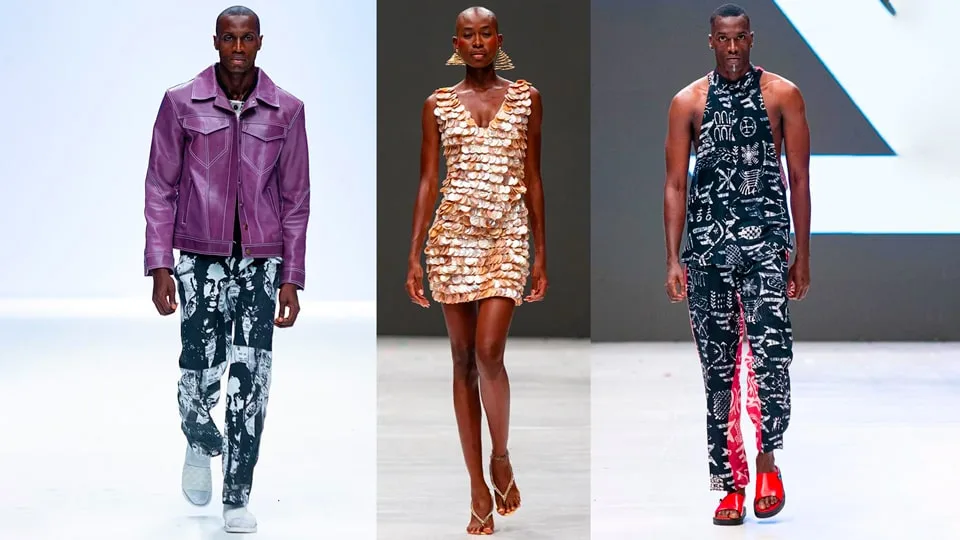
The catwalk came to life with brilliant creativity that transported the audience through Africa’s diverse fashion landscape, celebrating the incredible talent and vision that are redefining the global fashion industry. From the vibrant colors and patterns inspired by traditional African heritage to cutting-edge contemporary trends, the catwalk was a visual feast for the eyes.

1. David Wej
David Wej is an award-winning global premium lifestyle brand that was founded in Lagos, Nigeria, in 2008 by Adedayo David Eweje. It is well-known for its unique, traditionally-inspired bespoke jacquard suits, classic shirts, and accessories.
David demonstrated the designer’s impeccable sense of style with his menswear by incorporating sophisticated stripes and coordinating accessories.

2. Adire Oodua
Established in 2021 by Queen Ronke Ademiluyi-Oguswusi, the founder of Africa Fashion Week London & Nigeria, and chaired by His Majesty, the Ooni of Ife, the Adire Oodua Textile Hub is a testament to her extraordinary vision, drive, and determination.
Fundamentally, the textile hub serves as a symbol of respect and recognition on a global scale for the preservation and advancement of South West Nigeria’s indigenous fabric.

3. Mary Martin London
Famous for creating custom designs that celebrities all over the world wear on red carpets, Mary Martin London is a highly acclaimed fashion artist. London, Accra, Brazil, Ghana, South Africa, and Scotland have all experienced sold-out catwalk shows featuring her colorful and innovative creations.

4. Simeogieme
Unique, distinctive, and high-quality clothing is what Simeogieme, a stylishly varied luxury clothing brand, prides itself on. Sensuality, sophistication, and simplicity define our ethos. Osime Saibu, the creative director, has a passion for designing clothes and accessories and is an avid fashion enthusiast. In 2010, she introduced the apparel line.
During the show, this particular collection was particularly noteworthy. Simeogieme, who had her exhibition stand downstairs, was really one to visit if you wanted to buy straight off the catwalk. She was deceptively simple but with extraordinary grace, architectural detail, tightly pleated fabrics, and unique patterns.

5. Pa Musa
Designer and interior decorator Pa Musa, originally from Sierra Leone, is an expert in soft textured fabric and the gara-tie-die technique. He is well-known in the Sierra Leonean fashion industry for his outrageous designs and quirky demeanor, which have elevated him to the status of one of the country’s most innovative designers.
We saw an extravagant use of fabric in the men’s and women’s wear collections, which flowed and ebbed with the AFWL models.

6. Abaake By Equip
Nigeria serves as the inspiration for the ethical and environmentally friendly brand Abaake by eQuip. Located in the United Kingdom, they integrate elements of Yoruba identity, traditional clothing, and textiles into contemporary designs and products.
Customers who value African culture and want to surround themselves with skincare, home décor, accessories, and apparel with African influences are drawn to this brand.

7. Amarelis
Amarelis is a clothing and lifestyle brand that not only encompasses the simplicity of its designer, Lara Cole but also uses virtuoso fabrics, creating introspective collections consisting of cutting-edge designs and on-trend styles.
All designs are fluid, timeless, and classic, matching their slogan, “Sustaining the effervescent spirit of Africa!”
Their collections embody a fusion of modern, multifunctional trends and African heritage. Timeless elegance appeals to a wide range of fashion-forward women looking for looks that complement their existing wardrobes.

8. Apparel By MO
Apparel By Mo, a Nigerian brand based in Lagos, combines Western contemporary design with Yoruba cultural heritage. The brand specializes in custom and ready-to-wear women’s fashion as well as fashion education.

9. ARIÁBA
Lagos, Nigeria, is home to the lifestyle brand ARIÁBA.
The design house crafts a complete line of handcrafted goods, encompassing jewelry, accessories, home and body scents, and exquisite and distinctive apparel.
They also provide personalized and gifting options.

10. Bantu Gold
Botswana-based fashion brand Bantu Gold skillfully combines traditional culture with modern design. Devoted to regional artistry, we design clothing that genuinely embodies both the contemporary inventiveness and the customs of our country. Prestigious exhibitions at occasions such as Mr. Price’s renowned incubation program—an honor bestowed by one of Africa’s biggest retailers—are part of our journey.
We are well-positioned to advance our craft, support the expansion of the fashion industry, and carry on telling the world about Botswana’s distinctive story thanks to this program. Beyond clothes, we support up-and-coming designers, promote cross-cultural interactions, and honor Africa’s diversity.
Come along on a journey where fashion and culture collide, and discover the lively spirit of Botswana in each piece.

11. Bittany
Founded by Fikayomi Agbola, the African fashion brand Bittany is the result of Agbola’s visionary entrepreneurial spirit, her undying will to turn hardship into opportunity, and her love of fashion.
Initially born out of dissatisfaction with tailors, bittany has evolved from a simple pastime into a magnificent celebration of African culture and heritage with exquisitely designed pieces that are accessible to all! Making African fashion available to everyone around the world and making people smile are our two main objectives.
The ARÁBÁMBI Collection was created because Bittany upholds family values.

With the slogan “Be unapologetically unique,” Bittany encourages people to embrace their individuality while upholding the fundamental principles of honesty, innovation, and collaboration in all facets of their business dealings.
This brand promotes slow fashion and sustainability by using upcycling techniques and providing alteration and repair services to prolong the life of clothing. It is more than just a fashion brand.
However, Bittany’s influence extends beyond style.
Through its sister company, KÁYÒMI, which sells sustainable fashion, Fikayomi is committed to supporting the gig economy in the UK and creating jobs for African artisans. Bittany is passionate about fashion, sustainability, and having a positive impact. She wants to change the world, one stitch at a time.

As the African Fashion Week London draws near, Bittany continues to be a shining example of inventiveness, cultural diversity, and a dedication to improving the world.

12. Bantu Gold
Botswana-based fashion brand Bantu Gold skillfully combines traditional culture with modern design. Devoted to regional artistry, we design clothing that genuinely embodies both the contemporary inventiveness and the customs of our country.
Prestigious exhibitions at occasions such as Mr. Price’s renowned incubation program an honor bestowed by one of Africa’s biggest retailers, are part of our journey.
We are well-positioned to advance our craft, support the expansion of the fashion industry, and carry on telling the world about Botswana’s distinctive story thanks to this program.
Beyond clothes, we support up-and-coming designers, promote cross-cultural interactions, and honor Africa’s diversity. Come along on a journey where fashion and culture collide, and discover the lively spirit of Botswana in each piece.

13. Decor & Style
Decor & Style is a clothing and accessories brand from Portugal. Trading since 2016 with the aim of showing two aspects: fashion and decoration, in a simplified way.

This brand is the creation of Paula Ceita, a designer from Sao Tome and Principe. She made her debut in the world of fashion in the year 2000. Since then, she has spread her creations all over the world. She works with a fusion of African and European fabrics for both men and women, as well as home furnishings.

Decor & Style has already held several fashion shows in Portugal, Sao Tome, and the United Kingdom.

14. Elpis Megalio
The pinnacle of ready-to-wear and custom clothing, Elpis Megalio is designed for the contemporary woman who values expression and uniqueness. Motivated by the combination of artistic expression and wanderlust, Olufunke Afolabi, our creative director with vision, bravely delves into the vivid realm of color, pushing the boundaries of design with unmatched artistry.
At Elpis Megalio, we support women in embracing their individuality and exuding confidence. With outfits made just for her, our carefully chosen pieces are created with the sincere intention of making every woman feel absolutely beautiful.
Join us at Fashion Week as we present our exquisite collection, which is a celebration of travel, the arts, and what it means to be truly exceptional. Embrace your true self, stand out, and let Elpis Megalio bring out your inner beauty.

15. Enadia Igbin Clothing
As a African modern woman’s go-to brand for everyday and special occasion wear, Enadia Igbin Clothing specializes in utilizing African-inspired textiles (such as Ankara prints).
In order to honor contemporary curvaceous women, we offer both bespoke and standard UK sizing options.
Our products are lovingly made in Nigeria, where we have our headquarters.

16. Hertunba
Handcrafted, long-lasting clothing is the specialty of sustainable womenswear brand Hertunba.
Their goal is to empower local women artisans, educate and train adult learners, and expand the Hertunba brand while sourcing all of their products locally.
Many hours of labor are put into making sure that Hertunba produces as little waste as possible. What little waste is generated from extra fabric is repurposed into coats in a variety of colors and patterns.

17. La Casa de Solana
Designer and CEO of “House of Solana,” Sasha Solana Walton
An American fashion designer based in Milwaukee, Wisconsin, the brand specializes in plus-size apparel, producing a range of items from high-end to ready-to-wear.
The company even found time to launch Solana Beautè, a beauty line that was highlighted in British Vogue.
The brand has created an Oscar dress and shown it in London, Paris, and Milan.

18. Ire Clothings
Ire Clothings, located in Lagos Ikeja, is a unique fashion hub that blends modern styles with traditional Ankara and Adire fabrics, creating a vibrant Afrocentric aesthetic.

19. Ik-Pen
Nigeria’s Abuja is home to the upscale women’s fashion label Ik-Pen. Ikpen Yvonne Akwitti established the company in 2006 with an eye toward excellence and fine craftsmanship.
The brand features modern designs that draw inspiration from Africa. It is renowned for providing prêt-à-porter and bespoke services.
Her prêt-à-porter collection features intriguing silhouettes and ethnic details, offering classic pieces for its affluent clientele that include resort, glamorous, everyday, and traditional bridal wear.
“For the fashionable and sophisticated woman.”

20. Jurio Luti
Fashion brand JURIO LUTI was founded in Lagos, Nigeria, and is passionate about creating visually striking pieces that tell stories with added value by connecting dots and lines.
The company firmly believes in inspiring the next generation of fashion designers to pursue their goals and reach their full potential by using their intellectual property to advance the sector through environmentally friendly methods.

21. Kini Gray
Affordably priced fashion label Kini Gray designs timeless, cozy clothing for chic, well-dressed ladies.

22. Lisztomania
The term “LISZTOMANIA” refers to the obsession with music listening. When I’m making my collections, I draw inspiration from music.
Lisztomania is primarily a youthful, feminine style line that tends to produce daring yet modestly exposed clothing without going overboard.
In an effort to be more inclusive and offer stylish clothes for men, Lisztomania is also starting to include a male collection.

23. The Mumini Fashion Empire
Within the fashion industry of Sierra Leone, Mumini Fashion Since 1961 is a well-known brand. We’ve been successful in creating a brand that revitalizes the African fashion industry by utilizing indigenous textiles.
Our goal is to create world-famous textile artisans from economically disadvantaged areas.

24. Ngüo
Ngüo, a Swahili word for dress, ensures comfort and a unique aesthetic with each design. Each unique creation is made with the intent of deep knowledge; their customers want to be a piece of art, to be able to dress stylishly in a non-conventional way.

Ngüo challenges the norm that stylish and attractive should only be defined by figure-hugging garments. Ngüo strives for inclusivity and gender diversity and recognizes that fashion can be used as a medium for activism.

The brand started in Ngüo in August 2019 and has been well received, with an overwhelming response in its country of origin, Botswana, and now internationally.

Tumie Mohoasa, the lead style curator, sources the best linen and concentrates on neckline, pocket, and sleeve details to create breath-taking ready-to-wear works of fabric art.

Ngüo is currently a supplier to Africa Fashion International and stocks at House of Nala in Sandton, Johannesburg.

25. OJ Clothings
We are creative, artistic, innovative, original, and inventive.
We are based in Lekki, Lagos state

26. Psalmy Exclusive
Psalmy Exclusive is an African label with a distinctive design established to intrigue clients with fashion pieces.
The brand has world dominance on its mind, with the aim of becoming a worldwide brand with impeccable styling and an exclusive clientele.
Based in Surulere, Lagos, Nigeria, while expanding to the United Kingdom and worldwide.

27. Patrick Slim
Menswear designer Patrick Slim, who draws inspiration from Africa, is redefining a completely contemporary approach to fashion in Lagos, Nigeria, and around the globe.

28. Piillz N Poizn
Piillz and Poizn is a cutting-edge women’s fashion brand that offers unique, high-style garments that are designed to make a bold statement. With its fearless approach to fashion, Piillz and Poizn has quickly gained a reputation as one of the most daring and innovative fashion labels on the market.
Founded in 2018 by Ifeoma Kate Umenyiora to share her passion for pushing the boundaries of fashion, Piillz and Poizn combine edgy, avant-garde designs with luxurious fabrics and impeccable attention to detail. At the heart of Piilz and Poizn’s aesthetic is the idea that fashion should be fun, daring, and playful. The designers behind the brand are not afraid to experiment with bold colors, unusual textures, and unexpected silhouettes. This fearless approach to fashion has resulted in a collection of garments that are both eye-catching and unforgettable.
One of the hallmarks of Piillz and Poizn’s design philosophy is a focus on shape and structure. Piilz and Poizn’s garments are carefully constructed to flatter the form, with intricate draping, strategic cutouts, and sculptural silhouettes that emphasize the natural curves of the body. This attention to detail gives Piillz and Poizn’s clothing line a distinctive, high-end feel that is unmatched by other fashion brands.

29. Prelim
Zimbabwean-born designer Preline Martha is the designer behind the Prelim Label. A Prelim Design is always colorfully driven with eye-catching print. Her designs are inspired by the great South African Ndebele artist, Esther Mahlangu, including the cultures and traditions taught by her Zimbabwean grandmother, coupled with her experiences living in the inner city of London mixed in with the current Afrobeat scene.

30. RubyDawn International
Established in 2021, the USA brand RubyDawn International is an authentically Afrocentric and socially sustainable high fashion design brand that reflects the cultural background of its founder, Dawn Surgest.
By melding boldly hued African-produced fabrics with the casual ease of classic American style, RubyDawn International creates uniquely Afro-Proud, couture-quality designs for both business environments and special occasion events.

31. Tulles and Wools
Tulles and Wools is an exquisite, affordable luxury bespoke brand based in England, dedicated to crafting timeless, sustainable, and unique pieces that epitomize elegance and sophistication. The brand specializes in Afrocentric designs, timeless fairytale dresses for moms and kids, crochet outfits, accessories, and customized shirts.
Their passion for sustainable fashion drives them to create ethically made garments using eco-friendly materials and innovative production methods. With a focus on quality and individuality, they empower our customers to embrace their personal style while making a positive impact on the planet.

Content courtesy Business Day, African Fashion Week London & NFH
Nairobi Street Fashion Season 2: The Royal Invite

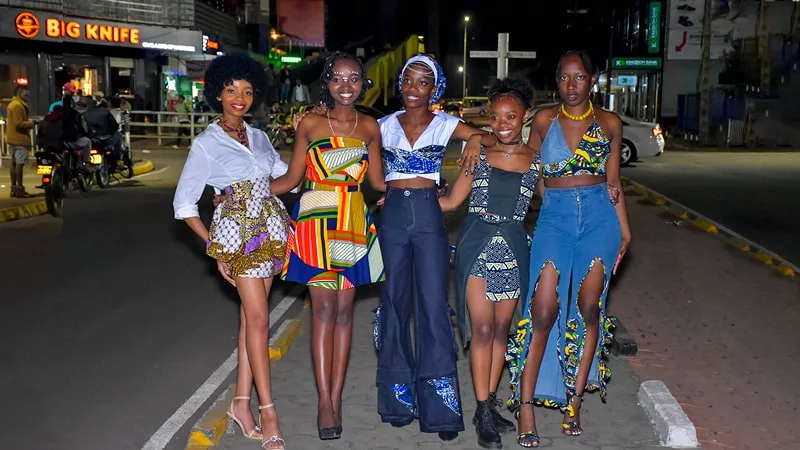
Nairobi, a city known for its vibrant culture and dynamic street fashion, is gearing up for an extraordinary event: Nairobi Street Fashion SN 2. This unique platform has gained recognition for successfully merging the worlds of art and fashion, culture and contour, and is set to take things up a notch with its second installment. Scheduled for Sunday, November 12, from 3 to 7 p.m. EAT, the event will be hosted at the Delight Tailoring Fashion & Design School, located in Nairobi Central, Nairobi County.

Nairobi Street Fashion Season 2 promises to be an unforgettable experience, bringing together a diverse group of fashion enthusiasts, designers, and artists. The theme of this edition is “The Royal Invite,” and it’s a celebration of the city’s creative spirit and the fusion of different styles and influences that shape Nairobi’s unique street fashion scene.

The Venue: Delight Tailoring Fashion & Design School

Delight Tailoring Fashion & Design School, the chosen venue for Nairobi Street Fashion SN 2, is an ideal setting for the event. Located in the heart of Nairobi Central, this school has been a hub of creativity and innovation in the world of fashion. The school is renowned for nurturing young talent, making it the perfect host for an event that aims to celebrate the city’s vibrant street fashion culture.

The Royal Invite: A Theme of Elegance and Creativity

“The Royal Invite” theme for Nairobi Street Fashion SN 2 is all about embracing the elegance and creativity that the streets of Nairobi exude. Attendees are encouraged to explore their inner royalty and showcase their unique interpretation of this theme through their fashion choices.

Whether it’s blending traditional African fabrics with modern designs, infusing a royal touch into everyday streetwear, or even experimenting with avant-garde outfits, the theme encourages participants to push the boundaries of fashion. In doing so, it celebrates the rich tapestry of styles that define Nairobi’s streets.

A Platform for Amateurs and Masters

One of the most remarkable aspects of Nairobi Street Fashion SN 2 is its inclusive nature. The event provides a platform for both amateur and experienced designers and artists to come together, share their creativity, and learn from one another. This fusion of perspectives leads to the birth of fresh ideas and the expansion of horizons.

Fashion enthusiasts, whether they’re young designers looking to make a mark in the industry or individuals who simply love expressing themselves through clothing, will find a welcoming space at this event. It’s an opportunity to learn, network, and, most importantly, to be inspired.

Wisdom in the Streets

The tagline of Nairobi Street Fashion SN 2, “Wisdom is in the streets,” highlights the fact that the streets of Nairobi are not only a place for fashion but also a source of inspiration, knowledge, and cultural exchange. Street fashion is an expression of individuality and collective identity, embodying the wisdom of the city’s people and their diverse backgrounds.

This event is a celebration of the melting pot that is in Nairobi, where traditional, modern, and global influences merge to create something entirely unique. It encourages attendees to seek out this wisdom in the streets and incorporate it into their own fashion choices.

Nairobi Street Fashion SN 2: The Royal Invite is a must-attend event for anyone interested in fashion, culture, and art. With a vibrant theme, an inclusive platform, and a rich cultural backdrop, this event promises to be a melting pot of creativity and inspiration.

As the streets of Nairobi continue to evolve and redefine fashion, this event serves as a testament to the city’s unique spirit and the limitless possibilities of self-expression through clothing. The streets of Nairobi have always been a place of wisdom, and on Sunday, November 12, that wisdom will come to life through the medium of fashion, making it an event not to be missed.

Content courtesy of Delight Tailoring Fashion & Design School, NFH

Africa Is Emerging As A New Source Of Inspiration For Global Fashion, According To Lexy Mojo-eyes.

Lexy Mojo-Eyes, an African fashion ambassador, is the president and chief executive officer of Legendary Gold, the organization that promoted Nigerian designers internationally prior to the year 2000.
He discussed his experience as a Nigerian game changer in the fashion industry in an interview with Sunday Sun.
Why are you keeping quiet about what you started in the Nigerian fashion scene since you are regarded as the dean of fashion shows in that country?

Yes, I played a significant role in developing Nigerian fashion. I gave the entire Nigerian fashion sector a new direction by encouraging them to use locally produced fabrics, accessories, and patterns in their manufacturing process.
I also encouraged Nigerians to start dressing locally, which has altered the country’s textile, apparel, and fashion industries to this day.

Since 2000, we have been bringing Nigerian designers to the catwalks of Paris, Milan, London, New York, Tokyo, Sydney, etc. after reorienting the local industry.
My focus shifted to extending my mission beyond simply Nigeria to the entirety of Africa after being appointed as the lone African to the Board of Governors of the World Fashion Organization in 2008.
I was also transferred by my assignment to several WFO offices worldwide.
Is this a sign that Legendary Gold has abandoned its first passion, fashion, in favor of other ventures?

In no way.
It is a way of life for Legendary Gold Limited.
Since 2010, we have expanded our business outside of Nigeria to include all of Africa.
This was particularly true when, in 2013, we inaugurated the Africa Fashion Reception (AFR) in Paris.

Our objective with AFR is to extend our services throughout Africa. We wanted to spread the success story of the fashion, textile, and apparel sector in Nigeria and the entirety of its value chain throughout all of Africa. And the African Union and UNESCO are working with us to put this into action.

What is the real purpose of the Africa Fashion Reception?
Africa Fashion Reception’s main objective is to increase the power of fashion as a tool for combating poverty in Africa by generating wealth through the empowerment of women and youths in the various fashion professions through training, capacity-building programs, workshops, and the establishment of micro, small/medium scale businesses, supporting the African Union Agenda 2063 and the Sustainable Development Goals of the United Nations. Two AFR events are planned per year. They are the African and world versions, which the African Union and UNESCO, respectively, in Paris, are hosting in Addis Abeba.

An all-African endeavor is the Africa Fashion Reception (AFR).
Every year, under the proud theme “Africa is the New Inspiration of Global Fashion,” the AFR brings together top dignitaries from all over Africa, including ministers, ambassadors, media, textile and apparel manufacturers, retailers, wholesalers, buyers, fashion designers, models, and other industry professionals. So, instead of switching to other businesses during the past 15 years, we have simply increased our activities while reducing them in Nigeria.

What significance will your new initiative, “Africa Celebrates,” have for Africa, please?
Our newest pan-African event is called Africa Celebrates. It was launched in 2021 with participation from 18 African nations.
While more nations are participating this year than there were last, 32 African nations did so last year.
Africa celebrates its business, technology, culture, and heritage.
“Achieving African Integration through Art, Culture, Heritage & Business Leveraging on AFCFTA Implementation” is the subject of Africa Celebrates 2023. At the headquarters of the African Union in Addis Abeba, Africa Celebrates will take place in October of this year.

What has sustained you during your years as Lexy?
As long as God allows me life, I will be zealous and enthusiastic about positively empowering and inspiring the next generation of African adolescents with the ideas of pan-Africanism.

Content courtesy Sun News Online & NFH

Kibera Fashion Week: Kenya’s Largest Urban Slum Experiences Fashion Week

Kibera Fashion Week: The Hits Kenya’s Largest Urban Slum, Overlooking the rusted tin roofs of Kibera, the largest urban slum in the Kenyan capital, towering models march down a three-meter (10-foot) high runway.
In the center of the vast area, Kibera Fashion Week is taking place for the second time, and the venue is filled.
On Saturday, hundreds of people from Kibera and other parts of the city watched the varied collections float by for six hours, punctuated by pop music performances.
The designer Avido, who debuted the first show last year, claims that Kibera is “full of style.”
The 27-year-old, whose real name is David Ochieng, claims that many don’t see it because they associate Kibera with post-election violence, prostitution, and drug usage.

“We want to demonstrate that this place has style and innovation. Opportunities are what we lack here. Avido was raised in Kibera, a city of around 250,000 people, where he currently works.
Global artists like Bruno Mars and Beyonce have been drawn to his designs.

The event has brought together 11 ideas from 376 candidates with a wide variety of styles employing cotton, jute, wool, pearls, and even metal. It boasts a range of relationships with the Goethe Institute, the European Union, Nairobi Design, and the Masai Mbili group.
A “Mad Max” post-apocalyptic aesthetic was chosen by designer Pius Ochieng, who is not related to Avido.

The 26-year-old gathered scrap metal from streets and dumps, including computer motherboards, spark plugs, LED lighting, chains, and springs.
He created a 15 square meter piece illuminated with rose, green, and blue neons at home and set it in one of Kibera’s back alleys after sewing them onto clothing.
Helen Wanjiru, who was raised in Nairobi’s less-than-affluent Kawangware neighborhood, has huge pockets running the length of her garments, including the legs.

The 26-year-old, who switched from computer processing to fashion, added, “The pockets are big, but they are empty.”
“It is an analogy — a lot of youths in Kenya, they have education, they have ideas but they don’t get jobs because there is no opportunity.”

Unlike frequently staid Western events, Fashion Week is totally different. The predominantly young audience applauds the models loudly and saves a quiet welcome for the designers as they enter the runway.

The event gives local fashionistas an opportunity to showcase their talents, frequently by dressing extravagantly.
The haute-couture fashion world, however, is still far away in a nation where people are accustomed to wearing second-hand items and where pricey imports dominate the market.

Avido desires a change in it.
“Many people here have only seen fashion shows on TV,” he added. “We want to demonstrate to the public what fashion is.
“Parents and other people used to believe that art was not involved in fashion and design.

They used to believe that if you worked in the fashion and design industry, you were similar to a tailor, and if you worked in modeling, they might have thought you were a prostitute.

Violet Omulo, the project manager, claimed that she went to the exhibition “to chill, have fun, and discover upcoming designers.”African fashion is distinct and on the rise.
We must advertise it through such events to let people know that we are capable of being creative and that it is not just about Paris or Milan.

“Kenya, also in Africa in general, has talented designers,” she stated.
The above-mentioned content was not produced by the Barron’s news division. The AFP produced this article. Visit for additional details.

Content courtesy of Barrons, Kiber Fashion Week & NFH

Luxury Fashion Meets Athletic Performance: MCM And PUMA Hoops Score Big With Third Collaboration

MCM and PUMA Hoops’ third collaboration brings high-end fashion and athletic performance to the forefront.
The third and final drop of MCM and PUMA Hoops’ eagerly awaited collaboration for Autumn/Winter 2023 is now available for basketball fans who are fashion-forward.
With colorful ready-to-wear pieces and a show-stopping version of PUMA’s TRC Blaze Court Shoe that is sure to draw attention on and off the court, this collection promises to be a dazzling spin on sports classics.
The latest partnership celebrates a shared vision of freedom and expression through a movement for fashion-forward enthusiasts and sneakerheads.
It was inspired by the electric energy of the basketball lifestyle and hip-hop subculture.

The new PUMA x MCM provides unabashed patterns and opulent materials for a contemporary spin on vintage basketball styles.
The PUMA x MCM TRC Blaze Court Shoe, the All-Star of the lineup, is a real testament to the creative chemistry between these two venerable companies.
Its innovative aesthetics and high-performance qualities make it a must-have for sneaker fanatics and basketball aficionados alike.
Its design flawlessly combines MCM’s design codes and PUMA’s cutting-edge sports technology.
Additionally, the collection offers a variety of well-chosen apparel pieces with a cutting-edge aesthetic that will up your style game both on and off the court.

The PUMA x MCM collaboration has spared no effort in providing a whole lifestyle experience, from cozy knit shorts and tank tops to fashionable windbreakers, sweatpants, and jerseys.

Content courtesy of Urban LifeStyle SA & NFH 

African Fashion & Arts Award (AFAA) Stakeholders Encourage Intra-African Trade In The Fashion Industry

A better intra-African trade and economic partnership between African entrepreneurs in the fashion and arts sectors is being urged by stakeholders in the industry.

The African Fashion & Arts Award (AFAA) emphasizes the requirement that fashion and art creatives be empowered, honored, and recognized.
Over 65% of the 1.4 billion people in Africa are young people between the ages of 12 and 35, according to Mr. Kingsley Amako, founder and president of AFAA.
He also noted that fashion and the arts continue to be the most viable and possibly the creative industry vertical that generates the most revenue, which could significantly affect the GDP of the continent.

At a recent news conference in Abuja, Amako stated that the textile and clothing business continues to be the second largest revenue-generating sector in the world’s emerging nations, after agriculture, despite the continent’s priority shifting from oil to tech.
Speaking on the upcoming third anniversary of AFAA, which will take place in Abuja later in the year, Amako stated that focusing on fashion and art creatives is the best course of action.
The third anniversary of the AFAA is planned for the first three days of December 2023 at the Abuja Continental Hotel, while the East African Media Tour is slated for the sixth, tenth, and thirteenth days of October 2023, respectively, in Tanzania, Kenya, and Rwanda.

When questioned why the tour was taking place, Amako responded that it had been customary for the organization since 2021 in South Africa, 2022 in Cairo, Egypt, and 2023 in three (3) East African nations.
Amako expressed her gratitude to the sponsors of the AFAA 2023 and stated that the organization’s aim, vision, and motto are to empower people and celebrate their creativity.
“The appropriate level of knowledge and sensitization must be created for the necessary government, public, and private sector organizations to consider for investment in order to realize the Africa we envision.

The African Union, African Development Bank, AfCFTA, AFREXIMBANK, Bank of Industry, and a large number of other institutions have all expressed a strong interest in the creative industry. However, young businesspeople in the fashion and arts sectors appear to believe that this interest primarily applies to the music and film industries.
With “these Press conferences across Africa and the Award ceremony in December to encourage achievers in the fashion and arts industries and as a platform for utilizing the inherent talents among the millions of African creative youths,” he continued, the AFAA will change this narrative.

He listed the advantages of AFAA’s mission in Africa as encouraging talent development and skill acquisition for self-reliance, creating employment opportunities for the more than 13 million African graduates each year, boosting the continent’s GDP, luring foreign direct investments (FDIs), and fostering intra-African trade and business ties.

The organization also aims to influence changes in trade and distribution policies, aid in the empowerment of women and young people, advance world peace, persuade African youths to live in areas with little to no security threat, aid in the eradication of poverty by providing capacity-building training sessions through the AFAA masterclass and mentorship symposium, and promote export for foreign exchange.
In his summation, Amako noted that the fashion and arts sectors had been selected as the ones on the continent that employed the most women and young people and that finished the value chain from farms to finished garments.

In the next ten years, the global fashion market is predicted to triple, producing up to US$ 5 trillion yearly. Through the purchase of 19 billion items, the USA spends 284 billion dollars annually on fashion retail. At different points along the value chain, from design to production to marketing, the fashion sector presents a huge opportunity for Africa. The fashion and arts sectors have a great deal of potential to inspire and effect change in some of the most marginalized groups, particularly women and young people, and to advance structural change.
Recognizing the importance of contemporary technology, AFAA 2023 has thought about topics for the AFAA masterclass and mentoring symposia that involve integrating technology into the fashion and arts industries.

Content courtesy Voice Of Nigeria & NFH

African Fashion Show Brings African Designers Together

On September 23, Scard Media held a prestigious lifestyle event to honor regional African fashion designers.
At the Alberton Hellenic Community Centre in New Redruth, designers and fashionistas from many cultures gathered to display their incredible talent.
The stunning and eagerly anticipated lifestyle exhibition honored South African designers as well as the rest of the continent.
The event featured captivating presentations of various African clothing brands, live modeling, breathtaking performances, and plenty of fun activities honoring Africa.

“Since it’s Heritage Month, we decided to do something that would bring together African designers and the South African culture,” said Giscard Ngwama, director of ScardMedia.
Our designers came from all over Africa; some were from Zimbabwe, Mozambique, the DRC, and Nigeria. By recognizing our ancestry and variety, we are uniting Africans.

In addition to providing employment opportunities for locals, the well-attended event was sponsored by Lifestyle Property Group and backed by a number of other partners. Vinolia Mabele, Ms. United Nations International 2019, was also present.

Mbalenhle Vezi, the event’s organizer, claims that a lot of hard work paid off and made the event a huge success. She claimed that putting the concert together required at least three months.
“During the event, attendees also had a chance to network.
By hosting this concert in further African nations, we have our sights set on developing and increasing in the future.
We must break the cycle and become self-starters, she urged.

Content courtesy of Alberton Record & NFH

Victoria’s Secret Fashion Show Returns With Black Designers’ Designs On The Runway

After a five-year sabbatical, the Victoria’s Secret fashion show is making its eagerly awaited return and is now live on Amazon Prime.
The work of 20 exceptional creatives from thriving cities including Bogota, Lagos, London, and Tokyo will be featured in this year’s show, which spans a variety of industries including fashion, cinema, design, music, and the visual arts.
Bubu Ogisi, the creator of IAMSIGO and a fervent supporter of African fashion created by Africans in Africa, is one of the designers engaged. In addition to defying conventional notions of African companies, Ogisi’s collection for the event demonstrates her dedication to celebrating African ideologies, textiles, and manufacturing methods.

The show will prominently feature model Mayowa Nicholas, who went from being an accounting student to dazzling runways all over the world.
Mayowa, a native of Nigeria, never thought of making modeling her career.
Like many Black children in the nation, she was urged to prioritize her education and look for conventional employment. Mayowa, who was raised by a single mother, thought that studying accounting was a sensible way to ensure her financial security.
She was approached on the street to take part in a modeling competition with Elite Models, which caused her perspective to change.
She made the decision to compete despite feeling unqualified in comparison to experienced models, and she ultimately took first place.

This surprising triumph brought her a modeling contract in China, where she encountered prejudice and went through a culture shock. Nevertheless, Mayowa persisted, and she and 14 other girls were given contracts.
She made the painful decision to leave school and her family behind, traveled to Paris, and walked in Schiaparelli’s debut presentation during Couture Fashion Week.
After a while, Mayowa’s agency offered her the chance to try out for Victoria’s Secret while she was in New York. She initially declined out of fear, but the next year she jumped at the opportunity. She attempted to travel to China for the show but unfortunately ran into visa problems.

The next year, however, Mayowa had the pleasure of having her mother in New York to see her accomplishment in addition to getting the chance to walk the Victoria’s Secret show. It frequently happens that parents of people who work in creative industries can only fully appreciate their children’s work after seeing it for themselves.
Through group chats and social media, Mayowa’s mother happily informed loved ones about the accomplishments of her daughter.
At the beginning of her work, fashion designer Bubu Ogisi was passionate about studying fibers, materiality, and traditional methods.
She experienced growing up in several nations, including Nigeria, Ghana, and England, as well as going to school in Paris. She was particularly impressed by Nigerian weddings and festivals, which featured an abundance of textiles and materials.

Her exploration of fiber techniques, reading skills, and the real materiality of fabrics were all influenced by this encounter.
She was further exposed to the commonalities in these methods used in several nations, whether they are Anglophone, Francophone, or Portuguese-speaking, even though they go by different names while attending school in Ghana.
Ogisi found it fascinating to see how different weaving techniques are carried out, such as Asha key in Nigeria, kente in Ghana, and Heat kita in Ghana, in different ways and with individual variances.
Her work was shaped by her understanding of these parallels and differences, which allowed her to highlight the complex fiber research and the enchantment that can be made with one’s hands even in unnoticed locations.

Ancient, historical, and mythological tales are frequently the source of Bubu’s inspiration since she thinks that by recounting these tales, we may decolonize minds and introduce fresh perspectives. The world has frequently accepted some myths as true while ignoring others. Bubu uses language as a medium to fabricate stories that have not yet been spoken in order to shed light on them.
When contacted by Victoria’s Secret, Bubu initially chose not to reply but subsequently made up her mind to pick up the phone and speak with the entire team. When working with others, Bubu loves collaborative energies that are harmonious and in line with everyone engaged. Bubu was thrilled to have this opportunity to continue presenting a narrative to which she has been deeply devoted.

Bubu viewed this as an opportunity to tell Victoria’s Secret about her experiences, particularly in respect to the idea of Victoria and its association with legendary figures.
She wants to share the African myths and legends through her own culture, nation, and continent. Numerous studies have been done on the cosmological and mythical tales of Nigeria and other African nations.

The collection is influenced by Roman and Greek myths, with a special emphasis on the goddess Nike.
The purpose of Bubu is to present the tales of ten to eleven unisex deities, such as the God of War, the God of Space and Time, and the God of Water. The idea has been greatly influenced by the Nigerian-derived European Edo mythology.

The secret stone in the necklace serves as a representation of the goddess in the entire concept, which centers on exhibiting the feminine divine. Each deity is linked to particular substances, hues, and superpowers. locating and making the components needed to cross the continent.
Mayowa and Bubu have a history of collaboration; when she was 16 years old, Mayowa modeled for Bubu. For both of them, getting back in touch at age 25 was a pivotal and meaningful point in their professional relationship.
Hugging occurred occasionally throughout the process, demonstrating their close relationship.

Intricate styles that were genuinely one-of-a-kind and unlike anything Victoria’s Secret had done before were the outcome of Bubu’s concept for the project, which included hairstyles that paid reverence to the ancestors.

Content courtesy of Ebony & NFH 

African Fashion Spaces Introduces The Mother City To A New Era Of Fashion.

African Fashion Space entertained Capetonians at a fashion display on September 16.
In addition to magnificent surroundings, African Fashion Spaces Cape Town showed a blend of high fashion and culture as Sinchui and Fuata Moyo displayed their exquisite designs.

“The 16th September 2023 was an exciting prelude to what’s yet to happen over the next couple weeks as we rollout the few exhibition collaborations we have with some of the most exciting designers, brands, and platforms associated,” said Jay Kayembe, creative director and co-found of African Fashion Spaces (AFS).

It’s not a typical fashion show; it’s more like strolling through an outstanding art exhibition showcasing Africa’s incredible ability and creativity via its many varied cultural lenses. It’s never been about maintaining the status quo.
Both Sinchui and Fuata Moyo presented their collections in front of a crowd of fashion aficionados, designers, trendsetters, clients, partners, friends, and family while the stars twinkled above Table Mountain.

Sinchui opened the presentation by showcasing their “Everything in the Divine Time” collection, which was hip-hop-inspired.
Like Pharrell did when he turned his music into fashion, the urban cool ensembles with trendy jackets took the stage and revived the golden age of hip-hop.
The collection “ROOTS/ROUTES” by Fuata Moyo was all about commemorating South African ancestry.

Each piece of clothing served as a brushstroke, creating a clear picture of the harmony between our past and our present.
The exhibit demonstrated that we can be both proud of our past and enthusiastic about the future.

The day-night exhibition had the atmosphere of a New York Rooftop mixer but was held in Cape Town, South Africa, where Table Mountain served as a backdrop for the starry nighttime event. Fashion aficionados, designers, trendsetters, clients, partners, and friends and family of the two fashion collectives Sinchui & Fuata Moyo attended the fashion exhibition.
Everyone was anticipating two amazing fashion presentations that would completely change how the fashion world is presented today. It was like a gigantic fashion party.

Mixing street style and old-school hip-hop in the showcase (Show 1)
The first brand was Sinchui, which is renowned for its daring street flair and a hint of hip-hop nostalgia. Cool urban clothes were showcased on the runway, fusing current fashion trends with the essence of street style. In a similar way to how Pharrell incorporated his music into fashion, the models strutted down the rooftop runway while in a groove, reviving the golden age of hip-hop.
The music perfectly complemented the collection, making it an unreal experience.

The runway’s rooftop and mountain backdrop came to life with the music, heightening the excitement of the entire experience. Each ensemble seems to overflow with joy.

Show 2 of the Fuata Moyo Showcase: Celebrating Our History and Dreams
Fuata Moyo presented a compilation titled “ROOTS/ROUTES” after that. It seemed as though we were staring into a history that was still present. ‘ROOTS’ was all about paying homage to our roots and honoring our family, home, and origins, but ‘ROUTES’ was about forging ahead and chasing huge dreams.

The runway resembled a wonderful scene from a Harry Potter novel from Wakanda, yet it was set in Cape Town and told stories of African culture and aspirations.
Each piece of clothing served as a brushstroke, illuminating the harmony between our past and our voyage into the future.
The exhibit demonstrated that we can be both proud of our past and enthusiastic about the future.

Content courtesy of IOL, Urban Lifestyle SA & NFH


Thebe Magugu, A South African Fashion Designer, Is Honored During The 11th Annual First Ladies Luncheon

Thebe Magugu is one of South Africa’s top emerging stars in the field of fashion design.
The Johannesburg-based, 30-year-old designer made history in 2019 when he became the first South African to ever win the renowned LVMH Young Fashion Designer Prize.

This week in New York City, Fashion 4 Development honored him for his first visit to the country. He received the Franca Sozzani Award for 2023 at the First Ladies Luncheon, which was held in conjunction with the 78th General Assembly of the United Nations.

The “Mother & Child” series, which consists of eight costumes dedicated to celebrating South African tribes and traditions, is the name of the collection he displayed during the luncheon held at 583 Park Avenue.
The design of each outfit features a mother carrying her kid while dressed in the traditional attire of a different South African ethnic group.
The Venda Mother & Child Dress honors the Southern African Bantu people who are primarily found close to the South African-Zimbabwean border and the Swati Mother & Child Dress is a Bohemian-style moss crepe dress with a shirt collar, plunging neckline, and balloon sleeves.

The Zulu Mother & Child Dress, which is a rich maroon color, and the Tsonga Mother & Child Dress, which is red and blue, are also included in the collection.

According to him, South Africa has eight important tribes, and he wanted to honor them all. “I reinterpreted each culture by considering how mothers and children relate to one another. Depending on the culture, each outfit depicts a Madonna or mother figure cradling a kid.
It’s wonderful to see South African’ culture represented.
Coming from South Africa, a nation defined by indigenous customs, colonialism, apartheid, and its post-apartheid age, the fashion we see leaving the country, especially to Magugu, is being influenced by the country’s past, present, and future.

Being there is incredibly validating, he added. The Franca Sozzani Award feels very appropriate for me because I created my business with the intention of sharing history, cultures, and tales that may otherwise be lost to time.
I make capsules to preserve that for each one. Aside from being attractive, the fashion industry is also informative and educational.

Magugu’s ethical, eco-friendly clothing line is renowned for its recycled materials and storytelling as well as for its ethics. African Studies, the name of his spring/summer 2019 collection, was a commentary on the effects of colonialism on African culture.
It featured fabrics from Africa, such as kente and shweshwe, and patterns inspired by old African postcards.

Additionally, the designer has recently worked with community organizations to support African voices in the fashion business and train aspiring fashion designers as a way of giving back.

“When I started my brand in 2016, it was to pay homage, create an encyclopedia to the people and cultures that I don’t want to be forgotten,” the man added. These histories don’t lead to anything.
Fashion serves as a communication tool to inspire and transform, which is what makes it so brilliant.
The lunch was given in honor of Her Majesty Queen Elizabeth II on the one-year anniversary of her funeral in collaboration with the Queen’s Commonwealth Trust.

The VIP luncheon honored honorees like Hugo Boss CEO Daniel Grieder, artist Vuslat Sabanchi, Martina Cheung, president of S&P Global Market Intelligence, and Jean Shafiroff, who received the International Philanthropy Award from New York Assembly member Rebecca Seawright, who dubbed her “New York’s First Lady of Philanthropy.”
The event had a green carpet to honor sustainability in fashion.

As the goodwill ambassador for F4D, Naila Chowdhury, director of social impact and innovation at UC San Diego, was announced. The luncheon has previously recognized Victoria Beckham, Naomi Campbell, Donna Karan, Iman, and other influential figures in fashion.

Evie Evangelou, the founder of Fashion 4 Development, and Princess Corinna zu Sayn-Wittgenstein served as the event’s co-hosts.
The Queen’s preferred bread-and-butter pudding recipe, created by her personal chef Anton Mosimann, was presented this year. With a reputation for dressing Jay-Z and Missy Elliott, costume designer June Ambrose, Twin Peaks actress Amy Shiels, Laine Siklos, Marcelo Carvalho de Andrade, Dr. Ines Hernandez, Chaz Dean, Sofie Mahlkvist, Janna Bullock, Daniel Stock, Park Magazine publisher Christopher Pape, and artist Bonnie Lautenberg, the widow of the late Senator Frank Lautenberg were among the notable attendees.
Magugu remarked, “I think that Franca Sozzani was such a trailblazer, look at all the things she has done. The All Black issue of Vogue Italy from 2008 included over 100 pages of black models on the cover.

He recalled that at the time, representation was practically nonexistent. I am privileged to be compared to her as a changemaker. She influenced fashion in a variety of ways, particularly when it came to diversity.

The lunch was held in conjunction with The 3rd Annual Sustainable Goals Banquet on Monday evening, which honored Lazarus Chakwera, the president of Malawi, Joseph Hernandez, the founder of Bluewater Biotech, Jasmina Bojic, the founder of UNAFF, the United Nations Association Film Festival, Dr. Ramon Tallaj, the founder and chairman of SOMOS Community Care, and Ingmar Rentzhog, the CEO and founder of WDHT.
An emotional address by Italian model Bianca Balti served as part of the event’s tribute to the late Franca Sozzani, Editor in Chief of Italian Vogue.

The prize, according to Dr. Tallaj, serves as a reminder of the significance of solving urgent social concerns of our time. He remarked this during the event. “We have the power to weave together threads of compassion, innovation, sustainable development, and equitable healthcare for all,” he declared.

In 2016, Magugu launched the high-end South African fashion label bearing his name.
The vibrant ready-to-wear collections are constructed from recycled materials and frequently feature motifs that are inspired by the history of Africa, but with a modern twist to make them relevant.
When the designer’s debut line, Geology, was highlighted in Vogue Italia in 2017, it was definitely a significant break.

Sara Sozzani Maino, the founder of Vogue Talents, the creative director of the Sozzani Foundation, and a creative advisor to Conde Nast, gave Magugu the Franca Sozzani Award.

Sozzani remarked at the occasion that Magugu “has a great vision for his creativity,” “empowers women, and brings the cultural traditions of Africa to the world.”
Magugu asserted live on stage that “People only need to feel seen once.”
The designer revealed that he was raised in a rural village and that his early exposure to the world of fashion came from watching MTV programs and music videos.

“I was rejected by a prestigious fashion school at a young age, and I studied fashion in South Africa,” he explained. “In hindsight, it was a blessing in disguise because being close to the visual cues to symbols I grew up with made me privy to such beautiful inspiration.”

Content courtesy of Forbes Africa & NFH


Meet The 15 African Fashion Brands Represented At SS24 London Fashion Week

One of the biggest fashion events in the world continues to be New York Fashion Week.
The twice-yearly exposition (held in February and September) serves as a big platform for showcasing the top international and American designers as well as a hot conduit into the American market. African designers have occasionally surfaced during NYFW, showcasing their collections on the runway.

Nigerian Maki Oh made her debut in 2012, while in 2014, South African and Nigerian industry icons David Tlale and Deola Sagoe both made their debuts. However, the watershed event in the late aughts is to thank for these designer debuts.
A group of African fashion designers attacked New York City in 2009.

African businesses Stoned Cherrie (South Africa), Xuly Bet (Mali), Momo Couture (Nigeria), and Tiffany Amber (Nigeria) were welcomed in the Bryant Park tents as part of the African Fashion Collective for the first time in NYFW’s history.
The “Obama Effect” was referred to by the general public in the fashion industry after Barack Obama became America’s first Black president a month earlier.

Through their presentations, these designers refuted stereotypical perceptions of Africa and highlighted the ingenuity and craftsmanship the region had to offer. There will never be another NYFW.
Since then, African designers have made progress. Nigeria’s Head of State Tia Adeola had been on the February program for NYFW’s Fall 2023 season.

Both brands are returning this September, the latter in the lineup for the eighth outing of The Black in Fashion Council Discovery Showroom.

1. Abigail Ajobi
Abigail Ajobi, the self-named brand’s creative director and fashion designer, is of Nigerian heritage.
The brand is a high-end streetwear company that uses exclusive and scarce materials to make its exquisite products. Additionally, by offering convertible styles that may be worn in different ways, it supports sustainability.

several methods. Abigail Ajobi has been in business since 2020. She has presented her designs at London Fashion Week and Lagos Fashion Week events and she has been featured in a number of periodicals. The collection’s profits are given to charities of the brand’s choosing.

The distinct and fashionable forms of Nollywood Y2k fashion served as the inspiration for Abigail Ajobi’s SS24 collection Anti-Muse.

2. Sukeina
Omar Salam chose to create Sukeina in 2012 after spending two years working at Christain Lacroix and working for French fashion designer Madame Sonia Rykiel in Paris.
The Senegalese designer with roots in New York, who studied fashion design at Parsons School of Design, has created a sartorial extravaganza with his womenswear line.

His distinctive designs for the brand include sculptural gowns, elaborate weaving, and dramatic forms.
Tribal elements from the continent have also affected his collections. His Fall 2022 collection incorporated the vibrant patterns of Bantu clothing, which can be seen in Eastern, Central, and Southern Africa.
2020 saw the launch of Sukeina, an origami dress, flapper-style mesh, and sheer looks collection.

3. Kílèntár
Klèntár is a Nigerian contemporary womenswear brand with a whimsical and feminine look that was founded by Michelle Adepoju in 2019.
Adepoju had at first begun by purchasing clothing to sell online.
She would purchase clothing items from her neighborhood thrift shop or charity shop, such as crop tops and blouses, and tastefully adorn them.

African sartorial features like cowries, indigo dyeing (adire), and hand weaving are also infused into the brand’s aesthetic. One of the newest labels in the NYFW lineup of African designers, Klèntár will exhibit alongside Korlekie, Onalaja, Fumi the Label, and Tia Adeola under the auspices of The Black in Fashion Council Discovery Showroom.

4. Dumebi
Barbara Biosah, a British-Nigerian fashion designer, founded the upscale womenswear line Dumebi, which specializes in handcrafted couture apparel, shoes, and accessories. Barbara’s designs are influenced by African and European Renaissance art with a British modern twist and a Parisian flair because of her British and Nigerian roots.
The brand wants to bring back custom-made clothing crafted with high-quality materials and creative ideas while cutting back on excessive mass production.

5. Korlekie
Beatrice Korlekie Newman, who graduated with a BA in fashion design from De Montfort University in Leicester, started Korlekie in 2013 from her Peckham, London, bedroom.
For the ladies in her local church, the British-Ghanaian designer created one-of-a-kind pieces in African textiles. Rita Ora, Anna Freil, Ellie Goulding, and Alesha Dixon are just a few of the A-listers who have worn the brand’s fashionable, upscale knitwear and crochet.
Further drawing inspiration from Ghanaian traditional craft, Korlekie combines luxurious materials with sensuality for the contemporary woman.

6. Feben
Feben’s collection is influenced by the nomadism of her personal identity as well as her Ethiopian ancestry, North Korean, and Swedish upbringing.
Vemmenby collaborated with Beyoncé to design and style costumes for the Brown Skin Girl music video after completing her MA in fashion at Central Saint Martins as an Isabella Blow scholar.
The visual codes of Black life from all over the world are explored via a surrealistic lens in Feben’s works.

7. Onalaja 
Onalaja is one of a number of contemporary Nigerian businesses that prioritize luxury and wearability in their design aesthetic. Kanyinsola Onalaja, a Nigerian-born fashion designer who founded her company in 2014, obtained her BA in Fashion Design from London’s Istituto Marangoni.

After that, she traveled to Rome to study 3D pattern cutting at the Academia di Costume E Moda. Onalaja creates expertly designed clothing for women with contrasting textures and patterns utilizing high-end materials. Particularly the coral red and the elaborate embroidery that represents the designer’s Bini origin, these patterns are masterpieces.

The bodycon dresses from this brand are also size-inclusive, fitting a variety of body types.
This is why the company’s Zusi dress, which celebrates the feminine body in all its variety, has been a success. Indiyah Polack, a former Love Island contestant, and Kandi are two celebs who have been seen sporting it.

8. Labrum London
Foday Dumbuya, the creative director and founder of Labrum, found inspiration while growing up and learning in London, Cyprus, and Sierra Leone.
A contemporary menswear company’s mission is to “tell the untold stories of West Africa to help bridge the gap between Western and West African culture.”
The distinctive features of British tailoring are combined with West African inspirations to create Labrum’s unique sense of style.
In honor of his Sierra Leonean heritage, his SS24 collection, NOMOLI ODYSSEY, was shown at the Four Seasons hotel in Trinity Square.
A number of Labrum’s creations featured depictions of the Nomoli figure, a native of Sierra Leone and a symbol of fertility and harvest.

9. Fumi the Label
Fumi the Label is a ready-to-wear womenswear line created by Toronto-based designer Fumi Egbon that emphasizes comfort, grace, and sophistication. The brand, which debuted in 2016, specializes in vibrant colors, breathable clothing, and the possibility of wardrobe-building styling.
One example is the Naomi dress, which may be combined with thigh-high boots, denim, or jeans. The brand will reach a new milestone when it exhibits at NYFW.

10. Tolu Coker
After graduating from Central Saint Martins, British-Nigerian Multi-Disciplinary Artist Tolu Coker created her own brand in 2018.
Her work, which is heavily influenced by identity politics and social environments, uses fashion as a platform to promote social change.
Her 2019 collection honored the lives of women who had survived being raped as a result of war atrocities in the Democratic Republic of the Congo.
The earnings from a portion of her collection were donated to the charity “Choose Love” in 2020, which assists minority populations, refugees, and immigrants both locally and internationally.

Irapada, the SS24 collection by Tolu Coker, is inspired by her Yoruba heritage.
Through the prism of her own family’s relationship to both religion and fashion, she used her works to explore how Yoruba spirituality is seen.

11. Victor Anate
Despite the fact that Nigerian designer Victor Anate won’t present his edgy womenswear line Vicnate at NYFW, he has contributed his talent as a co-collaborator by creating Naomi Campbell’s debut collection for Pretty Little Thing.
The renowned supermodel tapped Anate and Brooklyn-based Edvin Thompson of Theophilio, both of Jamaican descent, to create her line for the fast-fashion behemoth.
It launched as a runway show on September 5 to kick off NYFW, showcasing a 70-piece collection of outerwear, mesh dresses, sharp pantsuits, and more. Now that the project is finished, it joins Anate’s impressively expanding and exciting portfolio.

12. Tia Adeola
The Tia Adeola line was previously presented at NYFW. The brand’s launch, the Autumn/Winter 2020 collection, brought models down the catwalk wearing its recognizable sheer and ruffles. They were seductive, extremely provocative, and were modeled after Renaissance-era dress regulations.

Tia Adeola, a 2019 Parsons School of Design alumna who was born in New York and raised in London, has established herself as an intriguing new designer and amassed a cult following that includes Gigi Hadid, Flo Milli, SZA, and others.

13. Studio 189
OkayAfrica attended Studio 189’s debut spring runway show in 2019, which featured a number of notable guests like Quincy Brown, Fantasia, Justin Skye, Naturi Naughton, and Ayo Tometi (formerly Opal Tometi).
We also learned how the brand’s design principles combine cutting-edge tailoring with ancient West African crafts like indigo dyeing, hand-batik, and weaving.

The sustainable brand, which was established in 2013 by Abrima Erwiah and the actress Rosario Dawson, is propelled by an artisanal pulse and collaborates with regional artisans in a way that highlights their abilities and gives them employment opportunities. Studio 189 is more than simply a brand; it currently conducts business in Accra and the United States. Additionally, it is a social enterprise that finances numerous initiatives started by locals both in the U.S. and on the continent.

14. Head of State
Head of State wasn’t yet a fully developed brand in 2016 when Taofeek Abijako founded it.
His goal was to earn money to build a water infrastructure in his area while still a senior in secondary school in Nigeria.
Fast forward to 2017, when his brand’s spring/summer 2018 collection made him the youngest debutant at NYFW. He wasn’t even 20.

Taofeek, who is now based in Brooklyn, New York (his parents had won the lotto in 2010), utilizes the Head of State as a bridge to connect cultures in Nigeria and the United States.
The brand has focused on striking a balance between the two through their clothing.
Traditional Nigerian design features like silhouettes and embroidery are executed with a contemporary twist.

15. Oshobor
Oshobor was founded in 2020 and is the creation of Peter Oshobor. It combines slow fashion, traditional craft, and cultural tales.
The brand expanded into the 2022 Green Access program, Lagos Fashion Week’s platform for talent identification.
It further highlighted the brand’s zero-waste philosophy by showcasing a small number of exquisite outfits made from waste yarn and offcuts.

Oshobor will visit New York for their Carnaval Couture NYFW event thanks to a collaboration with Upscale Magazine and Art Meso, the art and fashion exhibition that highlights up-and-coming designers and creatives from all around the world.

Content courtesy of Culture Custodian, Okay Africa & NFH

Fée Uhssi Presents: The African Fashion & Textiles Experience

A Series Of Workshops Exploring The Rich And Diverse History Of African Fashion.
By Tara Robinson.
The African Fashion & Textiles Experience will be presented by Wandsworth-based artist Fée Uhssi as a part of Wandsworth Council’s Black History 365. A six-monthly series of informative and engaging creative workshops examining African art and textile history will begin in September 2023.

French-Nigerian fashion and textile designer Fée Uhssi also practices art color therapy. Her workshops were developed, hosted, and delivered by Fée as a passion project.
They will delve into African history, artistic methods, the significance of textiles in Afro-Caribbean and African cultures, as well as the development of traditional to contemporary African attire.
They will also look at how modern European fashions were influenced by African textiles and clothing, as well as how fashion and history interact.

Workshops
The first session, which will focus exclusively on fashion history and include an African fashion creation workshop in honor of Fashion Week, will be held on Saturday, September 23.
In honor of National Black History Month, the second session will examine the unique evolution of African textiles over time.
The third session will be devoted to the symbolism found in African textiles as well as the entwined history of textiles and communication stretching from ancient Africa to the Americas and the Caribbean.
Fée will be teaching the traditional African wrapping methods as well as Furoshiki, the traditional Japanese gift-wrapping technique, in the fourth session.

In the fifth workshop, Fée will lead a discussion on color therapy and its African roots, leading attendees on a journey to understand the significance of color and acquire fresh color styling advice.
The last session will be devoted to fashion photography, recognizing the historical contributions of African and Black photographers to the fashion business.

With the encouragement of a small payment, all workshops are free.
You can purchase tickets by visiting the Eventbrite website HERE

Content courtesy Time and Leisure & NFH

Ad