Monday 26th of October 2026

Nairobi, Kenya

The Twyg Sustainable Fashion Awards 2020 Finalists Announced

Twyg has announced the finalists of its Sustainable Fashion Awards for 2020. The annual awards celebrate South African designers leading sustainable, ethical, circular and regenerative practices in the fashion industry.

The designers recognised are intentionally improving fashion’s relationship with nature and people and reflect that fashion can be at the forefront of positive ethical, social and environmental change.
The winners of this year’s awards will be announced on 19 November 2020.

Judging process
The Twyg Sustainable Fashion Awards 2020 judging panel includes content creator Kelly Fung; Cyril Naicker, national co-ordinator of Fashion Revolution; Aaniyah Omardien, founder of The Beach Co-op; Desiree Smal, vice dean Faculty of Art, Design and Architecture at the University of Johannesburg; and Fezile Mdletshe-Mkhize, founder and director of Fezile Fashion Academy.

The judges selected three finalists in each of the Accessories, Trans-seasonal, Nicholas Coutts, Student, Retail and Influencer categories. A fourth finalist was included in the Innovative Design and Materials categories.

The Changemaker Award was not open for nominations. Instead, winners of the Accessory, Innovative Design and Materials, Nicholas Coutts, Trans-seasonal and Student categories will be judged against the criteria set for the Changemaker Award. This category is supported by Country Road which has sponsored R100,000 in prize money to the winner. Country Road’s head designer Maria Rinaldi-Cant will join the panel for the judging of this category.

Twyg consulted WWF South Africa on the criteria for the categories, and the rigorous two-day judging process was independently audited by attorney Elisabeth Makumbi.

2020 finalists
Innovative Design and Materials Award

• Anmari Honiball
• Lara Klawikowski
• Sealand Gear
• The Sewing Café

This award seeks to recognise a designer or brand who uses techniques that minimise textile waste through innovative pattern cutting, the use of pre- and post-consumer fabric waste, and / or reconstruction techniques. The award also seeks to recognise a commitment to using sustainable fabrics in a collection.

Trans-seasonal Fashion Award

• African Renaissance Designs
• Fields
• Tshepo Jeans

This award recognises a designer, brand or collection that promotes trans-seasonal and versatile style. It rewards quality garments whose design aspires to be timeless and which are made to last. This category also recognises brands that remain invested in garments after their sale, for example, through the provision of lifetime guarantees or repair services.

Accessory Award

• Ivy Grace
• Matsidiso
• The Wren Designs

This award recognises an accessory or accessory brand which implements ethical labour practices, limits toxic chemicals and uses sustainable materials to create a quality item and considers end-of-life. Ideally it should be made of compostable materials, but, if not, it should be made using recyclable or recycled materials.

Retail Award

• Chic Mamas Can Do
• Convoy
• Mungo

This award recognises a retailer or a retailing initiative that enhances sustainability, including pre-loved/gently worn, “swop shops”, garment rental, and similar activities. The award is also open to retailers who support local producers, and sustainable design and manufacturing.

Student Award

• KQ_Made
• Loskop
• Vanklan

This award goes to a student who has produced a garment or collection that addresses the challenges of sustainability in fashion in the most innovative, beautiful and practical way.

Nicholas Coutts Award

• Beagle & Basset
• The Seen Collective
• Viviers Studio

This award recognises a designer who uses artisanal craft techniques such as weaving, embroidering or botanical dyeing to make fashion that foregrounds, celebrates and values the skills of the person who makes the garment.

Influencer Award

• Nomfundo Liyanna Basini
• Yasmin Furmie
• Zolani Mahola

This award recognises a personality who has actively promoted sustainable fashion over the last 12 months and who has sparked relevant conversations. On social media and other platforms, the influencer has explained sustainable issues factually and has cautioned against unsustainable fashion habits. The influencer supports conscious brands while promoting the Rs (reduce, reuse, recycle).

Positive design practices and social impact
“The judges’ decisions emphasise exciting directions in fashion such as the made-to-order manufacturing model, trans-seasonal clothing, the upcycling of plastic and textile waste, and increasing the use of handcraft and natural dyes. The attention to collaboration and the healing of our environment is inspiring,” commented Twyg founder and director Jackie May.

In addition to the design practices, the judges appreciated social impact through upskilling and working in collectives.

“We would like to thank the designers and the members of the public for the nominations. And finally from my team and I, congratulations to all the finalists!” said May.

The winners will be announced at a small event (which will be livestreamed) co-hosted with the textile recycling company, Rewoven on Thursday, 19 November 2020 in Cape Town.

Content courtesy of TWYG, Biz Community & Nairobi fashion hub 

Haute Afrika


Haute Afrika, (Haute “meaning high standards, class, and elegance in French”),  is an Award winning and internationally nominated contemporary African print brand founded in 2016 by Gracia Bampile. Her aim was to promote African sophistication and elegance by catering for a growing continent.

The brand embodies a modern culture and celebrates Africa’s heritage and shares the story one print at a time. Motivated to break societies stereotypes by infusing art through fashion and sharing the ethnic culture of Africans.

Haute Afrika brand is colorful, significant and explores the African roots and uniqueness that are engraved in Africa as part of its identity. Some of our textiles and fabrics are from different African nations and others are specifically created and printed by Haute Afrika to celebrate Africa as a whole as well as to cater for a more diverse audience by taking Africa to the world.

They believe that clothing can empower confidence, evoke topics and promote Africanism because “when you look good,you feel good.”

In the world of pop culture Haute Afrika maintains African print as its trademark and stand firm in breaking boundaries in order to merge cultures of artistic mindsets together.

They seek to make the availability of quality ready to wear outfits and the conceptualizing of custom made outfits a breeze. A lot of craftsmanship is actually put into every single outfit we make.

Haute Afrika strongly believe there is something about bold African prints that everyone can get to enjoy. Based in South Africa, our clothing has found its way on prominent people in different industries as well as celebrities.

Their  emphasis is and will forever be to give you unique, enjoyable and quality clothing that you will treasure forever.

Not many can say they discovered their ‘why’ before they turned 10. I would like to introduce you to, and request an interview with, Gracia Bampile a fashion entrepreneur who has a beautiful story to tell and is about to release a new HOT collection.

This formidable entrepreneur, who holds an International Relations Degree, has no formal fashion training background, yet she has inserted herself as a trendsetter in an industry booming with talent. She has dressed the likes of Boity Thulo, Maps Maponyane, Mihlali Ndamase, Amanda Black, Thabsie,Zamani Mbatha, Kwesta and many more.

Her latest collection is set to wow fashion lovers at this year’s fashion shows and catch the eye of influencers and the world press. She has already caught the eye of BBC World News and Vogue.

Born in July 1991, on her birthday, Gracia Bampile had what Oprah calls an “Aha moment”.  Her parents had bought her what she calls an ugly African print dress to celebrate.  It was so bad that it inspired her to start making clothes of her own at just eight years old.

https://www.instagram.com/p/CCYfPgVHWI2/?utm_source=ig_embed

Gracia spent hours watching her seamstress grandmother make clothes until she mastered the art. As she grew older, she became concerned about how people didn’t like to wear African print designs especially as day to day wear. She says people had a perception that they can only wear African print clothes when attending events. So, she took it upon herself to disrupt the norm.

In 2015, she founded Haute Afrika, the home of her day to day African print designs made to change the narrative around African fashion.  She travels the continent in the hunt for high quality materials to create designs inspired by Africa’s history, heritage and stories for Africans from Cape to Cairo.

Content courtesy of Haute Afrika & Nairobi fashion hub 

Couture Africa Style Awards 2020 Full List of Nominees

The list for the 2020 Couture Africa Style Awards is out and heavy weights in the media, music, film and corporate industry will be battling for the prestigious Awards in different Categories.

Citizen TV Swahili news anchor Lulu Hassan has been nominated in the, Most Stylish TV and Radio personality (Female) Category, where she will be competing with; NTV’s Tracey Wanjiru, Amina Abdi Rabar, Talia Oyando, Beatrice Marshall and Jane Ngoiri.

The Male Category for Most Stylish TV and Radio Personality will see KTN’s Jamal Gaddafi face-off with Michael Gitonga, James Smart, Muthee Kiengei, MC Jessy and Miano Muchiri.

The voting process is currently ongoing via castyleawards.com under the slogan “…because life is too short to wear boring clothes”.

The battle for the Most Stylish Entertainer (Male) has been narrowed down to; King Kaka, Otile Brown, Lenana Kariba, Willy Paul, Chimano and Khaligraph Jones.

Full List of Nominees & Categories:
Most Stylish Entertainer (Famale)

Akothee
Fena Gitu
Catherine Kamau
Brenda Wairimu
Teacher Wanjiku
Muthoni Drummer Queen

Most Stylish Content Creator

Joy Kendi
Maureen Waititu
Maxine Wambosha
Farhana Oberson
Nyawira Mumenya
Fashionable Stepmum

Most Stylish Content Creator
Chef Ali Mandhri
Vinnie O
Eric Omondi
Muriuki Kagiri
Eli Mwenda
Mulanda Kombo

Most Stylish Sports People

Emily Muteti
Evelyn Okinyi
Sabrina Simadar
Hellen Obiri
Naomi Wafula
Janet Wanja

Most Stylish Sports People

David Rudisha
Billie Odhiambo
Eliud Kipchoge
Ronald Okoth
MacDonald Mariga
George Manangoi

Most Stylish Public servant

Nadia Ahmed
Judge Mumbi Ngugi
Hon. Gladys Shollei
Achie Ojany Alai
Hon. Naisula Lesuuda
Hon. Amina Mohamed

Most Stylish Public servant

Hon. Ababu Namwamba
Sen. Joshnson Sakaja
Gov. Hassan Joho
Hon. Otiende Omollo
Hon. Abdulswamad Shariff
Hon. Najib Balala

Most Stylish Person of the year

Julie Gichuru
Catherine Kamau
Sylvia Mulinge
Hon. Joyce Lay
Diana Opoti
Sonal Maherali

Most Stylish Person of the year

Sir. Charles Njonjo
Zeddie Loky
James Maina
Martin Keino
Vinnie O
King Kaka

Most Stylish Entrepreneur

Michelle Ntalami
Carol Kinoti
Rita Muchiri
Dr. Jennifer Riria
Jennifer Barasa

Most Stylish Corporate (Famale)

Rabecca Miano
Carol Ndungu
Beth Muthui
Brenda Mbathi
Sheila M’Mbijiwe
Dr. Betty Radier

Most Stylish Corporate (Male)

Kris Senanu
Joshua Oigara
Captain Ronald Karauri
Jimi Kariuki
Geoffrey Odundo
Dr. David Wachira

Most Stylish TV and Radio Personality (Female)

Amina Abdi
Beatrice Marshall
Jane Ngoiri
Lulu Hassan
Talia Oyando
Tracy Wanjiru

Most Stylish TV and Radio Personality (Male)

Jamal Gadafi
James Samart
Mc Jessy
Michael Gitonga
Miano Muchiri
Muthee Kiengei

The People’s Choice Award (Female)

Ms Fawwie
Christine Obiero
Lynne Wangui

The People’s Choice Award (Male)

Kiptala
Amar Jonathan
Mike Mwaura

Content courtesy of Couture Africa Limited & Nairobi Fashion hub

SA Fashion Week Goes Digital

In the wake of #CoronaVirus and being confined at home, all prospects of enjoying the glitz and glam that is SA Fashion Week soon became a dream more than a reality.

It is the event on my calendar that I anxiously await, relishing in the fashion from both new-comers and well known designers.  For the last 3 years, I managed to have the perfect Birdseye view of the best in the business, and I was sure that 2020 wouldn’t disappoint.

That was until Covid-19 hit our shores, harder than the new Versace release or a sale at Louis Vuitton (another pipe dream).

All prospects of the event, which will be celebrating it’s 21st year flew out of my social calendar, because you know, social distancing and no gatherings bigger than 100.  And let’s be honest, not even the hottest fashion is worth the risk of this pandemic.

Fashion Week is going ahead, but just a little differently this year.

In the words of Lucille Booyzen, the CEO of Fashion Week: Change, change, change. The thing we embrace and fear with equal measure.

The press release shed light on the recent speech by our President, and with that in mind the team at SAFW made a Plan B for the upcoming Spring/Summer 2020 showcase. And boy is it a plan. A climate-friendly, green-friendly, COVID-19 respectful, digital-only SA Fashion Week.  This will be the first of its kind, and it is both smart and bold.  Everything we expect from SAFW.

She went further to say, that this state of disaster has in fact paved the way for something unique and beautiful to happen. she goes on saying that it was the push they needed, as they have wanted to push change and the agenda.

Refreshing and relevant new stories from the designers will be told and the sponsors and other stakeholders will all be part of the bigger, global audience.

As the 23rd SAFW, this will indeed be the most important one, taking place 22 – 25 April 2020.

And just like that my excitement is restored.  I may not get the chance to dress-up and photo-op, but I can watch it digitally.

Content courtesy of Bloss & Nairobi fashion hub

SA Fashion Week hosts first digital collections

Thursday’s opening night of South African Fashion Week (SA Fashion Week) Twenty Twenty Digital Collections, which was the first virtual showcase, was unique and organised.

Even the way the models strutted their stuff on the ramp, which was set up in the parking lot of Mall of Africa, you could see that they were at ease.

Gert-Johan Coetzee was the first to exhibit his latest work titled “Kraal Couture”, a collection inspired by the farms.

With blue and black being the dominant colours, the collection consists of beaded cowl skirts, smart pants with cow prints, a peplum tulle skirt, and ball gowns, some made of plastic.

Under the Diamond Fibre Collections, Mmuso Maxwell, Judith Atelier and Lukhanyo Mdingi brought nostalgia to the runway.

Maxwell presented their “Imbokodo” collection, a range that seeks to challenge the narrative of a woman’s place in society, especially in the African culture.

Some of our favourite pieces from the collection include the forest green side pleat jacket, the asymmetrical olive wrap jacket and matching pants, wool-side mustard pleat dress and the spiral knitted dress made of kid mohair.

Atelier introduced the brand to the luxurious world of mohair, which plays a big part in this collection.

Titled “ I am because we are”, the range includes appliqué skirts and dresses, with red and blue being the dominant colours and sometimes fused to create purple pieces.

In collaboration with Ginger Maggie, they also presented their SS21 jewellery collection using fine details such as macrame tassels, copper rings, polymer clay and copper rods that have been combined to create a unique new range.

Lukhanyo Mdingi presented a monochrome collection, rich in brown. His statement pieces include a sleeveless bike jacket made of felted kid mohair and pure merino wool blend gilet. Titled “Relic”, the collection is an extension from his previous works.

“The collection is an extension from what we’ve created in the past. The true provenance of what we do is that we’re always looking at the essentials and we’re always looking at our archives and that stems from really trying to execute what good design means to us because that’s what inspired us,” said Mdingi.

The Research Unit followed with their “Transformative” collection. As a brand that usually focuses on handbags, they collaborated with handweavers and the beaders from Kids Positive to push boundaries.

About the collection that had lots of coding, Erin-Lee Peterson, the founder of the brand, said: “We tried to push the boundaries as much as we could. Not just make it look African or beaded, or weaved, but we created shorts out of the handwoven scarf. We took our beadwork and created morse-code out of it. The smiley face on one of the tops was made through thinking about African masks, such as the one that has the six eyes”.

The range also included micro sling bags, travelling bags, as well as beach bags.

Paying homage to the Indian culture, Etka Kalan of Ekta played with colour and geometric shapes to create unique patterns.

On the inspiration behind the collection, she said: “My latest collection is called ‘Who am I’? It’s an exploration of identity and how we see ourselves. If you look at each person, their environments, their family life, their ethnicity, as well as the country where they live in, all plays a specific role in how they see themselves.

“I looked at my life and upbringing, taking being a South African Indian, loving being South African, but also deep-rooted into Indian culture. My collection looks at formlessness, as well as form. I took a sari, which is 5 metres of fabric, once wrapped into the wearer, takes shape and a form. Then taking this complete structured shirt and structured clothes such as a shirt and trousers, which is a complete western concept and fusing the two cultures to create a new collection and a new form.”

Closing the show was Helon Melon with a subtle, collection of white dresses. Titled “All Dressed Down and Everywhere To Go”, she had the lockdown in mind when creating the collection. To add some colour, she defined it with neon stitches and some art inspiration from Mary Sibande.

When asked why she called in “All Dressed Down and Everwhere To Go”, Melon said: “During the lockdown, we all dressed down. And the most exciting thing is that it is a dress downrange, but you can dress it up however you like. There are lots of whites, I’ve done everything in white cotton and added a few accent colours to the range. Lots of dresses, I’ve done a very chick cashmere suit, and I had to put it in because of what we’ve been through. It’s comfortable with South African influences in it, from the house that I saw in the Transkei over 20 years ago to our fabulous SA artists like your Mary Sibande.”

Content courtesy Independent Online, EWN & Nairobi fashion hub 

Conscious Couture: Swimwear From Fishing Nets And Soles From Tyres

The ‘fast’ fashion industry is responsible for abominable levels of water consumption, pollution, and waste. Enterprising entrepreneurs in South Africa are looking to natural materials and upcycling to make every-day clothing more sustainable. 

What are you wearing? Examine your outfit as you read this. Maybe a T-shirt or a trendy new dress. Denims, perhaps? Or more likely a stretchy pair of sweatpants and socks now that we’re all mostly working from home.

‘Fast’ fashion makes clothes-shopping more affordable but at an increasingly environmental cost. According to a 2018 United Nations report, “the global fashion industry produces 20 percent of global wastewater and 10 percent of global carbon emissions – more than all international flights and maritime shipping”. Then there’s textile dyeing, pegged as the second-largest polluter of water globally. Did you know it takes around 7,570 liters of water to create a pair of jeans?

Step one in sustainability: Reduce. Then reuse and recycle. One antidote to fast fashion is to shift away from seasons. Pre-pandemic, big-name brands would launch collections between four and six times year, with fashion houses like Zara reportedly introducing more than 20 different collections a year.

Cristina Rovere is the founder of environment-friendly swimwear and wetsuit brand, Atlas Label. “We do not make any seasonal collections… and we encourage everyone who owns an Atlas Label product to consider repairs as a first option. We believe in making better choices and in taking responsibility for what you purchase. Use it, love it, care for it. Repeat.”

A love for surfing (and thus the ocean) led Rovere to create wetsuits that are better for the planet. “As surfers, we see the amount of rubbish first-hand on the beach. It’s a push to start making better choices,” she tells FORBES AFRICA. Typically, wetsuits are made from a kind of rubber called neoprene, a synthetic polymer derived from petroleum, but her Japanese-inspired suits use limestone neoprene (rubber derived from crushed limestone) instead. “It has incredible technical properties and can be repaired many times over.”

Generally speaking, natural materials are better for the environment, but it’s not a straightforward argument. Cotton, for example, is not a prominent pollutant but has downsides in terms of labor and land. Lorè Botha co-founded HempLove in April 2019. “Based on our research, hemp requires ten times less the amount of water and half the amount of land than cotton. Our slow collection entails that all the garments and textiles are dyed using plant waste sourced from farmers and restaurants in South Africa.”

Such natural materials are not new on the fashion scene, but they are increasingly being used from head to toe. Launched in 2014 by a family of milliners, Simon and Mary hats are made from 100% wool felt and hemp. (They are also part of a tree-planting project with South African reforestation organization, Greenpop and use rainwater to save roughly 30,000 liters per month).

Laduma Ngxokolo has also been using local mohair, and merino wool since 2012 for luxury knitwear brand, Maxhosa Africa, and Davie Hutchison founded bamboo-blended Sexy Socks in 2014. “Sexy Socks was, I think, one of the first social enterprise brands in the South African market, and we have always been eco-

conscious.” The colorful socks are not only made from sustainable and biodegradable materials but also have social impact. For every pair of Sexy Socks bought, one goes to a child in need.

When natural materials aren’t used, clothing clogs the system. According to American Vogue, “an estimated 50 million tonnes of clothing is discarded every year, and most of it will not biodegrade in a landfill”.

Makhosazane Rosa Sekgwama, has come up with an innovative way to combat such fashion waste. “We use recycled materials from the local clothing industry that would otherwise be discarded. Local factory offcuts become the yarn that we use to crochet all our products,” Sekgwama tells FORBES AFRICA.

Her brand, ROSA Handmade in SA, made The V&A Waterfront’s ‘100 Beautiful Things’ list and consists of woven rugs, lovingly-made baby baskets and handbags. However, being green comes with its challenges.

“We rely on yarn wholesalers who directly source from the clothing factories making upscaling impossible as there is a limit of each color we get from them. We also avoid dyeing materials ourselves, which would enable us to make more products of the same color range but pose an environmental hazard.”

Back in Cape Town, growing interest in Atlas Label wetsuits led Rovere to investigate a more affordable offering for ocean-lovers. “Our swimwear is made of Econyl, regenerated Italian nylon made from post-consumer waste, including ghost fishing nets removed from our oceans. Econyl is a certified product, and we have a signed communications agreement with them, which keeps us in constant contact and sets us apart from many other businesses.”

Nombuso Nomzamo Khanyile from Afrikan Passions Designs tells FORBES AFRICA that footwear also springs from waste. “We upcycle discarded car tyres and use them as sandal soles, reducing car tyres as environmental pollutants. The majority of our customers are attracted to us mainly because we upcycle.”

Indeed, this kind of thinking is no longer niche. Sekgwama says: “The competition is high. Both new and existing retailers are changing to be more eco-friendly, attract discerning consumer attention and gain preference. The scourge of Covid-19 [also] opened more eyes to the need to support local businesses and authentic products manufactured locally.”

Rovere agrees and says “South Africa is still catching up, but with the internet being such an open asset to everyone, the global movement for consumerism has definitely shifted towards more conscious purchases. We even see changes in the companies that used to create fast fashion, so overall knowledge around sustainability is increasing”.

South African Fashion Week (SAFW) has 600 local designers on the database, according to the event’s founder and director Lucilla Booyzen. “There are a lot of grey areas around sustainability for our SA Fashion Designers. None of them, as far as I know, are fully sustainable, as it is very difficult for any company to be fully sustainable.”

Zippers, underwires, buttons and packaging can all hamper sustainability efforts, but has there been a rise in eco-conscious clothing on the runways? “Yes, definitely,” Booyzen says. “This season, all the designers at SAFW are showing what we call slow fashion collections based on up-cycling, recycling and no waste”.

Likewise, the winter collections of more accessible household brands prove traditional retailers are catching on too. Both K-Way and Woolworths revamped their fashionable puffer jackets, filling them with recycled plastic fibers instead of duck down. Buyers at K-Way note, however, that the adoption rate to sustainable wear in South Africa is generally lower than the rest of the world and recycled synthetic has had a slow start.

Conscious fashion has become increasingly important in South African retail, and waste reduction on a large scale would help to close the loop and create a better circular economy. If local fashion can become more sustainable and effectively reduce the load on South African landfills, all the better. Especially given that the City of Johannesburg’s Environmental, Infrastructure and Services estimate the city has three years before landfill sites reach full capacity.

“Once you dip into sustainability, it becomes a part of your life,” says Rovere, likening the movement to a continuous journey. “It’s about making better choices. One item of sustainable clothing might just lead to better choices at the supermarket. It leaves a lasting impact on your purchasing decisions going forward.”

Written By Melanie van Zyl

Content courtesy of Forbes Magazine & Nairobi fashion hub  

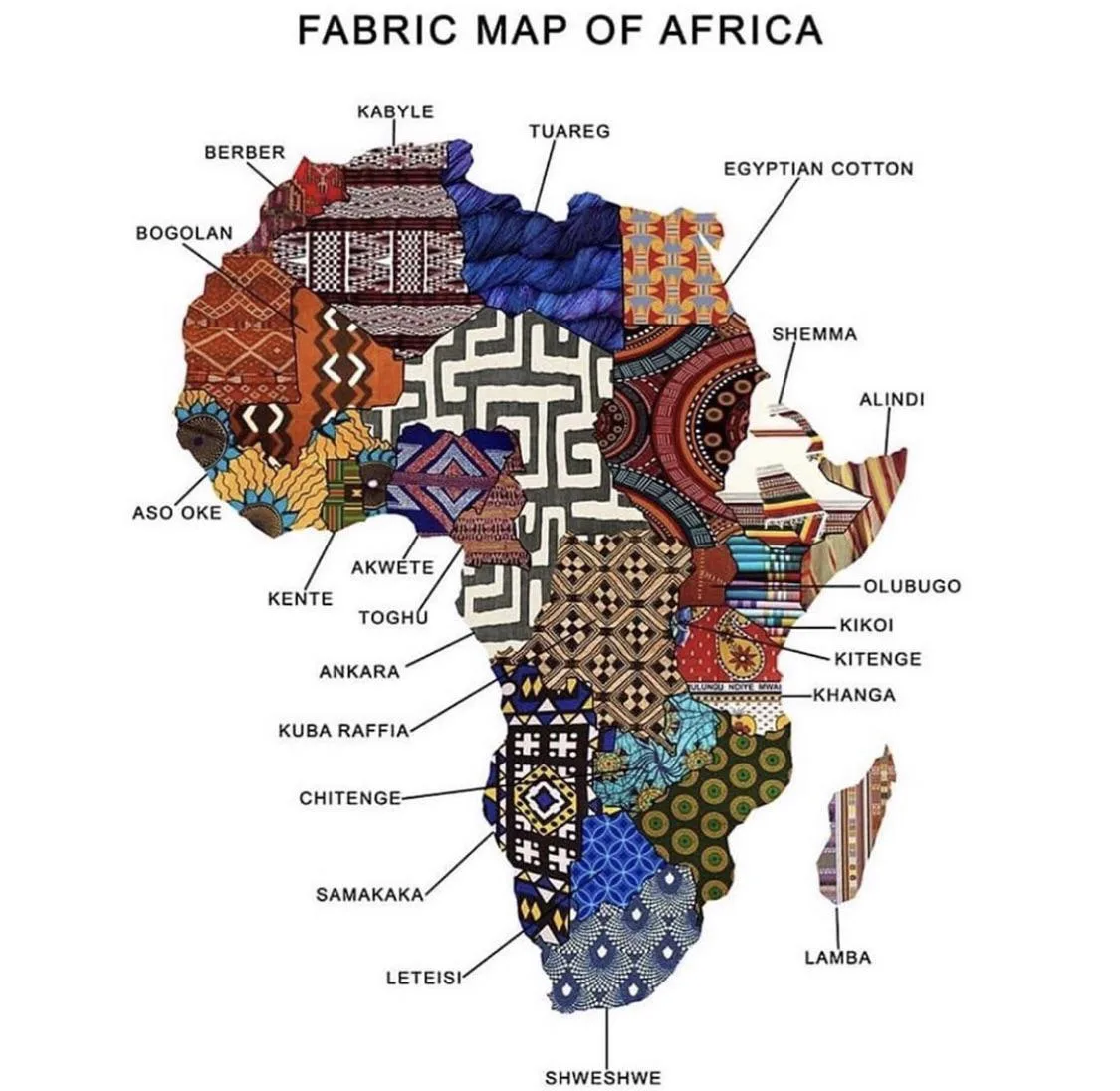
The World’s Going Mad for This Fabric Map of Africa

Mia Kora has been “honoured and humbled” by the impact of its ‘Fabric Map of Africa’. The company, which usually offers a collection of scarves and shawls centred around the concept of ‘wearable art’ has this time created art centred around a collection of fabrics from each of the continent’s countries from Egyptian cotton to kikoi, shweshwe and more.

Mia Kora founder Priya Shah, who grew up in Kenya, says the map was born during lockdown. “It was created as a mood board to inspire my next collection based on my love of African textiles and patterns. It took time to evolve, and I was constantly editing images until it was aesthetically pleasing and showed a range of fabrics.

“The map is a visual representation of the richness and beauty of African fabrics. It is an artistic reflection. Art sees no political boundaries, cast, religion or gender. Art in its truest form speaks across all barriers and lines. The map’s aim is to spread positivity and joy.

“My dearest hope, as an African, is that this map raises worldwide appreciation and acknowledgment of African textiles and its high standing in influencing fashion and art.”

She says the Map of Africa was inspired by the fabric Map of India, and her desire to show how beautiful and rich the African continent is. “Truly fortunate to have been brought up in Kenya in the midst of so many cultures, art, wildlife and beauty,” she says, adding “AFRICA! Where my heart is…”

Email info@miakora.com for all orders. These designs are copyrighted and belong to Mia Kora so please don’t purchase them from unauthorized agents.

The size of the map is A2 (42cm x 59.4cm), on 260 gsm Satin photo paper.

Content courtesy of SA People & Nairobi fashion hub 

Tanzania fashion festival celebrates models of all sizes

This year’s Tanzania Fashion Festival held on October 3, embraced diversity in its choices while remaining relevant.

The show, held at the Slipway Hotel in Dar es Salaam, had models of different body sizes, heights and ages. It also gave new designers and first-time models a chance to showcase their talent.

There was a total of 21 designers – 16 emerging and five well-established.

Ruth Josephat Urio, founder of J’adore Couture which specialises in hair and cosmetics  represented different sizes and body shapes with models who don’t fit the “typical” figure.

“Fashion is for everybody. I wanted to be inclusive through action not just preaching it.

“Anyone can have a chance at fashion, what is needed is confidence to showcase products in front of the crowd,” she said.

Taff had 17-year-old model Angela walk the runway while international model and former Miss Tanzania Millen Happiness Magese made a special appearance.

Jacqueline Wolper, Bongo, a movie actress and stylist, closed the show with her collection off Wolper House of Stylish.

Some of the designers at the show were Lucky Collections, Wole, Waiz Zanzibar, Enjipai by Nasreen Karim and American-based Tanzanian designer Asia Idarous.

VIP tickets were sold at Tsh50,000 ($21.60) while normal tickets were sold at Tsh10,000 ($4.3o) advance and Tsh15,000 ($6.40) at the door.

South Africa-based fashion photographer Shawn Keiffer, who was also one of the organisers, described the country’s fashion industry as remarkable.

“The fashion industry has grown in size and sophistication. The evolution of the fashion scene in the past few years, with the changing politics of the front row and the diverse imagery behind-the-scenes, has been nothing short of remarkable,” he said.

Keiffer added that getting more support for the fashion industry would enable it to realise its potential.

“It will take joint effort to get the Tanzanian fashion industry up to speed,” he said.

However, despite the glamour of the fashion show, there are still not enough platforms for the growing number of designers, stylists and models to showcase their creativity.

“We need more platforms and fashion activities,” said Makrida Joseph, a Tanzanian model and stylist.

Besides the Tanzania Fashion Festival, there is Swahili Fashion Week and the East: The annual Tanzania fashion festival was founded by fashion TV producer and presenter Deogratius Kithama in 2018.

Content courtesy of The East African & Nairobi fashion hub 

Future of Fashion 2020 indaba to explore African sustainability

Rewoven will host fashion indaba, Future of Fashion on 19 and 20 November 2020, with Twyg and AFRI hosting masterclasses from 3 to 12 November 2020.

The South African fashion indaba applies a locally-relevant lens to the topic of ethical and sustainable fashion and creates space for collaborative knowledge-sharing between all stakeholders in the fashion value chain.

Through sharing tools, frameworks and ideas between South Africa, Africa at large and Sweden, Future of Fashion aims to facilitate the development of a thriving, inclusive, ethical and future-fit local fashion industry. The indaba is open to anyone connected to and interested in the fashion industry: this includes manufacturers, retailers, designers, fashion institutions, fashion academia, consumers, clothing industry policy-makers and influencers.

This year, Future of Fashion will explore the theme ‘African sustainability – our way of being’. While the concept of sustainability seems to be a relatively new concept to many of us living in a largely Western and modern world, many indigenous groups in Africa and across the globe have been living in harmony with the environment for thousands of years.

There is much to learn about sustainability, circularity, the shared-economy, sustainable material sourcing and more from these communities whose sustainable practices have stood the test of time.

Here’s what to expect:

Fashion film
A locally-produced fashion art short film that explores the importance of caring about sustainability and climate change for a developing country such as South Africa will be screened. The concept of sustainability and climate change might often seem removed from the realities of people who live below the poverty line.

By unpacking the lessons to be learnt about sustainability and slow fashion from ancient and indigenous cultures in Africa and Sweden, the film aims to debunk this idea and rather create an inclusive, relatable and locally-relevant narrative on sustainability, climate change and slow fashion. The short film is shot in the Eastern Cape, Western Cape, Northern Cape, Kinshasa and Jokkmokk.

Twyg Sustainable Fashion Awards
The Sustainable Fashion Awards, in collaboration with Twyg, will be hosted at Rewoven and available via livestreaming on the virtual event platform.

Sustainable design showcase
The exhibition aims to showcase and celebrate the work of South African sustainable fashion designers. This year, the exhibition will be a video exhibition, which will be livestreamed on 19 November 2020. In total 15 designers will be showcased.

Addressing sustainable fashion
Founder of Lagos Fashion Week, Omoyemi Akerele, will be speaking on the topic of “The Future of African Fashion”. The second speaker is the sustainability manager of Fjällräven who will be sharing the experience of the company on “Designing for circularity, recyclability and slow fashion”. Fjällräven was voted Most Sustainable Brand in its industry, according to Sweden’s Sustainable Brand Index in April 2020.

Digital shopping
The virtual marketplace is a platform that shares, amplifies and celebrates sustainable businesses that are contributing to a sustainable and ethical fashion future. The virtual marketplace mimics a marketplace at an in-person event where there are multiple businesses on display that event attendees can interact with.

By utilising this platform, the aim is to showcase sustainable fashion businesses and provide them with an opportunity to directly interact with event attendees who could become potential clients/collaborators.

Content courtesy of Biz Community & Nairobi fashion hub 

The Next Wave of African Designers Taking Their Place on the Global Stage

For too long, fashion’s gatekeepers in Western nations have largely ignored the abundance of ideas and creativity brimming out of African countries, where designers have been toiling away without recognition outside of their local communities.

While there is still a ways to go, there has been a slow but steady influx of platforms geared toward exposing these talents to a wider audience. From online concept store The Folklore, which distributes luxury and emerging designer brands from Africa, to Orange Mentorship, an initiative that provides mentorship of young fashion entrepreneurs in Africa, many of the continent’s designers are finally starting to get their due.

Among the most recent success stories are arguably Thebe Magugu, the designer who grew up in the city of Kimberley in South Africa’s Northern Cape and just launched his first e-commerce shop, and Kenneth Ize, whose reinterpretation of traditional West African fabrics and Nigerian craft made its official debut this year at Paris Fashion Week. Notably, both designers were finalists of last year’s LVMH Prize, with Magugu scooping up the top award.

Still, while there have been several regional fashion weeks in recent years, they have yet to attract the kind of global attention paid to the four main capitals. (It was at Arise Fashion Week in Lagos two years ago where Naomi Campbell notably called for there to be an African edition of Vogue.) Even smaller showcases held in predominantly white cities like Copenhagen and Sydney have drawn a significant amount international guests.

Recognizing the need for more structures in place to support emerging African fashion talent, the Ethical Fashion Initiative recently announced the launch of its first Accelerator Programme, which targets existing fashion brands producing in Africa who require additional support to accelerate their business in the global marketplace to become investment ready. The organization selected five designers to participate in the platform: REIGN, Margaux Wong, Lukhanyo Mdingi, WUMAN and Jiamini.

The five talents were picked out of a pool of 250 applicants by a judging panel comprising of Nigerian actress Dakore Egbuson-Akande, Japanese retail magnate Hirofumi Kurino and creative consultant Susi Billingsley. As part of their selection, the designers will get to reveal their latest collections in 2021 during Pitti Uomo, the bi-annual international menswear trade show where guest designers such as Telfar, Jil Sander and Givenchy have all shown in the past.

Ahead of their debut on the global stage next year, PAPER caught up with the five winning designers to get their thoughts on the state of the African fashion industry, how their heritage and culture influences their work, and what they’re most excited about as they get ready to show their work on an international platform.

Margaux Wong

Margaux Rusita is a Guyanese/Burundian designer with more than 18 years of experience based in Burundi, East Africa. Her company, Margaux Wong, is known for its signature technique of turning rare cow horn and brass into luxurious and wearable art.

The creative director works with her team to produce distinguished artisan jewelry using tedious traditional techniques, and she’s also mentored hundreds of young designers over the last 10 years in her home country.

How has your African heritage influenced your creativity and design approach?

Having spent the last 11 years living and working on the continent has morphed my Afro-Caribbean decent and love of Africa and all its colors very well with my work and expression. I have been able to immerse myself in the culture, traditions, history and traditional jewelry making techniques, which I have been able to observe and learn throughout the years. It is clear that preserving certain techniques is quite difficult especially in the world of fast fashion, which is why we hold on to them. It is very important to us to maintain the integrity of culture for posterity while engaging with contemporary ideas for design and expression.

What have been some of the highlights and challenges of being based and producing in your country?

Burundi has been known as being a war-torn, poverty-stricken country for many years. We are very pleased that in a very small way, we have been able to change that narrative by telling positive stories about what we do and actually showcasing the amazing work that we have been doing at shows on at least four continents.

Winning the trust and respect of my male employees has taken many years of hard work and is still a challenge to some degree, as they are used to being the leaders in their homes, jobs, and communities. I give daily support and encouragement, knowing myself how capable our artisans are but also acknowledging the trauma background of war and near death from which they came.

We have also had challenges with inefficient banking systems as well as shipping challenges due to our landlocked position on the continent. With the successes and challenges, however, we have been able to come this far. Building my brand and business in Burundi has been a major stepping stone for me as a designer, business owner, and innovator. There is no doubt about that.

“It is very important to us to maintain the integrity of culture for posterity while engaging with contemporary ideas for design and expression.”

What does it mean for you to get the support of a platform like the EFI?

As a designer, I can’t say that I have chased this kind of recognition much over the years. My focus has been to work on my craft and hopefully over time, have my work speak for itself. I think my attraction to EFI went way beyond being recognized. I saw an organization that was offering much needed mentorship, guidance, technical support, and validation for all the years of hard work I had previously put in.

Now that I am benefiting from their support, I feel further validated as an artist. I am further convinced that I am on the right track and feel encouraged that my art needs to be shared with the world, not only as my art but as a boost to all those with whom I have worked all these years.

What are some of the ways African fashion designers can be supported so that they can become global businesses?

African designers, like any designer from every background, require lots of support in order to become globally successful businesses. I think our proximity to global competitors, peers, platforms, and experienced professional mentors is a major challenge.

What the EFI has done by creating the bridges we need to connect with the rest of Africa and the Western fashion world is revolutionary and exactly what we needed as an answer to this challenge. African designers also need to be connected to African investors and mentors who are immersed in the continent and can assist in strengthening trade relationships and cultural exchange within the continent. This involvement can help to solidify our confidence in our ability to enter any room on the global platform and exist as people who are able to compete with competence, confidence, and drive.

WUMAN

Ekwerike Chukwuma is a Nigerian fashion designer/artist who launched the men’s and womenswear brand WUMAN in 2013. He cites the female anatomy as a perennial source of inspiration, which he first obtained from his medical school studies.

The cross-disciplinary areas of architecture, poetry, and geometry inform his contemporary storytelling approach to design while staying true to his African heritage and its unique perspective across the global fashion industry.

How has your African heritage influenced your creativity and design approach?

My heritage and culture have always influenced my design thinking and process. I feel the pulse of Africa, she is a great woman who is dear to me.

The beauty, rich culture, history, and diversity are all elements that form the core of my design process. My works tell stories inspired by my existence in Africa, stories that stimulate you to further see, understand, and love Africa.

What have been some of the highlights and challenges of being based and producing in your country?

One of my highlights of being based and producing in Nigeria is the privilege of learning to work and grow with the resources available. I have also had access to the rich heritage of craft and skills available within my country. I have also had a nearness with my culture firsthand. The challenges faced here include funding, inadequacies in manufacturing, a bit of lack of technical know-how and labor force, economic instabilities, power supply as well as infrastructural deficiencies.

“My works tell stories inspired by my existence in Africa, stories that stimulate you to further see, understand, and love Africa.”

What does it mean for you to get the support of a platform like the EFI?

It means a lot to me and my brand. I see this as a great step in the right direction. The EFI is a reputable organization and selecting me for this great opportunity further amplifies my brand in a bid to grow and succeed both here in Africa and globally.

What are some of the ways African fashion designers can be supported so that they can become global businesses?

African fashion designers can be supported to excel globally through more training and education, access to more developmental programs like the EFI accelerator, platforms that give them more visibility, support in manufacturing, and funding.

Lukhanyo Mdingi

Hailing from a small coastal town in the Eastern Cape of South Africa, Lukhanyo Mdingi describes his design aesthetic as having a “languid sensibility.” The Cape Peninsula University graduate participated in Pitti Uomo’s Fall 2017 Generation Africa in Florence initiative that gave him his first taste of international exposure.

The cross-cultural references help inform Mdingi’s approach, which uses theory and research to create timeless essentials that are refined each season. “Our intention is to collectively create a body of work that has a sense of soulfulness to it, work that is steady, solid, and strong,” he says.

How has your African heritage influenced your creativity and design approach?

Immensely. I think that this is something that is intrinsic to so many artisans and designers. I believe that our diverse and unique heritage is something that is grounded and rooted in the spirit of love. Community is what binds our lineage and culture, celebrating and bringing this within our work allows us to collaborate and celebrate all that we bring to the table.

What have been some of the highlights and challenges of being based and producing in your country?

The highlight is always celebrating the moment this is done solely when all parties involved have put in the work, time, and consideration of their individual roles. Collaboration is so important to us, when you are able to witness the steady and seamless growth of your ally then see them reach their potential, it’s that moment that becomes a highlight, that is priceless.

The challenging aspects, in any career, are finding the people that are aligned with our vision as much as you are aligned with there’s, identifying the intentions and the precision that you envision, and making sure that there are parallels between all involved whichever project you choose to embark on.

“Community is what binds our lineage and culture.”

What does it mean for you to get the support of a platform like the EFI?

It feels like the natural step. The nuances between the EFI and our label are parallel. The importance of craft, collaboration, and considered design is the premise of both entities. What the Accelerator Programme has done is yield our label and give it the platform for our narrative to be seen and heard.

Presenting the new body of work during PITTI UOMO is a space that raises the bar.

What are some of the ways African fashion designers can be supported so that they can become global businesses?

I think it’s simple. It’s continuing to provide platforms such as the EFI accelerator programme to tell our narratives.

Jiamini

Kenyan-based accessories brand Jiamini (meaning “belief in yourself” in Swahili), known for its durable, hand-beaded embroidery, turns traditional pieces into contemporary jewelry. The brand promotes sustainable development solutions while being influenced by African techniques and craftsmanship. Among its company missions is to help local communities rise above poverty through economic empowerment.

How has your African heritage influenced your creativity and design approach?

The diversity of African culture and creativity has always been the foundation of our brand, closely examining the craftsmanship, heritage, and traditional approach used by our forefathers, which have been a strong influence in our designs. Our African heritage has enabled us to communicate an authentic expression of the past, present and future, through design.

What have been some of the highlights and challenges of being based and producing in your country?

Having the opportunity to produce in Kenya enables us to not only create employment but to share, learn and implement traditional skills, knowledge, and techniques, from vast local communities used in production.

“Our African heritage has enabled us to communicate an authentic expression of the past, present, and future, through design.”

What does it mean for you to get the support of a platform like the EFI?

This opportunity couldn’t have come at a better time. A time when the fashion industry in Africa has witnessed tremendous growth in recent years and the global demand and discussion on African-inspired fashion are on the rise.

Getting recognition from the EFI accelerator program and being able to present at Pitti Connect gives us a platform to tell our authentic rich story through design, as well as show the world the quality, richness, and luxury that Africa is capable of developing and producing.

What are some of the ways African fashion designers can be supported so that they can become global businesses?

A great way to support African fashion brands would be through meaningful collaboration and skill transfer programs with already established international brands.

REIGN

Sipho Mbuto and Ben Nozo first met in 2015 as students at the Durban University of Technology in South Africa. They often worked together on class projects where they exchanged ideas and fashion concepts, not knowing that upon graduating they’d team up to create REIGN, which they describe as a brand that “narrates African culture reimagined with traces of eastern and western influences.”

The duo says they constantly enroll in fashion learning programs to be mentored while also mentoring others by engaging in tutorials and workshops.

How has your African heritage influenced your creativity and design approach?

Growing up in the small town of Port Shepstone in Kwa Zulu Natal. It was a beautiful town, however, we had no access to art and cultural infrastructure or creative media. We were at least fortunate to grow up in a family of artisans who were able to influence our perspective and development.

They are an integral part of our drive-in working with arts and crafts. Even listening to stories of their youth while crafting these unique items, made us think differently about creativity and gender as a Zulu man. Specifically how there are certain roles individuals play in the culture of the concerning family clan.

What have been some of the highlights and challenges of being based and producing in your country?

Textiles there are still many challenges for African designers in Africa, one of them being the Chinese domination of the textile industry, such as the unavailability of fabrics, even the ones that are produced locally are created using imported equipment from Asia and Eastern Europe. Not enough funds countless people with incredible ideas languish because they are not able to access the necessary funds to enter the marketplace.

Fashion is a business where you need money in every step, to make quality designs, to market them, and promote them. Lack of accelerator and mentorship programs Industry-related education is another major challenge and if the government doesn’t see a value or a need for the luxury fashion industry locally, it becomes difficult for us to convince the international market of our existence in Africa as mostly we are reliant on help from abroad.

Production and lack of good manufacturers  Most African brands are small operations, with no production capacity to supply large orders. Scaling up is hard, given electricity shortages and other manufacturing glitches that come with producing in a developing country. Getting an opportunity to work with our chosen team of people and to learn and grow with them.

“People rarely know who contributes to the growth of the industry outside tokenized representation or engagement in the African contemporary conversation.”

What does it mean for you to get the support of a platform like the EFI?

It’s an exciting opportunity for us as a growing brand as it provides a chance to market our brand to an international market. Gaining a better understanding of the business of fashion and also learning about the different distribution channels of supply chains. Working together with artisans, understanding the inspiring stories behind their craft, motivates us to look deeper into sustainability and producing ethically also.

What are some of the ways African fashion designers can be supported so that they can become global businesses?

Working together with our government on setting up more legislations, policies, and fashion laws to favor African fashion designers by the government would definitely help to improve the African economy while making our fashion brands globally recognized.

Creating efficient distribution channels for designers distribution is usually a challenge for designers. Most designers cannot fully control the distribution of their clothes, having this distribution platform in place can eliminate cost, time, and anxiety in most fashion businesses. Including disadvantaged designers in the fashion conversation, graduates and emerging creatives, stylists, and directors.

People rarely know who contributes to the growth of the industry outside tokenized representation or engagement in the African contemporary conversation. Our own fashion channels are inundated with European or western content.

Photos courtesy of Ethical Fashion Initiative

Content courtesy of Paper & Nairobi fashion hub 

Inclusive, self loving Future of fashion

Ashish N Soni showcase its collection inspired by the African culture, whereas Geisha Design’s collection is all about self loveAshish N Soni showcase its collection inspired by the African culture, whereas Geisha Design’s collection is all about self love
Ashish N Soni’s latest collection signifies African heritage and vouches for diversity and inclusion. The line is inspired by cultural influences of the African community.

To create an impact and send his message out loud and clear, the designer cast black models to showcase his creations based on a ‘Less is More’ philosophy.

Soni showcased the collection virtually at the ongoing digital Lotus Make-up India Fashion Week, Spring/Summer 2021 through a fashion film streamed on the social media handles of Fashion Design Council of India. Tailored fit suits, blazers, jackets, sweatshirts and hoodies with surface texturing featured in the collection which saw most garments mostly in monsoon and shades of black and white.

Designer duo Paras and Shalini’s offering ‘Bloom in Love’ is all about ‘self-love’. Under their label Geisha Designs, the designers showcased easy-breezy, flowing silhouettes with floral prints and motifs. Dresses, skirts, sarees, lehengas and anarkalis made in light weight fabrics like chiffon and satin are perfect for spring next season.

Content courtesy of The hans India & Nairobi fashion hub

A letter to the fashion industry: what you need to do to go beyond performative allyship

Model and activist Ashley Chew pens a public letter urging the industry to do better

She has graced countless magazine covers, posters, merchandise and even face masks. Her smile was always accompanied by short face-framing curls or deep polished waves. Headlines across the world ran images of the 26-year old African-American woman. Her name was Breonna Taylor.

In early summer 2020, our Instagram newsfeeds were flooded with black squares, captioned with statements such as “we stand with you” or “we love diversity”. Some companies embarrassingly posted nothing at all. The murder of George Floyd reached the fashion industry in the most complex of ways. It seemed trivial for us to post our new haircuts, DIY at-home spa treatments or sponsored content. I cringed at so many tone-deaf companies and even unfollowed their accounts.

Performative activism contributes to the problem, and what I mean by that is sharing an Instagram post about the importance of racial equality without diversifying staff, castings and content. It means nothing to talk the talk unless you are prepared to do the work, to act and do better. For two weeks straight I scrolled past black squares. After a while, I didn’t even care about them anymore. I wanted to know what was going to happen within you, the industry, afterwards, how you would go beyond Instagram statements and implement meaningful change.

In 2015, I started the #BlackModelsMatter movement. The hashtag is currently trending at 83,000 on Instagram. At the time, New York Fashion Week catwalks featured less than 10 per cent models of colour. In 2019, there was at least one model of colour in every single runway show and diversity now stands at 43 per cent.

Beyond the hashtag, I worked vigorously for the phrase not to become trendy – the fight for better Black representation in fashion is not a trend. I’ve spoken for The New York Times, Columbia University, The Indianapolis Museum of Art, magazine panels and even an event in Lagos, Nigeria. I served on The Model Alliance Advisory Board and have sat in with The Humans Of Fashion Foundation. I have poked microphones directly in designers’ faces backstage at Fashion Week asking what more can be done.

” Performative activism contributes to the problem ”

Performative activism does not go to these lengths. Performative activism posts a graphic online, and goes about their Zoom meetings while their African-American colleagues are on the receiving end heartbroken. Performative activism says, “we value diversity”, yet allows racism to manifest itself within meetings, editing, casting rooms, and on set. Allyship is not confined to a Black square on social media. Allyship requires honesty, responsibility and accountability.

As a working African-American model and visual artist, I have been well-equipped for racism; I have the choice about who I choose to champion. During New York Fashion Week, I don’t attend shows that do not cast Black models. On social media, I do not follow brands that don’t reflect society.

Your attention is your highest currency. Brands like Telfar, Fenty, Aerie, Pacifica, Christian Siriano, and Pyer Moss have my full support. These brands undoubtedly have shown diversity in race, age, gender and body positivity long before Covid-19 and the Black Lives Matter movement. If every company took similar initiatives, some rooms in the industry wouldn’t be so unbearable, unwelcoming, and uncomfortable.

” What good is using Black culture if Black people aren’t allowed in the room? ”

I still have hope for the future of fashion, but there must be accountability. As a society we are so pressured into making the next thing, buying more things, and being the next big thing. It is essential for us to care about the people that contribute to those exact things. “Never let them convince you that broken glass or property is violence,” said Marc Jacobs in response to the damage done to his Soho location in the midst of the Black Lives Matter protests. “Property can be replaced, human lives cannot.”

I am relieved that activism is not taboo anymore. Activism can happen anytime, anywhere by anyone. Five years ago, I was a liability. People in this industry were afraid to exercise their freedom of speech in fear of being blacklisted or even fired. But what you, the fashion world, needs to know is this: caring about people shouldn’t be a liability. What good is using Black culture if Black people aren’t allowed in the room? There is no one better to tell Black stories than Black people. Black editors matter, Black designers matter, Black directors matter, Black models matter, Black creatives matter, Black lives matter.

This article originally appeared on Harpers Bazaar

Content courtesy of Harpers Bazaar & Nairobi fashion hub 

Ad