Saturday 26th of September 2026

Nairobi, Kenya

LVMH Prize finalist Sindiso Khumalo debuts at Milan Fashion Week with Harriet Tubman-inspired collection

South African designer Sindiso Khumalo made her debut at Milan Fashion Week with a collection based on American abolitionist Harriet Tubman.

With the pandemic keeping many presentations digital, Khumalo’s namesake label presented a fashion film to feature the new collection and honor the life of Tubman, who used the Underground Railroad to free dozens of slaves after reaching her own freedom in Philadelphia. The film shows a model wandering through fields and farmland, hinting at the landscape Tubman might have known as a child.

The collection, “Minty,” titled after Tubman’s childhood nickname, features illustrations by Cape Town artist Shakil Solanki and tailored styles in hand-printed silk taffeta and handwoven cotton from Khumalo’s workshop in Burkina Faso. Khumalo’s brand also works with the NGO Embrace Dignity to employ women who were previously in sex work to hand crochet and embroider garment details.

Khumalo, who earlier this year was one of the joint finalists to share the €300k ($352k) LVMH Prize for Young Fashion Designers, along with London-based Priya Ahluwalia, focuses each of her collections on the life of a historical Black woman.

Her previous collection highlighted the Egbado princess Sarah Forbes Bonetta, who was taken as a prisoner of war as a child and spent many years in the British Royal household under Queen Victoria. Her next collection will be inspired by South African activist Charlotte Maxeke.

“As a Black woman I want to make sure that we’re also part of history,” Khumalo said over a video call. “Harriet Tubman was my height — she was tiny — and freed 70 slaves. I want my kids to know that there were superheroes who were Black and female and petite.”

Having studied architecture at the University of Cape Town, Khumalo worked with lauded architect David Adjaye in London, where she also completed a masters in textiles at Central Saint Martins before returning to establish her label back in South Africa.

We caught up with Khumalo about her collection and presenting her work at Milan Fashion Week for the first time.

CNN Style: What do you want to communicate through your label?

Sindiso Khumalo: I am paying homage to specific Black women from a specific time in history to ensure their stories are told. I can’t believe there are some South Africans who don’t know who Harriet Tubman is. I want to educate people on Black culture and Black history and I think it’s really important that I use my platform to educate, and to bring hope as well. I feel like if I share these stories, people will feel like they can make some change, even if it’s small. It’s important for us to have these role models and talk about them because they are icons of our history.

Another reason I choose these women is to highlight the violence Black women experience, and the violence they experienced in the 1800s. We are still experiencing the same violence today with Uyinene Mrwetyana in South Africa and Breonna Taylor in America — there’s just this violence towards Black women that we have to address.

Why did you choose Harriet Tubman as your inspiration for your Spring-Summer 2021 collection?

In every collection I hint at the next muse. I was studying Sarah Forbes Bonetta and Harriet came through in some of the research I was doing. I embroidered Harriet on one of the dresses from Autumn-Winter. For Harriet actually there’s a lot more work to be done so I think she will have two collections.

I don’t look for the muse, it feels like we find each other in the process. The muse will always be a female and she will always be Black and she’ll always be from a specific time in history.

There are so many women who haven’t had their story told Bonetta had the most extraordinary life, and when I was telling people about her, no one knew who she was.

What are some of the details in the collection that relate to Tubman’s life?

One of the first details is that we worked with this artist Shakil Solanki on making hand-printed designs of cotton plants. I wanted to imagine Harriet in her Sunday best, but she’s six years old  my son is six picking cotton on a plantation in the sun. I wanted to portray the darkness in a very compelling way so I asked Shakil to paint the most beautiful cotton plant he could make. These plantations were beautiful with lovely homes and well-dressed women. But (the designs) are also a reminder that this is the plant that a six-year-old girl was picking. It’s a beautiful plant but it has a very dark history.

Sometimes when we talk about slavery, we abstract things so much that you don’t actually understand the human story there. I’m a mum  the idea of a child picking cotton is just repulsive to me. It’s not just slavery, but the human story within that.

The other way I brought her into the collection is through her name. Philadelphia was such a crucial part of her life, and when she was there she named herself Harriet after her mother. She was born Araminta, Minty for short. But on the garments it’s Harriet because that’s what she named herself. We included the Philadelphia Fleabane, which was the first wildflower she would have seen crossing into freedom.

Did you find that the limitations of this year’s Fashion Week allowed for more creative expression?

We’ve never made a fashion film before. We’ve never had a reason to. It’s a very different thing from the stills. Strangely there’s a small town called Philadelphia outside of Cape Town, and Philadelphia was the borderline where Harriet stepped into her freedom, so we wanted to tell that story.

I don’t think I could have made the same statement in a (runway) show. And that I think is the joy of everything slowing down everyone has had to sit and watch and engage. Fashion week is a flurry everyone’s going from show to show to show and you’re just hoping somebody sees your stuff. Maybe from now on we’ll always have a film to go with the collection because it’s a way for people to really go deeper and understand our message.

Tell me more about the NGO you partnered with for this collection.

I’ve been working with Embrace Dignity for a few months now. They work with women in Cape Town who are former sex workers and place them with work that is safe and non-exploitative.

We actually train these women up in our studio in crochet and hand embroidery. For me, it’s also about imparting a skill that they can also use themselves because in Cape Town we have a tourist market. It’s a combination of giving them a safe place to work, a non-judgemental place, and then also giving them a skill that they can then use. Everybody needs the chance at a second chapter we have so much poverty in South Africa.

I like to think of myself as a bit of a modern-day Robin Hood. I sell these luxury clothes and then try to make some kind of change within a community. I think people get overwhelmed and they feel like they can’t change anything, but I look at icons like Harriet Tubman and Nelson Mandela and I think you can make a change. You have to do something, even if it’s small.

Content Courtesy of CNN & Nairobi fashion hub

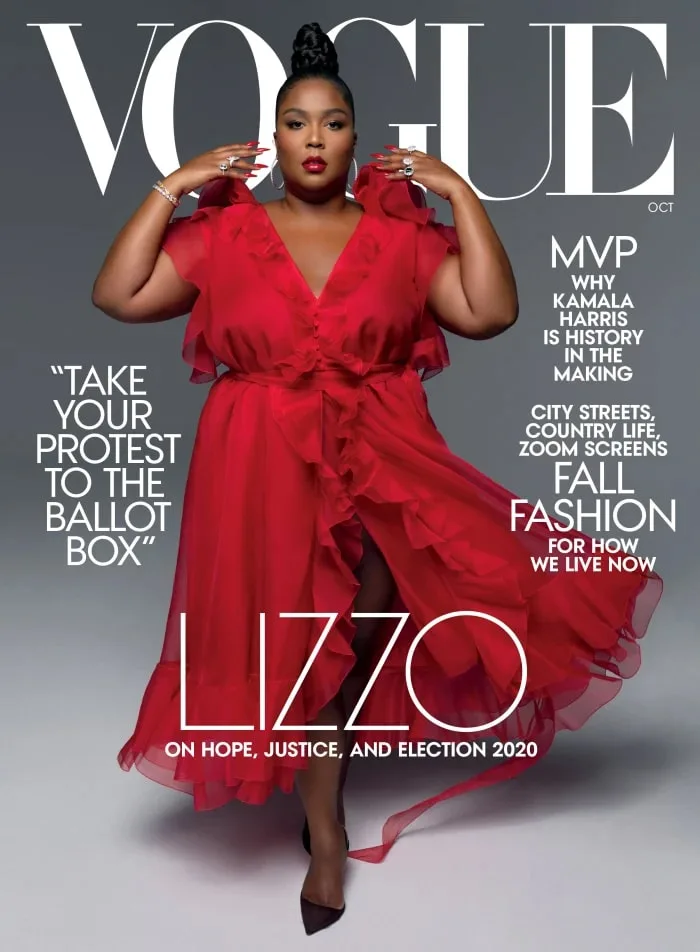
Lizzo On The Cover Of ‘vogue’ Magazine October Issue

Vogue released its October 2020 cover on Thursday, and it’s Good as Hell: The always fabulous Lizzo fronts the issue, which was shot by Hype Williams and styled by Carlos Nazario.

She Can Be Heroes “I had to travel the world and I had to meet people and read DMs and look into their eyes and really hear their stories, to believe that I was making an impact in a positive way,” says Lizzo. Moschino Couture cape. Sylva & Cie earrings. Bvlgari necklaces. Bracelets and rings by Tiffany & Co. and Chopard. Photographed by Hype Williams, Vogue, October 2020

Clad in a crimson Valentino dress that a politician could probably pull off at a luncheon, the ensemble is rather toned for the performer. (We’re used to seeing the artist in head-to-ruffles and over-the-top feathers, after all.) But the glam is turned up in the accompanying editorial, as Lizzo wears everything from a princess-worthy bubblegum pink Moschino Couture gown to a beaded LaQuan Smith top and skirt.

In the cover story, Lizzo talks justice and the upcoming election with Claudia Rankine. “I just want to encourage people to register to vote,” the bop singer said. “That is the most important thing to me. Because there’s a lot of upset people, and there’s a lot of people who have power. There’s a lot of voter suppression in Black communities. But there’s a lot of angry white kids now. And I’m like, ‘Yo, register to vote. Go out. You won’t get suppressed if you try to go to your ballot box.’

The self-love queen  who Vogue recently announced will be speaking at its Forces of Fashion conference in November also touched on the importance of maintaining a public image that is committed to positivity and celebrating her uniqueness.

“I think it’s important that I take full responsibility for the way the world perceives me because that is the way they’re gonna perceive someone who looks like me in the future,” Lizzo explained. “Maybe, hopefully, that would give some young girl someone to look up to and take away the opportunity for someone to weaponize her uniqueness against her. I had to travel the world and I had to meet people and read DMs and look into their eyes and really hear their stories to believe that I was making an impact in a positive way. And now that I believe in myself in that way, I’m gonna continue to just push that conversation by being a better me every single day.”

The October issue of Vogue will be available on newsstands on Oct. 6. You can read Lizzo’s full cover story here.

Content courtesy of Fashionista, Vogue & Nairobi fashion hub 

Zambian Fashion Designer Juliet Mayida Jacobs nominated for three awards at this year’s Designers Award Africa.

Zambian Fashion Designer Juliet Mayida Jacobs of Interfashional Africa has been nominated for three (3) awards at this year’s Designers Award Africa.

  1. African Fashion Brand of the Year
  2. African Female Designer of the Year
  3. African Fashion Stylist of the Year Female.

Juliet Mayida Jacobs is former runway model, international pageant judge, Last year’s Zambia fashion week challenge winner and she recently showcased at this year’s Lusaka July in September.

Voting for Designers Award Africa starts on the 27th of September and will close on the 26th of October 2020. – You can vote here Elfrique

Content courtesy of Mwebantu & Nairobi fashion hub 

Afro Fashion Week Milan Forges Ties with CNMI, White Milano

African Fashion Marking its fifth anniversary, Afro Fashion Week Milan is expanding its reach — a sign of the multicultural bent the city has embraced.

https://www.instagram.com/p/B89ZARqhkvt/?utm_source=ig_embed

Organized by Afro Fashion, an Italy-based nonprofit organization that has been actively promoting the African continent’s designers and creative talents over the past five years, the showcase will encompass a range of fashion shows, entirely digital or livestreamed, talks and even a couple of high-scale partnerships with Camera Nazionale della Moda Italiana and White Milano.

From Sept. 24 to 27 a range of digital shows, panel discussions and exhibitions will shine a light on African fashion talents.

“It’s been a complicated year because of the COVID-19 pandemic and also in the wake of the Black Lives Matter [movement] which has resonated and drawn attention not only in the U.S., but internationally,” said Michelle Francine Ngonmo, president of Afro Fashion during a virtual press conference Tuesday.

Running Sept. 24 to 27, at the same time as Milan Fashion Week, Afro Fashion Week Milan will host on the association’s online platform a range of fashion showcases from Emeka Suits, a Kenyan green label founded by Sydney Nwakanma, Frida-Kiza, helmed by Burundi-born, Italy-based Fabiola Manirakiza, swimwear label Other Couture, launched by Mozambique-born Helena de Jesus; Otinguema, run by Gabonese designer Jessica Nguema-Metoule, and the collective display of works from students at Cameroon’s LABA Douala, or Libre Académie des Beaux-arts.

https://www.instagram.com/p/BxcIiQvIUiq/?utm_source=ig_embed

The virtual shows will be flanked by panel discussions and talks spanning different topics, such as D&I in fashion, hosted by Stella Jean and Edward Buchanan; Fashion for Empowerment, analyzing how fashion can serve as a lever for economic and social development for the African continent, as well as a spotlight on leading fashion schools where African students are stretching their muscles.

In addition, the Afro Fashion organization has helped Stella Jean and Edward Buchanan, as well as the Black Lives Matter in Italian Fashion Collective, select the “The Fab Five Bridge Builders,” such as the five designers that will present the “We Are Made in Italy” project as part of Italy’s Camera della Moda official Milan Fashion Week calendar.

https://www.instagram.com/p/CDgX2FvgpaO/?utm_source=ig_embed

As reported, the digital event spotlighting the five Black-owned Made in Italy businesses will take place on Sept. 27.

Centered on the “Exquisite Beauty” theme, which Ngonmo describes as a celebration of beauty in all its forms, Afro Fashion Week Milan has also forged ties with White Milano, which will host a special exhibition dedicated to Afro-Italian fashion throughout the four-day event.

Content courtesy of WWD & Nairobi fashion hub 

Bubu Ogisi The designer choosing pan-African pride over Western attention

Bubu Ogisi is making African fashion in Africa for Africans. The Nigerian creative director, stylist and the designer behind the label IAMISIGO, Ogisi is committed to celebrating African philosophies, fabrics and techniques. She and her close-knit teams of artisans have created a label which breaks many of the “rules” about what African brands are and should be.

https://www.instagram.com/p/6dLhM4gix5/?utm_source=ig_embed

Not interested in capturing Western audiences or selling big, IAMISIGO’s work is focused on using fashion to tell the colorful and complicated story of Africa’s history, present and future.

“In 100 years, what will our descendants reference about us?” Ogisi said over the phone. “Are they going to be referencing Western pieces that we tried to Africanize, or this new age of African design that was able to bring the continent together? That’s my long-term goal.”

And it’s a goal she has been working towards for quite some time. After leaving Nigeria to study computer science in Ghana, Ogisi began to become aware of the complexity of West African style. Noticing the difference in aesthetics, body shapes, fabrics and styling between Ghana and her home country, Ogisi realised that she could use her lifelong interest in clothing to showcase the diversity of Africa.

Not one to rest on intuition and talent alone, Ogisi studied fashion at the Ecole Supérieure des Arts et Technique de la Mode (ESMOD) in Paris. Having mastered the technical elements of fashion, IAMISIGO was born in 2009. The label’s name combines the words “I AM” with Ogisi’s surname stylized in the reverse — a nod to the fact that the label is Ogisi’s stamp on the world.

She has since showcased collections at Paris and London fashion weeks, been featured in British Vogue and had one of her garments handpicked by supermodel Naomi Campbell. But the mission has not shifted. Despite an increase in international interest, Ogisi is clear about what she is (and isn’t trying) to do with the brand.

“I’ve had offers from China and Italy and all over; people who want to buy my designs and mass produce them. I’m not interested in that,” she said. “I spend time with old men in villages who pass on their weaving craft to their grandchildren, because that is the only way the skills will survive”.

This dedication to locally focused craftsmanship and materials shows itself in each of her garments. Operating between studios in Lagos, Accra and Nairobi, regular road trips to source materials and learn new skills are crucial to Ogisi’s creative process. Her most recent collection, Chasing Evil, makes use of palm leaf from the Congo, which she transported cross-continent in bags filled with sand to preserve the delicate material. She says that some of the garments require an intricate weaving process, which she said can take up to a full day to complete.

For Chasing Evil, Ogisi enlisted Kenyan master jeweler Brian Kivuti to create once-off pieces to accompany her apparel. Where appropriate the designs make use of secondhand fabrics and accessories, where making or buying a new item would have meant unnecessary waste. The collection also makes use of Ugandan unbleached cotton as a staple material. The name of collection was chosen to reflect this return to African pride,

“The only way to chase evil is through unity across borders and truly believing in the works of our hands,” Ogisi said.

While her pro-Africa outlook is by no means novel in the world of fashion, the commitment to applying it to all elements of the label is part of a shift in approach taken by African designers. Like the LVMH Prize 2019 winner, South African Thebe Magugu, who continues to operate from his inner-city Johannesburg studio, Ogisi recognizes that being accepted by the Western fashion world does not necessarily mean that she should take her sights off the many markets across the continent.

“I want to see my clothes on women in Nairobi, Cape Town, Lagos, Accra,” she said. “I want these women to feel that somebody understood their history and their bodies and the lives they lead. Every piece is a love letter to them, and to my continent.”

IAMISIGO represents the hope of a self-affirming, self-sufficient Africa. While fashion is often dismissed as frivolous, or separate from “real issues,” Ogisi proves that politics is everywhere: in the products we consume, in the people with whom we work and even the clothes we wear.

Content courtesy of CNN & Nairobi fashion hub  

South Africa Fashion Week is taking its shows to The Mall Of Africa

South African Fashion Week (SAFW) is back with Spring/Summer 21, and they are taking it to the Mall of Africa (MOA).

The organisation announced that owing to the Covid-19 pandemic, they’ll be moving from their home, Sandton City, to a much bigger space.

On a three-year partnership with the MOA, SA Fashion Week will stage its first hybrid designer collections showcase this year.

SAFW director Lucilla Booyzen said: “This hybrid combination of both a digital and live fashion experience allows us to navigate the complexities of trading and doing business effectively while simultaneously being mindful of the safety aspects associated with the pandemic.”

According to Booyzen, the 2020 SAFW Collections are trans-seasonal in line with international trends towards collections that incorporate both cool, and warm weather elements. They are also increasingly representing a move towards a “slow fashion” ethos of timeless design and sustainable production.

She added: “While the move towards cleaner fashion production in South Africa still faces many challenges, there is a real commitment from many designers to pursue this necessary transition to a new fashion order. The designer community is predominantly SMME’s, they all employ small contingents of artisans such as seamstresses and pattern makers. It has been a superhuman challenge for these businesses to stay afloat and retain jobs in the absence of any trade or cash flow. This opportunity to showcase their collections in preparation for summer is vital.”

SAFW SS21 starts on October 22 with Gert-Johan Coetzee’s show.

Content courtesy of SA fashion week & Nairobi fashion hub

Jamaican-born acclaimed fashion designer returns to Ghana

New York-based, Jamaican-born, international fashion designer Glenroy March and his fashion brand D’Marsh Couture is set to make a return to Ghana for a three-month long project D’Marsh Ghana 2020.

This is the designer’s third time to the Ghana following previous visits to participate in Mercedes Benz Fashion Week in Accra and Bryte Africa Fashion Week.

While in Ghana, March said he will be based in Accra for the duration of the project, which comprises a masterclass, model development workshops, and culminate with the Face of D’Marsh Model Competition.

For the masterclass, the independent designer said he will draw on his more than 17 years of experience in the industry to assist other young and upcoming designers and brands expand.

“The class will be intimate, interactive and purposeful,” March said, adding that he will take participants behind the scenes, sharing his personal industry experiences about navigating the pros and cons, the failures and the successes, and the lessons learned throughout his journey.

“The Face of D’Marsh Model Competition wraps up the three-month project and will be used to identify a young male and female model that can represent the brand internationally, and be used as a platform to expose them to the global market,” March said.

“Like most industries, the pandemic has forced them to rethink their business strategy and, as an independent designer, I had to pivot quickly to figure out a way to ensure the brand remains sustainable and continues to grow,” March added. “With that in mind, I sought to leverage my relationships in Ghana to undertake this project which is in keeping with our vision of making the brand’s presence stronger in the international market.”

March said Ghana holds a special place in his heart as his previous collection, “Sankofa by D’Marsh”, Fall 2018/2019, was inspired by one of his visits.

He said that undertaking such a project at this time has not been without its challenges, but is looking forward to the experience.

“I hope to learn a lot from this visit and get to understand the international market and what is required to grow and promote an independent brand in the African market,” March said.

“I will get the opportunity to meet with logistics partners and determine how I will be better able to position the brand to explore the global market,” he added.

Content courtesy of Caribbean Life News & Nairobi fashion hub 

Fabric Map of Africa By Mia Kora

Fabric map of Africa celebrating the richness of this beautiful continent through Mia Kora work and passion where art meets fashion.

Mia kora is a range of luxury scarves and shawls centered around the concept of bringing art into your everyday lives. Artwork and designs originally done by priya shah, mia kora now has a portfolio of artists joining the team to help create an art inspired fashion trend!
The team has expanded now to 25 graphic designers working in house, agents in Africa and Australia, collaborations with various design companies who share our passion for conservation and a great team on the factory floor who help bring Mia Kora designs to life.

I’m honoured and humbled at the impact this map has had, and how it has evoked a range of strong opinions. This map was born during lock down. It was created as a mood board to inspire my next collection based on my love of African textiles and patterns.

It took time to evolve, and I was constantly editing images until it was aesthetically pleasing and showed a range of fabrics. The map is a visual representation of the richness and beauty of African fabrics. It is an artistic reflection. Art sees no political boundaries, cast, religion or gender. Art in its truest form speaks across all barriers and lines. The map’s aim is to spread positivity and joy.
My dearest hope, as an African, is that this map raises worldwide appreciation and acknowledgment of African textiles and its high standing in influencing fashion and art.

Mia Kora Conservation

As life itself has been the very source of inspiration for Mia Kora’s collections, they have joined the worldwide movement to protect Africa’s elephants. By wearing one of Mia Kora ‘iconic elephants’ scarves, come together with them towards this cause.

Their latest collection is a tribute to the conservation efforts of the David Shepherd Wildlife Foundation. Alongside the other Artists who support this cause, they have designed scarves and shawls that are not only starting a new trend, but have a purpose. Mia Kora is also proud to be associated with Ol Pejeta Conservancy, helping raise funds through our scarves and paintings.

Content courtesy of Mia Kora 

Mia Kora Inspired with Conservation Conscience and Fashion Sense

Where Art Meets Fashion

MIA KORA (100 Gold Coins) is a collection of scarves and shawls that is centered around the concept of WEARABLE ART.

Some of Mia Kora scarves collections.

A collection of scarves and shawls bridging the gap between art and fashion.

Originally inspired solely by Artist and Mia Kora founder Priya Shah’s artwork, we now have a growing portfolio of talented Artists and designers whose diverse work keeps our collections unique, creating on-trend surface patterns and collections every season.

Priya graduated with a degree in Textiles but started off her career working in a Bronze foundry where she got to experience both 2D and 3D art. She started painting full time and worked as a freelance artist for about 12 years before going back full circle and heading back to her first love… fabric!

Painting A New Trend

Putting her artwork onto beautiful fabrics and wearing them became an addiction. Her paintings and designs adorn Scarves, Shawls, Soft furnishings, Sarees, Wall paper and much more!

Not one to work within boundaries and limitations, Mia Kora has now branched out to being a full scale fabric production house offering digital printing on a variety of fabrics for the Fashion, Art and Interior industries. We are able to offer a wide range of fabrics from synthetic to natural fibres to suit all kinds of creative ventures.

(More information on DIGITAL PRINTING visit Mai Kora website Here).

“I felt restricted with paintings being hung up, with this concept and my training in textiles I could bring them more to life by being able to wear my work and wrap myself in my own comfort bubble.” Priya

Mia Kora Conservation

Born and brought up in Kenya where the wildlife, flora and fauna has become a part of her being, it was natural to become protective of her surrounding ecosystem.  Mia Kora has introduced a charity collection where between 40% – 100% of the profits go towards selected organisations.

Currently we are working with and been a part of the David Shepherd Wildlife Foundation (UK), Ol Pejeta Conservancy (Kenya), Helping Rhinos (UK), Tofauti Foundation (UK), Anne Kent Taylor Fund (Kenya), Heed India (INDIA) as well as the Amboseli Trust for Elephants (Kenya) which has become one of our favorite wildlife conservation projects. Alongside wildlife projects we are now working with local communities, especially women from marginalized communities, providing them with healthcare essentials and education.

For more details on any of our conservation projects please feel free to get in touch with Mia Kora.

London Mia Kora +44 7895711331 info@miakora.com, Kenya Bansi Shah +254733782788 bansi@miakora.com, Tanzania / south Africa Kiran Ahluwalia +254722523966 runninwild@iconnect.co.ke, Australia Neha Shah +61 435 596 630 shahnb01@gmail.com

Stockists

Zoophoria – UK
Trentham Shopping Village, Trentham Estate, Staffordshire,ST4 8AX, UK

Tel: +44 7503 15644

Watlings Gallery – UK
15 East Street, Lacock, Wiltshire SN15 2LF, UK

David Shepherd Wildlife Foundation (DSWF) – UK
Saba House, 7 Kings Road, Shalford, Guildford, Surrey, GU4 8JU, UK

Tel: +44 1483 272323

Giraffe Manor – Nairobi (Kenya)
Gogo Falls Road, Nairobi

Solio Lodge – Laikipia (Kenya)
The Safari Collection

Le Sport Boutique – St Lucia
Body Holiday, Cariblue Beach, Castries, St Lucia, west Indies

Rendezvous Boutique – St Lucia
The Landings, St Lucia, west Indies

Emara by Ole Sereni – Kenya
Mombasa Road, Nairobi

Ngorongoro Crater Lodge – Tanzania
Lake Manyara tree Lodge – Tanzania

Bateleur Camp – Maasai Mara, Kenya

Kichwa Tembo – Maasai Mara, Kenya

Content courtesy of Mia Kora 

The Online Festival Putting Nigerian Fashion on The Global Map 

While it’s undoubtedly reductive to think of an entire continent as a trend, there’s clearly a growing appetite to connect with stories out of Africa, as demonstrated by Beyoncé’s stunning Black is King visual, which invokes symbolism from a broad range of ancient African traditions.

And, with the rise of Afro-beats (the genre was recently given its own official music chart) and African designers such as LVMH prizewinner Thebe Magugu, it has certainly become a cultural force to be reckoned with of late and that’s not lost on Grace Ladoja, CEO of Metallic Inc. and co-creator of Homecoming, the festival that prides itself on “taking the world to Africa and Africa to the world.”

“Obviously, there’s so much focus on Africa, but I think it’s really important to learn from those who have experienced the culture firsthand rather than the U.K. or elsewhere deciding what Africa is,” explains Ladoja. “A continent with 1.3 billion people, 54 countries, 200 million Nigerians, over 50% under 30, has so many stories to connect with globally. They are going to be in charge of the narrative.

They’re the future.” Now in its third year, the festival has earned a reputation for putting cool, on-the-rise creatives on the map via its pop-up shops, workshops, and riotous live shows in Lagos, Nigeria. She is excited that, despite the pandemic, Homecoming will still be able to lend its platform to exciting new voices from the continent, starting with a virtual pop-up featuring 15 up-and-coming labels from the diaspora including British-Nigerian designer Mowalola, Lago-based skate crew Motherlan, and British-Nigerian tailoring specialists Tokyo James that goes live today on Browns Fashion. “It’s about empowerment, platforming, equality, ownership, and education,” she says.

Several designers championed by Homecoming over the last three years have experienced huge success, among them Kenneth Ize and Mowalola, who has garnered a cult following for her provocative, body-skimming leather designs. Ladoja, who met Mowalola when she was at university in 2017 and started buying her pieces back then, describes her as a “a once-in-a-decade designer.”

“We’re so happy to have had her be a part of our story and that some people met her through our festival,” she says. “We’re just a platform and we want to position people in the right place. We’re not a production house trying to break brands, we’re just trying to make people connect the dots.”

While there’s been an uptick in interest for Nigeria fashion, it’s still relatively difficult to get your hands on the clothes themselves. This year’s partnership with Browns will help bring this talented new generation of designers to a global audience.

Beyond shopping, the festival is also a marketplace of ideas. Browns will host a limited-edition e-zine, a collaboration between a number of publications leading Nigeria’s cultural conversation, including music connoisseurs The Native and the thought-provoking team behind The Republic. It features fashion editorials from Sheffield-born British-Nigerian photographer Ruth Ossai and artwork by Nigerian Gothic and Moses Adesanya.

To round off the week, there will be a series of panels on August 27 and 28 that give attendees a chance to learn from heavyweights across the cultural spectrum, from the U.S., the U.K., and Nigeria. Virgil Abloh, Gee Patta of the Amsterdam-based streetwear brand Patta, and AWAKE founder Angelo Baque will discuss how Africa can regenerate streetwear with the founders of Motherlan, Vivendii, and Daily Paper.

Ladoja predicts that this is one area of fashion in which “Africa can set a new blueprint” due to it being more affordable and therefore accessible. Wale Lawal, the editor of The Republic, Post Imperial creative director Niyi Okuboyejo, and Tremaine Emory of No Vacancy Inn are also coming together for a talk, entitled “Pushing the African Visual Identity Discourse Forward,” which aims to dissect the cultural impact of the continent.

Overall, the event is a testament to a new crop of young creatives who are bringing Africa’s rich style history into the future. “I hate trends. I lean towards designers that have their own consistent identities, but if there is a ‘trend’ on the horizon, it’s seeing how these traditions will be reimagined, reinvented, and modernized by the next generation,” she says.

“There’s a new generation flipping tradition and bending old practices with the new. You see this with the weaving that Kenneth Ize does or the Adire dyeing that Post Imperial and Waffles N Cream do, and that’s never going to get old.”

Content courtesy of Vogue & Nairobi fashion hub 


Tshepo

Tshepo Jeans is South Africa’s premier lifestyle denim brand that offers a range of bespoke denim clothing and cotton products. Founded in 2015 by Tshepo Mohlala, the brand has established itself in the hearts and minds of ordinary South Africans and people across the world.

The decision to specialise in denim is due to its distinctly nostalgic character and its ability to tell stories.
Tshepo Jeans’ logo a three pronged crown – is inspired by the three women to have played a role in the upbringing of Tshepo: His mother, grandmother, and trendy aunt Takalani who brought the fashion one used to see on TV to reality.

The daily operations within the studio consists of designing, manufacturing and retailing Tshepo Jeans’ range of premium and bespoke denim clothing and accessory items, which range from jeans to hats and aprons. At present, Tshepo Jeans produces custom designs for individuals looking to find the perfect fit as well as commercial orders in which the business designs uniforms for other organisations.

About Tshepo Mohlala and how he started Tshepo Jeans Brand 

I was raised by three strong women. It was my mother who taught me how to hustle, My grandmother, a pastor and a masterful storyteller, whose words, ‘Tshepo you’re a gentleman and should always look like one’, dance through my mind every morning as I get dressed.

And Aunt Takalani, the first person in my family and neighbourhood to graduate varsity, who would visit us back home in the early 2000s, dressed head-to-toe in denim, rocking the era’s unavoidable pair of Spice Girls sneakers.

A decade later, having abandoned my study of Film at AFDA, I studied Fashion at the University of Johannesburg. My journey led me back to the spark ignited by my quirky and classic Aunt Takalani – back to denim.

Denim’s ability to stand the test of time is beautiful. Its ability to tell a story is limitless. The ease with which it communicates is flawless  no matter who you are, you belong in jeans.  Founded in 2015, you’ll find the three women who raised me in the crown

Content courtesy of Tshepo

One On One With Jeff Wanjala Co-founder and CEO Of Wan Fam Clothing

Brief introduction about yourself and your fashion house
Name is Jeff Wanjala. I’m m the co-founder and CEO of Wan Fam Clothing

Can you describe Wan Fam Clothing, and the idea and concept as if I knew nothing about it
or the market it is in?

Wan Fam Clothing was founded by my brother, Mr. Emmanuel Wanjala and I in 2009 as when were were doing hand painted t shirts for client.

In 2011 Wan Fam Clothing was born and ventured into the fashion and apparel industry as a recent start-up manufacturer of an upscale urban fashion clothing line targeted at consumers between the ages of 16 and 35. Wan Fam Clothing not only develops the clothing line, but supports it with advertising and promotion campaigns.

Wan Fam Clothing markets its line as an alternative to existing clothing lines, and differentiate itself by marketing strategies, exclusiveness, and high brand awareness. The company uses high-end materials such as khaki, fleece, upholstery and twill. Current products include travel/gym bags, backpacks, sweatshirts, sweatpants, jackets, bags, and t-shirts both for men and women. Future plan includes business suits, children’s clothing, footwear and leather products.

The key message associated with the Wan Fam clothing line is upscale, local, versatile, and affordable clothing. In the future, the company hopes to develop lines of accessories for men, women, and also children.

What were you doing before Wan Fam Clothing, and what motivated you to start the
business?

I was a student. I have a friend called Chif who used to make hand painted t shirts for me and other clients. In 2009 he got employed and put his t shirt business on hold. I asked him for some brushes and paint and since I knew my brother was good at graffiti and sketching so we thought we tried his talent on t shirts.

We were constraint on cash so we bought second hand branded t-shirts, covered the branded works with white paint and branded our artwork on that. We did few t-shirts, posted on Facebook and got 13 orders and we grew from there

What techniques do you use? Tell us about the process.
How did you learn/master this technique and why do you use it?

What challenges did you face?
The biggest setback for us has been fabric availability and capital. Sometimes you get really good fabric, you make the products and when you go back to get more, it’s no longer available. This goes hand in hand with the fact we lack capital just to buy enough fabric and stock it.

Another setback which goes hand in hand with lack of capital is the fact we have created more demand than what we can actually supply. Which to an entrepreneur it’s one of the greatest achievements but I count it as a setback because some clients get disappointed when they don’t find what they like ready-made.

As for now we tell people to Pre-order in case whatever they want no longer in stock but at times you get clients who need our stuff there and then. Either they want to wear it at a specific event or they are flying out. So despite having created demand I can call it a setback since you end up disappointing a client who really has passion for Wan Fam products.

How did the obstacles make you feel?
Definitely obstacles don’t create a good feeling but they helped me get better. They made us focus
in what we can do and not put energy on what we cannot.

It also helped us not flood the market
with our products but rather move at pace thus controlling what we give consumers and how we
give them and also focus on what the consumer wants from our products

What were your achievements?
a) We have managed to have sold out collections with the fastest selling in less than 48 hours.
b) Managed to catch the eye of Cable News Network (CNN) and got featured on their African
start-up program
c) Managed to work with some influential people who I admire and my most notable one was
working with personality Pinky Ghelani. The whole process and support was amazing. From
doing a collection together to working on photo shoots together to exchanging ideas.

Favorite moments?
The moments mentioned above and every step of the way has been a step to
our goal and a learning experience thus every moment is what helps us get better and closer to
what we want to be and stand for.

What’s your take about Kenya fashion industry?
It still has a long way to go but it’s better than
where it was when we started. Most of our problems can be solved at the top national level then the effect will be felt positively by designers, manufacturers, labourers and consumers in the
fashion industry.

If you were given opportunity to work with local or international fashion designer who will
you love to work with?

Virgil Abloh

What are your thoughts on fashion in Africa?
It’s amazing. Everyone has their eye on Africa now. We have brands like Kate Spade having some of their products made in Rwanda, Michael Kors bags being made in Ethiopia, United Aryan Ltd making Levi’s and Wrangler in Kenya, Philips-Van Heusen via the local subsidiary Hela Intimates making Victoria’s Secret, Calvin Klein, Tommy Hilfiger in Kenya..

The presence of big brands, just to name a few, in Africa is a sign that the African market is doing well at the moment with even bigger things in future.What we need are better policies which are not only written on paper but implemented on the ground that will see the market move in a direction where the designers, creatives and entrepreneurs in the industry get their share of the fashion pie.

How are African fashion designers influencing fashion in the western world?
We have seen designers leaving people in awe at the New York Fashion week and also designers like Gold Carvier Crew leaving a mark at Vienna Fashion week this year. We have also seen celebrities like Beyonce, Rihanna, Gwen Stefani just to name a few rocking African designs while performing or red carpet events.

We have seen the influence African fashion and culture had on the blockbuster film Black Panther etc. So African fashion designers are now getting noticed for their incredible work, unique designs and influence. No just because they are African but because of the signature pieces, quality of works and stories behind each thread

What can the African fashion industry learn from the western world?
The main thing, in my opinion, we can learn is setting up our products and services to those international standards already set and practiced by western world, This is in terms of the quality of raw materials, quality of finish products etc. Another thing we can learn from the western world is building of brands. Most designers are good at making the products but building brands around it becomes hard. We need to build African fashion brands. Brands create loyalty.

Having a brand name makes work easier in the long run, also creates a space where your work will speak for you not only now but in future. Designers should also learn about protection of intellectual property. Some designers put a lot of work on coming up with their name and products just for them to be counterfeited locally and internationally.

Lastly, Africa is a developing nation, thus we can learn what the developed countries did wrong and do things differently thus we don’t have the burden of having to experiment or focus so much on what doesn’t work but we can study the western world and pick only what works thus saving money, time and resources.

Over the last few years have you noticed any significant changes with the African fashion
trends?

Yes…there has been an increase in urban fashion brands with focus mainly on African made
products rather than making items in Asia or other countries and selling locally.

When dealing with Africa is it important for the fashion world to be ethical and socially
responsible, and put in place strong corporate social responsibility governance?

Yes. Especially in Africa.

Unlike in developed countries, most of Africa’s clothing industry relies on unskilled labour for its production. Meaning most of our seamstress and other labour workers don’t come from a a well-off family or fashion education to back her production abilities and this shows that the less fortunate are the backbone of the industry so it’s only right the African fashion industry gives back to these important people and this can be done via CSR which may include training, education, social causes etc

Where can we find your designs?
We are at Westlands Commercial Centre, Block B, Suite 3, You can contact us via +254705 818
84 or info@wanfamclothing.com We also do deliveries wherever you are

Twitter : @WanFamClothing  Instagram : @wanfamclothing  Facebook : Wan Fam Clothing 

What does e-Commerce mean to you and your business?
E-commerce is a very important tool especially in fashion especially in this digital age. And like
many tools it can be a plus or minus for designers depending on how they adopt the wave into
their businesses.

Do you think e-commerce is important for African fashion designers that are trying to get
recognized and reach a global market?

It is important but not as important as it is made out to be. Africa designers have managed to create unique products using unique materials and even marketing them uniquely so I think we should also sell them uniquely than just follow what the western markets have done.

The e-commerce sites are popping up every week and also closing down or being neglected at almost
similar rate. E-commerce is an important tool but like every tool, it should be used correctly where
appropriate to produce the best results

How does your strategy change when running an online store to an offline store?
It changes because now you have all these different people from all over the globe that you need to server rather than a usual brick and mortar store where you server who you see and interact with. This means a lot will change since e-commerce can provide you with the information you need to curve your business’ future.

E commerce can provide info such as where most of your clients are, what they like, what colour or design they don’t like etc and this can help a designer know what to make in his or her next collections, what sizes to make more of and also understand his/her clientele in a different level.

This is something that a brick and mortar store will have limitations in. This information can help change how you make your item, how many items you make, your target and how to market. In turn this changes your whole strategy from design, marketing to even amending your business plan to fit with the market demand and supply

Where do you see African fashion in the next 5 to 10 years?
~ I’m sure I’ll see more fashion houses from Africa.
~ We’ll also see more designers being recognized in their works in terms of film costume designers, stylists etc.
~ Well also see more African fashion events being given international plat forms. Like the Lagos Fashion week, Dakar fashion week etc
~ I’m sure the future has international designers teaming up with African designers. We’ll see more clothing pieces being curated for African market than taking anything being given to us.

What 5 pieces of advice would you give to young African fashion designers wanting to enter
the fashion industry?

1. Patience – Overnight success doesn’t take a night
2. Know what you want from the word go. I know people who started with clothing lines who are now doing business cards, food etc because they didn’t know what they wanted when starting
3. Do what you love
4. Don’t compromise on quality
5. Make products, work and partnerships with the long-run mind set. Think of building a name rather than quick cash

Is there anything else you would like to add?
Just want to thank our clients and everyone who has supported us: From the ones who own all our
collections in their closet, to those who set even a minute to visit our stand at events, to those who just show support online.

None of our achievements would have been possible without you and your unwavering support. There would be no Wan Fam (One Family) without you.

Content courtesy of Wan Fam Clothing & Nairobi fashion hub 

Ad