Saturday 16th of May 2026

Nairobi, Kenya

Elpis Megalio Unveils “My Nigerian Symphony” Collection at African Fashion Week London

“My Nigerian Symphony” Collection Unveiled at African Fashion Week London by Elpis Megalio
With its latest collection, “My Nigerian Symphony,” Lagos-based Elpis Megalio, a fashion company, wowed the world at African Fashion Week London. With the exhibit on October 28, 2023, the brand accomplished a significant milestone as it made its debut on a global platform.
The album “My Nigerian Symphony” demonstrates Elpis Megalio’s commitment to preserving and promoting Nigerian handicrafts.
The collection, which is made entirely in Nigeria, expertly blends traditional materials and production methods to showcase the nation’s rich cultural heritage.
Expertly tied and dyed, the collection features a well-balanced blend of high-quality Aso Oke and cotton produced locally.

https://www.instagram.com/p/CsoWhpqo980/?utm_source=ig_web_copy_link&igshid=ODhhZWM5NmIwOQ==

By using cutting-edge technology and showcasing 3D-printed pieces throughout the collection, Elpis Megalio defies convention.
One of the standout pieces is a beautifully crafted corset that was printed using 3D technology, adding a modern twist to the traditional design.
The designer’s profound appreciation of classical music and its ability to convey emotion without using words served as the inspiration for “My Nigerian Symphony.”
The collection is a visual representation of the designer’s life story and close relationship with Nigeria, drawing inspiration from the expressiveness and flow of symphonies.
“I wanted a collection with a symphony of colors that allowed the audience to see my love for my country, Nigeria, and the opportunities and lessons it has given me,” stated Olufunke Afolabi, the creative designer behind Elpis Megalio.

https://www.instagram.com/p/CHC5litpiAM/?utm_source=ig_web_copy_link&igshid=ODhhZWM5NmIwOQ==

About Elpis Megalio
Elpis Megalio is a fashion brand that was founded in March 2015 by Olufunke Afolabi and represents ingenuity and resilience. Olufunke has a background in marketing and law, but her love of fashion design has inspired her to create one-of-a-kind, wearable art.
Elpis Megalio finds inspiration in both art and travel, bringing global elegance to each piece. The brand has prospered in spite of the difficulties faced by the Nigerian fashion industry, transforming setbacks into victories.
The brand is very proud of the partnerships it has with prominent local and international figures in business, as well as celebrities, who have adorned its products.

Content courtesy of Moji Delano, Elpis Megalio & NFH

Nonini, A Kenyan Musician, Launches  His Own Slides, Dubbed “Mgenge2ru Slides.”

Experienced rapper Nonini from Kenya has expanded his Mgenge2Ru clothing line to include slides. The rapper announced the wonderful news on Instagram.
Experienced Kenyan rapper Nonini has added slides to his Mgenge2Ru apparel line.

The wonderful news was revealed by the rapper on Instagram.
“Brand Advancement! Already, 100 pre-orders for the #Mgenge2ru Slides have been placed; they will be available worldwide in November. What a wonderful time to be alive!”
The chic slides come in a variety of colors; the ones that are currently on sale are white and black.
The part that covers the feet is emblazoned with Nonini’s now-famous “Mgenge2Ru” logo.


The American rapper says the slides offer comfort and style and are suitable for both outdoor and indoor settings.

Nonini is the front-runner among Kenyan artists with a merchandise brand that helps boost exposure and market share.

It’s one of the ways the musician increases his royalties from music.

Nonini sports a variety of clothing items, including caps, sneakers, t-shirts, hoodies, and baseball jackets.

The new slide brand has received positive feedback from social media users, some of whom are keen to purchase them.

Here are some views from online fans:

“This is amazing, proud of you king wa genge.”

“These are too dope Mgenge2ru 👌🏽🤞🏼🔥.”

“Time for Kenyans to show support to their own with no excuses.”

Content  courtesy of Mgenge 2Ru & NFH

The Demand For African Fashion Is Being Led By Fashion Technology Startups In Africa

One of the most colorful and dynamic industries in Africa is fashion, which displays the diverse expressions and styles of the populace. According to a recent UNESCO report, the industry is expanding quickly, employing over 1.7 million people and having a market value of over $31 billion.
The continent boasts a wealth of diverse design talent, but the industry still faces many obstacles, including a lack of skills, infrastructure, funding, and distribution channels. Africa’s share of the $2.5 trillion global fashion industry’s revenue in 2019 was less than 1%, according to a McKinsey & Company report.

Nonetheless, a growing number of African fashion entrepreneurs are utilizing innovation and technology to develop solutions that improve their industry’s operations and satisfy consumer demands. These are a few of the fashion tech companies that are revolutionizing the industry and driving demand for African fashion.

1. La Reina
La Reina is a fashion platform that allows women to rent a variety of designer dresses for special events. Initially established as a platform for women to rent each other their evening and bridal gowns, La Reina was founded in 2016 by Ghada El-Tanawy and Amr Diab. Presently, the company provides a vast assortment of apparel, footwear, and accessories from more than 100 Egyptian and foreign brands.
Renters pay users who lend their dresses to La Reina money.
Over EGP 3.5 million, or roughly $200,000, has been made available to dress owners through the platform thus far.

“The Box,” their newest offering, is a fashion subscription service that lets customers sign up to receive a box containing a new outfit every week. The user only needs to select a membership plan and create an account.

The subscriber gets a box containing two to three pieces from La Reina’s collection every month.
Renters have two options: either peruse the collection and choose what they want to rent, or let La Reina’s stylists assemble a box just for them.
The items (which La Reina dry cleans and sanitizes before shipping, so they’re ready to wear) have five days from the time they receive their box to be worn.

The subscriber only needs to let La Reina know when they’re ready for something new, and they’ll send their subsequent shipment.

Targeting the expanding Egyptian e-commerce market, which is projected to grow to $10 billion by 2025, is La Reina’s goal. The $8 billion Egyptian fashion market is another area the company is focusing on. The business completed a $1 million funding round in 2018 that was led by American 500 Startups and local venture capital firm Algebra Ventures. Additionally, La Reina is the most recent regional firm to receive support from the international venture capital firm 500 Startups, which has a lengthy track record of making investments in the Middle East and North Africa.

2. ANKA
African fashion designers and artisans can reach out to global consumers through Anka, an online marketplace.
Anka is an Ivorian fashion and craft company founded in 2016 by entrepreneurs Moulaye Taboure, Kadry Diallo, and Luc B.
Perussault. Its mission is to promote African fashion and craft diversity and creativity while assisting African artisans in expanding their enterprises and reaching a worldwide market.
Over 7,000 sellers from throughout Africa and the diaspora contribute hand-picked items of apparel, accessories, jewelry, art, and home décor to Anka.
Customers can support the African creative economy by shopping for goods that express their identity and sense of style.

Anka also offers services and tools to assist sellers in running their online stores, including marketing, shipping, payment processing, and inventory management. Partech and Orange Ventures have contributed $11 million in Series A funding to Anka.

3. Oyoyo
Through its ability to connect designers, tailors, and (Aso Ofi) weavers with a nationwide customer base, Oyoyo is a fashion tech app that has the potential to completely transform the Nigerian fashion industry.
Craftspeople can showcase their expertise, abilities, and distinctive designs by creating online profiles through the app. Additionally, it has an easy-to-use “measurement management” function that lets fashion designers take, store, and format an individual’s measurements as needed.
Oyoyo was created in response to the problems that Nigerian traditional fashion artisans face, including their reliance on word-of-mouth and repeat business, their inability to reach a larger audience, and their lack of an online presence.

Additionally, the app has a number of features that can aid in business growth. For instance, Oyoyo automates processes like order management and customer communication to help artisans increase their productivity and efficiency.
They will have more time to concentrate on developing and designing new products as a result.
As of yet, Oyoyo has not secured any outside funding. Still, the business has been partially funded by angel investors in addition to being bootstrapped by its founders.

4. Klasha
Klasha is an online store that offers young African customers fast fashion from international brands. Klasha, a British-Nigerian businesswoman, was established in 2017 with the goal of facilitating easy, cost-effective, and convenient online shopping for African millennials.
Klasha has a large selection of stylish women’s apparel, accessories, and shoes that range in price from $10 to $100. Consumers in Nigeria, Ghana, Kenya, and South Africa can take advantage of quick and free delivery within 1 to 5 days, and they can pay using both local and international payment methods. Klasha optimizes its inventory, pricing, and marketing strategies by utilizing artificial intelligence and data analytics.
Seed funding totaling $1 million has been secured by Klasha from Techstars, Ginco Investments, and additional angel investors.

5. Kisua
An online marketplace for up-and-coming designers and modern African fashion is provided by the South African startup Kisua.
Through partnerships with designers from throughout the continent, it seeks to raise awareness of African fashion on a global scale. Exclusive capsule collections inspired by the sights, sounds, and flavors of Africa are produced, fusing traditional materials and techniques with a modern design aesthetic. With distribution hubs in Europe, America, and Africa, Kisua offers global delivery services.

Kisua was founded with the intention of addressing issues that African fashion faces, including distribution, infrastructure, funding, and skills gaps. Sam Mensah Jr. is a Ghanaian economist and former director of an international investment fund.

Through the Kisua Designer Fund, Kisua provides financial support for African designers’ collaborations and a percentage of sales from their collections as another way of doing business. Global celebrities, including Beyonce, have expressed interest in the startup.
The International Finance Corporation, the World Bank’s private sector arm, and the Abraaj Group, a private equity firm that makes investments in emerging markets, are two of the organizations that have contributed more than $1 million to Kisua’s fundraising efforts. In addition, the Rockefeller Foundation, the Tony Elumelu Foundation, and the African Development Bank have all given Kisua support.

Content courtesy of Venture Africa & NFH

Nairobi Street Fashion Season 2: The Royal Invite

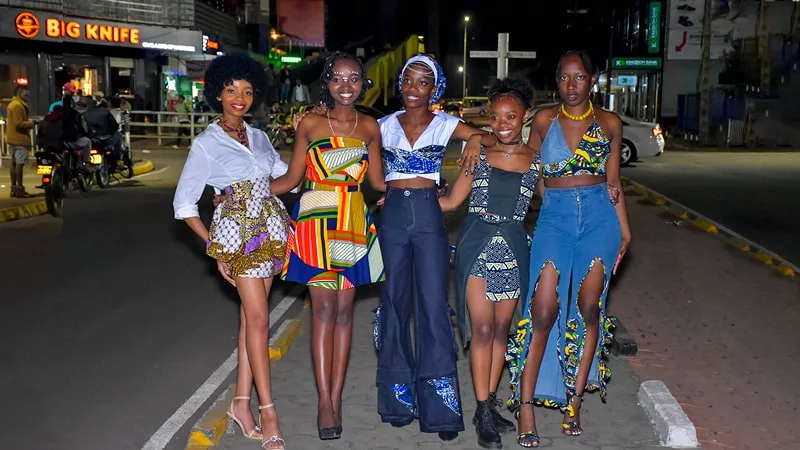
Nairobi, a city known for its vibrant culture and dynamic street fashion, is gearing up for an extraordinary event: Nairobi Street Fashion SN 2. This unique platform has gained recognition for successfully merging the worlds of art and fashion, culture and contour, and is set to take things up a notch with its second installment. Scheduled for Sunday, November 12, from 3 to 7 p.m. EAT, the event will be hosted at the Delight Tailoring Fashion & Design School, located in Nairobi Central, Nairobi County.

Nairobi Street Fashion Season 2 promises to be an unforgettable experience, bringing together a diverse group of fashion enthusiasts, designers, and artists. The theme of this edition is “The Royal Invite,” and it’s a celebration of the city’s creative spirit and the fusion of different styles and influences that shape Nairobi’s unique street fashion scene.

The Venue: Delight Tailoring Fashion & Design School

Delight Tailoring Fashion & Design School, the chosen venue for Nairobi Street Fashion SN 2, is an ideal setting for the event. Located in the heart of Nairobi Central, this school has been a hub of creativity and innovation in the world of fashion. The school is renowned for nurturing young talent, making it the perfect host for an event that aims to celebrate the city’s vibrant street fashion culture.

The Royal Invite: A Theme of Elegance and Creativity

“The Royal Invite” theme for Nairobi Street Fashion SN 2 is all about embracing the elegance and creativity that the streets of Nairobi exude. Attendees are encouraged to explore their inner royalty and showcase their unique interpretation of this theme through their fashion choices.

Whether it’s blending traditional African fabrics with modern designs, infusing a royal touch into everyday streetwear, or even experimenting with avant-garde outfits, the theme encourages participants to push the boundaries of fashion. In doing so, it celebrates the rich tapestry of styles that define Nairobi’s streets.

A Platform for Amateurs and Masters

One of the most remarkable aspects of Nairobi Street Fashion SN 2 is its inclusive nature. The event provides a platform for both amateur and experienced designers and artists to come together, share their creativity, and learn from one another. This fusion of perspectives leads to the birth of fresh ideas and the expansion of horizons.

Fashion enthusiasts, whether they’re young designers looking to make a mark in the industry or individuals who simply love expressing themselves through clothing, will find a welcoming space at this event. It’s an opportunity to learn, network, and, most importantly, to be inspired.

Wisdom in the Streets

The tagline of Nairobi Street Fashion SN 2, “Wisdom is in the streets,” highlights the fact that the streets of Nairobi are not only a place for fashion but also a source of inspiration, knowledge, and cultural exchange. Street fashion is an expression of individuality and collective identity, embodying the wisdom of the city’s people and their diverse backgrounds.

This event is a celebration of the melting pot that is in Nairobi, where traditional, modern, and global influences merge to create something entirely unique. It encourages attendees to seek out this wisdom in the streets and incorporate it into their own fashion choices.

Nairobi Street Fashion SN 2: The Royal Invite is a must-attend event for anyone interested in fashion, culture, and art. With a vibrant theme, an inclusive platform, and a rich cultural backdrop, this event promises to be a melting pot of creativity and inspiration.

As the streets of Nairobi continue to evolve and redefine fashion, this event serves as a testament to the city’s unique spirit and the limitless possibilities of self-expression through clothing. The streets of Nairobi have always been a place of wisdom, and on Sunday, November 12, that wisdom will come to life through the medium of fashion, making it an event not to be missed.

Content courtesy of Delight Tailoring Fashion & Design School, NFH

The First African Fashion Study From Unesco Explores Opportunities As Well As Challenges.

UNESCO will present its first report on the fashion industry in Africa on October 26, 2023, during Lagos Fashion Week in Nigeria.
Africa’s fashion industry is booming thanks to the continent’s youthful and expanding population, growing middle class, fast urbanization, and the development of digital technology. African designers are incredibly talented and creative, and they actively contribute to changing perceptions of the continent while also providing communities with tangible economic benefits. These designers frequently find inspiration in traditional know-how and practices.

Nevertheless, a number of obstacles still need to be overcome in order to fully realize the potential of the African fashion industry. These include a lack of infrastructure and investment, inadequate systems for education and training, a lack of protection for intellectual property, difficulty breaking into new markets, and a difficult time finding high-quality materials at reasonable prices.

In light of this, UNESCO has released a new report titled The African Fashion Sector: Trends, Challenges, and Growth Opportunities. highlights the key issues and trends facing the fashion, textile, and fine craft industries in the area and offers evidence-based policy recommendations to help them reach their full potential.

The report’s release is scheduled for October 26, 2023, during Nigeria’s esteemed Lagos Fashion Week. A worldwide panel of prominent people and businesspeople will discuss how African fashion designers may act as catalysts for sustainable development during the event.

Today, African fashion is booming. Fashion weeks galvanize markets and creators in 32 countries across the continent, from Casablanca to Nairobi, via Lagos and Dakar. The growth in e-commerce, which attracted 28 percent of Africans in 2021 compared to 13 percent in 2017, has led to an increase in local consumers. At the same time, it has created new opportunities for the international development of African brands, whose annual textile, clothing, and footwear exports amount to US$15.5 billion.

For Africa, fashion is a powerful driver of creativity, economic development, and innovation, creating many jobs, especially for women and young people. To better understand the forces at play in this field, UNESCO has produced the first overview of the fashion industry at the continental level and outlined prospects for its future. The report underlines the economic and social opportunities created by the sector, 90 percent of which is composed of small and medium-sized enterprises, whose profits directly benefit populations. It also sheds light on current and future challenges related to Africa’s digital transformation, which UNESCO is accompanying.
These new practices are driving innovation and supporting the expansion of an industry that alone could increase the continent’s prosperity by 25 percent

Content Courtesy of UNESCO & NFH Digital Team

Africa Is Emerging As A New Source Of Inspiration For Global Fashion, According To Lexy Mojo-eyes.

Lexy Mojo-Eyes, an African fashion ambassador, is the president and chief executive officer of Legendary Gold, the organization that promoted Nigerian designers internationally prior to the year 2000.
He discussed his experience as a Nigerian game changer in the fashion industry in an interview with Sunday Sun.
Why are you keeping quiet about what you started in the Nigerian fashion scene since you are regarded as the dean of fashion shows in that country?

Yes, I played a significant role in developing Nigerian fashion. I gave the entire Nigerian fashion sector a new direction by encouraging them to use locally produced fabrics, accessories, and patterns in their manufacturing process.
I also encouraged Nigerians to start dressing locally, which has altered the country’s textile, apparel, and fashion industries to this day.

Since 2000, we have been bringing Nigerian designers to the catwalks of Paris, Milan, London, New York, Tokyo, Sydney, etc. after reorienting the local industry.
My focus shifted to extending my mission beyond simply Nigeria to the entirety of Africa after being appointed as the lone African to the Board of Governors of the World Fashion Organization in 2008.
I was also transferred by my assignment to several WFO offices worldwide.
Is this a sign that Legendary Gold has abandoned its first passion, fashion, in favor of other ventures?

In no way.
It is a way of life for Legendary Gold Limited.
Since 2010, we have expanded our business outside of Nigeria to include all of Africa.
This was particularly true when, in 2013, we inaugurated the Africa Fashion Reception (AFR) in Paris.

Our objective with AFR is to extend our services throughout Africa. We wanted to spread the success story of the fashion, textile, and apparel sector in Nigeria and the entirety of its value chain throughout all of Africa. And the African Union and UNESCO are working with us to put this into action.

What is the real purpose of the Africa Fashion Reception?
Africa Fashion Reception’s main objective is to increase the power of fashion as a tool for combating poverty in Africa by generating wealth through the empowerment of women and youths in the various fashion professions through training, capacity-building programs, workshops, and the establishment of micro, small/medium scale businesses, supporting the African Union Agenda 2063 and the Sustainable Development Goals of the United Nations. Two AFR events are planned per year. They are the African and world versions, which the African Union and UNESCO, respectively, in Paris, are hosting in Addis Abeba.

An all-African endeavor is the Africa Fashion Reception (AFR).
Every year, under the proud theme “Africa is the New Inspiration of Global Fashion,” the AFR brings together top dignitaries from all over Africa, including ministers, ambassadors, media, textile and apparel manufacturers, retailers, wholesalers, buyers, fashion designers, models, and other industry professionals. So, instead of switching to other businesses during the past 15 years, we have simply increased our activities while reducing them in Nigeria.

What significance will your new initiative, “Africa Celebrates,” have for Africa, please?
Our newest pan-African event is called Africa Celebrates. It was launched in 2021 with participation from 18 African nations.
While more nations are participating this year than there were last, 32 African nations did so last year.
Africa celebrates its business, technology, culture, and heritage.
“Achieving African Integration through Art, Culture, Heritage & Business Leveraging on AFCFTA Implementation” is the subject of Africa Celebrates 2023. At the headquarters of the African Union in Addis Abeba, Africa Celebrates will take place in October of this year.

What has sustained you during your years as Lexy?
As long as God allows me life, I will be zealous and enthusiastic about positively empowering and inspiring the next generation of African adolescents with the ideas of pan-Africanism.

Content courtesy Sun News Online & NFH

Kibera Fashion Week: Kenya’s Largest Urban Slum Experiences Fashion Week

Kibera Fashion Week: The Hits Kenya’s Largest Urban Slum, Overlooking the rusted tin roofs of Kibera, the largest urban slum in the Kenyan capital, towering models march down a three-meter (10-foot) high runway.
In the center of the vast area, Kibera Fashion Week is taking place for the second time, and the venue is filled.
On Saturday, hundreds of people from Kibera and other parts of the city watched the varied collections float by for six hours, punctuated by pop music performances.
The designer Avido, who debuted the first show last year, claims that Kibera is “full of style.”
The 27-year-old, whose real name is David Ochieng, claims that many don’t see it because they associate Kibera with post-election violence, prostitution, and drug usage.

“We want to demonstrate that this place has style and innovation. Opportunities are what we lack here. Avido was raised in Kibera, a city of around 250,000 people, where he currently works.
Global artists like Bruno Mars and Beyonce have been drawn to his designs.

The event has brought together 11 ideas from 376 candidates with a wide variety of styles employing cotton, jute, wool, pearls, and even metal. It boasts a range of relationships with the Goethe Institute, the European Union, Nairobi Design, and the Masai Mbili group.
A “Mad Max” post-apocalyptic aesthetic was chosen by designer Pius Ochieng, who is not related to Avido.

The 26-year-old gathered scrap metal from streets and dumps, including computer motherboards, spark plugs, LED lighting, chains, and springs.
He created a 15 square meter piece illuminated with rose, green, and blue neons at home and set it in one of Kibera’s back alleys after sewing them onto clothing.
Helen Wanjiru, who was raised in Nairobi’s less-than-affluent Kawangware neighborhood, has huge pockets running the length of her garments, including the legs.

The 26-year-old, who switched from computer processing to fashion, added, “The pockets are big, but they are empty.”
“It is an analogy — a lot of youths in Kenya, they have education, they have ideas but they don’t get jobs because there is no opportunity.”

Unlike frequently staid Western events, Fashion Week is totally different. The predominantly young audience applauds the models loudly and saves a quiet welcome for the designers as they enter the runway.

The event gives local fashionistas an opportunity to showcase their talents, frequently by dressing extravagantly.
The haute-couture fashion world, however, is still far away in a nation where people are accustomed to wearing second-hand items and where pricey imports dominate the market.

Avido desires a change in it.
“Many people here have only seen fashion shows on TV,” he added. “We want to demonstrate to the public what fashion is.
“Parents and other people used to believe that art was not involved in fashion and design.

They used to believe that if you worked in the fashion and design industry, you were similar to a tailor, and if you worked in modeling, they might have thought you were a prostitute.

Violet Omulo, the project manager, claimed that she went to the exhibition “to chill, have fun, and discover upcoming designers.”African fashion is distinct and on the rise.
We must advertise it through such events to let people know that we are capable of being creative and that it is not just about Paris or Milan.

“Kenya, also in Africa in general, has talented designers,” she stated.
The above-mentioned content was not produced by the Barron’s news division. The AFP produced this article. Visit for additional details.

Content courtesy of Barrons, Kiber Fashion Week & NFH

Fashion is Moving in a Radical Direction Thanks to Afrofuturism

The Future of Fashion Is Being Shaped by Afrofuturism, These Black artists are wishing brighter futures into existence while fusing a euphoric mosaic of inspirations.
We may imagine the kind of future we want to live in through fashion, music, and all other forms of creativity. However, looking to the future is incomplete without having a good understanding of the past, and Afrofuturists are offering their visions of the future that are based on this very understanding.
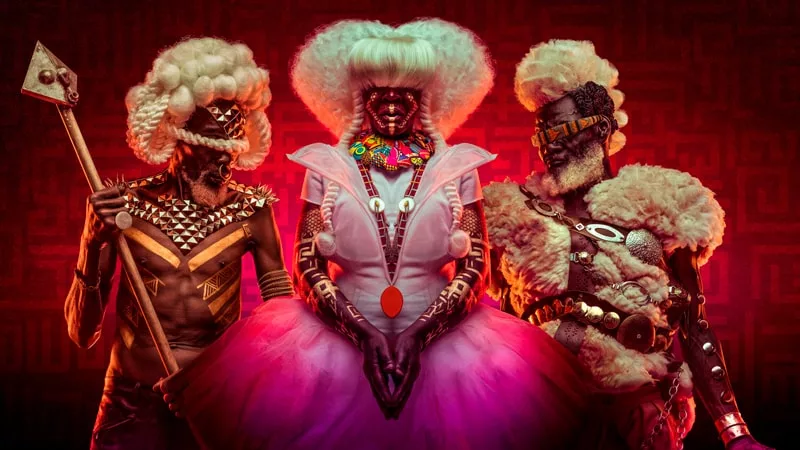
Afrofuturism is a cultural aesthetic that explores alternative narratives for the Black experience and is influenced by science fiction, fantasy, and history.
The diverse variety of artistic expression that falls under this heading is influenced by racial relations, class, and a history of colonialism.

Afrofuturism is a way to resurrect, link, and recreate colonized people’s native cultures and traditions, whether they are found in Africa, the Indian subcontinent, or any other historically colonized countries for that matter. Black creatives across the continent and beyond are taking control of their stories and articulating their futures without the influence of the West.

Giving Folx Their Flowers
Afrofuturism has been forming in the visual arts, music, and literature for decades, but Marvel’s Black Panther gave the general public a visual vocabulary for what such a future would look like.
Author Octavia Butler, free-jazz musician Sun Ra, who fused Egyptian mysticism and sci-fi iconography, and American singer-songwriter Janelle Monáe, whose 2018 album Dirty Computer and its accompanying film explore queerness in a technologically advanced future, are among pioneers.

According to Ernestine White-Mifetu, co-curator of Africa Fashion at the Brooklyn Museum in New York City, “African creativity has attracted more attention during the past ten years.
Just so happens that the two main interests right now are fashion and music. Visual arts were the focus five years ago, and they still are today. There are various reasons for this, some of them are socioeconomic because social media and other kinds of media provide creatives more access to a worldwide audience.
The appreciation of talent outside of the African continent has also been linked to ideas of luxury.

“Over the past ten years, there has been a heightened interest in African creativity,” says Ernestine White-Mifetu, co-curator of Africa Fashion at the Brooklyn Museum in New York City.
Currently, the two main interests are just fashion and music.
Visual arts have remained the same over the past five years as they always have.
There are various reasons for this, some of them are socioeconomic because social media and other media outlets are allowing creatives to reach a larger audience on a global scale.
It has also been connected to concepts of luxury that the talent is valued outside of the African continent.

Designer Jameel Mohammed created the Afrofuturist jewelry and clothing line Khiry in opposition to the White elite language that has always dominated the luxury market.
As an undergraduate, he visited Japan for a summer study abroad program and met the CEO of a luxury company, who asserted that only Paris and Milan could produce genuine luxury goods.
“His backward outlook felt like the epitome of all the colonial assumptions about brown people, their cultures, and their state of development.
It was very clear that that was not the future, says Mohammed.

As a philosophical guideline for his work, he draws inspiration from the history of Black power-inspired protests and civil rights movements. “I’m asking, ‘How do we look at those different results and the strategies employed and try to build a culture around those learnings through object-making and experience-making?'” he writes.
These influence so many aspects of our daily lives, aspirations, and sense of self in the world.
Before the concept of Afrofuturism became personally significant to Mohammed, he began Khiry: “I was thinking of it more as just influence from the African diaspora.
I now understand that we will need to advocate in a more assertive and organized manner.

I can see that. The future generation of this movement is being built by Black creatives, in my opinion.
He mentions designers like Brandon Blackwood, whose viral tote bag bearing the slogan “End Systemic Racism” made a hit in 2020 during the peak of the Black Lives Matter movement.
Luxury now exists at the singular crossroads of accessibility and exclusivity because of digitalization. “Because luxury is so closely associated with power, there is a basic tension within it. In that sense, it is about addressing existing hierarchies in the world and even strengthening them in certain respects.

In order to tell Black people that “the way that this business has regarded us need not be how we view ourselves,” Mohammed adds, “I think that I’m using part of that natural tendency of luxury to call into question such hierarchies.

Off The Pedestal
Adeju Thompson also strongly identifies with the notion that all cultures should be given the same value. Thompson is determined to access codes from all over the world after his label Lagos Space Programme won the International Woolmark Prize 2023.
“While my work is heavily influenced by my African history and identity, I don’t let that define who I am.
The cultures and materials I consume influence the LSP language, but everything is interpreted through a Nigerian lens.

“A marriage of two different worlds,” according to Thompson, best represents his art. For instance, the collection ‘Project 7/Post-Adire’ aims to ’emphasize the connections between western tailoring norms and the romance of traditional indigenous aesthetics of dress’. According to Thompson, the term “adire” refers to an ancient method of indigo dyeing.

Adire cloth is worn by people on important occasions.
The storytelling component is what distinguishes it as unique. Each motif has a purpose, and the approach is extremely methodical. In more recent times, queer communities have also communicated through signs, objects, and gestures that have special significance to them.
This concept of Adire as a queer archive developed over time. The designer’s confidence grows along with his own sense of queerness.

Afrofuturism is one term, nonetheless, that Thompson does not employ to describe his work. Instead, he chooses “African Futures,” which he describes as “not some fancy idea. African Futures is deeply based on my experience and how I view the world. Just by being here, I contribute to the conversation. It speaks really nicely to my dream, of futuristic African fashion when I just put things together.
Africa Fashion’s “Politics And Poetics Of Craft” section also goes into length into the continent’s textile histories. It’s wonderful to see people gain a better grasp of how the history of clothing and textiles on the African continent is a living heritage that today’s designers are continually referencing, adds White-Mifetu.

“You see Afrofuturism very clearly in ‘Afrotopia,’ which is one of our six sections,” her co-curator Annissa Malvoisin continues. Here, we highlight designers who have a utopian perspective on the future.
For instance, the fantastic trenchcoat-burkha combination made by designer Maison ARTC for Africa Fashion.
He blends the trenchcoat, which is distinctively associated with the London sartorial aesthetic, with the burkha, which is distinctively associated with Muslim modest attire, to produce this futuristic intercultural discussion.

Boppin And Poppin
It is apparent that the diverse variety of artistic expression produced by an entire continent and its diaspora is not homogeneous, and culture means different things to different individuals.
Lagos- and London-based As undergraduates in London, Ola Badiru and Jimmy Ayeni founded the company Vivendii to represent their way of life.
They reflect the effects of growing up during the MTV era in their WordArt placements and retro-inspired graphics: We’re new to the internet.
When we were young, the vivid colors we saw when using Microsoft Word and MSN truly affected us. Using Vivendii, we may relive our youth, claims Ayeni.

In addition, Badiru explains the significance of the t-shirt bearing the slogan “Stronger than Pain,” explaining that it is part of the African identity to be able to create diamonds under pressure. Nigerians experience a lot, yet they are resilient and always overcome the suffering.
Other works, like the t-shirt “Operation Vomit Your Dollars,” mimic extravagant church ceremonies that assure followers of material wealth or scholastic success for their children in order to convey Badiru and Ayeni’s skepticism regarding organized religion.

Their concurrent musical project, Vivendii Sound, reflects their naive, immature approach to culture creation. We turn to the future with some of the newest hyper pop, trap scenes, or EDM, or we pull from the past with 80s funk. In addition, we place a lot of emphasis on Fuji music and Afrobeats from our own Nigeria, says Ayeni.
White-Mifetu and Annissa Malvoisin also tapped into the appeal of music on a global scale while creating African fashion.
“You see Afrofuturism very clearly in ‘Afrotopia,’ which is one of our six sections,” claims Malvoisin. Here, we highlight designers who have a utopian perspective on the future.

Giving the tourists the idea that Africa is a continent with 54 countries and getting rid of the generalization of just mentioning “Africa” was a key part of our redesigning. With the help of our modes of representation, you may establish a historical context and a sense of place inside the African continent thanks to its independent past.

Content courtesy of Grazia & NFH Digital Team 

Luxury Designer Michael Kors Shop Launches In Kenya At Sarit Centre, Westlands

High-end clothing retailer Michael Kors debuts a location in Kenya in the Sarit Centre in Westlands.
Now established in Westlands at Sarit Center Shopping Mall, the first Michael Kors store in Kenya was carefully invited only for the store’s opening.
At the grand inauguration of a premium store boasting an exclusive Michael Kors line, enter a world of luxury and flair.
Improve your look and join us as we celebrate the pinnacle of elegance.

https://www.instagram.com/p/Cxsjdx5Kokw/?igshid=NzZhOTFlYzFmZQ==

The whole line of Michael Kors accessories, including watches, jewelry, handbags, footwear, and eyewear, as well as the brand’s signature perfumes, are all available at the Sarit Center store.
Purchase upscale Michael Kors goods without worrying about authenticity.
According to a representative of the luxury designer business, Kenyans now have the opportunity to purchase high-end goods without having to worry about their legitimacy.

https://www.instagram.com/reel/Cxzui_poHXF/?igshid=NzZhOTFlYzFmZQ==

Kenya now boasts a Michael Kors store offering high-end designer clothing, shoes, handbags, and accessories.
Fashion fans experienced high fashion at the store that debuted in the Sarit Centre in Westlands on Friday, September 29.
With the arrival of Michael Kors in Kenya, you can now purchase bags, shoes, and watches.
We also have plans to introduce MK scarves, sunglasses, and perfumes.
As said by Tabitha Mwende, expect the best customer service and high-quality goods.
“We have a problem in Africa where when a high fashion brand comes into the country it’s a knockoff, but now Kenyans can be sure to get Original quality, it’s the same quality you’ll get in Dubai, USA, and other major markets,” the statement reads. And she said.

https://www.instagram.com/p/Cxxn-5rKBvu/?igshid=NzZhOTFlYzFmZQ==


About Michael Kors
Award-winning and well-known designer of high-end ready-to-wear and accessories, Michael Kors. A variety of goods are presently produced by his 1981-founded eponymous firm under the Michael Kors Collection, MICHAEL Michael Kors, and Michael Kors Men’s labels. Accessories, shoes, watches, jewelry, ready-to-wear for men and women, wearable electronics, eyeglasses, and a complete line of scent goods are among these items.

In some of the most famous cities in the world, such as New York, Los Angeles, Chicago, London, Milan, Paris, Munich, Dubai, Seoul, Tokyo, Hong Kong, Shanghai, and Rio de Janeiro, Michael Kors boutiques are run either directly or through licensing partners.

While celebrating international occasions and cultures that reflect the diversity, experiences, and viewpoints of people throughout the world, the organization takes great satisfaction in attracting and keeping diverse talent and in offering an inclusive work environment for everyone.

A solitary designer with an intuitive sense of beauty and an unwavering eye for classic style is the driving force behind this rising enterprise. In addition to being recognized for his generosity and receiving multiple awards in the fashion business, Michael Kors has gained the adoration and admiration of millions of people.
He has built an enduring luxury lifestyle empire with a reach across the globe by being wholly committed to a vision of style that is as elegant as it is opulent, as iconic as it is current.

Content Courtesy of NFH Digital Team

African Fashion & Arts Award (AFAA) Stakeholders Encourage Intra-African Trade In The Fashion Industry

A better intra-African trade and economic partnership between African entrepreneurs in the fashion and arts sectors is being urged by stakeholders in the industry.

The African Fashion & Arts Award (AFAA) emphasizes the requirement that fashion and art creatives be empowered, honored, and recognized.
Over 65% of the 1.4 billion people in Africa are young people between the ages of 12 and 35, according to Mr. Kingsley Amako, founder and president of AFAA.
He also noted that fashion and the arts continue to be the most viable and possibly the creative industry vertical that generates the most revenue, which could significantly affect the GDP of the continent.

At a recent news conference in Abuja, Amako stated that the textile and clothing business continues to be the second largest revenue-generating sector in the world’s emerging nations, after agriculture, despite the continent’s priority shifting from oil to tech.
Speaking on the upcoming third anniversary of AFAA, which will take place in Abuja later in the year, Amako stated that focusing on fashion and art creatives is the best course of action.
The third anniversary of the AFAA is planned for the first three days of December 2023 at the Abuja Continental Hotel, while the East African Media Tour is slated for the sixth, tenth, and thirteenth days of October 2023, respectively, in Tanzania, Kenya, and Rwanda.

When questioned why the tour was taking place, Amako responded that it had been customary for the organization since 2021 in South Africa, 2022 in Cairo, Egypt, and 2023 in three (3) East African nations.
Amako expressed her gratitude to the sponsors of the AFAA 2023 and stated that the organization’s aim, vision, and motto are to empower people and celebrate their creativity.
“The appropriate level of knowledge and sensitization must be created for the necessary government, public, and private sector organizations to consider for investment in order to realize the Africa we envision.

The African Union, African Development Bank, AfCFTA, AFREXIMBANK, Bank of Industry, and a large number of other institutions have all expressed a strong interest in the creative industry. However, young businesspeople in the fashion and arts sectors appear to believe that this interest primarily applies to the music and film industries.
With “these Press conferences across Africa and the Award ceremony in December to encourage achievers in the fashion and arts industries and as a platform for utilizing the inherent talents among the millions of African creative youths,” he continued, the AFAA will change this narrative.

He listed the advantages of AFAA’s mission in Africa as encouraging talent development and skill acquisition for self-reliance, creating employment opportunities for the more than 13 million African graduates each year, boosting the continent’s GDP, luring foreign direct investments (FDIs), and fostering intra-African trade and business ties.

The organization also aims to influence changes in trade and distribution policies, aid in the empowerment of women and young people, advance world peace, persuade African youths to live in areas with little to no security threat, aid in the eradication of poverty by providing capacity-building training sessions through the AFAA masterclass and mentorship symposium, and promote export for foreign exchange.
In his summation, Amako noted that the fashion and arts sectors had been selected as the ones on the continent that employed the most women and young people and that finished the value chain from farms to finished garments.

In the next ten years, the global fashion market is predicted to triple, producing up to US$ 5 trillion yearly. Through the purchase of 19 billion items, the USA spends 284 billion dollars annually on fashion retail. At different points along the value chain, from design to production to marketing, the fashion sector presents a huge opportunity for Africa. The fashion and arts sectors have a great deal of potential to inspire and effect change in some of the most marginalized groups, particularly women and young people, and to advance structural change.
Recognizing the importance of contemporary technology, AFAA 2023 has thought about topics for the AFAA masterclass and mentoring symposia that involve integrating technology into the fashion and arts industries.

Content courtesy Voice Of Nigeria & NFH

African Fashion Show Brings African Designers Together

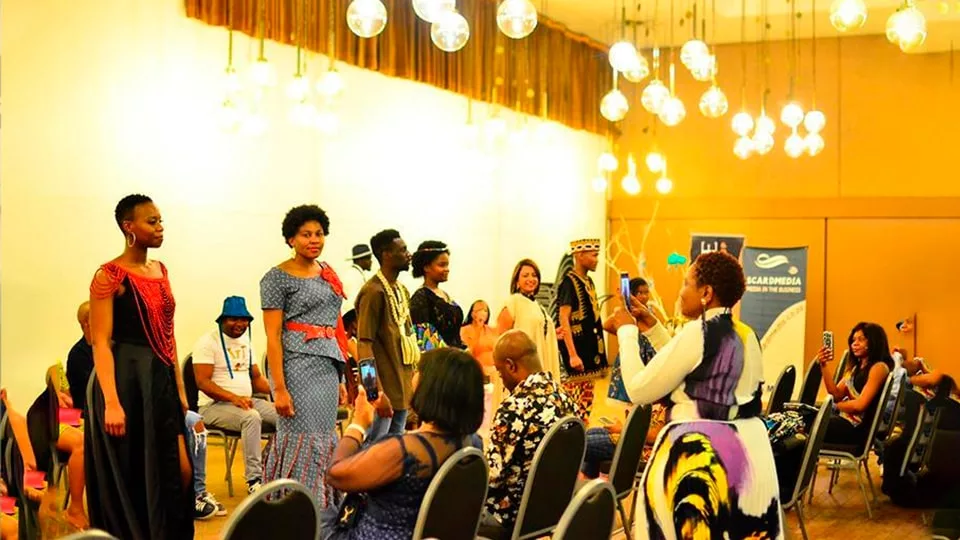
On September 23, Scard Media held a prestigious lifestyle event to honor regional African fashion designers.
At the Alberton Hellenic Community Centre in New Redruth, designers and fashionistas from many cultures gathered to display their incredible talent.
The stunning and eagerly anticipated lifestyle exhibition honored South African designers as well as the rest of the continent.
The event featured captivating presentations of various African clothing brands, live modeling, breathtaking performances, and plenty of fun activities honoring Africa.

“Since it’s Heritage Month, we decided to do something that would bring together African designers and the South African culture,” said Giscard Ngwama, director of ScardMedia.
Our designers came from all over Africa; some were from Zimbabwe, Mozambique, the DRC, and Nigeria. By recognizing our ancestry and variety, we are uniting Africans.

In addition to providing employment opportunities for locals, the well-attended event was sponsored by Lifestyle Property Group and backed by a number of other partners. Vinolia Mabele, Ms. United Nations International 2019, was also present.

Mbalenhle Vezi, the event’s organizer, claims that a lot of hard work paid off and made the event a huge success. She claimed that putting the concert together required at least three months.
“During the event, attendees also had a chance to network.
By hosting this concert in further African nations, we have our sights set on developing and increasing in the future.
We must break the cycle and become self-starters, she urged.

Content courtesy of Alberton Record & NFH

Victoria’s Secret Fashion Show Returns With Black Designers’ Designs On The Runway

After a five-year sabbatical, the Victoria’s Secret fashion show is making its eagerly awaited return and is now live on Amazon Prime.
The work of 20 exceptional creatives from thriving cities including Bogota, Lagos, London, and Tokyo will be featured in this year’s show, which spans a variety of industries including fashion, cinema, design, music, and the visual arts.
Bubu Ogisi, the creator of IAMSIGO and a fervent supporter of African fashion created by Africans in Africa, is one of the designers engaged. In addition to defying conventional notions of African companies, Ogisi’s collection for the event demonstrates her dedication to celebrating African ideologies, textiles, and manufacturing methods.

The show will prominently feature model Mayowa Nicholas, who went from being an accounting student to dazzling runways all over the world.
Mayowa, a native of Nigeria, never thought of making modeling her career.
Like many Black children in the nation, she was urged to prioritize her education and look for conventional employment. Mayowa, who was raised by a single mother, thought that studying accounting was a sensible way to ensure her financial security.
She was approached on the street to take part in a modeling competition with Elite Models, which caused her perspective to change.
She made the decision to compete despite feeling unqualified in comparison to experienced models, and she ultimately took first place.

This surprising triumph brought her a modeling contract in China, where she encountered prejudice and went through a culture shock. Nevertheless, Mayowa persisted, and she and 14 other girls were given contracts.
She made the painful decision to leave school and her family behind, traveled to Paris, and walked in Schiaparelli’s debut presentation during Couture Fashion Week.
After a while, Mayowa’s agency offered her the chance to try out for Victoria’s Secret while she was in New York. She initially declined out of fear, but the next year she jumped at the opportunity. She attempted to travel to China for the show but unfortunately ran into visa problems.

The next year, however, Mayowa had the pleasure of having her mother in New York to see her accomplishment in addition to getting the chance to walk the Victoria’s Secret show. It frequently happens that parents of people who work in creative industries can only fully appreciate their children’s work after seeing it for themselves.
Through group chats and social media, Mayowa’s mother happily informed loved ones about the accomplishments of her daughter.
At the beginning of her work, fashion designer Bubu Ogisi was passionate about studying fibers, materiality, and traditional methods.
She experienced growing up in several nations, including Nigeria, Ghana, and England, as well as going to school in Paris. She was particularly impressed by Nigerian weddings and festivals, which featured an abundance of textiles and materials.

Her exploration of fiber techniques, reading skills, and the real materiality of fabrics were all influenced by this encounter.
She was further exposed to the commonalities in these methods used in several nations, whether they are Anglophone, Francophone, or Portuguese-speaking, even though they go by different names while attending school in Ghana.
Ogisi found it fascinating to see how different weaving techniques are carried out, such as Asha key in Nigeria, kente in Ghana, and Heat kita in Ghana, in different ways and with individual variances.
Her work was shaped by her understanding of these parallels and differences, which allowed her to highlight the complex fiber research and the enchantment that can be made with one’s hands even in unnoticed locations.

Ancient, historical, and mythological tales are frequently the source of Bubu’s inspiration since she thinks that by recounting these tales, we may decolonize minds and introduce fresh perspectives. The world has frequently accepted some myths as true while ignoring others. Bubu uses language as a medium to fabricate stories that have not yet been spoken in order to shed light on them.
When contacted by Victoria’s Secret, Bubu initially chose not to reply but subsequently made up her mind to pick up the phone and speak with the entire team. When working with others, Bubu loves collaborative energies that are harmonious and in line with everyone engaged. Bubu was thrilled to have this opportunity to continue presenting a narrative to which she has been deeply devoted.

Bubu viewed this as an opportunity to tell Victoria’s Secret about her experiences, particularly in respect to the idea of Victoria and its association with legendary figures.
She wants to share the African myths and legends through her own culture, nation, and continent. Numerous studies have been done on the cosmological and mythical tales of Nigeria and other African nations.

The collection is influenced by Roman and Greek myths, with a special emphasis on the goddess Nike.
The purpose of Bubu is to present the tales of ten to eleven unisex deities, such as the God of War, the God of Space and Time, and the God of Water. The idea has been greatly influenced by the Nigerian-derived European Edo mythology.

The secret stone in the necklace serves as a representation of the goddess in the entire concept, which centers on exhibiting the feminine divine. Each deity is linked to particular substances, hues, and superpowers. locating and making the components needed to cross the continent.
Mayowa and Bubu have a history of collaboration; when she was 16 years old, Mayowa modeled for Bubu. For both of them, getting back in touch at age 25 was a pivotal and meaningful point in their professional relationship.
Hugging occurred occasionally throughout the process, demonstrating their close relationship.

Intricate styles that were genuinely one-of-a-kind and unlike anything Victoria’s Secret had done before were the outcome of Bubu’s concept for the project, which included hairstyles that paid reverence to the ancestors.

Content courtesy of Ebony & NFH 

Ad