Sunday 3rd of May 2026

Nairobi, Kenya

Lukhanyo Mdingi Debuts His AW22 Collection at Paris Fashion Week

Multi-award-winning South African designer Lukhanyo Mdingi is starting the new year on a high note as he launches his Autumn/Winter 2022 collection in Paris.
Mdingi was set to debut the Bodyland AW22 collection at Paris Fashion Week on Tuesday, January 18.

In this collection, he wants to celebrate the human hands that work tirelessly in creating different designs.
Emerging menswear designers showing in Paris this month have faced difficult choices in the countdown to the Autumn/Winter 2022 season.

When the Federation de la Haute Couture et de la Mode announced a go-head for Paris Fashion Week Men (18–23 January), it was easy enough for major luxury brands to mobilize their resources. With limited funds, emerging designers, however, have had to calculate carefully. While foreign emerging designers have been wary of the costs of physical shows, home-grown designers based in Paris have generally been ready to plow ahead.

While Parisian brands can plan physical shows in uncertain times and develop contingency plans, international young designers showing at Paris Fashion Week have had to get creative to present their Autumn/Winter 2022 collections. It’s one of many hurdles for the new generation of men’s designers who still see Paris and Milan as worthwhile.

Rhuigi Villasenor, the 29-year-old founder of LA label Rhude and newly announced creative director of Swiss heritage brand Bally, was originally excited to show in Paris this season for the first time since the pandemic. When he launched his brand in 2015, making hoodies and T-shirts, he considered Paris “the main stage” of fashion, inspired as a child by flipping through magazines he couldn’t afford in the bookstore, Barnes & Noble.

However, a flip-flopping of travel restrictions and rising Omicron cases forced the designer to reconsider. “Weeks ago we were planning to go to Paris and show. We were looking at venues and the production. And then in just a matter of days, I decided to pivot,” he says. “Taking off my designer cap and putting my CEO cap on, it’s quite a big expense for me not to have the certainty whether we’ll be able to even actually show, let alone have an audience. I had to make the proper choices to pull back from a physical show and do something that feels a bit safer.”

Instead, Rhude has presented his collection digitally with an accompanying showroom, maintaining a laser-like focus on the clothes. Known for hoodies, T-shirts, and bold logo jackets retailing for up to $2,500, Villaseñor is looking to more classic styles for this season, says the designer, who aims to create what the new version of the power suit looks like for today’s Gen Z investor.

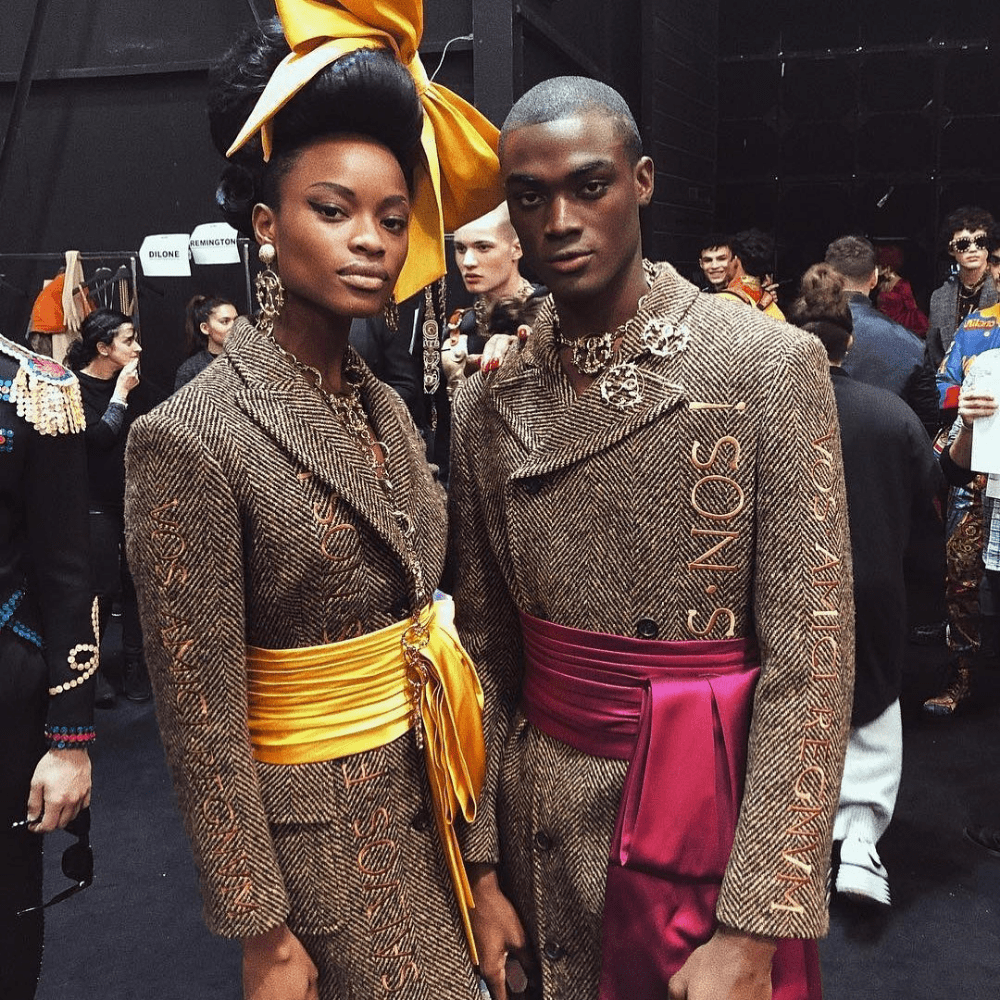
South African designer Lukhanyo Mdingi arrived in Paris on 13 January, just five days before his first-ever presentation at Paris Fashion Week, showcasing his bold artisanal and textured prints. Without a network of collaborators in Paris, the young designer found it tricky to organize the components of a fashion presentation, from venue to lighting.

“In South Africa, when you’re part of the fashion week, you pay a set fee and the whole production is pretty much-taken care of and includes hair, makeup, casting, and producers,” Mdingi says. “You walk in with your collection and that’s pretty much it.”

Mdingi, who founded his business in 2013, launched Ssense, and Net-a-Porter’s Vanguard program after Autumn/Winter 2021. He hopes his presentation and showroom will attract more stockists and further growth. Mdingi was invited to show at Paris Fashion Week after winning LVMH’s Karl Lagerfeld Prize 2021, shared with New York’s KidSuper and Shanghai brand Rui. Each designer received €150,000.

Physical shows, with extra, can work for local talent

Many of the menswear designers who are based in Paris have considered a physical show to be the right option. Florentin Glemarec and Kevin Nompeix, the duo behind gender-free brand Egonlab, showed on Monday, following their Pierre Bergé Prize win at Andam 2021. Running parallel to the show was Egomanati, a metaverse experience accessible via the brand’s website featuring NFTs from Egonlab, in collaboration with Crocs.

“I think for young brands, the physical show is an important thing because it’s a validation of our business,” says Nompeix. “We want a real show to meet people, to meet our community, to feel a real energy with the models a real experience.”

Egonlab built a strong online community during the pandemic, Nompeix says (the brand has over 90,000 Instagram followers). Now, as the brand broadens to include womenswear, the new show, and NFT activation are intended to provide a new marketing boost.

French designer Louis Gabriel Nouchi was also set on a show for AW22. Launched in 2017, the brand’s sales have doubled since 2020, bolstered by a store in Paris. Now, he’s keen to win stockists and further press attention with an in-person runway show on Saturday at Palais de Chaillot.

Nouchi’s show for Spring/Summer 2022, staged in July, was an easier challenge because it was held outdoors, he says. Despite the social distancing demands on guests and complex organizing backstage, he was still determined to proceed with AW22. “After making so many videos, it’s really complicated to transmit an emotion through digital,” he says. “Everybody’s going to watch it on their phone it’s not a movie screen. You lose a lot of the atmosphere and the immersive effects. For me, if we’re able to respect all the conditions, let’s do it!”

Pre-pandemic, designers had relative flexibility, confirming show venues three weeks before the event. Now, the lead time is closer to three months, Nouchi says. “It takes longer to source materials, and also we have to have a Plan B, Plan C, and Plan D.” The designer has planned a video and exhibition as backup ideas in the event that the physical fashion show is scuppered. “We’ve had to be very fluid in our planning,” he sighs. “It’s been like this for two years.”

Trialing new formats

For this season, the focus of Rhude’s Rhuigi Villasenor is on the clothes, contrasting with the star-studded show–party the brand held for SS22 in LA, which featured A-list celebrities and a champagne tower. Villaseñor wants to ensure the foundations of the business are solid before taking on new retailers or partnerships. “I’m championing the clothes and the design and the hard work that the team and I put in,” he says.

Rhude has maintained a year-on-year rapid growth rate of around 50 percent. It’s important to take stock at this juncture, says Villasenor. “It’s very easy to be dictated by the consumer. And then you end up on this train where you don’t have control.”

Egonlab’s metaverse project reflects how brands want to extend their online presence. “We want people to find refuge online,” Nompeix says. “You can move through and touch things, or walk through a door and find our collaboration with Crocs.” To date, Crocs has dabbled in the metaverse with the NBA and Minecraft, but this marks its first NFT project, says Yann Le Bozec, senior marketing director EMEA at Crocs. Egonlab reflects Crocs’ gender-free ethos, he adds.

Meanwhile, Lukhanyo Mdingi is strengthening a connection with the Ethical Fashion Initiative. Mdingi and his team went to Burkina Faso to meet artisans who create fabrics for their collections. After the visit, Mdingi decided to invite one of the artisans, Veronique Ouedraogo, to join him in Paris, participating in the presentation and meeting press and buyers.

“Being in that space and really understanding the provenance of the craft and the human beings behind it really ignited something within us,” Mdingi says. “That in itself will add a layer to understanding the genesis of the clothes. And help people recognize that there’s a human behind them.”

Key Takeaway: The pandemic is teaching emerging brands that physical fashion shows aren’t the only route to building brand awareness or winning stockists. Emerging designers are responding to the wants of their individual fanbases, to deliver unique collection experiences, from pared-back presentations to metaverse experiments and NFTs.

Content courtesy of Vogue Business, IOL & NFH

Fashion Is An Industry Capable Of Fundamental Economic Transformation For Africa

Fashion as the second-largest sector in the developing world after agriculture, the fashion, textile, and clothing industry has the potential to transform lives, particularly for women and youth. Global value chains are integral to inclusive growth across the world, and a clear indicator of economic transformation.

In Africa, despite this potential, challenges remain. The majority of fashion businesses across the continent are informal, with limited access to finance for growth and high costs of shipping and transportation of raw materials. But though there remains work to be done in strengthening the value chain of the African fashion industry, the rapidly rising awareness and recognition of our extraordinary creative talent on the global stage is something to be celebrated and nurtured.

This starts with our young people. Over 60% of our 1.25 billion population is currently under the age of 25, and by 2050 two in every five children will be born in Africa. This opportunity is staggering, and it is limitless. The task that we as educators always come down to is twofold: skills and jobs. Much has been written about this urgent need, but little is cited about fashion’s contribution to the mounting task.

The fashion industry is a creator and provider of meaningful employment. An industry encapsulating multiple vertical sectors and business skills, from manufacturing to retail, marketing to design. These are now powered by a global focus on sustainability and innovation, led by a more engaged youth stepping forth with courageous optimism towards building a better world. As we know, all the more important living amidst the shifting pandemic environment.

With 13 million young Africans joining the labor market every year, the development of labor-intensive sectors is imperative for a prosperous Africa. This is reflected in the African Development Bank’s initiative Fashionomics, launched in 2015 to promote investments in the fashion sector, increase access to finance for entrepreneurs and incubate and accelerate start-ups. As part of the African Union’s Agenda 2063, and in support of the recent African Continental Free Trade Agreement, this actively stimulates job creation in the fashion industry in Africa, heightening regional and global integration with the unique selling point of African culture and creativity.

Perhaps ahead of our time, we founded FEDISA Fashion School in 2005 shortly after the launch of the Woodstock Creative Hub, a booming transformation of a once dilapidated area of Cape Town, South Africa that now serves as an inspiration for arts, food, and crafts for local and international creatives. Now entering our 18th year with an additional campus in Sandton, our industry-leading institution has trained more than 1,000 young people in fashion and design tertiary education, providing them with work-ready skills for high-impact employability across the world.

FEDISA offers a range of specialized accreditations in a holistic approach to the business of fashion, connecting advertising, design, and marketing. This provides our graduates with a readiness for a variety of positions, whether they wish to be designers, entrepreneurs, creative directors, archivists, buyers, or marketing executives. The preparation of our exceptional young talent in Africa gives future professionals the ability to add value and expertise to the rapidly growing e-commerce sector in Africa, estimated to be worth $20 billion – supported by the rise in African consumer spending power.

An increasing focus on the theme of return from the African diaspora who seek authentic African-made apparel powers attention to digital innovation for creatives on the continent, who diligently drive to build a more reliable and well-equipped sector, capitalizing on extremely high mobile saturation rates through the use of social media and e-commerce platforms. Internationalization is a mission close to our own purpose, with our alumni representing over 34 countries – graduates who take the tailored, transformative education to their home countries along with globally relevant, African-centric design and creativity.

As we harness this movement into the FEDISA curriculum, we now embark on the next stage of our growth with an organization aligned in purpose. Becoming part of the pan-African Honoris United Universities network is a milestone moment for us at FEDISA, connecting us to the educational group’s 14 further world-class institutions across the continent and the collaborative intelligence of the 61,000+ students and 3,500+ faculty members.

As founders ourselves, one of the most anticipated areas of this new partnership is preparing students for entrepreneurship. At FEDISA, we do things a little differently, encouraging students and staff to continue side projects and businesses aligned to their passion for fashion and design. For our faculty, this means the application of what they are teaching is up-to-date, relevant, and innovative in today’s context. We could not have found a better partner to assist us in this mission, as Honoris continues to provide students with a competitive advantage in the world of work to allow them to succeed in the ever-changing, demanding, and increasingly digitized labor and start-up markets.

We believe in excellence and opportunity, in the power of moulding culture through the fabric and creating the limitless potential to transform lives. The fashion industry holds the considerable capacity to motivate and bring change to some of the most disadvantaged people, especially women and youth, and plays an important role in Africa’s economic revolution. Through the power of partnership, we can’t wait to do more alongside Honoris.

Content courtesy of How We Made It In Africa & NFH Digital Team 

Honey TV’s Wawu That’s My Dress Returns to Kenya for a Second Season

The popular format of the wedding show sees brides from all over the country descend on Nairobi to look for their perfect wedding dress. In the presence of their loved ones, they each have the chance to try on different dresses to determine which style suits them or not.

Kenyan Media Maven – Amina Abdi Rabar is back as the show’s host. Rabar is one of East Africa’s most popular celebrities with just over a million followers on Instagram alone. It brings spirit and a touch of modernity to the wedding fair. The Kenyan season is produced by Fareed Khimani’s Nusu-Nusu Productions.

https://www.instagram.com/p/CYlJtYMMuzG/?utm_source=ig_embed

The wow, that’s my dress The format has traveled across the African continent having started in Nigeria with a famous stylist – Dami Oke as host, Kenya with Amina Abdi Rabar, and more recently Zambia with musician Esther Chungu as host. The show has become a popular format for the channel as a continuation of their focus on weddings in the lifestyle television format.

The bride’s dress is the centerpiece of any wedding and can make or break her day.
A Kenyan boutique is a hot spot for a bride who is looking for the perfect dress for her big day. Hosted by Amina Abdi, Wawu, That’s My Dress: Kenya follows all the activity at this boutique as brides and their loved ones swing by to meet the in-house team that is ready to help them find the perfect wedding dress.

Catch Amina Abdi Rabar on Wawu, That’s My Dress: Kenya and other pan-African lifestyle show on DStv’s HONEY channel (173).

Content courtesy of Honey TV & NFH Digital Team

Out of Africa and Onto Vogue: What’s the Story Behind British Vogue’s February Cover?

“It is about the elevation of a continent,” says Editor-In-Chief Edward Enninful of the landmark cover celebrating “a new generation of African supermodels”

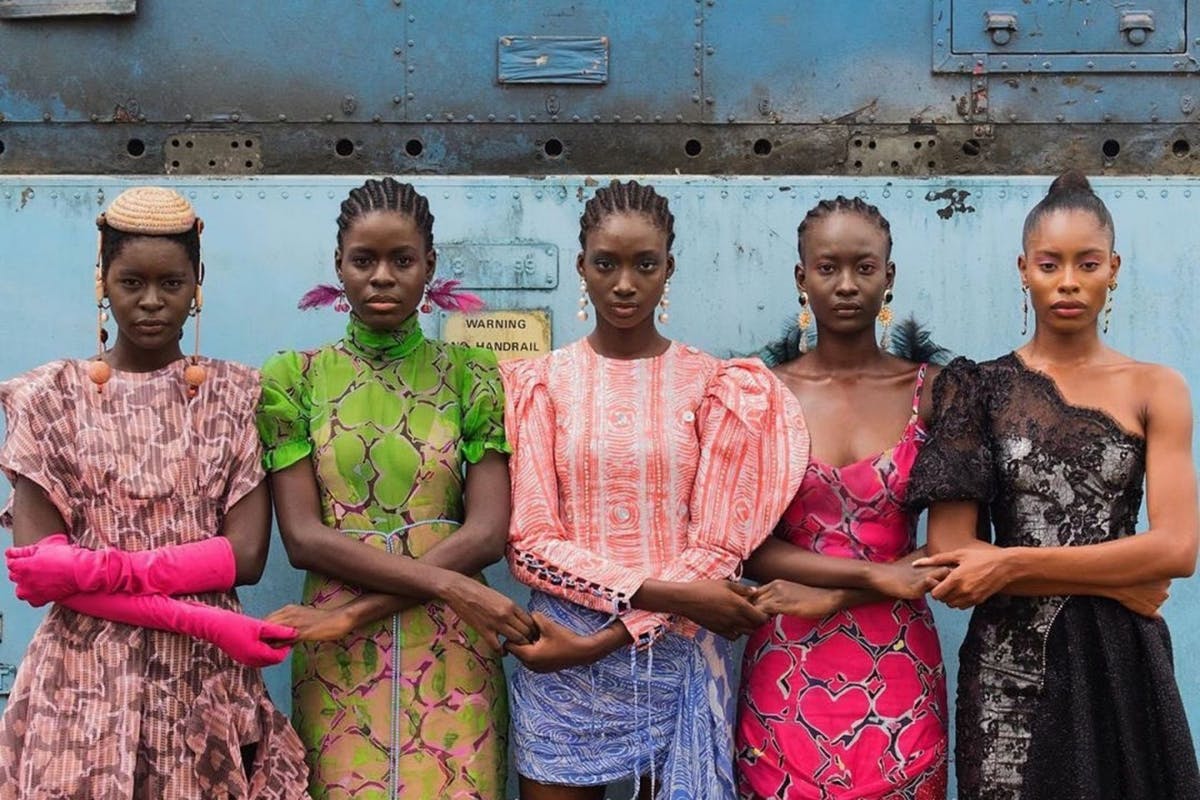
At first glance, British Vogue’s February cover might seem jarring to some; the shadowy tableau of nine dark-skinned Black women, stone-faced and stiffly posed, almost evokes the feeling of mannequins arranged in a store window. Arguably, this might be exactly its intent: to present Black, dark-skinned beauty and unabashedly African features as aspirational rather than an anomaly as a standard, rather than a token.

“This is a celebration of women, of matriarchy, and of the beauty of Black women,” said photographer Rafael Pavarotti of the milestone. “They are the past, the present, and the future.”

The cover is Pavarotti’s first for British Vogue, as well as a first for several of the array of emerging African stars featured: Adut Akech, Amar Akway, Majesty Amare, Akon Changkou, Maty Fall, Janet Jumbo, Abény Nhial, Nyagua Ruea and Anok Yai.

“I saw all these incredible models from across Africa who were just so vivacious and smart,” explained British Vogue’s Editor-in-Chief and European Editorial Director Edward Enninful OBE, himself a dark-skinned British-Ghanaian. “These girls are redefining what it is to be a fashion model.”

While the shift is undeniably overdue, as we know, change is often hard, particularly for an industry that has long reinforced the marginalization of Black models and by extension, Black fashion lovers by simply declaring them not in vogue (pun intended).

“In the beginning, I felt really isolated…I got thrown into the modeling industry very quickly and I kind of had to navigate it on my own,” Yai, who was famously discovered at Howard University’s 2017 Homecoming and has since appeared in campaigns and on catwalks for luxury brands across the world, tells contributing editor Funmi Fetto.

“Backstage, there would maybe be one other Black girl, but now my tribe is backstage,” Yai added. “I can speak my own language to my friends. They are basically like my family.”

Top African supermodel Adut Akech garnered her own alternate cover for the February 2022 issue. Inside, the 22-year-old echoed Yai’s sentiments while reflecting on her own still-growing career.

“I would literally be the only Black, dark-skinned girl in the show. There were no Sudanese models, no African models,” she recalled. “Now, I go to a show and there are girls from my country, girls from Africa who look like me. So yes, there has been a huge change. It has gone from me being the only one at a show to 15 or 20 of us. I’m just so happy that we are finally at this place. I was tired of always feeling out of place and feeling like an outcast.”

https://www.instagram.com/p/CYtqCecFEFT/?utm_source=ig_embed

The cover undoubtedly marks a triumphant moment, but will the overdue inclusion prove to be just another fashion trend?

“You know, fashion tends to follow waves,” noted Enninful, who also styled the cover. “We’ve had the Brazilian wave. We had the Dutch wave, the Russian wave, the Eastern European wave…And while, in the last decade, the Black model has come to prominence, I love that we are finally giving more space to African beauty.”

The highly stylized looks created for the shoot were intended to exaggerate that beauty, reportedly drawing on influences ranging from The Supremes to the often poised and strategically posed portraits of West African photographers James Barnor and Malick Sidibé. Strikingly, the most direct reference is to Grace Jones’ legendary Nightclubbing album cover, on which the Jamaican-American icon appears almost ebonized as she stares piercingly into photographer Jean-Paul Goude’s lens.

“African women and their elegance are at the center of this beauty look,” explained make-up artist Ammy Drammeh, who is of Gambian-Spanish descent. “That elegance is innate, you know? They’re not trying, they just are.”

As the rest of the fashion world finally takes notice of that cover-worthy elegance, Enninful asserts that now, “We need to ensure these girls last. We have to invest in them, nurture them, and support them with editorial, with advertising, with shows. It has to be 360…Getting these girls and then throwing them away after one season? That has to stop.”

The February issue of British Vogue arrives on newsstands Tuesday, Jan. 18. The full cover story can be read online.

Content courtesy of British Vogue & NFH Digital Team

British Vogue’s Momentous All African Cover Spotlights 9 Young Women Redefining What It Is To Be A Model

With a new generation of African models in the spotlight, fashion is, at last, embracing what it is to be truly global. Funmi Fetto talks to some of those redrawing the map.

Photographs by Rafael Pavarotti. Styling by Edward Enninful.

It’s a grey, mild-for-November Tuesday morning, in a brutalist indoor car park off an industrial road within a not particularly fashionable enclave of west London. There’s a large table, methodically laid with lateral flow tests. One would be justified in thinking that this is not where the magic happens. But then, a door opens into a cavernous studio with dramatic black drapes. Inside, nine striking Black models – their facial features varied and distinct – await hair and make-up.

They are playfully conversing; I note snippets of Dinka and hints of other mother tongues peppering the conversation. They’re laughing and teasing one another while moving and mouthing the lyrics to Wizkid’s “Don’t Dull”, “Ojuelegba”, “Essence” and pretty much the entire tracklist of Made in Lagos. These women are a wholly different type of model and are currently pushing the boundaries not only of beauty but of the entire fashion world.

Adult, Anok, Nyagua, Janet Jumbo, Maty Fall, and co are representative of an ongoing seismic shift that became more pronounced on the spring/summer ’22 runways. Prada, Louis Vuitton, Balenciaga, Saint Laurent, Miu Miu, and many more were awash with dark-skinned models whose African heritage stretched from Senegal to Rwanda to Sudan to Nigeria to Ethiopia. For an industry long criticized for its lack of diversity, as well as for perpetuating beauty standards seen through a Eurocentric lens, this change is momentous.

“I saw all these incredible models from across Africa who were just so vivacious and smart,” recalls Edward Enninful, British Vogue’s editor-in-chief, and European editorial director, explaining the inspiration behind shooting an all-Black, all African cover. His excitement for this moment is tangible: “These girls,” he continues, “are redefining what it is to be a fashion model.”


This, he asserts, is well overdue. “You know, fashion tends to follow waves. We’ve had the Brazilian wave. We had the Dutch wave, the Russian wave, the Eastern European wave… And while, in the last decade, the Black model has come to prominence, I love that we are finally giving more space to African beauty.” Unlike the trends that have gone before, which favored a certain aesthetic – the perpetually sun-kissed Amazonian curves of the Brazilians, the strong jawlines of the Eastern Europeans – this African wave taps into a variety of aesthetics from across that vast continent.

Consider Adut Akech. At 22, she is arguably the most successful African model working today. Following her runway debut at Saint Laurent, in 2016, her international Vogue covers have run into double digits, she has notched up numerous fashion and beauty campaigns – from Valentino to Estée Lauder – and recently bought a house in LA. Undoubtedly she has inspired other African models, such as Janet Jumbo, the 19-year-old Nigerian who walked Louis Vuitton and Burberry and says the wave of success African models are riding right now “gives me hope that I can succeed at this”.

Akech, dressed in a toweling robe, her tousled hair redolent of a protagonist in a James Barnor photograph, recalls the landscape of five years ago as a world away from what we see now. “When I first started modeling internationally…” She makes a face, eyes incredulous and lets out a wry laugh. “I would literally be the only Black, dark-skinned girl in the show. There were no Sudanese models, no African models. Now,” she says, smiling, “I go to a show and there are girls from my country, girls from Africa who look like me. So yes, there has been a huge change. It has gone from me being the only one at a show to 15 or 20 of us. I’m just so happy that we are finally at this place. I was tired of always feeling out of place and feeling like an outcast.”

The experience of not belonging resonates with Anok Yai, a fellow Sudanese model, who in February 2018 became only the second Black model ever to open a Prada show (the first was Naomi Campbell, in 1997). “In the beginning, I felt really isolated,” she says. “I got thrown into the modeling industry very quickly and I kind of had to navigate it on my own. I also have social anxiety, so I struggled a lot with connecting with people. Backstage, there would maybe be one other Black girl, but now my tribe is backstage. I can speak my own language to my friends. They are basically like my family.”

For all the celebration of this moment, the elephant in the room remains. Why are we only just beginning to truly embrace African models on the international runways? Particularly when, as Omoyemi Akerele, the founder of Lagos Fashion Week, says, the issue cannot be put down to a lack of fresh talent: “Over the last decade, we have worked alongside agencies dedicated to discovering and nurturing new faces from across the continent. Models like Mayowa Nicholas started out walking at Lagos Fashion Week.”

The pandemic, as well as the logistics of the African continent, have, Vogue contributing casting director Ashley Brokaw explains, played a significant role in the lack of African models on the international runways. “The reason everyone saw a lot of new faces this season was really a function of access,” she says. “Prior to the pandemic, we had sorted through initial visa issues – some countries were definitely easier than others – we got all the paperwork, we got all the necessary travel documents for the girls done in advance, and then everything shut down. So, the explosion of African girls on the catwalk that we suddenly see is a result of things opening up.”

The previous scarcity of African models, continues Brokaw, can also be attributed to outmoded casting processes. “Over the years, I have had to do my scouting through an agent, perhaps based in Milan or Paris, who would filter their choices down to me. Now, thanks to social media, I can reach out directly to scouts in say Rwanda or Burundi, or Uganda and find a great girl. They can also text, WhatsApp, or find me through Instagram. The level of access through social media is just incredible. This means I’m now able to choose girls through my own lens, which makes the process so much more democratic and inclusive.”

The power of social media has also been a game-changer for Piergiorgio Del Moro, the founder of DM Casting, which he runs together with Samuel Ellis Scheinman. “Every day,” begins Del Moro, who discovered Akech, “I receive tons of messages and images from scouts and potential models from all over the world.”

The previous system, which, Scheinman explains, “came down to where money was invested to find models”, meant that the Black girls cast were predominantly light-skinned African Americans, and only one or two were African because the agencies didn’t have the right connections to get girls from Africa into Europe. “And so, for us, we see social media as a real change in terms of how scouting has blossomed in Africa. We are now able to have a photo of a girl sent to us in a nanosecond.”

Logistics, economics, and technology aside, there is no denying how much the global reckoning around race, diversity, and inclusion, heightened in the wake of George Floyd’s murder, has forced a shift in mindset towards racial inequities and unconscious bias. The casting process, agrees Scheinman, is no exception. “The industry has definitely gone through a soul search about what diversity means, what inclusivity means, and what being truly global means when it comes to casting. We really saw this starting to shift about five years ago, and so for us as casting directors, the more options we have, the more we’re going to want to explore every version of beauty. Now that we have access to these amazing girls, there’s no reason not to work with them.”

As the casting director for Kerby Jean-Raymond’s label Pyer Moss, which actively celebrates Blackness and casts accordingly, Katherine Mateo has long been vocal about the narrow ideals of beauty perpetuated by the fashion industry. And she’s not afraid to highlight the complicity of the casting process. “For many years, we have been stuck on what society has trained us to believe is the ‘perfect’ skin color, size, age, height. But the fact of the matter is people want to see the world that reflects their reality. Our world does not have one type of beauty, and we as casting directors have the power to directly connect with brands and publications and hold them accountable for the change we would like to see.”

Del Moro adds, “It is our job to push diversity. Diversity of age, diversity of size, diversity of skin color. Some editors, like Edward [Enninful], have over the years raised their voices about diversity, and you also have some designers who have it at the forefront of their minds. But where they don’t, it’s our job to push for it.”

Valentino’s Pierpaolo Piccioli is known to champion African models such as Akech; his groundbreaking spring/summer ’19 haute couture show famously featured an all-Black cast. “For months, I had been nourishing the desire, the fantasy, to make couture inclusive. Simple as it may seem, it started with an iconic picture by Cecil Beaton of the Charles James salon. I said to myself, ‘What if instead of these white-swan models we had a salon filled with Black women wearing couture?’” His research took him to archive editions of Jet and Ebony.

What he discovered strengthened his resolve. “Magazines aimed at a Black readership had to buy most of the clothes for their editorials because couture houses didn’t want to lend to them. The more I delved into it, the more I felt I had to do something. Not to say or to promise, but to do. Fashion is the language I use to express my values and ideas, and I thought the only trustworthy, valuable statement that I could make was through a couture show with only Black models. Do I think it’s enough? No, it’s not. But every time I look at that finale picture, I know it meant something, and I know I want to do more.”

While he is under no illusion about the mammoth hurdle to eradicate racial inequity in fashion, Piccioli is excited about the current trajectory of African models. “I am pretty sure there is no coming back from this. It is unlikely to be replaced by constraints and unreachable standards of beauty. These must be defeated because being standardized does not belong in the future we wish to witness.”

The characteristically straight-talking Bethann Hardison, a trailblazing veteran Black model, agent, and long-time activist for diversity in the industry, has reservations. She suggests caution over what could potentially be a double-edged sword. To be clear, she asserts that this isn’t to rain on anyone’s parade; her perspective comes from experience:

“Remember, I’ve been around for a while, so I see these things through a different gaze,” she explains. “Of course, I believe in racial diversity, but the good news and the bad news is that fashion changes. I worry that this situation becomes this thing where, ‘If you’re Black you’re in,’ which means then at some point, you could be out.” Again, to avoid misinterpretation, Hardison adds a caveat. “Look, I’m not saying that this will absolutely be the case in this situation, but generally when you lean so hard in one direction, the natural move after a while is to begin to lean far into the opposite end.”

There is validity to her point. There is a constant tug of war within the thorny triad of diversity, authenticity, and longevity. Is it real? Will it last? For how long? Scheinman admits that there is an element of casting that is performative. “We have some clients for whom diversity is embedded in their DNA, and there are others where we have had to have very active discussions with them, where they then say, ‘I really want to change, I want to be more inclusive.’

While the industry perhaps hasn’t necessarily invested much in the way of size inclusivity, I feel like the racial aspect of diversity is the one that is most embedded. It’s like a non-negotiable. For Piergiorgio and me, there’s no question that the world could go back to, say, a ‘Russian casting’. It’s just not modern. Not only is diversity an obligation, but it would also be irresponsible to treat it as something so disposable.”

This is music to the ears of Akerele, who stresses that while ensuring representation from marginalized communities to reflect our “global village”, stakeholders must be mindful to ensure no one is left out of the conversation. “Casting directors across the world must hold themselves accountable to a higher standard. The underlying question should be, ‘Who am I excluding?’” This responsibility, however, argues Abrima Erwiah of the Ghana-based brand and social enterprise Studio One Eighty-Nine, extends far beyond casting directors.

The onus, she believes, is on everyone, from consumers to brands to editors and anyone who engages with the industry. “Yes,” she admits, echoing some of Hardison’s misgivings, “some people might see it as a trend and a moment and try and suck it dry to move on to the next sexy thing, but whether we believe we have power or not, we all have to come together and work on this as a community. If the logistics and the infrastructure are there to support these models, I think it will work.”

It is a sentiment, a clarion call if you will echoed by Enninful. He believes the way to ensure that this “moment” isn’t transient, is to ensure the models’ careers go the distance. “It’s sad and heartbreaking for me to see girls who are on the rise suddenly taper off. We need to ensure these girls last.


We have to invest in them, nurture them, and support them with editorial, with advertising, with shows. It has to be 360.” Recalling Alek Wek’s early modeling career, he reveals the secret to her longevity: “Alek Wek didn’t suddenly become Alek Wek. There was a group of us behind girls like her, propelling them forward. This is what we have to do in all our different roles. Getting these girls and then throwing them away after one season? That has to stop.”

Outside, the grey skies have dimmed to a blue-black. The energy among the models is still high. The infectious sound of Afro B’s “Drogba (Joanna)” reverberates around the studio, and the frisson of excitement that permeated the air earlier in the day shows no sign of abating.

As the hairstylist prepares her for another shot, Akech mulls over the hope that the uprising of African models goes beyond a trend. “I mean,” she says, choosing her words carefully, “that is the goal, that it becomes more than a moment.” And then, almost immediately, as if to correct herself, she answers more resolutely: “Actually, I don’t see it being a trend. Also,” she says, laughing, “there are so many of us – we are just not going to go out of style.”

Iman, the groundbreaking original African model, who not only paved the way but has long campaigned for diversity on the catwalk, has a message for Akech et al. “If beauty is in the eye of the beholder, then let the beholder be you.” And her charge to the world? “All hail our African models with their jet-black skin, impossibly long limbs and natural hair, full of joy and absolutely no compromise.”

Content courtesy of British Vogue Magazine & NFH Digital Team

Why The World Do Need to Pay Attention To African Fashion

In many ways fashion – especially prêt-à-porter and couture – feels like an ethereal form of art: it pops up in shapes and textiles, in patterns and trends, only to disappear or be replaced a season later. It comes out often loudly and grandly at fashion weeks and events around the world, only for a show to last a few minutes before the curtain falls again, abruptly, leaving in its trail a series of images splashed on Instagram squares and billboards, heavy price tags dangling in front of our eyes like Ulysses’s sirens.

It’s a cycle, a sort of infinite loop of creations, applauds, consternation, outrage, more applauds – a snake eating its own tail, leaving many watching in perplexity: wait, what’s that? And pondering, at times criticizing the unbearable pointlessness (and allure) of luxury fashion.

The thing is, that infinite loop of fashion creation, as “pointless” as it looked, was growing relatively consistently every year. In a story published in 2019, Maverick Life cited a November 2018 Luxury Goods Worldwide Market Study by Bain & Company, which noted that the global luxury market  which includes personal luxury goods, luxury cars and hospitality, fine and wine spirits, gourmet food, fine art, high-quality design and furniture, private jets and yachts as well as luxury cruises ­ grew by 5 percent at constant exchange rates in 2018 to an estimated €1.2 trillion globally, with overall positive performance across all segments.”

Until an infamous month early in 2020 where the world ground to a halt, motionless, the hand of the pandemic slicing into the fashion loop with the precision of a pair of scissors cutting through silk.

Suddenly, like many other industries around the globe, things stopped: no more fashion weeks, no ads on billboards, the slow, almost flatlined pace turned fashion on its head, at least for a few months. Talk of sustainability, more considerate production, meaningful collections, and work with local artisans grew louder.

In this space, where fashion is forced to adapt to its environment, to be more intelligent and thoughtful, South African and fellow African designers are light years ahead of their Western counterparts. Agility, imagination, and a deep, almost visceral concern for telling genuine stories through clothes are often at the core of the collections created by local designers.

Having to design, promote and sell their work with barely any support and little help from the government, with access to luxurious fabrics that are often nonexistent, a Western market that has better and more connected infrastructures, South African designers, artists, and creatives have to rely on ingenuity and backing each other up to move forward. And move forward they do we should be paying attention.

In a 2012 interview with Luxury Society, former Vogue International editor Suzy Menkes explained: “There are two reasons why ‘Africa’ and ‘luxury’ should appear in the same sentence. The first is a new vision of what luxury means in the 21st century. Consumers, particularly in the western hemisphere, are beginning to prize objects touched by human hands – and the handwork in Africa is exceptional. From the work that the Tuaregs have done for Hermes to the bags that are created in Kenya for Ilaria Fendi and for Stella McCartney and Vivienne Westwood, African hands make artistic pieces, often with the added bonus of being sustainable and also ethical.

Her statement rings even more true today.

Take Thebe Magugu for example – the winner of the LVMH Prize (which granted him €300,000 and a one-year mentorship program) in 2019 has always explained how each of his collections, since the launch of his eponymous brand in 2017, been inspired by an almost anthropological approach to design, where societal commentary, economics, South Africa’s complex and rich heritage, and intimate stories are stitched and printed into the garments.

Check Genealogy SS2022 the young designer created a collection based on old family photos, saying: “It’s this idea of memory as a reservoir for optimism”; a reminiscence of his 2016/17 project with fellow designer Rich Mnisi, titled Family Photos, the collection is imbued with intelligent and meaningful design.

Another recipient of the LVMH Prize, sustainable textile designer, Central St Martins graduate, and Cape Town-based Sindiso Khumalo, launched her eponymous label in 2015, focusing “on creating modern sustainable textiles with a strong emphasis on African storytelling”.

In fact, Khumalo designs the textiles in her collections “by hand through watercolors and collage”. Just one look at her garments is enough to understand how “conscious” her designs are: balloon-sleeves on tailored wide-leg pants, barely-there frills enhancing the top of a blouse, and everywhere prints that evoke the rolling green hills and lush landscapes of KwaZulu-Natal, where Khumalo is originally from; her silhouettes are feminine, powerful representations of black women “from the turn of the 20th century and up to the 1980s”.

In 2021, designer Lukhanyo Mdingi told Maverick Life: “Sometimes I feel like a broken record when I speak about the collective, but that is the essence of who we are. I believe in human beings. I believe in design and I believe that you need a community of people to reach your fullest potential.”

He was sharing the vision behind the collection that won him the 2021 Karl Lagerfeld LVMH Prize. Mdingi puts immense consideration and attention into creating incredible garments using local fabrics like mohair and wool, gold threads running through bright reds; he met with producers in the Karoo, and worked with weavers from Philani, a Cape Town-based NGO dedicated to “improving child nutrition and empowering women from marginalized communities”.

On the day he received the award, Mdingi explained that he “felt proud to be representing a community of individuals who had used their time, their talent, and their trust as a means of service. I was also so proud to be representing my country.”

Talking about the collective, Rich Mnisi, known for his branded knitted jumpers and collections inspired by pop culture and modern South Africa, created Stories of Near, a sort of club, “a network of trailblazers that are redefining the African fashion landscape. The club is all about creating an ecosystem of stakeholders with common values and purposes.”

Outside of South Africa, we should also keep an eye on Dazed editor Ib Kamara’s striking work – the Sierra Leone-born and London-based stylist creates powerful and innovative imagery that is reinventing fashion visuals; Brother Vellies founder and creative director Aurora James the designer behind Alexandria Ocasio-Cortez’s MET Gala dress “Tax the Rich” is also the powerful force behind The Fifteen Percent Pledge, a non-profit organization that invites “major retailers and corporations to join (the organization) in creating sustainable and supportive ecosystems for Black-owned businesses to succeed”.

Finally, Liya Kebede’s Lemlem, which she created in 2007, is all about clothes that are hand-woven in cotton that has been “cultivated on Ethiopian farms since ancient times”. The label focuses on sustainability and manageable quantities and orders, rather than massive growth at the expense of quality and craft. This is luxury. DM/ML

The fashion world often looks like a sort of infinite loop of creations, applauds, consternation a snake eating its own tail, leaving many watching in perplexity: wait, what’s that? South African fashion is bringing a refreshing take on an ‘old’ world.

Content courtesy of Daily Maverick & NFH Digital Team 


Davido Inks Deal With International Sportswear Brand Puma

Afrobeats star Davido last week announced that he had signed an endorsement deal with global sportswear brand Puma.

DMW leadman Davido, is now a brand ambassador for a popular sports brand, PUMA, The brand shared this message as they unveiled Davido via an official Instagram page, this comes a few days after Davido sealed a deal with WEMA bank.

https://www.instagram.com/p/CXlqFs4Iotj/?utm_source=ig_embed

The ‘Champion Sound’ hitmaker revealed the news to more than 20 million of his followers on Instagram. He is expected to leverage his star power to expand Puma’s imprint in Africa, promoting its Sportstyle collections such as the brand’s iconic T7 tracksuits.

Davido said that he was excited to partner with the company and “to take it to the next level in Nigeria, Africa, as well as with fans across the world.

“Growing up, I saw Puma play an important part in African sports, sponsoring many different football federations,” Davido said. “I also saw the kind of family Puma had built with the likes of Usain Bolt, Maradona, Neymar, Jay-Z, Nipsey, Rihanna, and Lewis Hamilton, among other superstars and I thought, that’s an amazing family to be a part of.”

Puma general manager of distribution in Eastern Europe, Middle East, and Africa Johan Kuhlo said: “We could not be more excited to welcome Davido to the Puma family. Throughout our history, Puma has had strong roots in Africa, football, and beyond. Signing Davido is both a clear commitment to Africa as a key market and a sign that African culture is becoming more and more relevant globally”.

Representative of Puma in Nigeria Persianas Retail’s executive director, Ayo Amusan, said: “We are proud to welcome Davido to the Puma family. With this partnership, our customers and indeed his fans everywhere can expect to see the magic that can happen when two iconic brands such as Davido and Puma come together.”

The singer joins other international musicians, athletes, and celebrities who are associated with the brand. The deal adds to his list of partnerships, which include Viva, Pepsi, Travelbeta, Guinness Nigeria, MTN Pulse, and Infinix Mobile, among others.

Davido is behind four albums, the latest being A Better Time, which was released in 2020. He is scheduled to perform at The O2 Arena in London, the UK on 5 March 2022.

After today’s announcement, Davido will act as a brand ambassador for PUMA in sub-Saharan Africa, North America, and across the world. He will wear PUMA’s Sportstyle collections, including the company’s iconic T7 tracksuits. As an avid sports fan, Davido will also don the company’s Basketball and Football styles.

Content courtesy of Puma &NFH Digital Team 

Alternative Fashion Styles to Try This Christmas

The holidays become more festive when you take your style to the next level and embrace your passion for fashion. As a new year approaches, many people develop a strong urge to upgrade their style and improve their fashion sense. Wondering what clothing to purchase, how to source it, and composing outfits can be very stressful. Digital marketer, creative director, stylist, and designer Aaliyah Hinds helps OBSERVER ONLINE break down the latest fashion trends and the best alternative fashion styles to try just in time for Christmas.

“Alternative fashion is being your truest self, stepping out and not being afraid of what anyone else has to say. It is wearing what you want, doing what makes you happy and showing us your true colors,” said Hinds who, working with the likes of video director Yannick Reid and artistes like Protoje, Koffee, Sevana, Lila Iké, and more, has built a strong network around alternative fashion.

Hinds highlighted five alternative fashion styles this Christmas season.

Trending Colours

This season, pastel colors like mint green, periwinkle, and baby pink are dominating the scene. These colors can make anything pop ranging from hair, boots, dresses, jackets, and more. They are often used as accent colors against neutral colors like black, grey, brown, and white to provide contrast. Ginger and deep red colored hair have also become widely popularised this season among black women who have become tired of the standard black or brown-haired look. Art exhibitions pop-up fashion shops and cafe dates are the perfect places to debut these colors.

Fabrics

Leather and silk are making waves into almost any article of clothing such as dresses, tops, bodysuits, and jackets. Articles of clothing where various types of fabrics are stitched together have also become very chic. This is known as patchwork.

“You can see this a lot more with brands like Shein and Fashion Nova who do a lot of color blocking,” explained Hinds.

These online fashion brands have become well known among Jamaicans so this option should be much easier to explore. Classy restaurant dinner dates at night, paint and sip events, and brunch outings suit these fabrics the most.

Style Combinations

The most dominant outfit combination recently has been an upgraded version of baggy pants from the 90s with cropped tops or very small shirts.

“Crop tops have never really gone out of style but fashion has found so many new ways to reinvent it,” said Hinds.

Graphic t-shirts with baggy pants have also become common nowadays for a more casual look. These pants tend to be made of materials such as denim, chiffon, silk, and khaki. The best places to show off this style include the movies, picnics at the park, and zoo outings with friends.

Hairstyles

Buzz cuts, low cuts, and undercuts have also started to trend lately. If you want to be more adventurous with your hair, the best time to start is right now. These hairstyles are perfect for any occasion where you want an edgier or fiercer look.

Body modifications

Nose piercings, extra ear piercings, sleeve tattoos, calf tattoos, and full leg tattoos are also ingrained in alternative fashion right now. Feel free to express yourself with piercings and creative tattoo designs that speak to your soul.

Alternative fashion takes the casual ‘everyday outfit like jeans and a t-shirt or a simple dress to another level by amalgamating old styles with fresh vibrant fabric. The Collective Moda, The New Wave Celebrity Closet, Thrift Nature JA, and Back on the Rack are all excellent starting points to try alternative fashion.

“Some of these outlets donate to charity and you may even find pieces that are under one thousand dollars,” said Hinds.

You can also attend ‘Fashion Night Out’ and various catwalk events during Fashion Week to gain fashion inspiration on your own. Pinterest is also a platform where one can research alternative outfits and be inspired.

Although Hinds has achieved a lot in the fashion industry, she aspires to own a Jamaican fashion house, create a clothing line and do styling for several artists.

“I also want to have whole artistry that encompasses all the arts. At the end of the day, fashion itself does include a lot of these arts such as painting, drawing, and even 3D printing,” shared Hinds.

As an artist in every sense with skills such as painting, modeling, and photography, she will definitely be working even harder to cement herself as a local fashion icon who adores her career.

“I get to do what I actually love to do and I get a sense of fulfillment after completing a project. I get the opportunity to work with a lot of local and international artists, meet new people and learn new things.” shared Hinds.

Content courtesy of Jamaica Observer & NFH Digital Team 

Dakar Fashion Week Returns to Baobab Forest to Promote ‘Inclusive’ Fashion 

At the foot of a towering baobab tree outside Senegal’s capital Dakar on Saturday, cameras flashed in the waning dusklight as 20-year old Najeebah Samuel strode down the catwalk to zealous applause. Born with cerebral palsy, Samuel, 20, was the first of two dozen models of all shapes and sizes to take the runway at Dakar’s 19th annual Fashion Week event, held at the weekend with the dual themes of inclusiveness and sustainability.

At the foot of a towering baobab tree outside Senegal’s capital Dakar on Saturday, cameras flashed in the waning dusklight as 20-year old Najeebah Samuel strode down the catwalk to zealous applause.

Born with cerebral palsy, Samuel, 20, was the first of two dozen models of all shapes and sizes to take the runway at Dakar’s 19th annual Fashion Week event, held at the weekend with the dual themes of inclusiveness and sustainability. “I want to prove to other disabled kids that you’re not your disability – you’re just you,” Samuel said, wearing an orange and blue dress by Fashion Week founder Adama Ndiaye. “You have to come out and show people who you are.”

Featuring designers from across Africa, the Dakar Fashion Week is one of the continent’s longest-running fashion exhibitions. Forced outdoors to abide by COVID-19 restrictions last year, the organizers of this edition chose to return to the baobab forest to remind attendees of the fashion world’s responsibility to operate in a sustainable way.

Textile production generates 1.2 billion tonnes of carbon emissions annually, and if current rates continue, the industry could account for more than a quarter of global emissions by 2050, according to a 2015 study from the Ellen MacArthur Foundation. Known by her brand name Adama Paris, Ndiaye, who also created the first Black Fashion Week show in the French capital, routinely attaches progressive themes to Senegal’s marquee fashion event.

She sets high minimum quotas for female designers and once banned models using skin depigmentation cream to promote self-acceptance. She chose inclusiveness as one of this year’s themes to contrast the often rigid beauty standards of Western fashion. “I don’t want to live with fashion as the European diktat tells us to,” Ndiaye said. “I want women who represent so many different things, more than just bodies.”

(This story has not been edited by Devdiscourse staff and is auto-generated from a syndicated feed.)

Content courtesy of Devdiscourse & NFH Digital Team

Davido, One Of Africa’s Most Successful Artists, Joins Puma As A Global Brand Ambassador

Herzogenaurach, Germany, December 17, 2021 – Sports company PUMA has signed a long-term agreement with Davido, one of Africa’s most successful music artists, underscoring the company’s commitment to the rapidly growing African market.

https://www.instagram.com/p/CXl6xpxo-Us/?utm_source=ig_embed

With more than 20 million followers on social media and four successful albums to his name, Davido has become a cultural ambassador for his native Nigeria as well as a prominent voice of human rights on the continent.

“We could not be more excited to welcome Davido to the PUMA family!” said Johan Kuhlo, PUMA’s General Manager EEMEA Distribution. “Throughout our history, PUMA has had strong roots in Africa, football, and beyond. Signing Davido is both a clear commitment to Africa as a key market and a sign that African culture is becoming more and more relevant globally”.

https://www.instagram.com/tv/CXli3r2oIl2/?utm_source=ig_web_copy_link

After today’s announcement, Davido will act as a brand ambassador for PUMA in sub-Saharan Africa, North America, and across the world. He will wear PUMA’s Sportstyle collections, including the company’s iconic T7 tracksuits. As an avid sports fan, Davido will also don the company’s Basketball and Football styles. “Growing up, I saw PUMA play an important part in African sports, sponsoring many different football federations”, said Davido.

https://www.instagram.com/p/CYE24Czrt2r/?utm_source=ig_embed

“I also saw the kind of family PUMA had built with the likes of Usain Bolt, Maradona, Neymar, Jay Z, Nipsey, Rihanna, Lewis Hamilton among other superstars and I thought, that’s an amazing family to be a part of! All these contribute to my excitement to collaborate with this brand and take it to the next level in Nigeria, Africa as well as with fans across the world.”

Media Contact:
Robert-Jan Bartunek, Team head Corporate Communications;
Email: robert.bartunek@puma.com

Content courtesy of Puma & NFH Digital Team 

Six Finalists Announced for 2021 Tommy Hilfiger Fashion Frontier Challenge

The global program, which aims to support entrepreneurial start-up and scale-up stage businesses that develop solutions that make a positive social impact on the fashion landscape, received over 430 applications for its third edition.

Applications opened in January and following a multi-step year-long process, applications were thoroughly reviewed by internal and external experts based on a dedicated set of criteria including potential social impact and market growth.

https://www.instagram.com/p/CXTzn03IqO0/?utm_source=ig_embed

The six finalists have been announced for the third edition of the Tommy Hilfiger Fashion Frontier Challenge.

The challenge aims to amplify and support Black, Indigenous, and people of color (BIPOC) entrepreneurs who are “working to advance their communities, while fostering a more inclusive future of fashion”.

Over 430 applications were made by global startups and scale-ups, before being narrowed down by a dedicated set of criteria including potential social impact and market growth.

The six finalists are:

1. Clothes to Good: A South African-based social enterprise that creates micro-business opportunities and jobs for people with disabilities and their families, especially mothers, through textile recycling.

2. Haelixa: A Switzerland-based product traceability technology that aims to accelerate the global transition to transparent consumer goods supply chains.

3. Mafi Mafi: An Ethiopia-based sustainable fashion brand that crafts ready-to-wear collections, preserving ancient traditions and empowering marginalized artisans.

4. Lalaland: A Netherlands-based platform that uses artificial intelligence to generate customized and inclusive synthetic models of different ethnicities, ages, and sizes, all with over 35 pose variations.

5. Soko: A Kenya-based jewelry business that uses mobile technology to connect marginalized Kenyan artisans directly to the global marketplace via a mobile platform.

6. Uzuri K&Y: A Rwandan-based eco-friendly shoe brand that uses recycled car tires from sub-Saharan Africa and employs local youth, equipping them with skills and economic independence.

https://www.instagram.com/p/CWuqcDjouLi/?utm_source=ig_embed

Next, the six finalists will pitch their business ideas to a jury panel consisting of business and sustainability leaders at the virtual global Tommy Hilfiger Fashion Frontier Challenge final event on January 12-13, 2022.

The jury will award €200,000 to be split between two chosen winners in order to support their ventures. The winners will also receive a year-long mentorship with both Tommy Hilfiger and INSEAD experts, as well as a place in the INSEAD Social Entrepreneurship Program (ISEP). An additional €15,000 will be awarded to the finalist who Tommy Hilfiger associates select as their ‘Audience Favorite’ vote.

An additional 15,000 euros will be awarded to the ‘Audience Favorite’ finalist.

https://www.instagram.com/p/CRRVfRiJ-Oa/?utm_source=ig_embed


“As key players in the fashion industry, it is our responsibility to support, empower and encourage inclusivity. The Tommy Hilfiger Fashion Frontier Challenge is a testament of our commitment to make a meaningful and lasting contribution towards a better fashion industry,” said Martijn Hagman, CEO, Tommy Hilfiger Global, and PVH Europe.

“It is in our nature to drive change, even in the most challenging of times. We are proud to continue amplifying the ideas of entrepreneurs that are creating the fashion landscape we want, and need, to see.”

Content courtesy of Fashion Network & NFH Digital Team

BAFA Buy Black Bazaar Affords Alternative to Traditional Black Friday

This year’s Black Friday saw many shoppers return to stores in person, but the social-justice group Black Allies for Our Advancement hosted an alternative event in Los Angeles’ Leimert Park neighborhood on November. 26 to encourage patronage of Black-owned businesses.

The event hosted California vendors who were organized on Degnan Boulevard with businesses such as Dekonchko Mullings’s Love Smells Good beauty and wellness goods, African beads by Zahra Import, and Wolofwear, which is West African clothing with a modern twist presented by Buna Diagne.

Originally from Senegal, Diagne’s wife, who is formerly of South Central Los Angeles, moved to the West African country where she now designs Wolofwear clothing and enlists the skill of local artists and tailors to manufacture pieces. Featuring African wax fabric, the pieces are colorful with silhouettes in dresses, jumpsuits, and skirts.

By selling the goods during the Leimert Park African market on Sundays from 10 a.m.-7 p.m. and taking advantage of events such as BAFA’s Buy Black Bazaar, Diagne hopes to support the local community and the artists back in Senegal.

“We have people working for us. Our tailor was able to move his family into a better house in a better neighborhood,” Diagne said. “We are supporting at least 10 people back home. We are making sure we are supporting people back home in the motherland and we are making sure we are giving African Americans a way to express themselves through clothing.”

In addition to the vendors who were selling through temporary spaces, the permanent shops that lined the street such as Eso Won Books, Neighbors Skate Shop, and Sole Folks also welcomed the message that was being spread by the Buy Black Bazaar.

At Sole Folks, a cooperative that sells goods such as clothing, wellness items, and home pieces affords a place for Black creatives to cultivate their businesses and grow their entrepreneurial mindsets. In addition to the retail services, the location houses Kicks B Clean a sneaker, hat, and bag restoration business, a design lab where members of the cooperative create their work, and an art space across the street, which includes sewing classes.

“Because the area, Leimert Park is a very sacred and special place for the community, it really is called a ‘village,'” said Himyo Green, program director of Sole Folks and founder of the brand Humans Expressing Compassionate Action, which is also known as HECA.

“To be able to have a space and a place to amplify the wonderful cohesion and welcoming ness that we create in this village is paramount to be able to allow us to exist in a happy space and create environments that are welcoming inviting and uplifting.”

Content courtesy of Apparel In News 


Ad