Sunday 3rd of May 2026

Nairobi, Kenya

Durban Fashion Fair Celebrates 10 Years In The Fashion Industry

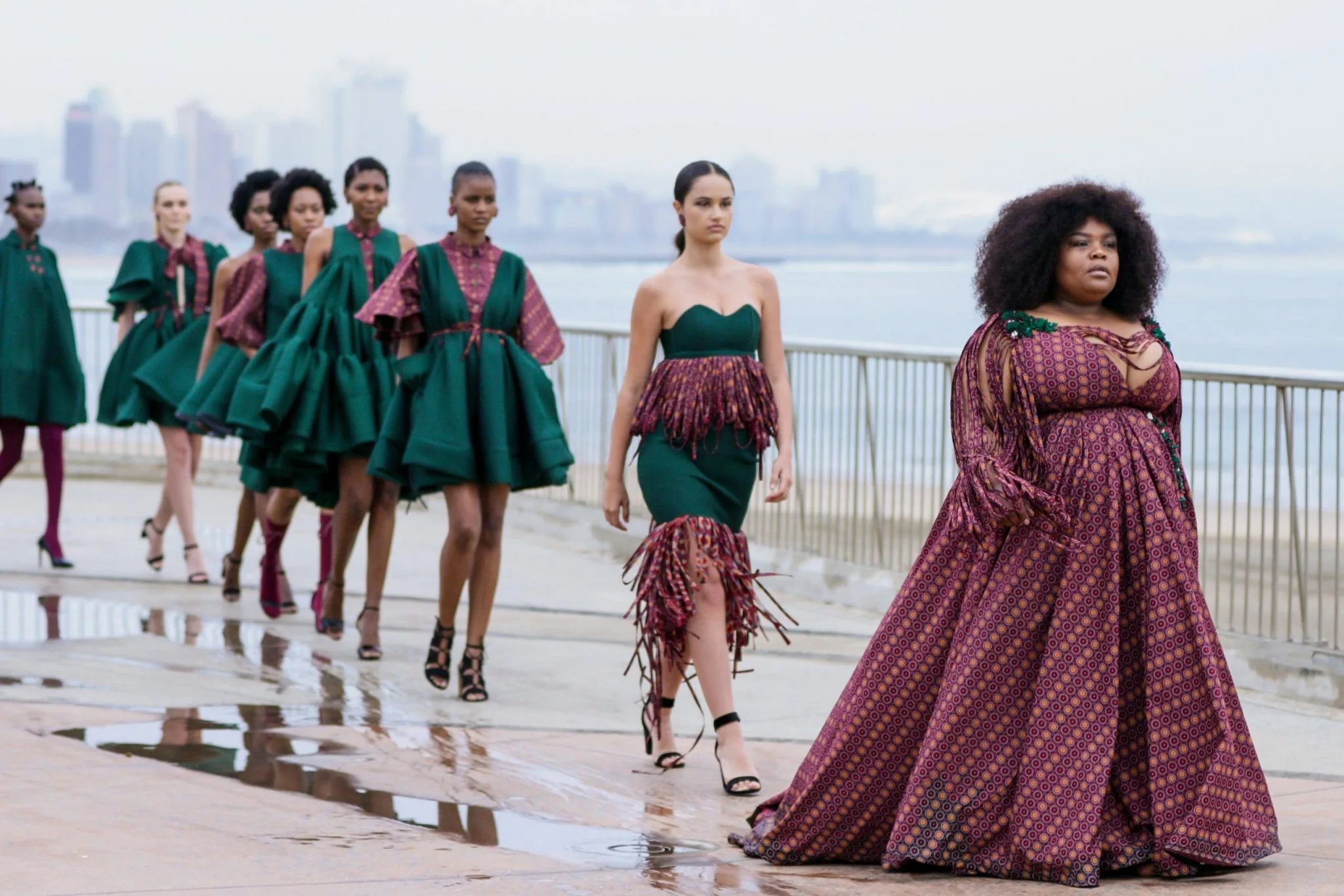
Next week from December 15 to 17, Durban Fashion Fair (DFF) is hosting the 10th annual DFF fashion show at the Durban Exhibition Centre.

Reflecting on 10 years of growth in the local fashion industry, DFF will present 12 shows held over three days where established and emerging designers will be showcasing their talents under the theme ‘Reflections’.
eThekwini Mayor Councillor Mxolisi Kaunda says the ten-year mark is an important milestone to reflect on the achievements made over the past decade.

“Not only are we able to look back on the many achievements made over the past decade, but we can also celebrate the platforms that we have created for emerging designers.

“The DFF has and will continue to provide an important platform for talent and skills development. It has already played an important role in building the Durban fashion industry, which has helped us to grow the economy and create jobs,” he says.

Some of the DFF achievements include Mxolisi Luke Mkhize from House of Saint Luke, who has gone from his first showing as a DFF mentee to showcasing his designs in Africa. Meanwhile, Eli Ball from Made in Africa has wowed fashionistas on runways in Paris.
Again, this year, four DFF mentees became the first-ever South African designers to team up with Mr. Price Sport to design Team SA’s opening ceremony outfits for the Tokyo 2020 Olympic Games.

Content courtesy of IOL 

African Fashion Brings Beauty and Glamour to Niger

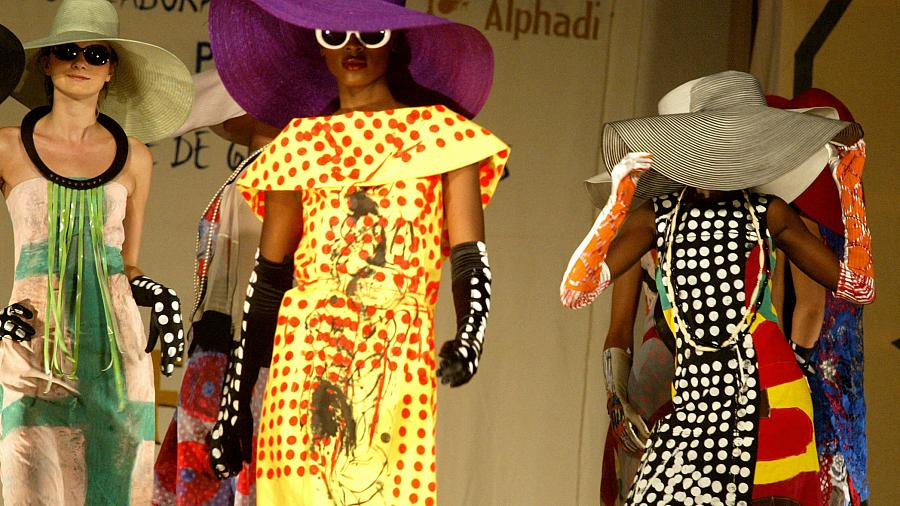
For five days the capital of Niger vibrated in glamour and beauty as the International Festival of African Fashion, FIMA, held its 13th edition, about fifty top models and thirty fashion designers showcased clothes, accessories, and jewelry from all over Africa.

Alphadi, the founder of FIMA has always given a very important place to young people in the fashion industry, founded in 1998, almost half of the program of this event is dedicated to young African talent.

Dozens of designers took part in the young designers’ competition, Sun Alejandro, a Rwandan designer based in Gabon, was inspired by the diversity of the Bantu culture – the population of Central and Southern Africa.

“This collection is a little bit of tribal code because I love Bantu culture which I find very rich. That’s why we find panther prints on most of these clothes which is an animal very representative of Gabonese culture and which symbolizes strength”, said designer Sun Alejandro.

The Top Model contest is always eagerly awaited by the public, about twenty young men and women participated in the contest, the event represented an opportunity for beginners like Erudie Deberry from Benin who amazed the public.

“Winning to honor my country, I am also very proud, winning to go to other countries and travel, winning to further develop my career, winning for me first and also for my country, that’s it”, she said.

The public of Niger, a predominantly Muslim country, is very tolerant of other African cultures where the female body is widely shown.

The designers of Niger however remain very attached to the culture of Islam like sisters Adama and Aicha Seyni Seydou, creators of the brand Mam’Mode.

“The female body is something very precious, it’s a treasure in fact. Through our clothes, we try to highlight this body and at the same time respect the local culture”, explained the sisters.

FIMA will come back to Niger in full splendor as usual in 2 years.

Content courtesy of African News  & NFH Digital Team 

Mbabazi House of Style

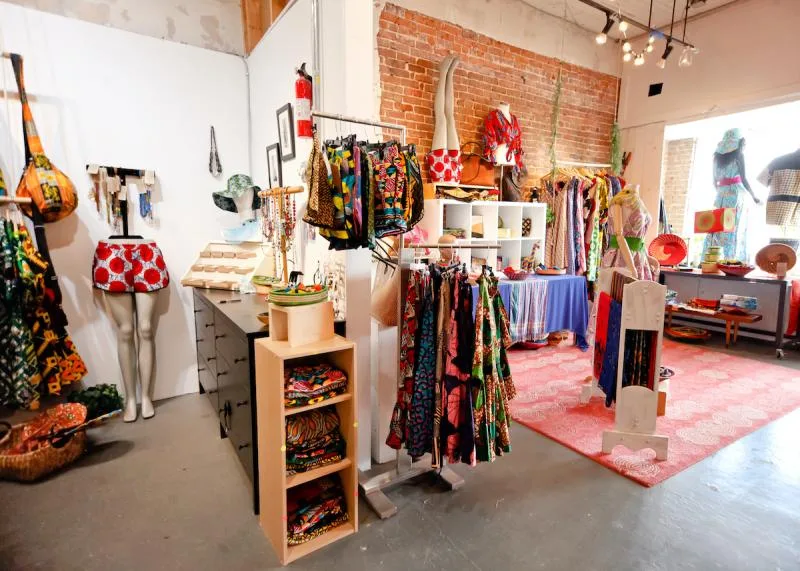
Mbabazi (House of Style) is a Fair Trade business committed to advocating  African designs through modern fashion and quality products. We are committed to training and employing women and men providing them with opportunities to make a fair living. Mbabazi has 12 permanent employees, 4 trainees (apprentices), and 6 part-timers.

https://www.instagram.com/reel/CS4l0UwArgi/?utm_source=ig_embed

Mbabazi (House of Style) was founded in 2005, by Grace Byeitima, the name is in honor of her single mother, (Mbabazi Loy Rujumba), to appreciate her for the skills she taught her at an early age and teaching her the value of hard work.

At an early age, Grace remembers her mother saying, ”With the proper skills and hard work, you can succeed in life.” This is the backbone for Grace in the creation of a thriving fashion business – a business that inspires her mother, siblings, countless others and provides revenue for hardworking women and men.

The same heart and soul that fashions a successful shop and workshop in Uganda now exists in Memphis where Grace has resided since 2014. With her own elegance and design refinery, Grace merges the fabrics and prints of African tradition into new modern statements of style.

In 2007 Grace invited her mother so they could work together. Loy now heads the production department sharing her 30+ years of experience with our tailors and trainees in Uganda. Without her, Mbabazi would be non-existent.

Mbabazi is not just about clothing, the accessories and non-clothing-related items reflect ideas that inspire Grace and add to the ideas of a House of Style.

Mbabazi has thrived in Uganda, despite issues that exist in competitive business markets of developing nations.

Many well-meaning non-profit organizations who compete in the same market as traditional businesses such as Mbabazi are supported by subsidies and grants that create an uneven playing field. We at Mbabazi believe the saying “TRADE NOT AID” describes the best way forward for Economies in countries such as Uganda.

Mbabazi is a for-profit business that is supported by people like you.

Content courtesy of Mbabazi House of Style & NFH Digital Team 

Mbabazi House of Style Kampala is a Testament to one Woman’s Passion for Fashion and Empowerment

There was a time when Grace Byeitima, owner of Mbabazi House of Style, was interested in lawyering, not pattern layouts, But her mother forced her to learn about the latter.

“I wanted to be a lawyer,” said Byeitima, who is from Kampala, Uganda. “My mother was a teacher in a vocational training institute, and she made me go where she was teaching and learn how to sew.

“I went grudgingly, but I went anyway.” Yet today Byeitima, 43, who has sold African-inspired garments, jewelry, and other knickknacks from her shop in the Broad Avenue Arts District since 2017, is grateful that her mother insisted that she learn how to sew.

That’s because it not only has allowed her to craft a life of independence for

“I would make sure that I left school on time to work on it [patchwork clothing] so that I could use the sewing machine first.”

But when her mother was ultimately laid off from her job, that dashed Byeitima’s hopes of attending college and studying law. On top of that, Byeitima, who was 16, learned that she was pregnant.

herself but for other women who want to use entrepreneurship to escape jobs that devalue them.

This is what Byeitima aimed to do back in Kampala, she said one of the ways that her mother endeared her to sewing was by bringing home unfinished sewing work – and paying her and her siblings to finish it.

“Some of the pieces, like what you’re seeing right now, is patchwork,” said Byeitima, as she pointed to ruby, saffron, and black cowl neck shift that she was wearing.

“So, I have this baby, my mom has no job, and I have this baby to take care of,” she said, It wasn’t long before Byeitima learned that she was more a target for exploitation than employment.

“I realized no one would hire you if you have a lot of baggage, and I had a baby,” she said. “The simple jobs I could have gotten would have been as a secretary or a receptionist. But you’d go to apply for these jobs, and men would want to sleep with you.”

“As I looked for jobs, I found that people don’t want to pay you what you’re worth…” But soon, Byeitima began crafting a way out.

Literally.

She began sewing garments for her baby daughter and taking the child from store to store to model them. That helped her land a year’s apprenticeship at a textile workshop that one of her mother’s former bosses owned.

“That’s where I learned actually most of what I know now, like pattern cutting and drafting and all of that,” Byeitima said.

In the meantime, she said, her mother opened a bridal shop, and together, they opened Mbabazi House of Style – Mbabazi means grace or kindness in Ugandan – in Kampala in 2005.

Mbabazi is also Byeitima’s mother’s name – Mbabazi Loy Rujumba.

“The business was thriving, because I was making African print cool for younger generations,” Byeitima said. “I was working for a lot of the embassies, doing a lot of their furnishings and everything else. We were known in the ex-pat community for doing really creative work…”

Yet Byeitima was doing more than making money. She was trying to help other women make a better way for themselves.

“We began training women in sewing skills and offering them jobs. I still work with my mom on that,” she said.

“It grew into something bigger than just me…no girl with skills should have to beg for a job if they can work for themselves, and no girl should be compromised [sexually] to get a job…

“I started it for me, to look out for myself and my baby, but then it evolved into a social business as well.”

Change continued for Byeitima.

In 2011, she met John Haley, a Memphian who was working for a Non-Governmental Organization – organizations that provide services or push for policies but are unaffiliated with any government – in Uganda. They married in 2014, and she moved with him to Memphis.

“I never dreamt of being in another country, but I knew I would fall in love with Memphis,” Byeitima said. “The trees, my God, there were so many trees…I’m from Africa, and when we see trees it’s in the forest

“I just fell in love with the city…we went to a concert at Levitt Shell, and I have never seen so many people in one place just enjoying music. And I love music.”

Byeitima fell in love with Broad Avenue after her mother-in-law took her there. That’s when she began to get ideas for a store there.

But not without the urging of her mother.

“My mom was like: ‘You’ve been in the U.S. since 2014 and you haven’t opened a store?’ I was like, ‘This woman is crazy. She thinks this is easy…”

So, Byeitima did what she learned how to do when she took her baby from shop to shop in Kampala to show her designs.

Content courtesy of Commercial Appeal & Nairobi Fashion Hub 

Rapper Kanye West is reportedly being lined up as Creative Director at Louis Vuitton

Kanye West could be taking on a prestigious new role as the creative director for Louis Vuitton following the sad death of fashion legend Virgil Abloh, according to new reports.

The rapper has branched out in recent years, from best-selling musician to launching his own clothing line, Yeezy, and even dabbling in politics – short-lived as that was.

Now it seems the Donda rapper could be taking his love of fashion design even further as reports indicate he has been tipped for a prestigious role in world-renowned brand Louis Vuitton.

According to The Sun, Louis Vuitton plans to replace icon Abloh with the musician, 44, who was a close friend of the late designer.

The outlet reports that Kanye and Abloh discussed the rapper taking over the role shortly before Abloh’s death aged 41 last month.

A source told the outlet: ‘Kanye is devastated about Virgil’s death because they had been friends for years and worked together a lot.

‘They shared a similar vision and now Kanye feels he owes it to Virgil to continue his work at Louis Vuitton.’

Ye and Abloh had been firm friends for over a decade, first meeting in 2009, and the designer held the role of creative director at Kanye’s own firm, Donda.

The Off-White founder and Louis Vuitton designer died on November 28, after a private two-year battle with cancer.

Devastated Kanye dedicated his Sunday Service to Abloh following the news of his death, and later attended his memorial with ex-wife Kim Kardashian and their daughter, North.

At the memorial, Kanye was seen placing a supportive hand on Abloh’s sister as she delivered a heartfelt eulogy for her beloved brother.

Abloh first sparked his love for fashion when he was attending the Illinois Institute of Technology, while getting his Masters of Architecture, and soon began designing his own T-shirts.

The designer launched his debut company, Pyrex Vision in 2012, and founded his iconic fashion house Off-White in 2013.

Kanye’s sneakers and menswear line, meanwhile, is said to be worth ‘billions’ of dollars.

Content courtesy of Metro Uk & NFH Digital Team


City Walk Donates 2000 Pairs Of Shoes To Ajuma Foundation

Over the weekend, the Ajuma Foundation received 2,000 pairs of shoes from the shoe retail company City Walk. The company made the handover at its 30th-anniversary celebration event which was attended by influencer Maureen Waititu who also became the company’s brand ambassador and supermodel Ajuma Nasanyena.

https://www.instagram.com/p/CXQWznNokyL/?utm_source=ig_embed

Speaking at the event Ajuma said that the shoes donated would help keep the children of Turkana in school.

“The reason why I’m standing here today and have partnered with City Walk is because of the children. The teachers told me the children walk eight hours a day back and forth from school. And when you look at the children’s feet, they have wounds on their feet from thorns and rocks. It’s just a handful of them who have shoes. It was a really huge weight for me to carry. And I just wanted to say, thank you so much to City Walk for taking that part of that weight.”

City Walk opened its doors in 1991 with an initial branch located at the Mall Westlands as a women’s shoe shop. Within a year, the men’s shoes were introduced to the catalog. It has since become a retail chain with over 25 branches across Kenya.

https://www.instagram.com/p/CXVVkNLt2lY/?utm_source=ig_embed

Speaking at the anniversary celebration the City Walk Director, Sheriffi Hassan Ali, said that he started the company with no experience, only spurred on by the dream of opening a shoe shop. He says the company’s continued success can be attributed to its customers and the company’s core belief in family.

“What we do is not just selling shoes. It is connectivity. A connection that is sole to soul. As we move ahead there are many causes we would like to support.

We have partnered with Imani orphanages and at the end of this month, or next month we are opening a City Walk orphanage for prisoner kids at Kasarani. And then our goal is to plant a hundred thousand trees in this country over the next 10 years.”

https://www.instagram.com/p/CXEbB-mIrFL/?utm_source=ig_embed

Keeping up with the tradition of family, the company named influencer and mother of two Maureen Waititu their new brand ambassador.

“I’m telling you, this (City Walk) is a real family, I have never felt more at home. And it’s in the actions, it’s in your work of charity, because I know we are about to launch their children’s home for mothers in prison in addition to what you’re doing for Ajuma today…I do not take this opportunity for granted. Thank you for embracing my children. This is such a huge win for me, seeing me and the boys on a billboard.”

As part of her campaign as the brand ambassador, Maureen will offer her followers giveaways for spotting the new billboards as well as a promo code with a 10% discount on all City Walk products.

Content courtesy of KBC & NFH Digital Team 

Virgil Abloh, Off-White Founder and Louis Vuitton Menswear Artistic Director Dies at 41

Ambassador and Infiltrator

Virgil Ablo, The founder of the fashion company Off-White and menswear artistic director at Louis Vuitton died on Sunday following a private, two-year battle with cardiac angiosarcoma, a rare, aggressive form of cancer. He was 41.

Abloh’s death was first announced by his labels over social media.

“We are all shocked after this terrible news. Virgil was not only a genius designer, a visionary, he was also a man with a beautiful soul and great wisdom,” wrote LVMH CEO Bernard Arnault. “The LVMH family joins me in this moment of great sorrow, and we are all thinking of his loved ones after the passing of their husband, their father, their brother, or their friend.”

“We are devastated to announce the passing of our beloved Virgil Abloh, a fiercely devoted father, husband, son, brother, and friend,” reads a statement on Abloh’s official Instagram.

According to the statement, Abloh elected to keep his cancer private after being diagnosed in 2019, undergoing treatments while continuing to work as one of the fashion industry’s leading voices.

“Virgil was driven by his dedication to his craft and to his mission to open doors for others and create pathways for greater equality in art and design. He often said, ‘Everything I do is for the 17-year-old version of myself,’ believing deeply in the power of art to inspire future generations.”

Born to Ghanaian immigrant parents on Sept. 30, 1980, in Rockford, Ill., Abloh studied civil engineering at the University of Wisconsin-Madison, receiving a bachelor’s degree in 2002. He went on to earn a master’s degree in architecture from the Illinois Institute of Technology in 2006.

Following his education, Abloh met Kanye West, who would become one of his first major collaborators. In 2011, West named Abloh creative director of his company Donda. During his tenure, Abloh worked as artistic director on some of the most popular album art of the 21st century, including West’s “My Beautiful Dark Twisted Fantasy,” “Yeezus” and “Watch the Throne.” Abloh also created the covers for A$AP Rocky’s “LONG. LIVE. A$AP,” Lil Uzi Vert’s “Luv Is Rage 2,” Kid Cudi’s “Wzrd,” 2 Chainz’s “Based on a T.R.U. Story” and more.

Abloh founded the fashion house Off-White in 2012, serving as CEO until his death. His radical approach to clothing is highly responsible for the bridge between the worlds of streetwear and luxury fashion that has emerged over the past decade. Off-White launched Abloh to an even more prominent position on the global stage, attracting the attention of Louis Vuitton. The storied fashion house signed Abloh to serve as its menswear artistic director in 2018, a role he fulfilled through the remainder of his life. Abloh is the first African-American to head the house’s menswear line.

“The first thing I am going to do is define new codes,” Abloh told The New York Times following his appointment in 2018. “My muse has always been what people actually wear, and I am really excited to make a luxury version of that.”

Moët Hennessy Louis Vuitton bought a majority stake in Off-White last year. In July, Abloh took on a position at LVMH that allowed him to work across the group’s 75 brands, becoming the most powerful Black executive in the history of the premier luxury group.

Beyond fashion, Abloh was also well-known for his work as a DJ and furniture designer. He is survived by his wife Shannon Abloh, his children Lowe and Grey, his sister Edwina Abloh, his parents Nee and Eunice Abloh, and numerous friends and colleagues around the world.

Content courtesy of Variety & Nairobi Fashion Hub Digital Team 

Africa Fashion Week Nigeria Returns For A Spectacular Show

As the world continues to unlock its social doors after a year’s hiatus owing to the COVID-19 pandemic, organizers of the annual Africa Fashion Week Nigeria (AFWN) will be collaborating with the Nigerian Tourism Development Corporation (NTDC) to return this year with a most spectacular event.

Focused on promoting indigenous emerging and established brands to international buyers, the AFWN is also reputed for bringing together the most promising, talented, and recognized fashion designers and brands from across Nigeria and Africa to showcase the latest trends and products to a large and diverse audience of consumers, industry enthusiasts, and the press.

This year’s event is billed to hold on Saturday the 4th and Sunday the 5th of December at the Ojaja Hall, Ife Grand Resort, Ile Ife, Nigeria, will have the Chairman of the Adire Oodua Textile Hub, His Imperial Majesty Ooni Adeyeye Enitan Ogunwusi, Ojaja II Ooni of Ife, launch first of its kind Adire Mobile Boutique – Adire on wheels.

The event will also be featuring exciting runway shows, fashion talks, Adire Oodua workshops, and exhibitions.

The theme for this year; “The Impact of Indigenous Fabrics and Tourism to the Nigerian Economy”, Ademiluyi explained, is pivotal to the essence of the brand, in its continuous effort to revive the decline of local textile industries in Nigeria, hence the collaboration this year with NTDC Tour Nigeria.

Founded by Princess Ronke Ademiluyi, with the aim of promoting homegrown brands, while preserving African culture, AFWN over the years has become not only a top-rated platform for fashion design, ready-to-wear, accessories, styling, and other new designs in the country but also a world-renowned platform for promoting brands, displaying originality and broadcasting fashion trends.

Content Courtesy of This Day Live and Nairobi Fashion Hub 

Matthew Rugamba Dressed For Success: Rwanda Fashion Label House of Tayo Breaks New Ground By Going Global

Kigali – Matthew Rugamba knew his Rwandan fashion label had arrived when Junior Nyong’o, the brother of Oscar winner Lupita Nyong’o, attended the world premiere of “Black Panther” in a three-piece suit designed by him.

Hours after the glitzy event in Los Angeles, the website for Rugamba’s brand House of Tayo exploded as inquiries flooded in from around the globe for his high-end creations.

“It changed the perspective,” the 32-year-old told AFP, still stunned by the turn of events that propelled his “made-in-Rwanda” label to a Hollywood red carpet.

“For so many years we have been telling people our fashion is good… but sometimes you need moments like that to really take it to the next level,” said Rugamba, who holds dual Rwandan and British nationality.

Kigali has yet to reach the heights of Africa’s fashion hub Lagos, but the capital of the small landlocked nation of 13 million hosts its own fashion week and draws a devoted clientele, comprising wealthy locals, expatriates, members of the diaspora, and tourists.

“I like the way they tailor the clothes, the way they design their clothes, I like the simplicity of it as well,” said Emmanuel Safari, a lawyer and frequent visitor to the House of Tayo boutique located in an upscale Kigali neighborhood.

“The clothes, you put them on and you feel good!”

Some Rwandan labels have even attracted the attention of President Paul Kagame, who was pictured wearing a shirt by bespoke Kigali brand Moshions.

‘Change the narrative’

But what is “Kigali style”? “It pops but it’s not flashy,” according to Jean-Victor Brun, a 50-year-old Haitian-American who came to Rwanda to develop projects in new technologies. “Modern, ethnic, and rooted in the identity of our country,” says Joselyne Umutoniwase, founder of Rwanda Clothing.

Identity is at the heart of many Rwandan brands, which excel in producing bespoke clothing – drawing on a tailoring tradition that dates back decades. For instance, Umutoniwase, who employs 45 people, incorporates the geometric designs characteristic of imigongo art – a style of painting that uses cow dung and natural pigments – into her creations.

Similarly, the beadwork found on royal headdresses and other traditional items finds its way onto jacket lapels, while Rwandan shoe label Uzuri K&Y borrows from the country’s weaving traditions to create braided sandals.

The brand’s co-founder Ysolde Shimwe said young designers like her were keen to change Rwanda’s image, 27 years after the 1994 genocide killed more than 800,000 people, mainly Tutsis.

“Ten years ago when you Googled Rwanda you only saw machetes, people killing each other and hungry kids in the streets,” she told AFP.

“We as designers in Rwanda are also contributing to change the narrative of Rwanda and mostly to changing how people perceive Rwanda because we are more than that, we are more than our historical background.”

Bullish prospects

Rwanda’s fashion industry has also received a helping hand from the government, which in 2016-17 massively hiked import taxes on second-hand clothing – mainly from the US and Europe – to promote local manufacturers.

The move, which saw duties multiply more than tenfold, effectively imposed a moratorium on trade involving the sale of secondhand clothing from the West at low prices to East African consumers.

Simultaneously the government allowed designers to import fabric tax-free, giving the nascent industry a boost, said Umutoniwase.

But, with more than 80 percent of the population living in rural areas, according to the World Bank, many Rwandans cannot afford these homegrown brands. Umutoniwase, whose prices range from around 70 dollars (60 euros) for a shirt to 80 dollars (70 euros) for a dress, told AFP the small market size presented big challenges.

Moreover, the devastation wrought by the genocide has also contributed to a huge skills shortage in the country, said designer Shimwe.

“Eight years ago when we wanted to start a shoemaking brand we could not necessarily find skilled labor, there was literally nobody that had experience or had shoemaking skills,” she said.

But in a sign of the industry’s bullish growth prospects, some of the nearly 1,100 staff trained by her have since gone on to found their own labels, she said.

“It’s a great cycle that we have been able to create.”

Content courtesy of AFP and Nairobi Fashion Hub 

Secondhand fashion: Is it really good for Africa?

Used or surplus clothing from Western countries often ends up in Africa. Whether that’s good remains open to question.

Midday in Gikomba, the biggest market in Nairobi, Kenya. One trader urges shoppers to buy his vintage trousers. Others sell t-shirts, sweatshirts, hoodies, most with Western fashion brand labels. Some clothes have the names of American colleges emblazoned on the front.

Kenya is one of Africa’s biggest importers of secondhand clothing, in 2019 importing some 185,000 tonnes. These clothes called mitumba in Kenya after the Swahili word for “bundles” form the bulk of Kenyans’ fashion choices: an estimated 91.5 percent of households buy secondhand clothing priced at Ksh 1000 (around $9) and below.

Commentators remain divided as to whether this is an encouraging sign of a circular economy at work or a problematic barrier in the way of economic survival of African countries’ own textile industries.

The mitumba industry is an important source of revenue for the Kenyan government: taxes raised from this sector amount to Ksh 12 billion ($107 million) a year. In every African country where secondhand clothes are imported, they bear different names. In Zambia, they are called salaula selected by rummaging. In Ghana, they are called obroni wawu dead white men’s clothes.

In wealthy Western countries, the average individual doesn’t wear clothes for long. It is estimated that a typical American throws away approximately 37 kilograms of clothing a year. Rather than discard clothes, Westerners are encouraged to donate them to charities. However, according to the charity Oxfam, an estimated 70 percent of clothes donated in Europe end up in Africa in 2015.

Supporters of this approach argue that donating clothes in this way is a circular means of dealing with clothing waste. Jackie King, executive director of Secondary Materials and Recycled Textiles Association (Smart), representing 40 American used clothes exporters, says that what they do “helps to contribute to a circular economy, where things are being used to their fullest extent”.

However, keeping clothes in use for longer periods of time is not the same as circularity. “Secondhand exporters can rebrand the trade as many times as they want, but unless they work in partnership with markets like Kantamanto, it’s just greenwashing,” says Liz Ricketts, director of The OR Foundation, a Ghana-based nonprofit that has investigated the influx of secondhand clothing in the country. “The trade has been called ‘charity, ‘recycling’, ‘diversion’ and now many people call it ‘circular’. But none of these labels is accurate. Simply moving clothing from one place to another does not make it circular.”

Unless the clothes are collected and recycled into new clothes repeatedly, critics say, what emerges is not a circular model but a linear model with a different endpoint. Where initially these clothes would end up in dumpsites in the West, they now end up in dumpsites in Africa.

Where it goes wrong in Africa

Since the mid-2000s, the number of garments purchased by the average consumer has more than doubled, according to the Global Fashion Agenda’s Pulse Report. While the number of times a garment was worn by Westerners declined by 36 percent, compared to 15 years ago, per the Ellen MacArthur Foundation. This has led to rising volumes of clothing ending up in markets such as Gikomba, with Kenya receiving 185,000 tonnes of second-hand clothing in 2019. In West Africa, Accra receives an estimated 15 million used garments every week from Europe, America, and Australia.

Back in March 2016, members of the East African Community (EAC, comprising Burundi, Kenya, Rwanda, South Sudan, Tanzania, and Uganda) announced a plan to halt secondhand clothes imports in order to resurrect textile industries in East Africa that had collapsed partly because it was difficult to compete with the throwaway prices of mitumba clothes. “If an imported t-shirt, acquired by a company as a donation (and therefore costing zero as a product), is sold here for under a dollar, how can a local textiles industry have hopes of competing?” says Nikissi Serumaga, co-host of Vintage and Violence, a podcast examining the impact of secondhand clothes in Uganda. “It can’t. The charity has become commerce but to whose benefit?”

She points out that importation leads to a vicious loop, with the decimation of a once vibrant textile industry limiting employment opportunities: “The only thing we can afford is a shirt under a dollar. It’s a self-fulfilling prophecy.”

American lobbyists struck back. At their forefront was Smart, claiming that the move by the EAC would put 40,000 American jobs at risk, such as export roles in sorting and packing clothes. Smart lobbied the Office of the United States Trade Representative, also pointing out that secondhand clothing exports were helpful to the environment, as they would avoid ending up in American landfills. Furthermore, Smart’s Jackie King said that a US secondhand clothing ban would leave the way open for low-priced Chinese clothing “which will annihilate African textile manufacturing, causing generational repercussions and depression”.

That’s an empty accusation for critics, who say textile manufacturing is already in tatters in many African countries specifically because of secondhand imports from the West. It’s that dynamic, they say, that first prompted East African countries to push to limit the import trade.

After Smart’s petition, however, the Office of the US Trade Representative threatened to expel EAC countries from the Africa Growth and Opportunity Act (AGOA), an important treaty first enacted in 2000 to provide duty-free access to the US for multiple products from sub-Saharan African countries. By 2019, the countries behind the mooted ban backed out, with the exception of Rwanda, which announced that it would not be bullied by American trade interests.

Good news or landfill for Africa?

By contrast, the OR Foundation, a Ghana-based nonprofit that has investigated the influx of second-hand clothing in the country, estimates that more than 40 percent of clothing in markets in Accra, the capital, is unsellable and heads directly to landfill. Johnson Doe, leader of a group of waste pickers, based in Accra, says more clothing waste goes into landfills directly from ports than it does from markets. A combination of customs, port, metropolitan, and health officials simply bring the clothes direct to landfills and burn them. “They bring the bales from the shipping containers,” he says.

The common rebuttal from exporters such as Smart is that the secondhand clothing industry creates jobs in Africa. However, the quality of these jobs remains open to question. Francis Dionis, a trader in Gikomba, says that the clothing he receives is often of such poor quality, he has to sell them at a loss. If given the chance, he says he would undoubtedly move to another line of work.

Ricketts notes that better condition secondhand clothing from the West is selected and sold in thrift shops in the West and the remaining items shipped to Africa are of lower quality.

Smart’s King counters that the lowest quality clothes are often new rather than secondhand, from fast fashion companies. “I know that there are markets in Kenya and other parts of Africa where you will have new, cheap, fast fashion in a stall, and then you’ll have used clothing in a stall that is probably higher quality than the fast fashion.”

The debate will continue to run. However, certain facts stand out: local news reports suggest that, a few decades ago, some half a million people were employed in Kenya’s textile industry. More recent national statistics, from 2014, put that figure around 38,000, although this is increasing slightly each year.

Still, people in the clothing sector across Africa try to find positives. Sel Kofiga, a multimedia artist based in Ghana, runs Slum Studio, which retrieves clothes that would otherwise end up in landfills and upcycles them into wearable items. The circular concept, he says, is very familiar to Africans. “When it comes to the fashion space, as African people, our approach has always been to look to reuse something.”

Content courtesy of Vogue Business Magazine 

Kejeo Designs Launches Holidays Collections SS21 For Modern Curvy Women 

Kejeo Designs has been turning vibrant textiles into modern styles for Western women since 2016. Now, the fashion brand is releasing its newest Holidays 2021 Collection on October 29, 2021, that founder, Sena Ahohe, created with modern, curvy women in mind.

The fashion boutique gets its name, Kejeo (Ké-Jé-O), from the word “nou kéjéo-a,” which means something looks beautiful on you in the Mina language spoken in Benin and Togo in West Africa. Kejeo Designs prides itself on bringing the beauty and vibrancy of African culture to the West with its clothing decorated with premium African print fabrics such as Ankara or Mud Cloth.

And for over five years now, Kejeo Designs has made African clothing lines for men and African clothing lines for women that inspire a sense of pride in African ancestry.

Kejeo Designs has released many colorful and beautiful collections over the years that feature clothing for men and women of all sizes and stylish accessories. But their newest drop, the Holidays 2021 Collection, has been long-awaited.

The Holidays 2021 Collection will feature size-inclusive styles for the modern woman who’s been searching high and low for fashion that compliments their shape and style!

Size-inclusive clothing doesn’t have to be boring.

And Kejeo Designs proves just that with their new collection that’s full of bold African print, feminine and classic silhouettes, and clothes that show off your curves not hide them.

Discover dresses, tops, outerwear, and more in the Holidays 2021 Collection that comes in a range of accessible prices that’ll make any woman feel confident in their skin this season.

Kejeo Designs is committed to the belief that regardless of your size, shape, or color, you deserve to wear clothing that makes you feel confident in your self-expression and feel proud of African culture. The brand plans to release more collections in the future and expand its reach. But for now, you can find their new Holidays 2021 Collection on October 29th

Content courtesy of Ein Presswire and Nairobi Fashion Hub 

‘All This Fresh Drip, we Were Never Ready’: Fast Food Giant Reacts After Girl Makes Frock Dress Out Of Recycled Packaging

A girl on Twitter has created a dress made with recycled KFC packaging. The fast-food giant too responded to the amazing creation!

The post, instantly, went viral with netizens showering praises for her creativity.

With growing awareness about climate change and depleting natural resources, people are gradually adopting sustainable methods of living.

The one thing that you will find in abundance on the internet is creativity. From interesting ideas to unique fusion dishes, there’s something new to be learned or be inspired from at every scroll on your social media feed.

The concept of sustainable fashion is also increasingly gaining momentum these days. Bloggers and even citizens are trying to minimize waste and reuse their clothing in as many ways as possible, in order to do their bit for the planet.

A fashion blogger has recently gone the extra mile to make her clothing as environment-friendly as possible. The girl created a dress made with recycled packaging from the popular fast-food chain Kentucky Fried Chicken (KFC).

https://twitter.com/NokuzothaNtuli/status/1461041200299978753?s=20

In a similar vein, the fashion world has also not been left untouched as sustainable fashion has begun to gain focus in the last couple of years.
​​​​​​​People are finding their own ways to blend sustainability with creativity, As such, a South African fashion designer recently took the internet by storm as she created a lovely frock dress out of recycled packaging!

Nokuzotha Ntuli left everyone amazed as she posted some pictures of herself, looking lovely in an off-shoulder dress. However, what caught everyone’s attention was the fact that the dress was made from recycled KFC packaging.

Sharing her pictures, she wrote, “Decided to make this dress for KFC from recycled KFC packages to show how much of KFC super fans we are.”

The post, instantly, went viral with netizens showering praises for her creativity.
KFC South Africa, too, was left impressed as they praised the designer with a sweet comment.

“All this fresh drip, we were never ready,” they wrote. A user commented, “How in the world did you pull that one off? But wow.” “You deserve a free meal for the whole month,” another user wrote.

What do you think about this recycled dress?

Content Courtesy of Indian Express and Nairobi Fashion Hub 

Ad