Some of the designs have padlocks to symbolise lockdown measures
A Ghanaian fabric company has launched a new line of designs inspired by the Covid-19 pandemic. “[We] put a positive twist on a negative phenomenon” Stephen Badu, from Ghana Textiles Printing (GTP), told BBC Focus on Africa radio.
The new fabrics have symbols like padlocks, keys and planes to reflect some of the measures implemented to curb the spread of coronavirus, African prints are popular in Ghana and many workers wear them on Fridays.
Two of Ghana’s main metropolitan areas were in lockdown in April – and nationwide there was a ban on public gatherings and the closure of borders. Restrictions have since been eased though strict social-distancing measures are in place, especially in churches and it is a criminal offence not to wear a face mask in public.
The West African nation has reported more than 20,000 cases of Covid-19, with at least 129 people dying from the virus. “We are a business that tells stories and we tells our stories through our designs,” Mr Badu, GTP’s marketing director, said.
The capital, Accra, and the city of Kumasi were put into lockdown for three weeks
“We believe that it is going to leave a mark in the history of the world, and it’s important that generations that come after us get to know that once upon a time, such a phenomenon occurred.”
Some of the new GTP designs have glasses on them similar to the signature ones worn by Ghana’s President Nana Akufo-Addo, who has been giving regular updates on the virus.
The round spectacles look like those worn by the president
“He has iconic spectacles that he wears and when you watch him on television that is what stands out,” Mr Badu said. “Another design shows a symbol of a plane, it indicates that during the lockdown one of the measures that Ghana took was to close the borders, so no flights,” he added.
Flights were stopped during the lockdown
In 2004, the government started a campaign to get people to wear national dress on Fridays to support the local textile industry, yet a lot of the fabric worn is not made by African firms.
The designs were created by Ghanaians
Ghana Textiles Printing, despite its name, is owned by Dutch company Vlisco, But Mr Badu said the new designs were all about Ghanaians telling their own history.
“The designs which we print now are all originated by Ghanaians and printed by Ghanaians, so behind every design we produce it’s our value systems, our sense of art, and how we communicate,” he said.
Unearthing fabrics is a new series that looks at your favourite garments before you started wearing them.
Today, we’re looking at Spandex however it can also be called Lycra or Elastane. It’s a wonder garment with endless possibilities.
HISTORY OF SPANDEX Rock & roll musicians liked wearing tight pants, made of spandex and this helped popularise it. Superheroes & Villains wear costumes made of elastane in comic books, tv series & movie adaptations.
CREATING SPANDEX It’s a polyether-polyurea copolymer fabric formed when a polyester reacts with a diisocyanate to create a long polymer chain. This polymer chain is placed in a fibre production cell, spun around before it’s pushed through a spinneret. The fibres are heated with nitrogen and solvent gas solution to form solid strands and bundled together as they exit the spinning cell. Later it’s treated with a finishing agent like magnesium stearate before its loaded on a spool ready for use.
WHY SPANDEX Spandex has a high elasticity and stretches up to five times its original length without breaking. It isn’t worn out by lotions, sweat or deodorants. It’s highly breathable, durable & easily pulls moisture to the surface so it can evaporate. In clothes, it helps people feel comfortable since it fits different body sizes exactly. Spandex can absorb different colour pigments. A fashion designer has the freedom of creativity. Alternatively, it can be sourced as an opaque fabric. It isn’t damaged when it’s sewn with other fabrics because it’s sturdy and abrasion-resistant. On the other side, Spandex doesn’t let your body breathe since it’s skin tight. Also, it’s heat-sensitive, you can only handle it with warm water, so it retains its shape.
WHERE IS SPANDEX USED Spandex can create underwear, innerwear or activewear men and women. It can create a wide- range of fashion garments including sportswear, swimsuits, bra straps, yoga pants, leggings, bicycle pants & support hose.
Spandex is slightly expensive so it can be used with other material like wool, cotton, polyester e.t.c to give them more elasticity. Outside fashion, spandex has also been used in furniture & automotive door panel fabrics. In the film industry, it’s used for creating motion capture suits that make it easier to generate 3D visual effects.
Let us know about your favourite Spandex moments in the comments section below.
23-year-old Jackson Tukei Malinga caught our attention when in an interview upon signing with an international agency, talked about how he had to walk on foot from Kitebi Mutundwe to Namuwongo then to Kisementi, and then back home.
All this had to be done before 7pm (curfew time). The challenge was for him to produce images to add to his profile before submitting with the Italian agency. Indeed, after going through it, he was signed to Independent Models Italy, a big talent agency based in Milan.
This, to us, is exactly what it means to live through the new normal. Going out of your way to do what it takes, despite all challenges in the way. It’s a tough time for everyone, but what’s life when you can’t live it. Let’s soldier through.
For this fashion story, Abbas Kaijuka of Kai’s Divo Collection had to pick looks from some of his previous collections. As a designer, he too felt the shockwaves of the pandemic in every inch of his business. His plans of producing a new collection were halted. He got stuck in his workshop with countless orders to meet, and nowhere to find fabric. Some of his tailors couldn’t make it to work due to restrictions on all forms of transportation. It hasn’t been easy for everyone.
In the accompanying interview, Malinga talks about his lessons, his fears and how he’s staying hopeful during this challenging time.
Shooting this story had a fair share of challenges, which part of the experience stood out for you?
Yes, it was really challenging. The day started with a heavy scorch then later it rained heavily in the middle of the shoot. Then it rained again. And yet in all this, I enjoyed the fact that I was shooting with a photographer I had not worked with before, and also in a place that was far away from the city. We did numerous looks, I think this was the first time I was doing more than seven looks in just one shoot. I did not know when we were going to stop, I kept on sinking in the experience rather.
You told us about how you had to walk for miles on foot from home for a photo shoot and then back due to restricted movements because of lockdown. What was going through your mind that day?
I always want to step out of my comfort zone and do things that have never been done before. So, when an opportunity came my way during such a difficult time, I had to seize it still. We don’t get to shoot a lot here, so when an opportunity tags itself, you have to act fast. I also have always known that enough effort always pays off well, so I was positive something good would come out of it. Around 15th April, that’s when the idea of shooting some looks of Kaijuka Abbas was brought up. The country was in total lockdown. Abbas has always believed in me so he was okay with idea of having me in it.
And then my modeling boss Joram Muzira, (being a man who has no limits when it comes to pursuing anything) just gave me the energy when he embraced the idea. I remember, after kilometers of trudging from my home in Kitebi to Abbas’ workshop in Namuwongo, then Mawanda road for the photo shoot. After, I walked back home, and made sure to be there before curfew time (7pm). I remember Joram sending me a WhatsApp congratulatory audio afterwards. That was it!
Is this the most challenging thing you’ve done in pursuit of your dream?
The most challenging experience I’ve had so far came during my pageantry days. You know I was Mr. MADs. What happened was; I underwent serious depression over a competition for which, I think I was judged unfairly. Having invested in it most of my time and all my savings, things did not turn out as was expected. I had to act like everything was fine, yet deep inside I was breaking down. This is the first time I am opening about it. As a matter of fact, it is the reason I left pageantry and settled for fashion modeling.
Walking for over 20 kilometers is really hard for someone who does not workout. I am physically fit because I always hit the road for workouts. It wasn’t so much of a challenge. Only the thought that I’d be caught up by time. That scared the hell out of me.
Things that challenge us physically are never as hard to deal with as those that do it emotionally or spiritually. It is then that I realised that I guess I’m not as strong as I assume I am after all.
So, how then do you get into modeling?
In 2018, I participate and won the Mr. MADS COMPANY title. Even while in pageantry I would walk some runway shows like the Ugandan Diaspora Business Expo and Social Networking Gala 2018 edition plus the Stevz Fashion show 2019. After going through and beating my depression, I signed with Joram Model Management (JMM). The drive at JMM did not leave me the same. JMM itself is a big brand, so I did not just want to be identified with it. I wanted to be acknowledged for my efforts too. I recently signed with Independent Models Milan, which to me is an indication that, ‘so far so good.’
The modeling business is facing big challenges right now. Brands have limited budget to spend on marketing, crowds are being avoided and digital fashion shows are the new normal. Does that worry you?
I would have been worried if it was not God who has brought me this far. This new normal is temporary, at least for a few things. So many things are going to change, but one thing I’m certain about; models are not going to be substituted with robots. Hahha.. So, I am not worried. This is an industry that has thrived on physical presence. People want to see the clothes with their eyes. They want to feel and touch them with their hands. It’s such unique experiences that make fashion what it is. I don’t see that getting fazed out.
What’s most challenging and fun about modeling?
Challenging and fun, wow. I think I will start with the fun…You get to interact and meet with a lot of amazing people ranging from successful models, designers, and more. And then you are exposed to a lot of experiences (both good and bad) and opportunities, which is a great learning curve. The Challenges; this is a risky career path to take. You are not guaranteed that once you become a model, then all your dreams will come true. And also, you can only go as far as your looks and appearances can take you. God forbid, you meet with an accident that alters your appearance, your career is over.
And if you survive through it all, when you grow older, you also outgrow the industry. Agencies tend to sign young models. So if you want to earn a fortune out of it, you are not looking at it locally but internationally and even then, you have to save a lot and forget the fun while at it. Yes, the hard truth is: the local industry doesn’t have that much money to help pay all your monthly bills.
The experience of getting signed to an international agency during lockdown. How did you take that in?
When the good news was about to come, Joram told me to pray so much and I believe this is what he does with other models. I was very anxious, this was a dream that was about to happen. I had struggled a lot to achieve the requirements for the international market.
I remember him confirming that I had gotten to the size they wanted. I also remember how he constantly warned me against starving myself in attempt to become slim. All I had to do was routine exercising. After meeting the required size, I was picked up by an agency in a top fashion capital. It took me many days to sink it in. It was such a joyous moment.
We are all adapting differently to this new way of life. How is it happening for you?
I am actually finding it hard to differentiate between how life was then and now, I have easily adjusted to it. Otherwise, what’s clear now is that I have twelve hours every day to do what I was doing in a space of almost twenty four hours. It’s about prioritising.
As a model, I know during the day, I will step out in the morning and workout, I will go for a photoshoot, go to a designer and see what we can put up in the near future, et cetera and then settle for things that can be done on my smart phone in the evenings like video chats, posting, interacting with different people. So, for me, this new normal is about knowing what to do and when in the shortest time before curfew time strikes.
As a student of Environmental Engineering. Do you think the fashion industry is doing enough to conserve the environment?
I believe the industry is doing something, but perhaps not enough. There’s been a huge debate going on about sustainability. The pandemic came as a reality check that talking about it is not enough, it’s high time the industry started acting. This is one of the most creative industries; from countless cosmetic products being churned out daily to the numerous clothes produced every other fashion season, it’s time to think about the impact of these products on the environment. And, if we really need all of them.
As models, we are trained to be mindful of this. It is rare to a find a professional model poorly disposing of waste. To me, the fashion industry is not doing so bad, but definitely this is the time to do better.
Back to modeling. Is there a model or models you look up to?
Yes, I have always respected and admired Tyson Beckford. One of the best fashion photographers we have here has joked that my look is reminiscent of Tyson Beckford. Beckford is undoubtably one of the best black models to ever live, and because of that, I look up to him on a lot.
Anything else about you you would like us to know
I have 5 or 6 years of experience as a model. Tricky to crack? I am twenty three years old. I turned twenty three in April this year. Although with all the pandemic horror, I’m considering not counting this year. I am kidding!!!
A slay queen stays ahead of the business curve by starting a business. Your Barclays bank account is on life support but the better things in life never take a break. Beautiful people weren’t created to suffer long hours chasing after paychecks. Be a boss and a rise up.
The world revolves around money.
You might still be stuck at your day job watching your nail polish dry and wondering if it’s too early to pull a disappearing act. If you had a hustle, then, you’d only have to answer to yourself.
Starting a business is never easy. However, you can start by getting someone else to draw up your business plan if you’re not a business person. You don’t need to feel pressured to do everything, all the time.
Stay away from shylocks or weird messages talking about securing a loan in less than 24 hours. It’s never a guarantee that this will end well for you. People are aware that Brazilian weaves cost over Ksh 200,000. You don’t want bailiffs auctioning off your hair collection.
Stay away from invisible money initiatives, this includes digital currency initiatives unless you know what’s going on. If you don’t understand how a business works then how do you protect yourself from con artists.
Don’t open up a beauty and hair shop that’s identical to all the others lined up along the street. I mean aren’t you unique from everyone else. You need something different to draw customers to your shop.
Don’t place posters advertising your business in public transport, washrooms, walls or electric poles. You’ll look tacky. You can’t be associated with people that call those numbers. You also don’t want random numbers enquiring if you’re a ‘minji minji,’ and wondering where you live exactly. Femicide is real.
Never sell beauty enhancing products that promise to reduce melanin or make women “curvy” in specific areas. Since these products tend to be illegal and harmful. You don’t want to risk ruining your brand. One bag egg will misuse these products, end up with mismatching body parts and attempt to drag your name through the mud. It’s not your problem that they didn’t read the instructions.
Let a kick-ass designer create a cool website for you. This includes a logo that elevates your status and one that doesn’t leave people wondering what you do. It needs reliable contact details because money never sleeps.
If you have a notable social media presence then consider promoting fashion events, clubs or artists on your pages for money. You should be paid for partying and having a good time. Influencers share information about what works for them so read up on them. You can leverage your followers, start a brand and sell fashion-related items like Huddah and makeup.
Your loved one promised you a business, but you still need to check the business registration documents. A lawyer can check them out. You can’t be tossed out during the rainy season into the concrete jungle because he found a new plaything. Houses, land, cars and other expensive gifts need legal documentation listing you.
Paperwork means everything!
Lastly, you might not be good with numbers, so hire someone, that is. So, you can focus on growing your business and your brand until you make money in your sleep.
Bambuser has entered into a pilot agreement worth USD 13,000 with one of South Africa’s leading retailers and one of the fastest growing retailers in Africa. The agreement concerns Live Video Shopping for one brand in one market during the pilot phase, which lasts for two months. Bambuser AB has signed a pilot agreement for Live Video Shopping with one of South Africa’s leading retailers. The customer in question is an omni-channel fashion value retailer with a total net sales of ZAR 12.525 billion (approx SEK 6.8 billion) for the 2019 financial year.
The agreement gives the customer, who is one of the fastest growing retailers in Africa, the right to use Live Video Shopping for a limited amount of broadcasts at a fixed cost of USD 13,000 (approx SEK 122,000) for one of the Group’s brands in one market during the pilot phase, which lasts for two months.
– In late 2019, Bambuser was the first in the world to take the trend of Live Video Shopping outside Asia. In less than eight months, we have succeeded in establishing a foothold in Europe and the US. We are delighted to welcome another market leader and see many fantastic opportunities in the African retail industry, says Maryam Ghahremani, CEO at Bambuser.
This disclosure contains information that Bambuser is obliged to make public pursuant to the EU Market Abuse Regulation (EU nr 596/2014). The information was submitted for publication, through the agency of the contact person, at 30 June 2020.
Contact information Maryam Ghahremani, CEO | +46-8-400-160-02 | maryam@bambuser.com or visit bambuser.com/ir
Certified Adviser Erik Penser Bank AB | +46-8-463-83-00 | certifiedadviser@penser.se
Bambuser was founded in 2007 as the world’s first company with a platform for interactive mobile live video broadcasting and is a leading supplier in the live video segment. In 2019, Bambuser introduced Live Video Shopping, which enables live shopping directly on the brand’s website. Bambuser is listed on the Nasdaq First North Growth Market and is headquartered in Stockholm.
Lisa Folawiyo is a multi-faceted global womenswear and accessories collection.
Designer, Lisa Folawiyo perfected the art of wearing Ankara (local West African cloth) through the use of ornate embellishment. By incorporating texture with this culturally established traditional textile, Lisa Folawiyo transformed the textile and created a globally coveted print. This conceptual and global design hybrid has been the key to Lisa Folawiyo ʼs success.
Fused with its very own African-inspired custom luxury prints, the Lisa Folawiyo collection skillfully delivers contemporary garments. With a strong eye for tailoring and fit, Folawiyo creates feminine and modern silhouettes with nods to traditional African aesthetics.
“Her passion for clothes and her innate sense of style led her to create what at the time had never been done, the embellishing of the local Ankara fabric which has now become a global phenomenon.”
Each Lisa Folawiyo garment boasts a handcrafted and unique history from inception to construction. Folawiyoʼs expert artisans hand embellish each Lisa Folawiyo piece, on average a 240 hour process that reflects the brandʼs focus on design integrity.
Lisa Folawiyo has shown its collections on international platforms – in Lagos and Johannesburg to London, Paris, Milan and New York; from Lagos Fashion & Design Week to New York Fashion Week to the Pitti W Tradeshow and the Vogue Talent Exhibition in collaboration with Vogue Italia.
Lisa Folawiyo has been featured in several publications such as Vogue, Style.com, The New York Times, Harper’s Bazaar, Women’s Wear Daily, Drapers, BBC.co.uk, Dazeddigital.com, ModaOperandi.com, The Financial Times Online (How To Spend It), Essence, and Marie Claire.
The brand has also been well received and worn by the likes of actresses, Lupita Nyong’o, Lucy Liu, Thandie Newton; and Singer, Solange Knowles.
Lisa Folawiyo has been stocked at Moda Operandi, Mytheresa.com, and Selfridges.
Lisa Folawiyo has collaborated with global brands such as Blackberry and L’Oreal, to create limited edition Blackberry Phone cases and Lipstick & Nailpolish covers, respectively.
The Lisa Folawiyo line is housed under the Jewel by Lisa Group, with other brands namely Jewel by Lisa (The Ankara collection), The J label (The Diffusion collection), and Pretty Precious (The Kids collection).
Model castings, backstage rush, lights, cameras, runway, the US$31 billion African fashion industry (PDF) is always agog almost all year round with vibrant fashion events, big and small.
This year has been unprecedented for physical activities across the globe. A viral pandemic has kept much of the world indoors for at least a month. And even as countries reopen, how physical, social and sporting events happen moving forward will remain a deftly choreographed attempt to keep people safely distanced from each other especially with all the unpredictability around how the pandemic evolves.
Across Africa, many major fashion shows are often slated for the last quarter of the year. In Lagos, the prestigious Lagos Fashion and Design week is usually an October affair while GTBank’s Fashion Weekend takes place sometime between October and November. In Tanzania, the Swahili Fashion Week, famed as one of the most influential fashion events in East and Central Africa, holds between November and December of every year.
Two years ago, the South Africa Fashion Week (women and men’s edition) took place between October 23rd and 27th while the Joburg Fashion Week ran from October 4 to 6 also in the same year.
Last year, both fashion events were moved to the fourth month of the year. This year, that would have coincided with the peak lockdown period where more than a billion people around the world were in isolation.
As we move past the middle of the year, the number of new COVID-19 cases continues to oscillate with some countries recording fall in numbers and others, continued peaks.
As with the uptake of digital tools and technology-enabled processes to continue working amidst the pandemic even in industries like Nollywood, the fashion industry in Lagos and across the continent are slowly adopting digital tools to keep events going in some shape or form.
Why are fashion events important?
Haute couture, avant-garde outfits that leave you wondering what outrageous costume parties one would have to be invited to to wear them might be commonplace in global fashion cities like Milan and New York.
But on African runways, designers usually often stick to functional pieces that fit into one of the many events that take place in cities like Lagos or Johannesburg.
But fashion events are rarely just elaborately organised events to showcase outfits that may or may not be replicable outside of a fashion magazine or film. At these events are buyers looking to stock up their high-end clothing stores; stylists looking for what new head-turning outfits to don their clients in; fashion media looking to publish whole collections on their platform even before the models make it backstage as well as low-end, mass-market manufacturers looking to lift eye-catching looks and/or details that will subsequently be reproduced verbatim or in parts.
Since 2010, the textile, apparel and footwear industry in Nigeria has averaged a growth of 17% of the country’s GDP according to the National Bureau of Statistics (NBS). In developing countries, the textile and clothing industry is the second largest behind agriculture employing a large percentage of women in its workforce. Since Swedish clothing retailer H&M set up office in Addis Ababa in 2013, it has added about 60,000 jobs to the economy. A similar effect on employment, about 80,000 jobs added to the economy, has been seen in Mauritius since it raised apparel exports to the EU and US.
These events also create a whole economic pipeline for artisans, stylists, models, makeup and hair stylists who drive all the moving parts that make them possible. Cancelled events globally and across the continent put the livelihoods of these individuals in a precarious place.
Tobi Oloko, a model signed with six international modelling agencies including three in Milan, Paris and South Africa, and who often travels around the globe for fashion shows, has been at home for the past three months due to the pandemic. With no events to walk at, there has been no income for her in this period.
“My last work trip before the pandemic broke out was Paris and I was forced to come back home amidst the situation,” Oloko tells TechCabal.
“I’ll say the pandemic affected my whole job completely as a model, especially because it includes traveling around to these specific countries but that’s on hold now and there are no hopes of fashion weeks, campaigns, beauty, magazine editorial jobs and all that happening this year anymore,” she said.
“Payments are on hold as well.”
Runways have gone digital in the meantime
Last month, for her Pink Label Congo capsule collection, Congolese designer Anifa Mvuemba sent mesmerising 3D models down a virtual runway to an audience of millions first on the Instagram Live channel where the event was being streamed, and subsequently, through an outpouring of awe from across the globe. Many have called it the future of fashion.
Although already previously working with 3D modeling for mockups of her design, the pandemic and isolation period provided ample opportunity to extend the technology to creating and showcasing a capsule collection.
Like Mvuemba, designers across the continent have taken to social media and video streaming to continue to unveil new collections mostly via lookbooks and virtual runway shows from Ghana to South Africa, and Nigeria. No one has quite put on a show like Mvuemba for very important reasons.
Producing a 3D virtual runway show is a multi-stage process of modelling, simulating, frustrating rendering speeds and at least a month’s worth of painstaking and detailed design process.
As a 3D modeller explains to me, the process will begin with creating models using softwares like Maya or ZBrush. Once the 3D models are created using human fashion models, they are stripped and then rigged, giving the model a skeletal framework to enable movement. Once done, the 3D model is animated and transferred to a new software like Marvelous Designer.
On Marvelous Designer, the modeller designs and simulates movement in the styles so that it flows naturally with the movements of the 3D model. The design is exported once more to another software like 3ds Max or Blender where a runway, lighting and other aesthetic elements are added.
Then the project is rendered into a video (like the Pink Label Congo show) or an image.
For the AFI (African Fashion International) Fashion Week in Cape Town which managed to take place in March just two weeks prior to a nationwide lockdown, models walked down the runway of empty halls while the event was live streamed to audiences.
At the Lagos Fashion Week, a series of live streamed and virtual conferences have been ongoing since April. Through Woven Threads and its #StayHome Live series, the event has continued to engage its audience with small virtual events in conversation with industry experts and stakeholders from across the continent. Its Autumn/Winter shows have taken on an entirely digital format.
Purchasing activities, although having declined in the period, have always gone on digitally and the period has intensified the need for designers and retailers to optimise online stores to continue to make sales.
Here also, is where the use case for AR/VR fitting rooms triumphs for designers and retailers who offer these capabilities to their clients.
“African fashion is rising right now. African designers need to develop their unique business model and have to be innovative. To do so, digital is key,” says Sarah Diouf, founder of Tongoro, a 100% made-in-Africa clothing brand Beyonce was clad in for one of the videos in her Spirit album.
“It’s a tool that we can truly leverage to our advantage,” she said at the Fashionomics Webinar Series early this month.
What will events look like in the coming months?
Some fashion events usually occurring in the middle of the year have been shifted towards year ending. The Accra Fashion Week 2020 has been moved from March to October as has the Arise Fashion Week. The Swahili Fashion Week is still slated to hold in December when it usually does, in Dar Es Salaam, Tanzania.
Whether these events will happen physically or virtually remains yet to be disclosed. The sense however, is that towards the end of the year, life must have returned somewhat to a ‘new normal’ and social events will be back in full swing. However, with the discovery of efficacious and safe vaccines or therapeutics for COVID-19 set at a 2021 timeframe and the continued spike in cases in countries like Nigeria, things remain uncertain.
Oloko says she hasn’t gotten wind of any specific fashion shows slated to take place this year yet but agencies have kept up with video call shoots and a variety of online engagements with their models. A friend working in Europe tells her things are picking up slowly and she hopes that the same is applicable soon back home.
The South African government has instituted a phased lockdown lifting process. As at the start of the month, on the third level of the lift, all manufacturing, mining, construction, financial services, professional and business services, information technology, communications, government services, and media services fully reopened. South Africa remains the worst hit by the virus on the continent with 118, 375 cases recorded so far and over 2,000 deaths.
Tanzania’s government has had a peculiar approach to the virus. Since April, the government has ceased publishing data on the cases in the country and has continued to encourage religious gatherings with the president saying earlier this month at a church service that “the corona disease has been eliminated, thanks to God.”
As at its last publishing in April, there were 509 cases and 21 deaths in the country.
Having put in lockdown measures in Accra and Kumasi, two of its largest cities, Ghana was the first African country to lift its lockdowns saying that the government and healthcare institution had taken the period to better equip itself to handle the virus.
Globally, a long list of events have been slated to continue virtually well into September.
The pandemic will have more far reaching effects on other aspects of the global industry beyond events and it may be too early to see the full impact on the continent’s industry. Supply chains, sales as consumer spending declines, fast fashion, sustainability and the resale industry, the usefulness of elaborate fashion events themselves, these are all conversations currently being had in various corners of the industry.
According to a McKinsey report on the North American fashion industry, part of recovery steps will entail a lot of digital optimisation particularly to promote and engage with buyers as their purchasing behaviours evolve.
Digital may also have effects on how designers choose to showcase new collections moving forward and could become paths for autonomous and democratic shifts away from fashion shows which some say can be an elitist and unfairly selective affair.
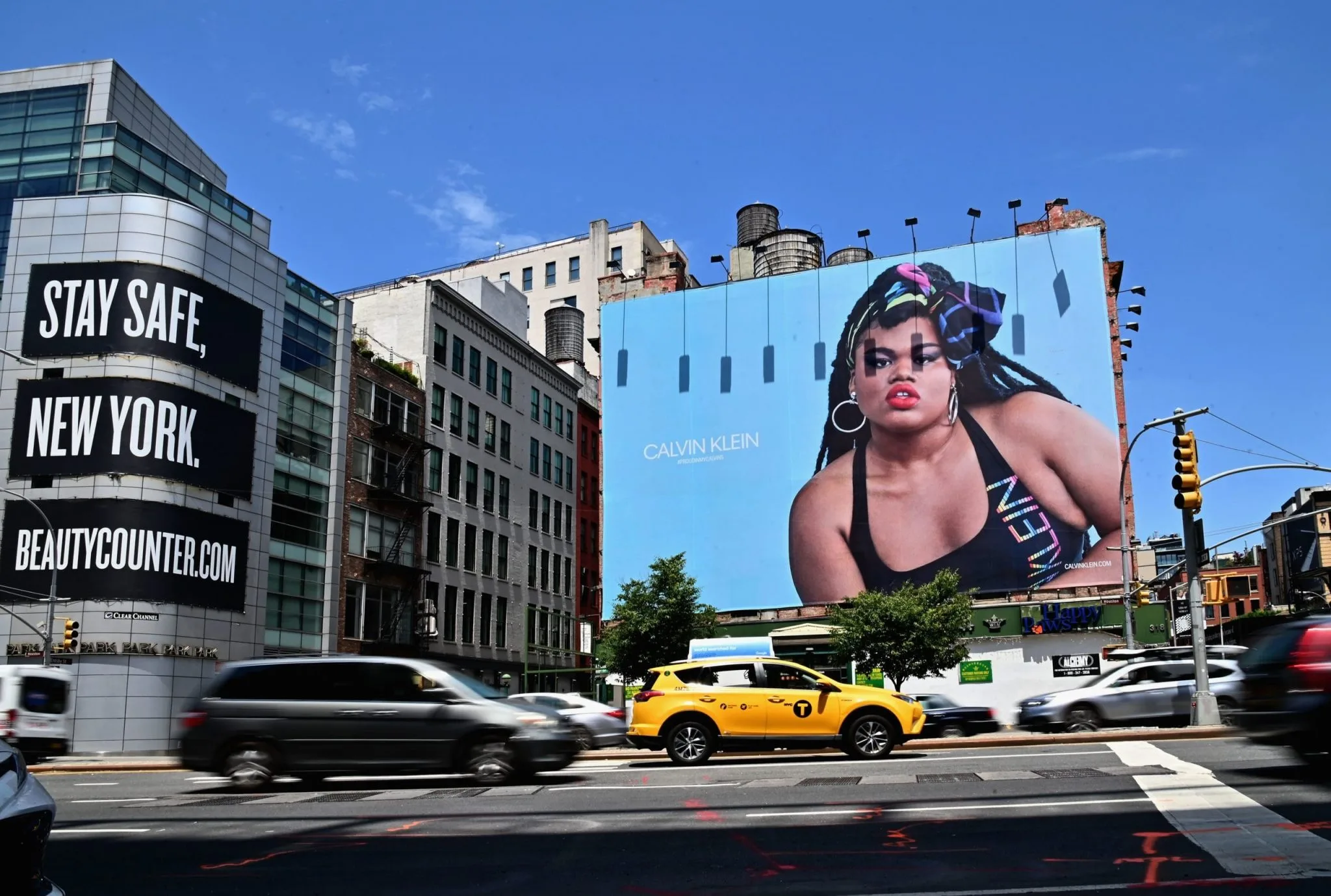
US fashion brand Calvin Klein has introduced a new campaign that features a plus-size, African-American transgender model. This and French cosmetics brand L’oreal Paris’ decision to alter its slogan have both sparked controversy on Chinese social media as many netizens said they felt the move was merely an attempt by the companies to be “politically correct.”
Jari Jones, the first plus-size transgender model to grace a giant billboard in New York in the history of Calvin Klein, has been encircled by public discussion not only in her own country but on Chinese social media. Her multiple identities such as being an African-American and a member of the LGBTQ+ community have become the center of controversy.
Some Chinese netizens said they believe the reason why Calvin Klein chose Jones was to pursue political correctness and pander to trending rights movement such as the Black Lives Matter campaign.
“The model is an African-American and a member of the LGBTQ community. Choosing her was the highest point of political correctness. I think this action will not help and is just a surface effort,” netizen “Minglasipangqi” commented on China’s Twitter-like Sina Weibo.
Some netizens also questioned why the fashion house didn’t go with a tradition tall and thin model.
“I understand that women have different sizes, but this model is too heavy and is not very healthy, I think. She doesn’t make me want to buy these clothes,” another netizen wrote.
Not all voices have been in opposition to the move. Some netizens said they feel that regardless of the results of the campaign, it is good that the company is taking action to support multicultural values.
“June is Pride month for the LGBTQ+ community and Jones’ identity as a member of the community can present the beauty of diversity to more people by being on the giant billboard at the center of New York,” Peng Yanzi, founder of the LGBT Rights Advocacy of China, told the Global Times on Monday.
Jones’ impact is not only limited to her gender identity, Peng said, adding that her body type can challenge some traditional impressions that might be out of date for women and models, Peng said.
Amid campaigns to protect the legal rights of African-Americans and transgender people in the US, breaking the mold when it comes to choosing models and promoting fashion icons is necessary and helpful, Peng said.
A Calvin Klein fan living in Beijing told the Global Times that she loves the brand even more because of the move.
“I like CK better after reading the news because it is a brand that recognizes the demands of their customers.”
While Calvin Klein has received some voices of support, French cosmetics brand L’oreal Paris has faced almost complete opposition on Chinese social media for changing its slogans and removing words like “whitening” from its products.
“It is too excessive. L’oreal should dye all its skin care products to black, or else white cream is also racist,” Sina Weibo user “Xiaoniaozhendechaojikeai” commented. The hashtag “L’oreal will stop using skin whitening” had received more than 110 million views on Sina Weibo as of Monday afternoon.
“Maybe next time white paper will also be banned.”
After African-American George Floyd was killed by a white police officer in the US in late May, many protests and campaigns against racial discrimination have broken out in the US and other regions around the world. Some companies have faced criticism for promoting skin whitening products from people who feel that these products promote the idea that lighter skin is better, according to a report from the Xinhua News Agency.
If you’ve opened up social media this week, you’re likely to have seen a slew of new Vogue “covers.” They might feature your neighbor, co-worker, or the art student next door.
The DIY front pages stem from the #VogueChallenge, a viral endeavor that reimagines what the glossies they mimic could be. The content offers a peek at photographers on the rise, aspiring models, and anyone willing to open up Photoshop and have a little fun.
Written by : Janelle Okwodu
The faux-covers envision Vogues from countries yet to have an imprint, a range of cover subjects more diverse than anything fashion has attempted thus far, and a wealth of painting and illustration. While this isn’t the first time people have taken it upon themselves to create their versions of existing magazines the early aughts saw similar undertakings on online forums like The Fashion Spot and Livejournal communities—this specifically highlights creators who were historically excluded from the conversation.
Photographed by Wade Rhoden (@waderhoden)
It’s no secret that the photographers behind the majority of magazine covers are white and male. Few women, people of color, and nonbinary individuals have ever been granted those opportunities. It was only two years ago that Tyler Mitchell became the first African-American photographer to shoot a cover story for Vogue with the September 2018 issue starring Beyoncé, and there are still many firsts that still have yet to come.
Likewise, the people depicted in fashion imagery tend to also reflect a narrow subset of the population. As the industry works towards changing for the better, a crowdsourced overview of new talent is cause for celebration. A scroll through the submissions proves that there is no shortage of willing and capable people, and artists must be fostered, supported, and granted the chance to enter the highest levels.
Photographed by Angèlique Culvin (@culvin)
Photographed by Urban Pitchaz (@urbanpitchaz)
It’s fitting the challenge began with a tribute to the Black Lives Matter movement. Oslo-based student Salma Noor first posted a black and white shot of herself by photographer, Angèlique Culvin, with the Vogue logo and a headline reading, “being Black is not a crime” as a kind of protest. “I am a Black, young Muslim woman who wanted to create something new while speaking on something that is very important,” shared Noor. “I chose Vogue because it’s the standard one strives to reach, and it is one of my favorite magazines.”
Though she never imagined that the idea would become a worldwide trending topic, Noor is pleased to see a diverse set of creatives in the spotlight. “I was happy to see so many beautiful faces and talented photographers like Angelique that don’t get enough credit for their hard work,” she told Vogue. “I would [also] like to see more models of different ethnicities and skin colors, [exposure for] those without a big platform.”
Photographed by Laré A (@la_xre)
The photographers who took part in the challenge echoed Noor’s sentiment. Hundreds of professionals participated as a means of showcasing their images, and though the execution differs, many saw the hashtag as an opportunity. Kenyan-born creator, Cedric Nzaka, utilized the thread to subvert gatekeeping. Already working with clients like Adidas, Netflix, and Fiat, Nzaka would like to see more pathways for advancement and advocates for creators of color.
“The value of having people in the industry to support and suggest you in boardrooms is a privilege that Black photographers don’t have,” he says. “We as Black photographers have to be 50 times better to get noticed in the first place and even when we do get noticed and reach those boardroom meetings, we’re frequently the only Black voice in the room, which can make it difficult to be heard and understood.” Such barriers don’t exist online where the democratic nature of the internet allows for greater connection.
His “Everydaypeoplestories” project captures the beauty of Johannesburg’s citizens with grace, catching the eye of thousands on Instagram. “Photography has always been my way to speak to strangers and feel less isolated in the world,” says Nzaka.“I decided to participate in the challenge because it showcases my ability to produce at any international standard, despite the current limitations for Black creatives, even well-established ones like myself.”
Photographed by Beatriz Valim (@beacasso)
There is a proactiveness to the challenge: rather than wait for fashion to take notice, the entrants took matters into their own hands. “There’s a quote by Ralph Waldo Emerson about manifestation that I adore. It says ‘once you make a decision the universe conspires to make it happen’” said Laré A, a London-based photographer whose portraiture merges the ethereal with the soulful. “I guess you could say [this] was a way for me to put it out to the universe and that some day it won’t just be a challenge.”
The importance of featuring models of color served as the impetus for many. As recent developments like Joan Smalls’ statement to the fashion community illustrate, models of color still face many hurdles. “I feel that there’s so much room to grow in the world of fashion,” says Brazilian photographer, Beatriz Valim, whose work focuses on BIPOC beauty.
Her stylized portraits detailed with illustrations feature casts that are truly global, something she hopes eventually becomes the norm. “I wish I could see more people of color and talent in front of and behind the covers,” she says. The need for subjects beyond runway stars was also made clear. “I would love to see more Black women,” says Laré. “Not just Black celebrities but normal black women I can relate to. One’s we can all relate to through fashion.”
Photographed by Cedric Nzaka (@cedricnzaka)
Beautiful images are posted online every day, but the symbolism of the Vogue logo adds another layer. While the scope of the challenge extends far beyond any entity, invoking one of the most recognizable names in fashion sends a message. “A Vogue cover would make me feel like anything you could ever imagine would become a reality if you work hard and believe in yourself,” says Valim.
More than a singular achievement, it also can stand for the kind of perpetuity all artists seek. “A cover image is a publication making a statement of values and seeing your image there is a form of immortalizing your work for life, no one can ever take that away,” says Brian Siambi, a Kenyan photographer who transformed one of his existing series the Dark Matter Project into striking front-page images.
“People often forget [the] images inside a magazine, or on social media but never a cover. It is the one platform where your image is standing alone to be celebrated….I felt inspired seeing fellow African creatives sharing their amazing work. It’s beautiful seeing the level of work being produced despite the challenges in our African continent.”
Photographed by Brian Siambi (@urbanskript)
The four cover challenge participants that we spoke with stressed the importance of systemic change. Instead of viewing the art created as a viral blip, they suggest it serve as the impetus for a more inclusive and welcoming system of talent discovery, one that allows for more than a select few to succeed. “We need new faces on covers and to recognize up and coming photographers,” says Noor.
Photographed by Lawrence Agyei (@lawrenceagyei)
Photographed by Nao Seych (@na0_)
Photographed by Tuva Wolf, Merja Iileka (@tuvawolf)
Photographed by Urban Pitchaz (@urbanpitchaz)
For Siambi the best way to address fashion’s diversity problem is to change hiring practices and let a wider range of creators tell their stories. “Authentic storytelling and giving more opportunities for Black photographers to be published,” he says. “[It’s] capturing their culture and creating a level playing field. Inclusion shouldn’t feel like that one Black character on a TV show. It should be understood that each of us is talented in our own way and equally able to create world-class content.”
Roberta Annan, a Ghanaian businesswoman, launched the African Fashion Fund in 2011 to improve access to finance and infrastructure for artisans and creatives from across the continent. She insists that sustainability cannot be limited to only the materials used in producing beautiful things; it should also drive fair wages and economic empowerment especially for women.
Roberta Annan is an award-winning businesswoman. She was the youngest African to be inducted into the African Leadership Hall of Fame.
Since its inception, the Fund has offered US$5,000 grants to artisans to help them scale up production and gain access to markets, emphasizing women-led brands, that include a cosmetics company and an artisanal chocolate producer.
“We must use the COVID pandemic as an opportunity to redefine sustainability not just for Africa but for the world,” she said from her home in Accra, Ghana. “There is luxury in our natural environments, and we have the chance to build a business model around the beauty of that luxury.”
While not minimizing the impact of COVID on business, Annan and her colleagues at the Fund are determined to use it as an opportunity to accelerate a plan that was already in progress to make a deliberate push into e-commerce. A digital platform is already in place; all that is needed is a global distribution chain to get wares from the continent to buyers across the globe.
The Fund has also teamed with one of the original artisans who benefited from seed grants to bring portable, foldable looms to 130 villages in Ghana and Nigeria, which will provide an entrepreneurial opportunity to women’s cooperatives to weave and sell textiles.
“It is critical that the artisans who own the craftsmanship have an opportunity to bring the world to them, rather than it being co-opted,” she said. “We are generating demand for creative outputs from Africa, but on African terms.” From August she will be coordinating and leading a US$100 million Impact Fund for African Creatives that provides venture capital for growth for African entrepreneurs looking to take their businesses to scale, with an emphasis on those using sustainable materials and adhering to responsible business practices.
This kind of investment in African industry brings with it the opportunity “to press the reset button,” said Annan. “We are aligning back to the soul and focusing on people and planet while also making profit.”
Another benefit is the opportunity to be at the forefront of discussions between the private sector and governments, to drive policy changes to open markets and encourage innovation.
“Foreign direct investment gets to do that, so why not us too?” said Annan. “The future lies with us, and we have the opportunity to demonstrate that you can make a profit while also having social impact.”
Content courtesy of UN Environment & African Fashion Foundation
In Ngadi Smart ‘s series Latitude, shot recently for Atmos, she wanted to capture the atmosphere of traditional and modern African culture in the historic town of Grand-Bassam in Côte d’Ivoire, now at risk because of rising sea levels.
In the spirit of the magazine and sensitive to the area’s problems, Ngadi was conscious of her environmental impact and only used local models and designers, as well as eco-materials and fabrics. Having the UNESCO World Heritage Site as a backdrop only added more depth to the project. “Full of arresting 19th and 20th-century architectural ruins, it embodies, on the one hand, colonial architecture and town planning, based on the principles of functionalism and adaptations to climatic conditions. On the other hand, a community of the N’zima people, which demonstrates the permanency of indigenous cultures, despite serious environmental issues,” she says.
“From late September until the beginning of November, unprecedented coastal floods swallowed the streets and homes of the Quartier France of Grand-Bassam. The main roads suddenly became impassable unless by canoes. Numerous historic sites were severely damaged.”
Coastal erosion, caused by climate change, is a growing problem for West African nations. The region is losing more than $3.8 billion a year to coastal erosion, according to a recent World Bank study. Ivory Coast (Côte d’Ivoire) is the worst-hit country and has lost $2 billion to the rising sea levels, nearly 5% of its GDP.
“I wanted to capture, through the styling, Grand Bassam’s mix of traditional and modern culture which is imprinted heavily in the town’s architecture and community, way of life and the way Bassam people are,” she adds.
One of her images from the series has been shortlisted for this year’s Portrait of Humanity.
Ngadi worked with emerging Ivorian designer, Kader of Olooh Concept, who created the clothing, made from natural and local materials. The hand and feet raffia ornaments were created by a local artisan named Coulibaly Salia, directly inspired by Ivorian traditional raffia wear. “More specifically, what the Guro and Yacouba wear on their feet during their dance ceremonies. I thought they worked well style-wise and are recognisable, iconic items,” she explains.
In terms of accessories, Ngadi worked with local florist Jean-Baptiste Kiemtore to create botanical head ornaments, directly inspired by her research on traditional African raffia headpieces. Meanwhile, local artisan Coulibaly Salia crafted wicker hat pieces, all from local material.
For more inspiration, follow Ngadi on Instagram or visit her portfolio at www.ngadismart.com.
People are putting themselves on the cover of Vogue to promote diversity
People around the world have been re-creating Vogue covers to promote diversity in fashion, posted under the hashtag #VogueChallenge, the mock-ups aren’t just the latest social media fad they imagine what a more representative fashion industry could look like.
The challenge was started by Oslo-based student Salma Noor earlier this month, after she tweeted an alternative cover featuring a shot of herself under the headline “Being black is not a crime.”
Noor posted the image just as anti-racism and Black Lives Matter protests began gaining momentum in the US and beyond. The challenge has since gone viral, with the hashtag appearing over 100,000 times on Instagram.
“I am a black, young Muslim woman who wanted to create something new while speaking on something that is very important,” she shared via social media.
Speaking to CNN over email, she said: “To bring so many people together for something like that is truly amazing… I had no idea it would reach so many people including Vogue.
“I think the fashion industry isn’t diverse enough yet. We need people with different opinions, backgrounds, religious beliefs, heritage, and life experience to be highlighted.”
Posting 20 of the covers online as part of a feature about the challenge, Vogue’s senior fashion news writer Janelle Okwodu acknowledged that “few women, people of color, and nonbinary individuals have ever been granted those opportunities,” adding that “the photographers behind the majority of magazine covers are white and male.”
British Vogue’s editor-in-chief Edward Enninful meanwhile selected 10 of his favorite homemade covers. “Scrolling through all the entries, I’ve been struck by beauty in all shapes and sizes, represented in all colours and creeds,” he wrote, revealing his choices. “It has shown me that there is so much talent and creativity in the world if you are willing to look for it.”
Vogue has often been criticized for its under-representation of people of color, with American Vogue only featuring its first black cover star, Beverly Johnson, in 1974 (more than 80 years after the magazine first launched). And it has been less than two years since Tyler Mitchell became the first African American photographer to ever shoot one of the magazine’s covers, when he captured Beyoncé for the September 2018 issue.
“I noticed the challenge on my timeline and decided to read more about it,” said Nairobi-based TV personality and media executive Kalekye Mumo, who took part with her own covers.
“I was pleasantly surprised to see that it was a challenge to uplift and amplify black faces and voices in the fashion world,” she said in an email to CNN. “Being a fashion enthusiast myself, I picked one of my photos from a previous personal shoot I did to support local talent and made a cover.”
Mumo said that social media users in Kenya have been creating new spin-offs of the #VogueChallenge, making their own covers for black-owned publications like Essence, and turning the challenge into a celebration of black culture and spaces.
“I did this challenge to not only use my voice, but use my face to show the beautiful, talented black people across the world, let alone Africa and Kenya … that could grace the magazine with finesse,” she said. “My hope is that the fashion industry will begin to embrace black faces of all shapes and sizes especially since I am a fabulous plus-size woman.”
“The world is being robbed of a variety of beauty and this should change,” said Noor.
Julie Gichuru media personality also joined the #VogueChallenge and posted on her instagram page
” Good morning ❤ Today be thankful for the seen and unseen miracles that happen every day. So often we don’t notice them. But they are there. Accept the love and grace”