Saturday 14th of November 2026

Nairobi, Kenya

Socialite Mollie Moon Used Fashion Shows to Fund the Civil Rights Movement

In the 1950s, famed Harlem socialite Mollie Moon transformed the Ebony Fashion Fair into a powerhouse fundraiser for Civil Rights activities. When she did so, she took part in a long tradition of fashion shows fundraising for Black political causes.

The glamorous Mollie Moon sauntered around the Grand Ballroom at Manhattan’s famed Waldorf Astoria hotel as she made minor adjustments to the decor. It was October 4, 1959. Moon, the founder and president of the National Urban League Guild, was preparing to bring the Ebony Fashion Fair to New York for its Big Apple premiere.

A mother and daughter at an Ebony Fashion Fair in Denver, Colorado, 1978. KENN BISIOGETTY IMAGES

A pharmacist by training and a veteran fundraiser, Moon paid meticulous attention to every detail of the events she hosted, because she believed guests could feel her level of care. The Waldorf, with its Art Deco luxury, had hosted European monarchs, diplomats, and New York’s white upper crust. Why should the Black American guests Moon was hosting on this evening expect anything less than the royal treatment?

Moon, wife of the former NAACP public relations director, Henry Lee Moon, understood that Black Americans were generous givers who loved to dress up for a good cause. Give them an opportunity to show out and the money would show up! Ticket prices for the fair ranged from $3.50 to $12 (roughly $25 to $100 today) and came with a subscription to either Ebony or Jet magazine.

Proceeds from the NYC show would go to the National Urban League, the interracial civil rights organization Moon’s guild supported through savvy fundraising campaigns and volunteer work. In cities from Washington, D.C., to Peoria, Illinois, powerbrokers like Moon hosted Ebony Fashion Fair events to fund local nonprofit organizations, racial justice causes, and HBCU scholarships.

The idea for the Fashion Fair originated in New Orleans in 1956. Jessie Covington Dent, an accomplished pianist, a socialite, and the wife of Dillard University president Albert W. Dent, reached out to media mogul John H. Johnson of Johnson Publishing about cohosting a fashion show fundraiser for Flint-Goodridge Hospital.

That first show was such a success that Johnson and his wife, the fashionable and cosmopolitan Eunice Johnson, decided they should make it an annual touring fundraiser. Ripping “Fashion Fair” straight from Ebony magazine’s monthly column of the same name, Ebony Fashion Fair took shape under the leadership of Johnson Publishing’s home services director, Freda DeKnight. The rebranded traveling fashion extravaganza launched in 1958 with the theme Ebony Fashion Fair Around the Clock, featuring the wares of American and European designers, a few models, lively music, elaborate stage props, and colorful commentary by DeKnight.

Give them an opportunity to show out and the money would show up

Ebony Fashion Fair was the perfect fundraiser. “It was ready-made,” Joy Bivins, curator of “Inspiring Beauty: 50 Years of Ebony Fashion Fair,” explains. “For the organizations, they don’t really have to do anything but bring the show. It’s a package deal.”

And for the attendees, the shows created an opportunity to “get together and do what rich people do with each other: show off! But it had this philanthropic aspect to it that, in many ways, made it okay,” Bivins says. The shows also gave exposure and brought new clientele to Black ready-to-wear designers and milliners who were struggling to launch their careers due to Jim Crow racism and cronyism in the mainstream fashion world.

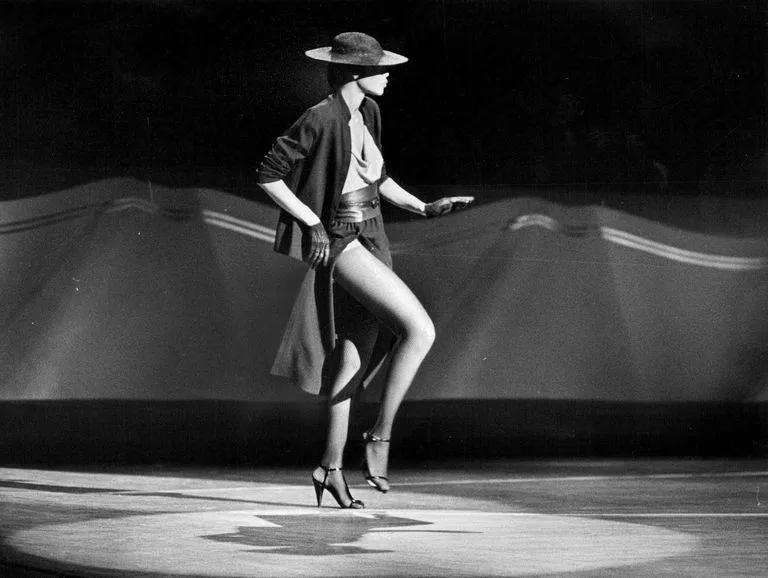
A model at the Ebony Fashion Fair in Denver, 1979
DENVER POSTGETTY IMAGES

By the time Moon brought the event to NYC in 1959, it was among the hottest Black social events in the country. That year with an Around the World theme the tour expanded to 51 cities in 31 states. Moon supervised as DeKnight and the Fashion Fair team transformed the Waldorf Astoria’s Grand Ballroom into a Black traveler’s paradise, replete with stage props that included hat boxes and luggage with the names of European destination cities fancifully written on them.

Press coverage that ran in the Amsterdam News and the New York Age played up the exclusive nature of the event, dubbing the two-hour show a “one night only affair.” It was a massive show that featured 200 garments and more than 400 accessories personally selected by DeKnight.

The models swayed and sashayed across the stage in haute couture garments by Arthur Jablow, Martier Raymond, Maggy Rouff, Harry Young , and others. With more than 3,000 people in attendance, the standing-room-only event was a roaring triumph. It further cemented Moon’s status as the grande dame of Black social and civic life in New York City.

Models at the Ebony Fashion Fair, Denver, Colorado, 1979
DENVER POSTGETTY IMAGES

Fashion show fundraisers like the Ebony Fashion Fair were ubiquitous in the Black community during World War II and well into the Black Power movement era. The Fashion Fair reflected the Johnsons’ particular brand of Black cultural elitism, evident in the mink stoles, silk chiffon dresses, hand-beaded gowns, and dripping diamonds that were on display during the shows.

But any crowd, regardless of income, taste level, or political leanings, could find a fashion show that catered to their interests and supported causes they could throw their hard-earned money behind. Designer to the stars Zelda Wynn Valdes directed a show for Harlem’s Salvation Army, much to the delight of the neighborhood’s elderly and infirm population.

The Black Nationalist organization African Jazz-Art Society & Studios toured its Naturally fashion show down the Eastern Seaboard and through the Midwest. Naturally’s Afro-sporting Grandassa Models wore African-inspired dresses and pantsuits, which they had designed and sewn themselves. Other community shows featured local folks from maids to transit and postal workers who modeled clothes from their closets. Styling out in garments of their own choosing affirmed that they were much more than uniform-wearing laborers. Churches, youth groups, sororities, and fraternities all found a sense of Black pride and Black economic self-help through fashion shows.

A model at an Ebony Fashion Fair sponsored by the Links in 2004
HELEN H. RICHARDSONGETTY IMAGES

Any crowd, regardless of income…could find a fashion show that catered to their interests

Moon and her contemporaries demonstrate how Black women have defined and redefined the contours of American philanthropy. “The biggest misconception is that Black women don’t give and that they’re not involved in philanthropy,” says Tyrone Freeman, author of Madam C.J. Walker’s Gospel of Giving and assistant professor of Philanthropic Studies at the Indiana University Lilly Family School of Philanthropy.

“The truth is, Black women are on the leading edge of generosity in their community.” Philanthropy for Black Americans has never been the province of the rich or even of the middle class. Black, community-based giving circles and mutual aid societies can be traced to the Caribbean and West Africa in the 17th and 18th centuries, Freeman explains. Enslaved and free Black women’s philanthropic efforts helped to fund the abolitionist movement, the Black Freedom movement of the 1950s and 1960s, and the Black Lives Matter movement today.

Studies have also shown that Black Americans give a larger percentage of their disposable incomes to nonprofits than other races. Thus, giving was foundational to Black life long before exorbitantly wealthy white capitalists became the face of modern philanthropy.

A model at the Ebony Fashion Fair, Denver, Colorado, 1979
DENVER POSTGETTY IMAGES

Reflecting in 1982 on her career as a philanthropist and lifelong civic leader, Moon wrote, “Neither I nor my family had sufficient income to make significant financial contributions to this cause [Black Freedom]. We did, however, have commitment, energy and time to contribute.” Bake sales, chicken dinners, galas, card parties, dance-a-thons: All those fundraising events helmed by Black women who were not generationally wealthywere their chance at Black world making.

A model at the Ebony Fashion Fair, Denver, Colorado, 1979
KENN BISIOGETTY IMAGES

Black women were giving and raising money to create the world they wanted to live in. Ebony Fashion Fair was a vehicle through which they could perform this women-centered freedom dreaming. The Fashion Fair ran annually through 2009, raising nearly $60 million in its 51-year run. Moon and countless others whose names have been lost to history were the visionaries who kept the touring show in circulation.

At the time of her death in 1990, Jet reported that Moon had raised more than $3 million through the National Urban League Guild, which, under her leadership since 1942, had grown to nearly 30,000 volunteers in 80 guilds nationwide.

Content courtesy of Harpers Bazaar & Nairobi fashion hub

KiKi Layne Chose Her Own Jewelry For Coming 2 America, According to Costume Designer Ruth E. Carter

Coming 2 America, the highly anticipated follow-up to the Eddie Murphy-Arsenio Hall classic, opens just like the original. As viewers, we’re immediately transported to the grandiose and opulent Zamunda, a feat achieved thanks largely to the costumes, thoughtfully reimagined by Oscar-winning costume designer Ruth E. Carter.

The cult-favorite film, which broke box office records when it premiered in 1988, is a study in visual splendor when it comes to the wardrobe, from Prince Akeem’s draped furs to Lisa’s pink royal wedding dress, not to mention hilarious as hell  who could forget Murphy’s goofy, Scottish-inspired McDowell’s uniform, complete with a red tartan vest and matching tam-o’-shanter hat?

Fans of the first movie will be pleased to know that many of the outfits, as well as the characters wearing them, make a triumphant return in the sequel, while others are reworked to feel decidedly more modern and African, including the aforementioned McDowell’s looks.

For Carter, crafting the wardrobe of the new Zamunda required making hundreds of costumes, with several options for each principal actor, including exact replicas of memorable looks, like the lady-in-waiting’s shimmery gold dress (spoiler alert: Sheila Johnson is back, and, yes, she’s still barking like a dog and hopping on one leg).

POPSUGAR spoke to Carter, who’s designed costumes for Malcolm X and Black Panther, about what it was like dressing the stars of the exciting new release.

POPSUGAR: How does the style in this film differ from the first?

Ruth E. Carter: The first film had such grandeur  it was shot like a big Hollywood movie. When we came into the palace, we saw the opulent dresses, the tuxedos, the way the men stood with their envelope caps and sashes . . . that is signature Coming to America; I wanted to maintain that.

At the time, we didn’t see much of that from Africa; we weren’t even sure how authentic it was, but we loved it. The lion on the shoulder, Akeem in the Mets jacket  those were iconic images. I went through and picked out the things that I needed to move into the new movie. I even found some dresses from that ballroom scene in a rental house.

And we created our own new-style Zamunda looks, too, because I wanted to replicate the headdresses and big, full dresses, but in a way that was uniquely ours. We made some of the same silhouettes with more modern fabrics and treatments.

PS: So you repeated exact outfits?

RC: Oh yes. We screen-grabbed them so we could copy them exactly. We duplicated all of Murphy’s “I Love NY” buttons and [his] cap in the same way. In the flashback sequence, when Murphy and Hall are in the nightclub, we used stock footage of Arsenio entering the club and re-created his whole outfit. You can’t buy that jacket; that fabric is no longer around. That whole scene was spliced together, but I think it was very successful.

PS: Sheila Johnson’s gold dress was re-created to a tee as well.

RC: We did a ton of work looking at the images of that dress and even commissioned a jeweler who specialized in illusion-style dresses, where you have a lot of sheer spaces and strategically placed beading. We identified the shape of each gem and made a complete replica of what she wore in the first film.

PS: Were Teyana Taylor’s looks meant to be an homage to the lady in waiting?

RC: We made her some cool Shiraki military costumes, but for the big prince number, we created that costume from scratch. I was inspired by Afropunk and steampunk for her bodice, and the boots and cape were designed to be the big reveal.

PS: What were some of your other inspirations for creating the wardrobe?

RC: I was inspired by modern African fashion: the bright, brilliant colors of Ozwald Boateng suits and the Ankara fabrics that are used so prevalently in celebrations. My mood boards featured a lot of modern takes on African style, as well as images of Egyptian royalty. I wanted to bring a lot of gold and opulence into the story, so I gave it permission to be very blingy and showy. I wanted [Zamunda] to be a place you’d want to go and visit and shop and explore, because the people were so vibrant and interesting.

PS: As a Black creator, can you speak to the importance of sourcing Black designers for this particular movie?

RC: Because this was a continuation film as opposed to a remake, I wanted to move it through time by honoring the first movie while giving people another view of Coming to America. I had pieces made by artisans all over the world, from east India to New York. For me, traveling to Maxhosa in South Africa to dress the palace servants was representation that was necessary and beautiful — the prints you see on the staff really colored the palace.

PS: What are the differences, if any, between the fashion of Zamunda vs. Wakanda?

RC: When I did [the costumes for] Wakanda, I was very clear that it was not Coming to America. Wakanda is a world that was built prior to colonization, so I wanted to present a tribal view. Most people don’t know how to get to Wakanda. You can [theoretically] go to Zamunda and have a great time and buy some Ankara and see all of the colors and people and fabrics.

PS: Were there any hidden Easter eggs in the costumes?

RC: Randy Watson’s jumpsuit was based on Elvis, because I knew that Eddie loved Elvis. I showed Eddie a picture of a jumpsuit Elvis wore late in his life, and we patterned the Randy Watson jumpsuit after it.

Written By Claire Stern

Content courtesy of POPSUGAR & Nairobi fashion hub

A Slay Queen’s Guide To Buying A House

A slay queen’s guide to buying a house is a must-have for any true slay queen.  It’s time to move on up and enjoy the sunlight while you lounge on the balcony. It’s a great way to start over.

You’ve been working hard and slaying even harder so now it’s your time to shine in the sun. You need a house that reflects your lifestyle and needs. There’s no more jumping over potholes whenever it pours or keeping your white pieces aside because you live in a dust bowl. Here are a few tips to help you out:


SPACE

Pay attention to the spatial aspects of the house. It’ll be hard to floss to others about how you’re moving up in life, yet you live in a colour-conflicted shoebox. You can’t have the sort of place where you’re bumping into the walls, yet you’ve barely opened the door. It means that you can’t entertain crowds with elevated taste levels since they might doubt you. A one-bedroomed house is a bit too cosy for your fashion needs unless it lets you live in the right neighbourhood.

If you get a two-bedroom house, then you’ll have a dedicated fashion room. Play your cards right, and it’ll be a backdrop for vlogging and fashion photography. All it needs are two full-length mirrors in this room, so you don’t have to keep twisting your body whenever you want a 360 view of your outfit. A vintage seat surrounded by ring lights next to your makeup box whenever you feel like getting your makeup done. It might take a day or two but isn’t that what boyfriends are for because you just had your nails done.


LOOKS MATTER

If the exterior is beautiful, then the interior can’t be that far off. Don’t visit places with ugly pictures online.

Step inside the place and imagine what you’d feel like every time you’d open your eyes in the morning. Will it feel like waking up to a soft dream or an ugly nightmare. The owner decided that they never needed an interior designer. Then, you might be a fountain of fashion insight, but you aren’t a miracle worker. Some places need to be demolished and re-done by someone with an aesthetic eye.

If it’s a furnished apartment, make sure that it’s tasteful and matches your colour palette.


NATURAL LIGHT

Being beautiful is a full 24/7/365 hustle, especially for your Instagram followers. Every slayer understands that finding the perfect natural light for selfies makes the difference between a look that others would kill for or a look that kills people.

Look for places with windows that make sense and let in as much natural light as possible. It creates an airy feel that can’t be faked and works well with high ceilings. It’ll feel divine basking in the sun, drinking tea and watching your neighbours chase their minions around the estate. Once in a while, you can enjoy the simple things in life especially when you don’t have the funds for Hulu and Netflix?


GREENERY

Take a stroll in the neighbourhood and see if the air feels right to you.

Nobody wants to feel like they’re in a concrete jungle. They want to walk, jog and run in their designer athleisure. It needs to be pet-friendly, especially if you think that you might be a dog person. With upscale areas, you always need to stay alert. You might strike gold any minute. So try out different routes and get to know the place. Success is a guarantee when opportunity meets preparation. So stock on that waterproof makeup and long-lasting lip colours.


PARKING SPACE

It doesn’t matter if your dream car only takes space on your screensaver on your iPhone. I mean, didn’t all dreams start from somewhere. Stay ready in case your luck changes for the better. So, a parking space is a must-have item. Nobody has time to run up and down in red-bottoms sweet-talking neighbours into lending them car space whenever their friends come for a bash. I mean, who’ll replace your heels if you wear them out like this.


AMENITIES

Choose a house wisely, so you never have to deal with inconsistent amenities. You never have to leave your taps open because you don’t know when water will decide to make an appearance since she’s like a diva. Imagine if water flooded your fashion room and decided your kiss your designer suede handbags and cashmere clothes. Dry cleaning exists, and it works, but what if those water stains never come out. Candlelit dinners will be optional and not a necessity because KPLC won’t tease and taunt you at odd hours.

Exclude areas without in-house gyms because you can’t afford to outgrow your clothes. Trust me you want to sweat in the privacy of an in-house gym, then you can glisten on your outdoor husband-hunting walks. All your designer clothes are snug fit and show off all your curves. If there’s a swimming pool, then that’s even better. It’s the best environment to blur the line between predator and prey. It’s the best time to test out your waterproof makeup. Let people see the real you after you’ve had your fun in the sun.


MALLS

Live in an area that’s easy to find. Nobody has the time to count three trees before making a left, looking for a red duka and other nondescript features whenever they’re trying to locate your place. So, one way of fixing this is by looking at houses near fancy malls like Lavington Curve. It also means that you can always rush in whenever your food supplies are running low. Or you can get a takeaway and treat yourself. Just like Shawshank Redemption, either get busy living or, you get busy dying in this life

Fashion Designer Kenneth Ize from Nigeria Is Getting Through It All

Nigerian fashion designer Kenneth Ize is happy. He is grateful. But he is also stressed, and frustrated. He is a ball of mixed emotions, as any designer is in the lead-up to a fashion show even if it’s digital especially in these epochal times. Asked what the last few months have been like for him, he replies, “tired, sad, but not crying.”

Ize is phoning from a car in Italy, where he had been for three weeks, finalizing his Fall 2021 collection. Those who have seen the new lineup have expressed surprise, and he expects a similar reaction once he presents it via video during Paris Fashion Week on March 10.

Ize is known for his joyful, vividly colored, and patterned clothes, defined by slim tailoring, a retro influence, and, most of all, a dedication to traditional Nigerian aso oke textiles. Like everyone else on the planet, his axis has been shifted by the coronavirus pandemic, but being based in Lagos, Nigeria comes with its own set of problems. Big ones.

recalling the high of last season’s collection, which delivered a celebratory message of political empowerment, homosexuality, diversity, and craft. He was quickly deflated by the reality check of the political turmoil at home.

Last October, a wave of mass protests swept Nigeria amid new reports of police brutality by the Special Anti-Robbery Squad (SARS), a Nigerian police unit with a long record of abuse and violence against civilians. Thinking about the social unrest put Ize in an edgier place than usual when developing his fall collection. One literal example is his use of the color black, as well as cutting down on the number of bright colors a signature in his palette in general. But there is more.

“I started noticing that I was researching, for example, snakes and serpents. I would research body tattoos. I would research dark things that I would not usually research because I’m African,” Ize says, noting the culture of superstition. “As an African person, your parents will tell you, ‘Oh my God, when you see the cat, you need to run because if the cat spit in your face, it’s going to blind you.'”

Ize found a way to reframe the narrative via ancient Egyptian lore, turning the negative connotations of snakes into a story of rebirth, which is how he’s choosing to see the state of Nigeria and the state of the world at large in the age of COVID-19. “It is a different side of me,” Ize says. “I want to speak about life. I want to speak about what is affecting me personally, what is affecting my friends, my loved ones, people dying around the world. I want people to also be aware of the problems happening in Nigeria.” His clothes are his way of having these conversations.


Indeed, Ize’s clothes have spoken volumes in a relatively short amount of time. They tell a story that’s quite different from most fashion brands on the world stage and have earned an audience of industry elites along the way. Born in Nigeria, Ize moved to Austria as a young child when his family was in political exile. He grew up there, his earnest interest in fashion nursed by his mother’s wardrobe of traditional Nigerian garments.

After studying fashion and design at the University of Applied Arts Vienna, where Bernhard Willhelm and Hussein Chalayan were among his teachers, Ize moved back to Lagos. He launched his label in 2016 with the intention of exploring West African identity and showcasing and preserving the centuries-old Yoruba textile handcraft by working with local artisans.

The collection toes the line of gender fluidity, though there are men’s and women’s clothes. Naomi Campbell and Alton Mason walked in Ize’s show during Arise Fashion Week in Lagos in 2019, the same year he was a finalist for the LVMH Prize, making a list that has rarely included African designers.

He made his debut at Paris Fashion Week with Campbell closing the show in February 2020, and later in the year, it was announced that Ize had been tapped for a capsule collection with the Karl Lagerfeld brand that will launch in April. Ize’s own retailers include Net-A-Porter, Dover Street Market in New York and Los Angeles, MatchesFashion, and Browns, among others.

The decision to take his collection to Paris was a game-changer, one decided over dinner in Vienna one night. “I wanted to do Paris because I just knew that was being in it,” Ize says. “If I’m going to show what we have in Nigeria, [which has] already been around for centuries and has not been paid attention to in fashion, where should I place it? It’s in Paris.”

Ize’s first show in the City of Lights was a success from a critical and sales point of view. “Seeing the money, I was like, ‘OK, I’m fine now. I’m good.'” But as any industry veteran can attest, one good season does not a sure thing make, and the struggle is always real. Especially when you’re operating independently, as Ize is.

Paris is the big leagues, and by showing there, Ize proved he could compete design-wise, but the elevation in profile also exposed problems in production. It’s one thing to celebrate West African textile craft and tradition. It’s another to rely on local artisans to scale up to meet the needs and orders of international luxury retailers.

“I need to sit down with the weavers to make sure that they get it right,” Ize says. “Sometimes things are just made badly, or when I go to the market to buy some yarn, I might be in traffic for six hours. I might not have an electricity supply for the whole day, and I’ll have to run my generator. Let me call it straight: It’s like working in a Third World country.”

Ize still develops his fabrics and designs with local artisans, but the collection is now produced in Europe, mainly Italy. He is committed to using his work to shine a light on African design and culture, traditional and modern, but he can’t help but vent about the lack of resources in Nigeria and the lack of unity and organization from the fashion community there, all of which was compounded by the pandemic and #EndSARS. “I have never experienced something that looks like a war zone in my life,” Ize says of the last six months. “We need support. This is almost a cry for help.”

On his wish list is mentorship from the luxury industry and more financial support, for himself as a self-proclaimed one-man-show entrepreneur, and also support to develop the African fashion industry. He channeled his frustrations into his new collection. “If you would ask me about how I feel about doing my fall collection, I feel sad and I feel very happy that I could for one time in my life just speak my truth and just go with my feeling 100%.”

Content courtesy of The Zero Report & Nairobi fashion hub

Viola Davis’ Golden Globes 2021 Gown Was Inspired by ‘African Royalty’

The night before the Golden Globes 2021, Viola Davis, who is nominated for her powerhouse performance in Ma Rainey’s Black Bottom, did not post pictures of herself getting awards show-ready. Instead of face masks and manicures (yes, actors still enlist full glam squads for Zoom), Davis posted the following message to the Hollywood Foreign Press Association, of which not a single member of the 87-strong governing body is Black.

Viola Davis’s 2021 Golden Globes fashion moment had an impactful meaning behind it.

The multi-hyphenate star wanted a dress that “spoke to her specifically as a Black woman,” according to her stylist Elizabeth Stewart, so Davis and Stewart collaborated with Black designer Claude Kameni, the founder of the Los Angeles-based brand Lavie By CK.

“It’s all about rethinking glamour and couture on the red carpet in the age of diversity and inclusivity,” Stewart tells PEOPLE. “It’s still an arena that needs cultural specificity.”

Calling the look “bold, vibrant and strong, just like Viola,” Stewart says the custom gown designed by Kameni was “inspired by African royalty.”

“Viola is royalty to me,” Stewart shares.

The dress features a silk cotton African print from a fabric that is made in Kameni’s home country of Cameroon, where the designer’s love of fashion began.

Davis has worn Kameni’s designs before, including in the spread for her 2020 Vanity Fair photoshoot. The designer took to social media to share her excitement over working with Davis once again on this memorable Golden Globes fashion moment.

“It was such a pleasure making this gown for @violadavis. Finding out she would wear it to the @goldenglobes awards was the icing on the cake. She definitely violated the gown. We wanted to create a dress that showcased viola in a different light but still make it her own sense of style. We nailed it,” she wrote.

Davis teamed her meaningful gown with Stuart Weitzman shoes, Pomellato jewelry, a Gabo Guzzo clutch, and a beautiful hair and makeup moment created by Jamika Wilson and Autumn Moultrie, respectively.

Makeup pro Moultrie created Davis’ glowy beauty moment using items from L’Oreal’s Revitalift Age Perfect makeup collection, including the Age Perfect Radiant Serum Foundation SPF 50 and Age Perfect Radiant Concealer with Hydrating Serum under the eyes and to highlight cheekbones.

On the eyes, Moultrie opted for a bold dark look using Age Perfect Satin Glide Eyeliner in Black followed by Voluminous Mascara. To complete the look, lips were lined with Age Perfect Anti Feathering Lipliner and topped with Age Perfect Satin Lipstick.

“We wanted the dress to take center stage, so we chose to keep Viola’s makeup minimal,” Moultrie tells PEOPLE. “I loved Viola’s choice of color for the dress because her bold choice redefines the notion of beauty and what it means to be adorned. Her choice recognizes the cultural specificity of African cloth as beautiful, as something to be worn to an awards show  not only the European designers.”

Moultrie adds that working with Davis is always a collaborative process.

“Viola always has a sense of what she wants before I walk in, but we work together to create the final look,” she says. “The dress always helps choose the direction for glam and for last night’s look, we wanted the powerful bold colors of the dress to take center stage.”

Davis has been a mainstay on the Golden Globes red carpet over the past decade and never shies away from bold color or statement-making accessories.

Some of her biggest hits?

The velvet Brandon Maxwell gown with a sweetheart neckline (teamed with a 111-carat Harry Winston necklace, plus a Tyler Ellis clutch!) worn in 2018, the vibrant yellow, one-shoulder Michael Kors Collection sequin gown in 2017, a romantic and ethereal crystal-covered Marchesa gown in 2016 and a strapless fire engine red Donna Karan Atelier creation in 2015.

Content courtesy of People & Nairobi fashion hub 

5 Africa Fashion Designers open Digital Milan Fashion Week

MILAN – Five designers of African origin making their runway debuts opened Milan Fashion Week on Wednesday under the banner “We are Made in Italy,” having nurtured dreams deemed fanciful in their native countries and which faced considerable obstacles coming to fruition in their adopted Italy.

Joy Meribe, who is originally from Nigeria, started out working in Italy as a cultural mediator. Fabiola Manirakiza came to Italy as a child from Burundi and first trained as a doctor.

Morocco-born Karim Daoudi grew up in a shoe-making town in northern Italy and eventually took up the local craft. Pape Macodou Fall arrived from Senegal at age 22, applying his creative streak as an actor, film producer, figurative painter and now, as a designer of up-cycled garments.

Just one of the five, Cameroonian Gisele Claudia Ntsama, set her sights on Italy with the singular, already mature goal of a fashion career.

“When I told friends in Cameroon that I wanted to travel to Italy to become a fashion designer, they said, ‘Why are you going to study fashion. You know you are Black? What Italian fashion house is going to hire you?’” Ntsama said in a video chat with The Associated Press. “It is always in people’s minds that fashion is for white people. No and no and no!”

The designers, dubbed “the Fab Five,” are the first crop of creators nurtured through a collaboration between the National Chamber of Italian Fashion and the Black Lives Matter in Italian Fashion movement. Italian-Haitian designer Stella Jean, Milan-based African American designer Edward Buchanan and Afro Fashion Week Milano founder Michelle Ngonmo launched the movement last summer..

The collaboration has expanded from September, when the Fab Five’s collections hung in a showroom, to a bona fide runway show of five looks each for Milan Fashion Week, which is taking place 99% online.

For their fall-winter 2020-21 collections, the designers worked alongside suppliers and received mentoring from experts, all organized by the Italian fashion council, in an enhanced partnership that allowed them to take their creations to the next level.

A multi-ethnic team of stylists, hairdressers and makeup artists were on hand to prep for the runway show, and buyers can visit the collection on the National Chamber of Italian Fashion website.

Meribe worked with silk from the Como-based textile company Taroni, revisiting some of her earlier designs for her Modaf Designs brand that she has traditionally made from cotton renderings of traditional African wax textiles. Buchanan helped with fitting and encouraged Meribe to change ideas at the last minute without being too rigid,’ she said.’

“This collection is the most luxurious I have ever created. For this capsule collection, I went beyond every possibility,’’ Meribe said.

Daoudi worked with Veneto shoemaker Ballin, which produces footwear for Bottega Veneta, Chanel and Hermes, to create his collection of high heel sandals and boots. He said the association helped him produce more challenging designs.

“I hope that there are buyers,’’ he said, adding that the producer plans to help him fill any orders he receives.

Ntsama added knitwear to her distinctive swirling creations from hemp textiles. The artisanal looks are one-of-a-kind pieces fit for the celebrity red carpet and require hours of handcraftsmanship: She shapes the hemp with a kitchen utensil she prefers not to identify and irons it into place.

Fall, whose nom de artiste is Mokodu, took existing garments and upcycled them with hand-painted African-inspired images.

Manirakiza, whose Frida Kiza brand already has a following in the Marche region of Italy where she lives and in Rome, needed no outside financing for her collection inspired by Botticelli’s “Primavera,” which she intended as a sign of hope after the pandemic.

A babydoll dress with a gathered neckline and cape details is crafted from a black and white print of “Primavera” that emphasized the masterpiece’s floral elements. Manirakiza said staging a runway show was “a wonderful experience” that she hopes will help expand her brand.

Ngonmo established Afro Fashion Week Milano on her own after failing to get the attention of the industry before the Black Lives Matter movement inspired Black Italian creatives to draw attention to the limits they face. She said it was particularly important that the fashion world didn’t just stop with slotting the names of African-born designers into the fashion calendar, but gave them material support to grow.

“This has to have deeper roots. If we want to have true change, we need to offer the same opportunities that their colleagues have had, give them the same instruments and experiences,’’ Ngonmo said. “Let’s say this is a good first step.”

Content courtesy KSAT & Nairobi fashion hub

Naomi Campbell: “I’m proud to be part of a shoot with young creatives that are all my skin colour”

The iconic supermodel and activist tell i-D about being photographed at her home in Kenya by Luis Alberto Rodriguez, and her hopes for 2021.

https://www.instagram.com/p/CLrReXgp4EP/?utm_source=ig_embed

“When I’m in Kenya there are days that are less hectic than others, but I’m always busy. I’m being more careful at the moment because of the situation with COVID, but I still saw the kids in the orphanage that I support, I didn’t want to let them down. I want to reach as many people as I can. I want to spread awareness. There’s a part of me where, if I love something, I want the world to know about it.

“We were working, too we were even shooting on Boxing Day! We shot during the day, we shot at night, but the atmosphere on set with Carlos and Luis and Jawara was so fun, so easy there was always a boombox somewhere close by playing music that it just felt like we were taking pictures on vacation. I think that’s something you can see: in how at ease I am; in the style of Luis’ photography; in the way, Carlos has styled me, and in the fun, Jawara had with the hair. We got to be a bit flamboyant, and it didn’t really feel like work, to be honest, it just felt like dressing up!

https://www.instagram.com/p/CLkrPVCJhR4/?utm_source=ig_embed


“It was just very real, very organic. And I felt proud, humbled, and happy to be part of a shoot with young creatives that are all my skin color, and that I’m getting to work with them after so many years of being in the fashion industry. It’s very rare that this has happened to me. Luis is the third photographer of color I’ve worked with in my whole career in fashion.

“When you see these images, I hope you see that Kenya is beautiful, that Africa is beautiful. I think people now are going to really open their minds and start to understand that real beauty is in Africa. There are so many gems, so many hidden secrets. I’ve been coming here since 1994 and I’m still discovering things.

https://www.instagram.com/tv/CLpSpoLpgiJ/?utm_source=ig_embed

“At the end of 2020, my main reflections were on the need for us to move upward and forward. We have to rise to every challenge and walk through it. And we will get through it. 2021 is going to be a great year, we’ve just got a few more bumps to get through first. Nothing disappears overnight, but we just need to get through this first quarter. After that, I believe that this is going to be an amazing year.

“Actually, I don’t just believe it will be; I feel it will be.”

Credits

Photography: Luis Alberto Rodriguez
Fashion director: Carlos Nazario

Hair Jawara at Art Partner using Dyson.
Make-up by: Bimpe Onakoya and Naomi Campbell.
Styling assistance Raymond Gee, Christine Nicholson, Cari Pacheco, and Jennifer De La Cruz.
Hair assistance: Matt Benns.
Casting director: Samuel Ellis Scheinman for DMCASTING.
Post-production:  Michael Moser.
Model Naomi Campbell at Models1.

Content courtesy of I-D & Nairobi fashion hub


Cyril Naicker To Represent South Africa at The Un Panel Discussion on Sustainable Fashion

The world of fashion is more than models, make-up, ramps, divas, and fabulous designs. That’s exactly what a UN panel on sustainable fashion plans to discuss next week and South Africa has a seat at the table.

Chief executive at Imprint Luxury, events, PR and marketing company, and founder of the Fashion Revolution in Cape Town, Cyril Naicker, will be joining fashion gurus from around the world at a sustainable fashion show and panel event on February 24 where they will discuss the importance of sustainable fashion.

The event will also showcase fashion designers at the forefront of sustainable and culturally diverse clothing and ethical consumerism.

Panel members will highlight the different ways to systematically change the processing and supply chain management of the fashion industry as well as their experience in promoting sustainable fashion around the world.

Topping the agenda will be harmful practices and human rights violations of the fast-fashion industry, which hurts millions of people and has been justly criticized for perpetuating poverty in developing countries and unsuitable manufacturing methods.

In 2014, Naicker was contacted by Brittany Chambers, a researcher and education advocate with a passion for sharing insights on the workplace. In 2017 he was asked to be part of the UN panel but due to funding issues, he had to decline. Fast forward to 2021 and Covid-19, the event is taking place online and Naicker would not miss it for the world.

“I have worked as a fashion consultant for sustainable clothing brands. I am a fashion designer by qualification but spent the last twenty years working at almost every point of the fashion value chain. I built a reputation for an ethical stance on fashion and am very involved in the sustainable fashion movement in South Africa.

“My work with Fashion Revolution South Africa and my dedication to sustainable and ethical fashion made by local people who are paid a living wage and work in decent workplaces is what we will be highlighting at this event,” said Naicker.

He said while he’s the only African on the panel, he knows there are many like-minded people in South Africa and on the continent.

Naicker said sustainable fashion is a movement and process to bring about change in the fashion value chain.

“It is about addressing the impact that the manufacturing processes have on our environment and it is about social justice. The people who made our clothing. What working conditions do they work under? Do they get paid fair wages? In summary, it is about a fashion industry that is fair to the planet and fair to the people that make our clothing,” he said.

On ethical consumerism, Naicker said: “It’s voting with your money. It is the practical side of consumer activism based on their shopping habits. An ethical consumer cares about understanding the process of how the item that they are buying was made. It is about caring for the artisans that make these items, boycotting items made while exploiting children as workers and avoiding items that damage our environment.”

“I have a sit-down interview with sustainable textile designer Sindiso Khumalo and we feature fashion from local South African designers, Mmusomaxwell, Lukhanyo Mdingi, Thebe Magugu as well as Cute-Saint from Lagos, Nigeria. Imprint Luxury’s focus on sustainability as a business consultancy company has led to several large companies approaching us for advice and business ventures with respect to them achieving the UN Sustainability Development Goals,” said Naicker.

He will be joined on the panel by Hyejune Park Professor, Oklahoma State University Specialist in Sustainable Fashion Production, Ayesha Barenblat -Social entrepreneur and sustainable supply chain advocate and founder and CEO of Remake Tara Rangarajan – Head of Communications, Brand Relationships and Country Programmes, International Labour Organisation and the discussion will be moderated by Jeff Trexler from the Fashion Law Institute.

Content courtesy of IOL & Nairobi fashion hub 

Step into Elsa Majimbo’s World with an all-new Collaboration Presented by Valentino

Valentino is proud to announce a special project with writer, actor, and comedian Elsa Majimbo, culminating into a soon-to-be-released collaboration. Stay tuned to find out more.

Elsa X Valentino

One of the brightest stars to emerge from 2020 is Kenya-based social media sensation, Elsa Majimbo. If you haven’t seen her viral Instagram videos, which often feature tight closeups of Majimbo rocking her Matrix-style tiny sunglasses and always showcase her infectious laugh, then you’ve likely caught her being interviewed by Anderson Cooper or heard her voice on TikTok or Instagram Reels. (Majimbo’s now-signature quotes have become a popular soundtrack for many content creators’ social media posts.)

In a year marred by anxiety and uncertainty, Majimbo’s hilarious videos have provided joy for millions around the world and continue to do so. With a reach of 1.3 million Instagram followers (and an engaged online community that only continues to thrive), and partnership deals with the likes of Fenty and MAC, the 19-year-old celebrity is proving that when it comes to fame, there are no boundaries or borders.

Majimbo’s international popularity is also proof that there’s a reward in continuously catching fans by surprise. Like stealth chess player Beth Harmon, the main character in Netflix’s The Queen’s Gambit, the beauty is that no one sees her coming.

Most recently, Majimbo dropped an ASMR-style song called “Snack Queen,” produced by Cautious Clay, to strategically coincide with U.S. Thanksgiving. It’s also an ode to Majimbo’s signature snacking habit on social media and after all, has there ever been an ASMR trap song about snacks? Well now, there is.

So who is the Internet’s favorite comedian whose Instagram biography includes the titles “15x chess champion and professional bragger”? (Spoiler alert: only one of these claims is true.)

Born and based in Nairobi, Kenya, Majimbo was studying journalism when the pandemic hit in March (she had approximately 7K followers back then).

While at home during lockdown, the teenager with natural comedic talent and timing began filming short Instagram video clips from her bedroom. As fate would have it, boredom can blossom into beautiful beginnings.

The clips went viral, especially on TikTok and Instagram’s newer feature, Reels, where people posted themselves using the audio of Majimbo’s signature voice and laugh, along with her hilarious taglines. Majimbo’s profile took off like wildfire, along with her love for binging on potato chips and streaming content.

For Majimbo, 2020 has become the year of Netflix and thrill.

Majimbo’s satirical style of comedy (punctuated by her lo-fi video technique) has struck a chord with a global audience, clearly craving humor and a dose of optimism in otherwise trying times. By leaning into her voice and relatable content, Majimbo has become a breakout star with a positive impact.

“I initially made my videos to bring joy to myself. I would make them and I’d think, I am so funny! I would watch the videos and just laugh!,” Majimbo shares. “I wouldn’t care if other people found them funny or not. Turns out, the videos have also brought other people joy, and I’m so happy they did.”

Majimbo’s lockdown-themed Instagram video with the now-famous “I want you to come over, but it’s a pandemic” is the most popular. After being nominated for the E! People’s Choice Awards in the African Social Star category, Majimbo satirically taped herself looking for her humility in a big purse (a nod to her “professional bragger” title)  she ended up winning the award.

Majimbo is also passionate about chess, a skill that has earned her the title of a 15-time chess champion. Although this is clearly stated in her Instagram biography, no one thinks she’s being serious.

But once you look deeper and notice Majimbo’s swift and strategic process, it’s clear that she conducts her business as exquisitely as a chess player. Just like a chess master, everything Majimbo does is intentional, calculating, and thought out. She is always several steps ahead when it comes to plotting her next move.

A strong theme in The Queen’s Gambit is to “never count anyone out” and this holds true for Majimbo, who is proving that success can be achieved despite the sexism, colorism, and limited resources she faces in her native Kenya.

When Majimbo’s star began to rise earlier this summer, brands were clamoring to partner with her. The thing is, for Majimbo, it’s about the long game and operating with her instincts just like in chess.

“I definitely tend to always go with my gut and trust my intuition,” Majimbo explains. If my gut says one thing and I’m like, Oh no, let me just try it, it always ends up going south. My gut is like my guardian angel, always telling me what to do. Chess is an intuitive game because you don’t know what move your opponent will make next, so you have to make yours based off your gut. I always trust my intuition.”

This is why Majimbo has what can be perceived as “the audacity” (a word she uses ironically, in her videos) to refuse certain brand partnerships, by considering and focusing on the long game. She is unapologetically betting on herself and being strategic about owning her IP and brand equity. (A critical business lesson for any creative today.)

“When you’re playing chess, it’s all about the long game. And if your opponent is equally as clever as you, you have to be really clever in everything you do. Even if the brand or company approaching you makes it seem like it’s something you need or something you want that’s when the end game comes in,” Majimbo asserts.

With partnerships like Fenty and MAC already in her portfolio, Majimbo has been discerning when it comes to the merch deals, partnerships, and ambassadorship opportunities presented to her.

https://www.instagram.com/p/CFFa9iNBixl/?utm_source=ig_embed

It’s further proof that she is doubling down on her worth and keeping her sights on long-term brand equity rather than quick wins.

“It’s big money, but I know that bigger opportunities are on the way and I’d rather wait than jump on what’s coming in right now. So I’m thinking about the long term. It definitely requires patience and hard work, and being consistent and believing in yourself.”

Another tactic in Majimbo’s arsenal is consistency, a critical tool for successful chess players. In her case, there’s a lot of A/B testing when she posts her videos to Instagram and measuring different segments of her content based on engagement. In other words: nothing is random.

“I feel like being consistent just helps my mind run and helps all the ideas flow. It keeps me happy and keeps me busy. I feel like when you’re consistent and you finally get the achieved goal, you learn that nothing can be built overnight and you learn to put one brick at a time to build your empire.”

While Instagram’s algorithm can make it challenging for content creators, Majimbo explains that the “Explore” page helped catapult her videos and content by showcasing it often: as she says, “the Explore page just ‘got me’.”

“Now I’m focusing on all my platforms. Making sure they all thrive. I’m continuously perfecting my art and I’m perfecting it until now, and I just tried to build a team around me that I trust  I removed all the negative people, all the people who just came with very wicked vibes.”

She recently put her journalistic skills to use as the host of her newly-launched IGTV series, Bedtime With Elsa (her first guests include musician Jorja Smith and comedian and talk-show host Lilly Singh). She also launched a podcast this Year 2021.

While Majimbo might joke about her work ethic in her Instagram videos (with her viral quote “Everyday slaving, everyday labor”), she is getting the last laugh.

“The fact that people told me I couldn’t do it  I think that’s what drives me so much. Maybe it’s because I’m dark-skinned or I’m African, they say that I can’t achieve certain things, and I’m like, okay, we’re gonna see about that  and I just go for everything headstrong.”

The mantra she always go by?

“Chance favors the prepared mind, and opportunity favors the bold. Because I have this opportunity and so many people would say it’s luck, but I believe there is a very thin line between luck and opportunity. I feel like there’s also quite a number of people who say, Oh you know, I’m famous now, I’m untouchable. You always need to know where your head is at and I feel like you also need to carry yourself with some type of humility. Being in such a space should humble you strangers go out of their way to support you, so you should be so incredibly grateful.”

Another parallel to The Queen’s Gambit: surrounding herself with the right people. Majimbo’s manager, Mo Kheir, helps mastermind the moves, behind the scenes. Kheir, who is an architect-turned-brand developer, is also the host of the podcast Turning Point and author of the book, Alien Of Extraordinary Ability. (Spoiler alert: while Beth Harmon in the Netflix series was a natural wonder, a big part of her success can be attributed to her support system and those in her tight circle.)

Majimbo jokes about being a “professional bragger” and binging on junk food, but in reality, she’s humble and swears by eating healthy foods for her, hydration is key!

“I like junk, but I don’t eat it as much as I imply! I also tell people not to work. I’m like, guys, don’t work, work isn’t meant for you, just rest! And I work a lot. I work so much for what I want and what I’ve achieved and for the life I’m aiming for. So I always feel like I’m cheating people but we laugh. I laugh, they laugh. So everyone wins.” Checkmate.

#ElsaXValentino

Content courtesy of Valentino, Forbes & Nairobi fashion hub 

Hamaji Studio

Hamaji, meaning “nomad” in coastal Swahili is an African designer collection created around preserving ancient textile traditions and nomadic craftsmanship whilst empowering local small-scale artisans in Africa.

Reigning from the East coast of Africa, Hamaji was born in Kenya in 2017 by designer Louise Sommerlatte.

Creating a narrative of sustainability and conscious consumerism their collections are made up of natural fibres, botanical dyes, hand craft, embroidery and up-cycled collected vintage textiles. Hamaji is inspired by East African charm and embodies a spirit of nomadic femininity in pastel hues, free flowing silhouettes and a delightful sense of elegance.


This collection was simply inspired by Hamaji journey between Kenya and India and her quest to source sustainable fabrics. The artisanal souls met along the way, the freedom in nature, wild vast landscapes, dusty roads and rickety trains.

But most importantly the feeling of travelling, the romance, nostalgia and inner peace retrieved from being alone and connected to your surroundings. It is to capture this honest feeling and portray its outstanding beauty.

The collection uses a variety of unbleached organic cotton, 100% linen, up-cycled vintage saris and what is currently known to be one of the most sustainable textiles available, 100% natural and biodegradable TencelT” By Lenzinr which is made using very minimal water and no chemicals, from tree bark.

This lucious fibre claims the breathability of linen, the wearability of cotton and the luxurious feel of silk. Garments are adorned with hand beaded collected cowry shells and various beaded embellishments. Our in house hornbill block print is made with harm free dyes and are certified Oeko-Tex’s Standard 100.

Made in rural Kenya by local artisans at the Mitumba Arts workshop in Nanyuki. The workshop consists of 20 artisans working together mostly in creating items made from second hand clothes. All the profits are collectively shared between the artists consisting of tailors, upholsters, hand headers and painters.

We are committed to equality and fairness in the workplace, pay not just living wages but decent wages, have interest in the livelihoods of our employees and to create a comfortable and kind working environment.

Content courtesy of Hamaji Studio & Nairobi fashion hub


Fashion Statements Made during Inauguration Ceremony of Joe Biden and Kamala Harris

Before any swearing in or speeches made on Inauguration Day, the clothes spoke. Beginning on the eve of the inauguration of the 46th President of the United States, then-President-Elect Joseph R. Biden, and Dr. Jill Biden, and then-Vice President-elect Kamala Harris and Douglas Emhoff began telegraphing their messages with their outfits, the bigger statements, as usual, emanating from the women.

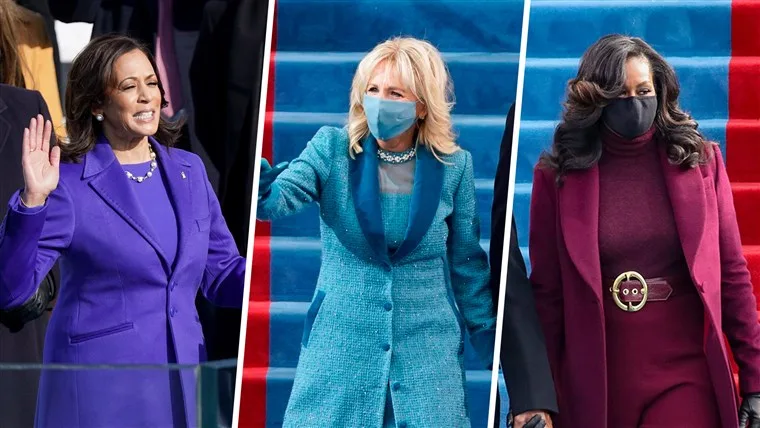
For a late afternoon vigil to honor the 400,000 American lives lost to Covid-19 on Tuesday, Dr. Biden and Vice President Harris chose to wear emerging American designers, the former clad in a full violet look by Jonathan Cohen Studio, the latter in a camel coat classically cut but for the most subtle of novelty in the gentle wave of the back flap by Pyer Moss’s Kerby Jean-Raymond. Both women were dressed for the occasion, which is to say they were dressed up and appropriately so for their respective roles and personal styles.

Cohen and Jean-Raymond are two young, New York City-based designers whose names are well known within the American fashion industry, famous for their unquenchable thirst for new talent, yet they are far from household names. Donning garments by such designers for such a momentous occasion signals support of homegrown design, and could be an indication that Dr. Biden and Harris are open to inheriting Michelle Obama’s fashion mantle of support for the American designers big and small. At least to some degree.

The message carried through to Wednesday’s main event when Dr. Biden appeared in an ocean blue overcoat and matching dress by the small New York-based label Markarian, led by the designer Alexandra O’Neill. Vice President Harris wore a tailored coat and matching dress in a brilliant shade of purple as well as her signature pearls, this time designed by Puerto Rican designer Wilfredo Rosado, and heels by the Los Angeles designer Sergio Hudson by another New Yorker, the 27-year-old designer Christopher John Rogers.

On an inauguration day unlike any other in the 232 years since the custom began, the clothes, just like everything else incorporated into the ceremony, were chosen carefully. No less an emblem of the American dream than Ralph Lauren dressed President Biden and Emhoff.

O’Neill is a young female designer, who, according to a press release from the brand, customized the wool tweed coat with crystal and velvet trim, matching dress and face mask, in a shade of blue chosen “to signify trust, confidence, and stability.” It was feminine and elegant, pretty but not too dainty, just like Dr. Biden.

Still, the look was overshadowed by Vice President Harris. How could it not have been? The historic nature of her role and her commanding, dutiful presence demanded it.

She chose to wear strong, tailored, confident pieces by Jean-Raymond and Rogers. They weren’t exactly unpredictable. Rumors had been circulating for weeks that Harris was planning to wear clothes by Black designers and Jean-Raymond and Rogers are two of the most talked-about names on what is sadly an all-too-short list.

But things are changing. Just look at Harris American hope incarnate.

Content courtesy of Town and Country & Nairobi fashion hub 


Made in Kenya: Exclusive interview with Cynthia Kimathi Founder, Creative Director at The Seamstress and African le’kiondo

Cynthia is a mother and a fashion enthusiast; who doubles up as a self-taught fashion designer, I have loved fashion and style for as far back as I can remember.

I used to accompany my mother to clothes stores every Christmas holiday to choose outfits for my siblings and me, however, I must admit that my Art and Design teacher in State House Girls High School gave me the extra push needed, from whence I learned all the basics myself.
My fashion line is The Seamstress. A seamstress is a woman who sews and one who earns her living from the craft. That is simply who I am.
I officially launched The Seamstress on November 28th, 2020 on the JW Runway Show, but we had been working on the brand and first collection for at least a year beforehand.

Oscar Alochi: Can you describe The Seamstress, the idea and concept as if I knew nothing about it or the market it is in?

Cynthia Kimathi: The Seamstress is purely a ladies-wear fashion line. During our launch, we started with the collection Dusk to Dawn, which is glam wear for evenings and events. But we are not all about evening gowns. We are a one-stop-shop for all women wear; ranging from casual, office, and streetwear, lingerie, mature looks, and older women, among others.

The brand concept is to release quarterly collections (mid-February, end June, end September, and mid-December) that will aim at introducing new designs and aspects into the fashion market. The collections are all pre-planned beforehand, with every design passing through a set of criticisms from The Seamstress team prior to the final vetting.

This is because the creative side of me sometimes needs to be controlled if we want to make functional outfits.

This February, our aim is to release our second collection just before Valentine’s.

OA: What were you doing before The Seamstress, and what motivated you to start the business?

CK: I have been running African le’kiondo, which is a subsidiary brand just like The Seamstress. The brand focuses on making authentic Africanised bags that are environmentally friendly as we source raw materials and labor locally.

Not only that, but it has been a great instrument in empowering women in Meru County by providing them with an avenue to expand their creativity, put food on their table, and have a safe space to talk about their issues.

Just like African le’kiondo, I started The Seamstress out of mere frustration in finding an outfit for myself, a great motivator. During my participation in a national pageant in 2019, Mrs. Universe Kenya as the current 1st Runners Up, it took me weeks to get an evening gown I liked.

This was simply due to all the outfits looking the same, plus they did not look very functional in the sense that I kept wondering where else I would wear the outfit, and how I could style it to look different every time. This predicament gave birth to The Seamstress fashion line.

https://www.instagram.com/p/CIr-KvcB_tV/?utm_source=ig_embed

OA: What techniques do you use? Tell us about the process.

CK: At The Seamstress, we start with a designer’s consultation, This consultation includes detailed discussions with the client ranging from color choices to fabric choices.

The client then receives three (3) designs and chooses from them. The duration from consultation to delivery also depends on design and details. The sewing process differs and the details would seem quite boring for now.

But I also add a lot of accessories to my designs to give them a 3D effect, with such pieces ranging from flowers, beads, etc, which aids in having my outfits turn heads positively.

OA: How did you learn/master this technique and why do you use it?

CK: As previously mentioned, I received basic art and design training from my high school days. In addition to this, my team and I do a lot of research, and I spend the better part of my mornings learning online.

I use this technique as it keeps me on my toes on what is currently trending in the fashion space, what trends could be making their comeback, plus the added benefit of attaining inspiration.

OA: What challenges did you face?

CK: Being a designer, one has to pump in a lot of finances before reaping anything, therefore sometimes you can be financially constrained especially as a start-up and a new name in the fashion industry.

In the Kenyan market, as much as we are now beginning to accept Kenyan designers, we are not yet there. The market still prefers ‘ready-made’ outfits from boutiques for designer outfits. Therefore, oftentimes clientele does not understand the business model especially the need to pay a Designer’s Consultation Fee.

Growth is gradual and sometimes the audience is not as receptive as imagined, but we hope for better days and are positive on the same.

The biggest challenge has however been letting go of clients who wish us to replicate outfits they find online. It is a difficult task at times explaining that we do not replicate, we create.

OA: How did the obstacles make you feel?

CK: Frustrated at times, excited at others. It is bittersweet. The challenges however motivate me, helps me find new ways of approaching things, and elevates my thinking whilst tickling my creativity.

OA: What were your achievements?

CK: The JW Runway Show is the most recent highlight since the launch. In addition, I have dressed beauty pageant judges, taken part at the end of year party for WICCI (Women’s Indian Chamber Of Commerce and Industry – Kenya Business Council) as well as having the honor of dressing an artist for their upcoming music video to be released this February.

It has just been a month and a half and we feel positive about achieving even bigger this quarter.

OA: Favourite moments?

CK: The launch at the JW has to be the highlight so far. The runway took me back to my old modeling days and I was overwhelmed by how far I have come. Seeing my pieces on the runway and how receptive the audience was to them, blew my mind away.

In some way, I felt validated that I might be on to something really amazing.
An added advantage is that I get to travel more now, another passion of mine, as I do deliveries and have one-on-one discussions with clients.

OA: How do you get dressed in the morning?

CK:  I am a casual dresser. Half the time, you shall find me in jeans and a t-shirt. Whenever I have meetings and glam events though, that is when I put my mind into the dressing.

OA: What’s your take on the Kenya fashion industry?

CK: The Kenyan fashion industry is impressively growing fast.

We are seeing Kenyans being dressed by Kenyan designers for events, and the only way we grow is by supporting our own.

The pioneers have done a great job in growing the industry, but so have media personalities and bloggers like yourselves. You have given designers and fashionistas a platform to express themselves in terms of marketing to the world at large.

OA: How different is the Kenya fashion industry compared to East Africa and Africa’s fashion industry at large?

CK: Our rich culture already sets us apart. The Maasai shuka for example has been widely accepted and has found itself in some international design houses, and so has the kikoi.

OA: Any future collaboration with Kenyan or International fashion designers?

CK: Yes. I am hopeful on this front. Maybe Neomi Nganga will read this and we get to do something.

OA: If you were given the opportunity to work with a local or international fashion designer who will you love to work with?

CK: Locally, Neomi Nganga of Style By Neomi. She has revolutionized plus-size fashion, as I find her designs sexy and eye-catching.
Internationally, Zuhair Murad. He is a genius, so daring with his technique. He always delivers utterly unique and dramatic masterpieces.

OA: What are your thoughts on fashion in Africa?

CK: It is growing tremendously fast. Countries like Nigeria and South Africa are already making enough noise in the fashion industry home and away.

OA: What has changed during this period of Covid-19?

CK: Most fashion designers have started to focus more on online marketing strategies.

Personally, the pandemic has given me room to magnify my creativity and read more. Never did I think I would be designing masks for instance.

OA: How has The Seamstress adopted the new technology virtual fashion show during and after the Coronavirus pandemic?

CK: We will be doing Instagram and Facebook live for virtual shows whenever we release our new collections.

OA: How are African fashion designers influencing fashion in the western world?

CK: Most African designers like pomp and color, and lately we have seen more African prints on the red carpet, as the Western world is already recognizing our African designs.

This can even be seen in as diverse an environment such as Hollywood blockbuster films like Black Panther, where they consulted with African designers for the costume designs.

OA: What can the Kenyan fashion industry learn from the western world?

CK: Owning our products. The Western world has a lot of acceptance and loyalty towards its designers. We should borrow a leaf from that and grow our own African designers.
We can also aim at having more fashion weeks and shows to call for upcoming designers to showcase their outfits, as I believe we have so much talent to offer.

OA: Over the last few years have you noticed any significant changes with the African fashion trends?

CK: Yes, I have. There have been some significant developments. We are seeing more African designers, models, and outfits on magazines and social media platforms, which is a clear indication that the perception of African designs has shifted progressively.

OA: When dealing with Africa is it important for the fashion world to be ethical and socially responsible, and put in place strong corporate social responsibility governance?

CK: Yes. We can’t just take and not give back.
Sustainable fashion needs CSR. It helps build relationships with consumers and stakeholders, and it helps to show the market space precisely what the designers are doing and the positive effects their work has in Africa. Let us never forget that our consumers appreciate transparency.


OA: Tell us about The JW Show or Kenyan Fashion week and your experience at the Show.

CK: The JW show is an amazing platform for upcoming designers to showcase their outfits and for seasoned designers to release their collections. The panelist choice was also a wise one; we got to get first-hand information from fashion icons and legends in the industry.

They discussed different parameters in the fashion industry and gave solid advice on how to be fashion-forward and run a house as a business.

OA: Where can we find your designs?

CK: We are currently based online.

Facebook: The Seamstress.ke
Instagram: theseamstress.ke
Facebook: African Lekiondo
Instagram: african.lekiondo
Mobile number: 0101704786

Here you will find our recently released collection Dusk to Dawn and some outfits made for our clients.

OA: Share with the audience your social media platforms or a website

CK: Our Social platforms

Facebook: The Seamstress.ke
Instagram: @theseamstress.ke
Email: theseamstress.ke@gmail.com

OA: What does eCommerce mean to you and your business?

CK: eCommerce means everything! Our business is purely online based.
We are however currently developing our website, which will give us the extra push in the eCommerce world

OA: Do you think eCommerce is important for African fashion designers that are trying to get recognized and reach a global market?

CK: Of course, it is! Ecommerce has opened doors for many businesses locally and globally. It is safe to say that eCommerce is an essential tool in the fashion industry in this modern time.

OA: How does your strategy change when running an online store to an offline store?

CK: When using an Online-to-Offline (O2O) Strategy in our business, both channels share similar significance and importance to The Seamstress in helping us achieve our success.

The Online Channels shall be helpful in widening our reach to not only local stakeholders, but internationally too, through digital marketing and advertising, and draw them into our physical store.

Whilst using the Offline Channel for a physical store, location is our primary strategy as we would wish our discerning customers to feel welcome in our brick-and-mortar when they come for measurements, fittings, and even collecting of their goods.

Finally, due to our industry being fashion, our clients still prefer to physically see, and touch and feel, our outfits when they want to make a purchase, especially if they are first-time buyers.

OA: Where do you see African fashion in the next 5 to 10 years?

CK: I see most celebrities accepting African fashion and embracing it internationally. I strongly believe that we shall be seeing more African designs in the Oscars and Golden Globe Awards amongst other international platforms. We have so much untapped talent and we are about to take the industry by storm.

OA: What 5 pieces of advice would you give to young African fashion designers wanting to enter the fashion industry?

CK: My Advice to young African designer

  • The world is your oyster. All you have to do is spread your wings.
  • Success is not experienced overnight, put in the work and it shall surely come.
  • Social media likes do not equal sales. Clients will buy even without liking your pictures.
  • Every time you feel lost, remember why in a world where you could be anyone you decided to be a designer.
  • Always be true to yourself.

OA: Is there anything else you would like to add?

CK: I would like to thank you for giving me and The Seamstress fashion line by extension, the opportunity for this interview and for deeming us worthy of it. When the names of people and organizations that led the Kenyan fashion industry to be recognized worldwide will be written, yours shall surely be there.

Content courtesy of The Seamstress, African le’kiondo & Nairobi fashion hub 


Ad