Friday 13th of November 2026

Nairobi, Kenya

How to Become a Fashion Model in Kenya: Career Opportunities, Industry Insights and How Nairobi Fashion Hub Can Help You Get Discovered

How to Become a Fashion Model in Kenya: Building a Career, Finding Opportunities and Entering the Fashion Industry Through Nairobi Fashion Hub

Kenya’s fashion industry is creating space for a new generation of models whose influence extends beyond the runway. From fashion editorials and commercial campaigns to beauty advertising, digital content, television, e-commerce and international fashion shows, modelling offers diverse opportunities for people with different looks, backgrounds, ages and professional ambitions.

Nairobi, in particular, has become an important meeting point for designers, photographers, fashion entrepreneurs, creative agencies and event organisers. Across the country, fashion productions, brand campaigns, cultural events and digital platforms are creating demand for talent that can communicate ideas, represent brands and bring creative concepts to life.

Yet becoming a successful fashion model involves much more than having an attractive appearance. It requires professionalism, confidence, preparation, an understanding of the industry, a strong portfolio, reliable connections and the ability to identify legitimate opportunities.

For aspiring models, one of the most important questions is not simply how to get noticed, but how to turn an interest in modelling into a sustainable professional career.

Nairobi Fashion Hub is one digital platform aspiring and established models in Kenya can explore to build professional visibility, showcase portfolios and connect with clients and other fashion-industry participants.

This guide explains how to get started, the different modelling opportunities available in Kenya, how to prepare for professional assignments, and how Nairobi Fashion Hub can support your journey.


1. The many paths into modelling

One of the biggest misconceptions about modelling is that there is only one route into the profession. In reality, the industry is made up of several specialisms, each requiring different skills, presentation styles and professional strengths.

Kenyan models can explore opportunities in fashion, advertising, beauty, entertainment, retail and digital media. Understanding these categories early can help an aspiring model identify where to focus their preparation.

Runway and fashion show modelling

Runway modelling is among the most recognisable areas of the fashion industry. Models present clothing and accessories during fashion shows, designer showcases, fashion weeks, exhibitions and other live productions.

The work involves much more than walking in a straight line. Models must understand garment presentation, posture, timing, choreography, movement, stage awareness and how to respond to a designer’s creative direction.

A professional runway model should develop:

  • A confident and controlled runway walk.
  • Good posture and body awareness.
  • The ability to follow choreography and stage instructions.
  • Confidence when presenting different clothing styles.
  • Professional conduct during fittings and rehearsals.
  • The ability to work collaboratively with designers, stylists and production teams.

Kenya’s fashion calendar provides opportunities to gain experience through fashion shows, designer presentations and creative productions. Emerging models should follow reputable event organisers, designers and modelling networks to learn about casting announcements and auditions.

Commercial and advertising modelling

Commercial modelling is one of the broadest areas of the profession. It involves representing brands, products and services through photographs, videos, television advertisements, digital campaigns and promotional material.

Commercial models may work with fashion retailers, beauty brands, telecommunications companies, financial institutions, hospitality businesses, food brands and lifestyle companies.

Unlike traditional high-fashion modelling, commercial modelling often prioritises relatability, expression and the ability to connect with a particular audience.

Brands need people who can communicate a message naturally. This creates opportunities for different ages, body types, appearances and backgrounds.

Editorial and high-fashion modelling

Editorial modelling focuses on visual storytelling. It is commonly associated with fashion magazines, designer campaigns, creative photography and artistic productions.

Editorial models work with photographers, fashion editors, creative directors, stylists and makeup artists to communicate a concept through images.

This category requires more than posing. Models need to understand facial expression, body movement, angles, mood and the relationship between clothing and photography.

An editorial portfolio can demonstrate versatility through different creative concepts, lighting styles, fashion looks and expressions.

Beauty and hair modelling

Beauty modelling focuses on the face, skin, hair, makeup and related products.

Models may participate in:

  • Skincare campaigns.
  • Makeup advertisements.
  • Haircare promotions.
  • Wig and braiding campaigns.
  • Beauty editorial photography.
  • Salon marketing.
  • Cosmetic product demonstrations.

This category is particularly relevant in Kenya, where salons, beauty businesses, makeup artists, hair brands and cosmetic retailers regularly need visual content for their marketing activities.

Beauty models should be comfortable with close-up photography, detailed posing and working with makeup artists and beauty professionals.

E-commerce and catalogue modelling

Fashion retailers and online stores need models to present clothing and accessories clearly.

E-commerce modelling involves wearing products for catalogue photographs, product pages, online advertisements and social media campaigns.

The objective is to help customers understand how clothing looks when worn.

Models working in this area should be able to follow posing instructions, maintain consistency across multiple outfits and work efficiently during product shoots.

Lifestyle and fitness modelling

Lifestyle modelling represents everyday experiences and activities. Campaigns may involve family life, travel, fitness, wellness, hospitality, education, technology and other consumer products.

Fitness modelling focuses on sportswear, exercise, athletic products and active lifestyles.

These areas are suitable for individuals who can communicate a particular lifestyle naturally and convincingly.

Promotional and event modelling

Promotional models represent brands during product launches, exhibitions, activations, conferences, shopping-centre campaigns and other events.

Responsibilities may include welcoming guests, presenting products, interacting with consumers and supporting brand visibility.

Strong communication skills, confidence, punctuality and a professional attitude are especially important in this category.

Plus-size, petite and alternative modelling

The fashion industry is increasingly recognising that effective representation involves more than one physical appearance or body type.

Plus-size, petite, mature, alternative and other specialist models can find opportunities in commercial campaigns, editorial productions, beauty, lifestyle and fashion projects.

Aspiring models should not assume that they must fit one conventional physical standard before exploring the profession. The most important starting point is identifying the category that suits their strengths and developing the skills required for it.

2. Do you need to be tall or have a particular body type?

Not necessarily.

Height and body measurements can matter for certain runway and high-fashion assignments, particularly where designers have specific sample-size or casting requirements. However, modelling is not limited to those categories.

Commercial campaigns, beauty productions, lifestyle advertising, promotional events and e-commerce projects may require very different types of talent.

Some clients look for a particular appearance, age range, personality, cultural background or ability to represent their target customers.

A model’s suitability should therefore be assessed against the actual brief rather than a universal standard.

Aspiring models should avoid unhealthy weight-loss practices, extreme dieting or unnecessary cosmetic procedures in an attempt to fit perceived industry expectations. Professional development should prioritise health, confidence and sustainable career preparation.

3. How to become a fashion model in Kenya: A practical step-by-step guide

Entering modelling can feel overwhelming when you are starting without industry contacts or professional experience. The good news is that you can begin with basic preparation and build your career progressively.

Step 1: Understand your modelling interests

Before investing in a portfolio or approaching agencies, identify the kind of modelling you would like to pursue.

Ask yourself:

  • Am I interested in runway modelling?
  • Do I enjoy photography and creative expression?
  • Would I be comfortable appearing in advertisements?
  • Am I interested in beauty, hair or skincare campaigns?
  • Would I enjoy promotional events and brand activations?
  • Do I want to work in fashion editorials or e-commerce?

You do not have to choose only one category. Many working models develop experience across several areas.

However, having a clear starting direction makes it easier to prepare the right portfolio and approach suitable clients.

Step 2: Take simple, professional-looking photographs

Your photographs are often the first introduction to your modelling potential.

You do not need an expensive photoshoot to begin. Many reputable casting processes accept simple, recent photographs that show your natural appearance.

Start with:

Headshot: A clear photograph of your face, preferably taken in natural light.

Full-length photograph: A standing image showing your overall appearance and proportions.

Profile photograph: A side-view image that gives a different perspective of your features.

Natural photograph: A simple image without heavy filters, excessive editing or distracting effects.

Creative photograph: Once you have experience, add professionally produced images demonstrating your ability to work with fashion, styling, lighting and different concepts.

Use recent photographs. Your portfolio should accurately represent how you look today.

Avoid excessive retouching, artificial body reshaping and filters that make it difficult for clients to assess your appearance.

Step 3: Build a professional modelling portfolio

A portfolio is one of the most important tools in a model’s career.

It is a visual record of your work, versatility and potential. A strong portfolio helps clients, photographers, agencies and designers understand what you can offer.

For a beginner, an initial portfolio may include:

  1. A clear headshot.
  2. A full-length photograph.
  3. A simple fashion look.
  4. A commercial or lifestyle look.
  5. A beauty or close-up photograph.
  6. An editorial-style photograph, if available.

As your experience grows, update the portfolio with work from legitimate fashion shows, campaigns, professional photoshoots and other assignments.

Do not focus exclusively on the number of photographs. A smaller collection of strong, varied and authentic images is more useful than dozens of repetitive pictures.

Step 4: Learn the fundamentals of modelling

Talent can attract attention, but professional skills help sustain a career.

Consider developing the following abilities:

Runway walking: Learn posture, foot placement, turns, pacing and how to present different garments.

Posing: Practise different poses for full-length, half-body and close-up photography.

Facial expression: Understand how to communicate different moods through your eyes and facial expressions.

Camera awareness: Learn how lighting, angles and movement affect photographs and video.

Fashion knowledge: Follow designers, collections, fashion publications and industry developments.

Communication: Learn how to receive instructions, ask relevant questions and work respectfully with creative teams.

Professional discipline: Be punctual, prepared, respectful and reliable.

You can practise at home using a mirror or camera, but professional workshops and supervised photoshoots can help accelerate your development.

Step 5: Attend legitimate castings and auditions

Castings are an important entry point into modelling.

Designers, agencies, photographers, production companies and brands may organise auditions to identify suitable talent for upcoming projects.

A casting may involve:

  • Registration and basic personal details.
  • Reviewing your portfolio or photographs.
  • A short introduction.
  • A runway walk.
  • Posing or movement exercises.
  • Measurements where relevant to the assignment.
  • A discussion about availability and experience.

Read the casting brief carefully and prepare accordingly.

A casting invitation is not a guarantee of selection or paid work. Treat every audition as an opportunity to gain experience and understand the expectations of the industry.

Step 6: Create a professional digital presence

In today’s fashion industry, your online presence can influence how potential clients discover you.

Social media can help you showcase photographs, behind-the-scenes work, fashion collaborations and professional achievements.

However, social media alone may not provide the organised presentation that clients need when evaluating talent.

A dedicated professional profile can help bring together your:

  • Modelling category.
  • Professional photographs.
  • Portfolio.
  • Experience.
  • Services.
  • Location and availability.
  • Booking information.

This is where platforms such as Nairobi Fashion Hub become relevant.

Step 7: Network with fashion professionals

Modelling is a collaborative profession.

Models work with designers, photographers, makeup artists, hair stylists, fashion stylists, casting directors, production teams, agencies and event organisers.

Building respectful professional relationships can introduce you to new creative projects and help you understand how the industry operates.

Attend legitimate fashion events, participate in suitable creative collaborations and connect with professionals whose work aligns with your career direction.

Networking should be based on professional value, not pressure to accept every invitation or assignment.

Step 8: Learn how to handle bookings and contracts

As opportunities begin to develop, understand the business side of modelling.

Before accepting an assignment, establish:

  • The name and contact details of the client.
  • The purpose of the assignment.
  • The date, location and expected working hours.
  • The agreed compensation.
  • Travel and other expense arrangements.
  • Wardrobe, hair and makeup responsibilities.
  • Image and video usage rights.
  • Whether the client requires exclusivity.
  • Cancellation and payment arrangements.

Image usage is especially important. A photograph taken for one social media campaign may later be proposed for a billboard, television advertisement or long-term commercial campaign.

These uses may require different permissions and compensation arrangements.

Where possible, have the agreed terms documented in writing before the assignment begins.

4. What modelling opportunities are available in Kenya?

Kenya offers several potential pathways for aspiring and established models.

Opportunities vary according to industry demand, professional experience, location, casting requirements and the strength of a model’s portfolio.

Fashion weeks and runway productions

Fashion weeks and designer showcases offer opportunities to present collections to audiences, buyers, media and fashion professionals.

Models may be selected for runway presentations, lookbooks, backstage productions and designer campaigns.

Kenya’s fashion calendar includes a range of independent and organised events. Following event announcements and casting opportunities is an important way to identify potential assignments.

Fashion designer campaigns

Kenyan designers need visual content to introduce collections, promote new products and strengthen their brands.

Models can participate in:

  • Collection launches.
  • Editorial photoshoots.
  • Designer lookbooks.
  • Fashion campaigns.
  • Social media promotions.
  • E-commerce photography.

Working with emerging designers can also help models build experience and establish professional creative relationships.

Advertising and commercial campaigns

Brands across different sectors use models in promotional material.

Potential assignments include:

  • Television commercials.
  • Digital advertising.
  • Billboards.
  • Product campaigns.
  • Retail catalogues.
  • Corporate promotional content.
  • Lifestyle photography.

Commercial modelling can be particularly varied because each campaign has a different target audience and creative direction.

Beauty, cosmetics and hair campaigns

Beauty businesses need models for product demonstrations, promotional photography, salon marketing, hair campaigns and editorial productions.

Models interested in beauty work should develop a portfolio that includes clean close-ups and photographs showing their versatility.

Music videos, film and entertainment

Modelling skills can also create opportunities in entertainment productions.

Some music videos, films, television productions and promotional videos require individuals who can present fashion looks, perform confidently on camera or participate in creative scenes.

These assignments may overlap with acting, performance and commercial talent work.

Influencer and content-creation collaborations

Models with strong digital communication skills may also work with fashion brands as content creators or influencers.

This can involve presenting products, creating fashion videos, participating in brand campaigns and producing social media content.

A model does not necessarily need millions of followers to be valuable to a brand. Audience relevance, content quality, authenticity and professional conduct also matter.

International modelling opportunities

Kenyan models can explore opportunities beyond the local market through reputable international agencies, casting networks, designer collaborations and professional referrals.

International opportunities may involve editorial productions, commercial campaigns, fashion weeks and representation by overseas agencies.

However, international modelling requires careful preparation.

Models should research agencies, verify contracts, understand travel and visa requirements, establish who is paying for expenses and avoid accepting overseas assignments without reliable documentation.

An international opportunity should never be considered legitimate simply because it promises travel or exposure.

5. How Nairobi Fashion Hub can help aspiring models in Kenya

A professional modelling career depends on visibility, presentation, connections and access to relevant opportunities.

Nairobi Fashion Hub is designed to bring models and other fashion professionals together with clients, brands and event organisers through one digital platform.

Its model-related services provide an opportunity for aspiring and established talent to establish a professional presence and become discoverable by people looking for creative services.

A. Create a professional model profile

One of the first steps is creating a profile on Nairobi Fashion Hub.

A well-prepared profile can help communicate who you are, what type of modelling you offer and how potential clients can engage your services.

Your profile should include accurate information, a clear professional description and photographs that represent your current appearance.

Create your model profile:
https://app.nairobifashionhub.co.ke/join/provider

B. Showcase your modelling portfolio

A portfolio allows clients to evaluate your presentation, versatility and experience.

Through Nairobi Fashion Hub’s professional profile and portfolio features, models can present their work in a more organised digital environment.

This can be useful when clients are looking for talent for fashion shows, editorials, photoshoots, campaigns and other creative productions.

A strong portfolio should be regularly updated as you gain experience.

C. Get discovered by clients and brands

Nairobi Fashion Hub brings together clients and fashion professionals.

The platform’s directory allows users to explore service providers, including models, and review available profiles and portfolios.

This gives models an additional channel through which prospective clients can discover their work.

The platform currently includes model service listings covering areas such as runway modelling, hair modelling and commercial, high-fashion and runway modelling.

D. Receive booking requests

Models can present their services and give prospective clients a way to request bookings.

Potential assignments may include:

  • Runway shows.
  • Fashion photography.
  • Beauty and hair campaigns.
  • Brand advertisements.
  • Editorial productions.
  • Promotional projects.
  • Creative photoshoots.

The actual assignment, payment and working arrangements must be agreed between the model and the client.

Being listed on a platform does not guarantee a booking. Your profile quality, suitability for the brief, availability and professional communication remain important.

E. Explore creative gigs

Nairobi Fashion Hub also supports creative gig opportunities.

Clients can post project briefs and budgets, while interested professionals can submit offers for consideration.

For models, this creates another way to discover projects and express interest in assignments that match their experience.

It also gives clients a structured way to communicate what they need before selecting suitable talent.

F. Connect with photographers, designers and stylists

A modelling portfolio is rarely built in isolation.

Models need photographers to produce strong images, designers to provide creative looks, makeup artists to develop beauty concepts and stylists to coordinate outfits.

Nairobi Fashion Hub brings these different professionals into one environment.

This can make it easier to discover collaborators and explore creative projects that strengthen your portfolio.

Any collaboration should have clearly agreed expectations, responsibilities, image ownership and usage permissions.

G. Discover fashion events and industry activities

Fashion shows, workshops and networking events provide opportunities to learn, meet professionals and understand the industry.

Nairobi Fashion Hub supports fashion event discovery and ticketing, giving users a way to explore relevant activities.

Models can use this feature to follow fashion events, attend industry gatherings and remain connected to the creative community.

Explore fashion professionals and services:
https://app.nairobifashionhub.co.ke/services

Explore fashion events:
https://app.nairobifashionhub.co.ke/events

6. How to register as a model on Nairobi Fashion Hub

Getting started is straightforward.

Step 1: Visit the platform

Open https://app.nairobifashionhub.co.ke/ or download the Nairobi Fashion Hub mobile application.

Step 2: Select service provider registration

Choose the option for professionals who want to showcase their services and be discovered by clients.

Step 3: Select your professional category

Choose the modelling category that best represents your services.

Step 4: Complete your profile information

Provide the requested details accurately. Use a professional description that communicates your modelling interests and experience.

Step 5: Add your portfolio

Upload clear, relevant photographs that demonstrate your potential and modelling specialisation.

Step 6: Publish and maintain your profile

Review your information, keep your portfolio updated and respond professionally to relevant enquiries and booking requests.

Registration screens and available options may change as the application develops. Follow the current instructions provided during onboarding.

Join Nairobi Fashion Hub:

7. How much can a fashion model earn in Kenya?

Modelling income varies considerably. There is no universal salary or guaranteed payment for all models.

Compensation depends on the type of assignment, client, model’s experience, duration, image usage, exclusivity requirements and the overall production budget.

For example, a short photoshoot, runway appearance, full-day campaign and national advertising assignment should not necessarily command the same fee.

A model should consider more than the number of hours spent in front of a camera.

Important pricing factors include:

  • Preparation and fitting time.
  • Working hours and overtime.
  • Travel and accommodation.
  • Hair, makeup and wardrobe requirements.
  • Image and video usage.
  • Advertising territory.
  • Duration of usage.
  • Exclusivity arrangements.
  • Whether the assignment involves additional appearances or deliverables.

New models should research prevailing rates, understand their expenses and avoid accepting unclear arrangements.

Where payment is offered, establish the agreed amount and payment date in writing.

A useful professional habit is to keep records of bookings, invoices, payments, expenses and client agreements. This helps models understand whether their work is financially sustainable.

8. Professionalism: What clients expect from fashion models

Talent may get you considered for an assignment, but professionalism influences whether clients want to work with you again.

The following habits can make a significant difference.

Punctuality: Arrive at the agreed location on time and communicate early if an unavoidable delay occurs.

Preparation: Understand the brief, bring the required items and arrive ready to work.

Communication: Respond to messages professionally and ask questions when instructions are unclear.

Adaptability: Be prepared to work with different designers, photographers, creative directors and production teams.

Respect: Treat other professionals with courtesy, regardless of their experience or position.

Reliability: Honour confirmed bookings and communicate promptly if your availability changes.

Continuous development: Keep practising runway techniques, posing, camera awareness and presentation.

Financial discipline: Understand your rates, track expenses and keep written records of professional engagements.

The strongest modelling careers are built through a combination of talent, consistency, trust and professional relationships.

9. Modelling safety: How to protect yourself from scams and exploitation

The modelling industry offers genuine opportunities, but aspiring models must also be aware of scams, misleading promises and inappropriate professional conduct.

A legitimate opportunity should have a clear purpose, identifiable organisers, transparent expectations and appropriate working arrangements.

Before accepting an invitation, consider the following safeguards.

Verify the client or agency

Research the organisation, review its public presence and confirm that the person contacting you is genuinely associated with it.

Ask for the client’s official contact details and information about the project.

Be cautious about guaranteed success

No legitimate professional can guarantee that you will become an international model, appear in a major magazine or secure a specific campaign simply by paying a registration fee.

Treat promises of guaranteed fame, employment or international contracts with caution.

Understand all fees

Some professional development programmes and agencies charge for legitimate services. However, every fee should be explained clearly.

Ask what the payment covers, whether it is optional and what services you will receive.

Do not pay large amounts under pressure or because someone claims an opportunity will disappear immediately.

Protect your personal information

Share only information necessary for the professional engagement.

Be cautious about requests for sensitive personal documents, banking information or private photographs.

Be careful with private auditions and photoshoots

Confirm the location, client, production team and purpose of the assignment before attending.

For an unfamiliar first engagement, consider bringing a trusted person where permitted or informing someone you trust about your location and schedule.

Never accept pressure to participate in nudity, sexualised photography or activities outside the agreed brief.

Understand image rights

Before a shoot, clarify how your photographs and videos may be used.

Ask about advertising usage, social media, print, billboards, duration, location and exclusivity.

A professional agreement should make these expectations clear.

Additional safeguards for young models

Young people interested in modelling require additional protection.

Parents or legal guardians should be involved in registration, auditions, contracts, travel and professional engagements. Do not allow minors to attend unfamiliar professional meetings or photoshoots without appropriate adult supervision.

Nairobi Fashion Hub’s published terms state that users must be at least 18 or have guardian consent. Always review the current platform terms before registering.

10. Building a modelling career beyond Nairobi

Although Nairobi is an important centre for Kenya’s fashion industry, modelling opportunities should not be viewed as limited to the capital.

Fashion professionals and creative businesses operate across the country.

Models from Mombasa, Kisumu, Nakuru, Eldoret, Nyeri, Machakos and other counties can build professional portfolios and pursue suitable opportunities in their regions.

Digital profiles can help reduce the geographical barriers that traditionally make it difficult for emerging talent to connect with clients outside their immediate communities.

A model based outside Nairobi can use digital tools to present their work, communicate with clients and explore assignments that may require travel.

For this to work effectively, models should keep their location, availability and travel expectations accurate.

11. The future of modelling in Kenya and Africa

The future of modelling is increasingly connected to technology, digital media and the expansion of the creative economy.

Traditional runway and editorial work remain important, but models now participate in a wider range of productions, including e-commerce, social media campaigns, livestreams, digital advertisements, music videos and brand collaborations.

This evolution creates opportunities for people who can combine modelling ability with communication, digital presentation and professional adaptability.

It also highlights the importance of platforms that make talent easier to discover.

For Kenya, the opportunity lies in building stronger connections between models, designers, photographers, brands, agencies and event organisers.

A more connected fashion ecosystem can help emerging professionals access information, showcase their abilities and participate in a wider range of creative projects.

Nairobi Fashion Hub is positioning itself within this evolving landscape by providing digital tools for professional discovery, portfolios, bookings, creative gigs and fashion events.

Its long-term value will depend on the strength of its community, the quality of its services and the opportunities users are able to develop through the platform.

12. Final thoughts: Your modelling journey can start today

Becoming a fashion model in Kenya does not require you to have an established agency, an expensive portfolio or connections with famous designers before you begin.

It starts with understanding your interests, developing your skills, preparing professional photographs and making yourself visible to the right people.

Whether your ambition is to walk international runways, appear in fashion editorials, represent beauty brands, participate in commercial campaigns or build a career in digital content, the most important step is to approach modelling as a profession.

Learn the industry. Build your portfolio. Attend legitimate castings. Network with creative professionals. Understand your rights. Be consistent and take your professional development seriously.

And importantly, give your talent a place where potential clients can discover it.

Nairobi Fashion Hub offers aspiring and established models an opportunity to create a professional profile, showcase their portfolios, connect with fashion professionals, explore creative gigs and discover fashion events.

Your journey into modelling could begin with a single photograph, your first casting or your first professional profile.

Your talent deserves to be discovered.

Start Your Modelling Journey with Nairobi Fashion Hub

Create your professional profile and become part of a growing community connecting Kenya’s fashion professionals, clients, brands and event organisers.

Register as a model and service provider:
https://app.nairobifashionhub.co.ke/join/provider

Explore modelling services:
https://app.nairobifashionhub.co.ke/services

Explore fashion events:
https://app.nairobifashionhub.co.ke/events

Download the Nairobi Fashion Hub app:

NAIROBI FASHION HUB — HOME OF AFRICAN FASHION.

PUSHING THE AGENDA FOR MADE IN AFRICA TO THE WORLD.


About Nairobi Fashion Hub

Nairobi Fashion Hub is a fashion and creative-industry platform operated by Tinker Digital Limited. It connects models, designers, photographers, stylists, makeup artists, fashion brands, clients and event organisers through digital tools for professional discovery, portfolios, bookings, creative gigs and fashion events.

The platform’s mission is to strengthen connections within the African fashion industry, improve visibility for creative professionals and support the growth of the Made in Africa movement.

Website: /
Email: info@nairobifashionhub.co.ke
Telephone: +254 734 003 400
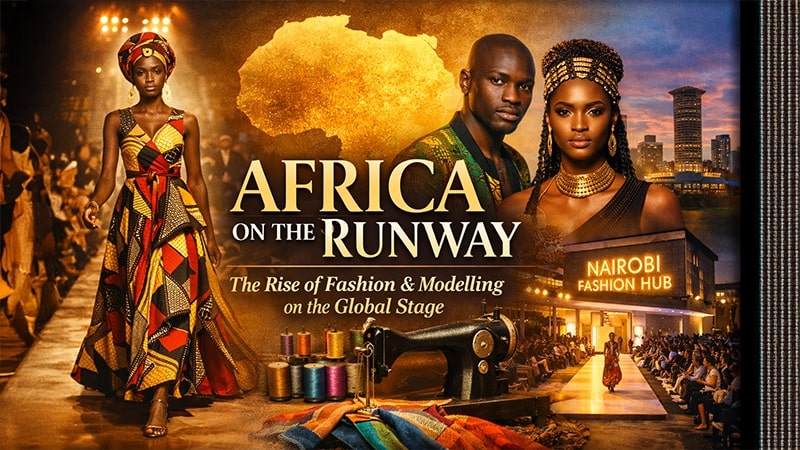
Africa on the Runway: How Fashion and Modelling Are Rewriting the Continent’s Story


Africa on the Runway: How Fashion and Modeling Are Rewriting the Continent’s Story.

Africa’s fashion and modeling industries are no longer whispers in the wings of the global style conversation. They are a chorus loud, inventive, and insistently original, pulling the continent’s textiles, stories, and faces onto international runways, into glossy editorials, and onto e-commerce storefronts. That rise is not accidental: it’s a product of grassroots creativity, entrepreneurial grit, strategic partnerships, and a growing recognition from international buyers and media that African fashion is not a niche but a market and cultural force. Yet the lift-off comes with persistent friction, structural, financial, and logistical, that the industry is learning to overcome in real time.

The landscape: creative abundance, structural scarcity.

From Lagos to Johannesburg and Nairobi to Dakar, designers are mining local crafts, indigenous textiles, and contemporary sensibilities to produce work that reads modern and memorably African. The continent’s apparel and footwear sector is sizeable and growing: recent industry analyses describe a multi-billion-dollar market driven by a young, urbanizing population hungry for styles that speak to identity and aspiration. At the same time, major gaps remain limited capital flowing into creative businesses, weak local supply chains, high costs of quality raw materials, and underdeveloped intellectual-property protections that make scaling risky for designers. These are not cosmetic issues; they shape whether a designer can move from a market stall to sustainable factory runs and from seasonal shows to year-round international distribution. (Euromonitor)

Models, agencies, and representation: progress and persistent gatekeepers.

The modelling side has made visible strides. A new generation of African faces, not merely tokenized but celebrated for their variety and cultural specificity, has appeared on major magazine covers and in advertising campaigns. Publications and runways have started to reflect a broader beauty code, from British Vogue’s landmark Africa-focused features to boutique agencies exporting talent overseas. Yet pipelines are uneven. There are still too few professional agencies with scouting, training, and welfare systems that match international standards, and many aspiring models lack access to education on contracts, health, and financial planning. Where models and agencies collaborate with reputable fashion weeks and hubs, the speed and quality of career development rise. (British Vogue)

The twin engines: local markets and foreign support.

Growth is being fuelled by two complementary currents. First, robust local demand: middle-class growth, the rise of luxury boutiques across African capitals, and digital platforms are expanding domestic consumption. Second, strategic foreign interest from global retailers in cultural institutions that open distribution channels and funding pipelines. International prizes, retail partnerships, and editorial coverage have helped put designers on global maps and provided practical capital and mentorship. Still, dependence on foreign grants or one-off placements is risky; sustainable scale requires stronger domestic investment, better trade policy, and predictable financing instruments for creative SMEs. (Vogue)

Private sector, individuals, and corporate sponsorship: the new patrons of style.

Where governments have been slow to act, individual entrepreneurs and corporations are stepping in. High-net-worth patrons, local retailers, hair and beauty brands, and multinational sponsors are underwriting runway shows, pop-ups, and incubators. These contributions are catalytic: they offer marketing reach, seed capital, and platform visibility. Corporate sponsorships, when thoughtfully structured, can professionalize events and link designers to logistics, export know-how, and retail distribution. But sponsorships must be strategic and long-term: short promotional spends boost visibility but don’t replace investments in production capacity, digital infrastructure, and skills development.

Nairobi Fashion Hub: a case study in market-making

In Nairobi, one organisation exemplifies how a local initiative can alter industry dynamics. Nairobi Fashion Hub (NFH) began as a digital platform and has since developed into a multifaceted ecosystem builder: promoting designers, staging showcases, profiling models and fashion professionals, and creating networking opportunities across East Africa. By amplifying local talent and connecting creators to commercial and editorial channels, NFH helps convert creative capital into economic capital. Its programming, from runway events to training and editorial features, addresses a key industry bottleneck: visibility. For many Kenyan designers and models, platforms like NFH are the bridge between local recognition and regional or global opportunity. (NFH – African Fashion)

What’s changing the rules of the game

Several converging trends are reshaping possibilities:

  • Digitization: E-commerce, social media, and digital lookbooks let designers sell globally without traditional wholesale deals. The pandemic accelerated virtual showcases and direct-to-consumer models. (Vogue)
  • Sustainability and craft revival: A pivot toward regenerative materials, circular fashion, and elevated craft narratives gives African brands a competitive edge in conscious luxury markets.
  • Pan-African collaboration: Fashion weeks and platforms are increasingly pan-African, pooling designers and buyers across borders to build scale. Lagos Fashion Week, for example, has emerged as a major node linking local talent to sponsors and international buyers, a model that other hubs emulate. (Vogue)

The obstacles that won’t vanish overnight

For all the momentum, friction points remain stubborn:

  • Financing: Creative businesses are often high-risk to conventional lenders; alternatives like creative funds, impact investors, and blended finance are still nascent across the continent. (UNESCO)
  • Manufacturing and sourcing: Without integrated supply chains (from spinning yarns to dye houses to finishing facilities), designers face long lead times and quality variability that deters large buyers.
  • Skills and standards: Technical training in pattern cutting, grading, manufacturing management, and modelling professionalism is unevenly distributed. Bridging that gap requires structured vocational programs and private-public partnerships.
  • Market access costs: Trade tariffs, logistics, and export paperwork add layers of cost that make international expansion expensive and slow.

Practical wins: what accelerates success

A set of practical interventions has proven effective in markets that have moved faster:

  1. Incubation + Market Access: Hubs that combine business training with buyer introductions (like NFH’s programming) shorten the runway to commercial deals. (NFH – African Fashion)
  2. Sponsorships with capacity building: Corporate funding tied to supply-chain investments, training, and production support builds durable capacity instead of one-off events.
  3. Regional trade facilitation: Lowering intra-African trade frictions helps brands scale across borders before taking on far-flung export markets.
  4. Investment vehicles for creatives: Dedicated fashion funds, blended finance, and grant-to-equity structures reduce early-stage risk and help brands professionalize.

The human story that matters

At the heart of every statistic are designers, models, tailors, textile workers, and entrepreneurs turning ideas into livelihoods. For them, fashion is not mere glamour; it is jobs, cultural preservation, and new career pathways. Initiatives that respect that human dimension, offering fair pay, worker protections, and sustainable growth, will create an industry that is both stylish and just.

Looking forward: from creative bursts to a durable industry.

Africa has the ingredients for a globally resonant fashion ecosystem: raw creativity, rich textile heritages, a hungry consumer base, and an increasingly connected diaspora market. To turn that potential into long-term impact requires patient capital, smarter public policy, and more hubs that combine visibility with commercial scaffolding. Organisations like Nairobi Fashion Hub are doing the hard, unglamorous work of shaping markets: cataloguing talent, staging consistent platforms, and building the networks that turn runway applause into export contracts.

If stakeholders, designers, models, funders, governments, and media double down on infrastructure and skills while protecting creative agency, Africa will not just contribute to global fashion: it will help redefine the industry’s aesthetics, ethics, and economy. The continent’s next decade in fashion is not a matter of if but how fast and how sustainably it chooses to run.


Sources & further reading: UNESCO’s report on the African fashion sector (trends and challenges); market analysis on apparel in sub-Saharan Africa; Vogue coverage of African fashion and Lagos Fashion Week; Nairobi Fashion Hub’s platform and programming. (UNESCO)

Content courtesy of NFH Digital Team

Nairobi Crowns Its New Royals in a Celebration of Beauty, Culture, and Conservation: A Closer Look at the Mr. and Miss Nairobi City County 2025 Pageant

Nairobi, Kenya – May 5, 2025 – The vibrant city of Nairobi played host to a dazzling spectacle of talent, creativity, and advocacy on May 3rd, as the second annual Mr. and Miss Nairobi City County pageant unfolded within the esteemed walls of the University of Nairobi’s CCU Hall. This highly anticipated event, meticulously organized by Delight Technical College through its dedicated School of Modeling and Etiquette, transcended the traditional beauty pageant format, embracing a powerful theme: “Beauty and Wild in Harmony.” This focus masterfully intertwined the captivating world of fashion with the urgent need for environmental conservation, creating a truly unique and impactful experience for all in attendance.

Mr. Nairobi City County 2025: Joseph RutoJoseph Ruto was crowned Mr. Nairobi City County 2025 at the CCU Hall, University of Nairobi, on May 3rd. He was one of the 51 contestants in the pageant, which was organized by Delight Technical College with the theme "Beauty and Wild in Harmony".

— Nairobi Fashion Hub (@nairobifashionhub.bsky.social) 2025-05-05T10:33:39.832Z

The atmosphere within the CCU Hall was electric, buzzing with anticipation as a diverse and enthusiastic audience gathered to witness the culmination of months of hard work and dedication from the 51 exceptional male and female contestants. The attendees comprised a vibrant cross-section of Nairobi society, including prominent figures in the fashion industry, reigning and past pageant titleholders who offered their support and experience, representatives from various media outlets eager to capture the unfolding drama, and of course, the proud and supportive families and friends of the participants. Their collective presence underscored the growing significance of the Mr. and Miss Nairobi City County pageant as a platform for celebrating not only individual talent but also the cultural richness and environmental consciousness of the region.

Miss Nairobi City County 2025: Whitney JumaWhitney Juma was crowned Miss Nairobi City County 2025 at the CCU Hall, University of Nairobi, on May 3rd. She was one of the 51 contestants in the pageant, which was organized by Delight Technical College with the theme "Beauty and Wild in Harmony".

— Nairobi Fashion Hub (@nairobifashionhub.bsky.social) 2025-05-05T10:36:41.952Z

The runway, the focal point of the evening, was transformed into an imaginative space where storytelling and artistic expression took center stage. The contestants, each a budding ambassador for Nairobi’s vibrant spirit, presented a series of breathtaking designs and costumes that vividly brought the pageant’s theme to life. Majestic, animal-inspired silhouettes evoked the raw beauty of Kenya’s renowned wildlife, while delicate, butterfly-adorned ensembles whispered tales of nature’s intricate wonders. Beyond these literal interpretations, many contestants bravely ventured into more abstract and bold representations of Kenya’s diverse national parks, iconic landmarks, and rich tapestry of cultural heritage. Through their carefully chosen attire and confident presentations, they demonstrated a profound understanding of the interconnectedness between beauty and the natural world.

The judging process was a rigorous affair, extending beyond mere physical appearance. The esteemed panel of judges meticulously evaluated each contestant based on their walk confidence, demonstrating poise and self-assurance on the runway. Crucially, they also assessed the innovative execution of the “Beauty and Wild in Harmony” theme, looking for originality, creativity, and a clear understanding of the message being conveyed through their attire. Finally, overall stage presence played a significant role, capturing the contestants’ ability to command attention, connect with the audience, and embody the spirit of the pageant. The combination of these criteria ensured that the winners would not only possess outward beauty but also intelligence, creativity, and a genuine commitment to the pageant’s underlying message of conservation.

As the evening progressed, filled with captivating performances and moments of palpable excitement, the judges deliberated on the remarkable talent displayed before them. Finally, the moment arrived to announce the individuals who would carry the prestigious titles of Mr. and Miss Nairobi City County for the year 2025:

  • Mr. Nairobi City County 2025: Joseph Ruto
  • Miss Nairobi City County 2025: Whitney Juma
  • 1st Runners-Up: Larry Ricky and Risper Awuor
  • 2nd Runners-Up: Alexander Rodney and Veronica Mutheu

These newly crowned titleholders were met with enthusiastic applause and cheers, recognizing their hard work, dedication, and the exceptional qualities that set them apart.

While the glamour and excitement of the pageant were undeniable, the event’s true significance lay in its powerful message of conservation. The Mr. and Miss Nairobi City County pageant served as a compelling reminder of the urgent need for environmental stewardship, effectively demonstrating how platforms like fashion and performance can be potent tools for raising awareness and inspiring action. By centering the theme around the harmony between beauty and the wild, the organizers successfully communicated the intrinsic value of Kenya’s natural heritage and the responsibility of its citizens to protect it for future generations.

The driving force behind this impactful event, Delight Technical College, through its dedicated Modelling Institute, continues to demonstrate its commitment to nurturing the next generation of Kenyan talent. Beyond simply training aspiring models, the institute plays a vital role in shaping young individuals into cultural ambassadors and creative professionals who can use their platforms to advocate for important social and environmental causes. The resounding success of this year’s Mr. and Miss Nairobi City County pageant further solidifies the institute’s growing reputation as a crucial launchpad for young, visionary talent within the dynamic fashion and modeling industry in Kenya.

The Mr. and Miss Nairobi City County pageant, while distinct from any potential “Mr. and Miss Nairobi University” event, serves a similar purpose on a broader city-wide scale. While a university-specific pageant would focus on the talent and representation within that particular institution, the City County pageant encompasses a wider pool of young individuals from across Nairobi, allowing for a more diverse representation of the city’s beauty, culture, and values. Both types of events, however, share the common goal of providing a platform for young people to showcase their talents, build confidence, and potentially become influential voices within their respective communities. The success of the Mr. and Miss Nairobi City County pageant highlights the potential for such events to contribute meaningfully to both individual development and the promotion of important social and environmental messages.

As the curtains closed on another successful Mr. and Miss Nairobi City County pageant, the impact of the event resonated throughout Nairobi and beyond. The newly crowned titleholders, Joseph Ruto and Whitney Juma, now embark on a year of representing their city with grace, poise, and a commitment to the vital message of “Beauty and Wild in Harmony.” The event served as a powerful reminder that beauty and conservation are not mutually exclusive but rather interconnected forces that can inspire positive change and foster a deeper appreciation for the rich natural and cultural heritage of Nairobi and Kenya as a whole.

For those seeking further information, wishing to arrange media interviews, or exploring potential partnership opportunities with Delight Technical College and the Mr. and Miss Nairobi City County pageant, please do not hesitate to reach out via the provided contact details:

📧 Email: info@delight.ac.ke

📞 Phone: +254 722 533 771

📸 Instagram: @mrandmissnairobicounty

#MrAndMissNairobi2025 #BeautyAndWild #DelightModellingInstitute

How to Become a Commercial Model, Modeling Advice for Aspiring Fashion Models

Interested in making a career in fashion modeling? These dos and don’ts from seasoned experienced models give advice on how to succeed as a fashion model.

Do you want to learn the steps to modeling?
Do you envision yourself as the next Gigi Hadid to grace the Vogue cover?
With thousands of hopefuls vying for the title of the next supermodel, modeling has emerged as a highly coveted employment option. The likelihood of getting caught now is one in a million, so the days when you could rely on luck are long gone.
It requires self-control, perseverance, and work to become a role model.
To stand out and get recognized, you must plan, organize, and adhere to a strategy.

How to become a model?
To help you break into the modeling business and launch your modeling career, we consulted with various successful models and agencies and put together the list of recommendations below. So, here’s a guide on how to begin modeling.

  1. Develop your modeling skills
  2. Practice model poses in front of the camera
  3. Get a killer modeling portfolio
  4. Find the right modeling agency
  5. Do your research about the modeling agency you sign up with
  6. Learn to embrace rejection
  7. Make yourself constantly look better
  8. Be safe
  9. Be Professional
  10. Commit to work
  11. Build your social media following
  12. Never let your pride down

1. Develop your modeling skills
Learn the art of posing. Runway walking drills. Posing skills and walking style are what set one attractive model apart from another. It takes art to model.
Whether it’s watching endless episodes of America’s Next Top Model on Netflix, flipping through the pages of Vogue, watching tutorials on YouTube, reading modeling e-books like glamour pictures photography, or picking a favorite model.
On a runway, it can be incredibly uncomfortable to pose and move around. Practice. A piece of advice for modeling is as follows: Get used to posing in front of a camera and another person by having a buddy take photos of you. Alternately, before beginning your path to becoming a fashion model, start small, mount a camera on a tripod, and practice alone until your confidence increases.

2. Practice model poses in front of the camera
Getting practice in front of the camera is the next stage to learning how to start modeling. The supermodels you see in stunning magazine photographs didn’t just stand in front of the lens and hope a talented fashion photographer caught them at the right moment. They assisted the photographer in producing a masterpiece.
A model will use her posture, facial expressions, and artistic sense to help realize the photographer’s vision. They are both equally talented in their respective fields.

https://www.instagram.com/p/By-FNeigMQH/?utm_source=ig_web_copy_link

An important prerequisite for being a model is having the appropriate posing abilities. To make everything come to life on his end, the photographer will use his understanding of lighting, aperture, framing, etc. It’s a choreographed dance, therefore you should practice as much as you can.
It will be 20 times more difficult to acquire a great image if you can’t pose and don’t feel comfortable in front of the camera. Make an effort to improve as a model!

3. Get a killer modeling portfolio
Having a well-rounded modeling portfolio that highlights your best qualities through gorgeous, high-quality photos is one of the most important steps to becoming a model and building a solid profession.
The modeling portfolio is one of the first things agencies and clients look for in a model to make a good first impression.

It helps to have both a printed copy that you can present when you meet someone in person and an online version (your modeling portfolio website) that you can send to anyone via email. To climb the modeling ladder, you need as much exposure as you can get.

4. Find the right modeling agency
A modeling agency is necessary for every fashion model. Getting seen by a prominent modeling agency in your area is the first step to being signed by one. Snapshots of oneself must be submitted in order to be seen.
In the business, these photos are frequently referred to as “digitals” or “polaroids.”
The most straightforward and unposed photographs are what modeling agencies are searching for so they can see you for WHO YOU ARE. Send in pictures of you with minimal to no makeup on at most a light coat of foundation and mascara.
Include images of both your hair up and down, pulled away from your face, and don’t style it (just make sure it’s clean).

The background must be simple and underacting (standing against a plain wall works best). Use natural lighting when taking pictures; a friend can simply serve as your photographer. If you have friends that are studying fashion design, be sure to heed their suggestions for your wardrobe.
Your digitals should have the following pictures: full-length, up-close headshots, left and right side profiles, smiling (with teeth, without teeth), and non-smiling shots (both facing the camera and turned away from the camera). You should wear pants and a solid-colored t-shirt for your attire.

5. Do your research about the modeling agency you sign up with 
Do your study before submitting it to every modeling agency on the planet and see what sticks.
Do your research about the modeling agency you sign up with Do your study before submitting to every modeling agency on the planet and seeing what sticks. List everything. Is this agency legitimate, which comes first and foremost?
Do they have any negative reviews, and can their company be easily verified? Are models with your appearance and stature now being accepted by this modeling agency?
What is the submission procedure for the modeling agency (detailed instructions differ by agency, but you should be able to obtain this information on their website)? Who are the current and former models for the agency? What are the newest advertising initiatives for the modeling agency? Are they collaborating with reputable brands and businesses?
Do you WANT to be represented by this firm, which would mean that you would also be representing them?

Send digitals to your top choices once you’ve identified the modeling agencies you are convinced will be a good fit for you.
If you get a call asking you to meet with an agency in person after submitting your digitals, do even more research ahead of time.

Learn about notable fashion designers, the ‘it’ supermodels of the time, and recent news in the fashion, beauty, and modeling industries. By no means do you need to be a walking “encyclopedia of fashion models”; just be observant and knowledgeable.

6. Learn to embrace rejection
Prepare your mind to accept a lot of rejection. You MUST be capable of accepting doors closing in your face without hesitation. Even the most beautiful supermodels to ever walk the earth were given the “NO” signal. Numerous people told them “NO” in various ways and numerous repetitions. It comes with the territory to be rejected. You will do better if you realize and accept that as soon as possible. Do not measure your value by how you appear to others or by their approval of you.

Start getting ready by committing to ignoring any criticism you get this week. Find out if it was simple or challenging. You needed to develop tougher skin even more so the harder it was.
Are you offended that I just encouraged you to develop a thicker skin? If so, the point is just that! Start honing your capacity to accept criticism with a smile! But don’t worry, with enough practice, anyone can pick up this skill.
Every “NO” is simply one “NO” closer to a “YES,” so keep that in mind when you encounter rejection.

7. Make yourself constantly look better
Take good care of your physique, health, skin, and hair. Whether you like it or not, modeling is an aesthetically focused industry, and appearance/beauty is unquestionably important. (Despite this, anyone can succeed as a commercial model regardless of physical attractiveness or body type.) The height and weight requirements for fashion models are, however, more stringent and severe than those for any other type of modeling. Although there isn’t much you can do about genetics, it IS up to you to utilize the genetic makeup that was given to you.
You must follow your meticulous beauty routine if you want to become a model. The following routines, which are used by many supermodels, include but are not limited to the following:

Drinking copious amounts of water throughout the day to stay hydrated and maintain supple skin, quitting smoking, and consuming alcohol sparingly. Others include taking a multivitamin, working out 4-5 days a week, according to a strict diet/meal plan, wearing SPF, never going to bed in makeup, exfoliating/washing/moisturizing their face every morning and evening, and many others.
Whether you are looking at it from a business or personal perspective, feeling and looking your best will only be beneficial to you. Win-win situation. But for any aspiring fashion model, having your beauty routine down pat is unquestionably a career benefit.

A model who takes pride in her appearance is far more valuable than one who is unmotivated to maintain good hygiene and attractiveness.

If your height and weight don’t meet the current standards for fashion models, you can still pursue modeling in a variety of other fields. To discover which genres you might be a good fit for, please read this essay on the many types of modeling.

8. Be safe
Being a fashion model makes you vulnerable, especially in the beginning. So be cautious and stay safe. The most crucial advice I can give aspiring fashion models that are working with fashion designers or photographers is this: Avoid being duped by fake modeling schools (you DO NOT need to pay money to attend any modeling school or training, period).
To begin started, you shouldn’t have to pay for any photos. It should be your agency that arranges for test shoots.
Other frauds include modeling competitions, dishonest “agents,” “casting directors,” or “photographers,” phony casting calls that offer thousands of dollars in pay and a photo shoot abroad, etc.

Establish a reliable support system.
The modeling profession might be intimidating, and it’s simple to become a victim of numerous other problems (party scene, eating disorders, etc.). Inform your family and friends about your professional development.

If anything seems off or strange, they can serve as a sounding board. They could take you to a shoot and wait outside for you. When you experience rejection or a difficult time, they can keep you motivated. Have a safety net and an assistive network!

9. Be Professional
It’s not simple to break into the modeling industry. You must act with complete professionalism. Respond to phone calls. Answer emails and voicemails right away.
Being 30 minutes late for a meeting, casting call, or photo shoot is never acceptable. You should, at the very least, arrive 15 minutes early.
Planning and time management are required for this. When aspiring models think, “Well, I’m pretty enough to be a model, so I will just glide by with my looks alone and no effort,” they are making a big error.

Many aspiring models in the past quit the modeling business because their lack of professionalism, bad attitude, and reputation started to overwhelm their attractiveness.

With a diva, no one wants to work. There are many other stunning women in the world who WON’T be disrespectful or snobby.
When you book a gig, you are speaking for your agency as well as yourself.
Treat EVERYONE with respect while you are on set. If your makeup artist followed a precise instruction that was provided to her but you don’t like the way your makeup turned out, it’s too bad. Do your part now that she has finished hers.

Regardless of your preference for cosmetics, take some killer shots and refrain from disparaging the makeup artist in public. In your modeling profession, showing respect and consideration will go a long way.

10. Commit to work
Although modeling may look glamorous and simple, that is far from the truth.
To become a model, you’ll need to put in a lot of effort.
Are you prepared to stick to your diet, exercise, and beauty routine even when you are having a tough time finding work? Are you prepared to work a 12-hour photo session in chilly, windy weather while donning an outfit that provides no warmth, all while obtaining the shot and being compliant?
Have you acknowledged that, after signing with a modeling agency, it can take years before you achieve success (if ever), as your agency works to advance your modeling career?

Are you prepared to spend a large amount of time away from your significant other, your family, your friends, and the comforts of home while taking lengthy overseas trips? When business is sluggish, are you prepared to take a side job that is utterly unappealing? Are you adaptable and willing to undertake a drastic hairdo change if your employer asks you to? By no means are these obligations designed to terrify you; modeling CAN be enjoyable, gratifying, thrilling, and glamorous. Make sure you are prepared to commit regardless of what, and that you are aware of the positive and negative potential on both sides!

11. Build your social media following
If you want to become a fashion model, you probably want to be represented by a modeling agency.
As previously indicated, while you wait for responses from modeling agencies, upload your digitals, practice posing and walking, build a beauty routine, etc.
Amass a following on social media in the meanwhile. Unbelievable as it may seem, it might help you be signed to an agency! Social media following creation is a relatively recent phenomenon.
Nowadays, modeling agencies analyze a model’s online viewership when deciding whether or not to sign them.
Models are frequently used by advertisers, but they increasingly want to hire models that already have a following that they can market to.

Although it is not a prerequisite, having a sizable social media following is a key quality for fashion models. There are currently no indications that this tendency may slow down. So as soon as you can, join the bandwagon. Be judicious in your social media messaging and strategy.

Know your values, be genuine with your followers, communicate with them frequently, and share beautiful photographs! Even further, you can launch a blog, a YouTube channel, or something similar. Due to their massive followings, several unintentional influencers have transitioned into successful professional models.

12. Never let your pride down
You have seen most of the procedures to becoming a model up to this point, but maintaining your pride is just as crucial. You are still a worthwhile person with feelings, thoughts, and opinions regardless of what happens.
Much more than just a gorgeous face, you are.
The majority of fashion models agree to the bookings made for them by their agency, which is acceptable and rather common.
But you must learn to speak out and express your opinion before it is too late if something ever crosses the line or makes you feel uncomfortable. Although we just emphasized that devotion is a crucial quality, there is a thin line.

Never let your career become so important to you that it takes precedence over you and your needs. What do you believe in? Make it clear from the beginning and don’t budge.
The better wealthy you will be, the less anxious you will be about acceptance and approval. Always have your own back and know when to use force. Who will defend you if not yourself, after all?

How many types of fashion models are there?
1. Runway Modeling
2. Plus Size Models
3. Fitness Model
4. Glamour Models
5. Alternative models
6. Parts Model
7. Promotional model

Now that you know how to become a model, you must also know the various career alternatives in modeling and choose the one that best suits you.

1. Runway Modeling
Runway models participate in runway events and are required to routinely change their attire and cosmetics.
A runway or ramp is a platform where models walk to display clothing and accessories during a fashion show. A runway model’s experience affects whether they are hired.

2. Plus Size Models
Plus-size models can be defined as those whose dimensions are larger than editorial fashion models. They participate in the promotion of cosmetics, stylish accessories, and plus-size apparel.
More and more plus-size models are appearing in fashion magazines and working in the fashion business.
The idea of creating clothing for the plus-size market is growing among designers.

3. Fitness Model
A well-defined figure with toned muscles characterizes a fitness model. These models are leaner and heavier due to their increased muscular mass.
These fitness models frequently appear in magazine advertising, but some of them also work as fitness trainers and participate in fitness-related competitions. To find out everything you need to know about how to become a fitness model, read this tutorial.

4. Glamour Models
Glamour model agencies don’t have a set standard for the model’s physical attributes; instead, it varies from location to location what standards they maintain.
These models can be found in calendars, men’s magazines, lingerie modeling, and music videos, with a general focus on a person’s sexual appeal.

5. Alternative models
Alternative models are those unorthodox women who favor participating in punk, goth, and fetish photo sessions and who have unusual physical characteristics.

6. Parts Model
According to a certain bodily part, parts models are used. I can take the form of hands, legs, chest, lips, etc. Unattractive portions are also in demand, despite the fact that attractive parts are the majority of the time. Some representation firms only work with models whose body parts are in demand.

7. Promotional model
A promotional model is a visually beautiful person hired to interact with clients in order to draw them to a product or service. By providing information about the goods, they give customers a real experience. Trade exhibitions, events, shopping centers, nightclubs, and other public locations all feature them.

Frequently Asked Questions

How do you become a fashion model?
There are many different categories of fashion models. So the first thing you need to do is figure out what kind of a model you want to be. Once you have a category determined, you would need to start setting up a portfolio which you will need to field to various agencies so that you can start getting modeling gigs.

What should a fashion model be like?
Generally, fashion models are expected to be tall and capable of carrying a lot of different looks and clothing. While being skinny used to be a common enough requirement, plus-sized models are also increasingly in demand these days.

What do you need as an aspiring model?
The most important thing for an aspiring model is to have a good quality professional modeling portfolio. Your modeling portfolio is a curated sample of your previous work or sample shots that can show potential clients what you look like and what kind of work you are capable of doing.

Content  courtesy of Pixpa & NFH


Saint International Jamaica Limited Make a Come Back To Africa Plan to Find Model Stars

Recognizing their pure and authentic beauty, African queens have readjusted their crowns and reclaimed their rightful place on the runway, with the help of one of the leading local style and talent agencies. Saint International has successfully expanded its reach to Africa and now represents a fast-growing list of next-generation fashion stars from the continent.

Within just two years, Saint has signed talent from the motherland and has already garnered enviable advertising and impressive runway work for such elite luxury labels as Balmain, Balenciaga, Celine, Hermès, Louis Vuitton and Miu Miu.

“There is no model agency in Jamaica or anywhere in the Caribbean that has done what we did; taking models from continental Africa, specifically Nigeria and Cameroon, and directly booking them for the most prestigious fashion jobs in the world,” the characteristically bold Saint founder and head honcho Deiwght Peters to The Gleaner.

Peters outlined that he was able to leverage Saint’s powerful global network within the industry to be able to discover a model in an African country. And within a few weeks, getting her on a plane to Paris to start a career that once was only a dream.

“The tastemakers in the international fashion industry embraced our new African models with a fervent passion that exceeded my expectations,” he enthused. “In a relatively short span, we have made major inroads across the continent of Africa and have identified, developed and made tangible stars from Nigeria and Cameroon.”

One of Saint’s African breakout models is Nigerian stunner Tomiwa. A nursing student resident in the Osun state, she was discovered online in late 2018 by Peters.

The 21-year old beauty made her debut as an exclusive model for French label Celine (negotiated directly from Jamaica by Peters) at their much-lauded 2019 runway show in Paris last year February. “Deiwght believed in me and felt I could do well internationally, and he still does, which boosted my confidence to a hundred,” she shared.

Overnight success
Overnight, Tomiwa became an in-demand runway face, racking up bookings for Valentino, Dior, Maison Margiela, Marni and Tod’s. She also landed multiple campaigns for Miu Miu, starring in the Italian label’s recent Fall/Winter 2020 global ads, and their Spring/Summer campaign before that.

Also making waves is Nigerian Saint David Oyinloye, currently starring in the lookbook for the French luxury goods manufacturer Hermés. “I am happy to be putting Africa on the map,” the genetically blessed model said. A trained electrical engineer, Oyinloye admitted that “the ups and downs in the industry before I joined Saint almost made me give up, and thank God I didn’t as I would have missed out on a lot”.

Not missing a beat on golden opportunities was Aworo Mayowa, an English literature graduate from Lagos State University. “I randomly followed Deiwght on Instagram and he immediately showed interest. I had been scouted by a lot of agencies, but I decided on choosing him when I saw he could be trusted (from the questions he asked) and had a lot of experience with managing top models such as Tami Williams,” she explained. Soon she was strutting the Parisian and Italian runways for Balenciaga and Alberta Ferretti and working extensively in Germany.

The story of finding fame on the Saint model express is echoed, too, by Cameroon national Gedon Kit, who was discovered on Instagram last year. “It was the beginning of a dream,” he recalled. “Before being recruited by Deiwght, I was in university doing a master’s degree, and then I got booked as an exclusive model for Balenciaga this past February at Paris Fashion Week.” The 24-year-old was also booked for Balenciaga’s Fall/Winter 2020 global ad campaign.

Life has come full circle for Saint in Africa as in its nascent days, the then fledgling agency signed a host of Jamaican models directly to South African model agencies, including Kibwe McGann, Janine Henry, Kirk Headley, and Kanhai Condison, who worked extensively in the fashion industry there, appearing in magazines, on billboards, and landing fragrance and clothing campaigns.

Ad