Saturday 26th of September 2026

Nairobi, Kenya

How Fast Fashion Dumps used clothing to Africa and Asia

The fast fashion industry has boomed tremendously in recent years – with Western countries leading the world in consumption and secondhand clothing exports, which are clogging developing countries and landfills with used clothing.

Fast fashion aims to provide consumers with cheap, fashionable garments that are produced quickly and up-to-date on high-fashion trends, often at the expense of laborers and the environment. While social media has certainly accelerated the trend cycle and given consumers increased access to low-priced, fleeting clothing, American overconsumption is not a new fad. It’s been around for decades, and it’s been inching the world closer to irreversible climate damage as Americans donate their clothing and buy more at increasing rates.

A major point of contention at the United Nations Climate Conference which comes to an end on Friday in Glasgow, Scotland – is the divide between wealthy and developing countries. And just as there is an increasing divide between countries that became rich from fossil fuels powering their economies and poor countries being told those fuels are now too dangerous for the planet, the fast fashion industry is exposing a chasm between wealthy countries exporting used clothing and developing countries becoming textile dumping grounds.

Currently, the U.S. leads the world in secondhand clothing exports. In 2018, the U.S. exported nearly 719 million kilograms (1.58 billion pounds) in secondhand clothing, over 200 million kg higher than its runner-up, Germany. These exports end up in secondhand markets around the world, particularly in the Global South, and often at a rate and volume higher than its recipients can handle.

This problem is especially pronounced across Africa, which counts six of the top 20 countries for secondhand clothing imports – Kenya, Angola, Tunisia, Ghana, Tanzania, and Uganda – and South Asia, where Pakistan and India receive the highest and second-highest volume of secondhand clothes worldwide.

Specifically in Africa, secondhand clothing from Western countries clogs local markets and landfills. The textiles travel from retail secondhand stores to private third parties and containers and are eventually sold to overseas entities, which upcycle or revamp the clothes before reselling them according to Sarah Bibbey, the co-founder and acting director of Make Fashion Clean, a non-profit organization working to make denim consumption more sustainable globally.

In Ghana, these clothes which are called Obroni Wawu in the Akan language, or “Dead White Man’s Clothes”  are purchased in bales by market traders who do not know what is in them for $25 to $500 each before being repaired and revamped as necessary and eventually making their way to Ghanian secondhand markets. However, the increasingly poor quality of fast fashion clothing makes it difficult for upcycles (people who revamp and recycle used clothing) to give these clothes a new life, forcing them to be discarded at landfills which, in turn, has detrimental impacts on the local environment.

“Our landfills (in the U.S.) are equipped in such a way that they can process chemicals and they can kind of be contained whereas in other countries, including Ghana, it’s not the same level of infrastructure around the landfill,” Bibbey noted.

In terms of deciding where the clothes go after Americans discard them, power dynamics and colonial histories play a role in where secondhand clothes are diverted to.

“Any country that is […] a formerly colonized country, or country that’s not a global superpower, is going to be more vulnerable to clothing dumping in general,” Bibbey said. “So any country that we know of is going to be more vulnerable to that just because the political power that they have in the global arena is not the same as the political power the U.S. has in the global arena – so that’s the most important thing, I think.”

While resistance to Western clothing dumping has taken root in East Africa, the U.S. has leveraged its global influence and financial aid to ensure that it can still export secondhand clothes to African markets.

In 2017, the East African countries of Rwanda, Kenya, Uganda, Tanzania, South Sudan, and Burundi tried to phase out imports of secondhand clothing and shoes because of the way they undermined domestic efforts to develop their own textile industries. The countries sought to ban these imports entirely by 2019.

However, in March of 2017, the Office of the United States Trade Representative threatened to remove four of these six East African countries from the Africa Growth and Opportunity Act, a preferential trade deal intended to lift the trade and economic growth across sub-Saharan Africa. Burundi and South Sudan had already been expelled from the trade deal under accusations of state violence.

A combination of factors makes the U.S. a hotbed for fast fashion consumption above consumers in other wealthy countries. While Americans of all income levels contribute to the fast-fashion crisis, Charlotte Tate – the Labor Justice Campaigns director for Green America, a U.S.-based nonprofit organization that promotes ethical consumption points to America’s model of capitalism and wage stagnation as some of the factors driving American overconsumption.

“I think one thing that’s unique to American capitalism is how much we prioritize working to make more money and then you have more money to spend,” she said. “And another factor to consider is fast fashion is much cheaper than higher-quality goods. When you look at wages over the past few decades, they’ve really stagnated. And as Americans have become more productive, the wealth of productivity hasn’t been distributed evenly. In that case, you know, it would be really challenging if you’re not making enough money to make ends meet to then also buy higher quality clothes.”

But consumers that don’t have the means to buy higher-quality goods are not the only group lining up at fast fashion stores. Americans of all income levels consume fast fashion, and higher-priced clothes don’t necessarily equate to more sustainably, ethically produced clothes.

Bibbey also highlights the culture around clothing donations as part of what fuels overconsumption and clothing dumping in the U.S., as consumers buy too much with the idea of being able to donate their clothes later.

“People might hear that their clothes ended up somewhere and they might think that that’s always 100% a good thing, just because there’s that mindset of American saviorism that we have here,” Bibbey said. “We get the idea that that’s a good thing, even when we see in reality it’s putting local artisans and local clothing makers out of business because they’re competing in a sense with this influx of secondhand clothes.”

But Tate says that American consumers are not the principal blame for the fast-fashion dumping crisis.

“I think that corporations know that they’re producing cheap clothing that won’t last long and that often can’t be reused – and they’ve known it for a while,” she said. “So I would say a bulk of the responsibility falls on corporations and our practices, and then also to some extent it would fall on our government that has the power to regulate, that maybe hasn’t.”

Because of the unique intensity at which Americans consume and dump clothes – with news reports citing a fivefold increase in the amount of clothing Americans have purchased over the past three decades and an average of only seven uses per item – the U.S. requires unique solutions to the global fast-fashion crisis.

With the U.N. Climate Conference coming to a close, coming up with solutions to these pressing environmental problems is a top priority, advocates say. And, just as the blame for this crisis cannot fall solely on consumers, environmental activists say solutions need to be sought beyond the consumer level, too.

On a smaller scale, Bibbey points to upcycling both in the U.S. and in developing countries as a way to mitigate the impacts of fast fashion on the environment, highlighting Make Fashion Clean’s partnership with the Ghana-based MFI Foundation, a nonprofit dedicated to upcycling clothes in partnership with local artisans in Ghana, as an example of this. But they say the more global, overarching solutions still need to be “studied” and “examined.”

“Consumers have a lot of power, so while they’re not directly responsible for some of the problems facing society today, they do have a lot of power to change market demands and to change their shopping habits,” Tate said. “We have found that when consumers speak and reach directly to corporations, they do change their practices. Collective action is very powerful. So, if we all act and change our practices, we do have the power to reform.”

Content courtesy of US News
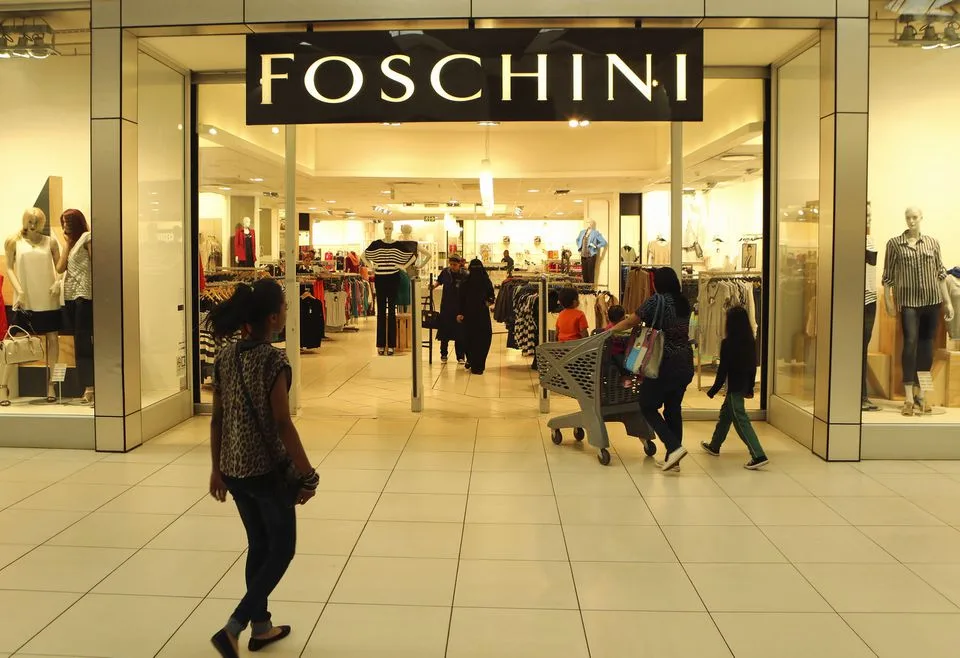
South African Retailer TFG-The Foschini Group To Beef Up Local Manufacturing

South African fashion retailer TFG (TFGJ.J) wants to locally manufacture 30 million pieces of clothing a year within four years as it increasingly turns away from global supply chains, its CEO said after the company swung to a half-year headline profit.

South African retailers, some of which are still heavily reliant on offshore manufacturing, are grappling with delays in international supply chains which have been compounded by a cyber attack at freight logistics operator Transnet that brought local ports and rail to a standstill.

The owner of British womenswear brands Hobbs and Whistles and the local Foschini clothing brand has fared better than its competitors as it has been bringing production closer to home over the past five years by expanding its own factories and buying new ones.

Today, TFG, formerly known as The Foschini Group, sources 72% of its clothes locally, with offshore accounting for 28%, down from just over 40% four years ago, most of it from China.

TFG CEO Anthony Thunström told analysts that the 30 million units it is aiming for by the company’s 2026 financial year will be manufactured on a quick turnaround basis to improve lead times. It is also increasingly looking to extend its quick turnaround manufacturing capabilities for its non-clothing lines.

“All of these quick response advantages were clearly important in the past but never more relevant than now, Thunström said, citing disruption in far East supply chains and shipping rates up 400% from a year ago.

The clothes, homeware, and jewelry retailer is planning to invest a further 575 million rand ($37.68 million) over the next three to five years to build local manufacturing capability.

TFG swung to a headline earnings per share (HEPS) profit of 393.4 cents in the six months ended Sept. 30, up from a loss of 83.3 cents in the same period last year, and grew sales by 51.8% to 19 billion rand as it recovered from COVID-19 restrictions which forced store closures across its markets.

It declared an interim payout of 170 cents per share after pausing dividends last year.

Content courtesy of Reuters 

Beauty Pageant Boycott: Why Miss South Africa Lalela Mswane is on Her Own in Israel

When Lalela Mswane glided across a Cape Town stage in a red satin ball gown at the finals of the Miss South Africa pageant in October, she moved with the poise of someone who commanded her country’s attention.

But in the days after the 24-year-old law student and model was crowned, that gaze took on a sharp edge.

Pro-Palestine activists began demanding she boycott the Dec. 12 Miss Universe pageant because it will be held in Israel. In mid-November, the South African government withdrew its support for Ms. Mswane’s entry, so she will compete without her country’s backing.

“The atrocities committed by Israel against Palestinians are well documented and Government, as the legitimate representative of the people of South Africa, cannot in good conscience associate itself with such,” wrote the Department of Sports, Arts, and Culture in a statement.

The pageant organizers, meanwhile, soldiered on, stating that Ms. Mswane “would not be bullied” into boycotting the pageant. (The Miss South Africa organization and Ms. Mswane did not respond to requests for comments for this story.)

The Miss Universe competition may seem an unusual place for a government to stake a major geopolitical stand. But in South Africa, activists say the anti-apartheid movement taught them that the struggle against injustice takes place everywhere, from parliamentary debates and mass marches to boycotts of sports games, grapefruits, and yes, even the stage of a beauty pageant.

“It was not our wisdom and strength as South Africans that ultimately delivered us from apartheid – it was the support we had from the international community that backed us up,” says Duduzile Mahlangu-Masango, a board member of Africa4Palestine, formerly known as the Boycott Divestment Sanctions (BDS) movement, which advocates in support of Palestinian rights in South Africa.

“We learned then that when you speak the big language of politics, you don’t bring everyone along. But when you talk about things ordinary people care about, you bring the issue closer to them.”

For those like Ms. Mahlangu-Masango, that kind of activism has a long history. For decades, boycotts and cultural isolation were major weapons in the war against apartheid.

In the 1960s and ‘70s, activists fought to have South Africa barred from major sporting events like the Olympics and World Cup, and advocated for Europeans and Americans to stop buying South African fruit and cigarettes. The liberation movement asked international musicians to boycott South Africa.

In 1976, after a massacre of schoolchildren in Soweto, near Johannesburg, turned the world’s attention to South Africa’s atrocities, nine countries announced they would boycott the Miss World pageant for allowing South Africa to participate. A second boycott followed the next year, forcing the organizers to ban South Africa.

“These calls to isolate South Africa culturally were very important” because they reinforced the country’s exclusion from the global community, says Ottilia Maunganidze, head of special projects at the Institute for Security Studies, a South African think tank.

https://twitter.com/QudsNen/status/1458705474103267330?s=20

Fast forward 45 years and activists are using the same arsenal of tools to try to isolate Israel, she says.

The calls for Ms. Mswane to boycott Miss Universe started almost as soon as the crown was placed on her head in mid-October. Activists staged a protest at the Miss South Africa offices in Johannesburg, and the hashtag #NotMyMissSA began trending on social media. Its supporters, including Nelson Mandela’s grandson, Zwelivelile “Mandla” Mandela, called on the beauty queen to draw parallels between Israel’s occupation of Palestinian lands and the dispossession and violence committed against Black South Africans under apartheid.

“We must persist in isolating Apartheid Israel in the same way that we isolated Apartheid South Africa,” wrote Mr. Mandela on Instagram.

For many former anti-apartheid activists, including those now in government here, the question of Israel and Palestine is a particularly evocative one because it calls up vivid memories of their own history.

“The first time I set foot in Palestine, it was like setting foot into the world I grew up in,” says Ms. Mahlangu-Masango, who was raised during the dying years of apartheid in the 1970s and ‘80s. “I really cannot understand a South African who chooses to forget the history of where we come from.”

For supporters of Ms. Mswane, however, the anger at her misses the mark.

“Lalela will be a role model to young women – not just across the country, but across the African continent,” wrote Stephanie Weil, CEO of the Miss South Africa organization, in a statement on Instagram. “Anyone who wants to rob Lalela of her moment in the spotlight is unkind and short-sighted.” Ms. Mswane herself has not spoken publicly about the controversy over her competition.

https://twitter.com/Lalela_lali/status/1451231266951553029?s=20

Meanwhile, former Greek delegate Rafaela Plastira announced on social media in November that she would boycott the competition in support of Palestinians. (Several days later, the organization in charge of Miss Greece distanced themselves from Ms. Plastira and stated that she was not their delegate.)

“Humanity ABOVE beauty pageants!” she wrote in an Instagram post. Greece is sending Sofia Arapogianni to Israel as the country’s delegate.

Content courtesy of CS Monitor & NFH Digital Team 

Ethical Fashion Initiative to Launch Paris Fashion Week Events

The program is launching a showcase for African designers in a bid to attract investors.

PARIS — The Ethical Fashion Initiative is coming to Paris next season, with events during Paris Fashion Week that it hopes will provide international visibility to African designers and attract investors.

The program, funded and managed by Simone Cipriani, is a flagship initiative of the International Trade Centre, a Geneva-based joint agency of the United Nations and World Trade Organization. What started out as a platform for connecting global lifestyle brands with artisans worldwide has expanded into an accelerator for African brands.

Now Cipriani is ready to take the EFI to the next level, beginning with a launch event on Oct. 30 and 31 in Paris that will include exhibitions, a concert, and round tables with designers Margaux Wong from Burundi and Lukhanyo Mdingi from South Africa, who was one of the joint winners of the Karl Lagerfeld Prize at this year’s LVMH Prize for Young Designers.

The event will be held at the 360 Paris Music Factory in the Goutte d’Or district of Paris, home to several designers who will be hosting workshop visits. The EFI has previously brought designers to events in Italy such as Vogue Fashion’s Night Out, Pitti Uomo, and Altaroma.

“We are going to Paris because it’s a progression,” Cipriani told WWD. “Paris is very open and very close to African fashion traditionally, and Paris has also a very active diaspora with a lot of good designers and with a lot of investors who can invest in these designers.”

Cipriani wants to transform the accelerator into a blended finance facility to mobilize investment from inside the African continent, but also from Europe. “Paris is the ideal place to do that,” he reasoned.

Some of the brands in the accelerator are already in discussions with facilities in Africa for investments ranging from 500,000 euros to 1.5 million euros, Cipriani reported. These typically impact investors or so-called “patient” investors, he added, noting the high cost of working capital financing in Sub-Saharan Africa.

For investors outside the African continent, there are potential returns that go beyond the required return for capital invested, Cipriani noted, citing the example of pluvial cotton grown in Burkina Faso, which has a lower impact on the environment.

“We have this whole value chain in Burkina Faso, where we make fabric out of organic cotton, where we make some garments, there are designers, and so on. So investing in these designers is also a way to get into a decarbonized supply chain, it’s also a way to get in a form of fashion which is consistent with the problems of COP26,” he said. “It’s an investment in ESG, more than a specific brand.”

Founded in 2009, the EFI offers a bridge between brands including Vivienne Westwood, Loewe, and Adidas, and some 10,000 artisans in countries including Burkina Faso, Mali, Kenya, Ethiopia, Uganda, DRC, Haiti, and parts of central Asia, though its program in Afghanistan is currently on hold due to the political turmoil in the country.

For Cipriani, investing in fashion design is also a good way to build social capital in African countries, where creative businesses such as fashion, music, and modeling enjoy huge followings on social networks. Above all, he wants to launch a set of events at Paris Fashion Week that will present African brands as international, rather than niche, labels.

Content courtesy of WWD & Nairobi Fashion Hub 

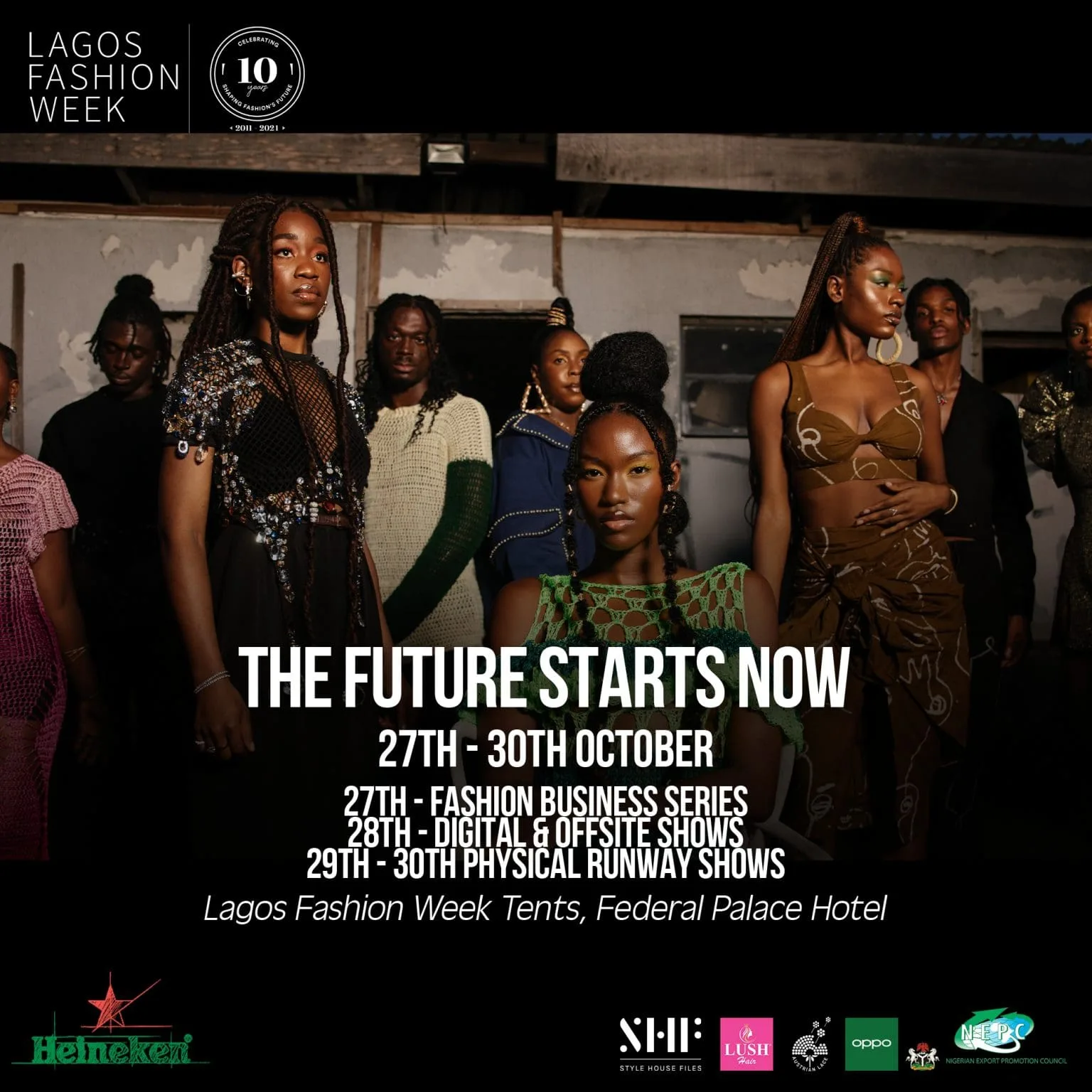
Lagos Fashion Week 2021: The Future Starts Now

Following a pandemic-induced hiatus, Lagos Fashion Week is finally set to return from October 27th-October 30th at the Lagos Fashion Week Tents, Federal Palace Hotel.

#TheFutureStartsNow is the defining theme for this year’s edition which speaks to the need for a global fashion industry that preserves and conserves the environment and values people over profit.

The future of fashion for the next decade and for many more to come starts now. It begins with a community of rising talents springing up across the continent, and with a commitment from our ecosystem to adopt a functional fashion system that delivers environmental, societal, and economic solutions that are beneficial for all.

To kick-off the season, we spent time with designers Cynthia Abila, Pepperow, Studio IMO, Elfreda, Maliko, TJ Who, Babayo, GETO, and Vicnate, alongside their muses Angel Obasi, Saleema, Deola Adebiyi, Wole Babalola, and Abiola Sonaike, who shared with us, their imaginings on the future of fashion in Africa.

“The Future of Fashion to me means smart production/consumption, sustainability, innovation and technology’ – Omafume Niemogha

“The Future of Fashion to me is inclusivity; Everyone gets a seat at the table”- Samatha Adebayo

“The Future of Fashion is in the metaverse for me, a confluence of physical and virtual fashion” – Edwin Okolo

“The Future of Fashion is wearable technology: Smart and intelligent textiles/footwear and garments are fast becoming the new innovation” – Cynthia Abila

While Lagos Fashion Week returns to the physical tents at Federal Palace, this year’s edition will embrace a hybrid model with digital shows highlighting rising talents from across Africa as well as featuring a distinct exhibition of the selected designers’ collections.

Fashion Business Series, a platform designed to facilitate conversations with key stakeholders in the industry will hold digitally on 27th October 2021. Speakers include Aissa Dione, Busayo Olupaona, Chid Liberty, George Gachara, Laureen Kouassi-Olsson, Mariama Camara, Roberta Annan, Tammy Tinker, and Viola Labi amongst others.

This year, as part of our ongoing commitment, to facilitate new conversations and exchange of ideas surrounding sustainability in fashion in Nigeria and Africa, Lagos Fashion Week is teaming up with Fru Girls and PopSwap-a new digital community for the Global Fashion Exchange to host an inaugural digitally-enabled Swap Shop experience in Lagos which will take place from the 28th-30th of October.

Putting into practice the foundations of a circular economy that prioritizes reuse, reduce & recycle, Lagos Fashion Week will facilitate the exchange of pre-owned items through swapping, sharing, donating, and resale.

#LFW2021 Line-Up

● Fashion Business Series: 27th October 2021

● Digital & Offsite Shows: 28th October 2021

● Physical Runway Shows: 29th-30th October 2021

The countdown is officially on! It’s 7 days to go and the city of Lagos will once again come alive as Lagos Fashion Week returns in full force.

Campaign Shoot Credits:

Photography: Demola Mako
Creative direction: Chuchu Ojekwe
Produced by: Style House Files
Makeup: Wura Salvador
Hair: Lush Hair Nigeria
Muses: Angel Obasi, Deola Adebiyi, Saleema, Wole Babalola, Abiola Sonaike
Shoes: Shekudo, Maliko Studios
Jewelry: Milola Jewels
Models: Beth Modelling Agency (Natse Jeide, Chioma Tagbo )

Content courtesy of Lagos Fashion Week & Nairobi Fashion Hub 

Anji Degante Is Using Her Tampa-based Clothing Business To Help Orphaned Children In Kenya.

A Tampa business accepted into the 5508 Small Business Incubator Program is using the opportunity to make an impact beyond the Bay area.

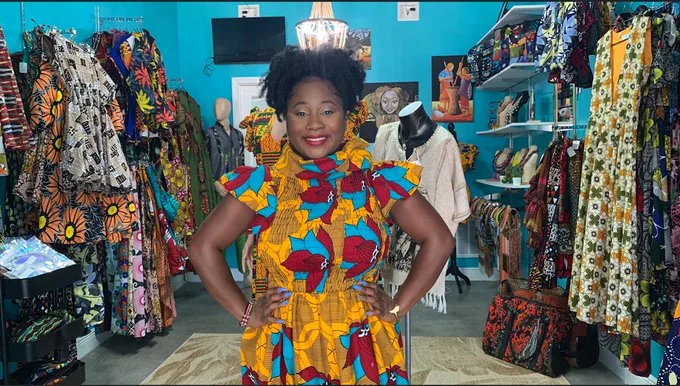
​Anji Degante, the owner of Accent Styles Boutique, has been inspired ever since her 2014 trip to Kenya. She launched her African clothing business three years ago and now a portion of those proceeds benefit orphan children in that community.

“The Maasai tribe that I lived with were extremely traditional,” she said. “If they did not make it they did not wear it,” Degante says she learned a lot about Kenyan culture while living there.

“I’ve seen a lot of things that I wanted to improve,” she said. I thought that I could change Kenya but I feel like Kenya changed me. It made me a better person. It made me more conscious. It made me take a look into sustainable fashion. It made me look at ways to create cultural retention programs.”

After two years in the small business incubator program, Tampa Hillsborough Executive Action Plan CEO Derrick Blue says Degante’s business has become a bankable small business.

https://twitter.com/FadiaTVNews/status/1447299129579917314?s=20

“We have a lot of success stories from individuals that started off with laptops as coworkers in one of our spaces to now being seven-figure companies,” Blue said.

As she continues to be a success, Degante has been giving back to the community that influenced her brand.

A portion of the proceeds at her shop is helping more than 300 children at a Kenyan orphanage with their education, uniforms, and food. Degante says she felt compelled to step in and help when the orphanage’s leader passed away.

She also opened a library in Nairobi, Kenya with books donated from St. Petersburg and Tampa.

“They are definitely like my adopted children I absolutely love them,” Degante said.  She credits her success both locally and abroad to the opportunity she has with 5508.

“One of the things that I love about the rent being so affordable is that I’m able to buy more product, I’m able to hire more employees and I’m able to donate so much of my time,” she said.

Time and effort she says are fueling our local economy while providing resources and a future for orphans in that Kenyan village.

Content courtesy of Spectrum Bay News 9 & Nairobi fashion hub


Ozwald Boateng The Black Fashion Designer Who Became The Youngest Tailor on Savile Row

The designer dressed the cast of hit films – The Matrix Reloaded, Lock Stock and Two Smoking Barrels, Black Panther, and Bad Boys 2 London is considered one of the most iconic fashion capitals in the world, with some of the biggest fashion designers hailing from the UK.

From Alexander McQueen to Stella McCartney, high-end fashion is sewn into the fabric of city life but there are some designers who have blazed the trail and made their mark in spaces where Black people are rarely seen.

At the age of 28, a Muswell Hill-born designer decided to open up shop on Vigo Street at the end of the world-famous and prestigious Savile Row.

Ozwald Boateng became the youngest tailor to open a store on London’s sartorial street and went on to dress the likes of Rolling Stones’ Mick Jagger, Led Zeppelin’s Jimmy Paige, and stars of Sex and The City to name a few.

Born to Ghanaian parents, Ozwald used his mother’s sewing machine to design his first collection, but before pursuing fashion, the Londoner studied computing and eventually dropped out to enroll at Southgate College.

His career then took off in his 20s after successfully selling his clothing to a menswear store in Covent Garden, after dressing celebrities and musicians, Ozwald went on to open up a store on Portobello Road with his “Structured Classics”, which he created in line with classic Savile Row Tailoring.

In 1994, the Londoner achieved his first groundbreaking move by becoming the first tailor to hold a catwalk show during Paris Fashion Week as he said, “I knew that if I did a catwalk show in Paris as a tailor I could revolutionize tailoring”.

Months later, Ozwald added another first to his accolades by becoming the youngest tailor to set up shop on Vigo Street at the end of Savile Row, the epicenter of suit tailoring.

The sartorial genius incorporated color from his Ghanaian heritage fused with the distinct British tailoring and eventually opened his Headquarters in Savile Row and a flagship store in 2007.

The accolades for his work began to flood in as the tailor received the Award for Best Menswear Designer at the Trophées de la Mode in Paris and credits in Vanity Fair for “leading the way in British men’s tailoring”. In 2002, the fashion designer won Best Menswear Designer at the British Fashion Awards.

Ozwald’s success drew the attention of Hollywood A-listers and the tailor went on to dress the cast of films such as The Matrix Reloaded, Lock Stock and Two Smoking Barrels, Black Panther, and Bad Boys 2.

Away from the camera, the 54-year-old dressed stars for red carpets included the likes of Will Smith, Jamie Foxx, and Daniel Day-Lewis, who wore a diamond cloth suit to the Oscars worth $150,000.

In 2003, Ozwald became Creative Director of menswear for high-end French Fashion House Givenchy as his influence continued to grow internationally.

Then in 2006 the world-class tailor was awarded an O.B.E by the Queen and named an “Officer of the Order of the British Empire” for his services to the fashion industry.

The days of sitting at his mother’s sewing machine were now far behind him as Ozwald continued to be decorated for his great achievements.

The Londoner received an Honorary Degree (Master Of Arts) from The University of Creative Arts as well as an honorary doctorate from the University of Arts London both for his contributions to the fashion industry.

But his recognition from academics wasn’t limited to the UK as the tailor was awarded Harvard University’s Veritas Award.

Not forgetting his roots, Ozwald has been involved in giving back to his origins in Ghana and the continent of Africa overall. In 2006, the designer held a historic show at the state banquet of the 9th annual African Union summit held in Accra, Ghana to recognize 200 years since the abolition of Slavery and the country’s independence from Britain.

Content courtesy of My London & Nairobi fashion hub 

Africa Fashion Week London (AFWL) 2021

The largest annual African fashion event in Europe, Africa Fashion Week London, is back for Season 10!  Africa Fashion Week London (AFWL) is Europe’s largest fashion event promoting and nurturing African and African-inspired design talent

With a collaborative catwalk, exhibition, and business development program, AFWL has led the way in highlighting Africa’s emerging designers and apparel industry and has been at the forefront of bringing awareness of Africa’s burgeoning fashion industry to the international market.  AFWL has hosted 9 catwalk events and contributed expertise to at least 10 more events produced by 3rd parties such as The Mayor of London’s Black History Month celebrations

We have also showcased over 900 emerging designers & exhibitors, from Africa, Europe, and America, to almost 75,000 visitors including buyers, retailers, influential industry professionals, and the media, and is now a highlight on the annual fashion calendar.

AFWL brings value to designers through, contacts, experience, and knowledge within the fashion community. With a core team made up of experienced fashion industry experts and business professionals, AFWL is committed to creating a platform for African and African inspired designers that not only showcases them to an international market but also supports them in building a sustainable business that is globally recognized and promotes social change in Africa.

About Africa Fashion Week London

AFWL has hosted seven catwalk events since its inception in 2011 and contributed expertise to more than 12 events produced by 3rd parties such as The Mayor of London’s Black History Month celebrations and the annual Africa Centre Summer Festival. We have also showcased over 900 emerging designers & exhibitors, from Africa, Europe, and America, to almost 80,000 visitors including buyers, retailers, influential industry professionals, and the media, and is now a highlight on the annual fashion calendar.

Content courtesy of Move Me Back and Nairobi Fashion Hub 

Birimian Unveils the First Cohort of the IFM-Birimian Accelerator x Africa, the Accelerator Program Launched with Institut Français de la Mode

Birimian, the first operational investment company dedicated to African luxury and premium heritage brands, has selected the finalists of its first call for applications (see list below). These finalists will join the acceleration program IFM-Birimian Accelerator x Africa, in partnership with Institut Français de la Mode (IFM). The designers selected will also be highlighted at the Première Classe event organized by WSN as part of Paris Fashion Week on October 1–4, giving the brands valuable exposure to the European fashion scene.

Launched in June 2021, IFM-Birimian Accelerator x Africa is an innovative acceleration program for emerging African heritage brands in the fashion, accessories, and jewelry sectors. Every year for ten months, the program, funded by Birimian, intends to support ten young designers selected by a committee of experts from the international creative scene. The brands participating in the program will also receive investment and/or consulting and support services from Birimian.

The accelerator program provides essential tools to develop emerging brands:

  • Defining a brand platform
  • Strengthening the creative process
  • Targeting the relevant audience
  • Establishing a consistent marketing strategy
  • Financial management
  • Planning and structuring of collections
  • Distribution strategy
  • Communication policy, and more.

This program is a unique opportunity for designers and emerging brands, both on the continent and in the diaspora, to get strategic, operational, and financial support for ten months, thus allowing them to make their activities more professional and organized. It is a program focused on training the young African creative guard and promoting creative entrepreneurship.

The talent identification process took two months and involved scouting, active engagement with brands, and selection of candidates from three segments: ready-to-wear (general public and premium) for 80% of the brands, ready-to-wear fashion (premium and luxury), and accessories for 20%. 85% of them are “made in Africa.” Their collective customer base reflects Birimian’s ambitions with a strong openness to the international market (40%) and significant potential for influence beyond the borders of the continent. 80% of them boast a revenue of over $US50,000, one of the main selection criteria.

The first group, characterized by a geographic diversity representative of the continent’s main economic hubs, illustrates the richness of the brands’ creative worlds. It includes the following finalists:

Laureen Kouassi-Olsson, CEO of Birimian, commented, “The class of designers invited to join the IFM-Birimian Accelerator x Africa program embody the new creative African guard: reinvented tradition, undeniable creative talent, Afropolitan, urban, and digitally focused on the world, proudly showcasing their heritage through collections whose originality no longer needs to be proven.

However, it remains fragile, hence the need to strengthen their basics and provide them with operational, strategic, creative, and financial support. This is the entire purpose of this program, which is fully aligned with our investment strategy. The network of experts it draws on and the unique access to the ecosystem of the French and European creative scene will inevitably create value. We cannot wait to warmly welcome them to Paris alongside Institut Français de la Mode.

“The 10 brands selected for this first intake of the IFM-Birimian Accelerator x Africa are full of creative talent and ambition for their development. The designers and entrepreneurs will work on all the components of their brand with the objective of not only boosting their reputation but also developing sustainable businesses in an international ecosystem while preserving their African heritage.

The right balance will be struck by working together towards creative, inclusive and sustainable entrepreneurship”, concludes Thomas Delattre, Director of the Fashion Entrepreneurship Center at Institut Français de la Mode.

About Birimian
The first operational investment platform dedicated to African luxury and premium heritage brands, Birimian supports designers on the continent in their growth and international development over the long term. Birimian’s main objective is to accelerate the international emergence of African creators by positioning itself as their major partner in four main sectors: fashion, accessories, beauty & cosmetics, and gourmet.
Birimian is aimed at brands that carry the continent’s culture, tradition, history, and cultural heritage, magnificent in its diversity, in their DNA and identity, brands that adapt to modern and contemporary codes.

About IFM
Institut Français de la Mode is a higher education institution, a training center for apprentices, a provider of executive education, as well as a center of expertise for the textiles, fashion, and luxury industries. It offers 16 educational programs at vocational, Bachelor, Master, Executive MBA, and doctorate levels, which prepare students for all the professions in the fashion industry in the fields of management, design, and craftsmanship.
Based in the heart of Paris on a new 9,000 m² campus, Institut Français de la Mode welcomes more than 1,000 students of some fifty nationalities – managers, designers, technicians, entrepreneurs – encouraging meetings, collaborations, and cultural effervescence.

Institut Français de la Mode is a member of HESAM Université, of the Conférence des Grandes Ecoles and of the International Foundation of Fashion Technology Institutes (IFFTI). It is supported by the French Ministry of Economy. It is recognized by the French Ministry of Higher Education.

Content courtesy of IFM-Birimian Accelerator x Africa 


Oakland Clothing Designer Sources Textiles from Africa

How an Oakland clothing designer Ade Dehye is challenging fashion industry norms, sourcing directly from Africa with his 100% Black-owned and operated brand, “Tunde” Ahmad is merging textiles from Ghana with urban streetwear designs.

East Oakland’s Akintunde “Tunde” Ahmad had long wanted to visit the African continent and reconnect with his ancestry. When he arrived at the University of Ghana in Accra in 2016, taking a semester off from Yale to study abroad, he was captivated by everything about the bustling city.

“I was fortunate to be able to go for an entire semester and have a deeper and longer connection out there, learning African history from an African perspective, rather than Eurocentric or American perspective,” he said. “I was able to dispel a lot of myths and stereotypes that are negative, overwhelmingly, and put into our heads about the continent.”

One of the most stunning revelations to Ahmad was how prosperous Ghana’s fashion industry is but not in the fast-fashion, the mass-produced way we’re accustomed to in America. In Accra, you’ll see a lot of people in completely custom outfits, rather than something you’d find at a chain store.

The reason: It’s extremely easy to access affordable tailors, along with endless unique fabrics, from bògòlanfini (traditionally dyed with fermented mud) to woven kente (a handwoven cloth with strips of silk and cotton).

“Even every dorm on campus had a tailor,” he said. Ahmad started getting garments made and visiting different fabric markets. “The tailors get your measurements and can make different custom pieces.”

These experiences laid the groundwork for what is now Ahmad’s successful clothing brand in Oakland, called Ade Dehye, which uses custom West African textiles sourced directly from Ghana to create urban streetwear designs. It’s all operated under an ethical business model that aims to respect, rather than exploit, African culture and workers.

“It was a very natural progression,” he said. “I never really had a huge interest in fashion. But once you actually get to try stuff and see how it looks on yourself, that is how I caught the fashion bug.”

Now, his 100% Black-owned and operated brand works with a dozen tailors in Accra to create around 250-300 pieces at a time. Ade Dehye is known for its fusion of intricate prints stylized as streetwear, bomber jackets, lined trench coats, and two-piece outfits that you can mix and match. The pieces are then shipped to Oakland and sold online or through pop-ups. The timeframe from Ahmad selecting the fabrics and designs to receiving the garments can take anywhere between 10 weeks to five months.

“There needs to be more investment in Ghana, in the continent as a whole,” Ahmad said. “And not just in the clothing industry, but in industrializing the country as a whole, and getting West Africa more up to speed and competitive with the rest of the world in every sector.”

Although Ahmad wasn’t always interested in fashion, he was familiar with West African textiles. His mom often wears clothing made out of West African prints, so Ahmad was exposed early on to textiles like Kente cloth, Ankara, and mud cloths. “I was no stranger to these fabrics. But I’d never been able to get stuff tailor-made to me,” he said.

Ahmad’s path to fashion wasn’t always clear, but he always had a goal to make a difference. When he graduated from Oakland Tech High School in 2014 he was praised on national television for his achievement as a senior who was accepted into some of the most elite Ivy League universities. Ahmad received his bachelor’s in sociology from Yale in 2018, and his master’s in journalism and documentary film from Columbia Journalism School in 2019.

“I got a lot of attention for [my college acceptances], and I always wanted to return the favor to come full circle and actually get into education,” he said of his goal to return home and pay it forward like he watched his mom do as being an educator with the Oakland Unified School District for three decades.

While he wanted to make his way home eventually, he decided to stay in New York to work as a journalist and filmmaker in Harlem after graduating from Columbia. But when COVID-19 hit, he and his partner, Elena, traveled back home to Oakland for what was supposed to be no more than a 10-day shelter in place. They ultimately canceled their return flight to New York and stayed in the Bay Area.

When he came home, he got the opportunity to teach at OUSD’s African American Male Achievement program, designed to improve academic and life outcomes for male students. At the same time, he took part in the prestigious Ida B. Wells fellowship in investigative reporting. While Ahmad was forging a budding journalism career, he never stopped thinking about the time he spent in Ghana. He started dreaming up creating a 100 percent Black-owned brand solely sourced and produced out of Ghana.

Having no fashion knowledge other than what he learned during his time abroad as a college student, he reached out to the people in the fashion industry he had met during his stay back in 2016. One of them was local Ghana fashion designer Awurama Mankatah, owner of the Threaded Tribes clothing brand.

So far, Ahmad has self-funded the entire project, and money generated from pieces sold is reinvested into the brand.

Because tailors in Ghana specialize in making a limited number of custom-made pieces at a time, one of the biggest challenges was recruiting them to be involved. He leaned on Mankatah for guidance on finding the right tailors, as well as learning how long certain handmade fabrics take to make, and the different types of stitching and patterns. The roughly dozen tailors that work for Mankatah also work for Ahmad, and the entire manufacturing operates out of Accra.

For the most part, Ahmad has worked remotely to bring his vision to life, but he was able to travel to Ghana this past February.

From the beginning, Ahmad wanted to ensure his brand helped the African workers he partnered with financially and didn’t become an exploitative source as is the case in so many industries operating on the continent. Cacao is one of the most obvious examples of how Western countries take advantage of West Africa’s natural resources with little benefit to locals. While Ghana is currently one of the largest exporters of cacao, Western Europe and the United States have the highest number of chocolate manufacturers reaping profits.

“You see all of these folks from other places coming in and running things, and you understand this is a raw resource grab,” he said.

Ahmad knew he was taking a risk with his ethical vision for how to run Ade Adehye given how much easier and more lucrative it would be to run the brand out of China’s mass production infrastructure. “I purposefully chose not to do that,” he said.

So far, Ahmad has hosted two pop-ups, one in Alameda in May and one in downtown Oakland in August. During the Oakland pop-up inside Dish Boutique on 23rd Street, friends and visitors got the chance to mingle with Ahmad, ask questions about the pieces, and walk away with shopping bags filled with unique garments priced at $80-$250, which Ahmad says is a reasonable price for the handwoven items given the labor-intensive hours that go into making the garments.

Ahmad’s ultimate goal is to help other Black entrepreneurs follow the blueprint that he created with the help of other people in the fashion industry like Mankatah of Threaded Tribes to show how it is possible to run an ethically and sustainable company that’s successful.

For now, he’s getting ready to travel to Ghana for the second time to start working on what new pieces he will add to the Ade Dehye collection. In the end, he is keeping accessibility and his hometown in mind as he rolls out designs.

“I want to see my folks wearing my stuff. I come from East Oakland, I come from Oakland public schools, folks aren’t going to be paying $800, $900 for a trenchcoat,” he said. “I want the pieces to be accessible to my folks. It’s more about brand integrity, having morals and values that I’m trying to stick to.”

Content courtesy of The Oakland Side & Nairobi fashion hub


The Story Behind Lupita Nyong’o’s Denim-Inspired Met Gala 2021 Beauty Look

Given that the springboard for Lupita Nyong’o’s 2021 Met Gala beauty was a Versace dress defined by a confluence of beaded detailing and denim panels, an above-neck approach equal parts pretty and irreverent seems a natural match. Fortunately, longtime conspirators Vernon François (hair) and Nick Barose (makeup) were more than up to the task, each ensuring that, in this case, an “American” moment meant a supremely creative one.

https://www.instagram.com/p/CTyOkp2ojmz/?utm_source=ig_embed

“Brooklyn-born conceptual artist Lorna Simpson inspired the look,” said François of Nyong’o’s molded mane, its transparent folds designed to echo the delicacy of tulle. “[Simpson’s] take on texture is powerful, and I wanted to imitate the effortless wave and movement that she conveys in her work.”

François relied on hairpieces, ample pins, and a spritz of Redken’s Triple Pure 32 for maximum hold, along with an ardent communication of contrast, artistic freedom, and history. “Lupita is incredibly visionary and adventurous, not only does she have the most versatile kinky, coily, hair but the ability to wear and show the beauty of all hair textures,” he says. “I’ve always wanted to bring this technique to life within the Afro hair experience, and doing it for the Met Gala is mind-blowing.”

And while the striking hair may have matched the sculptural nature of the actor’s Versace dress, Barose’s makeup took its cues from its blue hue. The makeup artist used ten different shades of blue shadows pulled from two separate Lancôme Hypnôse 5-Color Eyeshadow Palettes, Bleu Hypnotique, and the soon-to-release Drama Denim with bright accents here and there for even more dimension. A rim of black eyeliner and brickish lipstick completed the look. The trick is the ’90s one, in step with Barose’s overarching inspiration.

“We’ve been exchanging images of the denim dress, which is kind of my heyday,” explained Barose. “I was so inspired by the supermodels of the ’90s and Versace, so it’s something that’s second nature to me. But we didn’t want to do anything too on the nose. It’s a different spin.” The makeup artist also cites Old Hollywood and Western films as references, the shared characteristic of all genres that of a femme fatale a woman who is strong, powerful, glamorous, and fierce. “Mostly fierce,” said Barose. “That word is thrown around a lot, but a Versace moment is always fierce.”

Content courtesy of Vogue Magazine & Nairobi fashion hub

Met Gala 2021 The Best Dressed on the Red Carpet

Last night saw the long-awaited return of the Met Gala, an event that is often dubbed ‘the Oscars of fashion, and which always sees celebrities and designers pull out all the stops to create truly memorable red-carpet moments. After 18 months of cancelled events as a result of the Covid-19 pandemic, last night’s gala was even more special than usual as the biggest supermodels, actresses, sports stars and influencers made their way up those very famous steps for the first time in a while.

This year’s exhibition, and therefore the accompanying theme, was ‘In America: A Lexicon of Fashion’ or ‘American Independence’ which celebrates the Costume Institute’s 75th anniversary and explores a modern vocabulary of American fashion. When it came to the gala outfits, we saw both obvious and subtle nods to American fashion, culture, and history, while plenty of American designers were represented at the event.

It was a truly exciting night for fashion and there were plenty of memorable red-carpet moments.

One of America’s greatest exports is the image of the rugged cowboy, so it’s honestly surprising that the beige carpet at the Met Gala 2021 wasn’t full of spurs, wide-brimmed hats, and sturdy boots. Despite that, plenty of stars lived up to the “In America” theme by embracing Western wear in some way. From Leon Bridges who went traditional in a fringed Bode jacket to Jennifer Lopez who channeled a couture adventurer in an earthy brown Ralph Lauren gown, the looks that embraced the West were also the ones that felt riskiest and most alive.

Ben Platt, in Christian Cowan and Lupita N’yongo, in Versace, both embraced denim, while Shawn Mendes opted for a shirtless look in leather pants by Michael Kors. Kacey Musgraves was more abstract in an equestrian-inspired high-waisted skirt and boots by Ralph Lauren, while Kim Petras honored her childhood as a horse girl by wearing a spectacular printed Collina Strada gown complete with a horse’s head hanging from her neck.

Iman in Harris Reed

It takes a lot to steal attention on the Met Gala red carpet, but Iman managed to do exactly this in a striking look by Harris Reed. The model wore a completely handmade crinoline and gold leaf gown, jacquard bustier, and flares, with an enormous statement hat which Reed created in collaboration with Vivienne Lake. The stylist described the moment as their “biggest dream come true to date”.

https://www.instagram.com/p/CTx8bY3I7av/?utm_source=ig_embed

Zoe Kravitz in Saint Laurent

Post-pandemic, naked dressing is definitely back on the menu. This was proven by a number of stars last night, including Zoë Kravitz, who looked absolutely breathtaking in a completely sheer, beaded Saint Laurent gown, with sparkling Jessica McCormack diamonds.

https://www.instagram.com/p/CTyHxtrqZQe/?utm_source=ig_embed

Paloma Elesser in Zac Posen

Model Paloma Elesser was the picture of old Hollywood glamour in a deep red satin gown by American designer Zac Posen, which featured a dramatic feathered train.

Kendall Jenner in Givenchy

Supermodel Kendall Jenner is no stranger to the Met Gala, and she is also no stranger to a sheer dress, but last night’s custom Givenchy ensemble may have been her best effort to date. The gown – which was embellished with crystals and featured a fishtail train and a jewelled neckpiece – was inspired by the house’s most famous muse, Audrey Hepburn, and a dress she wore in My Fair Lady.

https://www.instagram.com/p/CTyGAMoq67p/?utm_source=ig_embed

Lupita Nyong’o in Versace

While there was plenty of amazing fashion to be seen last night, the Met Gala theme of ‘American Independence’ was not always obvious with every single look. However, Lupita Nyong’o ticked all the right boxes with her denim Versace ballgown, which definitely nodded to all things USA.

https://www.instagram.com/p/CTyGYdxq1ua/?utm_source=ig_embed

Rihanna in Balenciaga

It was a big night for Balenciaga with the house responsible for dressing some of the biggest stars in the world. This included Rihanna, always the queen of the Met Gala red carpet, who this year wore a black voluminous gown and beanie from the house’s latest couture collection, which she paired with lots and lots of Bulgari diamonds.

https://www.instagram.com/p/CTyOxrKK00y/?utm_source=ig_embed

Gemma Chan in Prabal Gurung

British actress Gemma Chan pulled out all the stops with her embellished Prabal Gurung mini dress, which featured a dramatic mint-green train. The dress was a tribute to Anna May Wong, the first Chinese-American film star of Hollywood’s golden era. “A trailblazer, fashion icon, and woman ahead of her time – she paved the way for those who came after and continues to inspire,” Chan wrote.

Michaela Coel in Balenciaga

It was Michaela Coel’s first time at the Met Gala, and she certainly did not disappoint. The actress, writer, and director arrived in a full Balenciaga look, where she was covered in sequins. The jumpsuit was made in a bright electric blue colour, which was presumably a nod to the American flag.

Kaia Gerber in Oscar de la Renta

Another star that nodded to old Hollywood glamour was Kaia Gerber who looked timeless and beautiful in a strapless black ball gown by Oscar de la Renta. The custom black faille gown featured ivy vines, which were made of black thread-work embroidery and lined the top of the corset bodice.

https://www.instagram.com/p/CTx65YKoeom/?utm_source=ig_embed

Normani in Valentino

Normani had a picture-perfect moment in a Valentino couture gown for the 2021 Met Gala. The dress featured an enormous skirt, a dramatic train, and huge sleeves, all of which made for big, head-turning fashion, which is what this event is all about.

https://www.instagram.com/p/CTyJ9R0KxkE/?utm_source=ig_embed

Content courtesy of Harpers Bazaar, Met Gala & Nairobi fashion hub 

Ad