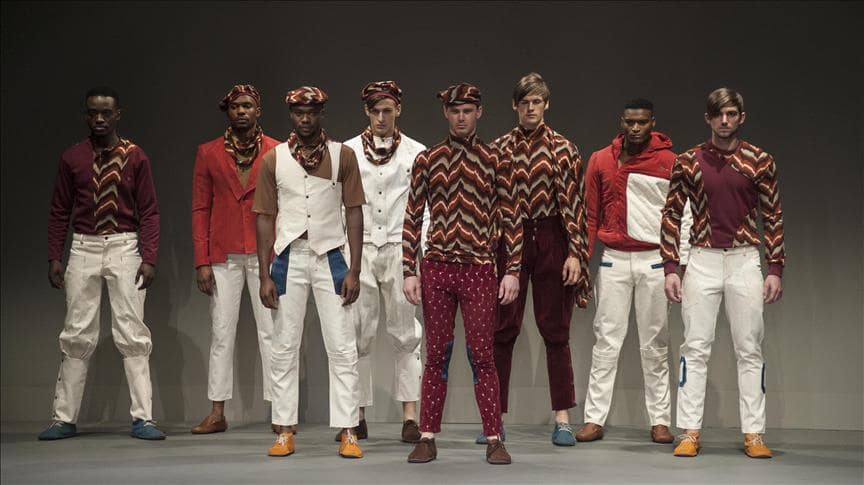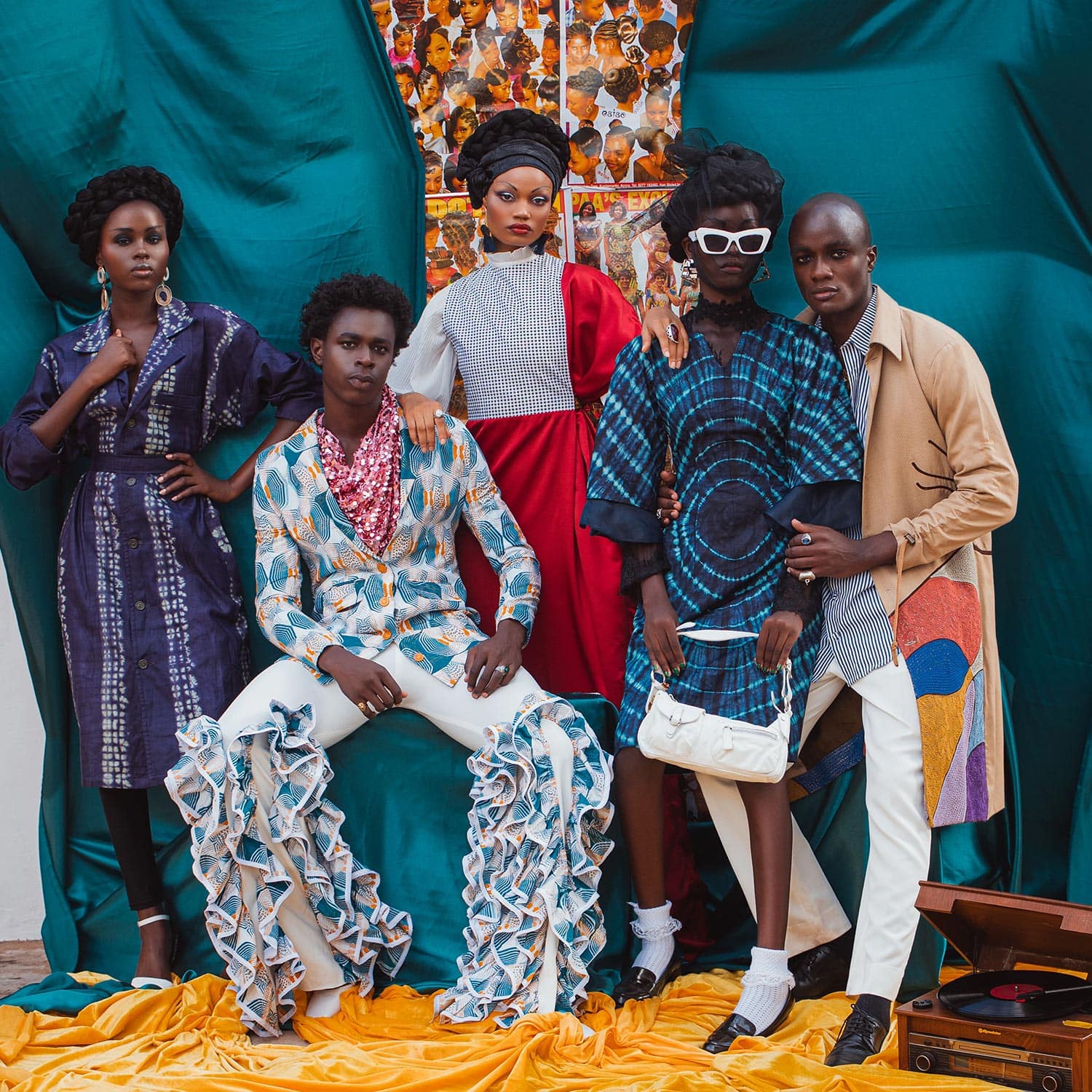
As live fashion events made a disappearance under the Covid glare, the launch of Imandwa Fashion Collection by Rwanda’s Moshions Fashion House has relit the stage and set a blistering pace for the fashion industry.
Imandwa has also sparked debate on the critical but uncomfortable discussion surrounding gender stereotyping and masculinity and their place present traditional and contemporary society.
The November 8 and 9 showcase at Atelier, the newly re-launched space in Kimihurura, Kigali, rekindled the space that audiences knew events to be.
Easing of the pandemic-related lockdowns saw a gradual return of music concerts but Imandwa took to fashion. Of note about this collection is the bringing together of the handicraft of Moses Turahirwa of Moshions, who designs outfits inspired by traditional and ancient art and designs. Right from Umwitero, the traditional wearable robe, complimented with entwined beadwork from the Imigongo, an ancient art form, into various finishes.
Cedric Mizero of Amizero Designs sparked debate especially for his unique makes; of abstract craft inspired by life and nature themes like the environment, space, and the wild, which he believes speak to generations.
This year’s collection follows their first collaboration last year where they produced the Zero-Waste Jacket, a long-sleeved stylish unisex outfit designed from recycled remains of leftover cloths pieces.
Striking difference Unlike the typical fashion events where models graced the runways, Imandwa is a fixed exhibition, of live fashion models posing amidst traditionally crafted and preassembled fore and backgrounds, which occupy Atelier’s upper space.
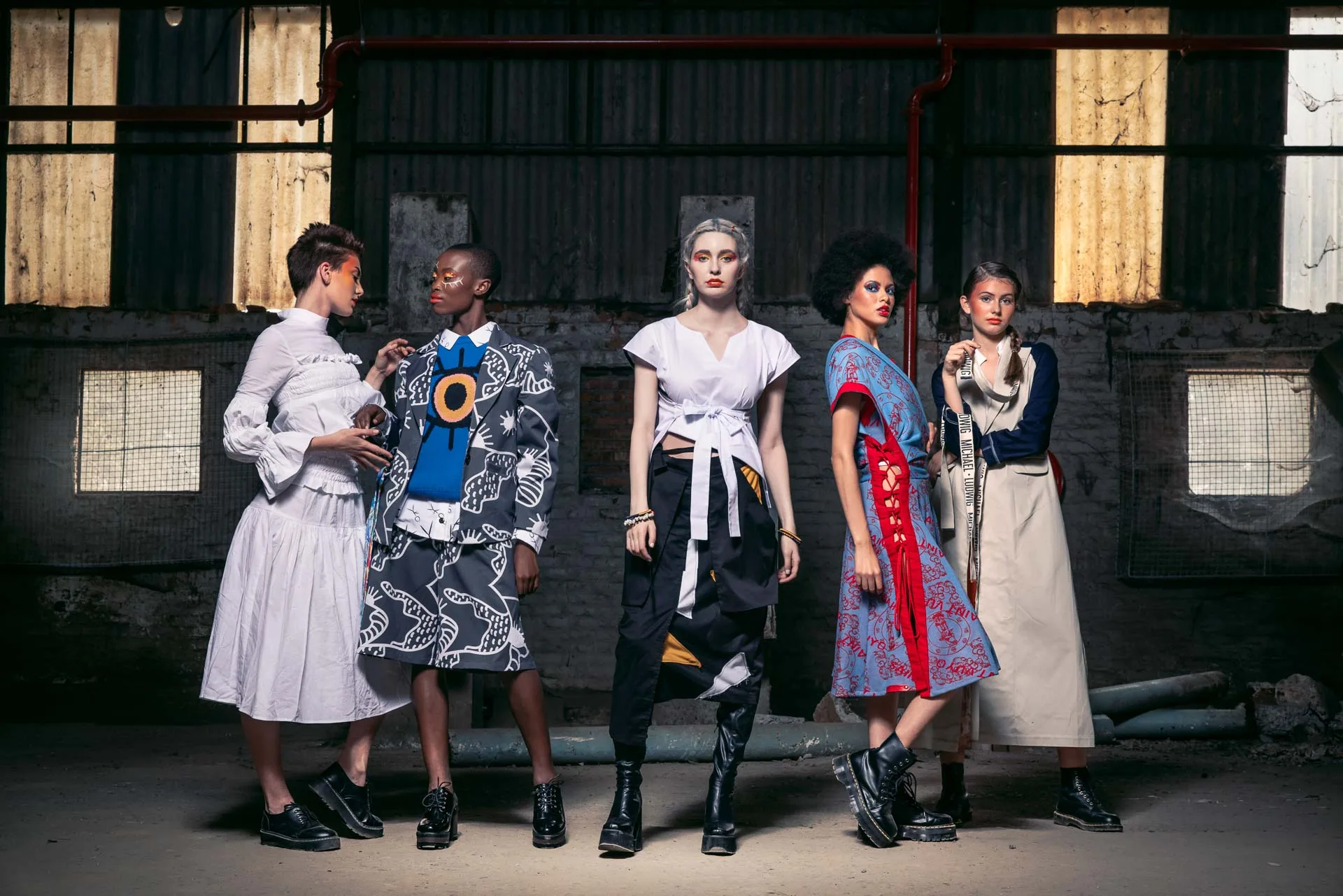
A lively curated tour guide by the designers themselves takes the audience through their creations. Male models dressed in jackets, shirts, and shorts, made mostly from wool, and silk. The outfits sport partially hand-dyed baselines along with the trousers. To add sparkle, they are ornamented with tailored hand-beaded embroidery of traditionally shaped craft. The outfit is supplemented with the Umwitero, a light silky robe that is wrapped from the shoulder, chest to waist.
The showcase is backed by well-crafted traditional sets, of a different make. One has bean ornaments, another stands amidst hundreds of bricks. Yet another in between clay pottery, while the last two models emerge from what seems like a grass-thatched African village hut.
Gender stereotypes Imandwa brings to fore tradition. Even in their past collections, there has been a running theme to address gender stereotyping, with masculinity at the fore.
The male models, clad in African masks designed to emulate Rwandan faces of Amasunzu, an ancient hairstyle, emerge from the background and stand. For a few minutes, they look straight up, then slowly take off the mask, pose a little more before returning to their hideouts or safe spaces.
Content courtesy of East African & Nairobi Fashion Hub
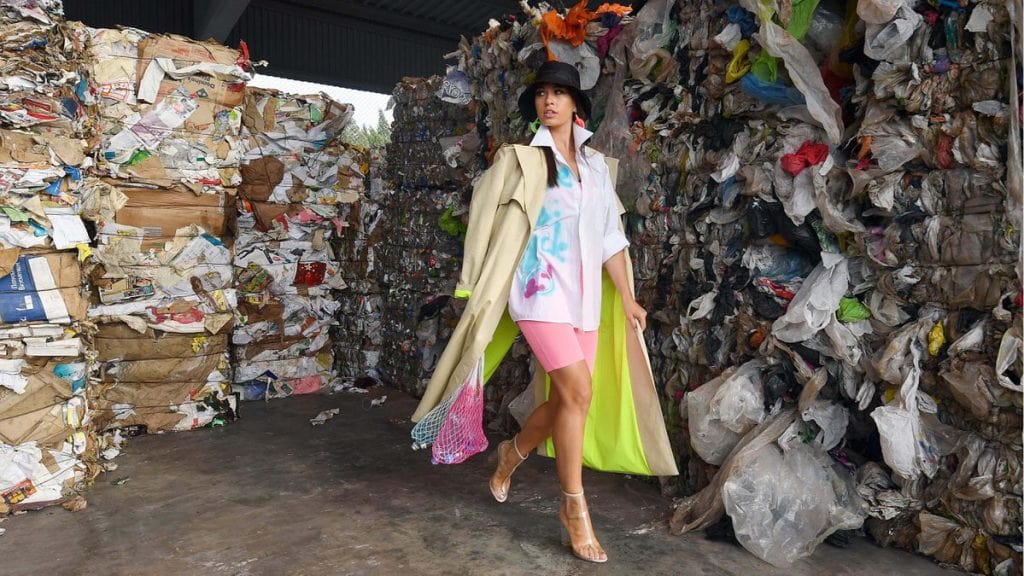
Clothing, especially from fast fashion, is a major contributor to global warming and pollution. Mountains of discarded garments end up in West Africa. The $2.7-trillion fashion industry is one of the largest, most resource-intensive sectors in the global economy, and it has a devastating impact on our environment.
The extraordinary success of “fast fashion” giants like H&M, Zara, and Forever 21 stems from their ability to produce a massive amount of clothing billions of garments a year in the cheapest and quickest manner possible. An article of clothing often travels through dozens of countries and hundreds of hands and ends up being worn only a few times.
Consider the statistics:
A single cotton shirt or ‘eco-friendly’ cloth grocery bag requires 2,700 liters of water to produce.
The fashion industry produces approximately one-third of all microplastics found in the ocean.
Global cotton production is estimated to produce 220 million tons of CO2 emissions each year. Experts say the industry accounts for 10% of greenhouse gas emissions. Workers mostly women earn low wages.
The average consumer buys 60% more clothing than 15 years ago.
Fast-fashion choices are ending up in landfills.
These numbers, as dire as they are, account for only the production half of the story.
What happens when these clothes are no longer of use or no longer “in style”? The Council for Textile Recycling reports that the average American throws away between 70 and 81 pounds (30-36 kg) of clothing and other textiles annually. Globally, 17 million tonnes of clothes go to landfills mostly in the Global South.
Although many people believe that donating clothes is environmentally friendly, according to the U.S. Environmental Protection Agency, 84% of all clothing eventually ended up in landfills or incinerators in 2012, even if they were donated. Not only are fast-fashion choices of the Global North ending up in landfills, but they are also often traveling thousands of miles and creating tonnes of CO2 to get there.
Ghana in West Africa is a common dumping ground.
A common dumping ground for discarded and unwanted cheap clothing is in West Africa. Accra, the capital of Ghana, receives approximately 15 million used garments per week, or 70 tonnes per day, of which approximately 40% are of such low quality they go immediately to the landfill.
The remainder is sent to be sold in one of the largest garment markets in West Africa Kantamanto Market. It is important to note that Accra’s landfills are already almost entirely full, and the country is struggling with its own internal waste management issues.
In Ghana, about 12,710 tons of solid waste is generated every day, and only 10% of that is collected and disposed of at designated dumping sites. Waste pickers who spend the day picking trash and managing the landfill’s recycling and sorting work under dangerous conditions. They account for a significant portion of the recyclables sorting and waste management in Ghana.
Johnson Doe, President of the Kpone Landfill Waste Pickers Association, is one of the hundreds of waste pickers who spend their days in Accra’s largest landfills. He sorts trash and pulls recyclables from the massive mountains of garbage. He also spends time training and organizing waste pickers to demand fair wages and healthcare.
“In Ghana, there is no law that guides waste pickers,” Doe said. “The recycling of waste, the management of waste, we know a lot. So we decided to organize ourselves seven years ago. We want to be recognized by the community, recognized by the government, and we want to be involved in the decision-making to protect ourselves.”
Doe said it is difficult to sort so much fabric. “Clothing waste is one of the major problems we faced at the landfill because it takes more space and when it is mixed up with the waste, we find it difficult to find and salvage the recyclables.”
Our clothing choices are no longer sustainable for the environment.
The garment markets in Accra are feeling the impact of too many clothes. According to OR Foundation, which has been studying Kantamanto Market for more than a decade, “the Global North is relying on Ghana to take part in a waste management strategy necessitated by relentless overproduction and overconsumption.”
Although many citizens in Accra rely on these clothing distribution sites for income, the broader impact on the community and the country is significant. The overflowing landfills pollute water supplies, produce constant smoke, and generate risky, low-wage jobs.
“This isn’t sustainable anymore,” said Dr. Katherine Duffy, a senior lecturer at Glasgow University. “The most sustainable clothes that we have are the ones we already own. If we can start thinking about care, maintenance, longevity, and how we treat those garments, then we are already starting to think in a more sustainable fashion.”
Duffy recommended ways to think differently about clothing. “Consumers at the moment have so much readily available information about the problems associated with high demand for new clothing, combined with the global trend of the ever-decreasing lifespan of garments and also the environment and social impact of those behaviors,” she said
“But I’m also excited by some of the new behaviors that are starting to emerge. We need to focus on the four ‘R’s’ repair, resale, reuse, and rental. These options are really a way for us to think about how we engage with our items as well as the care and attention we want to place on the garment and how we can preserve it for its next life.”
The fast fashion industry has boomed tremendously in recent years – with Western countries leading the world in consumption and secondhand clothing exports, which are clogging developing countries and landfills with used clothing.
Fast fashion aims to provide consumers with cheap, fashionable garments that are produced quickly and up-to-date on high-fashion trends, often at the expense of laborers and the environment. While social media has certainly accelerated the trend cycle and given consumers increased access to low-priced, fleeting clothing, American overconsumption is not a new fad. It’s been around for decades, and it’s been inching the world closer to irreversible climate damage as Americans donate their clothing and buy more at increasing rates.
A major point of contention at the United Nations Climate Conference which comes to an end on Friday in Glasgow, Scotland – is the divide between wealthy and developing countries. And just as there is an increasing divide between countries that became rich from fossil fuels powering their economies and poor countries being told those fuels are now too dangerous for the planet, the fast fashion industry is exposing a chasm between wealthy countries exporting used clothing and developing countries becoming textile dumping grounds.
Currently, the U.S. leads the world in secondhand clothing exports. In 2018, the U.S. exported nearly 719 million kilograms (1.58 billion pounds) in secondhand clothing, over 200 million kg higher than its runner-up, Germany. These exports end up in secondhand markets around the world, particularly in the Global South, and often at a rate and volume higher than its recipients can handle.
This problem is especially pronounced across Africa, which counts six of the top 20 countries for secondhand clothing imports – Kenya, Angola, Tunisia, Ghana, Tanzania, and Uganda – and South Asia, where Pakistan and India receive the highest and second-highest volume of secondhand clothes worldwide.
Specifically in Africa, secondhand clothing from Western countries clogs local markets and landfills. The textiles travel from retail secondhand stores to private third parties and containers and are eventually sold to overseas entities, which upcycle or revamp the clothes before reselling them according to Sarah Bibbey, the co-founder and acting director of Make Fashion Clean, a non-profit organization working to make denim consumption more sustainable globally.
In Ghana, these clothes which are called Obroni Wawu in the Akan language, or “Dead White Man’s Clothes” are purchased in bales by market traders who do not know what is in them for $25 to $500 each before being repaired and revamped as necessary and eventually making their way to Ghanian secondhand markets. However, the increasingly poor quality of fast fashion clothing makes it difficult for upcycles (people who revamp and recycle used clothing) to give these clothes a new life, forcing them to be discarded at landfills which, in turn, has detrimental impacts on the local environment.
“Our landfills (in the U.S.) are equipped in such a way that they can process chemicals and they can kind of be contained whereas in other countries, including Ghana, it’s not the same level of infrastructure around the landfill,” Bibbey noted.
In terms of deciding where the clothes go after Americans discard them, power dynamics and colonial histories play a role in where secondhand clothes are diverted to.
“Any country that is […] a formerly colonized country, or country that’s not a global superpower, is going to be more vulnerable to clothing dumping in general,” Bibbey said. “So any country that we know of is going to be more vulnerable to that just because the political power that they have in the global arena is not the same as the political power the U.S. has in the global arena – so that’s the most important thing, I think.”
While resistance to Western clothing dumping has taken root in East Africa, the U.S. has leveraged its global influence and financial aid to ensure that it can still export secondhand clothes to African markets.
In 2017, the East African countries of Rwanda, Kenya, Uganda, Tanzania, South Sudan, and Burundi tried to phase out imports of secondhand clothing and shoes because of the way they undermined domestic efforts to develop their own textile industries. The countries sought to ban these imports entirely by 2019.
However, in March of 2017, the Office of the United States Trade Representative threatened to remove four of these six East African countries from the Africa Growth and Opportunity Act, a preferential trade deal intended to lift the trade and economic growth across sub-Saharan Africa. Burundi and South Sudan had already been expelled from the trade deal under accusations of state violence.
A combination of factors makes the U.S. a hotbed for fast fashion consumption above consumers in other wealthy countries. While Americans of all income levels contribute to the fast-fashion crisis, Charlotte Tate – the Labor Justice Campaigns director for Green America, a U.S.-based nonprofit organization that promotes ethical consumption points to America’s model of capitalism and wage stagnation as some of the factors driving American overconsumption.
“I think one thing that’s unique to American capitalism is how much we prioritize working to make more money and then you have more money to spend,” she said. “And another factor to consider is fast fashion is much cheaper than higher-quality goods. When you look at wages over the past few decades, they’ve really stagnated. And as Americans have become more productive, the wealth of productivity hasn’t been distributed evenly. In that case, you know, it would be really challenging if you’re not making enough money to make ends meet to then also buy higher quality clothes.”
But consumers that don’t have the means to buy higher-quality goods are not the only group lining up at fast fashion stores. Americans of all income levels consume fast fashion, and higher-priced clothes don’t necessarily equate to more sustainably, ethically produced clothes.
Bibbey also highlights the culture around clothing donations as part of what fuels overconsumption and clothing dumping in the U.S., as consumers buy too much with the idea of being able to donate their clothes later.
“People might hear that their clothes ended up somewhere and they might think that that’s always 100% a good thing, just because there’s that mindset of American saviorism that we have here,” Bibbey said. “We get the idea that that’s a good thing, even when we see in reality it’s putting local artisans and local clothing makers out of business because they’re competing in a sense with this influx of secondhand clothes.”
But Tate says that American consumers are not the principal blame for the fast-fashion dumping crisis.
“I think that corporations know that they’re producing cheap clothing that won’t last long and that often can’t be reused – and they’ve known it for a while,” she said. “So I would say a bulk of the responsibility falls on corporations and our practices, and then also to some extent it would fall on our government that has the power to regulate, that maybe hasn’t.”
Because of the unique intensity at which Americans consume and dump clothes – with news reports citing a fivefold increase in the amount of clothing Americans have purchased over the past three decades and an average of only seven uses per item – the U.S. requires unique solutions to the global fast-fashion crisis.
With the U.N. Climate Conference coming to a close, coming up with solutions to these pressing environmental problems is a top priority, advocates say. And, just as the blame for this crisis cannot fall solely on consumers, environmental activists say solutions need to be sought beyond the consumer level, too.
On a smaller scale, Bibbey points to upcycling both in the U.S. and in developing countries as a way to mitigate the impacts of fast fashion on the environment, highlighting Make Fashion Clean’s partnership with the Ghana-based MFI Foundation, a nonprofit dedicated to upcycling clothes in partnership with local artisans in Ghana, as an example of this. But they say the more global, overarching solutions still need to be “studied” and “examined.”
“Consumers have a lot of power, so while they’re not directly responsible for some of the problems facing society today, they do have a lot of power to change market demands and to change their shopping habits,” Tate said. “We have found that when consumers speak and reach directly to corporations, they do change their practices. Collective action is very powerful. So, if we all act and change our practices, we do have the power to reform.”
South African fashion retailer TFG (TFGJ.J) wants to locally manufacture 30 million pieces of clothing a year within four years as it increasingly turns away from global supply chains, its CEO said after the company swung to a half-year headline profit.
South African retailers, some of which are still heavily reliant on offshore manufacturing, are grappling with delays in international supply chains which have been compounded by a cyber attack at freight logistics operator Transnet that brought local ports and rail to a standstill.
The owner of British womenswear brands Hobbs and Whistles and the local Foschini clothing brand has fared better than its competitors as it has been bringing production closer to home over the past five years by expanding its own factories and buying new ones.
Today, TFG, formerly known as The Foschini Group, sources 72% of its clothes locally, with offshore accounting for 28%, down from just over 40% four years ago, most of it from China.
TFG CEO Anthony Thunström told analysts that the 30 million units it is aiming for by the company’s 2026 financial year will be manufactured on a quick turnaround basis to improve lead times. It is also increasingly looking to extend its quick turnaround manufacturing capabilities for its non-clothing lines.
“All of these quick response advantages were clearly important in the past but never more relevant than now, Thunström said, citing disruption in far East supply chains and shipping rates up 400% from a year ago.
The clothes, homeware, and jewelry retailer is planning to invest a further 575 million rand ($37.68 million) over the next three to five years to build local manufacturing capability.
TFG swung to a headline earnings per share (HEPS) profit of 393.4 cents in the six months ended Sept. 30, up from a loss of 83.3 cents in the same period last year, and grew sales by 51.8% to 19 billion rand as it recovered from COVID-19 restrictions which forced store closures across its markets.
It declared an interim payout of 170 cents per share after pausing dividends last year.
When Lalela Mswane glided across a Cape Town stage in a red satin ball gown at the finals of the Miss South Africa pageant in October, she moved with the poise of someone who commanded her country’s attention.
But in the days after the 24-year-old law student and model was crowned, that gaze took on a sharp edge.
Pro-Palestine activists began demanding she boycott the Dec. 12 Miss Universe pageant because it will be held in Israel. In mid-November, the South African government withdrew its support for Ms. Mswane’s entry, so she will compete without her country’s backing.
“The atrocities committed by Israel against Palestinians are well documented and Government, as the legitimate representative of the people of South Africa, cannot in good conscience associate itself with such,” wrote the Department of Sports, Arts, and Culture in a statement.
The pageant organizers, meanwhile, soldiered on, stating that Ms. Mswane “would not be bullied” into boycotting the pageant. (The Miss South Africa organization and Ms. Mswane did not respond to requests for comments for this story.)
[NEW] Miss South Africa organisers are facing increasing pressure to boycott the Miss Universe pageant in Israel.https://t.co/8CzNMVoLW0
The Miss Universe competition may seem an unusual place for a government to stake a major geopolitical stand. But in South Africa, activists say the anti-apartheid movement taught them that the struggle against injustice takes place everywhere, from parliamentary debates and mass marches to boycotts of sports games, grapefruits, and yes, even the stage of a beauty pageant.
“It was not our wisdom and strength as South Africans that ultimately delivered us from apartheid – it was the support we had from the international community that backed us up,” says Duduzile Mahlangu-Masango, a board member of Africa4Palestine, formerly known as the Boycott Divestment Sanctions (BDS) movement, which advocates in support of Palestinian rights in South Africa.
“We learned then that when you speak the big language of politics, you don’t bring everyone along. But when you talk about things ordinary people care about, you bring the issue closer to them.”
‘Nothing Beautiful about Occupation’: Mandela’s Grandson Calls for Boycott of Miss Universe Pageant in Israel https://t.co/TiB0nUU1BP via @PalestineChron
For those like Ms. Mahlangu-Masango, that kind of activism has a long history. For decades, boycotts and cultural isolation were major weapons in the war against apartheid.
In the 1960s and ‘70s, activists fought to have South Africa barred from major sporting events like the Olympics and World Cup, and advocated for Europeans and Americans to stop buying South African fruit and cigarettes. The liberation movement asked international musicians to boycott South Africa.
In 1976, after a massacre of schoolchildren in Soweto, near Johannesburg, turned the world’s attention to South Africa’s atrocities, nine countries announced they would boycott the Miss World pageant for allowing South Africa to participate. A second boycott followed the next year, forcing the organizers to ban South Africa.
“These calls to isolate South Africa culturally were very important” because they reinforced the country’s exclusion from the global community, says Ottilia Maunganidze, head of special projects at the Institute for Security Studies, a South African think tank.
Fast forward 45 years and activists are using the same arsenal of tools to try to isolate Israel, she says.
The calls for Ms. Mswane to boycott Miss Universe started almost as soon as the crown was placed on her head in mid-October. Activists staged a protest at the Miss South Africa offices in Johannesburg, and the hashtag #NotMyMissSA began trending on social media. Its supporters, including Nelson Mandela’s grandson, Zwelivelile “Mandla” Mandela, called on the beauty queen to draw parallels between Israel’s occupation of Palestinian lands and the dispossession and violence committed against Black South Africans under apartheid.
“We must persist in isolating Apartheid Israel in the same way that we isolated Apartheid South Africa,” wrote Mr. Mandela on Instagram.
For many former anti-apartheid activists, including those now in government here, the question of Israel and Palestine is a particularly evocative one because it calls up vivid memories of their own history.
“The first time I set foot in Palestine, it was like setting foot into the world I grew up in,” says Ms. Mahlangu-Masango, who was raised during the dying years of apartheid in the 1970s and ‘80s. “I really cannot understand a South African who chooses to forget the history of where we come from.”
For supporters of Ms. Mswane, however, the anger at her misses the mark.
“Lalela will be a role model to young women – not just across the country, but across the African continent,” wrote Stephanie Weil, CEO of the Miss South Africa organization, in a statement on Instagram. “Anyone who wants to rob Lalela of her moment in the spotlight is unkind and short-sighted.” Ms. Mswane herself has not spoken publicly about the controversy over her competition.
Meanwhile, former Greek delegate Rafaela Plastira announced on social media in November that she would boycott the competition in support of Palestinians. (Several days later, the organization in charge of Miss Greece distanced themselves from Ms. Plastira and stated that she was not their delegate.)
“Humanity ABOVE beauty pageants!” she wrote in an Instagram post. Greece is sending Sofia Arapogianni to Israel as the country’s delegate.
Nafsi, the much-anticipated romantic drama premiered on Saturday at the Anga Diamond Plaza and everyone came out in style to celebrate the film’s official release which sold out three theatres. In attendance was the cast of Nafsi, Mumbi Maina, Catherine Kamau, Alfred Munyua, Alex Khayo, Alex Mwakideu, Monique Angelyn Bett, Silayio, and the director Reuben Odanga who brought out their best looks on the red carpet and were joined by other stars, filmmakers and fans.
In Nafsi, Aisha (Mumbi Maina) is unable to conceive after a traumatic childhood experience. Her best friend Shiko (Catherine Kamau) offers to be her surrogate to help save her marriage, a decision that leads to a series of events that threaten their close bond and those around them.
Alfred Munyua who plays Aisha’s husband Sebastian carries some dark secrets that shakes Aisha’s world to the core. The film also stars Raymond Ofula, BET’s top actor Africa runner-up Alex Khayo and first-timers: radio presenter Alex Mwakideu, radio presenter and singer Monique Bett, and singer and former Kora Awards winner Silayio in supporting roles.
When Aisha (Mumbi) is unable to conceive after a traumatic childhood experience, her best friend Shiko (Catherine) @kate_Actress_ offers to be her surrogate to help save her marriage, but they soon find out that everything is easier said than done. #Nafsi#Cannesfilmfestivalpic.twitter.com/rRA6lDJBii
Nafsi is still showing at Anga Diamond Plaza on the following dates:
1. Monday – Thursday – 3:00 pm, 6:50 pm at Diamond Plaza 2. Monday – 8:00 pm, Tuesday and Thursday – 11:30 am, Wednesday – 5:00 pm at Prestige Cinema Nafsi will premiere in Mombasa from 19 November at Nyali Cinemax.
Nafsi is Reuben Odanga’s directorial debut feature, a major shift from the Swahili telenovelas he is popularly known for such as Nira, Nuru, Saida, and Selina.
Odanga also wrote the film, which is a production of his company, Multan Production company.
Highlights from the Runways, Street Style, Backstage, Fashion Parties – Lagos Fashion Week 2021 has been fun-filled and very exciting! Throughout the fashion week, TECNO Camon 18 Premier has been a very helpful companion.
Apart from the lightweight and delicate design of the phone, its flat design makes it easy to fit anywhere; it is simply the best way to capture all the fast-moving action.
The phone comes with an ultra-clear and steady vertical triple camera plus a Stabilized Gimbal feature which adds that professional touch to videos. With 256GB ROM and 8GB RAM, we never ran out of memory space all through the events – No wonder we got the best coverage!
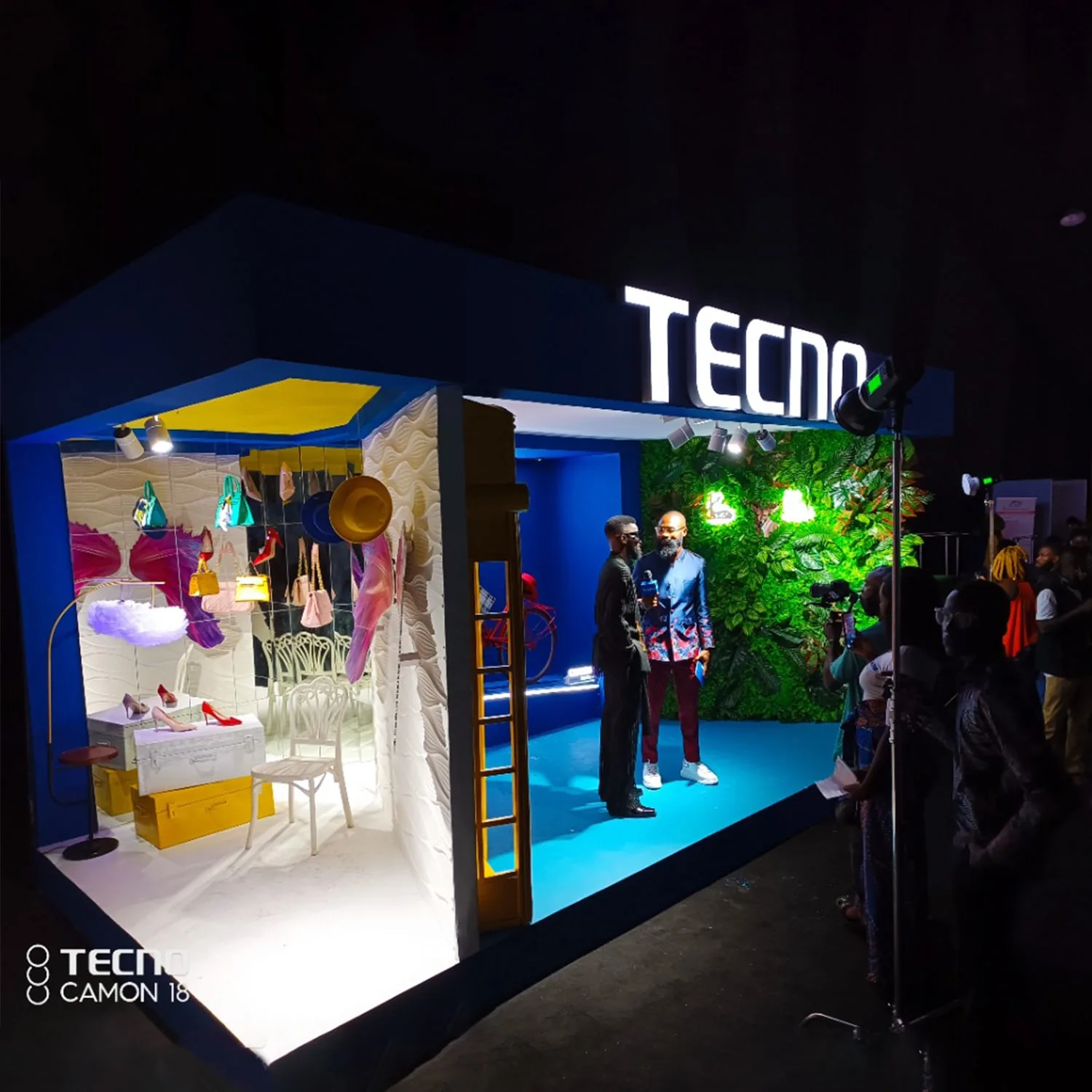
For four years running TECNO has been part of the Lagos Fashion Week family, and this year TECNO was the Official Smartphone Sponsor. As always, TECNO didn’t disappoint as social media was awash with memorable highlights from the TECNO booth at the Lagos Fashion Week.
The Lagos Fashion Week 2021 event had several fashion designers like the KikoRomea, Fia factory, The Sunlight Collection – TwentySix, Tsemaye Binitie, Adama Ndiaye Paris, Assian, XV, Rick Dusi, Odio Mimonet, NKWO, Lohije, Kadiju, JZO, Gugu, Emmy Kasbit, Desiree Iyama, Cynthia Abila, Cute Saint, Awa Miete, Bunmi Olatunji, The Ladymaker, Maxivive, Gozel Green, Austrian Lace, Eki-Orleans, Ugochukwu Monye, Bridget Awosika, Studio One Eighty-Nine, Elie Kuame, Niuku, and many others showing their collections on the runway, and the designs were breathtaking and very creative.
The runway was colorful and just in case you missed it, check out the creative outfits taken with the TECNO CAMON 18 smartphone.
Asides from the runway activities, the TECNO booth was the place to be! The colorful booth was hard to miss as everyone took turns to take beautiful images. The TECNO booth portrayed the transition from old to new, from just being a phone to become more than a smartphone! TECNO is definitely Stopping At Nothing!
Every LFW event, TECNO does not fail to have key industry people like celebrities, fashion influencers, and fans. This year the booth graced the presence of “Shine Your Eye” housemates and other fashion influencers. And of course, fans who stopped by did not leave the booth without gifts from TECNO.
Lagos Fashion week is the home for all fashion lovers, designers, and creative gurus who came out in their numbers, sharing their experiences and talents with all fashion lovers. The 2021 Lagos Fashion Week is over, but the love for Fashion is still in the air!
Content courtesy of TECNO Mobile Camon 8 Series, Lagos Fashion Week & Nairobi Fashion hub
Miss Universe Kenya organization held the 2021 edition finals yesterday night where contestants from all over the country competed for the national crown and at the end of the event finale, Roshanara Ebrahim was crowned the new queen.
Roshanara is 28 years of age and an author, Kenyan television personality, and international model. Not new to the pageantry, Roshanara is former Miss World Kenya 2016 but was stripped of her title following a series of controversies. The stunning beauty began her career as a model at the age of 6. As a professional, she is also a Quantum healing and hypnosis practitioner and meditation instructor.
“My name is Roshanara Ebrahim and the most unique thing about me is my linguistic eloquence, my intention to spread positivity everywhere I go, and my deep and intimate love for humanity”, she started off in the short clip that was shared by Miss Universe Kenya.
“My expectation for Miss Universe is to spread positive change everywhere I go and to make women understand that women have a voice to exercise the full potential of our passions and inspirations”,
Roshanara has become the first Kenyan pageant queen to have won both the Miss World Kenya and Miss Universe Kenya contests. Adding to a list of her achievements, Roshanara is the author of the book Beyond The Darkness – The strategic guide to the new earth. It is based on spirituality, self-help, and a happiness guide that elaborates on deep esoteric concepts with a touch of her life experiences.
The contestants who competed at Miss Universe Kenya 2021 were Roshanara Ebrahim, Deborah Asiko, Maymuna Abdi, Maren Clera, Esther Ochieng, Olivia Njoroge, Charity Wijass, Sheila Agola, Doreen Akinyi, Paskaline Jebet.
“When I win the global pageant, I will uplift and empower my sisters, the ones we have been on this journey with, and together as a team we will inspire women in leadership and take up space in the digital era”.
“I hope to be a global ambassador to the causes close to my heart and leave this world better than I found it. This is my legacy as Miss Universe”,
Roshanara will represent the country at the 70th global Miss Universe competition in Israel in December.
In 2016, Roshanara was stripped of her title as Miss World Kenya after it was cited that there was a breach of code of conduct and contract after details of her personal life emerged online causing a stir. Evelyn Njambi went on to become her successor as Miss World Kenya 2016.
Azziad Nasenya has been nominated in the African Social Star category of America’s E! People’s Choice Awards, 2021, The People’s Choice Awards is American awards show, recognizing people in entertainment, voted online by the public, and fans.
The 21-year-old content creator, radio presenter, actress, and social media bigwig has snagged a People’s Choice Award nod in the African Social Star 2021 category, against other huge African social media stars, Azziad is the only Kenyan and East African among the eight nominees.
Announcing the news on her Instagram, her excitement was palpable, imploring her 1.3 million followers to vote for her.
“We have been nominated. I am humbled and grateful. I thank God and all of you guys for supporting me throughout this whole journey. The support is overwhelming. My people on Twitter, Facebook, and Instagram are doing the most. Thank You!” she poised.
She is pitted against renowned names like Zimbabwe’s Tyra Chikocho, Nigeria’s Falz and The Oddity, South Africa’s Bouimelo ‘Boity’ Thulo, Lasizwe Dambuza, Mihlali Ndamase, and Witney Ramabulana, worth noting, Nasenya is the only Kenyan and East African to be nominated.
Official voting online and Twitter opened on October 27, and it will go until November 17. The nominees will earn 25 points from this.
“The nominee who receives the highest number of valid votes in each category, as determined by the Administrator and as described above, will be deemed the potential winner of the category,” E! People posted on their website.
The Gala for the 2021 E! People’s Choice Award will air on NBC and E! Simultaneously on December 7 at 9 p.m from the Barker Hanger in Santa Monica, California.
voting is open from October 27 and runs through November 17 and one can vote 25 times per category, per day.
In 2020 the category was won by Comedian Elsa Majimbo. The 19-year-old was battling with the likes of Sho Madjozi, Karl Kugelmann, Dimma Umeh, Wian, Lydia Forson, Thuso Mbedu, and Zozi Tunzi for the prestigious award.
Nasenya’s social media presence has grown tremendously since she blew up early last year, with her viral dance to Femi One and Mejja’s Utawezana hit. She has since gone on to host YouTube shows, bag major endorsements, and become an on-air personality.
The Africa Fashion Reception, an annual fashion gala has returned to Ethiopia coinciding with the African Union theme for the year “The AU Year of the Arts, Culture, And Heritage: Levers for Building Africa We Want”.
This 2021 edition was held at the Skylight Hotel in Addis Ababa on October 22, a year after it was suspended because of the COVID -19 pandemic.
“It has been very difficult, I think this is the first time the designers are all coming out after the pandemic,” explains Lexy Mojo–Eyes, president of Legendary Gold, the company organizing the event.
“We were expecting 30 designers from 30 countries, but the pandemic has reduced the number, or some it was either because of COVID protocols, the other was about visa fees as a result of COVID, we are hoping that the future will be brighter for all of us,” says Nkosinatyaso, a designer from South Africa. “For the 15 designers that made it, it was a chance to show the world the beauty of their creativity. Our Africa fashion is very unique unlike overseas and every other culture, so I think we need more platforms where we can show the world what we are made of as Africans.”
However, those who have been in the industry longer say Africa has not yet got the value it deserves from the industry.
“It is about time that African Union supports their own,” says Sant Anzo the director of Arapapa by Santa, a Ugandan Fashion company, The African Development Bank values Africa’s textile and the fashion industry at 1.3 trillion dollars.
Obstacles to its growth include having over 90% of fashion businesses being small to medium scale. They reportedly stagnate because of lack of government support as well as lack of capital, Others fail because of a lack of intellectual property and the high cost of copyright.
Content courtesy of CGTN Africa & Nairobi Fashion Hub
The program is launching a showcase for African designers in a bid to attract investors.
PARIS — The Ethical Fashion Initiative is coming to Paris next season, with events during Paris Fashion Week that it hopes will provide international visibility to African designers and attract investors.
The program, funded and managed by Simone Cipriani, is a flagship initiative of the International Trade Centre, a Geneva-based joint agency of the United Nations and World Trade Organization. What started out as a platform for connecting global lifestyle brands with artisans worldwide has expanded into an accelerator for African brands.
Now Cipriani is ready to take the EFI to the next level, beginning with a launch event on Oct. 30 and 31 in Paris that will include exhibitions, a concert, and round tables with designers Margaux Wong from Burundi and Lukhanyo Mdingi from South Africa, who was one of the joint winners of the Karl Lagerfeld Prize at this year’s LVMH Prize for Young Designers.
The event will be held at the 360 Paris Music Factory in the Goutte d’Or district of Paris, home to several designers who will be hosting workshop visits. The EFI has previously brought designers to events in Italy such as Vogue Fashion’s Night Out, Pitti Uomo, and Altaroma.
“We are going to Paris because it’s a progression,” Cipriani told WWD. “Paris is very open and very close to African fashion traditionally, and Paris has also a very active diaspora with a lot of good designers and with a lot of investors who can invest in these designers.”
Cipriani wants to transform the accelerator into a blended finance facility to mobilize investment from inside the African continent, but also from Europe. “Paris is the ideal place to do that,” he reasoned.
Some of the brands in the accelerator are already in discussions with facilities in Africa for investments ranging from 500,000 euros to 1.5 million euros, Cipriani reported. These typically impact investors or so-called “patient” investors, he added, noting the high cost of working capital financing in Sub-Saharan Africa.
For investors outside the African continent, there are potential returns that go beyond the required return for capital invested, Cipriani noted, citing the example of pluvial cotton grown in Burkina Faso, which has a lower impact on the environment.
“We have this whole value chain in Burkina Faso, where we make fabric out of organic cotton, where we make some garments, there are designers, and so on. So investing in these designers is also a way to get into a decarbonized supply chain, it’s also a way to get in a form of fashion which is consistent with the problems of COP26,” he said. “It’s an investment in ESG, more than a specific brand.”
Founded in 2009, the EFI offers a bridge between brands including Vivienne Westwood, Loewe, and Adidas, and some 10,000 artisans in countries including Burkina Faso, Mali, Kenya, Ethiopia, Uganda, DRC, Haiti, and parts of central Asia, though its program in Afghanistan is currently on hold due to the political turmoil in the country.
For Cipriani, investing in fashion design is also a good way to build social capital in African countries, where creative businesses such as fashion, music, and modeling enjoy huge followings on social networks. Above all, he wants to launch a set of events at Paris Fashion Week that will present African brands as international, rather than niche, labels.
Following a pandemic-induced hiatus, Lagos Fashion Week is finally set to return from October 27th-October 30th at the Lagos Fashion Week Tents, Federal Palace Hotel.
#TheFutureStartsNow is the defining theme for this year’s edition which speaks to the need for a global fashion industry that preserves and conserves the environment and values people over profit.
The future of fashion for the next decade and for many more to come starts now. It begins with a community of rising talents springing up across the continent, and with a commitment from our ecosystem to adopt a functional fashion system that delivers environmental, societal, and economic solutions that are beneficial for all.
To kick-off the season, we spent time with designers Cynthia Abila, Pepperow, Studio IMO, Elfreda, Maliko, TJ Who, Babayo, GETO, and Vicnate, alongside their muses Angel Obasi, Saleema, Deola Adebiyi, Wole Babalola, and Abiola Sonaike, who shared with us, their imaginings on the future of fashion in Africa.
“The Future of Fashion to me means smart production/consumption, sustainability, innovation and technology’ – Omafume Niemogha
“The Future of Fashion to me is inclusivity; Everyone gets a seat at the table”- Samatha Adebayo
“The Future of Fashion is in the metaverse for me, a confluence of physical and virtual fashion” – Edwin Okolo
“The Future of Fashion is wearable technology: Smart and intelligent textiles/footwear and garments are fast becoming the new innovation” – Cynthia Abila
While Lagos Fashion Week returns to the physical tents at Federal Palace, this year’s edition will embrace a hybrid model with digital shows highlighting rising talents from across Africa as well as featuring a distinct exhibition of the selected designers’ collections.
Fashion Business Series, a platform designed to facilitate conversations with key stakeholders in the industry will hold digitally on 27th October 2021. Speakers include Aissa Dione, Busayo Olupaona, Chid Liberty, George Gachara, Laureen Kouassi-Olsson, Mariama Camara, Roberta Annan, Tammy Tinker, and Viola Labi amongst others.
This year, as part of our ongoing commitment, to facilitate new conversations and exchange of ideas surrounding sustainability in fashion in Nigeria and Africa, Lagos Fashion Week is teaming up with Fru Girls and PopSwap-a new digital community for the Global Fashion Exchange to host an inaugural digitally-enabled Swap Shop experience in Lagos which will take place from the 28th-30th of October.
Putting into practice the foundations of a circular economy that prioritizes reuse, reduce & recycle, Lagos Fashion Week will facilitate the exchange of pre-owned items through swapping, sharing, donating, and resale.
#LFW2021 Line-Up
● Fashion Business Series: 27th October 2021
● Digital & Offsite Shows: 28th October 2021
● Physical Runway Shows: 29th-30th October 2021
The countdown is officially on! It’s 7 days to go and the city of Lagos will once again come alive as Lagos Fashion Week returns in full force.