Thursday 7th of May 2026

Nairobi, Kenya

What to Expect at AFI Fashion Week Johannesburg 2021

AFI stated that this year’s theme ‘Be You, Be Truly African’ will celebrate all the unique and multifaceted expressions of being African in a globalized world.

https://www.instagram.com/p/CVDZybvIvpD/?utm_source=ig_embed

“Incoming together, after a long period of isolation, we are presenting a renewed outlook on who we are and what makes us unique. Driven by lifestyle and fashion, the emerging and established designers will showcase their latest collections, having reimagined new trends to complement the new way of living,” AFI said.

Guests can expect an expressive blend of fashion, cuisine, cocktails, live music, and a 360-degree view of the city of Johannesburg. In-person and virtual guests can Shop the Runway with House of Nala, which has curated offerings from pan-African ready-to-wear and luxury brands. The Shop the Runway experience will travel to Durban and Cape Town, bringing fashion enthusiasts of African luxury fashion to their cities.

Growing on the success of last year’s event, AFI will again partner with Anglo American Platinum to showcase this year’s PlatAfrica Jewellery Design and Manufacture Competition finalists as part of AFI Fashion Week Joburg 2021.

https://www.instagram.com/p/CVLDrGUoAZZ/?utm_source=ig_embed

To book your spot online or in-person Click Here tickets are for sale and extremely limited.

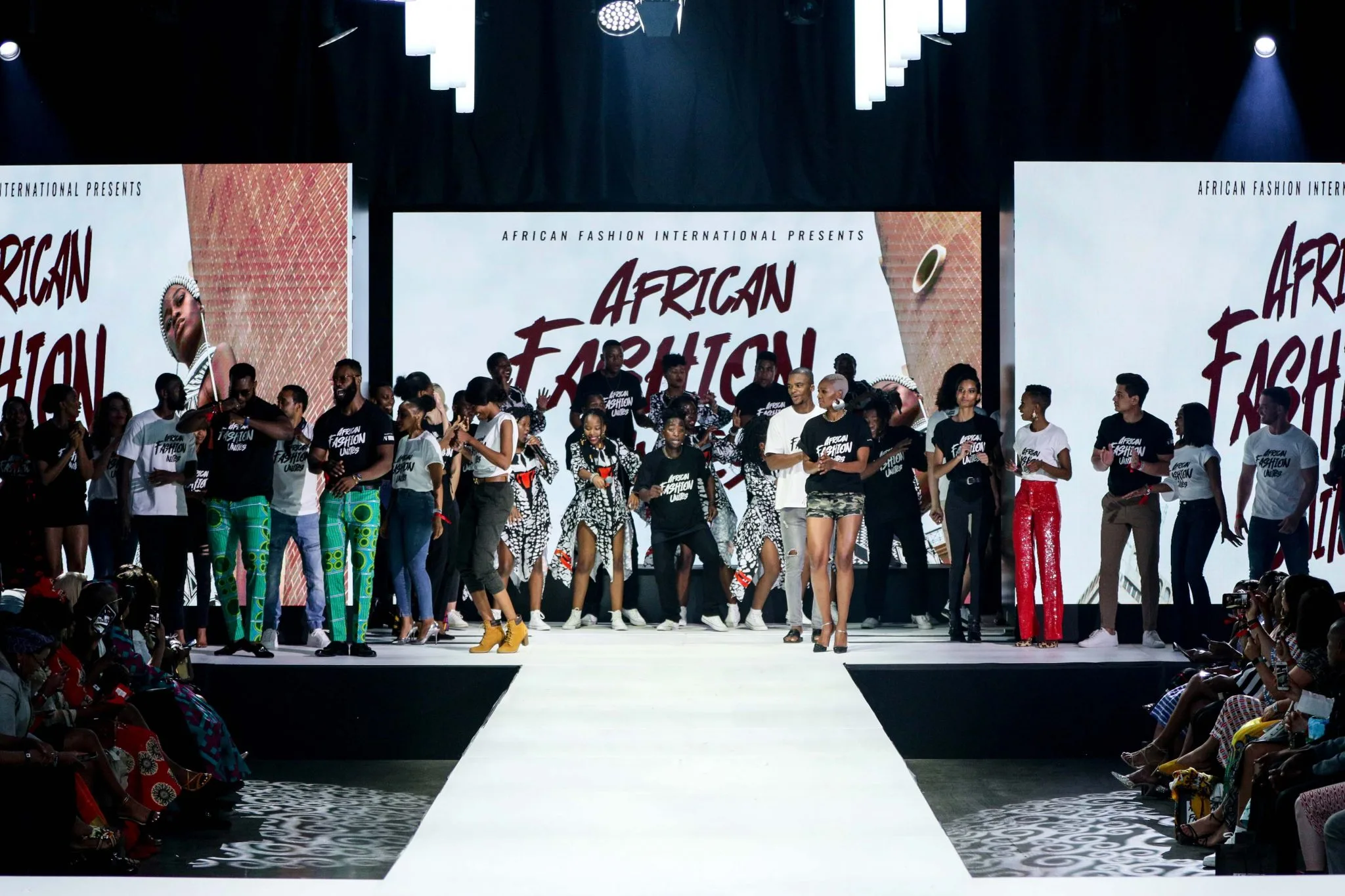
Themed Be you, be truly African, this year’s hybrid showcase of African fashion by African Fashion International takes place from October 28 to 30 2021 at the recently launched Alto 234 – Africa’s highest urban bar on the 41st floor of the Leonardo building in Sandton, with magnificent views of Johannesburg.

AFI is renowned for hosting world-class fashion and lifestyle experiences, and guests can expect an expressive blend of fashion, cuisine, cocktails, live music, and a 360-degree view of the city of Joburg.

In-person and virtual guests can Shop the Runway with House of Nala, featuring curated offerings from pan-African ready-to-wear and luxury brands. The Shop the Runway Experience will travel to Durban and Cape Town, making African luxury fashion more accessible.

Emerging and established designers will showcase their latest collections, with a mission to reimagine lifestyles for our new ways of being.

https://www.instagram.com/p/CVS52C1owqe/?utm_source=ig_embed

The final showcase is presented by David Tlale on Saturday, October 30.

AFI Fastrack is the national graduate fashion platform offered by African Fashion International. This developmental platform provides emerging designers with a marketing opportunity, showcasing a capsule collection at AFI fashion events with full production infrastructure.

An annual selection of five to 12 finalists is paired with an established designer mentor as they compete in a three-episode reality TV series.

The winner is awarded the title of Young Designer of the Year, start-up capital to invest in their business and a retail opportunity with AFI’s e-commerce platform and House of Nala Concept Store.

The young emerging designers on the AFI Fastrack program will showcase their final collections on day two of fashion week.

https://www.instagram.com/p/CUoxFIfIZ3N/?utm_source=ig_embed

PlatAfrica is again partnering with AFI, to showcase this year’s finalists’ pieces as part of 2021 Joburg Fashion Week 2021. The winners in the student/apprentice and professional categories, as well as the popular People’s Choice Award, will be announced during the virtual showcase event on October 29.

Content courtesy of African fashion international & Nairobi fashion hub 

Anji Degante Is Using Her Tampa-based Clothing Business To Help Orphaned Children In Kenya.

A Tampa business accepted into the 5508 Small Business Incubator Program is using the opportunity to make an impact beyond the Bay area.

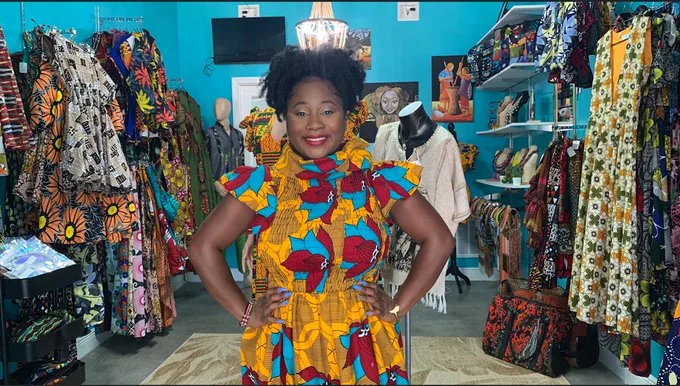
​Anji Degante, the owner of Accent Styles Boutique, has been inspired ever since her 2014 trip to Kenya. She launched her African clothing business three years ago and now a portion of those proceeds benefit orphan children in that community.

“The Maasai tribe that I lived with were extremely traditional,” she said. “If they did not make it they did not wear it,” Degante says she learned a lot about Kenyan culture while living there.

“I’ve seen a lot of things that I wanted to improve,” she said. I thought that I could change Kenya but I feel like Kenya changed me. It made me a better person. It made me more conscious. It made me take a look into sustainable fashion. It made me look at ways to create cultural retention programs.”

After two years in the small business incubator program, Tampa Hillsborough Executive Action Plan CEO Derrick Blue says Degante’s business has become a bankable small business.

https://twitter.com/FadiaTVNews/status/1447299129579917314?s=20

“We have a lot of success stories from individuals that started off with laptops as coworkers in one of our spaces to now being seven-figure companies,” Blue said.

As she continues to be a success, Degante has been giving back to the community that influenced her brand.

A portion of the proceeds at her shop is helping more than 300 children at a Kenyan orphanage with their education, uniforms, and food. Degante says she felt compelled to step in and help when the orphanage’s leader passed away.

She also opened a library in Nairobi, Kenya with books donated from St. Petersburg and Tampa.

“They are definitely like my adopted children I absolutely love them,” Degante said.  She credits her success both locally and abroad to the opportunity she has with 5508.

“One of the things that I love about the rent being so affordable is that I’m able to buy more product, I’m able to hire more employees and I’m able to donate so much of my time,” she said.

Time and effort she says are fueling our local economy while providing resources and a future for orphans in that Kenyan village.

Content courtesy of Spectrum Bay News 9 & Nairobi fashion hub


Ozwald Boateng The Black Fashion Designer Who Became The Youngest Tailor on Savile Row

The designer dressed the cast of hit films – The Matrix Reloaded, Lock Stock and Two Smoking Barrels, Black Panther, and Bad Boys 2 London is considered one of the most iconic fashion capitals in the world, with some of the biggest fashion designers hailing from the UK.

From Alexander McQueen to Stella McCartney, high-end fashion is sewn into the fabric of city life but there are some designers who have blazed the trail and made their mark in spaces where Black people are rarely seen.

At the age of 28, a Muswell Hill-born designer decided to open up shop on Vigo Street at the end of the world-famous and prestigious Savile Row.

Ozwald Boateng became the youngest tailor to open a store on London’s sartorial street and went on to dress the likes of Rolling Stones’ Mick Jagger, Led Zeppelin’s Jimmy Paige, and stars of Sex and The City to name a few.

Born to Ghanaian parents, Ozwald used his mother’s sewing machine to design his first collection, but before pursuing fashion, the Londoner studied computing and eventually dropped out to enroll at Southgate College.

His career then took off in his 20s after successfully selling his clothing to a menswear store in Covent Garden, after dressing celebrities and musicians, Ozwald went on to open up a store on Portobello Road with his “Structured Classics”, which he created in line with classic Savile Row Tailoring.

In 1994, the Londoner achieved his first groundbreaking move by becoming the first tailor to hold a catwalk show during Paris Fashion Week as he said, “I knew that if I did a catwalk show in Paris as a tailor I could revolutionize tailoring”.

Months later, Ozwald added another first to his accolades by becoming the youngest tailor to set up shop on Vigo Street at the end of Savile Row, the epicenter of suit tailoring.

The sartorial genius incorporated color from his Ghanaian heritage fused with the distinct British tailoring and eventually opened his Headquarters in Savile Row and a flagship store in 2007.

The accolades for his work began to flood in as the tailor received the Award for Best Menswear Designer at the Trophées de la Mode in Paris and credits in Vanity Fair for “leading the way in British men’s tailoring”. In 2002, the fashion designer won Best Menswear Designer at the British Fashion Awards.

Ozwald’s success drew the attention of Hollywood A-listers and the tailor went on to dress the cast of films such as The Matrix Reloaded, Lock Stock and Two Smoking Barrels, Black Panther, and Bad Boys 2.

Away from the camera, the 54-year-old dressed stars for red carpets included the likes of Will Smith, Jamie Foxx, and Daniel Day-Lewis, who wore a diamond cloth suit to the Oscars worth $150,000.

In 2003, Ozwald became Creative Director of menswear for high-end French Fashion House Givenchy as his influence continued to grow internationally.

Then in 2006 the world-class tailor was awarded an O.B.E by the Queen and named an “Officer of the Order of the British Empire” for his services to the fashion industry.

The days of sitting at his mother’s sewing machine were now far behind him as Ozwald continued to be decorated for his great achievements.

The Londoner received an Honorary Degree (Master Of Arts) from The University of Creative Arts as well as an honorary doctorate from the University of Arts London both for his contributions to the fashion industry.

But his recognition from academics wasn’t limited to the UK as the tailor was awarded Harvard University’s Veritas Award.

Not forgetting his roots, Ozwald has been involved in giving back to his origins in Ghana and the continent of Africa overall. In 2006, the designer held a historic show at the state banquet of the 9th annual African Union summit held in Accra, Ghana to recognize 200 years since the abolition of Slavery and the country’s independence from Britain.

Content courtesy of My London & Nairobi fashion hub 

Africa Fashion Week London (AFWL) 2021

The largest annual African fashion event in Europe, Africa Fashion Week London, is back for Season 10!  Africa Fashion Week London (AFWL) is Europe’s largest fashion event promoting and nurturing African and African-inspired design talent

With a collaborative catwalk, exhibition, and business development program, AFWL has led the way in highlighting Africa’s emerging designers and apparel industry and has been at the forefront of bringing awareness of Africa’s burgeoning fashion industry to the international market.  AFWL has hosted 9 catwalk events and contributed expertise to at least 10 more events produced by 3rd parties such as The Mayor of London’s Black History Month celebrations

We have also showcased over 900 emerging designers & exhibitors, from Africa, Europe, and America, to almost 75,000 visitors including buyers, retailers, influential industry professionals, and the media, and is now a highlight on the annual fashion calendar.

AFWL brings value to designers through, contacts, experience, and knowledge within the fashion community. With a core team made up of experienced fashion industry experts and business professionals, AFWL is committed to creating a platform for African and African inspired designers that not only showcases them to an international market but also supports them in building a sustainable business that is globally recognized and promotes social change in Africa.

About Africa Fashion Week London

AFWL has hosted seven catwalk events since its inception in 2011 and contributed expertise to more than 12 events produced by 3rd parties such as The Mayor of London’s Black History Month celebrations and the annual Africa Centre Summer Festival. We have also showcased over 900 emerging designers & exhibitors, from Africa, Europe, and America, to almost 80,000 visitors including buyers, retailers, influential industry professionals, and the media, and is now a highlight on the annual fashion calendar.

Content courtesy of Move Me Back and Nairobi Fashion Hub 

SAFW Returns To The Mall of Africa This Season

South African Fashion Week (SAFW) is back at Mall Of Africa this October for the Autumn/Winter 2022 collections.

This season, 29 designers will unveil their collections at the fashion week from October 28-30, followed by the SAFW Trade Show in the Crystal Court at the Mall of Africa
Some of the new designers who will be showcasing include the six finalists of the Scouting Menswear Competition. They are Marquin Sampson, Refuse Clothing Brand, Saint Vuyo, Umsweko, Vanklan, and Boyde.

The trade show will exhibit 40 designers of men’s and womenswear as well as accessories ranging from footwear and handbags to costume jewelry and millinery from October 31 – November 1.

And then, from December 3-5, designers will showcase their work at the SAFW Pop Up Shop, where fashionistas can purchase exclusive garments and directly interact with the designers.

Lucilla Booyzen, director of SAFW, says participating designers are increasingly adopting the circular fashion system required to transition towards a more sustainable and cleaner fashion order.

“This is evident throughout all the collections, be it the new seasonal ranges by established designers or the entries for our New Talent or Scouting Menswear competitions with feature principles such as waste reduction, low impact materials, longevity, and recyclability as well as a greater emphasis on higher quality and timeless design,” says Booyzen.
SAFW will also host a digital media conference on October 13, and on October 20, they will formally introduce the participating designers to the public.

Content courtesy of IOL 

United States Of America Consulate Honours 20 Nigerian Fashion Designers

The United States Consul-General, Claire Pierangelo, played the perfect host when the Public Affairs Section of the Consulate General in Lagos organized a reception in honor of 20 emerging and mid-career Nigerian fashion designers who recently participated in the US State Department’s International Visitors Leadership Programme (IVLP). Funke Olaode captures the exciting moment

The atmosphere inside the expansive compound of the United States Consul-General’s residence situated in the highbrow area of Ikoyi, Lagos on Tuesday, September 28, 2021, was colorful and relaxing. From the colorful display by the 20 emerging and mid-career fashion designers, who participated in the International Visitors Leadership Programme, organized by the Consulate, it was evident that the evening was not an ordinary one. It was one marked with outstanding creativity and awards of excellence.

After intense three-week training, the participants were hosted to a beautiful reception by Pierangelo. In attendance were leading Nigerian fashion designers, creative industry leaders, and investors. Among the dignitaries were Deputy Chief of Mission, US Embassy, Kathleen FitzGiboon, Nigerian pioneer in fashion designing, Shade Thomas-Fahm, Senator Florence Ita-Giwa, and billionaire businesswoman, Mrs. Folorunsho Alakija.

IVLP, a three-week program with participants drawn from different parts of Nigeria is a collaboration between Nigeria and the United States. This year’s IVLP project titled, ‘Promoting Economic Growth and Trade in the Fashion Industry’, was unique for the opportunity it availed the participants to connect with their US counterparts and enriched their knowledge of entrepreneurship, business development, and innovation in the US fashion industry.

Pierangelo, while thanking her guests for honoring the invitation, highlighted the US government’s commitment to promoting economic growth and trade in the fashion industry, by empowering local fashion designers to not only thrive in Nigeria’s fashion industry but also to prepare for the global fashion marketplace.

According to the diplomat, this year’s program was done virtually but the process has trained thousands of participants over the years.
“This year’s participants were awesome. I am pleased with their creativity, energy, and enthusiasm. I know that they have learned the skills that will help their business grow. I know we have amazing designers who are set to rule the fashion industry. The United States created this program to strengthen economic growth in Nigeria, being the heartbeat of Africa. And with Nigerian artistes winning Grammy Awards, it shows that indeed the country is beating the heart of Africa even in entertainment.”

Speaking further, she said the purpose of the program is to help connect all the creativity of Nigerian designers to their American counterparts, not only to expose them but to use the opportunity and what they have learned during the program to grow their business. “The feedback we got was impressive; their energy and enthusiasm was amazing and I hope they will keep the tempo going,” she added.

Praising the Consulate for giving her the opportunity of a lifetime, one of the participants, Abiola Adeola of Treasure Stitches said she got to know about the program through the First Lady of Ekiti State, Mrs. Bisi Fayemi who nominated her. “The experience was good because we were exposed to the business side of fashion on how we can showcase and market our products to the international community. How we can attract investors. I am based in Ekiti and I am able to showcase our indigenous fabrics (aso-oke) which are woven locally in Ekiti State. Before now, aso-oke was occasional wear that was restricted to either funerals or weddings. To keep it trendy and make it everyday wear, I mix it with Ankara. The three-week training was an amazing experience because it boosted my confidence and opened my eyes to the international world.”

Corroborating Adeola, Peter Emealih of Rockdart, a Youtuber who teaches people for free and equally promotes African fabrics online said through IVLP his effort has paid off. I was recommended for the program. I do everything fabrics but with a mixture of African prints. Basically, the training helped me want to serve humanity in the fashion industry more.

“My takeaway was that I was exposed to other people and what they were doing. This broadened my horizon and knowledge and having access to the American market is awesome. On the economy side, we went to AGOA where they helped us to know the value of what we are doing as our wears can be readily available for export which in turn will increase the GDP.”

Bolupe Adebiyi, Founder of Cotton Loops who has been in the business for 15 years and has visited America several times said IVLP was a life changer as it has given her access to the international market. “The training, the strategy on how to market, and leveraging on the opportunity was superb. I use locally made materials such as hemp fabrics, batik, cotton mostly organic, tie and dye, and recently recycled denim for my designs. For me, my goal is to be number one and this program has shown me that it is possible.”

Speaking on behalf of other participants, President, lVLP Alumni Association (AA) Adetoun Tade expressed her gratitude to the American Consulate for the life-changing experience. Adetoun said IVLP is an expression of diversity: climate, fashion, creativity, and so on. “For us, the expectation goes beyond three weeks of training. It means when you enjoy such benefits you must give back. Again, the expectation is to bring African fashion to the global stage in a compelling way. And we are set to rule the fashion industry globally,” she concluded.

Content courtesy of This Day Live 

Zimbabwe’s Ishmael Tsakatsa Unveils Zargue’sia’s Stones Of Fire SS22 Collection During Paris Fashion Week

While fashion weeks are about the official shows on the calendar with onlookers being enamored by big brands, it’s also an opportunity for emerging brands to get their name and brand in front of buyers, media, and the masses.
There is a move-in fashion to bring more African talent to the forefront, like the IFFAC Investment Holdings Company, an investment fund aimed at supporting Africa’s creative and lifestyle industries. One such emerging brand that has sparked waves in his native Zimbabwe is Ishmael Tsakatsa, founder of Zargue’sia. His Paris Fashion Week show fell in line with the trends that are already being seen for the spring-summer 2022 season.

We’re seeing a lot of rich color from brands and Zargue’sia’s unveiling revealed a lot of rich colors and use of light textiles. Earth tone browns and oranges are part of the color palette, as well as orangey pinks, cremes, and baroque-inspired prints. Themed “Stones of Fire,” it took Tsakatsa over 11 months to create from the first sketch to fabric selection, pattern making, and last stitch.

“It was inspired by the innate human ability to pursue purpose with courage and determination regardless of the challenges and obstacles faced. Taking a literal example of a volcano, the hot molten lava is able to destroy anything standing as an obstacle in its way as it flows like a trailblazer,” he shares.

This is his first Paris Fashion Week and creating the collection had its challenges. “The preparations were very demanding but worth every single sweat. There were high expectations to be met with regards to how best l can represent Zimbabwe and Africa at large on my debut at Paris Fashion Week.”

Using and matching contrasting fabrics, another SS22 trend, Tsakatsa includes printed silk satin, beaded tulle, stretch duchess satin, soft linen, crepe, cationic chiffon, brocades, and polymetallic satin and organza.

A collection of seven looks, one look, with a pussy bow neckline chiffon blouse with ruffles on the sleeves is paired with an empire waistline fitted brocade pencil skirt with piping detail. And Tsakatsa created a voluminous gown, a strapless tiered ball gown with a beaded tasseled shoulder neckpiece.

Not originally trained in fashion design, Tsakatsa studied physiotherapy. “I was inspired by the love of a royal aesthetic with elegant drama and opulence,” he muses. “It started as a hobby way back then in my school days until I noticed that with my creative ability l had something fresh to offer to the world. I then launched my brand and since then I have never looked back.” Presenting at Zimbabwe Fashion Week in 2012 in a young designer’s competition he decided to launch Zargue’sia in 2013, where he was nominated for the Emerging Designer of the year award.

The following year he won the Zimbabwean Designer of the Year award. Zimbabwe isn’t known for fashion but for Tsakatsa he offers, “acquisition of entrepreneurial skills and knowledge in the fashion business and trade for economic development, growth, and sustainability,” to his country’s fashion industry. And for him, his collections are inspired by the Word of God from the Bible and the essence that lies behind the magnificence and radiance of God’s beauty.

It’s a collection of color, inspired by nature, God’s beauty, that’s in sync with the trends fashion is seeing on the major runways for the SS22 season. Tsakatsa will be hosting a re-see later this month in Paris.

Content courtesy of Forbes Magazine 


Introducing The Fashion Hub, A Collaborative Effort Promoting Emerging Design Talents During Milan Fashion Week

In celebration of sustainability, inclusivity, and diversity, the Camera Nazionale Della Moda Italiana partners with the DHL Young Designer Award and the Camera Buyer Italia.

Milan Fashion Week is not exclusively reserved for large houses or established brands, thanks to the Camera Nazionale Della Moda Italiana (CNMI). During Milan, Fashion Week Women’s Collection Spring/Summer 2022, from Sept. 21-27, 2021, CNMI celebrates and promotes young design talents from around the world at the Fashion Hub. A venue dedicated solely to the most interesting international designers, the Fashion Hub provides high visibility to emerging talents who embody CNMI’s values, like sustainability, inclusivity, and diversity.

An exciting night for new talents, the Fashion Hub’s opening on Sept. 21 brought individuals together to celebrate the recipients of a few coveted design awards the DHL Young Designer Award and the Camera Buyer Italia prize for Fashion Hub young designers presented by Italian actress Fiammetta Cicogna.

The DHL Young Designer Award was given to Gilberto Calzolari, whose collection is on display at the Fashion Hub, and Des Phemmes and Marco Rambaldi, brands included in the official CNMI calendar. DHL promises to support winning designers’ international expansion processes. Young designers working on the “Fashion Bridges – I Ponti Della Moda” project, Michael Peter Reid and Domenico Orefice with a special mention to Alessia Dovero e Sipho Mbuto won the Camera Buyer Italia prize.

The winners’ project, “Fashion Bridges  I Ponti Della Moda,” is an impressive, collaborative affair bringing talent together on an international, multicultural scale. CNMI worked with a variety of partners to make the collaboration possible the Italian Embassy in Pretoria, South Africa, the Italian fashion school Polimoda, the South African Fashion Week, the ICE Agenzia (Italian Foreign Trade Agency), the Centro di Firenze per la Moda Italiana, and the Nelson Mandela Forum Firenze.

The initiative paired four former Polimoda students with four emerging designers from the South African Fashion Week. The Milan presentation is the beginning of an ongoing collaboration that continues at the South African Fashion Week in Johannesburg at the end of October.

Other exciting initiatives exhibited at the Fashion Hub include the CNMI’s collaboration with the Hungarian Fashion and Design Agency on “Budapest Select;” the CNMI sustainability program’s “Designers for the Planet” promoting three emerging, eco-conscious brands (Tiziano Guardini, Gilberto Calzolari, and Re-generations); a joint-effort Instagram competition and project by DHL and the Camera60Studio to promote Italian craft businesses’ commitment to sustainability; a collaborative endeavor between CNMI and the Black Lives Matter in Italian Fashion Collective entitled “Black Lives Matter in Italian Fashion,” featuring five new BIPOC designers.

A true collaborative venture, the Fashion Hub celebrates the best and brightest new talents within Milan and far beyond.


Birimian Unveils the First Cohort of the IFM-Birimian Accelerator x Africa, the Accelerator Program Launched with Institut Français de la Mode

Birimian, the first operational investment company dedicated to African luxury and premium heritage brands, has selected the finalists of its first call for applications (see list below). These finalists will join the acceleration program IFM-Birimian Accelerator x Africa, in partnership with Institut Français de la Mode (IFM). The designers selected will also be highlighted at the Première Classe event organized by WSN as part of Paris Fashion Week on October 1–4, giving the brands valuable exposure to the European fashion scene.

Launched in June 2021, IFM-Birimian Accelerator x Africa is an innovative acceleration program for emerging African heritage brands in the fashion, accessories, and jewelry sectors. Every year for ten months, the program, funded by Birimian, intends to support ten young designers selected by a committee of experts from the international creative scene. The brands participating in the program will also receive investment and/or consulting and support services from Birimian.

The accelerator program provides essential tools to develop emerging brands:

  • Defining a brand platform
  • Strengthening the creative process
  • Targeting the relevant audience
  • Establishing a consistent marketing strategy
  • Financial management
  • Planning and structuring of collections
  • Distribution strategy
  • Communication policy, and more.

This program is a unique opportunity for designers and emerging brands, both on the continent and in the diaspora, to get strategic, operational, and financial support for ten months, thus allowing them to make their activities more professional and organized. It is a program focused on training the young African creative guard and promoting creative entrepreneurship.

The talent identification process took two months and involved scouting, active engagement with brands, and selection of candidates from three segments: ready-to-wear (general public and premium) for 80% of the brands, ready-to-wear fashion (premium and luxury), and accessories for 20%. 85% of them are “made in Africa.” Their collective customer base reflects Birimian’s ambitions with a strong openness to the international market (40%) and significant potential for influence beyond the borders of the continent. 80% of them boast a revenue of over $US50,000, one of the main selection criteria.

The first group, characterized by a geographic diversity representative of the continent’s main economic hubs, illustrates the richness of the brands’ creative worlds. It includes the following finalists:

Laureen Kouassi-Olsson, CEO of Birimian, commented, “The class of designers invited to join the IFM-Birimian Accelerator x Africa program embody the new creative African guard: reinvented tradition, undeniable creative talent, Afropolitan, urban, and digitally focused on the world, proudly showcasing their heritage through collections whose originality no longer needs to be proven.

However, it remains fragile, hence the need to strengthen their basics and provide them with operational, strategic, creative, and financial support. This is the entire purpose of this program, which is fully aligned with our investment strategy. The network of experts it draws on and the unique access to the ecosystem of the French and European creative scene will inevitably create value. We cannot wait to warmly welcome them to Paris alongside Institut Français de la Mode.

“The 10 brands selected for this first intake of the IFM-Birimian Accelerator x Africa are full of creative talent and ambition for their development. The designers and entrepreneurs will work on all the components of their brand with the objective of not only boosting their reputation but also developing sustainable businesses in an international ecosystem while preserving their African heritage.

The right balance will be struck by working together towards creative, inclusive and sustainable entrepreneurship”, concludes Thomas Delattre, Director of the Fashion Entrepreneurship Center at Institut Français de la Mode.

About Birimian
The first operational investment platform dedicated to African luxury and premium heritage brands, Birimian supports designers on the continent in their growth and international development over the long term. Birimian’s main objective is to accelerate the international emergence of African creators by positioning itself as their major partner in four main sectors: fashion, accessories, beauty & cosmetics, and gourmet.
Birimian is aimed at brands that carry the continent’s culture, tradition, history, and cultural heritage, magnificent in its diversity, in their DNA and identity, brands that adapt to modern and contemporary codes.

About IFM
Institut Français de la Mode is a higher education institution, a training center for apprentices, a provider of executive education, as well as a center of expertise for the textiles, fashion, and luxury industries. It offers 16 educational programs at vocational, Bachelor, Master, Executive MBA, and doctorate levels, which prepare students for all the professions in the fashion industry in the fields of management, design, and craftsmanship.
Based in the heart of Paris on a new 9,000 m² campus, Institut Français de la Mode welcomes more than 1,000 students of some fifty nationalities – managers, designers, technicians, entrepreneurs – encouraging meetings, collaborations, and cultural effervescence.

Institut Français de la Mode is a member of HESAM Université, of the Conférence des Grandes Ecoles and of the International Foundation of Fashion Technology Institutes (IFFTI). It is supported by the French Ministry of Economy. It is recognized by the French Ministry of Higher Education.

Content courtesy of IFM-Birimian Accelerator x Africa 


Oakland Clothing Designer Sources Textiles from Africa

How an Oakland clothing designer Ade Dehye is challenging fashion industry norms, sourcing directly from Africa with his 100% Black-owned and operated brand, “Tunde” Ahmad is merging textiles from Ghana with urban streetwear designs.

East Oakland’s Akintunde “Tunde” Ahmad had long wanted to visit the African continent and reconnect with his ancestry. When he arrived at the University of Ghana in Accra in 2016, taking a semester off from Yale to study abroad, he was captivated by everything about the bustling city.

“I was fortunate to be able to go for an entire semester and have a deeper and longer connection out there, learning African history from an African perspective, rather than Eurocentric or American perspective,” he said. “I was able to dispel a lot of myths and stereotypes that are negative, overwhelmingly, and put into our heads about the continent.”

One of the most stunning revelations to Ahmad was how prosperous Ghana’s fashion industry is but not in the fast-fashion, the mass-produced way we’re accustomed to in America. In Accra, you’ll see a lot of people in completely custom outfits, rather than something you’d find at a chain store.

The reason: It’s extremely easy to access affordable tailors, along with endless unique fabrics, from bògòlanfini (traditionally dyed with fermented mud) to woven kente (a handwoven cloth with strips of silk and cotton).

“Even every dorm on campus had a tailor,” he said. Ahmad started getting garments made and visiting different fabric markets. “The tailors get your measurements and can make different custom pieces.”

These experiences laid the groundwork for what is now Ahmad’s successful clothing brand in Oakland, called Ade Dehye, which uses custom West African textiles sourced directly from Ghana to create urban streetwear designs. It’s all operated under an ethical business model that aims to respect, rather than exploit, African culture and workers.

“It was a very natural progression,” he said. “I never really had a huge interest in fashion. But once you actually get to try stuff and see how it looks on yourself, that is how I caught the fashion bug.”

Now, his 100% Black-owned and operated brand works with a dozen tailors in Accra to create around 250-300 pieces at a time. Ade Dehye is known for its fusion of intricate prints stylized as streetwear, bomber jackets, lined trench coats, and two-piece outfits that you can mix and match. The pieces are then shipped to Oakland and sold online or through pop-ups. The timeframe from Ahmad selecting the fabrics and designs to receiving the garments can take anywhere between 10 weeks to five months.

“There needs to be more investment in Ghana, in the continent as a whole,” Ahmad said. “And not just in the clothing industry, but in industrializing the country as a whole, and getting West Africa more up to speed and competitive with the rest of the world in every sector.”

Although Ahmad wasn’t always interested in fashion, he was familiar with West African textiles. His mom often wears clothing made out of West African prints, so Ahmad was exposed early on to textiles like Kente cloth, Ankara, and mud cloths. “I was no stranger to these fabrics. But I’d never been able to get stuff tailor-made to me,” he said.

Ahmad’s path to fashion wasn’t always clear, but he always had a goal to make a difference. When he graduated from Oakland Tech High School in 2014 he was praised on national television for his achievement as a senior who was accepted into some of the most elite Ivy League universities. Ahmad received his bachelor’s in sociology from Yale in 2018, and his master’s in journalism and documentary film from Columbia Journalism School in 2019.

“I got a lot of attention for [my college acceptances], and I always wanted to return the favor to come full circle and actually get into education,” he said of his goal to return home and pay it forward like he watched his mom do as being an educator with the Oakland Unified School District for three decades.

While he wanted to make his way home eventually, he decided to stay in New York to work as a journalist and filmmaker in Harlem after graduating from Columbia. But when COVID-19 hit, he and his partner, Elena, traveled back home to Oakland for what was supposed to be no more than a 10-day shelter in place. They ultimately canceled their return flight to New York and stayed in the Bay Area.

When he came home, he got the opportunity to teach at OUSD’s African American Male Achievement program, designed to improve academic and life outcomes for male students. At the same time, he took part in the prestigious Ida B. Wells fellowship in investigative reporting. While Ahmad was forging a budding journalism career, he never stopped thinking about the time he spent in Ghana. He started dreaming up creating a 100 percent Black-owned brand solely sourced and produced out of Ghana.

Having no fashion knowledge other than what he learned during his time abroad as a college student, he reached out to the people in the fashion industry he had met during his stay back in 2016. One of them was local Ghana fashion designer Awurama Mankatah, owner of the Threaded Tribes clothing brand.

So far, Ahmad has self-funded the entire project, and money generated from pieces sold is reinvested into the brand.

Because tailors in Ghana specialize in making a limited number of custom-made pieces at a time, one of the biggest challenges was recruiting them to be involved. He leaned on Mankatah for guidance on finding the right tailors, as well as learning how long certain handmade fabrics take to make, and the different types of stitching and patterns. The roughly dozen tailors that work for Mankatah also work for Ahmad, and the entire manufacturing operates out of Accra.

For the most part, Ahmad has worked remotely to bring his vision to life, but he was able to travel to Ghana this past February.

From the beginning, Ahmad wanted to ensure his brand helped the African workers he partnered with financially and didn’t become an exploitative source as is the case in so many industries operating on the continent. Cacao is one of the most obvious examples of how Western countries take advantage of West Africa’s natural resources with little benefit to locals. While Ghana is currently one of the largest exporters of cacao, Western Europe and the United States have the highest number of chocolate manufacturers reaping profits.

“You see all of these folks from other places coming in and running things, and you understand this is a raw resource grab,” he said.

Ahmad knew he was taking a risk with his ethical vision for how to run Ade Adehye given how much easier and more lucrative it would be to run the brand out of China’s mass production infrastructure. “I purposefully chose not to do that,” he said.

So far, Ahmad has hosted two pop-ups, one in Alameda in May and one in downtown Oakland in August. During the Oakland pop-up inside Dish Boutique on 23rd Street, friends and visitors got the chance to mingle with Ahmad, ask questions about the pieces, and walk away with shopping bags filled with unique garments priced at $80-$250, which Ahmad says is a reasonable price for the handwoven items given the labor-intensive hours that go into making the garments.

Ahmad’s ultimate goal is to help other Black entrepreneurs follow the blueprint that he created with the help of other people in the fashion industry like Mankatah of Threaded Tribes to show how it is possible to run an ethically and sustainable company that’s successful.

For now, he’s getting ready to travel to Ghana for the second time to start working on what new pieces he will add to the Ade Dehye collection. In the end, he is keeping accessibility and his hometown in mind as he rolls out designs.

“I want to see my folks wearing my stuff. I come from East Oakland, I come from Oakland public schools, folks aren’t going to be paying $800, $900 for a trenchcoat,” he said. “I want the pieces to be accessible to my folks. It’s more about brand integrity, having morals and values that I’m trying to stick to.”

Content courtesy of The Oakland Side & Nairobi fashion hub


Nigerian Born Fashion Designer Joy Ijeoma Meribe Opens Milan Fashion Week 2021

Designer Joy Ijeoma Meribe opened Milan Fashion Week on Wednesday with her debut runway collection, a concrete success for a movement to promote diversity in Italian fashion just a year after launching

MILAN — Nigeria-born designer Joy Ijeoma Meribe opened Milan Fashion Week on Wednesday with her debut runway collection, a concrete success for a movement to promote diversity in Italian fashion just a year after launching.

The Italian National Fashion Chamber tapped Meribe to open six days of womenswear previews for Spring-Summer 2022 after her inaugural collection for the “We Are Made in Italy” initiative last year found commercial success.

“Beyond whatever video, proclamation, or manifesto that we make, the real test is whether clients buy your products. Joy passed that exam,’’ said Italian-Haitian designer Stella Jean, who helped launch the initiative in the summer of 2020, asking the question, “Do Black Lives Matter in Italian Fashion?” inspired by the U.S. movement and following racists gaffes by major Italian fashion houses.

“It wouldn’t have been so quick if there wasn’t an acceleration from the United States,’’ said Jean, who basked in the early success in the front row alongside Italy-based U.S.-born designer Edward Buchanan and Afro Fashion Week Milano founder Michelle Ngonmo.

Meribe broke down in tears after the show as she thanked the fashion chamber and the movement’s founders for getting her to the runway.

The collection featured tiered and ruffled skirts and jackets with built-in capes that were both regal, as seen in an off-shoulder dress sweeping the ground, and hip, including a mini day-dresses and shoulder-baring tunic. Textiles were an explosion of bright yellow against sky blue, with tropic prints featuring thatched cottages against flourishing banana trees, which Meribe said was meant to celebrate a return to more normality.

“We have passed from a dark moment, and I wanted to create something full of hope and light, the joy of restarting,’’ she said backstage.

The initiative that launched Meribe opened its second edition this fashion week, an all-female group of designers working in Italy with roots in Togo, Morocco, Haiti, Cuba, and India, following last year’s “Fab Five” inaugural class of all African-born designers.

“There is a movement happening,’’ said Buchanan, the American designer behind the Sansovino 6 label. “Of course everything takes time, but it takes somehow an industry to get used to the idea that these are talents like any other.”

To point, they have created a database of more than 3,000 fashion professionals with diverse racial and ethnic backgrounds living in Italy, including designers, merchandisers, photographers, and stylists, with the aim of putting to rest the notion that diverse talents weren’t available in Italy.

But even while marking progress on diversity being made in the industry, organizers said that a racist incident at a four-star hotel in Milan aimed at this year’s “Fab Five” underlined the work still ahead.

Ngonmo said that she was checking into the hotel with the five women when the desk clerks rudely dismissed routine requests by paying guests, indicating that they didn’t belong there. She posted the incident on social media and later spoke with management, who apologized and fired the two workers responsible.

“They dehumanized us, taking away our humanity and treating us like animals. It is really, really bad,’’ Ngonmo said.

Jean said the incident “is the proof that everything we are doing today, more than ever, needs to be done. It is a necessity.”

Content courtesy of abc News & Nairobi fashion hub 


The Story Behind Lupita Nyong’o’s Denim-Inspired Met Gala 2021 Beauty Look

Given that the springboard for Lupita Nyong’o’s 2021 Met Gala beauty was a Versace dress defined by a confluence of beaded detailing and denim panels, an above-neck approach equal parts pretty and irreverent seems a natural match. Fortunately, longtime conspirators Vernon François (hair) and Nick Barose (makeup) were more than up to the task, each ensuring that, in this case, an “American” moment meant a supremely creative one.

https://www.instagram.com/p/CTyOkp2ojmz/?utm_source=ig_embed

“Brooklyn-born conceptual artist Lorna Simpson inspired the look,” said François of Nyong’o’s molded mane, its transparent folds designed to echo the delicacy of tulle. “[Simpson’s] take on texture is powerful, and I wanted to imitate the effortless wave and movement that she conveys in her work.”

François relied on hairpieces, ample pins, and a spritz of Redken’s Triple Pure 32 for maximum hold, along with an ardent communication of contrast, artistic freedom, and history. “Lupita is incredibly visionary and adventurous, not only does she have the most versatile kinky, coily, hair but the ability to wear and show the beauty of all hair textures,” he says. “I’ve always wanted to bring this technique to life within the Afro hair experience, and doing it for the Met Gala is mind-blowing.”

And while the striking hair may have matched the sculptural nature of the actor’s Versace dress, Barose’s makeup took its cues from its blue hue. The makeup artist used ten different shades of blue shadows pulled from two separate Lancôme Hypnôse 5-Color Eyeshadow Palettes, Bleu Hypnotique, and the soon-to-release Drama Denim with bright accents here and there for even more dimension. A rim of black eyeliner and brickish lipstick completed the look. The trick is the ’90s one, in step with Barose’s overarching inspiration.

“We’ve been exchanging images of the denim dress, which is kind of my heyday,” explained Barose. “I was so inspired by the supermodels of the ’90s and Versace, so it’s something that’s second nature to me. But we didn’t want to do anything too on the nose. It’s a different spin.” The makeup artist also cites Old Hollywood and Western films as references, the shared characteristic of all genres that of a femme fatale a woman who is strong, powerful, glamorous, and fierce. “Mostly fierce,” said Barose. “That word is thrown around a lot, but a Versace moment is always fierce.”

Content courtesy of Vogue Magazine & Nairobi fashion hub

Ad