Thursday 7th of May 2026

Nairobi, Kenya

Arise Fashion Week 2020 Unveils ‘30 under 30’ Designers Vying for $500,000

Africa’s premier fashion show, the ARISE Fashion Week, is set to deliver one of its most exciting line-ups to date, with the unveiling of the ‘30 under 30’ fashion designers who will be competing for $500,000 in prize money.

The list which includes designers from not only Nigeria but other parts of Africa and Europe, boasts fresh talent alongside some acclaimed international names in fashion.

Known for breaking records, ARISE Fashion Week has raised the ante even further by celebrating a new brand of designers – ‘30 under 30’ with a cash prize of $500,000 to be shared amongst the winners.

The weeklong virtual event is first of its kind on the African continent and is an avenue to unveil new stars in the global fashion industry.

According to co-producer Arise Fashion Week, Ruth Osime, “We look forward to this experience and feel truly honoured to play a role in turning the dreams these designers into reality.”

Following on from the successes of previous events, the Arise Fashion Week 2020 promises to be an exciting experience, with its prestigious location – the Lakowe Beach and Golf Resort, Lagos – just one of the markers to a one-of-a-kind event.

The weeklong event will be held from December 5-12, 2020, with live shows available to a global audience from the 9th to the 12th.

The virtual show will be broadcast to a worldwide audience on the new ARISE PLAY streaming service and other ARISE and THISDAY digital platforms which include an array of social media channels.

Among the list of the 30 selected designers drawn from across the world in alphabetical order are: Bibi, Bloke, Boyedoe, Clan, Colrs, Dna By Iconic Invanity, Elfreda Dali, Fruche And Geto.

Others include; Ilham.g_ng, Jawara Alleyne, Kenneth Ize, Kiko Romeo, Ladunni Lambo, Lagos Space Programme, Mazelle Studio, Moon By Me, Mmuso Maswell, Muyishime, Onalaja And Pepper Row.

Completing the line-up of precocious talents are Re Lagos, T.i. Nathan, Tjwho , Tzar Studios, Vicnate, Weiz Dhurm Franklyn, Wuman, And Ziva Lagos.

For more information and enquiries on the latest edition of Afirca’s biggest and most enthralling fashion show, log on to www.arisefashionweek.world and follow on Instagram: @arisefashionweek and @thisdaystyle

You can also contact Konye Nwabogor , Editor thisdaystyle.ng at konye.nwabogor@thisdaylive.com; Bolaji Animashuan, Line Producer, ARISE Fashion Week at bolaji@arisefashionweek.world and Sakina Renneye, Line Producer, ARISE PLAY at sakina@arisefashionweek.world

Content courtesy of ARISE Tv & Nairobi fashion hub

Buki Ade is a Nigerian American fashion designer , CEO and Founder of BFyne

Buki Ade is a Nigerian American fashion designer. By utilizing culturally inclusive designs, she has transformed and revolutionized the swimsuit industry. Born and raised in Nigeria, Buki’s family emigrated from Nigeria to the US when she was 8 years old. As the first born of a traditional Nigerian family, Ms. Ade was expected to study medicine and take care of her family with a “guaranteed” income. In fact, she dutifully obliged by enrolling in nursing school. Ultimately, she decided to explore her own creative path.

https://www.instagram.com/p/CEz5-U4nesG/?utm_source=ig_embed

Growing up, Ms. Ade had ample opportunity to express creativity in her attire. It is common in the Nigerian community to have custom outfits made for special occasions and Ms. Ade never failed to push the limits of modern fashion. Even in her teenage years, she didn’t shy away from putting her unique style on everything she wore.

Those closest to her could tell you of the many ways she embodied all the makings of a designer at a young age. From distressing jeans, to reconstructing clothing and shoes  Ms. Ade’s innate flair for fashion was undeniable. Receiving her first sketchbook at 12, she became fully aware of her passion for design at 13.

As a young girl, Ms. Ade recalls learning the basics of sewing by watching her grandmother sew for hours.

https://www.instagram.com/p/CEsMPqEHeim/?utm_source=ig_embed

It could even be said it was in her blood as she often gives credence to her two fashion designer aunts she endearingly refers to as her “superheroes”.

While on vacation one day, Ms. Ade was frustrated by the lack of diversity in the design of the swimsuits. None of the options spoke to the Afrocentric exceptionality she desired to present. This, she attributed to the lack of diversity – more specifically the lack of African designers in the industry. Ms. Ade stepped in as a solution to this problem with the debut of her first collection in 2013.

Prior to the release of Asante (BFyne’s first Ghanaian kente print swimsuit), Ms. Ade refrained from using prints. When Ms. Ade and her team decided to push the envelope with that swimsuit, they had no idea the transformative effects it would have on the brand. From there, BFyne released the Sahara collection in 2017.

https://www.instagram.com/p/CEFrGXeH8zq/?utm_source=ig_embed

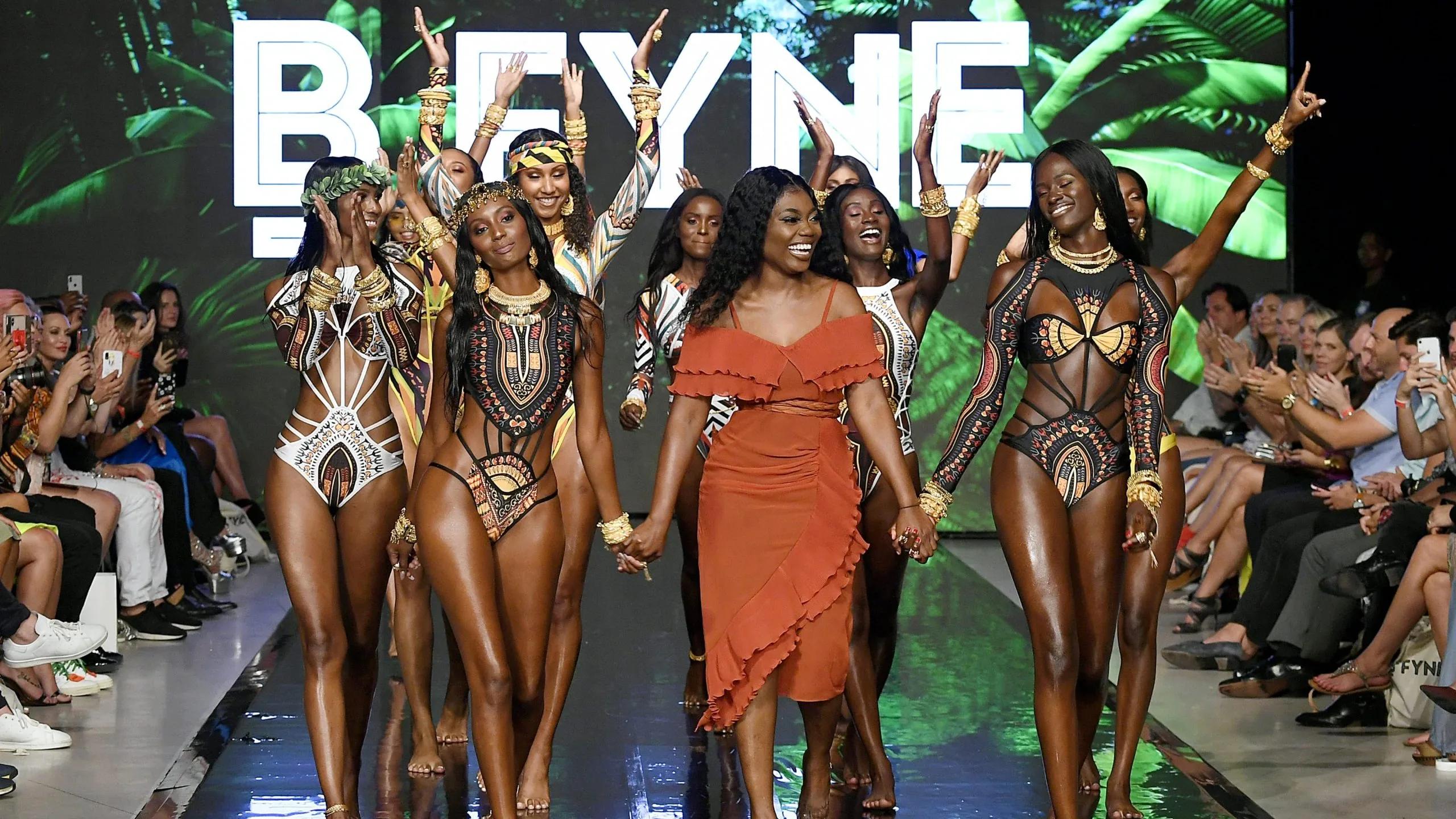
This internet-stopping collection featured swimsuits with traditional dashiki prints. BFyne debuted swimsuit construction the industry had never seen before. The swimsuits were styled to perfection. As if kissed by Midas, models posed dripping in gold jewelry and accessories  a vibe Ms. Ade passionately weaves into the entire BFyne aesthetic.

In January 2019, their flagship store was opened in Miami, Florida. To date, she’s designed patterns and swimsuits for over 10 collections, and it doesn’t stop there. Ms. Ade has plans to release her first ready-to-wear collection! This fall, you’ll see clothing from the design style that changed the swimsuit industry forever.

THE BRAND

BFyne is a contemporary swim and resort-wear brand. Every hand-sewn garment has been conceptualized for the fiercely fashion-forward, cultural aficionado you are. BFyne designs are for the risk-taking woman in protest of the fashion status quo.

Highly regarded for enchanting designs and alluring hues, BFyne swimsuits emphasize your curves with intention. The BFyne experience is meant to leave you inspired and empowered. Audiences will be smitten by your embodiment of uninhibited sex appeal and poise.

Body positivity is a foundational principle at BFyne. You will always see models of varying shapes, sizes and ethnicities strut down the catwalk. This, coupled with stand-out designs, it’s no wonder BFyne shut down Miami Swim Week in July 2019. BFyne has also showcased collections in NY Fashion Week, Cayman Island Fashion Show and the Elite Fashion Show.

https://www.instagram.com/p/CDMtaoxHXeG/?utm_source=ig_embed

BFyne’s list of patrons remains star-studded with fashion icons such as Beyoncé, Iman, Alicia Keys, Eva Marcille, Taraji P Henson, Jordan Dunn and Rosci Diaz – to a name a few. You may have even spotted BFyne on the tube. Looks from the brand have been featured in the movie Pacific Rim as well as music videos from Tiwa Savage (often referred to as the Beyoncé of Africa), Grammy-nominated artists Jidenna, Flo Rida, Tinashe, and X-Factor stars Fifth Harmony!

The brand boasts of a 400k+ following and articles in fashion publications like Essence, Vogue, Harper’s Bazaar, the Fader, Allure, Glamour, Popsugar, Huffington Post, CFDA, Sports Illustrated and many others.

THE DESIGN

Perfection is the goal. BFyne’s designs are the result of a painstaking research process. Every pattern, print and snip have been meticulously thought out to ensure a fun, functional and flattering experience for you.

These garments intentionally lift key areas and accentuate the most essential curves of your body. Quality and style are prioritized. Rigorous screening and testing processes permit an elevated swimwear experience.

https://www.instagram.com/p/CCeF2ZpH_hz/?utm_source=ig_embed

Textile prints are inspired from Designer, Buki Ade’s passion for life and cultural experiences. As a Nigerian American, she is able to merge the richness of West African influences with the portraits that comprise scenes of her everyday functions. Africa – its sunrises, fabrics and agricultural silhouettes will forever give way to new BFyne Designs.

Content courtesy of Bfyne & Nairobi fashion hub 

The changing face of Ugandan fashion Industry 

Ugandan top fashion designer Gloria Wavamunno is calling on her colleagues to tailor their businesses according to the local market.

Uganda’s fashion industry is characterised by struggling ventures, semi-professional small-scale production, and lack of infrastructure, institutions and government support.

And now the challenges have been exacerbated by the effects of the Covid-19 pandemic, Wavamunno, who is the CEO and founder of Kampala Fashion Week, also suggests recycling second-hand clothes and collaboration among the stakeholders in order to survive in the current health crisis.

“It is time for designers to think locally, and that their businesses do not have to be the same as international business models. In our creative industry, you have to see the clients because we are still more into tailoring than mass producing for shops,” the 35-year-old fashionista says.

“So how do you keep yourself and your customer safe? How do you reduce your production costs? I know people look at second-hand clothes negatively, but they can be a boundless source of materials if you look at it in a different way. It can be where you find your zippers, buttons or re-purpose clothing and fabrics.”

People want to be cost-efficient but the Covid-19 pandemic issues may push up costs,” she said. “When everything opens up people are going to double charge because they want to make their money back.

“Creatives also need to put their minds together. I am a founding board member of the Fashion Council Uganda and we are trying to connect designers together. Through the Kampala Fashion Week, I have reached out to many designers. Now it is about bringing designers together and helping each other.”

Wavamunno advises her counterparts to concentrate on the African market.

“I believe in the business module of functioning locally to expand globally. Expanding globally does not necessarily mean that you have to travel to Western countries. Globally is just as well the African continent. You can source your things to Kenya, Rwanda, Nigeria, South Africa or Congo, among others.”

Early influences

Born in England and raised alternately between London and Kampala, Wavamunno studied at the Kampala International School in Uganda.

Wavamunno says she was influenced into a life revolving around art by her mother, aunties and art teacher.

“My character when I was younger was more introverted, a bit of a loner. I was drawn to art through artistic expression, whether dance, painting, singing or things instrumental like playing piano. These are things that caught my attention.”

“And my mother was into tailoring with her sisters, which they still are, and now more into design. So, I learnt to tailor my own pieces. I was cutting, stitching here and pinning there. I was expressing art in so many forms,” she adds.

https://www.instagram.com/p/B-nClzRn8du/?utm_source=ig_embed

“My art teacher in boarding school, Mr Smalley, saw me sketching. My form of sketching was still life. I loved to do portraits, body forms that evolved into outfits.

Smalley noticed that I liked sketching a lot of clothes. And art to me was an expression of how you dressed. Being shy, I found my best way of self-expression through how I dressed.

“It was after my teacher pushed me that my eyes were opened to the world of fashion. In Uganda, the tailoring industry existed in the past and not really the fashion industry in a global setting. But today we have many fashion designers,” Wavamunno told The EastAfrican.

She holds a fashion, design and marketing degree from the American Intercontinental University in London, UK.

Wavamunno interned at Ghanaian British men’s designer Oswald Boateng. She has worked for various retail stores and magazines such as Flare, New African Women and Arise.

Growing brand

After studying and working in the UK, Wavamunno returned to Uganda in 2009 and launched her ready-to-wear brand GloRia WavaMunno.

Her brand draws inspiration from her Ugandan culture and heritage, experiences and environment.

https://www.instagram.com/p/B4iTULQnUUW/?utm_source=ig_embed

“I have showcased in Rwanda, Bujumbura in Burundi, Nairobi in Kenya, Lagos in Nigeria, Johannesburg in South Africa, and the UK. Each country has such a different structure, audience and energy. So, they were all amazing experiences because they further educated and inspired me to find my voice and direction,” Wavamunno says.

Her clothes are sold in the US, Kenya and Uganda. “At the beginning of my career, it was more of the global audience that was purchasing my pieces. Now I have more African clients, from ready-to-wear as well as tailoring.

“I am trying to create art pieces that mean something and have sentimental depth narratives that are long lasting, reusable, versatile in their usage, changeable and bold. I make people feel the best they can feel,” she adds.

She has designed for Nokia Face of Africa and her works have been collected by museums in America and Europe.

“I have also had my pieces in museums. I did a barkcloth jacket years ago for a museum in Texas, US. I am interested in the importance of barkcloth and how we can utilise it in clothing here in Uganda. I also have pieces showcasing in museums in Switzerland and Germany,” Wavamunno said.

“I find museums as places that let you to express to a western audience that is sometimes very naive or ignorant about African culture. They [in the West] only have their own version that they receive and display. It is good as an African being able to educate them in their own spaces. Sometimes they will educate themselves, but if you are there you have to say this is my fact, this is my truth, and this is my experience being of this background.”

When asked what inspires her fashion designs, Wavamunno said: “I am not really into the one-off pieces that you can wear multiple times. I like clothes that you can live in.

“I also got deeper into understanding my heritage, ancestors and background. I wanted to incorporate my culture as an African, as a Ugandan, and as a multi-tribal individual.

https://www.instagram.com/p/Bfeyi4ShEeu/?utm_source=ig_embed

My dad is a product of two tribes and my mum is of mixed-race heritage. I give the wearer their own identity, and they turn my pieces into their own story.”

Content courtesy of The East African & Nairobi fashion hub

Top 10 Fashion brands from Africa and the African Diaspora that are enriching the fashion industry

In the wake of fashion’s racial reckoning, Farfetch, the e-commerce platform that merges more than 700 boutiques from 50-plus countries into one global marketplace, debuts its partnership with The Folklore, a New York–based online retailer of brands from Africa and the African diaspora.

“We are excited to welcome The Folklore to the Farfetch platform,” Holli Rogers, chief brand officer of Farfetch, tells BAZAAR.com. “We are committed to improving the representation of Black-owned businesses on Farfetch.com and are thrilled to provide increased global exposure to 10 new designers from Africa and the diaspora, opening doors to fashion and fashion lovers everywhere.”

The chosen designers are Nigeria-based brands Andrea Iyamah, Clan, Fruché, Lisa Folawiyo, Onalaja, Orange Culture, and Tokyo James; and New York–based labels William Okpo, EDAS, and Third Crown. Although they might not yet have global name recognition, all have distinct points of view and offer forward-thinking collections that enrich the fashion industry.

Since launching The Folklore in 2017, Amira Rasool, a lifestyle writer and entrepreneur, has been promoting Black-owned luxury labels that, for too long, have not gotten the global recognition they deserve. Now, with the resources and exposure that Farfetch provides, she is hopeful that they will soon become household names.

“A partnership like the one we have cultivated with Farfetch can truly be a career-defining moment for some of our designers,” Rasool says. “Being able to have designers from Africa and the diaspora on a platform as big as Farfetch is a huge thing in terms of visibility. Seeing Orange Culture or Onalaja sold next to Alexander McQueen or Gucci helps condition consumers and retail buyers to recognise that these brands are in fact luxury.”

Ahead of the launch, BAZAAR.com asks the founders of each brand to give us insight into their creative process and the diverse stories they hope to tell with their designs.

1. Adebayo Oke-Lawal, Orange Culture

Orange Culture references a story I wrote for a class about the orange boy. It details his experiences of toxic masculinity. I saw the colour orange as an alternative to more typical masculine shades like red or blue. I grew up very different to most boys.

I went to an all-boys school, a very hyper-masculine all-boys school, and I was very tiny and I had big glasses. People would say, “Talk louder, talk like a man,” and, “Do this, do that.” There was always aggravation towards me just because of the way I presented myself. I was bullied a lot.

The orange boy was an individual. He was unique, he didn’t really fit in, but he celebrated his difference in spite of this. It was about saying that whatever society had called me to be wasn’t who I wanted to be, and that’s fine. There wasn’t only one type of man. There wasn’t only one yardstick to measure a man’s masculinity. There were various ways you could be a man. I could be a man, at that time, in a pink suit and I wouldn’t be thought of as less than.

That was the narrative behind the orange in Orange Culture a culture that represents accepting individual expressions of self without limitations. Orange Culture is a brand that fights for individuality and celebrates a new age of liberation. Our brand in entirety is a mixed celebration, conversation, and confrontation of Nigerian culture from our silhouettes to our prints to our vibrant colours and stories. Our supply chain in itself is a celebration of Nigerian culture.

2. Kanyinsola Onalaja, Onalaja

I would describe Onalaja as a contemporary womenswear brand that experiments with demi-couture elements. Onalaja represents an imaginative concept of culture, heritage, luxury, and a contemporary appreciation of beauty through its highly crafted pieces that explore texture clashes, a play on proportions, colour, and textile manipulation.

An underlying concept within all pieces always remains, “Our heritage reimagined: the Africa we don’t see.” Reimagining heritage and the language of tradition is an aspect key to the DNA of the brand, which is brought to life with traditional craft techniques and collaborations with local artisans who create stories with their hands. Every piece gets the attention befitting of the discerning wearer, a cosmopolitan woman with an appreciation for intricately made items.

3. Teni, Aba, and Tiwa Sagoe, Clan

Clan is a premium ready-to-wear brand established in 2011 in Lagos, Nigeria. The name Clan stands for our ability to engage with communities far and near. Clan uplifts women through the expression of dress, strongly communicating power and confidence.

As such, our clothing is typically categorised by triangles, which represent female energy and strength. We are dedicated to providing the modern-day woman with versatile staples that feature a contemporary, hard-t0-miss edge.

4. Tokyo James

In one word, Tokyo James can be described as an intersection. It’s a brand where many worlds meet, where Africa meets Europe, where simplicity meets complexity. It’s a world where people come to find commonality in what their differences are.

https://www.instagram.com/p/CCisoFQHHf2/?utm_source=ig_embed

5. Kristin and Kofi Essel, Third Crown

Our brand, Third Crown, is a contemporary jewellery brand. We make bold and genderless pieces that are everyday. From an everyday look to an evening look, our brand represents unity, love, and powerfulness.

6. Andrea Iyamah

My brand is inspired by a cultural story. It is born and bred in Nigeria by a Nigerian who grew up in the country and was brought up by parents who were exposed to traveling.

They believed that travel was a form of education. This is the basis of the brand, giving people that experience through fabric and texture; looking at the culture and appreciating everything that it has to offer aesthetically, while also understanding the nuances in the pieces.

7. Lisa Folawiyo

We are a global womenswear brand based in Nigeria. Our signatures are detailed and intricate hand craftsmanship by local artisans, the play on colour and textures, and designing custom prints alongside the manipulation of local and traditional fabric applications.

Our brand continues to have an edge with its very cool and refined design aesthetic a distinct, strong, and forward-thinking point of view. Every collection is designed and manufactured in Nigeria, and through these collections, we are able to tell our authentic African story as we connect with people all over the world.

8. Sade Mims, EDAS

We are an accessories brand based in Brooklyn. I identify as a multidisciplinary artist who does various mediums. I love working with my hands and being explorative with my artistry and storytelling. I love incorporating culture, fashion, and style all the things that I really love with designing and being an artist.

My dream, and my goal, for EDAS is to continuously grow and tell stories that are important. I dream of making it a house, where we dive into the art realm with paintings, shoes, housewares, and furniture. EDAS is rooted in ethics, sustainability, consciousness, storytelling, and community building.

9. Frank Aghuno, Fruché

Fruché is a contemporary Nigerian brand. We like to infuse modern contemporary design with our traditional Nigerian artisanal techniques. We use different applications and dying techniques.

We are a very radical and progressive brand. We like to tell stories of culture and progressive stories of our culture, which I mix with my personal life. Each collection is like a page in a diary of my life.

10. William Okpo

Darlene and Lizzy Okpo named their brand after their stylish Nigerian father, who immigrated to New York in 1976 with just $80 in his pocket. The label launched with womenswear, but has recently expanded into beauty. Expect vibrant colours, exaggerated silhouettes and buckets of playfulness.

Content courtesy of Harper Bazaar & Nairobi fashion hub 

South Africa fashion is going local, and it’s a good thing

Largely due to global supply chain disruptions brought about by Covid-19, more big South African fashion brands are committing to producing fashion at home. What are the implications?

Established local brands, like the iconic Madiba shirt producers Lontana Apparel, have long pioneered locally produced fashion. Dylan Rothschild, Managing Partner at Lontana, says, “We’ve always been a proudly South African manufacturer, and have committed ourselves to empowering our local community and providing much-needed jobs at home.

“During lockdown we shifted our focus to producing masks to meet Covid-19 needs, and worked with over 20 external CMT manufacturers, providing over 1,000 people with work.”

With large local brands now beginning to follow suit, here’s what South Africans can expect for the future of fashion.

https://www.instagram.com/p/CHsco8bL2kS/?utm_source=ig_embed

What can we expect?

For years, South African retailers have relied on fashion imports from Asia, particularly China. But large clothing brands, including Mr Price, The Foschini Group (TFG), Truworths, and Woolworths have recently announced their intentions to manufacture more of their items locally. As Covid-19 and the associated lockdowns have negatively affected the garment manufacturing sector, leading to job losses, factory closures and cancellations of stock, the shift towards local manufacturing has become a necessary step in reviving the local economy.

  • Mr Price currently sources 35% of its total merchandise units locally. The clothing brand has committed to reducing its reliance on Chinese imports, which still account for 48.5% of its orders, and refocusing to manufacturing in African countries. Mr Price has also announced that via membership to the South African Cotton Cluster (SACC), it will procure 1,357 tons of cotton from local producers.
  • TFG Africa, which used to import around 80% of its products from Asia, currently sources 35% of clothing locally and has announced a strategic imperative to reduce reliance on suppliers like China.
  • Truworths also has plans to move towards more locally produced fashion and announced their intention to increase local textile purchases to 50% in the coming years.
  • Woolworths has also committed to sourcing more fashion locally, and currently purchases over 50% from the SADC region.
  • Other well-known local brands are also committing to locally sourced fashion. Pick n Pay clothing will be embarking on collaborations with South African designers and local production, and Pep Clothing plans to expand, offering more jobs to local workers and producing disposable PPE items to aid in Covid-19 efforts.

Benefits

“There are many benefits associated with producing fashion locally. Local fashion promotes community enrichment, feeds into the local ‘eco-system’, and promotes environmental sustainability,” says Dylan.

Local manufacturing allows fashion to retailers to respond quickly when it comes to trends and weather changes. Whereas previously it may have taken months for imported clothing to reach South African shores, locally made items can be manufactured and on shelves within weeks, while they’re most relevant. This shorter lead time could equal greater profit for clothing brands, as they’re better able to deliver what customers want, when they want it.

https://www.instagram.com/p/CHp7CwPLV6r/?utm_source=ig_embed

Local manufacturing also insulates the South African market against global disruptions, such as the pandemic and ongoing trade wars between major exporting countries. This, as well as an increase in jobs in local communities, could provide a much-needed boost to the local economy.

Challenges

“With the benefits of local production come some challenges. We’ve weathered and successfully overcome various difficulties as a proudly South African manufacturer, but it definitely isn’t for the faint-hearted,” says Dylan.

South African manufacturers face many challenges, not least of them the rising cost of electricity and an often-unreliable power source. As a nation, South Africa is are also faced with uncertainty regarding the unstable Rand, as well as an ageing skilled work force. When it comes to fashion, specifically, South Africa struggles to produce certain fabrics locally, still relying on imports, especially for winter garments.

What do these changes mean for brands that have always manufactured locally?

“Cheap imports from abroad have long been flooding our South Africa market. They are often low-quality items, which promote ‘fast fashion’, leading to environmental disasters such as overflowing landfills and the use of environmentally damaging fossil fuels for transport,” explains Dylan.

https://www.instagram.com/p/CHkEwJbl-Lj/?utm_source=ig_embed

As well as being detrimental to the environment, these imports have posed as competition to quality local brands, who have had to compete with disposable, low-priced items – especially in South Africa where the clothing market is characterised by a demand for variety.

https://www.instagram.com/p/CHkphUXlstU/?utm_source=ig_embed

With brands set to increase local manufacturing, established local brands should see a greater equalisation in pricing and quality. The local, ethical production of clothing, free from exploitation and sweatshops, means pricing should come more into line with established local brands.

https://www.instagram.com/p/CHkIEjElINQ/?utm_source=ig_embed

A greater interest in local manufacturing and production could also lead to new opportunities for local textile factories and brands, as large brands looking to go local search out established, tested, quality manufacturers to include in their stores.

https://www.instagram.com/p/CHkGVBQFmaL/?utm_source=ig_embed

“We welcome the increase in local clothing manufacturing, and hope to see more communities flourish as a result. Lontana remains committed to producing quality local apparel with South Africans in mind, and we look forward to more manufacturers doing the same,” concludes Dylan.

Content courtesy of Biz Community & Nairobi fashion hub 

Destination wonder: a journey through Ghana’s feelgood fashion world

With Mercedes-Benz Fashion Week Accra’s fashion week cancelled due to coronavirus, photographer Carlos Idun-Tawiah captures the talent of the new wave of designers who would have been showcasing their work

Against the backdrop of West Africa’s heritage, Ghana’s fashion scene is culturally rich and diverse. Nestling between Togo and Ivory Coast, it oozes with vital energy. It was once home to the celebrated Yaa Asantewaa, queen mother of the Edweso tribe of the Asante (Ashanti).

As Ghana’s history continues to unfold, its precolonial past has woven its essence into the work of its modern artists. Today’s generation of designers explores the depths of the nation’s heritage, without trivialising its value. Through experimentation and by devoting their tradition to the streets of Accra, young designers are bringing Ghana’s colourful culture into sharp focus.

With Accra fashion week postponed due to Covid-19, Mercedes-Benz has worked with five next-gen designers and the photographer Carlos Idun-Tawia to showcase Ghana’s emerging talent and the country’s tradition of sharing skills from one generation to the next through storytelling.

Chloe Asaam uses ideas and experimentations to create timeless pieces for women who want to stand out. “I’m inspired by many things, but usually I draw from the women in my life – the matriarchs in my family and community,” she says. Imbuing a versatile spirit, the label designs clean-cut staples that exude comfort and fuss-free wearability.

On the subject of working as a creative in Ghana, Asaam thinks that “the dynamics of practising as a fashion creative in Accra is both exciting and frustrating. From access to support, sourcing material, visibility and making a living… basically getting access to things that can help you grow your craft.

My colleagues and I often have conversations around possibilities. Things we could do if there weren’t so many constraints. But we find a way to make do with what we have. And I think there is beauty in that – to be able to make magic with limitations.”

Menswear label Atto Tetteh belives Africa has a story to unfold. “Ghana is an incredible place where you find inspiration everywhere. The most thrilling aspect of being a creative in Ghana is the freedom to create and the vast pool of inspiration all over the country.”

Crafting sharp tailoring and bold colour-blocking, the label seeks to provide quality clothes with a cultural appeal. “Tradition plays a pivotal role in the sense it is easy to draw inspiration from our local fabrics and symbols, as well as our local colours.”

Founded as an accessories line in 2012, Larry Jay is a unisex Ghanaian ethical label that seeks to celebrate 70s culture with an aim to craft timeless and unusual staples that represent both genders. “I am generally inspired by nature, multiple African cultures and arts,” says Jay. “However, the timeless style of my parent’s fashion from the 1970s and the community environment where I was born and bred is a big influence on my design aesthetic, that makes it unusual and timeless.”

As an Islamic devotee, the designer is keen to reflects the concepts in the garments. “My traditions are rooted in Islamic ideals and culture. I allow myself to be influenced by this and it reflects so much in the clothes I make.”

Hassan Alfaziz Iddriss’ brand, known as Hazza, is a contemporary uniform of gender-neutral clothing based in Ghana and inspired by heritage and culture. “As an ethical fashion brand, our clothes are made using eco-friendly materials that are mostly not readily available in the market and are scarce now.”

“The few that are available do cost more so we had to improvise through the usage of discarded materials and lots of DIYs.” Established in 2013, the brand prevailed against the financial odds that came from the pandemic. “Our brand went on a hiatus to re-strategise. For us this would have been a good time to launch our new collection, but we look forward to a show when we all can travel again.”

https://www.instagram.com/p/CHgGNNep8IE/?utm_source=ig_embed

Gucci fellow and Naomi Campbell aficionado, designer Steve French has always used his fashion to tell stories and mark profound statements. “I think the most thrilling aspects of been a creative in Ghana is being able to produce amazing stuff with little resources. Also, most creatives have a deep connection to a land that is so beautiful,” he says.

For his SS16 collection, he impressed the world while dealing with mental illness, which turned out to become something Naomi Campbell wore for Essence’s 50th anniversary issue. “Tradition cannot be changed as it is old, authentic, genuine and beautiful and we don’t alter we just add,” he reflects. “As a designer, I am usually drawing inspiration from my history, culture and music.”

https://www.instagram.com/p/CHgGWNQpzNM/?utm_source=ig_embed

French’s label is contemporary and is characterised by abstract patterns and distinct silhouettes.

Written by Chidozie Obasi

Content courtesy of The Guardian & Nairobi Fashion hub  

Selina Beb showcases new collection at Glitz Africa Fashion Week with a powerful message

Celebrated Ghanaian fashion brand, Selina Beb, has launched its new collection on the runway of this year’s Glitz Africa Fashion Week, which was held at the Grand Arena located within the Accra International Conference Centre on Saturday, November 7, 2020.

The new collection includes a combination of minimalist silhouettes and contemporary styles, featuring colours such as white, black and bold prints.

The collection was in three parts: simple but elegant white dresses inspired by water, which also signifies purity or victory and made by nature; skirts made from silk fabrics and bogolan prints with the motifs in the print inspiring the design, and classic kimonos made from dashiki  a print worn by Africans and African-Americans in the diaspora – signifying black pride, worn over labelled tank tops bearing the phrases “Black Lives Matter, End SARS, and Stop Rape” – highlighting the revolution that these messages have started around the world.

The brand also launched some new accessories in the form of statement neckpieces and earrings made from leather and cowries, which are both from nature sticking to the same theme and inspiration for the clothes, which is; water, nature, African prints and also importantly, the revolution around the world.

Selina Beb is a multiple award-winning brand which specializes in unique accessories and elegant dresses which now also includes a male line – made with the savvy and yet busy man in mind. The line, which features a small collar, slim fits, regular fits, and tailored fits, is comfortable and made from light but quality fabrics. With a crease-resistant, the shirts come in different colours and designs.

The brand caters for custom made designs for both its men and women line. Selina Beb was also listed on Beyoncé’s curated list of prominent black designers.

https://twitter.com/selinabeb/status/1227645166862897153?s=20

Selina Beb Shop

Selina Beb’s flagship store is located in Osu, Accra, behind Photoclub. They can be reached by phone and email at +233 54345900 and available on social media  page @selinabeb.

Content courtesy of Graphic Online & Nairobi fashion hub 

African Fashion Foundation hosts first Kayeyei collaboration showcase

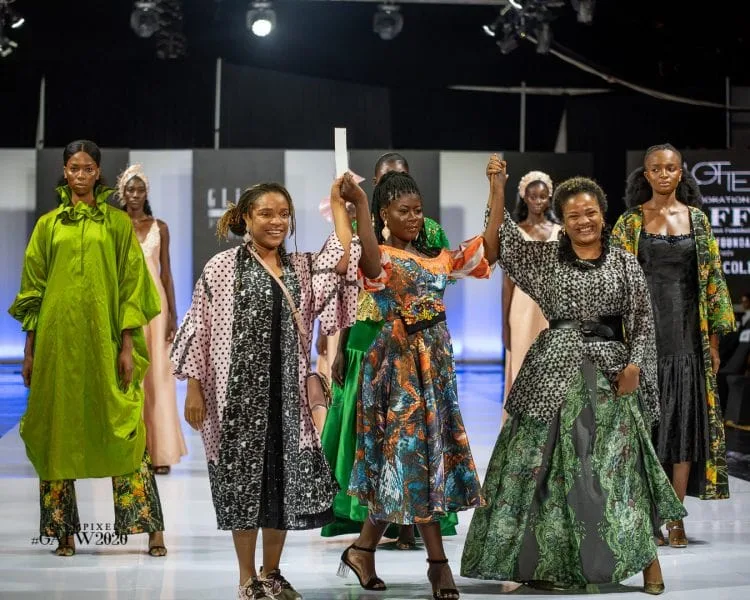
African Fashion Foundation (AFF) in partnership with The Lotte and the Adonai Children’s Development Foundation (ACDF) present the inaugural Kayayei Collaboration Collection at the Glitz Africa Fashion Week 2020.

AFF created this project to empower, equip, and encourage young street females by pairing them up with some great talent in the fashion accessory and garment industry in West Africa for a skills exchange program.

With the support of the ACDF in finding and nurturing those that needed support especially during this global COVID-19 pandemic, the aim was to present a collaborative new collection alongside Accra’s infamous concept store – The Lotte. The young street women and porters (Kayayei) were working in the designers’ studios and trained in key sewing and production skills all whilst contributing to a collection that will be showcased internationally.

This project is a social impact venture to empower the Kayayei woman and show a way that fashion can be used for good. This inaugural collection will kickstart an ongoing partnership with The Adonai Children Development Foundation and the Kayayei women to equip them with key skills and reintegrate them back into the community.

The pilot project was done with Ophelia Crosslands and Velma’s Millinery & Accessories who kindly took on Gifty Alazoe (a young kayayei, mother of 1) and trained her in beading and basic sewing and millinery skills. She was able to use these skills to contribute to the limited edition Kayayei collection that was created. The final collections will be made available for purchase exclusively at The Lotte retail space.

The showcase at the Glitz Africa Fashion Week 2020 was evidence of a successful project and AFF will be providing ongoing support for the participating kayayei women as well working on making this a continuous, scalable, and sustainable initiative. Gifty Alazoe will be continuing her AFF sponsored internship with Velma’s Millinery & Accessories for another year.

Content courtesy of Ghana Web & Nairobi fashion hub 

The Journey of African Fashion to the global market

On November 19th 2020, the Intra-African Trade Fair (IATF2021), will present an expert panel discussion focused on African Fashion: The Journey to the Global Market.

This online event, designed for the emerging African Fashion sector is part of a series of digital events supporting the creative programme that will take place at the second edition of the Intra-African Trade Fair (IATF2020) in Kigali, Rwanda, from September 6th to 12th, 2021, under the theme “Building Bridges for a Successful AfCFTA”.


It will be presented by The African Export-Import Bank (Afreximbank), in collaboration with the African Union Commission (AUC) and the Government of the Republic of Rwanda. IATF2021 will include a comprehensive creative programme with fashion being a key pillar.

The conversation will focus on some of the key links in the fashion value chain, specifically  creativity (and protecting it through IP policy), global reach and distribution, and access to finance.

A range of successful fashion icons on the panel will share their journeys to global success through this filter, unpacking how they were able to secure the financing and global reach to support their creative visions.

The panel will also include representatives from Afreximbank and The African Development Bank. They will provide further insights on how the sector can access some of the resources required to build the monetisation ecosystem in this viable sector.

This engaging and interactive discussion is aimed at emerging fashion entrepreneurs across the fashion industry value chain and is free to attend, although pre-registration is essential.

Panellists

Kibonen Nfi – Founder & Creative Director KibonenNY

Lulu Shabell – Co-Founder African Youth Mentorship Network

Emanuela Gregorio – Economist and Fashionomics Africa Coordinator at the African Development Bank Group

Abisade Adenubi – Founder and CEO of Heritage Apparels

Register here for live webinar 

Content courtesy of Intra African Trade Fair & Nairobi fashion hub 

Bombchel, A West African Clothing Store, Employs Refugees Living In Atlanta

The phrase “ethical fashion” covers a range of issues such as working conditions, exploitation, the environment and animal welfare.

Bombchel, an ethical fashion brand offering contemporary West African clothing and merchandise made in Liberia, has opened its first shop in the United States. The store opened in October and is located in Ponce City Market.

Archel Bernard is the owner and founder of Bombchel (both the factory in Liberia and the store in Atlanta). She joined “City Lights” host Lois Reitzes to talk about her factory, which employs women affected by the Ebola crisis, and the store, which employs refugees residing in Atlanta.

Interview Highlights

Why she moved to Liberia after graduating from Georgia Tech:

“My family is Liberian refugees. My mother and father grew up there and left because of the war, and my grandfather stayed in Liberia for a long time. For me, when I graduated, I wanted to connect with home. In so many ways, I feel like I went back to hopefully see him, even though he had passed. So as I build my business, sometimes I have conversations with him in my head like, ‘Would he be proud of the way I’m doing things?’ Liberia was once such a shining example of an independent African republic, and now we’re consistently the poorest. I know that we as a people are stronger and better than what we may seem to be right now, and I wanted to be a part of that story.”

Why she employs an all-female staff of Ebola survivors in Liberia:

“When the Ebola crisis started to slow down, I returned to Liberia. I opened the Bombchel Factory in 2016 so that I could hire and train women from backgrounds of poverty who wanted to work in fashion, but maybe didn’t feel like they could … similar to me because we were in Liberia. For me, I’m so sincerely proud to be a Liberian woman, and I wanted to bring other women that look like me into this fashion space. I felt like it was the way I could do my part.”

The garments and fashion offered at Bombchel:

“I think every woman should be able to wear this African clothing, but she should be so comfortable. We don’t do any zippers, just a lot of elastic, a lot of wraps and ties, so that things can fit a bunch of different body types in a way that is flattering to you. I feel like we’ve really reimagined the way people can wear African clothing, so you can wear it casually in your home or step out for the night. We just really try to fit a whole bunch of different lifestyles, ethnicities, skin tones and body types.”

Her mission for giving back to the Atlanta refugee community:

“I’m a refugee, and I think when people look at me, they don’t see it. I’m hiding in plain sight, and as I sit in the background and hear conversations around me about what refugees are, and where they should be allowed to go, and how they should be allowed to get there, I think about what my family was able to offer me because they sought a better life. I want us to normalize working around refugees, shopping with immigrants, people of color. I feel like we don’t really know everybody’s background, and I think the more we know, the more we can

Bombchel is located on the second floor of the Central Food Hall, next to Cobbler Union.

Content courtesy of WABE & Nairobi fashion hub  

Whitney Madueke Re-envisions Traditional Nigerian Fabrics for a New Generation

Growing up, Whitney Madueke watched on the sidelines as her parents got dressed up for Nigerian weddings and parties. “My dad would play pretty background music and you knew he was getting ready to go out,” she says, laughing. “I was mesmerized at how my parents would pair their traditional Nigerian attire with modern pieces from the Western world tradition, mixed with, like, a pair of Gucci sunglasses,” she quips.

https://www.instagram.com/p/CGxyTb_FLxn/?utm_source=ig_embed

As a student in England, Madueke realized that her own cultural encounters started influencing her fashion choices in the same way as her father a mix of trendy and time-honored pieces. “I started mixing Nigerian pieces like a Buba blouse, a top with long loose style sleeves, with a pair of jeans.

https://www.instagram.com/p/CBL3ax6HI2z/?utm_source=ig_embed

Or I’d find myself mixing traditional silk fabrics with more modern materials,” she says. Drawing on her African background and her love of fashion, Madueke, 26, set out to launch her own eponymous fashion line, which went live on her website and on Instagram in June. Currently living in New York, Madueke frequently travels back to London to visit her siblings and spends winters with her parents in Nigeria, where her line is based.

https://www.instagram.com/p/CG8FTUDFEi6/?utm_source=ig_embed

Here, we chat with Madueke about her own style, her clothing line, and her favorite designers to shop now.

https://www.instagram.com/p/CEzoNONlN6S/?utm_source=ig_embed

Marie Claire: How did you get your start in fashion?

Whitney Madueke: Since I was little, I’ve had an interest in fashion and fashion design. I wanted to study fashion in college, but I figured my parents would say no to that, so I went to college in England to study law. I needed a creative outlet there, so I started a fashion and beauty YouTube channel and an Instagram but I wasn’t really happy with law. I was like, What is my life? What’s my next step? I needed to do something that would make me happy, so I decided to move to New York to study fashion design at Parsons in their Associate’s Degrees for Professionals program. Last year, I started working on the launch of my clothing brand, Whitney Madueke.

MC: What was the inspiration behind your new fashion line?

WM: Nigerian fashion represents the people, but it also tells the story of the country and its surrounding nature. I wanted my clothing line to tell more African stories and to expand on who I am as a Nigerian and African woman in the fabrics, the silhouettes, and the vibrant colors.

MC: Tell us about Lagos Fashion Week.

WM: Just like New York, Lagos fashion week is a great way for the fashion community to connect with one another. Designers tell stories through their collections using traditional Nigerian fabrics like Adire fabrics, Kente and Akwete cloths. As a Nigerian fashion designer, I love celebrating a diverse group of designers telling the story of home. Lagos Fashion Week was scheduled for late October this year, but in light of the #EndSARS protests [centered around police brutality in Nigeria], the event has been postponed.

MC: How do you get dressed in the morning?

WM: It depends on how I feel that day, but I tend to gravitate towards bright colors, especially vibrant, primary colors that stand out in a room. I also love versatility I’m always looking for great basics that I can pair in numerous different ways.

MC: Who are some of your favorite designers right now?

WM: Social media has made it so much more accessible for global designers to have a voice, and I’m able to actively find and support more African designers. Two of my favorites are Abiola Olusola and Onalaja. Both are Black women designers that embody timeless fashion. Their pieces are crafted from African textiles and include intricate beading techniques.

Written By Marie Claire

Content courtesy of Marie Daire & Nairobi fashion hub 

Full List of winners at Couture Africa Style Awards 2020

The Gala for the 2020 Couture Africa Style Awards went down over the weekend and Citizen TV Swahili news anchor Lulu Hassan was crowned the Most Stylish TV and Radio Personality of the Year.

Actress Catherine Kamau popularly known as Kate Actress took home two Awards; Most Stylish Person of the Year (Female) and Most stylish entertainer of the year.

Mombasa Governor Ali Hassan Joho won the award for the most stylish Male Public Servant, as Comedian Eric Omondi got recognized for being the most stylish male content creator.

https://www.instagram.com/p/CHDIOtNJc8O/?utm_source=ig_embed

Full List of Winners 
Most Stylish Entertainer (Famale)

Akothee
Fena Gitu
Catherine Kamau – Winner 
Brenda Wairimu
Teacher Wanjiku
Muthoni Drummer Queen

Most Stylish Content Creator (Famale)

Joy Kendi
Maureen Waititu – Winner 
Maxine Wambosha
Farhana Oberson
Nyawira Mumenya
Fashionable Stepmum

Most Stylish Content Creator (Male)
Chef Ali Mandhri
Vinnie O
Eric Omondi – Winner 
Muriuki Kagiri
Eli Mwenda
Mulanda Kombo

Most Stylish Sports People (Famale)

Emily Muteti
Evelyn Okinyi
Sabrina Simadar
Hellen Obiri
Naomi Wafula
Janet Wanja – Winner 

Most Stylish Sports People (Male)

David Rudisha
Billie Odhiambo
Eliud Kipchoge – Winner 
Ronald Okoth
MacDonald Mariga
George Manangoi

Most Stylish Public servant (Famale)

Nadia Ahmed
Judge Mumbi Ngugi
Hon. Gladys Shollei
Achie Ojany Alai
Hon. Naisula Lesuuda
Hon. Amina Mohamed – Winner 

Most Stylish Public servant (Male)

Hon. Ababu Namwamba
Sen. Joshnson Sakaja
Gov. Hassan Joho – Winner
Hon. Otiende Omollo
Hon. Abdulswamad Shariff
Hon. Najib Balala

Most Stylish Person of the year (Famale)

Julie Gichuru
Catherine Kamau – Winner 
Sylvia Mulinge
Hon. Joyce Lay
Diana Opoti
Sonal Maherali

Most Stylish Person of the year (Male)

Sir. Charles Njonjo
Zeddie Loky
James Maina
Martin Keino
Vinnie O
King Kaka – Winner 

Most Stylish Entrepreneur (Famale)

Michelle Ntalami – Winner 
Carol Kinoti
Rita Muchiri
Dr. Jennifer Riria
Jennifer Barasa

Most Stylish Corporate (Famale)

Rabecca Miano
Carol Ndungu – Winner 
Beth Muthui
Brenda Mbathi
Sheila M’Mbijiwe
Dr. Betty Radier

Most Stylish Corporate (Male)

Kris Senanu – Winner 
Joshua Oigara
Captain Ronald Karauri
Jimi Kariuki
Geoffrey Odundo
Dr. David Wachira

Most Stylish TV and Radio Personality (Female)

Amina Abdi
Beatrice Marshall
Jane Ngoiri
Lulu Hassan – Winner
Talia Oyando
Tracy Wanjiru

Most Stylish TV and Radio Personality (Male)

Jamal Gadafi
James Samart
Mc Jessy – Winner 
Michael Gitonga
Miano Muchiri
Muthee Kiengei

The People’s Choice Award (Female)

Ms Fawwie
Christine Obiero – Winner
Lynne Wangui

The People’s Choice Award (Male)

Kiptala
Amar Jonathan
Mike Mwaura – Winner

Congratulation to all winners 

Content courtesy  of Couture Africa Limited & Nairobi fashion hub

Ad