Thursday 7th of May 2026

Nairobi, Kenya

African Inspired ‘Black Panther’ salute gallops into Sunnydale

Jade Williams, an Oakland School for the Arts fashion design student, carefully crisscrossed each strand of hair until the long braid was finished. Turquoise, white and yellow beads were added until the dark mane was filled with decoration, making a gentle clattering sound as they struck together.

Brianna Noble, left, her friend Dale Johnson, and Noble’s sister Brittany Lewis, ride their horses through the Sunnydale neighborhood clad in their “Black Panther” inspired costumes during a socially distanced Halloween event on Friday, October 30, 2020, in San Francisco, Calif. Noble is the founder and owner of Mulatto Meadows, an equestrian business.

Noble brought three horses to the Sunnydale Boys & Girls Club for a socially distanced Halloween event. The horses were outfitted in costumes in tribute to the movie ÒBlack PantherÓ and its Afro-futurist style by students in the fashion design program at the Oakland School of the Arts, where Noble attended high school. Noble was already a figure in the community before her viral fame for bringing her horses to the area, her sister Brittany Lewis is a San Francisco police officer in the Sunnydale neighborhood.

It was the high school freshman’s first time styling a horse, and the animal was surprisingly patient during the hour-long process.

“They’re really well behaved,” Linda Ricciardi, the school’s fashion design chair, said of the three horses her students were grooming, dressing and painting on Friday in a vacant lot above San Francisco’s Sunnydale neighborhood. “We’re excited to be a part of this, it’s been something positive the students have been looking forward to all month since Bri approached us with the project.”

The project was designing and constructing costumes for three riders and their horses in the Afro-futurist style of the movie “Black Panther,” which is as known as much for its Academy Award-winning fashion by Ruth E. Carter as it is for its groundbreaking depiction of Black superheroes. Brianna Noble, founder of the nonprofit horse education program Humble, invited the school to be part of Sunnydale’s Community Day Halloween celebration once she knew this year’s ride would be celebrating the comic book blockbuster and its star, the late actor Chadwick Boseman.

Noble is an alumna of the arts school and is well-known in the community after a photo of her riding her horse ahead of the downtown Oakland protests over the Minneapolis police killing of George Floyd went viral in May.

“When ‘Black Panther’ came out, I watched it five times,” said Williamsthe first-year student. “I knew I wanted to tie Black Lives Matter and Black history into my costume designs.”

For the second year, Noble and her sister, Brittany Lewis, brought horses to the neighborhood for a festive ride down Sunnydale Avenue. They were joined by a third rider, Dale Johnson, with all three equestrians and their mounts decked-out in full Wakanda style. Wakanda is the fictional country where “Black Panther” is set.

“This is the kids show,” said Noble, getting her face painted in a African-inspired design. “It’s all about the kiddos and their vision of what they want this to be. My job here is to help facilitate things for them. If anything, I’m just a horse safety officer: It’s their hair design, their costume designs, their ideas. We want to showcase that for the community.”

Lewis, a police officer in the Sunnydale neighborhood, sat in Noble’s combination horse trailer and RV while getting gold-tipped false eyelashes glued on. The sisters joked that they named their three-rider tribe “Watusi Wakanda” after the muscular African cattle breed.

“I feel so pretty right now,” said Lewis, adjusting her elaborate gold hoop necklace and beaded collar. “I feel like … back to my roots.”

Lewis is part of the San Francisco police housing team in the Ingleside District, which works to build relationships between the police and the Sunnydale community.

It’s “more of a proactive community policing approach,” Lewis said. “Build trust and essentially have fun, show the human side of law enforcement. This is just another level of having fun and bringing people together. Horses, they’re the key to your heart, how can you not be happy?”

Once horses and riders were painted and dressed, it was was time to mount up. The three riders shivered as the wind whipped up: Wakanda-style nods to warmer African climates don’t include a lot of coverage against Bay Area elements. After kicking off their shoes they got on their horses, which were blanketed in colorful African print fabrics in lieu of saddles.

“I feel powerful,” Johnson said of his finished look. As for the cold, all three riders hoped the heat of the horses’ bodies would help keep them warm.

Raising her prop spear, Noble yelled out “Watusi, Wakanda forever!” and began the ride three blocks downhill to the Sunnydale Boys & Girls Club and Willie L. Brown Jr. Youth Center, accompanied by a police car playing the “Black Panther” soundtrack for added ambiance.

Cars halted, people stopped on the sidewalk to watch and others came out of their homes. Some shouted hellos to Lewis, others recognized Noble from her viral photograph and Xfinity commercial. A few shouted lines from the movie and made the hero’s signature crossed arm salute. A little boy in his own Black Panther costume stopped in his tracks seeing the horses, lifted his mask and smiled excitedly as he took the whole spectacle in.

As they rode across the Black Lives Matter street mural painted in front of the Boys & Girls Club, the song “Fight the Power” blasted on a sound system. Dozens of people from the neighborhood gathered around to watch as the riders took position on the lawn so residents could pose with the group for socially distant selfies.

After thanking the crowd and acknowledging the work of the Oakland school’s student designers, Noble led her three-person Watusi Wakanda tribe through the neighborhood before heading back up the hill. Michelle Noble, the mother of Brianna and Brittany, was easy to spot in her shirt and mask emblazoned with the words “Proud Mom.”

“I’m proud of both my daughters,” Michelle Noble said. “Growing up in Oakland, being from a lower-middle-class family, the sport (riding) they wanted to pursue, the things they wanted to do, was so far out from what my husband and I knew that it was hard to embrace this because we didn’t know anything about it. This is a reminder to me that when they have a vision and a dream, support it with everything you got.”

Content courtesy of San Francisco Chronicle & Nairobi fashion hub 

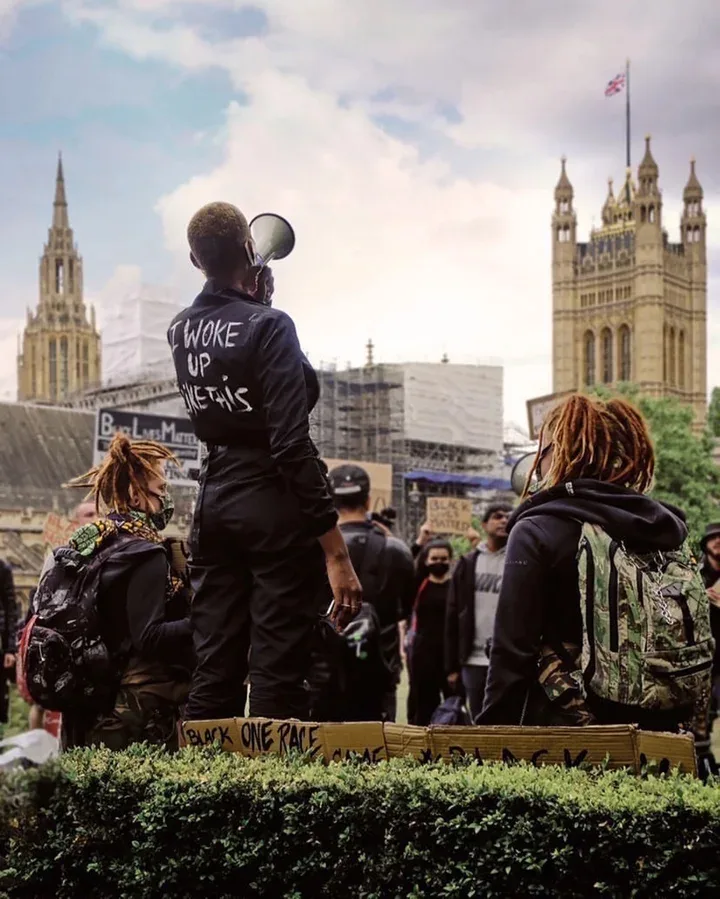
The Black Panthers Powerful & Political Style Is Everywhere In 2020

Between the pandemic and countless protests, this year has forced the world to re-examine its politics and values, and the fashion community is no exception. Just last month for SS21, Louis Vuitton sent a clear message down the catwalk about the power of American democracy with its ‘Vote’ sweatshirts, and this year’s virtual Emmys saw a number of celebrities honour the victims of police brutality with their bold beauty choices, like Yvonne Orji, who had the Black Power fist etched into her cropped hair.

Fashion has always been political, though, and what people wear is often considered an extension and expression of their beliefs. No political group has quite understood the power of fashion like the Black Panther Party. Established in 1966 by Bobby Seale and Huey P. Newton, the Black Panthers’ aesthetic has long been admired, and for good reason. The party was born at a time of worldwide revolution and while the Chicano Movement fought for the rights of Mexican Americans and protests against the Vietnam War took place, the Black Panthers were gaining recognition – for both their political message and their style.

“The Black Panther Party were and still are a power image and statement of Black culture,” Taniqua Russ, host of the Black Fashion History podcast, tells Refinery29. Popularising phrases like “Black is beautiful”, the party was intentional in redefining Blackness outside of the white gaze. For Taniqua, it wasn’t only a return to the origins of the Black identity but “a proverbial middle finger to white America”.

By wearing dashikis and traditional Kente cloths, members of the movement were able to express their allegiance to the motherland, Africa, and in the same vein disassociate themselves from the Western world. These practices helped the Black community “embrace African fashion as the symbol of pride and rejection of European standards of beauty,” Taniqua adds.

They spoke to the Black community’s dissatisfaction with the American government, who had continuously brutalised them and ignored them, and their style helped them in their mission to dismantle the image the world had come to identify as ‘the Black American’.

Taniqua, also a content creator and entrepreneur, explains that although the Black Panthers’ style was new and exciting, it was also a point of contention for the Black community. “On one hand, we had leaders who championed dressing in our ‘Sunday best’ to change the way African Americans were viewed. Other leaders said forget the establishment, and this created a militant connotation for the Panthers.”

While the civil rights movement used more subdued fashion to show that they were reputable citizens, the Panthers’ bold style was for the sake of empowerment. Practices like wearing African materials were an essential reminder to the community of their origin, and the influence of these garments is still being seen today. In 2018, social media feeds were flooded with images of people dressed in Ankara prints, traditional headwraps and beaded jewellery as they went to watch Marvel’s record-breaking Black Panther. For Black people worldwide, this moment became a reaffirmation of our appreciation of Africa and a celebration of our roots in a way that was reminiscent of the pan-African movement of the 20th century.

Other stylistic practices like the wearing of the afro were symbolic of the liberation the Panthers were fighting for and sent the message that their focus wasn’t respectability but freedom. By embracing their natural hair, the Panthers were telling the world that they were no longer choosing to assimilate but showcasing their Blackness in its most natural form.

A similar wave has resurfaced over the last 10 years, with the natural hair movement encouraging Black women everywhere to adopt an afro-friendly approach to haircare. Research carried out in 2018 showed that Black women in the USz are now more likely to wear their hair naturally, saying that it makes them feel beautiful. Refinery29 UK’s staff writer Jessica Morgan tells me that wearing her natural hair allows her to walk unapologetically in her whole self. “It’s taken me a long time to break the shackles and learn to love my natural hair, only because everything I see tells me that Black hair is ugly,” she says. Thanks to Instagram pages like @naturalhairloving and @kinkyhairrocks, we’ve been able to see the versatility and beauty of natural hair.

This expression of Black identity was the first of its kind and, like the uniform of the party, a demonstration of their commitment to reform. From the Free Breakfast for School Children programme to classes on politics and economics, the Panthers dedicated themselves to creating the change the government was failing to. Their head-to-toe black ensemble – featuring berets, sunglasses, turtlenecks and leather outwear – sent a clear message that they were unwavering in their stance and would take matters into their own hands if necessary. “Power.

Radicalisation. Change. Hope. One image can speak a thousand words,” says Jessica of the Black Panther Party uniform and what it represents. Taniqua adds that the uniform has impacted Black fashion for the better: “We now view afros and the all-black get-up with the beret as a symbol of power and a deep love for our community… The Black Panther Party encompassed everything that Black communities needed.” It’s translating to sales, too: according to shopping platform Lyst, searches for berets are up 41% week-on-week this season.

In what has been one of the most politically exhausting years of the 21st century, more and more people are adopting this aesthetic to express themselves and their frustrations. Ade, a lone wolf activist, has been to countless protests this year and each time has opted to replicate the Black Panther Party style with her own twist. “Sometimes, I like to have art drawn on my face, it reminds me of where I come from in the motherland, Nigeria,” she tells me. A model and prominent speaker for many protest groups, Ade has adopted this style because of the message it sends about her, as well as others who join her in this form of protest.

“When I see others dressed like me, I see how confident they are in expressing themselves. It makes me feel strong, fierce and bold,” she continues. Jessica also took to the streets in head-to-toe black and a beret to protest this year, and agrees that fashion can speak volumes. “Black signifies resistance without having to say anything. My outfit was a symbol of the Black community’s struggles and hardships everywhere. It was a nod to my peers to say, ‘I see you, I feel you, I got you’.”

In August, the protest group Forever Family Force marched in Brixton in all-black, complete with berets and bulletproof vests. Model Adwoa Aboah covered the September issue of British Vogue sporting her natural hair, a leather midi skirt and a black beret, and who can forget Beyoncé’s legendary Super Bowl performance in 2016? A turnout that didn’t just reference the Black Panthers but served as a bold demonstration, forcing the world to look back at how far it’s come (or how little it’s moved forward) in terms of race relations.

“Take Naomi Osaka’s masks at the US Open,” says Jessica, pointing to this summer’s Black Lives Matter protests across the world. “She chose to wear a Breonna Taylor face mask: a clear statement and tribute. Lewis Hamilton wore a Black Lives Matter T-shirt and helmet at F1, while Alesha Dixon wore a BLM necklace on Britain’s Got Talent. What you choose to wear can send a clear message without any words leaving your mouth.”

It’s clear that the legacy of the Black Panther Party’s politics and choice of attire still resonates today. The way they mobilised simple items of clothing for their cause is testament to the power of fashion and their celebration of self-expression via aesthetics rings just as true now as it did then.

Content courtesy of Refinery 29 & Nairobi fashion hub 

Archel Bernard Making Bold Moves in Africa Fashion Industry 

“I’m sort of from everywhere.”

That was Archel Bernard’s response when asked where she’s from. The journey of life sometimes takes unexpected detours.

Born in Liberia, as a child Bernard came to Georgia with her family, refugees of war. “We were the only Black family in the neighborhood, the only African family, the only refugees. We were the only.”

She attended high school in Metro Atlanta and then enrolled at Georgia Tech. “It was the first school I was admitted to that my mother was really excited about. My grandparents never thought anyone in my family could go to school like Georgia Tech,” Bernard said.

She was very active on campus, including working at the Georgia Tech Cable Network reporting on stories about life at Tech.

After earning her degree in history, technology, and society from the Ivan Allen College of Liberal Arts in 2011, Bernard decided to try her hand at returning to Liberia and continuing to hone her television skills. “I wanted to be the West African Oprah Winfrey.”

She thought she’d work for a year or two in Liberia and return to the U.S. to work in the entertainment industry. But something changed. “I started getting more calls about what I was wearing on television than calls for TV gigs,” she said.

Because shopping options were limited in Liberia’s developing economy, Bernard made her own clothes. She couldn’t afford the wardrobe she wanted to wear, so she developed her own custom dresses from bold African fabrics.

Many African garments are made from rigid fabrics and require large zippers because they are form-fitting. Bernard’s designs buck that trend. “They focus on comfort. Casual, but with contemporary appeal,” Bernard said.

She seized the opportunity and launched her own business in Monrovia, the capital of Liberia. She helped teach women to sew her designs and opened a small factory. Her staff is made up of women earning salaries for the first time in their lives and includes Ebola survivors, victims of sexual abuse, and women with hearing impairments.

Together they opened a small boutique.

“Every time I’d sell one dress, I’d reinvest and make two more,” Bernard said. She called the operation “Bombchel” a play on Archel’s name.

“Georgia Tech stretched my mind in terms of what I thought I could accomplish. So many of my peers started businesses and were doing big things. Thinking about that made me feel like I was capable too.”

The internet and social media helped Bernard expand her designs. After posting pictures and photos on Instagram and developing a website, her customer base grew  and the relationships she built at Tech also helped the business grow.

“Many of my first customers were my friends from Georgia Tech,” she said. “The most invaluable thing has been all the connections I made. Now I’m able to lead in my community.”

Disheartened by a shortage of Black-owned businesses, she reached out to Ponce City Market. They responded and asked how they could do better. After sending her proposal, she now has her own storefront.

“Some of my first customers here were people from Georgia Tech who supported me all along the way,” she said.

The journey has come full circle for Bernard in so many ways.

As a child, Bernard remembered feeling embarrassed when her mother would dress in traditional African garments to pick her up from school. Now, she’s empowered by those colorful patterns and making people feel special wearing them. “It’s important that we see African fashion on everybody,” she said. “We need people to know their purchases matter, and that you can make an impact when you choose to spend money.“

The purchases from Bombchel will continue to support women in Liberia. Each garment has a tag to identify who crafted the custom, handmade item.

“We are making tangible change in the lives of women who work for us.“ It’s change inspired by Bernard’s journey and all the people who have been part of it. Her grandmother, after fleeing Liberia, worked long hours in retail at a J.C. Penney until she couldn’t work anymore. She was at the grand opening of Bombchel.

“Now I own the place. I work for myself in a building that my grandmother once couldn’t shop in,” Bernard said. “It’s my legacy and my family’s legacy.”

Content Courtesy  of Georgia Tech News Center & Nairobi fashion hub 

South Africa’s premier fashion and textile trade fair goes virtual

AllFashion Sourcing, Messe Frankfurt South Africa’s annual trade show for the apparel, textile, footwear and leather industry, will this year be hosted on a virtual platform from 3-5 November due to the Covid-19 pandemic.

An important event on the industry calendar, the exhibition serves to help forge connections between local and international players in the broader textile and fashion value chain.

Instead of postponing the event, the decision was taken to shift AllFashion Sourcing to a digital format to help support southern African manufacturers, retailers and suppliers who are faced with the challenges of doing business during a pandemic and a strained economic climate.

Virtual networking
The trade fair, which used to be known as the ATF Expo and Source Africa, was rebranded to AllFashion Sourcing earlier this year, but the event will retain its winning mix of fashion shows, exhibitors, insightful seminar content and networking opportunities, despite being hosted online.

Messe Frankfurt’s artificial intelligence-powered virtual platform boasts intelligent business-to-business matchmaking capabilities linking buyers to relevant sellers. It also allows for scheduled video meetings between visitors and exhibitors and integrated live streaming of seminars.

AllFashion Sourcing show director Kathryn Frew points out that there are important upsides to the event being held virtually this year, especially when it comes to affordability and reach. It allows exhibitors to market products and services in a more cost-effective manner, and attendees save on associated costs like travel and accommodation.

The AllFashion Sourcing virtual platform will also be live for 3 months, providing lasting value for exhibitors and enabling visitors from around the globe to access the marketplace and seminar content for a far longer period than they would with a traditional exhibition.

Seminar highlights
Topics on the agenda during the AllFashion Sourcing 2020 seminar include:

• The state of the African textile and leathergoods industry
• Why African fashion matters
• Sustainability-led fashion – myth or reality
• Womenswear and menswear 2021 trend forecasts by trend analyst Nicola Cooper
• AGOA (Africa Growth and Opportunity Act) unpacked – the trade benefits, textile-related categories and partner country benefits
• Exporting products to the United States – What U.S. buyers look for
• AllFashion Sourcing Cape Town Young Designers Awards 2020 showcase

“The showrooms and seminar content have been carefully crafted to enhance both the exhibitor and visitor experiences and we are really looking forward to engaging on the virtual destination that we’ve put together,” says Frew.

Below, Frew shares more on what the virtual edition of AllFashion Sourcing can offer attendees, and elaborates on the shift to a digital platform and the post-Covid future of events.

AllFashion Sourcing is free to attend and is taking place online from 3-5 November 2020. Click here for registration and more information on the event.

Content courtesy of Biz Community & Nairobi fashion hub 

Couture Africa Style Awards Gala Night Set For This Weekend

Couture Africa Ltd who are the publishers of Couture Africa Magazine announced nominees of Kenya’s most stylish personalities a few weeks ago. The stylish individuals were grouped in a number of categories including media, entertainment, corporate, politics, and even sports. Having a great understanding and appreciation of the space, the nominees on each of the categories were mostly spot-on.

The list really does cover almost all the well known stylish Kenyans we love such as Charles Njonjo, Chef Ali, Kate The Actress, Diana Opoti, King Kaka, Amina Abdi, Sonia Mehrali, Mulunda Kombo, Joy Kendi, Governor Joho just to mention a few.

The nominations were done by celebrity image consultant Derek Bbanga and media personalities Dr. Ofweneke and Sheila Mwanyigha.

“The Couture Africa Style Awards 2020 Nominees were selected through a vigorous vetting process by our esteemed Nomination Panel with assistance from the Couture Africa Editorial Teams. The focus was on individuals who have a distinct, consistent, and outstanding sense of style,” reads part of the press statement.

Voting officially ended yesterday. Tomorrow October 31st, the winners will be announced at the plush Emara Hotel. The event will also be streamed LIVE to the public on their social media platforms.

Follow the Conversation #CAStyleAwards. Check out the nominees Here

Content courtesy of Couture Africa Limited & Nairobi fashion hub 

The Twyg Sustainable Fashion Awards 2020 Finalists Announced

Twyg has announced the finalists of its Sustainable Fashion Awards for 2020. The annual awards celebrate South African designers leading sustainable, ethical, circular and regenerative practices in the fashion industry.

The designers recognised are intentionally improving fashion’s relationship with nature and people and reflect that fashion can be at the forefront of positive ethical, social and environmental change.
The winners of this year’s awards will be announced on 19 November 2020.

Judging process
The Twyg Sustainable Fashion Awards 2020 judging panel includes content creator Kelly Fung; Cyril Naicker, national co-ordinator of Fashion Revolution; Aaniyah Omardien, founder of The Beach Co-op; Desiree Smal, vice dean Faculty of Art, Design and Architecture at the University of Johannesburg; and Fezile Mdletshe-Mkhize, founder and director of Fezile Fashion Academy.

The judges selected three finalists in each of the Accessories, Trans-seasonal, Nicholas Coutts, Student, Retail and Influencer categories. A fourth finalist was included in the Innovative Design and Materials categories.

The Changemaker Award was not open for nominations. Instead, winners of the Accessory, Innovative Design and Materials, Nicholas Coutts, Trans-seasonal and Student categories will be judged against the criteria set for the Changemaker Award. This category is supported by Country Road which has sponsored R100,000 in prize money to the winner. Country Road’s head designer Maria Rinaldi-Cant will join the panel for the judging of this category.

Twyg consulted WWF South Africa on the criteria for the categories, and the rigorous two-day judging process was independently audited by attorney Elisabeth Makumbi.

2020 finalists
Innovative Design and Materials Award

• Anmari Honiball
• Lara Klawikowski
• Sealand Gear
• The Sewing Café

This award seeks to recognise a designer or brand who uses techniques that minimise textile waste through innovative pattern cutting, the use of pre- and post-consumer fabric waste, and / or reconstruction techniques. The award also seeks to recognise a commitment to using sustainable fabrics in a collection.

Trans-seasonal Fashion Award

• African Renaissance Designs
• Fields
• Tshepo Jeans

This award recognises a designer, brand or collection that promotes trans-seasonal and versatile style. It rewards quality garments whose design aspires to be timeless and which are made to last. This category also recognises brands that remain invested in garments after their sale, for example, through the provision of lifetime guarantees or repair services.

Accessory Award

• Ivy Grace
• Matsidiso
• The Wren Designs

This award recognises an accessory or accessory brand which implements ethical labour practices, limits toxic chemicals and uses sustainable materials to create a quality item and considers end-of-life. Ideally it should be made of compostable materials, but, if not, it should be made using recyclable or recycled materials.

Retail Award

• Chic Mamas Can Do
• Convoy
• Mungo

This award recognises a retailer or a retailing initiative that enhances sustainability, including pre-loved/gently worn, “swop shops”, garment rental, and similar activities. The award is also open to retailers who support local producers, and sustainable design and manufacturing.

Student Award

• KQ_Made
• Loskop
• Vanklan

This award goes to a student who has produced a garment or collection that addresses the challenges of sustainability in fashion in the most innovative, beautiful and practical way.

Nicholas Coutts Award

• Beagle & Basset
• The Seen Collective
• Viviers Studio

This award recognises a designer who uses artisanal craft techniques such as weaving, embroidering or botanical dyeing to make fashion that foregrounds, celebrates and values the skills of the person who makes the garment.

Influencer Award

• Nomfundo Liyanna Basini
• Yasmin Furmie
• Zolani Mahola

This award recognises a personality who has actively promoted sustainable fashion over the last 12 months and who has sparked relevant conversations. On social media and other platforms, the influencer has explained sustainable issues factually and has cautioned against unsustainable fashion habits. The influencer supports conscious brands while promoting the Rs (reduce, reuse, recycle).

Positive design practices and social impact
“The judges’ decisions emphasise exciting directions in fashion such as the made-to-order manufacturing model, trans-seasonal clothing, the upcycling of plastic and textile waste, and increasing the use of handcraft and natural dyes. The attention to collaboration and the healing of our environment is inspiring,” commented Twyg founder and director Jackie May.

In addition to the design practices, the judges appreciated social impact through upskilling and working in collectives.

“We would like to thank the designers and the members of the public for the nominations. And finally from my team and I, congratulations to all the finalists!” said May.

The winners will be announced at a small event (which will be livestreamed) co-hosted with the textile recycling company, Rewoven on Thursday, 19 November 2020 in Cape Town.

Content courtesy of TWYG, Biz Community & Nairobi fashion hub 

Haute Afrika


Haute Afrika, (Haute “meaning high standards, class, and elegance in French”),  is an Award winning and internationally nominated contemporary African print brand founded in 2016 by Gracia Bampile. Her aim was to promote African sophistication and elegance by catering for a growing continent.

The brand embodies a modern culture and celebrates Africa’s heritage and shares the story one print at a time. Motivated to break societies stereotypes by infusing art through fashion and sharing the ethnic culture of Africans.

Haute Afrika brand is colorful, significant and explores the African roots and uniqueness that are engraved in Africa as part of its identity. Some of our textiles and fabrics are from different African nations and others are specifically created and printed by Haute Afrika to celebrate Africa as a whole as well as to cater for a more diverse audience by taking Africa to the world.

They believe that clothing can empower confidence, evoke topics and promote Africanism because “when you look good,you feel good.”

In the world of pop culture Haute Afrika maintains African print as its trademark and stand firm in breaking boundaries in order to merge cultures of artistic mindsets together.

They seek to make the availability of quality ready to wear outfits and the conceptualizing of custom made outfits a breeze. A lot of craftsmanship is actually put into every single outfit we make.

Haute Afrika strongly believe there is something about bold African prints that everyone can get to enjoy. Based in South Africa, our clothing has found its way on prominent people in different industries as well as celebrities.

Their  emphasis is and will forever be to give you unique, enjoyable and quality clothing that you will treasure forever.

Not many can say they discovered their ‘why’ before they turned 10. I would like to introduce you to, and request an interview with, Gracia Bampile a fashion entrepreneur who has a beautiful story to tell and is about to release a new HOT collection.

This formidable entrepreneur, who holds an International Relations Degree, has no formal fashion training background, yet she has inserted herself as a trendsetter in an industry booming with talent. She has dressed the likes of Boity Thulo, Maps Maponyane, Mihlali Ndamase, Amanda Black, Thabsie,Zamani Mbatha, Kwesta and many more.

Her latest collection is set to wow fashion lovers at this year’s fashion shows and catch the eye of influencers and the world press. She has already caught the eye of BBC World News and Vogue.

Born in July 1991, on her birthday, Gracia Bampile had what Oprah calls an “Aha moment”.  Her parents had bought her what she calls an ugly African print dress to celebrate.  It was so bad that it inspired her to start making clothes of her own at just eight years old.

https://www.instagram.com/p/CCYfPgVHWI2/?utm_source=ig_embed

Gracia spent hours watching her seamstress grandmother make clothes until she mastered the art. As she grew older, she became concerned about how people didn’t like to wear African print designs especially as day to day wear. She says people had a perception that they can only wear African print clothes when attending events. So, she took it upon herself to disrupt the norm.

In 2015, she founded Haute Afrika, the home of her day to day African print designs made to change the narrative around African fashion.  She travels the continent in the hunt for high quality materials to create designs inspired by Africa’s history, heritage and stories for Africans from Cape to Cairo.

Content courtesy of Haute Afrika & Nairobi fashion hub 

Couture Africa Style Awards 2020 Full List of Nominees

The list for the 2020 Couture Africa Style Awards is out and heavy weights in the media, music, film and corporate industry will be battling for the prestigious Awards in different Categories.

Citizen TV Swahili news anchor Lulu Hassan has been nominated in the, Most Stylish TV and Radio personality (Female) Category, where she will be competing with; NTV’s Tracey Wanjiru, Amina Abdi Rabar, Talia Oyando, Beatrice Marshall and Jane Ngoiri.

The Male Category for Most Stylish TV and Radio Personality will see KTN’s Jamal Gaddafi face-off with Michael Gitonga, James Smart, Muthee Kiengei, MC Jessy and Miano Muchiri.

The voting process is currently ongoing via castyleawards.com under the slogan “…because life is too short to wear boring clothes”.

The battle for the Most Stylish Entertainer (Male) has been narrowed down to; King Kaka, Otile Brown, Lenana Kariba, Willy Paul, Chimano and Khaligraph Jones.

Full List of Nominees & Categories:
Most Stylish Entertainer (Famale)

Akothee
Fena Gitu
Catherine Kamau
Brenda Wairimu
Teacher Wanjiku
Muthoni Drummer Queen

Most Stylish Content Creator

Joy Kendi
Maureen Waititu
Maxine Wambosha
Farhana Oberson
Nyawira Mumenya
Fashionable Stepmum

Most Stylish Content Creator
Chef Ali Mandhri
Vinnie O
Eric Omondi
Muriuki Kagiri
Eli Mwenda
Mulanda Kombo

Most Stylish Sports People

Emily Muteti
Evelyn Okinyi
Sabrina Simadar
Hellen Obiri
Naomi Wafula
Janet Wanja

Most Stylish Sports People

David Rudisha
Billie Odhiambo
Eliud Kipchoge
Ronald Okoth
MacDonald Mariga
George Manangoi

Most Stylish Public servant

Nadia Ahmed
Judge Mumbi Ngugi
Hon. Gladys Shollei
Achie Ojany Alai
Hon. Naisula Lesuuda
Hon. Amina Mohamed

Most Stylish Public servant

Hon. Ababu Namwamba
Sen. Joshnson Sakaja
Gov. Hassan Joho
Hon. Otiende Omollo
Hon. Abdulswamad Shariff
Hon. Najib Balala

Most Stylish Person of the year

Julie Gichuru
Catherine Kamau
Sylvia Mulinge
Hon. Joyce Lay
Diana Opoti
Sonal Maherali

Most Stylish Person of the year

Sir. Charles Njonjo
Zeddie Loky
James Maina
Martin Keino
Vinnie O
King Kaka

Most Stylish Entrepreneur

Michelle Ntalami
Carol Kinoti
Rita Muchiri
Dr. Jennifer Riria
Jennifer Barasa

Most Stylish Corporate (Famale)

Rabecca Miano
Carol Ndungu
Beth Muthui
Brenda Mbathi
Sheila M’Mbijiwe
Dr. Betty Radier

Most Stylish Corporate (Male)

Kris Senanu
Joshua Oigara
Captain Ronald Karauri
Jimi Kariuki
Geoffrey Odundo
Dr. David Wachira

Most Stylish TV and Radio Personality (Female)

Amina Abdi
Beatrice Marshall
Jane Ngoiri
Lulu Hassan
Talia Oyando
Tracy Wanjiru

Most Stylish TV and Radio Personality (Male)

Jamal Gadafi
James Samart
Mc Jessy
Michael Gitonga
Miano Muchiri
Muthee Kiengei

The People’s Choice Award (Female)

Ms Fawwie
Christine Obiero
Lynne Wangui

The People’s Choice Award (Male)

Kiptala
Amar Jonathan
Mike Mwaura

Content courtesy of Couture Africa Limited & Nairobi Fashion hub

SA Fashion Week Goes Digital

In the wake of #CoronaVirus and being confined at home, all prospects of enjoying the glitz and glam that is SA Fashion Week soon became a dream more than a reality.

It is the event on my calendar that I anxiously await, relishing in the fashion from both new-comers and well known designers.  For the last 3 years, I managed to have the perfect Birdseye view of the best in the business, and I was sure that 2020 wouldn’t disappoint.

That was until Covid-19 hit our shores, harder than the new Versace release or a sale at Louis Vuitton (another pipe dream).

All prospects of the event, which will be celebrating it’s 21st year flew out of my social calendar, because you know, social distancing and no gatherings bigger than 100.  And let’s be honest, not even the hottest fashion is worth the risk of this pandemic.

Fashion Week is going ahead, but just a little differently this year.

In the words of Lucille Booyzen, the CEO of Fashion Week: Change, change, change. The thing we embrace and fear with equal measure.

The press release shed light on the recent speech by our President, and with that in mind the team at SAFW made a Plan B for the upcoming Spring/Summer 2020 showcase. And boy is it a plan. A climate-friendly, green-friendly, COVID-19 respectful, digital-only SA Fashion Week.  This will be the first of its kind, and it is both smart and bold.  Everything we expect from SAFW.

She went further to say, that this state of disaster has in fact paved the way for something unique and beautiful to happen. she goes on saying that it was the push they needed, as they have wanted to push change and the agenda.

Refreshing and relevant new stories from the designers will be told and the sponsors and other stakeholders will all be part of the bigger, global audience.

As the 23rd SAFW, this will indeed be the most important one, taking place 22 – 25 April 2020.

And just like that my excitement is restored.  I may not get the chance to dress-up and photo-op, but I can watch it digitally.

Content courtesy of Bloss & Nairobi fashion hub

SA Fashion Week hosts first digital collections

Thursday’s opening night of South African Fashion Week (SA Fashion Week) Twenty Twenty Digital Collections, which was the first virtual showcase, was unique and organised.

Even the way the models strutted their stuff on the ramp, which was set up in the parking lot of Mall of Africa, you could see that they were at ease.

Gert-Johan Coetzee was the first to exhibit his latest work titled “Kraal Couture”, a collection inspired by the farms.

With blue and black being the dominant colours, the collection consists of beaded cowl skirts, smart pants with cow prints, a peplum tulle skirt, and ball gowns, some made of plastic.

Under the Diamond Fibre Collections, Mmuso Maxwell, Judith Atelier and Lukhanyo Mdingi brought nostalgia to the runway.

Maxwell presented their “Imbokodo” collection, a range that seeks to challenge the narrative of a woman’s place in society, especially in the African culture.

Some of our favourite pieces from the collection include the forest green side pleat jacket, the asymmetrical olive wrap jacket and matching pants, wool-side mustard pleat dress and the spiral knitted dress made of kid mohair.

Atelier introduced the brand to the luxurious world of mohair, which plays a big part in this collection.

Titled “ I am because we are”, the range includes appliqué skirts and dresses, with red and blue being the dominant colours and sometimes fused to create purple pieces.

In collaboration with Ginger Maggie, they also presented their SS21 jewellery collection using fine details such as macrame tassels, copper rings, polymer clay and copper rods that have been combined to create a unique new range.

Lukhanyo Mdingi presented a monochrome collection, rich in brown. His statement pieces include a sleeveless bike jacket made of felted kid mohair and pure merino wool blend gilet. Titled “Relic”, the collection is an extension from his previous works.

“The collection is an extension from what we’ve created in the past. The true provenance of what we do is that we’re always looking at the essentials and we’re always looking at our archives and that stems from really trying to execute what good design means to us because that’s what inspired us,” said Mdingi.

The Research Unit followed with their “Transformative” collection. As a brand that usually focuses on handbags, they collaborated with handweavers and the beaders from Kids Positive to push boundaries.

About the collection that had lots of coding, Erin-Lee Peterson, the founder of the brand, said: “We tried to push the boundaries as much as we could. Not just make it look African or beaded, or weaved, but we created shorts out of the handwoven scarf. We took our beadwork and created morse-code out of it. The smiley face on one of the tops was made through thinking about African masks, such as the one that has the six eyes”.

The range also included micro sling bags, travelling bags, as well as beach bags.

Paying homage to the Indian culture, Etka Kalan of Ekta played with colour and geometric shapes to create unique patterns.

On the inspiration behind the collection, she said: “My latest collection is called ‘Who am I’? It’s an exploration of identity and how we see ourselves. If you look at each person, their environments, their family life, their ethnicity, as well as the country where they live in, all plays a specific role in how they see themselves.

“I looked at my life and upbringing, taking being a South African Indian, loving being South African, but also deep-rooted into Indian culture. My collection looks at formlessness, as well as form. I took a sari, which is 5 metres of fabric, once wrapped into the wearer, takes shape and a form. Then taking this complete structured shirt and structured clothes such as a shirt and trousers, which is a complete western concept and fusing the two cultures to create a new collection and a new form.”

Closing the show was Helon Melon with a subtle, collection of white dresses. Titled “All Dressed Down and Everywhere To Go”, she had the lockdown in mind when creating the collection. To add some colour, she defined it with neon stitches and some art inspiration from Mary Sibande.

When asked why she called in “All Dressed Down and Everwhere To Go”, Melon said: “During the lockdown, we all dressed down. And the most exciting thing is that it is a dress downrange, but you can dress it up however you like. There are lots of whites, I’ve done everything in white cotton and added a few accent colours to the range. Lots of dresses, I’ve done a very chick cashmere suit, and I had to put it in because of what we’ve been through. It’s comfortable with South African influences in it, from the house that I saw in the Transkei over 20 years ago to our fabulous SA artists like your Mary Sibande.”

Content courtesy Independent Online, EWN & Nairobi fashion hub 

Podcast: Fashion Africa Now addresses the African fashion industry with Omoyemi Akerele and Roberta Annan

Beatrace Angut Oola discussed the African fashion industry with female bosses Omoyemi Akerele and Roberta Annan on the newly launched podcast, Fashion Africa Now.

With years of experience in the African fashion industry, Akerele and Annan agree there is a need for collaboration and infrastructure amongst resident Africans.

Akerele said in a statement: “African fashion is not a trend. It’s here to stay. Not just a philosophised and a romanticised movement… There are people whose lives depend on this ecosystem.”

#1 EPISODE 21 OCTOBER 2020

Female Bosses of Fashion in Africa: Omoyemi Akerele & Roberta Annan

Listen in to a candid and fiery conversation Beatrace Angut Oola has with Omoyemi Akerele, live in Lagos, the highly sought-after driving force for much of Nigeria’s fashion industry; and Roberta Annan, with a strong business development background who kickstarted her place in fashion in the UN, and live in Accra.

Listen to her Podcast 

With years of experience in the African fashion industry, these formidable women agree on the need for infrastructure and collaboration amongst resident Africans and in the diaspora. “African fashion is not a trend. It’s here to stay. Not just a philosophised and a romanticised movement… There are people whose lives depend on this ecosystem” (Omoyemi). So we ask you, what is African fashion?

Introducing Fashion Africa Now’s Podcast

The first episode of Fashion Africa Now Podcast will drop soon, and Beatrace Angut Oola will be airing every second Wednesday. Here’s a quick taste of what’s to come. Stay tuned…

Content courtesy of Fashion Africa Now, Fashion United Uk & Nairobi fashion hub

Conscious Couture: Swimwear From Fishing Nets And Soles From Tyres

The ‘fast’ fashion industry is responsible for abominable levels of water consumption, pollution, and waste. Enterprising entrepreneurs in South Africa are looking to natural materials and upcycling to make every-day clothing more sustainable. 

What are you wearing? Examine your outfit as you read this. Maybe a T-shirt or a trendy new dress. Denims, perhaps? Or more likely a stretchy pair of sweatpants and socks now that we’re all mostly working from home.

‘Fast’ fashion makes clothes-shopping more affordable but at an increasingly environmental cost. According to a 2018 United Nations report, “the global fashion industry produces 20 percent of global wastewater and 10 percent of global carbon emissions – more than all international flights and maritime shipping”. Then there’s textile dyeing, pegged as the second-largest polluter of water globally. Did you know it takes around 7,570 liters of water to create a pair of jeans?

Step one in sustainability: Reduce. Then reuse and recycle. One antidote to fast fashion is to shift away from seasons. Pre-pandemic, big-name brands would launch collections between four and six times year, with fashion houses like Zara reportedly introducing more than 20 different collections a year.

Cristina Rovere is the founder of environment-friendly swimwear and wetsuit brand, Atlas Label. “We do not make any seasonal collections… and we encourage everyone who owns an Atlas Label product to consider repairs as a first option. We believe in making better choices and in taking responsibility for what you purchase. Use it, love it, care for it. Repeat.”

A love for surfing (and thus the ocean) led Rovere to create wetsuits that are better for the planet. “As surfers, we see the amount of rubbish first-hand on the beach. It’s a push to start making better choices,” she tells FORBES AFRICA. Typically, wetsuits are made from a kind of rubber called neoprene, a synthetic polymer derived from petroleum, but her Japanese-inspired suits use limestone neoprene (rubber derived from crushed limestone) instead. “It has incredible technical properties and can be repaired many times over.”

Generally speaking, natural materials are better for the environment, but it’s not a straightforward argument. Cotton, for example, is not a prominent pollutant but has downsides in terms of labor and land. Lorè Botha co-founded HempLove in April 2019. “Based on our research, hemp requires ten times less the amount of water and half the amount of land than cotton. Our slow collection entails that all the garments and textiles are dyed using plant waste sourced from farmers and restaurants in South Africa.”

Such natural materials are not new on the fashion scene, but they are increasingly being used from head to toe. Launched in 2014 by a family of milliners, Simon and Mary hats are made from 100% wool felt and hemp. (They are also part of a tree-planting project with South African reforestation organization, Greenpop and use rainwater to save roughly 30,000 liters per month).

Laduma Ngxokolo has also been using local mohair, and merino wool since 2012 for luxury knitwear brand, Maxhosa Africa, and Davie Hutchison founded bamboo-blended Sexy Socks in 2014. “Sexy Socks was, I think, one of the first social enterprise brands in the South African market, and we have always been eco-

conscious.” The colorful socks are not only made from sustainable and biodegradable materials but also have social impact. For every pair of Sexy Socks bought, one goes to a child in need.

When natural materials aren’t used, clothing clogs the system. According to American Vogue, “an estimated 50 million tonnes of clothing is discarded every year, and most of it will not biodegrade in a landfill”.

Makhosazane Rosa Sekgwama, has come up with an innovative way to combat such fashion waste. “We use recycled materials from the local clothing industry that would otherwise be discarded. Local factory offcuts become the yarn that we use to crochet all our products,” Sekgwama tells FORBES AFRICA.

Her brand, ROSA Handmade in SA, made The V&A Waterfront’s ‘100 Beautiful Things’ list and consists of woven rugs, lovingly-made baby baskets and handbags. However, being green comes with its challenges.

“We rely on yarn wholesalers who directly source from the clothing factories making upscaling impossible as there is a limit of each color we get from them. We also avoid dyeing materials ourselves, which would enable us to make more products of the same color range but pose an environmental hazard.”

Back in Cape Town, growing interest in Atlas Label wetsuits led Rovere to investigate a more affordable offering for ocean-lovers. “Our swimwear is made of Econyl, regenerated Italian nylon made from post-consumer waste, including ghost fishing nets removed from our oceans. Econyl is a certified product, and we have a signed communications agreement with them, which keeps us in constant contact and sets us apart from many other businesses.”

Nombuso Nomzamo Khanyile from Afrikan Passions Designs tells FORBES AFRICA that footwear also springs from waste. “We upcycle discarded car tyres and use them as sandal soles, reducing car tyres as environmental pollutants. The majority of our customers are attracted to us mainly because we upcycle.”

Indeed, this kind of thinking is no longer niche. Sekgwama says: “The competition is high. Both new and existing retailers are changing to be more eco-friendly, attract discerning consumer attention and gain preference. The scourge of Covid-19 [also] opened more eyes to the need to support local businesses and authentic products manufactured locally.”

Rovere agrees and says “South Africa is still catching up, but with the internet being such an open asset to everyone, the global movement for consumerism has definitely shifted towards more conscious purchases. We even see changes in the companies that used to create fast fashion, so overall knowledge around sustainability is increasing”.

South African Fashion Week (SAFW) has 600 local designers on the database, according to the event’s founder and director Lucilla Booyzen. “There are a lot of grey areas around sustainability for our SA Fashion Designers. None of them, as far as I know, are fully sustainable, as it is very difficult for any company to be fully sustainable.”

Zippers, underwires, buttons and packaging can all hamper sustainability efforts, but has there been a rise in eco-conscious clothing on the runways? “Yes, definitely,” Booyzen says. “This season, all the designers at SAFW are showing what we call slow fashion collections based on up-cycling, recycling and no waste”.

Likewise, the winter collections of more accessible household brands prove traditional retailers are catching on too. Both K-Way and Woolworths revamped their fashionable puffer jackets, filling them with recycled plastic fibers instead of duck down. Buyers at K-Way note, however, that the adoption rate to sustainable wear in South Africa is generally lower than the rest of the world and recycled synthetic has had a slow start.

Conscious fashion has become increasingly important in South African retail, and waste reduction on a large scale would help to close the loop and create a better circular economy. If local fashion can become more sustainable and effectively reduce the load on South African landfills, all the better. Especially given that the City of Johannesburg’s Environmental, Infrastructure and Services estimate the city has three years before landfill sites reach full capacity.

“Once you dip into sustainability, it becomes a part of your life,” says Rovere, likening the movement to a continuous journey. “It’s about making better choices. One item of sustainable clothing might just lead to better choices at the supermarket. It leaves a lasting impact on your purchasing decisions going forward.”

Written By Melanie van Zyl

Content courtesy of Forbes Magazine & Nairobi fashion hub  

Ad