Friday 25th of September 2026

Nairobi, Kenya

Whitney Madueke Re-envisions Traditional Nigerian Fabrics for a New Generation

Growing up, Whitney Madueke watched on the sidelines as her parents got dressed up for Nigerian weddings and parties. “My dad would play pretty background music and you knew he was getting ready to go out,” she says, laughing. “I was mesmerized at how my parents would pair their traditional Nigerian attire with modern pieces from the Western world tradition, mixed with, like, a pair of Gucci sunglasses,” she quips.

https://www.instagram.com/p/CGxyTb_FLxn/?utm_source=ig_embed

As a student in England, Madueke realized that her own cultural encounters started influencing her fashion choices in the same way as her father a mix of trendy and time-honored pieces. “I started mixing Nigerian pieces like a Buba blouse, a top with long loose style sleeves, with a pair of jeans.

https://www.instagram.com/p/CBL3ax6HI2z/?utm_source=ig_embed

Or I’d find myself mixing traditional silk fabrics with more modern materials,” she says. Drawing on her African background and her love of fashion, Madueke, 26, set out to launch her own eponymous fashion line, which went live on her website and on Instagram in June. Currently living in New York, Madueke frequently travels back to London to visit her siblings and spends winters with her parents in Nigeria, where her line is based.

https://www.instagram.com/p/CG8FTUDFEi6/?utm_source=ig_embed

Here, we chat with Madueke about her own style, her clothing line, and her favorite designers to shop now.

https://www.instagram.com/p/CEzoNONlN6S/?utm_source=ig_embed

Marie Claire: How did you get your start in fashion?

Whitney Madueke: Since I was little, I’ve had an interest in fashion and fashion design. I wanted to study fashion in college, but I figured my parents would say no to that, so I went to college in England to study law. I needed a creative outlet there, so I started a fashion and beauty YouTube channel and an Instagram but I wasn’t really happy with law. I was like, What is my life? What’s my next step? I needed to do something that would make me happy, so I decided to move to New York to study fashion design at Parsons in their Associate’s Degrees for Professionals program. Last year, I started working on the launch of my clothing brand, Whitney Madueke.

MC: What was the inspiration behind your new fashion line?

WM: Nigerian fashion represents the people, but it also tells the story of the country and its surrounding nature. I wanted my clothing line to tell more African stories and to expand on who I am as a Nigerian and African woman in the fabrics, the silhouettes, and the vibrant colors.

MC: Tell us about Lagos Fashion Week.

WM: Just like New York, Lagos fashion week is a great way for the fashion community to connect with one another. Designers tell stories through their collections using traditional Nigerian fabrics like Adire fabrics, Kente and Akwete cloths. As a Nigerian fashion designer, I love celebrating a diverse group of designers telling the story of home. Lagos Fashion Week was scheduled for late October this year, but in light of the #EndSARS protests [centered around police brutality in Nigeria], the event has been postponed.

MC: How do you get dressed in the morning?

WM: It depends on how I feel that day, but I tend to gravitate towards bright colors, especially vibrant, primary colors that stand out in a room. I also love versatility I’m always looking for great basics that I can pair in numerous different ways.

MC: Who are some of your favorite designers right now?

WM: Social media has made it so much more accessible for global designers to have a voice, and I’m able to actively find and support more African designers. Two of my favorites are Abiola Olusola and Onalaja. Both are Black women designers that embody timeless fashion. Their pieces are crafted from African textiles and include intricate beading techniques.

Written By Marie Claire

Content courtesy of Marie Daire & Nairobi fashion hub 

Archel Bernard Making Bold Moves in Africa Fashion Industry 

“I’m sort of from everywhere.”

That was Archel Bernard’s response when asked where she’s from. The journey of life sometimes takes unexpected detours.

Born in Liberia, as a child Bernard came to Georgia with her family, refugees of war. “We were the only Black family in the neighborhood, the only African family, the only refugees. We were the only.”

She attended high school in Metro Atlanta and then enrolled at Georgia Tech. “It was the first school I was admitted to that my mother was really excited about. My grandparents never thought anyone in my family could go to school like Georgia Tech,” Bernard said.

She was very active on campus, including working at the Georgia Tech Cable Network reporting on stories about life at Tech.

After earning her degree in history, technology, and society from the Ivan Allen College of Liberal Arts in 2011, Bernard decided to try her hand at returning to Liberia and continuing to hone her television skills. “I wanted to be the West African Oprah Winfrey.”

She thought she’d work for a year or two in Liberia and return to the U.S. to work in the entertainment industry. But something changed. “I started getting more calls about what I was wearing on television than calls for TV gigs,” she said.

Because shopping options were limited in Liberia’s developing economy, Bernard made her own clothes. She couldn’t afford the wardrobe she wanted to wear, so she developed her own custom dresses from bold African fabrics.

Many African garments are made from rigid fabrics and require large zippers because they are form-fitting. Bernard’s designs buck that trend. “They focus on comfort. Casual, but with contemporary appeal,” Bernard said.

She seized the opportunity and launched her own business in Monrovia, the capital of Liberia. She helped teach women to sew her designs and opened a small factory. Her staff is made up of women earning salaries for the first time in their lives and includes Ebola survivors, victims of sexual abuse, and women with hearing impairments.

Together they opened a small boutique.

“Every time I’d sell one dress, I’d reinvest and make two more,” Bernard said. She called the operation “Bombchel” a play on Archel’s name.

“Georgia Tech stretched my mind in terms of what I thought I could accomplish. So many of my peers started businesses and were doing big things. Thinking about that made me feel like I was capable too.”

The internet and social media helped Bernard expand her designs. After posting pictures and photos on Instagram and developing a website, her customer base grew  and the relationships she built at Tech also helped the business grow.

“Many of my first customers were my friends from Georgia Tech,” she said. “The most invaluable thing has been all the connections I made. Now I’m able to lead in my community.”

Disheartened by a shortage of Black-owned businesses, she reached out to Ponce City Market. They responded and asked how they could do better. After sending her proposal, she now has her own storefront.

“Some of my first customers here were people from Georgia Tech who supported me all along the way,” she said.

The journey has come full circle for Bernard in so many ways.

As a child, Bernard remembered feeling embarrassed when her mother would dress in traditional African garments to pick her up from school. Now, she’s empowered by those colorful patterns and making people feel special wearing them. “It’s important that we see African fashion on everybody,” she said. “We need people to know their purchases matter, and that you can make an impact when you choose to spend money.“

The purchases from Bombchel will continue to support women in Liberia. Each garment has a tag to identify who crafted the custom, handmade item.

“We are making tangible change in the lives of women who work for us.“ It’s change inspired by Bernard’s journey and all the people who have been part of it. Her grandmother, after fleeing Liberia, worked long hours in retail at a J.C. Penney until she couldn’t work anymore. She was at the grand opening of Bombchel.

“Now I own the place. I work for myself in a building that my grandmother once couldn’t shop in,” Bernard said. “It’s my legacy and my family’s legacy.”

Content Courtesy  of Georgia Tech News Center & Nairobi fashion hub 

South Africa’s premier fashion and textile trade fair goes virtual

AllFashion Sourcing, Messe Frankfurt South Africa’s annual trade show for the apparel, textile, footwear and leather industry, will this year be hosted on a virtual platform from 3-5 November due to the Covid-19 pandemic.

An important event on the industry calendar, the exhibition serves to help forge connections between local and international players in the broader textile and fashion value chain.

Instead of postponing the event, the decision was taken to shift AllFashion Sourcing to a digital format to help support southern African manufacturers, retailers and suppliers who are faced with the challenges of doing business during a pandemic and a strained economic climate.

Virtual networking
The trade fair, which used to be known as the ATF Expo and Source Africa, was rebranded to AllFashion Sourcing earlier this year, but the event will retain its winning mix of fashion shows, exhibitors, insightful seminar content and networking opportunities, despite being hosted online.

Messe Frankfurt’s artificial intelligence-powered virtual platform boasts intelligent business-to-business matchmaking capabilities linking buyers to relevant sellers. It also allows for scheduled video meetings between visitors and exhibitors and integrated live streaming of seminars.

AllFashion Sourcing show director Kathryn Frew points out that there are important upsides to the event being held virtually this year, especially when it comes to affordability and reach. It allows exhibitors to market products and services in a more cost-effective manner, and attendees save on associated costs like travel and accommodation.

The AllFashion Sourcing virtual platform will also be live for 3 months, providing lasting value for exhibitors and enabling visitors from around the globe to access the marketplace and seminar content for a far longer period than they would with a traditional exhibition.

Seminar highlights
Topics on the agenda during the AllFashion Sourcing 2020 seminar include:

• The state of the African textile and leathergoods industry
• Why African fashion matters
• Sustainability-led fashion – myth or reality
• Womenswear and menswear 2021 trend forecasts by trend analyst Nicola Cooper
• AGOA (Africa Growth and Opportunity Act) unpacked – the trade benefits, textile-related categories and partner country benefits
• Exporting products to the United States – What U.S. buyers look for
• AllFashion Sourcing Cape Town Young Designers Awards 2020 showcase

“The showrooms and seminar content have been carefully crafted to enhance both the exhibitor and visitor experiences and we are really looking forward to engaging on the virtual destination that we’ve put together,” says Frew.

Below, Frew shares more on what the virtual edition of AllFashion Sourcing can offer attendees, and elaborates on the shift to a digital platform and the post-Covid future of events.

AllFashion Sourcing is free to attend and is taking place online from 3-5 November 2020. Click here for registration and more information on the event.

Content courtesy of Biz Community & Nairobi fashion hub 

The Twyg Sustainable Fashion Awards 2020 Finalists Announced

Twyg has announced the finalists of its Sustainable Fashion Awards for 2020. The annual awards celebrate South African designers leading sustainable, ethical, circular and regenerative practices in the fashion industry.

The designers recognised are intentionally improving fashion’s relationship with nature and people and reflect that fashion can be at the forefront of positive ethical, social and environmental change.
The winners of this year’s awards will be announced on 19 November 2020.

Judging process
The Twyg Sustainable Fashion Awards 2020 judging panel includes content creator Kelly Fung; Cyril Naicker, national co-ordinator of Fashion Revolution; Aaniyah Omardien, founder of The Beach Co-op; Desiree Smal, vice dean Faculty of Art, Design and Architecture at the University of Johannesburg; and Fezile Mdletshe-Mkhize, founder and director of Fezile Fashion Academy.

The judges selected three finalists in each of the Accessories, Trans-seasonal, Nicholas Coutts, Student, Retail and Influencer categories. A fourth finalist was included in the Innovative Design and Materials categories.

The Changemaker Award was not open for nominations. Instead, winners of the Accessory, Innovative Design and Materials, Nicholas Coutts, Trans-seasonal and Student categories will be judged against the criteria set for the Changemaker Award. This category is supported by Country Road which has sponsored R100,000 in prize money to the winner. Country Road’s head designer Maria Rinaldi-Cant will join the panel for the judging of this category.

Twyg consulted WWF South Africa on the criteria for the categories, and the rigorous two-day judging process was independently audited by attorney Elisabeth Makumbi.

2020 finalists
Innovative Design and Materials Award

• Anmari Honiball
• Lara Klawikowski
• Sealand Gear
• The Sewing Café

This award seeks to recognise a designer or brand who uses techniques that minimise textile waste through innovative pattern cutting, the use of pre- and post-consumer fabric waste, and / or reconstruction techniques. The award also seeks to recognise a commitment to using sustainable fabrics in a collection.

Trans-seasonal Fashion Award

• African Renaissance Designs
• Fields
• Tshepo Jeans

This award recognises a designer, brand or collection that promotes trans-seasonal and versatile style. It rewards quality garments whose design aspires to be timeless and which are made to last. This category also recognises brands that remain invested in garments after their sale, for example, through the provision of lifetime guarantees or repair services.

Accessory Award

• Ivy Grace
• Matsidiso
• The Wren Designs

This award recognises an accessory or accessory brand which implements ethical labour practices, limits toxic chemicals and uses sustainable materials to create a quality item and considers end-of-life. Ideally it should be made of compostable materials, but, if not, it should be made using recyclable or recycled materials.

Retail Award

• Chic Mamas Can Do
• Convoy
• Mungo

This award recognises a retailer or a retailing initiative that enhances sustainability, including pre-loved/gently worn, “swop shops”, garment rental, and similar activities. The award is also open to retailers who support local producers, and sustainable design and manufacturing.

Student Award

• KQ_Made
• Loskop
• Vanklan

This award goes to a student who has produced a garment or collection that addresses the challenges of sustainability in fashion in the most innovative, beautiful and practical way.

Nicholas Coutts Award

• Beagle & Basset
• The Seen Collective
• Viviers Studio

This award recognises a designer who uses artisanal craft techniques such as weaving, embroidering or botanical dyeing to make fashion that foregrounds, celebrates and values the skills of the person who makes the garment.

Influencer Award

• Nomfundo Liyanna Basini
• Yasmin Furmie
• Zolani Mahola

This award recognises a personality who has actively promoted sustainable fashion over the last 12 months and who has sparked relevant conversations. On social media and other platforms, the influencer has explained sustainable issues factually and has cautioned against unsustainable fashion habits. The influencer supports conscious brands while promoting the Rs (reduce, reuse, recycle).

Positive design practices and social impact
“The judges’ decisions emphasise exciting directions in fashion such as the made-to-order manufacturing model, trans-seasonal clothing, the upcycling of plastic and textile waste, and increasing the use of handcraft and natural dyes. The attention to collaboration and the healing of our environment is inspiring,” commented Twyg founder and director Jackie May.

In addition to the design practices, the judges appreciated social impact through upskilling and working in collectives.

“We would like to thank the designers and the members of the public for the nominations. And finally from my team and I, congratulations to all the finalists!” said May.

The winners will be announced at a small event (which will be livestreamed) co-hosted with the textile recycling company, Rewoven on Thursday, 19 November 2020 in Cape Town.

Content courtesy of TWYG, Biz Community & Nairobi fashion hub 

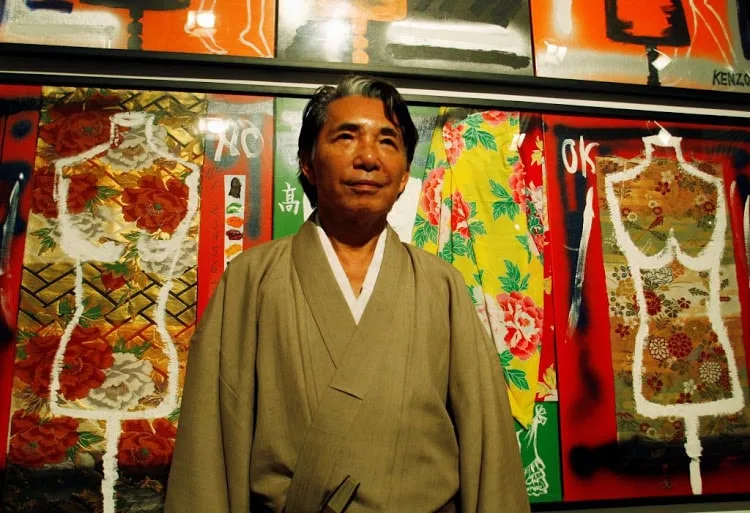
Japanese fashion designer Kenzo Takada dies from Covid-19

Japanese fashion designer Kenzo Takada, better known as Kenzo, who created his label in Paris in the 1970s, died on Sunday, the brand that still carries his name said.

Aged 81, Takada died of complications linked to Covid-19 at the American Hospital of Paris in Neuilly-sur-Seine, a residential suburb on the western outskirts of the capital, his spokesperson told French media.

Also known for its perfumes and skincare lines, the Kenzo brand was sold in the early 1990s to LVMH, the world’s biggest luxury group, and has since had several other creative directors.

Under Kenzo Takada, it was known for its colourful motifs and original silhouettes, which mixed inspirations from Japan, such as the kimono, with other cuts.

“For half a century, Mr Takada has been an emblematic personality in the fashion industry always infusing creativity and colour into the world,” the Kenzo brand said in a statement on Instagram.

LVMH’s chairman and CEO Bernard Arnault issued a statement saying Kenzo had “infused into fashion a tone of poetic lightness and sweet freedom which inspired many designers after him”.

Takada moved to Paris in the mid-1960s, starting out with a small store before soon reaching star status, and remained in his adopted city. His contemporaries in a thriving period for Parisian fashion included Jean Paul Gaultier and Yves Saint Laurent.

“Paris is mourning one of its sons today,” Paris Mayor Anne Hidalgo said on Twitter.

Content courtesy of Times Live & Nairobi fashion hub 

Milan Fashion Week gives small opening to Black Lives Matter

MILAN (AP) – When asked why there aren’t more people of color in the Italian fashion industry, officials have cited a lack of candidates in homogeneous Italy. Five African-born designers in Italy want to put that view to rest with their inclusion on the official Milan Fashion Week calendar Sunday.

Fabiola Manirakiza came to Italy after her parents were killed in her native Burundi in 1972. For her Made-in-Italy Kiza label, she incorporates patterns from her Bantu tribe, as taught by an elder sister, into her Western tailored silhouette, the influence of the Italian family who raised her.

‘’It is not just Italy that needs to see, it is the whole world,’’ said Manikrazia, whose creations were among those featured in the video presentation titled “We Are Made in Italy. Italy is Made of Us.”

The official Black Lives Matter in Italian fashion event is a first step in a process that Stella Jean, the only Black designer belonging to Italy’s prestigious fashion council, hopes will bring real diversity to the creative and decision-making centers of Italian fashion to combat racism in the industry.

Another critical step was the launch of a think tank last week bringing together top fashion houses on the council with Black creatives. But Jean said there remains resistance to the campaign she has launched with U.S. designer Edward Buchanan and Michelle Ngomo, founder of Afro Fashion Week Milano, with pressure on them to abandon it.

Italy’s relatively small African-origin population, which government statistics put at around 1.2 million, has rendered it mostly invisible in the country of some 60 million, with no well-known faces in the political class or on television — and few behind the closed doors of Italian fashion.

Jean and her colleagues began pushing the industry to make concrete moves toward diversifying Italian fashion after major houses showed social media support for the Black Lives Matter protests over racial equality and police brutality during the summer. After many racially charged gaffes in recent years, they also are asking for an accounting of the numbers of people of color working inside the system.

“No one is looking to stand back and blame you for the current situation,’’ Jean said in introductory remarks to the think tank, made available to The Associated Press. ‘’Instead we are asking you to be part of the solution starting today. Racism in Italy … is a very unique case study. It doesn’t resemble the type that exists with our European neighbors and it also differs greatly from the American kind. This however doesn’t render it less harmful or discriminative, only different.’’

Jean told The Associated Press that the few companies whose representatives spoke discussed activities to support Black minorities in the United States and other causes ‘’but completely avoiding the point of our discussion: Black minority in Italy.’’

“I must say with all sincerity that the silence of the representatives of the colossal Made-in-Italy brands left a lasting bitter and embarrassing impression,’’ Jean said. ‘’In total astonishment, it struck me that greatness and global commercial authority does not always correspond to an equally grand sense of responsibility to humanity.’’

On a positive note, the fashion council had agreed to implement six reform points by February, she said. The council also agreed to provide scholarships and mentorships to fashion students of color. And she hopes that the time spent listening will lead to greater participation next time.

The head of Italy’s fashion council, Carlo Capasa, called the meeting ‘’interesting and instructive,’’ and that the brand representatives were there to mostly listen. ‘’There was no reason for friction,” he said.

Calling the meeting, ‘’a beginning,’’ he told the AP the council will continue to work on diversity points of its nearly year-old diversity manifesto, including the commitment that diversity is an asset. He confirmed that the think tank would continue to meet periodically.

The brands participating were Armani, Zegna, Bottega Veneta, Etro, Gucci, Prada, Valentino and Ferragamo. The Kering conglomerate, which owns Gucci and Bottega Veneta, and the OTB group, which owns Marni and Diesel also participated.

A planned closing statement was never issued.

But Miuccia Prada, during the video presentation of next spring’s collection, emphasized the importance of inclusivity, along with sustainability. She acknowledged the need to ‘’really embrace it,” adding ‘’which is what I decided to do, not only declaring it, but trying, little by little, to be better.”

The participants in the Black Lives Matter event have worked in other trades or professions before following their fashion dreams. Most have submitted resumes to fashion companies, with no response, and some have seen professional doors fail to open after promising meetings, without explanation.

Joy Meribe, born in Nigeria and with an Italian Masters in business, studied fashion in Italy so she could alter garments she was selling through her blog on African fashion designers, and realized she had the knack herself. Her collection, Modaf Designs, uses African prints on silk and cotton instead of the traditional wax cloth, making them easier to wear and integrate into a Western wardrobe.

Claudia Gisele Ntsama, originally from Cameroon, has supported herself cleaning houses to pursue her dream of becoming a fashion designer, unveiling in Milan fantastical swirling pieces made mostly of raw hemp.

Ngomo, who discovered the five designers, said she feels a great responsibility also to young people of color in Italy who have been inspired by the initiatives.

‘’Many kids are writing to thank me, saying they have rediscovered their trust, and they had hope,’’ Ngomo said. “I know we are trendy now. I am not sure next year we will have all this light on the project. I want to be positive and believe this is a next step.’’

Content courtesy of Journal Now, The Associated Press & Nairobi fashion hub

Lizzo On The Cover Of ‘vogue’ Magazine October Issue

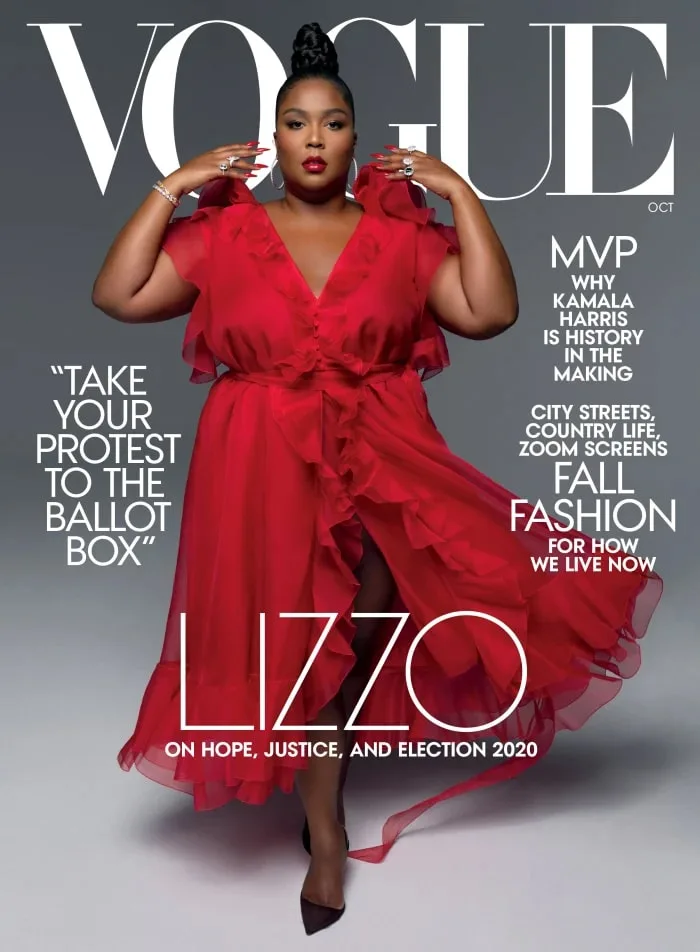
Vogue released its October 2020 cover on Thursday, and it’s Good as Hell: The always fabulous Lizzo fronts the issue, which was shot by Hype Williams and styled by Carlos Nazario.

She Can Be Heroes “I had to travel the world and I had to meet people and read DMs and look into their eyes and really hear their stories, to believe that I was making an impact in a positive way,” says Lizzo. Moschino Couture cape. Sylva & Cie earrings. Bvlgari necklaces. Bracelets and rings by Tiffany & Co. and Chopard. Photographed by Hype Williams, Vogue, October 2020

Clad in a crimson Valentino dress that a politician could probably pull off at a luncheon, the ensemble is rather toned for the performer. (We’re used to seeing the artist in head-to-ruffles and over-the-top feathers, after all.) But the glam is turned up in the accompanying editorial, as Lizzo wears everything from a princess-worthy bubblegum pink Moschino Couture gown to a beaded LaQuan Smith top and skirt.

In the cover story, Lizzo talks justice and the upcoming election with Claudia Rankine. “I just want to encourage people to register to vote,” the bop singer said. “That is the most important thing to me. Because there’s a lot of upset people, and there’s a lot of people who have power. There’s a lot of voter suppression in Black communities. But there’s a lot of angry white kids now. And I’m like, ‘Yo, register to vote. Go out. You won’t get suppressed if you try to go to your ballot box.’

The self-love queen  who Vogue recently announced will be speaking at its Forces of Fashion conference in November also touched on the importance of maintaining a public image that is committed to positivity and celebrating her uniqueness.

“I think it’s important that I take full responsibility for the way the world perceives me because that is the way they’re gonna perceive someone who looks like me in the future,” Lizzo explained. “Maybe, hopefully, that would give some young girl someone to look up to and take away the opportunity for someone to weaponize her uniqueness against her. I had to travel the world and I had to meet people and read DMs and look into their eyes and really hear their stories to believe that I was making an impact in a positive way. And now that I believe in myself in that way, I’m gonna continue to just push that conversation by being a better me every single day.”

The October issue of Vogue will be available on newsstands on Oct. 6. You can read Lizzo’s full cover story here.

Content courtesy of Fashionista, Vogue & Nairobi fashion hub 

African Prom Dresses

Are you looking African prom dress ideas to inspire you for the big night? Or simply looking for the best African prom dress stores online. Hurray! You’ve come to the right place!

Find the latest 2020 dashiki prom dress styles Find your perfect modern & trendy African print prom dress and gown for you.

Prom is one of the many exciting highlights of every high school girl. It’s one of those events in your life that you want to stand out beautifully & effortlessly from the crowd! Over the years, prom has and always will be a big deal for most high schoolers especially in America.

No one ever forgets what they wore on this big night. Which brings us to African prom dresses! They entirely steal the show if you ask me. They draw an accurate picture of what the black lady represents. Bold. Beautiful & Breath-taking.

Every day, we are inundated with latest African dress styles and top dashiki prom dresses. While Africa might not be the first idea that comes to mind for most people when it comes to new fashion trends, African print dresses, or dashiki dress as it’s better known proves to be a great option for a variety of occasions & moments.

Each year, African fashion designers come up with fresh, trendy & stunning African dresses that are excellent choices for all occasions ranging from prom date, weddings, ballroom and gala nights and everything in between.

African dresses are known for their vibrant mixed colors. It’s one of the qualities that makes the African print fabric a versatile and sensational option for special moments like proms and weddings.

The color and shine that accompanies African print prom dresses are irresistible. Let’s not forget that every dress needs accessories to go with it. African print dresses are the easiest to accessorize. This is because of the variety of colors you can choose from. If for example, you were going to wear a white dress, this would limit your accessory options tremendously. On the other hand, if you chose an African print prom dress with three mixed colors, then that increases your options.

African dresses can fit into any customization you find best. Furthermore, they come in multiple colors. The designs of African prom dresses also offer a more natural look. Some clothes can be used to tie your hair up into a neat look to compliment the dress. The cloth is often the same theme and color as the dress to give you that very natural look.

No matter how much we talk about African prom dress designs, it won’t help if you don’t know where to buy prom dresses for black girls. Note that some designs are often done using low-quality cloth, so be careful with where you choose to buy your prom dress.

Each dashiki dress is custom made for you. To help you find the best African prom dress, we have curated 100+ dashiki prom dresses and styles for your big night. So, don’t be afraid to step out beautifully in one of these beautiful African print prom dresses. You are sure to make lots of heads turn in amazement and receive tons of compliments.

And don’t forget, or the look to be perfect, it is usually advisable to liaise with your hair stylist, so you get the perfect hairstyle to complement the dress. African print prom dresses can be woven into a lot of shapes and sizes. So, it doesn’t matter how you look, there is a design that would look absolutely gorgeous on you.

Content courtesy of Africa Blooms & Nairobi fashion hub 

Vivacom partners with Fashion TV International Fashion And Lifestyle Broadcasting Television Channel

The Bulgarian incumbent telco Vivacom has entered into an agreement with Fashion TV to distribute the channel on pay-TV platforms across Africa on Eutelsat 8W.

Fashion TV was launched in France in 1997 and is currently distributed worldwide on over 50 satellites, cable and IP networks, for Fashion TV Africa, it is adding blocks which focus on African fashions and lifestyles.

Commenting on the development, Vladimir Rangelov, senior manager broadcasting service at Vivacom, said: “We’re pleased to add Fashion TV channel on our 8W MCPC platform, extending their coverage to African TV market”.

FashionTV is an international fashion and lifestyle broadcasting television channel. Founded in France in 1997, by its Polish-born president Michel Adam Lisowski, FashionTV is a widely distributed satellite channels in the world with 31 satellite and 2,000 cable systems. As of 2014, it had 400 million viewers around the world, including 80 million in Arab countries.

FashionTV is a multi-media platform offering a review of global fashion and is independently owned and operated from the headquarters in Paris, London and Vienna.

Content courtesy of Broad Band Tv News & Nairobi fashion hub 

Chioma Nnadi Named Editor Of Vogue.com

Chioma Nnadi has moved up the Vogue masthead. The magazine announced Monday that its current Fashion News Director will replace Stuart Emmrich, who announced his departure in July, as the Editor of Vogue.com. In her new role, Nnadi will oversee all of Vogue’s digital content.

The former Fashion News Director will replace Stuart Emmrich, who announced his departure in July.

“I am so thrilled that Chioma will be the new editor of Vogue.com,” said Anna Wintour, the editor-in-chief of Vogue and the artistic director of Condé Nast, in an official release. “Above all we know her as someone who intuitively understands fashion and brings to it a genuine love of discovery. She looks in unexpected places and all over the world to find out who is doing the best work and who we should be celebrating now. I absolutely rely on her eye and her cosmopolitanism and her taste. Even better, she is forward looking and understands that Vogue needs to reach new audiences and do so in new ways.”

Nnadi started her career at the features desk of the Evening Standard Magazine in London, before moving to New York to write for Trace, an independent style magazine. She then went on to work as the Style Director at Fader and landed at Vogue as a fashion writer in 2010. Nnadi was named Fashion News Director in 2014 and has stayed in that position up until her newly announced promotion.

Content courtesy of Fashionista & Nairobi fashion hub

New Home for SA fashion Week at Mall of Africa

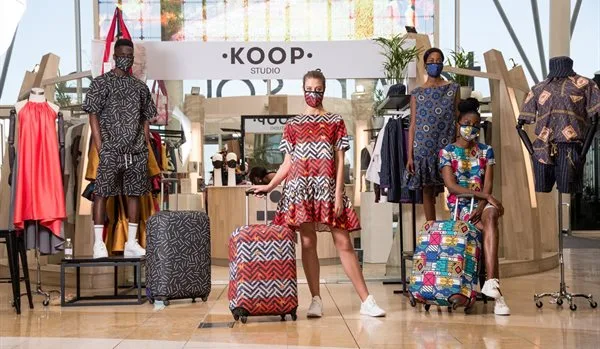
Mall of Africa is the new host of SA Fashion Week and has also welcomed the opening of Koop Studio, a new retail hub that showcases the work of local fashion designers.

Koop Studio is a collaborative venture between seasoned retailer Sandy Rogers and industry stalwart, Lucilla Booyzen, who has been spearheading the development of local design culture as director of South African Fashion Week for the past 23 years.

Located on the shopping centre’s upper level close to Town Square, the new retail space will carry at least 12 collections at any time, which will be interchanged regularly to ensure ongoing variety.

The brands available from Koop Studio include: Ezokheto by Mpumelelo Dhlamini; Dolz by Thabiso Molelekoa; Dope Motherhood by Nqobile Mhlongo; Bi Parel by Shaylene Morris; BLVNK by Neo Rangaka; There and Back by Nicola Valentine and Pilani Bubu; Yung Blood Apparel by Kabelo Legodi; Mekhukhu by Botshelo Molete; Lunar by Nicola Luther; BB Dolls by Beryl Dingemans and Bianca Tanchal; FANthesi by Mike Ubisse; Beryl Dingemans by Beryl Dingemans; Moraka Interiors by Lethabo Cleo Moraka; Watermelon Social Club by Sthembiso Mchunu, Siyabonga Ngcamu and Khayelihle Hadebe; Melomalism by Sinthemba Mthethwa; and Pret-a-Perfect and The Design Innovation by Sandy Rogers.

Broadening access to market
According to Rogers, this highly visible retail presence in the centre of a popular mall will allow the young entrepreneurs to fast-track their brands.

“One of the greatest impediments to the development of a local fashion culture has been the prohibitively high rental costs in major regional centres such as Mall of Africa. By necessity, young designers are typically in studios off the beaten track without access to target markets who could afford to support them,” she says.

The Mall of Africa retail hub is an extension of the Koop Studio in Victoria Yards in Johannesburg led by Rogers. The Victoria Yards studio facilitates the design and product development process from concept to customer for its clients, and is also available to young designers as a workspace for their own brands as well as to get involved with Koop Studio projects and clients.

A modern showroom, Wi-Fi, workspace, cutting tables, access to pattern makers and sampling facilities, as well as manufacturing capabilities with Koop Studio’s manufacturing arm, The Faktory, are all available to designers under one roof in Victoria Yards.

“Koop Studio and The Faktory, where we design and manufacture, are fortunate to operate from the new Victoria Yards semi-industrial development in Lorentzville. This is an incredibly beautiful environment to work in but does not have any real retail footprint. A presence in the Mall of Africa will undoubtedly be a game changer for all these startups and the development of local fashion,” says Rogers.

MaXhosa success
According to Michael Clampett, head of asset and property management-retail of Attacq Limited, the owners of Mall of Africa, the launch of Koop Studio follows on the heels of the enormous success that designer Laduma Ngxokolo has experienced with his MaXhosa knitwear since opening a small store on the mall’s lower level in 2018.

Within a year, the growing appetite for Ngxokolo’s signature Xhosa-inspired modern knits meant the brand had to relocate to a much larger flagship store on the upper level and Ngxokolo became one of the centre’s high profile brand ambassadors.

“Mall of Africa is firmly on track to become the continent’s premier destination for top local design. MaXhosa’s success confirmed our conviction that consumers are increasingly wanting to express a contemporary, yet uniquely African fashion identity. This, and the fact that we are acutely aware of the need to stimulate the local economy, and local job creation, lies at the heart of our strategy,” he explains.

SAFW kicks off in October
In line with tailoring its merchandise mix to support local brands, Mall of Africa has also recently become SAFW’s new host. The three-year partnership will kick-off in October with the staging of South Africa’s first hybrid designer collections showcase.

Twenty-six runway shows featuring collections shot at different locations in the mall will be streamed digitally over three days from 22 to 24 October.

This will be followed by the SAFW Trade Show from from 1 to 3 November in the mall’s Crystal Court with more than fifty designers of menswear, womenswear and accessories, and the SAFW Pop Up Shop where fashion lovers will be able to interact and buy directly from all the participating designers from 27 to 29 November, also in the Crystal Court.

Content courtesy of Biz Community & Nairobi fashion hub

Tshego Manche from a small town of Klerksdorp with Big Dreams For African Fashion

Tshego Manche grew up in Klerksdorp and found sartorial visibility in big city Johannesburg, Born in Klerksdorp, a small town in the North West Province of South Africa, Tshego Manche was raised in a business-oriented family.

Her parents owned a salon and cosmetic store in the township for over 20 years before venturing into other businesses.

“Coming from that environment, I already knew I wanted to be an entrepreneur,” says the 30-year-old fashionista today. “I aimed for what I am passionate about. Growing up, I always said I am a small town girl with big city dreams.”

Manche, known for her sartorial sense among friends, studied for a BCom degree in Marketing Management and whilst in varsity, worked at Pulsate, a fashion store in Africa’s richest square mile, Sandton, in Johannesburg.

“Two weeks after being employed, the owner flew down and said he had to meet me as there was a spike in sales. I was never afraid to approach people and tell them about the store, and also interact with customers. I then learned customer and marketing skills, and developed a deeper love for fashion which led me to want to start my own brand,” says Manche.

La Manche clothing was registered in early 2012 and was ready to put the all the theory into practice. Manche dropped out of varsity during her third year and went on to start selling on a small scale to friends and family, and she opened her physical store end of 2012.

Her mother contributed immensely to her startup and invested in clothing, packaging, and also paid for her flights and accommodation to look for stock in China and Turkey. The brand started growing. In 2014, she employed three workers, teamed up with stylists and magazine editors and the brand grew with sales doubling, she says.

“In 2015, we hit our million mark [offering local and international clothing]. From 2016 onwards, we hit a decline in sales as new entrants in the market came; rental for my space was also high and the location remote.

In 2017, I started 100% custom-making; growth had been slow yet steady and I had nine employees by the end of 2019. I decided to close my physical store in April 2019 and stay with one employee. Now in 2020, we are focusing solely on the online space we have rebranded and restructured.”

https://www.instagram.com/p/B89ZlRijA4o/?utm_source=ig_emebed

The coronavirus also had an impact on business but this has taught her that digitizing the business is the best way to go. She also took to social media, encouraging other entrepreneurs during the tough times.

“I invited different people from different industries to come talk to people and engage about entrepreneurship every Monday for 10 weeks. We had one livestream with over 10,000 viewers,” says Manche.

Who would have thought a small town girl would encourage entrepreneurs in a big city to keep pushing ahead in the hard times.

Content courtesy of Forbes Africa  & Nairobi fashion hub 

Ad