Wednesday 22nd of April 2026

Nairobi, Kenya

Louis Vuitton and Nike “Air Force 1” Sneakers by Virgil Abloh Beating Auction Estimates

The sale, which the Louis Vuitton creative designer helped to plan before his death from cancer at age 41 in November, will benefit The Virgil Abloh “Post-Modern” Scholarship Fund for Black, African-American and students of African descent in the fashion industry.

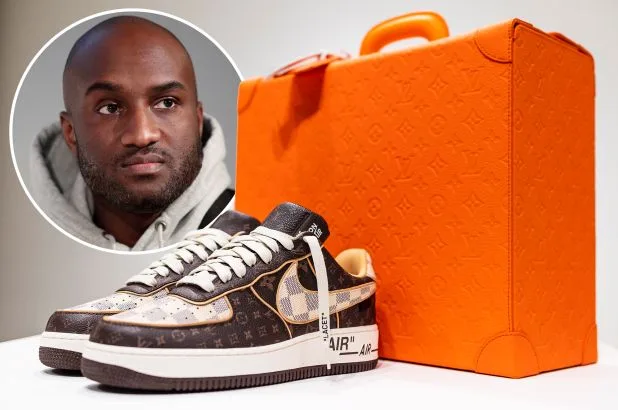
Bids for 200 pairs of Nike/Louis Vuitton “Air Force 1” sneakers designed by Virgil Abloh are running well beyond Sotheby’s initial estimates in an auction with a week to go.

The sale, which the Louis Vuitton creative designer helped to plan before his death from cancer at age 41 in November, will benefit The Virgil Abloh “Post-Modern” Scholarship Fund for Black, African-American and students of African descent in the fashion industry.

“We’re currently at around $6.1 million in hammer price,” said Sotheby’s head of streetwear and modern collectibles, Brahm Wachter, on Tuesday, when bids ran as high as $60,000.The original total estimate was $1 million to $3 million for the Jan. 26 to Feb. 8 auction.

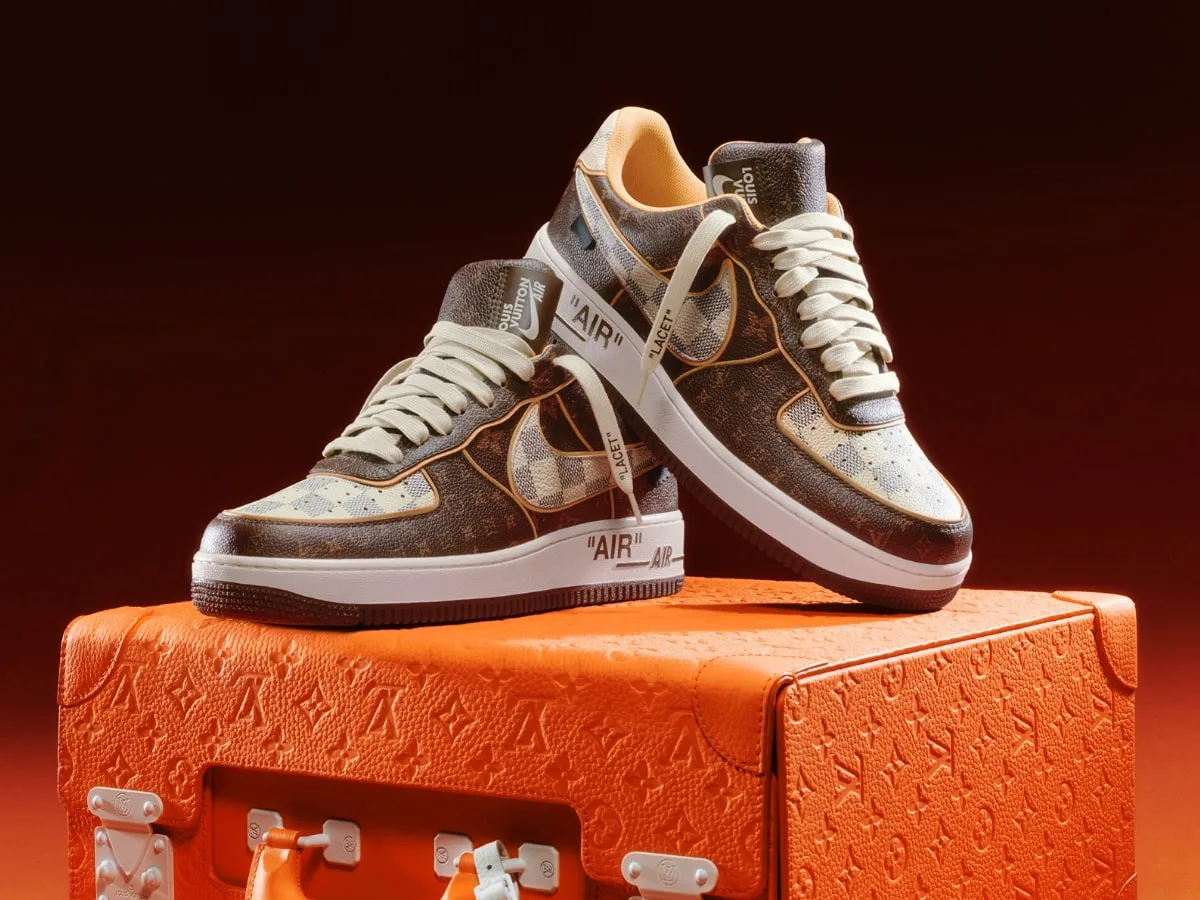
The leather sneaker features Abloh’s signature quotation marks and Louis Vuitton’s emblematic patterns. Each comes with a limited-edition orange pilot case.

“On a size 5, there’s just one pair and a size 18, again, there’s just one pair. When you get to a size 10 or a size 8, there are more,” Wachter said.

The sneakers were the first official collaboration between Nike and Louis Vuitton.

“It’s really bringing together two of the great Goliaths of the industry. And of course, the genius of Virgil Abloh, who so many people love and respect and miss,” Wachter said.

“Bringing all three of these worlds together is really an incredible thing, which I think is driving global interest.”

Abloh, one of the highest-profile Black designers, had been the creative mind behind Louis Vuitton’s menswear collection since 2018. In July 2021, LVMH mandated him to launch new brands and partner with existing ones in non-fashion sectors such as furniture and luggage.

Content courtesy of NFH Digital Team 


Why The World Do Need to Pay Attention To African Fashion

In many ways fashion – especially prêt-à-porter and couture – feels like an ethereal form of art: it pops up in shapes and textiles, in patterns and trends, only to disappear or be replaced a season later. It comes out often loudly and grandly at fashion weeks and events around the world, only for a show to last a few minutes before the curtain falls again, abruptly, leaving in its trail a series of images splashed on Instagram squares and billboards, heavy price tags dangling in front of our eyes like Ulysses’s sirens.

It’s a cycle, a sort of infinite loop of creations, applauds, consternation, outrage, more applauds – a snake eating its own tail, leaving many watching in perplexity: wait, what’s that? And pondering, at times criticizing the unbearable pointlessness (and allure) of luxury fashion.

The thing is, that infinite loop of fashion creation, as “pointless” as it looked, was growing relatively consistently every year. In a story published in 2019, Maverick Life cited a November 2018 Luxury Goods Worldwide Market Study by Bain & Company, which noted that the global luxury market  which includes personal luxury goods, luxury cars and hospitality, fine and wine spirits, gourmet food, fine art, high-quality design and furniture, private jets and yachts as well as luxury cruises ­ grew by 5 percent at constant exchange rates in 2018 to an estimated €1.2 trillion globally, with overall positive performance across all segments.”

Until an infamous month early in 2020 where the world ground to a halt, motionless, the hand of the pandemic slicing into the fashion loop with the precision of a pair of scissors cutting through silk.

Suddenly, like many other industries around the globe, things stopped: no more fashion weeks, no ads on billboards, the slow, almost flatlined pace turned fashion on its head, at least for a few months. Talk of sustainability, more considerate production, meaningful collections, and work with local artisans grew louder.

In this space, where fashion is forced to adapt to its environment, to be more intelligent and thoughtful, South African and fellow African designers are light years ahead of their Western counterparts. Agility, imagination, and a deep, almost visceral concern for telling genuine stories through clothes are often at the core of the collections created by local designers.

Having to design, promote and sell their work with barely any support and little help from the government, with access to luxurious fabrics that are often nonexistent, a Western market that has better and more connected infrastructures, South African designers, artists, and creatives have to rely on ingenuity and backing each other up to move forward. And move forward they do we should be paying attention.

In a 2012 interview with Luxury Society, former Vogue International editor Suzy Menkes explained: “There are two reasons why ‘Africa’ and ‘luxury’ should appear in the same sentence. The first is a new vision of what luxury means in the 21st century. Consumers, particularly in the western hemisphere, are beginning to prize objects touched by human hands – and the handwork in Africa is exceptional. From the work that the Tuaregs have done for Hermes to the bags that are created in Kenya for Ilaria Fendi and for Stella McCartney and Vivienne Westwood, African hands make artistic pieces, often with the added bonus of being sustainable and also ethical.

Her statement rings even more true today.

Take Thebe Magugu for example – the winner of the LVMH Prize (which granted him €300,000 and a one-year mentorship program) in 2019 has always explained how each of his collections, since the launch of his eponymous brand in 2017, been inspired by an almost anthropological approach to design, where societal commentary, economics, South Africa’s complex and rich heritage, and intimate stories are stitched and printed into the garments.

Check Genealogy SS2022 the young designer created a collection based on old family photos, saying: “It’s this idea of memory as a reservoir for optimism”; a reminiscence of his 2016/17 project with fellow designer Rich Mnisi, titled Family Photos, the collection is imbued with intelligent and meaningful design.

Another recipient of the LVMH Prize, sustainable textile designer, Central St Martins graduate, and Cape Town-based Sindiso Khumalo, launched her eponymous label in 2015, focusing “on creating modern sustainable textiles with a strong emphasis on African storytelling”.

In fact, Khumalo designs the textiles in her collections “by hand through watercolors and collage”. Just one look at her garments is enough to understand how “conscious” her designs are: balloon-sleeves on tailored wide-leg pants, barely-there frills enhancing the top of a blouse, and everywhere prints that evoke the rolling green hills and lush landscapes of KwaZulu-Natal, where Khumalo is originally from; her silhouettes are feminine, powerful representations of black women “from the turn of the 20th century and up to the 1980s”.

In 2021, designer Lukhanyo Mdingi told Maverick Life: “Sometimes I feel like a broken record when I speak about the collective, but that is the essence of who we are. I believe in human beings. I believe in design and I believe that you need a community of people to reach your fullest potential.”

He was sharing the vision behind the collection that won him the 2021 Karl Lagerfeld LVMH Prize. Mdingi puts immense consideration and attention into creating incredible garments using local fabrics like mohair and wool, gold threads running through bright reds; he met with producers in the Karoo, and worked with weavers from Philani, a Cape Town-based NGO dedicated to “improving child nutrition and empowering women from marginalized communities”.

On the day he received the award, Mdingi explained that he “felt proud to be representing a community of individuals who had used their time, their talent, and their trust as a means of service. I was also so proud to be representing my country.”

Talking about the collective, Rich Mnisi, known for his branded knitted jumpers and collections inspired by pop culture and modern South Africa, created Stories of Near, a sort of club, “a network of trailblazers that are redefining the African fashion landscape. The club is all about creating an ecosystem of stakeholders with common values and purposes.”

Outside of South Africa, we should also keep an eye on Dazed editor Ib Kamara’s striking work – the Sierra Leone-born and London-based stylist creates powerful and innovative imagery that is reinventing fashion visuals; Brother Vellies founder and creative director Aurora James the designer behind Alexandria Ocasio-Cortez’s MET Gala dress “Tax the Rich” is also the powerful force behind The Fifteen Percent Pledge, a non-profit organization that invites “major retailers and corporations to join (the organization) in creating sustainable and supportive ecosystems for Black-owned businesses to succeed”.

Finally, Liya Kebede’s Lemlem, which she created in 2007, is all about clothes that are hand-woven in cotton that has been “cultivated on Ethiopian farms since ancient times”. The label focuses on sustainability and manageable quantities and orders, rather than massive growth at the expense of quality and craft. This is luxury. DM/ML

The fashion world often looks like a sort of infinite loop of creations, applauds, consternation a snake eating its own tail, leaving many watching in perplexity: wait, what’s that? South African fashion is bringing a refreshing take on an ‘old’ world.

Content courtesy of Daily Maverick & NFH Digital Team 


Fashion Entrepreneur Sews Fabric of Peace in Northeastern DR Congo Rife with Violence

Under the shadow of violence that has plagued the northeastern Democratic Republic of the Congo (DRC) for decades, local fashion entrepreneurs are longing to stitch hopes and sew the fabric of peace by making their own clothing line.

For Patrick Muhindo, a fashion maker who started his own clothing line and sewing workshop called “Kuliko Art” in Goma, capital of DRC’s North-Kivu province, the year of 2021 has not been an easy journey for fashion makers like himself.

“The year of 2021 is not easy, we all know it. But we still managed to advance against all kinds of adversity,” said Muhindo.

Though the bell of 2022 rang more than a week ago, Goma is still in mourning for the deadly suicide attack on Christmas night in the nearby city of Beni, let alone the looming fear over the Nyiragongo volcanic eruption and the ongoing COVID-19 pandemic.

The North-Kivu province, which has been under the state of siege since May 2021, has lost more than 2,000 innocent souls to armed rebels and militants in 2021, according to Kivu Security Tracker (KST), a respected monitor on eastern DRC.

Launched in January 2020, the sewing workshop has earned its fandom over the past months, with its hand-made slippers, handbags, knitwear, and other ready-to-wear items that exuberate with African style.

With a new collection coming up each week for the clothing line, Muhindo has been able to launch several local fashion shows.

Business and fashion dreams all aside, as one of the victims traumatized by the decades-long violence and turmoil, Muhindo in particular eyes the power of fashion and style, so as to stitch hope and sew the fabric of peace for his hometown and people.

“Through fashion, we try to make a statement of cohabitation and peace. All this is done by mixing the colors and fabrics that we put in our collections. Thus, each collection conveys a message of peace, equality, and peaceful coexistence,” said Muhindo.

For him, each piece and each color of the collection speak their own language and send a special message. “For example, a garment is composed of several colors and each color has its own meaning. The blue color represents unity and the white color represents peace,” said the Congolese fashion entrepreneur.

In May 2021, Muhindo created “Maison Kuliko,” a special project dedicated to training young girls aged 12 to 20 in turning needlework and handcrafting their bread and butter and windows of opportunity.

“We started with a training on women’s leadership in the art sector,” explained Muhindo, adding that the training program aims to put into action the gender equality that girls and women also share the chance to thrive on their own.

He believes the sewing workshop also offers a chance for talented designers and stylists who seek the chance to step into the fashion industry.

“In our community, you can easily spot creative and brave young people. This is why I hope my workshop could one day inspire young talent in Goma to pursue their dream in fashion,” said Muhindo.

Content courtesy of Xinhua & NFH Digital Team 

Davido Inks Deal With International Sportswear Brand Puma

Afrobeats star Davido last week announced that he had signed an endorsement deal with global sportswear brand Puma.

DMW leadman Davido, is now a brand ambassador for a popular sports brand, PUMA, The brand shared this message as they unveiled Davido via an official Instagram page, this comes a few days after Davido sealed a deal with WEMA bank.

https://www.instagram.com/p/CXlqFs4Iotj/?utm_source=ig_embed

The ‘Champion Sound’ hitmaker revealed the news to more than 20 million of his followers on Instagram. He is expected to leverage his star power to expand Puma’s imprint in Africa, promoting its Sportstyle collections such as the brand’s iconic T7 tracksuits.

Davido said that he was excited to partner with the company and “to take it to the next level in Nigeria, Africa, as well as with fans across the world.

“Growing up, I saw Puma play an important part in African sports, sponsoring many different football federations,” Davido said. “I also saw the kind of family Puma had built with the likes of Usain Bolt, Maradona, Neymar, Jay-Z, Nipsey, Rihanna, and Lewis Hamilton, among other superstars and I thought, that’s an amazing family to be a part of.”

Puma general manager of distribution in Eastern Europe, Middle East, and Africa Johan Kuhlo said: “We could not be more excited to welcome Davido to the Puma family. Throughout our history, Puma has had strong roots in Africa, football, and beyond. Signing Davido is both a clear commitment to Africa as a key market and a sign that African culture is becoming more and more relevant globally”.

Representative of Puma in Nigeria Persianas Retail’s executive director, Ayo Amusan, said: “We are proud to welcome Davido to the Puma family. With this partnership, our customers and indeed his fans everywhere can expect to see the magic that can happen when two iconic brands such as Davido and Puma come together.”

The singer joins other international musicians, athletes, and celebrities who are associated with the brand. The deal adds to his list of partnerships, which include Viva, Pepsi, Travelbeta, Guinness Nigeria, MTN Pulse, and Infinix Mobile, among others.

Davido is behind four albums, the latest being A Better Time, which was released in 2020. He is scheduled to perform at The O2 Arena in London, the UK on 5 March 2022.

After today’s announcement, Davido will act as a brand ambassador for PUMA in sub-Saharan Africa, North America, and across the world. He will wear PUMA’s Sportstyle collections, including the company’s iconic T7 tracksuits. As an avid sports fan, Davido will also don the company’s Basketball and Football styles.

Content courtesy of Puma &NFH Digital Team 

SA Designer Takudzwa Dlamini set to further Fashion Studies in Milan

A huge stepping stone for me as a start-up  SA designer Takudzwa Dlamini is set to further her studies at the Milano Fashion Institute in Milan.

South African fashion designer Takudzwa Dlamini is described as a woman of very few words who uses fashion as a voice to communicate. Dlamini is set to further her studies after being accepted into a prestigious fashion school in Italy, Milan but says there is still a lack of support for young talent in South Africa.

https://www.instagram.com/p/B1YrltZjZdF/?utm_source=ig_embed

Who Is Takudzwa Dlamini?

Takudzwa Dlamini is a 27-year-old fashion designer whose work is dedicated to redefining society’s view of women and the perceptions of femininity and masculinity and how they interact.

She completed her Bachelor of Arts (BA) in fashion design at LISOF in 2017 and obtained her BA Honours degree in fashion design from the University of Johannesburg in 2020. She has always wanted a career in fashion since she was a little girl.

https://www.instagram.com/p/CI0CTbxjvhv/?utm_source=ig_embed

She is also the owner of her very own fashion brand, Taku Dlamini. According to Design Indaba, the contemporary womenswear brand prides itself on sustainable production practices.

“The key themes in her work are culture, feminism, storytelling and she always aims to invoke a sense of nostalgia,” highlights the organisation.

She has shown her work at the African Fashion International Fashion Week in Johannesburg.

https://www.instagram.com/p/CIfjYAzDG07/?utm_source=ig_embed

Milano Fashion Institute

The talented fashion designer has been accepted to study a Master of Brand and Business Management at the Milano Fashion Institute in Milan, Italy.

“It’s a huge stepping stone for me as a start-up business. I think there’s so much I am yet to learn about the business aspect of fashion. Italian fashion is synonymous with high-quality craftsmanship and there’s so much one can learn from that,” Dlamini told IOL.

“I am always learning and looking to enhance my knowledge and skills. You can never know enough.”

She mentioned that going to Milano Fashion Institute would be a dream for her.

“I’ve always wanted to live in a fashion capital and immerse myself in that space. I am also excited to expand my knowledge and skills particularly in the business of fashion.”

https://www.instagram.com/p/CIXg4jZjv-f/?utm_source=ig_embed

‘Lack Of Support For Young Talent’

Although she has already been accepted to the Milano Fashion Institute, Dlamini has a financial challenge, she does not have funding. She sees this as an opportunity for young designers to be supported more with funding opportunities.

“I feel there is quite a big lack of support for young talent in our industry. I would also love to see more woman designers at the forefront of a very male-dominated industry,” she mentioned.

Content courtesy of The South African & NFH Digital Team 


Dakar Fashion Week Returns to Baobab Forest to Promote ‘Inclusive’ Fashion 

At the foot of a towering baobab tree outside Senegal’s capital Dakar on Saturday, cameras flashed in the waning dusklight as 20-year old Najeebah Samuel strode down the catwalk to zealous applause. Born with cerebral palsy, Samuel, 20, was the first of two dozen models of all shapes and sizes to take the runway at Dakar’s 19th annual Fashion Week event, held at the weekend with the dual themes of inclusiveness and sustainability.

At the foot of a towering baobab tree outside Senegal’s capital Dakar on Saturday, cameras flashed in the waning dusklight as 20-year old Najeebah Samuel strode down the catwalk to zealous applause.

Born with cerebral palsy, Samuel, 20, was the first of two dozen models of all shapes and sizes to take the runway at Dakar’s 19th annual Fashion Week event, held at the weekend with the dual themes of inclusiveness and sustainability. “I want to prove to other disabled kids that you’re not your disability – you’re just you,” Samuel said, wearing an orange and blue dress by Fashion Week founder Adama Ndiaye. “You have to come out and show people who you are.”

Featuring designers from across Africa, the Dakar Fashion Week is one of the continent’s longest-running fashion exhibitions. Forced outdoors to abide by COVID-19 restrictions last year, the organizers of this edition chose to return to the baobab forest to remind attendees of the fashion world’s responsibility to operate in a sustainable way.

Textile production generates 1.2 billion tonnes of carbon emissions annually, and if current rates continue, the industry could account for more than a quarter of global emissions by 2050, according to a 2015 study from the Ellen MacArthur Foundation. Known by her brand name Adama Paris, Ndiaye, who also created the first Black Fashion Week show in the French capital, routinely attaches progressive themes to Senegal’s marquee fashion event.

She sets high minimum quotas for female designers and once banned models using skin depigmentation cream to promote self-acceptance. She chose inclusiveness as one of this year’s themes to contrast the often rigid beauty standards of Western fashion. “I don’t want to live with fashion as the European diktat tells us to,” Ndiaye said. “I want women who represent so many different things, more than just bodies.”

(This story has not been edited by Devdiscourse staff and is auto-generated from a syndicated feed.)

Content courtesy of Devdiscourse & NFH Digital Team

BAFA Buy Black Bazaar Affords Alternative to Traditional Black Friday

This year’s Black Friday saw many shoppers return to stores in person, but the social-justice group Black Allies for Our Advancement hosted an alternative event in Los Angeles’ Leimert Park neighborhood on November. 26 to encourage patronage of Black-owned businesses.

The event hosted California vendors who were organized on Degnan Boulevard with businesses such as Dekonchko Mullings’s Love Smells Good beauty and wellness goods, African beads by Zahra Import, and Wolofwear, which is West African clothing with a modern twist presented by Buna Diagne.

Originally from Senegal, Diagne’s wife, who is formerly of South Central Los Angeles, moved to the West African country where she now designs Wolofwear clothing and enlists the skill of local artists and tailors to manufacture pieces. Featuring African wax fabric, the pieces are colorful with silhouettes in dresses, jumpsuits, and skirts.

By selling the goods during the Leimert Park African market on Sundays from 10 a.m.-7 p.m. and taking advantage of events such as BAFA’s Buy Black Bazaar, Diagne hopes to support the local community and the artists back in Senegal.

“We have people working for us. Our tailor was able to move his family into a better house in a better neighborhood,” Diagne said. “We are supporting at least 10 people back home. We are making sure we are supporting people back home in the motherland and we are making sure we are giving African Americans a way to express themselves through clothing.”

In addition to the vendors who were selling through temporary spaces, the permanent shops that lined the street such as Eso Won Books, Neighbors Skate Shop, and Sole Folks also welcomed the message that was being spread by the Buy Black Bazaar.

At Sole Folks, a cooperative that sells goods such as clothing, wellness items, and home pieces affords a place for Black creatives to cultivate their businesses and grow their entrepreneurial mindsets. In addition to the retail services, the location houses Kicks B Clean a sneaker, hat, and bag restoration business, a design lab where members of the cooperative create their work, and an art space across the street, which includes sewing classes.

“Because the area, Leimert Park is a very sacred and special place for the community, it really is called a ‘village,'” said Himyo Green, program director of Sole Folks and founder of the brand Humans Expressing Compassionate Action, which is also known as HECA.

“To be able to have a space and a place to amplify the wonderful cohesion and welcoming ness that we create in this village is paramount to be able to allow us to exist in a happy space and create environments that are welcoming inviting and uplifting.”

Content courtesy of Apparel In News 


Durban Fashion Fair Celebrates 10 Years In The Fashion Industry

Next week from December 15 to 17, Durban Fashion Fair (DFF) is hosting the 10th annual DFF fashion show at the Durban Exhibition Centre.

Reflecting on 10 years of growth in the local fashion industry, DFF will present 12 shows held over three days where established and emerging designers will be showcasing their talents under the theme ‘Reflections’.
eThekwini Mayor Councillor Mxolisi Kaunda says the ten-year mark is an important milestone to reflect on the achievements made over the past decade.

“Not only are we able to look back on the many achievements made over the past decade, but we can also celebrate the platforms that we have created for emerging designers.

“The DFF has and will continue to provide an important platform for talent and skills development. It has already played an important role in building the Durban fashion industry, which has helped us to grow the economy and create jobs,” he says.

Some of the DFF achievements include Mxolisi Luke Mkhize from House of Saint Luke, who has gone from his first showing as a DFF mentee to showcasing his designs in Africa. Meanwhile, Eli Ball from Made in Africa has wowed fashionistas on runways in Paris.
Again, this year, four DFF mentees became the first-ever South African designers to team up with Mr. Price Sport to design Team SA’s opening ceremony outfits for the Tokyo 2020 Olympic Games.

Content courtesy of IOL 

African Fashion Brings Beauty and Glamour to Niger

For five days the capital of Niger vibrated in glamour and beauty as the International Festival of African Fashion, FIMA, held its 13th edition, about fifty top models and thirty fashion designers showcased clothes, accessories, and jewelry from all over Africa.

Alphadi, the founder of FIMA has always given a very important place to young people in the fashion industry, founded in 1998, almost half of the program of this event is dedicated to young African talent.

Dozens of designers took part in the young designers’ competition, Sun Alejandro, a Rwandan designer based in Gabon, was inspired by the diversity of the Bantu culture – the population of Central and Southern Africa.

“This collection is a little bit of tribal code because I love Bantu culture which I find very rich. That’s why we find panther prints on most of these clothes which is an animal very representative of Gabonese culture and which symbolizes strength”, said designer Sun Alejandro.

The Top Model contest is always eagerly awaited by the public, about twenty young men and women participated in the contest, the event represented an opportunity for beginners like Erudie Deberry from Benin who amazed the public.

“Winning to honor my country, I am also very proud, winning to go to other countries and travel, winning to further develop my career, winning for me first and also for my country, that’s it”, she said.

The public of Niger, a predominantly Muslim country, is very tolerant of other African cultures where the female body is widely shown.

The designers of Niger however remain very attached to the culture of Islam like sisters Adama and Aicha Seyni Seydou, creators of the brand Mam’Mode.

“The female body is something very precious, it’s a treasure in fact. Through our clothes, we try to highlight this body and at the same time respect the local culture”, explained the sisters.

FIMA will come back to Niger in full splendor as usual in 2 years.

Content courtesy of African News  & NFH Digital Team 

Mbabazi House of Style

Mbabazi (House of Style) is a Fair Trade business committed to advocating  African designs through modern fashion and quality products. We are committed to training and employing women and men providing them with opportunities to make a fair living. Mbabazi has 12 permanent employees, 4 trainees (apprentices), and 6 part-timers.

https://www.instagram.com/reel/CS4l0UwArgi/?utm_source=ig_embed

Mbabazi (House of Style) was founded in 2005, by Grace Byeitima, the name is in honor of her single mother, (Mbabazi Loy Rujumba), to appreciate her for the skills she taught her at an early age and teaching her the value of hard work.

At an early age, Grace remembers her mother saying, ”With the proper skills and hard work, you can succeed in life.” This is the backbone for Grace in the creation of a thriving fashion business – a business that inspires her mother, siblings, countless others and provides revenue for hardworking women and men.

The same heart and soul that fashions a successful shop and workshop in Uganda now exists in Memphis where Grace has resided since 2014. With her own elegance and design refinery, Grace merges the fabrics and prints of African tradition into new modern statements of style.

In 2007 Grace invited her mother so they could work together. Loy now heads the production department sharing her 30+ years of experience with our tailors and trainees in Uganda. Without her, Mbabazi would be non-existent.

Mbabazi is not just about clothing, the accessories and non-clothing-related items reflect ideas that inspire Grace and add to the ideas of a House of Style.

Mbabazi has thrived in Uganda, despite issues that exist in competitive business markets of developing nations.

Many well-meaning non-profit organizations who compete in the same market as traditional businesses such as Mbabazi are supported by subsidies and grants that create an uneven playing field. We at Mbabazi believe the saying “TRADE NOT AID” describes the best way forward for Economies in countries such as Uganda.

Mbabazi is a for-profit business that is supported by people like you.

Content courtesy of Mbabazi House of Style & NFH Digital Team 

Mbabazi House of Style Kampala is a Testament to one Woman’s Passion for Fashion and Empowerment

There was a time when Grace Byeitima, owner of Mbabazi House of Style, was interested in lawyering, not pattern layouts, But her mother forced her to learn about the latter.

“I wanted to be a lawyer,” said Byeitima, who is from Kampala, Uganda. “My mother was a teacher in a vocational training institute, and she made me go where she was teaching and learn how to sew.

“I went grudgingly, but I went anyway.” Yet today Byeitima, 43, who has sold African-inspired garments, jewelry, and other knickknacks from her shop in the Broad Avenue Arts District since 2017, is grateful that her mother insisted that she learn how to sew.

That’s because it not only has allowed her to craft a life of independence for

“I would make sure that I left school on time to work on it [patchwork clothing] so that I could use the sewing machine first.”

But when her mother was ultimately laid off from her job, that dashed Byeitima’s hopes of attending college and studying law. On top of that, Byeitima, who was 16, learned that she was pregnant.

herself but for other women who want to use entrepreneurship to escape jobs that devalue them.

This is what Byeitima aimed to do back in Kampala, she said one of the ways that her mother endeared her to sewing was by bringing home unfinished sewing work – and paying her and her siblings to finish it.

“Some of the pieces, like what you’re seeing right now, is patchwork,” said Byeitima, as she pointed to ruby, saffron, and black cowl neck shift that she was wearing.

“So, I have this baby, my mom has no job, and I have this baby to take care of,” she said, It wasn’t long before Byeitima learned that she was more a target for exploitation than employment.

“I realized no one would hire you if you have a lot of baggage, and I had a baby,” she said. “The simple jobs I could have gotten would have been as a secretary or a receptionist. But you’d go to apply for these jobs, and men would want to sleep with you.”

“As I looked for jobs, I found that people don’t want to pay you what you’re worth…” But soon, Byeitima began crafting a way out.

Literally.

She began sewing garments for her baby daughter and taking the child from store to store to model them. That helped her land a year’s apprenticeship at a textile workshop that one of her mother’s former bosses owned.

“That’s where I learned actually most of what I know now, like pattern cutting and drafting and all of that,” Byeitima said.

In the meantime, she said, her mother opened a bridal shop, and together, they opened Mbabazi House of Style – Mbabazi means grace or kindness in Ugandan – in Kampala in 2005.

Mbabazi is also Byeitima’s mother’s name – Mbabazi Loy Rujumba.

“The business was thriving, because I was making African print cool for younger generations,” Byeitima said. “I was working for a lot of the embassies, doing a lot of their furnishings and everything else. We were known in the ex-pat community for doing really creative work…”

Yet Byeitima was doing more than making money. She was trying to help other women make a better way for themselves.

“We began training women in sewing skills and offering them jobs. I still work with my mom on that,” she said.

“It grew into something bigger than just me…no girl with skills should have to beg for a job if they can work for themselves, and no girl should be compromised [sexually] to get a job…

“I started it for me, to look out for myself and my baby, but then it evolved into a social business as well.”

Change continued for Byeitima.

In 2011, she met John Haley, a Memphian who was working for a Non-Governmental Organization – organizations that provide services or push for policies but are unaffiliated with any government – in Uganda. They married in 2014, and she moved with him to Memphis.

“I never dreamt of being in another country, but I knew I would fall in love with Memphis,” Byeitima said. “The trees, my God, there were so many trees…I’m from Africa, and when we see trees it’s in the forest

“I just fell in love with the city…we went to a concert at Levitt Shell, and I have never seen so many people in one place just enjoying music. And I love music.”

Byeitima fell in love with Broad Avenue after her mother-in-law took her there. That’s when she began to get ideas for a store there.

But not without the urging of her mother.

“My mom was like: ‘You’ve been in the U.S. since 2014 and you haven’t opened a store?’ I was like, ‘This woman is crazy. She thinks this is easy…”

So, Byeitima did what she learned how to do when she took her baby from shop to shop in Kampala to show her designs.

Content courtesy of Commercial Appeal & Nairobi Fashion Hub 

Rapper Kanye West is reportedly being lined up as Creative Director at Louis Vuitton

Kanye West could be taking on a prestigious new role as the creative director for Louis Vuitton following the sad death of fashion legend Virgil Abloh, according to new reports.

The rapper has branched out in recent years, from best-selling musician to launching his own clothing line, Yeezy, and even dabbling in politics – short-lived as that was.

Now it seems the Donda rapper could be taking his love of fashion design even further as reports indicate he has been tipped for a prestigious role in world-renowned brand Louis Vuitton.

According to The Sun, Louis Vuitton plans to replace icon Abloh with the musician, 44, who was a close friend of the late designer.

The outlet reports that Kanye and Abloh discussed the rapper taking over the role shortly before Abloh’s death aged 41 last month.

A source told the outlet: ‘Kanye is devastated about Virgil’s death because they had been friends for years and worked together a lot.

‘They shared a similar vision and now Kanye feels he owes it to Virgil to continue his work at Louis Vuitton.’

Ye and Abloh had been firm friends for over a decade, first meeting in 2009, and the designer held the role of creative director at Kanye’s own firm, Donda.

The Off-White founder and Louis Vuitton designer died on November 28, after a private two-year battle with cancer.

Devastated Kanye dedicated his Sunday Service to Abloh following the news of his death, and later attended his memorial with ex-wife Kim Kardashian and their daughter, North.

At the memorial, Kanye was seen placing a supportive hand on Abloh’s sister as she delivered a heartfelt eulogy for her beloved brother.

Abloh first sparked his love for fashion when he was attending the Illinois Institute of Technology, while getting his Masters of Architecture, and soon began designing his own T-shirts.

The designer launched his debut company, Pyrex Vision in 2012, and founded his iconic fashion house Off-White in 2013.

Kanye’s sneakers and menswear line, meanwhile, is said to be worth ‘billions’ of dollars.

Content courtesy of Metro Uk & NFH Digital Team


Ad