Sunday 25th of October 2026

Nairobi, Kenya

Birimian First Investment Company Dedicated to African Luxury Brands Launches

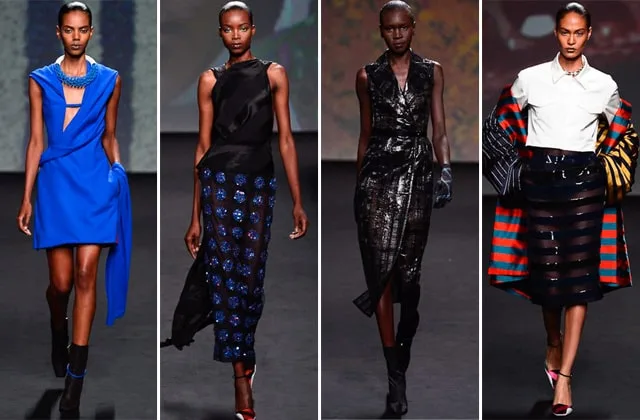
Birimian, the first operational investment firm dedicated to connecting African luxury and heritage fashion brands with international investors, has launched to accelerate the international emergence of African creators and designer brands.

The aim of Birimian is to support African designers and help them facilitate and accelerate the growth of their businesses regionally and internationally, acting as a bridge between the continent’s entrepreneurs and creative talent, and strategic stakeholders in the international fashion and luxury industries.

https://www.instagram.com/p/COARUWDHn9D/?utm_source=ig_embed

Founded by an all-female executive team, Birimian is led by Laureen Kouassi-Olsson, a seasoned executive in the African financial services and private equity industries, alongside Michelle Kathryn Essomé, the former chief executive officer of the African Private Equity and Venture Capital Association, who will be the chief financial officer and head of investor relations.

In addition, Céline Gainsburg-Rey, who specializes in supporting luxury brands, has been named head of strategy and marketing, while Olufunke Faweya, who has dedicated her career to operations management and international brand expansion, joins as head of brand operations.

Birimian will address the challenges associated with capital, production, and international distribution faced by African designers, explained the investment firm in a statement while establishing an “ecosystem of experts and professionals who specialize in value creation for independent labels and international brands”.

The investment firm will work with brands across the fashion, accessories, beauty, and cosmetics, and gourmet sectors and is launches with four brands that it provided support through a combination of financing and bespoke growth strategy.

https://www.instagram.com/p/CMKeOgzBiVA/?utm_source=ig_embed

The first brands to join its portfolio are women’s apparel and accessories brand Christie Brown from Ghana, which has been worn by Beyonce and Alicia Keys, Loza Maléombho from the Ivory Coast that bridges traditional African aesthetics and contemporary fashion, womenswear brand Simone et Élise also from the Ivory Coast, and Belgium-based bag brand, Yeba.

New investment firm Birimian places a spotlight on African luxury fashion

Birimian said that it will focus on providing long-term financing of brands in the company’s portfolio, investing between 30,000 and 3 million US dollars in brands and creative enterprises at incubation, acceleration, and growth levels.

Alongside financing, brand consultation and coaching will be offered to ensure business processes and brand identity are in line with each designer’s goals, as well as strengthening of internal control and financial planning processes, and production and distribution capacity through strategic partnerships.

Birimian will implement expansion plans ensuring sustainable growth, both regionally and internationally, with investors tied in for a minimum of five years to ensure long-term support for partner brands, as well as international exposure for creative companies by optimizing the use of digital channels.

Africa’s textile and clothing market is a growth market, with the industry estimated to be worth more than 31 billion US dollars. The continent also accounts for the second-largest number of jobs in developing countries after agriculture.

Commenting on the launch, founder Laureen Kouassi-Olsson said in a statement: “Birimian has been created to champion the exceptional talent and creativity emanating from the continent in order to help it reach the audience it deserves. Our mission is to use a combination of finance, mentoring, and operational support to help our brands gain international exposure, achieve their true potential, placing hence the continent’s cultural heritage on the world stage.

Birimian is a call to action to contribute to the emergence of African heritage brands.

Our unique value proposition relies on the extended ecosystem of experts and key stakeholders from the international fashion and creative scene we will build to support the sustainable growth of our brands and in turn connecting investors and industry enthusiasts with the continent’s finest designer brands and creative entrepreneurs.”

Content courtesy of Fashion United & Nairobi fashion hub 

Uganda Celebrity Stylist Abryanz Launches New Fashion Collection as He Celebrates 10 years in Fashion Industry

Fashion guru Bryan Ahumuza aka Abryanz from Uganda has launched a new fashion collection dubbed ‘When No One Is Watching’ to celebrate 10 years in the fashion and style industry.

Abryanz has put a mark on Uganda’s fashion industry especially through his Abryanz Style and Fashion Awards (ASFAs) event which happens annually, and now he has decided to introduce a new fashion line as he celebrates 10 years in the industry.

According to Abryanz, his latest fashion invention has a combination of passion, zeal, and love that he has for creating excellence.

“The rebirth of the brand’s look and feel enhances the apparel space that the brand wishes to reach and is led by the concept of merchandise drops. This will use themes of inclusion and diversity of the community in both an ergonomic and socially inclined mandate,”

“Rather than just a fast fashion brand with no message, this newfound proposition will inspire patriotism of its identity and honest representation of its sense of belonging,” he noted

He adds that this new collection will give a true sense of rigid life in a fast-paced life of youths and a feeling of being young at heart.

“Natural awkwardness of the abnormally joyful youth who cultivate everything alternative and truly influence a shift in culture at every point of advancement.” He said.

This new collection will offer styles in staple essentials ranging from unisex tracksuits, branded t-shirts showing off the new brand logos, caps, underwear for both male and female, and high-end fashion eyewear.

About Abryanz Shop

The year is 2010, and the fashion community in Uganda is at its inaugural stages, and at one of the most significant points in its growth. During the same year, the now renowned Abryanz brand was birthed.

Abryanz’s 11-year span in the business has been quite an eventful, but fulfilling journey that has seen our portfolio grow from fashion, entertainment to the hospitality business, their approach Right from its foundation, The Abryanz brand set out to create a world-class service/product tailored for the modern and fashion-conscious consumer.

Abryanz’s approach is to have class and exquisite taste at the forefront of many of our products, giving our clientele a once-in-a-lifetime and unforgettable experience.

Whether it’s a piece of clothing from our men’s apparel or the hospitality at any of our events, we strive to ensure that our guests/clients receive a world-class product from our brand.

They thrive on our creativity and flexibility, a trait that enables us to cater to any of our clients that come our way.

Content courtesy of  WatchDog Uganda & Nairobi fashion hub 

Pan-African Influenced Lifestyle Brand The Malaika Collective Launches Crowdfunding Campaign on iFundWomen

The demand for a premium apparel brand that celebrates the culture, style, and community of the Pan-African diaspora is tremendous. The Malaika Collective has stepped up to answer the call.

The African diaspora radiates beauty, reality, and undoubted resilience. Not surprisingly, all of these qualities, and more, have made their way into the style of apparel embraced by African people no matter where they live worldwide. In exciting news, a new lifestyle brand is celebrating this magic to help empower and inspire the fashion and community conscious, while also encouraging communication and networking.

Enter The Malaika Collective. The Malaika Collective is a new brand aimed at creating a multicultural home for Black and Brown people from all parts of the African diaspora and their friends and allies alike. As a collective, the brand’s apparel pays homage both to the traditional homelands where the diaspora finds its origins, as well as of the new countries and fresh beginnings that promise so much for the future. Currently, The Malaika Collective is running an exciting crowdfunding campaign on iFundWomen to help bring its first collections to market. All are encouraged to show support.

“The Malaika Collective is a culmination of a five-year venture of innovative storytelling through fashion, media, and education,” commented founder Rita Bunatal. “I found inspiration and empowerment through my Ghanaian and Kenyan heritage. We have seen success with our early, sold-out, t-shirts. And now we look forward to taking things to the next level and having a positive impact on fashion and the world.”

Beyond simply an apparel effort, The Malaika Collective has much larger plans that are emerging to help empower the community. A key part of this is scheduled for Summer 2022 when The Malaika Collective will launch its first flagship location in Brooklyn. This space will double as a retail store, as well as being an immersive, membership-based innovation hub for Black creators and entrepreneurs.

Planned highlights of the sure-to-be exciting location will include interactive educational walls, a kitchen that prepares Afro-fusion-inspired dishes, and a co-working + co-creation space along with a separate event space to host events celebrating the heart, culture, and traditions of both Brooklyn and the pan-African diaspora. The co-creation space will be available to the members of The Malaika Collective community.

The iFundWomen campaign will help make all of this, and much more, a reality.

A number of different perks are available depending on donation size related to the iFundWomen campaign. The iFundWomen Malaika Collective page also goes into great detail about recent activities from the collective and its recent challenges faced, including the last year in the face of Covid-19.

Support the Malaika Collective crowdfunding campaign here. Be sure to visit the official website at https://www.malaikaapparel.com.

Content courtesy of PR Underground & Nairobi fashion hub 

Fabric and Flux, What’s next for Thebe Magugu?

The 2019 LVMH Prize winner Thebe Magugu is not one to rest on his laurels. For his latest collection, experimental textile collaborations might just see him continue his groundbreaking streak.

When fashion designer Thebe Magugu started working on the central print for his autumn/winter 2021 collection, Alchemy, the question “what’s next?” was on his mind, and he called on recently initiated sangoma and fashion stylist Noentla Khumalo to throw the bones, as it were, in search of the answer. “She came to the studio and she laid out her mat and she threw her bones with the question, ‘what’s next?’ I think we’re all very curious about what’s next; I think things have been so much in flux that we’re all actually just yearning for a bit more clarity,” explains Magugu.

Once she had thrown the bones, shells, crystals, and other objects, Magugu asked her not to tell him the answer: “I told her I would rather not know, I’d rather let it be up to the wearer if that makes sense. I want whoever purchases this garment… I want them to sort of draw that conclusion on their own just from the image and the feeling that they get from the garment.”

Instead, the designer photographed the objects the sangoma threw on the mat and got to work playing around with the elements, making some bigger, some smaller, and tweaking the colors. “I’m [interested] in the changing [attitudes] towards African spirituality, and the idea of ukuthwasa,” says Magugu, referring to the process through which sangomas receive their calling and training.

“Among the youth, it wasn’t really something that was spoken about like it was this strange sort of secret shame; but I feel like the stigma around ukuthwasa is sort of breaking down as people embrace it a bit more. And I knew I wanted to have a headlining print that sort of spoke to this idea. And if I’m doing African spirituality, I needed to collaborate with traditional healers, a sangoma, to authentically contribute to the collection,” he explains.

This infusion of culture, a South African narrative, and an innovative approach to textiles is a big part of what led the designer to win the LVMH prize in 2019 over thousands of young designers from across the globe, and becoming the first entrant from Africa to win the prize, as well as launching his career to international acclaim and media coverage by some of the most respected fashion media publications.

“I still struggle to speak about it a lot of the time, because of the way my life has been… I feel like a lot of the things that are happening weren’t meant for me, if that makes sense. Because there was just so much lack in terms of resources and opportunity. My mom worked incredibly hard, but even so… Over the years, you sort of taking away the big dream and you start thinking about the practical…

The past two years have almost been like an extreme rejection of that, and it took a bit of time to get used to it. It’s all these sorts of things that I dreamt of as a teenager, but as I grew up, I started thinking that’s obviously not meant for me. The paradigm shift to change that mentality has actually been weird and sort of challenging. I am just so… I’m so thankful,” says Magugu.

Indeed, the past couple of years have brought him moments young designers around the world can only dream of. Most recently, a dress from one of his previous collections was acquired by the Met for its permanent collection. “There’s also dissociation, and I find that I feel it sometimes, like when I got the email from the Met or when I got an email from Vogue editor-in-chief  Anna Wintour, it’s almost as if this is happening to someone else and I’m responding for them. It’s crazy, but that’s exactly what it is. But also, that being said, I appreciate that sort of dissonance because I think it’s so dangerous when people overly tie the success of their business or brand or company to their actual identity,” reflects Magugu.

The Thebe Magugu brand now gets to show at Paris Fashion Week on the official schedule, and his collections are sold at stockists around the world including China, Nigeria, Japan, New York, Italy, Spain, London, and France. However, even as his business grows, Magugu says he is particularly proud to find that when it comes to online sales, the brand has significantly grown its South African following: “The wholesale side of my business is more international facing, but my online store is approximately 85% local, which is incredible, it’s really incredible.”

The collaborative print with Noentla is one of six looks from the Alchemy collection that the designer has entered into yet another prestigious fashion design competition, the International Woolmark Prize. He has already made it to the group of the top-six finalists, and the collection is being judged by supermodel Naomi Campbell and other leading names in global fashion media. Inputting together the other looks, he has continued to collaborate with various artisans in innovative ways.

One such collaboration included burying wool underground for a few weeks. Says Magugu: “I worked with an eco-textile maker in Ladysmith, her name is Larisa Don. For some strange reason, I am quite a big fan of corrugated iron as a motif. I keep on going back to the idea of corrugated iron. In past collections, I’ve had corrugated iron as a print, but with this one, we wanted to revisit it in a more experimental way.

We took white merino wool and sandwiched it between two sheets of corrugated iron, and then we sort of [buried it underground] and let that rust over a few weeks. Then we uncovered, washed, and treated it so that it’s a wearable fabric and comfortable. It came out so beautiful, in all these oranges and browns.”

For another print, Magugu and Don took the imphepho plant, largely believed to chase away bad spirits and to facilitate communication with one’s ancestors, as well as cannabis leaves and “flower-pounded” them onto textiles, a technique of using heat, pressure, and chemicals to transfer the color and shape of the flowers directly onto fabric. For another, he worked with a company in the Netherlands to translate African scarification practices onto textile as a proverb written in Braille.

“It was for the proverb that says, ‘what you do for your ancestors, your children will do unto you. I’ve always loved that quote; so the scarification on the back of the jacket also doubles as Braille for that,” says Magugu. For yet another textile development he collaborated with the revered Japanese textile maker Adachi San, “he made the fabric by hand… he does it on a loom; it’s this black wool fabric with white pinstripes peppered with these rayon pom poms onto the surface of the fabric.”

As for “what’s next?”, the designer is happy not knowing what Noentla divined from the bones. With his team and collaborators, he is putting in the work and creating the future; building the business, as well as finalizing new textile developments that will be part of the Alchemy collection, which will soon be judged for the Woolmark Prize, which, if he wins, will be another first for South African fashion design. DM/ML

Content courtesy of Daily Maverick & Nairobi fashion hub  


LVMH Prize Semifinalists Herald New Era of ‘Expansive Expression’

PARIS — Held online for the first time due to the coronavirus pandemic, the LVMH Prize showroom provided a tantalizing glimpse of what’s in store once the world returns to normal, and when it comes to fashion, it seems that anything goes.

Working under the toughest economic conditions in recent industry memory, this year’s 20 semifinalists presented eclectic collections rooted in their personal culture and identity. The ban on international travel only served to highlight the geographic diversity of the participants, including the first Arab woman to make the shortlist.

“This year, there was a lot of color and knitwear. Two or three years ago, the big story was streetwear. That’s less the case now. There is a growing trend for gender-fluid fashion, and sustainability remains a core concern,” said Delphine Arnault, second-in-command at Louis Vuitton and a key talent scout at LVMH Moët Hennessy Louis Vuitton, the parent company of brands including Louis Vuitton, Dior, and Fendi.

“It really reflects the state of fashion at any given time. It’s like a snapshot of society,” she added.

That image has never felt more fractured. American designer Christopher John Rogers, known for dressing celebrities like Cardi B, Rihanna, and Lizzo in his colorful creations on the red carpet as well as Vice President Kamala Harris at the Biden inauguration described the era of fashion as one of “expansive expression” in his presentation at the digital showroom, which ran from April 6 to 11.

“I want to be a part of this league of talent that is breaking down this traditional aesthetic hierarchy of what we expect luxury clothes to look like,” he told WWD in a Zoom interview from New York City.

“We’re in an era where someone who’s doing this really beautiful double-felted cashmere coat in gray that work can be just as chic as this rainbow intarsia knit fantasy, you know? It’s kind of the same thing. It just depends on what your preference is, and it doesn’t have to be on some scale. That’s something I really believe in, and I think that this year’s crop of semifinalists definitely are proof of that,” he added.

Like many emerging designers, he’s gearing up for an era of freedom once the COVID-19 crisis subsides.

“Everyone’s kind of anticipating another Roaring Twenties moment where everyone’s craving to get out, craving to just let loose and not really care too much about everyone else’s opinions about how they look,” he said. “Everyone’s going to want to present themselves differently, but I think the one universal vibe is just going to be, like, ‘insanity.’”

London-based designer Alicia Robinson, whose AGR label is known for rainbow-hued knitwear and patchwork cargo pants, echoed the sentiment.

“The new era of fashion has definitely changed, we no longer have to follow those traditional paths. You can create your own platform. You can talk to your consumers directly and that’s all due to technology,” she said in her filmed presentation.

In the meantime, designers are dealing with hurdles ranging from closed stores to presenting their collections to buyers online. While the physical LVMH Prize showroom, traditionally staged during Paris Fashion Week in early March, normally gives them instant access to a wide range of industry luminaries over a 24-hour period, there was no such rush of adrenaline this time around.

“It’s really strange, because this whole prize is centered around something that’s quite physical, which is clothes, and we’re doing it all digitally,” said Cynthia Merhej, the Lebanese designer behind the Renaissance Renaissance label. “I think they did a really great job with the platform. It looks amazing.”

Cerebral yet sensual, her designs are rooted in rebellion against Lebanon’s patriarchal society with not a sequin in sight. “The pieces are not meant to be Instagram pieces. That’s not the philosophy behind it at all, so they really need to be seen and touched,” she argued.

Arnault said the showroom event was pushed back by a month to give organizers time to create an enhanced site, with content including videos and 360-degree views of key outfits. For the first time, members of the public are being asked to select their favorite, with 10,000 votes registered by midday on Friday.

“It’s always interesting to touch the fabrics, see the quality of the products and the creativity of the cuts. That’s not as easy to do online,” the executive noted. “Our teams have done a tremendous job to try to render as faithfully as possible a meeting with the designer.”

It represents a digital leap for the event. “It gives them visibility, and for the next editions, it will allow us to combine, hopefully, a physical event with this existing digital platform that we can build on in the future. It’s also great for the public, so it will give us the best of both worlds,” Arnault said.

LVMH hopes designers will be able to physically attend its prize-giving ceremony, tentatively scheduled for September. Last year, it divided the 300,000-euro prize money between the eight finalists, in addition to creating a solidarity fund for previous winners.

“We hope it will be a physical event, but if that’s not possible, we will rethink the format of the prize. We may do something similar to last year, or we might have a new idea. But right now, we are very much hoping to have a live final,” Arnault said.

Even experienced remotely, being short-listed for a prize is a lifeline for many of the smaller designers selected. Merhej, whose label is stocked exclusively at Net-a-porter, described it as “a huge ray of sunshine” after a year marked by a deep economic crisis, successive lockdowns, and a devastating explosion in Beirut in August.

“I know it’s really meaningful for everyone in Lebanon, because we really need a win, in a way. We need something positive to look forward to,” she said. “Since last year, we’ve been going through what I can only call a nightmare mixed with hell.”

As the first Arab woman to make the cut since the prize was launched in 2015, she hopes to open the way for other Middle Eastern designers and change preconceptions about her culture.

“We feel others are telling our stories in ways that don’t really feel familiar to us, or we keep being pigeon-holed into certain narratives,” she explained. “Lebanon means nice food, beach, Botox, embellished gowns, everything over-the-top and crazy, but that’s not the Lebanon I personally know. Yeah, I think that exists, but there’s also a huge chunk of us that aren’t like that.”

Adeju Thompson, the Nigeria-born founder of the Lagos Space Programme, similarly wants to challenge the image of African fashion. A nonbinary, queer, Yoruba, and Black designer, who goes by the pronouns they/them, their multilayered creations stand out in a city known for its status dressing.

“Even though a lot of what I do is informed by my identity as an African, I’m more than that. I’m a global designer,” said Thompson, who cites designers like Yohji Yamamoto and Rei Kawakubo as early influences. “In my work, that’s something that I’m always hyper-aware of, you know  just trying to break up misconceptions about what design coming from the continent looks like.”

There’s a strong political dimension to it, too. In 2019, Thompson was assaulted by the Special Anti-Robbery Squad, a notorious unit of the Nigerian police with a long record of abuses. “I was detained for five hours because of how I dressed,” they recalled.

“I think it was in that moment when I started to see Lagos Space Programme and the work I do as a form of protest,” Thompson said. “When I’m exploring my identity as a queer person, in the West, this is normal, and I guess so many designers could do this. Where I come from, I could get into trouble. For me, it’s so important that I speak up for myself.”

Sold exclusively at the Lagos concept store Alara, the label has caught the attention of overseas buyers following its recent presentation during Milan Fashion Week, but Thompson is taking it slow. “I’ve never been someone who is very comfortable with the limelight. I don’t want to be a celebrity designer. I am very happy to be not seen, and for my work to speak for itself,” they said.

Chinese designer Shuting Qiu, another cross-cultural creative, believes the LVMH Prize has the potential to break down barriers. Born in Hangzhou, she left at 19 to study at the Royal Academy of Fine Arts in Antwerp, Belgium.

“If I win, for the cultural communication it really helps because I’m contemporary Chinese: I have my Asian culture, but I also understand European culture,” she said, noting that China has yet to launch a breakthrough designer on the international stage.

“Chinese design is getting better and better, so I really can help. I can do something in my generation,” Qiu mused. “I really feel like I have a responsibility to do this. It’s also my dream  it’s pushing me to really work hard to go forward.”

Used to traveling across the world to gather inspiration, she has refocused her attention on Chinese destinations and is also sourcing more fabrics domestically, like the silk jacquards that she likes to pair with clashing prints and colorful embroideries.

“I think people want to wear something more colorful, cheerful and easy more casual maybe, something light,” she said of the mood one year into the pandemic.

“I never want to see a pair of jeans again,” offered Merhej, noting that Lebanese women are experts at using fashion to beat the blues. ”Life there is quite difficult, so the only thing we have that cheers us up, and makes us feel good and better about our reality, in a way, is getting dressed up.”

The class of 2021 could well usher in a new era of individuality in fashion. “Christian Dior created his house in 1947 after World War II. After very challenging periods, you always see a surge in creativity. I’m curious to see what will come out of this pandemic,” Arnault said.

Content courtesy of WWD & Nairobi fashion hub 

Ananse Africa partners Mastercard Foundation, DHL to connect 1,000 African fashion designers, artists to global markets

Ananse Platform Simplifies Global And Local Transactions For African Designers, Artists, And Artisans

Africans are born storytellers, since the time of old. Ananse (/əˈnɑːnsi/) Africa is the meeting place for authentically African, independent brands to tell their stories.

Storytelling in African cultures has been a way of passing down traditions, keeping cultural practices, as well as maintaining a sense of community. The story of Ananse can be traced back to West African folklore from the Ashanti Region of Ghana. An ode to the origin, Ananse Africa is a digital platform for brands to tell their stories through our e-commerce marketplace.

Beautiful things, made by Africa, delivered globally. This is how best to summarize Ananse Africa, a startup eCommerce platform, launched today, in Johannesburg and Lagos, connecting African designers with local and international consumers. The platform showcases the rich and diverse

https://www.instagram.com/p/CNMW70Dj5go/?utm_source=ig_embed

tapestry of Africa’s creative talent and simplifies international eCommerce payments and logistics for creative entrepreneurs on the continent. Ananse has partnered with the Mastercard Foundation and logistics market leader DHL, to roll out the ‘most comprehensive, pan-African eCommerce platform’ to support creative entrepreneurs like fashion designers and artists to enable them to grow their businesses.

“The Mastercard Foundation partnership with Ananse will enable African fashion brands to sell over 1 million garments over the next three years with 75%   sourced from   African suppliers and 70% participation from women.

This will provide a significant boost to the creative economy sector, ” said Mastercard Foundation Country Head, Nigeria, Chidinma Lawanson.

This valuable business tool will enable artists, fashion designers, artisans, and small businesses along the fashion and art value chains, conduct trade and expand their businesses, leveraging the power of the internet in a cost-effective way.

https://www.instagram.com/p/CMmgboghGQ3/?utm_source=ig_embed

With countries around the world imposing COVID-19 restrictions on physical retail and international travel, consumers are increasingly switching to online shopping, resulting in a sizeable decrease in the revenues of small businesses like tailors and fashion designers.

“We are not only making it easy for consumers around the world to shop from fashion designers and artists across Africa but also making it straightforward for creatives to manage the payments and logistics functions necessary to complete an eCommerce order,” said the company’s founder Sam Mensah, a Ghanaian ex-Silicon Valley executive and fashion entrepreneur.

Ananse’s eCommerce and POS solutions are simplifying trading in both the physical and digital worlds for creative entrepreneurs in Africa. Ananse provides creative merchants with full support, including production training, quality assurance, online payments, order processing, and packaging.

https://www.instagram.com/p/CNI2eubDHCy/?utm_source=ig_embed

The technology solution aims to solve the key problems that prevent African fashion designers, artisans, and artists from being commercially viable and successful.

Speaking at the Ananse launch, Leendert van Delft, DHL Vice-President for Global eCommerce spoke of the company’s experience as the fashion retail and art industry’s leading global logistics partner. “For decades, we have pioneered solutions to meet the needs of artists, designers, retailers, and customers by making it our mission to provide these businesses with exceptional service that translates to a competitive edge.

https://www.instagram.com/p/CNMWKNjjUpg/?utm_source=ig_embed

Through our collaboration with Ananse, we are delighted to offer fast and efficient international logistics solutions that have proven critical to countless startups over the years,” said van Delft. Furthermore, Ananse announced that it has also formed a strategic media partnership with Trace TV to promote the work of African fashion designers, artists, and artisans to its millions of viewers globally.

Curated content on ananse.com will enable shoppers to explore, get inspired, and enjoy the work of African fashion designers and artists in an engaging manner.

Content courtesy of Van Guard & Nairobi fashion hub 


Women-led Kenyan Design House Pine Kazi wins Fashionomics Africa sustainable Design Competition for turning Fruit Waste into Eco-friendly Footwear

The African Development Bank’s (www.AfDB.org) Fashionomics Africa initiative has named a women-led Kenya shoe design house as the winner of its competition to support producers of sustainable fashion.

Pine Kazi, which converts pineapple leaf and recycled rubber into fashionable footwear, won the $2,000 Fashionomics Africa competition cash prize. In addition, the business will have the opportunity to showcase its creation in online events, share insights on key sustainability challenges facing the industry, and receive a certificate.

The brand, co-founded by Olivia Okinyi, Angela Musyoka, and Mike Langa, will also have access to media opportunities and receive mentoring and networking opportunities from competition collaborators.

“Pine Kazi is greatly humbled to be the winners of the first Fashionomics Africa contest in Africa. This is indeed an honour to the Kenyan people and the African continent at large,” said Okinyi.

Musyoka added: “All our dreams can come true if we have the courage and the patience to pursue them.”

Competition judges said Pine Kazi’s shoes are innovative and sustainable. The upper of the shoe is made from pineapple textile, while the inside is lined with organic cotton. The sole is made from sisal plant fiber, fitted with recycled tyre underneath.

The Fashionomics Africa contest honours African fashion brands working to change how fashion is produced, bought, used and recycled, to encourage more sustainable consumer behavior. A panel of four judges representing the Bank and competition collaborators the United Nations Environment Program, the Parsons School of Design, and the Ellen MacArthur Foundation reviewed 110 entries from 24 African countries and selected three finalists: Pine Kazi; CiiE Luxuries, an eco-friendly accessories business based in Abuja, Nigeria; and clothing brand Labake Lagos.

“We were pleasantly surprised by all the applications received for the first edition of our Fashionomics Africa competition. It was very difficult to make a choice, but the finalists stood out with their innovative, durable, and contemporary designs,” said Emanuela Gregorio, coordinator of the Fashionomics Africa initiative at the African Development Bank.

Of the applications, 65% were submitted by women and the businesses were predominantly micro-enterprises (54%), solo entrepreneurs (35%), and small businesses (12%).

“What we learned from this Fashionomics Africa contest, in this month celebrating women around the world, is that many women entrepreneurs are advocating for sustainable production and consumption, and we commend their efforts,” said Amel Hamza, Division Manager at the Bank’s Gender, Women and Civil Society Department.

An online public vote by 986 participants determined the winner: Pine Kazi got 400 votes, 318 votes went to CiiE Luxuries, and 268 to Labake Lagos.

Competition judge and a Program Director at New York-based Parsons School of Design, Brendan McCarthy, congratulated Pine Kazi during the competition winners’ announcement last Friday: “You transformed waste materials from pineapples into profound new textiles and absolutely beautiful new shoes,” he said.

The shoes are 100% handmade to reduce carbon footprint and can last three years, Pine Kazi says.

The design house said resources would also be divided equally between research and development of natural dyes, the acquisition of professional stylists, and the establishment of a centralized production system.

To learn more about the Fashionomics Africa online competition,

Fashionomics Africa (https://FashionomicsAfrica.org) is an initiative of the African Development Bank to increase Africa’s participation in the global textile and fashion industry value chains – with an emphasis on women and youth.

Distributed by APO Group on behalf of African Development Bank Group (AfDB).

Media Contact:
Alphonso Van Marsh
Principal Digital Content and Events Officer
African Development Bank
Email: a.vanmarsh@afdb.org


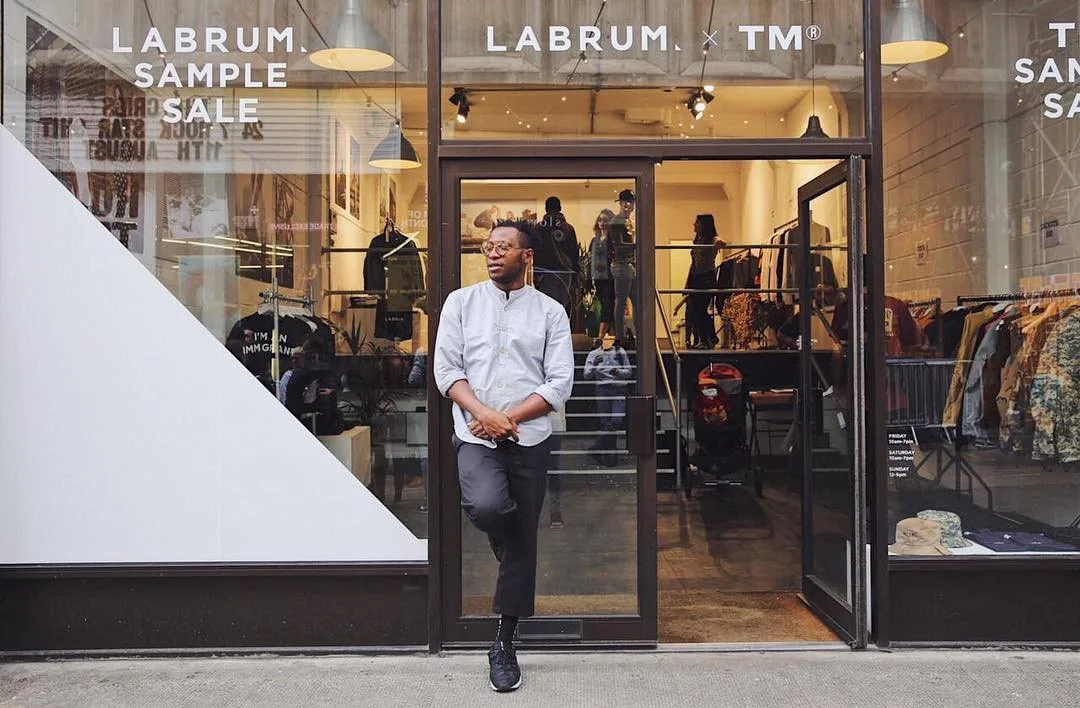
Rising label LABRUM Weaves Untold Stories of West Africa into its Clothing

Community-focused designer Foday Dumbaya is bridging the gap between Britain and West Africa with his culture-blurring collections

Foday Dumbaya first became aware of fashion at an early age. “In Sierra Leone, when I was young, my dad was in the police force and always dressed immaculately. He had this great authoritarian military uniform,” the East London-based designer, who was raised between Sierra Leone, Cyprus, and London reveal.

“My mother loves to dress well too. She’s more extravagant and to this day wears traditional African dress coordinating colors, a headscarf, it’s a whole look,” he adds. When it came to his parents actually allowing him to go into fashion, however, things got a whole lot more tricky. “It wasn’t always on the table in my African home. My parents were determined I chose a more stable career – as immigrants themselves, they recognized we faced an uphill battle as it was.”

Instead of heading to fashion school, Dumbaya studied information design at university, going deep into the ways in which humans interact with computer interfaces. After an internship at tech powerhouse Siemens, he dipped his toe into fashion for the first time at Nike, where he created bespoke designs for the sportswear giant. “I’m largely self-taught but fashion isn’t so different (from information design),” he says. “I create stories within a fashion that humans respond to.” After his stint at Nike, he laid the foundations for his own label, LABRUM, with the intention of exploring both West African and British heritage, and bridging the gap between the two.

Past collections have seen Dumbaya look to Sierra Leonean capital Freetown, his grandmother, and the West African diaspora for inspiration, with classically tailored suits, clean indigo denim, and slick, functional sportswear-indebted pieces sitting alongside his own takes on the agbada and other traditional silhouettes. “A lot of our pieces are an amalgamation of cultures,” he explains. “We have British tailoring in the shirt, with the addition of ruffle sleeves, which is more traditionally West African attire.”

More recently, as part of his AW21 collection at London Fashion Week, LABRUM paid tribute to “the heroes of St. Giles Blackbirds” – a community of sailors, soldiers, and former slaves that came to England from Africa in the late 1700s and ended up living in poverty, shunned by society. “We wanted to tell the story of a group of people that were downtrodden and went against the efforts made to forget them,” Dumbaya explains. “It was important that we told it now because it’s a story of resilience and migration, which feels very poignant right now.”

Inspired by the stories of figures including writer and abolitionist Olaudah Equiano, who came to the UK after buying his freedom and fought for the abolishment of slavery, Dumbaya reworked and reimagined historic dress for 2021, enlisting Dazed editor-in-chief and longtime collaborator Ib Kamara to bring the offering to life on the runway. This saw trenches with dramatic ruffled panels matched with louche, wide-legged trousers, structured coats layered over tailored, printed suits, and new iterations of his signature balloon-sleeved Mamie Bakie shirt – named after his grandmother – all on the line-up for the new season, with 80 percent of the offering crafted from offcuts and salvaged fabric.

For Dumbaya, it’s not just about the clothes, though fostering and supporting a sense of community, as well as empowering a new generation of creatives, is high on the agenda, too. Having long worked with Hackney’s Wickers Charity, which supports and uplifts disadvantaged youths in Hackney, he also founded Sierra Leone running club Labrum Athletic. In addition to donating funds and equipment to the group, he also stepped in to create the Sierra Leone Olympics kit when some of the club’s members were chosen to represent the country in the postponed 2020 games.

Working in partnership with Converse, the designer is also attempting to open up the fashion industry to a wider, more diverse demographic. Having first linked up for a creative project and collaborative runway footwear, Dumbaya’s relationship with the legendary label has evolved into something a lot more expansive. As part of Converse’s All-Star program, LABRUM has been able to access mentorship and funding that has allowed Dumbaya to grow its brand and community significantly.

With many brands – both emerging and, more dismally, established relying on low or unpaid interns to support their businesses, those from lower economies have historically been locked out of fashion. In a bid to combat this, Converse has begun funding paid placements with its All-Star designers – allowing growing businesses to thrive and young talent who otherwise might not have been able to get their foot in the door to gain experience, knowledge, and guidance.

Ahead of the AW21 season, LABRUM was one of the labels that benefit from the initiative, with a number of interns and a studio manager joining its fold.

“(The interns) were an incredible support,” says Dumbaya. “Each of them brings different experiences and energy to the team, and I really valued their input. We’re developing a platform where there is knowledge sharing between West Africa and the West – and especially London. We want the people interning to share their knowledge too.”

With Dumbaya intent on telling new stories and merging the borders of West Africa and Britain as the label grows, he’s determined to also keep the door open for the creative new gen. ”Nurturing talent is so important to me. LABRUM will continue to create and support communities linking back to Sierra Leone and London, as this is so much more important than simply designing clothes. If we’ve learned anything from the pandemic, it’s that we all need to think about each other more.”

Content courtesy of Dazed Digital & Nairobi fashion hub 

Akintunde Ahmad’s new fashion line takes African textiles global

After spending half a year living and studying in Ghana, writer, filmmaker, and educator Akintunde (Tunde) Ahmad returned to his native East Oakland, California in 2016 sporting unique threads, colorful compositions, and eclectic patterns

During his time in Ghana, he quickly found a creative partner in Awurama Mankatah, creative designer and manager of luxury clothing brand Threaded Tribes. He became enthralled in West African fashion culture: the diversity of style, the fabric markets, the accessibility to tailors, and, ultimately, the endless possibilities.

“With an abundance of tailors and access to any fabric you could desire, from woven kente to wax print to Bogolanfini (mudcloth), people could quickly get anything they imagined turned into a reality. I immediately started sketching designs, visiting fabric markets, and getting my own pieces made.”

At first, though, it was small-scale: “I began making items for myself and my family. But whenever I posted pictures on social media or wore my outfits back in the States, friends or strangers would ask where I got my clothes from and how they could get their hands on something similar.”

And thus, the idea for Ade Dehye was born. Founded in 2020 with continued close collaboration with Threaded Tribes, Ade Dehye is a fashion brand that draws inspiration from across the African Diaspora, with products ethically and sustainably made in Ghana.

The style fuses West African textiles with urban streetwear and luxury quality, including fugu, a woven fabric from the upper west region of Ghana; kente, a traditionally woven fabric found throughout Ghana and Bogolanfini, also known as mudcloth, a hand-dyed fabric that is made in Mali.

“Ade Dehye is more than just a clothing company. How many of you can say what you wear was made by black hands?” continues Tunde, following Ade Dehye’s launch in February.

Concerned with the lack of diversity in the fashion industry, he notes that while black people often have some of the least financial resources, we spend the most money per capita on luxury designer goods.

By building a pipeline that connects the rest of the world to sustainable fabrics and fashion from Africa, Ade Dehye is Tunde’s latest contribution that creates economic empowerment for black communities while reassuring the world of black peoples’ contribution to global culture, fashion, and style.

“When people shop with Ade Dehye, they are doing more than just purchasing our outfits. They are investing in the continent of Africa and the diaspora.”

Content courtesy of Creative Boom & Nairobi fashion hub 

The Folklore website is elevating African fashion and helping designers get paid

“This is going to change the way people value Africa and its creators,” says Amira Rasool, founder of The Folklore, which sells clothing and accessories from prominent and emerging African brands.

Amira Rasool is the founder and CEO of The Folklore, an online concept store featuring contemporary African design. She spoke to Doreen Lorenzo for “Designing Women“, a series of interviews with brilliant women in the design industry.

Doreen Lorenzo: How did you first find your way into design?

Amira Rasool: I was a creative kid. I used to make these huge forts out of sheets all around the house. I actually used to want to be an architect. Then I failed algebra my freshman year of high school. I figured if I was going to be an architect, math would be something I needed to be somewhat good at so people weren’t walking into their homes and sliding to the right because I measured wrong.

I thought, “what’s something creative that doesn’t have to do with math or science?” I started thinking more about interior design because my dream was always to build a community of really cool houses that all look different.

I also always had on these funky outfits, so my older sister Jasmine told me: “Why don’t you just get into fashion? You watch The Devil Wears Prada all the time. You’re always getting dressed up. You like writing.” She suggested that I start a blog back in 2010 when blogging was really big. So I created a blog and an alter ego named Bobby Austin posting outfits of me wearing purple wigs and black lipstick.


I also started taking FIT (Fashion Institute of Technology) pre-college courses, so all my friends were just as weird as me and also had wigs on. I grew up in South Orange, New Jersey, about 40 minutes outside of New York, so I would take the train on the weekends, do my college courses, then go hang out with my friends afterward. I was one of those weird creative kids that were also a great athlete and could fit into both worlds.

Doreen Lorenzo: What made you decide to go from creative fashion blogger to entrepreneur and founder of The Folklore?

Amira Rasool: The blog is what let me know that my passion was in writing. I started doing internships as soon as I got into college floating between interning for fashion market editors, stylists, and features editors. I interned at Women’s Wear Daily and I really loved that experience. From there, I went to Marie Claire, which was really eye-opening for me because I was given a lot of responsibility.

It made me understand how hectic magazines were and learn how to take charge without anyone telling me to. I realized I was super good at organizing and providing top-quality results. My boss from Marie Claire then referred me to V Magazine where I interned in their fashion department, and later their editorial department.

During my internships, I made really good connections with the people I worked for. They saw I was a hard worker. By the time I graduated, I had multiple magazine jobs that I was up for. People in media know it’s so hard to get that entry-level job when you’re coming out of college. The fact that I had my choice between jobs was a testament to me busting my butt and always being reliable. I ultimately ended up choosing V Magazine where I worked full time for a year as their fashion coordinator before I decided to start The Folklore.

Doreen Lorenzo: What made you decide to branch out and start The Folklore?

Amira Rasool: When I was majoring in journalism at Rutgers, I started taking a bunch of African American studies courses. By the end of my junior year, I had more African American studies courses under my belt than I did journalism. I decided to change my major to African American studies. Growing up they did not do a good job teaching us about Black history outside of Martin Luther King, Harriet Tubman, and the few other Black people they let us learn about. So when I started taking those African American studies courses and started learning about so many inspiring people, I was shocked.

I became obsessed with Black literature and started reading James Baldwin, W.E.B. Du Bois, Toni Morrison, and a lot of the people who came from the Harlem Renaissance. I learned how the creatives during the time we’re able to create these great publications like Fire!! that was a part of activism, but more creative activism. I related to that because I felt like I was put on this earth to uplift my people in some powerful way. I had this fire under me to go out and make an impact within the Black community.

Fashion is very whitewashed. I’ve always been the only Black girl in every meeting and every company I go to, and they weren’t having conversations about race like they are now. I started feeling like fashion was so vain. People thought that they were curing cancer with what they were doing, but they weren’t even going beyond surface-level conversations. I liked fashion and felt I shouldn’t have to give up what I love because I want to pursue something that’s a little bit more serious and impactful. How could I do both? That’s when I started thinking about Africa.

I had taken a trip there my senior year of college and fell in love. I went to South Africa and discovered all of these cool designers, creatives, and music. I bought a bunch of clothing and accessories when I was there and started wearing them when I came back to the United States and people were stopping me and asking: “Where did you get those sandals from? Where did you get this hat from?”

I started thinking about getting access to these products again, but most of them did not have e-commerce sites and weren’t sold at retailers outside of Africa. I didn’t have access to them unless I hopped back on the plane. That’s when I came up with the idea. Why is there a whole continent full of designers that cannot penetrate the international market, and how can I help them do that? How can I use my resources, network, and overall creativity to find a way for them to have access?

I started creating a business plan and applied to the University of Cape Town for a master’s degree in African studies. Once I got in, I moved to Cape Town, South Africa, and lived there for two years learning about the designers and what they needed from an e-commerce platform. At the same time, I got to learn about various African cultures.

That informed how I thought about communicating these designers’ stories. Halfway through my program I ended coming back to the U.S. to launch The Folklore site.

Doreen Lorenzo: How did you find these African designers and fashion styles you wanted to represent through The Folklore?

Amira Rasool: There’ve always been so many different stereotypes of Africa. There’s definitely poverty in Africa, but at the end of the day, that’s not only Africa, and Africa is not the only place with widespread poverty. For a whole continent to be defined by that is ridiculous. I wanted to be able to reflect that and show this whole renaissance happening with designers incorporating their heritage into modern and contemporary forms of expression.

https://www.instagram.com/p/CLpAJH-gOx5/?utm_source=ig_embed

Being on the continent was really important because I was able to touch and feel the fabrics and most importantly, connect with the designers. I knew I wanted to stay away from Ankara prints or anything traditional because I wanted everyone to be able to wear these pieces.

I wasn’t going to be the American that came in and started selling white people Ankara prints, advocating for cultural appropriation. I also did not want to be a cultural appropriator myself, so I purposely go after pieces that can be worn comfortably by anyone.

There was already a market that catered to Black people who wanted to feel connected to the continent and their cultural heritage. I wanted to provide that counter-narrative where someone could see a piece and not know where it was created. People universally can wear these products and we know the only reason why these designs are as unique as they are is because of these designers combining their heritage, culture, and their natural environment in Africa that’s not typically portrayed.

When you don’t know that this place exists, everything’s going to look new and unique to the outside person. I’m excited to be the person to help the designers introduce this counter-narrative and share their unique stories outside of Africa.

Doreen Lorenzo: The Folklore became a 2021 Techstars accelerator company. What does this mean to you and for the future of The Folklore?

Amira Rasool: It means a lot.

The network, resources, and overall knowledge Techstars provides are extremely beneficial. I like to think that when The Folklore got into TechStars all of our brands got Techstars. Whatever knowledge or resources we absorb during the program, we are going to make sure we share with our brands.

One of Techstars’ mission statements is “Give first” and everyone who I’ve encountered at Techstars has really embraced that mission. So much of the focus is on how to help you raise money and build a profitable company. That’s a great thing because they realize what it takes to build a great company. Everyone’s been super supportive, so I’m really excited and honored to be a part of it.

Doreen Lorenzo: How do you believe Folklore will change the way people view the fashion industry in Africa?

Amira Rasool: This is going to change the way people value Africa and its creators.

The value that was placed on African designers before was the number of clicks their creativity could generate for fashion publications featuring African brand look books. They didn’t care that the press these brands were getting did not convert to dollars because a lot of the brands did not have a website to link back to. It was an afterthought.

We created a dialogue around economic opportunity and put pressure on the industry to actually put their money where their mouth is. Now they can write about these brands and link them back to The Folklore. We want to put as much value on these designers as people put on Gucci or Alexander McQueen, and honestly, there’s more value in these goods because most of them are unique and sustainably made.

People pay luxury prices because they were told these brands are important. When we’re pricing our goods, it’s really because it costs a lot of money to ship these products from Africa to the U.S. The e-commerce infrastructure has been set up, whether consciously or not, to exclude people like us.

If you’re truly committed to diversifying the designers that you work with and fighting for equity and inclusion, you have to make compromises that you would have otherwise not made for more established brands. When you’re paying for a product from our website, you’re buying something because it is amazing. People have asked to donate to my company but no, you can invest in my company, our brands, and their products. We don’t want charity.

https://www.instagram.com/p/CEsKKBOlrHK/?utm_source=ig_embed

Nobody wants charity. I want to change the way that people talk about contributing to Africa and help people recognize the value in not only how these products are produced, but in the story and the exclusivity behind them.

Written By Doreen Lorenzo

Content courtesy of Fast Company & Nairobi fashion hub 

The Black In Time Fashion Show: A Time Of Celebration

The Black in Time fashion show took place Feb. 28 to conclude this year’s Black History Month. The event was put on by the Association of Black Students (ABS) who partnered with the African Student Association (ASA). The evening consisted of six categories, each highlighting how Black fashion has evolved throughout the decades.

https://www.instagram.com/p/CL1-4ePpS2k/?utm_source=ig_embed

Her Story,” ABS’s theme for Feb. was incorporated into the show. Each category was accompanied with a song by a female Black artist. Songs featured included Say My Name by Destiny’s Child, Lose Control by Missy Elliott, and Foolish by Ashanti.

“The theme was emphasizing influential Black women in our community because they are often overlooked and overshadowed, and we wanted to take this time to really emphasize them,” said Sparrow Caldwell, the show’s director.

Caldwell said, as part of this theme, it was important that each gender had their own spotlight in every category of the show.

“We really wanted to highlight both gender’s fashion to show how female Black fashion has evolved over the decades as well as men’s Black fashion,” Caldwell said.

https://www.instagram.com/p/CI4LPDJpZtK/?utm_source=ig_embed

The categories included the ’70s, ’80s, ’90s, ’00s, African Streetwear, and future Black designers in the DFW area. A fan favorite was African Streetwear which was led by the ASA president, Abena Marfo. Marfo not only was the lead for planning and finalizing outfits but also walked in the show.

“I definitely do a lot of the background work and I thought it’d be fun to step out of my comfort zone and be in the front and center walking in the show,” Marfo said.

She said for each category, with the exception of future designers, the models put their own outfits together. The African streetwear section was unique in that many of the models walked in clothes they received from family members in their home African country.

“My outfit was made from Ghana,” Marfo said. “I am Ghanian so my grandma sent me that outfit.”

Marfo emphasized the importance of the African streetwear section because of the influence it has on American fashion and iconic looks throughout the decades. Caldwell reiterated this importance.

“We finished the show with African streetwear section because our fashion would be nothing without paying homage to the motherland,” Caldwell said.

Marfo said another highlight of the show was the future designers section. She said it allowed young student designers and other young Dallas names to get their product recognition.

“In the beginning we put out a word to schools in the community to get their participation because we wanted it to be a whole community event,” Matthew Merritt, co-host of the show.

Mindful Maniac was one of the labels showcased in the fashion show and was co-founded by SMU alumni and former football player, Demerick Gary. Other designers in the show were Lakayla Cole, recent Texas Southern University graduate, and Alicia Crayton from UNT. The event also included a performance by the University of North Texas’s African dancers team.

“The team did a whole mix and it was really cool,” Caldwell said. “There were twelve of them on stage and they were bringing a lot of energy.”

Caldwell said the event was a huge success in that many people of all backgrounds and ages showed up to support and have fun. She said it was really important to her that the fashion show was a safe space for everyone to come and enjoy.

“Everything was free,” Caldwell said. “After all the hard work that we did this summer and fall semester with social justice, we just wanted an opportunity to celebrate Black culture, and we didn’t want to put a price tag on that.”

Caldwell discussed the trauma that took place over the summer for the Black community and the wear of constantly having to fight for every aspect of their lives. The month of Feb. , to her, was to recognize the great things the Black community does and the greatness within themselves.

“Our fashion was a staple and showed unity across a lot of turmoil that we had to go through,” Caldwell said. “We are students but we are Black students, our story is different from other people, and our story deserves to be told.”

Caldwell said that this is not the end of the events celebrating the Black community and to watch social media platforms for upcoming events. ABS partners with many organizations on campus and their events will also be promoted through Instagram and Twitter.

“Look forward to more events by the association of Black Students because Her Story will continue,” Caldwell said.

Content courtesy of The Daily Campus & Nairobi fashion hub 

Nathalie Bajinya Fashion Designer From Congo Celebrate her New-found joy in Lakewood.

Orphaned by war, Nathalie Bajinya’s future is as undeniable as her brightly colored fashions

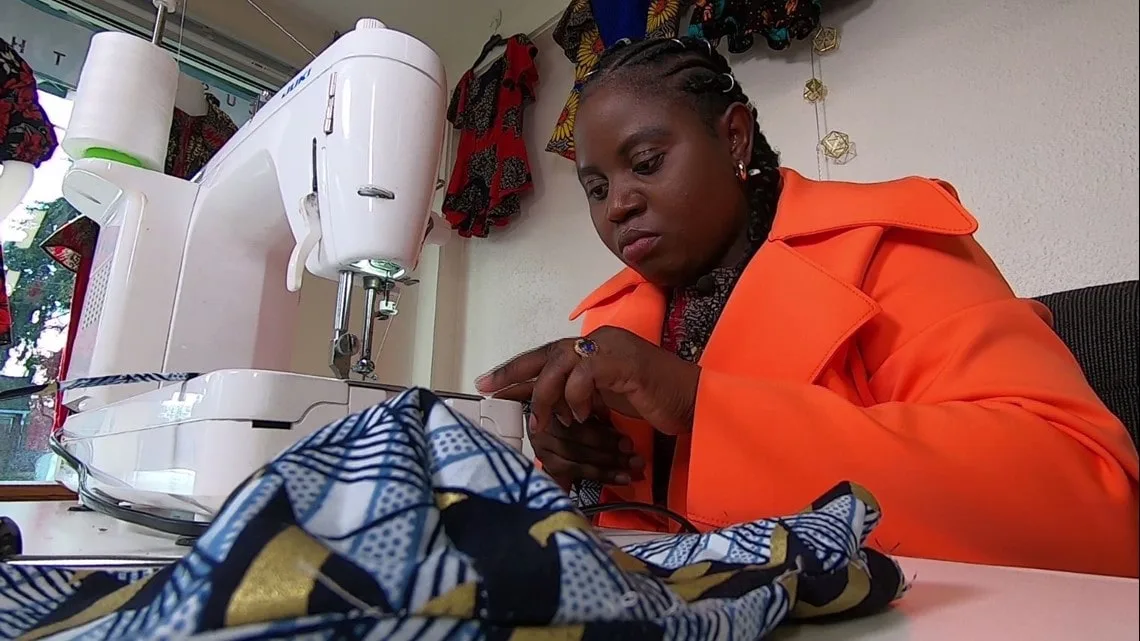
LAKEWOOD, Wash.  “When I look at fabric I see something that is telling a story,” says Nathalie Bajinya in a Lakewood shop called Undeniable Bajinya, where she makes beautiful clothes that combine African colors with French and American styles.

https://www.instagram.com/p/CMGaDS6DVGX/?utm_source=ig_embed

“It’s joyful for me,” she says. “It just give you peace knowing someone will wear your clothes and they will feel good themselves.”

The peace Bajinya finds in her colorful shop is so very different from her childhood where a war that killed millions raged across the Democratic Republic of Congo

“Since I was born, we were always running,” she says. “We always know that today might be OK, tomorrow it might be not.”

She was seven years old when she and her siblings lost their parents. They were split apart and given shelter in Kenyan orphanages where nuns taught Bajinya one special skill.

https://www.instagram.com/p/CL7ve4njgl9/?utm_source=ig_embed

“That’s where I learned to sew,” she says.

Bajinya can lose herself at a sewing machine, but memories still come back to haunt her.

“Sometimes I still have problems, but when I’m sitting at a table making clothing that’s what most makes me happy,” she says.

Nathalie Bajinya was 14 when she applied for refugee status in the United States and learned she’d be entering the foster care system in Tacoma.

“The nuns were telling me it’s going to be great.‘You’re going to be sewing for celebrities’,” she laughs.

But here too she struggled. Nathalie Bajinya was lonely.

“Especially here in America it is hard to get friends,” she says.

Bajinya joined the Tacoma Refugee Choir where she made many friends.

“They have been like my family,” she says.

But something was still missing. Her real family. She sent her brother and sister money and in 2015 they joined Nathalie.

In fact one of the women modelling Bajinya’s clothes for our story is her 16 year old sister Sophia, who was just two months old when war split the family apart.

https://www.instagram.com/p/CL5T7a4DElX/?utm_source=ig_embed

“Now we are getting closer and closer,” Sophia Bajinya says, “but before I didn’t know anything about her even though she was my sister.”

Sophia’s middle name is Joy which is exactly what she’s brought to Nathalie’s life.

“Coming back home together, it’s beautiful,” she says.

And so are the clothes Nathalie Bajinya makes. Each telling a story with a happy ending.

Nathalie Bajinya, an American citizen now for two years, is facing a surprising challenge because of COVID-19. So many people are working from home, they’re not buying dressy clothes.

Bajinya can do it all. You can even bring in your own fabric and she will make you a dress in a week. She says there is nothing like a dress made exactly to your measurements.

Her sister is also getting into the fashion game. Sophia Bajinya sells jewelry and wigs online.

https://www.instagram.com/p/CMA08AsDb2E/?utm_source=ig_embed

My name is sophia Bajinya CEO/ OWNER of Joy Bajinya. I was born in Africa Congo a.k.a D.R.C. As a teen I started this business when, this queen told me she was not beautiful because her hair was not straight and she was black. My goal is to make our teenager feel blessed with who they are and make them embrace their beautiful culture. As me?

I was bullied in middle school for wearing my afro calling me slave, mushroom head and tree of life. By all these names, they called me, I realized are about nature or history which made me feel more unique than them. These names led me to embrace my beautiful culture and be to become an influencer of others who get bullied because of their identities.

Content courtesy of King 5 & Nairobi fashion hub

Ad