Friday 15th of May 2026

Nairobi, Kenya

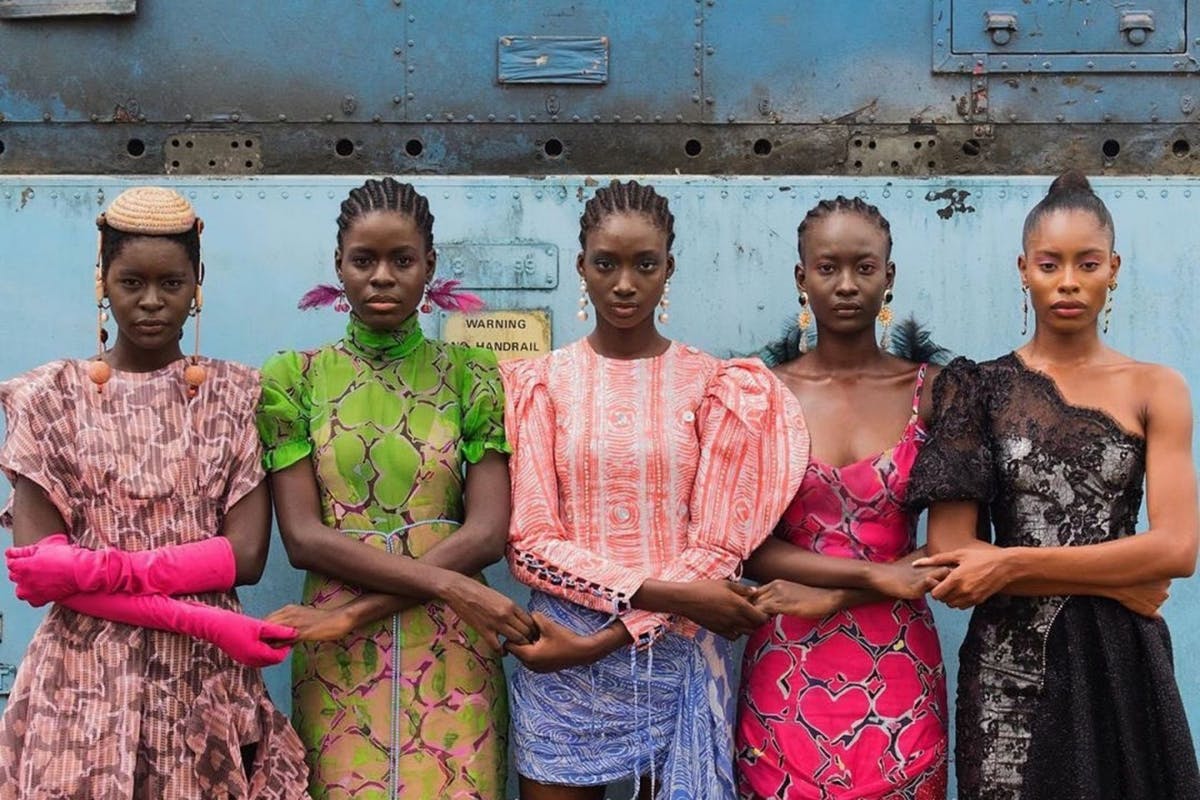
Thando Hopa Partners with Lebohang Monyatsi and Mantsho to bring African Fashion Legacy to Life

International model, lawyer, and activist from South Africa, Thando Hopa has launched a new project called African Fashion Legacy (AFL), a concept that explores the history of the transcontinental African fabrics that have been part of the lives of African people.

“AFL was launched after a seed planted by my mother. One afternoon she told me about the power of working-class communities and their significant contribution to fashion and culture. Her example was how rural communities in Lesotho created parallel ownership over Sishweshwe, a heritage that was once only considered to be Swiss German.

“I then spoke to ma’am Angelique Kidjo when I was at the World Economic Forum, and she told me how Ankara, in West Africa, had a similar historical trajectory. I realized that if you follow the story of African fabric, it becomes a historical document that tells you several stories about many nations,” says Hopa.

To bring the AFL idea to life, Hopa collaborated with Miss Wheelchair World First Princess title-holder and model Lebohang Monyatsi as the face of the project. Fashion designer Palesa Mokubung, the founder of Mantsho, came on board as the lead designer for the garments that depicted the history of the transcontinental fabrics from ideation, drawing of the sketches to final garments encapsulating the origin of the fabrics.

“With this project, I am hoping that African youth will build cultural literacy and awareness on the fashion garments that have molded our heritage and still resonate with us in contemporary Africa,” says Hopa.

She adds that she wants to frame expansive lenses of representation within the stories of Africa.

“African stories should assert different bodies and experiences in a manner that values this diversity within our cultures. People with disabilities, first nation people, people with albinism or LGBTQIA communities all form part of the composition of Africa, and there needs to be greater effort placed at profiling these stories in mainstream and defining cultural narratives,” she said.

Monyatsi, who started modeling in 2016, appears on the inside pages of Glamour South Africa’s March issue, where Hopa’s vision is documented in the fashion spread complimented by the visuals that display the transformation of Seshweshwe, Ankara, Blaudruk, and Batik.

She is grateful to be working with Hopa, who saw potential in her and gave her a platform to showcase her talent.

“Working with Thando Hopa, I couldn’t believe it. She broke down barriers and opened the doors for me, and other girls. I feel that in her I have a role model and a blueprint of what a black child can achieve. She is the epitome of black excellence and achievement,” says Monyatsi.

The Miss Wheelchair World first runner-up who was diagnosed with polio at the age of three, says she would like to see more inclusivity within the fashion and modeling industry.

“I would like to see someone using a wheelchair or someone using an artificial leg as the cover of any magazine or participating at major fashion shows such as South Africa fashion week and African Fashion International Fashion Week. After all, representation matters.

As a person who grew up feeling inferior, lacking self-esteem and confidence, Monyatsi encourages young girls who want to be models, but have fear, to read and fully understand the poem “Our deepest fear is not that we are inadequate.”

“Being persons with disabilities means that we need to work hard to be seen. We have to push back against the stereotypes against us and all the ways we have been defined before. We have to work hard to define ourselves. We need to fight the invisibility that comes with being disabled. We have to work to find our voices. You playing small does not serve anyone, go out and slay,” says Monyatsi.

Content Courtesy of IOL & NFH Digital Team 

My Hijab: Nigerian Muslim Women on Faith and Fashion

What’s in anyone’s wardrobe is inherently political. That’s especially true in Nigeria’s northeast, a region at the center of a more-than-decade-long jihadist conflict where how a woman dress comes under particular scrutiny.

Most Muslim women in the main city of Maiduguri, the birthplace of Boko Haram, believe their religion calls on them to cover their hair and will wear at least a headscarf known as a hijab, usually paired with a floor-length gown.

How thick or long the hijab, how loose or tight adorned or plain the gown is all wrapped up in cultural perceptions of how a northern woman should dress.

At the extremist end of the dial are the jihadists, who obsess over the control of women and their bodies. Their puritanical ideology holds that women should be largely confined to their homes, and, when out in public, as anonymous as possible.

But a new generation of women in the northeast rejects that hyper-masculine creed. Dressing modestly is their choice, they say an expression of their religious identity, not a dress code commanded by the jihadists, nor a symbol of their diminishment, as some view the hijab.

The New Humanitarian sat down with four upwardly mobile young women Aisha Muhammed, Fatima Lawan, Samira Othman, and Zainab Sabo to get their take on the changes underway in gender relations in the northeast, and how that is reflected in fashion.

To capture the feel and flavor, the four were photographed at the city’s derelict railway station by Fati Abubakar, a photojournalist from Maiduguri who has chronicled the impact of the war on her home region.

The station is across the road from a pile of rubble once known as the Markas or “center”, the former home of Boko Haram when it was still just an extremist sect. It was bulldozed by the army in 2009 after the group launched a short-lived insurrection that marked the beginning of their jihad.

“Around the railway station area, young girls weren’t free to move around [during the days of Boko Haram],” said Zainab, who runs a bakery business. “Boko Haram came up with something new that was very extreme; they were forcing their views on people.”

But here, a decade on, this group of graduates is proud to don their hijabs and determined to leave a mark on society. By fully owning the headscarf, they have turned it into an item of couture, to be worn with style and panache.

“It’s different from 10 years ago [when Boko Haram was active in Maiduguri. Then, there would be that stigma that you weren’t dressing correctly,” said Aisha, a local NGO worker. “But now I’m wearing my small little veil, and I feel free!”

These women embrace a global modesty movement that argues fashion need not be revealing or a challenge to one’s faith. They described how social media allows a pan-African sharing of the hijab aesthetic an empowering affirmation of their identity as Muslim women that transcends Boko Haram’s parochialism.

Although there’s a cultural necessity to “covering”, they argue it’s their choice as Muslim women despite the social pressure and the much-debated notions of “choice” and autonomy.

The larger battle

Dress code conformity wins Muslim women in the northeast a stake in a bigger battle. Compliance allows them to compete in the job market, and with that comes greater personal independence and financial security all anathema to the jihadists.

The surge in aid and development money to the northeast has created job openings that women have enthusiastically stepped into. Ultra-conservative gender roles have been further eroded by the economic fallout of the conflict, with everyone in a Maiduguri household now expected to pull their weight.

“You can’t depend on your father or husband as the sole provider; you have to flex your entrepreneurial skills,” said Fatima, an aid worker, referring to the welter of new home-based businesses, from perfume and cosmetics to IT.

“Everybody is doing something,” she nodded. “It’s still very hard because of the state of the economy, but the number of women that now have skills and are hustling  this is the peak.”

Sitting around a conference table in a private house converted to workshop rooms is one small example of the impact of the development industry these women see themselves as having far more opportunity than their mothers ever did to impact society.

“Nobody can stop us. We’re moving forward,” said Aisha, caught up in the positivity around the table. “When you’ve tasted freedom, especially the financial independence part – nobody wants to go back to the way it was.”

Beyond the city

So far, so middle class. But gender roles are also being tentatively reshaped in the displacement camps, bursting with people who have fled the rural areas where the war is being fought – a conflict that has killed at least 35,000 people and forced more than two million people from their homes.

Women-headed households are common due to the deaths of husbands and sons or their detention by the security forces. Even when there is a man around, wives receive direct aid payments, which gives them a measure of control over family spending.

Yakura Abakar sews traditional caps to supplement her food ration in the Dalori displacement camp, just outside Maiduguri. She now spends her daughters to school, which had not been the case in her old rural village, close to the town of Dikwa, near the Cameroonian border.

“Women have become very wise, very active,” Abakar told The New Humanitarian. “These young NGO women teach us how to do things, and some of the attitudes we’ve learned from them.”

But it’s more a case of incremental change than revolution. Boko Haram’s austere gender authoritarianism has deep roots within traditional society. Whatever softening has taken place at the margins, the gender dynamics mean that men around the world still retain considerable political, economic, and cultural power.

“As a woman, you’re judged all the time,” said Samira, one of the four interviewees. “Men do worse things, the real haram [forbidden] things, but patriarchy says that it’s always the woman who is wrong.”

Yet the women around the table were confident they were asserting a new Islamic vision of feminism one harking back to the early days of their faith and quranic ideals of equality. What went unsaid was what happens to women in the northeast who transgress, who ignore the cultural guardrails – and who sets the punishment?

The male backlash

Hauwa Mahdi, an academic who has done key work on the hijab in Nigeria, told The New Humanitarian she remembers walking past a mosque in Maiduguri in the 1980s wearing a hijab, but also jeans. That drew furious shouts from men in the area who accused her of being “disrespectful”.

“You can’t be in a Muslim country and just go out anyhow; you’ll be quickly judged as ill-mannered,” said Aisha, explaining the sensitivity of compliance. “It’s a northern thing. The culture, regardless of the religion, is to cover. Even Christians in the northeast are more comfortable covering their bodies.”

Aishatu Kabu quit an international NGO job to start her own women’s empowerment organization. In a region with the country’s worst social and health indicators for women, freedom to wear what you want is not on her list of priorities.

“What we’re battling for here is against child marriages, the need for girls’ education,  reproductive health we haven’t gone beyond that level yet,” Kabu told The New Humanitarian.

She fears the gender gains made so far are fragile, that a backlash is building among men over their perceived loss of control, which extends from displacement camps – where men are resisting the women-centered focus of aid delivery to the marital home.

Mahdi, the academic, is also concerned. “If women are not organized to preserve their empowerment wins, then, as soon as peace returns, it’s back to the kitchen,” she explained. “That’s how patriarchy operates.”

Yet Zainab, the baker, insists her generation of women is “woke” and different.

“I’ll tell my daughter: ‘Know your rights, love yourself, and always have your own money!’”

Content Courtesy of The New Humanitarian & NFH Digital Team 


Roberta Annan And African Fashion Foundation In Collaboration With Prestigious London College Conde Nast College Of Fashion & Design Announce New Scholarship For Aspiring Fashion Creatives From Sub-Saharan Africa

Roberta Annan’s African Fashion Foundation or AFF is joining forces with the highly prestigious Condé Nast College of Fashion & Design in London to provide life-changing educational opportunities for African students.

The Roberta Annan Scholarship (named after the founder of the AFF) is a two-part program that will fund a new student each year to study at the College. Initially, the successful candidate will take the College’s Vogue Foundation Programme and then move on to a BA (Hons) Fashion Communication & Industry Practice. Their tuition fees and living expenses will all be included in the scholarship grant.

Roberta Annan says, “This is a wonderful opportunity for some truly creative and entrepreneurial individuals from Africa to be able to study at one of the most prestigious fashion colleges in the world. Africa is overflowing with creative young people with drive and vision, and this scholarship will change not only their lives but the lives of the people in the communities where they will hopefully launch great businesses, armed with this training. I’m very proud and optimistic that this partnership will make a real difference.”

Launching at the same time will be a second initiative, Global Fashion Perspectives. College CEO, Nick Isles says, “The idea is to explore ways to bring about new international collaborations in the fashion industry through bringing together views from diverse global and regional voices. The aim of the program is to exchange knowledge, develop thinking, influence attitudes and policy and increase understanding. There will be a lot of elements to this including events, new policy ideas.

The first part and which is really exciting for us is the launch of a bespoke trio of online programs created for and targeted specifically at Sub-Saharan Africa. These course modules will be about, Styling & Creative Direction, The Business of Luxury and Digital Content Creation & Contemporary Marketing Strategies.”

The programs are being developed with the African Fashion Foundation and the Centre for International African Fashion Education (CIAFE) and will be marketed specifically to the African fashion and media industries and the professionals who work therein. The program will be heavily discounted to be affordable for potential candidates from the Sub- Saharan region.

Frederica Brooksworth is the founder and Executive Director of CIAFE. She says, “CIAFE is specifically committed to improving the standards of Fashion Education in Africa by creating partnerships between academia and the industry. This collaboration will not only provide opportunities for businesses and individuals in Africa to learn but will also promote two-way knowledge exchange. We are all enriched by the things we pick up from each other.”

Lisa Mann from the College is constructing the course and says, “The Global Fashion Perspectives program is being specifically designed to be in line with the UN’s Sustainable Development Goals. That was something all the partners were very committed to in coming up with the idea.”

The UN Sustainable Development goals that the project will be aligned with are:

  • Ensure inclusive and equitable quality education and promote lifelong learning opportunities for all
  • Achieve gender equality and empower all women and girls
  • Promote sustained, inclusive, and sustainable economic growth, full and productive employment, and decent work for all
  • Ensure sustainable consumption and production patterns

Both initiatives are being unveiled at a launch event at Condé Nast College on 22nd February from 1800 for 1830 to 2100, where Roberta Annan will outline the plans in full alongside:

  • l Lisa Mann, Director of Postgraduate, Professional & Online Programmes, Business Development; Coordinator
  • l Nick Isles, College CEO
  • Harriet Posner, Director of Undergraduate Programmes and Learning, Teaching, and Enhancement (overseeing the Global Fashion Programme in conjunction with AFF

The launch event will include an “In-Conversation” with Roberta Annan and Emily Chan, Sustainability Editor, Vogue Global Network. They will talk about the reasons behind Roberta’s support for Global Fashion Perspectives and the scholarship. The event will also include examples of work and thinking from around the world that will offer an insight into the impressive diversity of perspectives with which the project hopes to engage.

Content Courtesy of African Fashion Foundation & NFH Digital Team

African Fashion Week 2022 Showcases Vibrant Community Talent Hosted By African Fashion And Arts Movement Vancouver

African Fashion Week, hosted by African Fashion and Arts Movement Vancouver, kicked off on Feb. 19 showcasing much more than fashion, with vendors with handmade goods, food, featured performers, and music.

Attendees mingled amongst themselves and a sense of community was built throughout the space, which was something Yao Zeus Mohammed, founder, and producer of AFAM had hoped for.

“The importance of African Fashion Week to me is that it brings the community together, and it showcases the great talents we have in our community,” says Mohammed.

This is the fifth year that African Fashion Week has been hosted, however, last year AFAM could not host the event due to the COVID-19 restrictions. With restrictions eased, they were willing to host it this year even if it meant having only a quarter of the venue capacity.

During the intermission, attendees could buy finger food, Ghanaian jollof rice, pastries, meat, and vegetarian food options made by caterer Delali Adiamah.

“These are foods that you find at a party. So when you go to a wedding, when you go to a funeral … in Africa in Ghana, these are where you will find such food,” says Adiamah.

“[AFAM] brings the community together and showcases the great talents we have, and not only that, but it also shows the world we have a vibrant group of people working together on this west coast and it attracts others to come here and mingle with us,” says Mohammed.


The event showcased great talents by giving them space to share their story.

“We are not the only ones in this community, so you need that niche that you can really market your product to that they are interested in. That’s why it’s important not only to me but to the people involved,” says Mohammed.

Hana Woldeyes is the designer for BeadedBody. Woldeyes designs were showcased in the show as the spring collection. Most of the pieces were made from glass, wood, and rock. This year was her first time being invited to the show.

“I used to make my own jewelry. So, I made bracelet beads, necklaces, and amulets for myself, but more people kept asking me about where I got them. So, I started making them for individuals … [then] I started taking it as a business,” says Woldeyes.

Jason Bempong, the fashion designer behind clothing company Sleepless Mindz, was also invited to showcase his work during the event.

“For this particular collection, I’m really inspired by 1980s 1990s NASCAR jackets, a lot of Jeff Gordon pieces … [and] old varsity Disney Looney Tune jackets as well,” says Bempong.

Other designers like Mawogan Fashion, Navoir, Vickendel Style, Rated 18, V12 Fashion Designer, Kabumbe Fashion, and Rita Mary came together to create a fantastic show, with beautiful models walking the runway and performers dancing or singing between a few designs.

“Everyone should just keep following their dreams, even when people tell you ‘no,’ even when people tell you it’s ridiculous,” Bempong says.

“You’ve got to keep that vision alive and never give up.”

About African Fashion and Arts Movement (AFAM Vancouver)

Founded in 2018 by Yao Zeus Mohammed, African Fashion and Arts Movement (AFAM Vancouver ) is the largest African fashion and Trade exhibition in British Columbia.
(AFAM Vancouver) Host African Fashion Week annually during Black history month (February). African fashion designers and Performers from the lower mainland, various parts of Canada, the States and From Africa come together to showcase the true collaboration of art in its purest form: L I V E
Featuring Fashion, Arts, Music, Dance, Awards, Exhibition, and Marketplace.

As one of the most high-profile Africa-focused events in British Columbia, AFAM Vancouver will play host to designers & exhibitors, from Africa, Europe. continues to be the most anticipated event celebrating African Fashion, Arts, Talent, and Culture in Vancouver
With a collaborative catwalk, exhibition, and awards, AFAM Vancouver has commanded the way in highlighting Africa’s emerging designers and apparel industry and has been at the forefront of bringing awareness of Africa’s expanding fashion industry.

AFAM Vancouver aims to shift the narratives about Africa and the African diaspora by re-branding the perception of Africa as a whole. We are committed to empowering and promoting African-inspired fashion and arts by providing a premier event platform that also supports entrepreneurs in building a sustainable business that is internationally recognized and promotes social change in Africa.

Content Courtesy of The Runner & NFH Digital Team 

New York Fashion Week Is On! A First Look at the February Schedule

The Council of Fashion Designers of America and IMG have released the official schedule for New York Fashion Week’s fall 2022 season. Taking place from February 11 to February 16, 2022, NYFW will see mainstays of American fashion like Tom Ford, Tory Burch, Coach, Proenza Schouler, Michael Kors, and Anna Sui return alongside some designers who’ve sat out of late like Area and Dion Lee, and a host of new names to know.

Steven Kolb, the chief executive of the CFDA told Vogue, “The American fashion industry has shown great resilience during this difficult time. As the Omicron variant continues to present challenges at every level, I am looking forward to seeing the ways in which designers continue to present their collections in creative, innovative ways with an eye to the safety of all fashion week stakeholders.”

The major question is whether the shows scheduled will take place in-person or digitally. The provisional schedule leaves a lot of room for designers to do things their way as precautions around the Omicron variant change, though there is a small section of digital-only brands noted on the calendar that includes names like Adam Lippes, Imitation of Christ, Sandy Liang, Theophilio, and others.

When a show does take place in-person, the CFDA and IMG are promising to monitor the COVID precautions. Kolb said, “We will be following the COVID protocols that were instated in September that call for mandatory vaccination, mask-wearing indoors, and scaling back the size of audiences. We continue to be in contact with local and state health officials as we monitor the Omicron variant.”

IRL or URL, New York is home to a new guard of thinkers, designers, and change-makers. Eckhaus Latta’s Mike Eckhaus and Zoe Latta have cemented themselves as NYFW mainstays with a 9 p.m. show on February 12, as has Telfar with a slot at 6 p.m. on the 16th.

Emerging talents from the spring 2022 season like Connor McKnight, Saint Sintra, and Elena Velez are back on the official calendar, joined by an In The Blk showcase. “There is a lot of great new talent on the schedule, including Dauphinette, Judy Turner, Loring, Luchen, Melke, PatBO, Saint Sintra, and Zankov,” Kolb said, highlighting the young talents on his radar.

Content Courtesy of Vogue Magazine & NFH 

Covid Or Not, The Show Must Go On: New York Fashion Week Kicks Off

Fall/Winter 2022 shows get underway at New York Fashion week with Proenza Schouler and Christian Cowan showing their lively collections.

Experimentation, play, and glitter: a coronavirus-impacted New York Fashion Week got underway on Friday with Fall/Winter 2022 shows by Proenza Schouler and Christian Cowan.

Experimentation’ At New York Fashion Week

In its collection, presented in an art gallery in Manhattan’s trendy East Village, New York brand Proenza Schouler played with shape, contrasting fitted waists with loose or slightly rounded skirts.

Designer Lazaro Hernandez said the idea was to exaggerate and juxtapose different forms to respond to “this whole body obsession these days with social media and everyone showing the body.”

https://www.instagram.com/tv/CZ5bKKIlLe3/?utm_source=ig_web_copy_link

Model Bella Hadid wore an outfit featuring buttoned sleeves, accentuated shoulders, and a black velvet hooded top – giving off a Catwoman vibe.

“Experimentation and play are key, perhaps now more than ever,” Proenza said of its collection.

Christian Cowan Showcases ‘glamour’ At New York Fashion Week

Christian Cowan – who has dressed Lady Gaga and rappers Cardi B and Lil Nas X – presented his collection in the observatory atop the One World Trade Center skyscraper that replaced the Twin Towers felled on 9/11.

The show had the atmosphere of a nightclub, highlighting the British designer’s taste for glitter and glamour.

Ahead of the runway, the label teased fans with what might be in store by posting an image of the “Freedom Tower” all in pink on its Instagram page.

Tom Ford Cancels New York Fashion Week Show

Despite pandemic restrictions and the Omicron variant upsetting preparations, several other brands have opted for in-person shows, including Michael Kors, Altuzarra, Tory Burch, Brandon Maxwell, and Telfar.

A notable absence was Tom Ford, chair of the Council of Fashion Designers of America (CFDA) that organizes the event.

He was due to close the week next Wednesday but canceled at the end of January due to a surge of COVID-19 cases among his team.

“We have tried everything possible to avoid canceling our New York show but ultimately are faced with the sad fact that we will simply not have a completed collection in time,” he said.

Opportunity For Emerging Talents To Showcase At New York Fashion Week

For several years now, New York has had to deal with big names deciding to skip the event in favor of displaying their latest collections elsewhere.

Some designers are also choosing to eschew the classic runway calendar, with growing criticism that the frantic pace of fashion is out of step with sustainability.

The absence of top creators like Christopher John Rogers – the CFDA’s women’s designer of the year 2021 – and Kerby Jean-Raymond’s Pyer Moss brand, also provided an opportunity for emerging talents to grab the headlines.

Or at least that is the hope of labels such as Melke and Dauphinette, which promote sustainable and ethical fashion.

“It is really rewarding realizing that people can see the work that I’ve been doing and they think that it deserves a place amongst a bunch of other very successful brands,” 26-year-old Emma Gage, who founded Melke during the pandemic, told AFP.

“It kind of really solidifies you as someone that people know is going to be around for a long time,” she said inside her small studio in Bushwick, Brooklyn.

Content Courtesy of AFP, The South African & NFH 

The Top Emerging Black Designers to Know Now

There are countless Black designers leading the current cultural conversations surrounding fashion and in the process, they are generating the culture itself. Their genius trickles down to the mainstream (as has historically been the case for designers including Ann Lowe, Willi Smith, Stephen Burrows, and many more) and becomes the industry standard.

Telfar Clemens’s label Telfar has redefined the “It” bag and created an “It” label in the process; Theophilio bakes community work and activism into its design ethos and brand codes; and Christopher John Rogers brings his Southern roots to a new kind of red carpet couture (inspired, always, by his mother’s church looks).

In addition to these established labels, there is a whole new guard of designers making fashion and setting trends through their own, idiosyncratic visions. Many of them have shown at the various fashion weeks, while others are still indie brands garnering cult followings in their own right. All are worth your attention.

1. Connor McKnight

Connor McKnight showed his second collection ever at New York Fashion Week in September 2021 after having launched the brand in the trying year that was 2020. Despite his label still being in its fledgling stages, the offerings which include sleek knits, tailored garments, and one very sexy leather jacket demonstrate the Brooklyn-based designer’s prowess and far-reaching vision.

https://www.instagram.com/p/CItjcBfAuHg/?utm_source=ig_web_copy_link

2. Khiry

Khiry jewelry designer Jameel Mohammed is not yet 30 years old and already, he’s created pieces worn by the likes of Tessa Thompson, Serena Williams, Megan Thee Stallion, and Michelle Obama, who donned Khiry’s Isha Rose Quartz Hoops with a matching ring during her Becoming book tour. Mohammed, a 2021 finalist for the CFDA/Vogue Fashion Fund Award, is a Chicago native now based in New York City. His finely wrought gold and silver rings, collars, and pearl-studded earrings pay homage to the African diaspora.

3. Tia Adeola

Arguably one of the buzziest brands to hit New York Fashion Week this year, Tia Adeola draws from designer Teniola “Tia” Adeola’s background in art history and her deep interest in the Renaissance period. Along with her signature proclivity for feminine ruffles, Adeola’s creations also tap into of-the-moment, updated trends like corsetry and screen-printed graphics. Adeola, who was born in Nigeria and raised in London, officially kicked off NYFW on February 10th with the debut of her fall 2022 collection, which drew from her thoughts, anxieties, and musings during the End SARS movement in Nigeria.

4. Roop

Manchester-based designer Natasha Fernandes-Anjo is taking sustainability into her own hands. With her accessory label Roop, Fernandes-Anjo recreates cast-off textiles and deadstock fabrics into sweet handbags and scrunchies all at an accessible price point.

5. Kenneth Nicholson

You’ve never seen menswear like Kenneth Nicholson’s. The Los Angeles-based designer’s clothes always draw upon a historical reference of some kind you’ll often hear him referencing Biblical stories or the 1800s when discussing his brand. The Houston native was awarded a scholarship to San Francisco’s Academy of Art before serving in the U.S. Navy. Afterward, he moved to Los Angeles to start his eponymous brand. “I don’t think I’m redefining [masculinity],” Nicholson told the L.A. Times in 2021. “I’m recalibrating what was already there.”

6. Head of State

Taofeek Abijako’s first exposure to the world of fashion came from his father, who was a designer in Abijako’s hometown of Lagos, Nigeria. In the elder Abijako’s studio, people from all walks of life came to purchase bespoke clothing. Once Taofeek’s family moved to the United States in 2010, he taught himself to sew and, six years later, launched Head of State, which has become a favorite among the fashion set.

7. Labrum London

Designer Foday Dumbuya has always aimed to bridge the gap between Great Britain and its West African diasporic communities. Through his label, Labrum London, the East London-based artist (who was raised between Sierra Leone, Cyprus, and England,) marries traditional British tailoring with the patterns and fabrics of West African attire.

8. Bernard James

Although the jewelry designer Bernard James first launched his label in 2010 with the intent of filling the gaps he saw in the men’s jewelry market, he has since expanded Bernard James into a unisex brand one that’s become a top favorite, especially among the editors here at W. We’re huge fans of the chain-link bangles and bracelets (shown above in the form of a necklace), and, of course, the show-stopping mirror gem earrings.

9. Who Decides War

Everard Best (who goes by the moniker Ev Bravado) and Téla D’Amore cite Ralph Lauren as one of their main sources of inspiration. Their label, Who Decides War, however, is anything but your stock Americana. Although the Who Decides War runway show for spring 2022 offered lots of denim, Western-Esque vests, and deconstructed sweaters knitted with United States flag emblems, the designers completely remixed what the standard approach to American fashion has historically looked like.

Content Courtesy of W Magazine & NFH 


Common Threads Contemporary African Fashion

Meet the new generation of African creatives taking the continent’s textile culture into the future. Helen Jennings reports.

 “Cloth is to Africans what monuments are to Westerners… Their capacity and application to commemorate events, issues, persons, and objectives outside of themselves are so immense.” El Anatsui, 2005

These wise words from Ghana’s most celebrated fine artist sum up Africa’s gloriously storied textile heritage, which not only speaks to generations of artisanal mastery but also to the significant cultural communication performed with a cloth across the continent. And over recent decades, African fashion designers have elevated these treasures still further through their designs. Early pioneers include Shade Thomas-Fahm who revolutionized Nigerian fashion in the 1960s by using handwoven aso-oke. In the 1980s, Malian Chris

Seydou was the first designer to consider bògòlanfini mud cloth. And in 1990s Ghana, Kofi Ansah modernized ceremonial kente cloth.

Today many heritage fabrics face being lost as older generations of makers pass on. This does not mean, however, as commonly believed, that African fabric and weaving traditions belong to the past, unchanging relics of a by-gone era. In fact, they remain ever-evolving tools for creating employment, empowerment, and innovation.

For example, the Ethical Fashion Initiative, a program of the International Trade Centre, works with co-ops in several countries to finance their valuable skills, whether silk screening, sewing, dying, or weaving, and develop ethical supply chains.

But it is the current generation of sought-after African designers and entrepreneurs who are the ones using new thinking to take ancient textiles into the future. In Nigeria, Emmanuel Okoro of Emmy Kasbit focuses on re-imagining akwete, a loom-woven cloth made by Igbo women in eastern Nigeria. “There are over 100 traditional motifs and it’s said that each one came to its maker from the spirits in their dreams,” says Okoro. “For me, it comes down to preserving the culture of our forefathers in a modern way. Storytelling is at the forefront of putting African fashion on the global stage, so we cannot tell our stories with western fabrics.”

Each season, the Lagos-based designer develops his own patterns based on Nsibidi hieroglyphics and then delivers his yarns and designs to his cherished weavers. His boldly tailored men’s and women’s looks for SS21 speak to ideas of unity and strength and were debuted at Vogue Italia Talents during Milan Fashion Week. “I’m interested in community upliftment and boosting a craft that had become forgotten,” he adds. “I want to see these women win, and I’m letting the world know that this is what African luxury looks like.”

Fellow Nigerian Nkwo Onwuka’s approach is informed by her interest in ethical fashion. The Abuja-based designer has developed dakala, a handmade cloth made from denim offcuts. “Nigeria has a lot of markets trading in second-hand garments and a strong culture of clothing being made by small-scale manufacturers and dressmakers, which results in a huge amount

of textile waste,” Onwuka explains. “I started to see how I could prevent dead stock and old clothes from ending up in landfills or being incinerated by using them as a raw material. Through experimentation, I developed a technique of stripping, braiding, and sewing together textile waste to form a new fabric that has the look and feel of our traditional woven fabrics.”

Dakala was shortlisted for the Design Museum’s Beazley Designs of the Year 2020 award and her studio continues to develop the technique with the next step being a loom-spun version. Her current collection, entitled No Planet B, features ponchos and apron corsets made from multiple strings of dakala. “For me, success is making sure that I can take care of everyone in my small circle with the hope that this care ripples

out to form a larger circle,” she says. “I want to make sure that each person feels valued. The community has to be the fuel that fires what we do.”

Johannesburg-based designer Thebe Magugu is embracing the latest technology to create experiential fabrications from ancient inspirations. The 2019 LVMH Award winner is passionate about investing his directional yet elegant womenswear with cultural value.

For example, his clothing labels are fitted with microchips. “If any smartphone taps them, it opens a webpage that showcases the story of the collection as well as photographs of everyone involved in the making of the garment, from the fabric weavers in Cape Town to the tailors in Joburg. I love the full transparency and the idea of bringing culture and technology together,” he says.

For his AW21 collection, entitled Alchemy, Magugu immersed himself in African spirituality, which led to a collaboration with traditional healer Noentla Khumalo for his headline print featuring the tools of her trade – goat knuckles, a police whistle, pencil sharpener, red dice, and shells. “Noentla, who uses various objects as her medium to communicate with the ancestors, threw these objects onto a straw mat, which were then photographed, abstracted, and printed onto wool suiting. Before she threw the bones, Noentla asked ‘What now?’ and what lays on this garment is the answer.”

The rising star, who’s currently shortlisted for The Woolmark 2021 Prize, also worked with South African eco-printmaker Larissa Don who used cannabis and imphepho (the plant healers burn during their ceremonies) to transfer botanical prints onto merino wool. “It is about the idea of modernity through the indigenous,” he adds. “Wool is one of the most sophisticated fabrics available – from its odour-absorbing properties and natural heat-management to its inherent sense of luxury, which all speak to the unparalleled power of the natural world.”

While bright ideas in the high fashion space abound, there remain steep challenges facing more widely available fashion fabrics due to the lack of textile manufacturing facilities on the continent. The industry dwindled in the 1990s in the face of international competition including hugely popular

wax print fabrics from Europe. While infrastructure is surely improving today, there is still far to go. This is an area Kenyan fashion curator Sunny Dolat is addressing.

“As Africans, we have been lucky to be born into a wealth of textile culture. I believe we have a duty to grow and add to this heritage,” says Dolat, who is co-founder of The Nest Collective and creative business incubator, the HEVA Fund. “Many parts of Africa still have communities, albeit reduced, of spinners, weavers, and dyers who carry this cultural memory in their hands. The work I’m exploring now seeks to marry these sustainable practices with contemporary insights, ideas, and materials, which I believe could support many artisans across the continent.”

Due to Kenya’s colonial history, the country’s homegrown textile heritage is severely diminished compared to other parts of Africa. This fact is what originally stirred Dolat to take action. “All the textiles that we have are versions of textiles from other cultures. Maasai shuka blankets came from Scottish missionaries, kikoi is an update on an Omani wrapper, and kanga is based on the Portuguese lenço scarf. They all started off being made locally but, as with most things, much of it is now brought in from Asia. This got me thinking, what could a truly Kenyan textile look like?”

Dolat visited artisanal communities around the country to research organic dyes and fibers and then moved on to developing a new visual language with graphic designers Lulu

Kitolo and Monica Obaga. The result is Nanga (Swahili for anchor), a range of prints inspired by Kenya’s natural and urban landscapes, which have been produced on silk, chiffon, and cotton and are entering Nairobi’s downtown fabric stores this year. “We’re not going to announce them or give them to designers. Instead, we’re putting them in the mass market to see if they sell. That would be the true measure of success.”

He cites Green Nettle as a benchmark for the kind of new approach that could take African fashion innovation to the next level.

This Kenyan start-up won the H&M Foundation Global Change Award for its environmentally-friendly fabric made from nettles – a plant that thrives in even the most barren areas of the country. “My hope is that more designers

and companies begin to develop their own interventions into the textiles. Last year, the pandemic disrupted everyone’s access to textiles overnight. This taught us not to rely on imports and many found local alternatives instead. It would be amazing if that way of working can continue to be fostered and grow.”

Content Courtesy of TL Magazine & NFH 

African Development Bank’s Fashionomics Africa, Partners, Launch New Sustainable Fashion Competition With $6,000 in Cash Prizes

The African Development Bank Fashionomics Africa initiative’s second online competition is offering $6,000 total in cash prizes, mentoring, new branding packages, and other support for winning African designers of sustainable and circular fashion.

Fashionomics Africa, in collaboration with the United Nations Environment Programme, Parsons School of Design, strategic consulting and communications agency BPCM, and the Ellen MacArthur Foundation, invite interested African fashion brands to apply to the sustainable fashion online competition. Entrants must be pursuing environmentally friendly measures, sustainability, and circular economy actions to qualify. The designer or design team submitting the “best sustainable design” will win $3,000 along with other prizes. Two other competition finalists will take home $1,500 each, plus other support.

The competition celebrates African fashion brands that will change how we produce, buy, use and recycle fashion and that encourage a more sustainable shift in consumer practices.

“Sustainability is the present, not the distant or even the near future. It is where we are now, and it is vital that we open our eyes to what the fashion industry already has to offer. By embracing the industry’s existing resources, we are promoting circularity at the most fundamental level,” said Amel Hamza, Acting Director for Gender, Women and Civil Society at the African Development Bank.

“With the second edition of the Fashionomics Africa contest, the Bank aims to continue highlighting the ingenuity that African fashion designers consistently demonstrate through the strength of their culture and heritage,” she added.

The textile and fashion industry accounts for nearly 2% to 8% of global carbon emissions, the sector ranks as the world’s second-largest industrial polluter after the oil sector, according to the United Nations Environment Programme. However, this industry also provides important levels of employment, foreign exchange revenue, and products essential to human welfare.

The competition targets textile, apparel, and accessories entrepreneurs from Africa, aged 18 years or older, who have launched fashion businesses (up to a maximum of 50 employees), and whose sustainable designs have been produced within the last five years. Qualifying applicants will submit pictures of their products, detail their sustainable business model, and explain how their startup is environmentally friendly and innovative.

Examples of sustainability and circularity elements might include materials used, the design process, cleaner or greener production processes – including shipping methods or ways to reduce carbon footprint.

A five-person judging panel representing the African Development Bank and competition collaborators will announce the three finalists by 22 March 2022. The finalists’ entries will be posted on the Fashionomics Africa digital marketplace and mobile application for a public vote between 22 March 2022 and 7 April 2022. Polls close on 7 April at 23:59 GMT.

In addition to the cash prize, the winning fashion brand will receive a certificate and the opportunity to showcase its creation by taking part in online events and sharing insights on key sustainability challenges facing the industry. The winner will have access to a network of media insiders and industry experts and receive mentoring and networking opportunities from competition collaborators.

To learn more about the Fashionomics Africa online competition or to submit an entry, click here. Applications must be received by 1 March 2022 at 23:59 GMT.

Fashionomics Africa is an African Development Bank initiative increasing Africa’s participation in the global textile and fashion industry value chains.

Content Courtesy of Fashionomics Africa & NFH

The UK’s Largest Ever Exhibition of African Fashion is Coming to the V&A this Summer

The V&A’s landmark exhibition will be the UK’s largest of its kind and will showcase the work of 45 designers from over 20 countries.

Designers from the African diaspora are set to be showcased in the V&A’s upcoming exhibition of the continent’s fashion, which will be the UK’s largest ever.

Africa Fashion, which will showcase the work of 45 designers from over 20 countries, will celebrate the irresistible creativity, ingenuity, and unstoppable global impact of contemporary African fashions.

Over 250 objects will be exhibited, with many of the items on the show set to be donated from the personal archives of a selection of iconic mid-20th century African designers, including Shade Thomas-Fahm, Chris Seydou, Kofi Ansah, and Alphadi, marking the first time their work will be shown in a London museum.

“Our guiding principle for Africa Fashion is the foregrounding of individual African voices and perspectives,” Dr. Christine Checinska, senior curator African and African diaspora: fashion and textiles, said. “The exhibition will present African fashions as a self-defining art form that reveals the richness and diversity of African histories and cultures.”

African Fashion will also showcase and celebrate the works of contemporary designers, including Imane Ayissi and Thebe Magugu, who won the coveted LVMH prize in 2019 for emerging talent.

“African fashion is now. It’s not just designers, there’s a whole ecosystem of models, make-up artists, photographers, illustrators – imagine bringing everybody’s work to life season in season out,” says Omoyemi Akerele, founder of Lagos Fashion Week. “Fashion that’s created by our people for our people and for the benefit of growing and developing our economy.

This exhibition is important because, for the very first time, fashion from the continent will be viewed from a diverse perspective which spans centuries.”

African Fashion will open at the V&A Museum on 2 July 2022 and will run until 16 April 2023. Tickets can be booked here.

Content Courtesy of Stylist & NFH

South African Fashion Week Announces New Talent Search Finalists

South African Fashion Week has announced the six finalists of the 2022 New Talent Search. Competing in the country’s most prestigious fashion award for rising stars are:

• Thando Ntuli – MUNKUS • Nichole Smith – Ipikoko • Mikhile du Plessis – MeKay Designs • Calvin Lunga Cebekhulu – Czene.24 • Sanelisiwe Gcabashe – Gjenelo Couture • Mimangaliso Ndiko – Sixx6

Now in its 24th year, the winner will be announced on the 28th of April during the SAFW Spring Summer 22 Collections where the selected designers will feature their signature entries together with the debut capsule collection of the 2021 winner, Artho Eksteen.

The overall winner will receive R20 000.00 prize money towards developing their debut collection as well as a free runway show at SAFWSS 23 to launch this collection.

According to the SAFW director, Lucilla Booyzen, all the participating finalists are winners because the platform’s visibility to the media and fashion buyers ensures the national and international exposure that allows any fledgling career to gain the necessary entrepreneurial traction.

SAFW’s New Talent Search has consistently unearthed future talent and served as a launchpad for many of the local industry’s most respected names since its inception in 1998. These include MmusoMaxwell, Jacques Bam, Fikile Zamagcino Sokhulu, Michael Ludwig Studio, Saint Vuyo, and Sipho Mbuto.

Content Courtesy of  Fashion United & NFH

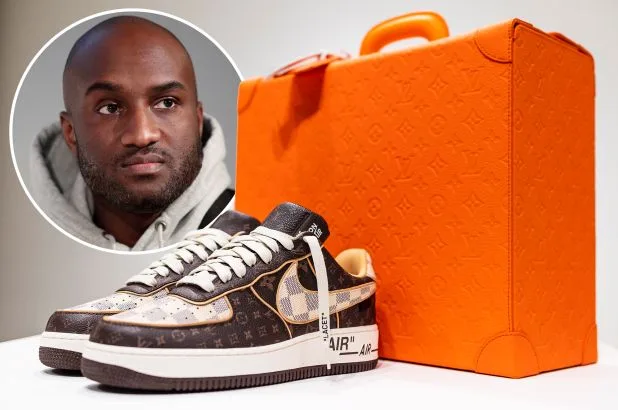
The Louis Vuitton And Nike Expression Of The “air Force 1” By Virgil Abloh

The Nike Air Force 1, celebrating its 40th year, was designed in 1982 and is one of the most successful and iconic shoes ever created. On the occasion of the Louis Vuitton Men’s Spring-Summer 2022 runway show, Virgil Abloh collaborated with Nike to design 47 pairs of bespoke Air Force 1s, fusing the trainer’s classic codes with the insignia and materials of Louis Vuitton in homage to the hip-hop culture that shaped him.

The sneakers were made with materials employed in Abloh’s Louis Vuitton men’s collections, and styled with his signature quotation marks, echoing the written graphics Abloh often used in his work. The individual styles designed for the show were made by Louis Vuitton in its shoe manufacture in Fiesso d’Artico, Italy.

A total of 200 pairs are being made available for this auction in an exclusive colorway and in a range of sizes. The sneakers, entirely made in leather, are embellished with Louis Vuitton’s emblematic Monogram and Damier patterns with natural cowhide piping. Each pair will be sold with a Louis Vuitton pilot case, also from the Louis Vuitton Spring-Summer 2022 collection, which was reinterpreted from Maison’s archive in an iconic orange colorway and made of Monogram Taurillon Leather.

The pilot case features Louis Vuitton’s classic S lock closure in white metal finishing and includes a luggage tag in the shape of the Nike Swoosh. The pilot case adapts to every shoe size, based on an internal cushion system. It will be sold exclusively in this auction

Louis Vuitton’s proceeds from the sale* will benefit The Virgil Abloh™ “Post-Modern” Scholarship Fund, which in partnership with the Fashion Scholarship Fund, supports the education of academically promising students of Black, African American, or African descent

In this size – 7 – only 20 pairs will be produced by Louis Vuitton. The fit is true to other Nike Air Force 1 models.

The lot is in new condition and is being manufactured concurrently with the auction. All lots are sold directly by Louis Vuitton. Due to variations in the manufacturing process as well as sizing, there may be small, immaterial differences as compared to the provided photos and display. This lot is currently scheduled to ship in the first half of 2022, but the timing is subject to change.

100% of the Hammer price is being donated by Louis Vuitton to The Virgil Abloh™ “Post-Modern” Scholarship Fund. The Buyers Premium and Overhead Premium will be retained by Sotheby’s. No portion of the purchase price is tax-deductible.

Content courtesy of NFH Digital Team 

Ad