Friday 15th of May 2026

Nairobi, Kenya

Fashion Statements Made during Inauguration Ceremony of Joe Biden and Kamala Harris

Before any swearing in or speeches made on Inauguration Day, the clothes spoke. Beginning on the eve of the inauguration of the 46th President of the United States, then-President-Elect Joseph R. Biden, and Dr. Jill Biden, and then-Vice President-elect Kamala Harris and Douglas Emhoff began telegraphing their messages with their outfits, the bigger statements, as usual, emanating from the women.

For a late afternoon vigil to honor the 400,000 American lives lost to Covid-19 on Tuesday, Dr. Biden and Vice President Harris chose to wear emerging American designers, the former clad in a full violet look by Jonathan Cohen Studio, the latter in a camel coat classically cut but for the most subtle of novelty in the gentle wave of the back flap by Pyer Moss’s Kerby Jean-Raymond. Both women were dressed for the occasion, which is to say they were dressed up and appropriately so for their respective roles and personal styles.

Cohen and Jean-Raymond are two young, New York City-based designers whose names are well known within the American fashion industry, famous for their unquenchable thirst for new talent, yet they are far from household names. Donning garments by such designers for such a momentous occasion signals support of homegrown design, and could be an indication that Dr. Biden and Harris are open to inheriting Michelle Obama’s fashion mantle of support for the American designers big and small. At least to some degree.

The message carried through to Wednesday’s main event when Dr. Biden appeared in an ocean blue overcoat and matching dress by the small New York-based label Markarian, led by the designer Alexandra O’Neill. Vice President Harris wore a tailored coat and matching dress in a brilliant shade of purple as well as her signature pearls, this time designed by Puerto Rican designer Wilfredo Rosado, and heels by the Los Angeles designer Sergio Hudson by another New Yorker, the 27-year-old designer Christopher John Rogers.

On an inauguration day unlike any other in the 232 years since the custom began, the clothes, just like everything else incorporated into the ceremony, were chosen carefully. No less an emblem of the American dream than Ralph Lauren dressed President Biden and Emhoff.

O’Neill is a young female designer, who, according to a press release from the brand, customized the wool tweed coat with crystal and velvet trim, matching dress and face mask, in a shade of blue chosen “to signify trust, confidence, and stability.” It was feminine and elegant, pretty but not too dainty, just like Dr. Biden.

Still, the look was overshadowed by Vice President Harris. How could it not have been? The historic nature of her role and her commanding, dutiful presence demanded it.

She chose to wear strong, tailored, confident pieces by Jean-Raymond and Rogers. They weren’t exactly unpredictable. Rumors had been circulating for weeks that Harris was planning to wear clothes by Black designers and Jean-Raymond and Rogers are two of the most talked-about names on what is sadly an all-too-short list.

But things are changing. Just look at Harris American hope incarnate.

Content courtesy of Town and Country & Nairobi fashion hub 


Made in Kenya: Exclusive interview with Cynthia Kimathi Founder, Creative Director at The Seamstress and African le’kiondo

Cynthia is a mother and a fashion enthusiast; who doubles up as a self-taught fashion designer, I have loved fashion and style for as far back as I can remember.

I used to accompany my mother to clothes stores every Christmas holiday to choose outfits for my siblings and me, however, I must admit that my Art and Design teacher in State House Girls High School gave me the extra push needed, from whence I learned all the basics myself.
My fashion line is The Seamstress. A seamstress is a woman who sews and one who earns her living from the craft. That is simply who I am.
I officially launched The Seamstress on November 28th, 2020 on the JW Runway Show, but we had been working on the brand and first collection for at least a year beforehand.

Oscar Alochi: Can you describe The Seamstress, the idea and concept as if I knew nothing about it or the market it is in?

Cynthia Kimathi: The Seamstress is purely a ladies-wear fashion line. During our launch, we started with the collection Dusk to Dawn, which is glam wear for evenings and events. But we are not all about evening gowns. We are a one-stop-shop for all women wear; ranging from casual, office, and streetwear, lingerie, mature looks, and older women, among others.

The brand concept is to release quarterly collections (mid-February, end June, end September, and mid-December) that will aim at introducing new designs and aspects into the fashion market. The collections are all pre-planned beforehand, with every design passing through a set of criticisms from The Seamstress team prior to the final vetting.

This is because the creative side of me sometimes needs to be controlled if we want to make functional outfits.

This February, our aim is to release our second collection just before Valentine’s.

OA: What were you doing before The Seamstress, and what motivated you to start the business?

CK: I have been running African le’kiondo, which is a subsidiary brand just like The Seamstress. The brand focuses on making authentic Africanised bags that are environmentally friendly as we source raw materials and labor locally.

Not only that, but it has been a great instrument in empowering women in Meru County by providing them with an avenue to expand their creativity, put food on their table, and have a safe space to talk about their issues.

Just like African le’kiondo, I started The Seamstress out of mere frustration in finding an outfit for myself, a great motivator. During my participation in a national pageant in 2019, Mrs. Universe Kenya as the current 1st Runners Up, it took me weeks to get an evening gown I liked.

This was simply due to all the outfits looking the same, plus they did not look very functional in the sense that I kept wondering where else I would wear the outfit, and how I could style it to look different every time. This predicament gave birth to The Seamstress fashion line.

https://www.instagram.com/p/CIr-KvcB_tV/?utm_source=ig_embed

OA: What techniques do you use? Tell us about the process.

CK: At The Seamstress, we start with a designer’s consultation, This consultation includes detailed discussions with the client ranging from color choices to fabric choices.

The client then receives three (3) designs and chooses from them. The duration from consultation to delivery also depends on design and details. The sewing process differs and the details would seem quite boring for now.

But I also add a lot of accessories to my designs to give them a 3D effect, with such pieces ranging from flowers, beads, etc, which aids in having my outfits turn heads positively.

OA: How did you learn/master this technique and why do you use it?

CK: As previously mentioned, I received basic art and design training from my high school days. In addition to this, my team and I do a lot of research, and I spend the better part of my mornings learning online.

I use this technique as it keeps me on my toes on what is currently trending in the fashion space, what trends could be making their comeback, plus the added benefit of attaining inspiration.

OA: What challenges did you face?

CK: Being a designer, one has to pump in a lot of finances before reaping anything, therefore sometimes you can be financially constrained especially as a start-up and a new name in the fashion industry.

In the Kenyan market, as much as we are now beginning to accept Kenyan designers, we are not yet there. The market still prefers ‘ready-made’ outfits from boutiques for designer outfits. Therefore, oftentimes clientele does not understand the business model especially the need to pay a Designer’s Consultation Fee.

Growth is gradual and sometimes the audience is not as receptive as imagined, but we hope for better days and are positive on the same.

The biggest challenge has however been letting go of clients who wish us to replicate outfits they find online. It is a difficult task at times explaining that we do not replicate, we create.

OA: How did the obstacles make you feel?

CK: Frustrated at times, excited at others. It is bittersweet. The challenges however motivate me, helps me find new ways of approaching things, and elevates my thinking whilst tickling my creativity.

OA: What were your achievements?

CK: The JW Runway Show is the most recent highlight since the launch. In addition, I have dressed beauty pageant judges, taken part at the end of year party for WICCI (Women’s Indian Chamber Of Commerce and Industry – Kenya Business Council) as well as having the honor of dressing an artist for their upcoming music video to be released this February.

It has just been a month and a half and we feel positive about achieving even bigger this quarter.

OA: Favourite moments?

CK: The launch at the JW has to be the highlight so far. The runway took me back to my old modeling days and I was overwhelmed by how far I have come. Seeing my pieces on the runway and how receptive the audience was to them, blew my mind away.

In some way, I felt validated that I might be on to something really amazing.
An added advantage is that I get to travel more now, another passion of mine, as I do deliveries and have one-on-one discussions with clients.

OA: How do you get dressed in the morning?

CK:  I am a casual dresser. Half the time, you shall find me in jeans and a t-shirt. Whenever I have meetings and glam events though, that is when I put my mind into the dressing.

OA: What’s your take on the Kenya fashion industry?

CK: The Kenyan fashion industry is impressively growing fast.

We are seeing Kenyans being dressed by Kenyan designers for events, and the only way we grow is by supporting our own.

The pioneers have done a great job in growing the industry, but so have media personalities and bloggers like yourselves. You have given designers and fashionistas a platform to express themselves in terms of marketing to the world at large.

OA: How different is the Kenya fashion industry compared to East Africa and Africa’s fashion industry at large?

CK: Our rich culture already sets us apart. The Maasai shuka for example has been widely accepted and has found itself in some international design houses, and so has the kikoi.

OA: Any future collaboration with Kenyan or International fashion designers?

CK: Yes. I am hopeful on this front. Maybe Neomi Nganga will read this and we get to do something.

OA: If you were given the opportunity to work with a local or international fashion designer who will you love to work with?

CK: Locally, Neomi Nganga of Style By Neomi. She has revolutionized plus-size fashion, as I find her designs sexy and eye-catching.
Internationally, Zuhair Murad. He is a genius, so daring with his technique. He always delivers utterly unique and dramatic masterpieces.

OA: What are your thoughts on fashion in Africa?

CK: It is growing tremendously fast. Countries like Nigeria and South Africa are already making enough noise in the fashion industry home and away.

OA: What has changed during this period of Covid-19?

CK: Most fashion designers have started to focus more on online marketing strategies.

Personally, the pandemic has given me room to magnify my creativity and read more. Never did I think I would be designing masks for instance.

OA: How has The Seamstress adopted the new technology virtual fashion show during and after the Coronavirus pandemic?

CK: We will be doing Instagram and Facebook live for virtual shows whenever we release our new collections.

OA: How are African fashion designers influencing fashion in the western world?

CK: Most African designers like pomp and color, and lately we have seen more African prints on the red carpet, as the Western world is already recognizing our African designs.

This can even be seen in as diverse an environment such as Hollywood blockbuster films like Black Panther, where they consulted with African designers for the costume designs.

OA: What can the Kenyan fashion industry learn from the western world?

CK: Owning our products. The Western world has a lot of acceptance and loyalty towards its designers. We should borrow a leaf from that and grow our own African designers.
We can also aim at having more fashion weeks and shows to call for upcoming designers to showcase their outfits, as I believe we have so much talent to offer.

OA: Over the last few years have you noticed any significant changes with the African fashion trends?

CK: Yes, I have. There have been some significant developments. We are seeing more African designers, models, and outfits on magazines and social media platforms, which is a clear indication that the perception of African designs has shifted progressively.

OA: When dealing with Africa is it important for the fashion world to be ethical and socially responsible, and put in place strong corporate social responsibility governance?

CK: Yes. We can’t just take and not give back.
Sustainable fashion needs CSR. It helps build relationships with consumers and stakeholders, and it helps to show the market space precisely what the designers are doing and the positive effects their work has in Africa. Let us never forget that our consumers appreciate transparency.


OA: Tell us about The JW Show or Kenyan Fashion week and your experience at the Show.

CK: The JW show is an amazing platform for upcoming designers to showcase their outfits and for seasoned designers to release their collections. The panelist choice was also a wise one; we got to get first-hand information from fashion icons and legends in the industry.

They discussed different parameters in the fashion industry and gave solid advice on how to be fashion-forward and run a house as a business.

OA: Where can we find your designs?

CK: We are currently based online.

Facebook: The Seamstress.ke
Instagram: theseamstress.ke
Facebook: African Lekiondo
Instagram: african.lekiondo
Mobile number: 0101704786

Here you will find our recently released collection Dusk to Dawn and some outfits made for our clients.

OA: Share with the audience your social media platforms or a website

CK: Our Social platforms

Facebook: The Seamstress.ke
Instagram: @theseamstress.ke
Email: theseamstress.ke@gmail.com

OA: What does eCommerce mean to you and your business?

CK: eCommerce means everything! Our business is purely online based.
We are however currently developing our website, which will give us the extra push in the eCommerce world

OA: Do you think eCommerce is important for African fashion designers that are trying to get recognized and reach a global market?

CK: Of course, it is! Ecommerce has opened doors for many businesses locally and globally. It is safe to say that eCommerce is an essential tool in the fashion industry in this modern time.

OA: How does your strategy change when running an online store to an offline store?

CK: When using an Online-to-Offline (O2O) Strategy in our business, both channels share similar significance and importance to The Seamstress in helping us achieve our success.

The Online Channels shall be helpful in widening our reach to not only local stakeholders, but internationally too, through digital marketing and advertising, and draw them into our physical store.

Whilst using the Offline Channel for a physical store, location is our primary strategy as we would wish our discerning customers to feel welcome in our brick-and-mortar when they come for measurements, fittings, and even collecting of their goods.

Finally, due to our industry being fashion, our clients still prefer to physically see, and touch and feel, our outfits when they want to make a purchase, especially if they are first-time buyers.

OA: Where do you see African fashion in the next 5 to 10 years?

CK: I see most celebrities accepting African fashion and embracing it internationally. I strongly believe that we shall be seeing more African designs in the Oscars and Golden Globe Awards amongst other international platforms. We have so much untapped talent and we are about to take the industry by storm.

OA: What 5 pieces of advice would you give to young African fashion designers wanting to enter the fashion industry?

CK: My Advice to young African designer

  • The world is your oyster. All you have to do is spread your wings.
  • Success is not experienced overnight, put in the work and it shall surely come.
  • Social media likes do not equal sales. Clients will buy even without liking your pictures.
  • Every time you feel lost, remember why in a world where you could be anyone you decided to be a designer.
  • Always be true to yourself.

OA: Is there anything else you would like to add?

CK: I would like to thank you for giving me and The Seamstress fashion line by extension, the opportunity for this interview and for deeming us worthy of it. When the names of people and organizations that led the Kenyan fashion industry to be recognized worldwide will be written, yours shall surely be there.

Content courtesy of The Seamstress, African le’kiondo & Nairobi fashion hub 
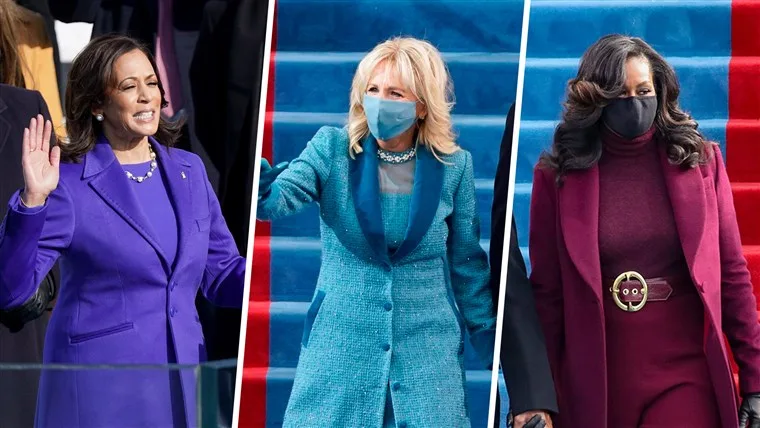


Michelle Obama Chose a Symbolic Outfit for Inauguration Day of Joe Biden and Kamala Harris’s swearing in ceremony

The former First Lady dressed for the historical importance of Joe Biden and Kamala Harris’s swearing-in ceremony.

If anyone could handle the pressure of dressing for this historic Inauguration Day, it’s former First Lady Michelle Obama. As the first Black First Lady, she has a better understanding than most of the pressures Vice President Kamala Harris will face as the trifecta of first woman, first Black, and first Asian American Vice President of the United States.

And with that comes the responsibility of what to wear. It isn’t mere superficial vanity, Obama expertly deployed her fashion early on to share her values and promote emerging designers. “It seemed that my clothes mattered more to people than anything I had to say,” she told the New York Times in 2018. “Optics governed more or less everything in the political world, and I factored this into every outfit.”

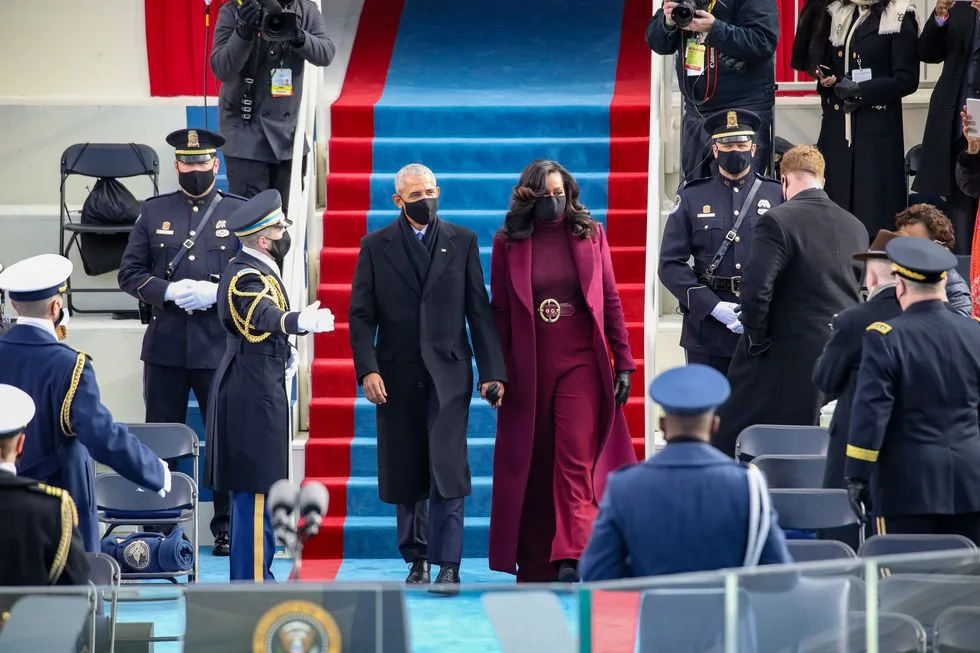
On January 20, she arrived in a burgundy coat and jumpsuit cinched with a gold belt by Black designer Sergio Hudson and a black face mask. Hudson, an up-and-coming designer who made his debut on New York Fashion Week in February 2020, has designed looks for Obama’s Becoming book tour and at the Essence Festival and his clients include celebrities like Rihanna and Beyonce.

Kamala Harris wore Sergio Hudson shoes to the inauguration with her outfit by Black designer Christopher John Rodgers.

For President Barack Obama’s first inauguration in 2009, she wore a sparkling gold sheath dress and coat by Cuban-born American designer Isabel Toledo for the presidential swearing-in ceremony. There was the color: sunny and full of optimism. And there was the designer: Toledo immigrated to the U.S. at age eight and went on to fulfill the American dream of becoming a successful fashion designer.

In 2013, she wore a Thom Browne dress and coat, polished and businesslike. And of course, there were the stunning gowns for each inauguration, both designed by Jason Wu. It is clear from these examples alone (and there are many more) that Obama artfully represented American designers of all races and all genders, particularly championing emerging designers.

As the years went on, her approach became dubbed “sartorial diplomacy,” drawing comparisons to Jackie Kennedy, who took a similar approach, although with fewer political landmines to navigate.

Content courtesy of Town and Country  & Nairobi fashion hub 

Zuri, The Kenyan Label With A Beautiful African Aesthetic Is Finding Following Europe and Asia

When preparing for a trip to South Sudan last May, the American designer Sandra Zhao’s packing list was straightforward: “I wanted something I could shove in a backpack, that wouldn’t look like I’d just shoved it in a backpack.” Zhao, a New York City transplant, was living in Nairobi, where it’s fast and cheap to have clothes tailored, so she designed the dress she had in mind: resistant to wrinkling, airy enough for the equatorial sun and long enough (in sleeves and skirt) to be culturally appropriate.

The resulting piece a tunic-style dress that’s fitted in the shoulders and loose through the body hit all the marks. It also, remarkably, looked good. Zhao traveled in the dress; then she started living in it.

At a wedding later that year, Ashleigh Gersh Miller (another New Yorker who had recently relocated to Nairobi) saw Zhao in the dress and was immediately drawn to it. “It was the week of my due date with my second child,” Miller says, so the loose, forgiving cut appealed. (“It doesn’t look like a muumuu,” says Zhao, “But it kind of feels like one.”) The two struck up a conversation. Soon after, they went into business.

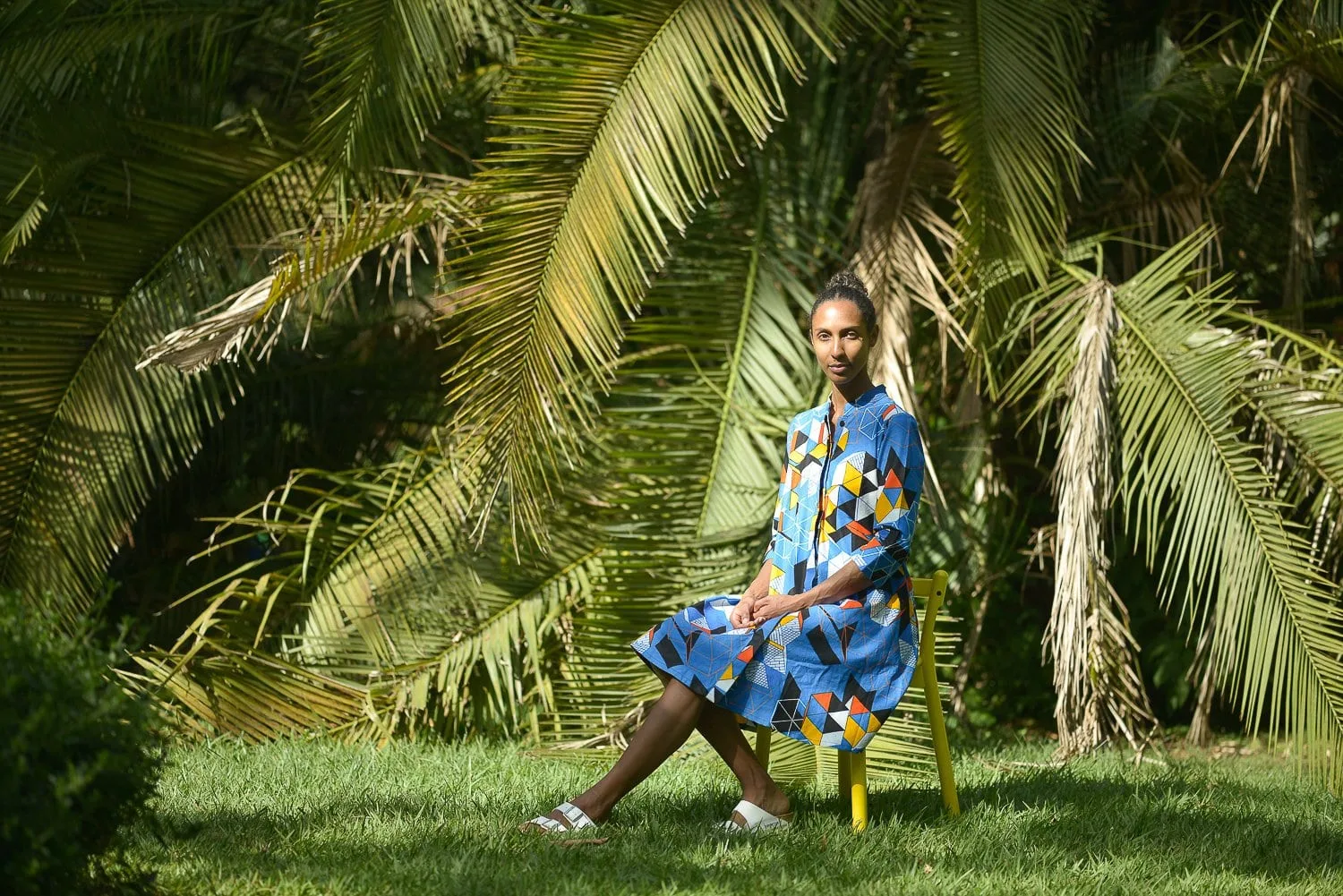
Zuri, which launched online at shopzuri.com this year, is built on Zhao and Miller’s conviction that there’s one dress (indeed, “just one dress” is the brand’s tag line and hashtag) suitable for all purposes and people. “We’re both really short, but you could be six feet tall,” says Zhao. “It looks good on everyone.” They attribute this “Sisterhood of the Traveling Pants”-like adaptability to the structured top and an ample skirt that floats away from the body and hits just around the knee. It’s just a flattering cut.”

The design of the dress has changed only slightly from Zhao’s first iteration. In response to feedback from friends, they’ve lengthened the sleeves (making it possible to tie the dress around one’s waist as a skirt) and added pockets. Buttons run down the front, so it can be worn as a jacket. “Personally, I like to wear it over pants,” says Miller.

Equally central to the designer’s shared aesthetic is their choice of material. At any given time, the dress is available in limited-run colorways cut from Dutch wax fabric: the riotously bright, playfully patterned cotton cloth that is, to many, synonymous with “African dress.”

Though Zhao and Miller source their fabric from the continent specifically Tanzania, Congo, and Nigeria historically, it’s not African at all. Initially produced by the Dutch to tap into the Indonesian Batik market, the wax-printed cotton cloth traveled via colonial channels to East and West Africa, where it became ubiquitous.

Most Dutch wax fabric is still designed in the Netherlands, but the patterns have become highly localized. (One popular print called “LV” or “Le Sac du Michelle Obama,” features a repeating pattern of the Louis Vuitton bag that Obama carried during her 2009 trip to Ghana.) They’re also short-lived. “Fabrics are constantly circulating and cycling,” says Zhao. “One factory will put a pattern out, then another will adopt it, it repeats and moves, sort of like it’s alive.”

For now, the dress itself is also on the move. Available online and stocked by St. Cloud in Houston, Tex., as well as by Merchants on Long in Cape Town, South Africa, Zuri’s in-store presence comes mostly in the form of pop-ups. Two are slated for June, one at Shinola in Detroit and one in New York.

The duo would eventually like to start printing their own materials, but in the meantime, it’s clear they enjoy the chase. “We’ve got feelers out in Nairobi and Dar es Salaam, and we’re heading to Uganda in a couple of weeks,” Miller says. Fabrics are typically only in production for a few weeks, so when a favorite motif retro oscillating fans, or lovebirds on branches show up, they have to act fast. “We walked into a shop recently, and a pattern we’d been looking for for months literally dropped at our feet,” Miller says. “I was immediately like, ‘Sold!’”

Zhao calls the constant variety and unpredictability of materials “a roller coaster of emotion,” but it’s also a perfect complement to the slow, singular design process. “It’s been fun to have one dress,” Miller says, “and to perfect it.

Content courtesy New york time & Nairobi fashion hub 

An Interview With Leah Wanjiru Co-founder and Creative Designer at Tai Designs Africa

Leah Wanjiru is a young fashion designer who is passionate about Made in Kenya clothes, she is a fashion lover who embraces color and prints when we talk of fabrics co-founder and creative designer at Tai Designs.

Tai Designs Africa is a clothing brand that I founded with my Partner Wambui Mwaura. Tai mainly focuses on dressing people for occasions such as weddings, traditional weddings, and corporate events. We also customize summer/ swimwear and accessories such as hats and bags. Recently we have also started doing custom made clothes for our clients.

Oscar Alochi: Can you describe Tai Designs Africa, the idea and concept as if I knew nothing about it or the market it is in? 

Leah Wanjiru: Well, Tai Designs Africa is a product of passion, disappointments from local tailors, and curiosity all combined. I am one person who never gets satisfied with something basic.
So whenever I bought clothes I always had ideas of how I would do it better or differently. Of course given that I had no fashion education it was difficult to explain to my tailor exactly what I wanted.

End results? A spoilt dress and disappointed Leah. So with time the interest in fashion came up and enrolled in college where I learned both tailoring and fashion illustration.

OA: What were you doing before Tai Designs Africa, and what motivated you to start the business?

LW: I have always been the girl in the office. At the time I decide to start Tai Designs Africa I was an assistant accountant in an audit firm. The interest to monetize my interest and curiosity developed while I was still working there, I realized I did appreciate as much doing the same thing month in month out.

I wanted to be my own boss.

OA: What techniques do you use? Tell us about the process.

LW: I apply two techniques in my business. one involves sketching designs that I mainly get inspiration from movies and sourcing the fabrics, I then cut and sew the fabrics to bring the sketches to life. In most of such designs, I do wear them.

The second is where clients choose designs and they bring fabrics or I choose for them then we create their custom made outfits.

OA: How did you learn/master this technique and why do you use it? 

LW: I did my research before setting up the business. The technique favors my line since the clothing industry is dynamic and has
seasons.

There are seasons that clients wear mostly ready to wear and at times like December, they prefer custom made.

OA: What challenges did you face? 

LW: Mmhm.

First, I struggled with getting my brand out there, Being so introverted and fearing to talk to strangers was not helping me either. Again when the clients
started rolling in, now pricing and clients running away with balances become another headache.

OA: How did the obstacles make you feel? 

LW: In the beginning, I would say I got frustrated.

You know to a point I thought of making clothes to those clothes to me only. With time I mastered the art of handling clients to avoid such scenarios.

OA: What were your achievements? 

LW: We are proud to have showcased in one of the biggest fashion shows. The JW show. We also showcased in the Women World show which aims at improving upcoming women entrepreneurs, also last year we did our very first collection

OA: Favorite moments? 

LW: Walking in after our collection showcased at the JW show and the shows thereafter are moments engraved in my heart.

OA: How do you get dressed in the morning?

LW: Really depends on the mood, any day qualifies for anything

OA: What’s your take on the Kenya fashion industry? 

LW: Right now the Kenyan fashion industry is taking a huge positive change with people appreciating locally produced clothing and the very skilled
tailors around, I think it’s a matter of time and people will be wearing made in Kenya.

The youth have also embraced Kenyan fabrics and with the help of talented designers, the future looks promising.

OA: How different is the Kenya fashion industry compared to East Africa and Africa’s fashion industry at large? 

LW: One thing about Kenya is that citizens and majorly fashion lovers are so diverse with color and designs. Unlike East Africa where most nations are limited to vitenge’s, Kenyan the industry is diverse.

OA: Any future collaboration with Kenyan or International fashion designers?

LW: I always admire works done by a Kenyan designer, Remy a great designer.

OA: If you were given the opportunity to work with a local or international fashion designer who will you love to work with? 

LW: I would go International and work with Kollins Carter. He makes extraordinary pieces.

OA: What are your thoughts on fashion in Africa? 

LW: Innovative.

Africa has very talented designers and skilled tailors, the challenge is the machinery for the production

OA: What has changed during this period of Covid-19

LW: Mostly the frequency of people buying or ordering clothes. With most people indoors due to lockdown and others retrenched from their workplaces, finances have become scarce.

OA: How has Tai Designs Africa adopted the new technology virtual fashion show during and after the Coronavirus pandemic? 

LW: We have adopted the representation of our products online mainly doing indoor shoots and posting on our social media platforms.

OA: How are African fashion designers influencing fashion in the western world?

LW: African designers have embraced the production of great pieces with fabrics that represent Africa. The likes of vitenge, kente, and Maasai shukas. These fabrics bring color which is well embraced in the western world.

OA: What can the Kenyan fashion industry learn from the western world? 

LW: Mostly what color goes with what skin tones. I find it well intriguing. Also making our own prints would save us a lot of importation taxes.

OA: Over the last few years have you noticed any significant changes with the African fashion trends?

LW: Great changes, From chasing Western trends to creating our own designs and making them trend.

OA: When dealing with Africa is it important for the fashion world to be ethical and socially responsible, and put in place strong corporate social responsibility governance? 

LW: Yes, it is very important to put in some policies. Africa has well-grounded roots and people of different
ethnicity.

The only way to preserve our culture is by having policies in place.

OA: Tell us about The JW Show or Kenyan Fashion week and your experience at the Show?

LW: JW Show is a great platform for designers and to showcase. Fashion lovers also get the chance to walk the red carpet with their beautiful designs. I think we should have more of such shows in a year where we get to celebrate fashion.

OA: Where can we find your designs? 

LW: We are at Sawa mall 3 rd Floor C20 and also online on our social media platforms.

OA: Share with the audience your social media platforms or a website.

LW: Our social media platforms are

Instagram: @taidesignsafrica
Facebook: Tai Designs Africa
WhatsApp: +254 736 336062

https://www.instagram.com/p/CHKzJzgl1d_/?utm_source=ig_embed

OA: What does eCommerce mean to you and your business?

LW: It’s resourceful for our brand, Most of our clients are online customers.

OA: Do you think eCommerce is important for African fashion designers that are trying to get recognized and reach a global market? 

LW: With technology making the world to become a global village, eCommerce is one of the best to capture the global market and let the world know about what we offer.

OA: How does your strategy change when running an online store to an offline store?

LW: Dealing with virtual clients is easier since they buy products at the listed prices and get them delivered. Offline clients can be sometimes negotiating.

OA: Where do you see African fashion in the next 5 to 10 years? 

LW: I dream of a continent that will be doing a production of not only clothing but also textiles which will be ready for exportation too.

OA: What 5 pieces of advice would you give to young African fashion designers wanting to enter the fashion industry? 

LW: My advice

  1. Be clear about your brand what clients you target.
  2. Be ready to start small.
  3. Always wear your brand with pride.
  4. Take time to master the art and then monetize it
  5. No one will offer a seat in the industry, come with your own and take the space.

OA: Is there anything else you would like to add? 

LW: Thank you for the interview. The questions exhaustively covered everything.

Content courtesy of Tai Designs Africa & Nairobi fashion hub 


Meet Dennis Osadebe The Man Disrupting The African Fashion Industry founder and C.E.O of D&D Clothing

Dennis Osadebe is the founder of D&D Clothing with the head office in Dubai. Being more than 10 years in the entertainment business in Nigeria, he has seen the lack of professionally made costumes and artistic clothing. That’s how we start our office in Dubai, by creating different custom made orders.

Now Dennis Osadebe is a motivational speaker, promoting Africa and African fashion all over the world. After having different branches and representatives in Europe, Canada, the US, and Australia we are back home to Africa and opened our first branch in Kenya.

Ann Mumbi:  Can you describe D&D Clothing Company, the idea, and concept as if I knew nothing about it or the market it is in?

Dennis Osadebe: D&D Clothing is an international fashion brand with an African soul. We don’t just do fashion, we create an African Fashion Movement that will reach every home. We have achieved big success because of the belief and hard work of our D&D family. We create 6 amazing collections per year for males and females and divide our products in 3 directions business casual, Urbach chic, and glamour.

Our main goal is to be represented in different countries, where people are proud to wear MADE IN AFRICA. Being the number 1 brand in the Middle East, gave us the possibility to produce our own fabrics that have a special story. Our own production is located in Kenya, from where we distribute items to all showrooms and shops. Started far from home with a lot of difficulties We are finally back in Africa because that’s where we belong to! AFRICA IS HOME!

AM: What were you doing before D&D Clothing Company, and what motivated you to start the business?

DO: I (Dennis Osadebe) was into the entertainment business in Nigeria, I’m the one who brought Nollywood to Asaba! But I wanted to grow outside Africa, I know we can do it. I see so many talented people in Africa and they need to be out there to expose!

AM: What techniques do you use? Tell us about the process.

DO: If we are talking about production techniques – we use only the latest technology of production. It’s about IT control, it about the latest machines for patterns, for stitching. We are very keen on everything the best, and invest a lot in production and people.

AM: How did you learn/master this technique and why do you use it? 

DO: We try to learn from the best, of course, as well you never learn better than from your own mistakes. But we learn from others as well

AM: What challenges did you face?

DO: The main and the biggest challenge for any business is a team. It’s not easy to find people who will be there with you in water and fire. But it’s possible. So we always keep looking for the best team.

AM: How did the obstacles make you feel? 

DO: There is nothing you cannot do in this world. So you only become stronger.

AM: What were your achievements? 

DO: Our main achievement is to win 3rd place in the World Fashion Awards, which we are very proud of. we were the first African company ever that took place and we were right after Italy. which gives us so much courage to do more, we are limitless.

AM: Favorite moments? 

DO: Once per year, we do African Fashion Party, that’s such an amazing moment, where we invite our customers, all team and partners from different countries, and we make a crazy party in African style with all D&D Clothing dresses.

People can choose any of the designs, we create them and it becomes one of the favorite moments of the year not only for us but for our customers as well.

Check our latest in Dubai

The next one we are planning to make it in Kenya!

AM: How do you get dressed in the morning? 

DO: I have a plan for my dressing for one week, and of course, I wear only my own brand. As well once per month or two, I have days when I test our new designs, It’s the biggest test control in our company! I’m very strict about dressing, it should not be only stylish, but it should be comfortable, you should feel on top of the rook on it.

AM: What’s your take on the Kenya fashion industry? 

DO: We have seen a lot of talented people in Kenya, amazing designers, models, but they are lacking practical education. I hope in the future we will create a base and education for designers to blow all over the world.

AM: How different is the Kenya fashion industry compared to East Africa and Africa’s fashion industry at large? 

DO: I think the main difference is opportunities, in East Africa, it is so easy to blow if you do professional things, Not only in fashion, a lot of opportunities that people don’t see.

AM: Any future collaboration with Kenyan or International fashion designers?  

DO: We hope in the future to collaborate with talented fashion designers

AM: If you were given the opportunity to work with a local or international fashion designer who will you love to work with? 

DO: We would work with Philipp Plein. I hope next year we will do something together.

AM: What are your thoughts on fashion in Africa? 

DO: I think it’s at the peak of demand now. It’s a culture that did not die like in any other country. Where do you see people in Europe wearing traditional clothing?

Even by the way officially they don’t even have anything traditional. So African fashion will be growing only all over the world.

AM: What has changed during this period of Covid-19? 

DO: The main challenges are to change the business strategy for the next 1-2 years. Keep all the team while the profit was reduced. But it’s a good time to do more.

AM: How has D&D Clothing Company adopted the new technology virtual fashion show during and after the Coronavirus pandemic? 

DO: VR fashion shows is not a new technology but it’s something that people have seen just now, during covid. New technology is for example Augmented reality. Its future fabrics with molecular structure, different Self-healing materials with the ability to heal after being wounded. That’s the new technologies.

AM: How are African fashion designers influencing fashion in the western world? 

DO: They are influencing by their creativity. Our African people are more creative than westerns. So if you see African person in the western world, they have every chance to be number 1

AM: What can the Kenyan fashion industry learn from the western world? 

DO: They can learn how to do business. Management, timing, any operational area, sometimes I can request for information or quotation from the company and they will send me after 3 days.

Like you are begging people for you to send them money. You will never see this kind of way of doing business in the western world.

AM: Over the last few years have you noticed any significant changes with the African fashion trends? 

DO: African fashion will always be trendy

AM: When dealing with Africa is it important for the fashion world to be ethical and socially responsible, and put in place strong corporate social responsibility governance? 

DO: It is important, but if you will check, it’s not so easy to do in Africa like to say.

AM: Tell us about The JW Show or Kenyan Fashion week and your experience at the Show.

DO: Amazing creative guys, I adore their ideas, they have a big future.

AM: Where can we find your designs? 

DO: You can find our designs on our website danddclothing.com

AM: Share with us your social media platforms or a website

DO: We can be reached through our social platforms.

Website: danddclothing.com
Instagram: @danddclothing
Facebook: @danddclothingandtailoringllc
YouTube: D&D Clothing
WhatsApp: +254 701 223333

AM: What does eCommerce mean to you and your business?

DO: It’s a must. If you are not online – you don’t exist.

AM: Do you think eCommerce is important for African fashion designers that are trying to get recognized and reach a global market? 

DO: Highly important. It’s a must. You supposed to start yesterday

AM: How does your strategy change when running an online store to an offline store? 

DO: The strategies by themselves are different for online and offline stores.

But offline is dying, The companies that have been on the market for more than 240 years now like Debenhams they just shut down and filed for bankruptcy. And in Africa after 5-7 years, people will stop buying offline.

AM: Where do you see African fashion in the next 5 to 10 years? 

DO: I see it number 1 by popularity among all people in the world

AM: What 5 pieces of advice would you give to young African fashion designers wanting to enter the fashion industry? 

DO:

  1. Don’t be afraid
  2. Show, don’t tell
  3. Do everything and anything
  4. Don’t do it alone
  5. Don’t listen to anyone

AM: Is there anything else you would like to add?

DO: I would like to say that I’m proud to be an African and I want all people around the world to be proud of wearing MADE IN AFRICA. And all of us have a chance to do it!

Content courtesy of D&D Clothing & Nairobi fashion hub 


Africans Must Marry Dressed In Their Native African Attire – Says Reno Omokri

Reno Omokri espouses so much wisdom but sadly, the nuggets of acuity he propagates on his social media handles designed to change the mindset and lifestyle of Africans are yet to be assimilated.

The former presidential spokesperson and lawyer have dropped another beautiful piece on his Twitter handle about the way we conduct weddings in Africa. In his estimation, Africans should drop the tie and suit for their native dresses during wedding ceremonies since white weddings only resonate with the white people and not Biblical.

He said on Twitter; “In 2021, Africans don’t need a suit and tie and a white dress for weddings. The entire structure of the White Wedding is fashioned after EUROPEAN culture NOT Christian culture. Today, even African Muslims now do it. Marry in your native African wears!”

Content courtesy of GH Gossip & Nairobi fashion hub 

Highlights From Rwanda Fashion 2020

The fashion industry in Rwanda, like other sectors, suffered many losses last year. The industry was hit by the pandemic with a big drop in sales registered globally, as the demand for clothes and fashion accessories went down.

With the lockdown measures that were put in place by the government taking effect, fashion designers couldn’t organize any events which had been planned, hence setting them back.

Despite the challenges, this didn’t hinder new fashion entrants to showcase and exhibit unique styles.  We bring you the fashion highlights of 2020;

Ikamba Apparel

This is a lately launched ‘Made in Rwanda’ clothing brand with a touch of Vogue and a taste for African design, It was founded by Gratia Teta, Deborah Mwanganjye, and Kessy Mugabo Kayiganwa from African Leadership University (ALU).

Ikamba Apparel comprises three young students who are hungry to follow their dream, thus eventually creating a unity that led to a business. They are all students pursuing International Business Trade at African Leadership University (ALU).

The brand caters to all age groups and targets both middle and high-class clothing styles; epitomized via an assortment of elegant and streetwear.

https://www.instagram.com/p/CEJ8Vl0BjIT/?utm_source=ig_embed

Kezem clothing brand

23-year-old Emmanuel Keza Niyonsenga is the brains behind Kezem, a new Rwandan clothing brand that ‘communicates the Rwandan story and Africa in general’.

Though his skill is mostly self-taught, he also got additional training from Rwanda Clothing, a local fashion brand where he was skilled in the significance and power of a brand, and how to work with clients to satisfaction.

He has designed many of the Iwacu Muzika festival artistes, many of whom are Art Rwanda Ubuhanzi colleagues and celebrities like Alyn Sano, among models and other celebrities.

https://www.instagram.com/p/CBn3vqXBhRu/?utm_source=ig_embed

‘Rufuku’ collections

Laurent Nsengumuremyi, also known as Nelly, 25, also sought means to penetrate the fashion industry, which is why he invented ‘Rufuku’.

‘Rufuku’ is a fabric of old-fashioned blankets that he uses to make all sorts of attires, from blazers, cardigans, to skirts, dresses, and many others.

Zoi

Zoi, which is Greek for ‘life’, is a clothing line that was started by the Mackenzies. This is a group of five young ladies namely Naomie Nishimwe, who is the current Miss Rwanda 2020, Kelly Uwineza, Kathia Kamali Uwase, Brenda Iradukunda and Pamela Loana Uwase. They are all related.

Their brand that was launched on October 9 produces clothes for all genders, with the choice to scale up an outfit liable on the size of the customer.

The Mackenzies use social media to market and advertise their own clothing line, acting as models for their own designs. The demand for their clothes was enormous which pushed them to work harder.

Moshions goes international

Local fashion house “Moshions” is not only focusing on the local market but also eyeing the international market in the most effective way.

Moshions’ aim is to create a traditionally enthused frill brand that has roots in Rwanda as well as Africa.

The brand received criticism recently when it unveiled its online store, as many people accused them of setting high prices for clothes that they think are not supposed to be expensive.

According to Dany Rugamba, the business manager at Moshions, the people who cannot afford a cloth will certainly say something is expensive, even when there are many others who can afford it.

To him, the same feedback was given even when the fashion house was just starting, yet people actually buy. It is this support that has grown the brand.

Fashion brands that featured on Beyoncé Knowles’ website

Four Rwandan fashion brands; House of Tayo, Inzuki Designs, Moshions, and Haute Baso on August 2, were amazed to see their creations listed among the top African fashion brands that featured on American singer Beyoncé Knowles’ website.

Most of the designers said that there was no application made to feature on the platform, but their designs were suggested by their customers and famous fashion stars in Africa and beyond.

East Africa Fashion Awards

Two Rwandan media personalities, Makeda Mahadeo and Christelle Kabagire were nominated for East Africa’s Most Stylish Female Host of the Year, at the East Africa Fashion Awards.

The event took place in Dar es Salaam, Tanzania in March. Makeda is a Kigali-based CNBC Africa journalist, media personality, deejay, and emcee, while Christelle is known for her fashion show ‘In Style’, which airs on Rwanda Television every Tuesday and Wednesday. The event sought to distinguish the most outstanding achievements of individuals and brands that contributed to the growth of the fashion industry in East Africa.

Face masks

When the government announced the compulsory wearing of face masks in public due to the Covid-19 outbreak, many fashion designers and manufacturers came on board to produce masks. While face masks range from Rwf300 (surgical masks) to about Rwf1, 000 (cotton face masks) for different sellers, Moshions drew a lot of reaction from the public as their face masks go for Rwf10, 000.

https://www.instagram.com/p/B_zYmd_gTGR/?utm_source=ig_embed

After thorough training on producing mask equipment and inspections done by Rwanda FDA, more than 20 domestic companies were authorized to repurpose facilities into the production of PPEs, in April. Although their worry at that time was that the demand for the equipment would exceed their supply, it is the opposite. By August, 40 local manufacturers had unsold stocks of over three million face masks.

Content courtesy of The New Times Rwanda & Nairobi fashion hub 

Renowned French fashion designer Pierre Cardin dies at age 98

Legendary French fashion designer Pierre Cardin died Tuesday at the age of 98 at a hospital in Neuilly in western Paris, his family told AFP.

Born on July 7, 1922, in Venice, Italy but emigrated to France as a small child, Pierre Cardin was known for savvy business moves and his space-age designs that made him highly successful

Iconic French designer Pierre Cardin, who was hailed for his avant-garde styles in the 1960s and 70s, has died at the age of 98, according to the French Academy of Fine Arts. The academy did not give a cause of death or say where or when he died.

Cutting his teeth working at top couture houses such as Christian Dior, Cardin went on to launch his own brand and pioneered the use of licensing in fashion, plastering his label’s name on products of all kinds. His savvy business sense brought him a mix of admiration but also scorn from fashion purists at the time.

In the 1960s and ’70s, he upended traditional fashion with his futuristic, avant-garde looks. He became known for his visionary creations, shaking up fashion with bubble dresses and geometrical designs. Cardin was also one of the first to bring high fashion to the masses by selling collections in department stores beginning in the late 1950s.

While he no longer presented runway collections in his later years, Cardin remained active in the industry, attending parties and events and taking young designers under his wing.

He had previously been a mentor to prominent designers such as Jean Paul Gaultier.

According to Reuters, “In a career spanning more than 60 years, Cardin drew scorn and admiration from fellow fashion designers for his brash business sense. He maintained that he built his business empire without ever asking a bank for a loan. Cardin was the first designer to sell clothes collections in department stores in the late 1950s, and the first to enter the licensing business for perfumes, accessories and even food – now a major profit driver for many fashion houses.”

According to Britannica.com, Cardin’s father was a wealthy French wine merchant who wanted him to study architecture but he was interested in dress designing. After World War II, he joined the Parisian fashion house of Paquin, where he helped design costumes for Jean Cocteau’s film Beauty and the Beast. He also worked at the couture house of Christian Dior.

In 1950, he opened a shop of his own and gradually gained a solid reputation as a men’s suit maker. In 1959, he created one of the first ready-to-wear collections for women, and in 1960 introduced the first designer ready-to-wear collection for men.

“I had a sense for marketing my name,” Cardin had told Germany’s Sueddeutsche Zeitung newspaper in 2007. “Does money spoil one’s
ideas? I don’t dream of money after all, but while I’m dreaming, I’m making money. It’s never been about the money.”

He was most noted for his stark, short tunics and his use of vinyl, helmets, and goggles in the 1960s, which helped launch the so-called space-age look. Cardin later became famous for licensing his name for use on a variety of products (such as sunglasses). The practice of licensing subsequently became common for fashion designers.


Gowns and bodysuits in fluorescent spandex were fitted with plastic hoops that stood away from the body at the waist, elbows, wrists, and knees. Bubble dresses and capes enveloped their wearers in oversized spheres of fabric. Toques were shaped like flying saucers, bucket hats sheathed the model’s entire head with cutout windshields at the eyes, reported AP.

https://www.instagram.com/p/CENbxoaCany/?utm_source=ig_embed

For his latest venture in February this year he teamed up with a designer seven decades his junior. Pierre Courtial, 27, unveiled a collection at Cardin’s studio on Paris’s chic Rue Saint-Honore, with pieces that echoed some of the veteran designer’s geometrical aesthetics.

Cardin said he still rated originality above anything else.”I’ve always tried to be different, to be myself,” Cardin had told Reuters. “Whether people like it or not, that’s not what matters.”

Content courtesy of France 24, Indian Express & Nairobi fashion hub 

Tshepo Jeans opens New Store in Hyde Park South Africa

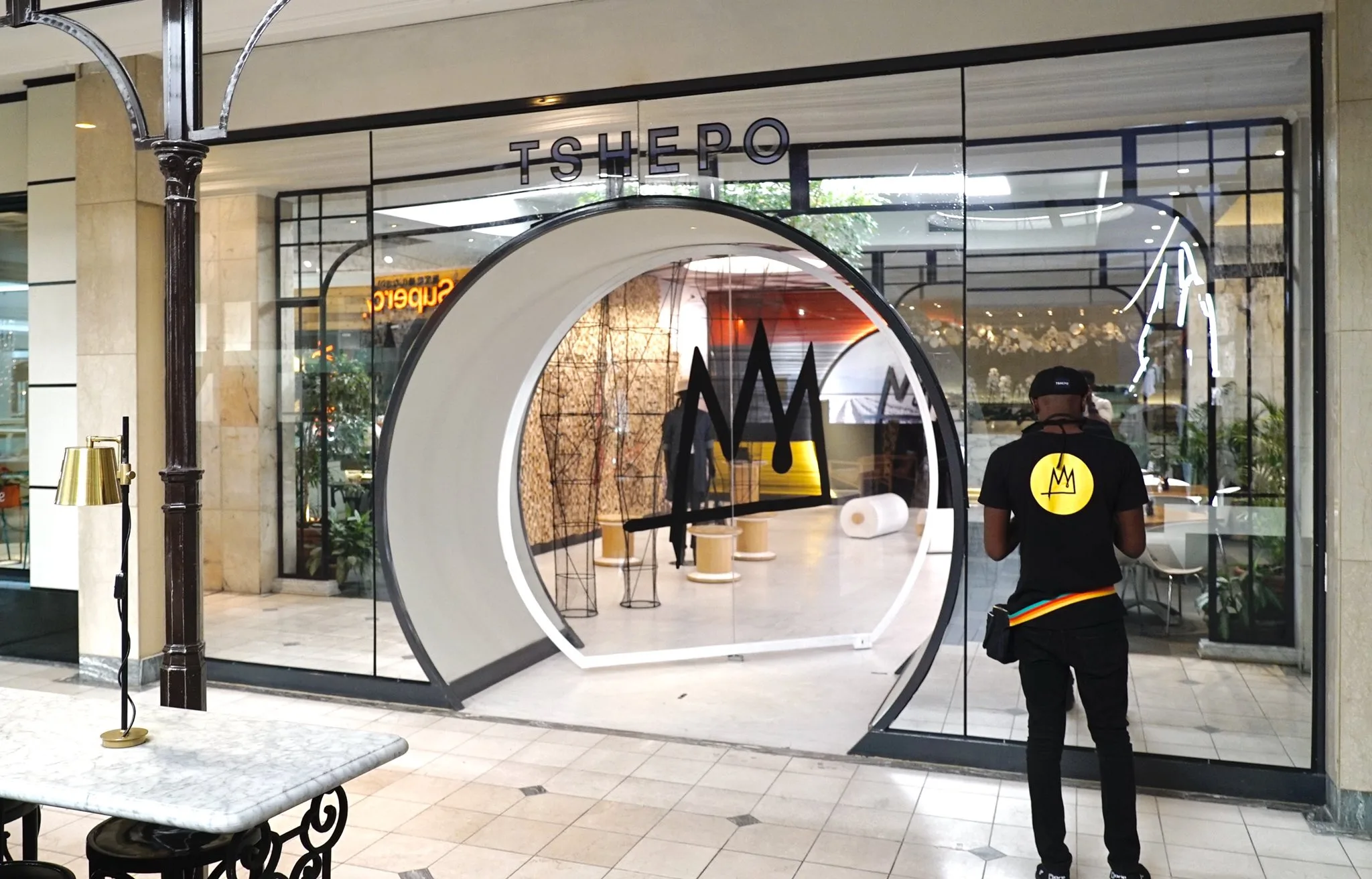
Bespoke denim designer Tshepo Mohlala ended 2020 on a high by opening a new store in Hyde Park, north of Johannesburg.

Founded in 2015, Tshepo is a lifestyle brand that offers a range of bespoke denim clothing and ready-to-wear products.

The denim designer whose products are also available in Amsterdam.

Mohlala took to social media to make the announcement on Monday morning.

Sharing with his 58K followers on Twitter, he wrote: “Hey South Africa, Please come help us celebrate our new store opening this Monday in Hyde Park Shopping centre on 28 December 2020. see you there.”

Many of his followers congratulated him for growing his brand. “Congratulations Tshepo, wishing you all the success you deserve and hope to see many more stores,” commented Hinal Devchand.

Fifi Peters also complimented Mohlala for his hard work. She said: “Shout out to Tshepo Jeans that’s set to open its flagship store at Hyde Park Corner, which is owned by JSE listed property group Hyprop @TshepoJeans.

“Surprisingly, Hyprop says a number of companies have opened new stores across its malls in SA, despite the Covid19 lockdowns.”

Tshepo joins the likes of Thula Sindi, Laduma Ngxokolo, and David Tlale- who all opened new stores this year.

Sindi opened two Africa Rise stores, one in Johannesburg CBD and recently, at Menlyn, Pretoria- while Tlale’s is at Melrose Arch. Ngxokolo, the founder of Maxhosa took his luxury brand to the V&A Waterfront in Cape Town.

Mohlala was inspired by the three most important women in his life to start the brand- hence the logo is a pronged crown, representing his mother, grandmother, and aunt.

Content courtesy of IOL & Nairobi fashion hub 

Last chance for South Africa local Designers to enter New Talent Search

Time is ticking, and if you haven’t entered the South African Fashion Week New Talent Search 2021 now is the time to do so.

With only two weeks until the applications close, South African designers are urged to join in the movement of changing how we look at fabric design within fashion design.

The New Talent Search is open to ladies’ wear designers whose businesses are based in South Africa. All designer applicants must supply a minimum of one store (this can include your store or online store) and must be under 10 years in business to qualify to enter.

To give their consumers something different, this is what the designers must look into:

  • Consider fabrics that have the least impact on the environment.
  • Natural linen, cotton, and sustainably sourced fabrics.
  • Fur and leather-free.
  • Their Designs must include print on at least 50% of the garments.
  • Zero-waste cutting such as draping, knitting, or using a zero-waste pattern.
  • Provide consumer care instructions to lengthen the garment’s longevity.
  • Create a timeless and trans-seasonal collection.

Designers must also research slow fashion to make sure they understand it in a way that they can live it and play a role in shaping the future of sustainable fashion.

They must also base their designs on 2021 world trends by combining contemporary shapes, styles, and construction with their inspirations and design talent.

The winner will walk away with prizes to the value of ± R455000

Content courtesy of   & Nairobi fashion hub 

Lifestyle Cultural Brand Day MyLane Introduces African Fashion With A Purpose

Day MyLane is a lifestyle cultural brand that strives to instill confidence and unison through its unique African fashion pieces.

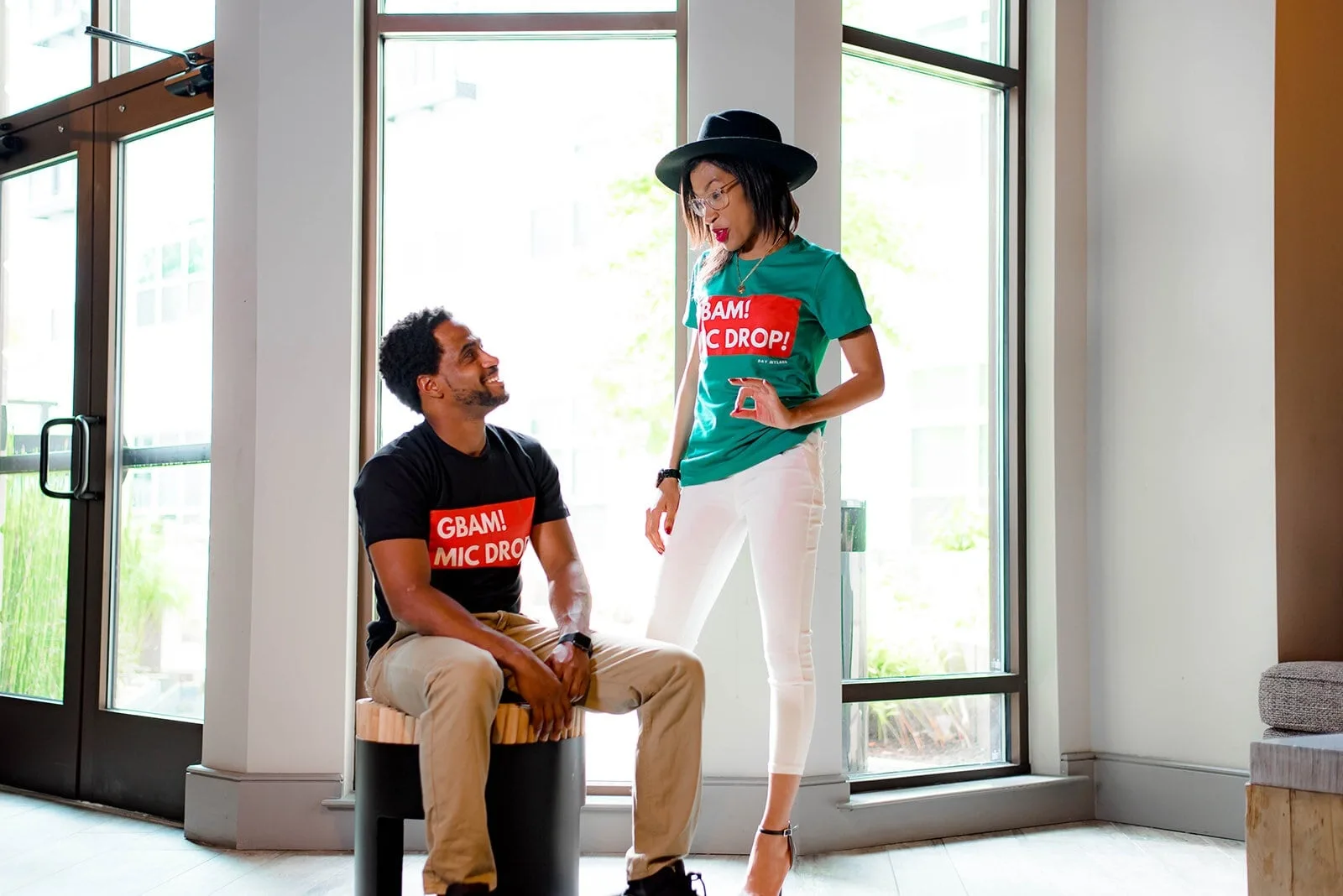
Day MyLane is a one-of-a-kind, lifestyle cultural brand that amplifies cultural awareness and appreciation. The brand is delighted to share African flavor with the world through fresh, forward-thinking fashion concepts. With a catalog of clothing that boasts individuality and expression, including unique Nigerian t-shirts, Day MyLane caters to a global audience.

The company is a firm believer in praising communication across cultural lines, which is why many of their clothing designs feature inspiring phrases written in Nigerian Pidgin English.

A spin on the English phrase “Stay in your lane,” the company’s name has roots in both English and Nigerian languages. In Nigerian Pidgin English, it is not uncommon for someone to say “Dey your lane,” hence the aesthetically soothing version was born, Day MyLane. Nigerian Pidgin English phrases are highlighted throughout the brand’s website and are creatively represented on a number of pieces.

Providing a massive online collection of gentlemen’s, ladies’, and unisex apparel celebrating African fashion with rich cultural heritage concepts, Day MyLane is an all-inclusive brand that strives to evoke confidence. The company also sells dynamic accessories, including stylish masks and vibrant buttons. Each unique Day MyLane product represents their profound approach toward a unified planet.

Bold yet elegant, Day MyLane’s African fashion designs draw attention while offering heartfelt quotes that will resonate with both the wearer and even strangers passing by. This notion has been developed to break down cultural barriers and connect the human race as one. By wearing fun, expressive pieces from Day MyLane, people can feel good about doing right by themselves and by humanity.

Day MyLane products empower the people who embody them. Each individual is encouraged by these African fashion pieces and unique Nigerian t-shirts to celebrate the joy of life, whether this means feeling validated or projecting those feelings of inspiration onto others. This lifestyle cultural brand is worn by adventurers and trendsetters who seek deeper meaning in each of their choices.

“Design is my passion, but even more so, my commitment is to forging a connection between people and cultures worldwide,” says Creative Director of Day MyLane, Chika. “My mission is to help others find self-confidence while being in tune with our greater purpose on this Earth which is to come together.”

Each of Day MyLane’s wearable art pieces have been created with swift attention to detail. Chika has a vast wealth of knowledge that contributes to her creative expertise while continually expanding Day MyLane. By blending powerful messages and standout subtext with trendy African fashion statements, this lifestyle cultural brand finally allows people to dress for purpose.

Content courtesy of EIN Press wire & Nairobi fashion hub 

Ad