Tuesday 28th of July 2026

Nairobi, Kenya

The Oscars Awards Are Set To Return To Normalcy, With The Exception Of All The Changes.

The Academy Awards are rolling out the red carpet at Los Angeles’ Dolby Theatre for the first time in two years in what the film academy hopes will be a return to normalcy at the Oscars. Except for everything that has changed.

The 94th Academy Awards will air live on ABC at 8 p.m. EDT, as is customary. However, little else about how this year’s Oscars will begin is traditional. Attendees will gather in the Dolby an hour before the broadcast begins for the presentation of eight awards and acceptance speeches, which will be edited into a broadcast that producer Will Packer has promised will be a tight three hours.

It’s just one of many changes, both minor and seismic, taking place in the run-up to this year’s ceremony. Following two years of pandemic and a socially distant 2021 edition with record-low ratings, the Academy Awards will attempt to reclaim their exalted place in pop culture with a revamped telecast that is expected to see a streaming service win the best picture for the first time.

It will be difficult. The film industry recovered significantly from the pandemic by 2021, but despite one of the year’s biggest hits, “Spider-Man: No Way Home,” the recovery has been patchy.

According to the Motion Picture Association, the global movie industry sold roughly half as many tickets last year as it did two years ago, $21.3 billion in 2021 compared to $42.3 billion in 2019. Hollywood pushed more of its best films into people’s homes than ever before; half of this year’s best-picture nominees were streamed at or very close to release. Even the Academy of Motion Picture Arts and Sciences has shifted entirely to a streaming platform for voters, rather than DVD screeners.
Then there’s the difficulty of commanding global attention for a night of Hollywood self-congratulation after two years of pandemic and while Russia’s war ravages Ukraine. Packer has stated that the war in Ukraine will be acknowledged respectfully during the broadcast.

Netflix’s “The Power of the Dog,” Jane Campion’s gothic western, leads the pack with 12 nominations and a strong chance of winning the top prize. But all of the attention is on Sian Heder’s deaf family drama “CODA,” which, despite only three nominations, is considered the favorite. A win would be a big win for Apple TV+, which bought the film out of the Sundance Film Festival last year and has spent a lot of money promoting it to academy members.

But “Dune,” Denis Villeneuve’s sweeping science-fiction epic, is expected to win the most awards on the night. It’s the odds-on favorite to sweep the technical categories.

After several years without a host, the Oscars will be emceed by the trio of Amy Schumer, Wanda Sykes, and Regina Hall, which will also be streamed on platforms such as Hulu Live TV, YouTubeTV, and ABC.com with provider authentication.

A star-studded lineup of performers, including Billie Eilish and Beyoncé, will perform nominated songs, while the “Encanto” cast will perform Lin-Manuel Miranda’s breakout hit “We Don’t Talk About Bruno.”

It will be a staggered start, with different stars entering the Dolby at different times. The red carpet preshow will run from 6:30 to 8 p.m., with the first hour of awards taking place inside the theater from 7-8 p.m.

The winners’ names will be announced first on social media and then woven into the telecast. The red carpet will also open an hour earlier than usual, at 4 p.m. Eastern, to accommodate the shift.

The new approach, which has been widely panned by some academy members, is likely to complicate red-carpet logistics.

The academy is urging attendees to arrive at their seats by 7 p.m. in order to give each winner an uncompromised moment. Some celebrities, such as “The Eyes of Tammy Faye” nominee Jessica Chastain, have stated that they will not participate in red carpet interviews if it means missing the presentation of awards such as best hair and makeup, which the artists of “Tammy Faye” are nominated for.

This is one of eight pre-show categories that will be awarded during the “golden hour,” as the producers refer to it. Film editing, sound, original score, production design, live-action short, animated short, and documentary short are the others.

More than 70 Oscar winners, including James Cameron, Kathleen Kennedy, and Guillermo del Toro, warned earlier this month that the change would make some nominees “second-class citizens.”

The reason for the shift is concern about the Oscars’ rapidly declining ratings. While drops have been common for all major network award shows, last year’s show drew only about 10 million viewers, less than half of the 23.6 million who watched the previous year. It was closer to 40 million a decade ago.

Some argued in the run-up to this year’s Oscars that a blockbuster like “Spider-Man: No Way Home” should have been nominated for best picture. It is only for visual effects.

Instead, a diverse range of films are in the running, including the popular Netflix apocalyptic comedy “Don’t Look Up” and the critically acclaimed three-hour Japanese drama “Drive My Car.”

One thing the producers have promised us is that the night’s final award will be for best picture. Last year’s show ended awkwardly with the unexpected awarding of the best actor to a non-present Anthony Hopkins.

Content courtesy fo Association Press & NFH 

Oscars Awards 2022 Red Carpet Fashion: Live Updates Outfits and Looks

The 94th Academy Awards ceremony has begun! Today, Hollywood’s top talent will walk the red carpet before heading inside L.A.’s Dolby Theatre for the grand ceremony, where 2021’s best films and actors will wait to see who took home this year’s awards.
Regina Hall, Amy Schumer, and Wanda Sykes will be the hosts of the event.

The Power of the Dog, West Side Story, Belfast, and Licorice Pizza are among the top films nominated for Oscars in 2022.

The evening will undoubtedly produce numerous memorable and viral moments. After all, it’s not every day that some of the world’s most famous people congregate in one room (perhaps we’ll even see a remake of that infamous, star-studded selfie in 2014?).

Better yet, all of the glitzy fashion that will take over the step and repeat beforehand will be even better. After all, the Academy Awards have a long history of producing iconic fashion moments that continue to live on.

For example, two decades later, we’re still talking about Halle Berry’s embroidered, mesh Elie Saab gown from the 2002 Oscars. Who could forget Billy Porter’s Christian Siriano gown in 2019 or Amanda Seyfried’s red-hot Armani gown just a year ago?

These outfits are fantastic.

Whoever wins big this evening, what the stars wear will be just as much of a talking point as who may or may not take home a trophy. So, keep checking back here throughout the night for all of the red carpet’s most stunning fashion moments, which will be updated in real-time so you don’t miss a thing.

The biggest stars in Hollywood arrived at the Dolby Theatre in Hollywood on Sunday, March 27 for the 2022 Oscars.

The live telecast, hosted by Regina Hall, Wanda Sykes, and Amy Schumer, will honor the best in film from the previous year. While many actors and actresses are expected to attend, viewers can also expect a few surprises.
Beyoncé, Sebastián Yatra, Billie Eilish, and Reba McEntire will perform Oscar-nominated songs. Athletes such as Shaun White, Venus, and Serena Williams will also serve as presenters.
Each celebrity must do one thing before the awards are presented: walk the red carpet. From custom jewelry and eye-catching shoes to designer gowns and tuxedos, these celebrities thought of everything before stepping out in style.

Content courtesy of Vogue Magazine, E News & NFH 

LaLiga Goes Cool And Sporty With South African-inspired Fashion.

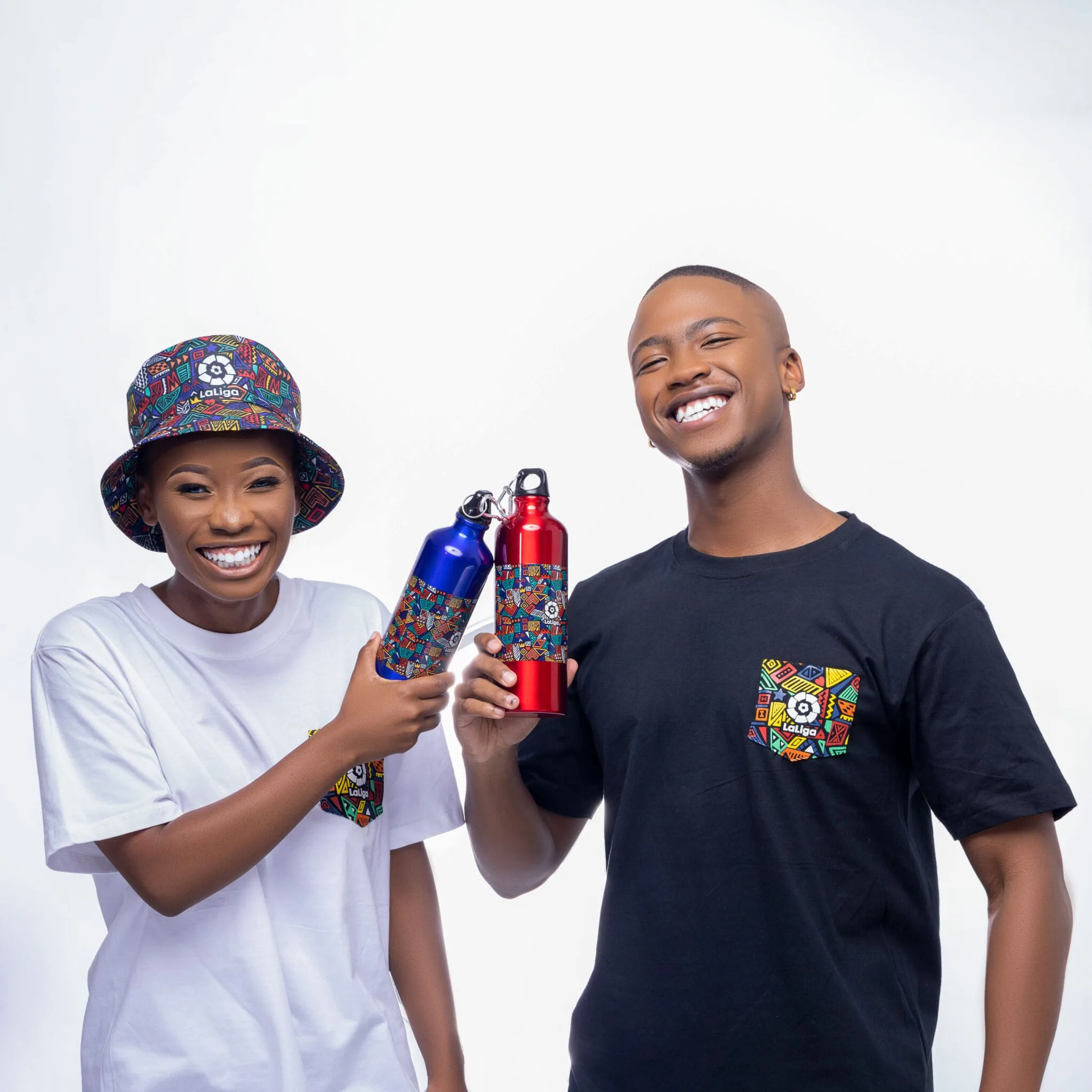
LaLiga has cemented its position in the South African football market even further by introducing a new streetwear collection inspired by Mzansi’s streets.

The Spanish league has a reputation for local activations and initiatives that resonate with the local market, and it has now released a classic LaLiga bucket hat, T-shirt, water bottle, and mug.

All of these items feature a bright pattern inspired by South Africa, making them a relatable product for any LaLiga fan in the area.

The bucket hat, which is popular on South African streets, stands out most from the collection. Marcos Pelegrin, managing director of LaLiga in Southern Africa, stated:

We’re ecstatic to have created this exciting local streetwear collection specifically for the South African market. LaLiga is a global league that is well-liked all over the world, but our goal is to bring the league closer to fans and to be relevant in local markets.

What could be more South African, cool, and sporty than a spottie?

We love the collection, and we hope that South African football fans and those who enjoy entertainment, fashion, and fun will love it as well and proudly wear it from Mamelodi to Madrid.”

The streetwear collection is just one of many local activations carried out by the league’s Southern Africa office this season.

LaLiga has also recently become the official league sponsor of the fast-growing Fives Futbol franchise, which is popular in communities across the country for its fast-paced kasi style football, as part of LaLiga’s efforts to engage directly with local football communities. The merchandise is available for purchase at LaLiga’s Experience store in Johannesburg’s Fourways Mall.

Teko Modise, Atletico Madrid’s Banyana Banyana striker Thembi Kgatlana, and former Bafana Bafana goalkeeper Brian Baloyi are among the local stars who supported the launch of the streetwear range, as are prominent local personalities such as sportscasters Carol Tshabalala and Julia Stuart, musician Chad Saaiman, DJ NV Funk, and former Western Province rugby player Ricky Schroeder.

Content courtesy of The South African & NFH

Nisha Kanabar, A Tanzanian Storyteller Entrepreneur, And A Fashion Designer.

Contrary to popular belief, African fashion is more than just patterns and traditional garb, it is modern and evolving. This is how Nisha Kanabar, a fashion entrepreneur, describes herself.

A fourth-generation Tanzanian and graduate of New York’s Parsons School of Design sees it and is determined to change the dominant narrative from her base in Dar es Salaam.

When she began her career, this view of African fashion, if it existed at all, was either non-existent or painted with broad brushstrokes. It was almost as if there was a need to deconstruct Eurocentric standards, engage with cultures outside of homogeneous cliches, and curate for specific locations and audiences.

She noticed how storytelling could connect audiences to creatives while working in the fashion industry abroad, including for reputable fashion magazines in the United States, India, and the Middle East.

This was the inspiration for Industrie Africa, her global retail destination for contemporary and luxury African fashion founded in 2018, which drew on her Tanzanian upbringing and her views on diversity, identity, and culture, all of which she considers inherently pluralistic.

“What hopping around different markets taught me was the power of the media to change perceptions,” says Kanabar, who has worked in both fashion editorial and commercial fashion.

Her first experience in an emerging market, while working at Vogue India, taught her the importance of context and detail as a powerful voice of creatives and designers.

According to her, Industrie Africa showcases luxury pan-African brands through the principles of storytelling, thought, leadership, and education, collaborating with its designer community to deliver directly from their studios to anywhere in the world.

“When I returned to Tanzania in 2016, I became aware of the gaps in the fashion industry.” “There was a lack of accuracy and a regional disconnect in how it was portrayed globally,” she emphasizes.

“There is a general lack of diversity on a global scale.” So, in order to truly offer something to this fractured, underrepresented fashion industry, this was created.

The media and fashion stakeholders will have clear, cohesive access to the market in ways they have never had before.”

Starting Industrie Africa also entailed determining who the audience for luxury pan-African fashion was and what they desired in terms of sectorial knowledge.

Kanabar also mentioned a lack of access and infrastructure. How could she build a retail platform without even the fundamentals in place?

“From the beginning, we began to cultivate this really engaged community and then just started digging deeper and realized that there was an overwhelming demand for consumer products when it came to Africa, and African luxury in particular, as well as African-led content.”

This resulted in the launch of Industrie Africa’s e-commerce platform in 2020, challenging people’s perceptions of stereotypical African fashion and highlighting pan-African voices through an intuitive global editorial framework and lens.

“It’s kind of to raise the bar in storytelling when it comes to our continent because I don’t feel like we have the right voices from within to gather, supercharge, and create content in an elevated way, so that was kind of part of the mission,” she says.

“The way we work with our designers is that we curate in a way that elevates them, elevates our product narrative, and elevates everything to an international standard.”

There’s also a focus on long-term viability.
There are few content platforms and knowledge-sharing opportunities in Africa’s high-end fashion industry.
Kanabar believes that you can’t push retail without telling a story, and you can’t cultivate engagement without it.

” Industrie Africa is uniquely tailored to the ecosystem to which we belong, so it’s not a copy-paste model by any means, it’s very much integrated like a puzzle piece within our environment…

what we do is contextualize the African fashion experience in a very authentic way that hasn’t been seen before.” This immersive experience allows you to engage with the industry on your own terms, whatever that may be.”

Content courtesy of Industrie Africa & NFH

LIORE’e Establishes Itself As The Industry Leader In African Infant Clothing.

The luxury goods sector has been one of Africa’s fastest expanding markets during the last ten years. Within this sector, premium baby clothing has established itself as a must-have item.

The New York-based luxury baby boutique LIORE’e has positioned itself as one of the first companies in the field, recognizing the sector’s rise. It is now set to make substantial land grabs of market share in Nigeria, Kenya, South Africa, and others.
Daniella Zoharetz, a young mother, founded the business in 2017 with the goal of creating entertaining, elegant accessories, cosmetics, and clothes for newborns. Zoharetz founded LIORE’e with a passion for infants, fashion, and luxury.

There she was a huge hit and received a lot of praise. While LIORE’e is best known for its custom-made rhinestone embossed accessories such as pacifiers, bottle caps, pacifier clips, and baby sandals, the brand’s latest venture includes a new range of clothes.
“I wasn’t pleased with the alternatives available before I joined LIORE’e. Sure, some of the apparel lines looked fantastic, but they lacked luster! “They didn’t make an impression,” Zoharetz adds.

“I wanted to make something that merged infants and fashion as a mother.” So I founded LIORE’e, with the goal of creating one-of-a-kind luxury things and accessories of the highest quality that you won’t find anywhere else.”

The brand’s new baby clothesline will be made of superior pima cotton and will be suitable for children aged newborn to two years old. Clothing sets will be available, complete with high-quality packaging and branding, and will be ideal for presenting to new moms and their babies. LIORE’e is excited to share their latest designs, which guarantee elegance and shine in every product, when they launch in March 2022.

Welcome to LIORE’e, a baby shop situated in New York. On LIORE’e, we have everything a parent may want for his or her children – all in one place.
We understand the fads and evolution that children go through, which is why we update our store with new brands and items on a regular basis to keep parents and their children pleased at all times.

On LIORE’e, we have the world’s largest selection of handcrafted baby Swarovski crystal items. We are completely committed, and as a result, we go above and beyond to provide you with elegant, trendy, yet very inexpensive items for small children, newborns, and expecting mothers.

We are not simply another online business. We are a brand that shares a parent’s love for their children. All of our goods are sourced and certified by genuine moms and fathers who understand what parents desire for their children in order to properly beautify every newborn. As a result, we always have everything every parent wants for their children.

We don’t stop there; we make sure that every step of the procedure, from placing an order to having it delivered to your door, is painless. Please have a look at our timeless items that will make your child stand out!!!

Content courtesy of LIORE’e & NFH 

New York Fashion Week Is On! A First Look at the February Schedule

The Council of Fashion Designers of America and IMG have released the official schedule for New York Fashion Week’s fall 2022 season. Taking place from February 11 to February 16, 2022, NYFW will see mainstays of American fashion like Tom Ford, Tory Burch, Coach, Proenza Schouler, Michael Kors, and Anna Sui return alongside some designers who’ve sat out of late like Area and Dion Lee, and a host of new names to know.

Steven Kolb, the chief executive of the CFDA told Vogue, “The American fashion industry has shown great resilience during this difficult time. As the Omicron variant continues to present challenges at every level, I am looking forward to seeing the ways in which designers continue to present their collections in creative, innovative ways with an eye to the safety of all fashion week stakeholders.”

The major question is whether the shows scheduled will take place in-person or digitally. The provisional schedule leaves a lot of room for designers to do things their way as precautions around the Omicron variant change, though there is a small section of digital-only brands noted on the calendar that includes names like Adam Lippes, Imitation of Christ, Sandy Liang, Theophilio, and others.

When a show does take place in-person, the CFDA and IMG are promising to monitor the COVID precautions. Kolb said, “We will be following the COVID protocols that were instated in September that call for mandatory vaccination, mask-wearing indoors, and scaling back the size of audiences. We continue to be in contact with local and state health officials as we monitor the Omicron variant.”

IRL or URL, New York is home to a new guard of thinkers, designers, and change-makers. Eckhaus Latta’s Mike Eckhaus and Zoe Latta have cemented themselves as NYFW mainstays with a 9 p.m. show on February 12, as has Telfar with a slot at 6 p.m. on the 16th.

Emerging talents from the spring 2022 season like Connor McKnight, Saint Sintra, and Elena Velez are back on the official calendar, joined by an In The Blk showcase. “There is a lot of great new talent on the schedule, including Dauphinette, Judy Turner, Loring, Luchen, Melke, PatBO, Saint Sintra, and Zankov,” Kolb said, highlighting the young talents on his radar.

Content Courtesy of Vogue Magazine & NFH 

Covid Or Not, The Show Must Go On: New York Fashion Week Kicks Off

Fall/Winter 2022 shows get underway at New York Fashion week with Proenza Schouler and Christian Cowan showing their lively collections.

Experimentation, play, and glitter: a coronavirus-impacted New York Fashion Week got underway on Friday with Fall/Winter 2022 shows by Proenza Schouler and Christian Cowan.

Experimentation’ At New York Fashion Week

In its collection, presented in an art gallery in Manhattan’s trendy East Village, New York brand Proenza Schouler played with shape, contrasting fitted waists with loose or slightly rounded skirts.

Designer Lazaro Hernandez said the idea was to exaggerate and juxtapose different forms to respond to “this whole body obsession these days with social media and everyone showing the body.”

https://www.instagram.com/tv/CZ5bKKIlLe3/?utm_source=ig_web_copy_link

Model Bella Hadid wore an outfit featuring buttoned sleeves, accentuated shoulders, and a black velvet hooded top – giving off a Catwoman vibe.

“Experimentation and play are key, perhaps now more than ever,” Proenza said of its collection.

Christian Cowan Showcases ‘glamour’ At New York Fashion Week

Christian Cowan – who has dressed Lady Gaga and rappers Cardi B and Lil Nas X – presented his collection in the observatory atop the One World Trade Center skyscraper that replaced the Twin Towers felled on 9/11.

The show had the atmosphere of a nightclub, highlighting the British designer’s taste for glitter and glamour.

Ahead of the runway, the label teased fans with what might be in store by posting an image of the “Freedom Tower” all in pink on its Instagram page.

Tom Ford Cancels New York Fashion Week Show

Despite pandemic restrictions and the Omicron variant upsetting preparations, several other brands have opted for in-person shows, including Michael Kors, Altuzarra, Tory Burch, Brandon Maxwell, and Telfar.

A notable absence was Tom Ford, chair of the Council of Fashion Designers of America (CFDA) that organizes the event.

He was due to close the week next Wednesday but canceled at the end of January due to a surge of COVID-19 cases among his team.

“We have tried everything possible to avoid canceling our New York show but ultimately are faced with the sad fact that we will simply not have a completed collection in time,” he said.

Opportunity For Emerging Talents To Showcase At New York Fashion Week

For several years now, New York has had to deal with big names deciding to skip the event in favor of displaying their latest collections elsewhere.

Some designers are also choosing to eschew the classic runway calendar, with growing criticism that the frantic pace of fashion is out of step with sustainability.

The absence of top creators like Christopher John Rogers – the CFDA’s women’s designer of the year 2021 – and Kerby Jean-Raymond’s Pyer Moss brand, also provided an opportunity for emerging talents to grab the headlines.

Or at least that is the hope of labels such as Melke and Dauphinette, which promote sustainable and ethical fashion.

“It is really rewarding realizing that people can see the work that I’ve been doing and they think that it deserves a place amongst a bunch of other very successful brands,” 26-year-old Emma Gage, who founded Melke during the pandemic, told AFP.

“It kind of really solidifies you as someone that people know is going to be around for a long time,” she said inside her small studio in Bushwick, Brooklyn.

Content Courtesy of AFP, The South African & NFH 

Common Threads Contemporary African Fashion

Meet the new generation of African creatives taking the continent’s textile culture into the future. Helen Jennings reports.

 “Cloth is to Africans what monuments are to Westerners… Their capacity and application to commemorate events, issues, persons, and objectives outside of themselves are so immense.” El Anatsui, 2005

These wise words from Ghana’s most celebrated fine artist sum up Africa’s gloriously storied textile heritage, which not only speaks to generations of artisanal mastery but also to the significant cultural communication performed with a cloth across the continent. And over recent decades, African fashion designers have elevated these treasures still further through their designs. Early pioneers include Shade Thomas-Fahm who revolutionized Nigerian fashion in the 1960s by using handwoven aso-oke. In the 1980s, Malian Chris

Seydou was the first designer to consider bògòlanfini mud cloth. And in 1990s Ghana, Kofi Ansah modernized ceremonial kente cloth.

Today many heritage fabrics face being lost as older generations of makers pass on. This does not mean, however, as commonly believed, that African fabric and weaving traditions belong to the past, unchanging relics of a by-gone era. In fact, they remain ever-evolving tools for creating employment, empowerment, and innovation.

For example, the Ethical Fashion Initiative, a program of the International Trade Centre, works with co-ops in several countries to finance their valuable skills, whether silk screening, sewing, dying, or weaving, and develop ethical supply chains.

But it is the current generation of sought-after African designers and entrepreneurs who are the ones using new thinking to take ancient textiles into the future. In Nigeria, Emmanuel Okoro of Emmy Kasbit focuses on re-imagining akwete, a loom-woven cloth made by Igbo women in eastern Nigeria. “There are over 100 traditional motifs and it’s said that each one came to its maker from the spirits in their dreams,” says Okoro. “For me, it comes down to preserving the culture of our forefathers in a modern way. Storytelling is at the forefront of putting African fashion on the global stage, so we cannot tell our stories with western fabrics.”

Each season, the Lagos-based designer develops his own patterns based on Nsibidi hieroglyphics and then delivers his yarns and designs to his cherished weavers. His boldly tailored men’s and women’s looks for SS21 speak to ideas of unity and strength and were debuted at Vogue Italia Talents during Milan Fashion Week. “I’m interested in community upliftment and boosting a craft that had become forgotten,” he adds. “I want to see these women win, and I’m letting the world know that this is what African luxury looks like.”

Fellow Nigerian Nkwo Onwuka’s approach is informed by her interest in ethical fashion. The Abuja-based designer has developed dakala, a handmade cloth made from denim offcuts. “Nigeria has a lot of markets trading in second-hand garments and a strong culture of clothing being made by small-scale manufacturers and dressmakers, which results in a huge amount

of textile waste,” Onwuka explains. “I started to see how I could prevent dead stock and old clothes from ending up in landfills or being incinerated by using them as a raw material. Through experimentation, I developed a technique of stripping, braiding, and sewing together textile waste to form a new fabric that has the look and feel of our traditional woven fabrics.”

Dakala was shortlisted for the Design Museum’s Beazley Designs of the Year 2020 award and her studio continues to develop the technique with the next step being a loom-spun version. Her current collection, entitled No Planet B, features ponchos and apron corsets made from multiple strings of dakala. “For me, success is making sure that I can take care of everyone in my small circle with the hope that this care ripples

out to form a larger circle,” she says. “I want to make sure that each person feels valued. The community has to be the fuel that fires what we do.”

Johannesburg-based designer Thebe Magugu is embracing the latest technology to create experiential fabrications from ancient inspirations. The 2019 LVMH Award winner is passionate about investing his directional yet elegant womenswear with cultural value.

For example, his clothing labels are fitted with microchips. “If any smartphone taps them, it opens a webpage that showcases the story of the collection as well as photographs of everyone involved in the making of the garment, from the fabric weavers in Cape Town to the tailors in Joburg. I love the full transparency and the idea of bringing culture and technology together,” he says.

For his AW21 collection, entitled Alchemy, Magugu immersed himself in African spirituality, which led to a collaboration with traditional healer Noentla Khumalo for his headline print featuring the tools of her trade – goat knuckles, a police whistle, pencil sharpener, red dice, and shells. “Noentla, who uses various objects as her medium to communicate with the ancestors, threw these objects onto a straw mat, which were then photographed, abstracted, and printed onto wool suiting. Before she threw the bones, Noentla asked ‘What now?’ and what lays on this garment is the answer.”

The rising star, who’s currently shortlisted for The Woolmark 2021 Prize, also worked with South African eco-printmaker Larissa Don who used cannabis and imphepho (the plant healers burn during their ceremonies) to transfer botanical prints onto merino wool. “It is about the idea of modernity through the indigenous,” he adds. “Wool is one of the most sophisticated fabrics available – from its odour-absorbing properties and natural heat-management to its inherent sense of luxury, which all speak to the unparalleled power of the natural world.”

While bright ideas in the high fashion space abound, there remain steep challenges facing more widely available fashion fabrics due to the lack of textile manufacturing facilities on the continent. The industry dwindled in the 1990s in the face of international competition including hugely popular

wax print fabrics from Europe. While infrastructure is surely improving today, there is still far to go. This is an area Kenyan fashion curator Sunny Dolat is addressing.

“As Africans, we have been lucky to be born into a wealth of textile culture. I believe we have a duty to grow and add to this heritage,” says Dolat, who is co-founder of The Nest Collective and creative business incubator, the HEVA Fund. “Many parts of Africa still have communities, albeit reduced, of spinners, weavers, and dyers who carry this cultural memory in their hands. The work I’m exploring now seeks to marry these sustainable practices with contemporary insights, ideas, and materials, which I believe could support many artisans across the continent.”

Due to Kenya’s colonial history, the country’s homegrown textile heritage is severely diminished compared to other parts of Africa. This fact is what originally stirred Dolat to take action. “All the textiles that we have are versions of textiles from other cultures. Maasai shuka blankets came from Scottish missionaries, kikoi is an update on an Omani wrapper, and kanga is based on the Portuguese lenço scarf. They all started off being made locally but, as with most things, much of it is now brought in from Asia. This got me thinking, what could a truly Kenyan textile look like?”

Dolat visited artisanal communities around the country to research organic dyes and fibers and then moved on to developing a new visual language with graphic designers Lulu

Kitolo and Monica Obaga. The result is Nanga (Swahili for anchor), a range of prints inspired by Kenya’s natural and urban landscapes, which have been produced on silk, chiffon, and cotton and are entering Nairobi’s downtown fabric stores this year. “We’re not going to announce them or give them to designers. Instead, we’re putting them in the mass market to see if they sell. That would be the true measure of success.”

He cites Green Nettle as a benchmark for the kind of new approach that could take African fashion innovation to the next level.

This Kenyan start-up won the H&M Foundation Global Change Award for its environmentally-friendly fabric made from nettles – a plant that thrives in even the most barren areas of the country. “My hope is that more designers

and companies begin to develop their own interventions into the textiles. Last year, the pandemic disrupted everyone’s access to textiles overnight. This taught us not to rely on imports and many found local alternatives instead. It would be amazing if that way of working can continue to be fostered and grow.”

Content Courtesy of TL Magazine & NFH 
African Development Bank’s Fashionomics Africa, Partners, Launch New Sustainable Fashion Competition With $6,000 in Cash Prizes

The African Development Bank Fashionomics Africa initiative’s second online competition is offering $6,000 total in cash prizes, mentoring, new branding packages, and other support for winning African designers of sustainable and circular fashion.

Fashionomics Africa, in collaboration with the United Nations Environment Programme, Parsons School of Design, strategic consulting and communications agency BPCM, and the Ellen MacArthur Foundation, invite interested African fashion brands to apply to the sustainable fashion online competition. Entrants must be pursuing environmentally friendly measures, sustainability, and circular economy actions to qualify. The designer or design team submitting the “best sustainable design” will win $3,000 along with other prizes. Two other competition finalists will take home $1,500 each, plus other support.

The competition celebrates African fashion brands that will change how we produce, buy, use and recycle fashion and that encourage a more sustainable shift in consumer practices.

“Sustainability is the present, not the distant or even the near future. It is where we are now, and it is vital that we open our eyes to what the fashion industry already has to offer. By embracing the industry’s existing resources, we are promoting circularity at the most fundamental level,” said Amel Hamza, Acting Director for Gender, Women and Civil Society at the African Development Bank.

“With the second edition of the Fashionomics Africa contest, the Bank aims to continue highlighting the ingenuity that African fashion designers consistently demonstrate through the strength of their culture and heritage,” she added.

The textile and fashion industry accounts for nearly 2% to 8% of global carbon emissions, the sector ranks as the world’s second-largest industrial polluter after the oil sector, according to the United Nations Environment Programme. However, this industry also provides important levels of employment, foreign exchange revenue, and products essential to human welfare.

The competition targets textile, apparel, and accessories entrepreneurs from Africa, aged 18 years or older, who have launched fashion businesses (up to a maximum of 50 employees), and whose sustainable designs have been produced within the last five years. Qualifying applicants will submit pictures of their products, detail their sustainable business model, and explain how their startup is environmentally friendly and innovative.

Examples of sustainability and circularity elements might include materials used, the design process, cleaner or greener production processes – including shipping methods or ways to reduce carbon footprint.

A five-person judging panel representing the African Development Bank and competition collaborators will announce the three finalists by 22 March 2022. The finalists’ entries will be posted on the Fashionomics Africa digital marketplace and mobile application for a public vote between 22 March 2022 and 7 April 2022. Polls close on 7 April at 23:59 GMT.

In addition to the cash prize, the winning fashion brand will receive a certificate and the opportunity to showcase its creation by taking part in online events and sharing insights on key sustainability challenges facing the industry. The winner will have access to a network of media insiders and industry experts and receive mentoring and networking opportunities from competition collaborators.

To learn more about the Fashionomics Africa online competition or to submit an entry, click here. Applications must be received by 1 March 2022 at 23:59 GMT.

Fashionomics Africa is an African Development Bank initiative increasing Africa’s participation in the global textile and fashion industry value chains.

Content Courtesy of Fashionomics Africa & NFH

Africa Focussed Luxury E-Commerce Platform Jendaya Launches

The luxury e-commerce platform that wants to target African consumers, while also exposing African brands to the rest of the world, officially launched Monday.

The London-based platform is helmed by Ayo Rufai, Kemi Adetu, and Teni Sagoe. Jendaya’s launch has been highly anticipated for months, with the expectation that its designer offerings and shipping to Africa, Asia, the UK, the US, and Europe will both help to both bolster luxury e-commerce on the continent and promote African luxury designers globally.

“Jendaya is the only e-commerce marketplace that uses the social power of community and culture to help global shoppers discover diverse designers,” the company’s chief executive, Ayo Rufai, said.


According to Rufai, Federico Marchetti, former chairman, and chief executive of Yoox Net-a-Porter Group has served as a mentor to Jendaya’s team, while Rotimi Akinyemiju, former COO of Moda Operandi, and Omoyemi Akerele, founder of Lagos Fashion Week, are among the company’s board of advisors.

Jendaya users can expect a strong curation of brands, including some that will be new names for most consumers, as well as the ability to pay using cryptocurrency, he added. The platform currently stocks 60 brands, including JW Anderson, Balenciaga, Imad Eduso, Tokyo James, Jermain Bleu, and Okapi.

A new destination to discover, learn and shop luxury fashion in Africa and beyond. We partner with boutiques and brands from around the world. We’re committed to making a positive impact in the luxury industry. Our sustainability initiatives are reflected in the made-to-order designs that are encouraged on our platform helping to combat fashion waste. We are also working on providing business-friendly debt solutions to designers.

We’re “thankful” for the amazing talents on the African continent and from all over the globe who are contributing to our journey. We couldn’t have made it to this point without you. JENDAYA is where the old world meets the new school, a people-powered luxury e-commerce marketplace.

Mbabazi House of Style

Mbabazi (House of Style) is a Fair Trade business committed to advocating  African designs through modern fashion and quality products. We are committed to training and employing women and men providing them with opportunities to make a fair living. Mbabazi has 12 permanent employees, 4 trainees (apprentices), and 6 part-timers.

https://www.instagram.com/reel/CS4l0UwArgi/?utm_source=ig_embed

Mbabazi (House of Style) was founded in 2005, by Grace Byeitima, the name is in honor of her single mother, (Mbabazi Loy Rujumba), to appreciate her for the skills she taught her at an early age and teaching her the value of hard work.

At an early age, Grace remembers her mother saying, ”With the proper skills and hard work, you can succeed in life.” This is the backbone for Grace in the creation of a thriving fashion business – a business that inspires her mother, siblings, countless others and provides revenue for hardworking women and men.

The same heart and soul that fashions a successful shop and workshop in Uganda now exists in Memphis where Grace has resided since 2014. With her own elegance and design refinery, Grace merges the fabrics and prints of African tradition into new modern statements of style.

In 2007 Grace invited her mother so they could work together. Loy now heads the production department sharing her 30+ years of experience with our tailors and trainees in Uganda. Without her, Mbabazi would be non-existent.

Mbabazi is not just about clothing, the accessories and non-clothing-related items reflect ideas that inspire Grace and add to the ideas of a House of Style.

Mbabazi has thrived in Uganda, despite issues that exist in competitive business markets of developing nations.

Many well-meaning non-profit organizations who compete in the same market as traditional businesses such as Mbabazi are supported by subsidies and grants that create an uneven playing field. We at Mbabazi believe the saying “TRADE NOT AID” describes the best way forward for Economies in countries such as Uganda.

Mbabazi is a for-profit business that is supported by people like you.

Content courtesy of Mbabazi House of Style & NFH Digital Team 

Mbabazi House of Style Kampala is a Testament to one Woman’s Passion for Fashion and Empowerment

There was a time when Grace Byeitima, owner of Mbabazi House of Style, was interested in lawyering, not pattern layouts, But her mother forced her to learn about the latter.

“I wanted to be a lawyer,” said Byeitima, who is from Kampala, Uganda. “My mother was a teacher in a vocational training institute, and she made me go where she was teaching and learn how to sew.

“I went grudgingly, but I went anyway.” Yet today Byeitima, 43, who has sold African-inspired garments, jewelry, and other knickknacks from her shop in the Broad Avenue Arts District since 2017, is grateful that her mother insisted that she learn how to sew.

That’s because it not only has allowed her to craft a life of independence for

“I would make sure that I left school on time to work on it [patchwork clothing] so that I could use the sewing machine first.”

But when her mother was ultimately laid off from her job, that dashed Byeitima’s hopes of attending college and studying law. On top of that, Byeitima, who was 16, learned that she was pregnant.

herself but for other women who want to use entrepreneurship to escape jobs that devalue them.

This is what Byeitima aimed to do back in Kampala, she said one of the ways that her mother endeared her to sewing was by bringing home unfinished sewing work – and paying her and her siblings to finish it.

“Some of the pieces, like what you’re seeing right now, is patchwork,” said Byeitima, as she pointed to ruby, saffron, and black cowl neck shift that she was wearing.

“So, I have this baby, my mom has no job, and I have this baby to take care of,” she said, It wasn’t long before Byeitima learned that she was more a target for exploitation than employment.

“I realized no one would hire you if you have a lot of baggage, and I had a baby,” she said. “The simple jobs I could have gotten would have been as a secretary or a receptionist. But you’d go to apply for these jobs, and men would want to sleep with you.”

“As I looked for jobs, I found that people don’t want to pay you what you’re worth…” But soon, Byeitima began crafting a way out.

Literally.

She began sewing garments for her baby daughter and taking the child from store to store to model them. That helped her land a year’s apprenticeship at a textile workshop that one of her mother’s former bosses owned.

“That’s where I learned actually most of what I know now, like pattern cutting and drafting and all of that,” Byeitima said.

In the meantime, she said, her mother opened a bridal shop, and together, they opened Mbabazi House of Style – Mbabazi means grace or kindness in Ugandan – in Kampala in 2005.

Mbabazi is also Byeitima’s mother’s name – Mbabazi Loy Rujumba.

“The business was thriving, because I was making African print cool for younger generations,” Byeitima said. “I was working for a lot of the embassies, doing a lot of their furnishings and everything else. We were known in the ex-pat community for doing really creative work…”

Yet Byeitima was doing more than making money. She was trying to help other women make a better way for themselves.

“We began training women in sewing skills and offering them jobs. I still work with my mom on that,” she said.

“It grew into something bigger than just me…no girl with skills should have to beg for a job if they can work for themselves, and no girl should be compromised [sexually] to get a job…

“I started it for me, to look out for myself and my baby, but then it evolved into a social business as well.”

Change continued for Byeitima.

In 2011, she met John Haley, a Memphian who was working for a Non-Governmental Organization – organizations that provide services or push for policies but are unaffiliated with any government – in Uganda. They married in 2014, and she moved with him to Memphis.

“I never dreamt of being in another country, but I knew I would fall in love with Memphis,” Byeitima said. “The trees, my God, there were so many trees…I’m from Africa, and when we see trees it’s in the forest

“I just fell in love with the city…we went to a concert at Levitt Shell, and I have never seen so many people in one place just enjoying music. And I love music.”

Byeitima fell in love with Broad Avenue after her mother-in-law took her there. That’s when she began to get ideas for a store there.

But not without the urging of her mother.

“My mom was like: ‘You’ve been in the U.S. since 2014 and you haven’t opened a store?’ I was like, ‘This woman is crazy. She thinks this is easy…”

So, Byeitima did what she learned how to do when she took her baby from shop to shop in Kampala to show her designs.

Content courtesy of Commercial Appeal & Nairobi Fashion Hub 

Ad