Tuesday 28th of July 2026

Nairobi, Kenya

Rapper Kanye West is reportedly being lined up as Creative Director at Louis Vuitton

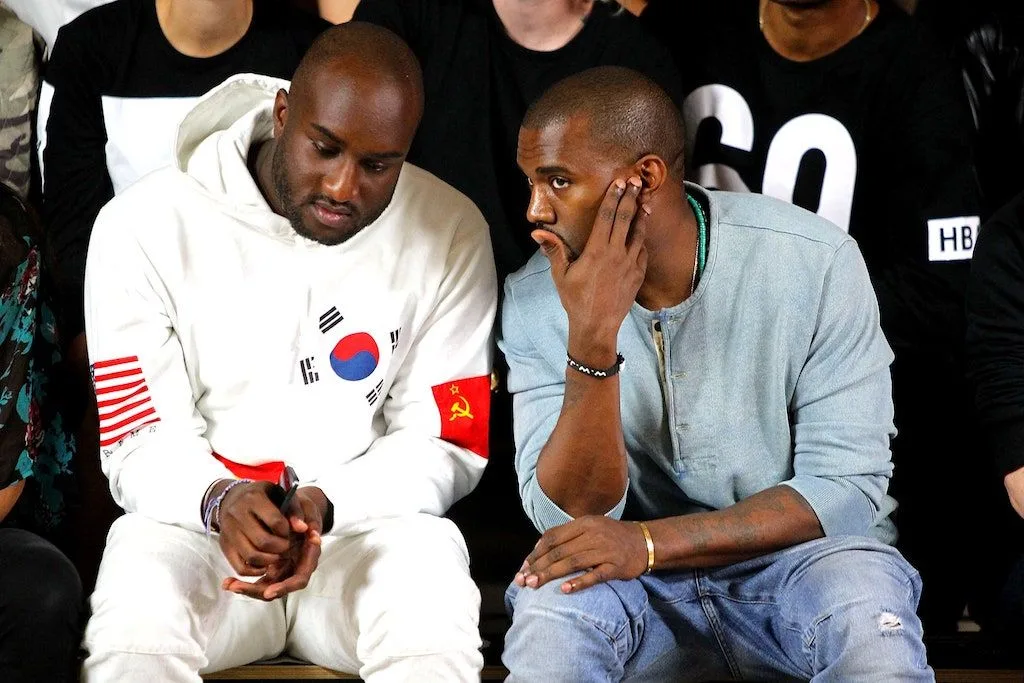
Kanye West could be taking on a prestigious new role as the creative director for Louis Vuitton following the sad death of fashion legend Virgil Abloh, according to new reports.

The rapper has branched out in recent years, from best-selling musician to launching his own clothing line, Yeezy, and even dabbling in politics – short-lived as that was.

Now it seems the Donda rapper could be taking his love of fashion design even further as reports indicate he has been tipped for a prestigious role in world-renowned brand Louis Vuitton.

According to The Sun, Louis Vuitton plans to replace icon Abloh with the musician, 44, who was a close friend of the late designer.

The outlet reports that Kanye and Abloh discussed the rapper taking over the role shortly before Abloh’s death aged 41 last month.

A source told the outlet: ‘Kanye is devastated about Virgil’s death because they had been friends for years and worked together a lot.

‘They shared a similar vision and now Kanye feels he owes it to Virgil to continue his work at Louis Vuitton.’

Ye and Abloh had been firm friends for over a decade, first meeting in 2009, and the designer held the role of creative director at Kanye’s own firm, Donda.

The Off-White founder and Louis Vuitton designer died on November 28, after a private two-year battle with cancer.

Devastated Kanye dedicated his Sunday Service to Abloh following the news of his death, and later attended his memorial with ex-wife Kim Kardashian and their daughter, North.

At the memorial, Kanye was seen placing a supportive hand on Abloh’s sister as she delivered a heartfelt eulogy for her beloved brother.

Abloh first sparked his love for fashion when he was attending the Illinois Institute of Technology, while getting his Masters of Architecture, and soon began designing his own T-shirts.

The designer launched his debut company, Pyrex Vision in 2012, and founded his iconic fashion house Off-White in 2013.

Kanye’s sneakers and menswear line, meanwhile, is said to be worth ‘billions’ of dollars.

Content courtesy of Metro Uk & NFH Digital Team


Kaijuka Abbas Wins Big At African Fashion Designer Awards 2021 In Nigeria

Ugandan fashion designer Kaijuka Abbas walked away with the award of ‘Best Fashion Brand in Africa’ award at the African Fashion Designer Awards 2021.

The African Fashion Designer Awards is a platform that aims at recognizing creative fashion designers and enthusiasts around Africa.
Themed “Iconic Hall Of Fame”, the 4th edition of the awards that happened in Nigeria took place at City Park, Abuja on 19th November 2021.

The glamorous red carpet event featured exhibitions, runway showcases, cocktail, and ballet plus the anticipated awards gala-night
Uganda was well represented by the talented Kaijuka Abbas whose brand Kais Divo Collection was named “The Best Fashion Brand in Africa”.

The elated Kaijuka shared the good news as he thanked his friends, fans, and followers on social media for supporting and voting for him.
We bagged another one! I can’t thank you enough; each and every one of you who took the time to vote for me and make this a reality!

The Dreamiest Collection from Ugandan Fashion Brand Kai’s Divo Collections
The collection is titled Hope, a celebration of the resilience of every individual who has and still is fighting to end this pandemic. Despite the distress and job losses that came with it, we are still very hopeful that this too shall pass.
https://youtu.be/V9ol57X7TTk
The clothes symbolize a sense of joy, tranquillity, and exuberance, everything we are seeing less of now.
The virtual presentation was intended to transport the viewer back to when it was normal to walk on the red carpet in a frothy gown with adoring paparazzi flashing away.
Kaijuka Abbas worked with fabrics such as organza, latex leather, tulle, and a color palette of black, yellow, and red the national colors of Uganda.
Kais Divo Collection draped fabrics in abstract and impractical ways evidenced in the voluminous shapes and floor-grazing trails, creating some sort of fantasy.
Fashion has always been an escape from the gloom and turmoil going on around us, and this collection is doing the most to evoke positivity, and most importantly, hope that this too shall pass.

Thank you African Fashion Awards, Nigeria for honoring me with the ‘Award of best fashion Brand In Africa last night’.
This wouldn’t be a reality without my clients, and everybody who has made an effort to support, endorse and approve this brand! My heart is full!

He adds the accolade to his trophies cabinet which features several other local and international awards. Congratulations Abbas!

Abbas Kaijuka is a Ugandan fashion designer, stylist, and fashion collector known for his brand Kai’s Divo.

He is a recipient of East Africa’s Male Fashion Designer of the Year award at the 2020 East Africa Fashion Awards and the Fashion Designer of the Year award at the 2016 Abryanz Style and Fashion Awards and received various nominations including the East African Designer of the year award at the 2017 Swahili Fashion Week. I had a chat with him and below is our conversation.

Content courtesy of MBU and Nairobi Fashion Hub 

Ethiopia’s Economy Hit As Major Clothing Maker Closes Shop

Ethiopia’s once rapidly growing economy is taking another hit because of its yearlong war as global clothing manufacturer PVH Corp. says it is closing its facility there because of the “speed and volatility of the escalating situation.”

The company’s statement, emailed to The Associated Press, comes two weeks after President Joe Biden announced he would cut Ethiopia from a U.S. trade program, the African Growth, and Opportunity Act, because of “gross violations of internationally recognized human rights.” The sanction goes into effect on Jan. 1.

PVH, whose brands include Calvin Klein and Tommy Hilfiger, has been a marquee occupant of Ethiopia’s model industrial park in the city of Hawassa, where Africa’s second-most populous country has made clear its aspirations of rapid, Chinese-style development. PVH in the past has said AGOA helped to convince it to set up in Ethiopia.

H&M, another high-profile occupant at the Hawassa park, did not respond to an AP request about its plans.

Ethiopia’s war and the many reported atrocities on all sides have led some in the business world to press Prime Minister Abiy Ahmed and his government for a cease-fire and humanitarian access to the blockaded Tigray region, echoing ongoing efforts by envoys from both the U.S. and African Union.

Thousands of people have been killed as Ethiopian and allied forces fight the Tigray ones who long dominated the national government before Abiy came to power in 2018. The conflict has been marked by gang rapes, forced expulsions, and manmade famine.

“We continue to emphasize to the government of Ethiopia the need for all parties to facilitate the delivery of humanitarian aid and supplies to those who need it, and see this as a first step toward the cessation of hostilities and a process that will result in lasting peace,” Stephen Lamar, president of the American Apparel & Footwear Association, told the AP in an email.

“As the crisis spreads – and if Ethiopia does lose AGOA eligibility – companies will increasingly be unable to source from Ethiopia. This will hurt Ethiopia’s economy, particularly the women who comprise the bulk of the workforce in the country’s apparel industry,” Lamar added.

https://www.instagram.com/p/Bq7vbGxgInp/?utm_source=ig_embed

The harm to low-income workers far from the war is an argument that Ethiopia’s government made as it openly lobbied against losing AGOA eligibility. Ethiopia’s chief trade negotiator Mamo Mihretu has asserted that millions of workers would be affected.

But the Biden administration, which last week said it was not imposing sanctions on Ethiopia’s government and rival Tigray forces “to allow time and space” to see if diplomatic efforts make progress, ran out of patience.

The AGOA announcement “is making people in the business world especially anxious. It certainly makes it less economically smart to be there,” Mike Posner, assistant secretary of state for democracy, human rights, and labor in the Obama administration, told the AP.

“I’d say we have very limited time now to try to tamp down the rhetoric and find a way to the bargaining table,” Posner said, addressing Ethiopia’s leadership. “This could be disastrous for the economy.”

Warnings about the economy have been growing as Ethiopia’s government pours resources into the war. In its World Economic Outlook report last month, the International Monetary Fund said projections for 2022 to 2026 “are omitted due to an unusually high degree of uncertainty.”

Businesses like PVH had entered Ethiopia because of the government’s push in recent years to build a network of industrial parks to make clothing and footwear for export, along with the country’s large population of more than 110 million people and wages that are “significantly lower than even places like Bangladesh and Cambodia,” Posner said.

But the instability has brought businesses’ thinking to a tipping point, he said.

Chinese and other companies may continue to operate in the industrial parks, but Ethiopia is a tiny market in the global economy, Posner said: “If Ethiopia’s government thinks it can make this work by shutting out the U.S. or Europe and only selling to Chinese or Indian customers, I think it’s going to be disappointed.”

Content courtesy of AP & Nairobi Fashion Hub 

Kikafri Collections launches Kickstarter Campaign for African Fashion Style

Kikafri Collections has proudly announced that it is producing and marketing the iconic African style fashion from Kenya at a global level. In early 2020, the Christian Business Angels (CBA), angel investors based in The Netherlands entered into a shareholding partnership with Kikafri Collections, which gave a new life to the brand.

The slogan of this inspiring African brand is ‘Design your piece of Africa’ and the company remains true to every word of this slogan. To grow and expand its global reach, the brand is currently crowdfunding on Kickstarter, where it is welcoming generous community support and backing.

https://www.instagram.com/tv/CWS2UvtF38_/?utm_source=ig_embed

“As a brand, Kikafri Collection is aiming for global recognition by spreading our unique sense of fashion, and we emphasize individual style by enabling our clients to “design their own piece of Africa.” Said Johnny Kibilige, while introducing this project to the Kickstarter community.

The brand is not only life-changing for its customers but even more so for the skilled young Kenyans by offering them employment opportunities and enabling them to improve their lives. The covid pandemic struck hard at Kenya as well, amongst others by making most tourists, a key market for Kikafri, stay at home.

All funds raised through this Kickstarter campaign will enable the company to increase its manufacturing capacity by opening a workshop, purchasing sewing equipment, and opening a shop in the Karen shopping mall of Nairobi, Kenya.

Backers from around the world can become a part of this project by making pledges. Moreover, the goal of this Kickstarter campaign is to raise a sum of EUR 9,000 and the brand is offering a wide range of rewards for the backers with worldwide shipping. Furthermore, more details are available on the Kickstarter campaign page of the project.

About This Project

Kikafri Collections (www.kikafri.com) is a Kenya-based African fashion startup aimed at producing and promoting customized African fashion to all corners of the world. From bags to sandals and other fashion articles, the product line of customized Kikafri range is extensive, and growing every day. Moreover, the company is currently crowdfunding on Kickstarter to grow and expand, and to get worldwide recognition for its growing product line.

The Kickstarter Campaign

Content courtesy of  Digital Journal , Kikafri & Nairobi Fashion Hub


Fast Fashion? No Thanks, I Care About Our Planet Mama Earth

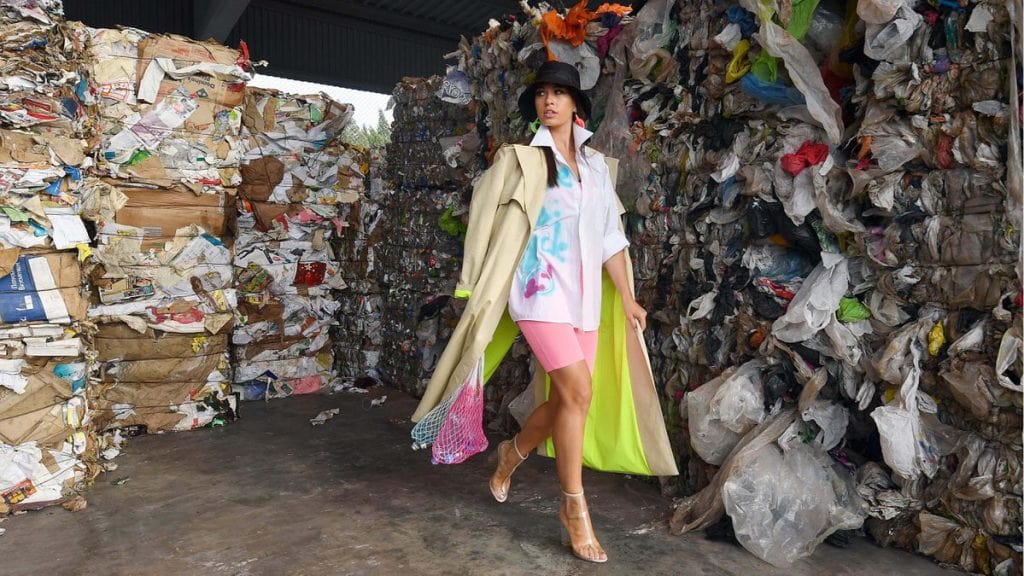
Clothing, especially from fast fashion, is a major contributor to global warming and pollution. Mountains of discarded garments end up in West Africa.
The $2.7-trillion fashion industry is one of the largest, most resource-intensive sectors in the global economy, and it has a devastating impact on our environment.

The extraordinary success of “fast fashion” giants like H&M, Zara, and Forever 21 stems from their ability to produce a massive amount of clothing billions of garments a year in the cheapest and quickest manner possible. An article of clothing often travels through dozens of countries and hundreds of hands and ends up being worn only a few times.

Consider the statistics:

  • A single cotton shirt or ‘eco-friendly’ cloth grocery bag requires 2,700 liters of water to produce.
  • The fashion industry produces approximately one-third of all microplastics found in the ocean.
  • Global cotton production is estimated to produce 220 million tons of CO2 emissions each year. Experts say the industry accounts for 10% of greenhouse gas emissions. Workers mostly women earn low wages.
  • The average consumer buys 60% more clothing than 15 years ago.

Fast-fashion choices are ending up in landfills.

These numbers, as dire as they are, account for only the production half of the story.

What happens when these clothes are no longer of use or no longer “in style”?
The Council for Textile Recycling reports that the average American throws away between 70 and 81 pounds (30-36 kg) of clothing and other textiles annually. Globally, 17 million tonnes of clothes go to landfills mostly in the Global South.

Although many people believe that donating clothes is environmentally friendly, according to the U.S. Environmental Protection Agency, 84% of all clothing eventually ended up in landfills or incinerators in 2012, even if they were donated.
Not only are fast-fashion choices of the Global North ending up in landfills, but they are also often traveling thousands of miles and creating tonnes of CO2 to get there.

Ghana in West Africa is a common dumping ground.

A common dumping ground for discarded and unwanted cheap clothing is in West Africa. Accra, the capital of Ghana, receives approximately 15 million used garments per week, or 70 tonnes per day, of which approximately 40% are of such low quality they go immediately to the landfill.

The remainder is sent to be sold in one of the largest garment markets in West Africa  Kantamanto Market.
It is important to note that Accra’s landfills are already almost entirely full, and the country is struggling with its own internal waste management issues.

In Ghana, about 12,710 tons of solid waste is generated every day, and only 10% of that is collected and disposed of at designated dumping sites. Waste pickers who spend the day picking trash and managing the landfill’s recycling and sorting work under dangerous conditions. They account for a significant portion of the recyclables sorting and waste management in Ghana.

Johnson Doe, President of the Kpone Landfill Waste Pickers Association, is one of the hundreds of waste pickers who spend their days in Accra’s largest landfills. He sorts trash and pulls recyclables from the massive mountains of garbage. He also spends time training and organizing waste pickers to demand fair wages and healthcare.

“In Ghana, there is no law that guides waste pickers,” Doe said. “The recycling of waste, the management of waste, we know a lot. So we decided to organize ourselves seven years ago. We want to be recognized by the community, recognized by the government, and we want to be involved in the decision-making to protect ourselves.”

Doe said it is difficult to sort so much fabric. “Clothing waste is one of the major problems we faced at the landfill because it takes more space and when it is mixed up with the waste, we find it difficult to find and salvage the recyclables.”

Our clothing choices are no longer sustainable for the environment.

The garment markets in Accra are feeling the impact of too many clothes. According to OR Foundation, which has been studying Kantamanto Market for more than a decade, “the Global North is relying on Ghana to take part in a waste management strategy necessitated by relentless overproduction and overconsumption.”

Although many citizens in Accra rely on these clothing distribution sites for income, the broader impact on the community and the country is significant. The overflowing landfills pollute water supplies, produce constant smoke, and generate risky, low-wage jobs.

“This isn’t sustainable anymore,” said Dr. Katherine Duffy, a senior lecturer at Glasgow University.
“The most sustainable clothes that we have are the ones we already own. If we can start thinking about care, maintenance, longevity, and how we treat those garments, then we are already starting to think in a more sustainable fashion.”

Duffy recommended ways to think differently about clothing.
“Consumers at the moment have so much readily available information about the problems associated with high demand for new clothing, combined with the global trend of the ever-decreasing lifespan of garments and also the environment and social impact of those behaviors,” she said

“But I’m also excited by some of the new behaviors that are starting to emerge. We need to focus on the four ‘R’s’  repair, resale, reuse, and rental. These options are really a way for us to think about how we engage with our items as well as the care and attention we want to place on the garment and how we can preserve it for its next life.”

Content courtesy of News Decorder 

South African Retailer TFG-The Foschini Group To Beef Up Local Manufacturing

South African fashion retailer TFG (TFGJ.J) wants to locally manufacture 30 million pieces of clothing a year within four years as it increasingly turns away from global supply chains, its CEO said after the company swung to a half-year headline profit.

South African retailers, some of which are still heavily reliant on offshore manufacturing, are grappling with delays in international supply chains which have been compounded by a cyber attack at freight logistics operator Transnet that brought local ports and rail to a standstill.

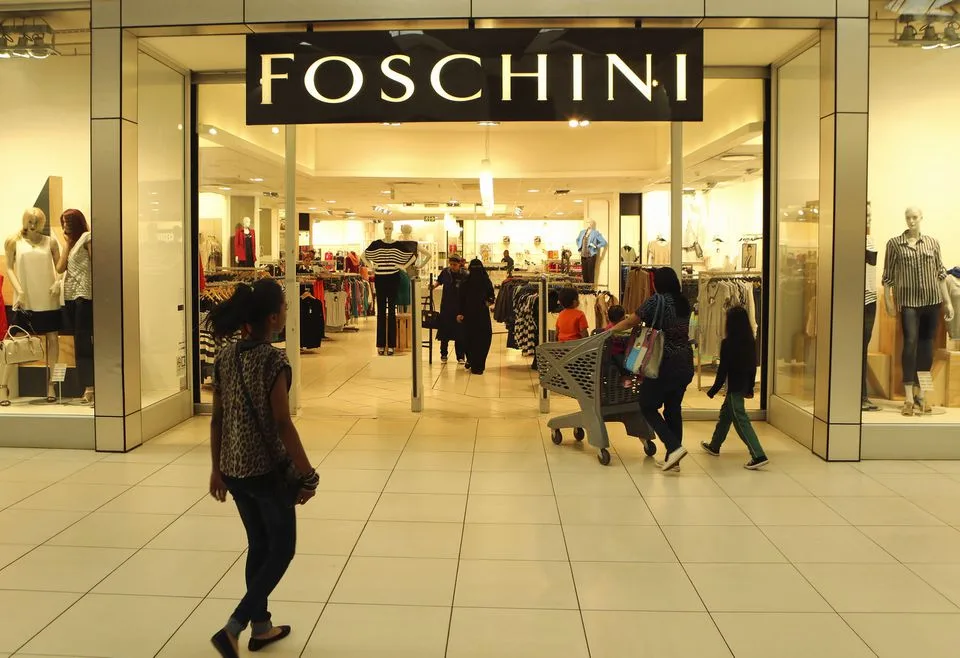
The owner of British womenswear brands Hobbs and Whistles and the local Foschini clothing brand has fared better than its competitors as it has been bringing production closer to home over the past five years by expanding its own factories and buying new ones.

Today, TFG, formerly known as The Foschini Group, sources 72% of its clothes locally, with offshore accounting for 28%, down from just over 40% four years ago, most of it from China.

TFG CEO Anthony Thunström told analysts that the 30 million units it is aiming for by the company’s 2026 financial year will be manufactured on a quick turnaround basis to improve lead times. It is also increasingly looking to extend its quick turnaround manufacturing capabilities for its non-clothing lines.

“All of these quick response advantages were clearly important in the past but never more relevant than now, Thunström said, citing disruption in far East supply chains and shipping rates up 400% from a year ago.

The clothes, homeware, and jewelry retailer is planning to invest a further 575 million rand ($37.68 million) over the next three to five years to build local manufacturing capability.

TFG swung to a headline earnings per share (HEPS) profit of 393.4 cents in the six months ended Sept. 30, up from a loss of 83.3 cents in the same period last year, and grew sales by 51.8% to 19 billion rand as it recovered from COVID-19 restrictions which forced store closures across its markets.

It declared an interim payout of 170 cents per share after pausing dividends last year.

Content courtesy of Reuters 

Top 10 List of Best Fashion Boutiques in Kenya

These are the most popular fashion boutiques in Kenya both on social media platforms like Facebook and Instagram and Offline with a wide range of fashion wear to select from.

Offline and Online stores in Kenya have basically revolutionized how many people do their shopping and online boutiques are just some of the major players in the fashion trends in the country
Here is a random list of the top 10 fashion boutiques in Kenya, you can share any other boutique you feel should be among

Backyard Shoez

Service options: In-store shopping · In-store pick-up · Delivery
Located in:  F 53, 1st Floor, Jamia Mall
Address: Kigali Rd, Nairobi
Hours: Opens 7:00 AM Closes 7:30 PM
Phone Number: 0720 596844
Website: https://backyardshoez.co.ke

La Bella Fashion

Service options: In-store shopping · In-store pick-up · Delivery
Located in: 1st Floor, Imenti House
Address: Moi Ave, Nairobi
Hours: Opens 7:00 AM Closes 6:00 PM
Phone Number: 0717 789272
Website: http://labellefashions.co.ke

The Oloo Collections

Service options: In-store shopping · In-store pick-up · Delivery
Located in: 1st Floor, Imenti House
Address: Off Tom Mboya Street, Cabral St, Nairobi
Hours: Opens 7:00 AM Closes 6:00 PM
Phone Number: 0712 553775
Website: N/A

Emirates Shoes Collection

Service options: In-store shopping · In-store pick-up · Delivery
Located in: 1st Floor, Imenti House
Address: Tomboya, Nairobi
Hours: Opens 7:00 AM Closes 6:00 PM
Phone Number: 0703 798023
Website: N/A

https://www.instagram.com/p/COCe18GAVKp/?utm_source=ig_web_embed

Naiwear Men’s Collections

Service options: In-store shopping · In-store pick-up · Delivery
Located in:  Corner House, Mezzanine 2, Room A1
Address: Intersection of Kimathi and Mama Ngina Street, Nairobi
Hours: Opens 7:00 AM Closes 7:30 PM
Phone Number: 0723 453479
Website: https://naiwear.com

Dolex Wear

Service options: In-store shopping · In-store pick-up · Delivery
Located in:  Bhagwanji Building
Address: Biashara Street, Nairobi
Hours: Opens 7:00 AM Closes 6:00 PM
Phone Number: 0702 834242
Website: https://dolexwear.co.ke

Urbano Fashion Store

Service options: In-store shopping · In-store pick-up · Delivery
Located in:  Imenti House
Address: Moi Ave, Nairobi, Nairobi
Hours: Opens 7:00 AM Closes 7:00 PM
Phone Number: 0715075496
Website: https://urbano-clothes-house.business.site

https://www.instagram.com/p/CVnGsluo_Hl/?utm_source=ig_web_embed

Sarai Afrique Fashion House

Service options: In-store shopping · In-store pick-up · Delivery
Located in:  Lavington Mall 2nd Floor
Address: Lavington, Nairobi
Hours: Opens 7:00 AM Closes 6:00 PM
Phone Number: 0701 932202
Website: https://saraiafrique.com

La Elegant

Service options: In-store shopping · In-store pick-up · Delivery
Located in:  1st Floor, Yaya Shopping Center and Two Rivers Mall
Address: Argwings Kohdek Road & Limuru Road, Nairobi
Hours: Opens 7:00 AM Closes 7:00 PM
Phone Number: 0757751274
Website: https://www.laelegant.com

Fazal The Luxury Boutique

Service options: In-store shopping · In-store pick-up · Delivery
Located in: Ground Floor, Yaya Centre, and Westgate Shopping Mall
Address: Argwings Kohdek Road & Mwanzi Rd, Nairobi
Hours: Opens 7:00 AM Closes 8:00 PM
Phone Number: 0794 867377
Website: https://www.fazalkenya.com

Content Courtesy of Nairobi Fashion Hub Digital Team 

Anji Degante Is Using Her Tampa-based Clothing Business To Help Orphaned Children In Kenya.

A Tampa business accepted into the 5508 Small Business Incubator Program is using the opportunity to make an impact beyond the Bay area.

​Anji Degante, the owner of Accent Styles Boutique, has been inspired ever since her 2014 trip to Kenya. She launched her African clothing business three years ago and now a portion of those proceeds benefit orphan children in that community.

“The Maasai tribe that I lived with were extremely traditional,” she said. “If they did not make it they did not wear it,” Degante says she learned a lot about Kenyan culture while living there.

“I’ve seen a lot of things that I wanted to improve,” she said. I thought that I could change Kenya but I feel like Kenya changed me. It made me a better person. It made me more conscious. It made me take a look into sustainable fashion. It made me look at ways to create cultural retention programs.”

After two years in the small business incubator program, Tampa Hillsborough Executive Action Plan CEO Derrick Blue says Degante’s business has become a bankable small business.

https://twitter.com/FadiaTVNews/status/1447299129579917314?s=20

“We have a lot of success stories from individuals that started off with laptops as coworkers in one of our spaces to now being seven-figure companies,” Blue said.

As she continues to be a success, Degante has been giving back to the community that influenced her brand.

A portion of the proceeds at her shop is helping more than 300 children at a Kenyan orphanage with their education, uniforms, and food. Degante says she felt compelled to step in and help when the orphanage’s leader passed away.

She also opened a library in Nairobi, Kenya with books donated from St. Petersburg and Tampa.

“They are definitely like my adopted children I absolutely love them,” Degante said.  She credits her success both locally and abroad to the opportunity she has with 5508.

“One of the things that I love about the rent being so affordable is that I’m able to buy more product, I’m able to hire more employees and I’m able to donate so much of my time,” she said.

Time and effort she says are fueling our local economy while providing resources and a future for orphans in that Kenyan village.

Content courtesy of Spectrum Bay News 9 & Nairobi fashion hub


Birimian Unveils the First Cohort of the IFM-Birimian Accelerator x Africa, the Accelerator Program Launched with Institut Français de la Mode

Birimian, the first operational investment company dedicated to African luxury and premium heritage brands, has selected the finalists of its first call for applications (see list below). These finalists will join the acceleration program IFM-Birimian Accelerator x Africa, in partnership with Institut Français de la Mode (IFM). The designers selected will also be highlighted at the Première Classe event organized by WSN as part of Paris Fashion Week on October 1–4, giving the brands valuable exposure to the European fashion scene.

Launched in June 2021, IFM-Birimian Accelerator x Africa is an innovative acceleration program for emerging African heritage brands in the fashion, accessories, and jewelry sectors. Every year for ten months, the program, funded by Birimian, intends to support ten young designers selected by a committee of experts from the international creative scene. The brands participating in the program will also receive investment and/or consulting and support services from Birimian.

The accelerator program provides essential tools to develop emerging brands:

  • Defining a brand platform
  • Strengthening the creative process
  • Targeting the relevant audience
  • Establishing a consistent marketing strategy
  • Financial management
  • Planning and structuring of collections
  • Distribution strategy
  • Communication policy, and more.

This program is a unique opportunity for designers and emerging brands, both on the continent and in the diaspora, to get strategic, operational, and financial support for ten months, thus allowing them to make their activities more professional and organized. It is a program focused on training the young African creative guard and promoting creative entrepreneurship.

The talent identification process took two months and involved scouting, active engagement with brands, and selection of candidates from three segments: ready-to-wear (general public and premium) for 80% of the brands, ready-to-wear fashion (premium and luxury), and accessories for 20%. 85% of them are “made in Africa.” Their collective customer base reflects Birimian’s ambitions with a strong openness to the international market (40%) and significant potential for influence beyond the borders of the continent. 80% of them boast a revenue of over $US50,000, one of the main selection criteria.

The first group, characterized by a geographic diversity representative of the continent’s main economic hubs, illustrates the richness of the brands’ creative worlds. It includes the following finalists:

Laureen Kouassi-Olsson, CEO of Birimian, commented, “The class of designers invited to join the IFM-Birimian Accelerator x Africa program embody the new creative African guard: reinvented tradition, undeniable creative talent, Afropolitan, urban, and digitally focused on the world, proudly showcasing their heritage through collections whose originality no longer needs to be proven.

However, it remains fragile, hence the need to strengthen their basics and provide them with operational, strategic, creative, and financial support. This is the entire purpose of this program, which is fully aligned with our investment strategy. The network of experts it draws on and the unique access to the ecosystem of the French and European creative scene will inevitably create value. We cannot wait to warmly welcome them to Paris alongside Institut Français de la Mode.

“The 10 brands selected for this first intake of the IFM-Birimian Accelerator x Africa are full of creative talent and ambition for their development. The designers and entrepreneurs will work on all the components of their brand with the objective of not only boosting their reputation but also developing sustainable businesses in an international ecosystem while preserving their African heritage.

The right balance will be struck by working together towards creative, inclusive and sustainable entrepreneurship”, concludes Thomas Delattre, Director of the Fashion Entrepreneurship Center at Institut Français de la Mode.

About Birimian
The first operational investment platform dedicated to African luxury and premium heritage brands, Birimian supports designers on the continent in their growth and international development over the long term. Birimian’s main objective is to accelerate the international emergence of African creators by positioning itself as their major partner in four main sectors: fashion, accessories, beauty & cosmetics, and gourmet.
Birimian is aimed at brands that carry the continent’s culture, tradition, history, and cultural heritage, magnificent in its diversity, in their DNA and identity, brands that adapt to modern and contemporary codes.

About IFM
Institut Français de la Mode is a higher education institution, a training center for apprentices, a provider of executive education, as well as a center of expertise for the textiles, fashion, and luxury industries. It offers 16 educational programs at vocational, Bachelor, Master, Executive MBA, and doctorate levels, which prepare students for all the professions in the fashion industry in the fields of management, design, and craftsmanship.
Based in the heart of Paris on a new 9,000 m² campus, Institut Français de la Mode welcomes more than 1,000 students of some fifty nationalities – managers, designers, technicians, entrepreneurs – encouraging meetings, collaborations, and cultural effervescence.

Institut Français de la Mode is a member of HESAM Université, of the Conférence des Grandes Ecoles and of the International Foundation of Fashion Technology Institutes (IFFTI). It is supported by the French Ministry of Economy. It is recognized by the French Ministry of Higher Education.

Content courtesy of IFM-Birimian Accelerator x Africa 


Oakland Clothing Designer Sources Textiles from Africa

How an Oakland clothing designer Ade Dehye is challenging fashion industry norms, sourcing directly from Africa with his 100% Black-owned and operated brand, “Tunde” Ahmad is merging textiles from Ghana with urban streetwear designs.

East Oakland’s Akintunde “Tunde” Ahmad had long wanted to visit the African continent and reconnect with his ancestry. When he arrived at the University of Ghana in Accra in 2016, taking a semester off from Yale to study abroad, he was captivated by everything about the bustling city.

“I was fortunate to be able to go for an entire semester and have a deeper and longer connection out there, learning African history from an African perspective, rather than Eurocentric or American perspective,” he said. “I was able to dispel a lot of myths and stereotypes that are negative, overwhelmingly, and put into our heads about the continent.”

One of the most stunning revelations to Ahmad was how prosperous Ghana’s fashion industry is but not in the fast-fashion, the mass-produced way we’re accustomed to in America. In Accra, you’ll see a lot of people in completely custom outfits, rather than something you’d find at a chain store.

The reason: It’s extremely easy to access affordable tailors, along with endless unique fabrics, from bògòlanfini (traditionally dyed with fermented mud) to woven kente (a handwoven cloth with strips of silk and cotton).

“Even every dorm on campus had a tailor,” he said. Ahmad started getting garments made and visiting different fabric markets. “The tailors get your measurements and can make different custom pieces.”

These experiences laid the groundwork for what is now Ahmad’s successful clothing brand in Oakland, called Ade Dehye, which uses custom West African textiles sourced directly from Ghana to create urban streetwear designs. It’s all operated under an ethical business model that aims to respect, rather than exploit, African culture and workers.

“It was a very natural progression,” he said. “I never really had a huge interest in fashion. But once you actually get to try stuff and see how it looks on yourself, that is how I caught the fashion bug.”

Now, his 100% Black-owned and operated brand works with a dozen tailors in Accra to create around 250-300 pieces at a time. Ade Dehye is known for its fusion of intricate prints stylized as streetwear, bomber jackets, lined trench coats, and two-piece outfits that you can mix and match. The pieces are then shipped to Oakland and sold online or through pop-ups. The timeframe from Ahmad selecting the fabrics and designs to receiving the garments can take anywhere between 10 weeks to five months.

“There needs to be more investment in Ghana, in the continent as a whole,” Ahmad said. “And not just in the clothing industry, but in industrializing the country as a whole, and getting West Africa more up to speed and competitive with the rest of the world in every sector.”

Although Ahmad wasn’t always interested in fashion, he was familiar with West African textiles. His mom often wears clothing made out of West African prints, so Ahmad was exposed early on to textiles like Kente cloth, Ankara, and mud cloths. “I was no stranger to these fabrics. But I’d never been able to get stuff tailor-made to me,” he said.

Ahmad’s path to fashion wasn’t always clear, but he always had a goal to make a difference. When he graduated from Oakland Tech High School in 2014 he was praised on national television for his achievement as a senior who was accepted into some of the most elite Ivy League universities. Ahmad received his bachelor’s in sociology from Yale in 2018, and his master’s in journalism and documentary film from Columbia Journalism School in 2019.

“I got a lot of attention for [my college acceptances], and I always wanted to return the favor to come full circle and actually get into education,” he said of his goal to return home and pay it forward like he watched his mom do as being an educator with the Oakland Unified School District for three decades.

While he wanted to make his way home eventually, he decided to stay in New York to work as a journalist and filmmaker in Harlem after graduating from Columbia. But when COVID-19 hit, he and his partner, Elena, traveled back home to Oakland for what was supposed to be no more than a 10-day shelter in place. They ultimately canceled their return flight to New York and stayed in the Bay Area.

When he came home, he got the opportunity to teach at OUSD’s African American Male Achievement program, designed to improve academic and life outcomes for male students. At the same time, he took part in the prestigious Ida B. Wells fellowship in investigative reporting. While Ahmad was forging a budding journalism career, he never stopped thinking about the time he spent in Ghana. He started dreaming up creating a 100 percent Black-owned brand solely sourced and produced out of Ghana.

Having no fashion knowledge other than what he learned during his time abroad as a college student, he reached out to the people in the fashion industry he had met during his stay back in 2016. One of them was local Ghana fashion designer Awurama Mankatah, owner of the Threaded Tribes clothing brand.

So far, Ahmad has self-funded the entire project, and money generated from pieces sold is reinvested into the brand.

Because tailors in Ghana specialize in making a limited number of custom-made pieces at a time, one of the biggest challenges was recruiting them to be involved. He leaned on Mankatah for guidance on finding the right tailors, as well as learning how long certain handmade fabrics take to make, and the different types of stitching and patterns. The roughly dozen tailors that work for Mankatah also work for Ahmad, and the entire manufacturing operates out of Accra.

For the most part, Ahmad has worked remotely to bring his vision to life, but he was able to travel to Ghana this past February.

From the beginning, Ahmad wanted to ensure his brand helped the African workers he partnered with financially and didn’t become an exploitative source as is the case in so many industries operating on the continent. Cacao is one of the most obvious examples of how Western countries take advantage of West Africa’s natural resources with little benefit to locals. While Ghana is currently one of the largest exporters of cacao, Western Europe and the United States have the highest number of chocolate manufacturers reaping profits.

“You see all of these folks from other places coming in and running things, and you understand this is a raw resource grab,” he said.

Ahmad knew he was taking a risk with his ethical vision for how to run Ade Adehye given how much easier and more lucrative it would be to run the brand out of China’s mass production infrastructure. “I purposefully chose not to do that,” he said.

So far, Ahmad has hosted two pop-ups, one in Alameda in May and one in downtown Oakland in August. During the Oakland pop-up inside Dish Boutique on 23rd Street, friends and visitors got the chance to mingle with Ahmad, ask questions about the pieces, and walk away with shopping bags filled with unique garments priced at $80-$250, which Ahmad says is a reasonable price for the handwoven items given the labor-intensive hours that go into making the garments.

Ahmad’s ultimate goal is to help other Black entrepreneurs follow the blueprint that he created with the help of other people in the fashion industry like Mankatah of Threaded Tribes to show how it is possible to run an ethically and sustainable company that’s successful.

For now, he’s getting ready to travel to Ghana for the second time to start working on what new pieces he will add to the Ade Dehye collection. In the end, he is keeping accessibility and his hometown in mind as he rolls out designs.

“I want to see my folks wearing my stuff. I come from East Oakland, I come from Oakland public schools, folks aren’t going to be paying $800, $900 for a trenchcoat,” he said. “I want the pieces to be accessible to my folks. It’s more about brand integrity, having morals and values that I’m trying to stick to.”

Content courtesy of The Oakland Side & Nairobi fashion hub
 

Nigerian Born Fashion Designer Joy Ijeoma Meribe Opens Milan Fashion Week 2021

Designer Joy Ijeoma Meribe opened Milan Fashion Week on Wednesday with her debut runway collection, a concrete success for a movement to promote diversity in Italian fashion just a year after launching

MILAN — Nigeria-born designer Joy Ijeoma Meribe opened Milan Fashion Week on Wednesday with her debut runway collection, a concrete success for a movement to promote diversity in Italian fashion just a year after launching.

The Italian National Fashion Chamber tapped Meribe to open six days of womenswear previews for Spring-Summer 2022 after her inaugural collection for the “We Are Made in Italy” initiative last year found commercial success.

“Beyond whatever video, proclamation, or manifesto that we make, the real test is whether clients buy your products. Joy passed that exam,’’ said Italian-Haitian designer Stella Jean, who helped launch the initiative in the summer of 2020, asking the question, “Do Black Lives Matter in Italian Fashion?” inspired by the U.S. movement and following racists gaffes by major Italian fashion houses.

“It wouldn’t have been so quick if there wasn’t an acceleration from the United States,’’ said Jean, who basked in the early success in the front row alongside Italy-based U.S.-born designer Edward Buchanan and Afro Fashion Week Milano founder Michelle Ngonmo.

Meribe broke down in tears after the show as she thanked the fashion chamber and the movement’s founders for getting her to the runway.

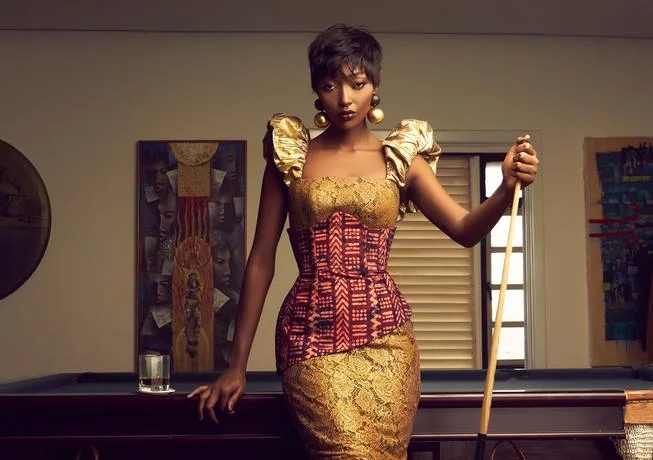
The collection featured tiered and ruffled skirts and jackets with built-in capes that were both regal, as seen in an off-shoulder dress sweeping the ground, and hip, including a mini day-dresses and shoulder-baring tunic. Textiles were an explosion of bright yellow against sky blue, with tropic prints featuring thatched cottages against flourishing banana trees, which Meribe said was meant to celebrate a return to more normality.

“We have passed from a dark moment, and I wanted to create something full of hope and light, the joy of restarting,’’ she said backstage.

The initiative that launched Meribe opened its second edition this fashion week, an all-female group of designers working in Italy with roots in Togo, Morocco, Haiti, Cuba, and India, following last year’s “Fab Five” inaugural class of all African-born designers.

“There is a movement happening,’’ said Buchanan, the American designer behind the Sansovino 6 label. “Of course everything takes time, but it takes somehow an industry to get used to the idea that these are talents like any other.”

To point, they have created a database of more than 3,000 fashion professionals with diverse racial and ethnic backgrounds living in Italy, including designers, merchandisers, photographers, and stylists, with the aim of putting to rest the notion that diverse talents weren’t available in Italy.

But even while marking progress on diversity being made in the industry, organizers said that a racist incident at a four-star hotel in Milan aimed at this year’s “Fab Five” underlined the work still ahead.

Ngonmo said that she was checking into the hotel with the five women when the desk clerks rudely dismissed routine requests by paying guests, indicating that they didn’t belong there. She posted the incident on social media and later spoke with management, who apologized and fired the two workers responsible.

“They dehumanized us, taking away our humanity and treating us like animals. It is really, really bad,’’ Ngonmo said.

Jean said the incident “is the proof that everything we are doing today, more than ever, needs to be done. It is a necessity.”

Content courtesy of abc News & Nairobi fashion hub 


Kenyan Genge Musician Nonini Launches Footwear Line In US, Shoe Designed in Italy

Kenyan rapper Hubert Nakitare better known as Nonini has launched a footwear line under his Mgenge2RU in the US. The artiste confirmed the info through his social media platforms. The shoe edition was created by Italian master-crafts, AliveShoes, who have many of their shoe editions appearing in international magazines like Vogue.

According to Nonini, he has invested over Ksh 2million in the shoe line and hopes the merchandise gets global recognition. “The shoes going for Ksh24, 000 are real international quality wear. They have been produced and endorsed by one of the best Italian shoe companies,” said the rapper.

His latest design is a unique and limited edition shoe wear in which he has collaborated with Italian master-crafts AliveShoes, through its founder and CEO, Luca Botticelli, AliveShoes, certified Nonini’s designer shoes for distribution and sale to the public this week.

The announcement comes days after Nonini and his team met the Floyd Mayweather African team in Las Vegas to discuss collaborative ideas they can work on touching on the apparel business.

“The US is a lucrative market because as you know, their economy is thriving and that is why my products are doing well here,” he expounded on his choice of launching in the US. Besides seeking performance opportunities, the rapper relocated to the United States of America four months ago, where he has been consulting on how to expand and monetize his ‘Mgenge2Ru’ brand.

“I am still working on my music with two major collaborations; one with Redsan and the other with Tanzanian rapper Chege, coming out soon. But I have discovered that all creatives in the world including US rapper Kanye West are trying to make it through brands.

“Fashion can take you places including those international fashion platforms like the New York Fashion week and so I have my eyes on the prize. This is where all my focus is now,” the celebrated hip-hop star who was part of the Kenyan hip-hop revolution in the 2000s said.

Popular for his big songs such as ‘Furahiday’, ‘Mtoto Mzuri’, ‘Keroro’ and ‘Nimetoka Mbali’, Nonini started working on his fashion design Mgenge2Ru when he was still at Calif Records.

He recalls how he would visit Gikomba market to buy clothes that he would then brand and sell to his fans. This is how the popular Calif Records T-shirts came up.

“It is only that Mgenge2Ru apparel is exploding now otherwise what people are seeing now is a result of constant work dating back many years. The time I have put in this cannot be measured.

“In the last two years, I have put in about Sh2 million into the work and that tells you that since I have no partner this is a real investment that has gone into it. I am trying to create merchandise that is self-sustainable and one that earns itself a good international identity. This is a game-changer,” he said.

Nonini’s music career is also thriving.

“Last Saturday I performed in Oakland in California among other shows and it is during my interactions with fans that I am learning what they want in terms of fashion,” Nonini said.

Nonini is not the only Kenyan making it big in the US when it comes to fashion designs.

Zedekiah Lukoye, aka Zeddie Loky, the founder and CEO of California-based Blkkburd Genes has been making waves in the US with his designs showcasing Kenya’s exquisite features, recently, he hit international headlines after rapper Jay-Z was spotted wearing his designer T-shirt showing Lamu’s Riyadh Mosque.

Each pair of kicks comes with collector edition packaging, You can buy your own pair here.

Mgenge 2Ru Kicks 
Mgenge2ru Jeshi Ed
Mgenge2RU Ladies 
Mgenge2ru Kids 
Mgenge2ru Kids 

Content courtesy of Mgenge 2ru Brand & Nairobi fashion hub 

Ad