Tuesday 28th of July 2026

Nairobi, Kenya

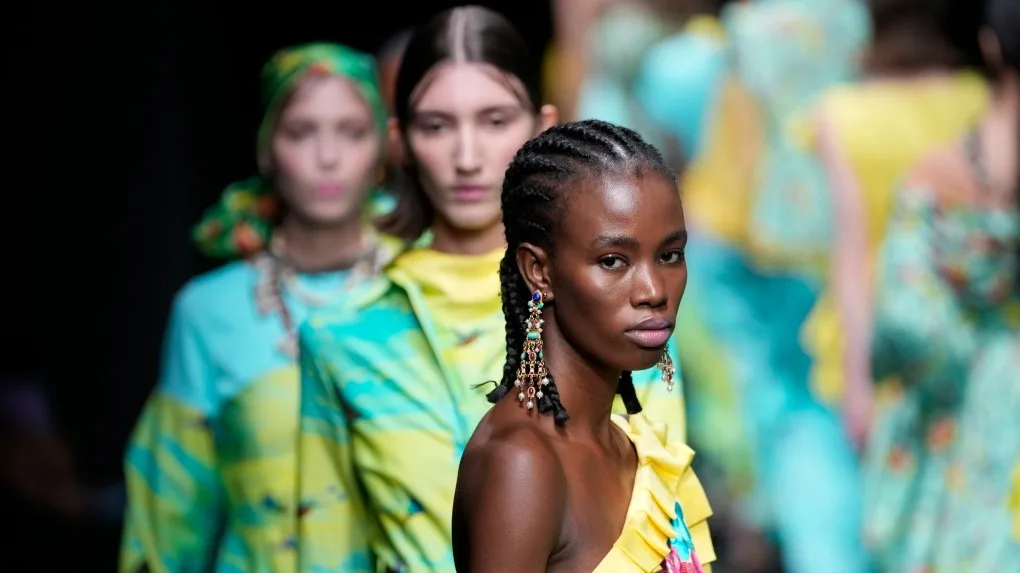
Milan Fashion Week Returns in Full Swing With IRL Events

Camera Della Moda officially unveiled the rich schedule for September, which will see 173 appointments, 125 of which to be held in person.

MILAN — “Energy” was a recurrent word during the press conference Italy’s Camera Della Moda president Carlo Capasa hosted on Tuesday to officially present the Milan Fashion Week schedule.

Capasa particularly expressed his satisfaction over the return of physical events, which will account for 125 of the 173 appointments scheduled for show week, which will run from Sept. 21 to 27.

“We’re inverting the trend compared to the last couple of [mainly digital] editions, which is something that gives us a powerful injection of energy in this moment,” said Capasa.

The schedule features 42 IRL shows out of 65 in total. For instance, Roberto Cavalli, under the creative direction of Fausto Puglisi; Moncler, and Boss, the sister collection of Hugo Boss, are returning to the calendar and set to host physical events. For the first time, brands such as MM6 Maison Margiela, HUI, and Vitelli will stage runway shows in Milan.

Prada, Fendi, Giorgio Armani, Versace, Missoni, Salvatore Ferragamo, Marni, Max Mara, Jil Sander, Alberta Ferretti, Etro, and MSGM are among the established names slated to present their collections in-person, while Emilio Pucci, Dsquared2, Antonio Marras, GCDS, and Philipp Plein are some of the brands sticking to the digital format this season.

As reported, Gucci will head to Los Angeles to present its next collection on Nov. 2, coinciding with the LACMA Art+Film Gala taking place on Nov. 6, for which the fashion house is the founding and presenting sponsor. Yet the brand will host a special event dubbed “Vault” during Milan Fashion Week, the details of which are still under wraps.

Moschino and Bottega Veneta are missing from the Italian schedule as the former will showcase its women’s spring 2022 collection as part of New York Fashion Week, while the latter, after decamping to London and Berlin, will stage a show in Detroit on Oct. 21.

In addition to Gucci, other events on the Milanese calendar will include the “The Way We Are” exhibition marking the 40th anniversary of the creation of the Emporio Armani brand and to be staged at the Armani Silos venue, as well as cocktail parties celebrating the 20th anniversary of Pomellato’s “Nudo” collection, the 50-year career of Chiara Boni and the 60th anniversary of the Marcolin eyewear company.

As for the annual “Green Carpets Fashion Awards,” this year Camera Della Moda will forgo the event that traditionally wrapped the city’s fashion week in September. Having ended the collaboration with Livia Firth and the Eco-Age agency, the Italian fashion chamber will reprise the event next year under the new name, “CNMI Sustainable Fashion Awards.” More details will be unveiled on Sept. 22, when the organization will host an event, but Capasa said that the concept will remain the same and continue to acknowledge the work of those who stand out for their application of sustainability principles in fashion.

Shows at Milan Fashion Week will officially kick off on Sept. 22 with the We Are Made in Italy (Black Lives Matter in Italian Fashion Collective) digital presentation, offering five new talents who are people of color the chance to display their collections in a video filmed by Antonio Dikele DiStefano, the writer, and filmmaker behind the Netflix series “Zero.”

The Milan schedule will also mark the debut on the official calendar of labels including Colville, Andreadamo, Defiance by Nicola Bacchilega, Roberto Di Stefano, Iuri, Traffico, Radica Studio, and Airin Tribal, among others.

All physical events will be accessible upon the showing of the “Green Pass” as per the Italian government’s decision. The pass enables citizens to enter schools, bars, restaurants, cinemas, and other indoor venues by certifying they have been vaccinated, read negative to a test, or recovered from COVID-19 in the previous six months.

Capasa himself strongly appealed to everyone to get vaccinated as “this is the only weapon we have against the virus” and underscored the beneficial effects the vaccination campaign had on the economy since the Italian fashion industry’s sales significantly rebounded in the first half of 2021, registering a 24 percent increase compared to the same period last year.

Projections for sales generated by the fashion industry and categories such as jewelry, beauty, and eyewear combined show 20.9 percent growth to 83.1 billion euros in 2021 compared to the 68.8 billion euros in 2020. In 2019, sales generated by those industries were 90.2 billion euros, so the positive projection elaborated by Camera Della Moda would still not mark a return to the pre-COVID-19 level.

“If the Christmas holiday season and relative sales will go well and this projection is confirmed, we would recover 15 billion euros out of the over 22.5 billion euros we lost last year. We wouldn’t make up for all the losses but we aim to recover the rest in 2022, if not even grow next year. I think there’s great attention on Italian fashion right now, and data on our export performance confirm this,” said Capasa.

Exports are expected to increase 24.5 percent to almost 70 billion euros by the end of 2021 compared to the previous year.

In the first five months of the year, exports of Italian fashion goods grew 27.6 percent. Top destinations included Switzerland, France, Germany as well as the U.S., and China, where exports were up 31.9 percent and 93.9 percent, respectively, compared to the same period last year.

As for Milan Fashion Week’s attendance, Capasa said that European and American buyers and members of the press are expected, while fashion operators from China won’t be present due to travel limitations.

The international appeal of the event will be boosted by many initiatives Camera Della Moda has included in the schedule.

These comprise the sixth edition of “Budapest Select,” spotlighting four Hungarian brands, and the first effort of the “Fashion Bridges” project it launched with South African institutions and South African Fashion Week earlier this year. Four former students of Polimoda were paired with young designers of the SAFW to develop capsule collections that will be unveiled during Milan Fashion Week, before traveling to Johannesburg Fashion Week at the end of October.

To further support young talents, the seventh edition of Milano Moda Graduate will showcase nine talents hailing from different Italian fashion schools, while emerging brands Amotea, Des Phemmes, Federico Cina, Froy, and Traffico will be promoted at Rinascente as part of the “Milano Fashionable Project” initiative developed by the retailer with Camera Della Moda.

Content courtesy of WWD & Nairobi fashion hub 


The Fashion Internship Program Helps African Americans Teens Design Collections Create a Pop-up Store

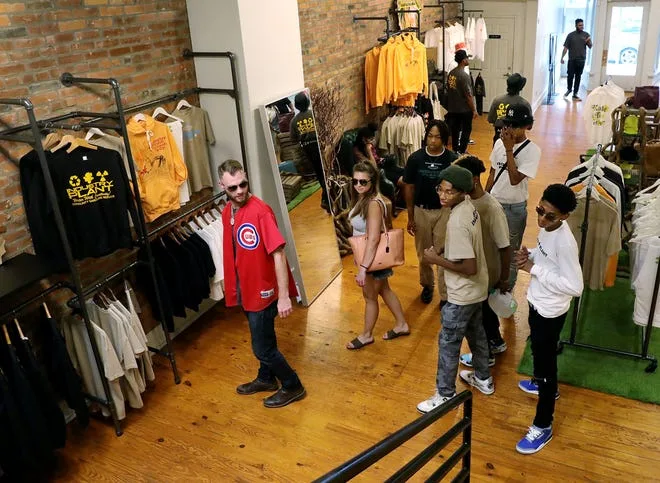
Standing in front of a full-length mirror, Christian Dowdy styled customer Ryan Newman, pulling the tan T-shirt out from under the black floral hoodie and letting the tee peak out a bit.

After the slight adjustment, Dowdy, 18, couldn’t help but smile.

Not only was the teen showing Newman how to look good in his new outfit, but Dowdy had helped design the tee and sweatshirt Newman was wearing as part of the Future of Fashion summer internship program.

“To see our creations on anyone’s back I can’t wait to see them on the streets and think, ‘Oh man, we did that,’” Dowdy said.

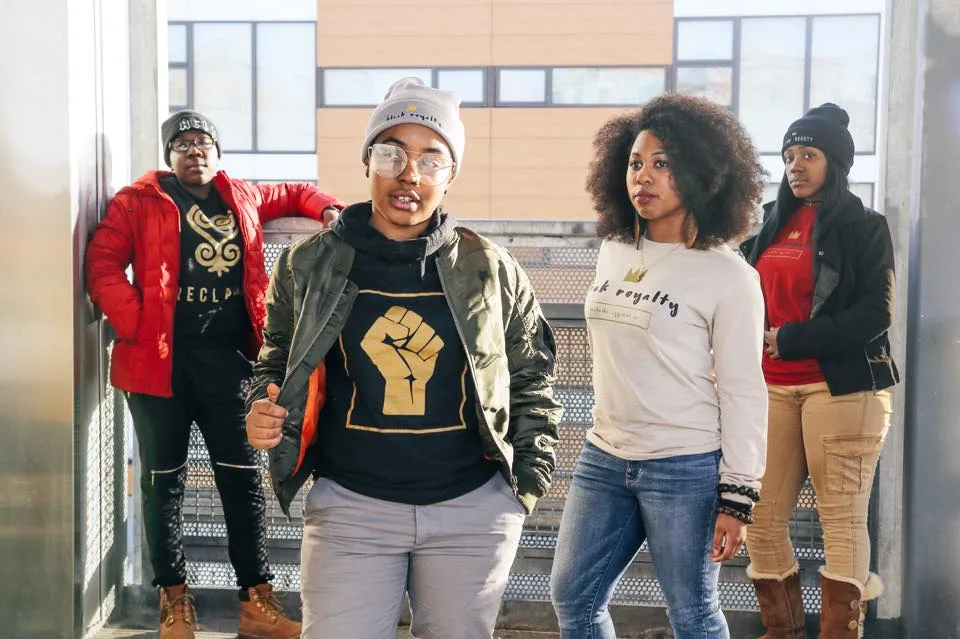
Dowdy, a recent graduate of Harvest Preparatory School, is one of 16 Black teens from central Ohio in the two-month, immersive internship that culminated this week in the release of the clothing collection, Industry Plant, at a storefront in the Short North.

The young designers and entrepreneurs will be at 640 N. High St., through Friday showing off their streetwear line inspired by the natural beauty that can be found in urban spaces. The designs, which feature hard construction looks with floral and vine-like touchpoints, will be given away to underprivileged youths who visit the pop-up store while others can offer a donation to take home a special piece.

The Future of Fashion program teaches young designers and entrepreneurs about the fashion industry

The Future of Fashion Program, which seeks to teach young African Americans about every facet of the fashion industry while also paying them for their work, was a collaboration of two local nonprofit groups, the Columbus Fashion Alliance and My Brother’s Keeper Village.

During the first few weeks of the internship the students, ages 14 to 19 and all male except for one young woman, met with various industry leaders – buyers, designers, merchandisers, marketers – to learn that working in fashion involves more than just making clothes. They took field trips to meet Black-owned brands including Starstrukt Apparel in Reynoldsburg and the Toledo-based Midwest Kids and Mud Made.

“The best part of this is that they see people who look like them,” said Ronny Oppong, the director of the program and a Brooklyn, New York-based fashion creator who grew up on the North Side of Columbus. “You can be an entrepreneur. You can be incorporate and be a VP or a buyer. They were able to interact with all these spaces and see what they look like.”

Oppong, a 29-year-old who studied fashion merchandising at Ohio State University, said he was thrilled to come back to his hometown to lead this internship and get young Black men interested in fashion – an industry where he hasn’t seen a lot of African American mentors.

Students meet with black designers and industry leaders

Meeting Black designers and industry leaders in central Ohio was one of the most beneficial aspects of the internship, said Greg Simpson, 16 and a rising senior at the Southwestern Career Academy in Grove City.

“To see people who look like me and have had some of the same struggles I had to get to that point – that was really inspiring,” Simpson said. “It was surreal to see other people make it and let me know I can do this.”

He said the program “lit a fire under him,” especially the fact that he was paid $300 a week for his efforts, to try to make a full-time career out of fashion.

Through the summer, the students learned plenty of practical skills, too.

Kenttwon Brown, 19, said he learned how to use graphic design software, screenprint garments, and effectively implement color in his creations.

He designed a logo that he’ll use for his own brand, modeled for promotional materials, and filled a whole notebook full of advice he heard over the two months.
In fact, he said he learned more this summer than his entire freshman year studying graphic design at Central State University near Dayton.

“It was almost a dream come true,” said Brown, a 2020 graduate of Reynoldsburg High School.
But the summer wasn’t without its challenges, he added.

Pop-up store impresses mentors and customers alike

The group learned tough lessons, such a curating the best designs from so many good ideas and leaving really cool styles on the cutting-room floor.

Then, they had what seemed like the impossible task of producing the garments for the pop-up shop, deciding how much of each piece to order and setting it all up in a store setting to appeal to customers – all within a few short weeks.

“We had to think about what are we going to make and what’s on the floor,” Brown said. “What’s our inventory? What’s the main showcase? All these items are so fire that it was hard to decide what to highlight.”

Indeed, what the students produced in their pop-up store a space that used to house Lululemon Athletica and was donated for the week impressed the students’ mentors and customers, alike.

“The setup is amazing,” Newman said. “It’s really, really pretty and everything looks like what you’d see in a successful storefront.”

Passersby wouldn’t have known the store was only a temporary post filled with designs from teenagers based on the sleek interior of the store filled with posters of models showing off the clothes, racks made from industrial pipes, and the sheer variety of goods offered, from beanies with the Industrial Plant logo to pants with green flowers printed on them to myriad T-shirt options.

Looking around Monday during the first hour the store was open, instructor Kathy Hayes, who headed up the visual merchandising team, stood in awe of the environment and how confidently her students navigated the space with their eager customers.

“It’s amazing,” said Hayes, a Northeast Side resident who has worked for companies including Express and Victoria’s Secret. “They basically built this from the ground up.”

Newman, of the West Side, knew one of the interns so he stopped by that first day to check out the finished product.

“The setup is amazing,” Newman said. “It’s really, really pretty and everything looks like what you’d see in a successful storefront.”

He also loved the designs.
The teens, themselves, took time to revel in their successes.
“I’m proud of myself and I’m proud of us,” Dowdy said, echoing the sentiments of several of his teammates.

He and others said that while it’s been amazing to see what they created with Industry Plant said he’s even more eager for what the future has in store for them, whether it’s launching brands, starting modeling careers, or deciding what to pursue in college.

“On the first day, I shook everyone’s hands and I didn’t know what to expect,” Dowdy said. “I watched everyone grow and come out of their comfort zones. The personalities came out … I can’t wait to see what we do with all this.”

To learn more about the collection and how to attend the pop-up store, visit www.industryplant.org.  

Content courtesy of Dispatch & Nairobi fashion hub 


Afreximbank and  Portugal’s ANJE to Promote the African Textile Industry

African Export-Import Bank (Afreximbank) and Portugal’s National Association of Young Entrepreneurs (ANJE), have announced a three-year partnership to support and promote Africa’s fashion apparel and textile manufacturing industry in Portugal and across Europe. This partnership is part of Afreximbank’s Creative Africa Nexus (CANEX) program.

CANEX aims to facilitate investments in Africa’s creative and cultural economy through financing, capacity building, export and investment promotion, digital solutions, linkage, and partnership promotion, and policy advocacy, the two entities said in a joint press release.

Within the framework of this partnership, ANJE, through its fashion project called Portugal Fashion, will provide African designers with showcasing platforms, facilitate their access to international markets and strengthen their capacities through business mentoring and technical assistance in apparel production. In the long-term, Afreximbank and ANJE aim to attract more investment opportunities into the sector while developing the technical skills of African industry players, thereby improving Africa’s manufacturing and production capabilities.

The cultural and creative industries of Africa, with the right investments, can contribute to the structural transformation of the continent, thereby creating jobs and increasing exports and other development outcomes. The partnership between Afreximbank and ANJE aims to address the challenges faced by African designers, providing them with the opportunity to access international markets while building their capacity through brand incubation.

The program is designed to promote at least 40 African designers annually on Portugal Fashion’s runways. Designers will also benefit from networking opportunities with international industry experts, retailers, manufacturers, and other key stakeholders. The inaugural fashion showcase will take place in Porto, Portugal from October 13-16, 2021.

In addition to this event, Afreximbank and ANJE have structured a partnership to advise and support European and Portuguese companies seeking to invest in Africa, where ANJE will act as a one-stop-shop for investors looking into Africa and seeking advisory services and support from both Afreximbank and ANJE.

Prof Benedict Oramah, President of Afreximbank, said: “We believe that the vast creative talent pool on the continent is an opportunity to accelerate Africa’s economic transformation. Through CANEX the bank is providing tangible support for the development of an ecosystem to monetize the creative sector and increase its contribution to Africa’s economy under the African Continental Free Trade Area (AfCFTA).”

Manuel Mota, vice president of ANJE, said: “The creative industries in Africa have immense potential to become key drivers for economic growth and I believe this initiative will have a positive and sustainable impact. It is a privilege for ANJE to host and work together with Afreximbank on this important milestone.”

Content courtesy of Fabire 2 Fashion & Nairobi fashion hub 

Prudent Gabriel Turning passion into a Fashion Empire

She is fast becoming the choicest of celebrities, and an emblem of African fashion in a world of numerous fashion and beauty stylists, with a dynamic market where only the strong can thrive and expand.

Also, the business of designing and styling is becoming even more prominent and ubiquitous. In this competitive and ever-growing industry is where she has taken advantage of her love for fashion, as she is creatively aggrandizing her brand and fashion entrepreneurship to top-echelon.

https://www.instagram.com/p/CLmWcH4lLv4/?utm_source=ig_embed

Multiple award-winning fashion designer and the CEO, creative head of Prudential Styling and Prudential Fashion Academy, a fashion empire located in Lagos, Prudent Gabriel, has been in the fashion designing and styling industry for a while now. Her journey has not been a smooth ride but she has remained relevantly consistent for the past three years.

According to the Lagos-based fashion Designer and styling expert who quit her job as a waitress to pursue fashion, “fashion and modeling is something I had always wanted to do most. I was working as a waitress and I making tired of the job because there was no satisfaction. I could not create time for myself and my passion, and at the end of the day, I just had to resign and moved on to my passion full-time.”

Starting out was a very daunting task, being a low-profile design with a small shop in the industrial city of Lagos, Prudent had gone through many challenges. It was difficult to convince clients of her dexterity because no one was willing to be a lab rat for a neophyte in the business.

The Nigerian fashion market was highly competitive and mostly embraced accomplished designers, so it was an arduous undertaking for novices to break in. Another challenge for her was creating unique designs that no one else has ever styled. “Also, working with difficult customers is also very pressurizing because you’re trying to prove your worth. I keep designing even when I don’t have people ordering for them, I make sure always have clothes up there, I post about them, ask my friends to share and that’s how I kept pushing till the brand got this big.” Prudent said.

https://www.instagram.com/p/CPlf-MCnPpp/?utm_source=ig_embed

Today, her list of clients at Prudential Styling is endless, but, she mentions Tim Godfrey and Xtreme Crew, Debbie Rise of Big Brother Naija Season 2, Naomi Mac of Nigerian Idol, and Queen B of Ultimate Love as some of her celebrity clients. With Prudential Fashion Academy, she has produced over 150 fashion designers and has received multiple awards for her service and excellence in the fashion industry.

Prudent’s role models in the industry are Matopeda, YomiCasual, Valdrin Sahiti, and Veekee James who make bespoke outfits. She advises other young designers who draw inspiration from her works to be ready to work very hard and give it they’re all. Keep positive people around themselves and make sure their circle consists of people that are helping them grow, people that encourage them every day.

With her passion and goal-driven momentum, Prudent Gabriel has grown from her small shop into a highly valuable fashion empire.

The fashion world has only been better since the presence of her brand, with more hopes for the future.

Content courtesy of Vanguard & Nairobi fashion hub  

African Fashion Foundation Set To Host First-Ever Creative Industry Retreat In Africa

The African Fashion Foundation (AFF) presents the first-ever Creative Industry Retreat in Africa. The three-day event is scheduled for Wednesday, 19th May to Sunday, 23rd May 2021 and aimed at igniting and facilitating critical and valuable discussions around the industry ecosystem.

The three-day event will provide a unique platform for industry players and stakeholders to convene, collaborate and build solid partnerships needed to scale the fashion ecosystem in Africa. Ghana is set to be the convening point for this trailblazing three-day event. It will focus on the theme “Building a Sustainable Value Chain for Africa’s Creative Industry”Discussions will focus on the need to forge real links in Africa’s creative industry, the strategic role of Development Finance Institutions within the sector and the need to drive the sustainability agenda.


This groundbreaking event seeks to foster industry collaboration and position the creative economy to become sustainable and resilient. It will host top creative industry players and professionals including Claudia Lumor – Glitz Africa, Adama Ndiaye – Adama Paris, Nisha Kanabar – Industrie Africa, Roberta Annan – African Fashion Foundation, Adeline Akufo-Addo Kufuor – The Lotte Accra; Viola Labi – Founder of Woven Worldwide, Jennifer Ronne – Victoria Grace Fashion; Fashion Icon & Broadcaster KOD, P. Y. Addo-Boateng – Mi Prime Entertainment, Emmanuel Uba Okoro – Emmy Kasbit, Nuel Bans – Debonair Afrik, Rebecca Donkor, Maame Adjei – Sweet Roots Media, Arieta Mujay Barg – Creative Strategist, Renown Fashion Writer Ekow Barnes, Writer & Humanitarian, Rozan Ahmed and Fredericka Brooksworth, Founder of Fashion Scholar.

The Retreat also seeks to reiterate AFF’s commitment towards sustainability and showcase its sustainability project, Recycle, Re-work, Re-use, a fashion sustainability project which was launched in March in collaboration with five young African fashion brands to address the issue of fashion waste and sustainable product life cycles. They include Omaliko Godson Ebuka- Maliko, Omafume Niemogha- Peperrow, Samuel Otteng, Baboa Tachie- Menson – Balm labs.

Content courtesy of Modern Ghana & Nairobi fashion hub 

Uganda Celebrity Stylist Abryanz Launches New Fashion Collection as He Celebrates 10 years in Fashion Industry

Fashion guru Bryan Ahumuza aka Abryanz from Uganda has launched a new fashion collection dubbed ‘When No One Is Watching’ to celebrate 10 years in the fashion and style industry.

Abryanz has put a mark on Uganda’s fashion industry especially through his Abryanz Style and Fashion Awards (ASFAs) event which happens annually, and now he has decided to introduce a new fashion line as he celebrates 10 years in the industry.

According to Abryanz, his latest fashion invention has a combination of passion, zeal, and love that he has for creating excellence.

“The rebirth of the brand’s look and feel enhances the apparel space that the brand wishes to reach and is led by the concept of merchandise drops. This will use themes of inclusion and diversity of the community in both an ergonomic and socially inclined mandate,”

“Rather than just a fast fashion brand with no message, this newfound proposition will inspire patriotism of its identity and honest representation of its sense of belonging,” he noted

He adds that this new collection will give a true sense of rigid life in a fast-paced life of youths and a feeling of being young at heart.

“Natural awkwardness of the abnormally joyful youth who cultivate everything alternative and truly influence a shift in culture at every point of advancement.” He said.

This new collection will offer styles in staple essentials ranging from unisex tracksuits, branded t-shirts showing off the new brand logos, caps, underwear for both male and female, and high-end fashion eyewear.

About Abryanz Shop

The year is 2010, and the fashion community in Uganda is at its inaugural stages, and at one of the most significant points in its growth. During the same year, the now renowned Abryanz brand was birthed.

Abryanz’s 11-year span in the business has been quite an eventful, but fulfilling journey that has seen our portfolio grow from fashion, entertainment to the hospitality business, their approach Right from its foundation, The Abryanz brand set out to create a world-class service/product tailored for the modern and fashion-conscious consumer.

Abryanz’s approach is to have class and exquisite taste at the forefront of many of our products, giving our clientele a once-in-a-lifetime and unforgettable experience.

Whether it’s a piece of clothing from our men’s apparel or the hospitality at any of our events, we strive to ensure that our guests/clients receive a world-class product from our brand.

They thrive on our creativity and flexibility, a trait that enables us to cater to any of our clients that come our way.

Content courtesy of  WatchDog Uganda & Nairobi fashion hub 

Pan-African Influenced Lifestyle Brand The Malaika Collective Launches Crowdfunding Campaign on iFundWomen

The demand for a premium apparel brand that celebrates the culture, style, and community of the Pan-African diaspora is tremendous. The Malaika Collective has stepped up to answer the call.

The African diaspora radiates beauty, reality, and undoubted resilience. Not surprisingly, all of these qualities, and more, have made their way into the style of apparel embraced by African people no matter where they live worldwide. In exciting news, a new lifestyle brand is celebrating this magic to help empower and inspire the fashion and community conscious, while also encouraging communication and networking.

Enter The Malaika Collective. The Malaika Collective is a new brand aimed at creating a multicultural home for Black and Brown people from all parts of the African diaspora and their friends and allies alike. As a collective, the brand’s apparel pays homage both to the traditional homelands where the diaspora finds its origins, as well as of the new countries and fresh beginnings that promise so much for the future. Currently, The Malaika Collective is running an exciting crowdfunding campaign on iFundWomen to help bring its first collections to market. All are encouraged to show support.

“The Malaika Collective is a culmination of a five-year venture of innovative storytelling through fashion, media, and education,” commented founder Rita Bunatal. “I found inspiration and empowerment through my Ghanaian and Kenyan heritage. We have seen success with our early, sold-out, t-shirts. And now we look forward to taking things to the next level and having a positive impact on fashion and the world.”

Beyond simply an apparel effort, The Malaika Collective has much larger plans that are emerging to help empower the community. A key part of this is scheduled for Summer 2022 when The Malaika Collective will launch its first flagship location in Brooklyn. This space will double as a retail store, as well as being an immersive, membership-based innovation hub for Black creators and entrepreneurs.

Planned highlights of the sure-to-be exciting location will include interactive educational walls, a kitchen that prepares Afro-fusion-inspired dishes, and a co-working + co-creation space along with a separate event space to host events celebrating the heart, culture, and traditions of both Brooklyn and the pan-African diaspora. The co-creation space will be available to the members of The Malaika Collective community.

The iFundWomen campaign will help make all of this, and much more, a reality.

A number of different perks are available depending on donation size related to the iFundWomen campaign. The iFundWomen Malaika Collective page also goes into great detail about recent activities from the collective and its recent challenges faced, including the last year in the face of Covid-19.

Support the Malaika Collective crowdfunding campaign here. Be sure to visit the official website at https://www.malaikaapparel.com.

Content courtesy of PR Underground & Nairobi fashion hub 

Fabric and Flux, What’s next for Thebe Magugu?

The 2019 LVMH Prize winner Thebe Magugu is not one to rest on his laurels. For his latest collection, experimental textile collaborations might just see him continue his groundbreaking streak.

When fashion designer Thebe Magugu started working on the central print for his autumn/winter 2021 collection, Alchemy, the question “what’s next?” was on his mind, and he called on recently initiated sangoma and fashion stylist Noentla Khumalo to throw the bones, as it were, in search of the answer. “She came to the studio and she laid out her mat and she threw her bones with the question, ‘what’s next?’ I think we’re all very curious about what’s next; I think things have been so much in flux that we’re all actually just yearning for a bit more clarity,” explains Magugu.

Once she had thrown the bones, shells, crystals, and other objects, Magugu asked her not to tell him the answer: “I told her I would rather not know, I’d rather let it be up to the wearer if that makes sense. I want whoever purchases this garment… I want them to sort of draw that conclusion on their own just from the image and the feeling that they get from the garment.”

Instead, the designer photographed the objects the sangoma threw on the mat and got to work playing around with the elements, making some bigger, some smaller, and tweaking the colors. “I’m [interested] in the changing [attitudes] towards African spirituality, and the idea of ukuthwasa,” says Magugu, referring to the process through which sangomas receive their calling and training.

“Among the youth, it wasn’t really something that was spoken about like it was this strange sort of secret shame; but I feel like the stigma around ukuthwasa is sort of breaking down as people embrace it a bit more. And I knew I wanted to have a headlining print that sort of spoke to this idea. And if I’m doing African spirituality, I needed to collaborate with traditional healers, a sangoma, to authentically contribute to the collection,” he explains.

This infusion of culture, a South African narrative, and an innovative approach to textiles is a big part of what led the designer to win the LVMH prize in 2019 over thousands of young designers from across the globe, and becoming the first entrant from Africa to win the prize, as well as launching his career to international acclaim and media coverage by some of the most respected fashion media publications.

“I still struggle to speak about it a lot of the time, because of the way my life has been… I feel like a lot of the things that are happening weren’t meant for me, if that makes sense. Because there was just so much lack in terms of resources and opportunity. My mom worked incredibly hard, but even so… Over the years, you sort of taking away the big dream and you start thinking about the practical…

The past two years have almost been like an extreme rejection of that, and it took a bit of time to get used to it. It’s all these sorts of things that I dreamt of as a teenager, but as I grew up, I started thinking that’s obviously not meant for me. The paradigm shift to change that mentality has actually been weird and sort of challenging. I am just so… I’m so thankful,” says Magugu.

Indeed, the past couple of years have brought him moments young designers around the world can only dream of. Most recently, a dress from one of his previous collections was acquired by the Met for its permanent collection. “There’s also dissociation, and I find that I feel it sometimes, like when I got the email from the Met or when I got an email from Vogue editor-in-chief  Anna Wintour, it’s almost as if this is happening to someone else and I’m responding for them. It’s crazy, but that’s exactly what it is. But also, that being said, I appreciate that sort of dissonance because I think it’s so dangerous when people overly tie the success of their business or brand or company to their actual identity,” reflects Magugu.

The Thebe Magugu brand now gets to show at Paris Fashion Week on the official schedule, and his collections are sold at stockists around the world including China, Nigeria, Japan, New York, Italy, Spain, London, and France. However, even as his business grows, Magugu says he is particularly proud to find that when it comes to online sales, the brand has significantly grown its South African following: “The wholesale side of my business is more international facing, but my online store is approximately 85% local, which is incredible, it’s really incredible.”

The collaborative print with Noentla is one of six looks from the Alchemy collection that the designer has entered into yet another prestigious fashion design competition, the International Woolmark Prize. He has already made it to the group of the top-six finalists, and the collection is being judged by supermodel Naomi Campbell and other leading names in global fashion media. Inputting together the other looks, he has continued to collaborate with various artisans in innovative ways.

One such collaboration included burying wool underground for a few weeks. Says Magugu: “I worked with an eco-textile maker in Ladysmith, her name is Larisa Don. For some strange reason, I am quite a big fan of corrugated iron as a motif. I keep on going back to the idea of corrugated iron. In past collections, I’ve had corrugated iron as a print, but with this one, we wanted to revisit it in a more experimental way.

We took white merino wool and sandwiched it between two sheets of corrugated iron, and then we sort of [buried it underground] and let that rust over a few weeks. Then we uncovered, washed, and treated it so that it’s a wearable fabric and comfortable. It came out so beautiful, in all these oranges and browns.”

For another print, Magugu and Don took the imphepho plant, largely believed to chase away bad spirits and to facilitate communication with one’s ancestors, as well as cannabis leaves and “flower-pounded” them onto textiles, a technique of using heat, pressure, and chemicals to transfer the color and shape of the flowers directly onto fabric. For another, he worked with a company in the Netherlands to translate African scarification practices onto textile as a proverb written in Braille.

“It was for the proverb that says, ‘what you do for your ancestors, your children will do unto you. I’ve always loved that quote; so the scarification on the back of the jacket also doubles as Braille for that,” says Magugu. For yet another textile development he collaborated with the revered Japanese textile maker Adachi San, “he made the fabric by hand… he does it on a loom; it’s this black wool fabric with white pinstripes peppered with these rayon pom poms onto the surface of the fabric.”

As for “what’s next?”, the designer is happy not knowing what Noentla divined from the bones. With his team and collaborators, he is putting in the work and creating the future; building the business, as well as finalizing new textile developments that will be part of the Alchemy collection, which will soon be judged for the Woolmark Prize, which, if he wins, will be another first for South African fashion design. DM/ML

Content courtesy of Daily Maverick & Nairobi fashion hub  


Ananse Africa partners Mastercard Foundation, DHL to connect 1,000 African fashion designers, artists to global markets

Ananse Platform Simplifies Global And Local Transactions For African Designers, Artists, And Artisans

Africans are born storytellers, since the time of old. Ananse (/əˈnɑːnsi/) Africa is the meeting place for authentically African, independent brands to tell their stories.

Storytelling in African cultures has been a way of passing down traditions, keeping cultural practices, as well as maintaining a sense of community. The story of Ananse can be traced back to West African folklore from the Ashanti Region of Ghana. An ode to the origin, Ananse Africa is a digital platform for brands to tell their stories through our e-commerce marketplace.

Beautiful things, made by Africa, delivered globally. This is how best to summarize Ananse Africa, a startup eCommerce platform, launched today, in Johannesburg and Lagos, connecting African designers with local and international consumers. The platform showcases the rich and diverse

https://www.instagram.com/p/CNMW70Dj5go/?utm_source=ig_embed

tapestry of Africa’s creative talent and simplifies international eCommerce payments and logistics for creative entrepreneurs on the continent. Ananse has partnered with the Mastercard Foundation and logistics market leader DHL, to roll out the ‘most comprehensive, pan-African eCommerce platform’ to support creative entrepreneurs like fashion designers and artists to enable them to grow their businesses.

“The Mastercard Foundation partnership with Ananse will enable African fashion brands to sell over 1 million garments over the next three years with 75%   sourced from   African suppliers and 70% participation from women.

This will provide a significant boost to the creative economy sector, ” said Mastercard Foundation Country Head, Nigeria, Chidinma Lawanson.

This valuable business tool will enable artists, fashion designers, artisans, and small businesses along the fashion and art value chains, conduct trade and expand their businesses, leveraging the power of the internet in a cost-effective way.

https://www.instagram.com/p/CMmgboghGQ3/?utm_source=ig_embed

With countries around the world imposing COVID-19 restrictions on physical retail and international travel, consumers are increasingly switching to online shopping, resulting in a sizeable decrease in the revenues of small businesses like tailors and fashion designers.

“We are not only making it easy for consumers around the world to shop from fashion designers and artists across Africa but also making it straightforward for creatives to manage the payments and logistics functions necessary to complete an eCommerce order,” said the company’s founder Sam Mensah, a Ghanaian ex-Silicon Valley executive and fashion entrepreneur.

Ananse’s eCommerce and POS solutions are simplifying trading in both the physical and digital worlds for creative entrepreneurs in Africa. Ananse provides creative merchants with full support, including production training, quality assurance, online payments, order processing, and packaging.

https://www.instagram.com/p/CNI2eubDHCy/?utm_source=ig_embed

The technology solution aims to solve the key problems that prevent African fashion designers, artisans, and artists from being commercially viable and successful.

Speaking at the Ananse launch, Leendert van Delft, DHL Vice-President for Global eCommerce spoke of the company’s experience as the fashion retail and art industry’s leading global logistics partner. “For decades, we have pioneered solutions to meet the needs of artists, designers, retailers, and customers by making it our mission to provide these businesses with exceptional service that translates to a competitive edge.

https://www.instagram.com/p/CNMWKNjjUpg/?utm_source=ig_embed

Through our collaboration with Ananse, we are delighted to offer fast and efficient international logistics solutions that have proven critical to countless startups over the years,” said van Delft. Furthermore, Ananse announced that it has also formed a strategic media partnership with Trace TV to promote the work of African fashion designers, artists, and artisans to its millions of viewers globally.

Curated content on ananse.com will enable shoppers to explore, get inspired, and enjoy the work of African fashion designers and artists in an engaging manner.

Content courtesy of Van Guard & Nairobi fashion hub 


Pocket-friendly African Clothing that celebrates Womanhood Every day

Africans are a race that is proud of their heritage, culture, music, and food but when it comes to modern African clothing, one certainly cannot expect the modern African woman to be seen wafting around in traditional African clothing such as bright kaftans or dashikis everywhere they go! While any African will not ditch their heritage, the modern African woman knows how to carry herself with aplomb and be a trendsetter even with affordable clothing.

For the modern African woman seeking the best in quality clothing and accessories that do not burn a hole in the pocket, RosFancy is the perfect online destination. Established with a crystal-clear vision of providing the latest in designs in African clothing that are at once value for money and yet unique in presentation, RosFancy is every modern African woman’s dream come true.

At RosFancy, there is a wide array of choices from women’s tops, jeans, casual, and party dresses to suit every pocket and every occasion. If there is one phrase to describe the design philosophy of RosFancy, it would be “catering to individual taste”. Every woman inspired by African clothing thus has a unique opportunity to find herself at RosFancy.

A quick tour of the RosFancy website will reveal that it is a platform that does not highlight a particular body type, thus inadvertently shaming others, but an online marketplace that celebrates womanhood for what it is, bold, beautiful, and unfettered!

RosFancy offers numerous choices in African clothing categories such as one-piece, two-piece, dresses, swimwear, lingerie, and plus size wear. There is literally one for everyone at RosFancy. For example, for the African diva who is modern in appearances but will not for a minute let down her African heritage, there are brightly colored tie-dye printed drawstring hoodies, sweatpants, and tracksuits or leopard print one shoulder high-low blouse top that are sure to draw the attention of anyone who lay eyes upon them!

For those wanting to keep it casual, there are smart long sleeve two-piece pant sets or long sleeve pullover and zipper leg drawstring pantsuits that will make every woman stand out even in the most understated manner! The fashion-conscious woman swears by shorts, the one-tone t-shirt and ripped biker shorts combination is a must-have! For the sporty girls who like to keep it cool, the two-piece PINK lettered tank top and spliced short combination promises to be love at first sight.

For a woman craving sexy lingerie in African clothing, RosFancy has more than what her heart desires!

Take, for instance, the lace mesh print tube see-through sleeveless lingerie set in a range of colors like black, red, blue, purple, and orange that is a super hit with RosFancy customers or the all strapped set that is a perfect choice for the bold and adventurous woman who wants to make an indelible style statement with her innerwear.

One cannot but talk about lingerie in African clothing without the mention of snake print one-shoulder bodysuit that only a woman of African origin can bring glory to! Thus, to reiterate the obvious, RosFancy is the place to be, if modern African clothing is what you seek on a budget!

Media Contact
Company Name: Rosfancy Clothing Inc.
Email: mia@rosfancy.com   lauren@rosfancy.com 
Phone: +8615392151983
Address: Donghai Industrial Zone, Fengze District
City: Quanzhou
State: Fujian
Country: China
Website: https://www.rosfancy.com

Women-led Kenyan Design House Pine Kazi wins Fashionomics Africa sustainable Design Competition for turning Fruit Waste into Eco-friendly Footwear

The African Development Bank’s (www.AfDB.org) Fashionomics Africa initiative has named a women-led Kenya shoe design house as the winner of its competition to support producers of sustainable fashion.

Pine Kazi, which converts pineapple leaf and recycled rubber into fashionable footwear, won the $2,000 Fashionomics Africa competition cash prize. In addition, the business will have the opportunity to showcase its creation in online events, share insights on key sustainability challenges facing the industry, and receive a certificate.

The brand, co-founded by Olivia Okinyi, Angela Musyoka, and Mike Langa, will also have access to media opportunities and receive mentoring and networking opportunities from competition collaborators.

“Pine Kazi is greatly humbled to be the winners of the first Fashionomics Africa contest in Africa. This is indeed an honour to the Kenyan people and the African continent at large,” said Okinyi.

Musyoka added: “All our dreams can come true if we have the courage and the patience to pursue them.”

Competition judges said Pine Kazi’s shoes are innovative and sustainable. The upper of the shoe is made from pineapple textile, while the inside is lined with organic cotton. The sole is made from sisal plant fiber, fitted with recycled tyre underneath.

The Fashionomics Africa contest honours African fashion brands working to change how fashion is produced, bought, used and recycled, to encourage more sustainable consumer behavior. A panel of four judges representing the Bank and competition collaborators the United Nations Environment Program, the Parsons School of Design, and the Ellen MacArthur Foundation reviewed 110 entries from 24 African countries and selected three finalists: Pine Kazi; CiiE Luxuries, an eco-friendly accessories business based in Abuja, Nigeria; and clothing brand Labake Lagos.

“We were pleasantly surprised by all the applications received for the first edition of our Fashionomics Africa competition. It was very difficult to make a choice, but the finalists stood out with their innovative, durable, and contemporary designs,” said Emanuela Gregorio, coordinator of the Fashionomics Africa initiative at the African Development Bank.

Of the applications, 65% were submitted by women and the businesses were predominantly micro-enterprises (54%), solo entrepreneurs (35%), and small businesses (12%).

“What we learned from this Fashionomics Africa contest, in this month celebrating women around the world, is that many women entrepreneurs are advocating for sustainable production and consumption, and we commend their efforts,” said Amel Hamza, Division Manager at the Bank’s Gender, Women and Civil Society Department.

An online public vote by 986 participants determined the winner: Pine Kazi got 400 votes, 318 votes went to CiiE Luxuries, and 268 to Labake Lagos.

Competition judge and a Program Director at New York-based Parsons School of Design, Brendan McCarthy, congratulated Pine Kazi during the competition winners’ announcement last Friday: “You transformed waste materials from pineapples into profound new textiles and absolutely beautiful new shoes,” he said.

The shoes are 100% handmade to reduce carbon footprint and can last three years, Pine Kazi says.

The design house said resources would also be divided equally between research and development of natural dyes, the acquisition of professional stylists, and the establishment of a centralized production system.

To learn more about the Fashionomics Africa online competition,

Fashionomics Africa (https://FashionomicsAfrica.org) is an initiative of the African Development Bank to increase Africa’s participation in the global textile and fashion industry value chains – with an emphasis on women and youth.

Distributed by APO Group on behalf of African Development Bank Group (AfDB).

Media Contact:
Alphonso Van Marsh
Principal Digital Content and Events Officer
African Development Bank
Email: a.vanmarsh@afdb.org


Rising label LABRUM Weaves Untold Stories of West Africa into its Clothing

Community-focused designer Foday Dumbaya is bridging the gap between Britain and West Africa with his culture-blurring collections

Foday Dumbaya first became aware of fashion at an early age. “In Sierra Leone, when I was young, my dad was in the police force and always dressed immaculately. He had this great authoritarian military uniform,” the East London-based designer, who was raised between Sierra Leone, Cyprus, and London reveal.

“My mother loves to dress well too. She’s more extravagant and to this day wears traditional African dress coordinating colors, a headscarf, it’s a whole look,” he adds. When it came to his parents actually allowing him to go into fashion, however, things got a whole lot more tricky. “It wasn’t always on the table in my African home. My parents were determined I chose a more stable career – as immigrants themselves, they recognized we faced an uphill battle as it was.”

Instead of heading to fashion school, Dumbaya studied information design at university, going deep into the ways in which humans interact with computer interfaces. After an internship at tech powerhouse Siemens, he dipped his toe into fashion for the first time at Nike, where he created bespoke designs for the sportswear giant. “I’m largely self-taught but fashion isn’t so different (from information design),” he says. “I create stories within a fashion that humans respond to.” After his stint at Nike, he laid the foundations for his own label, LABRUM, with the intention of exploring both West African and British heritage, and bridging the gap between the two.

Past collections have seen Dumbaya look to Sierra Leonean capital Freetown, his grandmother, and the West African diaspora for inspiration, with classically tailored suits, clean indigo denim, and slick, functional sportswear-indebted pieces sitting alongside his own takes on the agbada and other traditional silhouettes. “A lot of our pieces are an amalgamation of cultures,” he explains. “We have British tailoring in the shirt, with the addition of ruffle sleeves, which is more traditionally West African attire.”

More recently, as part of his AW21 collection at London Fashion Week, LABRUM paid tribute to “the heroes of St. Giles Blackbirds” – a community of sailors, soldiers, and former slaves that came to England from Africa in the late 1700s and ended up living in poverty, shunned by society. “We wanted to tell the story of a group of people that were downtrodden and went against the efforts made to forget them,” Dumbaya explains. “It was important that we told it now because it’s a story of resilience and migration, which feels very poignant right now.”

Inspired by the stories of figures including writer and abolitionist Olaudah Equiano, who came to the UK after buying his freedom and fought for the abolishment of slavery, Dumbaya reworked and reimagined historic dress for 2021, enlisting Dazed editor-in-chief and longtime collaborator Ib Kamara to bring the offering to life on the runway. This saw trenches with dramatic ruffled panels matched with louche, wide-legged trousers, structured coats layered over tailored, printed suits, and new iterations of his signature balloon-sleeved Mamie Bakie shirt – named after his grandmother – all on the line-up for the new season, with 80 percent of the offering crafted from offcuts and salvaged fabric.

For Dumbaya, it’s not just about the clothes, though fostering and supporting a sense of community, as well as empowering a new generation of creatives, is high on the agenda, too. Having long worked with Hackney’s Wickers Charity, which supports and uplifts disadvantaged youths in Hackney, he also founded Sierra Leone running club Labrum Athletic. In addition to donating funds and equipment to the group, he also stepped in to create the Sierra Leone Olympics kit when some of the club’s members were chosen to represent the country in the postponed 2020 games.

Working in partnership with Converse, the designer is also attempting to open up the fashion industry to a wider, more diverse demographic. Having first linked up for a creative project and collaborative runway footwear, Dumbaya’s relationship with the legendary label has evolved into something a lot more expansive. As part of Converse’s All-Star program, LABRUM has been able to access mentorship and funding that has allowed Dumbaya to grow its brand and community significantly.

With many brands – both emerging and, more dismally, established relying on low or unpaid interns to support their businesses, those from lower economies have historically been locked out of fashion. In a bid to combat this, Converse has begun funding paid placements with its All-Star designers – allowing growing businesses to thrive and young talent who otherwise might not have been able to get their foot in the door to gain experience, knowledge, and guidance.

Ahead of the AW21 season, LABRUM was one of the labels that benefit from the initiative, with a number of interns and a studio manager joining its fold.

“(The interns) were an incredible support,” says Dumbaya. “Each of them brings different experiences and energy to the team, and I really valued their input. We’re developing a platform where there is knowledge sharing between West Africa and the West – and especially London. We want the people interning to share their knowledge too.”

With Dumbaya intent on telling new stories and merging the borders of West Africa and Britain as the label grows, he’s determined to also keep the door open for the creative new gen. ”Nurturing talent is so important to me. LABRUM will continue to create and support communities linking back to Sierra Leone and London, as this is so much more important than simply designing clothes. If we’ve learned anything from the pandemic, it’s that we all need to think about each other more.”

Content courtesy of Dazed Digital & Nairobi fashion hub 

Ad