Sunday 3rd of May 2026

Nairobi, Kenya

Zuri, The Kenyan Label With A Beautiful African Aesthetic Is Finding Following Europe and Asia

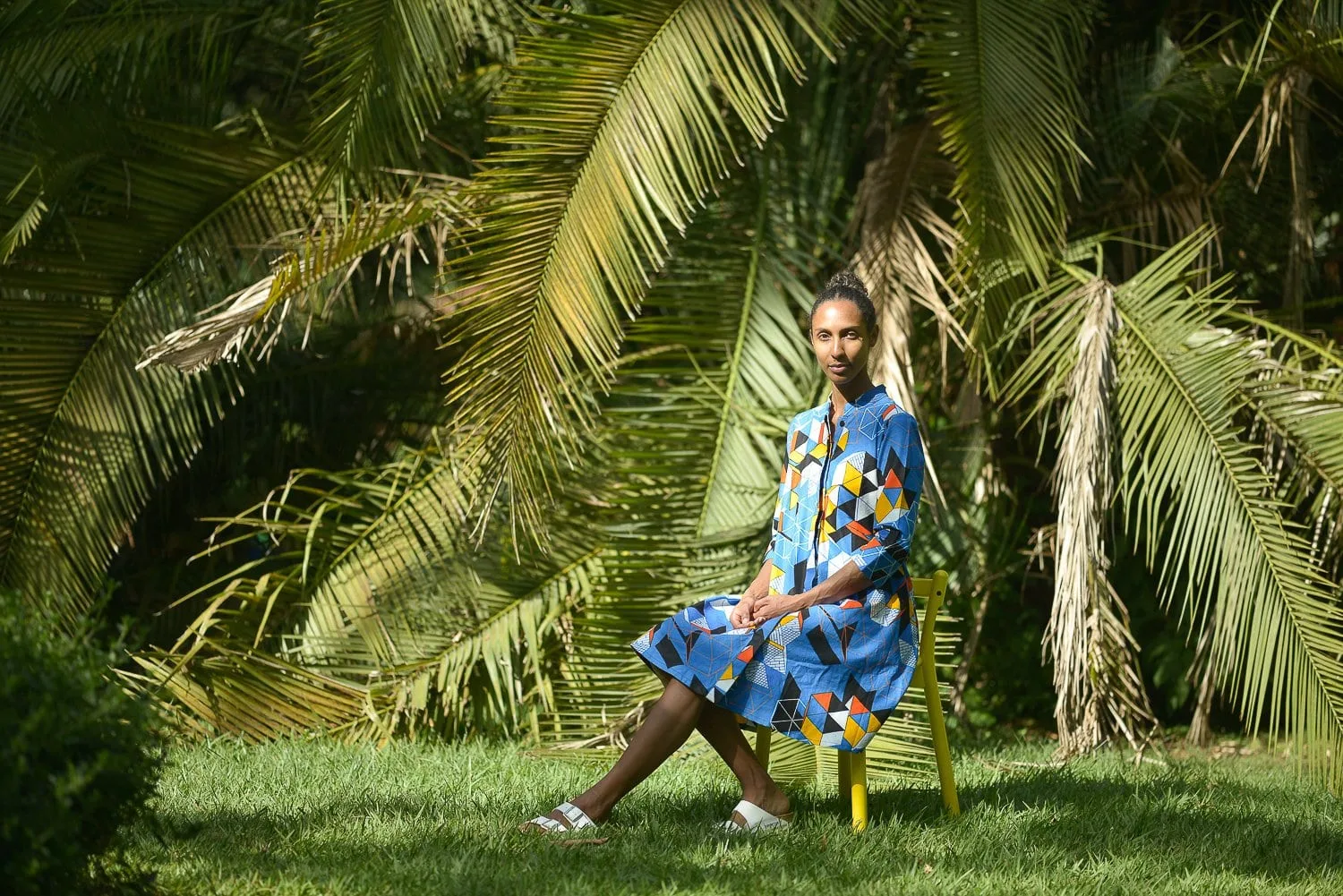
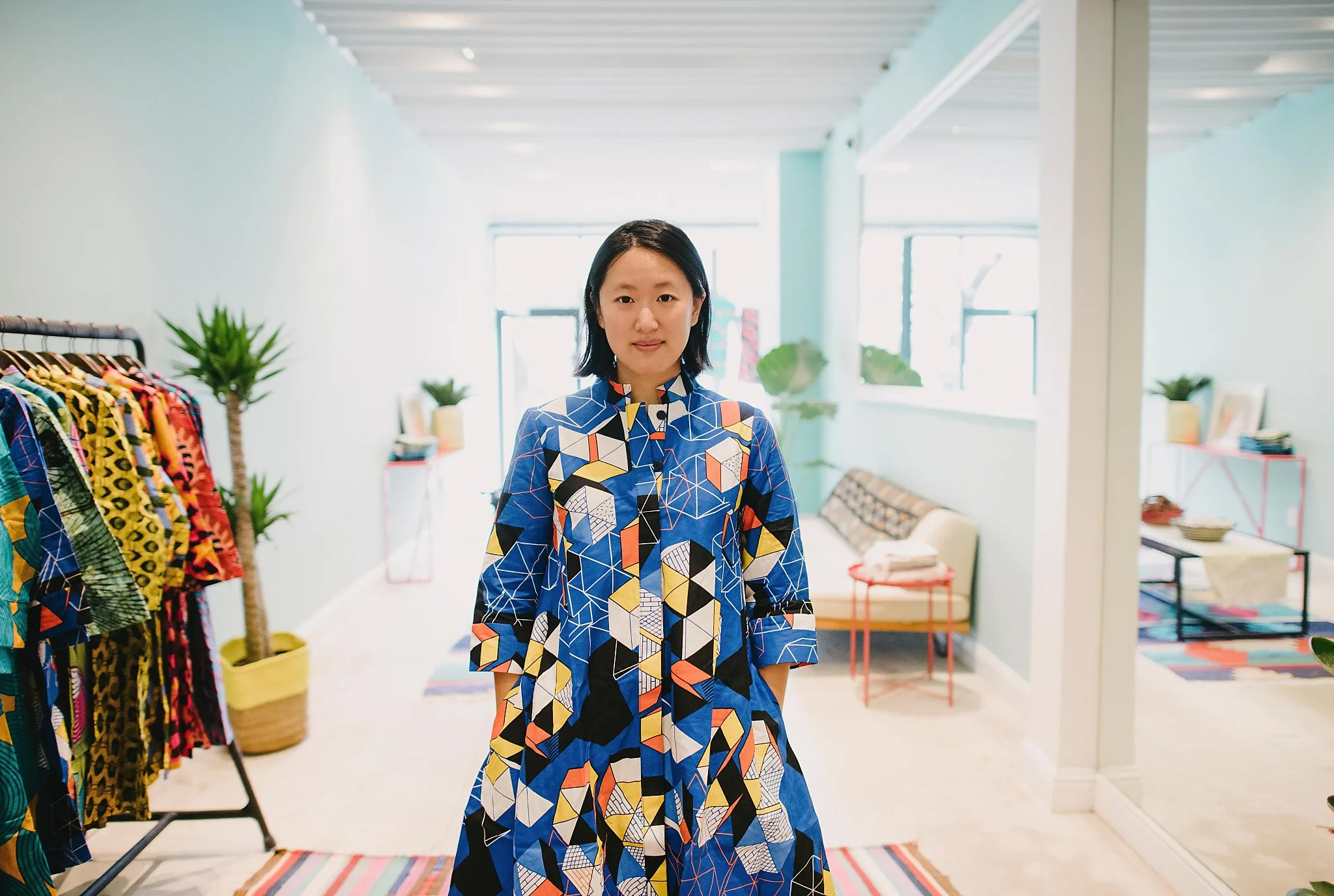
When preparing for a trip to South Sudan last May, the American designer Sandra Zhao’s packing list was straightforward: “I wanted something I could shove in a backpack, that wouldn’t look like I’d just shoved it in a backpack.” Zhao, a New York City transplant, was living in Nairobi, where it’s fast and cheap to have clothes tailored, so she designed the dress she had in mind: resistant to wrinkling, airy enough for the equatorial sun and long enough (in sleeves and skirt) to be culturally appropriate.

The resulting piece a tunic-style dress that’s fitted in the shoulders and loose through the body hit all the marks. It also, remarkably, looked good. Zhao traveled in the dress; then she started living in it.

At a wedding later that year, Ashleigh Gersh Miller (another New Yorker who had recently relocated to Nairobi) saw Zhao in the dress and was immediately drawn to it. “It was the week of my due date with my second child,” Miller says, so the loose, forgiving cut appealed. (“It doesn’t look like a muumuu,” says Zhao, “But it kind of feels like one.”) The two struck up a conversation. Soon after, they went into business.

Zuri, which launched online at shopzuri.com this year, is built on Zhao and Miller’s conviction that there’s one dress (indeed, “just one dress” is the brand’s tag line and hashtag) suitable for all purposes and people. “We’re both really short, but you could be six feet tall,” says Zhao. “It looks good on everyone.” They attribute this “Sisterhood of the Traveling Pants”-like adaptability to the structured top and an ample skirt that floats away from the body and hits just around the knee. It’s just a flattering cut.”

The design of the dress has changed only slightly from Zhao’s first iteration. In response to feedback from friends, they’ve lengthened the sleeves (making it possible to tie the dress around one’s waist as a skirt) and added pockets. Buttons run down the front, so it can be worn as a jacket. “Personally, I like to wear it over pants,” says Miller.

Equally central to the designer’s shared aesthetic is their choice of material. At any given time, the dress is available in limited-run colorways cut from Dutch wax fabric: the riotously bright, playfully patterned cotton cloth that is, to many, synonymous with “African dress.”

Though Zhao and Miller source their fabric from the continent specifically Tanzania, Congo, and Nigeria historically, it’s not African at all. Initially produced by the Dutch to tap into the Indonesian Batik market, the wax-printed cotton cloth traveled via colonial channels to East and West Africa, where it became ubiquitous.

Most Dutch wax fabric is still designed in the Netherlands, but the patterns have become highly localized. (One popular print called “LV” or “Le Sac du Michelle Obama,” features a repeating pattern of the Louis Vuitton bag that Obama carried during her 2009 trip to Ghana.) They’re also short-lived. “Fabrics are constantly circulating and cycling,” says Zhao. “One factory will put a pattern out, then another will adopt it, it repeats and moves, sort of like it’s alive.”

For now, the dress itself is also on the move. Available online and stocked by St. Cloud in Houston, Tex., as well as by Merchants on Long in Cape Town, South Africa, Zuri’s in-store presence comes mostly in the form of pop-ups. Two are slated for June, one at Shinola in Detroit and one in New York.

The duo would eventually like to start printing their own materials, but in the meantime, it’s clear they enjoy the chase. “We’ve got feelers out in Nairobi and Dar es Salaam, and we’re heading to Uganda in a couple of weeks,” Miller says. Fabrics are typically only in production for a few weeks, so when a favorite motif retro oscillating fans, or lovebirds on branches show up, they have to act fast. “We walked into a shop recently, and a pattern we’d been looking for for months literally dropped at our feet,” Miller says. “I was immediately like, ‘Sold!’”

Zhao calls the constant variety and unpredictability of materials “a roller coaster of emotion,” but it’s also a perfect complement to the slow, singular design process. “It’s been fun to have one dress,” Miller says, “and to perfect it.

Content courtesy New york time & Nairobi fashion hub 

2021 is set to be a promising year for the fashionably forward

From large florals to ’50s inspired headscarves, fashionistas globally are getting ready to kiss their WFH ensembles goodbye, despite many countries forcing their citizens back indoors to help curb the spread of the dreaded coronavirus. Many in progressive fashion circles agree that the tracksuit has overstayed its welcome, so here are a few trends the stylish can look forward to in the year to come.

Large floral prints
Florals typically never date. This year, however, calls for a more confident approach with large floral prints making a bold debut versus previous years, which flaunted daintier preferences for blossom choices. Florals are incredibly feminine, can be worn all year round, and can be versatile if paired well with more staple items in your cupboard.

For example, a floral wrap blouse could be paired with a trusty pair of blue jeans and, accessorized with chunky hoop earrings and grungy shoes for a more on-trend look. Ankara dresses, which are popular in Nigerian culture, could see a boost in large floral print fabrics as these designs call for boldness as does this particular trend.

Headscarves
Drawing inspiration from the 1950s and 1960s, we’re going to see headscarves being featured quite prominently amongst the fashion savvy. They’re also going to be spoiled for choice as these can be worn in either floral motifs or, in bold colors and block letters.

https://www.instagram.com/p/CIOZG4JD7Up/?utm_source=ig_embed

African ladies, however, caught onto this trend quite early on as our country is usually vibrant with an array of ladies adorned in colorful doeks – now we have all the more reason to celebrate our heritage every day and not just on 24 September!

Pastel hues
Sorbet pastel hues are set to remain on the fashion scene this year but need to be pieced together cleverly to achieve 2021’s unique look. Options for suitable pieces include mint green jumpsuits or oversized trench coats in softer colors such as lavender. The beauty about this trend is that the colors on 2021’s color wheel suit pretty much all skin tones, which makes it is well suited to cater to our country’s vibrant skin tone palette.

These can be worn in a variety of different ways – non-traditional options include wrapping the fabric under the chin in a single knot or, having it hang off the back of the head. You could even drape a scarf on your bag if you’re not brave enough to wear one out covering your crowning glory.

Bright bags
Looking to international shores, we’ve noticed that bright colored handbags and clutches have been dominating the runways and streets. If you’re scared to incorporate vibrant colors into your wardrobe, introducing accessorable pieces such as bags that boast a pop of color can be a non-intimidating way to follow the trend which I think, makes this trend all the more wearable and approachable.

Here in Africa, we boldly express ourselves through our colorful fashion choices so, I look forward to seeing this trend come to life here at home this year.

Black face masks
Sadly, it looks like it’s here to stay for a while but, when it comes to Covid-19 safety, a mask is a non-negotiable staple that now demands its share of closet space. If you’re going to take care of yourself, you may as well be stylish about it.

Black cloth face masks are effortlessly stylish and never clash with any outfit choice. Another plus to these is, that they can be infinitely reworn if well looked after and, can be thrown into a machine cycle at the end of the day as opposed to a surgical mask, for example, which oftentimes ends up in our landfills or worse – on the street or scattered in shared public spaces.

Despite the present situation, we as a nation find ourselves in, we are hopeful that fashion and the fun of dressing uplift Africa’s mood and inspires her people to never give up hope. We’re glad to be encouraging fashion trends that involve a bit of color therapy too!

Content courtesy  Biz Community & Nairobi fashion hub 
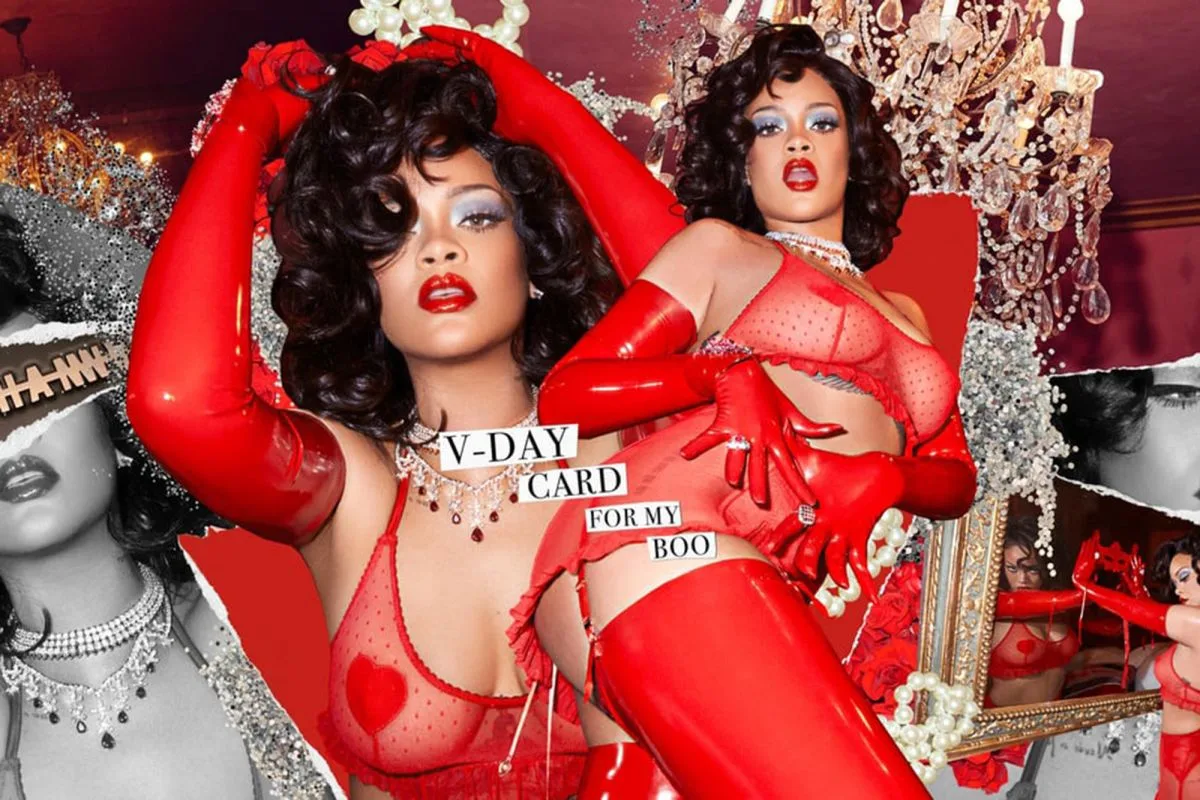
Rihanna Wore $2 Million Worth of Rubies and Jewels For a Savage X Fenty Valentine’s Day Ad​​​​​​​

Rihanna modeled her new Savage X Fenty Valentine’s Day lingerie in a sexy collage-style campaign combining latex and mesh with over $2 million worth of antique diamond and ruby jewels.

In the sultry shots, the 32-year-old triple threat pairs the red “Candy Hearts” bralette ($39.95), G-string ($22.95), and garter ($39.95) with two different sparkling necklaces from Hammerman Jewels a seven-row collar, and a chandelier style dripping with pear-shaped stones worth over $2 million combined.

And that’s just the tip of the iceberg. Rihanna also shines in no fewer than five Art Deco pieces from Lang Antiques, including two giant ruby rings and a duo of matching bracelets worth around $35,000 each.

A rep for Lang Antiques told us the precious pieces, which collectively total over $130,000, are all around 100 years old.

https://www.instagram.com/p/CJ_qaJGHi82/?utm_source=ig_embed

In other images from the campaign, Rihanna teams the same jewels with the “V-Day” fishnet slip ($49.95) and pieces from the “Candy Hearts” Xtra VIP box ($129.85), including a cropped mesh cami and matching open-back skirt.

Latex opera gloves and stockings from Atsuko Kudo one of Hollywood’s favorite latex fashion providers round out the sizzling mix.

Now available to shop online, Savage X Fenty’s V-Day lingerie comes in sizes 32A to 42DD and XS to 3X, with prices ranging from $13 to $80.

Those aren’t your average, everyday diamonds and rubies, either. She layers two necklaces in the shoot: a chandelier style and a seven-row collar, both by Hammerman Jewels, Page Six reports. Their total worth? Over $2 million. And to finish off the look, Rih wears an assortment of Art Deco rings and bracelets from Lang Antiques, worth a total of $130,000. It’s simply what she deserves!

Content courtesy of Page Six & Nairobi fashion hub
An Interview With Leah Wanjiru Co-founder and Creative Designer at Tai Designs Africa

Leah Wanjiru is a young fashion designer who is passionate about Made in Kenya clothes, she is a fashion lover who embraces color and prints when we talk of fabrics co-founder and creative designer at Tai Designs.

Tai Designs Africa is a clothing brand that I founded with my Partner Wambui Mwaura. Tai mainly focuses on dressing people for occasions such as weddings, traditional weddings, and corporate events. We also customize summer/ swimwear and accessories such as hats and bags. Recently we have also started doing custom made clothes for our clients.

Oscar Alochi: Can you describe Tai Designs Africa, the idea and concept as if I knew nothing about it or the market it is in? 

Leah Wanjiru: Well, Tai Designs Africa is a product of passion, disappointments from local tailors, and curiosity all combined. I am one person who never gets satisfied with something basic.
So whenever I bought clothes I always had ideas of how I would do it better or differently. Of course given that I had no fashion education it was difficult to explain to my tailor exactly what I wanted.

End results? A spoilt dress and disappointed Leah. So with time the interest in fashion came up and enrolled in college where I learned both tailoring and fashion illustration.

OA: What were you doing before Tai Designs Africa, and what motivated you to start the business?

LW: I have always been the girl in the office. At the time I decide to start Tai Designs Africa I was an assistant accountant in an audit firm. The interest to monetize my interest and curiosity developed while I was still working there, I realized I did appreciate as much doing the same thing month in month out.

I wanted to be my own boss.

OA: What techniques do you use? Tell us about the process.

LW: I apply two techniques in my business. one involves sketching designs that I mainly get inspiration from movies and sourcing the fabrics, I then cut and sew the fabrics to bring the sketches to life. In most of such designs, I do wear them.

The second is where clients choose designs and they bring fabrics or I choose for them then we create their custom made outfits.

OA: How did you learn/master this technique and why do you use it? 

LW: I did my research before setting up the business. The technique favors my line since the clothing industry is dynamic and has
seasons.

There are seasons that clients wear mostly ready to wear and at times like December, they prefer custom made.

OA: What challenges did you face? 

LW: Mmhm.

First, I struggled with getting my brand out there, Being so introverted and fearing to talk to strangers was not helping me either. Again when the clients
started rolling in, now pricing and clients running away with balances become another headache.

OA: How did the obstacles make you feel? 

LW: In the beginning, I would say I got frustrated.

You know to a point I thought of making clothes to those clothes to me only. With time I mastered the art of handling clients to avoid such scenarios.

OA: What were your achievements? 

LW: We are proud to have showcased in one of the biggest fashion shows. The JW show. We also showcased in the Women World show which aims at improving upcoming women entrepreneurs, also last year we did our very first collection

OA: Favorite moments? 

LW: Walking in after our collection showcased at the JW show and the shows thereafter are moments engraved in my heart.

OA: How do you get dressed in the morning?

LW: Really depends on the mood, any day qualifies for anything

OA: What’s your take on the Kenya fashion industry? 

LW: Right now the Kenyan fashion industry is taking a huge positive change with people appreciating locally produced clothing and the very skilled
tailors around, I think it’s a matter of time and people will be wearing made in Kenya.

The youth have also embraced Kenyan fabrics and with the help of talented designers, the future looks promising.

OA: How different is the Kenya fashion industry compared to East Africa and Africa’s fashion industry at large? 

LW: One thing about Kenya is that citizens and majorly fashion lovers are so diverse with color and designs. Unlike East Africa where most nations are limited to vitenge’s, Kenyan the industry is diverse.

OA: Any future collaboration with Kenyan or International fashion designers?

LW: I always admire works done by a Kenyan designer, Remy a great designer.

OA: If you were given the opportunity to work with a local or international fashion designer who will you love to work with? 

LW: I would go International and work with Kollins Carter. He makes extraordinary pieces.

OA: What are your thoughts on fashion in Africa? 

LW: Innovative.

Africa has very talented designers and skilled tailors, the challenge is the machinery for the production

OA: What has changed during this period of Covid-19

LW: Mostly the frequency of people buying or ordering clothes. With most people indoors due to lockdown and others retrenched from their workplaces, finances have become scarce.

OA: How has Tai Designs Africa adopted the new technology virtual fashion show during and after the Coronavirus pandemic? 

LW: We have adopted the representation of our products online mainly doing indoor shoots and posting on our social media platforms.

OA: How are African fashion designers influencing fashion in the western world?

LW: African designers have embraced the production of great pieces with fabrics that represent Africa. The likes of vitenge, kente, and Maasai shukas. These fabrics bring color which is well embraced in the western world.

OA: What can the Kenyan fashion industry learn from the western world? 

LW: Mostly what color goes with what skin tones. I find it well intriguing. Also making our own prints would save us a lot of importation taxes.

OA: Over the last few years have you noticed any significant changes with the African fashion trends?

LW: Great changes, From chasing Western trends to creating our own designs and making them trend.

OA: When dealing with Africa is it important for the fashion world to be ethical and socially responsible, and put in place strong corporate social responsibility governance? 

LW: Yes, it is very important to put in some policies. Africa has well-grounded roots and people of different
ethnicity.

The only way to preserve our culture is by having policies in place.

OA: Tell us about The JW Show or Kenyan Fashion week and your experience at the Show?

LW: JW Show is a great platform for designers and to showcase. Fashion lovers also get the chance to walk the red carpet with their beautiful designs. I think we should have more of such shows in a year where we get to celebrate fashion.

OA: Where can we find your designs? 

LW: We are at Sawa mall 3 rd Floor C20 and also online on our social media platforms.

OA: Share with the audience your social media platforms or a website.

LW: Our social media platforms are

Instagram: @taidesignsafrica
Facebook: Tai Designs Africa
WhatsApp: +254 736 336062

https://www.instagram.com/p/CHKzJzgl1d_/?utm_source=ig_embed

OA: What does eCommerce mean to you and your business?

LW: It’s resourceful for our brand, Most of our clients are online customers.

OA: Do you think eCommerce is important for African fashion designers that are trying to get recognized and reach a global market? 

LW: With technology making the world to become a global village, eCommerce is one of the best to capture the global market and let the world know about what we offer.

OA: How does your strategy change when running an online store to an offline store?

LW: Dealing with virtual clients is easier since they buy products at the listed prices and get them delivered. Offline clients can be sometimes negotiating.

OA: Where do you see African fashion in the next 5 to 10 years? 

LW: I dream of a continent that will be doing a production of not only clothing but also textiles which will be ready for exportation too.

OA: What 5 pieces of advice would you give to young African fashion designers wanting to enter the fashion industry? 

LW: My advice

  1. Be clear about your brand what clients you target.
  2. Be ready to start small.
  3. Always wear your brand with pride.
  4. Take time to master the art and then monetize it
  5. No one will offer a seat in the industry, come with your own and take the space.

OA: Is there anything else you would like to add? 

LW: Thank you for the interview. The questions exhaustively covered everything.

Content courtesy of Tai Designs Africa & Nairobi fashion hub 


Meet Dennis Osadebe The Man Disrupting The African Fashion Industry founder and C.E.O of D&D Clothing

Dennis Osadebe is the founder of D&D Clothing with the head office in Dubai. Being more than 10 years in the entertainment business in Nigeria, he has seen the lack of professionally made costumes and artistic clothing. That’s how we start our office in Dubai, by creating different custom made orders.

Now Dennis Osadebe is a motivational speaker, promoting Africa and African fashion all over the world. After having different branches and representatives in Europe, Canada, the US, and Australia we are back home to Africa and opened our first branch in Kenya.

Ann Mumbi:  Can you describe D&D Clothing Company, the idea, and concept as if I knew nothing about it or the market it is in?

Dennis Osadebe: D&D Clothing is an international fashion brand with an African soul. We don’t just do fashion, we create an African Fashion Movement that will reach every home. We have achieved big success because of the belief and hard work of our D&D family. We create 6 amazing collections per year for males and females and divide our products in 3 directions business casual, Urbach chic, and glamour.

Our main goal is to be represented in different countries, where people are proud to wear MADE IN AFRICA. Being the number 1 brand in the Middle East, gave us the possibility to produce our own fabrics that have a special story. Our own production is located in Kenya, from where we distribute items to all showrooms and shops. Started far from home with a lot of difficulties We are finally back in Africa because that’s where we belong to! AFRICA IS HOME!

AM: What were you doing before D&D Clothing Company, and what motivated you to start the business?

DO: I (Dennis Osadebe) was into the entertainment business in Nigeria, I’m the one who brought Nollywood to Asaba! But I wanted to grow outside Africa, I know we can do it. I see so many talented people in Africa and they need to be out there to expose!

AM: What techniques do you use? Tell us about the process.

DO: If we are talking about production techniques – we use only the latest technology of production. It’s about IT control, it about the latest machines for patterns, for stitching. We are very keen on everything the best, and invest a lot in production and people.

AM: How did you learn/master this technique and why do you use it? 

DO: We try to learn from the best, of course, as well you never learn better than from your own mistakes. But we learn from others as well

AM: What challenges did you face?

DO: The main and the biggest challenge for any business is a team. It’s not easy to find people who will be there with you in water and fire. But it’s possible. So we always keep looking for the best team.

AM: How did the obstacles make you feel? 

DO: There is nothing you cannot do in this world. So you only become stronger.

AM: What were your achievements? 

DO: Our main achievement is to win 3rd place in the World Fashion Awards, which we are very proud of. we were the first African company ever that took place and we were right after Italy. which gives us so much courage to do more, we are limitless.

AM: Favorite moments? 

DO: Once per year, we do African Fashion Party, that’s such an amazing moment, where we invite our customers, all team and partners from different countries, and we make a crazy party in African style with all D&D Clothing dresses.

People can choose any of the designs, we create them and it becomes one of the favorite moments of the year not only for us but for our customers as well.

Check our latest in Dubai

The next one we are planning to make it in Kenya!

AM: How do you get dressed in the morning? 

DO: I have a plan for my dressing for one week, and of course, I wear only my own brand. As well once per month or two, I have days when I test our new designs, It’s the biggest test control in our company! I’m very strict about dressing, it should not be only stylish, but it should be comfortable, you should feel on top of the rook on it.

AM: What’s your take on the Kenya fashion industry? 

DO: We have seen a lot of talented people in Kenya, amazing designers, models, but they are lacking practical education. I hope in the future we will create a base and education for designers to blow all over the world.

AM: How different is the Kenya fashion industry compared to East Africa and Africa’s fashion industry at large? 

DO: I think the main difference is opportunities, in East Africa, it is so easy to blow if you do professional things, Not only in fashion, a lot of opportunities that people don’t see.

AM: Any future collaboration with Kenyan or International fashion designers?  

DO: We hope in the future to collaborate with talented fashion designers

AM: If you were given the opportunity to work with a local or international fashion designer who will you love to work with? 

DO: We would work with Philipp Plein. I hope next year we will do something together.

AM: What are your thoughts on fashion in Africa? 

DO: I think it’s at the peak of demand now. It’s a culture that did not die like in any other country. Where do you see people in Europe wearing traditional clothing?

Even by the way officially they don’t even have anything traditional. So African fashion will be growing only all over the world.

AM: What has changed during this period of Covid-19? 

DO: The main challenges are to change the business strategy for the next 1-2 years. Keep all the team while the profit was reduced. But it’s a good time to do more.

AM: How has D&D Clothing Company adopted the new technology virtual fashion show during and after the Coronavirus pandemic? 

DO: VR fashion shows is not a new technology but it’s something that people have seen just now, during covid. New technology is for example Augmented reality. Its future fabrics with molecular structure, different Self-healing materials with the ability to heal after being wounded. That’s the new technologies.

AM: How are African fashion designers influencing fashion in the western world? 

DO: They are influencing by their creativity. Our African people are more creative than westerns. So if you see African person in the western world, they have every chance to be number 1

AM: What can the Kenyan fashion industry learn from the western world? 

DO: They can learn how to do business. Management, timing, any operational area, sometimes I can request for information or quotation from the company and they will send me after 3 days.

Like you are begging people for you to send them money. You will never see this kind of way of doing business in the western world.

AM: Over the last few years have you noticed any significant changes with the African fashion trends? 

DO: African fashion will always be trendy

AM: When dealing with Africa is it important for the fashion world to be ethical and socially responsible, and put in place strong corporate social responsibility governance? 

DO: It is important, but if you will check, it’s not so easy to do in Africa like to say.

AM: Tell us about The JW Show or Kenyan Fashion week and your experience at the Show.

DO: Amazing creative guys, I adore their ideas, they have a big future.

AM: Where can we find your designs? 

DO: You can find our designs on our website danddclothing.com

AM: Share with us your social media platforms or a website

DO: We can be reached through our social platforms.

Website: danddclothing.com
Instagram: @danddclothing
Facebook: @danddclothingandtailoringllc
YouTube: D&D Clothing
WhatsApp: +254 701 223333

AM: What does eCommerce mean to you and your business?

DO: It’s a must. If you are not online – you don’t exist.

AM: Do you think eCommerce is important for African fashion designers that are trying to get recognized and reach a global market? 

DO: Highly important. It’s a must. You supposed to start yesterday

AM: How does your strategy change when running an online store to an offline store? 

DO: The strategies by themselves are different for online and offline stores.

But offline is dying, The companies that have been on the market for more than 240 years now like Debenhams they just shut down and filed for bankruptcy. And in Africa after 5-7 years, people will stop buying offline.

AM: Where do you see African fashion in the next 5 to 10 years? 

DO: I see it number 1 by popularity among all people in the world

AM: What 5 pieces of advice would you give to young African fashion designers wanting to enter the fashion industry? 

DO:

  1. Don’t be afraid
  2. Show, don’t tell
  3. Do everything and anything
  4. Don’t do it alone
  5. Don’t listen to anyone

AM: Is there anything else you would like to add?

DO: I would like to say that I’m proud to be an African and I want all people around the world to be proud of wearing MADE IN AFRICA. And all of us have a chance to do it!

Content courtesy of D&D Clothing & Nairobi fashion hub 


Africans Must Marry Dressed In Their Native African Attire – Says Reno Omokri

Reno Omokri espouses so much wisdom but sadly, the nuggets of acuity he propagates on his social media handles designed to change the mindset and lifestyle of Africans are yet to be assimilated.

The former presidential spokesperson and lawyer have dropped another beautiful piece on his Twitter handle about the way we conduct weddings in Africa. In his estimation, Africans should drop the tie and suit for their native dresses during wedding ceremonies since white weddings only resonate with the white people and not Biblical.

He said on Twitter; “In 2021, Africans don’t need a suit and tie and a white dress for weddings. The entire structure of the White Wedding is fashioned after EUROPEAN culture NOT Christian culture. Today, even African Muslims now do it. Marry in your native African wears!”

Content courtesy of GH Gossip & Nairobi fashion hub 

Highlights From Rwanda Fashion 2020

The fashion industry in Rwanda, like other sectors, suffered many losses last year. The industry was hit by the pandemic with a big drop in sales registered globally, as the demand for clothes and fashion accessories went down.

With the lockdown measures that were put in place by the government taking effect, fashion designers couldn’t organize any events which had been planned, hence setting them back.

Despite the challenges, this didn’t hinder new fashion entrants to showcase and exhibit unique styles.  We bring you the fashion highlights of 2020;

Ikamba Apparel

This is a lately launched ‘Made in Rwanda’ clothing brand with a touch of Vogue and a taste for African design, It was founded by Gratia Teta, Deborah Mwanganjye, and Kessy Mugabo Kayiganwa from African Leadership University (ALU).

Ikamba Apparel comprises three young students who are hungry to follow their dream, thus eventually creating a unity that led to a business. They are all students pursuing International Business Trade at African Leadership University (ALU).

The brand caters to all age groups and targets both middle and high-class clothing styles; epitomized via an assortment of elegant and streetwear.

https://www.instagram.com/p/CEJ8Vl0BjIT/?utm_source=ig_embed

Kezem clothing brand

23-year-old Emmanuel Keza Niyonsenga is the brains behind Kezem, a new Rwandan clothing brand that ‘communicates the Rwandan story and Africa in general’.

Though his skill is mostly self-taught, he also got additional training from Rwanda Clothing, a local fashion brand where he was skilled in the significance and power of a brand, and how to work with clients to satisfaction.

He has designed many of the Iwacu Muzika festival artistes, many of whom are Art Rwanda Ubuhanzi colleagues and celebrities like Alyn Sano, among models and other celebrities.

https://www.instagram.com/p/CBn3vqXBhRu/?utm_source=ig_embed

‘Rufuku’ collections

Laurent Nsengumuremyi, also known as Nelly, 25, also sought means to penetrate the fashion industry, which is why he invented ‘Rufuku’.

‘Rufuku’ is a fabric of old-fashioned blankets that he uses to make all sorts of attires, from blazers, cardigans, to skirts, dresses, and many others.

Zoi

Zoi, which is Greek for ‘life’, is a clothing line that was started by the Mackenzies. This is a group of five young ladies namely Naomie Nishimwe, who is the current Miss Rwanda 2020, Kelly Uwineza, Kathia Kamali Uwase, Brenda Iradukunda and Pamela Loana Uwase. They are all related.

Their brand that was launched on October 9 produces clothes for all genders, with the choice to scale up an outfit liable on the size of the customer.

The Mackenzies use social media to market and advertise their own clothing line, acting as models for their own designs. The demand for their clothes was enormous which pushed them to work harder.

Moshions goes international

Local fashion house “Moshions” is not only focusing on the local market but also eyeing the international market in the most effective way.

Moshions’ aim is to create a traditionally enthused frill brand that has roots in Rwanda as well as Africa.

The brand received criticism recently when it unveiled its online store, as many people accused them of setting high prices for clothes that they think are not supposed to be expensive.

According to Dany Rugamba, the business manager at Moshions, the people who cannot afford a cloth will certainly say something is expensive, even when there are many others who can afford it.

To him, the same feedback was given even when the fashion house was just starting, yet people actually buy. It is this support that has grown the brand.

Fashion brands that featured on Beyoncé Knowles’ website

Four Rwandan fashion brands; House of Tayo, Inzuki Designs, Moshions, and Haute Baso on August 2, were amazed to see their creations listed among the top African fashion brands that featured on American singer Beyoncé Knowles’ website.

Most of the designers said that there was no application made to feature on the platform, but their designs were suggested by their customers and famous fashion stars in Africa and beyond.

East Africa Fashion Awards

Two Rwandan media personalities, Makeda Mahadeo and Christelle Kabagire were nominated for East Africa’s Most Stylish Female Host of the Year, at the East Africa Fashion Awards.

The event took place in Dar es Salaam, Tanzania in March. Makeda is a Kigali-based CNBC Africa journalist, media personality, deejay, and emcee, while Christelle is known for her fashion show ‘In Style’, which airs on Rwanda Television every Tuesday and Wednesday. The event sought to distinguish the most outstanding achievements of individuals and brands that contributed to the growth of the fashion industry in East Africa.

Face masks

When the government announced the compulsory wearing of face masks in public due to the Covid-19 outbreak, many fashion designers and manufacturers came on board to produce masks. While face masks range from Rwf300 (surgical masks) to about Rwf1, 000 (cotton face masks) for different sellers, Moshions drew a lot of reaction from the public as their face masks go for Rwf10, 000.

https://www.instagram.com/p/B_zYmd_gTGR/?utm_source=ig_embed

After thorough training on producing mask equipment and inspections done by Rwanda FDA, more than 20 domestic companies were authorized to repurpose facilities into the production of PPEs, in April. Although their worry at that time was that the demand for the equipment would exceed their supply, it is the opposite. By August, 40 local manufacturers had unsold stocks of over three million face masks.

Content courtesy of The New Times Rwanda & Nairobi fashion hub 

Kenyan Fashion Designers and Models : Making Fashion Stories 2021 Calls For Submissions 

Dear Kenyan fashion designers & Models

Designer Spotlight aims to showcase Kenyan designers and makers who center their work around sustainability, transparency, fairness, and equity, telling their stories, educate and inspire crafters and enable them to make informed decisions. We share scenes that tell not just one story, about a Kenyan fashion designer but all rounded We at Nairobi fashion hub publish pieces from a diverse range of voices, we’re interested in exploring and learning from different perspectives and strengthening our community, and we offer a platform for writers who express what they care about in their work.

“Power is gained by sharing knowledge,not hoarding it”

Please send your full submission to social@nairobifashionhub.co.ke

Photo courtesy of Ashok Sunny Tailored Limited

Content courtesy  of Nairobi fashion hub 

Renowned French fashion designer Pierre Cardin dies at age 98

Legendary French fashion designer Pierre Cardin died Tuesday at the age of 98 at a hospital in Neuilly in western Paris, his family told AFP.

Born on July 7, 1922, in Venice, Italy but emigrated to France as a small child, Pierre Cardin was known for savvy business moves and his space-age designs that made him highly successful

Iconic French designer Pierre Cardin, who was hailed for his avant-garde styles in the 1960s and 70s, has died at the age of 98, according to the French Academy of Fine Arts. The academy did not give a cause of death or say where or when he died.

Cutting his teeth working at top couture houses such as Christian Dior, Cardin went on to launch his own brand and pioneered the use of licensing in fashion, plastering his label’s name on products of all kinds. His savvy business sense brought him a mix of admiration but also scorn from fashion purists at the time.

In the 1960s and ’70s, he upended traditional fashion with his futuristic, avant-garde looks. He became known for his visionary creations, shaking up fashion with bubble dresses and geometrical designs. Cardin was also one of the first to bring high fashion to the masses by selling collections in department stores beginning in the late 1950s.

While he no longer presented runway collections in his later years, Cardin remained active in the industry, attending parties and events and taking young designers under his wing.

He had previously been a mentor to prominent designers such as Jean Paul Gaultier.

According to Reuters, “In a career spanning more than 60 years, Cardin drew scorn and admiration from fellow fashion designers for his brash business sense. He maintained that he built his business empire without ever asking a bank for a loan. Cardin was the first designer to sell clothes collections in department stores in the late 1950s, and the first to enter the licensing business for perfumes, accessories and even food – now a major profit driver for many fashion houses.”

According to Britannica.com, Cardin’s father was a wealthy French wine merchant who wanted him to study architecture but he was interested in dress designing. After World War II, he joined the Parisian fashion house of Paquin, where he helped design costumes for Jean Cocteau’s film Beauty and the Beast. He also worked at the couture house of Christian Dior.

In 1950, he opened a shop of his own and gradually gained a solid reputation as a men’s suit maker. In 1959, he created one of the first ready-to-wear collections for women, and in 1960 introduced the first designer ready-to-wear collection for men.

“I had a sense for marketing my name,” Cardin had told Germany’s Sueddeutsche Zeitung newspaper in 2007. “Does money spoil one’s
ideas? I don’t dream of money after all, but while I’m dreaming, I’m making money. It’s never been about the money.”

He was most noted for his stark, short tunics and his use of vinyl, helmets, and goggles in the 1960s, which helped launch the so-called space-age look. Cardin later became famous for licensing his name for use on a variety of products (such as sunglasses). The practice of licensing subsequently became common for fashion designers.


Gowns and bodysuits in fluorescent spandex were fitted with plastic hoops that stood away from the body at the waist, elbows, wrists, and knees. Bubble dresses and capes enveloped their wearers in oversized spheres of fabric. Toques were shaped like flying saucers, bucket hats sheathed the model’s entire head with cutout windshields at the eyes, reported AP.

https://www.instagram.com/p/CENbxoaCany/?utm_source=ig_embed

For his latest venture in February this year he teamed up with a designer seven decades his junior. Pierre Courtial, 27, unveiled a collection at Cardin’s studio on Paris’s chic Rue Saint-Honore, with pieces that echoed some of the veteran designer’s geometrical aesthetics.

Cardin said he still rated originality above anything else.”I’ve always tried to be different, to be myself,” Cardin had told Reuters. “Whether people like it or not, that’s not what matters.”

Content courtesy of France 24, Indian Express & Nairobi fashion hub 

Last chance for South Africa local Designers to enter New Talent Search

Time is ticking, and if you haven’t entered the South African Fashion Week New Talent Search 2021 now is the time to do so.

With only two weeks until the applications close, South African designers are urged to join in the movement of changing how we look at fabric design within fashion design.

The New Talent Search is open to ladies’ wear designers whose businesses are based in South Africa. All designer applicants must supply a minimum of one store (this can include your store or online store) and must be under 10 years in business to qualify to enter.

To give their consumers something different, this is what the designers must look into:

  • Consider fabrics that have the least impact on the environment.
  • Natural linen, cotton, and sustainably sourced fabrics.
  • Fur and leather-free.
  • Their Designs must include print on at least 50% of the garments.
  • Zero-waste cutting such as draping, knitting, or using a zero-waste pattern.
  • Provide consumer care instructions to lengthen the garment’s longevity.
  • Create a timeless and trans-seasonal collection.

Designers must also research slow fashion to make sure they understand it in a way that they can live it and play a role in shaping the future of sustainable fashion.

They must also base their designs on 2021 world trends by combining contemporary shapes, styles, and construction with their inspirations and design talent.

The winner will walk away with prizes to the value of ± R455000

Content courtesy of   & Nairobi fashion hub 

Wauzine Cheza Kama Wewe One Project, Two Countries, Eleven Designers, Boundless Creativity

Creative DNA x Fashion Scout present WAUZINE – a digital showcase including three limited edition digital publications, featuring 11 emerging designers from Kenya, and bringing together cross-cultural collaborations between writers, illustrators and creative teams in both London and Nairobi.

The first of our three issues explores Nairobi’s myriad neighborhoods through a fashion story by photographer Maganga Mwagogo showcasing the bold and powerful work of our designers and an in-depth essay by Awuor Onyango revealing the cultural and social ley lines that underpin the Kenyan capital.

WAUZINE is designed and created by the team at Fashion Scout, with Helen Jennings, Co-founder and Editorial Director of Nataal Media as Features Editor and showcases exclusive photoshoots under the creative direction of Sunny Dolat, Fashion Curator and Co-founder of The Nest Collective.

As the UK partner of the British Council’s year-long Creative DNA programme, Fashion Scout is spearheading this online platform in order to give the designers visibility to a global audience whilst celebrating a diverse variety of voices and creativity.

Issue 002 will go live in January and Issue 003 will be live in February just before London Fashion Week when we will feature a Wauzine fashion film on the Fashion Scout’s digital schedule.

Wauzine Cheza Kama Wewe One Project, Two Countries, Eleven Designers, Boundless Creativity

Creative DNA programme supported by the British Council is focused on promoting alternative and innovative approaches to the global fashion system with the ambition of demonstrating that the fashion sector in Kenya is a professional choice for young people and a valuable contributor to the creative economy.

The programme conducted work in six major areas: Research and Insight, Policy and Advocacy, Business Support, NESTA Creative Enterprise Programme, Fashion Incubator as well as #FashionFridays

As part of the Fashion Incubator programme, British Council is working with local fashion designers in Kenya to boost the growth of a sustainable creative industry in the face of the Covid-19 pandemic through a programme aimed at developing their skills, knowledge and global networks.

Creative DNA project is delivered by the Kenyan partner, Metta Nairobi and the UK based partner Fashion Scout, 11 fashion businesses have been immersed in a 12- month incubator programme between February 2020 and February 2021 – including a business bootcamp, personalised mentoring, competitive seed funding and will be showcasing on Fashion Scout’s digital schedule during London Fashion Week.

https://www.instagram.com/p/CJadbI-gzfH/?utm_source=ig_embed

Creative Enterprise: the British Council offers individuals and organisations training in business and digital skills, networking events, access to new markets and connections to resources. You can read about the Creative Enterprise programme

Content courtesy of WAUZINE, British Council, HEVA Fund,  Fashion Scout, Mettā Nairobi & Nairobi fashion hub 

Fashion Under The Baobab Trees Dakar Fashion Week takes catwalk outside and into a baobab forest

Given the restrictions necessitated by the spread of the coronavirus, the organiser of last weekend’s Dakar Fashion Week, held in the country’s capital, got creative by hosting it beneath the trees in an ancient baobab forest.

The 18th edition of Dakar Fashion Week was initially cancelled outright due to coronavirus restrictions, but organiser Adama Ndiaye came up with a creative alternative hosting the show outdoors instead of indoors.

Fashion Under The Baobab Trees

The result was a single magical day of sustainable and eco-responsible fashion in the baobab forest of Senegal’s Bandia Reserve.

“With COVID we had to be creative, I had to find solutions, and above all, we had to avoid cancelling the show and here I think there is enough space, so no one feels cramped,” Ndiaye said.

The catwalk was laid out between the gnarly trunks and branches of tall baobabs, a powerful symbol of Africa themselves. Models on the catwalk displayed the latest West-African fashions from both well-known and up-and-coming designers.


Sustainability A New Fashion Trend

The message behind the 2020 Dakar Fashion Week was that sustainability is in style. The weekend event was based around the theme of environmental responsibility and featured 20 designers whose collections were all handmade on the continent.

“A lot of the designers had already been doing ‘slow fashion’ but they didn’t know it,” Ndiaye, also a fashion designer herself, said. “It’s made here and it’s not made in huge quantities. We were so ashamed of that for years, but now we are proud of it. This is luxury.”

While the garments are hand-produced in Africa, most of the fabric used the 2020 Dakar Fashion Week was imported from abroad.

“We don’t make everything here, so we can’t create a collection that’s 100% Senegalese,” said Ndiaye, whose own line used imported material from Thailand. “But at least we took the initiative to do certain things.”

Content courtesy of The South African , France 24 & Nairobi fashion hub

Ad