Sunday 3rd of May 2026

Nairobi, Kenya

Hamaji Studio

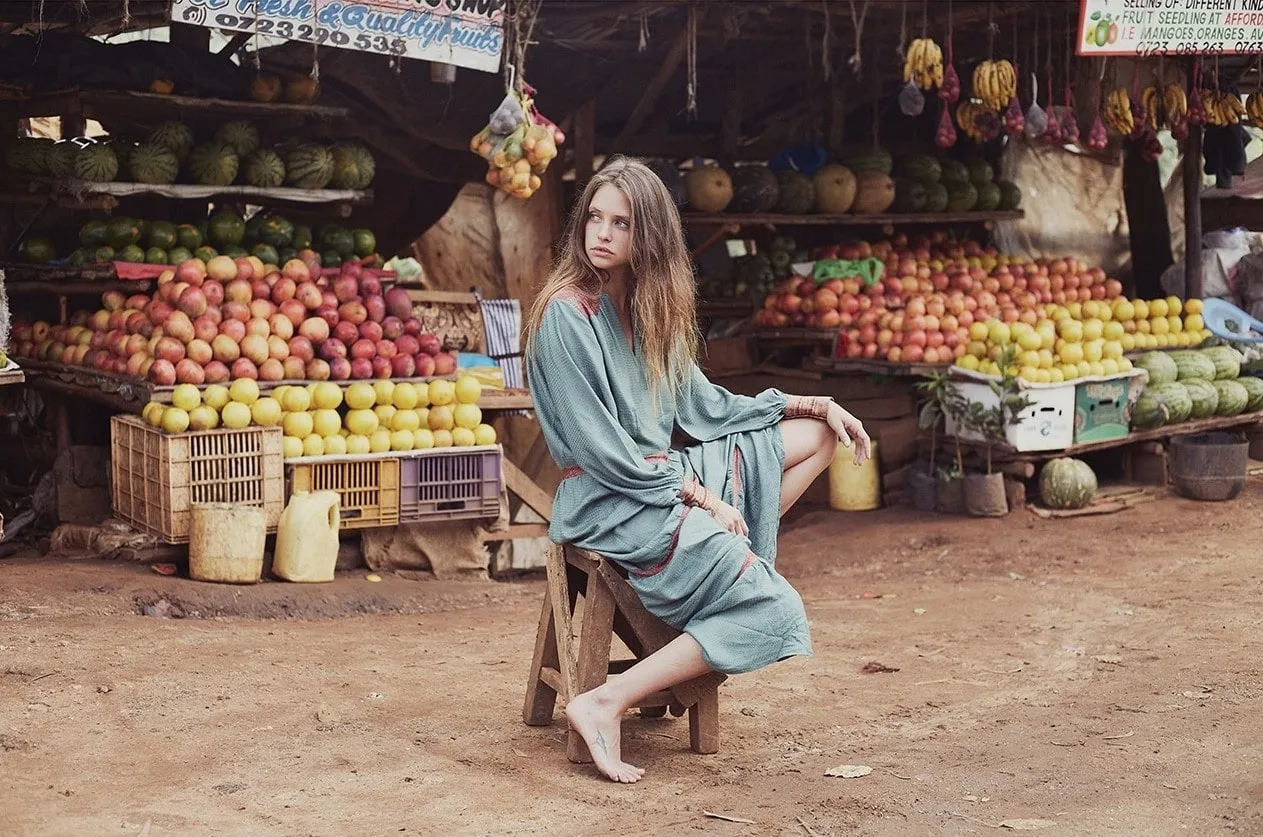
Hamaji, meaning “nomad” in coastal Swahili is an African designer collection created around preserving ancient textile traditions and nomadic craftsmanship whilst empowering local small-scale artisans in Africa.

Reigning from the East coast of Africa, Hamaji was born in Kenya in 2017 by designer Louise Sommerlatte.

Creating a narrative of sustainability and conscious consumerism their collections are made up of natural fibres, botanical dyes, hand craft, embroidery and up-cycled collected vintage textiles. Hamaji is inspired by East African charm and embodies a spirit of nomadic femininity in pastel hues, free flowing silhouettes and a delightful sense of elegance.


This collection was simply inspired by Hamaji journey between Kenya and India and her quest to source sustainable fabrics. The artisanal souls met along the way, the freedom in nature, wild vast landscapes, dusty roads and rickety trains.

But most importantly the feeling of travelling, the romance, nostalgia and inner peace retrieved from being alone and connected to your surroundings. It is to capture this honest feeling and portray its outstanding beauty.

The collection uses a variety of unbleached organic cotton, 100% linen, up-cycled vintage saris and what is currently known to be one of the most sustainable textiles available, 100% natural and biodegradable TencelT” By Lenzinr which is made using very minimal water and no chemicals, from tree bark.

This lucious fibre claims the breathability of linen, the wearability of cotton and the luxurious feel of silk. Garments are adorned with hand beaded collected cowry shells and various beaded embellishments. Our in house hornbill block print is made with harm free dyes and are certified Oeko-Tex’s Standard 100.

Made in rural Kenya by local artisans at the Mitumba Arts workshop in Nanyuki. The workshop consists of 20 artisans working together mostly in creating items made from second hand clothes. All the profits are collectively shared between the artists consisting of tailors, upholsters, hand headers and painters.

We are committed to equality and fairness in the workplace, pay not just living wages but decent wages, have interest in the livelihoods of our employees and to create a comfortable and kind working environment.

Content courtesy of Hamaji Studio & Nairobi fashion hub


Suave Kenya

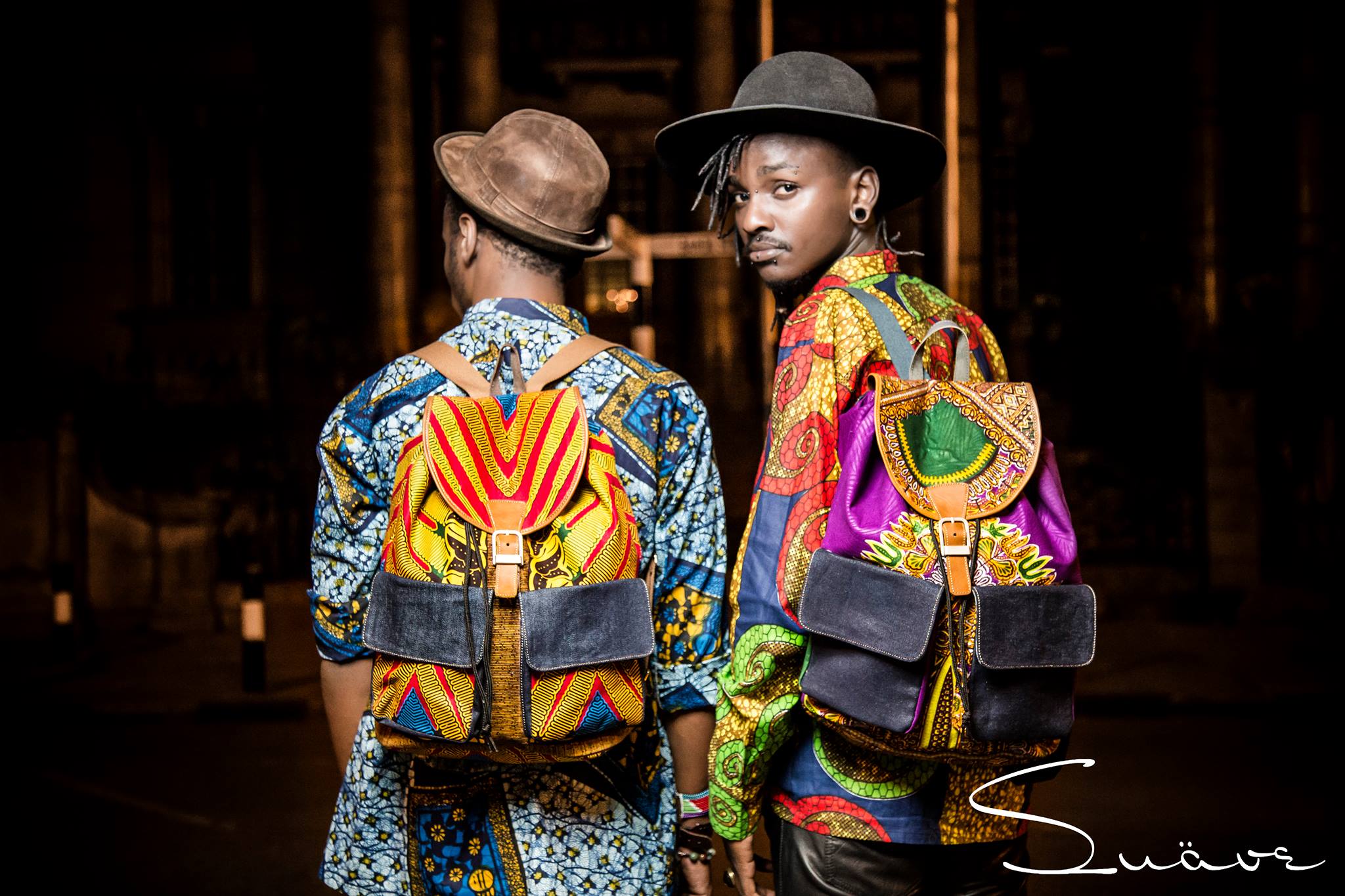
Suave Kenya was founded by Mohamed Awale in 2013. Gikomba Market, the largest open air market in East Africa, sparked a unique idea for the Kenya designer.

Over 100,000 tonnes of used clothing streams into Kenya every year, most of which would naturally end up in a landfill.

https://www.instagram.com/p/B50NwQtnw97/?utm_source=ig_embed

Suave Kenya stems from the belief that used unwanted garments can be repurposed and given a new form. Rummaging through discarded denim, the largest amount of unwanted fabric, the source material for most of the bags was decided.

https://www.instagram.com/p/B8OvLXGHmap/?utm_source=ig_embed

A tiny operation with 2 staff members at its inception, Suave Kenya blossomed into a fully-fledged brand that works to end the continuous cycle of unwanted apparel in landfills.

The bags produced by Suave Kenya are crafted with practicality in mind, and their biggest supporters are the new eco-conscious generation.

The Process

https://www.instagram.com/p/CIViMY4nKl7/?utm_source=ig_embed

Sorting Process
What goes where? Denim is always our first choice but we’re constantly experimenting with an array of fabrics. From silk shirts to leather jackets, if it’s interesting enough, we’ll definitely find a use for it.

Preparation, Ripping and Cutting.
The destruction before rebuilding: This involves lots of cutting, ripping and tearing apart. The aim is to creatively get the most out of the former (article of clothing)

Bag Making Process
The destruction before rebuilding: This involves lots of cutting, ripping and tearing apart. The aim is to creatively get the most out of the former (article of clothing)

Content courtesy of Suave Kenya & Nairobi fashion hub

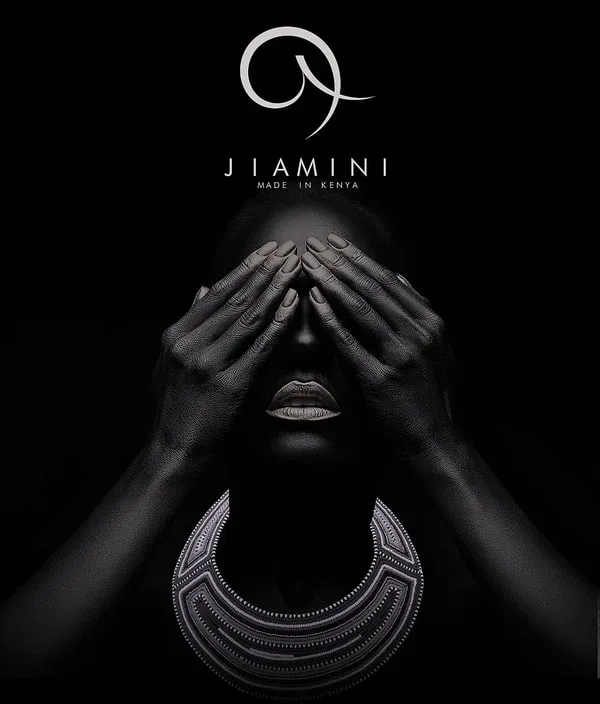
Jiamini Kenya Fashion Accessories Brand

Jiamini is a family run, Kenyan based Fashion Accessories Brand meaning believe in yourself in ‘Swahili, founded in 2016, on the belief of preserving its Traditional African Heritage.

Jiamini’s vision, through its innovative designs and use of renewable resources, seeks to combine timeless traditional technique, craftsmanship and heritage with a touch of modernity, manipulated in the construction of its delicate beaded embroidery and weave. Each piece is developed around the idea of comfort, complementing the body’s feminine form and grace.

The Brands one of a kind pieces are a reminder and encouragement to women of who they are: Bold, Brilliant, Confident, Courageous, Strong, Sensual, Liberated and more. She’s an enigma to most and a balance of delicacy and strength to those who come across her path. It’s the pep in her step, the subtle elegance she carries herself with and the silent confidence that fascinates a crowd.

Her precious Armour, ‘JIAMINI’, around her body, that only she knows the true significance of. She never forgets her roots, the broth that runs through her veins and that just like tradition, she is and always will be timeless. All that’s left to do is believe in herself.

Jiamini Kenya designs, while respecting the old – age traditions passed down from generation to generation are brought to life by skilled female artisans, Creating timeless staple pieces.

Their mission is to design an international wardrobe for today’s global woman while at the same time helping women rise above poverty through economic empowerment and employment, one stitch at a time through fashion.

Content courtesy of Jiamini Kenya & Nairobi fashion hub  

Nike Kondakiss Upcycled Parachute Fashions Help Educate Maasai Girls

The Greek/Danish designer and entrepreneur Nike Kondakis seeks to provide an alternative to the polluting fashion industry and is one of the talented designers featured in the soon to be released book Fashion Africa by AFG’s founder Jacqueline Shaw.

KONDAKIS is a responsible fashion company both socially and environmentally. Based in Kenya, KONDAKIS concept-collections are made from several unique materials such as Parachutes, Dead Wood and Peace Silk. Nike Kondakis creates stunning to-die-for garments fit for any Red Carpet event from these original recycled parachutes in Kenya. Her voluminous, goddess-like dresses are manufactured by local artisans and can be ordered on-line and shipped worldwide within 3-5 weeks.

The parachute line (she also designs accessories and knitwear) is available in an unexpected and wide range of colours such as snow white, lava orange, bush green, sea blue, pitch black and Barbie purple to name a few which are all the original colours, minimizing the energy used in an additional dyeing process and adding to the novelty of each piece. Stamps revealing when and who the parachute was made for and original parachute stitching are subtle details that make each piece unique.

Kondakis’ style is avant-garde and extravagant yet breathes Scandinavian minimalism , making her creations very wearable, modern and pure.

This is definitely visible in her knitwear line named the Natural Collection, which is made from un-dyed wool from Kenya and is spun and knitted by hand. Oversized sweaters and ponchos with a raw, natural look are made in unbleached white and black tones and are complemented by the accessories made from African “dead wood”.

Her accessories line consists of bangles, earrings and necklaces carved from wood which has died naturally or been broken off by wild game in the Kenyan bush. Her graphic pieces have a rustic touch, some surfaces still covered in bark and others polished and stamped with the Kondakis logo.

In 2002 Nike Kondakis started a three year program in responsible entrepreneurship at the Kaos piloterna in Copenhagen. After completing her education, she traveled to Kenya to set up a development project for 30,000 Maasai’s at the Lorika Foundation.

The project is now currently being run by local managers, but Nike still contributes to the education of Maasai girls who she says are often under prioritized when it comes to schooling. Her ambition is to create many more collections from different recycled materials, to sell more internationally and to employ 100 people in the coming 5 years.

Overall through their growing sales they want to take many more girls to school.

Kondakis has received a large amount of attention by international and local press for her design and work with the Maasai community, and has shown her collections on the catwalk in NYC, Nairobi and Sun City. If you happen to be in NYC, San Francisco or LA in September, you can book an appointment to meet Nike and view her collection.

Content courtesy of Africa Fashion Guide & Nairobi fashion hub

Rihanna’s Fenty fashion label to close down after 2 years

The slowdown of luxury fashion continues with the announcement that Rihanna’s ready-to-wear line Fenty has been discontinued.

The fashion line, launched in 2019, made history as the first luxury brand run by a black woman and effortlessly chimed with Generation Z’s values of inclusivity and diversity. It was also only the second luxury fashion house started from scratch by the French conglomerate LVMH after Christian Lacroix in 1987.

Although it comes as a surprise  Rihanna picked up the Urban Luxe gong for the brand at the Fashion Awards in 2019 – the end of the ready-to-wear arm of Fenty is in part a casualty of the pandemic.

The brand, known for footwear, denim items, and eyewear, has struggled with supply chain issues and the singer, who is based in the US, has been unable to travel in order to collaborate with the Parisian fashion team.

During a press conference in October, LVMH’s chief financial officer, Jean-Jacques Guiony, also hinted that they were having their share of teething problems.

“On Fenty fashion, we are obviously still in a launching phase and we have to figure out exactly what is the right offer,” he was quoted by the New York Times as saying. “It is not something that is easy. We were starting entirely from scratch. Obviously, we have the great help from Rihanna on this, but I would say it’s still a work in progress when it comes to really define what the offer will be.”

Despite other LVMH-owned fashion brands such as Dior and Louis Vuitton bucking the trend of decline during the pandemic, net profits for the parent company fell 34% in 2020, according to the WWD website.

Fenty’s final collection, a collaboration with the footwear designer Amina Muaddi, was in November last year and its last Instagram post was on 1 January.

The shuttering of the fashion arm of Fenty will not affect its side projects, the lingerie arm Savage X Fenty and Fenty Skin, which are both considered a success in their field: the former made $108m (£78m) last year and the latter, which is available in Boots, has made £26m in four months, according to WWD.

Content courtesy of The GuardianNairobi fashion hub 

South African Fashion Week 2021 to Go Digital

The event will take place online, between April 29 and May 1 2021, to showcase 26 runway shows by the likes of Lukhanyo Mdingi and Mmusomaxwell.

Like fashion events around the world, SA Fashion Week has adapted to continue connecting homegrown brands with buyers. Like its last hybrid season held in October, upcoming collections will be trans-seasonal.

In October, over 8,000 guests viewed the collections, which under pre-pandemic circumstances would’ve been seen by 6,000.

In the wake of Covid-19, the event has honed in on helping designers generate immediate sales. “It has been a superhuman challenge for these businesses to stay afloat and retain jobs in the absence of any trade or cash flows,” said Lucilla Booyzen, director of SA Fashion Week. “The opportunity to showcase their collections in preparation for summer 2021 is vital.”

South Africa Fashion Week is the country’s only business-to-business platform that allows brands to grow their collections. This upcoming season, the brands will be taking a trans-seasonal approach, best known as seasonless.

SA Fashion Week is also taking a larger focus on slow fashion to build on sustainable production. The country’s designers are calling for a “new fashion order” to create a more ethical fashion system.

Content courtesy of Business of Fashion & Nairobi fashion hub 

Three Kenyan Fashion designers join the Ethical Fashion Initiative

The Ethical Fashion Initiative, a joint venture from the UN and World Trade Organisation’s International Trade Centre, has selected three Kenyan brands – Katush by Katungulu Mwendwa, Suave, and Hamaji to participate in its second accelerator programme.

Each of the designers was chosen for their “commitment to sustainability” as they use reclaimed and organic fabrics to create their collections, as well as noting their country and upbringing in Kenya as heavily inspiring their work.

The launch of the Ethical Fashion Initiative Kenya Fashion Accelerator aims to highlight the distinct design talent within Kenya and follows the organisation’s successful launch of their nationwide accelerator search in 2019.

There will be a focus on the specific needs of African fashion brands, with this accelerator programme, with a business development approach that prepares its beneficiaries to become investment ready, to accelerate their business in the global marketplace.

Simone Cipriani, head and founder of the Ethical Fashion Initiative at the UN’s International Trade Centre, said in a statement: “The continued development of our designer accelerator programmes in Africa, provide a new generation of African design talent the opportunity to engage with the international market. Through education and mentoring we seek to equalise the playing field, giving exposure to the incredible talent that exists on the continent.

“Each region in Africa has its own unique creative voice. Being able to launch a programme dedicated to Kenya – the country where Ethical Fashion Initiative began its journey and where it has some of the most beautiful collaborations – is a wonderful opportunity to spotlight the creative visionaries that set this country apart.”

Ethical Fashion Initiative Kenya Fashion Accelerator to assist Katush by Katungulu Mwendwa, Suave, and Hamaji

The programme will help the selected brand expand their supply chain and scale up their production, source new products and develop their production team. Each designer will be assigned a production mentor, with whom one-to-one support meetings will take place, as well as additional mentoring and brand development from the Ethical Fashion Initiative team and industry experts.

The accelerator will also support the management and production of key designs for the first collection to be manufactured through experienced companies selected within the Ethical Fashion Initiative network.

In addition, the initiative will fast track the emerging African designer labels, through “identifying and strategising areas for growth” and funding towards developing a new product process or service. A diagnostic review of the business will also take place every season to assess progress and tailor the programme to best suit and benefit each business.

The programme will also help build brand value by helping each business understand investment, develop strategies for maximising brand equity, build a funding proposition and market themselves as an attractive investment proposition to angel investors or VC funds. Each designer will finish off the accelerator with an opportunity to pitch themselves to investors at a networking event.

Katush by Katungulu Mwendwa, founded and based in Nairobi, Kenya, is a leisure lifestyle brand offering seasonless, timeless, transcendent casual and semi-formal wear heavily influenced by her upbringing and surroundings.

The brand experiments with modern techniques, innovative fabrics and traditional methods, as well as working with materials that are organic and or as sustainable as possible, such as Tencel and Cupro. They are keen on working with cooperatives and businesses that have a greater impact on the lives of those within a given society.

https://www.instagram.com/p/B3ycp1ZHofh/?utm_source=ig_embed

Suave Kenya was founded in 2013 by Mohammed Awale from an idea sparked by numerous trips to a local thrift market, Gikomba Market, the largest open-air market in East Africa. While rummaging among heaps of oversized and discarded denim outfits, Awale discovered the source material for its bags, as it looks to end the cycle of unwanted garments ending up in landfills. The bags made by Suave Kenya are made with practicality in mind.

The final recipient is Hamaji, founded in 2017 by designer Louise Sommerlatte, it is a brand created around preserving ancient textile traditions and nomadic craftsmanship whilst empowering local small scale artisans in Africa. The brand creates a narrative of sustainability and conscious consumerism through its collections using natural fibres, botanical dyes, handcraft, embroidery and up-cycled vintage textiles. Hamaji is inspired by East African charm and embodies a spirit of nomadic femininity in pastel hues, free-flowing silhouettes and a delightful sense of elegance.

Commenting on joining the accelerator, Hamaji, said: “I feel hugely honoured and extremely excited to be a part of the Ethical Fashion Initiative accelerator programme, to have this opportunity to expand my knowledge and be mentored in the development of my brand in a sustainable approach with international and local expertise in Kenya.”

Written by Danielle Wightman-Stone

Photo: courtesy of Katush by Katungulu Mwendwa, Suave Kenya and Hamaji Studio
Content courtesy of Fashion United & Nairobi fashion hub 


Can Made in Africa Transform the Continent’s Leather Industry to the Next Level?

Luxury labels in the West use the best of Africa’s leather. Now, African companies and designers want to build their own brands.

Winston Leather, a Nigerian leather brand, celebrated the biggest sales in its 30 years in business last June. The boost was thanks to a tweet in March from fashion historian Shelby Christie highlighting how its tannery, based in Kano, Nigeria, supplies leather to luxury fashion houses such as Louis Vuitton and Ralph Lauren.

https://www.instagram.com/p/CHTvJ-Wl1X1/?utm_source=ig_embed

The tweet resurfaced in June and prompted a flood of orders as the fashion industry sought new sourcing opportunities that supported Black businesses. And the single tweet put right some misconceptions about the quality of African leather goods.

“It was like a stamp of approval,” says Winston Udeagha of Winston Leather, which is a subsidiary of Udeagha’s wonderfully titled parent company, God’s Little Tannery. “What people don’t know is that much of the leather used around the world actually originates in Africa,” he notes.

“For them, if luxury fashion houses were using our leather in their finished goods then they could buy purses and shoes from us and trust our quality.” Udeagha has been in the leather manufacturing business for decades, but his company only decided to produce its own brand leather accessories in 2018 when he realized the potential of a growing market of fashion consumers within and outside Africa who were keen to buy African.

For a long time, African leather has remained unappreciated by the consumer despite a shift in consumer consciousness and pressure for greater transparency in every aspect of the fashion business. EU laws stipulate that the country of origin of finished goods is the country where the final production process occurs.

This has enabled luxury fashion houses that source raw leather from Africa, and even begin the production process there, to tag their products as, for example, Made in Italy. This practice has helped European manufacturers to avoid using a Made in Africa tag, a process that has kept Made in Africa leather goods under the radar and struggling to build an image for quality and excellence, in Africa itself as much as abroad.

https://www.instagram.com/p/CKhK7HnHqPf/?utm_source=ig_embed

Underfunded but determined, African designers are leaning on Africa’s vast resources and capacity for sustainable fashion to change the perception of African leather and promote it to a broader market. While leather is losing ground with many sustainability-focused designers around the world, African-based production offers a more palatable solution.

Problems like animal cruelty, wastewater and use of harsh chemicals in the tanning process are alleviated by under farming, reduced consumption practices that encourage reuse, and fairer livestock farming with provision of meat as primary focus, and then by abattoirs that help reduce shipping emissions.

Initiatives like the Green Tanning Initiative and metal-free leather in Ethiopia and other East African countries are also working to educate tanners on less toxic methods of tanning and dyeing leather and push for more environmentally friendly policies in Africa’s leather production.

Sending African leather abroad

The best quality African leather has tended to go to export markets. In response, some of the most interesting African leather goods companies have learned to adapt and use local material resources to the full.

“We focused on what we could do better,” says Nardos Tamirat, co-founder of Ethiopia-based Tibeb Leather Works. “We knew we were in a different market and our value proposition was different. For us, that is our leather and traditional Ethiopian designs.”

The company uses leather that would otherwise be discarded as flawed by many premium houses to create leather purses and other accessories. By keeping the leather as natural as possible with its flawed skin, Tamirat believes Tibeb stays true to its Ethiopian origins.

Tamirat’s strategy is shared by Mark Stephenson, managing director of Sandstorm Kenya. “African leather designers and manufacturers don’t have the resources to efficiently mass produce like, say, China can. The technology isn’t there yet in Africa. And so for Sandstorm, the question is how can we use technology to create more jobs for artisans and tanners and optimize value within Africa using slow fashion,” he says.

Basic infrastructure, such as the best machinery for drying, is lacking in parts of Africa. Much of the leather produced in Africa is exported out of the continent to be finished and then imported back as finished goods. The cumulative effect of this is to leave the industry in a state of underdevelopment.

Frustrations abound. “When I started my business, I researched about African leather because I wanted my shoes to celebrate African artisanship as much as possible,” says Nigerian designer, Tina A, founder of Kkerelé.

“I found that the leather sold in Mushin market, where most accessory designers in Lagos are based, is imported from Europe. This didn’t make sense to me considering the tanneries we have in Africa and our cattle farming.”

A problem for African designers is that tanneries tailor their business policies to fit the demands of their largest buyers, which are often Western businesses. This leads to high minimum order quantities, shutting out African designers with their much smaller orders.

Tamirat explains that in its first few years of business, Tibeb relied on scraps from the tanneries because the company couldn’t afford to buy in bulk in the way that Ethiopian tanners preferred.

Promoting African Leather

African designers have the potential to play a central role in developing a new image of quality for Made in Africa. Tibeb Leather Works is partnering with businesses in Ethiopia to create educational materials that help young designers understand Ethiopia’s design history and lean into designing using materials sourced in Africa and sourced sustainably.

Designers like Nigeria’s Femi Olayebi of Femi Handbags are also creating initiatives, such as Lagos Leather Fair, to connect tanners to designers and buying groups where small designers can band together and buy in bulk from tanneries with high minimum order quantities.

Meanwhile, Nigeria’s Winston Leather has already responded to the needs of smaller designers by evolving a business model enabling designers to buy as little as 10 square feet of leather hide rather than the minimum quantity of 20,000 square feet previously required.

The potential is there, but plenty of work remains to be done. “To grow Africa’s leather industry, tanners and manufacturers cannot focus solely on getting Western designers and luxury houses to use their leather,” says Stephenson of Sandstorm Kenya, who has sat on Kenya’s Leather Development Council. “They must also make themselves accessible to African designers and brands who can tell and celebrate an authentic story of African artisanship from cattle, sheep and goat origins to the finished leather goods.”

Written by Adedoyin Adeniji

Content courtesy of Vogue Business & Nairobi fashion hub

Fashion Statements Made during Inauguration Ceremony of Joe Biden and Kamala Harris

Before any swearing in or speeches made on Inauguration Day, the clothes spoke. Beginning on the eve of the inauguration of the 46th President of the United States, then-President-Elect Joseph R. Biden, and Dr. Jill Biden, and then-Vice President-elect Kamala Harris and Douglas Emhoff began telegraphing their messages with their outfits, the bigger statements, as usual, emanating from the women.

For a late afternoon vigil to honor the 400,000 American lives lost to Covid-19 on Tuesday, Dr. Biden and Vice President Harris chose to wear emerging American designers, the former clad in a full violet look by Jonathan Cohen Studio, the latter in a camel coat classically cut but for the most subtle of novelty in the gentle wave of the back flap by Pyer Moss’s Kerby Jean-Raymond. Both women were dressed for the occasion, which is to say they were dressed up and appropriately so for their respective roles and personal styles.

Cohen and Jean-Raymond are two young, New York City-based designers whose names are well known within the American fashion industry, famous for their unquenchable thirst for new talent, yet they are far from household names. Donning garments by such designers for such a momentous occasion signals support of homegrown design, and could be an indication that Dr. Biden and Harris are open to inheriting Michelle Obama’s fashion mantle of support for the American designers big and small. At least to some degree.

The message carried through to Wednesday’s main event when Dr. Biden appeared in an ocean blue overcoat and matching dress by the small New York-based label Markarian, led by the designer Alexandra O’Neill. Vice President Harris wore a tailored coat and matching dress in a brilliant shade of purple as well as her signature pearls, this time designed by Puerto Rican designer Wilfredo Rosado, and heels by the Los Angeles designer Sergio Hudson by another New Yorker, the 27-year-old designer Christopher John Rogers.

On an inauguration day unlike any other in the 232 years since the custom began, the clothes, just like everything else incorporated into the ceremony, were chosen carefully. No less an emblem of the American dream than Ralph Lauren dressed President Biden and Emhoff.

O’Neill is a young female designer, who, according to a press release from the brand, customized the wool tweed coat with crystal and velvet trim, matching dress and face mask, in a shade of blue chosen “to signify trust, confidence, and stability.” It was feminine and elegant, pretty but not too dainty, just like Dr. Biden.

Still, the look was overshadowed by Vice President Harris. How could it not have been? The historic nature of her role and her commanding, dutiful presence demanded it.

She chose to wear strong, tailored, confident pieces by Jean-Raymond and Rogers. They weren’t exactly unpredictable. Rumors had been circulating for weeks that Harris was planning to wear clothes by Black designers and Jean-Raymond and Rogers are two of the most talked-about names on what is sadly an all-too-short list.

But things are changing. Just look at Harris American hope incarnate.

Content courtesy of Town and Country & Nairobi fashion hub 


Made in Kenya: Exclusive interview with Cynthia Kimathi Founder, Creative Director at The Seamstress and African le’kiondo

Cynthia is a mother and a fashion enthusiast; who doubles up as a self-taught fashion designer, I have loved fashion and style for as far back as I can remember.

I used to accompany my mother to clothes stores every Christmas holiday to choose outfits for my siblings and me, however, I must admit that my Art and Design teacher in State House Girls High School gave me the extra push needed, from whence I learned all the basics myself.
My fashion line is The Seamstress. A seamstress is a woman who sews and one who earns her living from the craft. That is simply who I am.
I officially launched The Seamstress on November 28th, 2020 on the JW Runway Show, but we had been working on the brand and first collection for at least a year beforehand.

Oscar Alochi: Can you describe The Seamstress, the idea and concept as if I knew nothing about it or the market it is in?

Cynthia Kimathi: The Seamstress is purely a ladies-wear fashion line. During our launch, we started with the collection Dusk to Dawn, which is glam wear for evenings and events. But we are not all about evening gowns. We are a one-stop-shop for all women wear; ranging from casual, office, and streetwear, lingerie, mature looks, and older women, among others.

The brand concept is to release quarterly collections (mid-February, end June, end September, and mid-December) that will aim at introducing new designs and aspects into the fashion market. The collections are all pre-planned beforehand, with every design passing through a set of criticisms from The Seamstress team prior to the final vetting.

This is because the creative side of me sometimes needs to be controlled if we want to make functional outfits.

This February, our aim is to release our second collection just before Valentine’s.

OA: What were you doing before The Seamstress, and what motivated you to start the business?

CK: I have been running African le’kiondo, which is a subsidiary brand just like The Seamstress. The brand focuses on making authentic Africanised bags that are environmentally friendly as we source raw materials and labor locally.

Not only that, but it has been a great instrument in empowering women in Meru County by providing them with an avenue to expand their creativity, put food on their table, and have a safe space to talk about their issues.

Just like African le’kiondo, I started The Seamstress out of mere frustration in finding an outfit for myself, a great motivator. During my participation in a national pageant in 2019, Mrs. Universe Kenya as the current 1st Runners Up, it took me weeks to get an evening gown I liked.

This was simply due to all the outfits looking the same, plus they did not look very functional in the sense that I kept wondering where else I would wear the outfit, and how I could style it to look different every time. This predicament gave birth to The Seamstress fashion line.

https://www.instagram.com/p/CIr-KvcB_tV/?utm_source=ig_embed

OA: What techniques do you use? Tell us about the process.

CK: At The Seamstress, we start with a designer’s consultation, This consultation includes detailed discussions with the client ranging from color choices to fabric choices.

The client then receives three (3) designs and chooses from them. The duration from consultation to delivery also depends on design and details. The sewing process differs and the details would seem quite boring for now.

But I also add a lot of accessories to my designs to give them a 3D effect, with such pieces ranging from flowers, beads, etc, which aids in having my outfits turn heads positively.

OA: How did you learn/master this technique and why do you use it?

CK: As previously mentioned, I received basic art and design training from my high school days. In addition to this, my team and I do a lot of research, and I spend the better part of my mornings learning online.

I use this technique as it keeps me on my toes on what is currently trending in the fashion space, what trends could be making their comeback, plus the added benefit of attaining inspiration.

OA: What challenges did you face?

CK: Being a designer, one has to pump in a lot of finances before reaping anything, therefore sometimes you can be financially constrained especially as a start-up and a new name in the fashion industry.

In the Kenyan market, as much as we are now beginning to accept Kenyan designers, we are not yet there. The market still prefers ‘ready-made’ outfits from boutiques for designer outfits. Therefore, oftentimes clientele does not understand the business model especially the need to pay a Designer’s Consultation Fee.

Growth is gradual and sometimes the audience is not as receptive as imagined, but we hope for better days and are positive on the same.

The biggest challenge has however been letting go of clients who wish us to replicate outfits they find online. It is a difficult task at times explaining that we do not replicate, we create.

OA: How did the obstacles make you feel?

CK: Frustrated at times, excited at others. It is bittersweet. The challenges however motivate me, helps me find new ways of approaching things, and elevates my thinking whilst tickling my creativity.

OA: What were your achievements?

CK: The JW Runway Show is the most recent highlight since the launch. In addition, I have dressed beauty pageant judges, taken part at the end of year party for WICCI (Women’s Indian Chamber Of Commerce and Industry – Kenya Business Council) as well as having the honor of dressing an artist for their upcoming music video to be released this February.

It has just been a month and a half and we feel positive about achieving even bigger this quarter.

OA: Favourite moments?

CK: The launch at the JW has to be the highlight so far. The runway took me back to my old modeling days and I was overwhelmed by how far I have come. Seeing my pieces on the runway and how receptive the audience was to them, blew my mind away.

In some way, I felt validated that I might be on to something really amazing.
An added advantage is that I get to travel more now, another passion of mine, as I do deliveries and have one-on-one discussions with clients.

OA: How do you get dressed in the morning?

CK:  I am a casual dresser. Half the time, you shall find me in jeans and a t-shirt. Whenever I have meetings and glam events though, that is when I put my mind into the dressing.

OA: What’s your take on the Kenya fashion industry?

CK: The Kenyan fashion industry is impressively growing fast.

We are seeing Kenyans being dressed by Kenyan designers for events, and the only way we grow is by supporting our own.

The pioneers have done a great job in growing the industry, but so have media personalities and bloggers like yourselves. You have given designers and fashionistas a platform to express themselves in terms of marketing to the world at large.

OA: How different is the Kenya fashion industry compared to East Africa and Africa’s fashion industry at large?

CK: Our rich culture already sets us apart. The Maasai shuka for example has been widely accepted and has found itself in some international design houses, and so has the kikoi.

OA: Any future collaboration with Kenyan or International fashion designers?

CK: Yes. I am hopeful on this front. Maybe Neomi Nganga will read this and we get to do something.

OA: If you were given the opportunity to work with a local or international fashion designer who will you love to work with?

CK: Locally, Neomi Nganga of Style By Neomi. She has revolutionized plus-size fashion, as I find her designs sexy and eye-catching.
Internationally, Zuhair Murad. He is a genius, so daring with his technique. He always delivers utterly unique and dramatic masterpieces.

OA: What are your thoughts on fashion in Africa?

CK: It is growing tremendously fast. Countries like Nigeria and South Africa are already making enough noise in the fashion industry home and away.

OA: What has changed during this period of Covid-19?

CK: Most fashion designers have started to focus more on online marketing strategies.

Personally, the pandemic has given me room to magnify my creativity and read more. Never did I think I would be designing masks for instance.

OA: How has The Seamstress adopted the new technology virtual fashion show during and after the Coronavirus pandemic?

CK: We will be doing Instagram and Facebook live for virtual shows whenever we release our new collections.

OA: How are African fashion designers influencing fashion in the western world?

CK: Most African designers like pomp and color, and lately we have seen more African prints on the red carpet, as the Western world is already recognizing our African designs.

This can even be seen in as diverse an environment such as Hollywood blockbuster films like Black Panther, where they consulted with African designers for the costume designs.

OA: What can the Kenyan fashion industry learn from the western world?

CK: Owning our products. The Western world has a lot of acceptance and loyalty towards its designers. We should borrow a leaf from that and grow our own African designers.
We can also aim at having more fashion weeks and shows to call for upcoming designers to showcase their outfits, as I believe we have so much talent to offer.

OA: Over the last few years have you noticed any significant changes with the African fashion trends?

CK: Yes, I have. There have been some significant developments. We are seeing more African designers, models, and outfits on magazines and social media platforms, which is a clear indication that the perception of African designs has shifted progressively.

OA: When dealing with Africa is it important for the fashion world to be ethical and socially responsible, and put in place strong corporate social responsibility governance?

CK: Yes. We can’t just take and not give back.
Sustainable fashion needs CSR. It helps build relationships with consumers and stakeholders, and it helps to show the market space precisely what the designers are doing and the positive effects their work has in Africa. Let us never forget that our consumers appreciate transparency.


OA: Tell us about The JW Show or Kenyan Fashion week and your experience at the Show.

CK: The JW show is an amazing platform for upcoming designers to showcase their outfits and for seasoned designers to release their collections. The panelist choice was also a wise one; we got to get first-hand information from fashion icons and legends in the industry.

They discussed different parameters in the fashion industry and gave solid advice on how to be fashion-forward and run a house as a business.

OA: Where can we find your designs?

CK: We are currently based online.

Facebook: The Seamstress.ke
Instagram: theseamstress.ke
Facebook: African Lekiondo
Instagram: african.lekiondo
Mobile number: 0101704786

Here you will find our recently released collection Dusk to Dawn and some outfits made for our clients.

OA: Share with the audience your social media platforms or a website

CK: Our Social platforms

Facebook: The Seamstress.ke
Instagram: @theseamstress.ke
Email: theseamstress.ke@gmail.com

OA: What does eCommerce mean to you and your business?

CK: eCommerce means everything! Our business is purely online based.
We are however currently developing our website, which will give us the extra push in the eCommerce world

OA: Do you think eCommerce is important for African fashion designers that are trying to get recognized and reach a global market?

CK: Of course, it is! Ecommerce has opened doors for many businesses locally and globally. It is safe to say that eCommerce is an essential tool in the fashion industry in this modern time.

OA: How does your strategy change when running an online store to an offline store?

CK: When using an Online-to-Offline (O2O) Strategy in our business, both channels share similar significance and importance to The Seamstress in helping us achieve our success.

The Online Channels shall be helpful in widening our reach to not only local stakeholders, but internationally too, through digital marketing and advertising, and draw them into our physical store.

Whilst using the Offline Channel for a physical store, location is our primary strategy as we would wish our discerning customers to feel welcome in our brick-and-mortar when they come for measurements, fittings, and even collecting of their goods.

Finally, due to our industry being fashion, our clients still prefer to physically see, and touch and feel, our outfits when they want to make a purchase, especially if they are first-time buyers.

OA: Where do you see African fashion in the next 5 to 10 years?

CK: I see most celebrities accepting African fashion and embracing it internationally. I strongly believe that we shall be seeing more African designs in the Oscars and Golden Globe Awards amongst other international platforms. We have so much untapped talent and we are about to take the industry by storm.

OA: What 5 pieces of advice would you give to young African fashion designers wanting to enter the fashion industry?

CK: My Advice to young African designer

  • The world is your oyster. All you have to do is spread your wings.
  • Success is not experienced overnight, put in the work and it shall surely come.
  • Social media likes do not equal sales. Clients will buy even without liking your pictures.
  • Every time you feel lost, remember why in a world where you could be anyone you decided to be a designer.
  • Always be true to yourself.

OA: Is there anything else you would like to add?

CK: I would like to thank you for giving me and The Seamstress fashion line by extension, the opportunity for this interview and for deeming us worthy of it. When the names of people and organizations that led the Kenyan fashion industry to be recognized worldwide will be written, yours shall surely be there.

Content courtesy of The Seamstress, African le’kiondo & Nairobi fashion hub 


Michelle Obama Chose a Symbolic Outfit for Inauguration Day of Joe Biden and Kamala Harris’s swearing in ceremony

The former First Lady dressed for the historical importance of Joe Biden and Kamala Harris’s swearing-in ceremony.

If anyone could handle the pressure of dressing for this historic Inauguration Day, it’s former First Lady Michelle Obama. As the first Black First Lady, she has a better understanding than most of the pressures Vice President Kamala Harris will face as the trifecta of first woman, first Black, and first Asian American Vice President of the United States.

And with that comes the responsibility of what to wear. It isn’t mere superficial vanity, Obama expertly deployed her fashion early on to share her values and promote emerging designers. “It seemed that my clothes mattered more to people than anything I had to say,” she told the New York Times in 2018. “Optics governed more or less everything in the political world, and I factored this into every outfit.”

On January 20, she arrived in a burgundy coat and jumpsuit cinched with a gold belt by Black designer Sergio Hudson and a black face mask. Hudson, an up-and-coming designer who made his debut on New York Fashion Week in February 2020, has designed looks for Obama’s Becoming book tour and at the Essence Festival and his clients include celebrities like Rihanna and Beyonce.

Kamala Harris wore Sergio Hudson shoes to the inauguration with her outfit by Black designer Christopher John Rodgers.

For President Barack Obama’s first inauguration in 2009, she wore a sparkling gold sheath dress and coat by Cuban-born American designer Isabel Toledo for the presidential swearing-in ceremony. There was the color: sunny and full of optimism. And there was the designer: Toledo immigrated to the U.S. at age eight and went on to fulfill the American dream of becoming a successful fashion designer.

In 2013, she wore a Thom Browne dress and coat, polished and businesslike. And of course, there were the stunning gowns for each inauguration, both designed by Jason Wu. It is clear from these examples alone (and there are many more) that Obama artfully represented American designers of all races and all genders, particularly championing emerging designers.

As the years went on, her approach became dubbed “sartorial diplomacy,” drawing comparisons to Jackie Kennedy, who took a similar approach, although with fewer political landmines to navigate.

Content courtesy of Town and Country  & Nairobi fashion hub 

A Slay Queens’ Guide To Starting Over

It is the only way to live life and, makes it harder for enemies to predict your moves because you remain in motion. 


People love saying that you should not burn bridges because you might have to cross them later. Well, they lied. A slay queen will always have time to build new bridges no matter how many houses get scorched as she ascends into power. No-one is born to be as fabulous as you. So stay like an ever-burning flame. 

So it is a new year and, it’s time to get rid of what no longer works, clothes, friends and family members. It’s time to usher in 2021 like you mean business and claim it all for yourself. However, you can’t quit your job because HR asked you to tone down your fashion sense. They just don’t understand that Rihanna is your ultimate fashion muse. I mean flawless makeup isn’t cheap. Also, who wants to move out of Kitisuru mid-month? It’s hurting my pores just thinking about it.


So with starting over. Start with your fashion sense. Every year, some items go out of fashion. So they need to be destroyed because you can never afford to be a fashion victim. Burn them, throw them or donate them. However, always remember that some pieces are classics and will always work. If you’re having an issue separating the wheat from the chaff. You can always hire a personal fashion stylist but make them sign a non-disclosure agreement. Nobody needs to know that you’re secretly a B yet you floss that you’re a full C-cup in all your IG posts.


Speaking of IG, detox all your social media handles. If it doesn’t make sense anymore then either archive it or delete. Never forget that people are itching to cancel things and being in a cancel hashtag is never a good thing especially if you’re still on the market.


Realise that some friendships outgrow each other and others, just die with time. It is only natural. So review your friendships, one by one as you vet out, who still falls in the slayers’ code of ethics. Never toss out the frenemies though because you never know when you might to have to step on one to get a fancy invite to a social event.


If your partner is finding it hard to keep up with the times. It might be time to cut them loose and start all over again. You might end up dating way too many frogs, but your wardrobe will love the upgrade. Besides. you can never have too many handbags, stilettos or jewellery.


However, sometimes, things do not always go well. 


With family, it might be trickier to toss them aside since they are your flesh and blood. Lol. I’m just joking. Start over with whomever you want because you only have one life. Feel free to delete, subtract or multiply depending on your mood. Plus, when, it’s time for you to go six feet under, you’ll make the journey alone. So you can only trust yourself.


Forget people that tell you that starting over is the hardest part. They don’t understand that before beautiful butterflies emerge from the cocoon they begin as caterpillars. So your life is always in a state of change and no-one has earned a permanent spot.


Ad