Tuesday 21st of April 2026

Nairobi, Kenya

Cardi B Attends Schiaparelli’s Paris Fashion Week Show in Sleek “Cardi Couture” 2023

At the Schiaparelli Haute Couture show on July 3 during Paris Fashion Week, Cardi B was in a league of her own in terms of fashion. The “WAP” rapper looked stunning in a dress by the Italian label that Schiaparelli herself labeled “Cardi Couture” on Instagram. Cardi attracted attention while donning a head-to-toe black outfit and flashy gold jewelry, in part because of her large, feathery black jacket.

While her scene-stealing coat was difficult to look away from, Cardi looked equally stylish when she took it off to show a form-fitting, sleeveless black dress with a touch of gold embroidery at the bust and a corset back with two rows of buttons.

She accessorized her look with two stacks of golden bracelets, two black head wraps (a Schiaparelli staple), and gold earrings in the form of human ears. As if that weren’t remarkable enough, she also wore earrings that had pearl decorations on them.

Her followers shouldn’t be shocked by Cardi’s stunning appearance. Although many people only know her as a rapper and businesswoman, she is also a rising fashion star. The mother of two isn’t afraid to test (and create) new trends, whether she’s captivating crowds at the Met Gala or donning vibrant catsuits. Cardi wore a dress to the 2023 Grammy Awards that had been on the runway at Paris Fashion Week just five days prior.

Cardi isn’t hesitant to dress in high fashion in everyday situations, even though exquisite couture is typically only worn on catwalks.
To see her Schiaparelli appearance from every perspective, look forward to the gallery!

With a number of eye-catching outfits, the “Bodack Yellow” rapper recently transformed the streets of Paris into her own private runway.
Fans, however, would not have anticipated anything less from the 30-year-old, particularly during a time like Paris Fashion Week.
Case in point? Cardi grabbed attention on July 3 when visiting Schiaparelli’s fall/winter 2023/2024 haute couture collection in a black strapless gown with a curve-hugging design in velvet fabric and sparkling gold accents.
She accessorized the look with an oversized feathered coat, black velvet headgear, and gold earrings in the shape of ears with pearl bangles.

Content courtesy of Pop Sugar & NFH


The Road To Success: African Creatives Are Reshaping And Redefining The Global Fashion Landscape In Africa Fashion

Africa Fashion The Journey To Success, African Creatives Shaping And Redefining The Global Fashion Landscape.

The red ground and blue-roofed homes are given a lovely glow as dawn breaks through Canchungo. Last winter, while bringing school supplies to the neighborhood kids, the stylist Wilow Diallo came discovered this community in the coastal area of Cacheu, Guinea-Bissau.
In addition to the vibrant color scheme, he was mesmerized by the residents’ unique sense of style and the sight of several generations gathered under the morinda trees.
He determined that this would be the ideal setting for a photo session exhibiting the “talent, innovation, and diverse perspectives of black creatives who are shaping and redefining the global fashion landscape.”

Africa has a population of more than 1.4 billion people, thousands of societies, and more than 2,000 languages; the borders between its 54 countries, as well as everywhere else, can hardly contain its multitudes.
According to Dr. Christine Checinska, the curator of the recent V&A exhibition Africa Design (now on display at the Brooklyn Museum through October this year), “The beauty of African fashion is that it is as varied as the continent itself.” “The aesthetic vocabulary of people is varied.

Global Africans have a respect for the skill that goes into creating a garment, print, or piece of weaving that has perhaps been lost in the global north. And there is a collective strength among designers, as they desire to enlist others in their quest for success.

The ways that black creatives incorporate African customs into their work particularly affect Diallo, who was reared in Senegal and now resides in Paris. He mentions the Cameroonian dancer and fashion designer Imane Ayissi, who transforms traditional Burkinabe woven fabric Faso Dan Fani into cocktail dresses and Ghanaian Kente fabric into cocoon coats. He cites the Nigerian company Emmy Kasbit, which is well-known for using fabrics from the Igboland region called Akwete, and Lagos Space Programme, winner of this year’s Woolmark Prize, whose collections feature lace and brocade motifs applied to clothing using the resist-dyeing method known as Adire, which has its roots in Yoruba culture.

Diallo, a Senegalese native who now calls Paris home, is particularly struck by the ways in which black artists incorporate African customs into their creations. He mentions the Cameroonian dancer and fashion designer Imane Ayissi, who creates cocoon jackets out of Ghanaian Kente fabric and cocktail dresses out of Faso Dan Fani, a traditional woven fabric from Burkina Faso.
He cites Lagos Space Programme, the winner of this year’s Woolmark Prize, whose collections feature lace and brocade motifs added to clothing using the resist-dye technique known as Adire, which has its roots in Yoruba culture, and the Nigerian brand Emmy Kasbit, which is renowned for its use of Akwete textiles from the Igboland region.

Thebe Magugu of South Africa is another. Magugu has collaborated with Dior on a capsule collection since becoming the first African to receive the LVMH Prize in 2019, and she reinvented a Valentino couture gown for Vogue.
These partnerships have been crucial for visibility. It gives visitors a familiar lens through which to view African fashion, he claims. “Bigger brands are becoming more respected.

The most successful partnerships benefit both parties.
Further explanation is provided by Adama Ndiaye, the Senegalese entrepreneur and creator of Adama Paris who organized Chanel’s Métiers d’art exhibition in Dakar last December.

“When a great luxury brand like Chanel comes to us with open arms asking to collaborate, it says that African fashion is at the top of its game,” she adds of the occasion that honored regional craftsmen and craftspeople.
“It was very successful. Africa is no longer seen as a continent that has to be “helped”; we now own our story and no one else does.
Twenty years ago, Ndiaye left her banking job in Paris to launch both her brand and Dakar Fashion Week. Back then, “nowhere was showcasing African fashion,” she explains. “We invited foreign designers from all over, including Moldova and Brazil, to learn about our culture and establish a platform for their work.

Now that there are so many talented African designers, we only pay attention to their work.
The exponential rise of Sub-Saharan Africa’s flourishing garment and footwear business, which is estimated to be worth $31 billion, is reflected in events like Dakar Fashion Week and Lagos Fashion Week, which debuted a decade ago.
Ndiaye claims that a major obstacle for designers is a lack of funding. She is currently attempting to establish a fund for up-and-coming designers.
In June, the same week that he reopened his worldwide internet store, Johannesburg faced power and water disruptions.
Magugu emphasizes the critical infrastructure changes that need to be implemented.

“The African fashion industry is being truthful about the harsh realities that exist here,” claims Magugu. We are no longer presenting this idealized business of African fashion, which I adore because it means we are dealing with reality.
The African Development Bank has recognized the creative industries, including fashion, as a sector with enormous potential growth as part of its objective to invest in high-growth industries and support women’s economic empowerment. Currently, only 1.9% of the world’s manufacturing takes place in Africa.

Although they may not be based in Africa, Diallo wanted to work with fashion designers whose roots provided them with a unique perspective.

When discussing the history of the African diaspora in London, Grace Wales Bonner draws on her Caribbean heritage and her understanding of black culture, while Priya Ahluwalia’s namesake label combines elements from the designer’s dual Indian-Nigerian heritage, as seen in her SS23 Africa is Limitless collection. In honor of Africa, “a vast wonderland of cultural innovation,” as the show notes put it, her research included vintage museum blankets from Tunisia, album covers from Côte d’Ivoire with exquisite Sapeurs and beadwork from Kenya and Rwanda.

Because of its constant emphasis on sustainability and preference for handcrafted or reused materials, like Emmy Kasbit, Ahluwalia shares a bond with African designers. Meanwhile, Diallo, Magugu, and Ndiaye all discuss how clothing is lovingly passed down from generation to generation in their own communities.

“Global African creatives build their collections in a more artistic way and they evolve,” claims Dr. Checinska. They are more thoughtful and not confined by the seasons. Sustainability is the starting point for many of them.

Focus is placed on people, resources, skills, and ultimately the earth, which promotes more ethical consumption.
She comes to the conclusion that the desire to build a sustainable fashion environment, as well as how they demand and exercise agency, are what truly unify African fashion creatives.

Milanca Figuereido, Angel Da Silva, Mari Seide, and Valentina Gomes are models.
Braima Djata is casting. Tânia Mário Gomes’s hair. Melissa Righi does makeup. Adam Storm, a photographer’s helper.
Assistant to the stylist, Jordan Renou Rohel. Paris, SW Studio for production

Content Courtesy of  Financial Times  FT & NFH


35 Black-Owned Fashion and Beauty Brands to Support for Juneteenth and Always

A holiday honoring the emancipation of enslaved African Americans is Juneteenth, which falls on June 19. #ShopBlack from Black-owned businesses is a fantastic actionable method to assist organizations fighting against racial injustice, in addition to educating ourselves, promoting conversations with family, friends, and coworkers, and donating to such organizations.

We’ve compiled a list of Black-owned fashion and beauty retailers so you may support Black business owners today and every other day of the year. Black company owners contend with the ongoing struggle against structural racism and racial injustice, which have pervaded American society for centuries, as well as with the daily stress of keeping a business afloat.
The importance of supporting these businesses cannot be overstated as we work to make systems in both our nation and the rest of the globe better.

The Black companies in the fashion and beauty industries that we appreciate are mentioned below. Learn more about these incredible brands by scrolling through them.

1. Andrea Iyamah
This striking and expressive clothes, swimwear, and resort-wear business is the work of Nigerian fashion designer Andrea Dumebi Iyamah. Her designs draw inspiration from natural components and incorporate daring jewel tones, which are influenced by her African ancestry.

2. Beauty Bakerie
Cashmere, the founder of Beauty Bakerie The cruelty-free makeup for lips, eyes, and face in Nicole’s line of cosmetics, which is inspired by baked delicacies, comes in a variety of colors. You have definitely seen items from this charming cosmetics line if you frequent Target.

3. BeautyBeez
Brittney Ogike created Beautybeez as a response to the dearth of Black haircare products produced in Los Angeles. Women of color can shop at Beautybeez for the greatest wigs, extensions, skincare, makeup, and hair care products. Additionally, visitors to Los Angeles can visit the flagship location, unwind in the on-site spa, get braids from on-staff hairdressers, or simply explore a space made exclusively for them.

4. SPF for Black Girls
Black Girl Sunscreen is a pioneer in developing sunscreen without the dreaded white cast that is left by other lotions. It was one of the first companies to develop sun protection specifically designed for deeper skin. The collection of perfectly transparent sunscreens moisturizes and shields skin with pigmentation.

5. Bolden
The California-based skincare line BOLDEN will help you achieve the best skin of your life and has been featured in publications including Cosmopolitan, The Cut, Forbes, and more. Its goods are vegan and free of animal testing, including its acne treatments, dark spot correctors, shine enhancers, and other cosmetics.

6. Bossy Cosmetics
Aishetu Fatima Dozie made the decision to found a beauty company that cares about how women feel, starting from the inside and moving out, after spending twenty years exhausted in corporate finance.
Bossy Cosmetics’ primary principle is to encourage ambitious women to feel well, look good, and do good all at once by providing them with ethically created beauty products.

7. Brandon Blackwood
Brandon Blackwood is a genius of fashion who creates statement-making bags, outerwear, and accessories. Megan Thee Stallion, a singer and style icon, is among the numerous admirers of his vibrant and colorful outfits.

8. Bread Beauty Supply
The founder and CEO of Bread Beauty Supply, Maeva Heim, creates clean recipes for co-wash and shampoo alternatives for kinky, curly, or coily hair.

9. The Brother Vellies
Brother Vellies, which was founded by Aurora James, draws its inspiration from conventional African design methods. World-renowned craftspeople from all around the world make their fashionable accessories.

10. Briogeo
Nancy Twine, the founder of Briogeo, draws inspiration from her grandmother’s homemade beauty recipes to develop performance-driven haircare products with healthy components.

11. ByChari
Everyone from Michelle Obama to Selena Gomez has sported the personalized letter necklaces from ByChari, founded by Jamaican-born jewelry designer, Chari Cuthbert.

12. Camille Rose Naturals
Janell Stephens, CEO and founder of Camille Rose has led the way in advancing inclusivity in the cosmetics sector since 2011.
As one of the most well-known and widely available Black-owned brands on the market, Camille Rose is currently sold at a number of retailers, including Amazon, Ulta, Walmart, Sally’s Beauty, Whole Foods, Walgreens, CVS, and others. The company sells a wide range of candles, bath and body products, as well as haircare items.

13. Coco and Breezy Eyewear
Eyewear by Coco and Breezy Corianna and Brianna Dotson are twin sisters who are also designers and DJs.
The biggest names in music, like Alicia Keys and Nicki Minaj, have worn their eyewear designs. The company sells optical and sunglasses.

14. EleVen by Venus Williams
The tennis core trend is still going strong for summer 2023, and who better to buy tennis whites from than champion athlete Venus Williams? Her activewear brand has plenty of adorable pieces you’ll want to wear on and off the court.

15. Fenty Beauty
Is there anything Rihanna can’t do? She has successful skincare and makeup businesses in addition to her lingerie and lounge lines. Although Fenty Beauty’s vibrant highlighters, hydrating toners, and other products are also deserving of the buzz, the company is most recognized for its industry-leading selection of foundation hues.

16. Flawless by Gabrielle Union
We trust Gabrielle Union with all things beautiful since she hasn’t changed one bit since she became a teen romcom star in the 1990s.
Affordable hair products are produced by her beauty company, Flawless by Gabrielle Union, for all hair types, textures, and lengths.

17. House of Aama
Designed by mother and daughter duo Rebecca Henry and Akua Shabaka, House of Aama’s timeless clothing and accessories convey the Black experience with storytelling and nostalgic, historical references.

18. Kim Kimble Signature Collection
Hollywood hairstylist Kim Kimble’s brand offers haircare, hair repair products, accessories, and styling tools great for curly hair textures.

19. KNC Beauty
KNC Beauty by Kristen Noel Crawley is where you can shop chic, star-shaped, retinol-infused eye masks and collagen-infused lip masks, both made with natural ingredients.

20. We Dream In Colour
From designer and illustrator Jade Gedeon, We Dream In Colour offers colorful, handmade statement jewelry inspired by nature. Celebs such as Jennifer Hudson, Kerry Washington, and Zendaya have worn her pieces.

21. Vitae London
The London-based watch firm, led by founder and CEO William Adoasi, creates classic, budget-friendly watches with a vintage flair.
With the help of House of Wells and Pen To Paper Ghana, each watch purchase gives solar lights or school uniforms to children in Africa.

22. Vernon François Haircare
The line of natural hair accessories, styling tools, and care products from celebrity hairstylist Vernon François is available.

23. Ustawi
The skincare line by Ustawi, which takes its name from the Swahili word for “wellness,” was created with melanin-rich skin in mind.
Abbott Elementary’s Sheryl Lee Ralph used the brand to get her complexion red-carpet-ready for the American Music Awards. The brand was developed in collaboration with board-certified dermatologists to give the most effective and safe products for your skin. For her trademark shine, singer Cassie also swears by the company’s vitamin C serum.

24. UOMA Beauty
UOMA is the home of cutting-edge makeup products made for everyone and was founded by former beauty executive Sharon Chuter, who is of Nigerian descent.
One of the line’s most notable products is the honor-winning Say What?! Foundation.
The foundation is offered in 51 hues and is available in six Skin Kins formulations, which are specially created to meet the specific requirements of various skin color groups.

25. Telfar
The New York-based unisex fashion line is founded by 2017 CFDA/Vogue Fashion Fund winner Telfar Clemens, who designs apparel, jewelry and the popular (consistently sold-out) Telfar logo shopping bags dubbed the “Bushwick Birkin.”

26. Sunday II Sunday
The founder, Keenan Beasley, created the haircare line Sunday II Sunday after taking inspiration from the ladies in his life who lead active, busy lives.
The formulation of the items includes active substances to replenish moisture loss brought on by sweat, accumulation, and environmental deterioration.

27. Savage X Fenty
This list would not be complete without discussing the clothing line of one of our favorite pop stars. The goal of Rihanna’s apparel line is to allow consumers to express themselves while looking and feeling beautiful.

28. Salone Monet
The Sable sandal style and the Jone pump style, both by Monet, come in six colors ranging from light to dark. Several celebrities, like Beyoncé, Gabrielle Union, and Keke Palmer, have been spotted wearing Monet’s essential shoes.

29. Riot Swim
Founded by Monti Landers, Riot Swim is where you can find sexy, minimalist-style bikinis and one-pieces.

30. Pat McGrath Labs
The legendary beauty mogul, Pat McGrath, has transformed the cosmetics industry with her cutting-edge makeup. Shopping from her website, you’ll have trouble not putting everything in your cart.

31. Nuele Hair
Dr. Christine Martey-Ochola and Anne Cheatham founded Nuele Hair, a company that enables women of all hair textures to achieve any hairstyle without the need for chemical relaxers or keratin, by combining their skills in biology and chemistry.

32. Nubian Skin
London-based Nubian Skin Ade Hassan established Nubian Skin in order to address the issue of the absence of naked underwear on the market for women of color. The company sells swimwear, intimates, and hosiery.

33. Moodeaux
Thanks to its pure ingredients, minimalistic packaging, and Instagram-worthy aesthetic, Brianna Arps’ up-and-coming business has taken off in the independent fragrance market. Her entire range of fragrances is focused on using the benefits of aromatherapy to improve your mood.

34. Mented Cosmetics 
When they couldn’t locate the ideal nude lip color for their skin tone, co-founders Amanda E. Johnson and KJ Miller started Mented Cosmetics. From their original nude lipsticks, Mented has extended to include all categories of cosmetics that provide hues for ladies with dark skin tones.

35. Mayvenn 
Diishan Imira, the founder of Mayvenn, was raised in a family of hairdressers and started the company to offer high-quality hair extensions in a variety of textures and colors.
The company also offers a seamless online shopping experience for the sale of wigs, bundles, frontals, and closures.
In several Walmart stores in Dallas and Houston, Texas, you can also stop by Mayvenn Beauty Lounges.

Content courtesy of ET Online & NFH


Top 10 African Traditional Attires That Have Gone Beyond African Borders

African traditional clothing has always been a beautiful, vibrant work of art, African attire has always made a statement, from the way it is made to the way it is designed and worn.
Some of these outfits have changed over time from their original state to a hybrid of the previous and present generation, while yet maintaining their distinctiveness.
Based on the designs and styles of their native countries’ clothing, they are easily recognized and grouped.
This proves that while traditional African clothing showcases the beauty of the continent, it also highlights the distinctiveness of particular tribes and nations.

African traditional attire practically vanished and was considered antiquated and out-of-date with the arrival and influence of the Europeans in Africa. But today, they are once again important.
African traditional attire is not just appropriate for ceremonial events and special occasions; it may also be worn to the office.
Here are 10 traditional African clothes from throughout the continent, along with information on where they originated.

1. Dashiki
The dashiki is one of the most widely worn African garments worldwide, however, it is especially common among West Africans and in some areas of East Africa.
The dashiki is a loose-fitting pullover shirt that is typically made from bright cotton designs with African influences or plain-colored textiles.
The name of the fabric, dashiki, comes from the Yoruba language and refers to a short-sleeved work shirt that is generally worn by males in West Africa.
The fabric may be traced back to Yoruba, Nigeria.
Toon van de Manakker, a textile designer for Vlisco, came up with the popular dashiki pattern known as the Angelina print in 1962. He was also influenced by the silk-embroidered tunics that Ethiopian Christian nobility wore in the middle of the 1800s.
The garment is also known as Angelina, Miriam Makeba, and Kintenge.

2. Shuka
The Maasai, a semi-nomadic ethnic group found in areas of Kenya and Tanzania, are distinguished from other tribes by their use of the shuka fabric. It is constructed of acrylic or cotton.
Clothing has long played a significant role in the East African tribe’s culture. It is an item of clothing with numerous ways to wear it. either as a skirt, a blanket, a headdress, a shawl, etc.
The shuka serves as a signal to alert aggressive animals of the presence of hunters as well as a means of camouflaging the tribe members from wild animals by blending into the landscape.

3. Kente
A vibrant hand-woven fabric from Ghana known as kente. It is acknowledged as the national cloth of Ghana and is worn toga-style, wrapped around the body, or more recently, beautifully styled.
Though it is primarily recognized as an Akan textile from Bonwire near Kumasi, the kente cloth has roots in the Ashanti and Ewe ethnic groups of Ghana.
Kente, an extremely opulent and pricey textile, is used for very special occasions and festivities.
According to history, the way the spider spins its web was imitated in kente weaving.
Kente weaving was invented in the 12th century and is still widely used today.

The weaving procedure, which was specially designed for kings and queens, can take four months to a year to finish. With cheaper prints being made available in the same patterns, it is now accessible to everyone with the means to pay for it.

4. Toghu
In Cameroon, the Toghu is particularly well-liked. In the nineteenth century, it was mostly worn by monarchs, queens, and other members of the aristocracy.
It is a multicolored, intricately embroidered outfit made of strong, black velvet that resists fading. It is one of the Bamileke people’s traditional outfits.
Nowadays, everybody who can afford it will wear it to weddings and traditional events. It has a traditional necklace and Toghu caps as decorations.

5. Habesha Kemis
Women from Ethiopia and Eritrea typically wear this hand-woven ankle-length dress to formal occasions. It is worn with a Netela, a lightweight shawl that has the same pattern as the dress.
The cotton Kemis has a waistband, cuffs, or hem that are decorated with Tibeb patterns manufactured by weaving multicolored threads. It is available in white, grey, or beige tones.

To weave enough cloth (Shemma) for the outfit, it typically takes two to three weeks. The Habesha, who live in Ethiopia and Eritrea on the Horn of Africa, is the source of this culture.
The dress can now be made in a variety of lengths and styles.

6. Kaftan
The kaftan is a long, bell-sleeved pullover robe for men. The Senegalese kaftan, which is the most well-liked and is typically worn as formal attire throughout West Africa, is the most common.
It is a top that is worn with a Kufi cap and a pair of drawstring pants that match (Tubay). It is constructed from synthetic materials, lace, or cotton brocade.

The attire is a type of robe or tunic that is worn by many different cultures all over the world.
Both men and women can wear the kaftan in Africa.

7. Agbada
A long, loose-fitting, wide-sleeved robe or gown called an Agada is worn over the head and is typically embroidered intricately.

The Yoruba people of Nigeria and the Republic of Benin wear a four-piece male outfit like this. It consists of a long under-vest (Awotele), long pants (Sokoto), a wide, flowing outer robe (Awosoke), and a cap (fila).

It has its roots in the Babban-Riga of the Hausa people of Northern Nigeria and is modeled after the clothing worn by trans-Saharan traders such as the Tuaregs, Kanuri, Toubou, Songhai, and Hausa. These traders wore robes primarily to protect themselves from the sweltering heat of the sun during the day and the chilly nighttime temperatures in the Sahara Desert.

8. Aso Oke
In Nigeria, the Yoruba people weave their own textile known as Aso Oke. It is a vibrant, hand-loomed cotton fabric that is used to produce a variety of clothing for both men and women, such as the Agbada, Buba (Yoruba Blouse), Iro (wrap skirt), Gele (head scarf), and Iborun or Ipele (shawl or shoulder sash).
Southwest Nigeria was the genesis of the fabric in the fifteenth century.
A Spindler is used to separate the cotton from the wool, and then the cotton is dyed the proper color and woven into the well-known fabric.
Weddings often feature the Ase-Oke in various patterns and designs. The bride, groom, and members of their families all wear it.

9. Isidwaba
Isidwaba is a customary leather skirt worn by Zulu women at traditional wedding ceremonies (Umemulo), as well as by women who are engaged or wedded to them. It is a wedding gift from the woman’s father and is constructed from a cow, goat, or sheep’s hide.
After being polished, the leather is sliced, sometimes woven, sometimes plated, and occasionally beaded.

The fabric has been used since the nineteenth century. The skirt is still constructed of animal hide despite its modernization.

10. Djellaba
Both men and women wear the Djellaba, a traditional Moroccan garment. The hood (Qob), which shields the head from snow and rain, is part of a long robe.

The clothing is composed of wool or cotton and is available in a variety of styles and hues. They may be shorter or extend all the way to the ankles.
It is a versatile outfit that may be used for any occasion.

Content courtesy of  Face 2 Face Africa & NFH


A Fashion Exhibition In Congo Aims To Promote Harmony And Creativity In A Conflict-affected Region

Congo, Goma (AP)  A clothes designer in the Congo views the pinning, stitching, and ironing of her most recent collection as a means of communicating with the rest of the world.
Flore Mfuanani Nsukula declares in her Goma workshop that “through art, all the colors that we will express, through our clothes, it will be full of emotions, trying to explain what we are going through in our country.”

As numerous armed factions battle for control of lucrative mineral resources, there has been conflict in the eastern Congo for decades. Mass murders occur often, and the unrest has led to a refugee exodus.

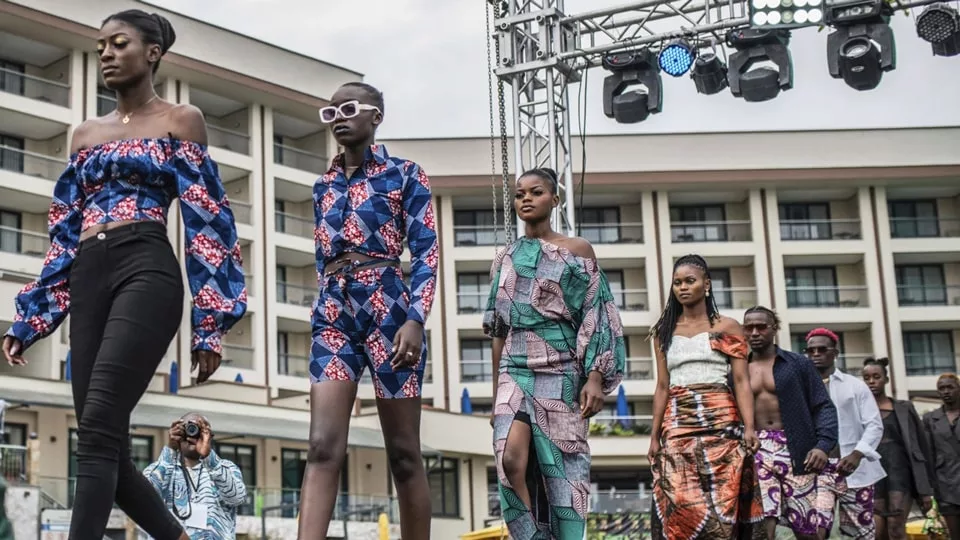
The ninth Liputa fashion show was conducted on Saturday. According to the organizers, this was a chance to advocate peace and peaceful cooperation throughout Africa.

“Africans must unify as one. Although we do have a very diverse range of cultures, Délia Ndougou, a fashion designer from Cameroon, emphasized that this diversity must help us come together. She displayed a collection that was based on the flag of her country.

“We really wanted to convey joy in the clothes, peace in the clothes, very cheerful styles, a question of making the world smile,” remarked Kinshasa-based creative stylist Chadrac Lumumba.
Designers, models, and artists from Cameroon, Senegal, Burundi, France, the United States, and other countries participated in the Goma event.

Nsukula said after her new collection made its runway premiere, “We think we have sent a message to say that all these people who have come from elsewhere, that means that the situation is already improving.”

“We had visitors show their collections who came from the Central African Republic, Cameroon, the USA, and France. That implies that there is comfort and optimism that things will become better in due course.

The program aims to generate a more favorable perception of the continent in addition to spotlighting Congo’s fashion sector.
According to the collection’s organizer, David Ngulu, “We showed these collections not only to promote the creators’ ideals but to demonstrate that in Africa, in the (Congo), the areas that are deemed “red,” we can carry out the same activities as in other peaceful nations.

He stated, “I believe that each creator contributes to love, peace, and coexistence.

Content courtesy of AP & NFH


Kenyan Fashion Tech Shopzetu Raises $1.0 Million In Pre-seed Funding To Revolutionize Africa’s Fashion And Lifestyle E-commerce Landscape

To meet the rising demands of young, fashion-conscious women in Africa, Kenyan fashion e-commerce company ShopZetu is expanding its portfolio to include beauty and home décor categories.
To this end, it has raised pre-seed capital to support the expansion of its marketplace beyond Kenya.
In the next few months, it plans to develop geographically while luring in worldwide fashion labels and more than double the number of sellers on its platform to 1,000.

Equipped with a $1 million pre-seed fundraising round that it recently finished, the firm intends to expand beyond Kenya, where it debuted in 2021, to test regional distribution services in Rwanda, Tanzania, and Uganda.

“The objective is for ShopZetu to emerge as the top lifestyle site.
We want to provide more options in the areas of hair, skincare, beauty, and home décor all areas where a person may show their individuality. Our goal is to become a one-stop store,” stated Marvin Kiragu, CEO of ShopZetu, who, alongside Wandia Gichuru, co-founded the well-known Kenyan fashion company Vivo.

Chui Ventures led the pre-seed investment, and Launch Africa, Roselake Ventures, and Logos Ventures also participated. The CEO of RT Knits Kendall Tang, the co-founder and CEO of Nadine West Ben Munoz, and the CEO of Estée Lauder Inc.
Sumit Bhasin, the CEO of WPP Scangroup Patricia Ithau, and the CEO of Twiga Foods Peter Njonjo are among the angel investors that participated in the round.

According to Kiragu, who spoke with TechCrunch, ShopZetu was created in response to the demand for a multi-brand marketplace to connect a severely fragmented market with “hundreds of thousands of sellers” both offline and online, including on Facebook, Instagram, and WhatsApp. He pointed out that this results in a difficult purchasing process that lacks client trust and pricing visibility.

He went on to say that because there are an endless number of different stock-keeping units, it is practically impossible for any one person to hold the whole selection in one physical area.
“ShopZetu aims to address this issue by consolidating the existing inventory of fashion and lifestyle items into a single location,” he stated.

There are presently over 20,000 goods listed on the ShopZetu marketplace, with over 300 sellers, mostly consisting of small and major local producers and traders of imported fashion products. Onboarding of vendors is free of charge; however, they get payment for extra services, such as delivery, and for sales that are made on the platform.

We also provide warehousing, digital marketing, last-mile delivery, content creation, and return management to our vendors. To guarantee that vendors are successful online, these services are provided at a fee, although they are heavily subsidized,” Kiragu added.

“We want to make it easier for anybody to launch and grow a fashion company by utilizing ShopZetu’s extensive network and resources.
He stated, “We have excellent case studies of firms that were nurtured and introduced on ShopZetu before expanding online and opening physical locations.

The startup stipulates that, among other requirements, retailers selling on the marketplace must offer inclusive sizing, high-quality items, and be well-stocked.
According to the firm, within the last 24 months, it has catered to more than 30,000 clients, sold over 100,000 items, and seen a 400% rise in monthly orders since January 2021.

ShopZetu claims to be keeping an eye on the expanding sub-Saharan African fashion market, which is now dominated by used apparel.
Startups such as ShopZetu, however, are relying on the expanding fashion-conscious and tech-savvy population in Africa as well as reasonably priced new apparel alternatives to fuel their expansion.

“We think there is a huge market for fashion because clothes are a basic human need.”
Although a significant portion of this is now satisfied by used apparel, Kiragu noted that as more reasonably priced choices become available, there is a slow transition to new apparel.

“We think that the largest e-commerce category in Africa will be online fashion retail, surpassing formal retail.”

Content courtesy of TechCrunch, ShopZetu & NFH

L’Oréal Paris Unveils Thuso Mbedu As The Brand’s Ambassador and spokesperson for Sub Saharan Africa

Every year on the French Riviera in the beautiful city of Cannes, the internationally renowned Cannes Film Festival serves as a shining example of superior artistic achievement. L’Oréal Paris, a beauty company dedicated to women’s empowerment and beauty innovation, is happy to introduce the renowned South African actress Thuso Mbedu as the new brand ambassador and spokesperson for Sub-Saharan Africa. L’Oréal Paris is the official partner of the Cannes Film Festival.

On the red carpet and in the breathtaking beauty and fashion photos she posed for, her presence as L’Oréal Paris’ guest of honor was felt.

L’oréal Paris Sub-saharan Africa’s New Face
Mbedu will contribute her distinct viewpoint to regional advertising campaigns, product launches, and public appearances as the brand ambassador and spokeswoman for L’Oréal Paris throughout Sub-Saharan Africa. Her love of beauty and talent for engaging audiences will be crucial in strengthening the brand’s relationship with its devoted patrons.

Thuso Mbedu, The Rising Star
Thuso Mbedu is a well-known actress who was raised in Pietermaritzburg, South Africa, and whose memorable performances have made an impression on both national and global stages. Her performance as Winnie in “Is’thunzi” in 2016 propelled her into the public eye and earned her two nominations for an International Emmy Award.

“One never thought of themselves as attractive growing up; I never dreamed that one day I would have the privilege of serving as the first Sub-Saharan African spokeswoman for L’Oréal Paris. a company with a strong commitment to diversity, sisterhood, and feminism that advocates for the empowerment of women. I’ve so far appreciated learning about the cutting-edge technology that powers L’Oréal’s product line and the revolutionary advancements made in understanding African skin. I’m honored to represent my African group within an outstanding worldwide brand because their products are amazing.

Mbedu gained more recognition when she played Cora Randall in the Amazon Prime Video series “The Underground Railroad,” which is based on the Pulitzer Prize-winning book by Colson Whitehead.

Her most recent performance with Viola Davis in Sony’s “The Woman King” solidified her position in international film. She was named one of The New York Times’ 10 Best Actors of 2022 and Variety’s 10 Actors to Watch for 2022 thanks to her portrayal of “Nawi,” a committed recruit in an all-female military squad.

More Than Just An Actor
Mbedu’s philanthropic endeavors go beyond the realm of popular culture.
Thuso Mbedu is actively involved in humanitarian projects that promote awareness of a variety of topics, particularly those that deal with education and the welfare of children and youth, in addition to her successful acting career.

When Mbedu joined the Board of Advisors of the international non-profit organization Save The Children in 2021, she demonstrated her commitment to empowering young girls and giving them the educational tools they need to thrive. Together with the other members of the Board of Advisors, Thuso serves as an advisory body and serves as a sounding board to discuss issues and identify solutions.

opportunities. Her current position has changed, and it is now known as Partnerships and Engagement Advisors.
She recently traveled to Diepkloof to witness the enormous, palpable effects that Choma Mag and the Charlize Theron Africa Outreach Project (CTAOP) have had on the neighborhood.

Her unshakable dedication to leveraging her platform for good is strongly in line with L’Oréal Paris’ brand values and mission. Together, they hope to encourage people from all walks of life to embrace their beauty, celebrate variety, and cultivate confidence.

A New Phase In African Life
“We are thrilled to welcome Thuso Mbedu into our L’Oréal Paris family,” said L’Oréal Paris Sub-Saharan Africa. “This partnership with Thuso Mbedu is intended to transform beauty standards and inspire a wave of self-worth and confidence across the continent. She truly embodies our purpose with her extraordinary talent, ageless beauty, and dedication to helping others.

We are eager to start on this amazing adventure with you in order to encourage people to embrace their individuality and appreciate their inner beauty.
Burkhard Pieroth, president of L’Oréal in Sub-Saharan Africa.

Content courtesy of I Africa & NFH


Africa’s Leading Luxury Concept Store Is Coming to the Brooklyn Museum

The Big Apple will soon be home to one of Africa’s most well-known shopping destinations.

The Brooklyn Museum will become home to Alára, a concept store with over 100 brands from Lagos, from June 23 through October 22. In collaboration with the museum, the upscale shop will debut as a component of the Africa Fashion at the Museum exhibition as a way to introduce New Yorkers to the fashion perspectives of Africa and the diaspora.
The exhibition, which was the biggest display of fashion and style from the continent when it first debuted to the public at the Victoria & Albert Museum in England, will also include some of the Alára brands.

Reni Folawiyo, an entrepreneur and tastemaker, established Alára in 2015.
The word “alára” means “wonderful performer, one who thrills endlessly” in Folawiyo’s native Yoruba language. Since opening, the store has provided the neighborhood with a wide range of initiatives, goods, and events. Today, it is regarded as a cornerstone of Lagos’s vibrant cultural scene, akin to Colette in Paris.
The Earthy Nigerian headquarters of the store, which includes several high-end luxury labels including Marni, Saint Laurent, Linda Farrow, and Comme des Garcons, was created by Ghanaian-British architect David Adjaye.
The shop also offers a variety of fashionable products from brands with strong ties to the African diaspora, like Kenneth Ize, Post Imperial, and Thebe Magugu.

Alára frequently organizes performances by Falana and Asa in addition to art shows including the works of artists like Hassan Hajjaj and Peju Layiwola. Even the iconic supermodel Naomi Campbell signed copies of The Art of Beauty there in 2018.

The Brooklyn Museum and Alára have not revealed what kinds of music, fashion, and design will be on display at the upscale retailer’s exhibition shop in New York City. But given its illustrious past and specially conceived Lagos shop floor, it might surpass your expectations.

This David Adjaye-designed lifestyle shop by businessman Reni Folawiyo is exceptional, just like its city of Lagos.
Adjaye states, “I wanted the space to function as something that would function as a new kind of cultural hub and destination for West Africa.” The venue would serve as a celebration of design skills.
With its geometric stamps, bi-chrome palette, and remarkable gravity, the building might appear at home anywhere along the artistic arc from Daikanyama in Tokyo to the Design District in Miami.
These objectives were realized in a spectacular façade and a worldly position.
However, Adjaye took care to ensure that every aspect of Alára’s graphic punch is infused with and supported by distinctively Lagosian characteristics.

The translucent screens gridding the entryway refer to the brises soleils of African modernist buildings, while the geometry of their patterns draws from Yoruban Adire fabrics. It unites the indigenous and contemporary architectural lineages of the city.

Along with local designers like Lanre da Silva Ajayi (wham-bam-glam eveningwear), Maki Oh (cool Brooklyn separates), and Lisa Folawiyo (sportswear), Folawiyo has filled Alára’s interior with international labels like Valentino, Alexander McQueen, and the Italian furniture line Moroso. She has also added a rooftop art gallery.
Adjaye comments on the shopping experience:

“Display platforms divide the area…
Visitors are encouraged to maneuver their way around the stock because of the cavernous interior and the triple-height ceiling volume.
Similar to Lagos, Alára’s main attraction might be precisely that: the thrill of exploration in a stunningly modern shrine to design and forerunner of Africa’s future.

Content courtesy Robb Report & NFH


Beyoncé And Naomi Campbell Wear Clothing From The Senegalese Brand Tongoro.

There is a Beyoncé before and after for Sarah Diouf. Before 2020, Tongoro, which the now-36-year-old woman founded four years earlier, was growing with the measured pace of a new Senegalese label. Then, everything picked up speed with the release of Beyoncé’s musical feature film Black Is King at the end of July 2020. In the midst of pink flamingos, the American celebrity may be seen here sporting a pair of black and white pants that are labeled Tongoro.
The film, which was broadcast on Disney+ and had more than 11 million viewers in only two days, then strengthened the still-confidential brand and increased sales.

Dakar’s passion for fashion in the midst of the revolution
In the hallway of an apartment in Scat Urbam, a contemporary building in Dakar, where the designer has set up her office and her clothing workshop, the image of the queen of pop music can be seen alongside those of the American pianist and singer Alicia Keys or the British supermodel Naomi Campbell.

This is because Sarah Diouf employs clothing, fabrics, cuts, and volumes to convey the tale of her region, which is why these VIP brand ambassadors joined the company so soon. She claims that his clothes designs depict “Africa on the move” and that this is what draws her most attentive audience.

The young woman, who was living in Paris at the time, had the intuition that an African Renaissance was still in progress, but it was her contact with “Dakar the creative” that helped him improve his proposal.
full fire on craft in Dakar
The person who considers themselves to be “a child of Africa” notes, at the start of the 2010 decade, that “the craze for African fabrics allows a reappropriation of traditional cultures and encourages the emergence of contemporary designers Africans.” She was born in Paris to a Senegalese-Central African mother and a Senegalese-Congolese father and was later raised in Ivory Coast.

Though he is inspired by the fervor surrounding Africa and its exports and the enthusiasm for what the continent produces, it will take him a while to find his true calling.

By “Embodying African Pride”
She started her career as a communication specialist in 2009 with the launch of a webzine called GhubarA, which she named as a “space for the promotion of African and Arab artists in the world of art, culture, and fashion.” She holds a master’s degree in marketing and communication management from the Sorbonne in Paris. She continued in 2015 with Black, a lifestyle publication that discusses fashion and beauty in Africa. She enters the fashion industry through this back door.

One of the best shoemakers in Dakar is “Momo le Bottier”
She is gradually coming around to the notion of developing a Made in Africa brand, which she sees as a platform for the continent’s expertise.
According to Sarah Diouf, “I have long wished to embody African pride in priceless creations.”
Consequently, she is the writer and director of a narrative that promotes sub-Saharan Africa through her collections. Fashion seemed to her to be the right vehicle for this narrative, imposing itself on her like fabric.

She relocated to Dakar in 2016, when she fell in love with the city’s ubiquitous street tailors who worked nonstop to create the unique clothing that everyone ordered.

This undeveloped talent, which Sarah Diouf finds “fascinating,” is what she feeds off of and uses for her label. She immediately surrounded herself with four tailors, who in her workshop produced between one and 200 outfits every month.
She pulls out essential pieces from her closet, including dresses with long sleeves and broad shoulders and jumpsuits with wide legs. Noble pieces that respected the freedom to move and improved movement.

Sarah Diouf bases her visual identity on monochromatic prints of flowers or other patterns taken from traditional African imagery. Malick Sidibé (1936–2016) and Seydou Keta (1923–2001), two Malian portrait painters known as the “Father of African Photography,” served as inspiration for this design.
Tongoro, which translates to “star” in Sango, the language of the Central African Republic, adopted this design immediately. Sarah Diouf recently increased the chromatic spectrum of her works and the variety of items she produces at her customers’ request.

She also adds head jewelry and large earrings with highly styled contours to the colors that come to change her basic textiles. These accessories can highlight a hairdo and improve the posture of the head. According to the designer, who seeks to highlight in her clothing “the presence of a subtle Senegalese poetry of the volumes,” “the cultural mix in which I grew up infuses my brand.”

The challenge of producing locally
She wants to create attractive, well-finished clothing with Tongoro that can be worn anywhere, including America, Europe, and the Middle East. Additionally, the company that communicates in English currently generates 60% of its revenue in the United States, ahead of the United Kingdom and France, for the sake of efficiency.
Its primary markets on the continent are South Africa, where the company will soon expand, and Nigeria, far ahead of Senegal, which is developing slowly.

“The Africa World”
All Tongoro works are sold only on the company’s website thanks to Sarah Diouf’s use of her marketing expertise to develop the company’s digital business model.
Why limit yourself to physical stores, she wonders, when you can reach a larger audience of consumers online and do so across all continents? Since 2022, Tongoro has also been sold on the upscale products marketplace Net-à-porter, a distribution channel that has introduced it to a new Middle Eastern customer.
Due to the Covid-19 epidemic and the brand’s inability to produce two collections of 1,000 pieces each annually, the collaboration, which was supposed to begin in 2020, was delayed for two years.

In Senegal, increasing output continues to be difficult. Similar to other fashion designers in the nation, Sarah Diouf had to mentor her tailors in patronage. She intends to establish a bigger clothes unit in Senegal in order to obtain autonomy and boost production to 500 pieces per month. She is also establishing a collaboration with a Senegalese textile business that already employs 100 tailors.
“There is no fashion industry here due to a lack of formalization of the sector, but rather an ecosystem to which we must adapt,” she laments, regretful for this unrealized potential. Sarah Diouf, however, is determined to persevere and believes that other artists will be motivated by her story.

Content courtesy of  Globe Echo & NFH


Regi Reveals Stunning Chic Collection ‘Rebirth” With Eye-catching Photos!

Following the release of a sneak preview of their current collection to commemorate the brand’s rebirth, Nigerian womenswear label Regi has released more gorgeous images of the collection dubbed Rebirth.

“Rebirth can also mean; Renaissance, the emergence of something new, an awakening, a new era,” says designer Olufisayo Dayo-Oyelakin. Just a few words to express the emotion and creativity that goes into creating these ageless, adaptable, useful, and spontaneous creations. All of which are undeniably energizing, energizing, and stunningly appealing.

These pieces offer a preview of what the rebirth collection will include. Trust that it will be the perfect wardrobe refresh.”

The exquisitely crafted outfits have remarkable designs ranging from floral print corset tops with tie-back designs to rare but magnificent skirts to match. They are also available in a variety of colors.
REGI RTW’s latest fashion products are suitable for everyday wear and are ideal for women who value simplicity and comfort.

Content Courtesy of Designer: Rebirth by Regi & NFH


Ikojn Kenyan Fashion Designer: Fashionistas Congregate at the Social House for an Event With Ikojn and Couture Africa

The Kenyan Fashion Brands Redefining Style And Glamour, Ikojn, and Couture Africa, two additional fashion and lifestyle brands, gathered together Kenyan fashion enthusiasts and supporters on Sunday, May 7th, 2023, at The Social House. EABL, who provided some cocktail service and had some chic bars, also sponsored the event and contributed to its gloss and glam.

We also got to witness a blown-up replica of the impending “comeback” print issue of Couture Africa Magazine. Ikojn, who are now selling at the hotel, had their creations on show.

We’ve taken a long break from publishing during and after the COVID-19 Pandemic, so we’re happy to be back. I think there’s still a place for print in the East African market, especially for specialized magazines, and this collaboration with IKOJN is a great opportunity to reenter the market. Founder and Chief Editor Olive Gachara made a point.
The Social House will still host the pop-up, which will stock limited-edition selections that are exclusively available there.

IKOJN, which was founded in 2015, is the perfect embodiment of seductive femininity and ladylike strength. The company’s mission is to build the continent and its fashion sector while teaching the world about cultural tales via design in the form of flawless tailoring and excellent construction.

Fashion and beauty entrepreneurs, celebrities, members of the media, content creators, and influencers from all walks of life mingled while they snacked, drank, and shopped in the Social House garden and the nearby event space, which had been converted to be worthy of the fashion content.

The chance to interact with the businesses, learn more about their vision and mission, and keep up with their most recent developments was fantastic for the guests.

The ninth issue of Couture Africa Magazine, which is currently distributed throughout East Africa, will be available in June both in print and online through the Issuu Digital Magazine Newsstand. The platform also manages the website: mycouture.africa, which hosts online content, and they just created the YouTube channel COUTURE Africa TV.

In addition, the group organizes fashion shows including the Couture Style Awards.

Content courtesy of Couture Africa, Ikojn & NFH

Nairobi Brings Fashion and Art Together: Nairobi Fashion Week And Chez Sonia Collaborate To Host A One-of-a-kind Afternoon Event On April 21st.

On April 21st, 2023, Nairobi Fashion Week sponsored a one-of-a-kind afternoon event that blended the worlds of fashion and art while presenting the “JUST fashion” campaign at Chez Sonia.
This event promised to be a feast for the senses and delivered, with spectacular visual art displays from Little Art Gallery, live music, and a fashion show featuring five selected designers, Deepa Dosaja, Inna Design, Kenya Nashipai Leather, Normand Ayats, and Maisha.

Nisria brought together outstanding artists and designers to create an extraordinary day of creativity and beauty.

The event also included a panel discussion on sustainable fashion moderated by media personality Yvonne Ndege, with Katrin Aidnell, the Regional Environment and Climate Change Specialist, Betterman Simidi, the General Manager of Africa Collect Textiles, and Deepa Dosaja, a pioneer in a sustainable fashion.
The conversation centered on the necessity for a fair and environmentally friendly transformation of the country’s fashion industry.

The Nairobi Fashion Week campaign “JUST fashion,” the ultimate aim of which is to support the country’s fashion sector in its JUST, i.e. environmentally sustainable and socially equitable, transition feature’s four advocacy and promotional areas throughout 2023,

focused on Just transition, sustainable fashion, and the protection of the Nairobi National Park.

Credits:
Video by Valde
Photography by: Levi King

Content courtesy of Nairobi Fashion Week & NFH


Ad