Saturday 26th of September 2026

Nairobi, Kenya

The Future of South Africa Fashion

The STADIO School of Fashion, formally known as LISOF, is one of Africa’s most renowned Fashion Design schools. With its forward-thinking approach and many years of experience, the school aims to create an ecosystem that will ensure a financially secure future for its young talents while growing the economy.

Leonardo Snyman, Executive Head of Arts and Design at STADIO, poses the question: “How can we grow the economy as a whole by using the fashion industry to create jobs, and at the same time ensure a sustainable future for our students?”

A study conducted in March 2020 titled Assessing the Economic Value of the Designer Fashion Sector in South Africa, led by the Department of Trade, Industry and Competition and the South African Cotton Cluster, underpins Snyman’s determination to be an active voice within this economic sector. In this research, it became apparent that designers who form part of the clothing and textile sector in South Africa contributed approximately R1-billion to South Africa’s GDP during 2019.

The STADIO School of Fashion has identified this potential and aims to continue the conversation and actively participate in the positive growth of this sector. While the country is slowly recovering from the impact of Covid-19, fashion may just be the answer to upskill, create jobs and boost the manufacturing sector into further positive growth. As a private higher education institution, the school prides itself on student centredness, local and international accreditation, and its direct ties with the global fashion industry to allow competent graduates to contribute to the growth of this sector.

According to fashion designer and former student Jacques Bam: “Collaboration is the key for any ecosystem to work.” By speaking to and creating relationships within the fashion, arts, and manufacturing industries, the economic sustainability of the South African fashion industry is possible.

The study stated that: “The sector’s contribution to the local economy, as well as identified potential impact, positions the designer apparel sector as a key investment opportunity.” The evidence identifies a future opportunity for the expansion of the industry, in which fashion graduates can create viable careers for themselves and, in turn, support the development of the economic ecosystem.

On April 8 2021 the STADIO School of Fashion will be hosting an event to bring industry practitioners and school educators together to discuss the future of fashion in South Africa. This engagement aims to build a pathway towards a more significant partnership between the school and the vibrant fashion industry. This platform will allow for open communication about methods to ensure career-ready students are appropriately prepared for the industry’s needs and prospects.

The first step in achieving these goals is creating the perfect platform to showcase the students’ work. The STADIO School of Fashion’s first-ever online fashion exhibition is presented in the form of a Look Book that will be showcased in March. A panel of judges will adjudicate the students’ work; this panel includes TV presenter Lala Hirayama, musician Tamara Dey, and fashion designer Jacques Bam.

Innovation and agility are cornerstones to survive the post-pandemic socioeconomic climate, and the STADIO School of Fashion has taken this challenge in its stride. This shift to a virtual Look Book has allowed students to debut their hard work and creative ideas with the rest of the world. It has also created a platform for the public and members of the industry to peek into the wonderful world of fashion the school has facilitated.

The winners of the STADIO School of Fashion and Design’s showcase will be announced at the event in April, giving the industry a taste of what’s in store for STADIO and the future.

Content courtesy of Mail & Guardian 

Judge blocks Lil Nas X’s ‘Satan Shoes’ from Shipping to Customers

Manufacturer MSCHF blocked from shipping out the 666 pairs of the shoes, which retailed at $1,018, to customers

A judge has blocked American singer Lil Nas X’s “Satan Shoes” from being shipped out to customers.

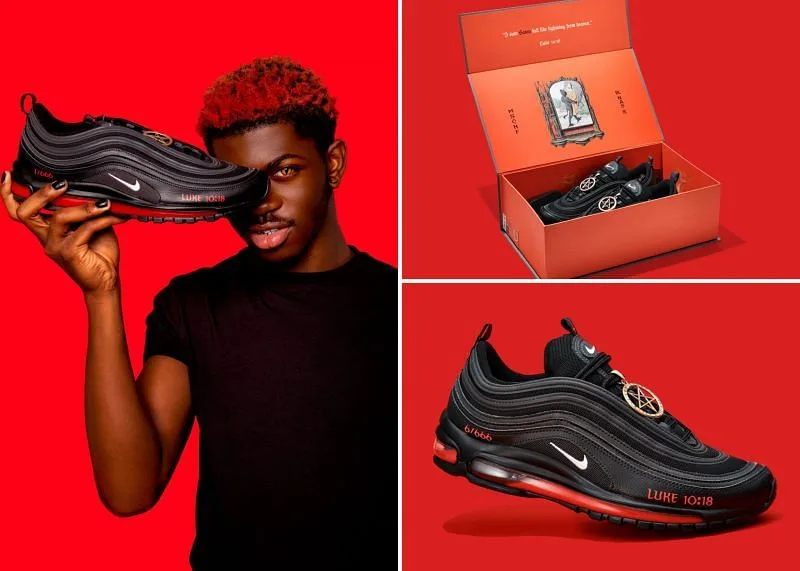
The controversial sneakers, which contained one drop of human blood and were made from modified Nike Air Max 97s, met with a lawsuit from Nike for infringing on and diluting its trademark.

Now a judge has blocked manufacturer MSCHF from shipping out the 666 pairs of shoes, which retailed at $1,018 to customers. All pairs sold out within a minute of going on sale with Miley Cyrus recently being spotted wearing a pre-sale pair.

US district judge Eric Komitee has granted Nike a temporary restraining order preventing the shoes from being shipped to customers, according to The Hollywood Reporter.

Nike’s lawyers say that they have “submitted evidence that even sophisticated sneakerheads were confused” by the shoes, thinking they were made by Nike. And that “we have submitted numerous (pieces of) evidence that some consumers are saying they will never buy Nike shoes ever again”.

Meanwhile, MSCHF says that the confusion is unlikely because of the “sophistication” of the Nike customer.

Citing “The Rogers Test” deriving from a copyright case Rogers Vs Grimaldi, MSCHF contends that the shoes are “individually numbered works of art” that were sold to collectors for $1,018 each and, like their previously released Jesus Shoes, will be exhibited in museums and collections.

The order will stand until there is a more in-depth trial.

The Satan Shoes appeared as merchandise to tie in with the release of Lil Nas X’s song and video Montero (Call Me By Your Name). The video, which saw the singer lap dancing with the devil, has become a talking point among Republican-affiliated public figures.

https://www.instagram.com/p/CM-2hIlFX1x/?utm_source=ig_embed

The South Dakota governor, Kristi Noem, called the video “disgusting” and “perverted” and conservative activist Candace Owens tweeted in part: “We are promoting Satan Shoes to wear on our feet… But we’re convinced it’s white supremacy that’s keeping black America behind. How stupid can we be?” to which Lil Nas X replied: “don’t care and UR a flop.”

Content courtesy of The Guardian & Nairobi fashion hub

Satan shoes? Sure. But Lil Nas X is not leading American kids to devil-worship

This whole controversy is part of a long history of misdirected moral outrage that blames artists for the social ills of society

Lil Nas X, a 21-year-old musical artist first famous for his rap/country hit Old Town Road, has ruffled quite a few feathers with the release of the video for his new single Montero: Call Me By Your Name. He’s long been a controversial online figure, due in part to his charming and frenetic social media presence and the homophobic attacks he has received since proudly and publicly announcing that he is gay has been gay and will remain gay until the world stops spinning. Absurd conspiracy theories have followed him – from claims that he is brainwashing kids into queerness to his potential ties to the ever-present Illuminati.

Lil Nas X has embraced the hate and conspiracy with his latest song and the accompanying video, which satirically doubles down on the idea that his sexual orientation will send him to hell by visually traveling there himself, lap-dancing for the devil, and usurping him as the king of the underworld.

This, along with his limited release of custom Satanic-themed sneakers made with a trace amount of human blood, has brought a furor of condemnation and fresh conspiracy theories that Lil Nas X worships the devil, is trying to brainwash children, and/or has ties to secretive and sinister organizations.

https://www.instagram.com/p/CNAcF8sj2RH/?utm_source=ig_embed

This use of satanic images, and the attacks on the artist flaunting them, is nothing new. It is part of a long history of misdirected moral outrage in the United States, one that blames artists for the social ills of society while ignoring the real reasons young people turn away from religion or act outside of the confines of the dominant culture. The controversy also shows a lack of understanding of the origins of the hodgepodge character of Satan and the imagery that has become associated with the fallen angel.

If the story of a potentially Satan-worshiping artist leading the youth astray sounds familiar, it’s because this tune has been played to death. From the bat-biting Ozzy Osbourne to the cryptically named Memphis rap group Three Six Mafia, parents have railed and rallied against innumerable artists over the last few decades. The “satanic panic” has been around for centuries and Christian accusations of devil-worshiping have historically been leveled against women, Jewish people, and other religious groups. Aja Romano, a culture writer at Vox, discussed its modern incarnation in a recent article:

Modern evangelical Christianity is largely influenced by the kind of epic Christian fantasy that emerged during the 1980s when writers like Frank Peretti turned the concept of “spiritual warfare” into, ironically, a kind of Dungeons and Dragons-like role play that saw good Christians quite literally fighting and defeating actual demons … that version of Christianity spread like wildfire across the country.

Overzealous Christians would demonize everything from the aforementioned tabletop game to heavy metal lyricists whose satanic instructions could purportedly be heard by playing their music backward. This led to the “ritual abuse scare” that started in the 1980s and still lingers today, a pre-QAnon conspiracy theory that held that daycare teachers around the country were sexually abusing children as part of a massive satanic cult. Mary de Young, a sociology professor, recently explained an underlying cause of the panic to the New York Times:

More women were going to work, by choice and necessity in the wake of the women’s rights movement and as the country struggled with a recession. Conservatism and the religious right were ascendant, and both emphasized the nuclear family. Good daycare was hard to find … and many parents felt guilt for relying on it.

After numerous lives were ruined, the panic turned out to have little evidence behind it. Artists like Marilyn Manson deliberately played on parents’ fears and adopted the cult-like images that threatened them. Like many of the artists who came before him, Lil Nas X is sporting the satanic aesthetic as a means to court controversy, and to deliver a message about the hellishness of contemporary life and its arbitrary yet harmful social restrictions.

The modern understanding of Satan has at least partially been driven by artists like Lil Nas X and Hollywood producers seeking to scare and titillate audiences. The Old Testament itself doesn’t exactly contain the full character of Satan as we know him today; it was later assembled over the years, partially borrowed from the religion of the also monotheistic Zoroastrians.

https://twitter.com/mschf/status/1376549518100029443?s=20

The New Testament introduced Satan more formally, often used as a character to explain away the ills of the world like disease and struggles with mental health; it was also weaponized against Jewish people, with claims that they did the work of the devil.

According to Rebecca I Denova, a scholar who studies early Christianity, the image of Satan was later crafted, drawing from the horned Greek deity Pan, and retroactively given shape-shifting powers so that he could take the role of the deceitful serpent who tempted Eve in the Garden of Eden a relationship that would be used to blame women for various social problems and the fall of man.

Much of the other imagery we associate with Satan is fairly modern. For example, the image of Baphomet, the goat-headed man, in an inverted Pentagram has origins in the 1897 work of the occult author Stanislas de Guaita. These images were then purposely adopted by the Church of Satan in the 1960s, and The Satanic Temple in 2012, two groups that don’t actually believe in the existence of Satan but use the image to generate controversy. The Satanic Temple is mainly concerned with issues concerning freedom of religion and spends more time lobbying than worshiping the devil. Much like artists like Lil Nas X, they courted the imagery because they knew it would draw attention.

If anything, Christian churches themselves are doing a great job at pushing people away from the pews. In a 2019 survey of young people who stopped going to church, conducted by Lifeway research – a Christian research organization 73% of all respondents listed the church or their pastor as a reason they stopped attending, including specific reasons like political differences and hypocrisy.

While there are many progressive religious organizations in the United States, some of the largest religious institutions have a history of protecting sexual predators and condemning people for whom they love – while some denominations, including many composed of white evangelicals, have essentially become far-right political factions.

Despite all this, the kids are for the most part still living the dreams of many a Christian parent. Gen Z is relatively more “moral” on paper than most previous generations. Members of Gen Z have less sex, and the rate of teen pregnancies has plummeted. They are less likely to use drugs than their predecessors and have turned away from the American pastime of binge drinking.

They are more likely to see themselves as activists and more likely to believe that racism is real. While many of these behaviors are ethically neutral and more about the social conditions driving them to prioritize survival above all else, it speaks to the fact that young Americans are not becoming the Satan-worshiping sex addicts that people fear that artists like Lil Nas X will turn them into. They are in fact a generation preparing themselves to face the existential threats of climate change, capitalist overconsumption, and growing pollution-induced infertility. Let them be gay, let them be free, let them have their music.

Written By Akin Olla 

Akin Olla is a Nigerian American political strategist and organizer.

He is the host of This is the Revolution Podcast

Content courtesy of The Guardian & Nairobi fashion hub 

Women-led Kenyan Design House Pine Kazi wins Fashionomics Africa sustainable Design Competition for turning Fruit Waste into Eco-friendly Footwear

The African Development Bank’s (www.AfDB.org) Fashionomics Africa initiative has named a women-led Kenya shoe design house as the winner of its competition to support producers of sustainable fashion.

Pine Kazi, which converts pineapple leaf and recycled rubber into fashionable footwear, won the $2,000 Fashionomics Africa competition cash prize. In addition, the business will have the opportunity to showcase its creation in online events, share insights on key sustainability challenges facing the industry, and receive a certificate.

The brand, co-founded by Olivia Okinyi, Angela Musyoka, and Mike Langa, will also have access to media opportunities and receive mentoring and networking opportunities from competition collaborators.

“Pine Kazi is greatly humbled to be the winners of the first Fashionomics Africa contest in Africa. This is indeed an honour to the Kenyan people and the African continent at large,” said Okinyi.

Musyoka added: “All our dreams can come true if we have the courage and the patience to pursue them.”

Competition judges said Pine Kazi’s shoes are innovative and sustainable. The upper of the shoe is made from pineapple textile, while the inside is lined with organic cotton. The sole is made from sisal plant fiber, fitted with recycled tyre underneath.

The Fashionomics Africa contest honours African fashion brands working to change how fashion is produced, bought, used and recycled, to encourage more sustainable consumer behavior. A panel of four judges representing the Bank and competition collaborators the United Nations Environment Program, the Parsons School of Design, and the Ellen MacArthur Foundation reviewed 110 entries from 24 African countries and selected three finalists: Pine Kazi; CiiE Luxuries, an eco-friendly accessories business based in Abuja, Nigeria; and clothing brand Labake Lagos.

“We were pleasantly surprised by all the applications received for the first edition of our Fashionomics Africa competition. It was very difficult to make a choice, but the finalists stood out with their innovative, durable, and contemporary designs,” said Emanuela Gregorio, coordinator of the Fashionomics Africa initiative at the African Development Bank.

Of the applications, 65% were submitted by women and the businesses were predominantly micro-enterprises (54%), solo entrepreneurs (35%), and small businesses (12%).

“What we learned from this Fashionomics Africa contest, in this month celebrating women around the world, is that many women entrepreneurs are advocating for sustainable production and consumption, and we commend their efforts,” said Amel Hamza, Division Manager at the Bank’s Gender, Women and Civil Society Department.

An online public vote by 986 participants determined the winner: Pine Kazi got 400 votes, 318 votes went to CiiE Luxuries, and 268 to Labake Lagos.

Competition judge and a Program Director at New York-based Parsons School of Design, Brendan McCarthy, congratulated Pine Kazi during the competition winners’ announcement last Friday: “You transformed waste materials from pineapples into profound new textiles and absolutely beautiful new shoes,” he said.

The shoes are 100% handmade to reduce carbon footprint and can last three years, Pine Kazi says.

The design house said resources would also be divided equally between research and development of natural dyes, the acquisition of professional stylists, and the establishment of a centralized production system.

To learn more about the Fashionomics Africa online competition,

Fashionomics Africa (https://FashionomicsAfrica.org) is an initiative of the African Development Bank to increase Africa’s participation in the global textile and fashion industry value chains – with an emphasis on women and youth.

Distributed by APO Group on behalf of African Development Bank Group (AfDB).

Media Contact:
Alphonso Van Marsh
Principal Digital Content and Events Officer
African Development Bank
Email: a.vanmarsh@afdb.org


Nike Sues over ‘Satan Shoes’ with human blood

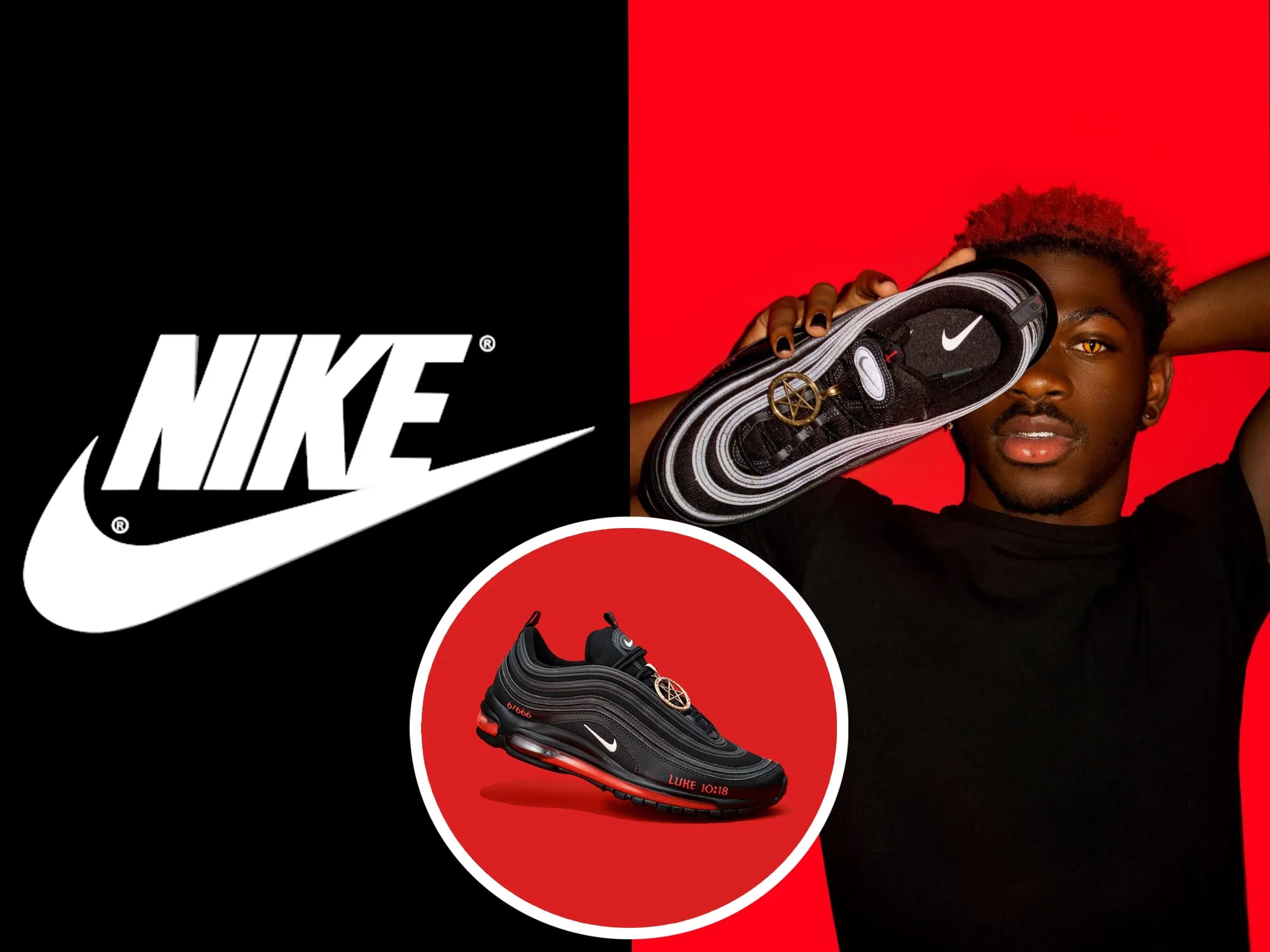
Nike is suing Brooklyn art collective MSCHF over a controversial pair of “Satan Shoes” that contains a drop of real human blood in the soles.

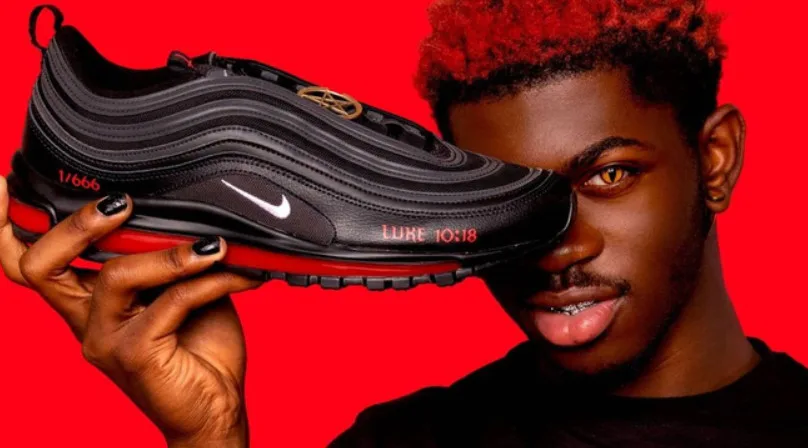
The $1,018 (£740) trainers, which feature an inverted cross, a pentagram, and the words “Luke 10:18”, were made using modified Nike Air Max 97s.

MSCHF released 666 pairs of shoes on Monday in collaboration with rapper Lil Nas X and says they sold out in less than a minute.

Nike claims trademark infringement.

It has asked the court to stop MSCHF from selling the shoes and prevent them from using its famous Swoosh design mark.

“MSCHF and its unauthorized Satan Shoes are likely to cause confusion and dilution and create an erroneous association between MSCHF’s products and Nike,” the sports shoe giant says in the lawsuit.

MSCHF “dropped” the black and red shoes on Monday, coinciding with the launch of Lil Nas X’s latest song Montero (Call Me By Your Name), which debuted on YouTube last Friday.

The song sees the rapper, who came out in 2019, celebrating his sexuality while rejecting society’s attempts to shame him.

In the heavily stylized video, he slides down a stripper pole from heaven to hell before dancing provocatively with Satan, then snapping his neck and stealing his horns.

The imagery and the shoes both reference the Bible verse Luke 10:18 – “So He told them, ‘I saw Satan fall like lightning from heaven.”

Each shoe also features a signature Nike air bubble cushioning sole, containing 60 cubic centimeters (2.03 fluid ounces) of red ink and a single drop of human blood, donated by members of the MSCHF art collective.

In its filing with the US District Court for the Eastern District of New York, Nike said it did not approve or authorize the customized Satan Shoes.

“There is already evidence of significant confusion and dilution occurring in the marketplace, including calls to boycott Nike in response to the launch of MSCHF’s Satan Shoes, based on the mistaken belief that Nike has authorized or approved this product,” it said.

The lawsuit cites a tweet by popular shoe influencer @Saint from last Friday, which teased the upcoming release of the shoes and drummed up publicity over the weekend on social media and in the media in the US.

Some conservatives, including South Dakota Governor Kristi Noem, and some religious followers, took offense at the controversial design of the shoes and criticized Lil Nas X and MSCHF on Twitter.

Lil Nas X hit back at the governor and other critics on Twitter, and on Monday was tweeting several memes on his profile in response to news of the Nike lawsuit.

Joseph Rasch of Tennessee, who paid $1,080 for the trainers, says he is worried the conflict means his money will be lost.

“I’m hoping I’ll receive them since I paid for them,” he told BBC OS on World Service radio, adding that he made the purchase not because he definitely planned to wear them but as a political statement.

“I wanted to support a black gay man who is attempting to show a different narrative in a majority Christian country that currently is dealing with a lot of issues with black people. So what better way to do that than to buy shoes that this person has collaborated with?” he said.

Buyer McKenzi Norris of South Carolina, a longtime follower of the MSCHF art collective, said Nike’s lawsuit had disrupted his plans to resell the trainers for $2,500 on eBay, which removed his listing.

“In general I think Nike’s lawsuit and their intervention is pretty ridiculous considering how much damage it can cause to everyday people like me who just like to customize and resell their products legally,” he said.

Content courtesy of BBC News & Nairobi fashion hub 

With Traditional Fabrics, Nigerian Designers Fashion a New Aesthetic

Weaving contemporary designs into a traditional West African fabric, Nigerian Tsemaye Binitie is creating fashion he hopes can also bridge the gap between luxury and the everyday.

His material of choice is Aso-oke, a hand-woven cloth indigenous to the Yoruba people and historically used on special occasions.

Binitie, who cut his teeth as a design assistant with Stella McCartney in 2005, began using the fabric in 2017, and he infuses the yellow dresses that are his signature creations with cotton and silks to give them a post-modern feel.

“We started to use contemporary African art and culture within the threads of the collection so you see hints of it or very … obvious (signs),” said Binitie, who divides his time between Lagos and London.

“It’s sort of informed fabric, informed color, informed styling.”

Priced at between $300 and $4,000, his TB12 custom collection features Aso-oke – which means “top cloth” in Yoruba – in seven different shades.

“We are sort of preserving the culture, you know, that we’ve watched all our lives in front of us … and teaching the younger generation that it is something to be proud of, something to want to wear,” he told Reuters.

Fellow Lagos designer Lisa Folawiyo specializes in a different traditional cloth, the West African wax prints known as Ankara, and her hybrid collection, called Batkara, incorporates Batik designs embellished with needle-work beadings and sequin trimmings. “We have merged what is indigenous to us with what is familiar in the West and we’ve made it ours,” she said.

That same synthesis informs the aesthetic of Alara, a Lagos store dedicated to showcasing contemporary African fashion for the Nigerian and the diaspora markets. Its Head of Partnerships, Arinola Fagbemi, says more and more people are thinking about African luxury “in terms of how we live on a day-to-day basis … not just for celebratory moments.”

Content courtesy of Malaya Business Insight & Nairobi fashion hub 

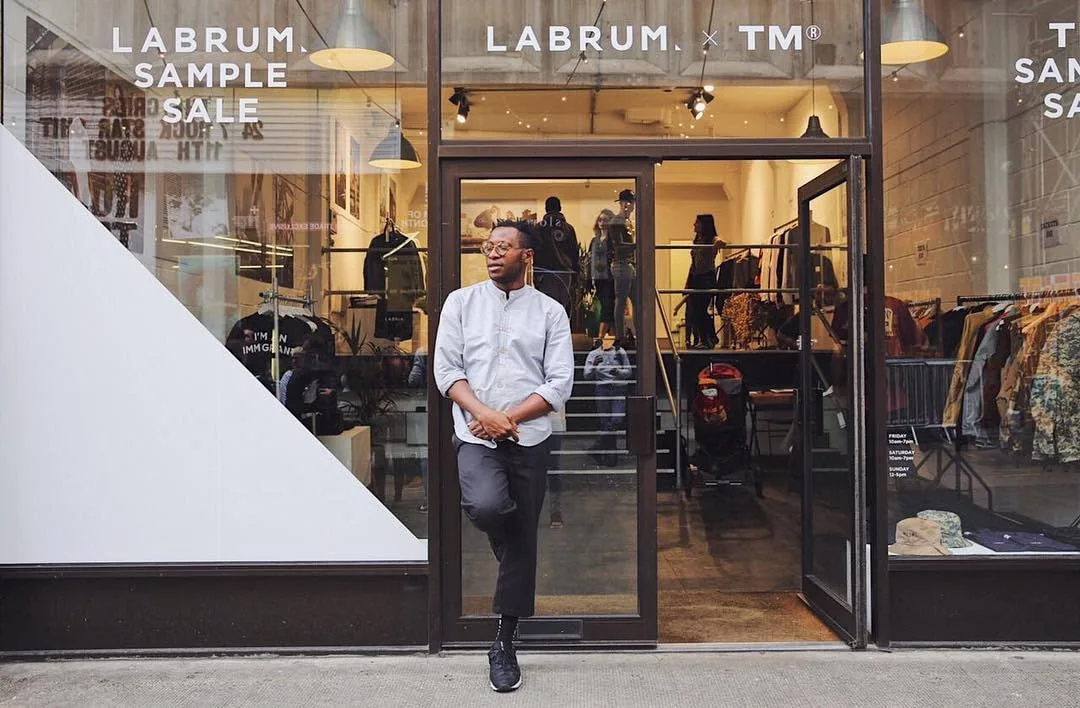
Rising label LABRUM Weaves Untold Stories of West Africa into its Clothing

Community-focused designer Foday Dumbaya is bridging the gap between Britain and West Africa with his culture-blurring collections

Foday Dumbaya first became aware of fashion at an early age. “In Sierra Leone, when I was young, my dad was in the police force and always dressed immaculately. He had this great authoritarian military uniform,” the East London-based designer, who was raised between Sierra Leone, Cyprus, and London reveal.

“My mother loves to dress well too. She’s more extravagant and to this day wears traditional African dress coordinating colors, a headscarf, it’s a whole look,” he adds. When it came to his parents actually allowing him to go into fashion, however, things got a whole lot more tricky. “It wasn’t always on the table in my African home. My parents were determined I chose a more stable career – as immigrants themselves, they recognized we faced an uphill battle as it was.”

Instead of heading to fashion school, Dumbaya studied information design at university, going deep into the ways in which humans interact with computer interfaces. After an internship at tech powerhouse Siemens, he dipped his toe into fashion for the first time at Nike, where he created bespoke designs for the sportswear giant. “I’m largely self-taught but fashion isn’t so different (from information design),” he says. “I create stories within a fashion that humans respond to.” After his stint at Nike, he laid the foundations for his own label, LABRUM, with the intention of exploring both West African and British heritage, and bridging the gap between the two.

Past collections have seen Dumbaya look to Sierra Leonean capital Freetown, his grandmother, and the West African diaspora for inspiration, with classically tailored suits, clean indigo denim, and slick, functional sportswear-indebted pieces sitting alongside his own takes on the agbada and other traditional silhouettes. “A lot of our pieces are an amalgamation of cultures,” he explains. “We have British tailoring in the shirt, with the addition of ruffle sleeves, which is more traditionally West African attire.”

More recently, as part of his AW21 collection at London Fashion Week, LABRUM paid tribute to “the heroes of St. Giles Blackbirds” – a community of sailors, soldiers, and former slaves that came to England from Africa in the late 1700s and ended up living in poverty, shunned by society. “We wanted to tell the story of a group of people that were downtrodden and went against the efforts made to forget them,” Dumbaya explains. “It was important that we told it now because it’s a story of resilience and migration, which feels very poignant right now.”

Inspired by the stories of figures including writer and abolitionist Olaudah Equiano, who came to the UK after buying his freedom and fought for the abolishment of slavery, Dumbaya reworked and reimagined historic dress for 2021, enlisting Dazed editor-in-chief and longtime collaborator Ib Kamara to bring the offering to life on the runway. This saw trenches with dramatic ruffled panels matched with louche, wide-legged trousers, structured coats layered over tailored, printed suits, and new iterations of his signature balloon-sleeved Mamie Bakie shirt – named after his grandmother – all on the line-up for the new season, with 80 percent of the offering crafted from offcuts and salvaged fabric.

For Dumbaya, it’s not just about the clothes, though fostering and supporting a sense of community, as well as empowering a new generation of creatives, is high on the agenda, too. Having long worked with Hackney’s Wickers Charity, which supports and uplifts disadvantaged youths in Hackney, he also founded Sierra Leone running club Labrum Athletic. In addition to donating funds and equipment to the group, he also stepped in to create the Sierra Leone Olympics kit when some of the club’s members were chosen to represent the country in the postponed 2020 games.

Working in partnership with Converse, the designer is also attempting to open up the fashion industry to a wider, more diverse demographic. Having first linked up for a creative project and collaborative runway footwear, Dumbaya’s relationship with the legendary label has evolved into something a lot more expansive. As part of Converse’s All-Star program, LABRUM has been able to access mentorship and funding that has allowed Dumbaya to grow its brand and community significantly.

With many brands – both emerging and, more dismally, established relying on low or unpaid interns to support their businesses, those from lower economies have historically been locked out of fashion. In a bid to combat this, Converse has begun funding paid placements with its All-Star designers – allowing growing businesses to thrive and young talent who otherwise might not have been able to get their foot in the door to gain experience, knowledge, and guidance.

Ahead of the AW21 season, LABRUM was one of the labels that benefit from the initiative, with a number of interns and a studio manager joining its fold.

“(The interns) were an incredible support,” says Dumbaya. “Each of them brings different experiences and energy to the team, and I really valued their input. We’re developing a platform where there is knowledge sharing between West Africa and the West – and especially London. We want the people interning to share their knowledge too.”

With Dumbaya intent on telling new stories and merging the borders of West Africa and Britain as the label grows, he’s determined to also keep the door open for the creative new gen. ”Nurturing talent is so important to me. LABRUM will continue to create and support communities linking back to Sierra Leone and London, as this is so much more important than simply designing clothes. If we’ve learned anything from the pandemic, it’s that we all need to think about each other more.”

Content courtesy of Dazed Digital & Nairobi fashion hub 

The Folklore website is elevating African fashion and helping designers get paid

“This is going to change the way people value Africa and its creators,” says Amira Rasool, founder of The Folklore, which sells clothing and accessories from prominent and emerging African brands.

Amira Rasool is the founder and CEO of The Folklore, an online concept store featuring contemporary African design. She spoke to Doreen Lorenzo for “Designing Women“, a series of interviews with brilliant women in the design industry.

Doreen Lorenzo: How did you first find your way into design?

Amira Rasool: I was a creative kid. I used to make these huge forts out of sheets all around the house. I actually used to want to be an architect. Then I failed algebra my freshman year of high school. I figured if I was going to be an architect, math would be something I needed to be somewhat good at so people weren’t walking into their homes and sliding to the right because I measured wrong.

I thought, “what’s something creative that doesn’t have to do with math or science?” I started thinking more about interior design because my dream was always to build a community of really cool houses that all look different.

I also always had on these funky outfits, so my older sister Jasmine told me: “Why don’t you just get into fashion? You watch The Devil Wears Prada all the time. You’re always getting dressed up. You like writing.” She suggested that I start a blog back in 2010 when blogging was really big. So I created a blog and an alter ego named Bobby Austin posting outfits of me wearing purple wigs and black lipstick.


I also started taking FIT (Fashion Institute of Technology) pre-college courses, so all my friends were just as weird as me and also had wigs on. I grew up in South Orange, New Jersey, about 40 minutes outside of New York, so I would take the train on the weekends, do my college courses, then go hang out with my friends afterward. I was one of those weird creative kids that were also a great athlete and could fit into both worlds.

Doreen Lorenzo: What made you decide to go from creative fashion blogger to entrepreneur and founder of The Folklore?

Amira Rasool: The blog is what let me know that my passion was in writing. I started doing internships as soon as I got into college floating between interning for fashion market editors, stylists, and features editors. I interned at Women’s Wear Daily and I really loved that experience. From there, I went to Marie Claire, which was really eye-opening for me because I was given a lot of responsibility.

It made me understand how hectic magazines were and learn how to take charge without anyone telling me to. I realized I was super good at organizing and providing top-quality results. My boss from Marie Claire then referred me to V Magazine where I interned in their fashion department, and later their editorial department.

During my internships, I made really good connections with the people I worked for. They saw I was a hard worker. By the time I graduated, I had multiple magazine jobs that I was up for. People in media know it’s so hard to get that entry-level job when you’re coming out of college. The fact that I had my choice between jobs was a testament to me busting my butt and always being reliable. I ultimately ended up choosing V Magazine where I worked full time for a year as their fashion coordinator before I decided to start The Folklore.

Doreen Lorenzo: What made you decide to branch out and start The Folklore?

Amira Rasool: When I was majoring in journalism at Rutgers, I started taking a bunch of African American studies courses. By the end of my junior year, I had more African American studies courses under my belt than I did journalism. I decided to change my major to African American studies. Growing up they did not do a good job teaching us about Black history outside of Martin Luther King, Harriet Tubman, and the few other Black people they let us learn about. So when I started taking those African American studies courses and started learning about so many inspiring people, I was shocked.

I became obsessed with Black literature and started reading James Baldwin, W.E.B. Du Bois, Toni Morrison, and a lot of the people who came from the Harlem Renaissance. I learned how the creatives during the time we’re able to create these great publications like Fire!! that was a part of activism, but more creative activism. I related to that because I felt like I was put on this earth to uplift my people in some powerful way. I had this fire under me to go out and make an impact within the Black community.

Fashion is very whitewashed. I’ve always been the only Black girl in every meeting and every company I go to, and they weren’t having conversations about race like they are now. I started feeling like fashion was so vain. People thought that they were curing cancer with what they were doing, but they weren’t even going beyond surface-level conversations. I liked fashion and felt I shouldn’t have to give up what I love because I want to pursue something that’s a little bit more serious and impactful. How could I do both? That’s when I started thinking about Africa.

I had taken a trip there my senior year of college and fell in love. I went to South Africa and discovered all of these cool designers, creatives, and music. I bought a bunch of clothing and accessories when I was there and started wearing them when I came back to the United States and people were stopping me and asking: “Where did you get those sandals from? Where did you get this hat from?”

I started thinking about getting access to these products again, but most of them did not have e-commerce sites and weren’t sold at retailers outside of Africa. I didn’t have access to them unless I hopped back on the plane. That’s when I came up with the idea. Why is there a whole continent full of designers that cannot penetrate the international market, and how can I help them do that? How can I use my resources, network, and overall creativity to find a way for them to have access?

I started creating a business plan and applied to the University of Cape Town for a master’s degree in African studies. Once I got in, I moved to Cape Town, South Africa, and lived there for two years learning about the designers and what they needed from an e-commerce platform. At the same time, I got to learn about various African cultures.

That informed how I thought about communicating these designers’ stories. Halfway through my program I ended coming back to the U.S. to launch The Folklore site.

Doreen Lorenzo: How did you find these African designers and fashion styles you wanted to represent through The Folklore?

Amira Rasool: There’ve always been so many different stereotypes of Africa. There’s definitely poverty in Africa, but at the end of the day, that’s not only Africa, and Africa is not the only place with widespread poverty. For a whole continent to be defined by that is ridiculous. I wanted to be able to reflect that and show this whole renaissance happening with designers incorporating their heritage into modern and contemporary forms of expression.

https://www.instagram.com/p/CLpAJH-gOx5/?utm_source=ig_embed

Being on the continent was really important because I was able to touch and feel the fabrics and most importantly, connect with the designers. I knew I wanted to stay away from Ankara prints or anything traditional because I wanted everyone to be able to wear these pieces.

I wasn’t going to be the American that came in and started selling white people Ankara prints, advocating for cultural appropriation. I also did not want to be a cultural appropriator myself, so I purposely go after pieces that can be worn comfortably by anyone.

There was already a market that catered to Black people who wanted to feel connected to the continent and their cultural heritage. I wanted to provide that counter-narrative where someone could see a piece and not know where it was created. People universally can wear these products and we know the only reason why these designs are as unique as they are is because of these designers combining their heritage, culture, and their natural environment in Africa that’s not typically portrayed.

When you don’t know that this place exists, everything’s going to look new and unique to the outside person. I’m excited to be the person to help the designers introduce this counter-narrative and share their unique stories outside of Africa.

Doreen Lorenzo: The Folklore became a 2021 Techstars accelerator company. What does this mean to you and for the future of The Folklore?

Amira Rasool: It means a lot.

The network, resources, and overall knowledge Techstars provides are extremely beneficial. I like to think that when The Folklore got into TechStars all of our brands got Techstars. Whatever knowledge or resources we absorb during the program, we are going to make sure we share with our brands.

One of Techstars’ mission statements is “Give first” and everyone who I’ve encountered at Techstars has really embraced that mission. So much of the focus is on how to help you raise money and build a profitable company. That’s a great thing because they realize what it takes to build a great company. Everyone’s been super supportive, so I’m really excited and honored to be a part of it.

Doreen Lorenzo: How do you believe Folklore will change the way people view the fashion industry in Africa?

Amira Rasool: This is going to change the way people value Africa and its creators.

The value that was placed on African designers before was the number of clicks their creativity could generate for fashion publications featuring African brand look books. They didn’t care that the press these brands were getting did not convert to dollars because a lot of the brands did not have a website to link back to. It was an afterthought.

We created a dialogue around economic opportunity and put pressure on the industry to actually put their money where their mouth is. Now they can write about these brands and link them back to The Folklore. We want to put as much value on these designers as people put on Gucci or Alexander McQueen, and honestly, there’s more value in these goods because most of them are unique and sustainably made.

People pay luxury prices because they were told these brands are important. When we’re pricing our goods, it’s really because it costs a lot of money to ship these products from Africa to the U.S. The e-commerce infrastructure has been set up, whether consciously or not, to exclude people like us.

If you’re truly committed to diversifying the designers that you work with and fighting for equity and inclusion, you have to make compromises that you would have otherwise not made for more established brands. When you’re paying for a product from our website, you’re buying something because it is amazing. People have asked to donate to my company but no, you can invest in my company, our brands, and their products. We don’t want charity.

https://www.instagram.com/p/CEsKKBOlrHK/?utm_source=ig_embed

Nobody wants charity. I want to change the way that people talk about contributing to Africa and help people recognize the value in not only how these products are produced, but in the story and the exclusivity behind them.

Written By Doreen Lorenzo

Content courtesy of Fast Company & Nairobi fashion hub 
KiKi Layne Chose Her Own Jewelry For Coming 2 America, According to Costume Designer Ruth E. Carter

Coming 2 America, the highly anticipated follow-up to the Eddie Murphy-Arsenio Hall classic, opens just like the original. As viewers, we’re immediately transported to the grandiose and opulent Zamunda, a feat achieved thanks largely to the costumes, thoughtfully reimagined by Oscar-winning costume designer Ruth E. Carter.

The cult-favorite film, which broke box office records when it premiered in 1988, is a study in visual splendor when it comes to the wardrobe, from Prince Akeem’s draped furs to Lisa’s pink royal wedding dress, not to mention hilarious as hell  who could forget Murphy’s goofy, Scottish-inspired McDowell’s uniform, complete with a red tartan vest and matching tam-o’-shanter hat?

Fans of the first movie will be pleased to know that many of the outfits, as well as the characters wearing them, make a triumphant return in the sequel, while others are reworked to feel decidedly more modern and African, including the aforementioned McDowell’s looks.

For Carter, crafting the wardrobe of the new Zamunda required making hundreds of costumes, with several options for each principal actor, including exact replicas of memorable looks, like the lady-in-waiting’s shimmery gold dress (spoiler alert: Sheila Johnson is back, and, yes, she’s still barking like a dog and hopping on one leg).

POPSUGAR spoke to Carter, who’s designed costumes for Malcolm X and Black Panther, about what it was like dressing the stars of the exciting new release.

POPSUGAR: How does the style in this film differ from the first?

Ruth E. Carter: The first film had such grandeur  it was shot like a big Hollywood movie. When we came into the palace, we saw the opulent dresses, the tuxedos, the way the men stood with their envelope caps and sashes . . . that is signature Coming to America; I wanted to maintain that.

At the time, we didn’t see much of that from Africa; we weren’t even sure how authentic it was, but we loved it. The lion on the shoulder, Akeem in the Mets jacket  those were iconic images. I went through and picked out the things that I needed to move into the new movie. I even found some dresses from that ballroom scene in a rental house.

And we created our own new-style Zamunda looks, too, because I wanted to replicate the headdresses and big, full dresses, but in a way that was uniquely ours. We made some of the same silhouettes with more modern fabrics and treatments.

PS: So you repeated exact outfits?

RC: Oh yes. We screen-grabbed them so we could copy them exactly. We duplicated all of Murphy’s “I Love NY” buttons and [his] cap in the same way. In the flashback sequence, when Murphy and Hall are in the nightclub, we used stock footage of Arsenio entering the club and re-created his whole outfit. You can’t buy that jacket; that fabric is no longer around. That whole scene was spliced together, but I think it was very successful.

PS: Sheila Johnson’s gold dress was re-created to a tee as well.

RC: We did a ton of work looking at the images of that dress and even commissioned a jeweler who specialized in illusion-style dresses, where you have a lot of sheer spaces and strategically placed beading. We identified the shape of each gem and made a complete replica of what she wore in the first film.

PS: Were Teyana Taylor’s looks meant to be an homage to the lady in waiting?

RC: We made her some cool Shiraki military costumes, but for the big prince number, we created that costume from scratch. I was inspired by Afropunk and steampunk for her bodice, and the boots and cape were designed to be the big reveal.

PS: What were some of your other inspirations for creating the wardrobe?

RC: I was inspired by modern African fashion: the bright, brilliant colors of Ozwald Boateng suits and the Ankara fabrics that are used so prevalently in celebrations. My mood boards featured a lot of modern takes on African style, as well as images of Egyptian royalty. I wanted to bring a lot of gold and opulence into the story, so I gave it permission to be very blingy and showy. I wanted [Zamunda] to be a place you’d want to go and visit and shop and explore, because the people were so vibrant and interesting.

PS: As a Black creator, can you speak to the importance of sourcing Black designers for this particular movie?

RC: Because this was a continuation film as opposed to a remake, I wanted to move it through time by honoring the first movie while giving people another view of Coming to America. I had pieces made by artisans all over the world, from east India to New York. For me, traveling to Maxhosa in South Africa to dress the palace servants was representation that was necessary and beautiful — the prints you see on the staff really colored the palace.

PS: What are the differences, if any, between the fashion of Zamunda vs. Wakanda?

RC: When I did [the costumes for] Wakanda, I was very clear that it was not Coming to America. Wakanda is a world that was built prior to colonization, so I wanted to present a tribal view. Most people don’t know how to get to Wakanda. You can [theoretically] go to Zamunda and have a great time and buy some Ankara and see all of the colors and people and fabrics.

PS: Were there any hidden Easter eggs in the costumes?

RC: Randy Watson’s jumpsuit was based on Elvis, because I knew that Eddie loved Elvis. I showed Eddie a picture of a jumpsuit Elvis wore late in his life, and we patterned the Randy Watson jumpsuit after it.

Written By Claire Stern

Content courtesy of POPSUGAR & Nairobi fashion hub

Fashion Designer Kenneth Ize from Nigeria Is Getting Through It All

Nigerian fashion designer Kenneth Ize is happy. He is grateful. But he is also stressed, and frustrated. He is a ball of mixed emotions, as any designer is in the lead-up to a fashion show even if it’s digital especially in these epochal times. Asked what the last few months have been like for him, he replies, “tired, sad, but not crying.”

Ize is phoning from a car in Italy, where he had been for three weeks, finalizing his Fall 2021 collection. Those who have seen the new lineup have expressed surprise, and he expects a similar reaction once he presents it via video during Paris Fashion Week on March 10.

Ize is known for his joyful, vividly colored, and patterned clothes, defined by slim tailoring, a retro influence, and, most of all, a dedication to traditional Nigerian aso oke textiles. Like everyone else on the planet, his axis has been shifted by the coronavirus pandemic, but being based in Lagos, Nigeria comes with its own set of problems. Big ones.

recalling the high of last season’s collection, which delivered a celebratory message of political empowerment, homosexuality, diversity, and craft. He was quickly deflated by the reality check of the political turmoil at home.

Last October, a wave of mass protests swept Nigeria amid new reports of police brutality by the Special Anti-Robbery Squad (SARS), a Nigerian police unit with a long record of abuse and violence against civilians. Thinking about the social unrest put Ize in an edgier place than usual when developing his fall collection. One literal example is his use of the color black, as well as cutting down on the number of bright colors a signature in his palette in general. But there is more.

“I started noticing that I was researching, for example, snakes and serpents. I would research body tattoos. I would research dark things that I would not usually research because I’m African,” Ize says, noting the culture of superstition. “As an African person, your parents will tell you, ‘Oh my God, when you see the cat, you need to run because if the cat spit in your face, it’s going to blind you.'”

Ize found a way to reframe the narrative via ancient Egyptian lore, turning the negative connotations of snakes into a story of rebirth, which is how he’s choosing to see the state of Nigeria and the state of the world at large in the age of COVID-19. “It is a different side of me,” Ize says. “I want to speak about life. I want to speak about what is affecting me personally, what is affecting my friends, my loved ones, people dying around the world. I want people to also be aware of the problems happening in Nigeria.” His clothes are his way of having these conversations.


Indeed, Ize’s clothes have spoken volumes in a relatively short amount of time. They tell a story that’s quite different from most fashion brands on the world stage and have earned an audience of industry elites along the way. Born in Nigeria, Ize moved to Austria as a young child when his family was in political exile. He grew up there, his earnest interest in fashion nursed by his mother’s wardrobe of traditional Nigerian garments.

After studying fashion and design at the University of Applied Arts Vienna, where Bernhard Willhelm and Hussein Chalayan were among his teachers, Ize moved back to Lagos. He launched his label in 2016 with the intention of exploring West African identity and showcasing and preserving the centuries-old Yoruba textile handcraft by working with local artisans.

The collection toes the line of gender fluidity, though there are men’s and women’s clothes. Naomi Campbell and Alton Mason walked in Ize’s show during Arise Fashion Week in Lagos in 2019, the same year he was a finalist for the LVMH Prize, making a list that has rarely included African designers.

He made his debut at Paris Fashion Week with Campbell closing the show in February 2020, and later in the year, it was announced that Ize had been tapped for a capsule collection with the Karl Lagerfeld brand that will launch in April. Ize’s own retailers include Net-A-Porter, Dover Street Market in New York and Los Angeles, MatchesFashion, and Browns, among others.

The decision to take his collection to Paris was a game-changer, one decided over dinner in Vienna one night. “I wanted to do Paris because I just knew that was being in it,” Ize says. “If I’m going to show what we have in Nigeria, [which has] already been around for centuries and has not been paid attention to in fashion, where should I place it? It’s in Paris.”

Ize’s first show in the City of Lights was a success from a critical and sales point of view. “Seeing the money, I was like, ‘OK, I’m fine now. I’m good.'” But as any industry veteran can attest, one good season does not a sure thing make, and the struggle is always real. Especially when you’re operating independently, as Ize is.

Paris is the big leagues, and by showing there, Ize proved he could compete design-wise, but the elevation in profile also exposed problems in production. It’s one thing to celebrate West African textile craft and tradition. It’s another to rely on local artisans to scale up to meet the needs and orders of international luxury retailers.

“I need to sit down with the weavers to make sure that they get it right,” Ize says. “Sometimes things are just made badly, or when I go to the market to buy some yarn, I might be in traffic for six hours. I might not have an electricity supply for the whole day, and I’ll have to run my generator. Let me call it straight: It’s like working in a Third World country.”

Ize still develops his fabrics and designs with local artisans, but the collection is now produced in Europe, mainly Italy. He is committed to using his work to shine a light on African design and culture, traditional and modern, but he can’t help but vent about the lack of resources in Nigeria and the lack of unity and organization from the fashion community there, all of which was compounded by the pandemic and #EndSARS. “I have never experienced something that looks like a war zone in my life,” Ize says of the last six months. “We need support. This is almost a cry for help.”

On his wish list is mentorship from the luxury industry and more financial support, for himself as a self-proclaimed one-man-show entrepreneur, and also support to develop the African fashion industry. He channeled his frustrations into his new collection. “If you would ask me about how I feel about doing my fall collection, I feel sad and I feel very happy that I could for one time in my life just speak my truth and just go with my feeling 100%.”

Content courtesy of The Zero Report & Nairobi fashion hub

Every Look From Thebe Magugu Fall/winter 2021

The South African Designer Looks Towards The Fantastically-occult For His Latest Short Film And Collection

At the intersection of Black History Month and Women’s History Month, fashion has found a way to honor the strong, female ancestors that came before them.

For South African designer Thebe Magugu, it was an easy choice. At the core of his Fall/Winter 2021 collection, African spirituality and female divination are celebrated at full volume. The collection titled “Alchemy” explores the occult, cultural heritage of the South African upbringing, and the modern women changing the landscape.

“This season, I wanted to have a conversation with traditional healers, who have divinely been given powers to answer our most burning questions, and who act as a conduit between various realms, often by using objects of divination,” The LVMH prize-winning young designer writes. “It’s a very particular kind of strength, one that doesn’t show-off and relies heavily on the natural.”

In lieu of a traditional runway for Paris Fashion Week, like many other labels, Thebe Magugu’s instead greenlit a short film to showcase the Fall/Winter 2021 garments. The film, titled BANYOLOYI A BOSIGO (Ultimate Midnite Angels), tells a Romeo and Juliette-esque story of neighboring tribes in the desert. Shot and written by Kristin-Lee Moolman, the film expresses the intersectionality behind modern South African women and how they are not a monolith.

“I want female characters to have their own agency and can be heroes or anti-heroes without having to conform to the cinematic trope of women having to go experience major trauma to be allowed to be the same level of ‘badass’ as their male character counterparts,” Moolman writes.

Magugu’s collections often have a sociopolitical meaning. The South Africa-based designer’s Spring/Summer 2020 collection was an ode to the revolutionaries who fought to end apartheid while his Spring/Summer 2021 collection honed in on Johannesburg’s spies in the latter half of the 20th century.

The collection’s draping, colors, and textures all allude to the magical elements found in his homeland. Sharp tailoring, high hats, and fluttering capes add a mystical perspective to Magugu’s models. On a plain background standing at the center of a rug, the models highlighted in the campaign give the camera an icy stare, as if they are hexing you with their divine powers.

Dressed as warriors, feminine healers, and modern working-women, Magugu incorporates both the spiritual and fun. A hat made of light blue dyed feathers sits atop a model’s head while fringed detailing adds a playful, ’70s touch to the bottom of skirts and dresses. The look isn’t complete without a pillbox hat, a sign of American royalty and elegance in the days of Jacqueline Kennedy-Onassis.

Every cut, print, and dye is integral to the label’s storytelling. The designer worked with Noentla Khumalo, a stylist, and healer who provided inspiration for Magugu’s occult-chic prints. Fabric makers Larisa Don, Adachi San, and BYBORRE used traditional materials and practices to inject spirituality into the DNA of Magugu’s work. The short garment list, clocking in at just under 20 looks, is another testament to Magugu’s continued efforts involving sustainability.

Check out the gallery above to see every look from Thebe Magugu’s Fall/Winter 2021 collection.

Content courtesy of  CR Fashion Book & Nairobi fashion hub 

Rwanda to Host Commonwealth Fashion Council 2021 at The Commonwealth Heads of Government Meeting (CHOGM)

The fashion and textile industries will be a focus of this year’s Commonwealth Business Forum, an event associated with the Commonwealth Heads of Government Meeting (CHOGM), which will be held in Kigali, Rwanda. Business leaders, heads of government, ministers and senior policymakers will gather, in person, from 22 to 24 June 2021.

“Members of the Commonwealth Fashion Council such as Omoyemi Akelere, founder of Lagos Fashion Week, Claudia Lumor, the Ghanaian founder of Glitz Africa Magazine and the Glitz Style Awards, and Sheena Frida from the Kenyan Fashion Council have been invited to form panel discussions on re-thinking Pan-Commonwealth cooperation,” said Daniel Hatton, Chief Executive and Founder of the Commonwealth Fashion Council (CFC).

The CFC is a council of fashion industry leaders from across The Commonwealth, an association of 54 sovereign states headed by Queen Elizabeth II that is home to 2.4 billion people living on six continents. The 26th edition of the biennial CHOGM summit was due to take place last year before being postponed.

“Blue fashion, the sustainable use of ocean-based materials in fashion, will also be a topic of conversation, as East Africa enjoys untapped resources across its coastlines,” Hatton added.

As part of the forum’s programme on the global economic recovery, which spans issues such as supply chain disruptions and digital infrastructure, one session will be dedicated to the future of the textile industries in Commonwealth economies that were severely impacted by the pandemic.

“Fashion and textiles are crucial industries in many Commonwealth countries including Bangladesh, Pakistan, India, Sri Lanka, and Ghana. Government and fashion industry leaders will benefit from a post-Covid discussion about the future of the industry and its impact on sustainability, jobs, and rapid digital transition,” said Samantha Cohen, Chief Executive of the Commonwealth Enterprise and Investment Council.

Companies focused on the fiber to the fabric supply chain as well as apparel, footwear, and textile manufacturers such as Hussain Mills, Ravi Spinning Mills, MAS Holdings, Brandix, Hirdaramani Group, KAD Manufacturing, Shasha Denims, Nishat Group, Ha-meem Group, DBL Group, and Plexus Cotton, will attend from across the Commonwealth.

Content courtesy of Bussines of Fashion & Nairobi fashion hub

Ad