Wednesday 22nd of April 2026

Nairobi, Kenya

Rihanna Wears A Thebe Magugu Crocheted Outfit To Make A Grand Announcement About Fenty Beauty Africa.

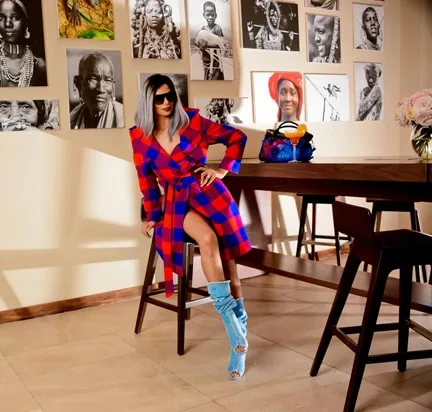
Rihanna looked stunning in Thebe Magugu’s Merino Wool Fringe Knitted Dress while announcing the launch of Fenty Beauty in Africa.
Rihanna, a Grammy Award-winning singer and entrepreneur, debuted her Fenty Beauty cosmetics line in September 2017.

Rihanna stated that Fenty Beauty will be available in a few African nations, including Kenya, over five years later, and what better way to promote it than by wearing pieces by a South African designer?
The Work singer made her statement while dressed in a Merino Wool Fringe Knitted Dress by Thebe Magugu.

“Welcome to Africa Riri,” tweeted the South African designer on Twitter, adding that the collection was about “exploring the shifting face of African Spirituality.”

“The silhouettes in the collection combine traditional local wardrobe solutions like draping and wrapping with intricate and crisp tailoring. The collection honors the work of renowned textile and printmakers from throughout the world “Thebe explained the motivation behind the 2021 collection.

Rihanna’s Fenty Beauty Hits Africa 
Fenty Beauty will soon be available in Kenya, Botswana, Ghana, South Africa, Namibia, Nigeria, Zambia, and Zimbabwe, Rihanna said on Twitter on Tuesday, May 10th.

Fenty Beauty will be available on May 27th, according to the 34-year-old billionaire.

Rihanna Showcases Her Thebe Magugu Knit Dress.
Thebe Magugu welcomed Rihanna to Africa on Instagram on Wednesday, May 11th, following her Fenty Beauty announcement.

She wore his Merino Woll Fringe Knitted Dress with a detachable bralette from his Autumn/Winter Alchemy 21 collection, which addresses the “shifting face of African Spirituality,” according to the award-winning designer.

In March 2021, Magugu debuted the collection during Paris Fashion Week. The skilled designer told British Vogue that the collection was “such a niche sensation.”


Which Other Celebs Have Worn Thebe Magugu?

Thebe Magugu has been worn by a number of American celebrities in recent years. In an episode of her hit comedy Insecure, American actress and producer Issa Rae wore a Thebe Magugu gown.

Miley Cyrus flaunted her Thebe Magugu men’s suit while soaring through the sky in a private plane, while Kylie Jenner flaunted her wool suit.

Issa Rae

Miley Cyrus

Kylie Jenner

Adut Akech

Dionne Warwick

Content courtesy of The South African, Thebe Magugu & NFH

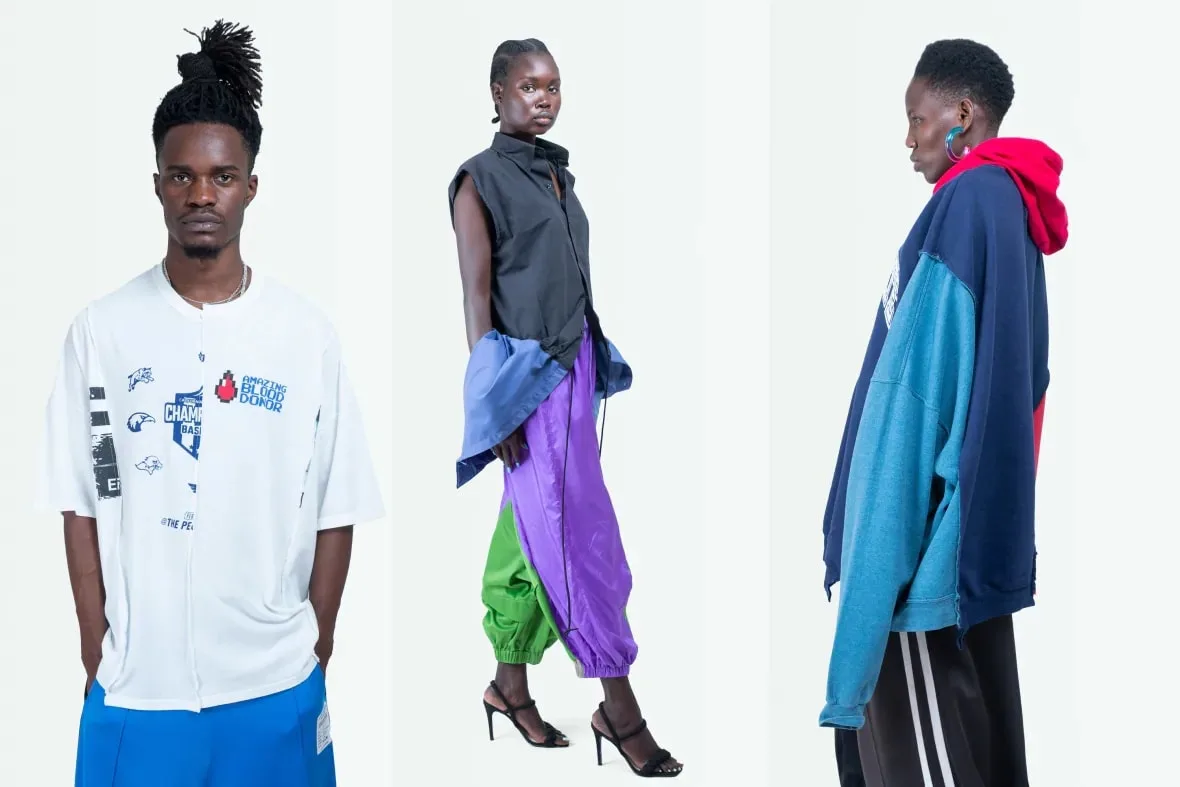
Kolade Bobby A Ugandan Fashion Designer Is Repurposing Donated Clothing And Reselling It In The Country Of Origin.

Bobby Kolade (Kolade) A Ugandan fashion designer is upcycling donated clothing and reselling it in the country of origin.
Bobby Kolade is upcycling donated clothes into new products and attempting to resell them in an effort to combat a culture of excess that he claims has infected and damaged Ugandan culture and fashion.

https://www.instagram.com/p/CdTbD41IO7H/?utm_source=ig_web_copy_link

“It’s very difficult for a designer like myself, and for my peers, to manufacture competitive clothing in Uganda because the second-hand garments that flood our markets are so inexpensive,” Kolade told The Current presenter Matt Galloway.

“Not only are we importing used clothing from the global north. We’ve also brought in a culture of excessive consumption and cheapness.”

With a concept dubbed Return To Sender, Kolade, a designer and entrepreneur, is attempting to reverse the flow of clothing.

According to Kolade, over 80% of all garment sales in Uganda are of secondhand things discarded in wealthier countries where fast-fashion reigns supreme. It has its own market in Kampala, where Kolade lives, named Owino Market. While some of the apparel on the market is functional, products such as ski jackets and wool suits are inappropriate for Ugandan conditions.

“The items that are shipped here are not always the items that we require,  As a result, many people simply adapt “Kolade stated.

“I once told a trader at Owino Market that I couldn’t afford this jacket. It’s simply too thick… And he added, “You know, style doesn’t care about the weather.”

While the market is a pleasant place to uncover some hidden treasures and bargains, it is also incredibly harmful to the country’s apparel designers, according to Kolade.

The Second-hand Market
In North America, when someone contributes clothing, the best of it is sold in a local store. Other items are then sold to countries in the developing world.

“Originally, they were sent as a gift. People might also pick up garments at various locations throughout the city. But it swiftly transformed into a highly profitable enterprise “Kolade remarked.

https://www.instagram.com/p/CdBjmpmrK-n/?utm_source=ig_web_copy_link

“That means our local industries never recovered from the early 1970s industrial downturn.”

Many charity stores and clothing organizations in wealthier nations are now selling excess inventory abroad, which frequently ends up in African countries, he explained.
This makes financial competition difficult for Kolade and other designers.

“People in this market now believe that clothing should be… as inexpensive as second-hand clothing. People have discovered this “Kolade said.

“So if you come out with something fresh as a designer and the pricing is a little higher than what they’re used to, they won’t buy our clothes.

No way!”
This second-hand method might be a double-edged sword, according to Annamma Joy, a marketing lecturer at the University of British Columbia.

While it presents issues for designers, she believes that donating clothing and providing affordable solutions for those in need is more sustainable.

“The government is boosting the number of job openings. People become hired in this company therefore it has an influence that is good for the economy,” stated Joy.

“Those garments, on the other hand, are not what consumers in those countries want. It’s also more costly. Because secondhand clothes undercut the industry, it closes.”

Return To Sender
Return to Sender, Kolade’s endeavor fills this gap. Kolade takes clothing that has been sent to Uganda and gives it his own personal touch.

One of his items, for example, is what he refers to as a four-panel T-shirt. He takes four different shirts and chops them up into fascinating combinations.
“It’s a metaphor for what we’re attempting to do because we’re trying to give these clothes a new identity,” Kolade explained.

He then sells them to individuals all around the world through his website.
The clothing also comes with a “clothes passport,” which outlines where the items utilized for the outfit came from.
“Hopefully, it’ll be a way of interacting with… individuals who see this item of apparel and wonder, “What is it?” ‘Where did it come from?’ And the wearer only needs to present his or her passport “Kolade stated.

https://www.instagram.com/reel/Cc-xD6GoO6H/?utm_source=ig_web_copy_link


He claims he isn’t bothered by individuals donating their garments since he realizes they believe it is a charitable deed and are unaware of the wider consequences. Instead, he believes that consumers would aid businesses by purchasing his sustainable inventions.

“‘Hey, listen, we can make something exciting, something new, something extremely innovative and resourceful,’ we’re trying to convey.
Smaller industry can be developed here,  Take a look at what we did with your trash.
If you want to help the industry in our country, please buy it back.’ “Kolade stated.

Content couretsy of CBC Canada, Buziga Hill & NFH


The First AMVCA Runway Show Will Be Hosted By Nigerian Fashion Designer Mai Atafo.

The first-ever Africa Magic Viewers Choice Awards runway show will be hosted by fashion designer Mai Atafo on Sunday evening.
He’ll be joined by Miz Vick, the show’s host, to anchor the second day of this year’s AMVCA, which will run for eight days.

Africa Magic’s official Instagram page announced the hosts on Sunday.
The awards ceremony this year will last eight days instead of the previous one-day affair.

Africa Magic has planned an eight-day series of events in conjunction with MultiChoice to celebrate the 8th edition of the Africa Magic Viewers’ Choice Awards (AMVCAs), which will take place on May 14, 2022.

Dr. Busola Tejumola, Executive Head, Content and West Africa Channels, MultiChoice Nigeria, made the announcement at a press conference, saying that the eight-day series of events will reinvent and bring exciting innovations to the awards, which were first held in 2013.
“We’re focusing on bringing the various qualities that make the African film and television industry genuinely magical to the millions of Africans who tune in every year to watch the awards.”

Fashion, technology, gastronomy, and African culture will all be celebrated at these carefully chosen events. There will be panel discussions and film screenings from our MultiChoice Talent Factory, as well as industry sessions and competitions for digital content creators and aspiring fashion designers,” she stated.
The eight-day festival will kick off on Saturday, May 7 with an Opening Night.

MultiChoice Talent Factory Day will take place on Monday, May 9th, with movie screenings and panel discussions led by MTF Academy students. On Tuesday, May 10th, Africa Magic will conduct a special Content Market Day for industry participants.

On Wednesday, May 11th, there will be a pan-African cuisine and cultural event.
On Thursday, May 12th, a Digital Content Creators’ Day will be held to raise awareness of the growing popularity of online content creators.
On Friday, May 13th, a special gala for nominees will be held, followed by the awards ceremony on Saturday, May 14th.

The awards event, now in its eighth year, last took place in 2020. Due to the COVID-19 pandemic, it was canceled in 2021.

The event kicked off on Saturday night with an inaugural gala that kicked off a series of activities leading up to the award ceremony on Saturday, May 14, 2022.
The runway event, which will take place tonight in collaboration with BellaNaija Style, is titled ‘Design for the Stars.’
The show will include a competition for nine aspiring fashion designers who have been taught by established designers such as Mai Atafo, Lanre Da-Silva Ajayi, and Adebayo Oke-Lawal.
For this edition, Africa Magic and its partners honor true African fashion and its significance in the development of the African film and television industries.

Content courtesy of Africa Magic & NFH

Jeffery Wilson, The Founder And Director Of The Jw Show, Represented Kenya At Africa Fashion Week Seattle.

Africa Fashion Week Seattle’s African-inspired designs are sweeping the global fashion market like never before, and it’s time to celebrate African excellence once more.

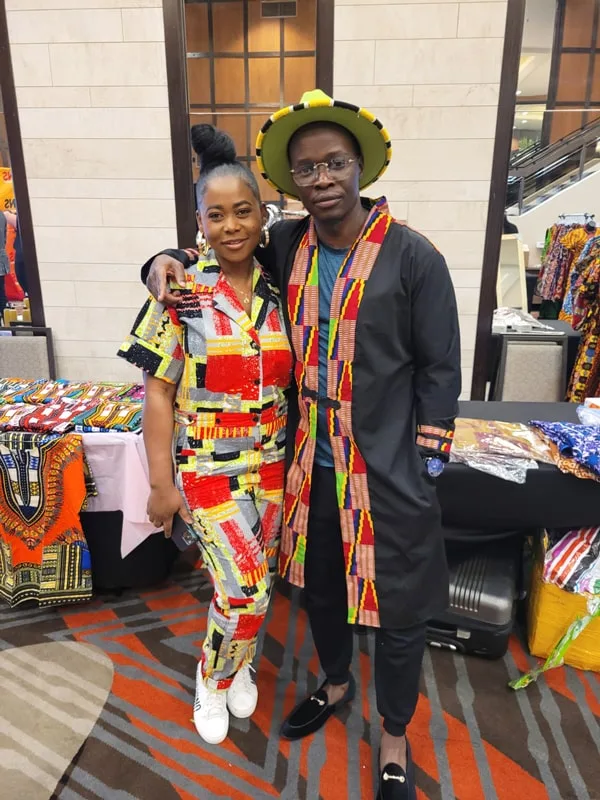
The Seattle Marriott Redmond hosted a colorful and vibrant exhibition and fashion event on May 8th, presenting local and international designers from all over the world.
Jeffery Wilson, our very own Kenyan Fashion Guru and Director of the JW Show, represented Kenya at Africa Fashion Week Seattle.

About JW Show

We aspire to connect Kenya, Africa, and the rest of the world via fabric and design.

Make a date with us and be a part of this renowned spectacle where elegance meets style. This fashion spectacular brings together men and women who are pushing the boundaries of sustainable local fashion enterprises that have crossed borders and drawn the attention of the globe.

About Africa Fashion Week Seattle Fashion For Humanity

It gives me great pleasure to warmly welcome you to this year’s Africa Fashion Week Seattle. This event was created to not only showcase the beauty of African fashion and culture but also to promote child education in African communities where many school-aged children are underprivileged and marginalized.
Every day, millions of African children, particularly in South Senegal and Tanzania, struggle to learn due to poor learning conditions. Images of young students sitting on the floor or on the ground due to a lack of desks have deeply moved me. Like most of you here today, I was fortunate to attend schools where I had access to every tool available to aid my learning.

The desperation of these children should serve as a wake-up call for us; we must act. To begin, we can provide them with a desk where they can write and learn. This is the first step in keeping these bright young minds in school.

In Senegal, a school desk costs $65 and a classroom requires 40 desks. By participating in Africa Fashion Week Seattle, you will make a difference by providing Senegalese or Tanzanian children with the opportunity to further their education and achieve their dreams.

We have been able to provide up to 101 desks, enough for two classrooms, since April 2021, and our goal is to provide 500 chairs by the end of the year 2022.

We will need all of the assistance we can get to reach this goal. I believe that by working together, we can improve access to education and learning quality in Africa, beginning in Senegal and Tanzania.

I’d like each of you to take a moment to consider this question:

  • Do you believe in education?
    Do you think education is important for breaking the cycle of poverty?
  • Do you think education is the key to opening the golden door of freedom for African children?

We don’t have to look far to find the answers to these questions.

Everyone reading this letter, in my opinion, is a living example of education’s limitless power.
Education represents everything to these children since it is the only avenue that can guarantee them socioeconomic freedom for themselves and future generations.

You will make a significant difference in the world by supporting our project, as you will be a part of something bigger than our local communities.
Your contribution will help to safeguard the future of an African youngster whose light would otherwise go unnoticed. There is no cause more noble, worthy, or spiritually fulfilling in my opinion, and I’m sure you’ll all agree.

Content courtesy of The JW Show, Africa Fashion Week Seattle & NFH

According To A Greenpeace Analysis, The Majority Of Clothing Delivered To East Africa Is Garbage.

According to a Greenpeace analysis, the circularity advertised by global fashion firms is “still a fantasy,” with the majority of apparel delivered to East Africa ending up in landfills.
Greenpeace Germany traveled to Kenya and Tanzania to learn about the problem of imported textile waste in these countries and to learn about some of the numerous local efforts working to combat it.

However, according to the campaigners’ most recent study, ‘Poisoned Gifts: From Donations to the Dumpsite: Textiles Waste Disguised as Second-Hand Clothes Exported to East Africa,’ issued last week, the majority of the apparel is of such low quality that it ends up at the dumpsite.

“The failure of the fast-fashion linear business model is more visible than in the countries where many of these cheap clothes end up once their short lives are over, on huge dumpsites, burned on open fires, washed out into the sea, with severe consequences for people and the planet,” Greenpeace said in a statement on its website.

According to the report, almost one million tonnes of worn clothing are collected annually in Germany, with the volume increasing by 20% year on year. According to the report, only a small percentage of worn clothing is resold in the country where it was collected: around 10%–30% in the UK, and similar percentages in the US and Canada.

According to Greenpeace, the majority of the worn clothing is sent overseas to join worldwide second-hand commerce in which billions of old garments are bought and sold each year.

However, the non-profit claims that this report demonstrates how textile waste is frequently “disguised” as second-hand clothing and exported from the Global North to the Global South in order to avoid the responsibility and costs of dealing with the problem of disposable clothing, with these used clothes, as well as new ‘overproduced’ clothes, frequently reported and recorded as “reused.” Greenpeace estimates that over half of them wind up in landfills, rivers, or are openly burned.

Greenpeace Germany said it recently campaigned for a ban on the destruction of unsold and returned goods to be included in the German circular economy law in 2020, as well as a transparency requirement for large companies to publicly disclose the number of products they discard and destroy, including textiles.

Following pressure from a number of environmental organizations, including Greenpeace, The EU announced a new textile strategy in March 2022, which recommends a ban on product destruction and a transparency mandate.

The widespread idea that donating clothes is a circular way of dealing with garment waste, according to the Greenpeace analysis, is generating concerns.

“The trade has been labeled “charity,” “recycling,” and “diversion,” and now many people call it “circular,” according to the research, although none of these names are accurate. Circularity is not achieved by simply transferring garments from one location to another. Previously, these clothes would have ended up discarded in dumpsites in the West, but now they end up in African dumpsites.”

African countries that have taken a position against this trade have also run into difficulties, according to the report. The East African Community (EAC) agreed in 2016 to restrict used clothing imports entirely by 2019.

The reason for the prohibition was that it would improve the economy by boosting the local textile industry.

The US, on the other hand, challenged the restriction as a trade barrier and threatened trade penalties, including the loss of duty-free apparel export eligibility to the US market, under the US African Growth and Opportunity Act.

Import tax increases have also caused complications. Consignments of old clothing were left uncollected at the port of Mombasa after importers failed to comply with new duty rules, according to Uganda, Rwanda, and Tanzania.

According to Greenpeace, 150–200 tonnes of textiles are dumped in African countries every day, and because up to 69 percent of the fibers used in clothing are synthetic (mostly polyester), they are oil-based and non-biodegradable. Greenpeace alleges that discarded microplastic fibers seep into the environment and end up in the human food chain.

According to the report, because there is insufficient infrastructure to dispose of these vast amounts of textile waste and official dumpsites are overburdened, textile waste is dumped along rivers or at settlement borders.

Some of it is burned openly, causing health problems for those who live nearby and clogging rivers and drains, which can cause flooding.

Methane can be released by decomposing clothing, and synthetic materials like polyester and lycra can take hundreds of years to biodegrade. Furthermore, many clothing contains harmful compounds, according to the survey.

According to Greenpeace, it is no longer sufficient for firms to focus solely on cleaning up their supply chains, and they are encouraging global fashion brands to increase their efforts to prevent their goods’ massive end-of-life impacts.
Furthermore, according to Greenpeace, the EU must ensure that its proposal to prohibit the export of textile waste and encourage long-lasting, durable, and repairable clothes of high quality is properly implemented through various rules, which must be accepted as a global treaty as soon as possible.

Greenpeace called for control of fashion supply chains in its Self-Regulation: A Fashion Fairytale report in November (2021), claiming that self-regulation was “failed to fix the problem.”

Content courtesy of Greenpeace & NFH

In America: An Anthology of Fashion, The Best Dressed Stars at the Met Gala 2022

What exactly is gilded opulence? People have been trying to decipher the implications of the Met Gala’s 2022 theme since it was revealed. Some people associate the phrase with Edith Wharton’s New York, while others associate it with the blingy, streetwise appearance of the early 2000s.

Guests at tonight’s event were allowed to take their own path, with plenty of space for interpretation. They dressed to the nines in custom designer costumes and historical vintage with glee.

https://www.instagram.com/p/CdJAjUxLPwY/?utm_source=ig_web_copy_link

On the red carpet, Janelle Monáe told Vogue that her Ralph Lauren gown evoked “future gilded glamour.
” A black shimmering train and a silver headdress completed the appearance, which was completed with silver Tiffany & Co jewelry.

The red carpet was packed with long trains, massive diamonds, and outgoing personalities trying to make an impression. Because there were so many attention-getting outfits, deviating from the usual was the only way to truly stand out.
Dakota Johnson is accustomed to wearing Alessandro Michele’s creations, but the fringed sequin catsuit she wore to the Met felt new.
Erykah Badu’s layers of beaded Marni suiting and tall hat were a stunning take on the star’s signature style.

Who says high fashion can’t be practical? 
Gigi Hadid’s Versace scarlet red jumpsuit and billowing puffer didn’t just look nice; they also allowed for more mobility and appeared to keep Hadid warm on a carpet where some celebs expressed their discomfort with the weather.

Multiple celebrities opted to wear vintage, emphasizing the importance of sustainability. Each of Nicolas Ghesquière’s Louis Vuitton muses, including Hoyeon Jung, Emma Stone, and Cynthia Erivo, came on the red carpet wearing a piece from the brand’s history that was tailored to fit their preferences.

Adut Akech took it a step further by wearing a Shrimpton Couture emerald green Christian Lacroix gown with a supermodel swagger.


Revisiting these vintage outfits demonstrated how forward-thinking the work of designers like Lacroix and Ghesquière is, but Kim Kardashian took home the night’s biggest historical win. The reality star debuted in the Jean Louis gown Marilyn Monroe wore to serenade John F.

It’s been said that good things come to those who wait, and Kim Kardashian appeared to be one of the last celebs to arrive on the Met Gala carpet.
Kardashian embraced old Hollywood, accompanied by her beau, “SNL” comedian Pete Davidson, by donning the same dress Marilyn Monroe wore in 1962 during her performance of “Happy Birthday” for then-President John F. Kennedy.

Kennedy on his birthday in 1962, just moments before the red carpet was supposed to close. It concluded an adventurous evening with a history lecture with a modern twist. Check out the best-dressed celebs on the 2022 Met Gala red carpet below, and check out the red carpet live stream to see all of the looks from fashion’s greatest night.

Kendall Jenner embraced the shadows in a smokey ballgown from Prada, in contrast to her sister Kylie Jenner’s all-white Off-White ensemble.
Jenner wore her bleached eyebrows with the translucent black two-piece gown, which included a billowing train with frills.

Content courtesy of Vogue & NFH 

Lekucci Global, A Fashion Label, Has Unveiled Its Afrocentric Collection.

The Afrocentric Collection (AC’22) has been unveiled by Lekucci Global Nigeria Limited, a fashion firm.

According to Adelekan Mogbodofo, the brand’s Chief Executive Officer and Creative Director, the collection includes a mix of mainstream fabrics that symbolize current Africa, as well as a selection of pieces from Africa’s primordial art, fabrics, and accessories.

“Afrocentricity is an ideology and a philosophy that gained traction during the era when blacks were colonized without regard for their culture, language, or identity,” Mogbodofo stated when asked what motivated him to develop the collection.

“The wearing of African and African-inspired clothing expresses African identity and black nationalism.” The Afrocentric collections are cultural products of Nigerians and the black diaspora, and they are worn exclusively or in combination with Western outfits.

“Fashion is really essential,” remarked Fadeshola Ojamomi, the company’s Brand Manager, at the debut of the collection. It improves one’s quality of life, and like anything worth doing well, it’s worth doing well. We had to introduce the Afrocentric collection in order to ensure that our clientele looked more fashionable in 2023. It’s a collection that expresses who we are as Africans and how we should present ourselves.”

Content courtesy of Lekucci Global, Punch NG & NFH

The Stadio School Of Fashion Has Teamed Up With H&m, The World’s Largest Retailer.

Known fashion designers Thebe Magugu and Rich Mnisi are among Stadio’s illustrious alumni.
Stadio School of Fashion, formerly Lisof, has announced two interesting collaborations, one of which is a cooperation with worldwide retailer H&M.
Distinguished fashion designers Thebe Magugu and Rich Mnisi are among Stadio’s illustrious alumni.
The British Accreditation Council has recognized the school as the sole fashion educational institution in South Africa (BAC).

Third-year BA and BCom fashion students from Hatfield and Randburg campuses will have the opportunity to work alongside creative talents from the Swedish retailer as part of the collaborations.

Caroline Nelson, country manager at H&M South Africa, said, “As a global fashion brand, we realize the tremendous value that collaborations like these provide to everyone involved.”

“In reality, partnerships are at the heart of our industry, and we’re always seeking new ways to build meaningful relationships with the industry’s curious and creative future talent.”
Another intriguing connection revealed by the fashion school is the possibility for second-year students to learn about establishing a fashion business from the local tailoring label Mr. Slimfit.

“I’m really looking forward to working with Stadio School of Fashion.” “I am really excited to work with these students, who I am sure are just as passionate as I am about growing our already amazing fashion industry,” said Theo Ngobeni, founder of Mr. Slimfit. “Most people who know me well know that I didn’t enter the industry through the traditional route I studied financial management at university so I am really eager to work with these students, who I am sure are just as passionate as I am about growing our already amazing fashion industry,” he said.

“We can only realize the whole potential of this growing sector and secure its economic sustainability if we work together.”

Stadio has a long history of assisting the South African fashion industry’s growth, as well as a commitment to instilling ethnic fashion traditions in its students.

The school believes that students will learn a wealth of information from the brands, spanning from marketing to visual merchandising, trend research, project management, consumer buying, and event photography, as a result of these agreements.

“We’re ecstatic to be cooperating with both H&M and Mr. Slimfit’s Theo Ngobeni. Both firms are enthusiastic about fashion, sustainability, and education, and we’re excited to watch how the collaborations develop and help define a better fashion future for everyone,” said Maryne Steenkamp, head of Stadio School of Fashion.

Content courtesy of Sowetan Live & NFH 

A Clothing Company For Men In South Carolina Celebrates African-American History.

When Jaquial Durham talks about how he got his start in fashion, he tells how he missed his prom and instead utilized the money his grandmother provided him for a tuxedo to establish a fashion brand.

Durham explained, “She was unhappy, but that was exactly what I intended to do.” Later, the Clemson native began working with Mr. Knickerbockers to produce a collection based on African American history that would be sold in the company’s stores, but the company finally dropped out owing to the designs not fitting their target demographic.

Durham decided to take a break because he was frustrated. He completed his bachelor’s degree at Winston-Salem State University and two master’s degrees at George Washington University and Georgetown University during that time. He also founded Public Culture, a media organization that focuses on urban and rural communities through music, movies, sports, fashion, and technology.

He designed a fashion collection that told the tales of Black figures and organizations at primarily white universities by combining his studies with his media firm.

“There is a hidden story on white campuses in the South,” he remarked. Durham creates a capsule out of the history of African American individuals and monuments, as well as hand-painted art. In addition to the capsules, Durham curated QR codes for the clothing, which may be scanned to learn more about the design.

Durham said his first collection took two and a half years to complete, but it couldn’t have come at a better moment. Durham remarked, “It was excellent timing because I was recently admitted to Clemson for my doctoral degree.”

“So being accepted to the university, being able to return home and become more involved in the community was ideal.”

Durham’s collection was influenced by Dr. Rhondda Robinson Thomas’ book “Call My Name, Clemson,” which examines African Americans who have helped to keep Clemson University and the surrounding area afloat. The Student League for Black Identity (SLBI), a student-led organization that fostered culture and history at Clemson, is depicted in the first piece in the collection.

https://www.instagram.com/p/Cbpu5lBuLzE/?utm_source=ig_web_copy_link

Three new sculptures in the Clemson collection honor Harvey Gantt, the first African American student accepted to the university, Littlejohn Grill, a popular hangout for primarily Black Clemson students, and Eva Hester Martin, a direct descendant of Fort Hill Plantation slaves. “I chose to distribute them separately because I wanted to give each item his own life story and opportunity to shine,” Durham explained.
Three new sculptures in the Clemson collection honor Harvey Gantt, the first African American student accepted to the university, Littlejohn Grill, a popular hangout for primarily Black Clemson students, and Eva Hester Martin, a direct descendant of Fort Hill Plantation slaves.

Durham intends to issue further collections featuring other Southern campuses, such as the University of Florida, the University of Mississippi, Mississippi State University, the University of Georgia, the University of Alabama, and others.
Visit The Public Culture Collections for additional information about Durham’s line.

Content courtesy of Central Daily & NFH 

Entrepreneur Fashion Week Joins Forces With Kitoko Makeup To Host The 2022 Fashion Week, Which Will Be Sponsored By Safaricom Plc.

Under the support of Safaricom PLC and the UK-based Makeup firm Kitoko Makeup, the Entrepreneur Fashion Week 2022 (e fashionweek) took place on the 4th and 5th of March. The event featured magnificent Spring/Summer collections from East African designers with the theme Beaute de Lamore (Beauty of Love).

The event was split into three parts, each of which took place on separate days. A press conference and toastmaster were held on March 4 at the Baraza Media Lab in Westland, Nairobi, before the main event.
At a Red-Carpet event held at the Kenya Comfort Suites in Kilimani, Nairobi, on March 5, designers from East Africa displayed their designs.

Designers displayed collections that were in line with the season’s theme, including stunning gowns, suits, dinner dresses, and African wear designs.
The Toast Master, the final element, will take place on May 27, 2022, at the Baraza Media Lab in Westland, Nairobi.

The Toast Master is gearing up for another round of training for small businesses and rising stars in the industry, this time focusing on the role of media in the following three key sectors:

Fashion Design
Fashion business, fashion PR, and fashion craft, as well as how fashion designers can use media to grow their businesses.

Beauty
Profiling some of the game-changing tactics and ideas from major individuals whose work has been featured on Netflix’s best-selling shows, as well as prominent celebrities and other Hollywood shows.

Business Expansion & Upscaling
Deep insights into how the industry’s enterprises may scale up by embracing disruptive ideas that make conducting business easier.
Delegates interested in participating in the Business Toast Master can register Online Here  or by scanning the QR Code on the poster in advance.

About E FashionWeek
One of Africa’s most important fashion events is Entrepreneur Fashion Week. The show features some of the world’s most accomplished fashion designers.
Since its inception four years ago, the event has grown to include brands that have been featured in British Vogue, Tatler, Essence, and the Face Magazine, as well as other brands that have collaborated with celebrities such as Rihanna, NFL stars, Jidenna, and Carla Hall of ABC’s “The Chew,” to name a few.

A fashion reality TV show on BET Africa, produced in collaboration with Made in Africa, is now in its second season. Designers that participate in Entrepreneur Fashion Week have a good chance of being chosen for the next season.

Content courtesy of Entrepreneur Fashion Week & NFH

Fashion for Conservation: Meet Sarah Vigne Founder Of Rock and Stones Ltd

Describe yourself (Who is Sarah Vigne) and your fashion brand in a few words.

Sarah is a natural entrepreneur with a wealth of experience in the development of sustainable enterprises that may provide revenue for wildlife conservation organizations.
Sarah founded the ethical fashion label Rock and Stones, and while working for the Ol Pejeta Conservancy in Kenya (www.olpejetaconservancy.org) for eight years, she developed a number of new revenue streams centered on retail, “voluntourism,” and “value adds,” resulting in increased visitor engagement (“immersive tourism”) and significantly increased financial resources for conservation.

Oscar Alochi: Can you describe Rock and Stones, the concept and idea as if I had never heard of it or the market in which it exists?

Sarah Vigne: ROCK AND STONES was founded in 2009, inspired by the vibrant contemporary fabrics made across the African continent, which represent the intriguing history of the Swahili trading empire and its ties to West Africa, India, Arabia, Europe, and the Americas in their designs.

Kitenge and Kanga are two of our favorite fabrics. These popular clothes include vivid designs in brilliant colors, as well as a Swahili inscription in the case of the Kanga. The abundance and variety of designs on these fabrics are amazing, ranging from post-modern abstractions to conventional paisleys and depicting subjects as varied as political and religious leaders, architecture, cuisine, animals, plants, plumbing, forms of transportation, and complicated patterns. Proverbs, aphorisms, insults, and blessings are among the Swahili inscriptions on the Kanga.

Kanga and Kitenge are wrap garments worn in Kenya, Tanzania, Uganda, Sudan, Mozambique, the Congo, and everywhere where Swahili is spoken. The Kanga, which is as popular as a t-shirt in the United States but has a far greater cultural value, is still evolving. It is a valuable medium for personal political, social, and religious expression, similar to the T-shirt but incomparably more exquisite and functional.

The Kanga has become an intrinsic element of East African culture as both an art form and beautiful, practical clothing.
‘The Kanga struts in style… Wear it with a smile,’ as the slogan goes.

Rock & Stones is based in Kenya, and we specialize in bringing the depth of African culture to our tailoring workshop, where we transform our carefully picked African Kanga and Kitenge fabrics into a collection of ready-to-wear garments for all ages and sizes.

Specializing in beachwear, festival clothing, and casual wear…

Our firm supports the local communities that make our clothes with such care, and we aim to open our own training workshop soon to provide a life skill to both boys and girls, men and women, who want to work with Rock & Stones to find a market.

OA: What were you doing before Rock and Stones, and what motivated you to start the business?

SV: The prospects that Africa offers inspire me. It’s such a bright and colorful place, with skilled and talented people that only need a helping hand to progress economically. I’ve worked in tourism, horticulture, and as an investment banker before that.

OA: What techniques do you use? Tell us about the process.

SV: We are primarily a tailoring business that produces shorts and other clothing items from vibrant African textiles of the greatest quality and grade.

OA: How did you learn/master this technique and why do you use it?

SV: I can’t sew to save my life, but I know some amazing tailors who can, and it is up to them to manufacture our products.
However, I have mastered the art of quality control inspection!

OA: What challenges did you face?

SV: Keeping the company afloat during COVID was a problem, but we managed to do so and keep everyone working, despite the fact that I stopped paying myself.
We are still recovering, but we believe we have passed the worst of it.

OA: How did the obstacles make you feel?

SV: We were successful once we got through them. I’ve discovered that one of the most crucial life skills is learning to be comfortable with being uncomfortable.

OA: What were your achievements?

SV: We have a company that makes roughly Kshs 25 million each year and is growing.
That in its own right is an achievement I think.

OA: Favorite moments?

SV: After a long day at work, relaxing with a glass of wine in the evenings

OA: How do you get dressed in the morning?

SV: I go through a lot of various outfits before deciding on my final one, which irritates my husband.

OA: What’s your take on the Kenya fashion industry?

SV: Potential, potential, potential!

OA: How different is the UK fashion industry compared to the Kenya fashion industry?

SV: Of course, the fashion sector in the United Kingdom is far more competitive, and standards are normally higher, but that in its own right provides us in Africa with a great opportunity.

OA: Any future collaboration with Kenyan fashion designers?

SV: We’re always looking for opportunities to work and partner, but there’s nothing substantial on the horizon right now.

OA: If you were given the opportunity to work with a local or international fashion designer who will you love to work with?

SV: Anya Hindmarch

OA: What are your thoughts on fashion in Africa?

SV: We have a long way to go, but we have a lot of potentials, as previously stated.

OA: What has changed during this period of Covid-19

SV: The local markets took a beating, but we’re starting to bounce back now… However, there is still a long way to go.

OA: How has your fashion brand adopted the new technology of virtual fashion shows during and after the Coronavirus pandemic?

SV: We’re much more online now, and that’s where we see ourselves going in the future.

OA: How are African fashion designers influencing fashion in the western world?

SV: Increasingly – we have a place, we are bright and colorful, and we are the new big thing

OA: What can the African fashion industry learn from the western world?

SV: Efficiency, prompt delivery – on time, in the appropriate quality, at the right location

OA: Over the last few years have you noticed any significant changes in the African fashion trends?

SV: Yes, they are increasingly influenced by western trends, which is both good and terrible. Even as we modernize and progress, we must remain true to our roots.

OA: When dealing with Africa is it important for the fashion world to be ethical and socially responsible, and put in place strong corporate social responsibility governance?

SV: Of course, we have a strong ethical attitude at Rock and Stones.
We donate a portion of our profits to charity and do everything we can to keep people employed and engaged.

OA: Tell us about UK Fashion Week.

SV: Don’t really know too much about it – we are an African brand!

OA: Where can we find your designs?

SV: www.rockandstones.com

We also have a number of locations in Nairobi, as well as our own shop in Nanyuki’s Dromans complex.

OA: What does eCommerce mean to you and your business?

SV: We consider that as critical to our company’s future success.

OA: Do you think eCommerce is important for African fashion designers that are trying to get recognized and reach a global market?

SV: Yes, it’s crucial, but you should also invest in marketing and social media. You may generate traffic to your eCommerce site by building a digital following.
You’re dead in the water if you don’t have this.

OA: How does your strategy change when running an online store to an offline store?

SV: As previously said, digital marketing and social media are critical.

OA: Where do you see African fashion in the next 5 to 10 years?

SV: Growth – and perhaps, we’ll be able to start breaking into high-value Western markets on a large scale.

OA: What 5 pieces of advice would you give to young African fashion designers wanting to enter the fashion industry?

SV: 

  • Stay true to your roots – Africa is the next big thing
  • Work hard and persist – things don’t happen overnight
  • Ecommerce is the future – meaning that digital marketing is key
  • Wear your own fashion with pride
  • Continuously survey global trends – what do people wear and what do they want

OA: Is there anything else you would like to add?

SV: Go for it!!!

Content courtesy of Sarah Vigne, Rock and Stones & NFH 

Fashion That Benefits People, The Environment, And Wildlife In Africa’s Urban Ranch Kenya

Urban Ranch Kenya was established in 2021 with the goal of revamping Kenya’s leather supply sector by sourcing cow skins from conservancies where livestock and wildlife may coexist. By only purchasing our leather from these conservancies, we help wildlife conservation in Kenya even before any of our products are manufactured!

Urban Ranch not only uses finest Kenyan leather, but we also produce innovative color combinations for our products, keeping us current with worldwide trends and fashion.

However, the narrative does not finish there! When our leather products are sold, we donate 5% of the proceeds to Lion Landscapes, a Kenyan nonprofit dedicated to lion conservation. Our donations go toward ensuring that Kenya’s lion populations have adequate safe habitat to thrive.
Our products are not only amazing, but they are also “lion friendly” in every respect.

Many of our leather goods are embellished with stunning beadwork stitched by Kenyan ladies from community groups in rural Kenya. We send them our products to bead, and they add an extra sparkle to many of our leather items with their remarkable skill and our high-quality beads.

Urban Ranch is assisting in the empowerment of people who would otherwise have no employment opportunities by bringing our distinctly Kenyan products to foreign markets.

Our products may be purchased online (www.urbanranch.co.uk) and in our Nanyuki flagship store (www.urbranranchkenya.com) (next to Dormans coffee shop).

Content courtesy of Urban Ranch Kenya & NHF

Ad