Sunday 31st of May 2026

Nairobi, Kenya

Fashion Designer Kithe Brewster’s Catwalks Remove Cultural Roadblocks

Kithe Brewster is an American stylist and fashion designer and founder of the Kithe Brewster brand and company. Leaving for Paris at age nineteen proved to be the right cut for him, as he immediately grasped the French scene, becoming a hot stylish on the move.

After seven years in Paris, he moved to London, where music styling became his forte. While in London, he worked for magazines such as Elle, Scene, Vanity Fair, Interview, Flaunt, Chic (Dutch), French and American Jalouse, and Surface, among others.

His work for these publications gained attention from the crème de la crème of fashion, as well as the European and Hollywood celebrity elite. He has styled covers for Flaunt magazine with stars such as Adrien Brody, Cate Blanchett, Drew Barrymore, Selma Hayek, Winona Ryder, and many others.

His personal clients have included Halle Berry, Julianne Moore, Iman, Diane Lane, Eva Mendes, Usher, and Heidi Klum. He has spent a great deal of time in the Middle East, in Egypt, Jordan, Lebanon, and the UAE. He was Creative Director of DIFW, the original Fashion Week. “I predicted on record,” he says, “that Dubai would become a major fashion capital.”

Currently, in Dubai, Brewster spoke to Gulf Today

Why did you choose the fashion industry as your place of work?

I would like to think my early exposure to the arts in all aspects was definitely a deciding factor. From a very young age, I was extremely conscious of clothing and its many textures. At five or six, I truly understood the definition of beauty.

Looking back, I adored rummaging through my mother’s closets and just appreciating the quality; I was quick to notice when something missed this quality.

It was truly organic in this sense, thus I believe I was chosen. As a man of faith, there are no coincidences. I believe it is the Creator’s plan – the journey and the results.

What are the African-American sensitivities you bring to fashion?

Being African and American contributes a great deal to my creative DNA. I am balanced in rich history and tradition. As a designer, my gift is my hands, draping and manipulating fabric to create one-of-a-kind designs. This is rich African tradition the sense of color and dynamic.

There is a European side of my makeup, which leads me to seek out Europe to discover this sense of style. I was a huge success as a stylist, fashion editor, and celebrity stylist, because of the balance of multiple culture comprehension. In fact, it’s the understanding of all global cultures combined, that is needed to truly be a voice in fashion.

Is fashion only for celebrities or can it be shared by others?

Fashion is, in my belief, for everyone. I definitely think we all want and need the confidence of looking and then feeling good. I spend a lot of time observing the influences in modern society. I’m certain it trickles down, in some capacity, to reach everyone.

Is Faith a constraint on fashion?

I believe Faith is in no way a restraining measure in fashion. For example, my time in the UAE and other Arab countries, helped me to see the progression of High Fashion and Modesty. When I was Creative Director of Dubai Fashion Week, I helped to discover the amazing talent of Rabia Z.

I had the huge pleasure to nurture her and pushing her vision of modesty and the Muslim woman. At that time, twelve years ago, we made history with her first show in Dubai. I get goosebumps when I think back and hear the live drums and the first entrance of the first model.

We proved successfully that within modesty, one can be fashion-forward and completely true to one’s faith, respecting the modesty it is built upon. I cried like a baby that night when she received a true standing ovation. We had managed to inspire Muslim women. It was a historic moment and I have watched a global progression in High Fashion inspired by the modesty of Muslim women. Let’s not forget my first ever collection was inspired by Emirati women.

Is there a distinction between ex-pat fashion and Emirati fashion? If so, what are their defining features?

There is a difference between ex-pat fashion and Emirati fashion. There is a merging of sophistication and class in Emirati fashion. Expat fashion tends to hinge upon trends from Europe, yet slightly behind. As an ex-pat, I say this in an opinion-based manner. What’s beautiful is when all of the incredible high fashion intertwines with traditional and modest apparel.

Why did you think Dubai could be a fashion center of the world?

I felt twelve years ago that Dubai would become a fashion capital because I saw the vision of Sheikh Mohammed and the impact of the year that I spent coming back and forwards from New York. The buildings were going up all around me. I saw it happening.

I felt the hunger for this country’s own place within fashion makeup. I pushed so hard to catch them up to the rest of the world. On a funny note, I got rid of the raised runways and had the models walk on the floor. It caused a huge uproar: it was in the papers. But when the rest of the world saw the shows that came out of Dubai, they were blown away. I convinced American Elle magazine to cover Fashion Week. It was a huge step that was aligned with Sheikh Mohammed’s vision.

How will you define your style?

Maison Kithe Brewster will define its style by being discerning and not by overcapitalizing or overexposing the brand. By always being consistent in style. By not selling the same thing to hundreds of clients.  By quality and personal attention to every client. By never running out of ideas, and creating original excellence.

Content courtesy of Gulf Today & Nairobi fashion hub 

10 Designers Who Made The Cut For CFDA/Vogue Fashion Fund 2021

Not only is the council back for a new season but it returns for an even better cause: providing funds to all 10 finalists.

CFDA/Vogue Fashion Fund is now back on its feet after a year in hiatus because of the struggles brought by the pandemic. Not only is the council back for a new season but it returns for an even better cause. Unlike before when CFDA and Vogue provide funding to the chosen winners (grand finalist and two runners-up), the council is now giving funds to all its 10 finalists.

The 10 lucky designers to receive funding and mentorship from the industry heads are Batsheva Hay of Batsheva; Mike Eckhaus and Zoe Latta of Eckhaus Latta; Anifa Mvuemba of Hanifa; Rebecca Henry and Akua Shabaka of House of Aama; Kenneth Nicholson; Jameel Mohammed of Khiry; LaQuan Smith; Abrima Erwiah of Studio 189; Edvin Thompson of Theophilio; and Willy Chavarria.

1. Batsheva Hay of Batsheva

The lawyer-turned-designer draws inspiration from the traditions of feminine dressing. Think Victorian, Amish, and Hasidic styles. Her dresses consist of flowy silhouettes with prints, ruffles, and collars.

https://www.instagram.com/p/CMKmN7PLz2j/?utm_source=ig_embed

2. Mike Eckhause and Zoe Latte of Eckhause Latta

Known for deconstruction and unpredicted materials, the work of the design duo has been worn by the likes of musician Dua Lipa and model Alek Wek. Their latest collection features pieces in knit, quilts, and leather.

https://www.instagram.com/p/CNDS_KYn-PN/?utm_source=ig_embed

3. Anifa Mvuemba of Hanifa

One of Teen Vogue’s Generation Next designers in 2019, Anifa has emerged as one of the most promising designers to date. She likes to present her pieces as effortlessly beautiful, bold, and functional.

4. Rebecca Henry and Akua Shabaka of House of Aama

Rebecca Henry and Akua Shabaka, mother-and-daughter design tandem, use their platform and designs to rejoice in their community and heritage. One of their most notable collections celebrates Southern Creol spirituality and their African roots.

5. Kenneth Nicholson

Kenneth started his label back in 2016. The Los Angeles-based designer likes to take risks on menswear. His work has been featured in magazines like Blue and Frontpage and has been worn by the equally adventurous Jaden Smith.

6. Jameel Mohammed of Khiry

Khiry is a luxury jewelry label founded in 2016. Jameel Mohammed, Khiry designer, has also been a part of Forbes 30 under 30, with his works worn by Megan Thee Stallion, Doja Cat, Regina King, Michelle Obama, and Alicia Keys.

7. LaQuan Smith

Oozing with sensuality, LaQuan’s designs celebrate all body forms. Because of this philosophy of inclusivity, LaQuan pieces have been worn by big names in the fashion industry including Jennifer Lopez, the Kardashian-Jenner clan, Nicole Scherzinger, and Paris Hilton.

8. Abrima Erwiah of Studio 189

Studio 189 highlights “African and African-inspired fashion” through various regional prints and handcrafted textiles.

https://www.instagram.com/p/CNsjttmsElD/?utm_source=ig_embed

9. Edvin Thompson of Theophilio

The Jamaican designer produces contemporary clothing that draws the line between avant-garde and ready-to-wear pieces. A lot of his pieces incorporate black, red, yellow, and green colors, echoing the colors of Jamaica.

10. Willy Chavarria

The Mexican-American designer who launched his brand back in 2015 is also being funded by CFDA/Vogue Fashion Fund. Willy, who has collaborated with Bench last 2019, is known for his menswear pieces that are loose-fitting, structured, and contemporary.

Content courtesy of Manila Bulletin & Nairobi fashion hub 

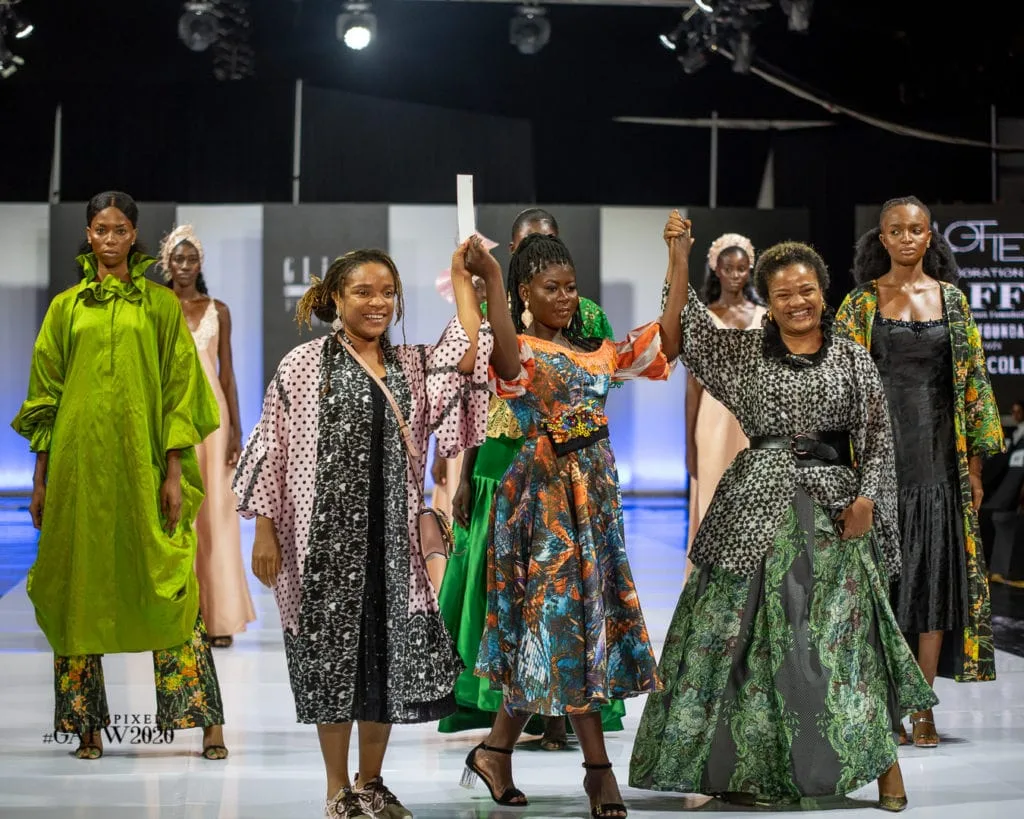
South African Fashion Week Kicks Off

South African Fashion Week (SAFW) begins its three-day schedule of shows today, with 28 designers, including LVMH prize finalist Lukhanyo Mdingi and finalists of SAFW’s 2021 new talent search competition, showcasing their collections digitally.

According to Lucilla Booyzen, director of SAFW, the trans-seasonal collections on the schedule were shot at the beginning of April at South Africa’s Mall of Africa and viewers will be able to purchase tickets on the SAFW website to view the collections via streaming platform Quicket.

While the digital format remains a necessity due to continued government restrictions to curb the spread of Covid-19 in South Africa, Booyzen also said broadcasting the shows digitally has the benefit of increasing the platform’s reach beyond South Africa.

This year’s main focus for SAFW is slow fashion, Booyzen told BoF. In practice, this focus takes different forms for different designers, with upcycling and working with natural fabrics like cotton, mohair, and wool being commonly utilised slow fashion tools among those showing at SAFW.

”South African Fashion Week’s goal of facilitating a slow fashion culture steeped in ecological sustainability by 2025 is supported by the majority of designers who are aligned with the platform,” Booyzen said.

This edition of SAFW also features a tribute to Wandi Nzimande, the co-founder of popular streetwear and lifestyle brand Loxion Kulca, who died earlier this year. The Loxion Kulca collection to be shown on the SAFW schedule was designed by House of Ole founder, Ole Ledimo.

Content courtesy of Business Of Fashion & Nairobi fashion hub 

How Viola Davis Won Awards Season with her Colorful Red Carpet Style

In this strangest of awards seasons, Viola Davis was a rare bright spot.

The 55-year-old star, who’s nominated for Best Actress at the 2021 Oscars for her performance in “Ma Rainey’s Black Bottom,” has captivated fashion lovers with her parade of colorful red-carpet looks over the past few months, injecting some much-needed joy into a year defined by a global pandemic and a long-overdue reckoning with systemic racism.

To be sure, Davis has long gravitated toward bold, bright hues on the red carpet. Who could forget the red-hot Armani she wore while accepting her Best Supporting Actress statuette for “Fences” at the 2017 Academy Awards, or the bubblegum pink Michael Kors column she chose for the same show the following year?

But, in 2021, the majority of the Juilliard grad’s vibrant-as-ever red-carpet looks were designed not by the usual red-carpet heavy hitters, but lesser-known labels led by creatives of color.

As a result, her outfits from monochromatic marvels by Greta Constantine to a custom peplum confection courtesy of Duro Olowu have made major statements in more ways than one.

“Pretty dresses are, well, everywhere,” Greta Constantine designer Kirk Pickersgill, who created two bold gowns that Davis wore this season, told Page Six Style. “By contrast, dresses that celebrate your strength and empower both you and your tomorrow are far more difficult to come across.”

The designer added that by championing black-owned brands, Davis “has opened the doors for so many of us that have been locked out.”

“There is nothing more beautiful than an individual using their platform to not only look good but also do good,” Pickersgill told us.

Ahead of Sunday’s Oscars, let’s take a look back at Davis’ winning style throughout the season.

Lavie by CK for the Golden Globes

“It’s about feeling good and looking good in your queendom,” Cameroon-born designer Claude Kameni told Page Six Style of the inspiration behind the show-stopping mermaid gown Davis chose for the Golden Globes in February.

Kameni had just one week to complete the puff-sleeved dress from printed African fabric, but the end result, which had her at “a loss for words,” was “definitely worth the all-nighters.”

“We started saying, ‘Viola’s gonna violate this dress,’” the self-taught designer quipped, with a laugh, adding that she hopes to see more A-listers following Davis’ lead when it comes to supporting black fashion talent.

“There’s a whole bunch of talented designers that need their names out there; it shouldn’t just be the same designers all the time,” Kameni said. “Give someone else a spotlight!”

Greta Constantine for the Critics Choice Awards

“After months of panic and fear, we wanted garments that excited us, styles that evoked a sense of hope,” Pickersgill told us of Davis’ ruffle-trimmed cerulean frock. “By producing bright, structural garments, we were looking to bring a smile to the face of both the wearer and the beholder.”

Pickersgill added that seeing the star in her bright blue gown was about “so much more than the fashion. It was about capturing a moment in history that celebrates black creativity in all of its beautiful, challenging, inspiring forms.”

Duro Olowu for the NAACP Image Awards

Appropriately dubbed the “happy dress” by stylist Elizabeth Stewart, this cheery printed peplum frock was a perfect pick for Davis to wear during her double win for “Ma Rainey” and “How To Get Away With Murder” at the NAACP Image Awards in March.

Nigerian-born British designer Olowu has also dressed Michelle Obama, Lupita Nyong’o, and Thandiwe Newton, to name but a few.

Louis Vuitton for the SAG Awards

According to the French fashion house, Davis’ lime green gown took 140 hours of work and 10,000 sequins to complete. The gold and silver embellishments formed a geometric pattern that ran parallel to a pair of zippers down both sides of the strong-shouldered dress, perfectly framing the star’s silhouette at the SAG Awards in early April.

Greta Constantine for the African American Film Critics Association Awards

Davis picked another look from Greta Constantine’s spring 2021 collection this one in ruffled sunny yellow for her last pre-Oscars appearance on the awards circuit when she netted the icon award at the African American Film Critics Association Awards.

“After months in which we had no choice but to take everything seriously, this was one of those garments that would invite you to let your guard down and simply be,” Pickersgill said.

Content courtesy of Page Six & Nairobi fashion hub


Alber Elbaz, Celebrated Fashion Designer, Dies at Age 59 of Coronavirus

Alber Elbaz, the Moroccan-born Israeli fashion designer best known for rejuvenating the Lanvin brand, died in France of COVID-19, according to reports. Israeli media has reported that he died of the South African variant of coronavirus, despite being fully vaccinated. He was 59 years old.

The designer, known for his elegant feminine dresses with visible zippers, first worked with Geoffrey Beene in New York, then with the houses of Guy Laroche and Yves Saint-Laurent in France before his 14-year run at Lanvin. He was controversially dismissed from that position in 2015. In late 2019 he formed his own company, AZ Fashion, and the first collection of its line AZ Fashion debuted this January.

In a New York Times profile, he explained his concept of “Anatoknit,” in which ergonomic lines worked to create tension and release for maximum comfort that took seven months of research and development. He was driven to design something stylish that a woman could wear and “eat a big piece of cake.”

While at Lanvin, Elbaz designed creations worn by many celebrities, including BeyoncéLupita Nyong’oPharell WilliamsNatalie Portman, and Harry Styles, as well as Demi MooreNicole KidmanCatherine DeneuveKate MossUma ThurmanJulianne Moore, and Gwyneth Paltrow.

Meryl Streep wore an Elbaz-era Lanvin dress when she accepted her Academy Award in 2012 for The Iron Lady, as did Tilda Swinton when she won for Michael Clayton in 2008. He was also credited as a special costume designer for Portman’s 2015 film A Tale of Love and Darkness.

Elbaz was also known for his good humor, made evident in this quote when asked about the importance of fashion: “Today, I was at Barneys for a couple of hours we had a trunk show. There was this woman I was helping, and she told me at the end of this little rendezvous we had, ‘I am going to be broke, but I am happy.’

I think this is the whole idea of what fashion is going to do today, and I am saying that, when everything is crashing, maybe it’s not a bad idea to invest in a good dress.”

Content courtesy of Vanity Fair & Nairobi fashion hub 

Birimian First Investment Company Dedicated to African Luxury Brands Launches

Birimian, the first operational investment firm dedicated to connecting African luxury and heritage fashion brands with international investors, has launched to accelerate the international emergence of African creators and designer brands.

The aim of Birimian is to support African designers and help them facilitate and accelerate the growth of their businesses regionally and internationally, acting as a bridge between the continent’s entrepreneurs and creative talent, and strategic stakeholders in the international fashion and luxury industries.

https://www.instagram.com/p/COARUWDHn9D/?utm_source=ig_embed

Founded by an all-female executive team, Birimian is led by Laureen Kouassi-Olsson, a seasoned executive in the African financial services and private equity industries, alongside Michelle Kathryn Essomé, the former chief executive officer of the African Private Equity and Venture Capital Association, who will be the chief financial officer and head of investor relations.

In addition, Céline Gainsburg-Rey, who specializes in supporting luxury brands, has been named head of strategy and marketing, while Olufunke Faweya, who has dedicated her career to operations management and international brand expansion, joins as head of brand operations.

Birimian will address the challenges associated with capital, production, and international distribution faced by African designers, explained the investment firm in a statement while establishing an “ecosystem of experts and professionals who specialize in value creation for independent labels and international brands”.

The investment firm will work with brands across the fashion, accessories, beauty, and cosmetics, and gourmet sectors and is launches with four brands that it provided support through a combination of financing and bespoke growth strategy.

https://www.instagram.com/p/CMKeOgzBiVA/?utm_source=ig_embed

The first brands to join its portfolio are women’s apparel and accessories brand Christie Brown from Ghana, which has been worn by Beyonce and Alicia Keys, Loza Maléombho from the Ivory Coast that bridges traditional African aesthetics and contemporary fashion, womenswear brand Simone et Élise also from the Ivory Coast, and Belgium-based bag brand, Yeba.

New investment firm Birimian places a spotlight on African luxury fashion

Birimian said that it will focus on providing long-term financing of brands in the company’s portfolio, investing between 30,000 and 3 million US dollars in brands and creative enterprises at incubation, acceleration, and growth levels.

Alongside financing, brand consultation and coaching will be offered to ensure business processes and brand identity are in line with each designer’s goals, as well as strengthening of internal control and financial planning processes, and production and distribution capacity through strategic partnerships.

Birimian will implement expansion plans ensuring sustainable growth, both regionally and internationally, with investors tied in for a minimum of five years to ensure long-term support for partner brands, as well as international exposure for creative companies by optimizing the use of digital channels.

Africa’s textile and clothing market is a growth market, with the industry estimated to be worth more than 31 billion US dollars. The continent also accounts for the second-largest number of jobs in developing countries after agriculture.

Commenting on the launch, founder Laureen Kouassi-Olsson said in a statement: “Birimian has been created to champion the exceptional talent and creativity emanating from the continent in order to help it reach the audience it deserves. Our mission is to use a combination of finance, mentoring, and operational support to help our brands gain international exposure, achieve their true potential, placing hence the continent’s cultural heritage on the world stage.

Birimian is a call to action to contribute to the emergence of African heritage brands.

Our unique value proposition relies on the extended ecosystem of experts and key stakeholders from the international fashion and creative scene we will build to support the sustainable growth of our brands and in turn connecting investors and industry enthusiasts with the continent’s finest designer brands and creative entrepreneurs.”

Content courtesy of Fashion United & Nairobi fashion hub 

Uganda Celebrity Stylist Abryanz Launches New Fashion Collection as He Celebrates 10 years in Fashion Industry

Fashion guru Bryan Ahumuza aka Abryanz from Uganda has launched a new fashion collection dubbed ‘When No One Is Watching’ to celebrate 10 years in the fashion and style industry.

Abryanz has put a mark on Uganda’s fashion industry especially through his Abryanz Style and Fashion Awards (ASFAs) event which happens annually, and now he has decided to introduce a new fashion line as he celebrates 10 years in the industry.

According to Abryanz, his latest fashion invention has a combination of passion, zeal, and love that he has for creating excellence.

“The rebirth of the brand’s look and feel enhances the apparel space that the brand wishes to reach and is led by the concept of merchandise drops. This will use themes of inclusion and diversity of the community in both an ergonomic and socially inclined mandate,”

“Rather than just a fast fashion brand with no message, this newfound proposition will inspire patriotism of its identity and honest representation of its sense of belonging,” he noted

He adds that this new collection will give a true sense of rigid life in a fast-paced life of youths and a feeling of being young at heart.

“Natural awkwardness of the abnormally joyful youth who cultivate everything alternative and truly influence a shift in culture at every point of advancement.” He said.

This new collection will offer styles in staple essentials ranging from unisex tracksuits, branded t-shirts showing off the new brand logos, caps, underwear for both male and female, and high-end fashion eyewear.

About Abryanz Shop

The year is 2010, and the fashion community in Uganda is at its inaugural stages, and at one of the most significant points in its growth. During the same year, the now renowned Abryanz brand was birthed.

Abryanz’s 11-year span in the business has been quite an eventful, but fulfilling journey that has seen our portfolio grow from fashion, entertainment to the hospitality business, their approach Right from its foundation, The Abryanz brand set out to create a world-class service/product tailored for the modern and fashion-conscious consumer.

Abryanz’s approach is to have class and exquisite taste at the forefront of many of our products, giving our clientele a once-in-a-lifetime and unforgettable experience.

Whether it’s a piece of clothing from our men’s apparel or the hospitality at any of our events, we strive to ensure that our guests/clients receive a world-class product from our brand.

They thrive on our creativity and flexibility, a trait that enables us to cater to any of our clients that come our way.

Content courtesy of  WatchDog Uganda & Nairobi fashion hub 

Pan-African Influenced Lifestyle Brand The Malaika Collective Launches Crowdfunding Campaign on iFundWomen

The demand for a premium apparel brand that celebrates the culture, style, and community of the Pan-African diaspora is tremendous. The Malaika Collective has stepped up to answer the call.

The African diaspora radiates beauty, reality, and undoubted resilience. Not surprisingly, all of these qualities, and more, have made their way into the style of apparel embraced by African people no matter where they live worldwide. In exciting news, a new lifestyle brand is celebrating this magic to help empower and inspire the fashion and community conscious, while also encouraging communication and networking.

Enter The Malaika Collective. The Malaika Collective is a new brand aimed at creating a multicultural home for Black and Brown people from all parts of the African diaspora and their friends and allies alike. As a collective, the brand’s apparel pays homage both to the traditional homelands where the diaspora finds its origins, as well as of the new countries and fresh beginnings that promise so much for the future. Currently, The Malaika Collective is running an exciting crowdfunding campaign on iFundWomen to help bring its first collections to market. All are encouraged to show support.

“The Malaika Collective is a culmination of a five-year venture of innovative storytelling through fashion, media, and education,” commented founder Rita Bunatal. “I found inspiration and empowerment through my Ghanaian and Kenyan heritage. We have seen success with our early, sold-out, t-shirts. And now we look forward to taking things to the next level and having a positive impact on fashion and the world.”

Beyond simply an apparel effort, The Malaika Collective has much larger plans that are emerging to help empower the community. A key part of this is scheduled for Summer 2022 when The Malaika Collective will launch its first flagship location in Brooklyn. This space will double as a retail store, as well as being an immersive, membership-based innovation hub for Black creators and entrepreneurs.

Planned highlights of the sure-to-be exciting location will include interactive educational walls, a kitchen that prepares Afro-fusion-inspired dishes, and a co-working + co-creation space along with a separate event space to host events celebrating the heart, culture, and traditions of both Brooklyn and the pan-African diaspora. The co-creation space will be available to the members of The Malaika Collective community.

The iFundWomen campaign will help make all of this, and much more, a reality.

A number of different perks are available depending on donation size related to the iFundWomen campaign. The iFundWomen Malaika Collective page also goes into great detail about recent activities from the collective and its recent challenges faced, including the last year in the face of Covid-19.

Support the Malaika Collective crowdfunding campaign here. Be sure to visit the official website at https://www.malaikaapparel.com.

Content courtesy of PR Underground & Nairobi fashion hub 

Inside Naomi Campbell’s Luxury Villa In Kenya Open Door Architectural Digest

Whenever supermodel Naomi Campbell needs to unplug, she heads to her luxurious, airy villa in Malindi, Kenya

Over the course of her remarkable 35-year career, supermodel Naomi Campbell has blazed trails, stormed catwalks, and graced countless magazine covers. And while most of her legendary peers have long since retired and retreated from the spotlight, at 50 Campbell is as in demand as ever and enjoys a level of visibility models half her age would envy.

She recently closed Fendi’s spring 2021 couture show at the Palais Brongniart in Paris, new artistic director of womenswear Kim Jones’s first for the venerable Roman fashion house. Images of Campbell slowly sauntering down the runway in a sublime silver cape and matching imperial gown set the internet ablaze and left little doubt that she remains one of the most significant models of all time.

In recent years, she’s become the face of Nars (her first beauty campaign ever) and appeared in Burberry and Saint Laurent advertisements, Beyoncé’s beloved “Brown Skin Girl” video, and Amazon’s fashion competition series Making the Cut. To the delight of millennials and Gen Z’ers, she’s also a constant presence on social media, regularly updating her more than 10 million Instagram followers (and nearly 500,000 YouTube subscribers) with archival images from her storied career, one-on-one chats with her famous friends for No Filter With Naomi, and videos from her far-flung travels.

Yes, her schedule is relentless, but work fuels her and continues to bring her joy. “First and foremost, never rest on your laurels, and I still like what I do,” Campbell says when asked about her refusal to slow down. “I use myself as a gateway, a connector to uplift and guide my culture on the right path and the direction that they need to be. This drives me.”

But even icons need rest. And when it’s time to fully unplug, Campbell decamps to her villa in the tranquil seaside town of Malindi, Kenya. Overlooking the Indian Ocean, her idyllic retreat is the epitome of indoor-outdoor living and for more than 20 years has served as her chosen haven from the breakneck pace of her native London and adopted New York City. Bathed in natural light and brimming with warm earth tones, the wide-open expanse is an ode to laid-back opulence. “It’s a very calming place,” she says. “You don’t really want to be on the phone. You’re not trying to find a television. You just want to read and be with yourself. It’s nice to just have the silence and the crickets.”

Campbell first visited Malindi in the mid-1990s and returned again a few years later with a longtime friend, the owner of this Kenyan luxury resort, which houses a handful of private residences, including Campbell’s getaway. Just over an hour’s flight from Kenya’s capital city, Nairobi, Malindi has long been a favorite of the Italian jet set. “All the locals speak Italian,” Campbell shares. “It’s like Little Italy in East Africa.”

https://www.instagram.com/p/CNPujRgJ_7-/?utm_source=ig_embed

The saltwater pool that extends outdoors from the center of her living room is ideal for a quick morning dip. When the model is in the mood to entertain, twin voile-curtained pergolas serve as the perfect space for family-style dinners. The vaulted cathedral ceilings and makuti thatched roof, made from the sun-dried leaves of the coconut palm, are an awe-inspiring favorite of Campbell’s. Makuti roofs, she explains, have been a staple in East Africa for centuries and are hand-sewn in an intricate layering process.

“We’ve had this one for at least 12 years, and it’s still in good form,” she says proudly. “Because of the air, wind, and sea salt, things can break down very quickly here, but it’s held up so well, and it’s just like a piece of art in itself.” The oversized Latika lanterns that hang from the rafters hail from Morocco and Egypt and are as dazzling as they are grand. Campbell enjoys furniture shopping throughout Africa but has found great success in Marrakech and Cairo (like Murano, Italy, the ancient Egyptian city is renowned for its handblown glass). Senegal, she adds, is another must-visit when she’s on the hunt for one-of-a-kind treasures. “Senegal has amazing furniture,” she gushes. “Every time I go, I buy furniture, and I just collect it and store it away.”

https://twitter.com/ArchDigest/status/1381959787777306625?s=20

For remarkable woodwork, Campbell doesn’t have to travel far. “A lot of the wood furniture that we have in the house is made in Malindi,” she says. “In fact, we used to have a workshop at the back of the house.” The hand-carved wooden doors depicting two men dancing in traditional ceremonial dress were designed by Armando Tanzini, an award-winning artist who has lived and worked in Malindi for many years. They’re decades old and have proved to be reliable conversation starters. Tucked around the house are more works by Tanzini, including several large-scale tableau maps of Africa.

Some of Campbell’s fondest memories are tied to Kenya: lunches on sandbanks in the middle of the Indian Ocean; camping with the nomadic Samburu tribe; summer safari outings to watch the annual Great Migration. “It’s wonderful to go in July,” she advises. “All the animals are crossing over from Kenya to Tanzania, and you see everything. It’s incredible. It’s like seeing National Geographic come to life right in front of your face.”

These days Campbell, who was recently appointed Kenya’s official tourism ambassador, says she’s committed to using her considerable platform to champion all of Africa’s 54 countries. “I love all of the African continents; there isn’t one country I love more than another, and I want that to be clear,” she declares. “Each place in Africa has something magical about it.”

Writen By Lola Ogunnaike
Photography by Khadija Farah
Styled by Edward Ngera

Content courtesy of Architectural Digest & Nairobi fashion hub 

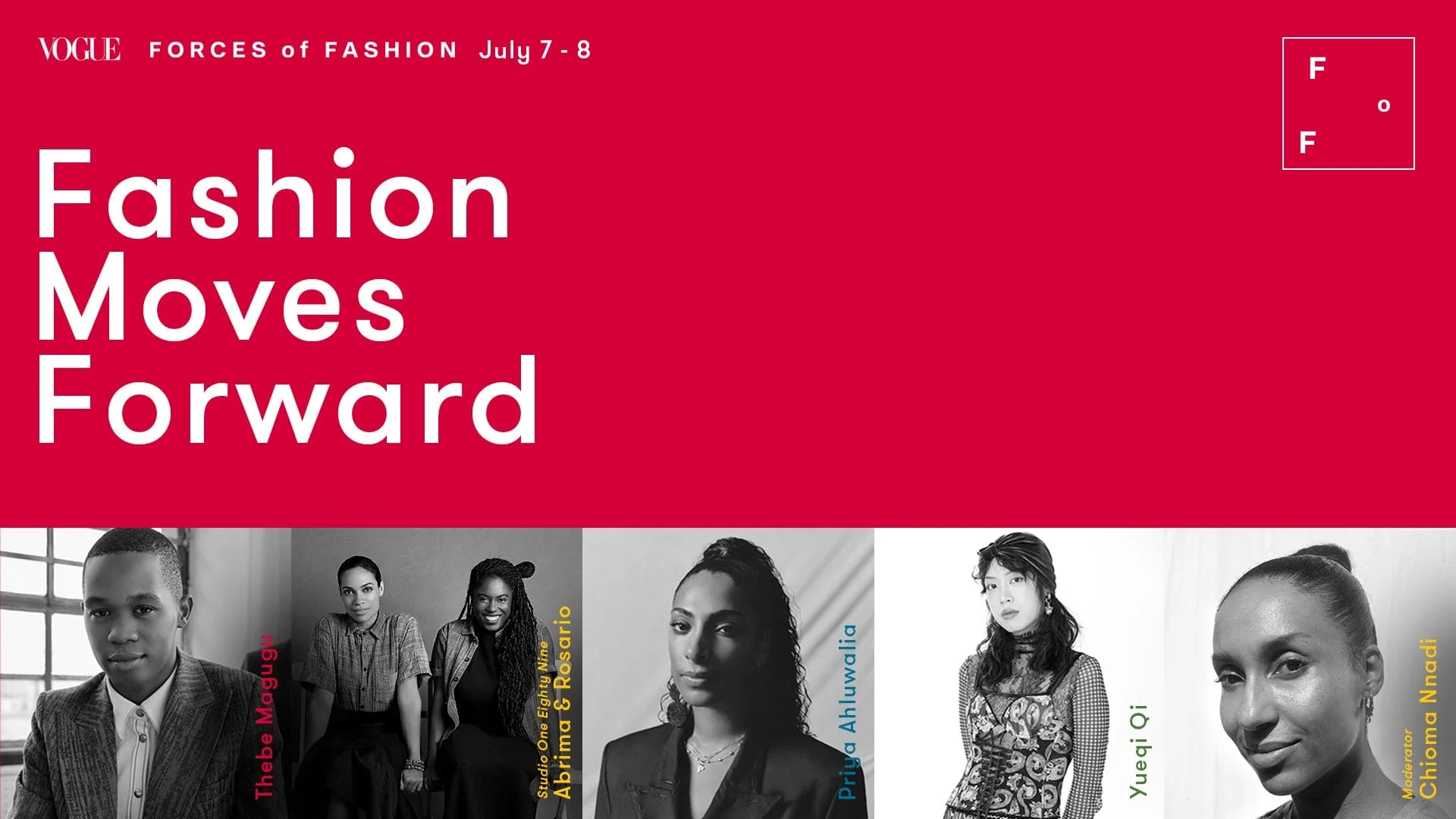
Fabric and Flux, What’s next for Thebe Magugu?

The 2019 LVMH Prize winner Thebe Magugu is not one to rest on his laurels. For his latest collection, experimental textile collaborations might just see him continue his groundbreaking streak.

When fashion designer Thebe Magugu started working on the central print for his autumn/winter 2021 collection, Alchemy, the question “what’s next?” was on his mind, and he called on recently initiated sangoma and fashion stylist Noentla Khumalo to throw the bones, as it were, in search of the answer. “She came to the studio and she laid out her mat and she threw her bones with the question, ‘what’s next?’ I think we’re all very curious about what’s next; I think things have been so much in flux that we’re all actually just yearning for a bit more clarity,” explains Magugu.

Once she had thrown the bones, shells, crystals, and other objects, Magugu asked her not to tell him the answer: “I told her I would rather not know, I’d rather let it be up to the wearer if that makes sense. I want whoever purchases this garment… I want them to sort of draw that conclusion on their own just from the image and the feeling that they get from the garment.”

Instead, the designer photographed the objects the sangoma threw on the mat and got to work playing around with the elements, making some bigger, some smaller, and tweaking the colors. “I’m [interested] in the changing [attitudes] towards African spirituality, and the idea of ukuthwasa,” says Magugu, referring to the process through which sangomas receive their calling and training.

“Among the youth, it wasn’t really something that was spoken about like it was this strange sort of secret shame; but I feel like the stigma around ukuthwasa is sort of breaking down as people embrace it a bit more. And I knew I wanted to have a headlining print that sort of spoke to this idea. And if I’m doing African spirituality, I needed to collaborate with traditional healers, a sangoma, to authentically contribute to the collection,” he explains.

This infusion of culture, a South African narrative, and an innovative approach to textiles is a big part of what led the designer to win the LVMH prize in 2019 over thousands of young designers from across the globe, and becoming the first entrant from Africa to win the prize, as well as launching his career to international acclaim and media coverage by some of the most respected fashion media publications.

“I still struggle to speak about it a lot of the time, because of the way my life has been… I feel like a lot of the things that are happening weren’t meant for me, if that makes sense. Because there was just so much lack in terms of resources and opportunity. My mom worked incredibly hard, but even so… Over the years, you sort of taking away the big dream and you start thinking about the practical…

The past two years have almost been like an extreme rejection of that, and it took a bit of time to get used to it. It’s all these sorts of things that I dreamt of as a teenager, but as I grew up, I started thinking that’s obviously not meant for me. The paradigm shift to change that mentality has actually been weird and sort of challenging. I am just so… I’m so thankful,” says Magugu.

Indeed, the past couple of years have brought him moments young designers around the world can only dream of. Most recently, a dress from one of his previous collections was acquired by the Met for its permanent collection. “There’s also dissociation, and I find that I feel it sometimes, like when I got the email from the Met or when I got an email from Vogue editor-in-chief  Anna Wintour, it’s almost as if this is happening to someone else and I’m responding for them. It’s crazy, but that’s exactly what it is. But also, that being said, I appreciate that sort of dissonance because I think it’s so dangerous when people overly tie the success of their business or brand or company to their actual identity,” reflects Magugu.

The Thebe Magugu brand now gets to show at Paris Fashion Week on the official schedule, and his collections are sold at stockists around the world including China, Nigeria, Japan, New York, Italy, Spain, London, and France. However, even as his business grows, Magugu says he is particularly proud to find that when it comes to online sales, the brand has significantly grown its South African following: “The wholesale side of my business is more international facing, but my online store is approximately 85% local, which is incredible, it’s really incredible.”

The collaborative print with Noentla is one of six looks from the Alchemy collection that the designer has entered into yet another prestigious fashion design competition, the International Woolmark Prize. He has already made it to the group of the top-six finalists, and the collection is being judged by supermodel Naomi Campbell and other leading names in global fashion media. Inputting together the other looks, he has continued to collaborate with various artisans in innovative ways.

One such collaboration included burying wool underground for a few weeks. Says Magugu: “I worked with an eco-textile maker in Ladysmith, her name is Larisa Don. For some strange reason, I am quite a big fan of corrugated iron as a motif. I keep on going back to the idea of corrugated iron. In past collections, I’ve had corrugated iron as a print, but with this one, we wanted to revisit it in a more experimental way.

We took white merino wool and sandwiched it between two sheets of corrugated iron, and then we sort of [buried it underground] and let that rust over a few weeks. Then we uncovered, washed, and treated it so that it’s a wearable fabric and comfortable. It came out so beautiful, in all these oranges and browns.”

For another print, Magugu and Don took the imphepho plant, largely believed to chase away bad spirits and to facilitate communication with one’s ancestors, as well as cannabis leaves and “flower-pounded” them onto textiles, a technique of using heat, pressure, and chemicals to transfer the color and shape of the flowers directly onto fabric. For another, he worked with a company in the Netherlands to translate African scarification practices onto textile as a proverb written in Braille.

“It was for the proverb that says, ‘what you do for your ancestors, your children will do unto you. I’ve always loved that quote; so the scarification on the back of the jacket also doubles as Braille for that,” says Magugu. For yet another textile development he collaborated with the revered Japanese textile maker Adachi San, “he made the fabric by hand… he does it on a loom; it’s this black wool fabric with white pinstripes peppered with these rayon pom poms onto the surface of the fabric.”

As for “what’s next?”, the designer is happy not knowing what Noentla divined from the bones. With his team and collaborators, he is putting in the work and creating the future; building the business, as well as finalizing new textile developments that will be part of the Alchemy collection, which will soon be judged for the Woolmark Prize, which, if he wins, will be another first for South African fashion design. DM/ML

Content courtesy of Daily Maverick & Nairobi fashion hub  


LVMH Prize Semifinalists Herald New Era of ‘Expansive Expression’

PARIS  Held online for the first time due to the coronavirus pandemic, the LVMH Prize showroom provided a tantalizing glimpse of what’s in store once the world returns to normal, and when it comes to fashion, it seems that anything goes.

Working under the toughest economic conditions in recent industry memory, this year’s 20 semifinalists presented eclectic collections rooted in their personal culture and identity. The ban on international travel only served to highlight the geographic diversity of the participants, including the first Arab woman to make the shortlist.

“This year, there was a lot of color and knitwear. Two or three years ago, the big story was streetwear. That’s less the case now. There is a growing trend for gender-fluid fashion, and sustainability remains a core concern,” said Delphine Arnault, second-in-command at Louis Vuitton and a key talent scout at LVMH Moët Hennessy Louis Vuitton, the parent company of brands including Louis Vuitton, Dior, and Fendi.

“It really reflects the state of fashion at any given time. It’s like a snapshot of society,” she added.

That image has never felt more fractured. American designer Christopher John Rogers, known for dressing celebrities like Cardi B, Rihanna, and Lizzo in his colorful creations on the red carpet as well as Vice President Kamala Harris at the Biden inauguration described the era of fashion as one of “expansive expression” in his presentation at the digital showroom, which ran from April 6 to 11.

“I want to be a part of this league of talent that is breaking down this traditional aesthetic hierarchy of what we expect luxury clothes to look like,” he told WWD in a Zoom interview from New York City.

“We’re in an era where someone who’s doing this really beautiful double-felted cashmere coat in gray that work can be just as chic as this rainbow intarsia knit fantasy, you know? It’s kind of the same thing. It just depends on what your preference is, and it doesn’t have to be on some scale. That’s something I really believe in, and I think that this year’s crop of semifinalists definitely are proof of that,” he added.

Like many emerging designers, he’s gearing up for an era of freedom once the COVID-19 crisis subsides.

“Everyone’s kind of anticipating another Roaring Twenties moment where everyone’s craving to get out, craving to just let loose and not really care too much about everyone else’s opinions about how they look,” he said. “Everyone’s going to want to present themselves differently, but I think the one universal vibe is just going to be, like, ‘insanity.’”

London-based designer Alicia Robinson, whose AGR label is known for rainbow-hued knitwear and patchwork cargo pants, echoed the sentiment.

“The new era of fashion has definitely changed, we no longer have to follow those traditional paths. You can create your own platform. You can talk to your consumers directly and that’s all due to technology,” she said in her filmed presentation.

In the meantime, designers are dealing with hurdles ranging from closed stores to presenting their collections to buyers online. While the physical LVMH Prize showroom, traditionally staged during Paris Fashion Week in early March, normally gives them instant access to a wide range of industry luminaries over a 24-hour period, there was no such rush of adrenaline this time around.

“It’s really strange, because this whole prize is centered around something that’s quite physical, which is clothes, and we’re doing it all digitally,” said Cynthia Merhej, the Lebanese designer behind the Renaissance Renaissance label. “I think they did a really great job with the platform. It looks amazing.”

Cerebral yet sensual, her designs are rooted in rebellion against Lebanon’s patriarchal society with not a sequin in sight. “The pieces are not meant to be Instagram pieces. That’s not the philosophy behind it at all, so they really need to be seen and touched,” she argued.

Arnault said the showroom event was pushed back by a month to give organizers time to create an enhanced site, with content including videos and 360-degree views of key outfits. For the first time, members of the public are being asked to select their favorite, with 10,000 votes registered by midday on Friday.

“It’s always interesting to touch the fabrics, see the quality of the products and the creativity of the cuts. That’s not as easy to do online,” the executive noted. “Our teams have done a tremendous job to try to render as faithfully as possible a meeting with the designer.”

It represents a digital leap for the event. “It gives them visibility, and for the next editions, it will allow us to combine, hopefully, a physical event with this existing digital platform that we can build on in the future. It’s also great for the public, so it will give us the best of both worlds,” Arnault said.

LVMH hopes designers will be able to physically attend its prize-giving ceremony, tentatively scheduled for September. Last year, it divided the 300,000-euro prize money between the eight finalists, in addition to creating a solidarity fund for previous winners.

“We hope it will be a physical event, but if that’s not possible, we will rethink the format of the prize. We may do something similar to last year, or we might have a new idea. But right now, we are very much hoping to have a live final,” Arnault said.

Even experienced remotely, being short-listed for a prize is a lifeline for many of the smaller designers selected. Merhej, whose label is stocked exclusively at Net-a-porter, described it as “a huge ray of sunshine” after a year marked by a deep economic crisis, successive lockdowns, and a devastating explosion in Beirut in August.

“I know it’s really meaningful for everyone in Lebanon, because we really need a win, in a way. We need something positive to look forward to,” she said. “Since last year, we’ve been going through what I can only call a nightmare mixed with hell.”

As the first Arab woman to make the cut since the prize was launched in 2015, she hopes to open the way for other Middle Eastern designers and change preconceptions about her culture.

“We feel others are telling our stories in ways that don’t really feel familiar to us, or we keep being pigeon-holed into certain narratives,” she explained. “Lebanon means nice food, beach, Botox, embellished gowns, everything over-the-top and crazy, but that’s not the Lebanon I personally know. Yeah, I think that exists, but there’s also a huge chunk of us that aren’t like that.”

Adeju Thompson, the Nigeria-born founder of the Lagos Space Programme, similarly wants to challenge the image of African fashion. A nonbinary, queer, Yoruba, and Black designer, who goes by the pronouns they/them, their multilayered creations stand out in a city known for its status dressing.

“Even though a lot of what I do is informed by my identity as an African, I’m more than that. I’m a global designer,” said Thompson, who cites designers like Yohji Yamamoto and Rei Kawakubo as early influences. “In my work, that’s something that I’m always hyper-aware of, you know  just trying to break up misconceptions about what design coming from the continent looks like.”

There’s a strong political dimension to it, too. In 2019, Thompson was assaulted by the Special Anti-Robbery Squad, a notorious unit of the Nigerian police with a long record of abuses. “I was detained for five hours because of how I dressed,” they recalled.

“I think it was in that moment when I started to see Lagos Space Programme and the work I do as a form of protest,” Thompson said. “When I’m exploring my identity as a queer person, in the West, this is normal, and I guess so many designers could do this. Where I come from, I could get into trouble. For me, it’s so important that I speak up for myself.”

Sold exclusively at the Lagos concept store Alara, the label has caught the attention of overseas buyers following its recent presentation during Milan Fashion Week, but Thompson is taking it slow. “I’ve never been someone who is very comfortable with the limelight. I don’t want to be a celebrity designer. I am very happy to be not seen, and for my work to speak for itself,” they said.

Chinese designer Shuting Qiu, another cross-cultural creative, believes the LVMH Prize has the potential to break down barriers. Born in Hangzhou, she left at 19 to study at the Royal Academy of Fine Arts in Antwerp, Belgium.

“If I win, for the cultural communication it really helps because I’m contemporary Chinese: I have my Asian culture, but I also understand European culture,” she said, noting that China has yet to launch a breakthrough designer on the international stage.

“Chinese design is getting better and better, so I really can help. I can do something in my generation,” Qiu mused. “I really feel like I have a responsibility to do this. It’s also my dream  it’s pushing me to really work hard to go forward.”

Used to traveling across the world to gather inspiration, she has refocused her attention on Chinese destinations and is also sourcing more fabrics domestically, like the silk jacquards that she likes to pair with clashing prints and colorful embroideries.

“I think people want to wear something more colorful, cheerful and easy more casual maybe, something light,” she said of the mood one year into the pandemic.

“I never want to see a pair of jeans again,” offered Merhej, noting that Lebanese women are experts at using fashion to beat the blues. ”Life there is quite difficult, so the only thing we have that cheers us up, and makes us feel good and better about our reality, in a way, is getting dressed up.”

The class of 2021 could well usher in a new era of individuality in fashion. “Christian Dior created his house in 1947 after World War II. After very challenging periods, you always see a surge in creativity. I’m curious to see what will come out of this pandemic,” Arnault said.

Content courtesy of WWD & Nairobi fashion hub 

Hollywood’s Afrofuturism Role of African Heritage Fashion in Film 

She is Hollywood’s queen of Afrofuturist costumes: For 40 years, designer Ruth E. Carter has been developing fashion for major motion pictures, including “Black Panther.”

It is the most commercially successful Afrofuturistic US work to date: the Marvel blockbuster Black Panther was nominated for an Oscar in seven categories in 2019, ultimately winning three of the awards including for best picture and best costume design.

The Oscar-winning designer of the film’s groundbreaking costumes was Ruth E. Carter.

Carter, who was born on April 10, 1960, in Springfield, Massachusetts, had originally planned to pursue a completely different career path: She wanted to become an actress.

But it was when she started helping out in the costume department of her student theater group at Hampton University that she found a new calling. So after graduating from university, she trained as a costume designer at the Santa Fe Opera in New Mexico, subsequently moving to Los Angeles.

For more than 40 years now, Ruth E. Carter has been designing costumes for independent films and Hollywood blockbusters alike, working with Stephen Spielberg, Denzel Washington, and Samuel L. Jackson, among many others.

Using fashion to communicate African heritage

The outfits of the Black Panther protagonists are currently on show at the SCAD FASH Museum Fashion + Film in Atlanta, which runs until September 2021.

The 61-year-old Carter says she purposefully designs Afrofuturist costumes to convey messages on Black identities. For her, Afrofuturism means “to unite technology with imagination and self-expression to advance a philosophy for Black Americans, Africans, and Indigenous People that allows them to believe and create entirely without the barriers of slavery and colonialism.”

This approach to Afrofuturism is still relatively young and somewhat utopian, explains Natalie Zacek, a lecturer in US history and culture at the University of Manchester.

With Afrofuturism existing for over 25 years now, there are many different definitions of what image of African identities it is designed to convey: “Afrofuturism is often about imagining a world where the transatlantic slave trade has never taken place, without the European colonization of the African continent. What would have become of African cultures and societies then, artists wonder?” Zacek explains.

Afrofuturism between Hollywood and Nollywood

These visions of African identities, however, often differ between artists from the United States and those on the African continent: For decades, African authors have been writing science fiction stories, most of which are classically set in outer space or in a futuristic city. In recent years, the theme of the climate crisis has also been added into that fold.

But American and British storytellers often still focus on the past: “For artists in the US and the UK, the experience of the slave trade is always in the foreground of the diaspora experience,” Natalie Zacek told DW. The continent of Africa, she says, as a place of ancestors, is an almost mythically charged place from the past for many People of Color who live in the West. This is different, she says, for African artists, who live in Ghana or Nigeria, for example.

While African filmmakers are confidently venturing into genres like science fiction, they can often only dream of having the kinds of budgets that Hollywood productions do.

“The only film funding an African filmmaker can get usually comes from Europe, and European producers usually choose the kind of material that they think will do well at film festivals. That is content that deals with supposedly African issues like AIDS, genocide, the climate crisis and famine,” author and filmmaker Dilman Dila wrote in the international science fiction and fantasy magazine Mithila Review in 2017.

At that time, his science fiction film Her Broken Shadow hit the silver screens of Africa but was aesthetically more reminiscent of Blade Runner than of Black Panther.

Changing perceptions through art and design

In contrast to the films produced by African directors such as Dilman Dila or Jean-Pierre Bekolo, Black Panther grew into a global success, proving to Hollywood that a film in which hardly any white actors appear can make it big at the box office.

Carter was among the artists who contributed to the global success of the blockbuster. Throughout her career as a costume designer, she has primarily focused on the African-American experience, as the Atlanta exhibition makes clear, featuring 60 designs of her costumes over the decades.

Film director Stephen Spielberg hired her to design costumes for American slaves and slaveholders in the 19th century, for his blockbuster movie Amistad.

Spike Lee had her dress as an African-American action hero, and in Selma, she designed the look of civil rights icon Martin Luther King.

For Black Panther, Carter says she set out to introduce a radical change of perspective to the American public: “I think people will be able to contextualize and appreciate African art very differently now. That’s what we’ve done: We’ve appreciated it, we’ve reimagined it, we’ve evolved it and taken it to a different place.”

Content courtesy of Dw & Nairobi fashion hub 

Ad