Monday 11th of May 2026

Nairobi, Kenya

South African Fashion Week 2021 to Go Digital

The event will take place online, between April 29 and May 1 2021, to showcase 26 runway shows by the likes of Lukhanyo Mdingi and Mmusomaxwell.

Like fashion events around the world, SA Fashion Week has adapted to continue connecting homegrown brands with buyers. Like its last hybrid season held in October, upcoming collections will be trans-seasonal.

In October, over 8,000 guests viewed the collections, which under pre-pandemic circumstances would’ve been seen by 6,000.

In the wake of Covid-19, the event has honed in on helping designers generate immediate sales. “It has been a superhuman challenge for these businesses to stay afloat and retain jobs in the absence of any trade or cash flows,” said Lucilla Booyzen, director of SA Fashion Week. “The opportunity to showcase their collections in preparation for summer 2021 is vital.”

South Africa Fashion Week is the country’s only business-to-business platform that allows brands to grow their collections. This upcoming season, the brands will be taking a trans-seasonal approach, best known as seasonless.

SA Fashion Week is also taking a larger focus on slow fashion to build on sustainable production. The country’s designers are calling for a “new fashion order” to create a more ethical fashion system.

Content courtesy of Business of Fashion & Nairobi fashion hub 

Three Kenyan Fashion designers join the Ethical Fashion Initiative

The Ethical Fashion Initiative, a joint venture from the UN and World Trade Organisation’s International Trade Centre, has selected three Kenyan brands – Katush by Katungulu Mwendwa, Suave, and Hamaji to participate in its second accelerator programme.

Each of the designers was chosen for their “commitment to sustainability” as they use reclaimed and organic fabrics to create their collections, as well as noting their country and upbringing in Kenya as heavily inspiring their work.

The launch of the Ethical Fashion Initiative Kenya Fashion Accelerator aims to highlight the distinct design talent within Kenya and follows the organisation’s successful launch of their nationwide accelerator search in 2019.

There will be a focus on the specific needs of African fashion brands, with this accelerator programme, with a business development approach that prepares its beneficiaries to become investment ready, to accelerate their business in the global marketplace.

Simone Cipriani, head and founder of the Ethical Fashion Initiative at the UN’s International Trade Centre, said in a statement: “The continued development of our designer accelerator programmes in Africa, provide a new generation of African design talent the opportunity to engage with the international market. Through education and mentoring we seek to equalise the playing field, giving exposure to the incredible talent that exists on the continent.

“Each region in Africa has its own unique creative voice. Being able to launch a programme dedicated to Kenya – the country where Ethical Fashion Initiative began its journey and where it has some of the most beautiful collaborations – is a wonderful opportunity to spotlight the creative visionaries that set this country apart.”

Ethical Fashion Initiative Kenya Fashion Accelerator to assist Katush by Katungulu Mwendwa, Suave, and Hamaji

The programme will help the selected brand expand their supply chain and scale up their production, source new products and develop their production team. Each designer will be assigned a production mentor, with whom one-to-one support meetings will take place, as well as additional mentoring and brand development from the Ethical Fashion Initiative team and industry experts.

The accelerator will also support the management and production of key designs for the first collection to be manufactured through experienced companies selected within the Ethical Fashion Initiative network.

In addition, the initiative will fast track the emerging African designer labels, through “identifying and strategising areas for growth” and funding towards developing a new product process or service. A diagnostic review of the business will also take place every season to assess progress and tailor the programme to best suit and benefit each business.

The programme will also help build brand value by helping each business understand investment, develop strategies for maximising brand equity, build a funding proposition and market themselves as an attractive investment proposition to angel investors or VC funds. Each designer will finish off the accelerator with an opportunity to pitch themselves to investors at a networking event.

Katush by Katungulu Mwendwa, founded and based in Nairobi, Kenya, is a leisure lifestyle brand offering seasonless, timeless, transcendent casual and semi-formal wear heavily influenced by her upbringing and surroundings.

The brand experiments with modern techniques, innovative fabrics and traditional methods, as well as working with materials that are organic and or as sustainable as possible, such as Tencel and Cupro. They are keen on working with cooperatives and businesses that have a greater impact on the lives of those within a given society.

https://www.instagram.com/p/B3ycp1ZHofh/?utm_source=ig_embed

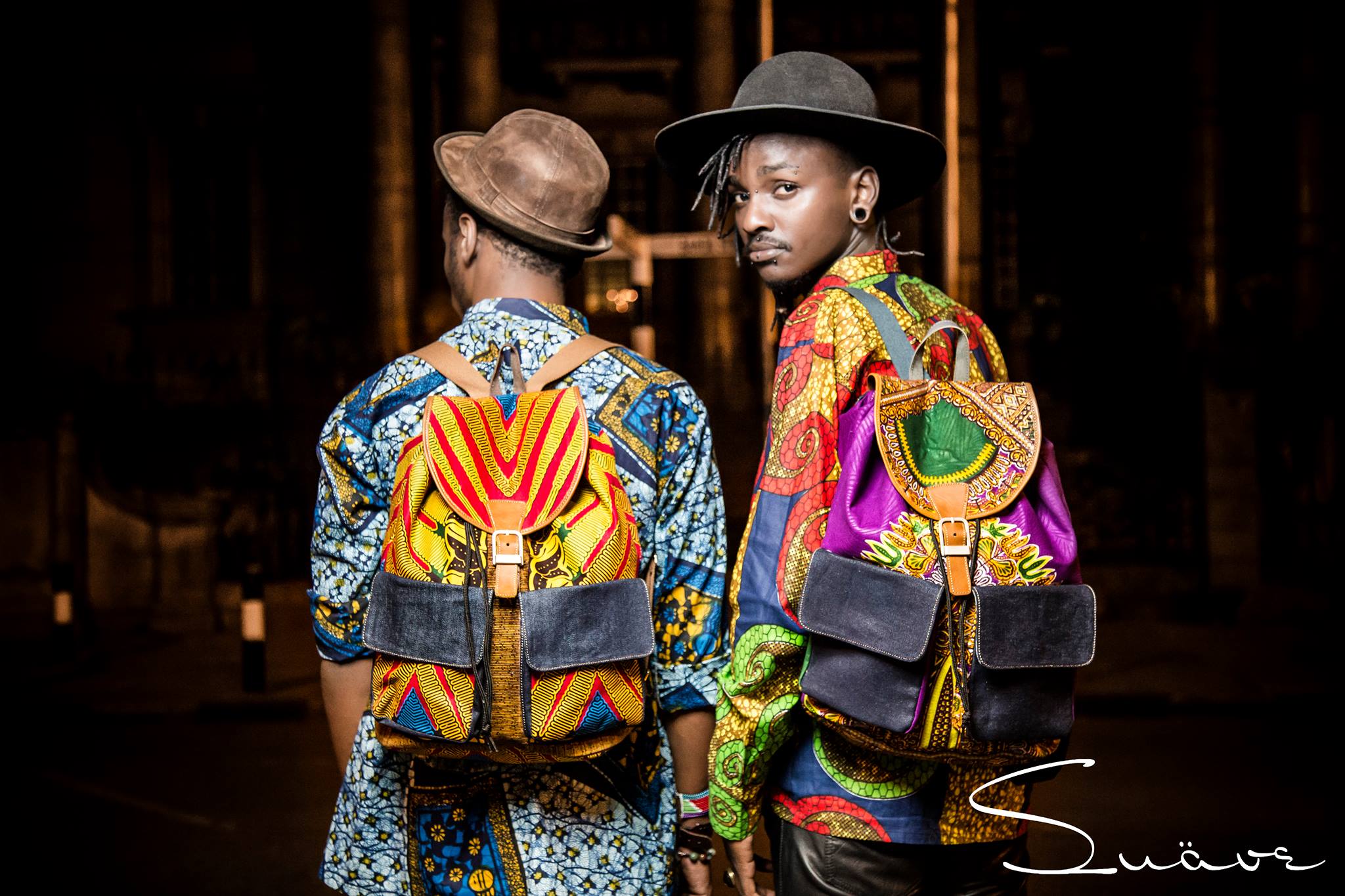
Suave Kenya was founded in 2013 by Mohammed Awale from an idea sparked by numerous trips to a local thrift market, Gikomba Market, the largest open-air market in East Africa. While rummaging among heaps of oversized and discarded denim outfits, Awale discovered the source material for its bags, as it looks to end the cycle of unwanted garments ending up in landfills. The bags made by Suave Kenya are made with practicality in mind.

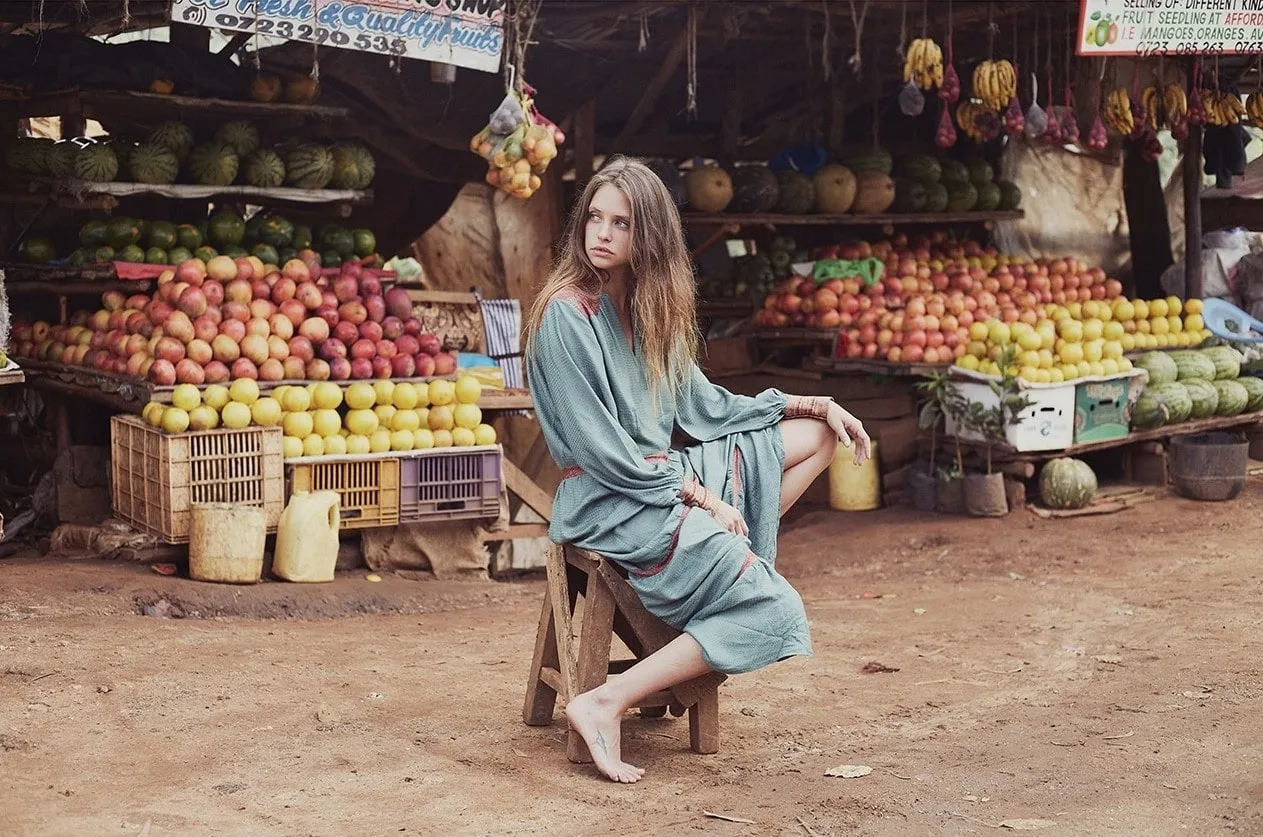
The final recipient is Hamaji, founded in 2017 by designer Louise Sommerlatte, it is a brand created around preserving ancient textile traditions and nomadic craftsmanship whilst empowering local small scale artisans in Africa. The brand creates a narrative of sustainability and conscious consumerism through its collections using natural fibres, botanical dyes, handcraft, embroidery and up-cycled vintage textiles. Hamaji is inspired by East African charm and embodies a spirit of nomadic femininity in pastel hues, free-flowing silhouettes and a delightful sense of elegance.

Commenting on joining the accelerator, Hamaji, said: “I feel hugely honoured and extremely excited to be a part of the Ethical Fashion Initiative accelerator programme, to have this opportunity to expand my knowledge and be mentored in the development of my brand in a sustainable approach with international and local expertise in Kenya.”

Written by Danielle Wightman-Stone

Photo: courtesy of Katush by Katungulu Mwendwa, Suave Kenya and Hamaji Studio
Content courtesy of Fashion United & Nairobi fashion hub 


Can Made in Africa Transform the Continent’s Leather Industry to the Next Level?

Luxury labels in the West use the best of Africa’s leather. Now, African companies and designers want to build their own brands.

Winston Leather, a Nigerian leather brand, celebrated the biggest sales in its 30 years in business last June. The boost was thanks to a tweet in March from fashion historian Shelby Christie highlighting how its tannery, based in Kano, Nigeria, supplies leather to luxury fashion houses such as Louis Vuitton and Ralph Lauren.

https://www.instagram.com/p/CHTvJ-Wl1X1/?utm_source=ig_embed

The tweet resurfaced in June and prompted a flood of orders as the fashion industry sought new sourcing opportunities that supported Black businesses. And the single tweet put right some misconceptions about the quality of African leather goods.

“It was like a stamp of approval,” says Winston Udeagha of Winston Leather, which is a subsidiary of Udeagha’s wonderfully titled parent company, God’s Little Tannery. “What people don’t know is that much of the leather used around the world actually originates in Africa,” he notes.

“For them, if luxury fashion houses were using our leather in their finished goods then they could buy purses and shoes from us and trust our quality.” Udeagha has been in the leather manufacturing business for decades, but his company only decided to produce its own brand leather accessories in 2018 when he realized the potential of a growing market of fashion consumers within and outside Africa who were keen to buy African.

For a long time, African leather has remained unappreciated by the consumer despite a shift in consumer consciousness and pressure for greater transparency in every aspect of the fashion business. EU laws stipulate that the country of origin of finished goods is the country where the final production process occurs.

This has enabled luxury fashion houses that source raw leather from Africa, and even begin the production process there, to tag their products as, for example, Made in Italy. This practice has helped European manufacturers to avoid using a Made in Africa tag, a process that has kept Made in Africa leather goods under the radar and struggling to build an image for quality and excellence, in Africa itself as much as abroad.

https://www.instagram.com/p/CKhK7HnHqPf/?utm_source=ig_embed

Underfunded but determined, African designers are leaning on Africa’s vast resources and capacity for sustainable fashion to change the perception of African leather and promote it to a broader market. While leather is losing ground with many sustainability-focused designers around the world, African-based production offers a more palatable solution.

Problems like animal cruelty, wastewater and use of harsh chemicals in the tanning process are alleviated by under farming, reduced consumption practices that encourage reuse, and fairer livestock farming with provision of meat as primary focus, and then by abattoirs that help reduce shipping emissions.

Initiatives like the Green Tanning Initiative and metal-free leather in Ethiopia and other East African countries are also working to educate tanners on less toxic methods of tanning and dyeing leather and push for more environmentally friendly policies in Africa’s leather production.

Sending African leather abroad

The best quality African leather has tended to go to export markets. In response, some of the most interesting African leather goods companies have learned to adapt and use local material resources to the full.

“We focused on what we could do better,” says Nardos Tamirat, co-founder of Ethiopia-based Tibeb Leather Works. “We knew we were in a different market and our value proposition was different. For us, that is our leather and traditional Ethiopian designs.”

The company uses leather that would otherwise be discarded as flawed by many premium houses to create leather purses and other accessories. By keeping the leather as natural as possible with its flawed skin, Tamirat believes Tibeb stays true to its Ethiopian origins.

Tamirat’s strategy is shared by Mark Stephenson, managing director of Sandstorm Kenya. “African leather designers and manufacturers don’t have the resources to efficiently mass produce like, say, China can. The technology isn’t there yet in Africa. And so for Sandstorm, the question is how can we use technology to create more jobs for artisans and tanners and optimize value within Africa using slow fashion,” he says.

Basic infrastructure, such as the best machinery for drying, is lacking in parts of Africa. Much of the leather produced in Africa is exported out of the continent to be finished and then imported back as finished goods. The cumulative effect of this is to leave the industry in a state of underdevelopment.

Frustrations abound. “When I started my business, I researched about African leather because I wanted my shoes to celebrate African artisanship as much as possible,” says Nigerian designer, Tina A, founder of Kkerelé.

“I found that the leather sold in Mushin market, where most accessory designers in Lagos are based, is imported from Europe. This didn’t make sense to me considering the tanneries we have in Africa and our cattle farming.”

A problem for African designers is that tanneries tailor their business policies to fit the demands of their largest buyers, which are often Western businesses. This leads to high minimum order quantities, shutting out African designers with their much smaller orders.

Tamirat explains that in its first few years of business, Tibeb relied on scraps from the tanneries because the company couldn’t afford to buy in bulk in the way that Ethiopian tanners preferred.

Promoting African Leather

African designers have the potential to play a central role in developing a new image of quality for Made in Africa. Tibeb Leather Works is partnering with businesses in Ethiopia to create educational materials that help young designers understand Ethiopia’s design history and lean into designing using materials sourced in Africa and sourced sustainably.

Designers like Nigeria’s Femi Olayebi of Femi Handbags are also creating initiatives, such as Lagos Leather Fair, to connect tanners to designers and buying groups where small designers can band together and buy in bulk from tanneries with high minimum order quantities.

Meanwhile, Nigeria’s Winston Leather has already responded to the needs of smaller designers by evolving a business model enabling designers to buy as little as 10 square feet of leather hide rather than the minimum quantity of 20,000 square feet previously required.

The potential is there, but plenty of work remains to be done. “To grow Africa’s leather industry, tanners and manufacturers cannot focus solely on getting Western designers and luxury houses to use their leather,” says Stephenson of Sandstorm Kenya, who has sat on Kenya’s Leather Development Council. “They must also make themselves accessible to African designers and brands who can tell and celebrate an authentic story of African artisanship from cattle, sheep and goat origins to the finished leather goods.”

Written by Adedoyin Adeniji

Content courtesy of Vogue Business & Nairobi fashion hub

Fashion Statements Made during Inauguration Ceremony of Joe Biden and Kamala Harris

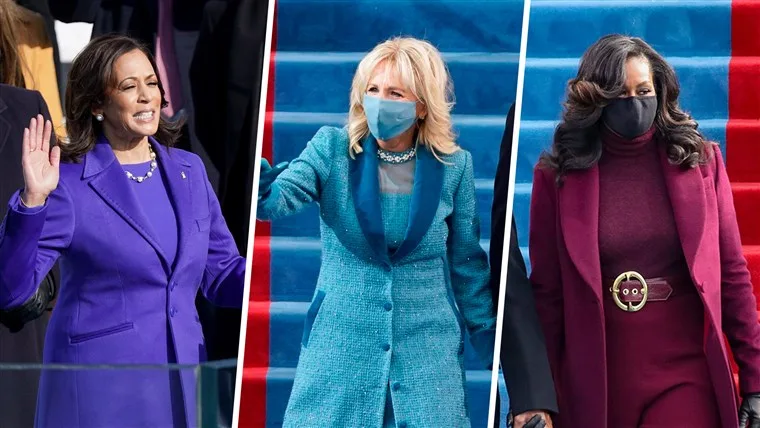
Before any swearing in or speeches made on Inauguration Day, the clothes spoke. Beginning on the eve of the inauguration of the 46th President of the United States, then-President-Elect Joseph R. Biden, and Dr. Jill Biden, and then-Vice President-elect Kamala Harris and Douglas Emhoff began telegraphing their messages with their outfits, the bigger statements, as usual, emanating from the women.

For a late afternoon vigil to honor the 400,000 American lives lost to Covid-19 on Tuesday, Dr. Biden and Vice President Harris chose to wear emerging American designers, the former clad in a full violet look by Jonathan Cohen Studio, the latter in a camel coat classically cut but for the most subtle of novelty in the gentle wave of the back flap by Pyer Moss’s Kerby Jean-Raymond. Both women were dressed for the occasion, which is to say they were dressed up and appropriately so for their respective roles and personal styles.

Cohen and Jean-Raymond are two young, New York City-based designers whose names are well known within the American fashion industry, famous for their unquenchable thirst for new talent, yet they are far from household names. Donning garments by such designers for such a momentous occasion signals support of homegrown design, and could be an indication that Dr. Biden and Harris are open to inheriting Michelle Obama’s fashion mantle of support for the American designers big and small. At least to some degree.

The message carried through to Wednesday’s main event when Dr. Biden appeared in an ocean blue overcoat and matching dress by the small New York-based label Markarian, led by the designer Alexandra O’Neill. Vice President Harris wore a tailored coat and matching dress in a brilliant shade of purple as well as her signature pearls, this time designed by Puerto Rican designer Wilfredo Rosado, and heels by the Los Angeles designer Sergio Hudson by another New Yorker, the 27-year-old designer Christopher John Rogers.

On an inauguration day unlike any other in the 232 years since the custom began, the clothes, just like everything else incorporated into the ceremony, were chosen carefully. No less an emblem of the American dream than Ralph Lauren dressed President Biden and Emhoff.

O’Neill is a young female designer, who, according to a press release from the brand, customized the wool tweed coat with crystal and velvet trim, matching dress and face mask, in a shade of blue chosen “to signify trust, confidence, and stability.” It was feminine and elegant, pretty but not too dainty, just like Dr. Biden.

Still, the look was overshadowed by Vice President Harris. How could it not have been? The historic nature of her role and her commanding, dutiful presence demanded it.

She chose to wear strong, tailored, confident pieces by Jean-Raymond and Rogers. They weren’t exactly unpredictable. Rumors had been circulating for weeks that Harris was planning to wear clothes by Black designers and Jean-Raymond and Rogers are two of the most talked-about names on what is sadly an all-too-short list.

But things are changing. Just look at Harris American hope incarnate.

Content courtesy of Town and Country & Nairobi fashion hub 


Made in Kenya: Exclusive interview with Cynthia Kimathi Founder, Creative Director at The Seamstress and African le’kiondo

Cynthia is a mother and a fashion enthusiast; who doubles up as a self-taught fashion designer, I have loved fashion and style for as far back as I can remember.

I used to accompany my mother to clothes stores every Christmas holiday to choose outfits for my siblings and me, however, I must admit that my Art and Design teacher in State House Girls High School gave me the extra push needed, from whence I learned all the basics myself.
My fashion line is The Seamstress. A seamstress is a woman who sews and one who earns her living from the craft. That is simply who I am.
I officially launched The Seamstress on November 28th, 2020 on the JW Runway Show, but we had been working on the brand and first collection for at least a year beforehand.

Oscar Alochi: Can you describe The Seamstress, the idea and concept as if I knew nothing about it or the market it is in?

Cynthia Kimathi: The Seamstress is purely a ladies-wear fashion line. During our launch, we started with the collection Dusk to Dawn, which is glam wear for evenings and events. But we are not all about evening gowns. We are a one-stop-shop for all women wear; ranging from casual, office, and streetwear, lingerie, mature looks, and older women, among others.

The brand concept is to release quarterly collections (mid-February, end June, end September, and mid-December) that will aim at introducing new designs and aspects into the fashion market. The collections are all pre-planned beforehand, with every design passing through a set of criticisms from The Seamstress team prior to the final vetting.

This is because the creative side of me sometimes needs to be controlled if we want to make functional outfits.

This February, our aim is to release our second collection just before Valentine’s.

OA: What were you doing before The Seamstress, and what motivated you to start the business?

CK: I have been running African le’kiondo, which is a subsidiary brand just like The Seamstress. The brand focuses on making authentic Africanised bags that are environmentally friendly as we source raw materials and labor locally.

Not only that, but it has been a great instrument in empowering women in Meru County by providing them with an avenue to expand their creativity, put food on their table, and have a safe space to talk about their issues.

Just like African le’kiondo, I started The Seamstress out of mere frustration in finding an outfit for myself, a great motivator. During my participation in a national pageant in 2019, Mrs. Universe Kenya as the current 1st Runners Up, it took me weeks to get an evening gown I liked.

This was simply due to all the outfits looking the same, plus they did not look very functional in the sense that I kept wondering where else I would wear the outfit, and how I could style it to look different every time. This predicament gave birth to The Seamstress fashion line.

https://www.instagram.com/p/CIr-KvcB_tV/?utm_source=ig_embed

OA: What techniques do you use? Tell us about the process.

CK: At The Seamstress, we start with a designer’s consultation, This consultation includes detailed discussions with the client ranging from color choices to fabric choices.

The client then receives three (3) designs and chooses from them. The duration from consultation to delivery also depends on design and details. The sewing process differs and the details would seem quite boring for now.

But I also add a lot of accessories to my designs to give them a 3D effect, with such pieces ranging from flowers, beads, etc, which aids in having my outfits turn heads positively.

OA: How did you learn/master this technique and why do you use it?

CK: As previously mentioned, I received basic art and design training from my high school days. In addition to this, my team and I do a lot of research, and I spend the better part of my mornings learning online.

I use this technique as it keeps me on my toes on what is currently trending in the fashion space, what trends could be making their comeback, plus the added benefit of attaining inspiration.

OA: What challenges did you face?

CK: Being a designer, one has to pump in a lot of finances before reaping anything, therefore sometimes you can be financially constrained especially as a start-up and a new name in the fashion industry.

In the Kenyan market, as much as we are now beginning to accept Kenyan designers, we are not yet there. The market still prefers ‘ready-made’ outfits from boutiques for designer outfits. Therefore, oftentimes clientele does not understand the business model especially the need to pay a Designer’s Consultation Fee.

Growth is gradual and sometimes the audience is not as receptive as imagined, but we hope for better days and are positive on the same.

The biggest challenge has however been letting go of clients who wish us to replicate outfits they find online. It is a difficult task at times explaining that we do not replicate, we create.

OA: How did the obstacles make you feel?

CK: Frustrated at times, excited at others. It is bittersweet. The challenges however motivate me, helps me find new ways of approaching things, and elevates my thinking whilst tickling my creativity.

OA: What were your achievements?

CK: The JW Runway Show is the most recent highlight since the launch. In addition, I have dressed beauty pageant judges, taken part at the end of year party for WICCI (Women’s Indian Chamber Of Commerce and Industry – Kenya Business Council) as well as having the honor of dressing an artist for their upcoming music video to be released this February.

It has just been a month and a half and we feel positive about achieving even bigger this quarter.

OA: Favourite moments?

CK: The launch at the JW has to be the highlight so far. The runway took me back to my old modeling days and I was overwhelmed by how far I have come. Seeing my pieces on the runway and how receptive the audience was to them, blew my mind away.

In some way, I felt validated that I might be on to something really amazing.
An added advantage is that I get to travel more now, another passion of mine, as I do deliveries and have one-on-one discussions with clients.

OA: How do you get dressed in the morning?

CK:  I am a casual dresser. Half the time, you shall find me in jeans and a t-shirt. Whenever I have meetings and glam events though, that is when I put my mind into the dressing.

OA: What’s your take on the Kenya fashion industry?

CK: The Kenyan fashion industry is impressively growing fast.

We are seeing Kenyans being dressed by Kenyan designers for events, and the only way we grow is by supporting our own.

The pioneers have done a great job in growing the industry, but so have media personalities and bloggers like yourselves. You have given designers and fashionistas a platform to express themselves in terms of marketing to the world at large.

OA: How different is the Kenya fashion industry compared to East Africa and Africa’s fashion industry at large?

CK: Our rich culture already sets us apart. The Maasai shuka for example has been widely accepted and has found itself in some international design houses, and so has the kikoi.

OA: Any future collaboration with Kenyan or International fashion designers?

CK: Yes. I am hopeful on this front. Maybe Neomi Nganga will read this and we get to do something.

OA: If you were given the opportunity to work with a local or international fashion designer who will you love to work with?

CK: Locally, Neomi Nganga of Style By Neomi. She has revolutionized plus-size fashion, as I find her designs sexy and eye-catching.
Internationally, Zuhair Murad. He is a genius, so daring with his technique. He always delivers utterly unique and dramatic masterpieces.

OA: What are your thoughts on fashion in Africa?

CK: It is growing tremendously fast. Countries like Nigeria and South Africa are already making enough noise in the fashion industry home and away.

OA: What has changed during this period of Covid-19?

CK: Most fashion designers have started to focus more on online marketing strategies.

Personally, the pandemic has given me room to magnify my creativity and read more. Never did I think I would be designing masks for instance.

OA: How has The Seamstress adopted the new technology virtual fashion show during and after the Coronavirus pandemic?

CK: We will be doing Instagram and Facebook live for virtual shows whenever we release our new collections.

OA: How are African fashion designers influencing fashion in the western world?

CK: Most African designers like pomp and color, and lately we have seen more African prints on the red carpet, as the Western world is already recognizing our African designs.

This can even be seen in as diverse an environment such as Hollywood blockbuster films like Black Panther, where they consulted with African designers for the costume designs.

OA: What can the Kenyan fashion industry learn from the western world?

CK: Owning our products. The Western world has a lot of acceptance and loyalty towards its designers. We should borrow a leaf from that and grow our own African designers.
We can also aim at having more fashion weeks and shows to call for upcoming designers to showcase their outfits, as I believe we have so much talent to offer.

OA: Over the last few years have you noticed any significant changes with the African fashion trends?

CK: Yes, I have. There have been some significant developments. We are seeing more African designers, models, and outfits on magazines and social media platforms, which is a clear indication that the perception of African designs has shifted progressively.

OA: When dealing with Africa is it important for the fashion world to be ethical and socially responsible, and put in place strong corporate social responsibility governance?

CK: Yes. We can’t just take and not give back.
Sustainable fashion needs CSR. It helps build relationships with consumers and stakeholders, and it helps to show the market space precisely what the designers are doing and the positive effects their work has in Africa. Let us never forget that our consumers appreciate transparency.


OA: Tell us about The JW Show or Kenyan Fashion week and your experience at the Show.

CK: The JW show is an amazing platform for upcoming designers to showcase their outfits and for seasoned designers to release their collections. The panelist choice was also a wise one; we got to get first-hand information from fashion icons and legends in the industry.

They discussed different parameters in the fashion industry and gave solid advice on how to be fashion-forward and run a house as a business.

OA: Where can we find your designs?

CK: We are currently based online.

Facebook: The Seamstress.ke
Instagram: theseamstress.ke
Facebook: African Lekiondo
Instagram: african.lekiondo
Mobile number: 0101704786

Here you will find our recently released collection Dusk to Dawn and some outfits made for our clients.

OA: Share with the audience your social media platforms or a website

CK: Our Social platforms

Facebook: The Seamstress.ke
Instagram: @theseamstress.ke
Email: theseamstress.ke@gmail.com

OA: What does eCommerce mean to you and your business?

CK: eCommerce means everything! Our business is purely online based.
We are however currently developing our website, which will give us the extra push in the eCommerce world

OA: Do you think eCommerce is important for African fashion designers that are trying to get recognized and reach a global market?

CK: Of course, it is! Ecommerce has opened doors for many businesses locally and globally. It is safe to say that eCommerce is an essential tool in the fashion industry in this modern time.

OA: How does your strategy change when running an online store to an offline store?

CK: When using an Online-to-Offline (O2O) Strategy in our business, both channels share similar significance and importance to The Seamstress in helping us achieve our success.

The Online Channels shall be helpful in widening our reach to not only local stakeholders, but internationally too, through digital marketing and advertising, and draw them into our physical store.

Whilst using the Offline Channel for a physical store, location is our primary strategy as we would wish our discerning customers to feel welcome in our brick-and-mortar when they come for measurements, fittings, and even collecting of their goods.

Finally, due to our industry being fashion, our clients still prefer to physically see, and touch and feel, our outfits when they want to make a purchase, especially if they are first-time buyers.

OA: Where do you see African fashion in the next 5 to 10 years?

CK: I see most celebrities accepting African fashion and embracing it internationally. I strongly believe that we shall be seeing more African designs in the Oscars and Golden Globe Awards amongst other international platforms. We have so much untapped talent and we are about to take the industry by storm.

OA: What 5 pieces of advice would you give to young African fashion designers wanting to enter the fashion industry?

CK: My Advice to young African designer

  • The world is your oyster. All you have to do is spread your wings.
  • Success is not experienced overnight, put in the work and it shall surely come.
  • Social media likes do not equal sales. Clients will buy even without liking your pictures.
  • Every time you feel lost, remember why in a world where you could be anyone you decided to be a designer.
  • Always be true to yourself.

OA: Is there anything else you would like to add?

CK: I would like to thank you for giving me and The Seamstress fashion line by extension, the opportunity for this interview and for deeming us worthy of it. When the names of people and organizations that led the Kenyan fashion industry to be recognized worldwide will be written, yours shall surely be there.

Content courtesy of The Seamstress, African le’kiondo & Nairobi fashion hub 


2021 is set to be a promising year for the fashionably forward

From large florals to ’50s inspired headscarves, fashionistas globally are getting ready to kiss their WFH ensembles goodbye, despite many countries forcing their citizens back indoors to help curb the spread of the dreaded coronavirus. Many in progressive fashion circles agree that the tracksuit has overstayed its welcome, so here are a few trends the stylish can look forward to in the year to come.

Large floral prints
Florals typically never date. This year, however, calls for a more confident approach with large floral prints making a bold debut versus previous years, which flaunted daintier preferences for blossom choices. Florals are incredibly feminine, can be worn all year round, and can be versatile if paired well with more staple items in your cupboard.

For example, a floral wrap blouse could be paired with a trusty pair of blue jeans and, accessorized with chunky hoop earrings and grungy shoes for a more on-trend look. Ankara dresses, which are popular in Nigerian culture, could see a boost in large floral print fabrics as these designs call for boldness as does this particular trend.

Headscarves
Drawing inspiration from the 1950s and 1960s, we’re going to see headscarves being featured quite prominently amongst the fashion savvy. They’re also going to be spoiled for choice as these can be worn in either floral motifs or, in bold colors and block letters.

https://www.instagram.com/p/CIOZG4JD7Up/?utm_source=ig_embed

African ladies, however, caught onto this trend quite early on as our country is usually vibrant with an array of ladies adorned in colorful doeks – now we have all the more reason to celebrate our heritage every day and not just on 24 September!

Pastel hues
Sorbet pastel hues are set to remain on the fashion scene this year but need to be pieced together cleverly to achieve 2021’s unique look. Options for suitable pieces include mint green jumpsuits or oversized trench coats in softer colors such as lavender. The beauty about this trend is that the colors on 2021’s color wheel suit pretty much all skin tones, which makes it is well suited to cater to our country’s vibrant skin tone palette.

These can be worn in a variety of different ways – non-traditional options include wrapping the fabric under the chin in a single knot or, having it hang off the back of the head. You could even drape a scarf on your bag if you’re not brave enough to wear one out covering your crowning glory.

Bright bags
Looking to international shores, we’ve noticed that bright colored handbags and clutches have been dominating the runways and streets. If you’re scared to incorporate vibrant colors into your wardrobe, introducing accessorable pieces such as bags that boast a pop of color can be a non-intimidating way to follow the trend which I think, makes this trend all the more wearable and approachable.

Here in Africa, we boldly express ourselves through our colorful fashion choices so, I look forward to seeing this trend come to life here at home this year.

Black face masks
Sadly, it looks like it’s here to stay for a while but, when it comes to Covid-19 safety, a mask is a non-negotiable staple that now demands its share of closet space. If you’re going to take care of yourself, you may as well be stylish about it.

Black cloth face masks are effortlessly stylish and never clash with any outfit choice. Another plus to these is, that they can be infinitely reworn if well looked after and, can be thrown into a machine cycle at the end of the day as opposed to a surgical mask, for example, which oftentimes ends up in our landfills or worse – on the street or scattered in shared public spaces.

Despite the present situation, we as a nation find ourselves in, we are hopeful that fashion and the fun of dressing uplift Africa’s mood and inspires her people to never give up hope. We’re glad to be encouraging fashion trends that involve a bit of color therapy too!

Content courtesy  Biz Community & Nairobi fashion hub 
An Interview With Leah Wanjiru Co-founder and Creative Designer at Tai Designs Africa

Leah Wanjiru is a young fashion designer who is passionate about Made in Kenya clothes, she is a fashion lover who embraces color and prints when we talk of fabrics co-founder and creative designer at Tai Designs.

Tai Designs Africa is a clothing brand that I founded with my Partner Wambui Mwaura. Tai mainly focuses on dressing people for occasions such as weddings, traditional weddings, and corporate events. We also customize summer/ swimwear and accessories such as hats and bags. Recently we have also started doing custom made clothes for our clients.

Oscar Alochi: Can you describe Tai Designs Africa, the idea and concept as if I knew nothing about it or the market it is in? 

Leah Wanjiru: Well, Tai Designs Africa is a product of passion, disappointments from local tailors, and curiosity all combined. I am one person who never gets satisfied with something basic.
So whenever I bought clothes I always had ideas of how I would do it better or differently. Of course given that I had no fashion education it was difficult to explain to my tailor exactly what I wanted.

End results? A spoilt dress and disappointed Leah. So with time the interest in fashion came up and enrolled in college where I learned both tailoring and fashion illustration.

OA: What were you doing before Tai Designs Africa, and what motivated you to start the business?

LW: I have always been the girl in the office. At the time I decide to start Tai Designs Africa I was an assistant accountant in an audit firm. The interest to monetize my interest and curiosity developed while I was still working there, I realized I did appreciate as much doing the same thing month in month out.

I wanted to be my own boss.

OA: What techniques do you use? Tell us about the process.

LW: I apply two techniques in my business. one involves sketching designs that I mainly get inspiration from movies and sourcing the fabrics, I then cut and sew the fabrics to bring the sketches to life. In most of such designs, I do wear them.

The second is where clients choose designs and they bring fabrics or I choose for them then we create their custom made outfits.

OA: How did you learn/master this technique and why do you use it? 

LW: I did my research before setting up the business. The technique favors my line since the clothing industry is dynamic and has
seasons.

There are seasons that clients wear mostly ready to wear and at times like December, they prefer custom made.

OA: What challenges did you face? 

LW: Mmhm.

First, I struggled with getting my brand out there, Being so introverted and fearing to talk to strangers was not helping me either. Again when the clients
started rolling in, now pricing and clients running away with balances become another headache.

OA: How did the obstacles make you feel? 

LW: In the beginning, I would say I got frustrated.

You know to a point I thought of making clothes to those clothes to me only. With time I mastered the art of handling clients to avoid such scenarios.

OA: What were your achievements? 

LW: We are proud to have showcased in one of the biggest fashion shows. The JW show. We also showcased in the Women World show which aims at improving upcoming women entrepreneurs, also last year we did our very first collection

OA: Favorite moments? 

LW: Walking in after our collection showcased at the JW show and the shows thereafter are moments engraved in my heart.

OA: How do you get dressed in the morning?

LW: Really depends on the mood, any day qualifies for anything

OA: What’s your take on the Kenya fashion industry? 

LW: Right now the Kenyan fashion industry is taking a huge positive change with people appreciating locally produced clothing and the very skilled
tailors around, I think it’s a matter of time and people will be wearing made in Kenya.

The youth have also embraced Kenyan fabrics and with the help of talented designers, the future looks promising.

OA: How different is the Kenya fashion industry compared to East Africa and Africa’s fashion industry at large? 

LW: One thing about Kenya is that citizens and majorly fashion lovers are so diverse with color and designs. Unlike East Africa where most nations are limited to vitenge’s, Kenyan the industry is diverse.

OA: Any future collaboration with Kenyan or International fashion designers?

LW: I always admire works done by a Kenyan designer, Remy a great designer.

OA: If you were given the opportunity to work with a local or international fashion designer who will you love to work with? 

LW: I would go International and work with Kollins Carter. He makes extraordinary pieces.

OA: What are your thoughts on fashion in Africa? 

LW: Innovative.

Africa has very talented designers and skilled tailors, the challenge is the machinery for the production

OA: What has changed during this period of Covid-19

LW: Mostly the frequency of people buying or ordering clothes. With most people indoors due to lockdown and others retrenched from their workplaces, finances have become scarce.

OA: How has Tai Designs Africa adopted the new technology virtual fashion show during and after the Coronavirus pandemic? 

LW: We have adopted the representation of our products online mainly doing indoor shoots and posting on our social media platforms.

OA: How are African fashion designers influencing fashion in the western world?

LW: African designers have embraced the production of great pieces with fabrics that represent Africa. The likes of vitenge, kente, and Maasai shukas. These fabrics bring color which is well embraced in the western world.

OA: What can the Kenyan fashion industry learn from the western world? 

LW: Mostly what color goes with what skin tones. I find it well intriguing. Also making our own prints would save us a lot of importation taxes.

OA: Over the last few years have you noticed any significant changes with the African fashion trends?

LW: Great changes, From chasing Western trends to creating our own designs and making them trend.

OA: When dealing with Africa is it important for the fashion world to be ethical and socially responsible, and put in place strong corporate social responsibility governance? 

LW: Yes, it is very important to put in some policies. Africa has well-grounded roots and people of different
ethnicity.

The only way to preserve our culture is by having policies in place.

OA: Tell us about The JW Show or Kenyan Fashion week and your experience at the Show?

LW: JW Show is a great platform for designers and to showcase. Fashion lovers also get the chance to walk the red carpet with their beautiful designs. I think we should have more of such shows in a year where we get to celebrate fashion.

OA: Where can we find your designs? 

LW: We are at Sawa mall 3 rd Floor C20 and also online on our social media platforms.

OA: Share with the audience your social media platforms or a website.

LW: Our social media platforms are

Instagram: @taidesignsafrica
Facebook: Tai Designs Africa
WhatsApp: +254 736 336062

https://www.instagram.com/p/CHKzJzgl1d_/?utm_source=ig_embed

OA: What does eCommerce mean to you and your business?

LW: It’s resourceful for our brand, Most of our clients are online customers.

OA: Do you think eCommerce is important for African fashion designers that are trying to get recognized and reach a global market? 

LW: With technology making the world to become a global village, eCommerce is one of the best to capture the global market and let the world know about what we offer.

OA: How does your strategy change when running an online store to an offline store?

LW: Dealing with virtual clients is easier since they buy products at the listed prices and get them delivered. Offline clients can be sometimes negotiating.

OA: Where do you see African fashion in the next 5 to 10 years? 

LW: I dream of a continent that will be doing a production of not only clothing but also textiles which will be ready for exportation too.

OA: What 5 pieces of advice would you give to young African fashion designers wanting to enter the fashion industry? 

LW: My advice

  1. Be clear about your brand what clients you target.
  2. Be ready to start small.
  3. Always wear your brand with pride.
  4. Take time to master the art and then monetize it
  5. No one will offer a seat in the industry, come with your own and take the space.

OA: Is there anything else you would like to add? 

LW: Thank you for the interview. The questions exhaustively covered everything.

Content courtesy of Tai Designs Africa & Nairobi fashion hub 


Africans Must Marry Dressed In Their Native African Attire – Says Reno Omokri

Reno Omokri espouses so much wisdom but sadly, the nuggets of acuity he propagates on his social media handles designed to change the mindset and lifestyle of Africans are yet to be assimilated.

The former presidential spokesperson and lawyer have dropped another beautiful piece on his Twitter handle about the way we conduct weddings in Africa. In his estimation, Africans should drop the tie and suit for their native dresses during wedding ceremonies since white weddings only resonate with the white people and not Biblical.

He said on Twitter; “In 2021, Africans don’t need a suit and tie and a white dress for weddings. The entire structure of the White Wedding is fashioned after EUROPEAN culture NOT Christian culture. Today, even African Muslims now do it. Marry in your native African wears!”

Content courtesy of GH Gossip & Nairobi fashion hub 
Highlights From Rwanda Fashion 2020

The fashion industry in Rwanda, like other sectors, suffered many losses last year. The industry was hit by the pandemic with a big drop in sales registered globally, as the demand for clothes and fashion accessories went down.

With the lockdown measures that were put in place by the government taking effect, fashion designers couldn’t organize any events which had been planned, hence setting them back.

Despite the challenges, this didn’t hinder new fashion entrants to showcase and exhibit unique styles.  We bring you the fashion highlights of 2020;

Ikamba Apparel

This is a lately launched ‘Made in Rwanda’ clothing brand with a touch of Vogue and a taste for African design, It was founded by Gratia Teta, Deborah Mwanganjye, and Kessy Mugabo Kayiganwa from African Leadership University (ALU).

Ikamba Apparel comprises three young students who are hungry to follow their dream, thus eventually creating a unity that led to a business. They are all students pursuing International Business Trade at African Leadership University (ALU).

The brand caters to all age groups and targets both middle and high-class clothing styles; epitomized via an assortment of elegant and streetwear.

https://www.instagram.com/p/CEJ8Vl0BjIT/?utm_source=ig_embed

Kezem clothing brand

23-year-old Emmanuel Keza Niyonsenga is the brains behind Kezem, a new Rwandan clothing brand that ‘communicates the Rwandan story and Africa in general’.

Though his skill is mostly self-taught, he also got additional training from Rwanda Clothing, a local fashion brand where he was skilled in the significance and power of a brand, and how to work with clients to satisfaction.

He has designed many of the Iwacu Muzika festival artistes, many of whom are Art Rwanda Ubuhanzi colleagues and celebrities like Alyn Sano, among models and other celebrities.

https://www.instagram.com/p/CBn3vqXBhRu/?utm_source=ig_embed

‘Rufuku’ collections

Laurent Nsengumuremyi, also known as Nelly, 25, also sought means to penetrate the fashion industry, which is why he invented ‘Rufuku’.

‘Rufuku’ is a fabric of old-fashioned blankets that he uses to make all sorts of attires, from blazers, cardigans, to skirts, dresses, and many others.

Zoi

Zoi, which is Greek for ‘life’, is a clothing line that was started by the Mackenzies. This is a group of five young ladies namely Naomie Nishimwe, who is the current Miss Rwanda 2020, Kelly Uwineza, Kathia Kamali Uwase, Brenda Iradukunda and Pamela Loana Uwase. They are all related.

Their brand that was launched on October 9 produces clothes for all genders, with the choice to scale up an outfit liable on the size of the customer.

The Mackenzies use social media to market and advertise their own clothing line, acting as models for their own designs. The demand for their clothes was enormous which pushed them to work harder.

Moshions goes international

Local fashion house “Moshions” is not only focusing on the local market but also eyeing the international market in the most effective way.

Moshions’ aim is to create a traditionally enthused frill brand that has roots in Rwanda as well as Africa.

The brand received criticism recently when it unveiled its online store, as many people accused them of setting high prices for clothes that they think are not supposed to be expensive.

According to Dany Rugamba, the business manager at Moshions, the people who cannot afford a cloth will certainly say something is expensive, even when there are many others who can afford it.

To him, the same feedback was given even when the fashion house was just starting, yet people actually buy. It is this support that has grown the brand.

Fashion brands that featured on Beyoncé Knowles’ website

Four Rwandan fashion brands; House of Tayo, Inzuki Designs, Moshions, and Haute Baso on August 2, were amazed to see their creations listed among the top African fashion brands that featured on American singer Beyoncé Knowles’ website.

Most of the designers said that there was no application made to feature on the platform, but their designs were suggested by their customers and famous fashion stars in Africa and beyond.

East Africa Fashion Awards

Two Rwandan media personalities, Makeda Mahadeo and Christelle Kabagire were nominated for East Africa’s Most Stylish Female Host of the Year, at the East Africa Fashion Awards.

The event took place in Dar es Salaam, Tanzania in March. Makeda is a Kigali-based CNBC Africa journalist, media personality, deejay, and emcee, while Christelle is known for her fashion show ‘In Style’, which airs on Rwanda Television every Tuesday and Wednesday. The event sought to distinguish the most outstanding achievements of individuals and brands that contributed to the growth of the fashion industry in East Africa.

Face masks

When the government announced the compulsory wearing of face masks in public due to the Covid-19 outbreak, many fashion designers and manufacturers came on board to produce masks. While face masks range from Rwf300 (surgical masks) to about Rwf1, 000 (cotton face masks) for different sellers, Moshions drew a lot of reaction from the public as their face masks go for Rwf10, 000.

https://www.instagram.com/p/B_zYmd_gTGR/?utm_source=ig_embed

After thorough training on producing mask equipment and inspections done by Rwanda FDA, more than 20 domestic companies were authorized to repurpose facilities into the production of PPEs, in April. Although their worry at that time was that the demand for the equipment would exceed their supply, it is the opposite. By August, 40 local manufacturers had unsold stocks of over three million face masks.

Content courtesy of The New Times Rwanda & Nairobi fashion hub 

Renowned French fashion designer Pierre Cardin dies at age 98

Legendary French fashion designer Pierre Cardin died Tuesday at the age of 98 at a hospital in Neuilly in western Paris, his family told AFP.

Born on July 7, 1922, in Venice, Italy but emigrated to France as a small child, Pierre Cardin was known for savvy business moves and his space-age designs that made him highly successful

Iconic French designer Pierre Cardin, who was hailed for his avant-garde styles in the 1960s and 70s, has died at the age of 98, according to the French Academy of Fine Arts. The academy did not give a cause of death or say where or when he died.

Cutting his teeth working at top couture houses such as Christian Dior, Cardin went on to launch his own brand and pioneered the use of licensing in fashion, plastering his label’s name on products of all kinds. His savvy business sense brought him a mix of admiration but also scorn from fashion purists at the time.

In the 1960s and ’70s, he upended traditional fashion with his futuristic, avant-garde looks. He became known for his visionary creations, shaking up fashion with bubble dresses and geometrical designs. Cardin was also one of the first to bring high fashion to the masses by selling collections in department stores beginning in the late 1950s.

While he no longer presented runway collections in his later years, Cardin remained active in the industry, attending parties and events and taking young designers under his wing.

He had previously been a mentor to prominent designers such as Jean Paul Gaultier.

According to Reuters, “In a career spanning more than 60 years, Cardin drew scorn and admiration from fellow fashion designers for his brash business sense. He maintained that he built his business empire without ever asking a bank for a loan. Cardin was the first designer to sell clothes collections in department stores in the late 1950s, and the first to enter the licensing business for perfumes, accessories and even food – now a major profit driver for many fashion houses.”

According to Britannica.com, Cardin’s father was a wealthy French wine merchant who wanted him to study architecture but he was interested in dress designing. After World War II, he joined the Parisian fashion house of Paquin, where he helped design costumes for Jean Cocteau’s film Beauty and the Beast. He also worked at the couture house of Christian Dior.

In 1950, he opened a shop of his own and gradually gained a solid reputation as a men’s suit maker. In 1959, he created one of the first ready-to-wear collections for women, and in 1960 introduced the first designer ready-to-wear collection for men.

“I had a sense for marketing my name,” Cardin had told Germany’s Sueddeutsche Zeitung newspaper in 2007. “Does money spoil one’s
ideas? I don’t dream of money after all, but while I’m dreaming, I’m making money. It’s never been about the money.”

He was most noted for his stark, short tunics and his use of vinyl, helmets, and goggles in the 1960s, which helped launch the so-called space-age look. Cardin later became famous for licensing his name for use on a variety of products (such as sunglasses). The practice of licensing subsequently became common for fashion designers.


Gowns and bodysuits in fluorescent spandex were fitted with plastic hoops that stood away from the body at the waist, elbows, wrists, and knees. Bubble dresses and capes enveloped their wearers in oversized spheres of fabric. Toques were shaped like flying saucers, bucket hats sheathed the model’s entire head with cutout windshields at the eyes, reported AP.

https://www.instagram.com/p/CENbxoaCany/?utm_source=ig_embed

For his latest venture in February this year he teamed up with a designer seven decades his junior. Pierre Courtial, 27, unveiled a collection at Cardin’s studio on Paris’s chic Rue Saint-Honore, with pieces that echoed some of the veteran designer’s geometrical aesthetics.

Cardin said he still rated originality above anything else.”I’ve always tried to be different, to be myself,” Cardin had told Reuters. “Whether people like it or not, that’s not what matters.”

Content courtesy of France 24, Indian Express & Nairobi fashion hub 

Tshepo Jeans opens New Store in Hyde Park South Africa

Bespoke denim designer Tshepo Mohlala ended 2020 on a high by opening a new store in Hyde Park, north of Johannesburg.

Founded in 2015, Tshepo is a lifestyle brand that offers a range of bespoke denim clothing and ready-to-wear products.

The denim designer whose products are also available in Amsterdam.

Mohlala took to social media to make the announcement on Monday morning.

Sharing with his 58K followers on Twitter, he wrote: “Hey South Africa, Please come help us celebrate our new store opening this Monday in Hyde Park Shopping centre on 28 December 2020. see you there.”

Many of his followers congratulated him for growing his brand. “Congratulations Tshepo, wishing you all the success you deserve and hope to see many more stores,” commented Hinal Devchand.

Fifi Peters also complimented Mohlala for his hard work. She said: “Shout out to Tshepo Jeans that’s set to open its flagship store at Hyde Park Corner, which is owned by JSE listed property group Hyprop @TshepoJeans.

“Surprisingly, Hyprop says a number of companies have opened new stores across its malls in SA, despite the Covid19 lockdowns.”

Tshepo joins the likes of Thula Sindi, Laduma Ngxokolo, and David Tlale- who all opened new stores this year.

Sindi opened two Africa Rise stores, one in Johannesburg CBD and recently, at Menlyn, Pretoria- while Tlale’s is at Melrose Arch. Ngxokolo, the founder of Maxhosa took his luxury brand to the V&A Waterfront in Cape Town.

Mohlala was inspired by the three most important women in his life to start the brand- hence the logo is a pronged crown, representing his mother, grandmother, and aunt.

Content courtesy of IOL & Nairobi fashion hub 

Last chance for South Africa local Designers to enter New Talent Search

Time is ticking, and if you haven’t entered the South African Fashion Week New Talent Search 2021 now is the time to do so.

With only two weeks until the applications close, South African designers are urged to join in the movement of changing how we look at fabric design within fashion design.

The New Talent Search is open to ladies’ wear designers whose businesses are based in South Africa. All designer applicants must supply a minimum of one store (this can include your store or online store) and must be under 10 years in business to qualify to enter.

To give their consumers something different, this is what the designers must look into:

  • Consider fabrics that have the least impact on the environment.
  • Natural linen, cotton, and sustainably sourced fabrics.
  • Fur and leather-free.
  • Their Designs must include print on at least 50% of the garments.
  • Zero-waste cutting such as draping, knitting, or using a zero-waste pattern.
  • Provide consumer care instructions to lengthen the garment’s longevity.
  • Create a timeless and trans-seasonal collection.

Designers must also research slow fashion to make sure they understand it in a way that they can live it and play a role in shaping the future of sustainable fashion.

They must also base their designs on 2021 world trends by combining contemporary shapes, styles, and construction with their inspirations and design talent.

The winner will walk away with prizes to the value of ± R455000

Content courtesy of   & Nairobi fashion hub 

Ad