Saturday 24th of October 2026

Nairobi, Kenya

Luxury Brand Balenciaga’s $3000 take on the Plastic Storage Bag, Commonly Know as Osuofia Bag

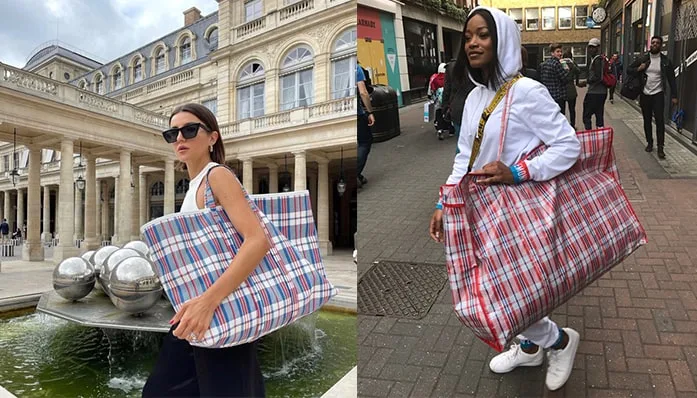
A $3000 tote bag by luxury brand Balenciaga has gone viral for its resemblance to a nostalgic and distinctly Kiwi accessory: the blue and red checked plastic storage bags you can buy for under $5.

“My grandmother had expensive taste,” wrote Twitter user @richy_wrld.
“Everyone knows this is the $2 marae blanket bag,” commented Green party co-leader Marama Davidson in response.

Broadcaster Kara Rickard shared a screenshot of the smaller version of the bag on her Instagram Stories, commenting, “What in the marae / nans whare/storage bag is going on here @balenciaga #maraeciaga”.

https://twitter.com/muthaterina/status/1433732211807715335?s=20

Balenciaga’s version is made in Italy from calfskin leather with organic cotton lining and is available in two sizes.

While it has obvious similarities to the local plastic bags used to store or transport everything from wool blankets to old clothes, it is actually also a style that is used around the world.

“Based on the quote RTs, I see it is a BIPOC household essential lol. Not just Polys” wrote Te Rina Triponel in the responses to her original tweet.

Around the world, there are various localized names for the style, including “shangazi kaja”, thailas and more. The BBC reported last year that the distinctive bags were popular in markets across West Africa, and are known as the “Ghana Must Go bag”.

“when in the 1980s hundreds of thousands of undocumented immigrants, most of them Ghanaians, hurriedly stuffed their belongings into them after being given short notice to leave Nigeria, it became known as Ghana Must Go.

A very similar style by Balenciaga had already been called out by Thai consumers in 2016 for its resemblance to the traditional market bags with their distinctive rainbow stripes.

Balenciaga’s designer Demna Gvasalia has become known for his ironic use of every day or capitalist symbols turned into luxury offerings.

In 2016 Demna’s other brand, Vetements, released a £185 slogan T-shirt featuring the DHL logo to much hype and ridicule, depending on what side of the fashion fence you fell (“Scam or subversion?” asked the Guardian at the time).

That was followed in 2017 with a Balenciaga tote bag that looked very similar to the famous bright blue plastic Ikea Frakta shopping bags (the “luxury” version was leather and handmade in Italy).

The brand recently released a neon yellow parka that was pretty much a very expensive version of a high-vis jacket, and last week launched a toolbox case for the Apple iPhone 12 think of it as a high fashion version of trolling.

This also isn’t the first time that the distinctive checked plastic of laundry/market/marae blanket bags has inspired luxury fashion designers.

In 2013 Phoebe Philo of French brand Celine memorably featured the blue, white, and red laundry-bag check on coats and such, while way back in 2007 Louis Vuitton sent models walking down the runway carrying designer versions of the bags.

While some say this is simply fashioned showcasing a sense of humor through parody, embracing high-low, or questioning the true definition of luxury, others criticize the appropriation of an affordable and accessible item, turned into something that is out of reach financially for most.

Balenciaga, owned by Kering, the conglomerate that also owns Gucci, Saint Laurent, Bottega Veneta, Alexander McQueen, and more, is set to open its first New Zealand store in Westfield Newmarket soon.

Content courtesy of  Stuff & Nairobi fashion hub 

Merck Foundation CEO Celebrated the Winners of “More Than a Mother” Fashion Awards 2020

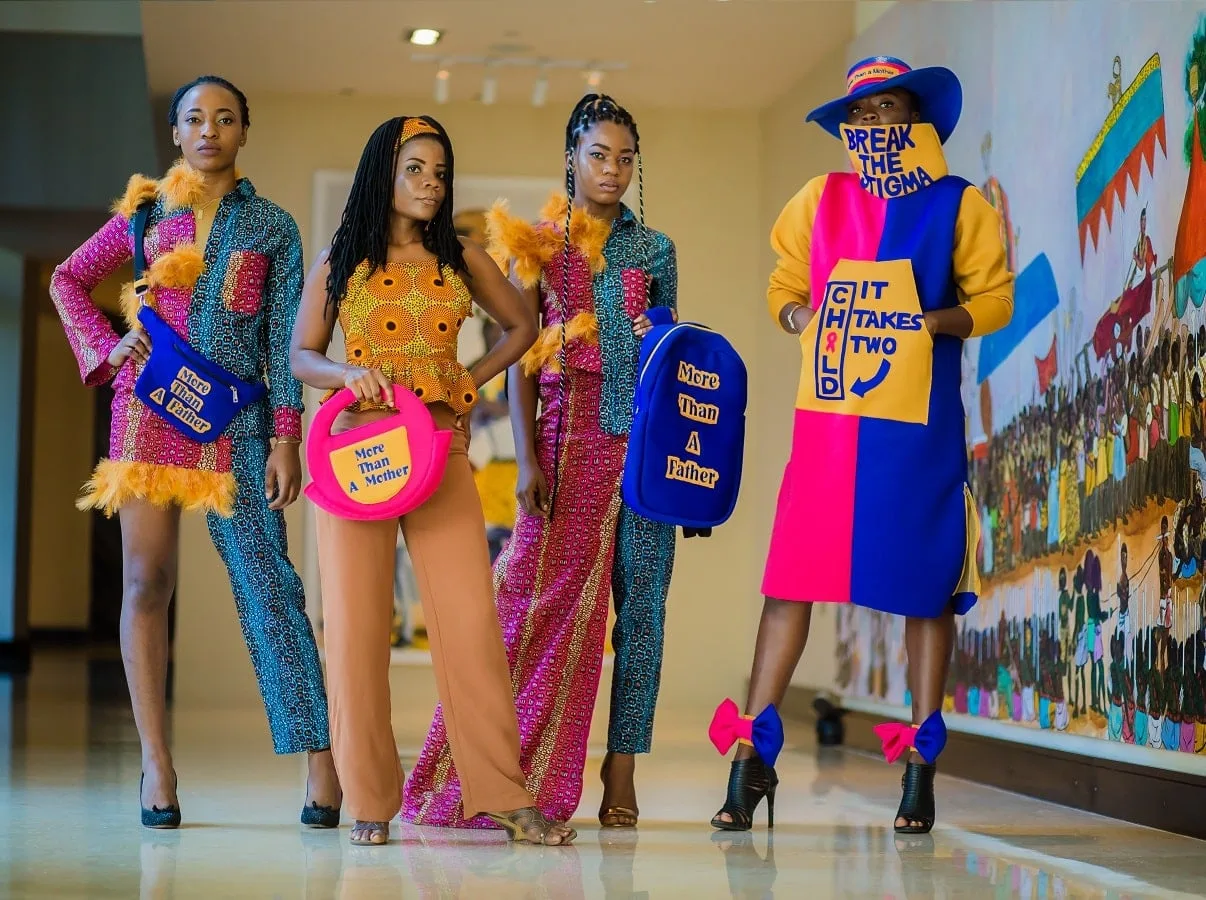
21 Winners of Merck Foundation More Than a Mother Fashion Awards 2020 from Ghana, Namibia and Zambia were celebrated during the ceremony new fashion awards 2021 were announced by Merck Foundation in partnership with African First Ladies.

Merck Foundation, the philanthropic arm of Merck KGaA Germany conducted an award ceremony to felicitate and celebrate the winners of ‘Merck Foundation More Than a Mother’ FASHION AWARDS 2020. The awards were announced in partnership with the African First Ladies, also the Ambassadors of Merck Foundation More Than a Mother.

Senator, Dr. Rasha Kelej, CEO of Merck Foundation and President of Merck Foundation More Than a Mother expressed, “I am very happy and proud to meet our winners of the Merck Foundation More Than a Mother Fashion Awards 2020 and welcome them to our newly established ‘Fashion with Purpose’ community. I am impressed with their designs that deliver strong and influential messages to empower infertile women and say ‘No to Infertility Stigma’, via sensitizing our communities”.

During the Award Ceremony, Merck Foundation CEO advised the winners, the young African Designers on how their respective designs can be created and executed to open a dialogue and create the culture shift desired.

The Videoconference was also attended by past winners of Merck Foundation More Than a Mother Fashion Awards. It was also attended by Fashion designers & students and media representatives across Africa.

“My vision is to develop a community of young African Fashion Designers in order to catalyze a movement, that reaches and extends far beyond just fashion, and creates a culture shift and be the voice of the voiceless in their communities.

The fashion industry has already got enough flakes for being superficial. Let’s change this perception and create a meaningful fashion trend aiming to educate our communities. I love fashion and I strongly believe that designers can make designs for Men and Women that they would be proud to wear to show their contribution toward their communities, villages, and cities across Africa”, added Senator Dr. Rasha Kelej.

As a part of the awards, Merck Foundation has provided the winners with one year of access to an online educational training program called “MasterClass” which is an immersive online experience and self-paced learning course that can be accessed anywhere with the Internet and offers online courses in many areas such as the art of designing, fashion, photography, lifestyle, discovering your inner voice and many other areas of Media, Film making and storytelling, etc.

“I am very excited to be a part of the ‘Fashion with a Purpose’ community in Africa, led by Senator, Dr. Rasha Kelej. She is a true fashion icon, who has a unique style. It was an absolute honor to meet her and be mentored by her. Thanks to Merck Foundation for involving us in such an important campaign”, emphasized Joel Musasa, Merck Foundation More Than a Mother Fashion Awards 2020 winner from Namibia.

During the Award Ceremony, Senator Dr. Rasha Kelej also announced the Call for Applications for their annual competitions for the best design that carries messages to address sensitive social and health issues. The two awards launched for the year 2021, for the African Fashion Designer community are:

  1. Merck Foundation Fashion Awards “More Than a Mother” 2021: All African Fashion Students and Designers are invited to create and share designs to deliver strong and influential messages to raise awareness about Infertility Prevention, Breaking Infertility stigma, and/or Empowering Girls and Women through Education.
  2. Merck Foundation “Make Your Own Mask” Fashion Awards 2021: All African Fashion Designers and Students are invited to create and share designs of masks and other clothing items that carry messages to encourage people to wear masks to show they care and at the same time make it creative and fun!

Content courtesy of Merck Foundation Fashion Awards

Stockholm Fashion Week Spring 2022, Aajiya Designer Maimuna Cole Is Dreaming Big

Among the most striking looks to appear at Copenhagen, Fashion Week were cowrie-print separates from Aajiya, a Stockholm-based brand founded by Maimuna Cole. Born in Sweden with Gambian roots, Cole says she’s designing with a higher purpose (or two or three).

She’d like to raise the profile of Africans in fashion and hopes to contribute to the infrastructure of West Africa by moving her business there at some point. In the meantime, she’s busy building her own universe and filling it with colorful prints and romantic openwork dresses that are attracting a growing fan base that includes Seinabo Sey, Sabina Ddumba, and Gabrielle Union.

Here, Cole talks to Vogue Runway about her influential grandmother (for whom the line is named), the struggles she faces as a Black designer, and some of the people who inspire her.

When did you first become interested in fashion?
Where it all started was when I moved to Gambia when I was 10 years old, and I lived with my uncle and my grandmother. They have a huge atelier there, and every day they’re sewing from the morning tonight. I would see my grandmother taking the leftover fabrics and putting them together, and I always felt it was very cool. She was such a creative woman and really inspiring to me, so I would also just take the pieces from here and there [and try] to make a top or skirt or whatever.

How did you start your business?
I started the concept of Aajiya when I was 16, and I’m 27. I was 16 when I moved back to Sweden, and I began small projects here and there. My first one was batik blazers, and the response from that was such that, I was like, Okay, maybe I’m good at this, so let me just start to do it. So I did, but then I felt like I was lacking the business part of it. So I studied business management.

After that, I was like, Now I feel like I’m kind of ready, but how do you start? Where do I go? Who do I connect with? So I went to Senegal for six months and created a collection, my first, which Seinabo Sey wore at Way Out West in 2019, and that became my viral moment. And that’s when I was like, You know what? I’m going to do this as a career.

What challenges did you face?
[After that I was] just kind of like, Do I want to stay here in Sweden? Because I never felt like I belonged in Sweden. I’ve never been comfortable. Growing up, I felt like I was always the outsider. I always felt like I was different, the only Black girl in the classroom. In fashion, it felt as if there was no door for us at all, like there was nowhere for us to turn, so we had to just move out of here. It’s like, you guys don’t want us to be part of this. We’re never invited to events; even internships are a problem.

I was like, If you don’t want to open the door for me, I’ll make sure to build my own door. Honestly, it’s sad that you have to leave your own home, your own country, to go somewhere else where you’re appreciated. [In Stockholm] it’s more like, Oh, we have our own circle; let’s stick with that. It’s been like that for years, and it’s not working so far because they haven’t really advanced in the fashion spectrum. If you look at America or England, everything is so diverse, things are happening, but here it’s just flatlined.

I can speak for a lot of Black people here, creatives; we always have to adapt. My story is I had to change my name to Maya because people couldn’t pronounce my name. It’s like, I’m losing my identity to adapt to you. I shouldn’t have to do that. You always have to adapt and it always feels like you don’t belong here. They speak English when they see you. And it’s like, No, I speak Swedish. Or it’s like, “How long have you been here?” No, I was born here. Why does it always have to be that conversation? And it’s daily all the time. I just don’t care anymore; I’m creating my own little bubble and if you want to come, you can come get some knowledge, some culture, some stories, so you can feel where I come from through my clothes.

Do you have any role models?
Selam  Fessahaye honestly opened the doors for us. I can say that because she definitely made me feel like I can do this too, being a woman and being from East Africa. I was like, Oh, my God, she really did this. And she did not care. She did that. She had the big silhouettes, the colors everything; it was so, so amazing. And for me, that really inspired me to also just not give a shit, basically.

Do you feel more comfortable in Sweden now?
I honestly had to create my own world and that is why my clothes are so loud prints, colors…. This is who I am and I’m not afraid to own my space.

How do your Swedish and African roots meet in your work?
My work is basically a description of me. I come from two worlds, and I’m putting that together and just creating strength through that. That’s the simplest way for me to explain it. And also African fashion has been so downplayed, and I just want Africans to take space in the fashion industry. It’s coming, it’s coming, but I’m taking my steps as well to be part of African fashion, to lift it up and [to] be more mainstream [so] you can go everywhere and [it’s] not just like a costume, so it’s beautiful. And I’m so excited for this.

Can you tell me about the cowrie print in your latest collection?
For me, this collection was an introduction of who I am, where I come from. And the cowrie shell has been so commercialized that the history of it has been kind of lost. So for me it was [like], Let me take that back and educate people and also wear it as armor. It’s just a luxury feel when you know the history of it. In Africa, it was the first currency before the colony, and for me, it was like, this is something rich and also very cool and very authentic, so why not put this as a print and just have loud colors on top of it?

What could the industry do to help you?
I think it’s becoming more open to new creatives, a new experience of clothes and not just sticking to just one thing. I’m starting to see that Africans are being more accepted in the fashion industry, like Kenneth Ize. He’s someone who is very inspiring, because he came and had his show in Paris, which was amazing, with fabrics that were made in Africa. That’s what I want to be.

I just want people to accept what I’m making, and in the near future, I’m going to introduce other fabrics, like batik that is handmade. There’s so much luxury in our culture, and I really want to show that to people. As Africans, we wear customized clothes every single time and bring that kind of luxury feel with fabrics that are handmade and sustainable as well.

What do you dream of doing long-term?
My ultimate goal is to have a studio in my home country and bring all the tailors together. The thing is, in Africa, they’re all self-taught, and they’re lacking skills that could be very good for them if they want to branch out and create their own stuff. My ultimate goal is to have my clothes made in Gambia. I make them in China right now. I want to move everything here, make all this stuff in Sweden.

And then once I feel like I’m stable enough, I can go to Gambia, back and forth, and just make my stuff from there. I really, really want to be part of the infrastructure in Gambia or Senegal. It’s a higher purpose, it really is. It’s not just to sell clothes or whatever; it’s to bring awareness to Africa, how creative they are, how sustainable they are really, because most of the things that they do, it’s [with] what they have. It’s a big job to do, but I am very determined.

Content courtesy of Vogue Magazine & Nairobi fashion hub 

Kenyan Born Beauty Queen Rehema Muthamia Crowned Miss England 2021

Miss England finalists walked the catwalk in Coventry for the last time on Friday night (August 27), the final was held at the Heart of England Conference Centre and saw the not-so-average contestants take to the stage.

The eventual winner of Miss England was 25-year-old technology consultant Rehema Muthamia, She was crowned by former champion and doctor, Bhasha Mukherjee, who held the title for two years.

The much-anticipated event was held in Coventry as part of the City of Culture 2021 celebrations, where Miss Coventry missed out after the penultimate round.

Born in North West London, Rehema spent part of her childhood living in Kenya and now works with healthcare professionals on electronic patient records.

As well as speaking four languages, she graduated in Genetics during the pandemic at the University of Sussex, Rehema said: “My family is so supportive they can’t stop talking about it, and the Kenyan community has really got behind me and wanted to support me and loved seeing someone from my heritage being represented.”

https://www.instagram.com/p/CTPXPv2IYbz/?utm_source=ig_embed

When asked by a panel of judges what the worst experience in her life has been, she said: “I would have to say that the most difficult experience that I’ve had in life is having gone through an abusive relationship and it’s not something that people speak about, especially in young women.

“But having gone through a relationship that was abusive it helped me learn more about myself.

“In fact unfortunately the relationship and the abuse were made public in the press and it was a terrible experience having to go through that.

https://www.instagram.com/p/CTMWkhkoxzH/?utm_source=ig_embed

“But knowing that I was able to come through that experience, learn more about myself and my worth, who I am as a woman and be able to now use this platform in Miss England, to help other women that may be in that have been in my position.”

Before scooping the top prize in the pageant, which took place at the Heart of England Conference and Events center in the Midlands city, the 25-year-old had also won the first-ever Miss All African Colours contest.

The Mr. England winner was also announced as 28-year-old Liam Royce from Banbury, Oxfordshire, Muthamia spent part of her childhood in Kenya before moving over to England and studying at the University of Sussex.

She will now represent England at the 70th Miss World in Puerto Rico and pocketed £2,000 in cash alongside a wardrobe of the evening and occasion wear, a photoshoot, a personalized website, luggage, and a glamour mirror.

Content courtesy of Daily Mail & Nairobi fashion hub 

The Fashion Internship Program Helps African Americans Teens Design Collections Create a Pop-up Store

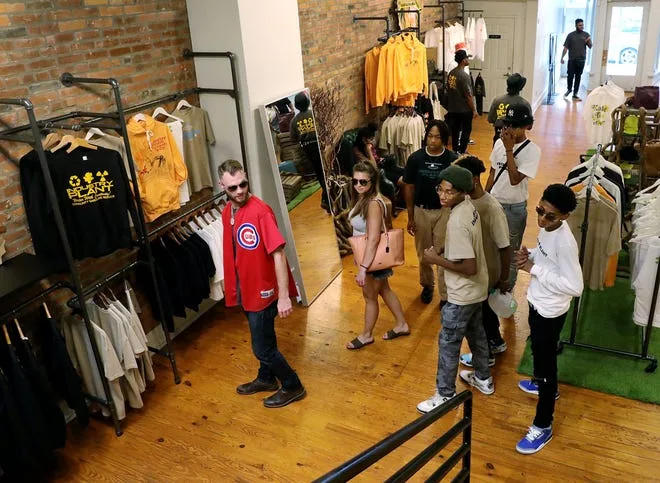
Standing in front of a full-length mirror, Christian Dowdy styled customer Ryan Newman, pulling the tan T-shirt out from under the black floral hoodie and letting the tee peak out a bit.

After the slight adjustment, Dowdy, 18, couldn’t help but smile.

Not only was the teen showing Newman how to look good in his new outfit, but Dowdy had helped design the tee and sweatshirt Newman was wearing as part of the Future of Fashion summer internship program.

“To see our creations on anyone’s back I can’t wait to see them on the streets and think, ‘Oh man, we did that,’” Dowdy said.

Dowdy, a recent graduate of Harvest Preparatory School, is one of 16 Black teens from central Ohio in the two-month, immersive internship that culminated this week in the release of the clothing collection, Industry Plant, at a storefront in the Short North.

The young designers and entrepreneurs will be at 640 N. High St., through Friday showing off their streetwear line inspired by the natural beauty that can be found in urban spaces. The designs, which feature hard construction looks with floral and vine-like touchpoints, will be given away to underprivileged youths who visit the pop-up store while others can offer a donation to take home a special piece.

The Future of Fashion program teaches young designers and entrepreneurs about the fashion industry

The Future of Fashion Program, which seeks to teach young African Americans about every facet of the fashion industry while also paying them for their work, was a collaboration of two local nonprofit groups, the Columbus Fashion Alliance and My Brother’s Keeper Village.

During the first few weeks of the internship the students, ages 14 to 19 and all male except for one young woman, met with various industry leaders – buyers, designers, merchandisers, marketers – to learn that working in fashion involves more than just making clothes. They took field trips to meet Black-owned brands including Starstrukt Apparel in Reynoldsburg and the Toledo-based Midwest Kids and Mud Made.

“The best part of this is that they see people who look like them,” said Ronny Oppong, the director of the program and a Brooklyn, New York-based fashion creator who grew up on the North Side of Columbus. “You can be an entrepreneur. You can be incorporate and be a VP or a buyer. They were able to interact with all these spaces and see what they look like.”

Oppong, a 29-year-old who studied fashion merchandising at Ohio State University, said he was thrilled to come back to his hometown to lead this internship and get young Black men interested in fashion – an industry where he hasn’t seen a lot of African American mentors.

Students meet with black designers and industry leaders

Meeting Black designers and industry leaders in central Ohio was one of the most beneficial aspects of the internship, said Greg Simpson, 16 and a rising senior at the Southwestern Career Academy in Grove City.

“To see people who look like me and have had some of the same struggles I had to get to that point – that was really inspiring,” Simpson said. “It was surreal to see other people make it and let me know I can do this.”

He said the program “lit a fire under him,” especially the fact that he was paid $300 a week for his efforts, to try to make a full-time career out of fashion.

Through the summer, the students learned plenty of practical skills, too.

Kenttwon Brown, 19, said he learned how to use graphic design software, screenprint garments, and effectively implement color in his creations.

He designed a logo that he’ll use for his own brand, modeled for promotional materials, and filled a whole notebook full of advice he heard over the two months.
In fact, he said he learned more this summer than his entire freshman year studying graphic design at Central State University near Dayton.

“It was almost a dream come true,” said Brown, a 2020 graduate of Reynoldsburg High School.
But the summer wasn’t without its challenges, he added.

Pop-up store impresses mentors and customers alike

The group learned tough lessons, such a curating the best designs from so many good ideas and leaving really cool styles on the cutting-room floor.

Then, they had what seemed like the impossible task of producing the garments for the pop-up shop, deciding how much of each piece to order and setting it all up in a store setting to appeal to customers – all within a few short weeks.

“We had to think about what are we going to make and what’s on the floor,” Brown said. “What’s our inventory? What’s the main showcase? All these items are so fire that it was hard to decide what to highlight.”

Indeed, what the students produced in their pop-up store a space that used to house Lululemon Athletica and was donated for the week impressed the students’ mentors and customers, alike.

“The setup is amazing,” Newman said. “It’s really, really pretty and everything looks like what you’d see in a successful storefront.”

Passersby wouldn’t have known the store was only a temporary post filled with designs from teenagers based on the sleek interior of the store filled with posters of models showing off the clothes, racks made from industrial pipes, and the sheer variety of goods offered, from beanies with the Industrial Plant logo to pants with green flowers printed on them to myriad T-shirt options.

Looking around Monday during the first hour the store was open, instructor Kathy Hayes, who headed up the visual merchandising team, stood in awe of the environment and how confidently her students navigated the space with their eager customers.

“It’s amazing,” said Hayes, a Northeast Side resident who has worked for companies including Express and Victoria’s Secret. “They basically built this from the ground up.”

Newman, of the West Side, knew one of the interns so he stopped by that first day to check out the finished product.

“The setup is amazing,” Newman said. “It’s really, really pretty and everything looks like what you’d see in a successful storefront.”

He also loved the designs.
The teens, themselves, took time to revel in their successes.
“I’m proud of myself and I’m proud of us,” Dowdy said, echoing the sentiments of several of his teammates.

He and others said that while it’s been amazing to see what they created with Industry Plant said he’s even more eager for what the future has in store for them, whether it’s launching brands, starting modeling careers, or deciding what to pursue in college.

“On the first day, I shook everyone’s hands and I didn’t know what to expect,” Dowdy said. “I watched everyone grow and come out of their comfort zones. The personalities came out … I can’t wait to see what we do with all this.”

To learn more about the collection and how to attend the pop-up store, visit www.industryplant.org.  

Content courtesy of Dispatch & Nairobi fashion hub 


Africa’s Top Fashion Influencers

PARIS – With a steadily expanding middle class, Africa holds plenty of untapped potential for luxury brands. But who are the influencers who are moving the needle on the continent and beyond?

These days, global brands like Louis Vuitton, Prada, and Hermès are competing with a growing number of homegrown labels, as designers like Rich Mnisi, Kenneth Ize, Hanifa, and Thebe Magugu tap into rising demand for African-made fashion.

To succeed, Western brands must harness the power of local influencers, ranging from stars of Nigerian cinema, dubbed Nollywood, to television presenters, singers, and influencers, technology company Heuritech said in a webinar titled “Discover the African Fashion Scene.”

“The narration of African fashion cannot be done without African creatives,” said Amélie Rotsen, fashion analyst at Heuritech, which offers brands fashion trend forecasting using artificial intelligence to translate pictures shared on social media into market insights.

“People are now really quick to call out a brand for cultural appropriation, so stop any narrative based on Western imagery, and try to really call those creatives to create stories that will highlight their culture, the way they know-how,” she added.

Total private wealth held in Africa is expected to rise by 30 percent over the next 10 years, reaching $2.6 trillion by 2030, according to the “Africa Wealth Report 2021” published by AfrAsia Bank. South Africa is home to the largest luxury market in Africa by revenue, followed by Kenya and Morocco.

The bank expects Ethiopia, Mauritius, Rwanda, Kenya, and Uganda to be the strongest-performing wealth markets in Africa over the next decade, with growth rates exceeding 60 percent. Solid growth is also forecast in Namibia, Botswana, Mozambique, and Zambia.

“To enter the African market, it is very important for international brands to really understand the specificity of the markets and have teams directly in the field. This is especially true for influencer communication,” said Jenna McFeely, fashion curator and trend analyst at Heuritech.

“Picking the right brand ambassador requires foreign brands to do exhaustive research on the market, along with the influential figures of a particular country or field. And lastly, it’s important to consider the weight of the diaspora,” she added.

“As a result of colonization, people of African descent are present throughout the world with their heart and their wallet lying between the Western world and their roots, and this will to consume Black[-owned brands] has been reinforced,” she said, noting the power of U.S. beauty influencers like Jackie Aina and Nyma Tang.

Among the top African influencers, she listed was Nigerian actresses Adesua Etomi and Genevieve Nnaji, who have 4.3 million and 8.2 million followers on Instagram.

Nigeria has also produced major music stars such as Burna Boy and Wizkid, who posted a message on Instagram last week saying his concert at the O2 Arena in London, scheduled for Nov. 28, sold out in 12 minutes.

“While the link between film, music, and fashion does not need to be proven anymore, these artists’ global audience and edgy style make them ideal representatives for African and international designers who are hoping to attract aspirational or entry-level consumers,” McFeely said.

Popular TV personalities include Bonang Matheba, known for her catchphrase “Champagne, darling!”, who has launched several fashion lines and her own sparkling wine brand, House of BNG, in addition to starring in the reality TV show “Being Bonang.”

Citing Nigerian public relations firm Redrick, McFeely recommended that brands targeting luxury consumers rely on high-net-worth individuals like the Nigerian writer Chimamanda Ngozi Adichie, who inspired Maria Grazia Chiuri’s first collection for Dior with her essay “We Should All Be Feminists.”

“There’s also the influencer market with entrepreneur women and travel enthusiasts like Boity Thulo, who showcases the lavish side of Africa, which is aspirational, to say the least,” McFeely added.

“And finally, there’s the promise of Afro cyber influencers who might be a new fun outlet, given the success encountered by Lil Miquela, who is another virtual influencer,” she said, citing the example of digital model Ivaany.

In parallel, WWD asked data research and insights company Launchmetrics to compile data on the top five African influencers ranked by media impact value or MIV. Based on a proprietary algorithm, the measure estimates the value of coverage across social networks and in the media.

1. Mihlali Ndamase (@mihlalii_n): 1.4 million followers on Instagram, 59 percent of the engaged audience from South Africa

The makeup artist and content creator, also known as Mihlali N, bills herself as the biggest beauty YouTuber in South Africa with 345,000 subscribers.

She recently generated $143,000 in MIV for a post with Fashion Nova, $112,000 for a post with Revlon, and $80,000 for a post with Dior makeup.

Featured on Forbes Africa’s “30 Under 30” list this year, Ndamase has expanded into luxury and lifestyle content, via paid partnerships with the likes of Radisson Hotels and Protea Hotels by Marriott.

2. Temiloluwa Otedola (@temiotedola): 1.2 million followers on Instagram, 54 percent of the engaged audience from Nigeria

The daughter of Femi Otedola, a Nigerian billionaire active in sectors including energy, and younger sister of music star DJ Cuppy, Temi Otedola established her presence with the launch in 2014 of a blog covering areas spanning fashion, travel, and a book club.

Her Instagram post about Etro’s Forte Dei Marmi pop-up in June generated $113,000 in MIV, while a post with Farfetch in 2020 was worth $68,000, reflecting the progression in her follower count.

Otedola made her acting debut last year as the female lead in Nigerian director Kunle Afolayan’s film “Citation,” the story of a university student who accuses a professor of sexual harassment, which is available to stream on Netflix.

3. Kefilwe Mabote (@kefilwe_mabote): 1.2 million followers on Instagram, 56 percent of the engaged audience from South Africa

Born in the township of Soweto in Johannesburg, Mabote last year published her autobiography “Kefilwe Mabote: Influencer De Luxe – From Soweto to Milan,” which doubles as a guide to becoming an influencer.

Known for her glamorous style, she generated $49,000 in MIV for a post with Ugg in May, but can generally be seen in high-end designer clothing by the likes of Burberry, Tom Ford, and Versace. She even has a dedicated website, kefiscloset.com, to sell her castoffs.

Mabote’s personal life made headlines last year when her then-boyfriend, businessman Edwin Sodi, was caught up in a corruption scandal. She subsequently lost a defamation lawsuit against the weekly tabloid Sunday World.

4. Lesego Legobane (@thickleeyonce): 765,000 followers on Instagram, 66 percent of the engaged audience from South Africa

Photographer, plus-size model and body positivity activist Legobane known professionally as Thickleeyonce also has her own online clothing store, Leebex.

A recent post with Fashion Nova Curve generated $39,000 in MIV; another with Bombay Sapphire was worth $63,000, and a third for Beyoncé’s Ivy Park collection with Adidas generated $50,000.

Legobane revealed last year that she had been selected as an influencer for Rihanna’s Savage x Fenty lingerie line, but last week called out the brand on Twitter for not offering any pay. The tweet was subsequently taken down, but she posted a separate message that read: “Pay Influencers. Creating Content Is Work.”

5. Sarah Langa (@sarahlanga), 579,000 followers on Instagram, 61 percent of the engaged audience from South Africa

A close friend of fellow influencer Kefilwe Mabote’s, Langa landed her first paid gig with South African department store chain Woolworths in 2015. She has frequently countered criticism from haters by highlighting her academic achievements, which she lists on her Instagram biography.

Langa works with a variety of brands including hairstyling appliances company GHD and mobile phone maker Samsung. She generated $31,000 in MIV for a recent post with fast-fashion e-tailer PrettyLittleThing; $26,000 with Nespresso, and $16,000 with Patrón Tequila.

One of her most recent Instagram posts shows her unboxing an Hermès Birkin handbag in a promotion for luxury goods sourcing service Aquarius Luxury Concierge.

Content courtesy of WWD & Nairobi fashion hub


Rihanna Is Officially a Billionaire

Rihanna, the singer of hits such as Umbrella and We Found Love, is officially a billionaire and the world’s richest female musician.

However, most of her fortune, estimated on Wednesday by Forbes magazine to be $1.7bn (£1.2bn), does not come from chart-topping singles, but from the success of her cosmetics empire.

Rihanna’s real name Robyn Fenty launched Fenty Beauty in 2017 with a dream to create a cosmetics company that made “women everywhere feel included”.

The singer, who has described makeup as her “weapon of choice for self-expression” while growing up, said she was driven to create her own range because established brands did not provide a full choice of products for all varieties of skin types and tones. The brand boasted foundation in 40 different shades when it first launched to “make skin look like skin” and has since expanded to 50.

Rihanna, 33, launched the beauty brand, of which she owns 50%, with the French luxury conglomerate LVMH in 2017. In its first year, Fenty Beauty achieved sales of $550m, far more than other celebrity-endorsed makeup ranges. Forbes magazine estimates that the company is now worth “a conservative $2.8bn”.

Her stake in the company, combined with a 30% stake in the lingerie line Savage X Fenty and money generated during her 16-year career as a recording artist, take Rihanna’s fortune to $1.7bn, according to Forbes. That makes her the second wealthiest female entertainer on the planet after Oprah Winfrey, who is sitting on a fortune estimated at $2.7bn.

Bernard Arnault, LVMH’s chairman and chief executive, and the world’s third-richest person with an estimated $179bn fortune have said: “Everyone knows Rihanna as a wonderful singer, but through our partnership at Fenty Beauty, I discovered a true entrepreneur, a real CEO, and a terrific leader.”

Commenting on Rihanna’s success, Shannon Coyne, the co-founder of the consumer products consultancy Bluestock Advisors, said: “A lot of women felt there were no lines out there that catered to their skin tone. It was light, medium, medium-dark, dark. We all know that’s not reality. Fenty Beauty was one of the first brands that came out and said: ‘I want to speak to all of those different people.’”

Rihanna is not the first celebrity to make a fortune from cosmetics. Kylie Jenner, the youngest member of the Kardashian-Jenner American reality-TV family, became the world’s youngest billionaire in 2019 at the age of 21 thanks to the success of Kylie Cosmetics, the makeup company she runs largely from her iPhone. Her sister, Kim Kardashian West, also has a cosmetics business, KKW Beauty, while the actor Jessica Alba runs the beauty and wellness brand Honest Co.

Content courtesy of The Guardian & Nairobi fashion hub  

Issa Rae Marries Longtime Beau Louis Diame in Custom Vera Wang Dress

Congratulations, Issa Rae! Earlier today, the actor, writer, and producer announced her marriage to her long-term boyfriend, businessman Louis Diame, in an Instagram post, including plenty of images of both the spectacular South of France setting and her dreamy custom Vera Wang Haute dress.

With the ceremony taking place at the legendary Grand-Hôtel du Cap-Ferrat, known for its luxurious trappings, stunning sea views, and a guestbook that includes everyone from Queen Victoria to Elizabeth Taylor, Rae decided to pull out all the stops for her and her friends to celebrate.

Issa Rae is a married woman!

The Insecure star, 36, revealed that she married longtime beau Louis Diame on Sunday, July 25, sharing glamorous photos from her destination wedding on Instagram. She tagged the post’s location as Saint-Jean-Cap-Ferrat, which is a commune in the South of France.

In the wedding photos, Rae smiles in her custom Vera Wang gown, as well as in romantic snapshots with her new husband, who wore a red Dolce & Gabbana suit.

https://www.instagram.com/p/CRynCd3MqRI/?utm_source=ig_embed

If the news comes as something of a surprise, you’re not alone. While Rae is known for her unguarded humor on her breakout web series The Mis-Adventures of Awkward Black Girl and more recently in her hit Emmy-nominated show Insecure, when it comes to her personal life, she is notably more private. (Indeed, there have only been a handful of red carpet appearances to indicate that she and Diame were even dating, let alone planning to tie the knot.)

In a 2018 interview with Vogue’s Abby Aguirre, she politely waved away any questions about her love life. “I don’t want any input,” she said. “As a writer, you put everything on the table. I’ll take input on kids if I’m going to have kids. How do I not kill the kids? Work? Give me the input. Any other aspect of my life? Give me the input. But who I’m fucking? No, I don’t need input. I’m good.”

So naturally, she opted to share the news her own, gently tongue-in-cheek way. Posting pictures of the “impromptu photoshoot” that happened on the big day, she noted that “the girls came to help me, but they all coincidentally had on the same dress! They were sooooo embarrassed.” (If you’re wondering who she’s referring to here, it’s her bridesmaids.)

As for the romantic shots of her and Diame, who wore a custom red velvet Dolce & Gabbana tuxedo, she simply described herself as having “taken a few flicks with Somebody’s Husband.” Classic Côte d’Azur glamour with a touch of her signature wry humor? From Issa Rae, we wouldn’t expect anything less.

Content courtesy of Vogue & Nairobi fashion hub 

Afreximbank and  Portugal’s ANJE to Promote the African Textile Industry

African Export-Import Bank (Afreximbank) and Portugal’s National Association of Young Entrepreneurs (ANJE), have announced a three-year partnership to support and promote Africa’s fashion apparel and textile manufacturing industry in Portugal and across Europe. This partnership is part of Afreximbank’s Creative Africa Nexus (CANEX) program.

CANEX aims to facilitate investments in Africa’s creative and cultural economy through financing, capacity building, export and investment promotion, digital solutions, linkage, and partnership promotion, and policy advocacy, the two entities said in a joint press release.

Within the framework of this partnership, ANJE, through its fashion project called Portugal Fashion, will provide African designers with showcasing platforms, facilitate their access to international markets and strengthen their capacities through business mentoring and technical assistance in apparel production. In the long-term, Afreximbank and ANJE aim to attract more investment opportunities into the sector while developing the technical skills of African industry players, thereby improving Africa’s manufacturing and production capabilities.

The cultural and creative industries of Africa, with the right investments, can contribute to the structural transformation of the continent, thereby creating jobs and increasing exports and other development outcomes. The partnership between Afreximbank and ANJE aims to address the challenges faced by African designers, providing them with the opportunity to access international markets while building their capacity through brand incubation.

The program is designed to promote at least 40 African designers annually on Portugal Fashion’s runways. Designers will also benefit from networking opportunities with international industry experts, retailers, manufacturers, and other key stakeholders. The inaugural fashion showcase will take place in Porto, Portugal from October 13-16, 2021.

In addition to this event, Afreximbank and ANJE have structured a partnership to advise and support European and Portuguese companies seeking to invest in Africa, where ANJE will act as a one-stop-shop for investors looking into Africa and seeking advisory services and support from both Afreximbank and ANJE.

Prof Benedict Oramah, President of Afreximbank, said: “We believe that the vast creative talent pool on the continent is an opportunity to accelerate Africa’s economic transformation. Through CANEX the bank is providing tangible support for the development of an ecosystem to monetize the creative sector and increase its contribution to Africa’s economy under the African Continental Free Trade Area (AfCFTA).”

Manuel Mota, vice president of ANJE, said: “The creative industries in Africa have immense potential to become key drivers for economic growth and I believe this initiative will have a positive and sustainable impact. It is a privilege for ANJE to host and work together with Afreximbank on this important milestone.”

Content courtesy of Fabire 2 Fashion & Nairobi fashion hub 

VDJ 2021 Fashion: Lindeka Duma wins Young Designer Award

Pietermaritzburg School of Fashion student, Lindeka Duma won the Vodacom Durban July Young Designer Award. Here are the top three looks.

Fashion design student Lindeka Duma from the Pietermaritzburg School of Fashion won the Vodacom Durban July (VDJ) Young Designer Award, announced on 2 July.

Due to the pandemic, the annual VDJ event took place behind closed doors at Hollywood bets Grayville Racecourse in Durban.

Pietermaritzburg School Of Fashion Takes Top Two Spots

The Young Designer Award was presented by Durban Fashion Fair under the theme was Birds of a Feather. The judging panel included industry experts Leigh Schubert, Greg Wallis, Nonku Mthembu Lara Klawikowski, and Derrick Mhlongo.

On 22 June, the top ten finalists for the Young Designer Award were announced and the top three finalists a week later. The Pietermaritzburg School of Fashion secured three spots in the top 10 and two in the top three with Lindeka Duma coming in the first place and her classmate Vincent Orishidere as the first runner up. Zandile Mahlasela from Lindiwe Kuzwayo Academy of Fashion was the second runner-up.

Lindeka Duma’s Winning Outfit

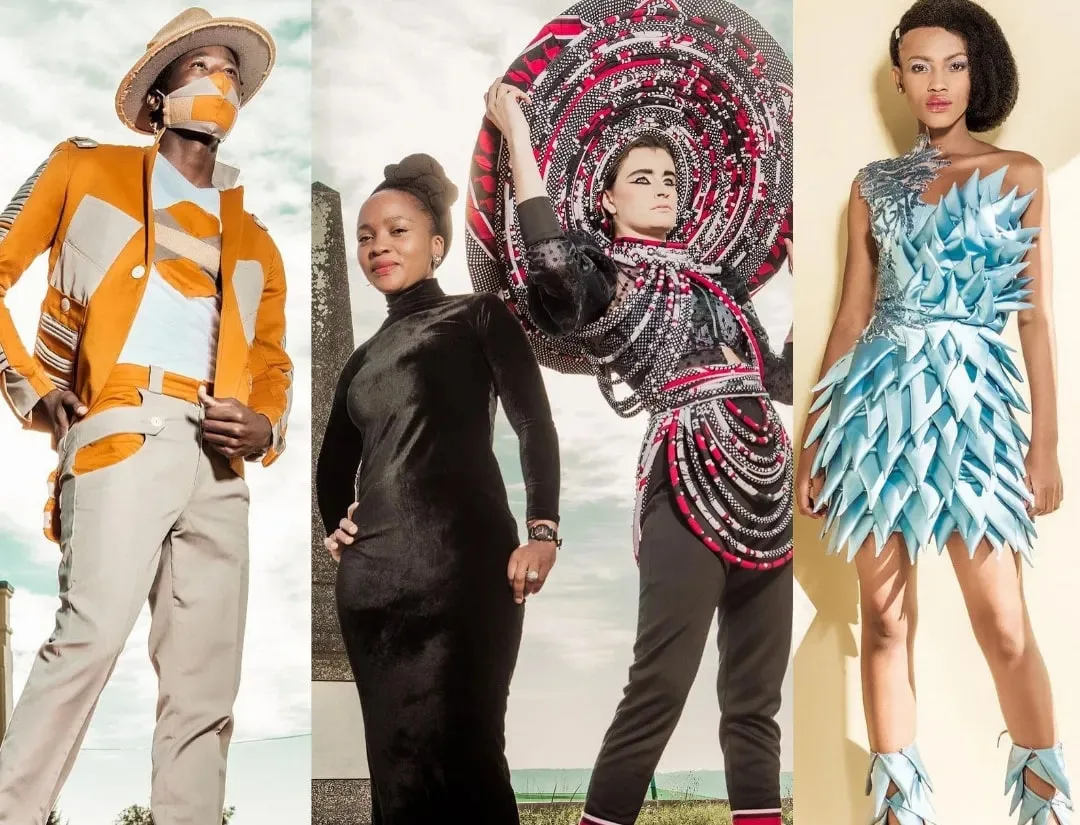
Lindeka Duma designed a black guinea fowl-inspired bodysuit made from Shweshwe fabric, with layers of handmade plaited rope that form a colorful bodice and a matching bold hat.

The first runner-up, Orishdere designed a vibrant burnt orange and beige streetwear outfit while the second runner-up, Mahlasela put together a blue ice dress with triangular feathers. See the three looks below.


​

 “The standard was exceptionally high this year, and in having to decide on the top ten and top three, it was very difficult as there were so many great entries that showed good research and thought processes,” said Wallis according to IOL.

“But sadly couldn’t find a way into the next round,” he added

Duma has won R10 000 from the Gold Circle, a two night local hotel holiday from Bold Travel, a year of hair by Claire from Hair Inc, R5 000 gift voucher from Gateway Theatre of Shopping, a Samsung Galaxy S9, R3 000 Kryolan hamper and more.

“Congrats to my self for winning on Vdj2021 young designers, I am over the moon  I still not believe that I am not dreaming!!!” wrote Duma on Instagram.

​

Content courtesy of The South African & Nairobi fashion hub 

Founder of Pan-African Clothing Brand ‘BSR’ Advocates for Reverse Brain-drain to Develop Africa

Black Star Revolution, a fashion brand owned by US-based Ghanaian businessman, McAaron Keli Ketor-Tay has been officially launched in Ghana with a call on African leaders to spearhead an agenda to accelerate the continent’s development through reversed brain-drain.

Speaking in an interview with Lord Kweku Sekyi, Mr. Ketor-Tay, said, Africa’s renaissance must be backed by a comprehensive agenda to harness its own human capital to its own advantage rather than exporting scholars abroad.

He said Africa’s unfortunately negligible position in the world economy does not reflect the enormous resources at its disposal which encompass both material and manpower, adding that, foreign nations are rather tapping into African ingenuity at the expense of the continent itself.

Sharing the vision behind BSR, Mr. Ketor-Tay said he was inspired by Ghana’s founder and first president, Kwame Nkrumah, who led Africa’s first successful independence movement in 1957 and actively advocated for continental unity.

He said, akin to Marcus Garvey’s ‘Back-To-Africa’ movement, the Black Star brand signifies unity and harmony among all people of African heritage.

“It will be accomplished through knowledge, enterprise, and direct social impact projects in all African communities globally.”

Mr. Ketor-Tay said plans are underway for his company to venture into the sportswear business, which he will utilise to showcase African talents as well as unique designs to the rest of the world.

Prior to its launch, the Black Star Revolution movement, comprising a team of volunteers, embarked on a number of special charity projects in rural communities in the Greater Accra Region, including refurbishment works at Zenu Polyclinic in the Kpone Katamanso District.

Content courtesy of & Nairobi fashion hub 

Creative DNA x Fashion Scout present WAUZINE ‘Matatu’ Cross Cultural Collaborations

The first issue of WAUZINE titled ‘Neighbourhood’ came out in December 2020, and it explores Nairobi’s cultural landscape. In this issue, Sunny, with photographer and artistic luminary Maganga Mwagogo, showcase the striking and beautiful work of the designers through models Shekinah Imani, Adhel Bol and Ronnie Nyongesa, against the contrasting architectures of two socially significant parts of Nairobi—Kariokor and Kilimani. The issue is accompanied by a captivating piece by the amazing Awuor Onyango that speaks on the relationship between Kenya’s colonial past and its contemporary artistic output.

The second issue of WAUZINE titled ‘Joy and Rebellion’ is out now, and it explores Nairobi’s CBD through a fashion story by the talented photographer Sarah Waiswa. From Uhuru Park to the streets of Nairobi’s city centre, Sarah showcases the bold and diverse work of the designers through models Janet Muthoni, Chuony and Alex Kirimi.

This issue is accompanied by a fun piece by Abigail Arunga, who writes about the life and heart of Nairobi’s city centre. Issue 002 is also a reflection of the many Nairobians who go against the law to have a good time (enjoyment) and as Sunny puts it in his letter from the editor, “…this issue joins thousands of other funny stories and love letters by defiant Nairobians to their city as part of their overarching super narrative of joy, mischief and rebellion.”

WAUZINE issue 003 titled ‘Matatu’ will be out in February just before the London Fashion Week. In issue 003, Sunny and photographer Edwin Maina showcase the bold and beautiful work of the designers alongside Nairobi’s iconic matatu art. The issue is also accompanied by an insightful piece by Wanjeri Gakuru telling the story of the matatu culture, reflecting on the designs featured of the matatus, and their specific cultural resonance.

The WAUZINE short film was co-directed by our very own Sunny Dolat and Noel Kasyoka. The 5-minute fashion film is an audiovisual accompaniment to the magazine, and features the models and the beautiful work of the designers, moving in, and as part of, the hustle and bustle of the Nairobi city centre.

Photoshoot Creative team

Creative Director: Sunny Dolat
Producer: Njeri Gitungo
Production Assistant: Jane Pauline
Photographer: Edwin Maina
Styling Assistant: Bryan Emry
Make-up Artist: Sinitta Akello
Hair: Richard Kinyua,
Model: Juliet Kiruhi, Steven Juma, Silvia Tonui

Project Manager Kenya
@sunnydolat @zi.ggie @janeywaithera @photoman254 @bryan.emry @sinittaakello @rickykish @kiruhij @stevenjuma_ @eastafricaarts

Designers part of Creative DNA:
@endasportswear  @epicajewellery @favolosobynanu @genteel_ke @ohanaswimwear  @sevaria.ke  @styletech_by_teshie  @suitedbygordon  @thenisisifactory @vintaracollections @we.are.nbo

Ad