Saturday 18th of April 2026

Nairobi, Kenya

Tory Burch Gets Twisted for Fall 2025: A Classic Reimagined

The world of fashion is in a constant state of evolution, and few designers understand this better than Tory Burch. For Fall 2025, she masterfully redefines American sportswear with a collection that balances timeless elegance with contemporary edge. Unveiled inside the Marron Family Atrium at the Museum of Modern Art in New York City, Burch’s latest designs offer a fresh perspective on the classics turning tradition on its head while keeping practicality at the forefront.

Tory Burch Gets Twisted for Fall The designer showed a collection inside the Museum of Modern Art that was both classic and subversive Right now, designers love to talk about classics. #nairobifashionhub

Nairobi Fashion Hub (@nairobifashionhub.bsky.social) 2025-02-12T13:31:20.882Z

A Bold Setting for a Bold Collection

The venue itself set the tone for the evening. With a multi-level seating arrangement and an enormous digital screen providing a bird’s-eye view of the runway, the show was designed to engage audiences from multiple perspectives. The soundtrack, featuring Charlotte Adigéry and Bolis Pupul’s “Haha,” added an eerie yet playful touch, reinforcing the theme of subversion that ran through the collection.

Reworking the Classics

While many designers talk about the importance of timeless fashion, Burch takes the concept a step further by actively reshaping what it means to be classic. Traditional silhouettes were tweaked, draped, and deconstructed in ways that felt both innovative and wearable. A frayed tweed tunic belted over a matching A-line skirt exuded effortless sophistication, while brushed-jersey track pants and deconstructed cardigans made a compelling case for relaxed luxury.

Outerwear took center stage with a brown padded coat, expertly wrapped at the waist and secured with a pin—an element inspired by former U.S. Secretary of State Madeleine Albright’s signature brooches. “You could always tell what she was thinking or doing by the pins she wore,” Burch explained backstage. This attention to detail exemplifies her ability to weave subtle symbolism into her designs, making each piece feel both personal and powerful.

A Playful Approach to Accessories

In addition to the garments, Burch’s accessories were a highlight of the collection. The standout piece? A reimagined 1950s-style strappy heel, featuring a curvaceous ankle strap that promises to be a must-have item for fall. Elongated tote bags, turned inside-out to reveal multiple pockets and compartments, brought an element of functional artistry to the runway.

One particularly charming surprise came in the form of a whimsical mouse print, seen on a lavender silk dress and subtly placed on the ankle of some tights. “I have a little mouse in my office named Weasel,” Burch revealed with a laugh. The unexpected motif added a lighthearted touch to an otherwise sophisticated lineup, reflecting the designer’s knack for blending humor with high fashion.

They opine on the values of timelessness and the virtuousness of American sportswear, but all of those things have no real meaning unless they’re evolved. Classics need to be reworked to fit our realities now.

Nairobi Fashion Hub (@nairobifashionhub.bsky.social) 2025-02-12T13:32:11.443Z

The Future of American Sportswear

Burch’s ability to redefine American fashion while staying true to its roots is what sets her apart. “I love sportswear, and I’m amazed that it was created here. We should celebrate that,” she said. She emphasized the importance of creating pieces that not only stand the test of time but also hold sentimental value. “I think women are really redefining classics for themselves today, and they want things that will last. I wanted each piece to be coveted enough that you’ll keep it forever.”

Her personal favorites from the collection? The track pants and a shaggy navy jacket with exaggerated long sleeves—her self-proclaimed best coat yet. After more than two decades in the industry, Burch continues to push the boundaries of her designs, ensuring that her clothes not only meet the needs of modern women but also invite them to interpret and redefine fashion for themselves.

With this collection, Tory Burch reaffirms her place at the forefront of American fashion. By twisting tradition in just the right way, she proves that classics don’t need to be static—they need to evolve, just like the women who wear them.

Content courtesy of NFH Digital Team


Tory Burch Fall 2025: A Modern Take on American Sportswear

Tory Burch unveiled her Fall 2025 Ready-to-Wear collection at New York Fashion Week, showcasing a contemporary interpretation of classic American sportswear. The collection, presented at the Museum of Modern Art, emphasized a softer approach to power dressing, blending comfort and style with a touch of playful sophistication.

Burch drew inspiration from the concept of “twisted American sportswear,” infusing familiar silhouettes with unexpected details and unconventional pairings. The collection featured a neutral palette dominated by rich brown hues like chocolate and mocha, creating a sense of warmth and understated elegance.

Oversized silhouettes were a key element, with models showcasing layered looks that exuded both comfort and confidence. Quarter-zip-ups were paired with blocked track pants, sweater vests layered over oversized striped shirts, and jackets and button-ups adorned with puffed sleeves and cuffs.

The collection also showcased Burch’s playful approach to patterns and textures. Animal prints and textured fabrics added a touch of intrigue, while tailored wool coats were juxtaposed with wool and jersey skirts. A standout piece was a cardigan featuring a dark brown pattern with hints of white and caramel, creating a subtle yet striking animal print effect.

Burch’s attention to detail was evident throughout the collection, with intricate embellishments and thoughtful design elements elevating each piece. The collection struck a balance between sportswear and high fashion, offering versatile pieces that could be dressed up or down.

The Fall 2025 collection resonated with a star-studded audience, including Martha Stewart, Ciara, Amanda Seyfried, Jodie Turner-Smith, Alexandra Daddario, and Paige Lorenze.

The celebrities applauded Burch’s vision for the season, recognizing her ability to create empowering and stylish clothing for modern women.

Content courtesy of NFH Digital

The Invisible Stitch: Why Are Fashion’s Top Designers Still Mostly Men?

The fashion industry has recently experienced a seismic shift, with a game of musical chairs unfolding among its most influential creative directors. It all began with Hedi Slimane’s departure from Celine, triggering a domino effect that saw major fashion houses scrambling to replace their creative leads. Gucci, Chanel, Valentino, Chloé, Alexander McQueen, and Bottega Veneta all underwent significant leadership changes. And the game is far from over John Galliano’s exit from Maison Margiela, where he was succeeded by Glenn Martens, leaves the fashion world wondering about his next move. Meanwhile, the futures of iconic brands like Christian Dior and Loewe remain uncertain.

Yet, amid all this strategic maneuvering, one glaring issue stands out: why is it that, after these reshufflings, over 90% of the creative directors leading the world’s most prestigious fashion houses are men? Two of the very few women who held top positions Maria Grazia Chiuri at Christian Dior and Virginie Viard at Chanel have now been replaced by male designers, reinforcing a troubling pattern in the industry.

A Paradox of Talent and Opportunity

This gender disparity is particularly perplexing when considering fashion education statistics. Men make up less than 10% of university students studying fashion design, yet they overwhelmingly dominate leadership positions in the industry. Historically, women were the backbone of the textile sector, often performing unpaid or underappreciated labor—darning socks, hemming dresses, and mending garments. In the 19th and 20th centuries, their work was indispensable to the textile boom, yet their contributions remained largely unrecognized.

This pattern of exclusion is not unique to fashion. In the culinary world, chef Maria Nicolau highlighted a similar disparity at Madrid Fusión, an international gastronomy congress where, out of 47 featured speakers, only three were women. This statistic is particularly ironic considering that women have traditionally borne the responsibility of feeding families and communities.

The historical exclusion of women from leadership roles extends beyond fashion and cuisine. In the past, art history and humanities were among the few academic fields accessible to women, as they were not directly tied to professional careers. Today, despite women forming the majority of university students in these disciplines, it is still men who predominantly lead major museum institutions.

Breaking Gendered Labor Segregation Or Reinforcing It?

It is undeniable that the rigid labor divisions of the 19th century where fields like textiles, education, and nursing were deemed “natural” extensions of women’s domestic roles—have been disrupted. However, the imbalance persists: while women remain the foundation of these industries, men overwhelmingly occupy the positions of power and visibility.

At what point did the industries that were crucial to women’s economic independence become controlled by men? While men have gained unrestricted access to traditionally “feminine” fields, have women experienced the same ease in breaking into male-dominated spaces of influence? Are we truly advancing toward gender equality, or are we merely navigating a patriarchal system that, like a hydra, sprouts multiple new heads for every one that is cut off?

A Long-Standing Battle for Recognition

In 1971, American art historian Linda Nochlin published the seminal essay *Why Have There Been No Great Women Artists?* She argued that the scarcity of renowned female artists was not due to a lack of talent but rather systemic social, cultural, and institutional barriers that prevented women from excelling. Similarly, in 1989, the feminist collective Guerrilla Girls posed a provocative question: *Do women have to be naked to get into the Metropolitan Museum?* Their point was clear—women were disproportionately represented as subjects of art rather than as recognized artists themselves.

Fast forward to the 21st century, and we find ourselves asking a different but related question: despite their talent and qualifications, do women in fashion need to conform to a narrow standard of beauty appearing as models rather than designers to achieve visibility in an industry that is supposedly “theirs”?

The fashion world has long been celebrated as a progressive and innovative space, yet its leadership structure remains archaic. Until this disparity is addressed, the industry will continue to be shaped by a vision that does not fully represent the diversity of talent within it. It’s time for fashion to embrace true equality not just on the runway, but behind the scenes as well.

Content courtesy of NFH Digital Team

Tubi Breaks New Ground with Live Super Bowl LIX Red Carpet

Los Angeles, CA – Streaming platform Tubi made history at Super Bowl LIX, hosting its first-ever live red carpet pre-show. “Tubi Red Carpet at Super Bowl LIX” brought a dose of Hollywood glamour and celebrity buzz to the biggest night in American football, offering viewers a unique perspective beyond the gridiron.

Hosted by television personality and former Miss Universe, Olivia Culpo, the event aimed to capture the energy and excitement surrounding the Super Bowl from a fashion and entertainment lens. Culpo, alongside correspondents Rocsi Diaz and NFL star Cam Jordan, interviewed a diverse range of celebrities and athletes as they arrived at the stadium.

Tubi (www.tubitv.com), Fox Corporation’s (NASDAQ: FOXA, FOX) ad-supported streaming service, is set to make history with its first-ever live red carpet pre-show, Tubi Red Carpet at Super Bowl LIX.#nairobifashionhub

Nairobi Fashion Hub (@nairobifashionhub.bsky.social) 2025-02-12T14:02:14.123Z

The star-studded guest list included names like Donna and Ed Kelce, parents of Super Bowl players Travis and Jason Kelce, musician Louis Tomlinson, actor Brendan Fraser, and many more. The red carpet provided a platform for these personalities to share their thoughts on the big game, their personal style, and their Super Bowl experiences. Conversations ranged from predictions for the game to insights into the celebrities’ personal lives, offering viewers a glimpse into the star-studded atmosphere surrounding the event.

Tubi’s foray into live red carpet coverage marks a departure from traditional Super Bowl pre-game programming. While networks typically focus on game analysis and player profiles, Tubi’s approach emphasized the cultural significance of the Super Bowl, highlighting the intersection of sports, entertainment, and fashion. The move reflects a growing trend of streaming platforms expanding their content offerings beyond traditional formats.

The event will took place live from Caesars Superdome on Sunday, February 9th, beginning at 3:30 PM ET, leading up to the Big Game, which airs on FOX at 6:30 PM ET.

Nairobi Fashion Hub (@nairobifashionhub.bsky.social) 2025-02-12T14:03:22.051Z

Beyond the interviews and celebrity sightings, Tubi incorporated a shoppable element into the red carpet experience. Viewers were able to purchase items inspired by the fashion on display, blurring the lines between entertainment and commerce. This innovative approach allowed viewers to engage with the event in a more interactive way and capitalize on the fashion trends showcased on the red carpet.

The “Tubi Red Carpet at Super Bowl LIX” generated significant buzz on social media, with fans and viewers sharing their favorite moments and celebrity encounters. The event positioned Tubi as a key player in the live event space and demonstrated the platform’s commitment to providing unique and engaging content to its audience. While the game itself remained the main attraction, Tubi’s red carpet coverage offered a fresh and entertaining alternative for viewers seeking a different Super Bowl experience. The success of this venture raises questions about the future of Super Bowl pre-game shows and whether other streaming platforms will follow suit in future years.

Leading up to the game, fans can access the NFL Channel on Tubi for a "Countdown to the Super Bowl" featuring historical Super Bowls, iconic halftime shows, NFL Honors highlights, and analysis.

Nairobi Fashion Hub (@nairobifashionhub.bsky.social) 2025-02-12T14:08:48.931Z

About Tubi

Tubi is a global entertainment company dedicated to providing access to the world’s stories. Offering the largest collection of premium on-demand content, including over 275,000 movies and TV episodes and more than 300 exclusive originals, Tubi boasts a passionate fanbase and over 97 million monthly active users. Committed to providing free and accessible entertainment, Tubi is part of Tubi Media Group, a division of Fox Corporation overseeing the company’s digital businesses.

Content courtesy of NFH Digital Team

The Rising Stars of New York Fashion Week Fall 2025: Meet the Designers Redefining American Fashion

Every season, New York Fashion Week delivers the brilliance of industry veterans Michael Kors, Tory Burch, and Thom Browne, among others. Their craftsmanship and consistency remain the bedrock of the event. Yet, beyond the household names, a new wave of designers is steadily reshaping the landscape of American fashion. The magic of NYFW often lies in its emerging talents those who push boundaries and redefine aesthetics, setting the stage for the industry’s future.

This season, beginning February 6, four promising labels will make their debut on the official CFDA calendar, marking a significant milestone in their journeys. Some, like Zoe Gustavia Anna Whalen, have already made waves among fashion insiders and celebrities, while others, such as LeBlancStudios, are fresh exports bringing a new cultural narrative to the global stage. From sculptural art-infused pieces to experimental knitwear and bold streetwear, these designers bring a compelling vision to Fall/Winter 2025. Before the frenzy of fashion week begins, get acquainted with the names poised to dominate conversations and social media feeds in the coming months.

Zoe Gustavia Anna Whalen: Where Art and Fashion Collide

Zoe Gustavia Anna Whalen resists conventional labels. “I joke that I’m a fashion designer whose medium is art,” she explains. Whalen, 30, has gained recognition as a designer with an artistic approach reminiscent of Susan Cianciolo and Eckhaus Latta, the latter of which she worked with before earning her MFA. She operates at the intersection of art and fashion, crafting ethereal yet thought-provoking pieces from deadstock materials.

Growing up in a literary household in suburban Boston, Whalen was an avid consumer of fashion magazines and a self-taught seamstress. However, upon arriving at the Fashion Institute of Technology at 18, she realized that her vision for fashion extended beyond traditional industry structures. Whalen critiques the mass-market approach to clothing, advocating for garments that hold deeper emotional and artistic value. “The current model of wholesale and retail devalues the individual labor and work that goes into each garment,” she says. Her brand is an effort to challenge that cycle, placing the creative process at the forefront.

A firm believer in sustainability, Whalen operates a small-scale, DIY atelier, partnering only with retailers that align with her ethos. As her reputation grows, she faces the challenge of balancing expansion with her values. “I’m still figuring out how I can fit into this space without compromising my ideals,” she admits.

Her debut runway show on February 10 will reflect her brand’s philosophy melding pre-industrial-era silhouettes with modern sustainability. This season, Whalen introduces heavier textiles and earthier hues, dyeing fabrics with tea and iron to achieve moody grays and rich browns. While she remains coy about the format of the presentation, she hints at an immersive experience involving 15 to 20 models. “I want to leave room for mystery,” she teases, ensuring her debut will be as unconventional as her approach to fashion itself.

LeBlancStudios: A New Vision for Latin American Fashion

Yamil Arbaje and Angelo Beato’s journey began long before LeBlancStudios made its way to the NYFW calendar. The duo, both from Santo Domingo, were connected in 2015 when Beato—then 19—invited a 14-year-old Arbaje to collaborate on a design contest. What started as a shared interest quickly turned into a creative partnership, leading them to explore factories, experiment with textiles, and eventually launch their label.

LeBlancStudios emerged from a desire to amplify Latin American youth culture on the global stage. With few Dominican designers achieving mainstream recognition—Oscar de la Renta being the most notable—the duo felt a responsibility to represent their heritage. Initially catering to a local audience, they later expanded internationally, with Arbaje relocating to New York while Beato remained in Santo Domingo. Their creative process, largely conducted via WhatsApp, reflects their deep trust and understanding. “We both know our strengths and respect each other,” says Arbaje.

For Fall/Winter 2025, LeBlancStudios presents “Other People’s Money,” an exploration of work, power, and identity in an evolving economy. The collection speculates on the future of workwear through bold prints, experimental dyeing techniques, and a conceptual approach to tailoring. “Most of our work is a thesis in that way,” Beato explains, emphasizing the intellectual underpinnings of their designs.

Their debut at NYFW marks a significant step not only for their brand but for Caribbean fashion representation on a global platform.

Gabe Gordon: Weaving Stories Through Fashion

For Gabe Gordon, fashion is more than an aesthetic pursuit it’s a form of storytelling. At 26, Gordon is making his NYFW debut with his eponymous label, blending handwoven and machine-knitted textiles with deeply personal narratives. “I always picture my collections as little worlds,” he says, explaining how each piece reflects an intricate storyline.

Gordon’s journey with knitting began as a coping mechanism following his father’s passing while he was studying at the Rhode Island School of Design. The therapeutic process evolved into a design signature, with hand-knitted textures forming the core of his brand. His work often juxtaposes fragility and resilience, capturing themes of grief, queerness, and American identity.

For Fall/Winter 2025, Gordon’s collection draws inspiration from the 1950s and 1980s, centered around an imagined dance team that kidnaps a wrestling squad and transforms them into fashion muses. The collection, blending sportswear and fetishism, features knitted wrestling singlets and a collaboration with designer Timothy Gibbons, known for his corseted sweatshirts. Gordon embraces the fantastical nature of his narratives, acknowledging that while they may be unconventional, they fuel his creative process. “I struggle with direct references sometimes,” he admits, preferring to let his imagination lead the way.

As he steps onto the NYFW stage, Gordon’s intricate storytelling and unique textile manipulations position him as a designer to watch, weaving his way into the industry’s future.

The Future of American Fashion Unfolds

New York Fashion Week has always been a platform for reinvention, and Fall/Winter 2025 is no exception. As these four debuting designers step into the spotlight, they bring with them a collective vision that challenges tradition, celebrates craftsmanship, and redefines what American fashion can be. From Whalen’s wearable art to LeBlancStudios’ Latin American narratives and Gordon’s deeply personal knits, the next generation of designers is here—and they’re ready to shape the future of fashion.

Content courtesy of  W Magazine & NFH Digital Team


Nairobi Fashion Week 2025: Redefining Sustainable Style and Policy Advocacy in Kenya’s Textile Industry

Nairobi, Kenya — February 3, 2025 — The seventh season of Nairobi Fashion Week (NFW) 2025 concluded with resounding success, cementing its status as a pivotal event in Kenya’s fashion landscape. This year’s edition, themed “Regenerative Fashion Renaissance: Restoring Culture and Nature,” showcased the intersection of creativity, sustainability, and policy advocacy, with designers and industry leaders converging to champion eco-conscious fashion and systemic change in Kenya’s textile industry.

This year’s event spotlighted the incredible work of Kenyan and African designerswho showcased their innovative designs while promoting sustainable practices in fashion.Nairobi Fashion Week 2025 brought together established designers from Kenya, the Africancontinent & beyond, who are redefining..

Nairobi Fashion Hub (@nairobifashionhub.bsky.social) 2025-02-05T11:27:16.027Z

Sustainable Innovation Takes Center Stage

Nairobi Fashion Week 2025 celebrated the ingenuity of both established and emerging designers from Kenya, across Africa, and beyond. The event featured groundbreaking collections that embraced eco-friendly materials, upcycled fabrics, and innovative circular fashion techniques. Designers highlighted the potential of recycled textiles, plant-based fabrics, and organic dyes, proving that sustainability can coexist with luxury and high fashion.

Among the standout brands was LaOculta, a womenswear label with roots in both Kenya and Colombia, known for blending cultural heritage with contemporary design.

SOKOLATA, an eco-responsible ready-to-wear brand founded in 2022 by Senegalese designer Sikoti Mbaitjongue, showcased creations crafted from organic Senegalese cotton, raw cotton from Benin, and handwoven West African fabrics.

Apar Gadek, a jewelry and accessories brand, added a distinctive artistic flair, while Maisha By Nisria, a non-profit studio based in Nakuru, Kenya, impressed with its upcycled, handmade clothing that transforms discarded textiles into bold, contemporary fashion statements.

Returning to the runway was renowned Kenyan womenswear designer Eva Wambutu, whose sustainable collections continue to inspire. “Events like these create visibility and spark conversations about sustainability, pushing the industry toward more responsible practices,” said Wambutu. “They highlight the importance of sustainable fashion, connect designers with resources, and encourage innovation.”

The event featured innovative collections that embraced eco-friendly materials, upcycled fabrics, and cutting-edge techniques in circular fashion.The showcasing of these sustainable designs highlighted the growing movement in Africa toward fashion that is not only stylish but also mindful of its…

Nairobi Fashion Hub (@nairobifashionhub.bsky.social) 2025-02-05T11:37:38.506Z

Empowering Communities Through Fashion

A key highlight was Afro Wema, whose workshops in the heart of Kibera stand as a beacon of sustainable fashion. Founder Tatiana Teixeira emphasized, “Fashion weeks and industry exhibitions play a crucial role in aligning the industry with sustainability. They create spaces for showcasing eco-conscious innovations, fostering collaborations, and educating both consumers and stakeholders about responsible fashion.”

These brands underscored the transformative power of fashion not only as an art form but as a catalyst for social change, community empowerment, and environmental stewardship.

Policy, Circularity, and the Future of Kenya’s Textile Industry

Beyond the runway, Nairobi Fashion Week 2025 served as a dynamic platform for critical discussions on the future of Kenya’s textile industry. Panels and workshops explored textile circularity, recycling, and the profound impact of both national and global policies on sustainable development. Industry leaders emphasized the urgent need to transition from a linear production model to a circular economy that prioritizes reuse, upcycling, and recycling.

“Kenya’s textile industry holds immense potential to thrive on the global stage, but achieving this requires seamless integration of national policies with international expectations,” said Professor Josphat Idagwa, Associate Professor of Textile Engineering at Moi University. “From sustainability certifications to technological advancements and trade agreements, we need a cohesive strategy that empowers local producers while ensuring they can compete globally.”

Stakeholders called for greater collaboration between governments, industry leaders, and environmental organizations to create policies that support sustainable fashion. Discussions highlighted the importance of regulatory coherence, both domestically and internationally, to facilitate the growth of a circular textile economy in Kenya.

Fashion as a Tool for Advocacy and Change

A key takeaway from this year’s event was the recognition of fashion’s potential as a vehicle for policy advocacy and societal transformation. Designers used their platforms not only to showcase stunning creations but also to deliver powerful messages about environmental responsibility and sustainable production practices.

“This year’s event was a testament to the power of fashion to drive change,” said Brian Kihindas, Creative Director of Nairobi Fashion Week. “By bringing together designers, environmental advocates, and policymakers, we’ve created a space for meaningful discussions about how the fashion industry can be part of the solution to the global environmental crisis.”

The designers’ creativity shone through as they usedrecycled textiles, plant-based fabrics, and organic dyes, demonstrating that fashion can be both luxurious and eco-conscious. By celebrating sustainable innovation, the event offered a glimpse into the future of fashion, where the industry……..

Nairobi Fashion Hub (@nairobifashionhub.bsky.social) 2025-02-05T11:39:18.058Z

About Nairobi Fashion Week

Founded by Dynamic Race PR in 2013, Nairobi Fashion Week (NFW) aims to elevate East Africa’s fashion industry by connecting designers with local and international buyers. In 2023, NFW launched the JUST Fashion campaign, promoting sustainability through ethical sourcing and eco-friendly production.

Additionally, the Fashion Frontier Africa (FFA)  incubator program, developed in partnership with European e-tailer Cultrite, supports African designers through mentorship and business development opportunities. After completing its first cohort, FFA aims to reach 500 African designers, solidifying NFW’s role as a driving force for the future of sustainable fashion in Africa.

Content courtesy of Nairobi Fashion Week & NFH Digital Team


Bridging Borders: The Call for Global Policy Synergy to Advance Sustainable Fashion

Nairobi, Kenya – February 3, 2025 – The transformative role of national and global policies in shaping Kenya’s textile industry was the focal point at Nairobi Fashion Week 2025. Industry leaders, designers, and policymakers convened under the theme, “Regenerative Fashion Renaissance: Restoring Culture and Nature,” to discuss how harmonizing policies can drive sustainability, foster innovation, and secure Kenya’s place in the global fashion landscape.

The event highlighted the critical influence of trade agreements, environmental regulations, and domestic policies on Kenya’s textile value chain—from raw material sourcing to production and exports. As the global fashion industry pivots towards sustainability, technological advancement, and ethical practices, Kenya must align with these shifts to remain competitive.

At Nairobi Fashion Week 2025, industry leaders, designers, and policymakers gathered to discuss the transformative role of national and global policies in shaping Kenya’s textile industry.Under the theme "Regenerative Fashion Renaissance: Restoring Culture and Nature,"#nairobifashionhub #fashion

Nairobi Fashion Hub (@nairobifashionhub.bsky.social) 2025-02-05T08:39:04.349Z

Global Trends Reshaping Fashion

In recent years, the European Union (EU) has introduced groundbreaking regulations to enhance sustainability within the fashion industry. The EU’s Circular Economy Action Plan and the Sustainable Product Initiative set ambitious targets to reduce textile waste and promote recycling. These regulations mandate eco-friendly practices throughout the product lifecycle, from production to disposal, compelling global textile producers to adopt greener methods.

Kenya’s textile industry stands at a crossroads, with an urgent need to adapt to these evolving international standards. “Kenya’s textile industry holds immense potential to thrive on the global stage, but achieving this requires a seamless integration of national policies with international expectations. From sustainability certifications to technological advancements and trade agreements, we need a cohesive strategy that empowers local producers while ensuring they can compete globally,” emphasized Professor Josphat Idagwa, Associate Professor of Textile Engineering at Moi University.

Kenya’s Progress in Sustainable Fashion

Kenya has made notable strides in sustainability through proactive national policies and initiatives. The 2017 ban on single-use plastics positioned Kenya as a pioneer in Africa’s fight against pollution. Additionally, the National Environmental Policy of 2030 addresses the management of industrial chemicals, including those used in fashion production. The Green Economy Strategic Plan (2016-2030) promotes low-emission economic activities and energy efficiency, while the National Climate Change Action Plan (NCCAP) focuses on climate adaptation and sustainable development.

Sustainable fashion brands in Kenya are increasingly integrating renewable energy into their supply chains and production processes. The Sustainable Waste Management Act, with its extended producer responsibility clause, mandates that businesses develop recycling strategies for waste generated from their products. However, challenges persist, particularly regarding second-hand clothing (mitumba) and textile waste management.

“A solution would be to set up a producer responsibility organization to manage waste collectively. Additionally, taxing second-hand clothes at the point of entry could fund waste recovery efforts by informal waste pickers,” suggested Jeremy Kaburu, a Circular Economy and Research Specialist.

The event highlighted how trade agreements,environmental regulations,& local policies are influencing Kenya’s textile industry from raw material sourcing to production & exports.The global fashion industry is increasingly characterized by sustainability,technological innovation,& ethical practices.

Nairobi Fashion Hub (@nairobifashionhub.bsky.social) 2025-02-05T08:43:50.715Z

The Need for Global Policy Synergy

While Kenya’s achievements in sustainable fashion are commendable, experts argue that global policy alignment is essential for accelerating progress. Policies such as Kenya’s plastic ban and support for sustainable agriculture are foundational, but their impact can be amplified through cohesive international collaboration.

“National and global policies have a profound impact on the textile industry, both here in Kenya and globally. Locally, trade regulations, import tariffs, and support for sustainable practices shape our fashion sector’s growth. Globally, the EU’s sustainability regulations set new benchmarks that Kenyan designers must meet. Nairobi Fashion Week provides a platform for these critical discussions, emphasizing that our policies should foster business growth while prioritizing environmental stewardship and social responsibility,” stated Brian Kihindas, Creative Director of Nairobi Fashion Week.

These laws are pushing textile producers worldwide to adopt more eco-friendly practices.For Kenya’s textile industry to remain competitive and unlock its full potential, it must adapt to these evolving global trends while strengthening its domestic regulatory framework.

Nairobi Fashion Hub (@nairobifashionhub.bsky.social) 2025-02-05T08:48:48.531Z

About Nairobi Fashion Week

Founded by Dynamic Race PR in 2013, Nairobi Fashion Week (NFW) aims to elevate East Africa’s fashion industry by connecting emerging and established designers with local and international buyers. In 2023, NFW launched the JUST Fashion campaign, promoting sustainability through ethical sourcing and eco-friendly production. The Fashion Frontier Africa (FFA) incubator program, launched in partnership with European e-tailer Cultrite, supports African designers with mentorship and business development. After completing its first cohort, FFA aims to reach 500 African designers. Having successfully completed six seasons, NFW remains a driving force in shaping Africa’s fashion future.

Content courtesy of Nairobi Fashion Week & NFH Digital Team


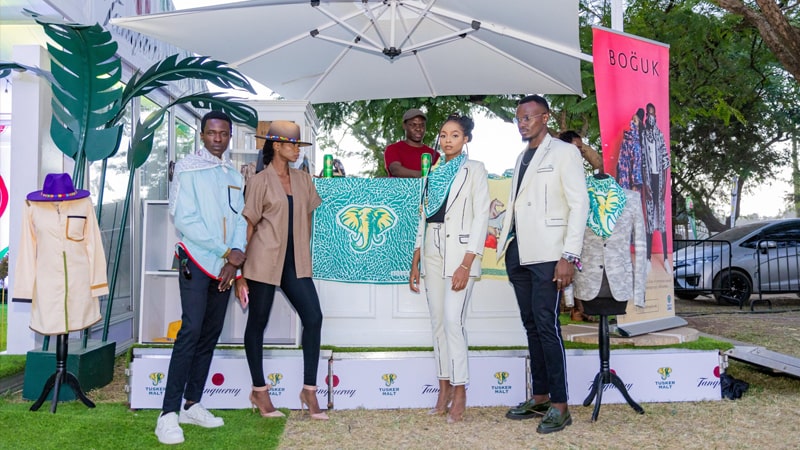
BOGUK Unveils Polo-Inspired Collection in Collaboration with Tusker Malt and Nairobi Polo

Kenyan luxury fashion brand BOGUK has kicked off the year with an impressive collaboration that seamlessly merges style, culture, and sport. Led by founder and lead designer Bevern Oguk, BOGUK unveiled its latest capsule collection at the prestigious Soldier’s Salute Polo Tournament, an event that brought together Nairobi’s fashion elite and polo enthusiasts. The collection, inspired by the elegance of polo and the refined essence of Tusker Malt Lager, showcases BOGUK’s signature craftsmanship and innovative approach to contemporary African fashion.

Kenyan designer Bevern Oguk, founder of the fashion label BOGUK, unveiled a Polo-inspired capsule collection during the Soldier’s Salute Polo Tournament weekendThis latest showcase marks a fusion of refined fashion & cultural storytelling,further cementing BOGUK’s influence in Kenya’s fashion scene

Nairobi Fashion Hub (@nairobifashionhub.bsky.social) 2025-03-18T10:50:59.661Z

A Fusion of Fashion and Polo Prestige

Polo events in Nairobi are known for their laid-back yet sophisticated atmosphere, where attendees make bold fashion statements while embracing the sport’s heritage. Understanding this unique blend of culture and class, BOGUK introduced an array of meticulously designed pieces that celebrate both the sport and Kenyan artistry. The collection features:

  • Kimonos – Flowing and structured designs that exude effortless luxury.
  • Pantsuits and Blazers – Tailored ensembles that balance power dressing with modern aesthetics.
  • Statement Scarves – Elegant accessories adding depth and dimension to every look.
  • The Iconic BOGUK Hat – A signature piece that captures the essence of individuality and timeless style.

Inspiration Behind the Collection

Bevern Oguk, known for his ability to weave cultural narratives into high fashion, shared that this latest collection was influenced by the refined traditions of polo while incorporating the bold identity of Tusker Malt Lager—Kenya Breweries Limited’s (KBL) premium beer brand.

“Tusker Malt Lager’s values of craftsmanship, sophistication, and authenticity align perfectly with my creative vision,” Oguk stated at the unveiling event. “This collaboration gave me a chance to celebrate Kenyan culture while connecting with the timeless prestige of polo.”

The collection was met with admiration, with its intricate details and contemporary silhouettes receiving praise from both fashion enthusiasts and polo aficionados alike. By merging classic sportswear influences with Kenyan-inspired elements, BOGUK successfully elevated the event’s fashion narrative, reinforcing its position as a trailblazer in Kenya’s luxury fashion space.

BOGUK’s designs, including tailored jackets, statement scarves, and intricate hats, captivated attendees with their blend of contemporary style and traditional Kenyan artistry.“Tusker Malt Lager’s values of craftsmanship, sophistication and authenticity align perfectly with my creative vision,”

Nairobi Fashion Hub (@nairobifashionhub.bsky.social) 2025-03-18T10:54:16.622Z

Beyond Fashion: A Celebration of Local Creativity

BOGUK’s partnership with Tusker Malt Lager is part of a broader initiative to spotlight Kenyan designers and promote the country’s growing influence on the global fashion and lifestyle industries. Through such collaborations, local creatives gain opportunities to showcase their talent on international platforms, further cementing Kenya’s reputation as a hub for innovative fashion.

Bevern Oguk took to social media to share behind-the-scenes glimpses of the collection’s creation, offering followers an inside look at the intricate process of designing and producing these masterful pieces. His transparency and dedication to craftsmanship continue to inspire emerging designers, solidifying BOGUK’s role as a leader in Africa’s contemporary fashion movement.

“This collaboration gave me a chance to celebrate Kenyan culture while connecting with the timeless prestige of polo.”The Soldier’s Salute Polo Tournament served as the perfect setting for BOGUK’s designs to shine, highlighting the synergy between fashion, culture, and sport.

Nairobi Fashion Hub (@nairobifashionhub.bsky.social) 2025-03-18T10:58:44.701Z

The Future of Kenyan Luxury Fashion

BOGUK’s polo-inspired collection is more than just a celebration of style—it’s a statement about the power of collaboration, cultural heritage, and the evolution of Kenyan fashion. As the brand continues to push creative boundaries, its influence within the local and international fashion scenes is set to grow even further. With a commitment to authenticity and artistic excellence, BOGUK remains at the forefront of defining modern African luxury.

Content courtesy of NFH Digital Team

2025: The Year of Great Boldness—A Celebration of Style and Identity with Imaatu

In a world where fashion serves as a mirror to individuality and daring self-expression, Imaatu boldly enters 2025 with a transformative collection that celebrates identity, creativity, and resilience. This latest release from the renowned designer speaks volumes about the power of fearless elegance, offering designs that transcend mere aesthetics to tell stories of empowerment and authenticity.

The Art of Fearless Elegance
Imaatu’s 2025 collection captures the essence of boldness with a perfect blend of innovation and sophistication. Each design is an artistic celebration of the human form, showcasing its versatility through vibrant silhouettes and captivating poses. From flowing fabrics that exude effortless grace to bold cuts that challenge traditional boundaries, the collection invites everyone to embrace their unique story with confidence.

This collection goes beyond being just a series of garments—it is a fashion statement and a call to action. Imaatu encourages individuals to explore their inner boldness and let it shine through their personal style. The gold accents, sleek textures, and dramatic layering symbolize resilience and creativity, echoing a universal message: Fashion is a language, and Imaatu is rewriting the dialogue in 2025.

This collection goes beyond being just a series of garments—it is a fashion statement and a call to action. Imaatu encourages individuals to explore their inner boldness and let it shine through their personal style. #nairobifashionhub #africanfashion #fashion #lifestye #design

Nairobi Fashion Hub (@nairobifashionhub.bsky.social) 2025-01-24T14:35:20.687Z

Redefining Sophistication
Gold accents and intricate draping redefine sophistication, combining contemporary design with subtle nods to cultural heritage. Imaatu blends modern trends with rich traditions, creating pieces that honor movement, elegance, and authenticity. Whether through sleek textures or daring cuts, each item in the collection speaks to a future of fashion grounded in self-expression and individuality.

Every detail has been meticulously crafted to inspire and empower. The designs encourage the wearer to find empowerment in both bold statements and everyday style. Imaatu’s collection serves as a testament to the courage required to challenge norms and redefine what it means to stand out in a crowded world.

The gold accents, sleek textures, and dramatic layering symbolize resilience and creativity, echoing a universal message: Fashion is a language, and Imaatu is rewriting the dialogue in 2025.

Nairobi Fashion Hub (@nairobifashionhub.bsky.social) 2025-01-24T14:36:58.279Z

A Year of Bold Fashion Statements
As Imaatu continues to challenge and inspire, 2025 is poised to be a pivotal year for bold fashion statements. Whether stepping into the spotlight or discovering empowerment in quiet moments, this collection offers something transformative for everyone. It stands as a reminder that the future of fashion lies in authenticity, innovation, and the courage to be unapologetically oneself.

Stay tuned as Imaatu leads the charge in making 2025 the year of great boldness.

Credits
Designer: @imaatufulani 
Photographer: @stefan_gergely 
Model: @godwinmerano 

Content courtesy of Mo AfricaPR & NFH

The Seventh Edition of Nairobi Fashion Week: A Dynamic Celebration of African Designers and Regenerative Fashion

Nairobi Fashion Week 2025 is set to make waves as it returns for its seventh edition, featuring Africa’s brightest stars in regenerative fashion. With the theme “Restoring Culture and Nature Through Regenerative Fashion,” the event will run from January 29th to February 1st, 2025, at the Sarit Center. It promises a groundbreaking showcase of innovative collections that blend bold creativity with a commitment to environmental and social impact.

This year’s theme underscores the urgent need for the fashion industry to go beyond sustainability. Regenerative fashion seeks to renew natural resources, restore ecosystems, and empower local communities through ethical production. By shining a spotlight on designers championing these principles, Nairobi Fashion Week 2025 aims to inspire a global movement toward a more sustainable and restorative future.

A Vision for Sustainability

“The theme aligns with our vision of positioning Africa as a global leader in sustainability,” said Brian Kihindas, Creative Director of Nairobi Fashion Week. “We aim to establish a platform for sustainable designers across Africa, rooted in the region’s cultural values. Our goal is to promote organic fabrics and sustainable fashion, reclaiming and celebrating our story.”

He further noted, “Throughout history, African communities have embraced sustainable fashion by crafting garments from locally sourced, natural materials and utilizing traditional techniques that prioritize longevity, cultural significance, and environmental harmony.”

Lisa Kibutu, Sponsor and Production Lead at NFW, echoed this sentiment: “This year’s Nairobi Fashion Week is a celebration of a new era in African fashion. We are looking for designers whose ethos focuses on restoration and healing from their sourcing of textiles to the disposal of waste and the end-of-life planning for their creations. These rising stars are proving that Africa can lead the world in regenerative fashion, with creativity and purpose driving every aspect of their work.”

The seventh edition will feature an exciting lineup of designers who exemplify responsible practices and celebrate African heritage. Highlights include:1. LaOculta2. SOKOLATA3. Maisha By Nusria4. Eva Wambutu5. Apar Gadek

Nairobi Fashion Hub (@nairobifashionhub.bsky.social) 2025-01-21T13:10:23.118Z


Spotlight on Designers

The seventh edition will feature an exciting lineup of designers who exemplify responsible practices and celebrate African heritage. Highlights include:

1. LaOculta: Founded in 2021 by Catalina and Sofia, this womenswear brand bridges Kenya and Colombia through slow fashion. Collaborating with artisans from both regions, LaOculta merges cross-cultural techniques with sustainable production.

2. SOKOLATA: A high-end eco-responsible brand created in 2022 by Senegalese designer Sikoti Mbaitjongue. SOKOLATA uses natural African-origin materials like organic Senegalese cotton and handwoven fabrics from Benin. The brand’s value chain remains entirely based in Africa, contributing to a new ethical African fashion narrative.

3. Maisha By Nusria: A Nakuru-based nonprofit fashion studio specializing in upcycling and creative reuse. The studio transforms discarded textiles into contemporary handmade pieces, emphasizing innovation and sustainability.

4. Eva Wambutu: This Kenyan womenswear designer returns to the runway after her impressive debut at Nairobi Fashion Week Season 6. Known for her silhouette-focused designs, Wambutu is quickly gaining recognition as a designer to watch.

5. Apar Gadek: Led by Shirley Anyango, this jewelry and accessories brand collaborates with Kibera artisans to create distinctive pieces from brass, recycled glass beads, and upcycled cow horn and bone. Each creation tells a unique story, reflecting Africa’s rich cultural heritage.

Nur M. Nasria, founder of Maisha By Nusria, emphasized the growing awareness around fashion’s impact: “People are becoming more concerned about their garments and their origins. Nairobi Fashion Week is not just about showcasing beautiful clothes—it’s about telling the story of our planet and its people.”

About Nairobi Fashion Week

Nairobi Fashion Week (NFW) was launched in 2013 by Dynamic Race PR to advance East Africa’s fashion industry. The event connects emerging and established designers with local and international buyers and stockists. In 2023, NFW introduced the  JUST Fashion campaign to promote sustainability through eco-friendly materials and ethical practices. The Fashion Frontier Africa (FFA) incubator program, developed in partnership with European e-tailor Cultrite, has supported African designers with mentorship and business development opportunities, aiming to reach 500 designers after its first successful cohort.

As Nairobi Fashion Week enters its seventh season, it continues to push the boundaries of creativity, sustainability, and innovation while cementing Africa’s position as a leader in the global fashion landscape.

Content courtesy of Nairobi Fashion Week & NFH Digital Team

Nairobi Fashion Week 2025: Leading a Regenerative Fashion Renaissance

Nairobi Fashion Week, Kenya’s premier fashion event, is set to return for its seventh edition under the groundbreaking theme, Regenerative Fashion Renaissance: Restoring Culture and Nature. Scheduled from January 29th to February 1st, 2025, at the Sarit Center, this year’s event aims to redefine the future of fashion with a focus on sustainability, cultural preservation, and environmental restoration.

This visionary theme represents a pivotal shift in the global conversation on sustainability. While traditional sustainability practices emphasize reducing harm, regenerative fashion seeks to restore and renew ecosystems, communities, and cultural heritage throughout the fashion supply chain. By embracing a circular fashion economy, the event will highlight how designers, brands, and consumers can actively contribute to a more responsible and restorative industry.

“The theme aligns with our vision of positioning Africa as a global leader in sustainability. We are working to establish a platform for sustainable designers across Africa, rooted in the region’s cultural values. Our goal is to promote organic fabrics and sustainable fashion, and we believe this platform will help us reclaim and celebrate our story,” said Brian Kihindas, Creative Director of Nairobi Fashion Week.

He added, “Throughout history, African communities have embraced sustainable fashion by crafting garments from locally sourced, natural materials and utilizing traditional techniques that prioritize longevity, cultural significance, and environmental harmony.”

“The theme aligns with our vision of positioning Africa as a global leader in sustainability.We are working to establish a platform for sustainable designers across Africa, rooted in theregion & cultural values. Our goal is to promote organic fabrics and sustainable fashion, and we believe in

Nairobi Fashion Hub (@nairobifashionhub.bsky.social) 2025-01-21T12:01:20.278Z

The Urgency for Regenerative Fashion

The global Textile and Apparel (T&A) industry, the third-largest manufacturing sector, generated $2.4 trillion in revenue in 2019 and employs over 300 million people worldwide. The sector’s growth has been exponential, with production doubling since 2000. Current consumption trends reveal that people now purchase 60% more clothes than they did 15 years ago. If this trajectory continues, clothing use could increase by over 60% between 2019 and 2029.

However, this rapid growth comes at a significant cost. The fashion industry is responsible for approximately 10% of global carbon emissions, surpassing the combined emissions of all international flights and maritime shipping. Additionally, the sector generates around 92 million tonnes of textile waste annually, equivalent to a rubbish truck full of clothes being discarded every second. In Kenya, the impact of second-hand clothes, or mitumba, exacerbates the crisis. An estimated 300 million items of damaged or unsellable synthetic clothing are imported annually, with much of it ending up in landfills or burned, intensifying plastic pollution.

Nairobi Fashion Week: A Platform for Change

With these challenges in mind, Nairobi Fashion Week 2025 will spotlight designers who are redefining industry norms through recycling and upcycling practices. The event will also feature discussions with industry leaders, environmental activists, and sustainability experts on the broader potential of a circular economy in fashion.

“Recycling in fashion isn’t just about turning old clothes into new garments. It’s about creating a system where fashion becomes a regenerative force, where nothing goes to waste and everything has a second life. Nairobi Fashion Week 2025 will showcase the exciting possibilities that circular fashion holds for the future, not just for Africa, but for the world,” said Lisa Kibutu, Sponsor and Production Lead at NFW.

About Nairobi Fashion Week

Dynamic Race PR established Nairobi Fashion Week (NFW) in 2013 to advance East Africa’s fashion industry. The event connects emerging and established designers with local and international buyers and stockists. In 2023, NFW launched the JUST Fashion campaign, advocating for responsible sourcing, eco-friendly materials, and ethical production practices. NFW also introduced the Fashion Frontier Africa (FFA) incubator program in partnership with European e-tailor Cultrite. This initiative supports African designers with mentorship and business development, with the goal of reaching 500 designers after successfully completing its first cohort.

Now in its seventh season, Nairobi Fashion Week continues to be a trailblazer, pushing the boundaries of creativity, sustainability, and innovation while cementing Africa’s position as a leader in the global fashion landscape.

Theme: “The Regenerative Fashion Renaissance” Restoring Culture and Nature
Nairobi Fashion Week’s seventh edition will be held from January 29th to February 1st in Nairobi,Kenya
Venue: Sarit Center

Content courtesy of Nairobi Fashion Week & NFH Digital Team


PUMA Rebrands as PVMA to Honor Indian Badminton Icon PV Sindhu

An Unprecedented Tribute, In an extraordinary branding initiative, PUMA, the global sportswear giant, temporarily rebranded itself as PVMA across all its stores in India. This unique gesture was undertaken to pay homage to PV Sindhu, one of India’s most celebrated athletes and a two-time Olympic medalist in badminton. The rebranding is seen as a historic moment in sports marketing, highlighting the brand’s commitment to celebrating excellence and its ongoing partnership with the badminton icon.

A Monumental Gesture
PV Sindhu has long been a beacon of inspiration, not only in India but globally, for her prowess on the badminton court. By adopting the name PVMA, PUMA acknowledges her remarkable contributions to the sport and her status as a global role model.

The initiative, accompanied by a robust online campaign, generated widespread attention. Social media platforms were abuzz with hashtags such as #PVMA and #PUMAToPVMA, sparking discussions and garnering millions of interactions. The campaign further solidified PUMA’s position as a trailblazer in sports marketing, setting a new standard for honoring athletes.

PUMA’s Strategic Leadership in India
PUMA’s tribute to Sindhu aligns with its dominant position in India’s sportswear market. Over the years, the brand has outpaced competitors, posting robust revenue growth and solidifying its reputation as a brand that resonates with Indian consumers.

By celebrating Sindhu, PUMA reaffirms its commitment to fostering Indian talent and investing in local icons who have made significant contributions to their respective fields. This move not only strengthens its connection with the Indian audience but also positions the brand as a leader in recognizing and supporting athletes.

The Partnership’s Grand Debut
The collaboration between PV Sindhu and PUMA, symbolized by the PVMA rebranding, will officially debut during the India Open 2025, one of the most prestigious badminton tournaments in the world. This partnership aims to elevate the sport’s profile in India, inspiring a new generation of players and fans alike.

Global Recognition for Local Talent
PUMA’s decision to rebrand as PVMA underscores its dedication to honoring sporting excellence on a global scale. The move sends a powerful message about the role of brands in celebrating athletes and their legacies, transcending national borders to highlight stories of determination, resilience, and success.

PUMA’s transformation into PVMA is more than a marketing campaign; it is a celebration of PV Sindhu’s unparalleled achievements and her impact on sports. By taking this bold step, PUMA not only strengthens its brand but also reinforces the importance of recognizing and honoring athletes who inspire generations.

This initiative stands as a testament to the power of sports to unite, inspire, and transform lives—an ethos that PV Sindhu embodies and PUMA champions.

PUMA Rebrands as PVMA: A Bold Tribute to PV Sindhu and a Marketing Masterstroke A Groundbreaking Move in Sports Marketing
In a move that captivated audiences across India and beyond, PUMA, the global sportswear powerhouse, temporarily rebranded itself as PVMA to honor Indian badminton legend PV Sindhu. This unprecedented campaign not only paid tribute to the two-time Olympic medalist but also redefined the way brands approach celebrity endorsements.

What appeared at first to be a design error PUMA’s logo changing to PVMA on social media and storefronts was, in fact, a meticulously planned strategy to announce PV Sindhu as the brand’s new ambassador. The subtle tweak quickly went viral, sparking memes, debates, and widespread curiosity online.

The Strategy Behind the Viral Campaign
PUMA’s transformation into PVMA was a masterclass in innovative marketing. By intentionally creating a moment of confusion, the brand harnessed the power of curiosity and virality to generate organic engagement. This approach stood out in an industry where ambassador announcements often follow predictable formats.

Here’s why PUMA’s campaign worked so well:
1. The Power of Subtle Changes
The brilliance of changing just one letter in the logo exemplified the impact of simplicity. This small alteration caught people’s attention and drove massive conversations, proving that minimal tweaks can create maximum impact.

2. Leveraging Viral Mechanics
PUMA anticipated that an apparent ‘mistake’ by a major brand would generate significant buzz. Social media platforms exploded with speculation and humor, driving attention to the campaign and making it a trending topic.

3. Seamless Brand-Ambassador Integration
By intertwining PV Sindhu’s identity with their own, PUMA showcased a deep alignment with the athlete’s values and achievements. This wasn’t just a partnership; it was a celebration of Sindhu’s legacy.

A Celebration of Excellence
The campaign culminated in PUMA officially announcing Sindhu as their brand ambassador, reinforcing their commitment to empowering Indian athletes. The rebranding as PVMA wasn’t just a marketing gimmick it was a tribute to Sindhu’s unparalleled achievements and her impact on sports in India.

Impact on the Market
This bold strategy underscores why PUMA has become a market leader in India, with annual revenues surpassing ₹3,000 crores—more than double that of Nike, which trails at ₹1,200 crores. By innovating in their approach and embracing creativity, PUMA has set a high benchmark in sports marketing.

Lessons for Marketers Worldwide
Marketers can draw three critical lessons from PUMA’s PVMA campaign:
Be bold and unconventional: Simple, well-executed ideas can break through the noise.
Anticipate audience behavior: Leveraging virality requires a deep understanding of how audiences react to unexpected changes.
Focus on authenticity: Aligning with a brand ambassador’s values can create a genuine connection with consumers.

The Future of PVMA and Indian Sports
The partnership between PV Sindhu and PUMA will debut officially during the India Open 2025, marking a milestone for badminton in India. This collaboration not only elevates the sport’s profile but also inspires a new generation of athletes.

PUMA’s transformation into PVMA is a shining example of how brands can push creative boundaries to connect with audiences meaningfully. This campaign, rooted in simplicity, strategy, and respect for excellence, stands as a testament to PUMA’s leadership in the sportswear market and its unwavering support for athletes who inspire the world.

The question remains: When you first saw the PVMA logo, did you think it was a mistake, or did you sense the brilliance behind it?

Content courtesy of NFH Digital Team 

Ad