Friday 23rd of October 2026

Nairobi, Kenya

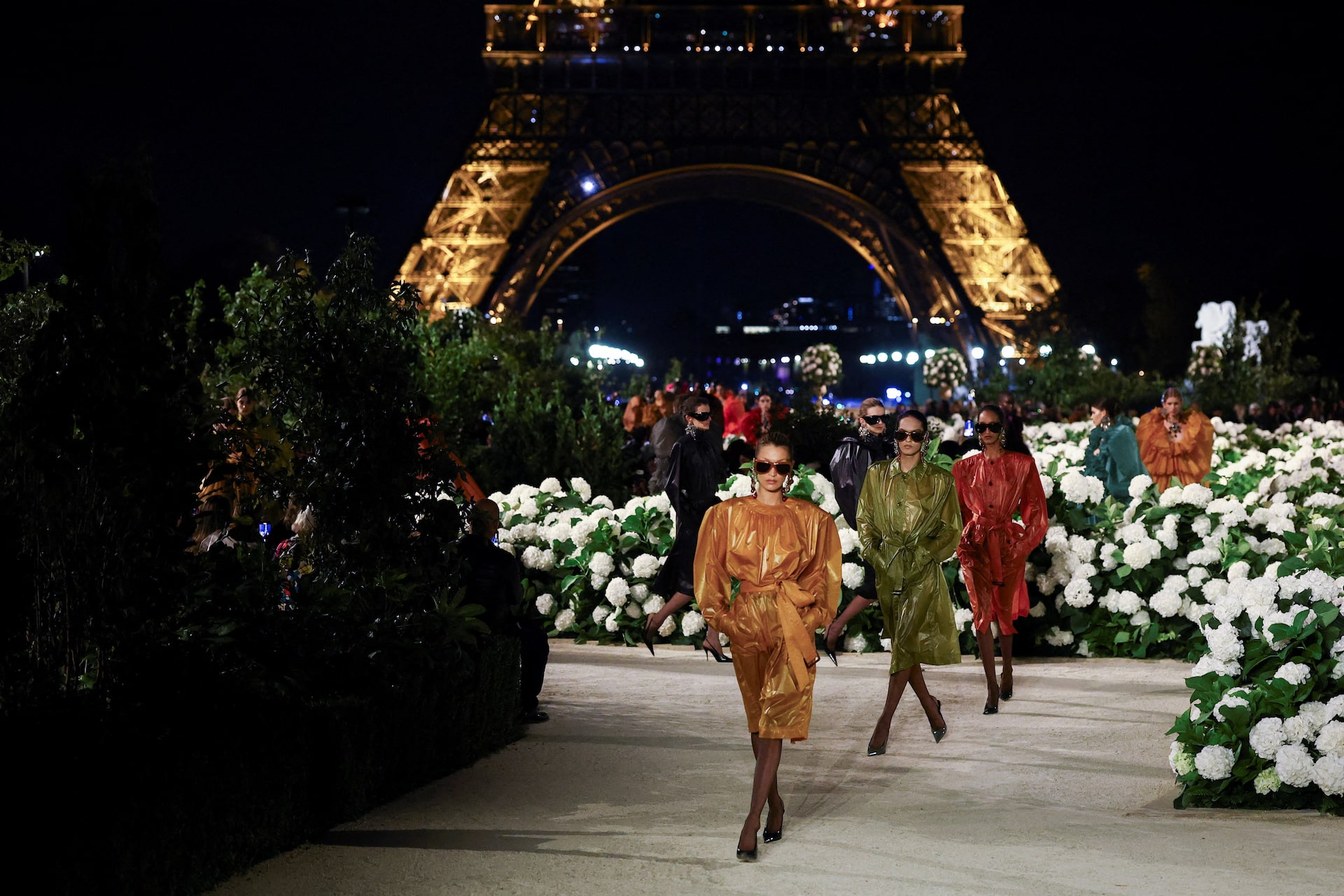
Paris Fashion Week 2026: Givenchy, Louis Vuitton, Lacoste and the African Fashion Revolution of SS27

Paris Fashion Week 2026: A New Chapter for Global Fashion.

Paris once again became the centre of the international fashion calendar as Paris Fashion Week Spring/Summer 2027 unfolded from September 28 to October 6, 2026, bringing together some of the world’s most influential fashion houses, established creative directors, emerging designers and a new generation of models.

Organised by the Fédération de la Haute Couture et de la Mode (FHCM), the women’s ready-to-wear season featured a packed official calendar of shows and presentations, with major houses including Christian Dior, Saint Laurent, Chanel, Givenchy, Louis Vuitton, Lacoste, Miu Miu, Valentino, Balenciaga, Loewe, Celine, Hermès, Chloé, Tom Ford, Balmain, Mugler and Jean Paul Gaultier, alongside independent and emerging labels.

But Paris Fashion Week 2026 was about more than luxury houses.

It was also a season of creative transition, African representation, new designers, changing consumer behaviour, sustainability, lighter clothing, stronger cultural identity and fashion responding to a rapidly changing world.

The season’s official schedule contained 68 shows, alongside presentations, showrooms and fashion-related events. The season also marked important returns to the calendar and introduced new creative leadership at selected houses.

And for Africa, the significance was particularly profound.

For the first time, MaXhosa Africa, founded by South African designer Laduma Ngxokolo, presented a full runway show on the official Paris Fashion Week calendar — a major milestone for African fashion on one of the world’s most influential fashion platforms.


Day One — September 28: Africa Opens Paris Fashion Week

The opening day immediately established one of the strongest narratives of the season.

The official calendar began with names including Julie Kegels, Fidan Novruzova, Kimhekim, Weinsanto, Vautrait, MaXhosa Africa, Hodakova and Matières Fécales.

But the defining moment belonged to MaXhosa Africa.

MaXhosa Africa makes history

For Laduma Ngxokolo, the MaXhosa Africa show was not simply another runway presentation.

It represented 16 years of building an African fashion identity into an international luxury proposition.

The Spring/Summer 2027 collection, titled “Izihlwele Zivumile”, which the house describes as meaning “the ancestors have approved”, brought Xhosa heritage, South African craftsmanship and contemporary luxury to the official Paris runway.

The collection was presented at the South African ambassador’s residence in France, with locally sourced wool and production connected to the brand’s facilities in Johannesburg and East London.

The clothes drew from Xhosa geometric language and broader African cultural references, with garments featuring references to African countries and a contemporary interpretation of heritage.

The presentation also included an important Kenyan connection: Kenyan artist Cyrus Kabiru contributed eyewear created from waste materials, while South African musician Sjava provided the soundtrack.

This made MaXhosa one of the clearest symbols of the season’s growing conversation around African fashion, craftsmanship and cultural ownership.

It was also significant because MaXhosa had previously appeared in Paris through presentations; September 28 marked the transition to a full runway show on the official calendar.

Matières Fécales makes a statement

Later that evening, Matières Fécales, the Montreal/Paris creative project of Hannah Rose Dalton and Steven Raj Bhaskaran, presented one of the week’s most politically charged shows.

The designers presented 99 looks, with the number symbolising the 99%. The show featured an all-person-of-colour model cast, making representation itself part of the collection’s message.

It was an unusually direct statement for a fashion runway: fashion as clothing, performance, politics and social commentary at the same time.


September 29: Dior, Saint Laurent and the Return of the Major Houses

The second day moved Paris into blockbuster territory.

Christian Dior, Saint Laurent, Maison Margiela, Ganni, Mame Kurogouchi, Burç Akyol, Marie Adam-Leenaerdt and others occupied the calendar.

Dior was particularly important because Jonathan Anderson was presenting his third women’s ready-to-wear collection for the house, part of a wider season in which several newly appointed creative directors were beginning to establish their identities.

Saint Laurent, under Anthony Vaccarello, continued its highly recognisable language of glamour, sensuality and powerful silhouettes.

The day demonstrated one of the defining characteristics of Paris Fashion Week SS27: fashion houses were no longer simply introducing seasonal clothes; they were establishing new creative eras.


September 30: New Creative Voices Take the Stage

September 30 brought another major chapter with Tom Ford, Acne Studios, Stella McCartney, Dries Van Noten, MaitrePierre, Ruohan, Loulou de Saison, Balmain and Courrèges among the names on the calendar.

Drew Henry’s Courrèges debut

One of the season’s two officially identified major designer debuts came at Courrèges, where Drew Henry presented his first collection for the house.

According to the official schedule, Henry’s debut was one of only two major new creative-director debuts on the SS27 Paris calendar, the other being Kai Nesselrath at Carven.

That made Courrèges one of the collections watched particularly closely by buyers, editors and fashion insiders.

Stella McCartney and sustainability

Stella McCartney continued to place sustainability and animal welfare at the centre of her fashion proposition, reinforcing a broader SS27 conversation about responsible production and the environmental impact of fashion.

The industry’s sustainability agenda was also reflected structurally through FHCM’s partnership with PwC, whose STEP.event platform enables participating houses to assess the environmental and social impact of fashion events and explore lower-impact event design.


October 1: Chloé, Balenciaga and the New Generation of Luxury

The October 1 schedule included Isabel Marant, Schiaparelli, Gauchère, Uma Wang, Rick Owens, Icicle, Balenciaga, Carven, Alainpaul and Chloé.

Chloé: Romance meets practicality

At Chloé, creative director Chemena Kamali presented Spring/Summer 2027 at the Paris Observatory.

Her collection, titled “Obsession,” drew heavily from Chloé’s archives, combining romantic lace, lingerie references, broderie anglaise, ruffles and soft silhouettes with heavier outerwear and tailoring.

The contrast was important: delicate femininity was placed alongside practical, substantial garments.

Balenciaga under Pierpaolo Piccioli

Balenciaga continued its new chapter under Pierpaolo Piccioli, who was among the creative directors reshaping one of Paris’s most recognisable houses.

The season represented the third collection for several newly installed creative leaders, making SS27 something of a test of whether fashion’s recent creative-director upheaval could translate into long-term identities.


October 2: Givenchy, Loewe and the Power of Reinvention

October 2 was arguably one of the most important days of the entire week.

The official calendar brought together Givenchy, Yohji Yamamoto, Victoria Beckham, Casablanca, Marine Serre, Jitrois, Issey Miyake, Loewe, Undercover, Leonard Paris and others.

Givenchy Summer 2027: Sarah Burton’s Vision of the Modern Woman

For Sarah Burton, Spring/Summer 2027 was about clarity.

Her third season at Givenchy explored the question of how women dress when life itself is constantly moving.

Givenchy described the collection as an attempt to create balance and clarity, building a wardrobe around precision, simplicity and adaptability.

Burton approached the collection through highly engineered cutting.

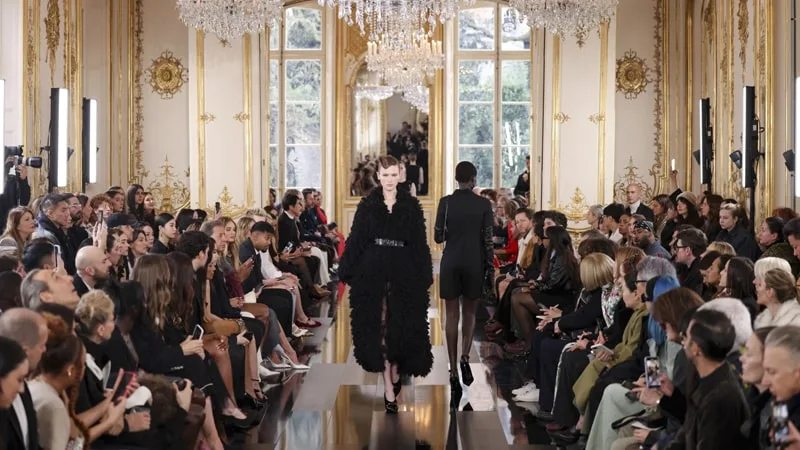
The runway opened with a striking black leather dress, while the collection moved through sharply constructed tailoring, leather, asymmetry, sculptural dresses, jeans, peplum jackets, trench coats and garments designed to shift between different aspects of a woman’s life.

The collection also introduced new handbags designed by Marco De Vincenzo, including slouchy zippered shapes and crescent forms with mirror details.

The result was a Givenchy woman who appeared simultaneously powerful, practical, sensual and prepared.

Givenchy’s runway cast

The show featured 57 recorded models, according to FashionDB’s runway database, with Nyaduola Gabriel opening and Sarah Isaksen closing. The recorded cast included major names such as Liu Wen, Mona Tougaard, Agel Akol, Awar Odhiang, Rejoice Chuol, Achol Ayor, Soo Joo Park, Eva Herzigova and Fatou Mbaye.

The show also recorded three runway debuts, although the available database cautions that its cast information remains provisional rather than an official Givenchy-issued cast list.

The African and African-diaspora presence was particularly visible, with South Sudanese-Canadian models including Awar Odhiang, Agel Akol and Rejoice Chuol, alongside other models of African heritage.


Casablanca: African and Global Identity Collide

Another important October 2 presentation came from Casablanca, founded by Moroccan-French designer Charaf Tajer.

The Spring/Summer 2027 show featured 46 recorded models, with Sayonara Araujo opening and Lais Garcia closing.

The cast included models such as Saliou Gueye, Fama Diop, Opeyemi Ajibola, Bukki Musafiri and Moussa Sanogo, adding another layer of African representation to the Paris runway.

Brazilian singer Ludmilla also attended the Casablanca show wearing a look created specifically around the brand’s Spring/Summer 2027 collection.

Casablanca’s presence was significant because the label sits naturally between Parisian luxury, Moroccan heritage, travel culture and a distinctly contemporary global identity.


October 3: Celine, Hermès, Elie Saab and the Power of Craft

October 3 brought another heavyweight group:

Ann Demeulemeester, Hermès, Comme des Garçons, Elie Saab, Vivienne Westwood, Nehera, Noir Kei Ninomiya, Celine, Niccolò Pasqualetti, Junya Watanabe and Barbara Bui were among the official collections.

Celine under Michael Rider

At Celine, Michael Rider continued to define his vision for the house with a collection that drew on Parisian ease, 1970s references and a more relaxed interpretation of luxury.

Hermès: quiet luxury in motion

At Hermès, Nadège Vanhée continued to explore sensual minimalism and lightweight clothing an especially relevant direction during a season in which heat, climate and changing lifestyles influenced many designers.

Elie Saab

Lebanese designer Elie Saab once again brought his distinctive couture sensibility into the ready-to-wear environment, maintaining the Middle Eastern fashion house’s strong Paris presence.


October 4: Lacoste Turns Roland-Garros Into a Runway

Then came one of the most visually memorable shows of the season.

Lacoste Spring/Summer 2027: “No White Required”

Pelagia Kolotouros, Lacoste’s creative director, took the Spring/Summer 2027 collection to the Philippe-Chatrier central court at Roland-Garros.

Instead of treating the tennis court as a pristine white-and-green symbol, Kolotouros turned its clay into part of the collection’s visual language.

The runway itself traced an infinity loop across terre battue, while clay was used almost like a fashion material.

The collection revisited the history of tennis clothing and the rebellious legacy of René Lacoste and Suzanne Lenglen.

Lacoste’s traditional preppy codes were loosened.

Garment-dyed cottons, washed fabrics, relaxed tailoring, tropical wool, technical jerseys and breathable materials created a wardrobe built around movement rather than rigid uniformity.

Colours moved from clay and mineral earth tones to cobalt blue, acid yellow and silver.

Oversized piqué polos were layered with technical jerseys. Tracksuits, pleated skirts, loose tailoring, wide trousers and technical outerwear transformed tennis vocabulary into contemporary streetwear.

Even white garments appeared deliberately stained with clay turning imperfection into a symbol of movement and effort.

Lacoste models

FashionDB recorded 40 models in the Lacoste SS27 runway cast, with Josefa Santos opening and Bella Novello closing.

The cast included models such as Agel Akol, Aluel Keror, Aluel Makuach, Alyssa Traoré, Saliou Gueye, Farida Ebene, Noemi Kassa, Yahne Ba and Evelyn Effrim.

Notably, Agel Akol, a South Sudanese-Canadian model, was also part of Givenchy’s cast, demonstrating how models from African backgrounds were increasingly visible across major Paris houses.


Mossi Traoré: African Heritage in a Different Parisian Language

October 4 also brought Mossi, the label founded and creatively led by Mossi Traoré.

The Spring/Summer 2027 presentation drew inspiration from Père-Lachaise Cemetery, using tombs, stone, vegetation and the passage of time as creative references.

The resulting collection explored muted grey, green and natural tones, creating an atmosphere that was poetic rather than overtly commercial.

The presentation featured 16 models, with Ani Cuevas opening and Melisa Turkmen closing.

It also provided one of the clearest examples of emerging-model activity during the week.

FashionDB recorded Nyibol Dok Jok of South Sudan and Kadiata Ba of France among the models making their brand debuts at Mossi’s SS27 presentation.


October 5: Chanel, Sacai and Miu Miu

By October 5, the week was approaching its climax.

The schedule included Chanel, Agnès b., Florentina Leitner, Zimmermann, Time, Gabriela Hearst, Abra, Shiatzy Chen, Dice Kayek, Sacai and Ungaro, among others.

Chanel under Matthieu Blazy

Matthieu Blazy continued his Chanel chapter with a collection that engaged directly with the legacy of Gabrielle Chanel.

The show revisited ideas of freedom, femininity and movement, while translating the house’s historic codes into contemporary silhouettes.

The collection reportedly featured 83 looks, with different shoes completing each look another indication of how accessories, particularly footwear, became increasingly important during the SS27 season.

Miu Miu

Miu Miu continued its dialogue between youthful fashion, sportswear and femininity, with Gigi Hadid among the models seen on the runway during the season.


October 6: Louis Vuitton Brings Paris Fashion Week to a Futuristic Close

The final day belonged to Louis Vuitton.

The official schedule included Louis Vuitton, Pierre Cardin, Situationist, Boyarovskaya, CFCL, Christopher Esber and Litkovska.

Louis Vuitton Summer 2027: Fashion for a Warmer World

Creative director Nicolas Ghesquière closed the Paris ready-to-wear season with one of the most conceptually ambitious shows.

The collection responded to a world experiencing rising temperatures.

Instead of heavy, rigid fashion, Ghesquière explored lightweight fabrics, sheer materials, fluid jackets, strappy dresses, pastel shades and wide-slit trousers.

The objective was not simply to make summer clothes look lighter. It was to rethink how luxury clothing can function in a warmer future.

The runway itself became part of the argument.

The Louvre setting was transformed into a futuristic cityscape featuring 34 Damier-inspired flying-car structures, creating an imaginary urban environment in which the collection could exist.

Ghesquière described the concept in terms of the cities of the future asking how people will move through increasingly dense and changing urban environments.

Louis Vuitton’s model cast

FashionDB recorded 47 models, with Harriet Wellock opening and Noor Khan closing. Casting was handled by Ashley Brokaw.

The show also recorded five runway debuts, although, again, the database identifies its cast information as provisional rather than an official Louis Vuitton publication.

Among the major names appearing in Louis Vuitton’s wider SS27 runway activity was Noor Khan, who was one of the season’s strongest runway performers according to FashionDB’s Paris rankings.


African Fashion and Models Were Impossible to Ignore

Perhaps the most important story running beneath Paris Fashion Week 2026 was Africa’s increasing visibility.

The continent was not represented through a single aesthetic.

Instead, Africa appeared through South African knitwear, Moroccan heritage, Malian-French design, African models, African artists, African manufacturing and global African-diaspora creativity.

The designers and houses

The strongest African connections included:

  • MaXhosa Africa — Laduma Ngxokolo, South Africa
  • Casablanca — Charaf Tajer, Moroccan-French
  • Mossi — Mossi Traoré, Mali/French
  • Xuly Bët — Lamine Badian Kouyaté, Mali/France
  • Elie Saab — Lebanese designer and international fashion house with strong Paris presence

Xuly Bët is particularly important historically. Founded in Paris in the early 1990s by Malian-born Lamine Kouyaté, the house has long connected African identity, Parisian fashion and upcycling. The name itself means “Open your eyes wide” in Wolof.

African and African-diaspora models

Among the models documented across the major SS27 shows were:

Awar Odhiang, Agel Akol, Rejoice Chuol, Achol Ayor, Nyaduola Gabriel, Fatou Mbaye, Stella Winfred Nakiria, Aluel Keror, Aluel Makuach, Saliou Gueye, Farida Ebene, Evelyn Effrim, Noemi Kassa, Yahne Ba, Nyibol Dok Jok and Kadiata Ba, among others.

The representation is particularly significant because many of these models appeared across multiple houses rather than being confined to African designers.

FashionDB’s season-wide tracking recorded 1,208 models across 81 shows in its current database, while its rankings identified Athiec Geng, Noor Khan, Awar Odhiang and Mona Tougaard among the leading performers based on recorded appearances and its proprietary scoring system.


New Designers and Emerging Talent

Paris Fashion Week SS27 was also a season of transition.

The two most significant new creative-director debuts highlighted by the official schedule were:

Drew Henry — Courrèges

Henry’s September 30 debut represented the beginning of a new chapter for Courrèges.

Kai Nesselrath — Carven

Nesselrath presented his first collection for Carven on October 1.

These were the only two major new creative-director debuts specifically identified in the official pre-season schedule, although the calendar also contained numerous emerging designers and returning labels.

SPHERE: Paris’ emerging-designers platform

Behind the main runway schedule, the FHCM’s SPHERE Paris Fashion Week Showroom continued its role as an incubator for emerging talent.

The SS27 SPHERE session took place at the Palais de Tokyo from September 30 to October 6, supported by DEFI and L’Oréal Paris.

The participating brands included:

ACT N°1, Maison J. Simone, Matho, Meruert Tolegen, Riz Poli, Sevali, Vautrait, Victoria Valette and Weinsanto.

This is important because the future of Paris fashion will not be determined only by the traditional mega-houses. It will also be shaped by designers developing new business models, new cultural references and alternative approaches to production.


The Official Paris Fashion Week SS27 Line-Up

The official FHCM collection calendar included the following houses and labels across the September 28–October 6 season:

September 28:
Julie Kegels, Fidan Novruzova, Kimhekim, Weinsanto, Vautrait, MaXhosa Africa, Hodakova and Matières Fécales.

September 29:
Ester Manas, Alexandra Golovanoff, Ganni, Marie Adam-Leenaerdt, Mame Kurogouchi, Christian Dior, Burç Akyol, Maison Margiela, Saint Laurent and others.

September 30:
Tom Ford, Acne Studios, Stella McCartney, MaitrePierre, Dries Van Noten, Ruohan, Loulou de Saison, Balmain and Courrèges.

October 1:
Isabel Marant, Schiaparelli, Gauchère, Uma Wang, Rick Owens, Icicle, Balenciaga, Carven, Alainpaul and Chloé.

October 2:
Givenchy, Yohji Yamamoto, Victoria Beckham, Casablanca, Marine Serre, Jitrois, Issey Miyake, Loewe, Undercover, Leonard Paris and others.

October 3:
Ann Demeulemeester, Hermès, Comme des Garçons, Elie Saab, Vivienne Westwood, Nehera, Noir Kei Ninomiya, Celine, Niccolò Pasqualetti, Junya Watanabe and Barbara Bui.

October 4:
Mugler, Akris, Miu Miu, Lacoste, Margaret Howell, Mossi, Valentino and Jean Paul Gaultier.

October 5:
Chanel, Agnès b., Florentina Leitner, Zimmermann, Time, Gabriela Hearst, Abra, Shiatzy Chen, Dice Kayek, Sacai and Ungaro.

October 6:
Louis Vuitton, Pierre Cardin, Situationist, Boyarovskaya, CFCL, Christopher Esber and Litkovska.

The full official calendar also contained presentations and additional events beyond the headline runway shows.


Who Supported Paris Fashion Week 2026?

It is important to distinguish official partners from ordinary commercial sponsors of individual fashion houses.

According to the FHCM’s official partners page, the official partners supporting the Paris Fashion Week ecosystem included:

Official Partners

  • DEFI
  • L’Oréal Paris
  • Accor
  • Mercedes-Benz

DEFI supports the French fashion industry and emerging labels, including the SPHERE programme. L’Oréal Paris provides beauty expertise and supports both established and emerging fashion talent. Accor’s partnership centres on hospitality, creativity and innovation, while Mercedes-Benz has maintained a long-running relationship with fashion, design and creative talent.

Broadcasting and Media Partners

The official FHCM partnership network also included:

  • YouTube
  • Google
  • Tencent
  • The Asahi Shimbun
  • CNN Style
  • TikTok
  • Meta

These partnerships helped extend Paris Fashion Week beyond physical venues and into digital audiences around the world.

Professional Partners

The fashion ecosystem was additionally supported by:

  • Launchmetrics
  • Le New Black
  • Institut Français de la Mode
  • Zedonk
  • RSM
  • Stellae International
  • Bureau Future

Sustainability Partner

PwC served as FHCM’s sustainability partner, providing the STEP.event platform for assessing the environmental and social impact of fashion events.

Event Partners

The official event network also included:

  • Palais de Tokyo
  • Air France
  • Paris Musées

And FHCM listed additional support from:

  • Lime
  • Sixt Ride
  • Motocab
  • Café Caron
  • Stockman
  • Novelty
  • Novu

What Paris Fashion Week Spring/Summer 2027 Really Said About Fashion

When the final Louis Vuitton model walked away from the futuristic Louvre installation on October 6, the message of Paris Fashion Week SS27 was remarkably clear.

Fashion is changing.

The most successful collections were not necessarily those with the loudest logos or the most complicated garments. Instead, designers repeatedly explored movement, practicality, climate, femininity, cultural identity, craftsmanship and emotional relevance.

At Givenchy, Sarah Burton asked how women can dress for the many versions of themselves.

At Lacoste, Pelagia Kolotouros challenged the idea that tennis fashion must be pristine and white.

At Louis Vuitton, Nicolas Ghesquière imagined clothing for a warmer world.

At Chanel, Matthieu Blazy continued to reinterpret Gabrielle Chanel’s philosophy of freedom.

At Chloé, Chemena Kamali balanced romance with practicality.

At Maxhosa Africa, Laduma Ngxokolo demonstrated that African heritage can become the foundation of a contemporary global luxury house rather than simply a decorative reference.

And across the runways, a new generation of models continued to reshape what the international fashion image looks like.


The African Moment May Be One of Paris Fashion Week’s Biggest Stories

If there was one development from Paris Fashion Week 2026 that deserves attention beyond the clothes, it was the strengthening of African fashion’s place within the official global fashion system.

MaXhosa Africa’s move from Paris presentations to the official runway calendar was not an overnight success. It followed years of development, experimentation and persistence.

Ngxokolo’s achievement therefore carries a message for African designers across Nairobi, Johannesburg, Lagos, Accra, Dakar, Casablanca, Addis Ababa, Kampala and beyond:

African fashion does not have to wait for global fashion to discover it.

The opportunity is increasingly about building brands with strong creative identity, world-class production, compelling storytelling and the ability to operate on the same international platforms as established luxury houses.

Paris Fashion Week 2026 demonstrated that the African story is no longer limited to the audience.

Africa is increasingly becoming part of the runway itself.

And as the final lights went down in Paris, Spring/Summer 2027 left behind more than a collection of beautiful clothes. It left a picture of an industry trying to redefine itself  one where heritage and innovation, established houses and emerging designers, European luxury and African creativity can increasingly occupy the same global stage.

Paris may still be the fashion capital of the world. But the runway is becoming unmistakably more global.


Editorial fact-check note

The FHCM official calendar is used above to establish the dates, official houses and Paris Fashion Week structure. Individual runway model names and cast sizes are drawn from current runway-tracking records where available; these databases explicitly note that some casts remain provisional. Therefore, it would be misleading to describe any third-party model database as a definitive list of every model who walked every Paris show.

Content Courtesy of Paris Fashion  Week & NFH Digital Team 

Paris Fashion Week 2025: Major Designer Debuts and Ethical Fashion Protests Take Center Stage

Paris Fashion Week, the grandest event in the global fashion calendar, has officially begun, ushering in a wave of excitement, fresh creative visions, and powerful ethical statements. The highly anticipated Fall-Winter 2025-2026 season is poised to be a pivotal moment in fashion, with renowned luxury houses undergoing leadership changes, while activists and emerging designers push for sustainability and ethical responsibility.

A Week of Transformative Designer Debuts

The biggest highlight of this year’s Paris Fashion Week is the debut of several high-profile designers at esteemed fashion houses.

Sarah Burton at Givenchy: Set to unveil her first collection for Givenchy on Friday, Burton is a veteran of the industry, having previously helmed Alexander McQueen. Her appointment in September brought fresh energy to the historic French fashion house, which recently gained visibility through Timothée Chalamet’s striking yellow Givenchy suit at the Oscars. Speaking to Vogue, Burton expressed her admiration for the brand’s legacy, emphasizing its intimate scale and deep Parisian roots.

Julian Klausner at Dries Van Noten: Following the departure of Belgian designer Dries Van Noten from his eponymous label, the torch has been passed to 33-year-old Julian Klausner. Fashion insiders are keenly awaiting Klausner’s first collection on Wednesday, which will set the tone for the future of the celebrated fashion house.

Haider Ackermann at Tom Ford: The French Haute Couture and Fashion Federation successfully lured Tom Ford previously a mainstay of New York Fashion Week to Paris for the first time. Haider Ackermann, who took over as the chief designer of Tom Ford in September, will present his debut collection on Wednesday, navigating the challenge of leading a brand so closely associated with its charismatic founder.

Meanwhile, rumors continue to swirl regarding Dior’s head designer Maria Grazia Chiuri, who may be departing after Tuesday’s show. Northern Irish designer Jonathan Anderson, currently leading Loewe, is speculated to be a possible successor.

Protests and Ethical Fashion Initiatives

Beyond the catwalks, this season’s Paris Fashion Week has been met with bold protests from ethical fashion activists. Demonstrators from PETA (People for the Ethical Treatment of Animals) and the Brigitte Bardot Foundation took to the streets, urging the industry to abandon animal hides in favor of cruelty-free alternatives.

PETA activists, clad in faux prehistoric fur outfits, brandished placards reading “Leave The Stone Age” in front of the French Fashion Institute, while mobile billboards circulated the city condemning the use of animal products in luxury fashion. Natasha Garnier, a spokesperson for PETA, called for Paris to follow in the footsteps of London, Copenhagen, and Amsterdam by banning fur on its runways.

Despite these protests, shearling coats and fur jackets are making a comeback this season, with industry experts, such as Simon Longland from Harrods, predicting that shearling will be a top investment piece for Fall-Winter 2025.

Emerging Designers Take the Spotlight

Paris Fashion Week opened with showcases from innovative young labels, demonstrating a shift towards more sustainable and forward-thinking fashion.

CFCL (Clothing For Contemporary Life): Founded by Japanese designer Yusuke Takahashi just five years ago, CFCL impressed audiences with its vibrant knitwear collection, heavily influenced by 1980s furniture aesthetics. Staying true to his sustainability-driven ethos, Takahashi used recycled polyester for 90% of the collection, eliminating fur and animal hides entirely.

Victor Weinsanto: French designer Victor Weinsanto delivered a striking collection featuring faux leather and fur, embracing a neutral palette of white, beige, and black, accented with bold 1980s-inspired purple hues. His commitment to ethical fashion aligns with growing industry trends towards sustainability.

Vaquera: New York’s Vaquera added an avant-garde edge to the opening day’s lineup, showcasing unconventional silhouettes and a rebellious take on modern fashion.

Luxury Brands Face Market Challenges

As over 100 fashion houses prepare to unveil their latest collections in the coming days, industry leaders are navigating an increasingly difficult luxury market.

LVMH, the largest luxury conglomerate in Europe, recently reported a 17% decline in annual net profits, attributing the downturn to post-pandemic shifts in consumer behavior, weakened demand in China, and global economic uncertainty. With sales slowing, many brands are using Paris Fashion Week as a platform to reignite interest and reaffirm their influence in the fashion industry.

The Week Ahead: Star Power and High Stakes

As the week progresses, fashion’s biggest names Louis Vuitton, Dior, Saint Laurent, and Chanel will host extravagant runway shows, drawing an elite crowd of celebrities, influencers, and industry insiders. Front-row seats remain some of the most coveted in the world, underscoring the enduring cultural and commercial power of Paris Fashion Week.

With groundbreaking debuts, ethical fashion advocacy, and shifting market dynamics, this year’s Paris Fashion Week promises to be a defining moment in the industry’s evolution. As the global fashion landscape continues to adapt to new creative directions and economic challenges, all eyes remain on the runways of Paris, where the future of luxury fashion is being shaped.

Paris Fashion Week has officially begun, bringing a mix of young, innovative labels and highly anticipated designer debuts. As the world’s biggest fashion event, the week kicked off with fresh collections from rising designers like Victor Weinsanto and CFCL, setting the stage for major showcases from luxury powerhouses such as Louis Vuitton, Dior, and Chanel. Among the most awaited moments are Sarah Burton’s debut at Givenchy, Julian Klausner’s first collection for Dries Van Noten, and Haider Ackermann’s runway presentation for Tom Ford. Meanwhile, protests from PETA and the Brigitte Bardot Foundation have reignited the debate on fur in fashion. With over 100 houses unveiling their Fall-Winter 2025-2026 collections, this season is shaping up to be a defining moment in luxury fashion amidst an increasingly challenging global market.

Content courtesy of NFH Digital Team

Paris Fashion Week: McGirr Debuts McQueen, While Valentino Presents an Ornate Black Study.

Valentino’s newest fashion show, an homage to the dark, was held on Sunday in the hallowed salons of a large 18th-century palace. This monochromatic collection, which was influenced by renowned painters like Pierre Soulages, the French master of black, glittered and glistened among a variety of textures and materials beneath crystal chandeliers.

A moon’s distance away, in the dark expanse of an industrial warehouse strewn with bare concrete surfaces and abandoned iron rails, the shivering guests of Alexander McQueen gathered under blankets, vibrating with an electric expectation.
This was not just any other fashion show, but it signified the start of a new era for a house with a rich and controversial past, as well as the introduction of Sean McGirr as the new creative director.

1. The Nooir of Valentino
“I approached black as a canvas, a starting point on which to build silhouettes that could move while looking for lights around, to soak them in and reflect them,” said designer Pierpaolo Piccioli.
The paradoxes of the color, which might be used to symbolize sobriety and exuberance, lack light while absorbing reflections, captivated the photographer. It brought to mind Soulages’ ideology, which passed away in 2022.
As a result, all-black ensembles with a hint of Valentino’s heyday and glitz from the 1980s walked by, daywear and evening merging seamlessly due to the color’s strong attraction.

Fashionable home pieces were reinterpreted with a contemporary twist, for example, consider the dramatic black rosette embellishing a sleeve or the subtle skin peeking out from behind layers of silk. Athletic A-line skirts with tubular frills were also a hit.
Although the collection avoided the risk of feeling one-note, feathers, leather, sequins, and lace added slight textural tension, not quite enough to keep it from feeling that way.

Yet, the last set of dresses, which included a stunning floor-sweeping gown made of transparent chiffon, was a magnificent study in elegance. Poignantly scattered like a constellation of black stars, delicate ornaments were scattered across it.

2. Alexander Mcqueen’s New Beginnings
After 14 remarkable years of Sarah Burton, there was a lot of pressure on the relatively unknown 35-year-old designer from Dublin, McGirr, to present in this debut a vision and identity. Burton left large shoes to fill when she left McQueen last season. After the brand’s creative creator passed away suddenly and tragically, Burton weaved her story into the brand’s darkly romantic ethos.

Described as “rough opulence” and with the goal of “unveiling the animal within,” McGirr’s debut collection aligned with Alexander McQueen’s fundamental principles, which include a blend of Gothic charm, provocativeness, historical fashion references, and the brand’s signature dramatic tailoring.

A model wearing a darkly twisted black laminated garment that looked to swallow her hands whole opened the show. This startling picture of confinement recurred throughout the collection.
This idea of bound was repeated in the ropes that wound around the slender legs of jeans and the sturdy boots that transformed into the hooves, tails, and menacingly large leather coats of horses.
Still, there were times when designs bordered on garish, with patterned ancient Renaissance sleeve dresses and oversized knitwear resembling “car tires” that lacked the nuance of his predecessor.
Even though there were some dazzlingly bold moments in the collection, McGirr chose to play it safe rather than take the chance of making a mistake by pushing the boundaries.
Maybe this premiere would have been better served by a more intimate, low-key, and less stressful presentation style.

However, a surprising undercurrent of joy and whimsy emerged within the collection’s melancholic thoughts, best expressed by the mellifluous tune of his compatriot Enya’s “Sail Away” filling the air.
It brought a cheerful brightness to the room that was slightly mirrored in McGirr’s sometimes humorous designs.

3. Mugler’s Drama, Light, and Shadow Infused With Mist

During the Sunday night show, Mugler’s guests were mesmerized by the mist-filled theatrics.
The staging used dramatic elements such as strobe lights, smoke machines, and cascading drapes to convey drama.
Watched by celebrities like Brooklyn Beckham, layers of curtains dropped from the Lycee Carnot school atrium, where models used light and shadow to accentuate already outstanding appearances.
There was corsetry, asymmetry, and flesh everywhere.
Designer Casey Cadwallader has been pushing conventional fashion norms with a rigorous examination of the human form since his debut, using a strikingly erotic style. This autumn was no different.

Huge black tuxedos are worn with bras above naked torsos. The hems of body-hugging minidresses featured loose, billowing bands. There were many themes of hiding, such as transparent textiles that showed off nipples and cleverly positioned fabric portions that only offered modesty.

The American designer is still having a big impact on the Paris fashion scene.
He promoted diversity this season as well, displaying models of all ages, sizes, and ethnicities, including numerous plus-sized models. The stunning 63-year-old Farida Khelfa stole the show in a crimson-fringed poncho dress that was bright.

Incorporating digital components to produce captivating exhibitions that connect with a modern audience, Cadwallader’s presentations are renowned for fusing performance, art, and fashion.
This ensures that Mugler remains a prominent figure in today’s fashion discourse.

Content courtesy of Thomas Adamson from The Press Association & NFH 


What To Anticipate During Women’s Fashion Week A/W 2024

Looking forward, Women’s Fashion Week A/W 2024 promises a month of creative director debuts, huge runway shows, and lots of new names to check out with visits in New York, London, Milan, and Paris.
Suddenly, Women’s Fashion Week A/W 2024 appears on the horizon, promising a packed month-long schedule of catwalk shows, presentations, and events in New York, London, Milan, and Paris. Menswear Fashion Week and Haute Couture Week are also concluding for another season.
This season is sure to be exciting, as numerous companies will be making their much-awaited debuts as creative directors.

Irish fashion designer Seán McGirr will debut his first runway collection at Alexander McQueen (the British company will remain based in Paris following Sarah Burton’s last presentation in the city in September).

Chemena Kamali will also be returning to her career-starting home at Chloé. She most recently served as the womenswear design director at Saint Laurent. Matteo Tamburini will take over at Tod’s in Milan, while Walter Chiapponi, his predecessor, will take up residence at Blumarine.
Here is what to anticipate from Women’s Fashion Week A/W 2024, according to Wallpaper.

New York Fashion Week A/W 2024 (9 – 14 February 2024)
What to expect from New York Fashion Week A/W 2024 (9–14 February 2024) and Women’s Fashion Week A/W 2024
Peter Do will kick off fashion month with his highly anticipated Helmut Lang sophomore collection. The designer started working for the company last year, and in his September runway show, he referenced American stereotypes and the house founder’s simple design principles. In addition, a partnership with American poet and writer Ocean Vuong was shown, with her writing appearing on clothing and the catwalk. As Do becomes used to the job during his second season, expect these codes to change.

3.1 Phillip Lim, Collina Strada, Tommy Hilfiger, and Willy Chavarria, one of New York’s most promising talents and a member of last year’s Wallpaper* USA 300, are among the other participants on day one (expect a high-octane occurrence at the final). Ludovic de Saint Sernin will be returning from Paris this season, while the remainder of the week will include designs from New York Fashion Week mainstays Proenza Schouler, Eckhaus Latta, Area, Tory Burch, Coach, Michael Kors, and Gabriela Hearst.

Thom Browne, who returns to New York Fashion Week on February 14, will wrap up the week. This is a fitting decision given that the American designer is now the head of the CFDA, the organization that oversees the event.

London Fashion Week (16 – 20 February 2024)
The two most anticipated shows of London Fashion Week are still JW Anderson (18 February) and Burberry (19 February evening), with the latter including Daniel Lee’s third runway presentation for the brand. The legacy brand will make its presence in the city known with the announcement of a high-profile acquisition of London’s Harrods department store earlier this month.

In addition, Dunhill will be included in the calendar for the first time since 2020, marking the entrance of new creative director Simon Holloway with a small salon-style display (the event also falls on the house’s 130th anniversary, having been established in London in 1893).

Now in its 40th year, London Fashion Week is always brought to life by the city’s up-and-coming designers, who are back this season in full force. Anticipate a second runway show from Aaron Esh, which will take place on one of the upper floors of Tate Modern’s Blavatnik Building.
Aaron Esh made a strong debut last season. Other highlights include new collections from Robyn Lynch, Conner Ives, KNWLS, Tolu Coker, and Conner Ives, as well as the Central Saint Martins MA fashion show, which will showcase a new wave of young talent.

The week’s highlights come from the city’s more well-known, yet equally fascinating, names, such as Molly Goddard, Simone Rocha, Roksanda, Erdem, and Ahluwalia.

Milan Fashion Week (20 – 26 February 2024)
Expect fresh ideas for both Tod’s and Blumarine, even if there might not be the big-name debuts that characterized the previous season—namely, Sabato De Sarno at Gucci, who will present his second womenswear collection from the house this time around.

Former Bottega Veneta designer Matteo Tamburini will assume the helm at the former, while Walter Chiapponi, who succeeded Nicola Brognano last year, will showcase a fresh collection for the brand at the latter. As a result, anticipate a departure from the Y2K style that characterized Brognano’s administration.
Feben, a London-based designer who is considered one of Wallpaper’s designers to watch in 2024, will make her Milan Fashion Week debut with Dolce & Gabbana’s help.

Highlights elsewhere will undoubtedly include Ferragamo (following Maximilian Davis’s sleek collection from last season, which continued his evolution of the brand), Tom Ford (Peter Hawkings’ sophomore outing), Emporio Armani, Giorgio Armani, Max Mara, Dolce & Gabbana, and Bottega Veneta.
All eyes will be on OMA’s striking menswear set, which clashes the great outdoors with a corporate office.
Marni wraps out the week with a return to Milan following exhibitions in New York, Tokyo, and Paris.

Paris Fashion Week (26 February – 5 March 2024)
The month comes to an end with Paris Fashion Week, a nine-day event that features some of the most anticipated runway shows of the season.
Dior, Saint Laurent, Loewe, Balenciaga, Hermès, Miu Miu, and Chanel are just a few of the designers who are expected to deliver visually stunning runway shows that will undoubtedly dominate social media.
Seán McGirr, an Irish designer who succeeded Sarah Burton as Alexander McQueen’s creative director in September, will also showcase his latest vision for the brand.

On the evening of March 2, he will present his debut collection for the British House, making it undoubtedly one of the events of the week to speak about.

In the meantime, Louis Vuitton will take up the last place for the week on March 5 at 6.30 p.m.
Anticipate a high-profile event. Nicolas Ghesquière started working at the renowned French house 10 years ago, and over the last several weeks, he has been sharing highlights from that time on Instagram.
Will it be a greatest-hits event for him in A/W 2024?

Content courtesy of Wallpaper & NFH 

Top 10 Fashion Shows Events In The World

The fashion industry provides the world with a full calendar of fashion show events from across the world. From runway shows to trade shows, the fashion world knows how to keep busy. But which events are not to be missed? As most things in the world, not all fashion events are created equal. Some events just top the hot list year after year.

Here is a list of the top ten annual fashion events to attend, or at least dream of attending don’t forget to add them your bucket list.

1. Paris Fashion Week

The greatest of all fashion shows, it is one of the most celebrated fashion weeks held in bi-annually in Paris one of the four fashion capitals of the world. The event is held to showcase Spring-Summer and Autumn-Winter collections at the respective times of each year. Many of the notables in the fashion industry, as well as the well-known connoisseurs of fashion attend the event to view the designs.

Some of the famous designers who place their latest creations on display include Dior, Paul Smith, Louis Vuitton, Nina Ricci, Lanvin, Julien David, Barbara Bui, Jean Paul Gaultier, Vivienne Westwood, Givenchy, Alexander McQueen, Chanel, Valentino, Miu Miu

2. New York Fashion Week

New York Fashion Week is a biannual event which occurs in February and September of each in New York, one of the primary fashion capitals around the globe. The New York Fashion Week event is considered to be among the four major fashion weeks in the world next to London, Milan, and Paris.

The event is attended by some of the biggest fashion names in the industry including Ralph Lauren, Calvin Klein, Marc Jacobs, Michael Kors, Dianne von Furstenberg, Tommy Hilfiger, Herve Leger, Brooks Brothers, Alexander Wang, and many more. It was established in the early 1940s and was the first fashion event across the world. The purpose of the event is showcase American fashions which ordinarily play a secondary role to French designs.

3. Milan Fashion Week

Milan Fashion Week (Italian: Settimana della moda) is a clothing trade show held semi-annually in Milan, Italy. The autumn/winter event is held in February/March of each year, and thespring/summer event is held in September/October of each year. An event of glitz and glamour in Milan, Italy among the big Four Fashion Capitals around the world, the Milan Fashion Week occurs bi-annually like its counterparts every year.

It is scheduled in the months of February-March for the Spring Summer Collection and September- October for the Autumn Winter Collection. It begun in the year 1958 and since has been counted as one of the most illustrious shows the world over. Prestigious fashion houses are part of this event which includes Dolce & Gabanna, Roberto Cavalli, Gucci, and Prada among others.

4. London Fashion Week

London Fashion Week is one of the primary four fashion week events around the globe which takes place bi- annually during February and September. The event showcases the latest trends and designs in womenswear and is attended by top designers and fashion houses in the industry who flock to the event to exhibit their latest creations.

It was launched in the early 1980s and is organised by the British Fashion Council discussed earlier.

Some of the designer fashions on exhibit include Antonio Berardi, Alexander White, Burberry, Beth Gilmour, Christopher Kane, Claire Barrow, David Koma, Eudon Choi, Erdem, Finlay & Co., Giles, Holly Fulton, Jasper Conran, Kevin Geddes, Lucilla Gray, Margaret Howell, Noel Stewart, Osman, Simone Rocha, Vivienne Westwood, and many more.

5. Berlin Fashion Week

Berlin Fashion Week is a relatively new event which takes place at Brandbenburg Gate each year during the months of January and July. The event was initiated in 2007 with the purpose of showcasing up and coming designer’s creations. Berlin Fashion Week is a collaborative effort of the Berlin Senate and the Berlin Partner GmbH, the central contact agency for overseeing new operations and foreign trade to promote Berlin as a business hub. The event is sponsored by Mercedes-Benz which also sponsors a series of other fashion industry events.

Since the establishment of the Berlin Fashion Week event almost a decade ago, the event has gained international status for many new and upcoming designers. The designers are bringing their fashions to the Berlin capital in an effort to get started on their way in the highly competitive fashion industry. Attendees can view fashions from designers such as Dorothee Schumacher, Ewa Herzog, Fyodor Golan, Emre Ernemoglu, and more.

6. Australian Fashion Week

The Australian Fashion Week is an annual event held in the country which aims to feature the works of fashion houses and designers from the Australian and Asia Pacific regions. It was first held in the year 1995. This event brings the designers and the retail buyers under one roof and helps the latter to purchase the latest in fashion from them.

Some of the noted Fashion names associated with this event include Lisa Ho, Alex Perry, Zimmermann, Toni Maticevski, Leona Edmiston, J’Aton Couture, Ericaamerica and more.

7. Dubai Shopping Festival

Dubai Shopping Festival (DSF) started on 16 February 1996 as a retail event intended to benefit retail trade in Dubai, United Arab Emirates. It has since been promoted as a tourist attraction.It is an annual month-long event, usually scheduled during the first quarter of the year, and attracts about 3 million people to Dubai.

Over the 30 day period, visitors have access to the best fashion brands from around the world with special deals and promotions, in addition to attending a variety of arts and cultural events. The events take place in the Mall of the Emirates and include The International Festival of Fashion Photography from Cannes which is an extraordinary showcase of the latest beauty and fashion photography in large format by notable fashion photographers.

You can also experience events such as The Diamond Fashion Show by Dhamani which features notable jewellery designers who showcase their exquisite designs against a sparkling Burj Khalifa backdrop. The Dubai Shopping Festival website is a great place to discover more interesting fashion events during this annual extravaganza.

8. Tokyo Fashion Week

The Japanese are known for excelling in whatever they do. Fashion is not an area where they are lagging in any respect. The Tokyo Fashion Week is an event which has steadily climbed up the charts of popularity over the years.

The styles and trends showcased are bold and often very experimental. Some of the most unusual fashion trends have come out into the world through the Tokyo Fashion Week and it wouldn’t be a surprise if this event slowly becomes one of the best in the industry.

9. Africa Fashion Week London

Founded in 2011 by Ronke Ademiluyi, Africa Fashion Week London ( AFWL ) is Europe’s largest fashion event promoting and nurturing African and African-inspired design talent ,with a collaborative catwalk, exhibition and business development program, AFWL has led the way in highlighting Africa’s emerging designers and apparel industry and has been at the forefront of bringing awareness of Africa’s burgeoning fashion industry to the international market.

Since 2011, AFWL has hosted 8 catwalk events and contributed expertise to at least 10 more events produced by 3rd parties such as The Mayor of London’s Black History Month celebrations, they  have also showcased over 800 emerging designers & exhibitors, from Africa, Europe and America, to almost 70,000 visitors including buyers, retailers, influential industry professionals, and the media and is now a highlight on the annual fashion calendar.

AFWL brings value to designers through, contacts, experience and knowledge within the fashion community, with a core team made up of experienced fashion industry experts and business professionals, AFWL is committed to creating a platform for African and African inspired designers that not only showcases them to an international market, but also supports them in building a sustainable business that is globally recognized and promotes social change in Africa.

10. Los Angeles Fashion week

Los Angeles Fashion Week takes place twice, annually in numerous locations throughout the Los Angeles area. Currently, three event producers hold multiple day runway shows concurrent with Market Week (also known as LA Fashion Market).

While there are several productions that take place throughout the county of Los Angeles, a number of city officials, including Mayor Eric Garcetti and District 14 council member Jose Huizar, have awarded event organizers LAFW the official event status

CFDA Fashion Awards

The CFDA Fashion Awards, also known as the Fashion industry Oscars, this annual event recognizes individuals in the American Fashion Industry with awards for design excellence and extraordinary accomplishments in journalism and creative vision, according to the CFDA.

There is also a lifetime achievement given each year. But the highlight of this award show is of course the red carpet. Stars and industry people dress to impress in the best of high fashion. It is not only an event; it is a star studded runway show.

Fashion shows debut every season, particularly the Spring/Summer and Fall/Winter seasons,this is where the latest fashion trends are made.

Content courtesy of Nairobi fashion hub Digital Team


Kenneth Ize Fall 2020 Ready to Wear at Paris Fashion Week

Kenneth Ize made his official debut at Paris Fashion Week tonight, though his eponymous label has been making waves on the international circuit for the past few seasons. The Austrian-Nigerian designer was an LVMH prize finalist this past September having first caught the world’s attention at Lagos Fashion Week a few months prior.

Images of Naomi Campbell and Imaan Hammam striding down Ize’s runway in his signature handwoven checks, a traditional Nigerian fabric known as Asoke, caused something of a global social media frenzy.

Both women were present at the show this evening Hammam opened, while Campbell closed what was a truly impressive first outing for Ize. The designer is best known for his men’s tailoring, though he kicked things off on a distinctly feminine note with a quilted striped mini skirt and matching funnel neck zippered jacket.

Ize tends to work best in an androgynous zone, however, and his strongest moments were shaped by a workwear influence think, carpenter pants spun from silk and fringed at the hem. Adwoa Aboah looked especially striking in one of his new quilted boiler suits.

Ize has been working with a small circle of Asoke weavers in Nigeria with the hopes of preserving the centuries-old craft from the brink of extinction. For fall, he expanded on that commitment to local artisanship by collaborating with Austrian lace-makers in Vienna where he was born and raised.

The green and orange lace tunics and suiting were a nod to Ize’s mother, who, like many West African women, would source Viennese lace to make custom outfits for special occasions. The collection was largely inspired by her meticulous approach to Sunday Best in particular; the devil was in the details here, with matching fringed bucket bags and clutches made in collaboration with Austrian accessories label, Sagan. It’s exquisite transcultural fashion experiments like these that will put Ize and his heirloom-worthy designs on the map.

This article originally appeared on Vogue

Ad