Thursday 30th of April 2026

Nairobi, Kenya

The non-traditional tuxedo – Black tie Kenya edition

As a jacket connoisseur, I have to admit, I hate suits. Love fancy jackets and tuxedos hate suits. They just don’t portray my personality, as well as I, would like, and I hate swimming in a sea of suits at any particular event. I understand that unique is a word that is thrown around too often and therefore ends up being meaningless to most, but I usually like to look unique. Well, maybe the word I’m looking for is different. I like to stand out in a subtle way, while still adhering to the rules of the required dress code.

Recently I was invited to a gala event with a black tie dress code. Now, I’m no stranger to the stringent rules of black tie. I immediately understood that I would not be allowed into the event with my customary colorful look. It was either black or bust. And I understood that most men at the event would be dressed in drab black suits, so I searched all over for interesting non-traditional tuxedos in Kenya. Tuxedos that played by the rules of black tie, but were still lustrous in their presentation. It took me a month or so to discover the looks I present before you.

I’m 38 years old and get invited to a lot of black-tie gala events. So if you are like me in terms of the age bracket as well as the strong desire not to drown at a sea of plain black suits at your next event, here are a few unique alternatives to the traditional tuxedo for the older, more accomplished Kenyan gentleman.


I loved the above piece by King Sidney but ultimately ended up not going with it. As is the norm with them, they have a lot of tiny details that are difficult to see in a picture but really stand out once you have the item in your hand. For this suit, it was the metallic thread pick stitch you see traveling around the blazer. I liked the fit as well as the complete look but ultimately, I felt the unique pick stitch was just not enough to stand out. I needed something truly special in my eyes, which is why I ended up going with the one below.


Looks simple right? It’s not. That black binding you see is leather. Actual leather, not faux leather (check out my future article on how to tell the difference). The pocket square is also leather. Oh, and it’s not a pocket square, it’s a pocket circle. And the pants also have a leather waistband. My first ever suit and I could not be more in love with it. The compliments flowed on gala night, but to be honest I was not really fishing for them. Once I laid eyes on it, that was it. As the great Tupac once said, all I need in this life of sin is me and my King’s Dinner Tux (or something to that effect). While in the middle of my search, I also came across this precious piece below.


I felt the above piece by renowned fashion designer John Kaveke was very nice. From the picture I loved the fabric and the finish and will surely go and have a look at it for the next event. I’ve always been a fan of his as the ultimate Kenyan designer doing his thing, I just wasn’t sure I’d be able to get away with wearing it at a very strict black tie event.

So there you have it, a refreshing take on dressing up for black tie events as a man in Kenya. I’m certain that I’ve left out quite a few places. Comment below and I will check them out and include them in parts two and three of this post. God bless.

Content courtesy of King Sidney, John Kaveke & Nairobi Fashion Hub

A wedding suits guide for the stylish Kenyan groom

Most Kenyan men have never taken the groom’s dress code too seriously. I forget where I heard this, but there’s actually a saying in Kenya that goes something along the lines of, “the wedding is for the bride, you as the groom are merely a spectator.” I’ve often felt that rather than being true, this was more of an excuse for men hoping to get away with lack of effort on their end in terms of certain aspects of the wedding such as fashion. Women make such tremendous efforts with their style on their wedding days. A lady who’s never spent more than 5,000 Kenya shillings on her dresses before will save up kshs. 50,000 for her wedding gown. Then there’s the make-up artist, etc.. For most men out there, what he will wear is a complete afterthought. This post is not for those men. This post is for the man who likes to dress sharp and knows that his wedding day is no exception.

Since us men like simplicity, I’ll break it up this style guide into three simple jacket looks that anyone can remember and incorporate, as well as a single source of each style within the country. I will not go into the details of color matching and adding accessories. That’s an article for another day. Without further ado; a style guide for the fashion conscious Kenyan groom looking to make a big impression.

  1. The Suit

The suit, as seen in the look below by Nairobi grooms. This is the option most Kenyan men still like to wear mostly due to the fact that it’s safe, if not somewhat lazy. A prospective groom won’t have to think too much about what he’ll wear on the day. Simply slap on a suit he may or may not already own and we’re good to go. Below are a few advantages and disadvantages to the suit.

Pros

  • Tend to be readily available. Suits can be purchased anywhere, either ready-made or custom. Suit shops and suit makers are a dime a dozen on all corners of Kenya.


  • As I said, the prospective groom probably already owns one. And what better way to ease stress than to slap on a suit you already own and move on to other wedding arrangements. After all, most weddings are trying to cut costs not elevate them right?


  • Can be worn later for business. Outside of the last option on this list, a suit is the ultimate saver in terms of utility. After being worn at the wedding, it can be worn at work on that very first Monday you return from your honeymoon.


Cons

  • Tends to look very boring. Let’s face it, suits never really make that much of an impression, probably because they are so common and all over the place. And this post is for men looking to make a huge impression. An exception to this disadvantage is if you’re the type that never wears suits. It will then be a huge surprise for everyone to see you in a suit. The wedding pictures, however, will still look like everyone else’s. Just another man in a suit.


  1. The Ivory jacket.

The ivory wedding jacket, as seen in the look below by Sao Sartorial. An option almost as common as a suit albeit a little more stylish. You’ve seen them, the white or ivory colored jackets that ordinarily come with black lapels. Below are a couple of advantages and disadvantages of the ivory jacket for the groom in Kenya;

Pros

  • Can look quite stylish, at least with respect to the suit, depending on the fabric and craftsmanship used to make them.


  • Tends to match the bride’s wedding dress in terms of color (either white or ivory).


  • Can be custom made to your style and specifications.


Cons

  • Just like a wedding gown, it’s unlikely to ever be worn again. There are just not a lot of occasions in which you can wear an ivory wedding jacket after the wedding day. Gala nights usually insist on black. If you attempt to wear it to a wedding as a guest, you run the risk of looking exactly like the groom. Date night? Not really. Sometimes, even a suit would look better than an ivory jacket on a date with your new wife.


  • As a prospective groom, you’re unlikely to already own one. This means you’ll either have to buy or custom make one, which just adds to both the hassle and expense of what may already be a stressful planning process.


  1. The statement jacket.

My personal favorite, the statement jacket as seen in the look below by King Sidney. I won’t lie, I have always been the type of man who liked to subtly stand out and look different, so I bought a statement jacket for my wedding a year ago. Now, I realize most men may not like to stand out, but if you’re part of the few that do, here are a few advantages and disadvantages I experienced first-hand from wearing my statement jacket.

Style guide for the fashion conscious Kenyan groom

Pros

  • Statement jackets are extremely versatile. If you think about it, a statement jacket is simply a very nice, unique jacket, and those can be worn anywhere. They can be worn as a groom at your wedding, then as a wedding guest at your friend’s wedding in a few weeks’ time. They will have you looking great on date night. They can be used to impress your clients on days you are not required to wear a suit. They can be worn for literally every special occasion after your wedding day.


  • Perhaps the one I should’ve started with but I didn’t, since men are more logical than they are emotional (or so we like to believe) they will have a huge impact on your new wife. Huge. You actually see her eyes light up. And that jacket was probably the only thing my mother in law has ever given me a compliment on. Statement jackets are real compliment pullers.


Cons

  • You may encounter opposition from fans of tradition. Most families will prefer you to take the safe option and look like the grooms in most other weddings. Some brides as well will prefer the prospective groom plays it safe. So these are not for everyone.


  • You cannot really custom make one because you may not possess the design and fabric experience to guide your tailor to come up with something stylish and not tacky (check out my upcoming article, the problem with custom- made) You’d have to buy one ready, which leads me to the next disadvantage.


  • They tend to be quite expensive. A disadvantage often offset by their versatile nature, but still…


A great look on your wedding day as a groom can be a great way to start a marriage. Remember, once nakedness is covered in terms of basic fashion, the next level of style becomes about making a statement and portraying your personality with what you wear. And nothing makes a bigger statement to your new wife than making the effort to look good for her on her big day. Because lest you forget, inasmuch as everyone’s attention will be on the bride, her focus will always be on you.

Photo Credit : Nairobi Grooms, Sao Sartorial & King Sidney 

Moet & Chandon Grand Day: Celebrating the 150th anniversary of Moët Impérial in Nairobi in Style

Moët & Chandon held its annual Moët & Chandon Grand Day, a day of sparkling celebrations around the globe where, for 24 hours, friends and guests of the Champagne House came together to raise their champagne glasses in a worldwide toast to the 150th anniversary of Moët Impérial, a global icon of celebration since 1869.

This year, the Moët & Chandon Grand Day, an annual rendez-vous debuted in 2016, continued its festive tradition with a glittering lineup of events celebrating the epic journey of Moët Impérial which, from the world’s podiums to Hollywood’s red carpet, has marked personal & public milestones launching global celebratory traditions for 150 years. From day to evening and well into the night, Moët & Chandon brought together over a million people from New York City to Ibiza and London to Nairobi, in a bubbling toast to its universal icon of celebration.

Guests were invited to celebrate their own iconic #MoetMoment with a glass of the alluring signature Moët Impérial, a style of champagne defined by a bright fruitiness, a seductive palate and an elegant maturity.

In Nairobi, the 24-hour celebrations began with a media breakfast attended by the French Ambassador in Kenya and Somalia, Aline Kuster- Menagér, government officials and key trade partners of the French champagne house. This was followed by a gypset brunch served at the luxury boutique hotel – the Tribe. Gourmet canapes were served, designed around bespoke food pairings curated by a talented chef, as guests toasted with the vibrant Moët Impérial to an iconic occasion of their lives.

Later on champagne lovers danced the night away, where Moët & Chandon Grand Day brought its own special touch to Kiza Lounge presenting ‘Studio 1869’, a contemporary reinterpretation of New York City’s 70s glitz and glamorous discos through the lens of Moët Impérial, regular presence on their exclusive guest list of celebrities that were whisked past those legendary velvet ropes.

Moët & Chandon is synonymous today with celebration because for almost three centuries, we have combined our ‘savoir-faire’ (know-how) with our own art of the fête to perfect a unique ‘savoir-fête’ that has made our champagnes a great choice for toasting both intimate moments and important milestones,” says Alexandre Helaine Market Manger Eastern Africa Moët Hennessy. “On this Moët & Chandon Grand Day, we are thrilled to celebrate the 150th anniversary of Moët Impérial, our signature champagne that has embodied the grandeur of the House since 1869.

Since 1743, Moët & Chandon has been a master of the art of celebration and savoir-fête contributing to the enduring appeal of celebratory installations, like the champagne pyramid, that have become a worldwide tradition.  Today the champagne pyramid is a signature symbol of the House and this art installation was the spectacular centerpiece of the events that took place on Moët & Chandon Grand Day, to set the “flow”  of overflowing and festive generosity.

Content courtesy of Moët – Chandon, Capital Fm Lifestyle  & Nairobi fashion hub


Fiu Negru

Fiu Negru is an Angolan clothing line founded in 2013 by Mariângela Almeida and specializing in women’s ready-to-wear products. The brand aims to remain innovative without disrupting the practices and traditional of Angolan craftsmanship. The preservation of the designer’s African heritage lies at the heart of the brand, and even the name Fiu Negru is a nod to the past.

 “Fiu Negru [meaning Black Thread] refers to our past. It is the link that we have with our ancestors, our culture and our traditions,” the designer said, speaking to Villas & Golf, Angola. Having been named Angolan Fashion Designer of the Year in 2015 by Moda Luanda, the brand continues to grow and spread its reach.

In this collection, the brand Featured its own version of the logo mania trend – the brand employed sporty flourishes and details in a series of maxi and slip dresses in a soft palette of pale yellow, tamarind and millennial pink.

Content courtesy of Fiu Negru & Nairobi Fashion Hub 

An Nisa

Fatmah Naeem began designing while studying optometry in the UK,instead of focusing on her lectures, Naeem would sketch outfits that she dreamt of making.

She decided to follow her dream and become a fashion designer, Naeem began studies in fashion design in Canada and never looked back,In 2012, Fatmah launched An-Nisa Abayas, mixing her Arabic and Indian heritage into her designs.

We always love a little drama in our Eid Collections, this year we wanted to give you light fabrics with pops of color here and there. Our Silk Kaftans are decorated with intricate hand embroidery in soft pastel colors.

An Nisa draws influence from the designer’s Indian/Zanzibari background. Named for the fourth chapter in the Holy Quran, which has 176 verses referring to women, brand was born from a need to provide local, contemporary designs to Tanzania’s sizable Muslim population.

There is a dark heart in all of us speaking to a forbidden interest in the things we don’t often speak about,Veils, lace, layers of luxurious fabrics and edgy silhouettes.
​​​​​​​This is a collection that honors all the things hidden with beauty,A combination of romanticism and a dark threatening appearance, is a common theme in this collection. While I was designing, I had a supernatural character in mind; Witches.

As the brand evolved, Naeem began to expand her range, incorporating kimonos and kaftans, in addition to the abayas that are the foundation of An Nisa. Using materials such as pure silk and lush velvet and incorporating a variety of prints and textures, An Nisa continues to create designs that span borders and cultures.

Content courtesy of An Nisa & Nairobi Fashion Hub 

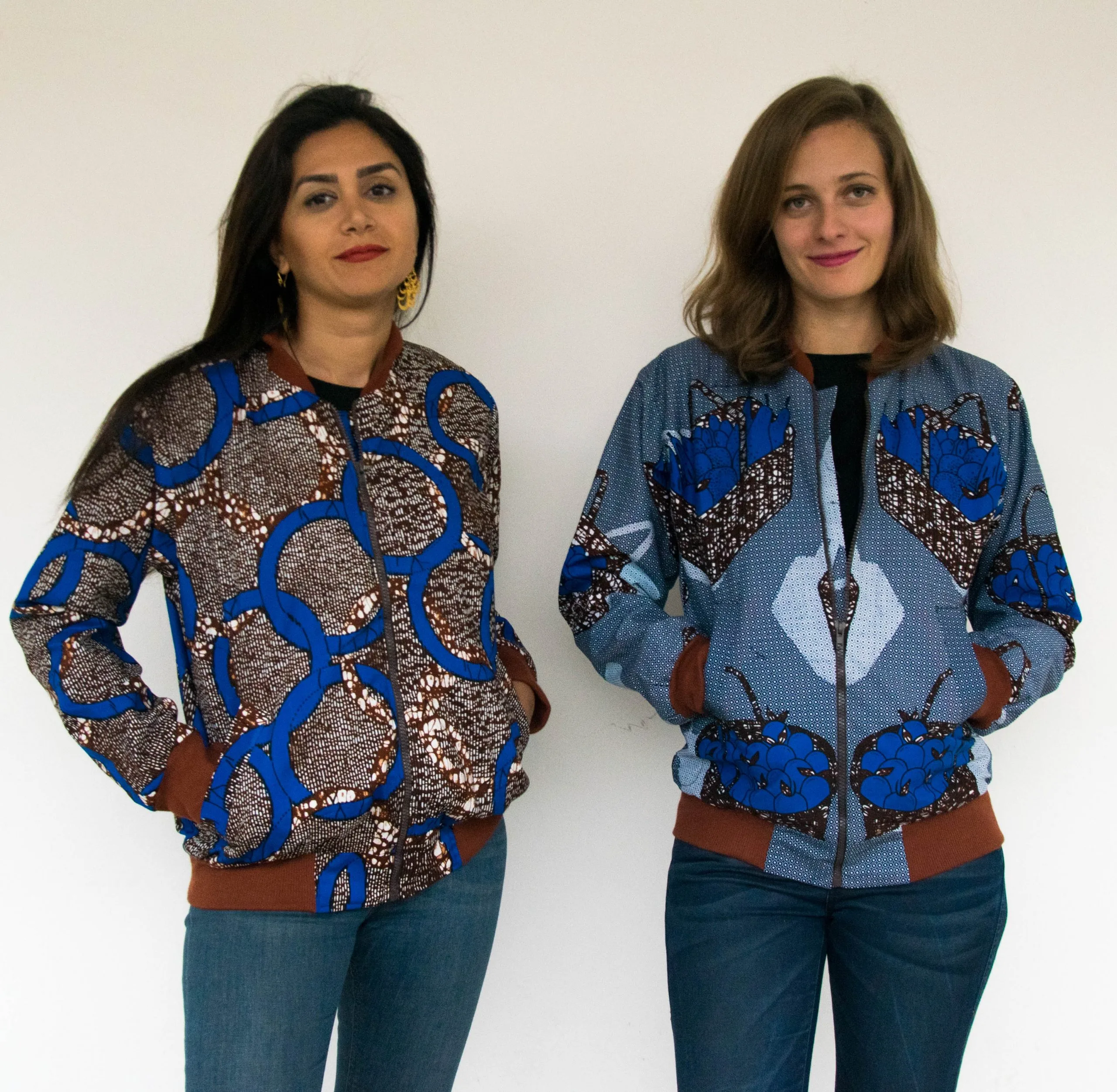
Kenya Kanga Collection

Kenya Kanga Collection was founded by Gemma in 2005, here’s her story:
“The lightbulb moment came when I was on holiday at the coast Kenya’s coast is amazing by the way! – and I’d been walking along the beach, wearing my own kanga and admiring the local women in their kangas.

It was just like suddenly the kanga jumped out at me as the most amazing piece of artwork, but also as an incredibly versatile cotton material.

I knew I wanted to do something with it initially to package it nicely and bring it to the rest of the world, but also to start designing clothing using kangas.

We started in a small shed in the garden, with one tailor who I trained up to make the kind of dresses I wanted, and today we employ 12 women at our warehouse.

I’m constantly inspired by the colours of Africa which I feel are embodied in the Kanga, and I’m also constantly inspired by the women I work with  an incredible team whose hard work and dedication to creating our beautiful line of clothing, homeware and gifts is second to none.

One thing I particularly love about the Kanga is that women in Kenya are still generally not heard in the public sphere but the Kanga is a very clever way of ensuring their voices are heard; the slogans on Kangas are amazing, inspiring and sometimes a little controversial!”

The Kanga
Every Kanga tells a story.
The Kanga is a vibrant piece of material that usually consists of a central design (Mji) and a border (Pindo), and a Swahili proverb running along the bottom some of which are funny, others of which have an important moral lesson and one thing we love about the Kanga is that it’s very much a woman’s world  sometimes the Swahili proverbs seem to be telling the world what the women think – and in that way giving the women a voice.

Traditionally the Kanga is a piece of printed cotton, measuring 1.5m x 1m, but at Kenya Kanga Collection we support the local Kenyan industry by buying both ready printed Kangas as well as designing our own.

The Kenya Kanga workshop has provided an opportunity for women who were mostly unemployed or dependent on others, by providing them with skills, and consequently independence.

These women now have a skill set that ensures a sustainable and dependable income, which in turn creates true independence. Many of the women working at Kenya Kanga have come from a place with not much hope to being a major bread winnerfor their extended families, which makes them hugely successful and inspirational. We feel honoured to have been part of their journey so far and onwards.

No one can have too many Kangas in their lives.

Community
Kenya Kanga Collection and AMREF Women’s Projects
AMREF Dagoretti project and Kenya Kanga Collection partnered to provide training and skills to young or single mothers in an area of low income.

Kenya Kanga Collection provides a tailoring tutor who teaches basic skills to the women and helps maintain the quality of the work done. The mothers come to the workshop twice a week where they work on selected items, and each mother is paid for all the work do.

AMREF provides a space, which is equipped with machines and offers lunch to the working mothers and their babies, as well as training sessions in parenting and SRH. Besides training in tailoring, Kenya Kanga Collection provides toys for the children to play with as their mothers work.

The project has helped young mothers achieve economic empowerment and training in life skills.

Economic empowerment
The young mothers make products such as cushion covers, hair bands, make up bags, wrapped kangas depending on the demand from Kenya Kanga Collection as well as the local market. The money earned helps the mothers pay rent, buy food and pay for their children’s day care.

One young mother was even able to help pay for her nephew’s education. “It was only Ksh 500 but my sister really appreciated this gesture” she said.

Life skills training
The project also aims to equip the young mothers with life skills that will help them cope with life’s challenges and make the best choices in life.

The majority of the mothers have one or two children not out of their choice but due to varying circumstances that resulted in them becoming pregnant, so these life skills make a significant and lasting impact.

Content courtesy of Kenya Kanga collection & Nairobi Fashion Hub 


Peperuka

Peperuka is a lifestyle brand that weaves African stories and connects African cultures through unique products with powerful iconography and language.

Our products apparel, accessories, home décor and gift items – are urban, contemporary and inspired by everyday life as a way to start conversations and share ideas.

Our vision is to be a global lifestyle brand that crafts quality, eco-friendly, afro-inspired treasured pieces which amuse, inspire and bring happiness to our customers, community and employees We use, as much as possible, eco-friendly natural materials and promote sustainability to create a cleaner better world.

We strive to work in partnership with suppliers who empower their communities, have ethical working conditions and practice fair trade.

We create around four general muses: Afri-Love, Colloquial Speak, Optimism and African Heroes. All Peperuka products are crafted with passion, love, humour and a slight obsession to detail.

We believe in being free, hope, love and peace. We have a line in honor of Kenyan environmentalist Wangari Maathai the first African woman to win a Nobel Peace Prize and for each item sold in the line, we plant a tree. We are believe business can be a force for good.

For every purchase, a percentage goes to Peperuka Foundation – which hosts a 12 month training and mentoring programme called Changamka for young girls with businesses in the fashion industry.

We are based at a warehouse in Nairobi and have select merchandise stocked at Republike outlets across Nairobi and at Mimi Mwafrika in Little Rock, Arkansas.

Our merchandise has been worn by international artists including Lupita Nyong’o, Ne-yo, Trey Songz, Jidenna, Diamond Platinumz, Koffi Olumide, Aloe Blacc, Yemi Alade, Yvonne Chaka Chaka, Damian Marley and local celebrities / personalities have embraced the brand: Patricia Kihoro, Kaz, Mayonde, Blinky Bill, Juliani, Lorna Irungu, Ory Okolloh, Wanuri Kahiu, David Muriithi, Mutua Matheka, Jimmi Gathu, Fena, Edith Kimani, Kobi Kihara, Larry Madowo, Diana Opoti, G-Money, Zain Verjee, Boniface Mwangi, Suzanna Owiyo, The Mitaru Sisters, just to name a few. But do we say. #Blessed.

Content courtesy of Peperuka & Nairobi Fashion Hub

Voila Apparel

What does ”Voilà” mean? Originally a french, now a universal term, “Voilà” /vwʌˈlɑ/ literally means ‘Look there!”
It is used when showing to other people something that you have just made or got and are pleased with, You can use it to call attention, to express satisfaction or to suggest an appearance as if by magic, Bold African materials, unique and modern designs, teamed with the finest yet discrete workmanship…and…Voilà!

Your wardrobe
Where Europe meets AfricaVoila has a well-defined, easily recognized style, stemming from the ability to blend modern styles and occidental influences with the beauty, timelessness and nobleness of African fabrics. Offering modern elegance that is always in keeping with current trends.

Simplicity is the ultimate sophistication. Leonardo da Vinci
We value simple things, yet sophisticated and unique designs. Just because they do all the things we need easily and none of the things we don’t.

Simplicity is harmonious. This approach is deeply rooted in accurate, strikingly simple yet far from minimal styling: a trendy design featuring ongoing experimentation in shapes, teamed with the constant value of experience.

The perfect simplicity of every single Voila outfit conceals precious painstaking care for details and impeccable workmanship.

The dynamic & multitasking women line
Voià Apparel was founded with the goal of offering the modern working woman the best fitting dress or outfit she’s ever worn to the office (whatever that “office” is) and afterwards (wherever the night may take her).

The line thus includes cleanly cut, comfortable and sophisticated dresses and other apparel that instantly transform from office wear to a playful uniform for post work revelry.

And because, our customers are dynamic and creativity has no limit, our collections are one of the most rich and monthly updated with outfits that feature timeless structures and classy cuts.

Our values
~ High-Quality Standards:

We strive to provide our customers with high quality, yet unique, pieces.
Our designers and artisans adopt high standards of production with each piece they make.
~ Dispelling Stereotypes:

It is all about positive images of Africa. We focus on ensuring that its history, the talents, diversityand creativity of its people are shared wherever Voila outfits are worn. Each outfit comes with a proverb, historic fact or joke from Africa.
~ Ethical Fashion:

We only work with tailors and artisans that provide fair wages and safe work conditions to their employees.
~ Local Economic Development:

We are committed to investing in grassroots talented tailors and providing them with opportunities to expand their work.
Through their success, jobs are created and their local economies are stimulated.
~ Environmental Sustainability:

We are dedicated to using eco-friendly packaging for our pieces which are recyclable. In addition, Voilà Apparel does not use any material resulting from animal exploitation (e.g leather, fur, etc.). We rather use the highest quality of simili leather.
~ Customer Service Excellence:

We are dedicated to satisfying customer needs and creating an enjoyable shopping experience.

Content courtesy of Voilà & Lulà 

4 Shore

Larissa and David grew up in Kenya, surrounded by its beautiful plant, marine and wildlife. After studying graphic design and fashion in Cape Town and the Netherlands, the siblings returned to their favourite childhood beach spot (picturesque Kilifi) and created 4 Shore, a graphic design and clothing company rooted in social and environmental ethics.

Both keen surfers, travellers and sailors, David and Larissa were inspired to create a range of quality yet casual beach clothing that epitomises a youthful, coastal and environmentally conscious culture. Rejecting “fast fashion”, they opted instead for classic organic cotton t-shirts, upon which they digitally print their drawings, watercolours, and conservation messages.

They also create unique logos and branding concepts for organisations. Previous clients include Tusk Trust, Lewa Safaricom Marathon, Distant Relatives Ecolodge, and Colobus Conservation. 

“The best time to plant a tree is twenty years ago. The second best time is now.” For every 4 Shore item you purchase, we plant a tree! We want to help conserve Kenya’s unique wildlife and natural environment.

​We also want to reduce the carbon footprint of our business and set an example to other clothing companies: fashion can be a force for good.

So since 2014, we’ve worked with Green World Campaign to plant indigenous or food trees in rural schools, local communities, and deforested places in our local area,together we’ve planted 5,405 trees to date, with more planned for later this year.

4 Shore Process of Creating their Eco friendly products 

4 shore is inspired by nature and they start by creating drawings and painting watercolors that feature Kenya’s unique plants, animals and environment. These artworks form the basis of 4 shore graphic design work, and also there printed cotton clothing range

They  source ethical and sustainable, organic cotton fabric, and their  digital printing method uses non-toxic, water based inks, they design prints and choose clothing styles that will last and also offset there carbon emissions by planting a tree for every item sold.

4 Shore currently sources ready-made cotton clothing from manufacturers who comply with the Global Organic Textile Standard. This is a mark of quality that ensures cotton producers and manufacturers meet strict environmental and social criteria.

All GOTS certified clothing uses cotton that has been grown using no hazardous pesticides or chemicals, and no forced or child labour.

Their clothing is classic and practical, 4 shore create meaningful designs to print on to garments that will last.they  want their t-shirts to be your “old favourites” who’ve been everywhere with you, not purchased on a whim and thrown out next season.

Living by the ocean,they have witness the scourge of plastic every single day and they try to recycle and use plastic as little as possible. 4 shore pack and send your items in hand made baobab/banana leaf paper, and thier swing tags are printed on recycled cardboard using non-toxic inks.


Content courtesy of 4 Shore & Nairobi Fashion Hub  

Ngiri Giri

Suzanna Haller started the Ngiri Giri workshop back in 2007. Her focus was to bring about a style using the local material called Khanga, which is widely worn by the local African ladies. With its bright vibrant colour and traditional print the material stands out and gives each and every bag a unique look.

The workshop is in the heart of a coastal village creating local employment for many people in the disabled community – a cause very close to our heart. Each and every Ngiri Giri bag is handmade using local material, which has been hand selected to create a range of bags that stand out in style and design.

In an ever changing world that sees design and style moving towards sustainable fashion that is kind, not only to our planet but also to our local community, the team at Ngiri Giri are proud to be part of the “Fashion with Humanity” movement.

Content courtesy of Ngiri Giri & Nairobi Fashion Hub 

Connie Aluoch 

 Connie Aluoch’s training in Fashion Design started at the Evelyn College of Design, Kenya in 1996 where she earned a Diploma in Fashion Design and Garment Making. In 1998, she enrolled in the prestigious Fashion Institute of Technology (FIT), New York where she graduated with a Bachelor’s of Fine Arts in Fashion Design.

While at FIT, she participated in a one year study abroad program at Polimoda International Institute of Fashion Design & Marketing in Florence, Italy. During her study in Italy, she fully immersed herself in the Italian culture and language and is speaks and writes fluent Italian.

In 2003 Connie moved back to New York from Italy and worked for various leading international designers and production houses such as Emporio Armani, Alek Wek and Matthew Williamson in the Design and Public Relations departments.

She has worked at three of the ‘Big 4’ international fashion weeks. At the New York Fashion Week, she worked as a Backstage Director for the ground crew ensuring models were properly styled for the runway. At the Milan Fashion Week, she worked for Vivvene Westwood and Dsquared2. At the London Fashion Week in 2011, Connie was instrumental in showcasing the first Kenyan Male Designer John Kaveke.

In 2004, Connie moved home and has been actively participating in the development of the Kenyan fashion industry. She continues to mentor aspiring fashion stylists and has served as a judge for fashion design events and modelling competitions across the country. In 2009, she returned to Italy and graduated from Istituto Marangoni in Milan with a Masters in Fashion Styling.

As part of her mentoring and passion to give young people the requisite skills in fashion, she is a Fashion lecturer at the University of Nairobi, School of Arts and Design.

Her distinct and unique styling work has seen her featured numerous times in East Africa’s largest selling Fashion magazines; True Love and Drum. She also has a column in the weekly “Nairobian” Newspaper an affiliate of the Standard Media Group.

She was in charge of the styling for Tusker Project Fame Season 4, and conducts image training for private and state corporations as well as working on local international advertising campaigns. She has been styling the Kenya Television (KTN) News Anchors since 2013 and this has seen the station set itself apart from other news channels styling.

To ensure that her business remains profitable in the ever changing and competitive fashion landscape, completed the Owner Manger Executive Program for entrepreneurs in 2015 at the Strathmore Business School.

She is the first Kenyan in the East and Central African region to obtain a Master’s Degree in Fashion Styling and awarded the “2014 Established Fashion Stylist” in Kenya

Content courtesy of Connie Aluoch Styling Management & Nairobi Fashion Hub 

Fashion Couture Affair 5th Edition in Dar es Salaam

Nairobi fashion hub brings you the latest trends from the front rows of the just concluded fashion couture affair 5th edition.

A lot has been said about this runway event which started right here in Kenya. Over the years we have seen it grow from a simple catwalk event to a high end international fashion runway event.

Fashion Couture Affair Changing The Fashion Industry In Africa

Let us take you through how their 5th edition went down in Dar es Salaam Tanzania. This is the first Kenyan runway event to be hosted outside the county.

The stage was set for the show and the location was perfect and atmosphere was just right for the occasion.

Something to note about this show was they had a lot of industrial players attending the event. Which is good if you are into fashion business.

Sorry I forgot to mention the theme for this edition was valentines that explains the timing of the event and the set you see below.

The event was able to bring together fashion designer from across the globe. What am sure everyone will agree with me is that from all the edition fashion couture affair has had, this one has produced one of the most creative and mind blowing designs.

From the red carper to the main runway, the setup was done very exquisite kudos to the team.

Event host was Diana Edward Loi Miss Tanzania with an amazing voice, very composed and technical knowhow of the job.

Designers who showcased their design collection at this year’s event ” Fashion Couture Affair 5th Edition” were

  • Kidato designs
  • Levra with culture
  • Angel Hudson
  • Baghai classic fashion
  • Mahamus Designs
  • Africa By Linet
  • Rama D

What we can learn from this event is that, they are trying to connect different countries through the work of fashion and art. Fashion Couture has had a significant growth and their track record speaks for themselves as they have always managed to deliver a quality experience for the audience, designers and all other participants.

This places the event among the top events in the East and central African block. Spreading out their wings to Tanzania seems like a bold move and one that was met positively considering the event has hosted quite a number of foreign designers in previous editions.

We hope to more of these kind of high end runway events that will create a good impart to the region and our day to day living.

Content Courtesy of Fashion Couture Affair & Nairobi Fashion Hub 
Ad