Wednesday 6th of May 2026

Nairobi, Kenya

How This Black Icon Infused Fashion Line Found Success Amid Covid-19

‘We’ll continue to rise’: How this Black-icon-infused fashion line found success amid Covid-19

Johanne and Terrance Wilson, owners of COOL Creative, recently won Comcast’s RISE contest, which invited Black small business owners who were hit hardest by the pandemic the chance to win consulting, media services, or a technology makeover.

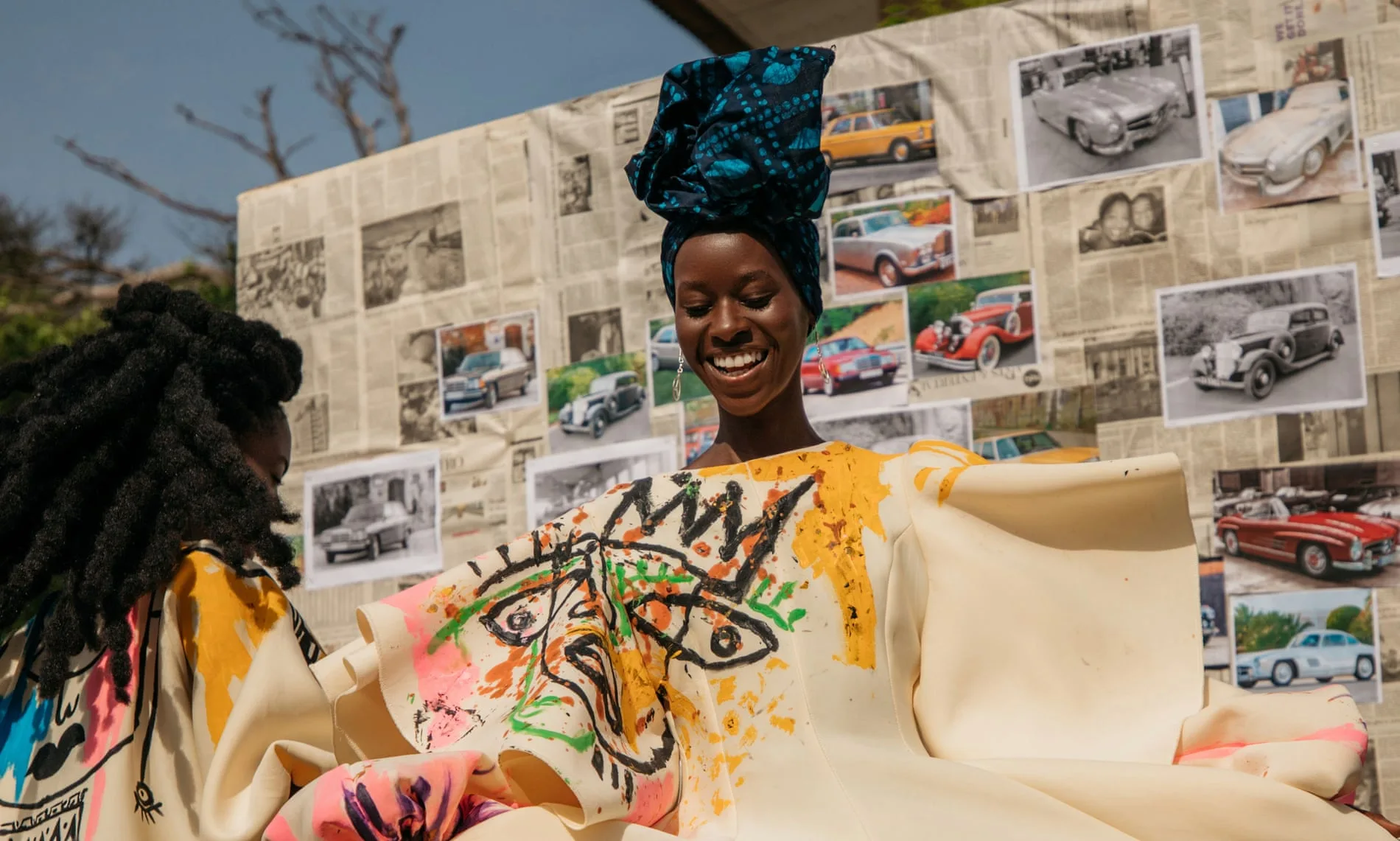
Models wearing COOL Creative apparel. Courtesy of Comcast.

Several years ago, Johanne and Terrance Wilson, of Hollywood, Florida, celebrated African-American icons in a meaningful way, by passing on their inspiring stories to their daughter, who was 6 years old at the time.

Terrance, an illustrator, brought influential Black figures from Martin Luther King and Maya Angelou to Notorious B.I.G. and Lauryn Hill to life through storytelling and sketching portraits. One day, Johanne had an epiphany these beautiful portraits created by her husband within the walls of their own home should be shared with the world. And so COOL Creative, a unique boutique that offers apparel and accessories with African-American icons displayed on them, was born.

COOL is an acronym for Create Out Of Love, because for the Wilsons, their brand design and digital agency isn’t just a business, it’s a family. The Wilsons worked hard to expand and lay the groundwork to open a brick-and-mortar store to sell their apparel in Little Haiti, a neighbourhood of Miami, Florida.

Models wearing COOL Creative apparel. Courtesy of Comcast.

Despite the strides the family took to grow their business, they recently experienced the major setbacks as a result of the coronavirus pandemic. After pouring countless resources into opening a store, they could not physically open due to lockdown orders and delays from manufacturers. Ironically, during a time when racial inequality and #BlackLivesMatter protests echoed in cities around the country, COOL Creative was also fighting for a lifeline.

The Wilsons are certainly not alone. African-Americans have been disproportionately impacted by Covid-19 from every angle, from systemic health inequities that put them at greater risk of the virus to the fact that Black-owned, small businesses are nearly twice as likely to shutter during the pandemic.

https://www.instagram.com/p/BbAuGtRBX83/?utm_source=ig_embed

A model in COOL Creative apparel. Courtesy of Comcast.

Between February and April 2020, the number of active Black-owned businesses declined by 41 percent, compared to 21 percent for the general population, according to the National Bureau of Economic Research.

Unwilling to back down from their dream, the Wilsons carried on. With the same tenacity and grit that Johanne once had as a young student applying for numerous grants and scholarships to finance her college education, she set out to find assistance that might help COOL Creative rise above the overwhelming pressures that came from the pandemic.

That’s when she found the Comcast RISE contest, which invites Black small business owners who were hit hardest by the pandemic to apply for a chance to win consulting, media services, creative production or a technology makeover. RISE targets the pioneers of legacy, the curators of culture, the family franchise and more.

Comcast RISE which stands for Representation, Investment, Strength and Empowerment stemmed from Comcast’s $100 million Diversity, Equity and Inclusion initiative that launched this past summer. The contest awarded COOL Creative with significant media services, including a commercial for 90 days and a recent appearance in November on “The Kelly Clarkson Show.”

“It’s more important than ever to stand with the Black community and amplify Black voices,” Clarkson said during her segment. The contest awarded several other Black small business owners, including LeDay Grant, owner of an ice cream shop that provides space for community engagement in Denver, and Alicia Goodwin, owner of Lingua Nigra Jewelry in Chicago.

“We’re really excited to take advantage of the promotion and to get a commercial for 90 days,” Wilson said. “Our goal is to drive people to the website and also to the store and make up for all the sales that we lost over these past months,” she added.

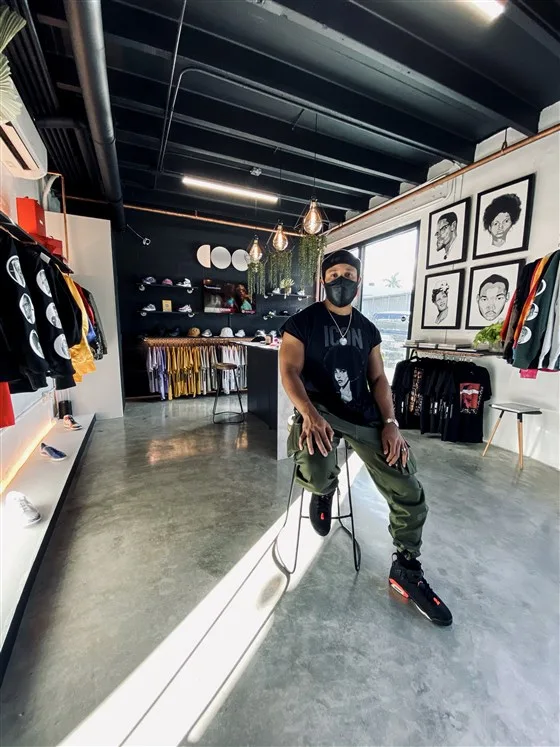
Terrance Wilson, co-owner of COOL Creative, at his store Little Haiti, a neighbourhood of Miami, Florida. Courtesy of Comcast.

Teresa Ward-Maupin, SVP for Digital and Customer Experience at Comcast Business, said that RISE came from a deep desire to help people on a more granular level and to recognize those who have been most impacted by Covid-19. “We set out to determine how we can make the biggest impact, not just during this moment in time but to help businesses recover and prosper for the long term. We set out to truly lift businesses up.”

While the first phase of RISE focused on Black small business owners, the contest is now accepting entries from BIPOC small business owners. In all, Comcast will award around 700 small businesses in need among various categories.

A model is COOL Creative apparel.Courtesy of Comcast.

“When the thought of losing COOL Creative hit us, we kicked into fight mode,” Wilson said. “During a time of racial inequality and protests, we need fashion lines like ours more than ever. It really speaks to the struggle and truly connects people,” she explained, adding that she hopes their Little Haiti store will be a space for people to engage and connect within the community.

“Our fashion speaks to a nation that has been hurting,” Wilson said. “We’ll continue to rise.”

Written By 

Content courtesy of NBC News & Nairobi fashion hub 

The Jw Show 2020 Edition Connecting Africa and The World Through Fabric and Design

The JW Show 2020 edition held last night at Nairobi Film Centre formally know as ( Nairobi Cinema ) was successfully event and one of the big show in East & Central Africa #MadeinKenyaByKenyans, the show had quite and inspirational panel for fashion designers and literally every young person who inspire future generation.

The show was limited to 300 attendees as per the state regulations on COVID-19 rules and was streamed live across all major social media platforms

The JW Show gave opportunity to  11 fashion designers from Nairobi with a mix of students and upcoming designers unlike last year when they went scouting for talent from the counties level.

Unlike the previous edition where showcasing designers were competing for a prize, this year show was one simple platform for unveiling  new talented participants. All collections on the runway come with face masks.

The organizer of the event added a panel discussion where they generated and share ideas on how they can support upcoming designers and keep them on their feet.

Once again the Jw Show, gave opportunity to persons living with disabilities in the fashion industry who have been left behind during this pandemic and they want to make sure their valuable input is seen and appreciated. 

This year the show was keen on the quality of the fabric employed in designs and creativity of the designers, each designer to showcase at least five collections.

Kenya Film Classification Board  ( KFCB ) has been partnering with the JW Fashion Show for three years in a row. The vast creative sector is the next frontier for wealth and job creation.

The Board is cognizant of the untapped potential in the creative industry thus commits to continue supporting ventures that seek to identify and nurture talent for job creation ~ CEO Ezekiel Mutua

The Jw Show signed a Memorandum of Understanding (MOU) and a partnership with Kenya Film Classification Board since last year 2019 where KFCB committed themselves to support Jw Show Made in Kenya By Kenyans

It’ been tough to persuade sponsors to come on board  because people’s finances have been affected by the pandemic. But we are very grateful to Kenya Film Classification Board (KFCB) for believing in us. ~ Jw Show Founder Jeffrey Wilson 

Organizers of Jw Show were planning on bringing in three designers from Rwanda, Nigeria and South Africa, but the pandemic came in the way of it. and the plan has been pushed to next year were we will see international designers showcasing at The JW Show 2021 edition.

Photo credit : Mesmeric Kenya

Content courtesy of Nairobi Fashion Hub 


The Folklore

The Folklore is a New York City-based multi-brand online concept store and wholesale showroom that allows U.S. based and international customers to easily shop exclusive styles from Africa and the diaspora’s top luxury and emerging fashion brands.

Shop clothing, accessories, shoes, jewelry, bags, hats, and homewares from top contemporary fashion brands including Andrea Iyamah, MaXhosa, Loza Maléombho, Orange Culture, Simon and Mary, and Pichulik.

Exclusivity and sustainability is key for The Folklore. Each season The Folklore carries very limited stock of each luxury item. The carefully curated high-end product-line reflects the diversity of Africa’s contemporary urban landscapes, minimalist design aesthetic, and artistic vibrancy.

Most of the fashion, accessories, and homewares available were handmade by local artisans based in South Africa, Nigeria, Ghana, Morocco, and Cote D’Ivoire.

In addition to operating as an online concept store, The Folklore also provides wholesale services to African designer brands interested in penetrating the global retail market. Our wide range of services help brands reach new audiences and significantly enhance profits. The Folklore works as an intermediary to facilitate positive and rewarding wholesale business relationships between brands and retailers.

The combination of goods and services provided by The Folklore helps enhance the visibility and financial success of Africa’s garment industry while exposing a global customer base to exclusive designers and styles, some of which were previously unavailable to shop online or outside of Africa until now.

Content courtesy of The Folklore & Nairobi fashion hub 

Ivorian startup, Afrikrea is building the online infrastructure for African culture commerce

Growing up in Mali, Moulaye Taboure was passionate about art and fashion. His studies took him to France, where he noticed that the people there took particular interest in buying art and fashion depicting African culture.

This wasn’t just in France; it was in many parts of Europe.

In 2010 while Taboure was working at PricewaterhouseCoopers (PwC) as the senior IT auditor and later in 2013 as the internal audit manager at Alstrom, Mali started having issues with tourism; the country was closing up to tourists.

In turn, artisans and designers began to struggle, turning to other jobs outside craftsmanship to survive.

Taboure says this led to him to brainstorm on how best to help these African designers sell their products.

In the meantime, a different group of designers began to gain international recognition from names like Burberry and IKEA fabrics because of their brand of Western aesthetics with African fabrics.

These two separate events and studying the success of models like US-based eCommerce platform, Etsy, led Taboure to enlist the help of his long-time friend, Kadry Diallo in 2014.

Driven by his disgust that the average craftsman didn’t get enough pay or recognition for their work, they began a side project called Afrikrea to make these businesses sustainable.

But the idea underwent iteration as further consumer studies showed that they needed to break the niche and include anyone making Africa-inspired art, fashion, or beauty.

This time, however, they would help African designers sell their products outside the continent.

“People could make DIY products in the US and sell them for billions of dollars on Etsy. It didn’t make sense that we couldn’t make something similar for African creatives recognised all over the world,” Taboure says to Techpoint Africa.

According to Statista, Africa’s eCommerce opportunity is estimated to be around $19.8 billion. McKinsey & Company, on the other hand, says that by 2025, the local manufacturing industry will grow to more than $900 billion.

https://www.instagram.com/p/CFNqbARHVV9/?utm_source=ig_embed

While this shows signs of promise for African online retailers to pursue a global push for Africa’s fashion industry, issues have come up to stifle collective progress.

For one, cross-border shipping and handling, and marketing are barriers to African fashion designers reaching global demand actively.

Similarly, difficulties arising from accepting online payments from platforms like Shopify exist. As with other eCommerce platforms, Shopify encourages African online retailers but does not build its platform to cater to their specific needs like payments.

Afrikrea: Tailored to the needs of African designers and global buyers

These were the problems Kadry and Taboure sought to solve with Afrikrea.

Quitting their jobs to work on the project full-time, Afrikrea officially launched in 2016 when Luc B. Perussault Diallo joined them to become Co-founder and CTO.

Based in Abidjan, the capital city of Ivory Coast, Afrikrea’s mission is to enable African designers to create storefronts, receive payments from customers globally, and lower shipping costs for delivery.

https://www.instagram.com/p/CHGy1krlgon/?utm_source=ig_embed

Taboure tells us that Afrikrea can offer lower shipping costs because of its partnership with DHL. He further claims that shipping up to 2kg from Nigeria to the UK, for instance, costs less than $20 (₦10k).

In the past few years, DHL has been actively involved in Africa’s growing eCommerce space. It launched DHL Africa eShop, an eCommerce platform present in 34 African countries, in 2019, and a year later, inked a deal with Link Commerce which saw the logistics giant acquire a minority stake in the UK-based turnkey eCommerce firm.

Designers on the platform are not required to pay to sell at first. However, after an initial sale, they begin to pay $10/month.

https://www.instagram.com/p/CHGGE8pl_on/?utm_source=ig_embed

There’s the question of whether these designers will make as much as they pay to use the platform. But Taboure addresses that, saying the pricing is perfect for those who need the service.

“It’s pretty simple. We cost the same thing as a Spotify subscription and half the price of a Shopify one. Anyone serious about exporting and doing their business online will find our price not only affordable but very complete.”

Taboure says Afrikrea charges between 5% and 8% in commission on further sales made through the platform.

And to establish trust between buyer and seller, Afrikrea has a wallet feature. This means that when a buyer pays for a product, the seller doesn’t get the money until the buyer receives and rates the product based on their level of satisfaction. Moulaye claims Afrikrea guarantees a full refund to unsatisfied buyers as soon as possible.

“I think this is a big influence for someone buying globally without seeing the vendor or the product. Our value offering is to make the infrastructure so people can have trust to know when they sell, they’ll be paid; trust to know that when they buy, they’ll receive what they’ve bought.”

Taboure also adds that via the integration of multiple payments solutions in its wallet infrastructure, Afrikrea can pay designers in the 50 countries Afrikrea is currently present in.

In total, Afrikrea’s global infrastructure of African culture eCommerce spans 150 countries, including the US, UK, and most parts of Europe.

Pursuing African and global growth

Afrikrea’s marketplace also enables efficient exchanges between buyers and sellers before, during, and after an order through its messaging system, which Taboure says records over 30,000 messages a month.

Having made tremendous progress, the startup began to gain recognition when it was one of ten finalists at the Jack Ma Foundation Africa Netpreneur Prize Initiative 2019.

Although it lost out on the top three prizes of $250k, $150k, and $100k that went to LifeBank, Nawah-Scientific, and Water Access Rwanda respectively, the $65k Afrikrea took home was a huge validation of its platform.

https://www.instagram.com/p/CFSfxtgHmZl/?utm_source=ig_embed

Further monetary validation would come in February 2020 when the Ivory Coast-based startup raised $1m.  The Africa-focused VC fund, Saviu.vc, led the round. Id4 Ventures, a European-based angel fund and Showroomprive, France’s second-largest fashion and beauty e-commerce platform, also participated.

Despite the investment, Moulaye is quick to add that so far, Afrikrea has also been running also on revenue. In the last 18 months, this amounts to a little over $2 million.

The goal is to achieve profitability in 2021 while doubling its revenue and sustaining most of its costs.

Traction is another area where the startup has fared well too. When we reported its fundraise ten months ago, Afrikrea had processed $5 million in sales across more than 6,000 shops in 101 countries.

Now, the numbers stand at $7 million in transactions from across 7,000 sellers in 150 countries. Taboure adds that 40% of the buyers are in Europe, while 30% make their purchases from the US.

A case for minority innovation and recognition 

Taboure recalls that when Afrikrea started, the team realised its first group of African designers did not trust themselves.

According to him, most of them didn’t believe that being with other designers was going to help them grow individually.

“They were afraid of competition and didn’t realise, until now, the effectiveness of the community, in terms of cross-selling, as two-thirds of purchases made on our platform are done to more than one seller at a time.”

Also, some services individual designers enjoy only exist because they are all on the platform. For instance, the DHL deal was only possible because Afrikrea promised to aggregate volume en masse.

Driving home his point about the success of the partnership, Moulaye says that in a recent encounter with DHL, the logistics company told him that Afrikrea was living up to its expectations and outperforming competitors in volume.

“They told us that we were the only company that moved from 150 shipments a month last year to nearly 10,000 this month within one year,” he says enthusiastically.

With a successful partnership and thriving business in place for more growth, the CEO sees Afrikrea dealing with products outside African fashion.

“We want to be the number one export partner for anyone who wants to transact between Africa and the world,” he says. However, Taboure doesn’t want to forget why Afrikrea started in the first place.

https://www.instagram.com/p/CG419OQlDG7/?utm_source=ig_embed

“We want to make sure that people in Africa can realise how valuable their cultures, talents, and business can be. And that is important for everyone that has the will to sell properly,” he adds.

This includes women who account for 90% of the platform’s sellers. That’s a large number to keep in mind because women are generally underestimated in terms of talent and what they’re able to make of it.

Similarly, Francophone Africa is considered a minority in the African tech space. Often looked at as second-best to Anglophone Africa, the region has fewer technological innovations and startups.

“Looking at the well of startups in Africa, I feel like we’re almost despised and ignored by pretty much everyone in Africa,” he laughs. “It feels like there’s only Kenya, Nigeria, and South Africa in Africa. And that’s kind of insulting when we see that we’re able to create big businesses like the others,” he says on the matter.

Despite the consensus, Taboure believes the Francophone African tech space and startups shouldn’t be ignored. His take is straightforward: Francophone African countries can innovate and deliver globally, just like any other country in Africa.

Content courtesy of Tech Point Africa & Nairobi fashion hub 
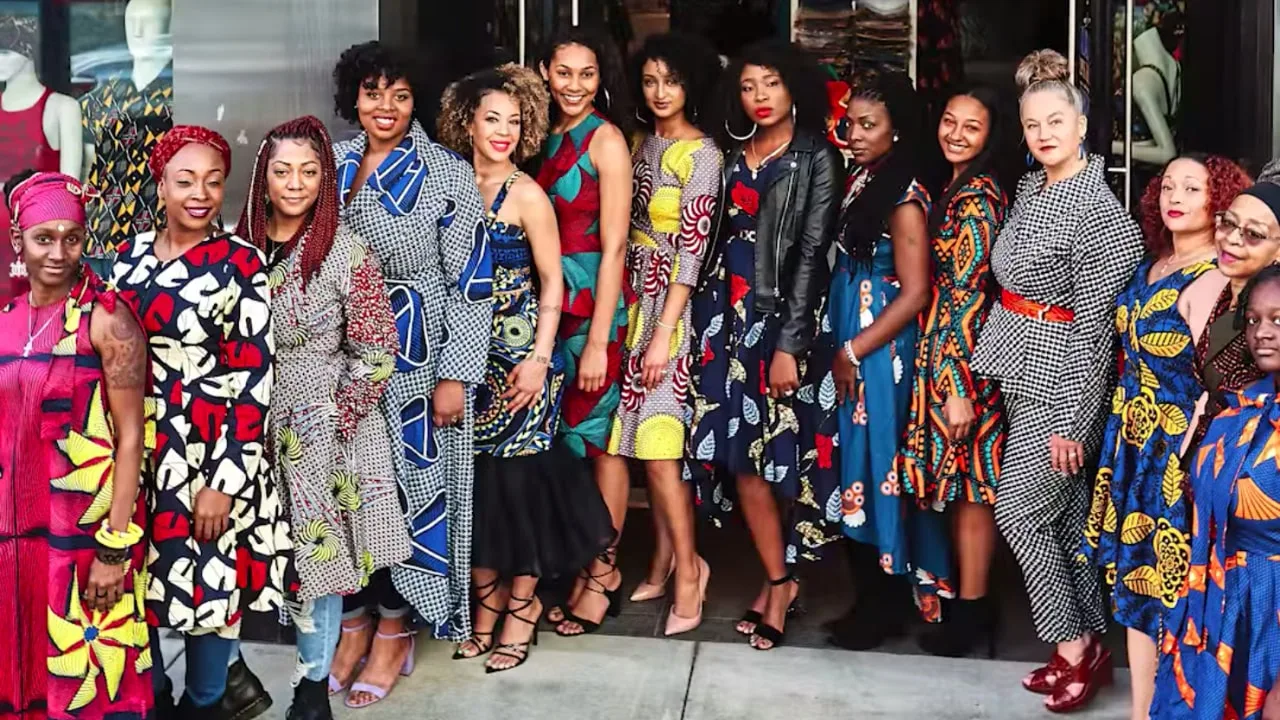
 

Buki Ade is a Nigerian American fashion designer , CEO and Founder of BFyne

Buki Ade is a Nigerian American fashion designer. By utilizing culturally inclusive designs, she has transformed and revolutionized the swimsuit industry. Born and raised in Nigeria, Buki’s family emigrated from Nigeria to the US when she was 8 years old. As the first born of a traditional Nigerian family, Ms. Ade was expected to study medicine and take care of her family with a “guaranteed” income. In fact, she dutifully obliged by enrolling in nursing school. Ultimately, she decided to explore her own creative path.

https://www.instagram.com/p/CEz5-U4nesG/?utm_source=ig_embed

Growing up, Ms. Ade had ample opportunity to express creativity in her attire. It is common in the Nigerian community to have custom outfits made for special occasions and Ms. Ade never failed to push the limits of modern fashion. Even in her teenage years, she didn’t shy away from putting her unique style on everything she wore.

Those closest to her could tell you of the many ways she embodied all the makings of a designer at a young age. From distressing jeans, to reconstructing clothing and shoes  Ms. Ade’s innate flair for fashion was undeniable. Receiving her first sketchbook at 12, she became fully aware of her passion for design at 13.

As a young girl, Ms. Ade recalls learning the basics of sewing by watching her grandmother sew for hours.

https://www.instagram.com/p/CEsMPqEHeim/?utm_source=ig_embed

It could even be said it was in her blood as she often gives credence to her two fashion designer aunts she endearingly refers to as her “superheroes”.

While on vacation one day, Ms. Ade was frustrated by the lack of diversity in the design of the swimsuits. None of the options spoke to the Afrocentric exceptionality she desired to present. This, she attributed to the lack of diversity – more specifically the lack of African designers in the industry. Ms. Ade stepped in as a solution to this problem with the debut of her first collection in 2013.

Prior to the release of Asante (BFyne’s first Ghanaian kente print swimsuit), Ms. Ade refrained from using prints. When Ms. Ade and her team decided to push the envelope with that swimsuit, they had no idea the transformative effects it would have on the brand. From there, BFyne released the Sahara collection in 2017.

https://www.instagram.com/p/CEFrGXeH8zq/?utm_source=ig_embed

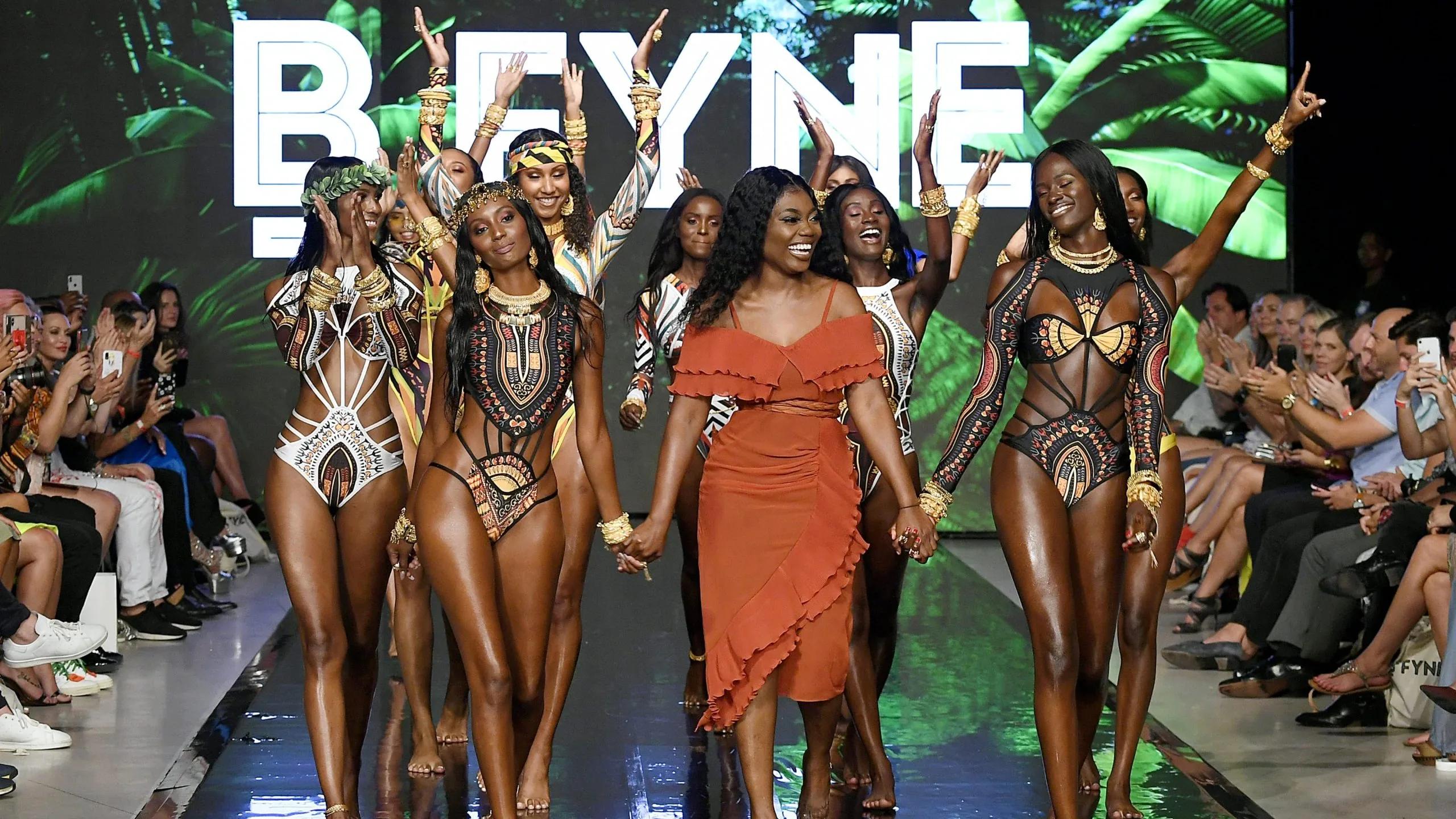
This internet-stopping collection featured swimsuits with traditional dashiki prints. BFyne debuted swimsuit construction the industry had never seen before. The swimsuits were styled to perfection. As if kissed by Midas, models posed dripping in gold jewelry and accessories  a vibe Ms. Ade passionately weaves into the entire BFyne aesthetic.

In January 2019, their flagship store was opened in Miami, Florida. To date, she’s designed patterns and swimsuits for over 10 collections, and it doesn’t stop there. Ms. Ade has plans to release her first ready-to-wear collection! This fall, you’ll see clothing from the design style that changed the swimsuit industry forever.

THE BRAND

BFyne is a contemporary swim and resort-wear brand. Every hand-sewn garment has been conceptualized for the fiercely fashion-forward, cultural aficionado you are. BFyne designs are for the risk-taking woman in protest of the fashion status quo.

Highly regarded for enchanting designs and alluring hues, BFyne swimsuits emphasize your curves with intention. The BFyne experience is meant to leave you inspired and empowered. Audiences will be smitten by your embodiment of uninhibited sex appeal and poise.

Body positivity is a foundational principle at BFyne. You will always see models of varying shapes, sizes and ethnicities strut down the catwalk. This, coupled with stand-out designs, it’s no wonder BFyne shut down Miami Swim Week in July 2019. BFyne has also showcased collections in NY Fashion Week, Cayman Island Fashion Show and the Elite Fashion Show.

https://www.instagram.com/p/CDMtaoxHXeG/?utm_source=ig_embed

BFyne’s list of patrons remains star-studded with fashion icons such as Beyoncé, Iman, Alicia Keys, Eva Marcille, Taraji P Henson, Jordan Dunn and Rosci Diaz – to a name a few. You may have even spotted BFyne on the tube. Looks from the brand have been featured in the movie Pacific Rim as well as music videos from Tiwa Savage (often referred to as the Beyoncé of Africa), Grammy-nominated artists Jidenna, Flo Rida, Tinashe, and X-Factor stars Fifth Harmony!

The brand boasts of a 400k+ following and articles in fashion publications like Essence, Vogue, Harper’s Bazaar, the Fader, Allure, Glamour, Popsugar, Huffington Post, CFDA, Sports Illustrated and many others.

THE DESIGN

Perfection is the goal. BFyne’s designs are the result of a painstaking research process. Every pattern, print and snip have been meticulously thought out to ensure a fun, functional and flattering experience for you.

These garments intentionally lift key areas and accentuate the most essential curves of your body. Quality and style are prioritized. Rigorous screening and testing processes permit an elevated swimwear experience.

https://www.instagram.com/p/CCeF2ZpH_hz/?utm_source=ig_embed

Textile prints are inspired from Designer, Buki Ade’s passion for life and cultural experiences. As a Nigerian American, she is able to merge the richness of West African influences with the portraits that comprise scenes of her everyday functions. Africa – its sunrises, fabrics and agricultural silhouettes will forever give way to new BFyne Designs.

Content courtesy of Bfyne & Nairobi fashion hub 

Top 10 Fashion brands from Africa and the African Diaspora that are enriching the fashion industry

In the wake of fashion’s racial reckoning, Farfetch, the e-commerce platform that merges more than 700 boutiques from 50-plus countries into one global marketplace, debuts its partnership with The Folklore, a New York–based online retailer of brands from Africa and the African diaspora.

“We are excited to welcome The Folklore to the Farfetch platform,” Holli Rogers, chief brand officer of Farfetch, tells BAZAAR.com. “We are committed to improving the representation of Black-owned businesses on Farfetch.com and are thrilled to provide increased global exposure to 10 new designers from Africa and the diaspora, opening doors to fashion and fashion lovers everywhere.”

The chosen designers are Nigeria-based brands Andrea Iyamah, Clan, Fruché, Lisa Folawiyo, Onalaja, Orange Culture, and Tokyo James; and New York–based labels William Okpo, EDAS, and Third Crown. Although they might not yet have global name recognition, all have distinct points of view and offer forward-thinking collections that enrich the fashion industry.

Since launching The Folklore in 2017, Amira Rasool, a lifestyle writer and entrepreneur, has been promoting Black-owned luxury labels that, for too long, have not gotten the global recognition they deserve. Now, with the resources and exposure that Farfetch provides, she is hopeful that they will soon become household names.

“A partnership like the one we have cultivated with Farfetch can truly be a career-defining moment for some of our designers,” Rasool says. “Being able to have designers from Africa and the diaspora on a platform as big as Farfetch is a huge thing in terms of visibility. Seeing Orange Culture or Onalaja sold next to Alexander McQueen or Gucci helps condition consumers and retail buyers to recognise that these brands are in fact luxury.”

Ahead of the launch, BAZAAR.com asks the founders of each brand to give us insight into their creative process and the diverse stories they hope to tell with their designs.

1. Adebayo Oke-Lawal, Orange Culture

Orange Culture references a story I wrote for a class about the orange boy. It details his experiences of toxic masculinity. I saw the colour orange as an alternative to more typical masculine shades like red or blue. I grew up very different to most boys.

I went to an all-boys school, a very hyper-masculine all-boys school, and I was very tiny and I had big glasses. People would say, “Talk louder, talk like a man,” and, “Do this, do that.” There was always aggravation towards me just because of the way I presented myself. I was bullied a lot.

The orange boy was an individual. He was unique, he didn’t really fit in, but he celebrated his difference in spite of this. It was about saying that whatever society had called me to be wasn’t who I wanted to be, and that’s fine. There wasn’t only one type of man. There wasn’t only one yardstick to measure a man’s masculinity. There were various ways you could be a man. I could be a man, at that time, in a pink suit and I wouldn’t be thought of as less than.

That was the narrative behind the orange in Orange Culture a culture that represents accepting individual expressions of self without limitations. Orange Culture is a brand that fights for individuality and celebrates a new age of liberation. Our brand in entirety is a mixed celebration, conversation, and confrontation of Nigerian culture from our silhouettes to our prints to our vibrant colours and stories. Our supply chain in itself is a celebration of Nigerian culture.

2. Kanyinsola Onalaja, Onalaja

I would describe Onalaja as a contemporary womenswear brand that experiments with demi-couture elements. Onalaja represents an imaginative concept of culture, heritage, luxury, and a contemporary appreciation of beauty through its highly crafted pieces that explore texture clashes, a play on proportions, colour, and textile manipulation.

An underlying concept within all pieces always remains, “Our heritage reimagined: the Africa we don’t see.” Reimagining heritage and the language of tradition is an aspect key to the DNA of the brand, which is brought to life with traditional craft techniques and collaborations with local artisans who create stories with their hands. Every piece gets the attention befitting of the discerning wearer, a cosmopolitan woman with an appreciation for intricately made items.

3. Teni, Aba, and Tiwa Sagoe, Clan

Clan is a premium ready-to-wear brand established in 2011 in Lagos, Nigeria. The name Clan stands for our ability to engage with communities far and near. Clan uplifts women through the expression of dress, strongly communicating power and confidence.

As such, our clothing is typically categorised by triangles, which represent female energy and strength. We are dedicated to providing the modern-day woman with versatile staples that feature a contemporary, hard-t0-miss edge.

4. Tokyo James

In one word, Tokyo James can be described as an intersection. It’s a brand where many worlds meet, where Africa meets Europe, where simplicity meets complexity. It’s a world where people come to find commonality in what their differences are.

https://www.instagram.com/p/CCisoFQHHf2/?utm_source=ig_embed

5. Kristin and Kofi Essel, Third Crown

Our brand, Third Crown, is a contemporary jewellery brand. We make bold and genderless pieces that are everyday. From an everyday look to an evening look, our brand represents unity, love, and powerfulness.

6. Andrea Iyamah

My brand is inspired by a cultural story. It is born and bred in Nigeria by a Nigerian who grew up in the country and was brought up by parents who were exposed to traveling.

They believed that travel was a form of education. This is the basis of the brand, giving people that experience through fabric and texture; looking at the culture and appreciating everything that it has to offer aesthetically, while also understanding the nuances in the pieces.

7. Lisa Folawiyo

We are a global womenswear brand based in Nigeria. Our signatures are detailed and intricate hand craftsmanship by local artisans, the play on colour and textures, and designing custom prints alongside the manipulation of local and traditional fabric applications.

Our brand continues to have an edge with its very cool and refined design aesthetic a distinct, strong, and forward-thinking point of view. Every collection is designed and manufactured in Nigeria, and through these collections, we are able to tell our authentic African story as we connect with people all over the world.

8. Sade Mims, EDAS

We are an accessories brand based in Brooklyn. I identify as a multidisciplinary artist who does various mediums. I love working with my hands and being explorative with my artistry and storytelling. I love incorporating culture, fashion, and style all the things that I really love with designing and being an artist.

My dream, and my goal, for EDAS is to continuously grow and tell stories that are important. I dream of making it a house, where we dive into the art realm with paintings, shoes, housewares, and furniture. EDAS is rooted in ethics, sustainability, consciousness, storytelling, and community building.

9. Frank Aghuno, Fruché

Fruché is a contemporary Nigerian brand. We like to infuse modern contemporary design with our traditional Nigerian artisanal techniques. We use different applications and dying techniques.

We are a very radical and progressive brand. We like to tell stories of culture and progressive stories of our culture, which I mix with my personal life. Each collection is like a page in a diary of my life.

10. William Okpo

Darlene and Lizzy Okpo named their brand after their stylish Nigerian father, who immigrated to New York in 1976 with just $80 in his pocket. The label launched with womenswear, but has recently expanded into beauty. Expect vibrant colours, exaggerated silhouettes and buckets of playfulness.

Content courtesy of Harper Bazaar & Nairobi fashion hub 

Destination wonder: a journey through Ghana’s feelgood fashion world

With Mercedes-Benz Fashion Week Accra’s fashion week cancelled due to coronavirus, photographer Carlos Idun-Tawiah captures the talent of the new wave of designers who would have been showcasing their work

Against the backdrop of West Africa’s heritage, Ghana’s fashion scene is culturally rich and diverse. Nestling between Togo and Ivory Coast, it oozes with vital energy. It was once home to the celebrated Yaa Asantewaa, queen mother of the Edweso tribe of the Asante (Ashanti).

As Ghana’s history continues to unfold, its precolonial past has woven its essence into the work of its modern artists. Today’s generation of designers explores the depths of the nation’s heritage, without trivialising its value. Through experimentation and by devoting their tradition to the streets of Accra, young designers are bringing Ghana’s colourful culture into sharp focus.

With Accra fashion week postponed due to Covid-19, Mercedes-Benz has worked with five next-gen designers and the photographer Carlos Idun-Tawia to showcase Ghana’s emerging talent and the country’s tradition of sharing skills from one generation to the next through storytelling.

Chloe Asaam uses ideas and experimentations to create timeless pieces for women who want to stand out. “I’m inspired by many things, but usually I draw from the women in my life – the matriarchs in my family and community,” she says. Imbuing a versatile spirit, the label designs clean-cut staples that exude comfort and fuss-free wearability.

On the subject of working as a creative in Ghana, Asaam thinks that “the dynamics of practising as a fashion creative in Accra is both exciting and frustrating. From access to support, sourcing material, visibility and making a living… basically getting access to things that can help you grow your craft.

My colleagues and I often have conversations around possibilities. Things we could do if there weren’t so many constraints. But we find a way to make do with what we have. And I think there is beauty in that – to be able to make magic with limitations.”

Menswear label Atto Tetteh belives Africa has a story to unfold. “Ghana is an incredible place where you find inspiration everywhere. The most thrilling aspect of being a creative in Ghana is the freedom to create and the vast pool of inspiration all over the country.”

Crafting sharp tailoring and bold colour-blocking, the label seeks to provide quality clothes with a cultural appeal. “Tradition plays a pivotal role in the sense it is easy to draw inspiration from our local fabrics and symbols, as well as our local colours.”

Founded as an accessories line in 2012, Larry Jay is a unisex Ghanaian ethical label that seeks to celebrate 70s culture with an aim to craft timeless and unusual staples that represent both genders. “I am generally inspired by nature, multiple African cultures and arts,” says Jay. “However, the timeless style of my parent’s fashion from the 1970s and the community environment where I was born and bred is a big influence on my design aesthetic, that makes it unusual and timeless.”

As an Islamic devotee, the designer is keen to reflects the concepts in the garments. “My traditions are rooted in Islamic ideals and culture. I allow myself to be influenced by this and it reflects so much in the clothes I make.”

Hassan Alfaziz Iddriss’ brand, known as Hazza, is a contemporary uniform of gender-neutral clothing based in Ghana and inspired by heritage and culture. “As an ethical fashion brand, our clothes are made using eco-friendly materials that are mostly not readily available in the market and are scarce now.”

“The few that are available do cost more so we had to improvise through the usage of discarded materials and lots of DIYs.” Established in 2013, the brand prevailed against the financial odds that came from the pandemic. “Our brand went on a hiatus to re-strategise. For us this would have been a good time to launch our new collection, but we look forward to a show when we all can travel again.”

https://www.instagram.com/p/CHgGNNep8IE/?utm_source=ig_embed

Gucci fellow and Naomi Campbell aficionado, designer Steve French has always used his fashion to tell stories and mark profound statements. “I think the most thrilling aspects of been a creative in Ghana is being able to produce amazing stuff with little resources. Also, most creatives have a deep connection to a land that is so beautiful,” he says.

For his SS16 collection, he impressed the world while dealing with mental illness, which turned out to become something Naomi Campbell wore for Essence’s 50th anniversary issue. “Tradition cannot be changed as it is old, authentic, genuine and beautiful and we don’t alter we just add,” he reflects. “As a designer, I am usually drawing inspiration from my history, culture and music.”

https://www.instagram.com/p/CHgGWNQpzNM/?utm_source=ig_embed

French’s label is contemporary and is characterised by abstract patterns and distinct silhouettes.

Written by Chidozie Obasi

Content courtesy of The Guardian & Nairobi Fashion hub  

Selina Beb showcases new collection at Glitz Africa Fashion Week with a powerful message

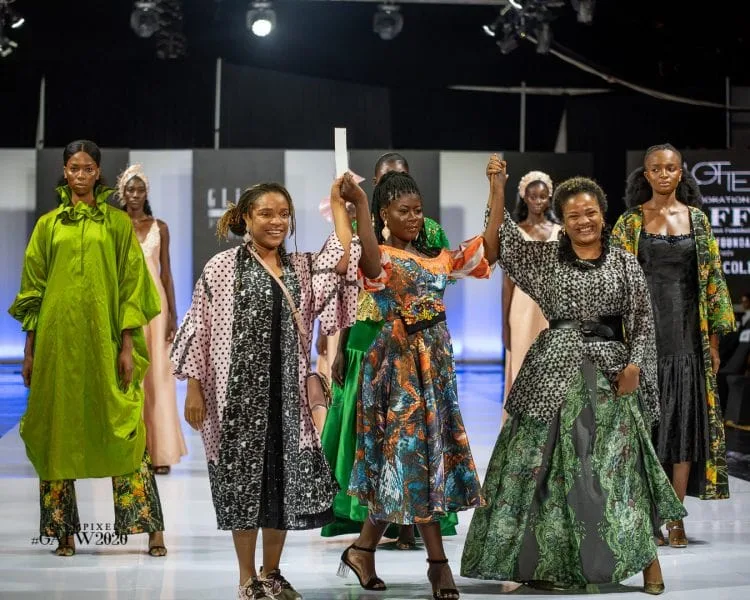
Celebrated Ghanaian fashion brand, Selina Beb, has launched its new collection on the runway of this year’s Glitz Africa Fashion Week, which was held at the Grand Arena located within the Accra International Conference Centre on Saturday, November 7, 2020.

The new collection includes a combination of minimalist silhouettes and contemporary styles, featuring colours such as white, black and bold prints.

The collection was in three parts: simple but elegant white dresses inspired by water, which also signifies purity or victory and made by nature; skirts made from silk fabrics and bogolan prints with the motifs in the print inspiring the design, and classic kimonos made from dashiki  a print worn by Africans and African-Americans in the diaspora – signifying black pride, worn over labelled tank tops bearing the phrases “Black Lives Matter, End SARS, and Stop Rape” – highlighting the revolution that these messages have started around the world.

The brand also launched some new accessories in the form of statement neckpieces and earrings made from leather and cowries, which are both from nature sticking to the same theme and inspiration for the clothes, which is; water, nature, African prints and also importantly, the revolution around the world.

Selina Beb is a multiple award-winning brand which specializes in unique accessories and elegant dresses which now also includes a male line – made with the savvy and yet busy man in mind. The line, which features a small collar, slim fits, regular fits, and tailored fits, is comfortable and made from light but quality fabrics. With a crease-resistant, the shirts come in different colours and designs.

The brand caters for custom made designs for both its men and women line. Selina Beb was also listed on Beyoncé’s curated list of prominent black designers.

https://twitter.com/selinabeb/status/1227645166862897153?s=20

Selina Beb Shop

Selina Beb’s flagship store is located in Osu, Accra, behind Photoclub. They can be reached by phone and email at +233 54345900 and available on social media  page @selinabeb.

Content courtesy of Graphic Online & Nairobi fashion hub 

African Fashion Foundation hosts first Kayeyei collaboration showcase

African Fashion Foundation (AFF) in partnership with The Lotte and the Adonai Children’s Development Foundation (ACDF) present the inaugural Kayayei Collaboration Collection at the Glitz Africa Fashion Week 2020.

AFF created this project to empower, equip, and encourage young street females by pairing them up with some great talent in the fashion accessory and garment industry in West Africa for a skills exchange program.

With the support of the ACDF in finding and nurturing those that needed support especially during this global COVID-19 pandemic, the aim was to present a collaborative new collection alongside Accra’s infamous concept store – The Lotte. The young street women and porters (Kayayei) were working in the designers’ studios and trained in key sewing and production skills all whilst contributing to a collection that will be showcased internationally.

This project is a social impact venture to empower the Kayayei woman and show a way that fashion can be used for good. This inaugural collection will kickstart an ongoing partnership with The Adonai Children Development Foundation and the Kayayei women to equip them with key skills and reintegrate them back into the community.

The pilot project was done with Ophelia Crosslands and Velma’s Millinery & Accessories who kindly took on Gifty Alazoe (a young kayayei, mother of 1) and trained her in beading and basic sewing and millinery skills. She was able to use these skills to contribute to the limited edition Kayayei collection that was created. The final collections will be made available for purchase exclusively at The Lotte retail space.

The showcase at the Glitz Africa Fashion Week 2020 was evidence of a successful project and AFF will be providing ongoing support for the participating kayayei women as well working on making this a continuous, scalable, and sustainable initiative. Gifty Alazoe will be continuing her AFF sponsored internship with Velma’s Millinery & Accessories for another year.

Content courtesy of Ghana Web & Nairobi fashion hub 

Bombchel, A West African Clothing Store, Employs Refugees Living In Atlanta

The phrase “ethical fashion” covers a range of issues such as working conditions, exploitation, the environment and animal welfare.

Bombchel, an ethical fashion brand offering contemporary West African clothing and merchandise made in Liberia, has opened its first shop in the United States. The store opened in October and is located in Ponce City Market.

Archel Bernard is the owner and founder of Bombchel (both the factory in Liberia and the store in Atlanta). She joined “City Lights” host Lois Reitzes to talk about her factory, which employs women affected by the Ebola crisis, and the store, which employs refugees residing in Atlanta.

Interview Highlights

Why she moved to Liberia after graduating from Georgia Tech:

“My family is Liberian refugees. My mother and father grew up there and left because of the war, and my grandfather stayed in Liberia for a long time. For me, when I graduated, I wanted to connect with home. In so many ways, I feel like I went back to hopefully see him, even though he had passed. So as I build my business, sometimes I have conversations with him in my head like, ‘Would he be proud of the way I’m doing things?’ Liberia was once such a shining example of an independent African republic, and now we’re consistently the poorest. I know that we as a people are stronger and better than what we may seem to be right now, and I wanted to be a part of that story.”

Why she employs an all-female staff of Ebola survivors in Liberia:

“When the Ebola crisis started to slow down, I returned to Liberia. I opened the Bombchel Factory in 2016 so that I could hire and train women from backgrounds of poverty who wanted to work in fashion, but maybe didn’t feel like they could … similar to me because we were in Liberia. For me, I’m so sincerely proud to be a Liberian woman, and I wanted to bring other women that look like me into this fashion space. I felt like it was the way I could do my part.”

The garments and fashion offered at Bombchel:

“I think every woman should be able to wear this African clothing, but she should be so comfortable. We don’t do any zippers, just a lot of elastic, a lot of wraps and ties, so that things can fit a bunch of different body types in a way that is flattering to you. I feel like we’ve really reimagined the way people can wear African clothing, so you can wear it casually in your home or step out for the night. We just really try to fit a whole bunch of different lifestyles, ethnicities, skin tones and body types.”

Her mission for giving back to the Atlanta refugee community:

“I’m a refugee, and I think when people look at me, they don’t see it. I’m hiding in plain sight, and as I sit in the background and hear conversations around me about what refugees are, and where they should be allowed to go, and how they should be allowed to get there, I think about what my family was able to offer me because they sought a better life. I want us to normalize working around refugees, shopping with immigrants, people of color. I feel like we don’t really know everybody’s background, and I think the more we know, the more we can

Bombchel is located on the second floor of the Central Food Hall, next to Cobbler Union.

Content courtesy of WABE & Nairobi fashion hub  

Whitney Madueke Re-envisions Traditional Nigerian Fabrics for a New Generation

Growing up, Whitney Madueke watched on the sidelines as her parents got dressed up for Nigerian weddings and parties. “My dad would play pretty background music and you knew he was getting ready to go out,” she says, laughing. “I was mesmerized at how my parents would pair their traditional Nigerian attire with modern pieces from the Western world tradition, mixed with, like, a pair of Gucci sunglasses,” she quips.

https://www.instagram.com/p/CGxyTb_FLxn/?utm_source=ig_embed

As a student in England, Madueke realized that her own cultural encounters started influencing her fashion choices in the same way as her father a mix of trendy and time-honored pieces. “I started mixing Nigerian pieces like a Buba blouse, a top with long loose style sleeves, with a pair of jeans.

https://www.instagram.com/p/CBL3ax6HI2z/?utm_source=ig_embed

Or I’d find myself mixing traditional silk fabrics with more modern materials,” she says. Drawing on her African background and her love of fashion, Madueke, 26, set out to launch her own eponymous fashion line, which went live on her website and on Instagram in June. Currently living in New York, Madueke frequently travels back to London to visit her siblings and spends winters with her parents in Nigeria, where her line is based.

https://www.instagram.com/p/CG8FTUDFEi6/?utm_source=ig_embed

Here, we chat with Madueke about her own style, her clothing line, and her favorite designers to shop now.

https://www.instagram.com/p/CEzoNONlN6S/?utm_source=ig_embed

Marie Claire: How did you get your start in fashion?

Whitney Madueke: Since I was little, I’ve had an interest in fashion and fashion design. I wanted to study fashion in college, but I figured my parents would say no to that, so I went to college in England to study law. I needed a creative outlet there, so I started a fashion and beauty YouTube channel and an Instagram but I wasn’t really happy with law. I was like, What is my life? What’s my next step? I needed to do something that would make me happy, so I decided to move to New York to study fashion design at Parsons in their Associate’s Degrees for Professionals program. Last year, I started working on the launch of my clothing brand, Whitney Madueke.

MC: What was the inspiration behind your new fashion line?

WM: Nigerian fashion represents the people, but it also tells the story of the country and its surrounding nature. I wanted my clothing line to tell more African stories and to expand on who I am as a Nigerian and African woman in the fabrics, the silhouettes, and the vibrant colors.

MC: Tell us about Lagos Fashion Week.

WM: Just like New York, Lagos fashion week is a great way for the fashion community to connect with one another. Designers tell stories through their collections using traditional Nigerian fabrics like Adire fabrics, Kente and Akwete cloths. As a Nigerian fashion designer, I love celebrating a diverse group of designers telling the story of home. Lagos Fashion Week was scheduled for late October this year, but in light of the #EndSARS protests [centered around police brutality in Nigeria], the event has been postponed.

MC: How do you get dressed in the morning?

WM: It depends on how I feel that day, but I tend to gravitate towards bright colors, especially vibrant, primary colors that stand out in a room. I also love versatility I’m always looking for great basics that I can pair in numerous different ways.

MC: Who are some of your favorite designers right now?

WM: Social media has made it so much more accessible for global designers to have a voice, and I’m able to actively find and support more African designers. Two of my favorites are Abiola Olusola and Onalaja. Both are Black women designers that embody timeless fashion. Their pieces are crafted from African textiles and include intricate beading techniques.

Written By Marie Claire

Content courtesy of Marie Daire & Nairobi fashion hub 

Full List of winners at Couture Africa Style Awards 2020

The Gala for the 2020 Couture Africa Style Awards went down over the weekend and Citizen TV Swahili news anchor Lulu Hassan was crowned the Most Stylish TV and Radio Personality of the Year.

Actress Catherine Kamau popularly known as Kate Actress took home two Awards; Most Stylish Person of the Year (Female) and Most stylish entertainer of the year.

Mombasa Governor Ali Hassan Joho won the award for the most stylish Male Public Servant, as Comedian Eric Omondi got recognized for being the most stylish male content creator.

https://www.instagram.com/p/CHDIOtNJc8O/?utm_source=ig_embed

Full List of Winners 
Most Stylish Entertainer (Famale)

Akothee
Fena Gitu
Catherine Kamau – Winner 
Brenda Wairimu
Teacher Wanjiku
Muthoni Drummer Queen

Most Stylish Content Creator (Famale)

Joy Kendi
Maureen Waititu – Winner 
Maxine Wambosha
Farhana Oberson
Nyawira Mumenya
Fashionable Stepmum

Most Stylish Content Creator (Male)
Chef Ali Mandhri
Vinnie O
Eric Omondi – Winner 
Muriuki Kagiri
Eli Mwenda
Mulanda Kombo

Most Stylish Sports People (Famale)

Emily Muteti
Evelyn Okinyi
Sabrina Simadar
Hellen Obiri
Naomi Wafula
Janet Wanja – Winner 

Most Stylish Sports People (Male)

David Rudisha
Billie Odhiambo
Eliud Kipchoge – Winner 
Ronald Okoth
MacDonald Mariga
George Manangoi

Most Stylish Public servant (Famale)

Nadia Ahmed
Judge Mumbi Ngugi
Hon. Gladys Shollei
Achie Ojany Alai
Hon. Naisula Lesuuda
Hon. Amina Mohamed – Winner 

Most Stylish Public servant (Male)

Hon. Ababu Namwamba
Sen. Joshnson Sakaja
Gov. Hassan Joho – Winner
Hon. Otiende Omollo
Hon. Abdulswamad Shariff
Hon. Najib Balala

Most Stylish Person of the year (Famale)

Julie Gichuru
Catherine Kamau – Winner 
Sylvia Mulinge
Hon. Joyce Lay
Diana Opoti
Sonal Maherali

Most Stylish Person of the year (Male)

Sir. Charles Njonjo
Zeddie Loky
James Maina
Martin Keino
Vinnie O
King Kaka – Winner 

Most Stylish Entrepreneur (Famale)

Michelle Ntalami – Winner 
Carol Kinoti
Rita Muchiri
Dr. Jennifer Riria
Jennifer Barasa

Most Stylish Corporate (Famale)

Rabecca Miano
Carol Ndungu – Winner 
Beth Muthui
Brenda Mbathi
Sheila M’Mbijiwe
Dr. Betty Radier

Most Stylish Corporate (Male)

Kris Senanu – Winner 
Joshua Oigara
Captain Ronald Karauri
Jimi Kariuki
Geoffrey Odundo
Dr. David Wachira

Most Stylish TV and Radio Personality (Female)

Amina Abdi
Beatrice Marshall
Jane Ngoiri
Lulu Hassan – Winner
Talia Oyando
Tracy Wanjiru

Most Stylish TV and Radio Personality (Male)

Jamal Gadafi
James Samart
Mc Jessy – Winner 
Michael Gitonga
Miano Muchiri
Muthee Kiengei

The People’s Choice Award (Female)

Ms Fawwie
Christine Obiero – Winner
Lynne Wangui

The People’s Choice Award (Male)

Kiptala
Amar Jonathan
Mike Mwaura – Winner

Congratulation to all winners 

Content courtesy  of Couture Africa Limited & Nairobi fashion hub

Ad