Wednesday 6th of May 2026

Nairobi, Kenya

Entrepreneur Fashion Week Joins Forces With Kitoko Makeup To Host The 2022 Fashion Week, Which Will Be Sponsored By Safaricom Plc.

Under the support of Safaricom PLC and the UK-based Makeup firm Kitoko Makeup, the Entrepreneur Fashion Week 2022 (e fashionweek) took place on the 4th and 5th of March. The event featured magnificent Spring/Summer collections from East African designers with the theme Beaute de Lamore (Beauty of Love).

The event was split into three parts, each of which took place on separate days. A press conference and toastmaster were held on March 4 at the Baraza Media Lab in Westland, Nairobi, before the main event.
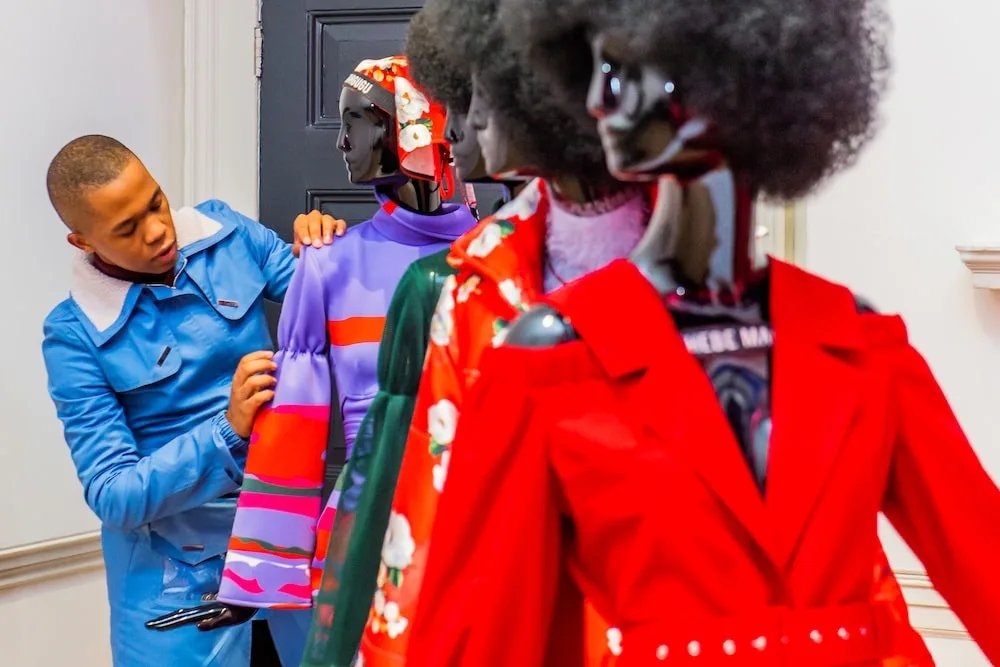
At a Red-Carpet event held at the Kenya Comfort Suites in Kilimani, Nairobi, on March 5, designers from East Africa displayed their designs.

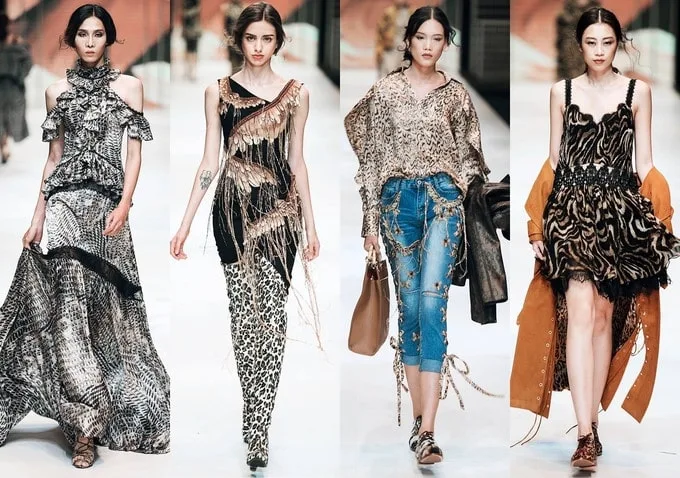
Designers displayed collections that were in line with the season’s theme, including stunning gowns, suits, dinner dresses, and African wear designs.
The Toast Master, the final element, will take place on May 27, 2022, at the Baraza Media Lab in Westland, Nairobi.

The Toast Master is gearing up for another round of training for small businesses and rising stars in the industry, this time focusing on the role of media in the following three key sectors:

Fashion Design
Fashion business, fashion PR, and fashion craft, as well as how fashion designers can use media to grow their businesses.

Beauty
Profiling some of the game-changing tactics and ideas from major individuals whose work has been featured on Netflix’s best-selling shows, as well as prominent celebrities and other Hollywood shows.

Business Expansion & Upscaling
Deep insights into how the industry’s enterprises may scale up by embracing disruptive ideas that make conducting business easier.
Delegates interested in participating in the Business Toast Master can register Online Here  or by scanning the QR Code on the poster in advance.

About E FashionWeek
One of Africa’s most important fashion events is Entrepreneur Fashion Week. The show features some of the world’s most accomplished fashion designers.
Since its inception four years ago, the event has grown to include brands that have been featured in British Vogue, Tatler, Essence, and the Face Magazine, as well as other brands that have collaborated with celebrities such as Rihanna, NFL stars, Jidenna, and Carla Hall of ABC’s “The Chew,” to name a few.

A fashion reality TV show on BET Africa, produced in collaboration with Made in Africa, is now in its second season. Designers that participate in Entrepreneur Fashion Week have a good chance of being chosen for the next season.

Content courtesy of Entrepreneur Fashion Week & NFH

Fashion for Conservation: Meet Sarah Vigne Founder Of Rock and Stones Ltd

Describe yourself (Who is Sarah Vigne) and your fashion brand in a few words.

Sarah is a natural entrepreneur with a wealth of experience in the development of sustainable enterprises that may provide revenue for wildlife conservation organizations.
Sarah founded the ethical fashion label Rock and Stones, and while working for the Ol Pejeta Conservancy in Kenya (www.olpejetaconservancy.org) for eight years, she developed a number of new revenue streams centered on retail, “voluntourism,” and “value adds,” resulting in increased visitor engagement (“immersive tourism”) and significantly increased financial resources for conservation.

Oscar Alochi: Can you describe Rock and Stones, the concept and idea as if I had never heard of it or the market in which it exists?

Sarah Vigne: ROCK AND STONES was founded in 2009, inspired by the vibrant contemporary fabrics made across the African continent, which represent the intriguing history of the Swahili trading empire and its ties to West Africa, India, Arabia, Europe, and the Americas in their designs.

Kitenge and Kanga are two of our favorite fabrics. These popular clothes include vivid designs in brilliant colors, as well as a Swahili inscription in the case of the Kanga. The abundance and variety of designs on these fabrics are amazing, ranging from post-modern abstractions to conventional paisleys and depicting subjects as varied as political and religious leaders, architecture, cuisine, animals, plants, plumbing, forms of transportation, and complicated patterns. Proverbs, aphorisms, insults, and blessings are among the Swahili inscriptions on the Kanga.

Kanga and Kitenge are wrap garments worn in Kenya, Tanzania, Uganda, Sudan, Mozambique, the Congo, and everywhere where Swahili is spoken. The Kanga, which is as popular as a t-shirt in the United States but has a far greater cultural value, is still evolving. It is a valuable medium for personal political, social, and religious expression, similar to the T-shirt but incomparably more exquisite and functional.

The Kanga has become an intrinsic element of East African culture as both an art form and beautiful, practical clothing.
‘The Kanga struts in style… Wear it with a smile,’ as the slogan goes.

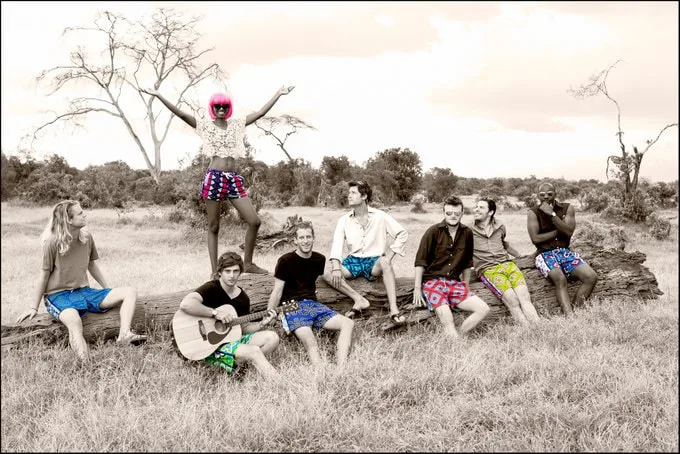
Rock & Stones is based in Kenya, and we specialize in bringing the depth of African culture to our tailoring workshop, where we transform our carefully picked African Kanga and Kitenge fabrics into a collection of ready-to-wear garments for all ages and sizes.

Specializing in beachwear, festival clothing, and casual wear…

Our firm supports the local communities that make our clothes with such care, and we aim to open our own training workshop soon to provide a life skill to both boys and girls, men and women, who want to work with Rock & Stones to find a market.

OA: What were you doing before Rock and Stones, and what motivated you to start the business?

SV: The prospects that Africa offers inspire me. It’s such a bright and colorful place, with skilled and talented people that only need a helping hand to progress economically. I’ve worked in tourism, horticulture, and as an investment banker before that.

OA: What techniques do you use? Tell us about the process.

SV: We are primarily a tailoring business that produces shorts and other clothing items from vibrant African textiles of the greatest quality and grade.

OA: How did you learn/master this technique and why do you use it?

SV: I can’t sew to save my life, but I know some amazing tailors who can, and it is up to them to manufacture our products.
However, I have mastered the art of quality control inspection!

OA: What challenges did you face?

SV: Keeping the company afloat during COVID was a problem, but we managed to do so and keep everyone working, despite the fact that I stopped paying myself.
We are still recovering, but we believe we have passed the worst of it.

OA: How did the obstacles make you feel?

SV: We were successful once we got through them. I’ve discovered that one of the most crucial life skills is learning to be comfortable with being uncomfortable.

OA: What were your achievements?

SV: We have a company that makes roughly Kshs 25 million each year and is growing.
That in its own right is an achievement I think.

OA: Favorite moments?

SV: After a long day at work, relaxing with a glass of wine in the evenings

OA: How do you get dressed in the morning?

SV: I go through a lot of various outfits before deciding on my final one, which irritates my husband.

OA: What’s your take on the Kenya fashion industry?

SV: Potential, potential, potential!

OA: How different is the UK fashion industry compared to the Kenya fashion industry?

SV: Of course, the fashion sector in the United Kingdom is far more competitive, and standards are normally higher, but that in its own right provides us in Africa with a great opportunity.

OA: Any future collaboration with Kenyan fashion designers?

SV: We’re always looking for opportunities to work and partner, but there’s nothing substantial on the horizon right now.

OA: If you were given the opportunity to work with a local or international fashion designer who will you love to work with?

SV: Anya Hindmarch

OA: What are your thoughts on fashion in Africa?

SV: We have a long way to go, but we have a lot of potentials, as previously stated.

OA: What has changed during this period of Covid-19

SV: The local markets took a beating, but we’re starting to bounce back now… However, there is still a long way to go.

OA: How has your fashion brand adopted the new technology of virtual fashion shows during and after the Coronavirus pandemic?

SV: We’re much more online now, and that’s where we see ourselves going in the future.

OA: How are African fashion designers influencing fashion in the western world?

SV: Increasingly – we have a place, we are bright and colorful, and we are the new big thing

OA: What can the African fashion industry learn from the western world?

SV: Efficiency, prompt delivery – on time, in the appropriate quality, at the right location

OA: Over the last few years have you noticed any significant changes in the African fashion trends?

SV: Yes, they are increasingly influenced by western trends, which is both good and terrible. Even as we modernize and progress, we must remain true to our roots.

OA: When dealing with Africa is it important for the fashion world to be ethical and socially responsible, and put in place strong corporate social responsibility governance?

SV: Of course, we have a strong ethical attitude at Rock and Stones.
We donate a portion of our profits to charity and do everything we can to keep people employed and engaged.

OA: Tell us about UK Fashion Week.

SV: Don’t really know too much about it – we are an African brand!

OA: Where can we find your designs?

SV: www.rockandstones.com

We also have a number of locations in Nairobi, as well as our own shop in Nanyuki’s Dromans complex.

OA: What does eCommerce mean to you and your business?

SV: We consider that as critical to our company’s future success.

OA: Do you think eCommerce is important for African fashion designers that are trying to get recognized and reach a global market?

SV: Yes, it’s crucial, but you should also invest in marketing and social media. You may generate traffic to your eCommerce site by building a digital following.
You’re dead in the water if you don’t have this.

OA: How does your strategy change when running an online store to an offline store?

SV: As previously said, digital marketing and social media are critical.

OA: Where do you see African fashion in the next 5 to 10 years?

SV: Growth – and perhaps, we’ll be able to start breaking into high-value Western markets on a large scale.

OA: What 5 pieces of advice would you give to young African fashion designers wanting to enter the fashion industry?

SV: 

  • Stay true to your roots – Africa is the next big thing
  • Work hard and persist – things don’t happen overnight
  • Ecommerce is the future – meaning that digital marketing is key
  • Wear your own fashion with pride
  • Continuously survey global trends – what do people wear and what do they want

OA: Is there anything else you would like to add?

SV: Go for it!!!

Content courtesy of Sarah Vigne, Rock and Stones & NFH 
Fashion That Benefits People, The Environment, And Wildlife In Africa’s Urban Ranch Kenya

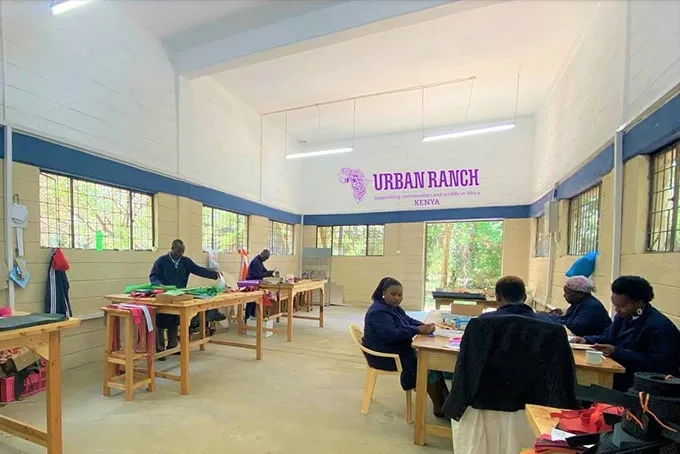
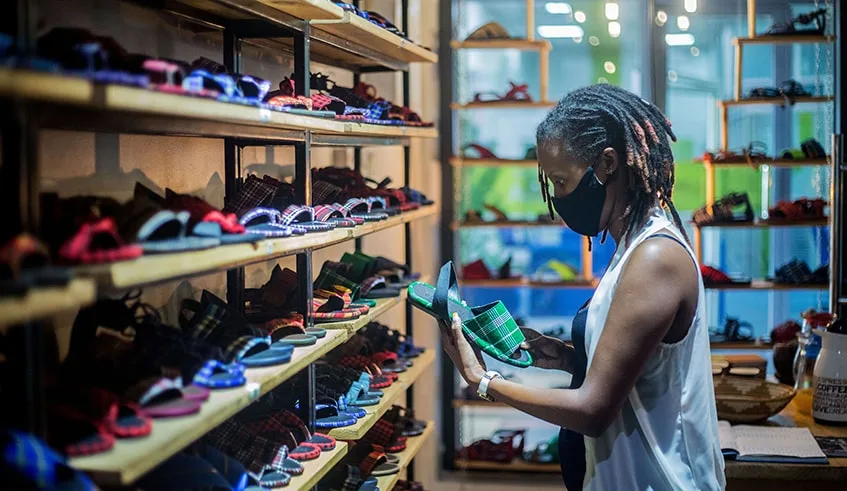
Urban Ranch Kenya was established in 2021 with the goal of revamping Kenya’s leather supply sector by sourcing cow skins from conservancies where livestock and wildlife may coexist. By only purchasing our leather from these conservancies, we help wildlife conservation in Kenya even before any of our products are manufactured!

Urban Ranch not only uses finest Kenyan leather, but we also produce innovative color combinations for our products, keeping us current with worldwide trends and fashion.

However, the narrative does not finish there! When our leather products are sold, we donate 5% of the proceeds to Lion Landscapes, a Kenyan nonprofit dedicated to lion conservation. Our donations go toward ensuring that Kenya’s lion populations have adequate safe habitat to thrive.
Our products are not only amazing, but they are also “lion friendly” in every respect.

Many of our leather goods are embellished with stunning beadwork stitched by Kenyan ladies from community groups in rural Kenya. We send them our products to bead, and they add an extra sparkle to many of our leather items with their remarkable skill and our high-quality beads.

Urban Ranch is assisting in the empowerment of people who would otherwise have no employment opportunities by bringing our distinctly Kenyan products to foreign markets.

Our products may be purchased online (www.urbanranch.co.uk) and in our Nanyuki flagship store (www.urbranranchkenya.com) (next to Dormans coffee shop).

Content courtesy of Urban Ranch Kenya & NHF

Rock and Stones, a Handmade in Africa Collection for Conservation

Rock and Stones Ltd was founded in 2009, inspired by the vibrant contemporary fabrics made across the African continent, which represent the intriguing history of the Swahili trading empire and its ties to West Africa, India, Arabia, Europe, and the Americas in their designs.
Kanga is our favorite cloth, This popular fabric features bold designs in vibrant colors, as well as a Swahili inscription on the Kanga.

The fabrics’ designs range from post-modern abstractions to conventional paisleys, and show subjects as diverse as political and religious figures, architecture, cuisine, animals, plants, plumbing, forms of transportation, and complicated patterns, Proverbs, aphorisms, insults, and blessings are among the Swahili inscriptions found on the Kanga.

Wherever Swahili is spoken, such as Kenya, Tanzania, Uganda, Sudan, Mozambique, the Congo, and elsewhere, Kanga and Kitenge are worn as garments to wrap around oneself.

The Kanga, which is as popular as a t-shirt in the United States but has a far greater cultural value, is still evolving. It is a valuable medium for personal political, social, and religious expression, similar to the T-shirt but incomparably more exquisite and functional.

The Kanga has become an intrinsic element of East African culture as both an art form and a beautiful, practical clothing.

Our firm supports the local communities that make our garments with such care, and we plan to open our own training workshop soon to teach life skills and market access to men and women who want to work with Rock & Stones.

Content courtesy of Rock and Stones Ltd  & NFH

The Fashion Sector Could Benefit From Collaboration With African Markets.

VIETNAM, 18 APRIL – In the northern province of Hng Yên, a production line at Tiên Hng Garment and Textile JSC. The trading relationship between Vietnam and Africa, particularly in the fashion industry, has not been commensurate with its potential. Phm Kiên, VNA/VNS photographer

HÀ NỘI Despite recent significant expansion, the economic relationship between Vietnam and Africa has not kept pace with its prospects, particularly in the fashion industry, according to Lê Hoàng Tài, deputy director of the Vietnam Trade Promotion Agency (Vietrade).

He saw that few African firms and consumers were aware of Vietnamese fashion.

Last week, the agency organized the 2022 Viet Nam – Africa business matching webinar on fashion products in collaboration with Vietnamese trade offices in African countries.

This was an activity to enable Vietnamese firms in the manufacture and trade of fashion products to promote advertising, seek partners, connect business possibilities, and export to African markets as part of the National Program on Trade Promotion this year.

A total of 50 Vietnamese and African fashion manufacturers and traders attended the event.

The volume of trade between Vietnam and Africa increased dramatically last year. As a result, Vietnam’s exports to Africa were $3.36 billion in 2018, rising 18.1% from 2020.

Exports from Africa to Vietnam totaled $4.71 billion in 2018, up 28.6% from 2020.

“Demand for goods, notably fashion consumer goods, is expanding in Africa,” Tài added, “but few firms and customers are aware of Vietnamese variety fashion products.”

Meanwhile, Vietnam’s textile, garment, and footwear manufacturing industries were well-developed, able to meet many large orders with strong demand from numerous countries throughout the world, but supply for the African market was limited, according to Tài.

Nguyn Th Tuyt Mai, deputy general secretary of the Vietnam Textile and Apparel Association (Vitas), said that Africa’s economy had grown rapidly in recent years, leading to an increase in demand. With 55 countries and a population of more than 1.2 billion people, Africa’s economy had grown rapidly in recent years, leading to an increase in demand.

At the moment, 43 of Africa’s 55 countries have joined the WTO. Non-tariff barriers had been steadily dismantled, and import duties had been cut in these countries.

Mai emphasized the prospects for African entrepreneurs to invest in Vietnam, saying that the country had adopted the COVID-19 policy and had signed numerous FTAs.

We aim to encourage African businesses to invest in Vietnam because of its strengths. We wish to encourage investment in one of the most important areas: fabric manufacture. Currently, Vietnam imports a lot of fabric from China, but it is increasingly moving toward localization in order to take advantage of FTAs’ laws of origin. “We urge green and clean investment in the fabric manufacturing sector, based on renewable energy and the circular economy,” Mai stated.

According to Mai, the African market has a lot of potential, and there is still enough of opportunity for Vietnamese businesses.

Because of Vietnam’s advantages, we want to encourage African businesses to invest there. We want to promote investment in one of the most vital sectors: fabric production. Vietnam now imports a lot of fabric from China, but it is progressively pushing toward localization in order to take advantage of the origin laws established by FTAs. “We advocate for green and clean investment in the fabric manufacturing sector, which is based on renewable energy and the circular economy,” Mai said.

According to Mai, the African market has a lot of potential, and Vietnamese enterprises still have a lot of room to grow.

Content courtesy EIN New wires & NFH

Forever254 A New Fashion Boutique Has Opened In Kenya, Offering Original Brand Clothing At Reasonable Pricing.

Kenyans are frequently seen wearing secondhand clothing, also known as mitumba attire, which is generally purchased from street vendors and informal retailers.
Because of its affordability, accessibility, and capacity to provide jobs for people of all economic levels, used clothing remains the most popular source of clothes in Kenya’s local fashion scene.

According to the Institute of Economic Affairs, China, which is known for being a global top producer of counterfeit products, would be Kenya’s largest source of secondhand clothing and footwear by 2020.
This has resulted in significant losses for the local fashion sector, hurting not just real garment producers, but also consumers who purchase low-quality goods that are not long-lasting and wind up costing them more in the long run.

In Kenya, a new fashion boutique has opened that sells authentic brand apparel at subsidized pricing.

The apparel store Forever254 was formed on this idea, It is the first of its kind to bring in original brand clothing at subsidized pricing, and it hopes to pave the way for other businesses to follow suit.
The store sells a selection of fashionable and stylish pieces from different globally known brands, making them easily accessible to Kenyans at moderate costs, in an effort to relieve Kenyans of the burden of flying abroad in order to be guaranteed authentic high quality clothes.

“We bring in apparel from original companies like Zara, Boho, H&M, MANGO, St. Oliver, and others and sell them at heavily discounted costs,” stated the store’s Managing Director, Giorgos Zisimatos.

The store opens at a good time for Kenya’s middle class, which is increasing as a result of increased disposable income, improved awareness of global retail trends, and altering tastes and preferences.
As the middle class opts for more authentic and worldwide branded apparel and shifts toward formal merchants, this has resulted in a need for more from the local shopping scene, in terms of both goods and services.

“Much of the clothes we provide is sold at a discount of roughly 30% off the original price. The same top quality, but at a significantly lesser price. This, we believe, provides a terrific alternative to buying counterfeit, low-cost clothes, which ultimately costs consumers more in the long run,” he added.

Africans are often devoted consumers, according to the Africa Growth Initiative. This can be observed in the store’s cautious but steady expansion since its inception three years ago, with two locations at the Waterfront and Sarit Centre.

“Our goal is to grow even further and make authentic clothes the go-to source for Kenyans in terms of clothing and footwear.” We want you to be able to dress well without going broke.”

The store is also involved in CSR and has worked with the St. Jerome Centre in Nakuru, which rescues, supports, rehabilitates, and provides a home for orphaned and abandoned children.

Molestation, desertion, violence, incapable parents, and other forms of abuse and disadvantage are all avoided at this school for children.

“During the Easter season, a portion of every purchase made at the business will be donated to the children,” he says.

Content courtesy of Forever254 Clothing Store & NFH

The Tommy Hilfiger Fashion Frontier Challenge Is A Competition For Innovative Fashion Startups That Will Take Place In 2022.

Tommy Hilfiger is pleased to announce that applications for the fourth edition of the Tommy Hilfiger Fashion Frontier Challenge are now open. Tommy Hilfiger is owned by PVH Corp, NYSE: PVH. The global program echoes Tommy Hilfiger’s sustainability vision of “Waste Nothing, Welcome All,” by amplifying and supporting new voices in social entrepreneurship who are shaping scalable and disruptive innovations to create a more inclusive future of fashion.

Individuals from historically underrepresented communities, such as Black, Indigenous, People of Color (BIPOC), people with disabilities, and women, are strongly encouraged to apply this year, in line with Tommy Hilfiger’s commitments to inclusion, diversity, and acknowledging the gap in equity and equal opportunities. Applications must be submitted online by April 29, 2022.

“The Tommy Hilfiger Fashion Frontier Challenge,” said Tommy Hilfiger, “aims to bring together entrepreneurs from all walks of life, investing knowledge and resources to unlock the unique power of their innovations.” “As a business owner, I’ve always wanted to create a global lifestyle brand that is inclusive of all people, a philosophy that I’ve carried with me throughout this challenge.” I am convinced that by working together, we can create a more meaningful and long-lasting future.”

The winners will receive the following prizes to help support their business idea:

  • A total prize pool of €200,000 will be split between two winners.
  • An extra €15,000 for winning the “Audience Favorite Vote”
  • A one-year mentorship with Tommy Hilfiger’s global internal experts
  • An INSEAD mentorship and course for a year

Fans of Tommy Hilfiger are invited to participate as Digital Judges in the first phase of the challenge. They’ll assist the company in whittling down all applications to the top 50. Interested applicants can apply online until April 20, 2022.

Through an internal process, the top 50 applicants will be whittled down to six finalists. Before the final event, each finalist will be invited to further develop their business plan with the help of dedicated Tommy Hilfiger and external experts. Each finalist will then present their concept to a jury panel and internal Tommy Hilfiger associate audience at the global Tommy Hilfiger Fashion Frontier Challenge final event in early 2023, after receiving training from an experienced pitch coach.


“At Tommy Hilfiger, we want to work with communities to drive long-term change through innovation, inclusivity, and diversity,” said Martijn Hagman, CEO of Tommy Hilfiger Global and PVH Europe. “As the fourth Tommy Hilfiger Fashion Frontier Challenge gets underway,

We’re excited to see what new ideas emerge that will benefit communities and help shape the fashion industry’s future.”

Since its inception in 2018, the Tommy Hilfiger Fashion Frontier Challenge has given out €550,000 to help global entrepreneurs bring their innovative ideas to life so that they can make a real difference in their communities. Lalaland, a platform based in the Netherlands that uses artificial intelligence to create customized and inclusive synthetic models of various ethnicities, and UZURI K&Y, a Rwandan eco-friendly shoe brand that employs local youth and uses recycled car tires from Sub-Saharan Africa, are among the winners of the third edition.

The Audience Favorite award went to Clothes to Good, a South African social enterprise that uses textile recycling to create micro-business opportunities and jobs for people with disabilities. On Tommy Hilfiger’s sustainability journey, which is powered by PVH’s Forward Fashion strategy, more information can be found.

Here’s where you can find out more about the Tommy Hilfiger Fashion Frontier Challenge, including how to apply:

Definitions:
Start-up: Your company is still in its infancy, with no product-market fit, customer segmentation experiments, or an overall positive contribution margin in sight. Your business has made some money.

Scale-up:
Your company has a validated product with good product-market fit, predictable and long-term unit economics (outlook), and is growing. Your business has been profitable for at least a year.

How do I submit my application?
Please submit your application and learn more about the program here.
Please note that applications for Year 4 will be accepted from March 14th to April 29th, 2022.

What happens now that I’ve submitted my application?
– If you’ve been chosen for the second round of the Tommy Hilfiger Fashion Frontier Challenge, we’ll let you know by June 2022.

– If you’re chosen, you’ll be asked to provide more information about your company, including a one-minute pitch video. Please note that all applications must be submitted in English, and finalists will be required to give a pitch in English.

– In October/November 2022, a team of dedicated internal Tommy Hilfiger associates and external subject-matter experts will work with six finalists to further develop their business/project plans during a digital Design Sprint with the help of a team of dedicated internal Tommy Hilfiger associates and external subject-matter experts.

– Finalists will then present their finalized concept at the global Tommy Hilfiger Fashion Frontier Challenge final event in early 2023, with the opportunity to win the prize package listed above.
Please read the terms and conditions carefully before applying, and if you have any questions, please contact us at challenge@tommy.com.

https://twitter.com/uzuriky/status/1404391171141640195?s=20&t=RHKfyvs_m1KdJbt0DEgb7g

About Tommy Hilfiger

Since 1985, TOMMY HILFIGER has been uplifting and inspiring consumers as one of the world’s most well-known premium lifestyle brands. The brand boldly mixes prep style and Americana heritage with fresh perspectives drawn from pop culture to design memorable products and collections, fusing the classic with the new to light up what’s next.

TOMMY HILFIGER captures the playful alchemy needed to drive innovative and immersive consumer experiences under Mr. Hilfiger’s vision. The brand’s vision is to Waste Nothing and Welcome All, a firm commitment to sustainability, inclusivity, diversity, and circularity that motivates teams to improve the fashion industry.

In 2020, global TOMMY HILFIGER retail sales were nearly $7 billion. The TOMMY HILFIGER and TOMMY JEANS lifestyles include men’s, women’s, and children’s clothing, footwear and accessories, close-to-body clothing, and a variety of license product lines such as eyewear, watches, and fragrance.

The Tommy Hilfiger Group, which is owned by PVH Corp., employs over 16,000 people worldwide and has a distribution network spanning 100 countries and 2,000 retail locations, including its largest global flagship store at tommy.com.

About PVH Corp.

PVH Corp. is a company based in the United States,  PVH is one of the world’s most well-known and admired fashion brands, with customers in more than 40 countries.
PVH is one of the world’s most well-known and admired fashion brands, with customers in more than 40 countries. Calvin Klein and TOMMY HILFIGER are two of our most well-known global brands. Our 140-year history is based on the strength of our brands, our people, and our dedication to moving fashion-forward for the better. That is the strength of the human race. PVH has that kind of power.

Contacts
Tommy Hilfiger
Virginia Ritchie
Vice President, Global Communications
E-mail: virginia.ritchie@tommy.com
Tel: +31 6 4318 4870

Content courtesy of Business Wire, Tommy Hilfiger & NFH 


ShowMax: The Real Housewives of Lagos Launch

The Real Housewives of Lagos premieres and quickly becomes a social media sensation.
The Real Housewives of Lagos (RHOLagos) is now available on Showmax, after trending on Twitter for 15 hours straight starting at 5 p.m. on Thursday, in anticipation of its Friday, 8 a.m. premiere (with no sign of dropping down the charts at the time of writing).
“Seeing The Real Housewives of Lagos trend on Twitter confirms what we’ve been thinking all along: that this is going to be a pan-African hit show,” says Candice Fangueiro, Showmax’s head of content.

The most recent installment of the hit reality TV show franchise follows the opulent lives of six of Africa’s most glamorous women: businesswoman Carolyna Hutchings, lawyer and luxury hair brand owner Chioma Ikokwu, Nollywood actress Iyabo Ojo, influencer Laura Ikeji-Kanu, public relations expert Mariam Timmer, and celebrity stylist Toyin Lawani-Adebayo.

They’ll be serving up all the high fashion, luxury, drama, and power moves that the franchise is known and loved for around the world, in true Lagos style.

Last night’s pink carpet South African premiere, hosted by Bonang Matheba at Summerplace in Sandton, Johannesburg, saw South Africa’s biggest stars turn out en masse in their finest. Chioma, Iyabo, Mariam, and Toyin all flew in for the event, which was also attended by Annie Ludick-Mthembu, Jojo Robinson, LaConco, Londie London, and Nonku Williams from The Real Housewives of Durban.

The start of what looks set to be a juicy rivalry between the two shows, with #RHODurban trending at number two on Twitter in South Africa, just behind #RHOLagos, at the time of writing, Twitter had a lot to say about who had the best looks.

The RHOJ premiere follows the RHOLagos premiere, which was hosted by Toke Makinwa and took place at the magnificent The Jewel Aedia in Lekki, Lagos (talk show host on BBNaija: The Buzz and Talk with Toke Makinwa).

RHOLagos will be the first Nigerian installment of the award-winning franchise, which will be distributed worldwide by NBCUniversal Formats, a division of Universal Studio Group’s Universal International Studios.

Following the success of The Real Housewives of Johannesburg and Durban, which are both now streaming on Showmax, this is the 16th international version of The Real Housewives format and the third African adaptation.

RHOLagos will be available on Showmax in Africa, the UK, and other international markets including Andorra, Belgium, Denmark, Finland, France, Germany, Greece, Iceland, Indonesia, Ireland, Italy, Liechtenstein, Luxembourg, Malta, Monaco, the Netherlands, New Zealand, Norway, Portugal, San Marino, Spain, Sweden, and Switzerland.

The Real Housewives of Durban’s penultimate episode aired today, ahead of the show’s finale on Friday, April 15, 2022, and a reunion in early May 2022. The queens rule over Sun City in today’s episodes, but where there’s sun, there’s bound to be shade!

Content courtesy of ShowMax & NFH

Gert-Johan Coetzee Discusses His New Collection, Dressing Lizzo, And Establishing A Shop In The United States.

He’s dressed TV stars, models, beauty queens, influencers, and singers both locally and internationally.
He is the celebrity’s go-to designer. Toke Makinwa, a Nigerian actress, wore his show-stopping gown to the Bridgerton Affair, which made news across the continent.

This year, fashion designer Gert-Johan Coetzee celebrates 12 years in the industry by launching his Autumn/Winter collection, which is a collaboration with Zebra Square Gallery, Chopard’s Hyde Park Corner distributor.

The collection is made up of proudly African masterpieces with a dash of Western culture and his Afrikaans ancestry.
Gert tells Drum that he intended to put a modern spin on African baroque when creating the collection.

“After my previous collection, I wanted to really show off the next level.” I drove you all the way from Cape Town to Limpopo and the rest of our country’s warmer regions. It was inspired by wildlife, nature, and all things exotic, with a modern take on African baroque.

It’s my perspective on Africa. It’s Africa with a twist, and it’s the key to why I’ve been so successful on the world stage.”

Gert claims that he is all about making clothes that people can relate to.
“I can put a twist to the Tsonga skirt (Xhibelane) or a Zulu beaded garment while honoring my Afrikaans ancestry,” he explains.

“It provides a one-of-a-kind aesthetic that hasn’t been done anywhere else in the globe.”

He chose fuller-figured models for his new line, as he did for his prior work with Barbie.

“I am all about body positivity and inclusion, yet we don’t see fuller-figured models on the runway.” I wanted everyone on the planet to be able to imagine themselves walking down the runway. “I believe it is past time to celebrate women and their flaws,” he argues.

“I work with people of all shapes and sizes.” They occasionally express dissatisfaction with their arms, boobs, or other features. However, it is what makes you who you are, and it cannot be replaced.

I’m here to bring out the best in you, to make it shine out, and to make you feel like a fashion icon. “It’s very important for everyone to be seen and represented,” he continues. “The Barbie collection was all about inclusivity, not just body types and sizes, but also diverse religious groups, races, and sexuality.”

Lizzo, a pop sensation and body positivity advocate, wears a Gert-Johan Coetzee designer garment in the new US reality program competition Watch Out for the Big Grrrls. On March 25, the show premiered on Amazon Prime Video, and it follows 13 plus-size women as they try to become Lizzo’s dancers at the Bonnaroo music festival.

“That was a crazy experience,” Gert adds.

“I never imagined dressing Lizzo or Oprah, but I have.” It all began in October of 2021. ‘Would you be willing to do a custom piece for Lizzo?’ I received a message from Lizzo’s team requesting for a custom gown.
‘You’re asking if I’m willing to breathe,’ I reasoned. Of course, I’d like to. We started working with her stylist, Jason Rembert, and he was fantastic, and we came up with the ideal color. Her outfit was going to be orange at first, but we altered it to blue after a long but lovely process.”

One of the most difficult things Gert has had to do was keep quiet about the outfit and not share the good news.

It’s surreal for him to see his aspirations come true, he says.

“I’ve always wanted to be a designer that dresses people all around the world, and seeing that happen every day is a dream come true.”

After contacting her stylist Kollin Carter, who saw his work at the 2020 Kraal Couture presentation, he dressed rapper Cardi B in a beaded gown and corset for her husband Offset’s birthday celebration in Atlanta.

The complete gown took a week to make, and the beaded skirt was totally done by hand.

It’s surreal for him to see his aspirations come true, he says.

“I’ve always wanted to be a designer that dresses people all around the world, and seeing that happen every day is a dream come true.”

After contacting her stylist Kollin Carter, who saw his work at the 2020 Kraal Couture presentation, he dressed rapper Cardi B in a beaded gown and corset for her husband Offset’s birthday celebration in Atlanta.

The complete gown took a week to make, and the beaded skirt was totally done by hand.

Gert has dressed famous women like as Oprah Winfrey and Laura Govan for the Global Citizen event in 2018. Shudufadzo Musida, Bonang Matheba, Zozi Tunzi, Lerato Kganyago, Zodwa Mkandla, Minnie Dlamini, Nadia Nakai, and most recently Toke Makinwa, who walked the red carpet at the Bridgerton Affair in a green ball gown fit for royalty, are among his clients.

“I enjoy working with Nadia Nakai because she is always willing to try new things.
I adore all of the ladies because they are all so unique. Toke and I recently had a lot of fun. “We have a same vision for the ultimate result, and she is determined to make it happen,” he says.

“What happened to her at the Bridgerton event was borderline woman abuse because the corset she wore was sinful and very tight, and she was like ‘do it.'” I adore girls like that, who are simply open to the aesthetic and willing to be transformed. Every weekend, Toke dresses up as a different character, and she is open to fashion.”

He hopes to collaborate with artists Doja Cat and Megan The Stallion on a global scale.

“That would be a dream come true, and I am confident it will occur.”

The Covid-19 pandemic has made the last two years difficult for designers, but Gert says he has not let the pandemic keep him in a rut.

“The challenges you set for yourself are exactly what you want them to be. If you perceive anything as a challenge, you will perceive it as such. I see things as they are, and it is critical for new designers not to hunt for excuses; no one will come to your rescue. You are the only one who can motivate you to stand up. “You must perceive yourself as both a creative and a businessperson or woman,” he explains.

“Not only has the pandemic given me a gorgeous body since I’ve been working out nonstop,” she says, “but it’s also pushed my creativity.” I couldn’t go back to my old ways of being creative, so I had to come up with new ones. Rather than grumbling, he claims, he “allowed chances.”

“Most bursary programs fail due to a lack of mentorship programs. Mentorship is one of the ways I lead mine, I select two students who I believe have potential and talent, mentor them, and help them turn a drab situation into a gem.
I enjoy assisting others. Christopher Gills, my assistant designer, is a graduate of my program, and I’ve had a lot of success stories.

My pride and delight is the program, and mentoring someone means helping them build a future, whether or not they become the next Gert. “It’s all about change,” he says.

The bursary program will reopen in August this year.

“But the great news is that the outfits from this new collection will be heading all the way to the United States in the next week; I’m creating a showroom or headquarters in Los Angeles, so the clothes will be accessible for use by US celebrities when they need them.”

“I don’t take four days to ship something to Cardi B or anyone else,” he claims.

“The clothing might be accessible right away.”
Gert has also begun the process of relocating his Linden studio to a larger location in Johannesburg’s northwestern suburbs.

“We’re relocating to a larger and better studio in Bryanston, expanding to a much larger facility, and expanding, all in the pursuit of the international dream.”

Content courtesy Drum News 24 of & NFH

Top 10 Kenyan Luxury Fashion Brands

Kenyan luxury brands and fashion designers are pioneering authentic African urban wear. As we focus on luxury brands from Kenya, the NFH team takes a look at some local alternative designs you can bet on if you’re looking for something different this year.

What exactly is a luxury fashion brand?
A luxury brand is distinguished by its high level of quality, exclusivity, and high price tags.
Luxury brands can be found in a variety of industries, including retail, hospitality, and automobiles.

What Characteristics Characterize a Luxury Brand?
The exclusivity of a luxury brand is the most important factor in its creation.
Of course, luxury brands will always be of high quality, but premium brands, which provide high quality and seek to sell to everyone who can afford it, can also achieve this.

Luxury brands, on the other hand, do not want to serve the masses, and they do not want their products to be widely available, even at high prices. When it comes to luxury marketing, scarcity is everything, and it’s what makes it so desirable in the first place.
The luxury sector is fuelled by people who aspire to be part of it, not by the wealthy.

Below is A list of top Kenya luxury fashion brands, do you agree? if not share your thoughts in the comment section.

1. Ami Doshi Shah

Ami Doshi Shah was born in Mombasa, Kenya, on the country’s coast. Her ancestors immigrated from India, and she is a third-generation Kenyan. In the United Kingdom, Shah studied at the Birmingham School of Art and Design.

In 2001, she earned a Bachelor of Arts degree in Jewelry and Silversmithing. She also won the Goldsmith Award for Best Apprentice Designer that year.
Shah completed a 6-month apprenticeship in Mumbai and Jaipur before returning to Kenya.
She did not, however, start making jewelry right away, Instead, she pursued a career in advertising.

Ami Doshi Shah, a designer, draws inspiration from Kenya’s natural beauty. She was trained as a jeweler and silversmith in the United Kingdom before returning to her native country and launching her namesake label twelve years after graduating. Her pieces are distinguished by their unconventional, sculptural designs and enthralling natural materials made from local metals and minerals.

2. Kiko Romeo

Ann and Iona McCreath from Nairobi, Kenya, have collaborated on KikoRomeo, which means “Adam’s Apple” in Kiswahili. The heritage lifestyle brand was founded in 1996 to promote trade and appreciation of traditional crafts while also stimulating employment. Over the last two decades, KikoRomeo has mentored many designers and artisans in Kenya and is widely credited with transforming the Kenyan fashion industry.

Iona earned a Sociology degree from the London School of Economics and a Foundation in Art and Design from UAL Central St Martin’s in 2018. She has also worked as an apprentice in the fashion industry since she was a child.

Ann has a Master of Arts from the University of Edinburgh and classical training in Italian Alta Moda.

She is the founder of FAFA (Festival of African Fashion & Arts), a global platform for African designers that launched “Fashion for Peace” in 2008.

3. Anyango Mpinga

Anyango Mpinga is a fashion designer, to put it another way, She founded the Contemporary Sustainable brand in 2015, which is inspired by white shirts, bold prints, and unconventional style that is both male and female in nature.
Her look harkens back to the Romantic Victorian era, but with a sophisticated boyish edge. She is currently working on making biodegradable textiles.

She established the Free As A Human Foundation, a non-profit organization dedicated to raising awareness about human trafficking and economic injustices in the fashion supply chain and consumer sectors that exploit workers.

4. Akinyi Odongo

MEFA Creations’ Akinyi Odongo Kenya is a high-end, rejuvenating, and invigorating African fashion line that spans the local, regional, and international apparel industries.

Akinyi Odongo Kenya has shifted the establishment with African-inspired designs exuding timeless sophistication, class, and ever-present diversity that has carved its niche in the local and international fashion arena, inspired by a Kenyan fashion industry incessantly knocking on the international market galaxy.

Odongo, Akinyi Kenya is now a bespoke designer of perfect cuts, refined details, and high-quality yet durable fabrics for everyday use, with a touch of rich African culture to distinguish it.
We know what we’re talking about when it comes to targeting high-net-worth individuals from all over the world.

First ladies of African countries, presidential candidates, and corporate high flyers have all won our jackets, dresses, skirts, and suits, which have been widely praised by fashion enthusiasts.

5. Jok A Jok

Jok A Jok has become a well-known clothing brand in the country since its introduction. This clothing line has a lot to offer. Tedd Josiah, a veteran music producer, founded it in memory of his late wife, a fashion enthusiast, and designer.
Furthermore, the name Jok A Jok is derived from one of the River-lake Nilotes sub-tribes in Western Kenya, from which Tedd Josiah is descended. Though the quality speaks for itself, Tedd describes it as a luxury, African leather brand, with materials and labor sourced from Kenya.

6. Adele Dejak

Handmade fashion accessories for the modern, sophisticated, and multidimensional woman are created by the Adèle Dejak brand.

The cutting-edge pieces, which are inspired by African shapes, textures, and traditional techniques, sit perfectly between artifact and high fashion statement designs. Adèle Dejak unites style and substance and invites you to embrace your personal style without apology!
Adele Dejak, a jewelry designer, is on a mission to create a global powerhouse brand, and she’s on her way.

Dejak has established herself as a trailblazing luminary in Kenya and across Africa, paving the way for fellow designers such as Ami Doshi Shah to follow in her footsteps.

https://www.instagram.com/reel/CZLsq_sh53h/?utm_source=ig_web_copy_link

7. Home 254 Apparels

Home is more than just a clothing line; it’s a way of life. It feels like you’re a member of an exclusive club if you own a piece of Home clothing.
Its name and logo proudly display Kenyan pride, which contributed to its popularity. Home, on the other hand, has grown in popularity in recent years as athleisure wear has become more popular. T-shirts, hoodies, and sweatsuits, which are stylish and comfortable, have become a wardrobe staple among many Kenyans, particularly on social media. They also have sizes for children.

https://www.instagram.com/p/CaBzZfbIev6/?utm_source=ig_web_copy_link

8. Looks Like Avido

The ubiquitous African Ankara prints have become a fetishized design globally to identify with Africa.
The kanga prints aren’t just for special occasions anymore; they can also be worn on regular workdays or on casual chill days, depending on how they’re styled.

Looks Like Avido has you covered with fanny packs, blazers, shorts, dandy boots, and pants.
Separating himself from cookie-cutter designers with a variety of multiple colorful patterns and minimal prints, his fabrics have made him a favorite stylist for many celebrities including Koffee, Fena Gitu, Chronixx, Jah Cure, and G-Money, among many others.

9. Sandstorm Kenya

Sandstorm Kenya, based in Nairobi, used to manufacture luxury tents for East Africa’s most prestigious safari camps. Today, they use the same traditional skills to create stylish and long-lasting safari-grade travel bags, work bags, and accessories out of the finest materials, and we’re about to introduce a new line of leather products, including briefcases and laptop bags.

In this age of outsourcing, we’re unusual in that we’re very much a manufacturer brand,’ and our unique position as an African manufacturer directly linked to the timeless glamour of safari adds to our uniqueness and appeal.

https://www.instagram.com/p/CTmaMuOgOQZ/?utm_source=ig_web_copy_link

10. El Afrique

El Afrique became known to the rest of the world after it was featured on Beyonce’s website. THEE QUEEN BEY, yes. However, they’ve been making some stylish Ankara outfits for a while.

El Afrique was one of the first clothing brands in the country to specialize in African prints. Slowly but steadily, the Ankara trend gained traction, and they are now widely recognized around the world. They have one-of-a-kind designs for both men and women.

https://www.instagram.com/p/CIdydMZhN76/?utm_source=ig_web_copy_link

11. 1v1 Garments

This edgy fashion label could be compared to Awgie, Kapital, Chrome Jeans, or River Island in Kenya.
They are proud to be number 254. You could have a punk-grunge wardrobe with well-detailed graffiti art, patched jeans, symbolic gesturing, fearless social messaging, and daring rips for a reasonable price.

It’s not for the faint of heart, but a brave risk and local support sound like the perfect combination.

12. Rose Jewelry

Rose Jewellery offers a unique collection of real diamonds, uncut diamonds, pearls, gold, rose gold, and silver jewelry. Its owners have more than 20 years of jewelry-making and stone-setting experience.

Rose Jewellery provides specialized services such as resizing, repairs, and engraving with every purchase. We’re on the first floor, in the New Wing Shop #620.

13. Esko

DJ Crème De La Crème also dabbled in the fashion industry, launching Esko Life, his own clothing line. It features innovative, out-of-the-box designs that celebrate one’s individuality.
You can go with a simple logo or something more unique like a panda or a Greek statue. T-shirts and hoodies are also available in a variety of bright and fun colors, including orange, yellow, light blue, and pink.

14. Sued Watches

SUED is a Kenyan watch brand dedicated to keeping time in the most African way possible. ‘Isn’t African Timer used to describe someone who never keeps time?’ you might wonder. Sue Mueni, the founder of SUED, used the phrase in a lighthearted manner.

The 24-year-old created her own line of Afrocentric in-house watches and customized accessories, which were delivered in beaded baskets. SUED would motivate you to keep time; or at least run fashionably late, with statement details such as beaded, hair on hide, or pure leather, as well as the choice of strap, cuff, or removable watch strap. What prompted the young entrepreneur to free up some time?

SUED is a Made in Kenya watch brand that was founded in 2015. We handcraft one-of-a-kind, statement-making Timepieces for both accessorizing and time value.
The heart of our brand is to promote the rich African culture and its long-term contribution to civilization.

15. Wazawazi

Wazawazi is a high-end brand dedicated to assisting you in creating your ideal life. Its mission is to spread the beauty of Africa’s story. Through a design-driven product that facilitates interaction with modern-day Africa, the company is an open call to all lovers of diversity, cultural experiences, and social inclusion.
Wazawazi is the epitome of high quality, uniqueness, and timeless design. Our flawless Modern-Day African Lifestyle Products bring us pride by allowing you to design your life around our creations while remaining true to our Afrocentric aesthetic.

We are steeped in a leather artisanal tradition, excellent craftsmanship, and an unabashed passion for the finer things in life.

16. Suave Kenya

Suave is a Kenyan clothing company that focuses on upcycling bags. Using Ankara fabrics, they transform ordinary bags into one-of-a-kind, personalized bags.
They have a sizable customer base both in the country and abroad, thanks to their stunning final products.

People all over the world adore these one-of-a-kind bags and wear them as a fashion statement. They are also useful and reasonably priced.

https://www.instagram.com/tv/CKT0lSPH4M8/?utm_source=ig_web_copy_link

17. Kipato Unbranded

18. Peperuka World

Kenyans are known for a variety of things, including catchphrases like “Me, I Love Kenya,” “Kwa Ground Vitu Ni Different,” and “Hii zoom ingekuwa email,” which is a personal favorite.
They are relatable to the majority of Kenyans, and they also serve as a great conversation starter when worn on a t-shirt. Peperuka lets you make a personalized t-shirt, mug, or flask out of any of your favorite Kenyan phrases.

19. Bush Princess

I’m originally from Sweden, but I’ve lived all over Europe because of my passion for fashion. My husband and I decided to move to Kenya with our children in 2007 because we wanted to change our lives. A few years prior, we had fallen in love with this country.

That was the start of the Bush Princess adventure. I wanted to create a brand that reflected my personality, combining European elegance with African colors and materials.

The challenge was to produce 100 percent locally and responsibly, which is a difficult task in this part of the world.
Bush Princess bags are all handmade in Kenya and were founded by Charlotte Lefebvre.

Each piece features traditional African craftwork and is elegantly designed in the Bush Princess signature style.

https://www.instagram.com/p/CbKxk7SIooy/?utm_source=ig_web_copy_link

20. Endo Squared

Because of the minimalist lifestyle, line drawings are in vogue. This Kenyan clothing brand is for you if you like this type of art.

The Endo sisters create line drawing-inspired jewelry, bags, t-shirts, and mugs. Furthermore, they hand-draw the designs, giving it a more genuine feel.

21. Aprelleduany

22. The Pink Savannah

23. Mzizi clothing

The brand in the business of antique baseball jerseys celebrating Kenyan reference numbers (for example, 63′ for the country’s independence) and national colors is emerging as a favorite among streetwear fans in the diaspora.
The line is simple in incorporating Kenyan elements such as the flag hues to stand out in the crowd, showing appreciation for Kenyan history and events with itsy-bitsy design effort. The calligraphy and fonts they use are also quite nice.

24. Katungulu Mwendwa

Katungulu Mwendwa creates timeless, timeless casual and semi-formal clothing that transcends seasons. Experimenting with cutting-edge techniques, cutting-edge fabrics, and time-honored methods.

In Nairobi, Kenya, she was born and raised by a base guitarist, architect, and plant-loving psychologist, along with her best friend and techie brother.
Katungulu studied fashion in the United Kingdom and returned home to Kenya to launch her own contemporary fashion line after graduating.

She spent a lot of her childhood following her late grandmother around Nairobi, where she ran and managed a curio shop that sourced work from artisanal groups she worked with within their hometown in Eastern Kenya.

Katungulu was so moved by this that she began working with community groups in the area to create pieces for her collection. She works from her Nairobi home studio, where she draws inspiration from her surroundings and everyday life. She is also influenced by traditional cultures, and she tries to create modern interpretations that are appropriate for an urban setting.

25. Ooze Coolness

Ooze Coolness is an interesting high-end streetwear brand with an eye for uniqueness. It is a distinctive streetwear brand that can have you noticed in any setting.

Their collection includes denim jackets, hoodies, shorts, and sweats, and their trademark logo makes them easy to spot if you’re looking to make a statement.

https://www.instagram.com/p/CRDoTt8lDla/?utm_source=ig_web_copy_link

26. Kangarui

Kangarui was created by Rui Yamashita. Her life experiences are reflected in each of her designs, as she was born in Japan and raised in Kenya. She has a quirky fusion style, full of color and often featuring animals from East Africa, and she wants to share her passion for safaris with the rest of the world.

Her passion has always been to get her hands dirty and be creative by experimenting with various materials and tools and layering heavily. Before launching her own brand in September 2016, her designs were sold at Urban Outfitters, Target, BHG, Houzz, and a variety of other stores around the world.

Kangarui sounds like an Australian animal, but it’s actually a combination of Kanga (or Khanga, a traditional Kenyan textile commonly used as headscarves and sarongs) and her first name, Rui. Kanga-Rui💕

https://www.instagram.com/p/CataBmMPauw/?utm_source=ig_web_copy_link

27. 2endo

The clothing line posters art pieces by one of their owners, Patti Endo, give their products a vintage original touch. A relatively new luxury house based in Nairobi, the clothing line posters art pieces by one of its owners, Patti Endo, give their products a vintage original touch.

They’re perfect for weekend wear, carrying around perishables, and looking chic in a unisexual way in any given environment, with simple casual tees and beige tote bags.

28. TengeVuli

Tengevuli is a fashion house famous for its colorful umbrellas. Isabel and David, the company’s founders, spoke with Lucy Robi about their company. When did the story begin?

Isabell usually picks up fabric all over the continent. I, on the other hand, was unemployed and in between jobs at an IT firm. We saw an umbrella for over Sh10,000 one day and thought we could make one for less. That’s how it began.
TengeVuli is a social impact company that creates one-of-a-kind, functional, and fashionable fashion and interior design items.

https://www.instagram.com/p/BchI2wRlgU9/?utm_source=ig_web_copy_link

29. Metamorphosed

The valiant dresser, designed by Instagram muse Afro Minimalist, isn’t afraid to show off his work.

The experimental organization makes clothes perfect for layering, ranging from less intricate pieces that focus solely on fabric elements to complex, chaotic, but meticulous items such as roping, bangles, zippers, and straps.

https://www.instagram.com/p/CHEMB_-sWES/?utm_source=ig_web_copy_link

30. Chillimango

ChilliMango is an Afro-Urban streetwear brand that creates iconic designs and transforms them into a variety of products that reflect contemporary Kenya’s ever-changing urban culture. Our designs are a fusion of various elements of African culture and elements from other cultures around the world. ChilliMango is thus a mash-up of cultures.

We also have a strong nostalgia for the 1980s and 1990s, so our designs incorporate many iconic elements from that era.
ChilliMango offers fresh and creative clothing that is super cozy but bold and one-of-a-kind, all handcrafted with love. Among our products are printed designs on t-shirts, sweatshirts, hoodies, bags, and other items. We’ve also begun to investigate textile design because we truly believe in the future of African-made and designed textile prints.

31. Maverick Itumo

The audacious designer, a student at a creative school, has managed to remain discreet and under the radar in releasing his limited notable collections for more than a year.

He has no limits to his mind’s reach and execution, from alternative flying saucer hats to the distinct nganya rings jewelry.

However, through his online clothing store Kenyan Vintage, you can get a variety of streetwear merchandise that you didn’t even know you wanted.

32. Against All Ads

This is the place where a woman can find her ideal gown. The stall brimming with designer gowns that bring out the best in every woman has arrived to save the day.
The store is curated for every situation or ceremony a dress can be useful for, from silks to slits, knee-lengths, drag on the floors, and every color your mind can imagine.
There are frequent sales, but be careful not to go into debt trying to buy everything from their racks.

33. Vitimbi by Oliver Asike

Oliver Asike, co-owner of creative entrepreneurs 2 many siblings, is working on a new fashion line. The brand is revolutionary because it is made from recycled waste.

The line, which debuted last year at his Thrift Social event with musician IamDDB, is divisive to say the least.
The idea of celebrating Makanga uniform by turning it into overalls excites, especially since it comes in bold base colors like dull maroon, bright yellow, and charcoal black.

The concept is novel, but it may irritate those who are not open to new ideas. They also have fantastic tie-dye material and warm fleece jackets with stylish aesthetics that are ideal for any weather.

34. Denri 

Prior to the arrival of Wazi Wazi, Jok A Jok, the Kenyan market was dominated by another bag brand called Denri. Fena Gitu, a well-known musician, is the brains behind it.
This brand appeals to a younger, more budget-conscious demographic while maintaining high quality and design standards. They also have a wide range of bags for all of your needs, including school bags, travel bags, laptop bags, handbags, and more, all at reasonable prices.

Content courtesy of NFH

This Pair Of Levi’s Has Traveled 18,000 Miles. What It Means In Terms Of Global Inequality.

The vendor hung The Jeans on his stall on a dusty street corner in a Johannesburg township early one Saturday morning. They were a used pair of Levi’s 550s. Straighten your leg. A more relaxed fit. 36″ waist, 34″ inseam Cotton, 100% cotton, in a soft, brushed blue. The hems on the left pocket were frayed, and there was a small tear above one belt loop, but The Jeans looked brand new.

The vendor knew that people who buy secondhand clothes in this area regard Levi’s as a luxury brand. Levi’s are “an American tradition, symbolizing the vitality of the West to people all over the world,” according to a message stamped on the inside of one of The Jeans’ pockets. He’d probably be able to sell them for $10.

However, The Jeans, as iconic as they are of the American West, were also global citizens. “Made in Lesotho,” said a gleaming tag stitched inside the right hip. The tiny, mountainous country, which is completely surrounded by South Africa, is approximately 250 miles away from the market where The Jeans were now hanging. Instead of a five-hour overland trip, these jeans had most likely circled the globe before being resold in southern Africa.

The Jeans’ cotton was most likely grown in one country, spun and woven into fabric in another, cut and sewn in a third, and worn and donated to charity in a fourth before arriving in South Africa, country number five.

That journey from one neighboring African country to another, via an 18,000-mile detour to the United States, is a metaphor for Africa’s role in the fast-fashion industry, as well as Americans’ role in it.

The clothing industry, which is one of the most environmentally damaging in the world, accounts for 10% of global emissions, which is more than air travel and maritime shipping combined. Meanwhile, the people who make the world’s clothing – primarily women in the Global South – rarely earn more than their country’s minimum wage, which in many African countries is less than $200 per month.
Nonetheless, the continent is increasingly bearing the burden of both manufacturing and disposing of America’s clothing.

Workers’ benefits are bare bones.
Blue jeans are possibly the most popular garment in the modern world, made from cotton, a plant fiber that has helped shape much of today’s world as we know it.

“Without cotton cloth, we would have no global economy, staggering social inequality between the Global North and South, no work for women outside the home, and no industrialization, which was all powered by slavery on expropriated and overtaxed land,” claims Maxine Bedat, author of “Unraveled: The Life and Death of a Garment.”

Denim was invented in a Nevada tailor shop in the 1870s and popularized by Levi Strauss & Co. as workwear for lumberjacks, cowboys, and railroad workers. Jeans had also become a leisure item by the mid-twentieth century. Today, the average American woman owns seven pairs of jeans. Every year, 1.25 billion pairs are sold worldwide.

The Jeans were among them at some point in the last few years.

But first, they had to be sewn. Based on their “Made in” tag, this particular pair could have been stitched together in only one location: Maseru, Lesotho’s capital, in a scruffy industrial district of aluminum factory shells.

Despite the fact that the southern African country is a minor player in the global garment industry, jeans are big business in the country of 2 million people. Women make up the vast majority of those who work in clothing factories here, as they do nearly everywhere else in the world. As a result, The Jeans were almost certainly made by women in Lesotho.

About 100 of them, because that’s how many hands a pair of jeans passes through from the moment the roll of denim is unspooled on the factory floor to the moment it’s packed in a shipping container.

What would the first moments of The Jeans’ existence have looked like?

They would have made a lot of noise. A swarm of flies buzzes through the vast interior of a blue jeans factory. Hissing from irons The clacking and clattering of washing machines The only thing that isn’t silent are the workers, who are hunched over their machines, laser-focused on assembling a single item a belt loop, a pocket, a leg seam – in order to meet targets that number in the hundreds or thousands of pairs per day.

For more than a decade, Rorisang Kamoli has worked in Levi Strauss factories in Lesotho. She’s in her early thirties, petite, and wears thick-rimmed Buddy Holly glasses with long braids. Here’s what she’d have done if The Jeans had passed through her hands.

She’d run her fingers over the rivets, the tiny patented bronze buttons sewn to the front pockets of every pair of Levi’s, and the fly button. She’d twist each one to make sure it was secure, and she’d feel for rough, sharp edges that would make The Jeans dangerous to wear.

Years of quality control work have caused her thumbnails to split open and her fingers to become calloused. Her mind is equally exhausted as she considers the people in America who buy these jeans for $69.50  roughly half her monthly wage.

“Americans don’t care how we live to make these products; they just want to wear them,” she says.

Her cracked thumbnail is one of the things she suspects Americans overlook. Is it possible to raise two children on $150 per month? What it’s like to have a coworker killed in a protest while trying to persuade companies to raise the minimum wage to around $160 per month. When your life depends on blue jeans, the terror of seeing half the world swap jeans for sweatpants during a global pandemic.

Lesotho had a different export when Ms. Kamoli was growing up: its men went to work in South Africa’s gold, diamond, and platinum mines. However, the mines began to close in the 1990s. As new garment factories opened, the men returned, and the women went to work.

However, the new opportunities resulted in a bitter independence. “Sometimes I get irritated with jeans. They irritate me. Why should I have to work so hard for such a meager wage to create something like this?” Ms. Kamoli explains.

Africa is being inundated with secondhand imports.
Lesotho’s garment industry exists in large part due to an American trade agreement known as the African Growth and Opportunities Act, which has allowed Lesotho and three dozen other African countries to import certain goods, including clothing, into the United States duty-free since 2001.

It also means that nearly all of Lesotho’s Levi’s are headed to America. So it’s safe to assume that’s where The Jeans went next.

According to the clothing rental service Rent the Runway, Americans buy dozens of clothing items per year – an average of 68.

In the 1950s, American families spent 10% of their income on clothing and only bought a few items per year.

That figure is now 2%, but thanks to the rise of so-called fast fashion, that amount now buys nearly a new closet’s worth of items each year.

The Jeans were one of many purchases made by someone, somewhere.

Then there was the pandemic. The Jeans and their owner split up around that time. Who needed jeans when you could wear pants with an elastic waist and never leave the house? According to the online secondhand retailer, ThredUp, clothing donations increased by more than 50% in 2020.

Because the Jeans were in near-perfect condition, their owner could have been forgiven for thinking they would make an excellent donation to a local Goodwill or Salvation Army.
They might have reasoned that they would be snapped up quickly at a local thrift store, and the charity would earn some much-needed funds for its programs.

Except that’s not what happens to the majority of the clothes that Americans donate to charity, and it’s also not what happened to The Jeans.

American charity shops typically sell only 10% to 20% of the donations they receive. The remainder are collected by textile recyclers, which exist solely to make old clothes disappear.

They purchase donations from charity shops by weight and then sort them. According to the Secondary Materials and Recycled Textiles Association, approximately 45 percent is considered “salable,” that is, of high enough quality to be worn again. Another 50% can be recycled into rags or insulation, while the worst quality material is simply discarded.

“Watching the sorting and grading process feels a little like a visit to the slaughterhouse,” George Packer wrote of his visit to a textile recycler in Brooklyn.

70% of all donated clothing ends up in Africa. But it isn’t, as many believe, because Africans are desperate for the rest of the world’s leftovers. Many African countries had major textile industries in the decades following independence. After Western governments and global lenders began putting pressure on those countries to liberalize their economies in the 1980s, trade restrictions were lifted, and clothing imports from the rest of the world flooded in.

In recent years, some African countries have attempted to fight back. However, when an East African bloc banned the import of secondhand clothing in 2016, American textile exporters reacted predictably.

They applied pressure on lawmakers and the U.S. was threatening to withdraw from the African Growth and Opportunity Act, a trade agreement that allows African countries duty-free access to American markets for a wide range of goods. In the end, only Rwanda, a country in central Africa, stood firm.

As a result, The Jeans most likely landed in South Africa’s coastal neighbor Mozambique. Technically, importing any secondhand clothing into South Africa is illegal – a move designed to protect the country’s own clothing factories but the rule is flagrantly ignored. Every day, truckloads of goods rumble unhindered across its border, the majority of which is destined for a single market in downtown Johannesburg.

On a four-block stretch of De Villiers Street, sandwiched between a minibus taxi stand and the city’s main train station, dozens of hawkers sell secondhand clothing from bed-sized bins: gauzy blouses, T-shirts from American 5K races, vintage dresses, and, yes, jeans.

“AmaSkinnyJean! AmaSkinnyJean!” they yell, pluralizing words with the Zulu prefix. “It’s cheap, cheap, cheap!”
The market also sells to wholesalers, such as the one who purchased The Jeans. He then drove them 20 miles north to a neighborhood whose name means “Olive Wood Forest” in Afrikaans, despite the fact that it is a patch of prairie dotted with small houses and tin shacks and devoid of trees.

Olievenhoutbosch, like many South African townships – the mostly working-class bedroom communities that huddle on the outskirts of all its cities – has a clothing market, where a couple dozen vendors set up shop on a corner near a dusty police station every weekend.

Last November, The Jeans were among the clothes available.
“How much?” a customer inquired.
The vendor responded with R150. $10.
Nelson Mandela’s face shone up from the blue and red bills as she pulled them from her wallet.

Content courtesy of The Christian Science Monitor & NFH

The Collections For South African Fashion Week Begin in April.

The 25th Spring/Summer collections of SA Fashion Week (SAFW) are set to debut this month.
Some of the collection’s dynamic developments include environmental sustainability, women’s empowerment, inter-brand collaboration, and proudly local production investment.

Ephraim Molingoana for Ephymol, Amanda Laird Cherry and Palesa Mokubung of Mantsho, and cult Kasi brand, Loxion Kulca, now designed by Olé Ledimo, will unveil their 2022 collections to the media, buyers, selected VIPs, and a limited edition of public tickets.

This is in addition to exciting new stars such as 2021 New Talent winner Artho Eksteen, Fikile Zamagcino Sokhulu, and Sipho Mbuto, who both took part in the Fashion Bridges collaboration with Milan Fashion Week last year.

The 24th New Talent Search, hosted by Maps Maponyane, will once again kick off the event with a lineup of six of the most promising young designers to watch. The following are this year’s contenders:

  • Thando Ntuli – Munkus
  • Nichole Smith – Ipikoko
  • Mikhile du Plessis – MeKay Designs
  • Calvin Lunga Cebekhulu – Czene.24
  • Sanelisiwe Gcabashe – Gjenelo Couture
  • Mimangaliso Ndiko – Sixx6

What to anticipate

The Cruz Collective with Sokhulu and Mbuto, as well as another new generation notable, Michael Ludwig Studio, were also highlights of the first day.

Day two begins with The Oppo Collections, which brings together Artho Eksteen, Ezokhetho, the gender-neutral signature, The Bam Collective, and the much-loved Amanda Laird Cherry.

The high-profile trio of Cape Town-based Helon Melon, who wowed audiences in 2021 with her all-white, sustainable collection, fashion-forward Judith Atelier, an ardent supporter of South African mohair and perennial fashion week darling, Palesa Mokubung of Mantsho, follows.

BeachCult’s Joanna Hedley and Belhauzen, both Cape Town-based designer brands committed to clean fashion, will be in attendance.

Similarly, Pretoria-based Isabel de Villiers is a body-positive activist who will unveil her current, size-inclusive collection, while Johannesburg-based Kayla Stamboul of Kayla Stam proudly supports women empowerment with a 100% female-owned supply chain.

On Saturday 30 April, the SAFW Collections Men will shine a light on the excitement that is contemporary menswear design in South Africa, with a power trio consisting of Ntando Ngwenya, who merges conservative and postmodern techniques to create a distinctively new clothing presentation, Thato Mafubedu’s Afrikanswiss denimwear, and the much-loved Loxion Kulca brand currently under Olé Ledimo.

According to SAFW director Lucilla Booyzen, an exciting new collaboration between designers Fabrice Moyo of Franc Elis, menswear brands Floyd Avenue and Ephymol, and KwaZulu-Natal-based and proudly South African shoe manufacturers Eddels, Evox, and Hopewell Footwear marks an exciting grand finale for the Spring/Summer 22 Collection.

The significance of fashion
According to Nerisha Jairaj, executive director of the South African Footwear and Leather Export Council (Saflec), the South African Footwear and Leather Export Council (Saflec) is proud to be making industry history with its inaugural association with SA Fashion Week this year.

“We are thrilled to be flying the ‘Made in South Africa’ banner with the debut of three of our most exciting footwear brands for men on this high profile & prestigious platform so that a wider audience can discover the remarkable capability of fashion South Africa.”

According to Maishe Mambolo, brand manager at Cruz Vodka, fashion reflects a country’s culture. “It’s more than just clothes.” Fashion becomes an expression of your attitude. Fashion professionals value art, design, and culture, as well as a sense of beauty.”

From the 28th to the 30th of April, the SAFW’22 Spring/Summer Collections will be on display at Mall of Africa’s Parkade G5, Entrance 24.

You Can Buy Tickets Here.
Each designer’s information, biographies, and contact information can be found here.

Content courtesy of Biz Community & NFH

Ad