Wednesday 22nd of April 2026

Nairobi, Kenya

African Fashion International (AFI) Returns With 15 Iconic Designers

After a two-year absence due to the Covid-19 outbreak, the African Fashion International (AFI) successfully returned to Cape Town last week.
Among the 15 legendary designers that participated in the three-day event were Gavin Rajah, Kluk CGdT, Taibo Bacar, Loin Cloth & Ashes, Habits, MaXhosa Africa, Craig Port, Matt Nolim, Stefania Morland, Shana Morland, Imprint ZA, Hugo Fleur, Kat van Duinen, David Tlale, and Scalo.

The fashion and retail exhibition gave visitors the chance to not only see the clothes that had just come off the catwalk but also to talk to the designers about them.

https://www.instagram.com/p/CqVjiVYo_bB/?utm_source=ig_web_copy_link

The Mother City’s legendary ensemble Temple Boys appeared in a variety of performances for the guests. DJ Zinhle and Young Stunna, two luminaries in the industry, also delighted the audience.

The founder and executive chair of AFI, Precious Moloi-Motsepe, stated that the CTFW (Cape Town Fashion Week) is AFI’s platform for presenting Africa’s creative works while also creating avenues of trade interchange that would increase the industry’s economic value.

“The CTFW provides a chance for African designers to network with people in the global market as well as to promote their work. This is viewed as a means of increasing the economic worth of the sector, according to Moloi-Motsepe.

The AFI also revealed the names of the AFI Fastrack 2023 finalists, who will spend a year being mentored and receiving instruction on how to make a difference in the African fashion sector and develop into astute businesspeople.

African Fashion International is happy to report that Cape Town Fashion Week was a huge success, in large part because of the incredible talent and ingenuity of the participating designers.

https://www.instagram.com/p/CqP6hcELxgX/?utm_source=ig_web_copy_link

Over the course of three days, there were 18 shows by 9 designers, making it a true celebration of the best African design talent.

The fact that so many people showed up after a two-year break showed that Cape Town Fashion Week was missed. The addition of the CTFW Fashion & Retail Expo gave visitors the opportunity to connect with the designers and view the clothes as they were still being worn off the catwalk.

The CTFW also provided a venue for presenting African artists’ works while fostering commercial routes. The CTFW Fashion & Retail, Music, and Art Expo featured a variety of expo stallholders, all of which profited from participating.

According to businesswoman Dr. Precious Moloi-Motsepe, the executive chair and founder of AFI, “Cape Town Fashion Week is AFI’s platform for displaying Africa’s creative works while also developing corridors of trade interchange that will grow the industry’s economic worth.”

“CTFW provides a chance for African designers to network with people in the global market in addition to showcasing their work. This is thought to increase the economic value of the sector.

https://www.instagram.com/p/CoUKLtrrY_n/?utm_source=ig_web_copy_link

During CTFW, the Cape Town Temple Boys, DJ Zinhle, Young Stunna, and Scorpion Kings all gave fantastic performances for the audience.

A unique exhibition honoring 15 years of African Fashion International marked the conclusion of CTFW. 15 show-stopping outfits from 15 renowned designers who have been a part of the AFI platform since its start were included in this presentation. It was a celebration of both AFI’s work as a platform for outstanding Pan-African designers as well as its function as a catalyst in the global fashion industry.

Gavin Rajah, Kluk CGdT, Taibo Bacar, Habits, MaXhosa Africa, Craig Port, Matt Nolim, Stefania Morland, Shana Morland, Imprint ZA, Hugo Fleur, Kat van Duinen, David Tlale, and Scalo were among the performers on the program.

During CTFW, AFI also revealed the AFI Fastrack 2023, finalists. They will receive mentorship for a whole year, receiving instruction on how to become successful business people and designers who will have an impact on the African fashion sector.

Everything of the clothing displayed at CTFW is retail-ready and is offered at the House of Nala store in Sandton City as well as the AFI Online Store.

https://www.instagram.com/p/CnTxACOrbyc/?utm_source=ig_web_copy_link

About African Fashion International (AFI)
In the past 15 years, AFI has been successful in bridging the gap between African fashion and international markets, launching and elevating designers to status on a global scale.
The goal of AFI is to create the finest business environment and platform for trade in African fashion and brands. Dr. Precious Moloi-Motsepe, an entrepreneur and philanthropist who started AFI, was inspired to work with various talents on the continent by her love of African ingenuity, craftsmanship, and culture.

AFI is regarded as a ground-breaking platform that develops, finances, and supports the best African creative talent. Customers that value custom African luxury and craftsmanship, both domestic and foreign, are the target market for our goods and services.

We help international customers find distinctive, top-notch African luxury goods from established and up-and-coming designers. The best place to find information and news about the fashion business is AFI.

https://www.instagram.com/p/CnjDl9jL61Z/?utm_source=ig_web_copy_link

We can provide Events as a Service in lovely physical and virtual places thanks to our extensive talent and expertise in producing stylish events and curated lifestyle experiences.

Content courtesy of  African Fashion International (AFI), Sunday World, MENAFN- EIN Presswire & NFH


A Landmark Exhibition Celebrating The Global Influence Of Modern And Contemporary African Fashions Is Being Presented By The Brooklyn Museum Under The Title Africa Fashion.

The show, which makes its North American debut in Brooklyn, includes over 180 pieces, including apparel and jewelry from the Museum’s Arts of Africa collection as well as works in music, film, visual art, and photography.

On view June 23–October 22, 2023
Africa Fashion is the largest-ever exposition on this topic in North America, honoring the exceptional originality, ingenuity, and worldwide impact of African clothing from the beginning of the independence era to the present. The exhibition highlights how fashion, along with the visual arts and music, played a crucial role in Africa’s cultural renaissance during its liberation years and how those elements laid the foundation for today’s fashion revolution through pieces by renowned designers and artists from the middle of the twentieth century to the present.

The show is run by the V&A, and Ernestine White-Mifetu, Sills Foundation Curator of African Art, and Annissa Malvoisin, Bard Graduate Center / Brooklyn Museum Postdoctoral Fellow in the Arts of Africa, have adapted it for the Brooklyn Museum.
Arts of Africa, Photography, Arts of the Islamic World, Modern Art, and Egyptian, Classical, and Ancient Near Eastern Art are a few of the Museum’s collections that are included in the Brooklyn exhibition.
Brooklyn offers the ideal setting for examining the diversity and depth of the different histories and cultures on the continent.
It is home to one of the nation’s most vibrant African diasporic groups.

“Fashion is a fantastic creative statement that is multi-dimensional. This is captured by African Fashion in stunningly vivid and intertwining ways. To create a rich sensory experience, music, art, cultural identity, and material culture are highlighted, according to Malvoisin.

The exhibition’s immersive exhibits of apparel, textiles, photos, writings, sketches, music, films, and catwalk footage are arranged thematically. Twenty different African countries are represented by more than forty designers and artisans, many of whose creations are on display for the first time in the country. The exhibition features clothing created by mid-twentieth-century designers as well as pieces created by a current generation of African fashion designers, collectives, and photographers.

Africa Fashion starts during the post-independence period, which lasted from the 1950s through the 1990s. At this time, the continent saw a significant political, social, and cultural shift. Pan-Africanism flourished, fostering a shared sense of identity that was centered on fashion and creative expression. In the Cultural Renaissance section, ephemera like protest signs, old magazine covers, and well-known album covers are used to illustrate this period of tremendous change.
Visitors can learn about how the creation and wearing of Indigenous fabric evolved into a calculated political act by visiting Politics and Poetics of Cloth.
Wax prints, commemorative cloth, àdr, kente cloth, and bglanfini are displayed among textiles from the Museum’s Arts of Africa collection.

The Vanguard section features the first generation of African designers to receive widespread recognition.
For the first time in the country, mid-to late-20th century works by Kofi Ansah (Ghana), Naima Bennis (Morocco), Shade Thomas-Fahm (Nigeria), Chris Seydou (Mali), and Alphadi (Niger) are exhibited combined with a vibrant display of fashion photographs from the time.

The images in Catching Change cover the years leading up to independence and show the emergence of a sense of action and African-American pride. Photographs shot in homes and studios increased in number as photography became more widely available.

Its expansion is demonstrated by studio portraits created by Mali artists Seydou Keta and Malick Sidibé, as well as by James Barnor’s (Ghana) fashion photography, family photos, and other works from the Museum’s collection.
Users are encouraged to interact with the content directly by contributing their own individual and family photos that reflect the fashions of pre-independence Africa. The diasporic community will become a crucial component of the presentation thanks to these contributions of self-fashioning.
Through samples of couture and ready-to-wear clothing, embellishment, and creative projects, the section Cutting Edge highlights a new generation of fashion designers and creatives.

Structured around concepts such as “Afrotopia,” “Artisanal,” “Co-creation,” “Provocation,” “Minimalist,” and “Mixologist,” this area shows designs by dozens of current artists and collectives whose trailblazing collections hark back to their rich and specific cultural history. For instance, the Alchemy collection by South African designer Thebe Magugu and stylist and healer Noentla Khumalo focuses on African spirituality and connections to ancestors. By incorporating “feminine” textiles and hues into menswear, Nigerian designer Adebayo Oke-Lawal and his label Orange Culture challenge conventional ideas of masculinity.

The self-portraits of Gouled Ahmed (Djibouti), a costume designer, stylist, and photographer, continue this discussion. Ahmed’s artistic expression also challenges conventional cultural gender conventions, particularly the underrepresentation of nonbinary Black Muslims.

Lafalaise Dion (Côte d’Ivoire) explores the cowrie shell’s history as a symbol of wealth, success, and fertility as well as its modern use as a piece of jewelry.
The artwork A Conversation between Cultures, created especially for Africa Fashion by Moroccan designer Maison ARTC, features the hand of Fatima (hamsa), a lucky symbol.

Through the Photographer’s Vision emphasizes how modern photography and cinema can support creative communities, provide unrepresented artists a platform, and investigate a new African identity. Contemporary photographers like Stephen Tayo (Nigeria), Sarah Waiswa (Uganda), and Victoire Douniama are collection pieces by South African photographers Zanele Muholi and Omar Victor Diop (Republic of the Congo).

Global Africa serves as the exhibition’s climax. This section highlights the global significance of African innovation by examining how the internet era has expedited the growth of Africa’s fashion sector and influence.

Exhibition Catalogue

A specific exhibition catalog produced by V&A Publishing is available to accompany the display. Omoyemi Akerele, Amine Bendriouich, Gus Casely-Hayford, Sunny Dolat, Bonnie Greer, Monica L. Miller, Elisabeth Murray, Njoki Ngumi, Hadeel Osman, and Roslyn A.
Walker contributed to the catalog, which was edited by Christine Checinska. Anne Pasternak, Shelby White, and Leon Levy Director, Brooklyn Museum wrote a new foreword.

Exposition Store

Africa Fashion will make advantage of a collaboration with ALRA, a premium lifestyle concept store located in Lagos, thanks to the efforts of Rachel Shechtman, the Brooklyn Museum’s Entrepreneur in Residence, to create a special exhibition shop experience. ALRA, which was established in 2015 by Reni Folawiyo and created by architect Sir David Adjaye, combines fashion, design, food, and culture.
ALRA, which was established in 2015 by Reni Folawiyo and created by architect Sir David Adjaye, combines fashion, design, food, and culture.
Folawiyo will select the designs for the exhibition shop for Africa Fashion, which will be ALRA’s first international outing.
Over the duration of the exhibition, special merchandise including products by designers featured in Africa Fashion as well as alternating trunk presentations and programs will enhance the shopping experience.

The Brooklyn Museum Store will sell products from Brooklyn, including but not limited to children’s toys, housewares, jewelry, and books, in addition to spotlighting brands and designers from Africa.

Ticketing Details
On April 18, 2023, timed tickets for Africa Fashion to go on sale. Starting on April 11, 2023, Museum Members can reserve their complimentary tickets.
Visit www.brooklynmuseum.org/join or send an email to membership@brooklynmuseum.org to join.

The cost of a ticket is as follows:

Adults pay $20 from Wednesday to Friday; seniors pay $13, students pay $13, visitors with disabilities pay $13, and kids pay $8.
Adults pay $25 on Saturday and Sunday, seniors pay $17, students pay $17, visitors with disabilities pay $17, and kids pay $10.

Exhibition Credit
The Sills Foundation Curator of African Art Ernestine White-Mifetu and Annissa Malvoisin, Bard Graduate Center / Brooklyn Museum Postdoctoral Fellow in the Arts of Africa, along with Catherine Futter, Director of Curatorial Affairs and Senior Curator of Decorative Arts, and Matthew Yokobosky, Senior Curator of Fashion and Material Culture, are responsible for organizing the Brooklyn Museum presentation of Africa Fashion.

Developed by the V&A and traveling the globe
Sponsor in chief: Bank of America.
Substantial assistance from AL-RA.

Content courtesy of The City Life Org & NFH

African Fashion: In A Double Performance, Kaijuka Abbas Conquers West Africa.

In a double performance, Kaijuka Abbas conquers West Africa.

Without a doubt, it is his universe, and the rest of us are likely gliding through it in a fog. The Ugandan designer keeps expanding his empire internationally. His most recent achievement was in West Africa, where he presented a collection of distinctive items at the Nook International Fashion Weekend in Nigeria last month.

An all-female collection featuring vibrant colors and edgy silhouettes was displayed by the designer who is known for these distinctive and audacious items that push the limits of fashion.
The designer’s heart and work were evident throughout the feminine collection.

For day two, the award-winning designer showed yet another spectacular collection, a celebration of masculinity, with the designs being bold, edgy, and style approved.

The second stop on his West African showcase tour took him to Lome, Togo, where he unveiled a range of clothing with a flamingo-hued monotone at the FIMO228.
The goal with these collections, according to Abbas in a statement following the display, was to celebrate life and bring that atmosphere to the Nook International Fashion Weekend and FIMO228.

“I wanted to demonstrate to the world the boldness, originality, and bravery of Ugandan fashion. And I think that with this collection, we achieved that goal. I could not be more pleased with my team, and I am eager to see where the Kai’s Divo Collection Brand will go in the future,” he said.

Content courtesy of Kai’s Divo Collection, Haguma Gloria & NFH


Nairobi’s Fashion Elite Dazzle at the Glamorous Fashion High Tea 2023

Fashion High Tea 2023: A Dazzling Celebration of Style, Charity, and Glamour, Nairobi’s fashion scene reached its pinnacle on Saturday, February 25th, as the highly anticipated Fashion High Tea 2023 unfolded at the serene and stylish Zen Garden. Despite the sweltering heat of February, the event lived up to its reputation as the city’s most glamorous, extravagant, and fashionable affair. A crowd composed of Nairobi’s most influential figures from fashion, media, politics, and entertainment gathered to sip on carefully curated drinks from gin and bubbles to whiskey and beer while savoring an assortment of gourmet snacks and sweet treats. But it wasn’t just the beverages and bites that made the event unforgettable; the fashion was, without question, the star of the show.

Fashion High Tea 2023: A Dazzling Celebration of Style, Charity, and GlamourNairobi's highly anticipated Fashion High Tea returned in dazzling style on Saturday, February 25th, transforming the Zen Garden into a haven of glamour, extravagance, and impeccable style.#nairobifashionhub #fashion

Nairobi Fashion Hub (@nairobifashionhub.bsky.social) 2025-02-19T12:05:20.643Z

The attendees, a dynamic mix of women and men, effortlessly showcased their style prowess. From bold, statement-making pieces to sophisticated, understated elegance, the guests understood the assignment each outfit a testament to the level of sophistication that has come to define Fashion High Tea year after year. The event provided the perfect platform for fashion lovers and industry professionals to mingle, forge new connections, and celebrate all things chic.

Created by the powerhouse duo, sisters Shivani and Payal Radia, the event has become a tradition that marks the start of Nairobi’s fashion calendar. As the co-founders of Zen Garden, the venue that hosted the event, and the masterminds behind Fashion High Tea, the Radia sisters have made it their mission to blend high fashion with a noble cause. This year’s gathering was no different, as the event stood as a fusion of luxury, philanthropy, and style.

More than just a fashion spectacle, the event seamlessly blends style with philanthropy, raising funds for worthy causes. This year, Fashion High Tea proudly supported the Kenya Women & Children’s Wellness Centre (KWCWC), an organization dedicated to supporting survivors of gender-based violence.

Nairobi Fashion Hub (@nairobifashionhub.bsky.social) 2025-02-19T12:13:10.610Z

A notable aspect of Fashion High Tea 2023 is its dedication to giving back. This year, proceeds from the event went to the Kenya Women & Children’s Wellness Centre (KWCWC), a pivotal organization committed to aiding survivors of gender-based violence. The KWCWC is currently working towards the construction of a Gender Violence Recovery Centre (GVRC) on a 10-acre plot of land near the Northern Bypass, behind USIU. In the interim, the center is actively engaging in sensitization programs and educational initiatives designed to raise awareness and build capacity within the Kasarani region. The efforts of KWCWC are vital, as they aim to provide support and healing for those affected by violence, while also fostering a deeper understanding of gender equality and justice in Kenya.

The event was a resounding success, not only as a style celebration but also as a powerful reminder of the role fashion plays in supporting meaningful social change. From start to finish, Fashion High Tea 2023 was a reminder that fashion is not only about what we wear, but about the causes we support and the communities we uplift.

The 2023 Fashion High Tea proved to be a resounding success, a testament to the Radia sisters' vision and the vibrant fashion scene in Nairobi.

Nairobi Fashion Hub (@nairobifashionhub.bsky.social) 2025-02-19T12:15:01.755Z

Content courtesy of NFH Digital Team

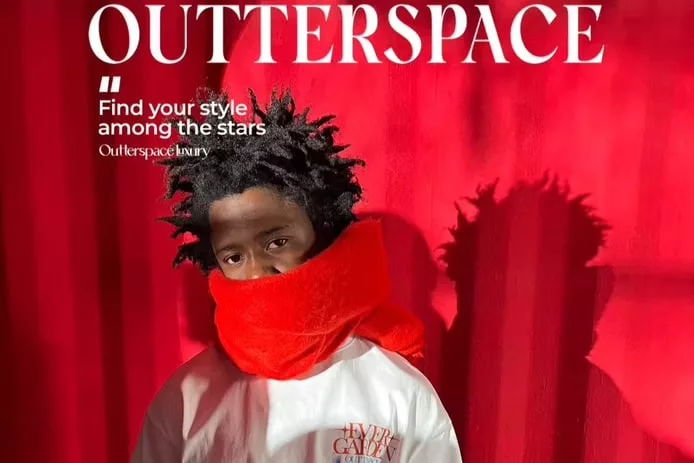
How Outterspace is Changing the Definition of Luxury for Black Owned Apparel Companies

Africa has a diverse population in terms of languages, histories, and styles.
Several African-owned fashion firms are adding their distinctiveness to the current metropolitan fashion landscapes, making African fashion in particular a spectacle in the global fashion industry. Outterspace Integrated Luxury is a representative of these brands.

Outterspace Integrated Luxury is positioned to become a worldwide voice that raises awareness of Africa’s growing luxury fashion industry while staying true to its passionate and unusual creative heritage. In the three years since the brand’s launch, some of our favorite celebrities and powerful people have grown to appreciate its originality and youthfulness, making magnificent collectibles from the brand a staple in their wardrobes.

Integration of outer space Indulgence, comfort, prestige, sophistication, and street cred all fall under the category of luxury.

Excellence controls its original thought.
Since fans of high-end premium style and comfort exist all over the world, the brand strives tirelessly and creatively to cater to these customers by producing luxury streetwear.
Presently, the brand’s strongholds are in Nigeria and the United Kingdom, and it is progressively expanding its branches throughout the rest of Africa, Europe, America, and Asia.
Unlike the vast majority of African-owned clothing companies, which are frequently considered quota purchases (purchases meant to show love and support for Blacks)

With a voice that screams class, @Outterspace Luxury is changing the game by putting its distinctive design and aesthetic aspirations to life on people’s bodies all around the world. By doing this, they are not only changing how Africans view luxury but also opening the road for future African-owned fashion firms to compete with other international brands in the fashion industry.

For people who aren’t scared to stand out and utilize their clothing as a form of self-expression, their stunning designs are statement items.

Through their fantastic creations, the brand’s designers hope to bring cosmogenic joy and unwavering quality into their customers’ wardrobes.

A glance through their inventory reveals pieces that ooze style and work for a variety of occasions, such as Sunday brunch, romantic nights, picnics, etc.
Outterspace Integrated Luxury (@Outterspace Luxury) touts itself as a fashion find in the modern urban scene, deserving of all attention and capable of competing with the top names in international fashion.
They remain a high-end, daring, yet adaptable addition to any wardrobe, appealing to fans of comfort and sophistication as well.

Content courtesy of Fashion United & NFH


African Fashion Designer Asya Khamsin, Who Lost Her Luggage At An Airport In 2018, Claims She Recognizes Her Clothes On Former Nuclear Waste Expert Biden.

Just this week, a Tanzanian fashion designer who misplaced her luggage at an airport in 2018 claimed on social media that Joe Biden’s former “nuclear waste guru” Sam Brinton had been photographed wearing one of her distinctive looks.

In December, Brinton was fired from the Department of Energy after being accused of taking women’s bags in two different states. In July 2022, Brinton is accused of stealing a $320 piece of luggage from Harry Reid International Airport, and in September 2022, she is accused of stealing a $2,325 Vera Bradley roller bag from the Minneapolis Airport’s luggage carousel.

In February 2022, Joe Biden appointed the open and unashamed pup fetishist to the position of deputy assistant secretary for spent fuel and waste disposition in the Energy Department’s Office of Nuclear Energy.
Despite the DOE’s repeated refusal to comment to the media on Brinton’s work situation following his run-ins with the law, it was reported that he was put on leave over the summer. On December 12, the Department formally announced Brinton’s termination.

Houston-based Asya Idarous Khamsin said she misplaced her luggage at the Washington D.C. airport in 2018. She later identified her clothing in pictures of the infamous “kink activist” online after reading about the Brinton case on Fox News.

On Twitter, Khamsin stated, “Surprisingly I found his images wearing my custom-created garments that were in the lost suitcase.” She posted an Instagram photo of herself wearing a garment that was missing from the bag along with a picture of Brinton who was ostensibly wearing the same dress.
Khamsin sent images of another of her creations that she had seen on Brinton.

On June 11, 2018, Brinton wore the vivid orange outfit at the Trevor Project’s annual TrevorLIVE LGBTQ Gala in New York City.
At The Beverly Hilton Hotel on December 02, 2018, in Beverly Hills, California, he was dressed just in the voluminous shawl.

On February 22, 2019, Brinton donned the red dress at the UN building in New York City. The Trevor Project’s Director of advocacy and government affairs, Brinton, participated in a panel discussion at the 2019 Global Engagement Conference for the Sustainable Development Goals (SDGs).

Khamsin shared images of Briton supposedly wearing her orange dress in a much-overlooked Facebook post from December 26 when she originally made the discovery over the holiday season.

She commented, “Recently on Fox News, I discovered about Sam Brinton’s luggage problem and I saw the images he wore my custom-made designs that were in the missing suitcase in 2018.”

The designer posted images of Brinton and her model wearing “the same dress made and customized by myself.”
Khamsin made no mention of whether or not she wanted to file a complaint.

Sam Brinton arrives at The Trevor Project’s 2018 TrevorLIVE LA Gala on December 2 at The Beverly Hilton Hotel in Beverly Hills, California (photo credit: The Trevor Project/Getty Images).
(Picture by WireImage user Amanda Edwards)

Content courtesy of Asya Khamsin, American Greatness & NFH


House of Aama Draws on the Fusion of West Indian and African Cultures

The mother-daughter team pays tribute by including a tale about the Anansi spider and its cultural influence in their artworks.
Rebecca Henry and Akua Shabaka, a mother-daughter team, debuted a collection for fall/winter 2023 that draws inspiration from the fusion of their respective West Indian and African cultures.
The atmosphere was created to honor family and an old folktale about a spider that traveled far and endured hardships and, occasionally, his own folly. Just adjacent to the curtain opening, where the models emerged, an altar was placed in the front.
It was a dedication to Akua’s father and Rebecca’s family members, and pictures of them were set out on a table with fruit, coffee, and decorations made of vibrant cloth as though to wish their ancestors well.

Whimsical Afro-Caribbean mixes played in the background as the show got started. First impressions: a model wearing a maxi dress with netting accents.
A luscious, ruffled green dress and a few masculine ensembles including long denim shorts and matching tops stood out. On the shoulders and back pockets of one of them was a bedazzled spider web.
The spider design was also present on mesh dresses in red and black color schemes. The menswear pieces, in my opinion, stole the show this season and may perhaps displace La Siréne, House Of Aama’s flagship item.

A beautiful mix was struck between the sophisticated and playful items; some models wore cropped tops, short skirts with curved button detailing, and mesh dresses, while others wore trench coats, satin suits, and dresses that had an “out for tea” vibe to them.
Ultimately, the show’s fusion of many aesthetics will guarantee its financial success.

Content courtesy of Essence & NFH


The Company Behind House Of Blueberry Is Bringing Diversity To The Realm Of Online Fashion.

While inclusion is unquestionably vital in the real world, it has only recently started to get attention among individuals in the industry because the virtual world is still in its early stages of growth.
Only a few companies have genuinely implemented inclusion into the core of their business practices, so the value is still filtering through everything from company leadership to product offerings.

House of Blueberry, a brand of online clothing, is one of them. Gizem “Mishi” McDuff started the business in 2012, however, the landscape at the time was very different from what it is today, with regard to digital fashion.
Because she wanted more digital apparel alternatives for the open-world platform Second Life, Mishi originally entered the industry.

https://www.instagram.com/tv/CZ2Bl1zMd-U/?utm_source=ig_web_copy_link

where her dissatisfaction with the restricted selection for her avatar was evident. In reaction, she began creating her own clothing, largely using Photoshop, and over time, she developed the brand into what it is now.
But this was not the start of Mishi’s tech career. She oversaw a variety of start-up businesses before joining House of Blueberry, including the marketing and gaming data company Peanut Labs. She also briefly served as Sony’s head of publishing.
She eventually came across virtual concerts and otherworldly avatars, a realm that piqued her interest and inspired her to play a bigger role in this sector.

In an interview with FashionUnited, Mishi remarked, “Before I knew it, House of Blueberry was earning one million dollars in revenue each year from other people buying my creations.
I essentially came onto an underserved market of metaverse users that want stunning, current pieces crafted with the same care as IRL (in real life) fashion.

New funding and multi-platform accessibility
The brand moved from its Second Life home to introduce digital wearables into The Sims and Roblox, an open-world platform where it has already amassed a community of over 13,000 in just a few months, as the industry started to rapidly evolve.
This was the beginning of the true scaling of House of Blueberry, which saw the company grow out of its Second Life home.
The business also disclosed earlier this month that it had obtained a six million dollar finance to support its initiatives.
Direct-to-avatar products, which may be purchased through in-game markets and catalogs on various virtual platforms, are what makes them appealing to customers.

https://www.instagram.com/p/Bp5-trUAVP0/?utm_source=ig_web_copy_link

In terms of representation, Mishi has also overcome obstacles. She belonged to a minority group because she founded a company in the tech sector as a woman.
However, her business acumen has only been influenced by her experience, as evidenced by the company’s 20 employees, 90% of whom are women, and the products it produces.
While not entirely on purpose, Mishi continued, she enjoys looking for strong women to collaborate with in order to increase the representation of women in metaverse-related businesses, where just 9% of founders and CEOs are female.

Female representation in tech and gaming
This has also influenced the way House of Blueberry approaches its product selection. Mishi said the following about the subject: “Given that women and girls make up roughly half of all gamers, I think it’s imperative to expand representation in the gaming business, particularly when it comes to female entrepreneurs and leaders.

If women aren’t involved in the development of games, how can we expect them to reflect the interests and desires of female gamers?
One of my key objectives, when I founded House of Blueberry, was to make a brand in the digital industry that was developed by and for women.
The merchandise produced by House of Blueberry reflects this sentiment, as do the partners it chooses to work with.

“I believe that people are embracing or finding beauty in what they might often consider to be a fault and receiving that support from their group.
It is assisting with such insecurities. It is undoing the damage. Customers want to be free to embrace their actual selves and be distinctive, not a flawless appearance, in my opinion.

Self-expression matters
Building a feeling of community is one of House of Blueberry’s distinguishing ideals, as seen by its most recent partnerships with modern streetwear brand Boy Meets Girl and Roblox influencer Leah Ashe, for which the company unveiled a digital clothing line and held a virtual event.
It is noteworthy that traditional fame does not resonate with the digital fashion community as much as those who are already fully involved in this industry, many of whom are gamers.
They prefer to watch entertainment from these kinds of influencers, which encourages more devoted participation.

As a result, Mishi said, “we were able to connect to the Leah Ash community, a group of people that follow her exploits in virtual spaces. People aren’t purchasing into a specific brand or product; they’re buying into a community.” It’s even more personal.
The ties and allegiance to that influencer are stronger.
Customers now view artists as influencers in their own right.

Mishi aims to continue implementing these concepts into House of Blueberry’s virtual world presence in the future by embracing its four core values: creator-led, community-obsessed, data-informed, and partnership-ready.

“Gaming communities and the amazing creators who occupy them are at the heart of what we do,” she said.
“House of Blueberry wants to be present on all digital platforms where self-expression is valued. We intend to strive toward this aim this year while upholding our key principles.

Content courtesy of Fashion United & NFH 


​​African Fashion Foundation: The African Fashion Futures Incubator Welcomes 14 New African Fashion Designers.

14 fashion designers who have been chosen for the African Fashion Futures Incubator’s first cohort and who will be enrolled in the program to receive training and grant money are introduced.

The incubator’s goal is to provide upcoming fashion designers and companies with the knowledge and funding they need to build a company with an ethical foundation for people, place, and profit.

The African Fashion Futures Incubator gives the 14 participating fashion designers a place to test out ideas and business models as well as access to mentors and resources. The incubator will also cover business models, market positioning, comparative advantage, sustainability & impact, and other related subjects.

The incubator seeks to foster cross-cultural learning and peer mentoring among its participants, as well as to future-proof them and provide the groundwork for strong operational and commercial foundations that will support expansion. While enhancing the business skills of fashion designers, the program also aims to create financially sound businesses.

The Impact Fund For African Creatives established the African Fashion Foundation in Ghana as a partner in the African Fashion Futures Incubator, with Seedstars serving as the program’s implementing partner.

“Since it was founded, the African Fashion Foundation platform has fostered employment and educational possibilities in collaboration with well-established actors to assist the growth of the African creative sector. This collaborative program’s goal is to support budding designers by giving them access to resources like workspace, start-up money, training, mentorship, and investment opportunities. Onyinye Fafi Obi, the African Fashion Foundation’s project director, shared.

African Fashion Foundation (AFF) is a non-profit organization that helps Africans and members of the diaspora who work in the creative industries flourish in the global fashion industry.

https://youtu.be/UgBcaMk3C48

AFF has been chosen as the aggregator and incubator for fashion designers and brands for the Impact Fund For African Creatives, drawing on their vast experience in offering professional and educational developmental opportunities (IFFAC).

IFFAC will make investments in privately owned small and medium-sized firms in Africa that target the creative, fashion, and lifestyle sectors. The Fund strives to solve fledgling brands’ lack of funding and management expertise.

Following are the names of the 14 fashion designers taking part in the African Fashion Futures Incubator:

1. Omafume Niemogha of Pepper Row (Nigeria)
2. Travis Obeng-Casper of AJABENG (Ghana)
3. Cynthia Otiyo-Abila of Cynthia Abila Studios (Nigeria)
4. Jason Jermaine Asiedu of Jermaine Bleu (Ghana)
5. Orire Aleshinloye of Oríré (Nigeria)
6. Kusi Kubi of PALM WINE IceCREAM (Ghana)
7. Ebuka Omaliko of Maliko (Nigeria)
8. Kelvin Vincent of Anku Studio (Ghana)
9. Abiola Adeniran-Olusola of Abiola Olusola (Nigeria)
10. Jafaru Larry (Ghana
11. Victor Anate of VICNATE (Nigeria)
12. Nadia Eman Ibrahim of TABOu (Ghana)
13. Aline Mukamusoni of AMIKE (Rwanda)
14. George Tetteh of Atto Tetteh (Ghana)

“We’re thrilled to aid designers in their work by fusing commercial knowledge with their creativity.
The network that supports and empowers creatives in all facets of their job, according to Seedstars, is what fuels creativity across all industries. Tom-Chris Emewulu, Program Manager of Seedstars, stated, “In this scenario, from fabric to the runway, we’d like to ensure designers in the incubator are equipped to scale.

Roberta Annan, the founder of IFFAC, said: “IFFAC is eager to begin this cooperation with AFF and Seedstars, with the intention of establishing and capturing value in these brands at their initial growth stages.

In order to develop their businesses and improve their value chains, participants will engage in an exponential and revolutionary program over a 5-month incubation period.
Through a tried-and-true technique, the fashion designers will also receive practical assistance from industry professionals within a global network, grant financing of up to $5,000 apiece, and further fundraising assistance.

Content courtesy Tech Economy of & NFH 


Meet Malik Afegbua The Nigerian AI Artist Redefining Fashion for The Older Generation’s Style

Malik Afegbua, a Nigerian filmmaker and artist, is dispelling myths about African beauty, particularly among the older age.

Today’s digital culture has made artificial intelligence a popular topic. Despite being a contentious technological advancement, you can tell how many people are preparing for an AI world by just scrolling through your social media page.
The internet went wild over Malik Afegbua’s fashion show, which featured images of classy, old-fashioned seniors wearing the sexiest African garb.

The Fashion Show for Seniors photo series has received over 100,000 likes on social media and sparked debate about whether computer-generated art can truly replace human creativity.

Malik Afegbua organized a fashion show for seniors last month as his debut runway event. The showcase defied every fashion guideline by having a cast of classic males and attractive old-fashioned women. Senior models from Afegbua strolled down the catwalk while dressed in natural tones.

Some had their gele headdresses elegantly folded, while others had their outfits expertly arranged with overlapping pieces. The models provided a range of modern flare and vintage majesty that is particularly Nigerian, with the stately air of senior gentlemen.

The ground-breaking runway extravaganza by Afegbua received a lot of praise. It was nearly impossible to persuade his models, who were admired for their regal appearance, that their experience wasn’t real. However, neither they nor it was the case. The world is a fabrication. False characters have been created. All of it is idealistic, Afegbua told ESSENCE.

The models, the clothes, and the complete Fashion Show for Elders were inventions of the artist or, more precisely, an artificial intelligence-powered embodiment of his genius.
One of Afegbua’s numerous creative interests is pushing the boundaries of digital art, yet his daily work as a filmmaker takes up much of his attention.

The director, who was born in Nigeria, works with his production firm, Slickcity Media, to create advertisements, movies, and documentaries.

He is now developing a Netflix documentary about Nike Davies-Okundaye, a Nigerian textile designer and recognized fashion icon around the world. This year will see the release of the biopic. Additionally, he co-produced and directed the second and third seasons of the Netflix documentary series Made By Design, which celebrates African creative genius.

I spoke with the multimedia artist through video call when he was at home in Lagos. He discussed the impact of technology on the development of art, the bizarre experience of becoming instantaneously popular, and the moving motivation for his Fashion Show for Elders.

Regarding AI and the future of the arts.

Since its early inception into the cultural zeitgeist, the idea of artificial intelligence has advanced significantly. The Wizard of Oz, a 1939 motion picture, introduced the public to the archetype of an artificially intelligent robot. The idea was first presented in the image of the “Tin man,” a mechanical man without a heart who personifies human characteristics. As AI technology advanced, so did its applications.

The creative vision that Afegbua has for AI is only partially realized in his Fashion Show for Elders. Ese, my wife, and I both write. She creates screenplays and movies. Additionally, we cannot afford to make the movies that we write. We would require a sizable studio, personnel, and various overhead.

We’ll get there eventually, but in the meantime, technology allows us to accomplish so much.

Different mediums of art have different perspectives on how technology and art should coexist. Concerns about what AI means for the future of artists have been expressed by several. Many people think that machine-generated pictures will kill the artist, much as some claim that the popularity of music videos destroyed the radio star.

That anxiety is not shared by Afegbua. Instead, he accepts AI as a way to improve creativity in people.
Artists and buyers should both accept the inevitable if the astonishingly lifelike models used in his virtual fashion show are any hint of what is achievable in art with AI.

When the elders broke the internet.

Afegbua’s virtual runway display went viral on social media in a matter of minutes. He was surprised by the prompt response, saying, “I honestly wasn’t expecting it. I anticipated around 20 comments and a few friend reposts. He received far more than that. My phone kept buzzing nonstop. It spread all over again. Everyone was tagging me all over the timeline after The Shade Room tweeted it, he claimed.

Afegbua’s email and direct messages (DMs) were inundated with demands for interviews from social media blogs, television networks, and reporters (including those from the present company) from all over the world within an hour of publishing his vividly melanoid AI-generated models.

Afegbua had 3,000 Instagram followers before sharing his Fashion Show for Elders, and he now has over 35,000.
“I received many touching comments from individuals all throughout the world expressing how it affected them. I received messages from elderly individuals who had lost friends and spouses, as well as from young people who missed their grandparents. I’ve received thousands of prayers and thank-you notes from folks. Thousands,” he remarked.

None of us could have imagined that the dignified elders who sparked our communal pride were motivated by heartbreak.

The virtual show serving as the essential catharsis for a creative in distress was something we also could not have foreseen.

Afegbua was so overwhelmed by the warm welcome that it took him some time to understand its significance. In fact, he admitted, it was rather overpowering. “But I understand now.
For me, this endeavor was personal.

I believe that resonated with folks. Many individuals who are going through a lot of difficulties, like I was when I made it, might relate to it. So perhaps it really is a worldwide phenomenon, Afegbua speculated.
Every day, Afegbua talks to his mother, Elizabeth. The two are connected in a way where they ask each other for counsel and find excitement in recounting mundane daily activities. It’s deep with my mum,” he remarked. “I’m 38 now.

I reflect on all of our discussions and all of the teachings Mom has imparted.

Afegbua, one of six kids, claims that his siblings and the family’s grandmother get along well. She deserves the privilege. “Before he retired, my father worked as a pilot, therefore he frequently traveled from one nation to another. So, our mother was with us most of the time. She had direct contact with each and every one of us, he claimed.
Afegbua, who is now a spouse and father, recently confronted one of his greatest fears.

Early last year, after a 12-hour journey from Nigeria to Atlanta, the relationship between him and his mother almost came to an end.

On the jetway at Hartsfield airport, she had a crippling stroke. She suffered several strokes. He remarked, “It was awful.

The family had a very hard time processing the circumstance because it happened suddenly and unexpectedly. Thankfully, Elizabeth’s condition started to get better.

She remained on life support for a long, but Afegbua claimed that she kept improving. “God operates in a strange manner. Every day as a family, we prayed. Every single one of us has a very close relationship with our mother.

Although the path to recovery has been difficult and long, Afegbua is incredibly grateful that his mother is still alive. But he claimed that the experience of almost losing her changed something about him.

For a long time, I was unable to speak with her. Due to all the aftereffects of the stroke, we were unable to converse. Months went by so quickly. I was reflecting on her in a variety of ways, including our pleasant interactions and chats. “Everything is shared with us,” he stated.

“During that time, I had several life events that I was unable to share with her. And it put me in a peculiar situation. Afegbua turned to his art for solace when he was experiencing an existential crisis.
“For me, creating is like therapy. I find it to be calming and relaxing. I also utilize it to aid in my emotional processing, he said.

What he experienced at the time was a sobering understanding of the frailty of life and a gratitude for old age as a blessing that should not be taken for granted.

He considered his mother, who now required the assistance of family members and medical experts to meet her basic necessities. All the grown children in his situation sprang to mind. He reflected on how senior persons are discarded by society. “I believe that seniors are marginalized in society once they reach an age or stage in life where they are unable to take care of themselves or participate as they once did. He said, “It’s like we just dumped them somewhere to wait to die.

The artist discovered his muse at that precise moment of inspiration.

“I wanted to design something that will alter how we perceive things” (of seniors). Elderly Black people have experienced so much injustice and been put down, he remarked.

Would it be possible to depict them as Kings and Queens?
What if I demonstrated their self-assurance and fortitude?

Content courtesy of Essence, Malik Afegbua, Slick City & NFH 


Fashion Icon: Dame Vivienne Westwood Passed Away at The Age of 81.

Fashion designer Dame Vivienne Westwood has sadly died today, aged 81, according to a statement released on the designer’s Twitter account. The designer passed away surrounded by her family in Clapham, South London.

In a statement posted at 9:04pm this evening [29 December] the designer’s house said: “29th December 2022. Vivienne Westwood died today, peacefully and surrounded by her family, in Clapham, South London. The world needs people like Vivienne to make a change for the better.”

29th December 2022.

Vivienne Westwood died today, peacefully and surrounded by her family, in Clapham, South London.

The world needs people like Vivienne to make a change for the better. pic.twitter.com/YQwVixYUrV

— Vivienne Westwood (@FollowWestwood) December 29, 2022
Vivienne Westwood rose to fame in the 1970s, bringing in punk to the mainstream and opening up her store Let It Rock with her then partner Malcolm McLaren.

Over the years her designs have been worn by celebrities including Dita Von Teese, Sarah Jessica Parker and Princess Eugenie.

Westwood was also known for her activism work, often bringing attention to causes including climate change.

In 2006 she was made a dame for her services to fashion.

Vivienne’s husband and creative partner Andreas Kronthaler has said: “I will continue with Vivienne in my heart.

“We have been working until the end and she has given me plenty of things to get on with.”

Other tributes have also begun to pour in from celebrities and politicians including Mayor of London Sadiq Khan who tweeted: “Vivienne Westwood was a creative icon who helped cement the UK at the very forefront of modern fashion. My thoughts are with her family and friends.”

RuPaul’s Drag Race UK season one winner The Vivienne tweeted: “Vivienne Westwood is the woman that showed me I could do anything, I could wear what I wanted, she was an ICON and I lived my life through hers in some sorts of way. There will never be another, but we’ll continue your fight.”

TV presenter Johnathan Ross has also tweeted his condolences saying: “RIP the great Vivienne Westwood. Unique. Brilliant. Uncompromising. Thanks Viv x.”

Content courtesy of Cosmopolitan Magazine & NFH

African Designers Are Breaking New Ground And Targeting The Luxury Brand Market

Despite its modest Mozambican beginnings, Taibo Bacar’s fashion house is already competing on worldwide catwalks and in upscale shops.
One of Africa’s top fashion firms, Taibo Bacar is recognized for its innovative blending of high and fast fashion items. The brand’s signature pieces, which tell personal tales with a splash of color, exquisite cutting, and detailing, have received multiple honors and elevated it to the worldwide scene.
A pioneer in the field, the innovative fashion label was the first African brand to present at Milan Fashion Week in 2010.

In The Beginning
Before Taibo Bacar the fashion house, there was Taibo Bacar the creator, whose mother, a seamstress, served as his initial source of inspiration. When the designer ran into the model Tatiana Ismael at a fashion event in 2006, his path to the fashion hall of fame was sealed. That unexpected encounter developed into a successful company, the Taibo Bacar label, three years later.

Tatiana Ismael is a business expert with extensive knowledge of the commercial side of the fashion industry, making her the perfect business partner for designer Taibo Bacar. Ismael manages the business end of things, and Bacar, the designer, adds his creative flair. As a company, Taibo Bacar seeks to establish a close relationship with customers

“We are very deliberate in our designs, starting with the conceptualization of our concepts or themes and continuing through the production process. We wish to develop a personal relationship with each of our customers. Ismael: “That’s how fervent and sentimental we are about our profession.

This philosophy is driving the Taibo Bacar label to embark on yet another ground-breaking business initiative as it unites to go beyond beautiful fashion and glossy publications and forays into the niche luxury brands market to support its fashion business.

In response to the company’s intended entry into the high-end luxury sector, Bacar says, “It’s about diversity. We have a lot of initiatives set up for the future that have been inspired by what we have been doing for the last 12 years, even though not all of them are related to fashion.”

The Intellectual Property Challenge
However, not everything has been perfect, particularly in a nation that is new to the fashion industry and where there is a lack of public understanding of the significance of respecting the creations and innovations of others.

In general, protecting intellectual property (IP) in Africa is exceedingly challenging.
Ismael claims that it is harder for creative sectors like fashion and even more so for us in Mozambique because the business of fashion is not well-defined.

Ismael points out that in order to ensure that intellectual property is treated seriously as a commercial asset, more needs to be done to educate the public about it in Mozambique and throughout most of Africa.
Aspiring young African designers should focus on developing their brands and companies rather than getting distracted by popularity and celebrity status, says Taibo Bacar.

Even if the Taibo Bacar name and the logos and visuals that go along with it are registered as trademarks, it might be challenging to uphold these rights in court.
Ismael believes that this is a price that the firm must carry as the sector develops, pointing out that while registering trademark rights is a crucial step in fostering future corporate growth, it is insufficient to stop acts of infringement.
Even when they have patents, copyrights, or trademarks, she adds, “businesses and individuals must constantly deal with the difficulty of people using their brands and making money off of their work.”

Since its T-shirts and insignia have been copied and duplicated by counterfeiters, Taibo Bacar is all too familiar with this threat.

The difficulty is frequently made worse by the burdensome and complicated legal system, which deters many authors from pursuing legal action to obtain redress.
When someone is not even aware that what they are doing is prohibited in the first place, how is it even feasible for them to comprehend the significance of respecting IP rights? Asks Bacar.
Campaigns to raise IP awareness must also target the general public, who use our goods and services and engage with our brands, in addition to innovators and creatives.

It’s a challenging situation for a forward-thinking fashion company to be in, and it’s made worse by out-of-date IP rules that, when they were established, did not take the issues of the digital age or a fashion company like Taibo Bacar into consideration.
Industry stakeholders are confused by the ambiguity surrounding how to address new IP challenges and where to turn for assistance in managing them.

However, outside of Mozambique, in developed nations like South Africa, where the Taibo Bacar brand is well-known, the situation is significantly better.
We are aware that as a global brand, we must protect our intellectual property in numerous nations. Thank goodness, South Africa’s intellectual property rules are more stringent and its attorneys are more knowledgeable on the subject, the designer said.

IP protection has become crucial for the business as the Taibo Bacar brand expands globally and enters the international market.
The business made the decision to create a division to manage all IP issues in order to free up Bacar and Ismael to concentrate on the day-to-day tasks of designing, manufacturing, and marketing their products.
Currently, photographs, brand names, and logos are all included in Taibo Bacar’s trademark portfolio.
In Mozambique, the business has established trademark protection for 10 of its logos, which illustrates how the brand has changed over time. Additionally, the business owns four South African registered logos.

It is also thinking of patenting some of its methods and goods, but doing so would be expensive and there is no way of knowing if the anticipated patents would stand up to court challenges.
“Patents cost a lot of money.
The attorneys we’ve spoken with have cautioned us because we need to be prepared to defend our inventions and products in the event that someone else develops a variation of them, says Ismael.

Despite the difficulties, the designer is still committed to preserving the works and designs that are particular to the Taibo Bacar brand.
These include the entirety of their leather goods selection, which primarily consists of purses and belts.

Collaborating With Creatives
By its very nature, fashion is a collaborative industry that frequently brings together jewelers, photographers, videographers, models, filmmakers, and even software engineers. Taibo Bacar is aware of the difficulties that can arise when artists must share or exchange their intellectual property in order to collaborate. Therefore, it is crucial for creatives to be knowledgeable about IP.

“Collaborations frequently present us with difficulties. Therefore, before doing deals, we are very careful to sign contracts or non-disclosure agreements, says Bacar.

Such action, he observes, is crucial in photography since the premature release of images can endanger marketing efforts, particularly in light of the fact that even models now take shots of their photo shoots with their phones.

“The photographs cannot be released on any platform prior to the event while we are running a campaign.
Since photography is such an important part of our business, we must be in complete control of the process at all times, from shooting to editing to designing.
To govern our commissions and the photographers’ intellectual property rights, we have very tight contracts, according to Bacar.
By making sure that their work is properly attributed when utilized by third parties, including publications, he continues, they are dedicated to preserving the intellectual property rights of photographers.
Managing the models and the photographs they take is less difficult because they frequently sign extremely detailed contracts with international modeling agencies.

Advantages Of Globalization
Taibo, a proponent of globalization, challenges African designers to look outside their own continent and quit being unduly protective of its traditional history.

“We must accept globalization and acknowledge that, while protecting our own heritage, we cannot expect to gain anything from other cultures. We open ourselves to opportunities outside of our boundaries by sharing our traditional knowledge and resources with the world and showing the amazing work we can produce in Africa, according to Bacar.

His claim is supported by experience, His innovative use of the traditional and vibrant Mozambican capulana fabric earned him the Emerging Designer of the Year Award at Africa Fashion Week in Johannesburg in 2012. As a result, he was given the once-in-a-lifetime opportunity to network with over 100 prominent designers in Rome, Italy.
We open ourselves up to opportunities outside of our boundaries by sharing our traditional knowledge and resources with the world and showing the wonderful art that Africa is capable of doing.

Bacar is optimistic that Africa won’t always be at the bottom of the fashion business food chain and that the market will develop into a vibrant, cutthroat sector producing fabrics.
Currently, the business operates stores in Mozambique and South Africa and sells its designs on a global scale online.

Through a franchising endeavor in South Africa, expansion plans were launched in 2019, but they had to be shelved owing to COVID-19. To serve the South African market, a number of stores continue to carry their designs.

Parting Shot
The designer gives advice to aspiring young African designers to focus on growing their brands and businesses rather than getting distracted by popularity or superstar status.

The issue is that the majority of these young creatives aspire to be designers but don’t realize that their priority should be developing a brand. Therefore, rather than working independently, their activity needs to be structured inside the framework of a firm that functions profitably.

That counsel is based on the expertise and experience gained during Taibo Bacar’s personal entrepreneurial path. And it’s how the designer has distinguished herself and made a statement.

Content courtesy of WIPO, Taibo Bacar & NFH


Ad