Wednesday 22nd of April 2026

Nairobi, Kenya

Full List Of Winners At ASFAs 2022: Who Won What At The 2022 Abryanz Style And Fashion Awards

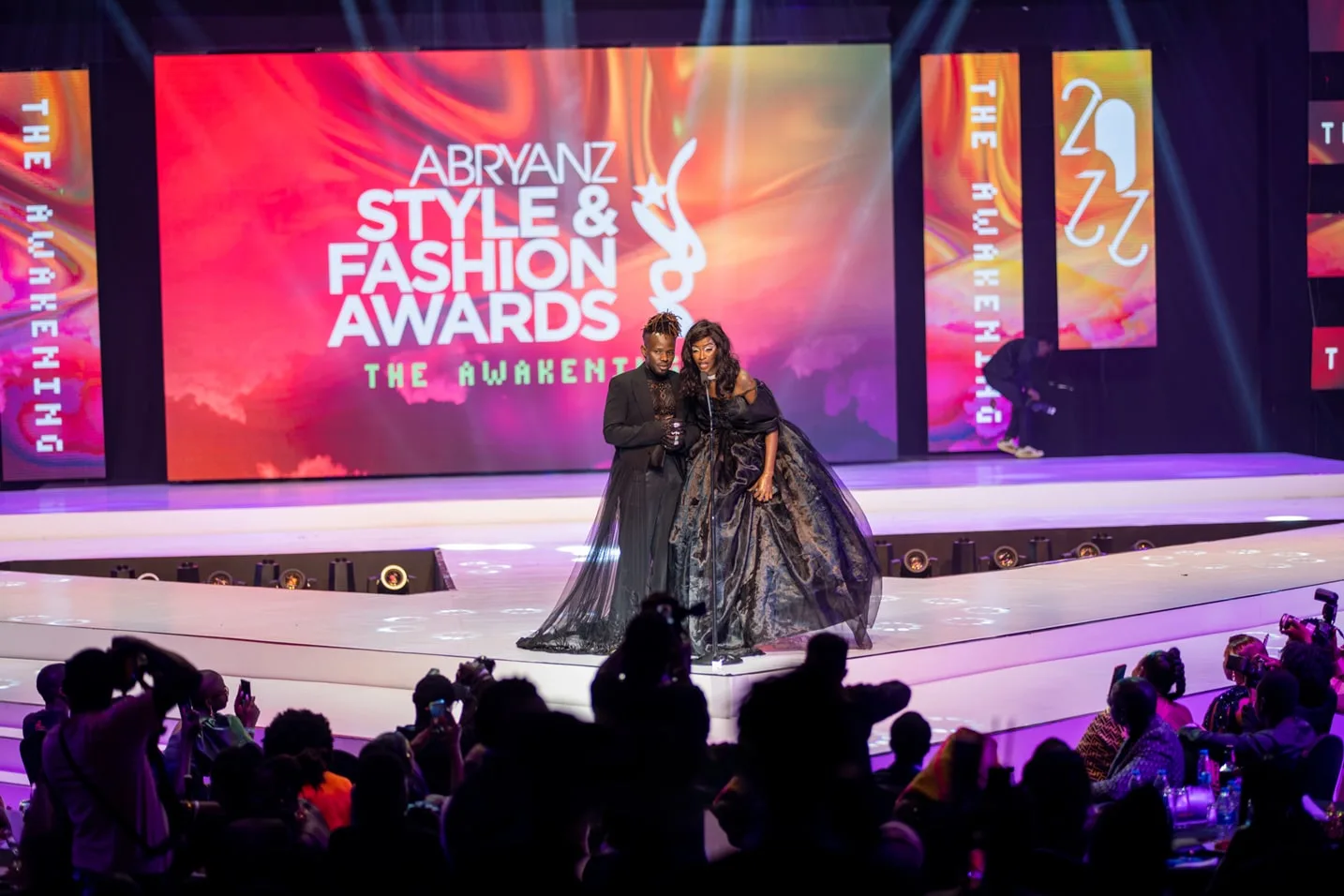
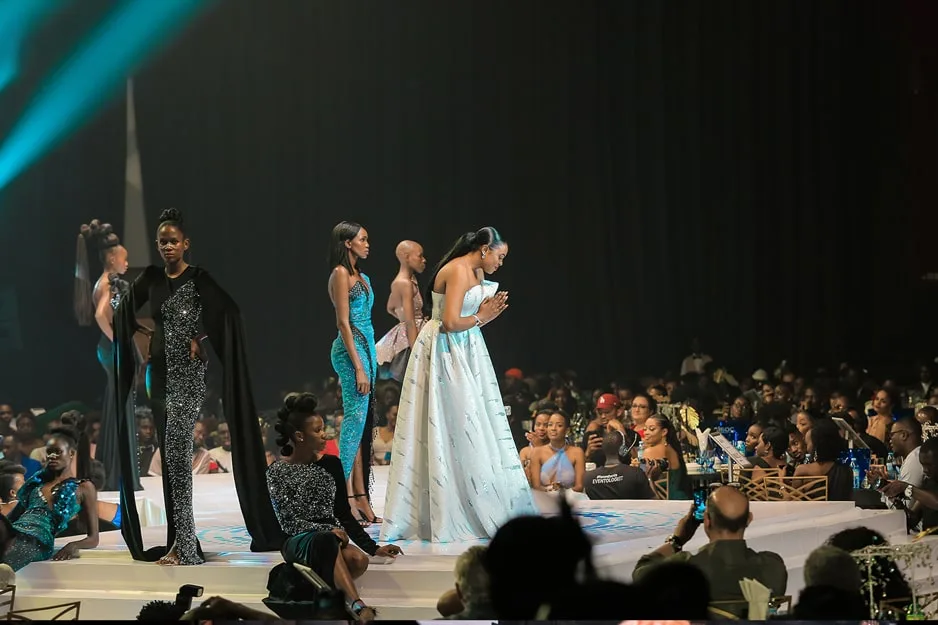
The annual Abryanz Style and Fashion Awards 2022 presentation, with the theme “The Awakening,” took place on December 16, 2022, at the Kampala Serena Hotel.

An extraordinary selection of skilled nominees and a star-studded guest list kicked off the eagerly awaited evening with a red-carpet extravaganza of glitz and flair.

The Covid epidemic has had a significant impact on the fashion industry, and the gathering of fashion-forward celebrities and a larger fashion community of the general public recognized and honored the remarkable individuals who have made this contribution.
This year’s categories included representation from a wide range of the fashion community, and many Ugandan and foreign celebrities stepped out to celebrate fashion.

The “Most Stylish Music Video” category honored the stylish efforts of singers in producing visually arresting music videos, while categories like “Emerging Fashion Brands” highlighted the new yet excellent fashion brands that built a reputation for themselves in the industry.

The public voted on 18 categories for the ASFA this year, which featured 8 categories for the honorary award and highlighted individuals, businesses, influencers, and designers who are having an impact on the industry.

Below Is The Full List Of Nominees And Winners At ASFAs 2022

Honorary Awards
1. Fashion Influencer Award – Angella Summer Namubiru
2. Business Maverick Of The Year – Motiv
3. Best Fashion Contributor Diaspora – Mko World
4. Trailblazer Award – Aamito Lagum
5. Lifetime Achievement Award – Eric Raisina
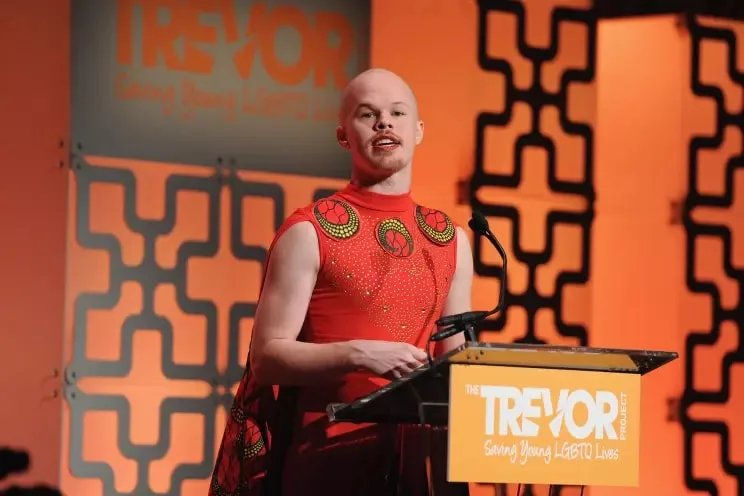
6. Icon Award – Trevor Stuurman
7. ASFA Visionary Award – Kasule Raphael
8. Award For Postive Charge – Mitchel Omamteker

Other Categories
Designer Of The Year (Africa)

1. Thebe Magugu
2. Moses Turahirwa – Winner
3. Rich Mnisi
4. Kenneth Ize
5. Larry Jay
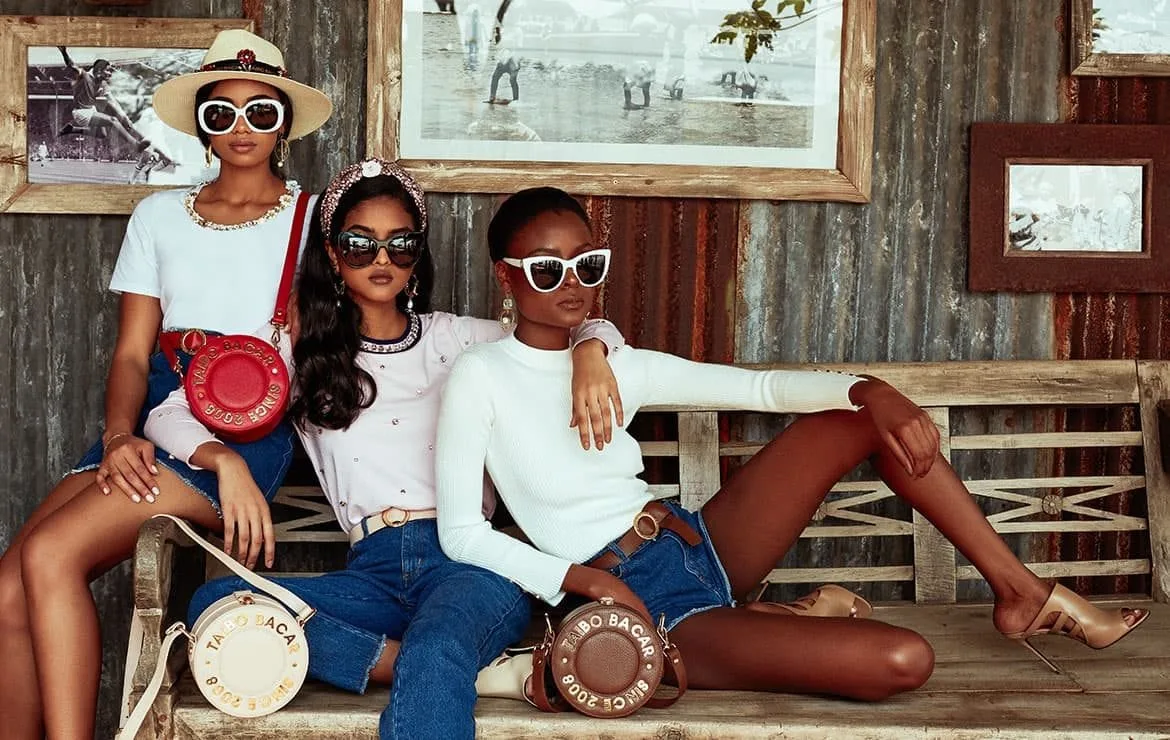
6. Taibo Bacar

Designer Of The Year (Uganda)

1. Sheba Kasami
2. Kaijuka Abbas
3. Monica Kansiime
4. Dyna Vence -winner
5. Sham Tyra
6. Anita Beryl
7. Ras Kasozi

African Fashion Brand Of The Year (Africa)

1. African Boy – Winner
2. Ahluwalia World
3. Daily Paper
4. Tiffany Amber
5. Moshions
6. Rich Mnisi

Model Of The Year (Africa)

1. Anok Yai
2. Adit Priscilla
3. Achan Biong
4. Anyiel Piok Majok
5. Alaato Jazyper – Winner

Emerging Designer Of The Year Menswear (Africa)

1. Rogue-ng
2. Colrsbaby
3. Trax Apparel
4. Ajabeng
5. Kente Gentlemen
6. Teddy Ondo Ella – Winner

Emerging Designer Of The Year Womenswear (Africa)

1. Ladunni Lambo
2. Hertunba
3. Fruche Official
4. Wyne Kirabo – Winner

5. Fumi The Label

Beauty Brand Of The Year (Uganda)

1. Tk Berries Skincare
2. Minama World
3. Mb Cosmetics Amsterdam
4. Bt Beauty Uganda – Winner
5. Qwezi Beauty
6. Fabiola Beauty

Beauty Brand Of The Year (Africa)

1. Huddah Cosmetics – Winner
2. Zikel Cosmetics
3. Beauty By Ad
4. Epara
5. Colorbox Cosmetics
6. Juvia’s Place

Emerging Fashion Brand (Uganda)

1. Seamline Atelier
2. Miss Shee
3. Loumbier
4. Tru Ikon – Winner
5. The Creative Hub Ug
6. Mul C

Makeup Artist Of The Year (Uganda)

1. Peter Russell
2. Imani Makeup – Winner
3. Nahya Glam
4. Saida Beauty
5. Shillat Makeup
6. Glam By Keith

Makeup Artist Of The Year (Africa)

1. Tammi Mbambo
2. Moshoodat
3. Manal Makeup
4. Beezglam Makeup Studio
5. Reham Khalifa
6. Makeup By Zulky – Winner

Hair Artist Of The Year (Uganda)

1. Mbajja Sean
2. Mirrors Salon
3. Hair By Zziwa
4. Afros & Mo -winner
5. Jeff Jingo
6. Lana Barber 256
7. Sammy Barber Ug

Hair Artist Of The Year (Africa)

1. Laetitia Ky
2. Corrine Muthoni
3. Nikiwe Dlova
4. Kehinde Are
5. Joke Lawal
6. Ricky Kish – Winner

Fashion Stylist Of The Year (Uganda)

1. Mavo Kampala
2. Kwagala Kevira
3. Top Stylist
4. Gangstar Magic
5. Allan Senior
6. Cham Ronnie – Winner

Fashion Stylist Of The Year (Africa)

1. Luxury Recycle – Winner
2. Tiannahs Place
3. Yartel
4. T. Dosumu
5. Chuck Mbevo

Image Maker Of The Year (Uganda)

1. Kiba Shots
2. Walter Photography
3. Sasha Vybz – Winner
4. Dc Photography
5. Martin Kharumwa
6. Drimax Photography

Image Maker Of The Year (Africa)

1. Trevor Stuurman – Winner
2. Kwame Koda
3. Chuchu Ojekwe
4. Bless Dollar
5. Prince Gyasi
6. Daniel Obasi

Fashionable Music Video Award (Uganda)

1. Personal – Zulitums
2. Mbaga – Nsimbi -winner
3. Thank God – Vinka
4. Forever – Chameleone
5. My Year – Azawi
6. Wandiisa Ki – Rema Namakula

Fashionable Music Video Award (Africa)

1. Tales By Midnight – Tiwa Savage
2. Selema – Musa Keys & Loui
3. Rush – Ayra Star
4. Bandana – Fireboy & Asake – Winner

Most Stylish Male Artist Of The Year (Uganda)

1. Fik Fameica
2. Grenade Official -winner
3. Rickman Manrick
4. Zulitums
5. Gnl Zamba
6. B2c

Most Stylish Male Artist Of The Year (Africa)

1. Diamond Platnumz
2. Adekunle Gold
3. Rema
4. Fireboy – Winner
5. Kidi Music

Most Stylish Female Artist Of The Year (Uganda)

1. Spice Diana
2. Kataleya & Kandle
3. Pia Pounds – Winner
4. Azawi
5. Lydia Jazmine
6. Vinka
7. Winnie Nwagi
8. Sheebah Karungi

Most Stylish Female Artist Of The Year (Africa)

1. Ayra Starr – Winner
2. Uncle Waffles
3. Zuchu
4. Sho Madjozi
5. Nomuzi Mabena
6. Tiwa Savage

Male Fashionista Of The Year (Uganda)

1. Trend Masta
2. Dice Rich
3. Q Senior -winner
4. Mugagga Alex
5. Adnan Turan
6. Baraka Ting
7. Spy Gadget 256

Male Fashionista Of The Year (Africa)

1. Eni Oluwa – Winner
2. Dr. Akin Faminu
3. Tijesunimi Olupekan
4. Ooreofe Oluwadara
5. Denola Grey
6. Efe Tommy

Female Fashionista Of The Year (Uganda)

1. Sharne Natukunda – Winner
2. Fifi Parker
3. Aron Hilson
4. Katrina Nilzero
5. Mbabazi Kim

Female Fashionista Of The Year (Africa)

1. Hali Oduor
2. Nancie Mwai
3. Priscilla Anyabu
4. Denise Dainty – Winner
5. Diana Eneje
6. Chevonne Spirine

Most Stylish Male Personality (Africa)

1. Kat Sinivasan
2. Ebuka – Winner
3. Eni Oluwa
4. Sir Uti
5. Maps Maponyane
6. Denola Grey

Most Stylish Female Personality (Uganda)

1. Etania
2. Malaika Nnyanzi Tenshi
3. Sandra Twinoburyo – Winner
4. Evelyn Kironde
5. Bettinah Tianah
6. Sharon O
7. Natasha Sinayobye

Most Stylish Female Personality (Africa)

1. Anele Mdoda
2. Hassan Sarah
3. Nana Akua Addo
4. Official Doyin – Winner
5. Toke Makinwa
6. Allysyn Audu

Fashion Journalism Excellence Award (Africa)

1. Guap Magazine
2. Bella Naija Style – Winner
3. Fashion Bomb Daily
4. The Native

The Abryanz Style and Fashion Awards are an African fashion award show that honors and recognizes members of the fashion industry, such as fashion designers, stylists, hair and makeup artists, media figures, and influencers on the African Continent and beyond our borders. Since the 2013 opening ceremony, this event has been conducted yearly in Uganda. The ASFAs is an evening of glitz and glamour with the biggest red carpet in Africa, in a genuine celebration of fashion and style, with A-List guests from the entire continent.

The evolution of ASFA categories The exception to this rule is the Lifetime/Style Fashion Icon Achievement Award, which presents two trophies for both Ugandan and continental winners. The nominees are chosen by public voting, with the public taking 30% of the vote and the judges from the awards academy taking the remaining 70%.

Content courtesy of Abryanz Style And Fashion Awards & NFH

Chanel Goes to Africa: Bringing its first runway show to the continent of Africa

It might have gone horribly wrong. One of the most opulent European luxury companies, Chanel, could have been accused of colonialism if it had parachuted into Africa with a flashy one-off fashion display while having no stores or significant operations there.

Particularly considering Chanel has no particular personal history with the region (“I cannot say Madame Chanel dreamed to come to Dakar,” said Bruno Pavlovsky, Chanel’s president of fashion), the fact that it was the first such show ever in sub-Saharan Africa, as well as Dakar, Senegal, a country that was once part of the French empire and now has its own thriving fashion culture and heritage, and the fact that the city is where the show took place.

Particularly after the fashion industry’s admission of its mistakes with regard to diversity, inclusivity, and cultural appropriation, as well as its own numerous errors in this area.

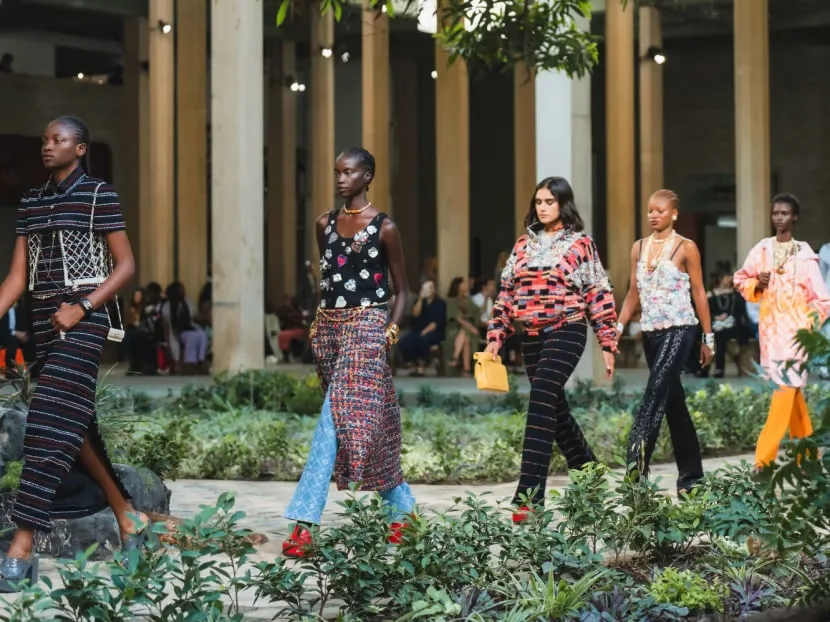
It’s a credit to the efforts the house made to reframe the event that the Chanel Métiers d’Art presentation, held at the Palais de Justice in Dakar earlier this week, went off with only a slight amount of backlash on Twitter.
It was planned as a three-day festival to follow Dakar fashion week in order to highlight the nation’s abilities in art, dance, music, and literature rather than just a fashion parade to entice new customers to spend a lot of money. In other words, it’s more of an equality celebration than it is an exotic shortcut for fresh creativity.

This was significant, if unfinished, step forward. However, by highlighting a number of show collaborators, such as Senegalese rapper Nix, singer Obree Daman, and the nearby Ecole des Sables dance school, and placing the connections between them and Chanel somewhere on the abstract plane of the mind, it also gave the appearance that the clothes themselves were the least important thing.

The garments remain. In contrast to anything as overt as a traditional Senegalese pattern, material, or artisanal skill, they were allegedly inspired by “the pop-soul-funk-disco-punk decade” of the 1970s (the intricate craftsmanship of the collection).

which was created to display the work of various specialized ateliers Chanel acquired to preserve their know-how and was all made in France). Which, it turns out, meant largely… pants. Knit, bouclé, flared, and denim are frequently worn with intricately detailed jackets, tunics, or blouson tops.

Designer Virginie Viard can create a beautiful traditional Chanel dress, and she did so here with some lacy crochet designs, garden party cocktail frocks, and sequined siren evening numbers, but they were hampered by offerings that seemed more appropriate for a tribe of dabbling hippie bourgeoisie.

The variety of hues and the layering of the garments—a beaded vest over a bouclé jacket, a tidy wrap skirt over some slender knit flares, and a long, floaty tunic over faded jeans, caught by a gold belt—were the only creative connections between the setting and the goods. 19 of the 62 models in the show were African, with 12 of those being Senegalese. According to Mr. Pavlovsky, the makeup and hair crews were split about evenly between locals and foreigners.
850 people were brought to Dakar, mostly for the garments, with roughly 500 of them coming from various parts of Africa.

The purpose of inviting famous people like Pharrell Williams, Whitney Peak, and Nile Rogers was to enhance the city’s standing as a center of culture and to portray Chanel as a type of creative, well — What? King-maker or equalizer of world power?

There is discomfort because it’s difficult to tell where to draw the line between the two postures (maybe it depends on where you are seated).

President Macky Sall and the minister of culture both agreed to support Chanel’s participation in the event. Chanel plans to continue working with local talent and will visit Dakar for a 19M program in January.

The official name of the speciality ateliers’ headquarters is 19M, and it will highlight pieces made in collaboration with regional embroiderers and artisans. That will then serve as the foundation for a later exhibit that the company will present in Paris. And according to Mr. Pavlovsky, their experience in Dakar could serve as a template for future cultural exchange and collection activities.

He stated, “If you’re locked on the street Cambon in Paris, it’s hard to be creative.”

Would Chanel ever invest in a specialized Senegalese weaving workshop in the same way that they have in European ones like Lesage and Maison Michel, in order to preserve their know-how?

There are no such plans, according to Mr. Pavlovsky, but he admitted that he could picture a day in the future when it might be feasible.

The brand is currently being given the benefit of the doubt, according to Oumy Diaw, a curator who attended the exhibition, despite certain setbacks like organizing the exhibition on the same day as the anniversary of the foundation of Dakar’s Museum of Black Civilizations. Ms. Diaw expressed hope that “This Chanel passage will not be a one-hit wonder or an opportunistic endeavor to feed the Western fashion houses with Africa’s vast aesthetic capital,” but rather the start of a much-needed process to recognize exactly how vibrant that aesthetic capital is.

Since Chanel presentations are held in Paris, the audience typically shows up appropriately dressed in their most glitzy bouclé, camellias, and ropes of pearls. In contrast, the audience in Dakar made eye-catching fashion statements of their own.

Content courtesy of New York Times & NFH

The Biggest Fashion Red Carpet Event In Africa: The Abryanz Style and Fashion Awards 2022

The Abryanz Style and Fashion Awards have been a benchmark for the African fashion community for more than six years running. The awards are renowned for their capacity to identify, motivate, and establish trends in honor of a global fashion agenda.

The ASFAs was launched in 2013 with the goal of recognizing and honoring fashion and its close-knit communities. 2020 and 2021 were exempt because of the global pandemic.

The Abryanz Style & Fashion Awards is an African fashion award ceremony that honors and recognizes members of the fashion industry, such as fashion designers, stylists, hair and makeup artists, media figures, and influencers both within and beyond our borders.

Since the first ceremony in 2013, this event has been hosted yearly in Uganda.
The ASFAs is a glamorous evening featuring the biggest red carpet in Africa, a genuine celebration of fashion, and A-List attendees from all across the continent.
Every category, with the exception of the Lifetime/Style Fashion Icon Achievement Award, offers two trophies to both Ugandan and continental winners.
The public votes for the nominations, with the public taking 30% of the vote and the judges from the awards academy taking the remaining 70%. The public has cast their votes online through social media and the official awards website.

  1. Lifetime/Style
  2. Fashion Icon
  3. Achievement Award
  4. Designer of the year
  5. Male Model of the year
  6. Female Model of the year
  7. Male Most Stylish/Dressed Celebrity
  8. Female Most Stylish/Dressed Celebrity
  9. Most Stylish Male Artiste
  10. Most Stylish Female Artiste
  11. Most Male Dressed Media Personality
  12. Best Female-Dressed Media Personality
  13. Male Fashionista of the year
  14. Female Fashionista of the year
  15. Hair Stylist of the year
  16. Makeup Artist of the year
  17. Fashion
  18. Photographer of the year
  19. Stylist of the year
  20. Fashionable Music video of the year
  21. Fashion Blogger of the year

2015: The annual Abryanz Style and Fashion Awards is born
Ugandans descend upon the MTN Arena in Lugogo to attend the first fashion award event in Kampala. It’s attended by a number of fashion aficionados including internationally prominent and renowned designer Oswald Boateng.

2016: The ASFAs ‘Dress for Success campaign’ initiative endorses “Fashion can stimulate and impact success”
The ASFAs ‘Dress for Success campaign’ initiative endorses the suggestion that “Fashion can stimulate and impact success”. The campaign is followed by testimonials of acclaimed personalities such as Radio and Weasel, Golola Moses, and Zari amongst others.

2017: Her Royal Highness Princess of Toro Kingdom is honored with the Lifetime Style and Fashion Icon Achievement Award
Her Royal Highness Princess Elizabeth Bagaya Nyabongo of Toro Kingdom is honored with the Lifetime Style and Fashion Icon Achievement Award for having made history as the first black model and African to feature on the cover of the Harper bazaar magazine.

2017: Abryanz Style and Fashion Awards spread their wings to the rest of Africa
After a successful three-year run, the Abryanz Style and fashion Awards spread their wings to the rest of Africa as they go continental. It’s a show of pure tenacity and solid growth as the award show goes bigger and better.

2017: Her Royal Highness the Queen of Buganda and the Executive Director of Kampala grace the ASFA’s
Her Royal Highness the Queen of Buganda, Nabagereka Sylvia Naginda, and the Executive Director of Kampala Jennifer Musisi make a grand entrance onto the ASFA 2017 red carpet. These two powerful women and leaders are among the high-profile guests that garnish the famous ASFA’s red carpet.

The Fashionpreneur Summit
An annual interactive business workshop conference called the Fashionpreneur Summit equips young fashion entrepreneurs with the knowledge, abilities, and contacts they need to grow their firms. The summit’s main topic is how fashion and associated businesses are influencing young people’s and the economy’s future.

The workshop, which is part of the Abryanz Style and Fashion Awards, brings together experts from the industry in an interactive setting to talk about and give participants practical knowledge on how to monetize their projects and business ideas, find funding, market their brands, manage finances, and more.

Because the fashion industry is constantly evolving, each year’s panelists are different based on the worldwide challenges influencing the sector.

Why collaborate with Abryanz Style and Fashion Awards
In Africa, youth (those under 26 years old) make up 60% of the population, and in Uganda, 77% of the population is under 30. These people are also the Fashionpreneur Summit’s target market.
It is crucial that we prepare the younger generation for the future by taking a look ahead.
Given that the fashion industry is expected to develop by 15-20% over the next few years and that it is the second largest sector for employment after agriculture, our objectives are;

Content Courtesy of Abryanz Style and Fashion Awards & NFH


The Parthenon Hall In Dar Es Salaam, Tanzania, Hosted Swahili Fashion Week 2022, Showcasing Brilliant African Designers.

Over 50 fashion designers, largely from Swahili-speaking nations and beyond, descended on Tanzania’s port city of Dar es Salaam for the opening night of Swahili Fashion Week, the continent’s yearly fashion event.

The international fashion industry, as well as its clients, saw the fashion and accessory designers’ skills and originality on display.
“Models like me have a great opportunity thanks to Swahili Fashion Week.
Thank you for honoring me with an award tonight “As the 15th edition of the Swahili Fashion Week and Awards 2022 got underway over three days, Rio spoke after receiving a prestigious award.

The public voted for the winners of 29 fashion categories, and an auditing firm verified the results. Rio was one of the winners. “This is only the beginning of a long road leading to the fashion industry for me. I’m excited to take part in all fashion shows both domestically and overseas and win more accolades.”

The Swahili Fashion Week is a fantastic chance, especially for emerging designers to be able to present their work, according to Mboko Uswege, a young fashion designer who was taking part in the event for the first time.

The originator of the Swahili Fashion Week, Mustafa Hassanali, stated that the goal of the event is to inspire talented designers to use it as a launching pad into the fashion industry.

“Celebrating 15 years of Swahili Fashion Week,” according to Hassanali, has been the leading creative forum for designers from Swahili-speaking nations and beyond who present their collections to a global audience.

Kedmon Mapana, the executive secretary of the government-run National Arts Council, pleaded with people to support the fashion sector. “The local talent needs to be developed to become internationally renowned brand names.”

In 2008, renowned Pan-African designer Mustafa Hassanali of Tanzania founded and developed the platform known as Swahili Fashion Week.

The Swahili Fashion Week logo is a graphic representation of the African continent in reverse, called the kipepeo (the Swahili name for a vibrant, colorful butterfly)
The crisp models lend a glossy air to the “Fashion is Business” and “Made in Africa” ideals. The representation of Africa is similar to the face of an African woman wearing her distinctive head wrap.

The wings represent the direction that is intended to bring the international market of the Eastern African fashion industry.
With an eye toward becoming the most sought-after and favored fashion venue in Africa for the global market, Swahili Fashion Week

Content courtesy of Swahili Fashion Week & NFH 

Dressing Sense: How To Dress Wisely For Personality Development

What we often say when meeting someone for the first time reveals a lot about who we are.
It’s important to present yourself professionally when you meet someone since “the first impression is your final impression.”
The way someone is dressed is the first thing we notice about them since it gives us a sense of who they are; even when presenting ourselves, our body language takes a backseat.
The crucial point is that your sense of style should reflect your personality because it has a significant impact on how your personality develops, even though that doesn’t imply you have to be fashionable.

A person’s sense of style, body language, and personality are all reflected in how they dress.
And the truth is that how we dress enhances both our physical and psychological attractiveness since beauty isn’t only about height, weight, or skin tone; it’s also about how you portray yourself to others.

The psychology behind dressing well

  • Being well-groomed enhances our personality and fosters relationships with like-minded others.
  • You may increase your self-confidence by dressing nicely, and people will notice this when they see you.
  • Always try to dress in something upscale and formal that makes you feel good about yourself.
  • It is a proven truth that dressing professionally improves your ability to concentrate, focus, and motivate yourself, whereas wearing casual attire can make you feel fatigued and distracted.

According to studies, dressing formally has an impact on our life, helps us feel more powerful, and encourages positive thinking.

How dressing sense plays a major role in an interview?
The way you present yourself communicates a lot about your status, personality, and identity. When someone sees an image of themselves, it is when they form their first impression.
When attending interviews, some people make the mistake of dressing too garishly or garishly, which creates a negative image. It is best to dress formally at all times. For men, it can be a suit jacket, tie, and shoes with rolled-down sleeves.
For ladies, the suitable attire is a dress, pants, or a saree blouse.
For women, it can be a dress, a pair of slacks, or a saree with a blouse, depending on what is appropriate. To avoid being overlooked, try to wear a few accessories.

Your personality will shine more when you are dressed more professionally, and choosing unprofessional attire will raise your chances of being rejected during the job interview.

One should dress as though they are already renowned or successful, as though they had the ideal dream job and generous pay because how one presents themselves will determine how others will see them. Being presentable throughout the interview makes the interviewee feel good about you.

Reasons you should dress well every day
Your personality can be found in the clothes you choose to wear on a daily basis whether you leave the house for work, school, an interview, or shopping.
People typically focus on how well-dressed you are and what your clothing says about your personality and what trends or fashion you should wear before they pay any attention to anything else about you.

  • A good impression of yourself positive thinking
  • Builds up confidence
  • Go with trend
  • It makes me feel productive to work
  • You look beautiful

Question and Answer Section!
How do the fashion choices of others affect us?

The same applies to others; when we see someone wearing something nice or appealing, we want to perceive that and harbor fantasies of dressing like them. When a new trend or style enters the market, we usually tend to mimic it or follow it. However, we must be careful to avoid letting others’ opinions shape us to the point where we lose sight of who we are as people.

My fashion taste differs from that of my friends and coworkers. Does this imply that my sense of style is poor?

Others will notice your sense of style and how you are seen by them. Being dressed differently from your friends or coworkers shouldn’t change who you are because you might have something that they don’t!

Your personality and confidence are boosted when you look well. And the important thing is to make an effort to be original and stylish in your own way.

How can I dress well while still being modest and simple?
Developing a “basic acceptable look” is the art of wearing it in a way that appeals to and affects others. Other times, dressing well only makes you appear adaptable and elegant. The most important element is high-quality clothing, which you can combine with straightforward accessories and a pattern in calming or vibrant hues to create a sophisticated look.

The only way to get attention is to look good?
It’s true that looking well enhances your personality, but this is not the sole standard by which you should be evaluated.
Some people dress simply, but it doesn’t mean they lack sophistication or riches; rather, it only reflects their preferences or level of comfort.

Conclusion
Everyone understands how important appearance and clothes are to every one of us.
Dressing up or dressing up doesn’t necessarily mean doing fashion things; rather, it refers to how it develops your individuality, character, and confidence in yourself and in what you wear.

People typically present themselves well in order to attract attention based on how they appear and to demonstrate their status, symbol, and class in society through their personality and sense of style. Because most of the time we are all focused on ourselves, how you are dressed matters more than what we imagined other people were thinking about you.
Every time we put on something, clothing creates a favorable association that we might use to overcome that challenge.

Photo: Ashok Sunny Tailored Limited

Content Courtesy of Social Dhara & NFH


Fashion Industry

The fashion industry is a multibillion-dollar global sector focused on the production and retail of clothing. Some analysts make a distinction between the garment industry, which creates “mass fashion,” and the fashion industry, which creates “high fashion,” but by the 1970s, these distinctions were becoming less clear.
The simplest definition of fashion is the type(s) of clothing and accessories that individuals or groups of individuals choose to wear at any particular period.
The high-end designer clothes displayed on Parisian or New York City catwalks may not look the same as the mass-produced sportswear and streetwear found in global markets and malls.

The design, production, distribution, marketing, retailing, advertising, and promotion of all kinds of clothing (for men, women, and children) are all included in the fashion industry, from the most exclusive and pricey haute couture (literally, “high sewing”) to regular, everyday items like lingerie and sweatpants.
The more general term “fashion industries” is occasionally used to describe a wide range of businesses and services that serve millions of customers worldwide.
The contemporary era is what gave rise to the fashion business. Before the middle of the 19th century, almost all clothing was produced specifically for each person, either at home or on-demand from dressmakers and tailors.

With the development of new technologies like the sewing machine, the rise of global capitalism, the growth of the factory system of production, and the proliferation of retail establishments like department stores, clothing had increasingly come to be mass-produced in standard sizes and sold at fixed prices by the beginning of the 20th century.

Although the fashion business originated in Europe and America, it has now become a worldwide, highly globalized sector. Clothes are frequently created in one nation, produced in another, and then sold in a third.
For instance, a U.S.-based fashion brand may purchase fabric from China, have the garments made in Vietnam, have the finishing touches added in Italy, and then have the finished products delivered to a U.S. warehouse for distribution to retail stores abroad.

One of the biggest jobs in the United States for a long time and it still is in the twenty-first century is the fashion sector.
However, employment significantly decreased as production shifted more and more overseas, particularly to China.
A global production estimate of textiles and clothing is difficult to find because data on the fashion industry are normally reported for national economies and expressed in terms of the industry’s numerous distinct segments.
However, it is undeniable that the industry represents a considerable portion of global economic activity by any standard.

There are four layers to the fashion industry: the manufacturing of raw materials, primarily fibers and textiles but also leather and fur; the creation of fashion goods by designers, manufacturers, contractors, and others; retail sales; and various forms of advertising and marketing.

These levels are made up of a variety of distinct but interconnected sectors, all of which are committed to meeting customer demand for garments while preserving the ability of industry players to make a profit.

Key sectors of the fashion industry

1. Textile Design and Production
Textiles are used to create the majority of clothing. One of the early successes of the Industrial Revolution in the 18th century was the partial automation of the spinning and weaving of wool, cotton, and other natural fibers. These procedures are now carried out by highly automated, quick machinery.
Fabrics used in clothing are produced by a sizable portion of the textile industry.
Both natural fibers (such as wool, cotton, silk, and linen) and synthetic fibers (like nylon, acrylic, and polyester) are employed. The usage of eco-friendly fibers like hemp has increased as a result of a growing interest in sustainable fashion, sometimes known as “eco-fashion.”

High-tech synthetic fabrics may drain away moisture (like Coolmax), resist stains (like 303 High Tech Fabric Guard), retain or release body heat, and offer protection from fire, weapons (like Kevlar), cold (like Thinsulate), ultraviolet radiation (like Solarweave), and other dangers. Through the use of dyes, weaving, printing, and other manufacturing and finishing techniques, fabrics can be created with a broad variety of effects.
To design fabrics with colors, textures, and other attributes that anticipate customer desire, textile makers collaborate with fashion forecasters well before the clothes production cycle.

2. Fashion Design and Manufacturing
Few fashion designers, such as Coco Chanel or Calvin Klein, who produce exceptional high-fashion collections, whether couture or prêt-à-porter (“ready-to-wear”), have historically achieved fame as “name” designers.
Contrary to popular assumption, these designers have a significant impact on defining fashion trends, but they do not impose new trends; instead, they work to create clothing that will appeal to consumers.
The vast majority of designers work anonymously for manufacturers as members of design teams, transforming current trends into clothes that can be sold to regular people.

Designers are influenced by a variety of things, such as active sportswear, street styles, and costumes from movies and television.

For the majority of designers, computer-assisted design processes have supplanted or replaced more traditional design procedures like drawing sketches on paper and drapeing fabric on mannequins.
These enable designers to quickly alter the silhouette, fabric, trimmings, and other aspects of a suggested design and give them the opportunity to instantly discuss the proposed modifications with colleagues, whether they are in the same room as them or on a different continent.
Only a tiny fraction of designers and producers create cutting-edge high-fashion clothing.
Even fewer (primarily in Paris) manufacture haute couture. Most manufacturers create affordable or moderately priced clothing.
Most businesses depend on independently owned manufacturing companies or contractors to make the clothing according to the fashion company’s standards, however other businesses employ their own production facilities for some or all of the manufacturing process.

Manufacturers in the women’s clothing industry often create a number of product lines (collections) each year, which they then supply to retailers at specific times of the year.
Even more regularly, certain “fast fashion” producers release new products. Planning a line and creating the designs involves the entire product development team.
To show samples to retail purchasers, the materials (fabric, linings, buttons, etc.) must be located, ordered, and procured.
The transformation of the clothing design into a pattern that comes in a variety of sizes is a crucial step in the garment-making process. Patterns can’t just be consistently scaled up or down from a basic template because the human body’s proportions change as weight fluctuates.

A traditionally highly skilled occupation, pattern creation. Despite advancements in computer programming in the early 21st century, it is challenging to alter larger designs for every figure.

No of the size, the fabric is cut into the parts that will be connected to construct a garment according to the pattern, which may be written on paper or programmed as a set of computer instructions. Fabric is cut using computer-guided knives or powerful lasers that can cut multiple layers of fabric at once for all but the most expensive clothes.

The assembling of the garment is the next step in the manufacturing process. The advent of computer-guided machinery and other technological advancements led to the automation of several garment assembly processes in this area as well.
Nevertheless, stitching is still a labor-intensive operation at its core.

This puts unstoppable pressure on apparel manufacturers to locate their operations in low-wage areas where there are frequent problems with workplace safety and labor exploitation.
Up until the Triangle shirtwaist factory fire of 1911, which led to increased unionization and regulation of the industry in the United States, New York City’s fashion industry was dominated by sweatshops that were situated on the Lower East Side.

Due to its low labor costs and highly organized workforce, China became the world’s largest producer of clothes in the late 20th century.

Clothes that have been assembled go through a variety of steps known as “finishing.” These include the addition of ornamental components (beading, embroidery), buttons and buttonholes, hooks and eyes, snaps, zippers, and other fasteners; hems and cuffs; and brand-name labels and other labels (often legally required) specifying the fiber content, washing instructions, and country of manufacture. Following pressing, finished items are packaged for shipping.

Following World War II, importing nations severely restricted the trade in textiles and clothing by imposing quotas and tariffs. Beginning in the 1980s, these protectionist restrictions that were eventually unsuccessful in halting the transfer of the textile and apparel industry from high-wage to low-wage nations were gradually dropped.

Under the regulatory auspices of the World Trade Organization and other international regulatory bodies, they were replaced by a free-trade strategy that acknowledged the competitive advantage of low-wage countries as well as the advantage provided to consumers in rich countries by the availability of highly affordable clothing.

Production may now be tightly correlated to market conditions even over vast distances thanks to the development of containerization and reasonably priced air freight.
For commercial and statistical purposes, underwear and other accessories like shoes and purses are typically not included in the garment business, but they are nonetheless strongly related to it.

Similar to clothing, accessories come in a variety of price points, from high-end luxury goods to low-cost mass-produced goods.
Similar to clothing manufacturing, accessory production frequently occurs in low-wage areas.
High-end accessory manufacturers, particularly those that make handbags, face intense competition from knockoffs, which are frequently made in the same factories as the original products using subpar materials.

The introduction of containerization and reasonably priced air freight also made it possible for production to be closely correlated with market conditions even over vast distances.
The production and distribution of accessories like shoes and handbags as well as underwear are closely related to the fashion industry, despite the fact that they are typically not included in the clothes industry for trade and statistical purposes.
Similar to clothing, a wide range of products are made for accessories, from high-end luxury goods to low-cost mass-produced items. Similar to the manufacturing of clothing, accessory production frequently occurs in low-paying contexts.
High-end accessory manufacturers, notably those who make handbags, face stiff competition from knockoffs, or fake products that are sometimes made in the same facilities as the real thing but with subpar components.

Despite being forbidden by a number of international agreements, the trade in these knockoff goods is challenging to regulate. Name-brand producers lose hundreds of millions of dollars in revenue every year as a result.

3. Fashion Retailing, Marketing, and Merchandising
After the clothing has been created and produced, it must be sold.
However, how will clothing travel from the maker to the consumer? Retail refers to the industry of purchasing clothing from producers and selling it to consumers.
Three to six months prior to the buyer being able to purchase the clothing in-store, retailers make first purchases for resale.
Fashion marketing is the act of controlling the flow of merchandise with the aim of maximizing a company’s sales and profitability, from the initial selection of designs to be made to the display of products to retail buyers.
The understanding consumer desire and responding with the relevant products are essential for successful fashion marketing.

Marketers inform designers and producers about the kind and quantity of things to be created through sales tracking data, media attention, focus groups, and other methods of gathering consumer preferences. Therefore, marketers are in charge of determining the target market for a fashion company and reacting to their preferences.

Both the wholesale and retail levels of the market are active. Companies that don’t retail their own goods must sell those goods to retailers like boutiques, department stores, and online sales companies at wholesale costs.

To find a good fit between the clients of the store and the items of the manufacturer, they use fashion shows, catalogs, and a sales force equipped with samples of the products.

For businesses that do offer their own items at retail, product compatibility with their own consumer base is of utmost importance to marketers. Marketing includes promotional efforts including print and other media advertising at both the wholesale and retail levels with the goal of building brand awareness and reputation for various traits like quality, affordability, or trendiness.

Merchandising, which aims to increase sales and profitability by persuading customers to buy a company’s items, is closely tied to marketing.

Selling the correct product, at the right price, at the appropriate time and location, to the right customers is the definition of merchandising as it is commonly used.

Thus, fashion merchandisers must rely on marketers’ knowledge of consumer preferences when making decisions about things like stocking appropriate merchandise in sufficient but not excessive quantities, offering items for sale at enticing but still profitable prices, and marking down overstocked items. By using store windows, in-store displays, and special promotional activities, merchandisers can present their products in an appealing and approachable way.

Merchandising experts must be able to swiftly acquire new stocks of the desired product in order to meet spikes in demand.

An automatic order for a given quantity of clothes of a specific sort and size to be delivered in a matter of days can be sent to a production facility in Shanghai by inventory-tracking computer software in a department shop in London, for instance.

Early in the twenty-first century, the Internet had grown to be a significant retail outlet, posing new problems (such as the inability of customers to try on clothing before buying it, the need for facilities designed to handle clothing returns and exchanges), as well as providing merchandisers with new opportunities (e.g., the ability to provide customers with shopping opportunities 24 hours per day, affording access to rural customers).

Merchandising has become one of the pillars of the contemporary fashion business in an era of expanding shopping options for consumers and fierce price competition among stores.

4. Fashion Shows
In addition to merchants (such as fashion buyers), media (such as fashion journalists), and direct customers, fashion designers and manufacturers also market their products to the media.
Paris couture houses started allowing their clientele to examine the newest looks privately as early as the late 19th century.
Starting in the first decade of the 20th century, department stores and couture companies both frequently staged fashion shows with top models. Ready-to-wear designers in other nations started staging fashion presentations in the same way as Parisian couturiers did, for an audience that included buyers, journalists, and private clientele.

Fashion shows played a bigger part in the introduction of new designs in the late 20th and early 21st centuries as they evolved into elaborate theatrical events conducted in larger settings with elevated runways (“catwalks”) specially built for the models.
Fashion shows had become a regular fixture of the fashion calendar by the early twenty-first century.

The official syndicate of couture designers, which consists of the most upscale and expensive fashion houses, hosts two couture shows a year in Paris (in January and July). These shows feature clothing that might be ordered by potential customers but are frequently intended to display the designers’ opinions on current fashion trends and brand image.
Shows of ready-to-wear clothing,

During spring and fall “Fashion Weeks,” of which the most significant take place in Paris, Milan, New York, and London, separate presentations of both men’s and women’s clothing are held. On the other hand, there are dozens of different fashion weeks worldwide, from Tokyo to So Paolo.

These events, which are far more significant commercially than the couture shows, are primarily targeted at buyers for department stores, wholesalers, and other significant markets as well as fashion journalists.
Fashion shows, which receive extensive media coverage, both reflect and push the direction of change in the industry.
Instantaneously broadcast images and recordings of fashion shows are used by mass-market manufacturers to create cheap clothing that is either a direct copy of or an inspiration for runway designs.

5. Media and Marketing
All forms of media are crucial to the marketing of fashion. In the latter half of the 18th century, specialized fashion publications first appeared in France and England.
Fashion periodicals like the French La Mode Illustrée, the British Lady’s Realm, and the American Godey’s Lady’s Book multiplied and thrived in the 19th century.

Fashion magazines, which publish articles, hand-colored illustrations (known as fashion plates), and advertisements, along with other innovations like the sewing machine, department stores, and ready-to-wear clothing made in standard sizes, contributed significantly to the modern era’s democratization of fashion.

Fashion photography and extensively illustrated fashion publications like Vogue grew in popularity as a result of the early 20th-century development of efficient and affordable techniques for reproducing photos in print media. Rapidly, magazine advertising took over as the fashion industry’s main marketing strategy.

People from all over the world can now watch fashion displays and copy the celebs’ styles thanks to the development of newsreels, short films of current events, and the growth of television.
The Internet era saw the dominance of visual media continue, with fashion blogs becoming a more significant channel for the dissemination of fashion news.

Celebrities get the chance to be photographed wearing designer clothing at red-carpet events like award ceremonies, giving the designers important publicity.

6. World Fashion
Today, the majority of people wear what can be called “global fashion,” a condensed and extremely affordable version of Western attire, frequently consisting of a T-shirt and pants or a skirt.
In addition, there are several smaller, more niche fashion sectors that serve certain national, regional, ethnic, or religious markets throughout the world.
The design, manufacture, and marketing of saris in India and boubous in Senegal are two examples.
On a smaller, regional basis, these industries coexist with the global fashion industry.

The widespread adoption of the hijab (religiously suitable attire) by Muslim women in the early twenty-first century, not only in the Middle East but also throughout the Islamic world, was a notable advance in the subject of ethnoreligious dress.

Veiling standards and fashions vary widely because there are millions of Muslim women living in different nations worldwide.

For some people, veiling entails a complete exclusion from the ups and downs of fashion. Other ladies, notably those for whom modest clothing is required in public, might put on chic European fashions under their more traditional street clothes.

Others have aimed for appearances that are stylish yet understated.
The market for modest clothing was expanding internationally at the start of the twenty-first century.
A growing number of suitable and fashionable styles were created by Muslim and non-Muslim designers, and a large number of fashion blogs and magazines specifically for Muslim women were made available.

As seen by efforts to create modest yet functional swimwear and sportswear for Muslims, certain designers and producers faced not just the aesthetics of modest apparel but also the practical issues involved with the conservative dress.

7. The Fashion System
The “fashion system,” which includes the business of fashion as well as the art and skill of it, as well as not only production but also consumption, is a bigger social and cultural phenomenon that includes the fashion industry.

In addition to the individual consumer who chooses, purchases, and wears clothing as well as the language and visuals that influence how customers think about fashion, the fashion designer is a significant factor.
All the elements involved in the entire process of fashion transformation are part of the fashion system. Some aspects of fashion, which involve variety for the sake of novelty, are inherent (e.g., when hemlines have been low for a while, they will rise).

Other elements are outside (e.g., major historical events such as wars, revolutions, economic booms or busts, and the feminist movement).
Individual trendsetters like Madonna and Diana, Princess of Wales, as well as changes in lifestyle like the introduction of new sports like skateboarding in the 1960s and music all, contribute to the development of trends (e.g., rock and roll, hip-hop).

Fashion is a complicated social phenomenon that involves a number of sometimes competing motivations, including the need to both express one’s individuality and to belong to a group, as well as the desire to both follow fashion icons and defy convention.
In order to satisfy any consumer’s desire to embrace or even to reject fashionability, however that term may be defined, the fashion business must be diversified and adaptable enough to do so.

Photo Credit Cynthia Kimathi
Content courtesy of Britannica & NFH


Ten Fashion Brands Owned by Black People That Will Take Over Your Closet

Every day, there are more and more gifted Black designers making their mark on the fashion business.
Even so, fewer than 1% of online fashion items come from Black-owned firms, despite efforts to encourage diversity and inclusion in fashion arenas globally (via Edited).
Nevertheless, despite efforts to promote diversity and inclusion in fashion arenas around the world, less than 1% of online fashion products come from Black-owned firms (via Edited). In spite of the fact that more needs to be done to promote Black-owned enterprises, experienced Black creators aren’t waiting around for change to happen; instead, they are bringing about change for both themselves and upcoming generations of artists.
Yousouf Cissè, creative director of New York-based streetwear brand Cissè, told OtherSuns that he believes that boundaries are being torn down and that we now have a chance to ensure that we open the doors for young people behind us.

A new viewpoint is developing as more and more Black designers stake out territory in the fashion industry. Messages of social justice are being highlighted, unique designs and fabrics are being given new life, and streetwear and high fashion are coexisting harmoniously. Leroy Lomotey, the creator of the streetwear company Krafted, said, “I feel like we’re starting to witness a movement in the business” (via OtherSuns). “Everyone in elite fashion who is now setting trends is Black.”

Here are 10 Black-owned fashion companies to pay close attention to, since their lines will saturate your closet in the next seasons.

1. Theophilio
Theophilio is a modern clothing line that frequently uses a color scheme that reflects the colors of Thompson’s native Jamaica: green, black, and yellow, Theophilio is a modern clothing line that frequently uses a color scheme that reflects the colors of Thompson’s native Jamaica: green, black, and yellow.
The CFDA emerging designer prize winner for 2021 told Hypebeast that it felt “really fantastic to tell stories of Jamaica.” I really haven’t seen the Caribbean culture on a highly conceptual platform in terms of fashion, so I’m celebrating Jamaica’s past, present, and future and what it looks like.

Since his debut line in 2016, Thompson has created six more collections, each of which includes mesh bodysuits, daring skirts in vivid hues, and multicolored leather bucket hats.

Thompson recently worked with Adidas to produce a 10-piece line of patchwork hoodies, jeans, and t-shirts made completely of repurposed materials, demonstrating his dedication to sustainable fashion. In an interview with The Knockturnal, he stated that “sustainability is crucial in how we generate our pieces.”

A clothing line designed in the likeness of two sisters has been produced. Based on the minimalist craze, Christina and Philiscia Abayomi created collections with basic, neutral, straightforward, sustainable, high-quality, and reasonably priced items. They have the ideal comfy white tee if you’re seeking one.
In order to create ensembles that span from casual and relaxed to posh and polished, basic pieces are a necessity in any wardrobe. According to Stralande, Re Ona adds a touch of modernism to the ’90s aesthetic that the two designers are drawn to with its color palette that ranges from pure white to coffee.

2. Farai London
Since Mary-Ann Msengi, a Zimbabwean, founded the Farai London brand in East London amid the global pandemic in 2020, several it-girls have embraced it, including Kylie Jenner and singer Meghan Thee Stallion.
The designer’s family served as the inspiration for Farai London’s exotic hues and distinctive designs, which are making a statement in the fashion industry. She told Refinery29, “I trace a lot of the passion and inspiration for Farai to my grandma, who used to sell clothes that she had hand-sewn in South Africa.

https://www.instagram.com/p/CjyZHy0sbSq/?utm_source=ig_web_copy_link

What makes Farai London so unique is Msengi’s connection to and respect of her everyday followers in addition to the things that fashion-forward celebrities are adoring.
The designer’s brand has amassed more than 100K likes on TikTok, a remarkable number that keeps rising.
The designer told Mycomeup, “I feel like it’s a mission fulfilled because all my customers look so amazing… and hearing how confident the women feel.”

3. Re Ona
A clothing line designed in the likeness of two sisters has been produced. Based on the minimalist craze, Christina and Philiscia Abayomi created collections with basic, neutral, straightforward, sustainable, high-quality, and reasonably priced items. They have the ideal comfy white tee if you’re seeking one.
In order to create ensembles that span from casual and relaxed to posh and polished, basic pieces are a necessity in any wardrobe. According to Stralande, Re Ona adds a touch of modernism to the ’90s aesthetic that the two designers are drawn to with its color palette that ranges from pure white to coffee.

https://www.instagram.com/p/CjnuIyQOH_d/?utm_source=ig_web_copy_link

On their Instagram feed, the sisters define the look of their company as “elevated minimalism in your everyday essentials.” The designers told Stralande, “We personally have always been drawn to clean and basic aesthetics…
It is the actual core of how Philiscia and I like to dress, the designers told Stralande.
“We personally have always been attracted to clean and simple aesthetics, To ensure you never lose track of your favorites, some of their renowned pieces are offered in a permanent collection.

4. House of Aama
Magic can occur when a mother and daughter combine their creative energies, Victorian gowns, jacquard pants, crochet tops, brilliant hues, and fabrics inspired by folklore are all featured in the House of Aama collection.
They are classic pieces that have been updated to give conventional clothing a little twist.
Akua Shabaka and Rebecca Henry were responsible for launching the brand, which stands for gracious and charitable, in Los Angeles in 2017.

They started this mother-daughter company out of a love for one another and a desire to spread awareness of the Black experience in the United States.
According to the duo’s statement to The Daily Front Row, “We hope to stimulate dialogue, social commentary, and conversations about heritage, remembering, and to shine a light on varied histories.”

The two designers explained to Apparel News that for their most recent collection, “Bloodroot: Into the Archives,” they “explore the folkways of the Black experience” by creating timeless clothing with nostalgic allusions driven by historical study, archive analysis, and narrative.”

5. Thebe Magugu
In his native South Africa, where he was born, fashion phenom Thebe Magugu uses his style to highlight the problems that women face. The brand was established in 2016 in Johannesburg and incorporates African spirituality into each of its collections. Since the brand’s inception, Magugu has prioritized the representation of women of color in his designs, and the logo of the company features two intertwined African women as a representation of all the women who have influenced him throughout his life, according to Commission Studio.

The author spoke with South African women who served as spies during Apartheid for his book, “Counterintelligence.” In order to dispel stereotypes about African or South African fashion, he told The Met, “I wish to demystify, or rather disabuse people’s thinking.”

Each collection requires much study, and Magugu’s work is being recognized for it; in 2019, he became the first Black designer to win the coveted LVMH Prize (per AnOther).

6. Nubian Skin
While we frequently see nude underwear on sale, it is uncommon for them to complement darker skin tones. To remedy this, Nubian Skin was established in 2014 by British businessman Ade Hassan.
Caramel, café au lait, berry, and cinnamon are the four colors that are offered.
Women of color can feel more represented in society and the fashion industry because of Nubian Skin undergarments.
Hassan told HuffPost that although there may not be enough models of color on the catwalk, that doesn’t mean they don’t exist.
A UK honorary Member of the Most Excellence Order of the British Empire (MBE) award for services to the fashion industry was given to the company in recognition of her efforts to redefine the term “nude.”

Nubian Skin will become your second skin with its durable bras, panties, bodysuits, and tights. You can quickly determine your underwear skin tone based on the foundation shade you typically use thanks to a helpful guide on the company’s website (via Nubian Skin).
Nubian Skin pieces are timeless wardrobe essentials that won’t go out of style anytime soon.

7. Hanifa
Looking for a splash of color, some creativity, and life to highlight your wacky personality? Your solution is Hanifa. Hanifa, a line by Congolese designer Anifa Mvuemba, debuted in 2012.
Anifa Mvuemba, a designer from the Congo, introduced her line Hanifa in 2012.
It consists of items with contemporary designs, interesting constructions, and entertaining textures, In her selection of apparel, Mvuemba demonstrates that she has never lost sight of her roots. She told Business Insider Africa that it was crucial to honor her background and the African seamstresses who had inspired her inventiveness.

Mvuemba makes clothes that empower women and give them a sense of individuality and strength because she thinks that Africa will be the future of fashion. According to an interview with InStyle magazine, “I design to make women feel like they don’t have to say a word when they walk into the room since everyone is looking anyway.”

Hanifa’s collection of clothing will highlight your individuality and desire to distinguish out, with items like fluffy faux fur heels, hand-painted faux leather coats, and liquid silk organza.

8. Brandon Blackwood
The ultra-chic handbags of designer Brandon Blackwood are proof that accessories have unquestionably evolved into a means of personal expression. The Jamaican and Chinese creator, who calls Brooklyn home, has been involved in the fashion industry since 2015 (according to Complex).
But his work didn’t really take off until quite recently. In order to support the Black Lives Matter movement, Blackwood made a bag called the “End Systemic Racism” canvas tote, which soon gained popularity. Many famous people, including Kim Kardashian, Olivia Rodrigo, and Winnie Harlow, have been spotted carrying the $55 purse. He spoke to L’officiel USA about how his advocacy influences his collections.

A person of color cannot avoid social involvement because our daily lives are characterized by ongoing struggles for equality and oppression.

Blackwood’s other designs have captivating cubic shapes, rhinestones, and fur that are nominated for the 2022 CFDA award for American Accessory Designer of the Year, according to Fashionista. All of his bags, in fact, have a distinctive quality that may add style to any simple ensemble you might be wearing. And prepare yourselves for a shoe line, which is coming soon.

9. Par Bronté Laurent
Through her collections made of satin, mesh, and transparency, Par Bronté Laurent encourages women to feel powerful, independent, and sensual at the same time.
The Brooklyn-based designer, who gave her brand her name, set out to design clothing that women wouldn’t want to take off.

Her beautiful pieces that emphasize women’s bodies are made from repurposed and sustainable materials.
Her apparel line’s comfort will allow you the opportunity to move about freely throughout your hectic day.

That’s not all, though, since the company also boasts a unique line that celebrates women of color. In a statement to Women’s Wear Daily, American model Kimora Lee Simmons, a fervent supporter of the company, said, “We need to be talking about Black pioneers who paved the way, and those who are fighting for representation now.”
Unisex t-shirts with printed designs are part of Laurent’s “Honor Black Women” line, which conveys a clear and concise message: celebrate and value Black women.

10. Wales Bonner
Thanks to the unconventional nature of the designs of London-based designer Grace Wales Bonner, Wales Bonner’s fashion presentations are rarely ignored.
The collection, which includes androgynous pieces like crochet skirts and track tops with actual mirror embellishments and Caribbean symbols incorporated, will rule your closet as you adopt the streetwear fashion that is frequently popular on social media.
Grace Wales Bonner, who is an expert on Black history and an advocate for racial equality, makes an effort to portray Black communities in her works.
She told Town & Country, “I’m absolutely interested in history and honoring the kinds of lineage and tradition that has allowed me to create.

After Meghan, Duchess of Sussex made headlines by famously donning the brand’s white trench coat in 2019, when she and Prince Harry made their public debut with their son Archie, searches for the up-and-coming designer jumped by 1,633% (according to Stylight).

Content courtesy of Glam & NFH

Bonang Matheba And Steve Madden Announce A Summertime Collaboration.

South African powerhouse Bonang Matheba will launch the Steve Madden Bonang Matheba Holiday Select Collection, marking the brand’s first-ever African partnership.
This partnership demonstrates Steve Madden’s trend-setting edge yet again as part of the brand’s build-up in honor of its ten-year anniversary in Africa.

Six shoe types and two handbag designs make up Bonang Matheba’s holiday collection, which, in the view of the fashion star, best captures the joyous spirit of a South African summer.

She stated, “I was looking for styles that would be fantastic for holidays, celebrations, dancing the night away in, or perhaps be the perfect gift to spoil someone special throughout the holiday season. Looking at the collection, which is distinguished by its distinctive Bonang packaging, Bonang has done an excellent job.


The line will debut during the 7 November Steve Madden Spring/Summer collection unveiling and go on sale in stores and online on November 6, 2022.

The Steve Madden Spring/Summer collection’s official debut and fashion show were invite-only events that took place at the Zeitz Mocaa Museum in Cape Town on November 7.

Guests were treated to a sunset fashion presentation themed “Walk in Central Park” that featured Steve Madden’s just released SS22 Spring/Summer clothes collection as well as the footwear line for the next season.

The well-known American brand Steve Madden entered the South African retail industry in 2013 with the opening of its first African location in Fourways, Johannesburg. To date, the business has grown to 14 retail locations around the country. The local team members, however, are aiming for market share in Africa, and Steve Madden has expanded its reach to include Namibia in keeping with its growth strategy of exposure through strategic locations on the continent.

Country manager Michelle de Fonseca stated at the launch that the brand’s emphasis is on its online offering, which ships throughout Africa, as well as standalone storefronts in chosen locations throughout important African markets. 20 standalone locations are planned for the end of 2023 as part of the company’s “goal to continue our successful retail expansion,” the spokesperson added.

De Fonseca stated the following in regards to the season’s debut and fashion show: “Steve Madden is synonymous with must-have footwear, and we are the most admired and sought-after shoe brand in SA. We set trends in the market for footwear, bags, and accessories, therefore we are thrilled to be entering the men’s and women’s clothes space with the same edginess and Steve Madden trademark of our shoes.


The Steve Madden Bonang Matheba Holiday Select Collection, the result of this season’s collaboration with South African giant Bonang Matheba, was revealed and announced at the event’s fashion showcase of the newest footwear and clothing.

The marketing manager for Steve Madden SA, who came up with the idea for the partnership, Tumelo Mmusi, called it “history in the making.” For the first time, Steve Madden International has partnered with African talent, demonstrating the brand’s dedication to the South African and African markets.

A variety of go-to holiday looks were chosen by Bonang for the Steve Madden Bonang Matheba Holiday Select Collection. Everyone on the earth, according to Bonang, would choose Steve Madden if they were to collaborate with a business.

Speaking on the relationship between the USA and South Africa, Ian Funk, president of international sales for the company based in New York, who was present at the event in Cape Town, said, “Our staff is enthralled by South Africa and the potential that lay ahead. We are thrilled about the collaboration with Bonang and eager to grow and work our magic together.

Lift Airlines, Home Suite Hotels, House of BNG, SoHo, and Mac Cosmetics are just a few of the well-known companies that have teamed up with Steve Madden for the launch.

Content courtesy of Front Page, Zalebs & NFH

African Fashion: Six Fashion Designers To Watch Out For During Nairobi Fashion Week In 2022

The season’s newest designs will be showcased during Nairobi Fashion Week (NFW) in November 2022 at Sarit Expo Center. From Friday, November 25 through Sunday, November 27, new collections from 25 designers will be unveiled on the runway. on the basis of

Since the start of Nairobi Fashion Week in 2013, six seasons have passed, according to founder and creative director James Brian. “Over the years, the NFW has demonstrated that it is a welcoming platform for aspiring and seasoned designers as well as fashion fans. It is an unquenchable inferno of glitz and glam that probes every crevice of fashion, from elegant and composed to blazing and bold. Because of this, we are thrilled to bring it back after the Covid-19 pandemic’s sad era ”

Rose Palhares From Angola
Born in Angola, Rose Palhares moved to Portugal when she was twelve years old. She always had a fascination for fashion design as a child, and she received her training in Brazil. She started her profession as a hairdresser in her home nation, fulfilling a childhood desire.

With studios in Lisbon and Luanda, she now splits her time between the two countries. Day 2’s performances by Palhares.

Nonnistics From Nigeria
Atelier in Lagos Nonye of Nonnistics once worked in banking, where she excelled at doing math. She has now applied the same devotion to the fields of fashion and design. Nonye was born, raised, and attended school in Owerri, Imo State.
Nonye was born, raised, and attended school in Owerri, Imo State.  She most recently presented during New York Fashion Week. On November 26th, check out her SS23 collection at Nairobi Fashion Week.

Chema Chetu From Kenya
Chema Chetu is a Kenyan leather goods company recognized for its incredibly imaginative yet useful bags, totes, and purses. Evelyne Wanjiku is the brand’s creator and chief designer.

Evelyne’s brand is a women-led and women-inspired business that aspires to empower its community one leather book and bag at a time in addition to her artistic vision and fine arts training. On Friday, May 25, Chema Chetu will present its SS23 Collection at Nairobi Fashion Week.

The Mod Hq From Ghana
After watching Style with Elsa Klensch on CNN in the 1980s, Ghanaian designer Ami Tonye Yomekpe became attracted by all things related to fashion. She was captivated by global fashion, designer interviews, backstage passes, and models on international runways.

But she didn’t start her fashion adventure until a serendipitous encounter while working on her dissertation, which happened much later. The late Kofi Ansah, a trailblazer and well-known Ghanaian fashion designer who revolutionized the business in Ghana, became a mentor to her after a series of interviews and inspired her to follow her passion.

Ami, an architect by training, later founded her company Afromod Trends, which was recently renamed MOD, and made a second appearance at Nairobi Fashion Week 2022.

Rossely From Angola 
Rossely was raised in Portugal and England after being born in Luanda, Angola. In Luanda, Angola, in 2015, she made the decision to start Pretah, a brand that celebrates her love of retro and vintage fashion as well as her African heritage.
In Luanda, Angola, in 2015, she made the decision to start Pretah, a brand that celebrates her love of retro and vintage fashion as well as her African heritage.  On the 25th, she will present her SS23 Collection at Nairobi Fashion Week.

Andrea Galante From Agonla
Angolan-born When Andrea Galante was a young girl, she spent the afternoons with her grandmother, a seamstress by trade, and it was during these times that she first learned how to tie the first knots in her dolls’ and children’s clothing.
The sensuality of a woman is highlighted by her line’s use of satin fabrics, lace, sparkles, and daring cuts. She started transitioning to the wedding industry in 2017.
At Nairobi Fashion Week 2022, Andrea will present her SS23 Collection on Thursday, June 26.

It’s anticipated that this season of NFW would draw more viewers than previous ones.
There will be 25 designers on display, hailing from countries including Kenya, South Africa, Togo, Benin, the United States, Nigeria, Ghana, Angola, Zimbabwe, Namibia, the Ivory Coast, and Switzerland.
“I’m incredibly excited about this show.
I’m eager and anticipatory because this will be my first time taking part, Meeting other designers and fashion fans is something I’m looking forward to “says Chemachetu Leather designer Eva Wanjiru from Kenya.

A portion of the money raised from the sale of Nairobi Fashion Week (NFW) tickets will be given to help patients with esophageal cancer.
The Kenyatta University Teaching, Research, and Referral Hospital cancer center will work with us to ensure a good community effect.

Content courtesy of NFW & NFH

In The November Issue Of Vogue Arabia, Naomi Campbell Dons Four Looks From African Fashion Houses.

The cover of the November 2022 issue of Vogue Arabia Magazine features supermodel Naomi Campbell and was shot by fashion photographer Sam Rawadi.
Amine Jreissati served as the fashion director, Sam Allison and Ankita Chandra produced, and True North handled set production. Robert Behar was in charge of styling, Angloma, a makeup artist, and Kiril Vasilev, a hair stylist, are responsible for beauty, Naomi is sporting an outfit from El Tayeb Nation on the cover.

Using her position during public appearances to promote the upcoming generation of designers, supermodel Naomi Campbell is well known for actively promoting obscure international businesses, particularly those from the African continent.

I think it’s so important to be unified, and for creatives to come together without borders or boundaries to express themselves and what they do. Everyone’s now looking towards Africa for the next big thing, but I’ve been visiting and working in the continent since 1993. When you have the passion to do something it’s from the heart, it’s not a trend. I’ve always believed in the continent. I’m so proud of what I see, and I want to share that with the world

~ Naomi Campbell ~

Nowhere was it more clear than in the November issue of Vogue Arabia Magazine, where she wore four costumes made by African designers.
In this issue, Naomi talked openly about being a mother, encouraging up-and-coming artists with an emphasis on African talent, and other causes dear to her heart.
Robert Behar was in charge of styling, Amine Jreissati was in charge of fashion, Kiril Vasilev was in charge of the hair, and Angloma was in charge of the makeup.
Naomi wore a full ensemble from the Sudanese-French womenswear label El Tayeb Nation on the cover.

The ageless beauty chose an off-white pair of thigh-high boots to go with the string cape she wore as her second costume, created by the sustainable Nigerian firm NKWO totally out of waste.

Naomi then changed into a fish and chips print outfit from the newest SS23 collection by South African fashion designer Thebe Magugu. She added a pair of scarlet thigh-high boots to complete the look.
Naomi looked stunning in an Aso-Oke blazer designed by Nigerian fashion designer Kenneth Ize. She accessorized the look with bold rings by Noudar and off-white thigh-high boots.

Content courtesy of Vogue Arabia & NFH

African Fashion: Lagos Fashion Week 2022 Featured 5 Noteworthy Shows.

The fashion market in Africa is expanding significantly. Inspiring collections that highlight their brands’ aesthetics are released by designers in the continent’s major fashion hubs every season.

The African fashion industry is about to go worldwide, with events like Lagos Fashion Week, Glitz Fashion Week, Hub of Africa Fashion Week, and more. In Lagos Fashion Week, we observed models walking down the runway in outfits created by imaginative designers from all over the continent.
For three gloriously beautiful days, fashion enthusiasts from Nigeria and around the world gathered in Lagos, probably Africa’s largest fashion hub, to celebrate the continent’s industry and take in the new season’s collections from designers.

Lagos Fashion Week 2022 came to a thrilling conclusion with a premiere party, an after-party, public shows, and private ones.

Although some designers, including Dye Labs, Eki Kere, Sisiano, Iamisigo, Banke Kuku, Lagos Space Programme, Imad Eduso, and Andrea Iyamah, held private viewings off-site, the public exhibition of more than 30 established and up-and-coming designers were held at the Balmoral Hall of the Federal Palace Hotel in Victoria Island, Lagos.

Long braids, bold eyeliner, heavy makeup, Afro hair, patched denim jackets and pants, corsets, long and short dresses, crop tops, cargo pants, high-soled boots, cliques of twos and threes, brightly colored hairstyles and piercings, and camera personnel peering through lenses for perfect shots were just a few of the eccentric looks we saw.

The runway promised a completely different experience from the street style and its immersed culture, as designers produced their best collections yet, including expertly designed suits, loose-fitting shirt dresses, classic textiles, knits, tasselled purses, and even hand-beaded apparel. I discussed the collections with some of the designers.

TJ Who
TJ Who eloquently spreads the gospel of luxury through their attire.
The company was established and is creatively driven by the outstanding Taju Ibrahim. Its approach is based on structures, minimalism, and astute comfort, giving its users a subtle sensation of strength.
They used textiles like cotton-bonded scuba, a blend of cotton, polyester, and viscose materials, to make jaw-dropping designs for their SS/23 collection. The stage included cuffed pants, divided sleeves, and subtle yet noticeable details in the threading.

According to Ibrahim, “this collection has been two years of experimental idea refining, rethinking, and revision, and this collection was us showing the world the number of designs we’ve diligently worked on over the years.

https://www.instagram.com/p/CWJVR1Lrh0l/?utm_source=ig_web_copy_link

We kept to our avant-garde, sci-fi, and ageless aesthetics with this collection, but we also discovered ways to incorporate our African roots and hand-embroidery techniques into them. They debuted in womenswear during this season.

Elie Kuame
The Ivory Coast-based Elie Kuame womenswear brand bears his name. After establishing the company in 2016, Kuame has continued to release clothing that is motivated by the love and encouragement he gets from the women in his life.
The majority of his creations are done by hand, and he gives each one a beautiful finishing touch while feeling a surge of love and joy. The designer has dressed royalty and graced the cover of the Ghanaian magazine Debonair Afrik.

The Elie Kuame brand’s SS/23 “This Is Couture” collection, which was inspired by African heritage, served as evidence that the continent was capable of producing much more. Models paraded wearing heavy, opulent clothing and traditional caps worn by queens. There were also visible details like hand beading, gold decorations, and indigenous materials.

“We aim to demonstrate through our roots that fashion is possible in Africa. All of the pieces were produced by hand and beaded, according to Kuame. “We want to use this collection to demonstrate that we can meet international standards as well,”

Jermaine Bleu
Based in Accra, Ghana, Jermaine Bleu is a rapidly expanding menswear and womenswear brand. In order to portray insightful tales about the African continent through the eyes of Africans, Jason Jermaine Asiedu started it in 2015. The brand has so far changed directions and graced the digital pages of publications like Teen Vogue and i-D.
The Jermaine Bleu brand returned to Lagos Fashion Week this year with the “Harmony” collection, which was motivated by duality, fluidity, and self-love. The collection is about crafting calming, peaceful narratives or travels.

According to Asiedu, this year, “we’re sharing stories about how we’ve been put in so many boxes by society that we forget who we are, and it drives us to tension, chaos, anxiety, and feelings we don’t even understand.

https://www.instagram.com/p/CkbE2KvjwG2/?utm_source=ig_web_copy_link

This is our way of advising folks to take a deep breath, relax, and not take themselves too seriously.
They interpreted this concept through tangible components like color explosions as well as a design methodology and fabric selection.

JZO
Joseph O. Ike and Olamide E. Akindeinde founded the Nigerian company JZO. The two are creating a new type of menswear company that adds a whimsical element to African design by utilizing their backgrounds and abilities. Pieces have a strong brand voice, which makes them easy to recognize.
They build, then dismantle before rebuilding.

The fabric selection is perfect, and the styling and silhouette are flawless, always current, and unmistakably noticeable. Their SS/23 collection, “Pan-The-On,” is inspired by ancient African deities.

“We haven’t created or illustrated any of our own African pantheons. What, really, are gods to us? Says Ike. “This is our interpretation of that tale or the first in a series of tales along those lines.
What would they resemble? In order to create this collection, the color scheme, drapings, shapes, and everything else were taken into consideration.

Rick Dusi
A high-end clothing brand called Rick Dusi creates minimalist silhouettes. Their selection of textiles and color schemes is solely focused on the kinds of narratives they hope to tell and the sources of inspiration.
The company, which was founded by Eromosele Patrick Eidusi, has styled celebrities like Tim Kubart, a two-time nominee for the Grammy Awards and one-time winner. It has also contributed to the creation of some of our favorite fashion events, like Lagos Fashion Week and GTBANK Fashion Weekend.

Rick Dusi looked into the depressing past of the creative director to produce a collection for SS/23 that was a symbol of hope and light. A few months before the collection emerged, the designer, who had recently lost his father, produced looks that were influenced by the event. These looks included brilliantly colored lipsticks, metallic and checkered textiles that glittered, glittering accessories and neckpieces, and bold cosmetics.

According to him, his collection was inspired by a dark past and a hopeful future. This is one of the explanations for my choice of sparkling colors. It serves as a reminder that we are not defined by the past but rather are looking forward to what is ahead.

Content courtesy of Mail Guardian & NFH 

Black Panther: Inside Lupita Nyongo’s Stunning Beauty Tribute to Africa for the Black Panther at the Wakanda Forever Premiere

On October 26, Lupita Nyong’o showed out on the red carpet in a striking two-piece white outfit for the Los Angeles premiere of “Black Panther: Wakanda Forever.”

Nyong’o chose Balmain to commemorate her part in the “Black Panther” prequel. The actress wore a floor-length, triangular-cutout matching skirt with a one-shoulder cropped keyhole shirt. The matching pieces had braided fabric running down the middle of the skirt and around the shoulder.
Diamond earrings, two bracelets, and a ring from De Beers, which just appointed her as a worldwide brand ambassador, served as her accessories.

To create the look, Nyong’o collaborated with her go-to stylist Micaela Erlanger. Meryl Streep, Julianna Margulies, and Diane Kruger are all clients of Erlanger’s styling services.

Along with a strong, ruby-red lip, blush, mascara, and shimmery eyeshadow from Lancôme’s holiday beauty box eye palette, Nyong’o used makeup artist Nick Barose.

She worked with Vernon Francois on her hair and opted for a bold look that included a cowrie shell-lined hairline and big locs braided with rope and string in the back to resemble a chandelier.

The follow-up to “Black Panther,” a popular movie from Marvel Studios released in 2018, is titled “Black Panther: Wakanda Forever.”

The follow-up to “Black Panther,” a popular movie from Marvel Studios released in 2018, is titled “Black Panther: Wakanda Forever.” Alongside newcomers, Tenoch Huerta, Michaela Coel, Dominique Thorne, Letitia Wright, Angela Bassett, Winston Duke, and Danai Gurira return for the sequel.

The actor, who played the lead, King T’Challa, in the 2018 original, died in 2020 after a four-year battle with colon ca he had kept private. He was 43.

“It was definitely tough to go back to a space that you hold so dearly in your heart and are so attached to T’Challa, so attached to Chad,” actress Letitia Wright, who plays T’Challa’s younger sister Princess Shuri, said.

“But we had to just be strong, to follow through on the story and it got emotional at times. It still is, but one that we came together, we worked on. We made him proud.”

“Black Panther”, in which Boseman played the king of the fictional African land of Wakanda, became a global hit and was hailed as a milestone for racial diversity in Hollywood.

Its sequel had been in the works when Boseman died.

“I dreaded it because I couldn’t imagine moving forward without Chadwick,” said Oscar winner Lupita Nyong’o, who reprises her role as T’Challa’s former lover Nakia.

“But then when Ryan Coogler, our director and writer, walked me through his idea to carry on with the story, I breathed a breath of relief because what he did was he incorporated the loss into the story,” Nyong’o said. “And so as a person and as an actor, I didn’t have to pretend like I hadn’t experienced such a loss, such grief. And it very much makes use of that.”

“Black Panther: Wakanda Forever” sees the protagonists working once again with the Dora Milaje, an elite group of female warriors, as they fight to protect their nation following the king’s death.

On November 11, the movie premieres in theaters.

Content courtesy of WWD & NFH

Ad