Sunday 31st of May 2026

Nairobi, Kenya

Socialite Mollie Moon Used Fashion Shows to Fund the Civil Rights Movement

In the 1950s, famed Harlem socialite Mollie Moon transformed the Ebony Fashion Fair into a powerhouse fundraiser for Civil Rights activities. When she did so, she took part in a long tradition of fashion shows fundraising for Black political causes.

The glamorous Mollie Moon sauntered around the Grand Ballroom at Manhattan’s famed Waldorf Astoria hotel as she made minor adjustments to the decor. It was October 4, 1959. Moon, the founder and president of the National Urban League Guild, was preparing to bring the Ebony Fashion Fair to New York for its Big Apple premiere.

A mother and daughter at an Ebony Fashion Fair in Denver, Colorado, 1978. KENN BISIOGETTY IMAGES

A pharmacist by training and a veteran fundraiser, Moon paid meticulous attention to every detail of the events she hosted, because she believed guests could feel her level of care. The Waldorf, with its Art Deco luxury, had hosted European monarchs, diplomats, and New York’s white upper crust. Why should the Black American guests Moon was hosting on this evening expect anything less than the royal treatment?

Moon, wife of the former NAACP public relations director, Henry Lee Moon, understood that Black Americans were generous givers who loved to dress up for a good cause. Give them an opportunity to show out and the money would show up! Ticket prices for the fair ranged from $3.50 to $12 (roughly $25 to $100 today) and came with a subscription to either Ebony or Jet magazine.

Proceeds from the NYC show would go to the National Urban League, the interracial civil rights organization Moon’s guild supported through savvy fundraising campaigns and volunteer work. In cities from Washington, D.C., to Peoria, Illinois, powerbrokers like Moon hosted Ebony Fashion Fair events to fund local nonprofit organizations, racial justice causes, and HBCU scholarships.

The idea for the Fashion Fair originated in New Orleans in 1956. Jessie Covington Dent, an accomplished pianist, a socialite, and the wife of Dillard University president Albert W. Dent, reached out to media mogul John H. Johnson of Johnson Publishing about cohosting a fashion show fundraiser for Flint-Goodridge Hospital.

That first show was such a success that Johnson and his wife, the fashionable and cosmopolitan Eunice Johnson, decided they should make it an annual touring fundraiser. Ripping “Fashion Fair” straight from Ebony magazine’s monthly column of the same name, Ebony Fashion Fair took shape under the leadership of Johnson Publishing’s home services director, Freda DeKnight. The rebranded traveling fashion extravaganza launched in 1958 with the theme Ebony Fashion Fair Around the Clock, featuring the wares of American and European designers, a few models, lively music, elaborate stage props, and colorful commentary by DeKnight.

Give them an opportunity to show out and the money would show up

Ebony Fashion Fair was the perfect fundraiser. “It was ready-made,” Joy Bivins, curator of “Inspiring Beauty: 50 Years of Ebony Fashion Fair,” explains. “For the organizations, they don’t really have to do anything but bring the show. It’s a package deal.”

And for the attendees, the shows created an opportunity to “get together and do what rich people do with each other: show off! But it had this philanthropic aspect to it that, in many ways, made it okay,” Bivins says. The shows also gave exposure and brought new clientele to Black ready-to-wear designers and milliners who were struggling to launch their careers due to Jim Crow racism and cronyism in the mainstream fashion world.

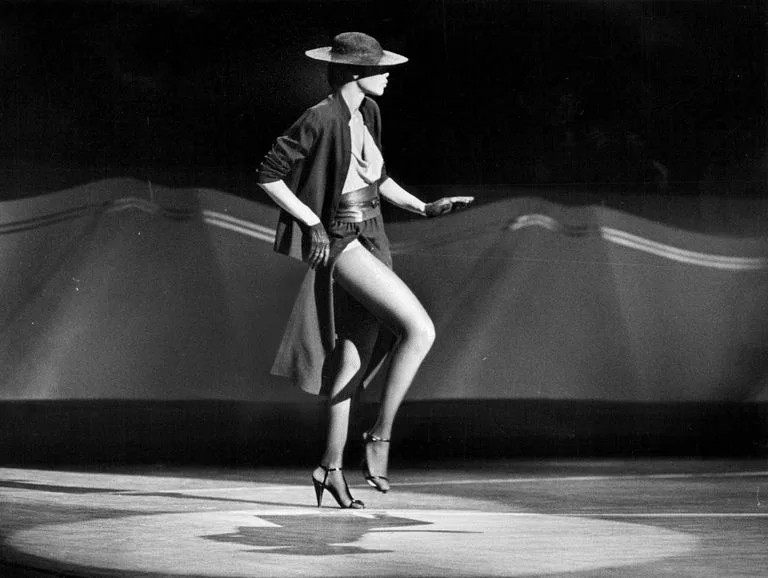
A model at the Ebony Fashion Fair in Denver, 1979
DENVER POSTGETTY IMAGES

By the time Moon brought the event to NYC in 1959, it was among the hottest Black social events in the country. That year with an Around the World theme the tour expanded to 51 cities in 31 states. Moon supervised as DeKnight and the Fashion Fair team transformed the Waldorf Astoria’s Grand Ballroom into a Black traveler’s paradise, replete with stage props that included hat boxes and luggage with the names of European destination cities fancifully written on them.

Press coverage that ran in the Amsterdam News and the New York Age played up the exclusive nature of the event, dubbing the two-hour show a “one night only affair.” It was a massive show that featured 200 garments and more than 400 accessories personally selected by DeKnight.

The models swayed and sashayed across the stage in haute couture garments by Arthur Jablow, Martier Raymond, Maggy Rouff, Harry Young , and others. With more than 3,000 people in attendance, the standing-room-only event was a roaring triumph. It further cemented Moon’s status as the grande dame of Black social and civic life in New York City.

Models at the Ebony Fashion Fair, Denver, Colorado, 1979
DENVER POSTGETTY IMAGES

Fashion show fundraisers like the Ebony Fashion Fair were ubiquitous in the Black community during World War II and well into the Black Power movement era. The Fashion Fair reflected the Johnsons’ particular brand of Black cultural elitism, evident in the mink stoles, silk chiffon dresses, hand-beaded gowns, and dripping diamonds that were on display during the shows.

But any crowd, regardless of income, taste level, or political leanings, could find a fashion show that catered to their interests and supported causes they could throw their hard-earned money behind. Designer to the stars Zelda Wynn Valdes directed a show for Harlem’s Salvation Army, much to the delight of the neighborhood’s elderly and infirm population.

The Black Nationalist organization African Jazz-Art Society & Studios toured its Naturally fashion show down the Eastern Seaboard and through the Midwest. Naturally’s Afro-sporting Grandassa Models wore African-inspired dresses and pantsuits, which they had designed and sewn themselves. Other community shows featured local folks from maids to transit and postal workers who modeled clothes from their closets. Styling out in garments of their own choosing affirmed that they were much more than uniform-wearing laborers. Churches, youth groups, sororities, and fraternities all found a sense of Black pride and Black economic self-help through fashion shows.

A model at an Ebony Fashion Fair sponsored by the Links in 2004
HELEN H. RICHARDSONGETTY IMAGES

Any crowd, regardless of income…could find a fashion show that catered to their interests

Moon and her contemporaries demonstrate how Black women have defined and redefined the contours of American philanthropy. “The biggest misconception is that Black women don’t give and that they’re not involved in philanthropy,” says Tyrone Freeman, author of Madam C.J. Walker’s Gospel of Giving and assistant professor of Philanthropic Studies at the Indiana University Lilly Family School of Philanthropy.

“The truth is, Black women are on the leading edge of generosity in their community.” Philanthropy for Black Americans has never been the province of the rich or even of the middle class. Black, community-based giving circles and mutual aid societies can be traced to the Caribbean and West Africa in the 17th and 18th centuries, Freeman explains. Enslaved and free Black women’s philanthropic efforts helped to fund the abolitionist movement, the Black Freedom movement of the 1950s and 1960s, and the Black Lives Matter movement today.

Studies have also shown that Black Americans give a larger percentage of their disposable incomes to nonprofits than other races. Thus, giving was foundational to Black life long before exorbitantly wealthy white capitalists became the face of modern philanthropy.

A model at the Ebony Fashion Fair, Denver, Colorado, 1979
DENVER POSTGETTY IMAGES

Reflecting in 1982 on her career as a philanthropist and lifelong civic leader, Moon wrote, “Neither I nor my family had sufficient income to make significant financial contributions to this cause [Black Freedom]. We did, however, have commitment, energy and time to contribute.” Bake sales, chicken dinners, galas, card parties, dance-a-thons: All those fundraising events helmed by Black women who were not generationally wealthywere their chance at Black world making.

A model at the Ebony Fashion Fair, Denver, Colorado, 1979
KENN BISIOGETTY IMAGES

Black women were giving and raising money to create the world they wanted to live in. Ebony Fashion Fair was a vehicle through which they could perform this women-centered freedom dreaming. The Fashion Fair ran annually through 2009, raising nearly $60 million in its 51-year run. Moon and countless others whose names have been lost to history were the visionaries who kept the touring show in circulation.

At the time of her death in 1990, Jet reported that Moon had raised more than $3 million through the National Urban League Guild, which, under her leadership since 1942, had grown to nearly 30,000 volunteers in 80 guilds nationwide.

Content courtesy of Harpers Bazaar & Nairobi fashion hub

How Ruth E. Carter Brought Zamunda’s Royal Fashion To Life In Coming 2 America

There’s plenty of overlap between Coming 2 America, the sequel to the 1988 comedy of the same name, and Black Panther, and not just because the former referenced Wakanda early on in the trailer. For one, both films center around the homecoming of American sons, who go to their ancestral (and fictitious) African countries with plans to ascend the throne.

And, secondly, they’re outfitted by costume designer Ruth E. Carter, who not only became the first Black woman to win the Oscar for her Afrofuturistic looks in the Ryan Coogler’s Marvel film but, last month, was awarded a Walk of Fame star (she’s only the second costume designer to receive the honor).

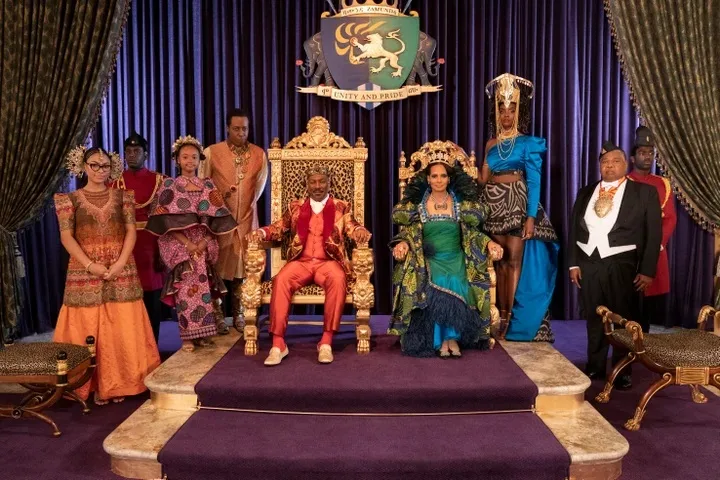
Taking place 30 years after the original, Coming 2 America follows King Akeem (Eddie Murphy) as he discovers that he has an adult son, Lavelle (Jermaine Fowler), in New York, and brings him to Zamunda as his heir. Like Black Panther‘s Wakanda, Zamunda’s combines a mix of African cultures and aesthetic traditions, which are reflected in Carter’s costumes in a vibrant display of traditional prints, fabrics, and silhouettes.

“I didn’t do the same kind of research that I did with Wakanda because I felt like this was more of a lighter, more comedic film. And so, it had to have more [about the] fashion,” Carter tells Refinery 29. “I remember the fashion from the first movie, and I really wanted to honor that, but also bring some new fashion that I was seeing around the internet.” As part of her research for the film, Carter looked at brands like Ikiré Jones founded by Nigerian-American designer Walé Oyéjidé, South Africa’s MAXHOSA by Laduma Ngxokolo and Mantsho by Palesa Mokubung, and the British designer Ozwald Boateng (of Ghanaian descent).

Carter’s talent for combining contemporary silhouettes and traditional designs is best embodied by the fashion of Akeem’s three daughters who are modern-day princesses with distinct looks. While the youngest Tinashe (Akiley Love) wears cutesy styles, the middle daughter Omma (Murphy’s real-life daughter Bella) opts for loose dresses in statement prints. The oldest, Meeka (Kiki Layne), the obvious Zamunda heir to everyone but Akeem, displays the most fearless style of the trio, preferring daring cutouts, tighter fits, and dramatic silhouettes. Her fight-training outfit, a bright yellow-and-green set with a fringe skirt, is especially powerful.

“KiKi told me that she wanted to wear the flag of Zamunda,” says Carter. After finding some flags online, her team sourced matching fabrics to make the outfit. “We added some movement by putting fringe on it and draping it so that it could have a nice flare as she moves around.

https://twitter.com/blkgirlculture/status/1368037594970394625?s=20

It was like a dance.” In a later scene, Meeka wears an athletic Puma halter dress with cutouts and armbands that read “democrazy” (photo below), created by Jahnkoy, the Brooklyn-based brand by Siberian-born Marusya Kazakova and Burkina Faso-born Burkindy.

For the many intricate crowns and headpieces featured in the film, Carter turned to Laurel DeWitt, a go-to designer for Beyoncé, Jennifer Lopez, and Lady Gaga. “In her showroom, there were crowns waiting for queens to wear them. And I scooped them all up and brought them with me to Atlanta,” she says.

“So anytime one of our princesses or our queen was getting ready in the makeup and hair trailer, there were four or five crowns to choose from to match their outfits.” This opulence extended to the rest of the jewelry, too, which Carter worked with several designers to create, including L.A.’s Melody Ehsani, whose designs feature Egyptian Queen Nefertiti, to create.

“We were really interested in everybody who was addressing the African diaspora with their work,” says Carter who, according to WWD, worked with 39 independent designers for the film. “We really were picky about [the pieces] having a regal appearance.”

https://www.instagram.com/p/CMCsYCRhNuz/?utm_source=ig_embed

For the celebrations shown in the film, which involved Carter dressing large groups of people for several scenes, the color was key. “We had dancers, we had a choir, we had the ballroom full of Zamundans. That just gave you license to be colorful,” says Carter. “When you look at a lot of African beadwork, you see a lot of brights, you see a lot of primary colors. When you look at [West African] Ankara fabrics, you see beautiful color combinations and prints and patterns.”

While the costume designer employed a whole spectrum of jewel-toned colors throughout the project, red was the prominent go-to, appearing on Akeem and the royal palace attendees. In one of the earlier scenes, the Rose Bearer Priestess (Garcelle Beauvais) enters the ballroom in a giant off-the-shoulder ballgown in red-and-gold, which Carter chose after being inspired by the East Indian influences in the first film.

“We had permission to mix cultures and borrow, because Zamunda’s not hidden by a hologram, it’s an immersive place,” she says, referring to Wakanda’s strategic isolation from global influences. After buying the dress off the rack from an Indian designer, Carter wasn’t sure where the gown would fit in.

“It took up half of my office,” says Carter. “Everyone was like, ‘What is wrong with Ruth?’” Once she learned of Beauvais’ scene, Carter says she knew the gown was meant for it: “It was such a good opening dress.”

Blue was another prominent color featured in the film. It first appears on Queen Lisa (Shari Headley) in the form of a sleeveless gown with cowrie bead detail, embellishments frequently used in West African designs. Upon arriving in Zamunda, Lavelle’s mother Mary (Leslie Jones) plucks a blue halter gown in an Ankara print with a matching headpiece from Lisa’s closet.

According to Carter, it was an homage to the original film. “[Costume designer] Deborah Nadoolman Landis had big shapes, big headdresses,” says Carter. “It was a really beautiful fit on Leslie… She could actually wear the outfit to the Oscars.”

While Carter collaborated with various designers for the film, most of the costumes were created from scratch. “They’re the Royal family, so I didn’t want anything like, ‘Hey, that’s Tom Ford.’ I didn’t want it to be recognizable from the racks in a store somewhere,” says Carter. “I wanted it to feel aspirational.”

But while Coming 2 America is distinctly its own film when it comes to fashion, Carter did include nostalgic nods to the original. When returning to New York, Akeem and Semmi (Arsenio Hall) wear the same gray and navy caped looks they first arrived in Queens in.

In a later scene, Akeem also wears the same Mets jacket, and Semmi a blazer. “We had to remake the blazer that Arsenio wore in the first film 30 years ago. That wasn’t easy. We had to paint it and find wool that was close in tone,” she says. “I looked at the sequel for the first time, and I could not see where the old footage ended and the actual new footage began.”

If that’s not the true mark of Ruth E. Carter, I don’t know what is.

Written By Irina Grechko

Content courtesy of Refinery 29 & Nairobi fashion hub 

Fashion Designer Kenneth Ize from Nigeria Is Getting Through It All

Nigerian fashion designer Kenneth Ize is happy. He is grateful. But he is also stressed, and frustrated. He is a ball of mixed emotions, as any designer is in the lead-up to a fashion show even if it’s digital especially in these epochal times. Asked what the last few months have been like for him, he replies, “tired, sad, but not crying.”

Ize is phoning from a car in Italy, where he had been for three weeks, finalizing his Fall 2021 collection. Those who have seen the new lineup have expressed surprise, and he expects a similar reaction once he presents it via video during Paris Fashion Week on March 10.

Ize is known for his joyful, vividly colored, and patterned clothes, defined by slim tailoring, a retro influence, and, most of all, a dedication to traditional Nigerian aso oke textiles. Like everyone else on the planet, his axis has been shifted by the coronavirus pandemic, but being based in Lagos, Nigeria comes with its own set of problems. Big ones.

recalling the high of last season’s collection, which delivered a celebratory message of political empowerment, homosexuality, diversity, and craft. He was quickly deflated by the reality check of the political turmoil at home.

Last October, a wave of mass protests swept Nigeria amid new reports of police brutality by the Special Anti-Robbery Squad (SARS), a Nigerian police unit with a long record of abuse and violence against civilians. Thinking about the social unrest put Ize in an edgier place than usual when developing his fall collection. One literal example is his use of the color black, as well as cutting down on the number of bright colors a signature in his palette in general. But there is more.

“I started noticing that I was researching, for example, snakes and serpents. I would research body tattoos. I would research dark things that I would not usually research because I’m African,” Ize says, noting the culture of superstition. “As an African person, your parents will tell you, ‘Oh my God, when you see the cat, you need to run because if the cat spit in your face, it’s going to blind you.'”

Ize found a way to reframe the narrative via ancient Egyptian lore, turning the negative connotations of snakes into a story of rebirth, which is how he’s choosing to see the state of Nigeria and the state of the world at large in the age of COVID-19. “It is a different side of me,” Ize says. “I want to speak about life. I want to speak about what is affecting me personally, what is affecting my friends, my loved ones, people dying around the world. I want people to also be aware of the problems happening in Nigeria.” His clothes are his way of having these conversations.


Indeed, Ize’s clothes have spoken volumes in a relatively short amount of time. They tell a story that’s quite different from most fashion brands on the world stage and have earned an audience of industry elites along the way. Born in Nigeria, Ize moved to Austria as a young child when his family was in political exile. He grew up there, his earnest interest in fashion nursed by his mother’s wardrobe of traditional Nigerian garments.

After studying fashion and design at the University of Applied Arts Vienna, where Bernhard Willhelm and Hussein Chalayan were among his teachers, Ize moved back to Lagos. He launched his label in 2016 with the intention of exploring West African identity and showcasing and preserving the centuries-old Yoruba textile handcraft by working with local artisans.

The collection toes the line of gender fluidity, though there are men’s and women’s clothes. Naomi Campbell and Alton Mason walked in Ize’s show during Arise Fashion Week in Lagos in 2019, the same year he was a finalist for the LVMH Prize, making a list that has rarely included African designers.

He made his debut at Paris Fashion Week with Campbell closing the show in February 2020, and later in the year, it was announced that Ize had been tapped for a capsule collection with the Karl Lagerfeld brand that will launch in April. Ize’s own retailers include Net-A-Porter, Dover Street Market in New York and Los Angeles, MatchesFashion, and Browns, among others.

The decision to take his collection to Paris was a game-changer, one decided over dinner in Vienna one night. “I wanted to do Paris because I just knew that was being in it,” Ize says. “If I’m going to show what we have in Nigeria, [which has] already been around for centuries and has not been paid attention to in fashion, where should I place it? It’s in Paris.”

Ize’s first show in the City of Lights was a success from a critical and sales point of view. “Seeing the money, I was like, ‘OK, I’m fine now. I’m good.'” But as any industry veteran can attest, one good season does not a sure thing make, and the struggle is always real. Especially when you’re operating independently, as Ize is.

Paris is the big leagues, and by showing there, Ize proved he could compete design-wise, but the elevation in profile also exposed problems in production. It’s one thing to celebrate West African textile craft and tradition. It’s another to rely on local artisans to scale up to meet the needs and orders of international luxury retailers.

“I need to sit down with the weavers to make sure that they get it right,” Ize says. “Sometimes things are just made badly, or when I go to the market to buy some yarn, I might be in traffic for six hours. I might not have an electricity supply for the whole day, and I’ll have to run my generator. Let me call it straight: It’s like working in a Third World country.”

Ize still develops his fabrics and designs with local artisans, but the collection is now produced in Europe, mainly Italy. He is committed to using his work to shine a light on African design and culture, traditional and modern, but he can’t help but vent about the lack of resources in Nigeria and the lack of unity and organization from the fashion community there, all of which was compounded by the pandemic and #EndSARS. “I have never experienced something that looks like a war zone in my life,” Ize says of the last six months. “We need support. This is almost a cry for help.”

On his wish list is mentorship from the luxury industry and more financial support, for himself as a self-proclaimed one-man-show entrepreneur, and also support to develop the African fashion industry. He channeled his frustrations into his new collection. “If you would ask me about how I feel about doing my fall collection, I feel sad and I feel very happy that I could for one time in my life just speak my truth and just go with my feeling 100%.”

Content courtesy of The Zero Report & Nairobi fashion hub

Rwanda to Host Commonwealth Fashion Council 2021 at The Commonwealth Heads of Government Meeting (CHOGM)

The fashion and textile industries will be a focus of this year’s Commonwealth Business Forum, an event associated with the Commonwealth Heads of Government Meeting (CHOGM), which will be held in Kigali, Rwanda. Business leaders, heads of government, ministers and senior policymakers will gather, in person, from 22 to 24 June 2021.

“Members of the Commonwealth Fashion Council such as Omoyemi Akelere, founder of Lagos Fashion Week, Claudia Lumor, the Ghanaian founder of Glitz Africa Magazine and the Glitz Style Awards, and Sheena Frida from the Kenyan Fashion Council have been invited to form panel discussions on re-thinking Pan-Commonwealth cooperation,” said Daniel Hatton, Chief Executive and Founder of the Commonwealth Fashion Council (CFC).

The CFC is a council of fashion industry leaders from across The Commonwealth, an association of 54 sovereign states headed by Queen Elizabeth II that is home to 2.4 billion people living on six continents. The 26th edition of the biennial CHOGM summit was due to take place last year before being postponed.

“Blue fashion, the sustainable use of ocean-based materials in fashion, will also be a topic of conversation, as East Africa enjoys untapped resources across its coastlines,” Hatton added.

As part of the forum’s programme on the global economic recovery, which spans issues such as supply chain disruptions and digital infrastructure, one session will be dedicated to the future of the textile industries in Commonwealth economies that were severely impacted by the pandemic.

“Fashion and textiles are crucial industries in many Commonwealth countries including Bangladesh, Pakistan, India, Sri Lanka, and Ghana. Government and fashion industry leaders will benefit from a post-Covid discussion about the future of the industry and its impact on sustainability, jobs, and rapid digital transition,” said Samantha Cohen, Chief Executive of the Commonwealth Enterprise and Investment Council.

Companies focused on the fiber to the fabric supply chain as well as apparel, footwear, and textile manufacturers such as Hussain Mills, Ravi Spinning Mills, MAS Holdings, Brandix, Hirdaramani Group, KAD Manufacturing, Shasha Denims, Nishat Group, Ha-meem Group, DBL Group, and Plexus Cotton, will attend from across the Commonwealth.

Content courtesy of Bussines of Fashion & Nairobi fashion hub

Viola Davis’ Golden Globes 2021 Gown Was Inspired by ‘African Royalty’

The night before the Golden Globes 2021, Viola Davis, who is nominated for her powerhouse performance in Ma Rainey’s Black Bottom, did not post pictures of herself getting awards show-ready. Instead of face masks and manicures (yes, actors still enlist full glam squads for Zoom), Davis posted the following message to the Hollywood Foreign Press Association, of which not a single member of the 87-strong governing body is Black.

Viola Davis’s 2021 Golden Globes fashion moment had an impactful meaning behind it.

The multi-hyphenate star wanted a dress that “spoke to her specifically as a Black woman,” according to her stylist Elizabeth Stewart, so Davis and Stewart collaborated with Black designer Claude Kameni, the founder of the Los Angeles-based brand Lavie By CK.

“It’s all about rethinking glamour and couture on the red carpet in the age of diversity and inclusivity,” Stewart tells PEOPLE. “It’s still an arena that needs cultural specificity.”

Calling the look “bold, vibrant and strong, just like Viola,” Stewart says the custom gown designed by Kameni was “inspired by African royalty.”

“Viola is royalty to me,” Stewart shares.

The dress features a silk cotton African print from a fabric that is made in Kameni’s home country of Cameroon, where the designer’s love of fashion began.

Davis has worn Kameni’s designs before, including in the spread for her 2020 Vanity Fair photoshoot. The designer took to social media to share her excitement over working with Davis once again on this memorable Golden Globes fashion moment.

“It was such a pleasure making this gown for @violadavis. Finding out she would wear it to the @goldenglobes awards was the icing on the cake. She definitely violated the gown. We wanted to create a dress that showcased viola in a different light but still make it her own sense of style. We nailed it,” she wrote.

Davis teamed her meaningful gown with Stuart Weitzman shoes, Pomellato jewelry, a Gabo Guzzo clutch, and a beautiful hair and makeup moment created by Jamika Wilson and Autumn Moultrie, respectively.

Makeup pro Moultrie created Davis’ glowy beauty moment using items from L’Oreal’s Revitalift Age Perfect makeup collection, including the Age Perfect Radiant Serum Foundation SPF 50 and Age Perfect Radiant Concealer with Hydrating Serum under the eyes and to highlight cheekbones.

On the eyes, Moultrie opted for a bold dark look using Age Perfect Satin Glide Eyeliner in Black followed by Voluminous Mascara. To complete the look, lips were lined with Age Perfect Anti Feathering Lipliner and topped with Age Perfect Satin Lipstick.

“We wanted the dress to take center stage, so we chose to keep Viola’s makeup minimal,” Moultrie tells PEOPLE. “I loved Viola’s choice of color for the dress because her bold choice redefines the notion of beauty and what it means to be adorned. Her choice recognizes the cultural specificity of African cloth as beautiful, as something to be worn to an awards show  not only the European designers.”

Moultrie adds that working with Davis is always a collaborative process.

“Viola always has a sense of what she wants before I walk in, but we work together to create the final look,” she says. “The dress always helps choose the direction for glam and for last night’s look, we wanted the powerful bold colors of the dress to take center stage.”

Davis has been a mainstay on the Golden Globes red carpet over the past decade and never shies away from bold color or statement-making accessories.

Some of her biggest hits?

The velvet Brandon Maxwell gown with a sweetheart neckline (teamed with a 111-carat Harry Winston necklace, plus a Tyler Ellis clutch!) worn in 2018, the vibrant yellow, one-shoulder Michael Kors Collection sequin gown in 2017, a romantic and ethereal crystal-covered Marchesa gown in 2016 and a strapless fire engine red Donna Karan Atelier creation in 2015.

Content courtesy of People & Nairobi fashion hub 

Kenyan Designers and Film Looku Debut at London Fashion Week Virtual Premiere

A film called Looku celebrating the work of 11 emerging Kenyan brands and designers, including Favoloso By Nanu, Genteel, Nisisi Factory, Sevaria, Enda and We Are NBO, premiered virtually on Saturday 20 February.

Brought about by the British Council’s Creative DNA programme and emerging creative consultancy Fashion Scout, Looku was co-directed by Sunny Dolat and Noel Kasyoka, who sought to recreate the creative vibrancy of Nairobi’s street style scene.

“Whenever we see images of Kenya and Nairobi, often, it’s the landscapes and wildlife that are often prioritised, over the incredible and dynamic people who live there,” said Dolat, a stylist, creative director and co-founder of The Nest Collective in the Kenyan capital who leads the creative direction of Creative DNA x Fashion Scout digital publication Wauzine. “Looku and Wauzine are a celebration of Nairobi, Nairobisms and Nairobians in their glory and flair, a love letter from us to us.”

The screening of Looku was accompanied by three panel talks on timely topics like fostering creativity during crisis, reimagining fashion’s capital cities (moderated by Helen Jennings, Wauzine features editor and co-founder of Nataal Media), and the value of more conscious design practices.

Fashion Scout 

Fashion Scout is a leading international consultancy and platform for nurturing, empowering and showcasing the future of fashion. Fashion Scout’s showcase events in London, Paris, Kyiv and other fashion weeks have presented a whole generation of designers to international media, buyers and influencers.

With 20 years of experience in the industry, our consultancy creates and delivers bespoke mentoring and development programmes for designers and organisations around the world  enabling designers to adapt and build sustainable businesses in these challenging times – and providing them with the opportunity to showcase their work to the international market.

Mettā Nairobi

Metta is Nest Groups’ physical and digital entrepreneurs’ network, where they bring together founders, entrepreneurs, policymakers, academics and investors
to collaborate. Nest Group is committed to creating collaborative environments that help corporates, start-ups, and our investors scale and succeed.

HEVA Fund

HEVA Fund is an East African fund that invests in the transformative social and economic potential of the creative economy sector in the East African region.

Since 2013, HEVA Fund has generated insights, rolled out investments, and innovated financial models specifically for the growth of the creative economy in east Africa.

HEVA Fund have invested in more than 40 creative businesses and directly supported over 8,000 creative practitioners in the fashion, digital content and television, live music and gaming value-chains. From Nairobi, Kampala, Kigali, Arusha, Lamu to Dar es salaam, the creative sector is where the creation of new products and new cultural experiences is happening.

They want to be at the forefront of helping producers of cultural goods and services to build high-value, profitable businesses where new ideas will come to life, and where the highest potential for great profits, great jobs, and happy people will be found.

Content courtesy of  Fashion Scout, Mettā Nairobi, HEVA Fund & Nairobi fashion hub 


5 Africa Fashion Designers open Digital Milan Fashion Week

MILAN – Five designers of African origin making their runway debuts opened Milan Fashion Week on Wednesday under the banner “We are Made in Italy,” having nurtured dreams deemed fanciful in their native countries and which faced considerable obstacles coming to fruition in their adopted Italy.

Joy Meribe, who is originally from Nigeria, started out working in Italy as a cultural mediator. Fabiola Manirakiza came to Italy as a child from Burundi and first trained as a doctor.

Morocco-born Karim Daoudi grew up in a shoe-making town in northern Italy and eventually took up the local craft. Pape Macodou Fall arrived from Senegal at age 22, applying his creative streak as an actor, film producer, figurative painter and now, as a designer of up-cycled garments.

Just one of the five, Cameroonian Gisele Claudia Ntsama, set her sights on Italy with the singular, already mature goal of a fashion career.

“When I told friends in Cameroon that I wanted to travel to Italy to become a fashion designer, they said, ‘Why are you going to study fashion. You know you are Black? What Italian fashion house is going to hire you?’” Ntsama said in a video chat with The Associated Press. “It is always in people’s minds that fashion is for white people. No and no and no!”

The designers, dubbed “the Fab Five,” are the first crop of creators nurtured through a collaboration between the National Chamber of Italian Fashion and the Black Lives Matter in Italian Fashion movement. Italian-Haitian designer Stella Jean, Milan-based African American designer Edward Buchanan and Afro Fashion Week Milano founder Michelle Ngonmo launched the movement last summer..

The collaboration has expanded from September, when the Fab Five’s collections hung in a showroom, to a bona fide runway show of five looks each for Milan Fashion Week, which is taking place 99% online.

For their fall-winter 2020-21 collections, the designers worked alongside suppliers and received mentoring from experts, all organized by the Italian fashion council, in an enhanced partnership that allowed them to take their creations to the next level.

A multi-ethnic team of stylists, hairdressers and makeup artists were on hand to prep for the runway show, and buyers can visit the collection on the National Chamber of Italian Fashion website.

Meribe worked with silk from the Como-based textile company Taroni, revisiting some of her earlier designs for her Modaf Designs brand that she has traditionally made from cotton renderings of traditional African wax textiles. Buchanan helped with fitting and encouraged Meribe to change ideas at the last minute without being too rigid,’ she said.’

“This collection is the most luxurious I have ever created. For this capsule collection, I went beyond every possibility,’’ Meribe said.

Daoudi worked with Veneto shoemaker Ballin, which produces footwear for Bottega Veneta, Chanel and Hermes, to create his collection of high heel sandals and boots. He said the association helped him produce more challenging designs.

“I hope that there are buyers,’’ he said, adding that the producer plans to help him fill any orders he receives.

Ntsama added knitwear to her distinctive swirling creations from hemp textiles. The artisanal looks are one-of-a-kind pieces fit for the celebrity red carpet and require hours of handcraftsmanship: She shapes the hemp with a kitchen utensil she prefers not to identify and irons it into place.

Fall, whose nom de artiste is Mokodu, took existing garments and upcycled them with hand-painted African-inspired images.

Manirakiza, whose Frida Kiza brand already has a following in the Marche region of Italy where she lives and in Rome, needed no outside financing for her collection inspired by Botticelli’s “Primavera,” which she intended as a sign of hope after the pandemic.

A babydoll dress with a gathered neckline and cape details is crafted from a black and white print of “Primavera” that emphasized the masterpiece’s floral elements. Manirakiza said staging a runway show was “a wonderful experience” that she hopes will help expand her brand.

Ngonmo established Afro Fashion Week Milano on her own after failing to get the attention of the industry before the Black Lives Matter movement inspired Black Italian creatives to draw attention to the limits they face. She said it was particularly important that the fashion world didn’t just stop with slotting the names of African-born designers into the fashion calendar, but gave them material support to grow.

“This has to have deeper roots. If we want to have true change, we need to offer the same opportunities that their colleagues have had, give them the same instruments and experiences,’’ Ngonmo said. “Let’s say this is a good first step.”

Content courtesy KSAT & Nairobi fashion hub

Three African Rising Fashion stars offer Standout Spring Looks

Personal heritage defines the collections of Thebe Magugu, Supriya Lele and Chopova Lowena. The two latter designers have just been nominated for the BFC/Vogue Designer Fashion Fund 2021

When it comes to articulating ideas of identity, the fashion world has traditionally drawn from external and historical sources to create evocative visions. As well as that may be, a new wave of young, emerging designers are instead looking inwards and expressing their sense of self in ways rarely seen before.

In Johannesburg, designer Thebe Magugu has used his collections to preserve and share South African culture. In London, British designer Supriya Lele mines her Indian heritage to create universally flattering silhouettes, while the rising label Chopova Lowena seeks out Bulgarian deadstock fabrics to create its signature folkloric skirts. Drawing on their individual heritage to champion diversity, these designers widen the fashion lens in ways worth applauding.

Supriya Lele

As distinct as traditional Indian dressing and 1990s minimalism may seem, these opposing forces come together memorably in the hands of the British designer Supriya Lele. Known for her layered silhouettes that flatter all female forms, Lele began exploring her Indian heritage while studying fashion at London’s Royal College of Art (she graduated with a master’s degree in 2016), where she also realised the importance of experimentation in her creative process.

https://www.instagram.com/p/CLb0eieAyTP/?utm_source=ig_embed

She realised that ‘the only way I can work is in 3D, on the stand, by draping’, she says. The process ‘really set the tone for what I wanted to do going forward’.

Lele was selected to show her graduate collection with the pioneering design incubator Fashion East. Her debut at London Fashion Week in 2017 was staged at Tate Modern, and she continued to show under Fashion East’s stewardship for the next three seasons. In 2019, Lele was sponsored by the British Fashion Council through its NewGen initiative and in 2020, she took home part of the LVMH Prize Fund, which was split equally among eight finalists (also including label Chopova Lowena, see opposite) for the first time.

Industry success aside, Lele’s brand of female-centric inclusivity could not feel more sincere. Her S/S21 collection exuded a panache inspired by how her all-female team dressed immediately after the first round of lockdown restrictions had eased.

Despite the logistical challenges of its creation, the collection encapsulates a youthful sexiness. Minimalist silhouettes are amplified by vibrant shades of azure blue and fuchsia; lingerie-inspired details such as delicate ties gingerly hold up draped tops and dresses; and embellishments such as sequins and lace add finesse. Several bright, Madras-check pieces were cut from fabric sourced from Lele’s grandmother’s favorite sari shop in Jabalpur, in the central Indian state of Madhya Pradesh.

‘What the pandemic has done is bring people together,’ Lele reflects. ‘Everyone has gone through this together and there’s an openness to the fashion system changing; to people showing in their own way and different methods. I think we all really needed that break in the cycle and rhythm.’

Chopova Lowena

Emma Chopova and Laura Lowena transform overstock and deadstock Bulgarian fabrics into oversized Victorian-style blouses and accordion-pleated skirts festooned with carabineers and large buckles. Their work is a triumphant celebration of heritage, cleverly transposed into a contemporary context.

Chopova, who was born in Bulgaria but grew up in the United States, and Lowena, who hails from Somerset in the UK, share a passion for craft and sustainability. ‘I became very interested in Bulgarian dress when I started my BA at Central Saint Martins in London and met Laura,’ says Chopova. ‘I was collecting and wearing traditional dress, but it wasn’t until we did our MA together that we started using Bulgarian references in our work.’

With an archive that spans wall hangings, needlepoints and aprons, the duo’s approach is highly individualised. ‘For us, it’s about having the right product in mind and the right usage for it,’ says Chopova.

The pair dissociate the fabrics from their origins by juxtaposing them with utilitarian silhouettes and sporty embellishments. For S/S21, they invited artists and craftspeople to contribute, a collaboration that resulted in jeans printed with painterly designs and T-shirts featuring abstract imagery made from cut-up Bulgarian postcards.

Thebe Magugu

Originally from the South African mining town of Kimberley, Thebe Magugu moved to Johannesburg to study fashion at LISOF. The 2019 winner of the LVMH Prize, he continues to fly the flag for African culture and provenance, using his eponymous label to highlight social issues, local standards of production, and the potential for growth.

‘I think African stories have often been told by people who aren’t African, and thus distort accounts for their own agenda,’ says Magugu. ‘The collections are inspired by real people and their stories; stories that are often missed in the history books.’

These include the human rights activists of Black Sash, who inspired Magugu’s S/S19 collection, and spies who worked for and against the apartheid regime, whom he interviewed for his S/S21 offering. The resulting collection brims over with hidden details, including patterns developed from the fingerprints of a former spy, and a print featuring official confessions provided by the South African government.

‘Instead of working abroad, I want to create something for us, by us. I think this sentiment, now more than ever, is shared by many designers working on the continent,’ says Magugu, who launched his online store.

Content courtesy of Wallpaper & Nairobi fashion hub


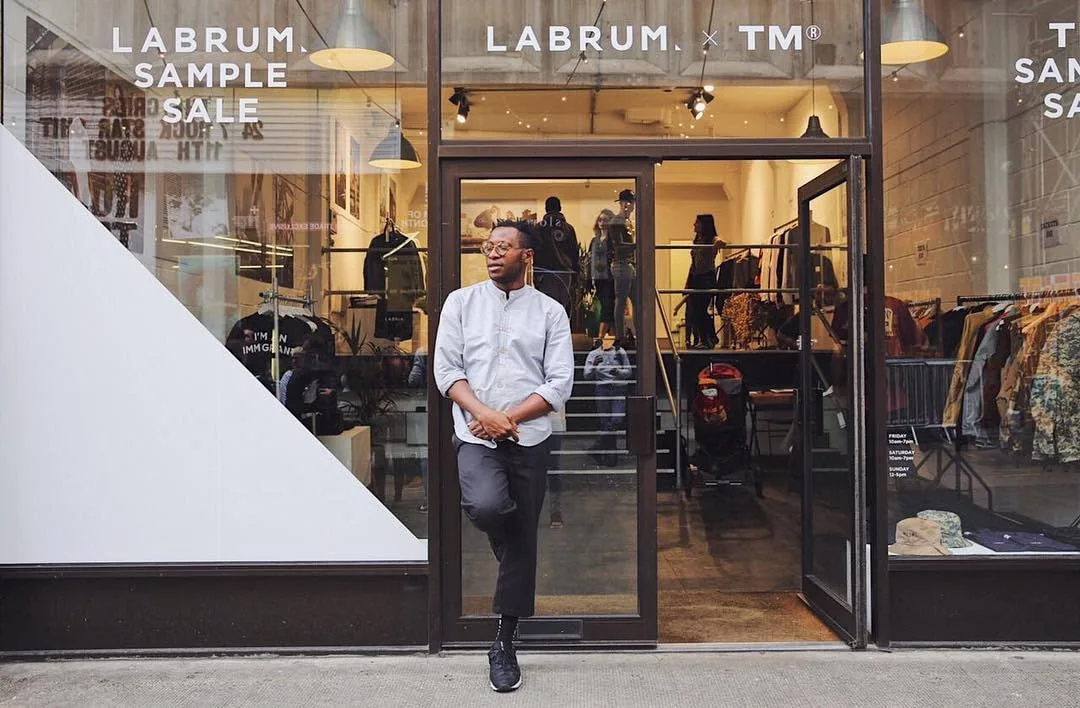
Labrum London Autumn/Winter 2021 at London Fashion Week

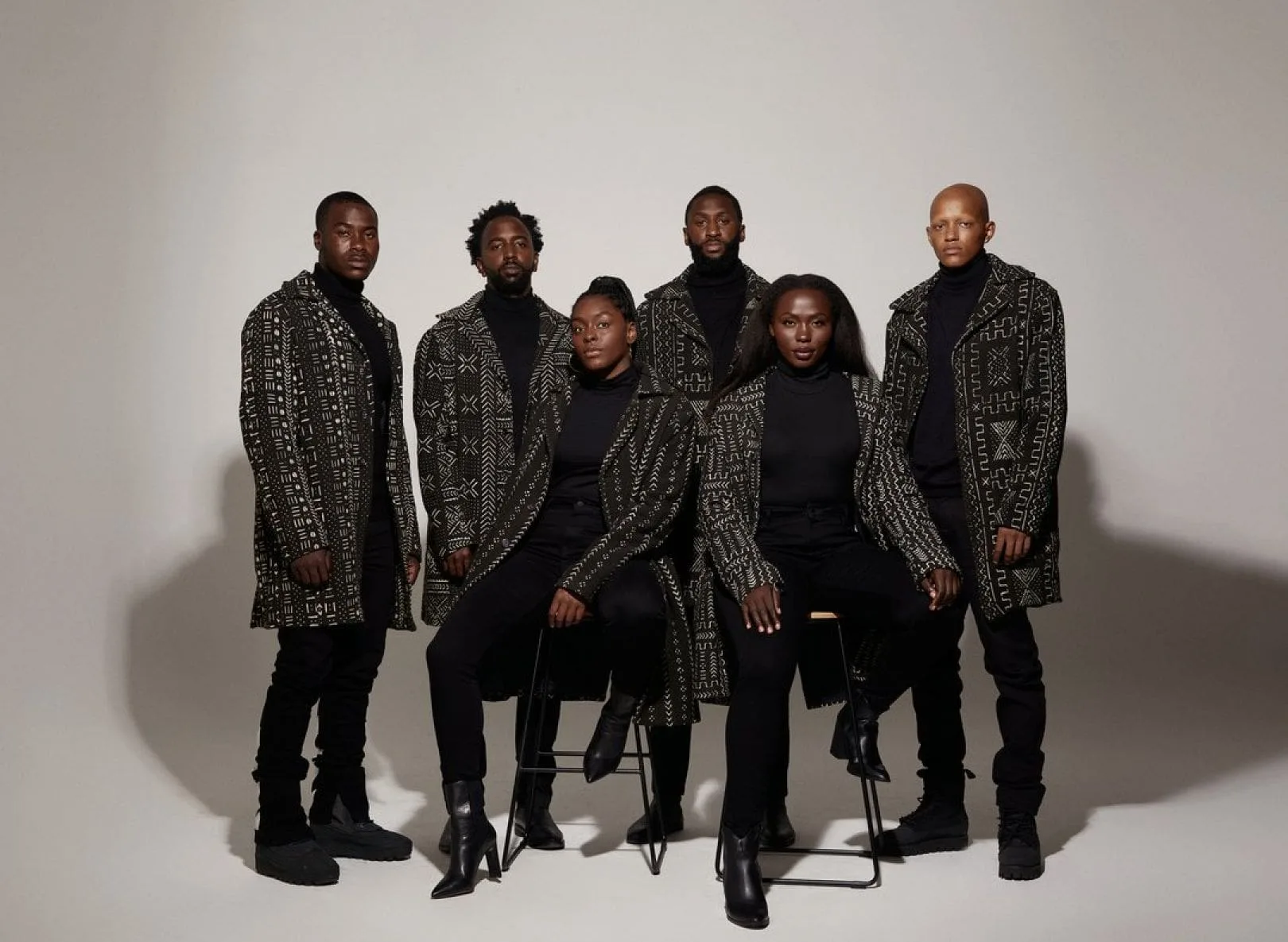
Not long ago, Menswear brand Labrum London launched their 2021 autumn-winter collection named St. Giles Blackbirds. The collection pays tribute to the black community that settled in London’s St. Giles area, which was full of soldiers, sailors, and former slaves.

The inspiration for the collection is Olaudah Equiano, a man who fought to abolish slavery. The collection itself utilised traditional West African fashion. For instance, the trench coat was a tribute to Equiano’s style. Moreover, the collection displayed loose-fitting tailored garments with voluminous statement ruffles with blue, beige and a pop of bright yellows.

Labrum London continued to be aware of the production wastage by having 70% of their collection made up of deadstock fabric and factory surplus from the previous seasons. They used durable materials to expand the longevity of their garments.

The accessories were made up of 80% upcycled materials.

Labrum dedicates this season to the heroes of ‘St Giles Blackbirds’. Celebrating a section of the black community comprising of; sailors, soldiers and former slaves that settled in England in the late 1700’s and soon found themselves poor, dispossessed and living within the St Giles in the Fields area of London.

Dubbed the ‘black poor’ they were dispassionately transported Sierra Leone following difficulty finding the solace that London once promised.

The group are symbolic of a familiar history and repeated tale: black people who are discarded as soon as they no longer prove useful. Today, the St Giles Blackbirds, defying the attempts of silence and being cast away, are highlighted by Labrum. Their story depicted as one of migration and great resilience.

Special thanks to; The blackbirds of St Giles Lesley Goddard at St Giles in the Fields Converse Creative Direction: Foday Dumbuya JulianKnxx
Art Direction & Styling: Ib Kamara Musicians: Anaiis Kwaye Sheila Maurice-Grey Ayo Salawu Jonathan Moko Godwin Sonzi Renato Paris
MUA: Riona O’Sullivan
MUA Assistants: Hiromi Iizuka Chiharu Wakabayashi
Hair Stylist: Shanice Noel
Hair Assistant s: Franklyn Nnamdi-Okwedy Nat Bury Muriel Cole Carl Murray Danielle Igor

Content courtesy of Our Culture & Nairobi fashion hub 


Naomi Campbell: “I’m proud to be part of a shoot with young creatives that are all my skin colour”

The iconic supermodel and activist tell i-D about being photographed at her home in Kenya by Luis Alberto Rodriguez, and her hopes for 2021.

https://www.instagram.com/p/CLrReXgp4EP/?utm_source=ig_embed

“When I’m in Kenya there are days that are less hectic than others, but I’m always busy. I’m being more careful at the moment because of the situation with COVID, but I still saw the kids in the orphanage that I support, I didn’t want to let them down. I want to reach as many people as I can. I want to spread awareness. There’s a part of me where, if I love something, I want the world to know about it.

“We were working, too we were even shooting on Boxing Day! We shot during the day, we shot at night, but the atmosphere on set with Carlos and Luis and Jawara was so fun, so easy there was always a boombox somewhere close by playing music that it just felt like we were taking pictures on vacation. I think that’s something you can see: in how at ease I am; in the style of Luis’ photography; in the way, Carlos has styled me, and in the fun, Jawara had with the hair. We got to be a bit flamboyant, and it didn’t really feel like work, to be honest, it just felt like dressing up!

https://www.instagram.com/p/CLkrPVCJhR4/?utm_source=ig_embed


“It was just very real, very organic. And I felt proud, humbled, and happy to be part of a shoot with young creatives that are all my skin color, and that I’m getting to work with them after so many years of being in the fashion industry. It’s very rare that this has happened to me. Luis is the third photographer of color I’ve worked with in my whole career in fashion.

“When you see these images, I hope you see that Kenya is beautiful, that Africa is beautiful. I think people now are going to really open their minds and start to understand that real beauty is in Africa. There are so many gems, so many hidden secrets. I’ve been coming here since 1994 and I’m still discovering things.

https://www.instagram.com/tv/CLpSpoLpgiJ/?utm_source=ig_embed

“At the end of 2020, my main reflections were on the need for us to move upward and forward. We have to rise to every challenge and walk through it. And we will get through it. 2021 is going to be a great year, we’ve just got a few more bumps to get through first. Nothing disappears overnight, but we just need to get through this first quarter. After that, I believe that this is going to be an amazing year.

“Actually, I don’t just believe it will be; I feel it will be.”

Credits

Photography: Luis Alberto Rodriguez
Fashion director: Carlos Nazario

Hair Jawara at Art Partner using Dyson.
Make-up by: Bimpe Onakoya and Naomi Campbell.
Styling assistance Raymond Gee, Christine Nicholson, Cari Pacheco, and Jennifer De La Cruz.
Hair assistance: Matt Benns.
Casting director: Samuel Ellis Scheinman for DMCASTING.
Post-production:  Michael Moser.
Model Naomi Campbell at Models1.

Content courtesy of I-D & Nairobi fashion hub


Has Black Lives Matter really helped African brands?

The first week of June 2020 was memorable for AAKS designer Akosua Afriyie-Kumi. She woke up to hundreds of orders via her brand’s online store a volume of sales unprecedented in the handbag line’s six-year history.

“I knew the Black Lives Matter protests were happening, but I was wondering, ‘why are people shopping?’,” she recalls. “Then I realised a lot of people were sharing lists of Black-owned businesses online. From June to December [the sales] never stopped.”

For AAKS, based in Ghana, direct sales online grew by 700 per cent in 2020 alone. From her home workshop in the city of Kumasi in the south of the country, the designer is preparing orders that have been placed by major international retailers over the past nine months.

Afriyie-Kumi initially felt under immense pressure when faced with the expectations of her new clients. “The majority expected me to operate like a major retailer,” Afriyie-Kumi says. “I’m a small business. It’s a challenge meeting the orders. I had the worry that they might cancel the orders.”

The process of completing one of Afriyie-Kumi’s handcrafted bags can take from 10 to 14 days. AAKS bags are handcrafted in raffia from palm tree leaves. The harvested leaves are left to dry in the sun before being soaked in vegetable dyes to create the striking colours so characteristic of the brand’s designs. Artisans in northern Ghana hand-weave the raffia; in the finishing process, leather linings, buckles, handles and straps are applied.

Fortunately for the AAKS designer, her new clients are firmly aligned with the sustainable and artisanal ethos of the brand. “Companies are so understanding once I explain the nature of our operations,” she says.

AAKS is one of many African brands that have become highly prized in the aftermath of last year’s anti-racism protests in the West. Calls to end racial and social injustice catalysed a global Black economic empowerment movement that has boosted Black businesses around the world.

South African brand Maxhosa Africa likewise experienced a surge in demand, with sales growing by 400 per cent in June 2000. The luxury knitwear line was featured on Beyonce’s Black Parade, a platform on the singer’s website to promote Black-owned brands. Its online store promptly sold out of stock.

Maxhosa’s knitwear, for both men and women, features colourful patterns in silk, mohair and wool thread that appear to have been dipped in a rainbow. They reference traditional beadwork and symbolism from designer Laduma Ngxokolo’s Xhosa heritage.

However, despite the positive interest, Ngxokolo says he is unenthusiastic about servicing the influx of requests from international retail platforms. “Unfortunately, they only place orders in very small quantities,” he explains. “Processing a very small order costs more than the revenue that you’re going to generate from that order.

I personally feel that some outlets want to be on trend, or they want some form of credibility or want to leverage demand I’ve created. It’s not really worth it.”

Ngxokolo says longer-lasting and lucrative opportunities are needed to promote meaningful change. “If you think back five years ago or even three years ago [about] boutiques that placed Black brands, do they still stock them to this day? No, they don’t.”

African Fashion Foundation creative consultant Arieta Mujay-Barg is also a touch sceptical about increased interest in African brands. “Of course, it’s a bit of a trend,” she says. Mujay-Barg has witnessed a revolving door of African creatives over the years. She urges caution: “This whole thing happened last year  let’s wait and see the figures.”

One of the most high-profile initiatives promoting Black economic empowerment is the 15 Percent Pledge, founded by Canadian designer Aurora James. The Pledge has called on major retailers to commit a minimum of 15 per cent of their shelf space to Black-owned businesses to reflect the size of the African American demographic in the US.

The Pledge has evolved into a nonprofit headed by racial justice activist LaToya Williams-Belfort. ‘We didn’t get to this moment overnight,” Williams-Belfort says. “It’s been years of systemic injustice to get here.

So it will take time and work for companies to take the pledge… Eighteen companies have taken the pledge since June and are making progress to hit their benchmarks and goals, while others are at varying stages of discussions with the organisation.”

Meanwhile, retailers are creating or reevaluating their internal diversity, equity and inclusion strategies. This includes major global luxury platform Net-a-Porter, which says its buyers are in the process of improving access for, and visibility of, Black-owned brands.

Mujay-Barg says social media has played a central role as a conduit for African creatives who have taken control of their narratives to deliver their aesthetic story directly to trend-spotting gatekeepers of the industry.

Fashion designer Phyllis Taylor highlights how social media influencers’ approval has driven transformative growth for her made-in-Africa brand Sika. The influencers’ followers post images and videos of her collections on Instagram. Sales have grown by 150 per cent since June.

Within less than a year, Taylor has hired 30 people to boost the production team in Ghana to 50 artisans. She is ramping up output to fulfil substantial orders for 10 new wholesalers keen to stock her hand-dyed batik prints.

For all the good news, Taylor describes the expansion as an uncomfortable period of “forced growth… With all these deadlines and interest we have to work at a different pace  that hasn’t been easy. I’ve gone from [being] a retailer to a production house. I’m grateful for it, but it’s not what we set out to do”.

Taylor is among a number of African designers who are considering broadening their handcrafted offer to include some elements of machine-made product.

The dilemma is that these brands could lose part of their allure and be potentially obliged to abandon some of the sustainable practices that originally attracted eco-conscious consumers and wholesalers.

Growth can be difficult but it’s also exciting and potentially transformative. “Before it was about the big brands the Guccis, the Louis Vuittons but now people are craving something different,” Afriyie-Kumi says. “The Black Lives Matter movement has prompted a conversation.”

Written By  Ijeoma Ndukwe

Content courtesy of  Vogue Business & Nairobi fashion hub 


Black Lives Matters ( BLM ) in Italian Fashion campaign shows early tangible results

MILAN – A digital runway show by five Italian fashion designers of African origin opens Milan Fashion Week on Wednesday, one tangible result of a campaign launched last summer by the only Black Italian designer belonging to the Milan fashion chamber.

After some initial resistance and a slow start, designer Stella Jean credits the Italian National Fashion Chamber with “a lot of goodwill” in pushing through an enhanced collaboration with five young designers, including financing and partnerships with Italian suppliers.

“When you want to do something, you can do them immediately,’’ said Jean, one of the founders of the Black Lives Matters in Italian Fashion campaign. “I have been working hard to overcome this gradualism that is part of the mentality of a certain part of the Italian fashion world.”

She launched the campaign with designer Edward Buchanan and Afro Fashion Week Milano founder Michelle Ngomo after fashion houses expressed solidarity with the Black Lives Matters Movement on Instagram, demanding that they put action behind their social media pledges. Jean, who got her break when Giorgio Armani invited her to show in his theater in 2014, said putting the spotlight on Italians of African origin is important to combat one of the first obstacles the campaign ran up against: claims that there were no Black designers in Italy.

The collaboration with the Italian fashion council will continue in September, when five new designers from Italy’s minority communities will be featured during fashion week. And Jean also is creating an event featuring designers and artisans from Africa, with the goal of creating partnerships between Italian fashion houses that can learn sustainable production methods in exchange for training in the global fashion system.

“You speak about sustainability ad nauseam here, and what I see is anything but sustainable, believe me. In the countries where I work, people are working 99% sustainably, as a result of necessity, of restriction or desire,’’ Jean said.

Jean is also working on a database of African artisanal techniques, fabrics, motifs and other cultural references. The Italian-Haitian designer sees the move as a bulwark against cultural appropriation that does not economically benefit Africans and a way to prevent racist gaffes.

Valerie Steele, director of the Fashion Institute of Technology’s museum, said many of Jean’s ideas could be replicated in the United States and elsewhere.

Steele, who has some of Jean’s creations in the collection, recorded a conversation with the Italian designer for Black History Month, which will be released on FIT’s YouTube channel on Thursday to highlight Jean’s role in shaking up Italian fashion.

Steele said Black designers are also under-represented in the United States, despite the role Black culture has had on inspiring fashion there.

“When a few years ago we did an exhibition on Black fashion designers, which was an international show Stella was in, we were very shocked to realize that on the Vogue.com, something ridiculous, like 1% of the designers who were featured were Black,” Steele said.

Content courtesy of ABC News & Nairobi fashion hub 

Ad