Tuesday 28th of July 2026

Nairobi, Kenya

The Folklore website is elevating African fashion and helping designers get paid

“This is going to change the way people value Africa and its creators,” says Amira Rasool, founder of The Folklore, which sells clothing and accessories from prominent and emerging African brands.

Amira Rasool is the founder and CEO of The Folklore, an online concept store featuring contemporary African design. She spoke to Doreen Lorenzo for “Designing Women“, a series of interviews with brilliant women in the design industry.

Doreen Lorenzo: How did you first find your way into design?

Amira Rasool: I was a creative kid. I used to make these huge forts out of sheets all around the house. I actually used to want to be an architect. Then I failed algebra my freshman year of high school. I figured if I was going to be an architect, math would be something I needed to be somewhat good at so people weren’t walking into their homes and sliding to the right because I measured wrong.

I thought, “what’s something creative that doesn’t have to do with math or science?” I started thinking more about interior design because my dream was always to build a community of really cool houses that all look different.

I also always had on these funky outfits, so my older sister Jasmine told me: “Why don’t you just get into fashion? You watch The Devil Wears Prada all the time. You’re always getting dressed up. You like writing.” She suggested that I start a blog back in 2010 when blogging was really big. So I created a blog and an alter ego named Bobby Austin posting outfits of me wearing purple wigs and black lipstick.


I also started taking FIT (Fashion Institute of Technology) pre-college courses, so all my friends were just as weird as me and also had wigs on. I grew up in South Orange, New Jersey, about 40 minutes outside of New York, so I would take the train on the weekends, do my college courses, then go hang out with my friends afterward. I was one of those weird creative kids that were also a great athlete and could fit into both worlds.

Doreen Lorenzo: What made you decide to go from creative fashion blogger to entrepreneur and founder of The Folklore?

Amira Rasool: The blog is what let me know that my passion was in writing. I started doing internships as soon as I got into college floating between interning for fashion market editors, stylists, and features editors. I interned at Women’s Wear Daily and I really loved that experience. From there, I went to Marie Claire, which was really eye-opening for me because I was given a lot of responsibility.

It made me understand how hectic magazines were and learn how to take charge without anyone telling me to. I realized I was super good at organizing and providing top-quality results. My boss from Marie Claire then referred me to V Magazine where I interned in their fashion department, and later their editorial department.

During my internships, I made really good connections with the people I worked for. They saw I was a hard worker. By the time I graduated, I had multiple magazine jobs that I was up for. People in media know it’s so hard to get that entry-level job when you’re coming out of college. The fact that I had my choice between jobs was a testament to me busting my butt and always being reliable. I ultimately ended up choosing V Magazine where I worked full time for a year as their fashion coordinator before I decided to start The Folklore.

Doreen Lorenzo: What made you decide to branch out and start The Folklore?

Amira Rasool: When I was majoring in journalism at Rutgers, I started taking a bunch of African American studies courses. By the end of my junior year, I had more African American studies courses under my belt than I did journalism. I decided to change my major to African American studies. Growing up they did not do a good job teaching us about Black history outside of Martin Luther King, Harriet Tubman, and the few other Black people they let us learn about. So when I started taking those African American studies courses and started learning about so many inspiring people, I was shocked.

I became obsessed with Black literature and started reading James Baldwin, W.E.B. Du Bois, Toni Morrison, and a lot of the people who came from the Harlem Renaissance. I learned how the creatives during the time we’re able to create these great publications like Fire!! that was a part of activism, but more creative activism. I related to that because I felt like I was put on this earth to uplift my people in some powerful way. I had this fire under me to go out and make an impact within the Black community.

Fashion is very whitewashed. I’ve always been the only Black girl in every meeting and every company I go to, and they weren’t having conversations about race like they are now. I started feeling like fashion was so vain. People thought that they were curing cancer with what they were doing, but they weren’t even going beyond surface-level conversations. I liked fashion and felt I shouldn’t have to give up what I love because I want to pursue something that’s a little bit more serious and impactful. How could I do both? That’s when I started thinking about Africa.

I had taken a trip there my senior year of college and fell in love. I went to South Africa and discovered all of these cool designers, creatives, and music. I bought a bunch of clothing and accessories when I was there and started wearing them when I came back to the United States and people were stopping me and asking: “Where did you get those sandals from? Where did you get this hat from?”

I started thinking about getting access to these products again, but most of them did not have e-commerce sites and weren’t sold at retailers outside of Africa. I didn’t have access to them unless I hopped back on the plane. That’s when I came up with the idea. Why is there a whole continent full of designers that cannot penetrate the international market, and how can I help them do that? How can I use my resources, network, and overall creativity to find a way for them to have access?

I started creating a business plan and applied to the University of Cape Town for a master’s degree in African studies. Once I got in, I moved to Cape Town, South Africa, and lived there for two years learning about the designers and what they needed from an e-commerce platform. At the same time, I got to learn about various African cultures.

That informed how I thought about communicating these designers’ stories. Halfway through my program I ended coming back to the U.S. to launch The Folklore site.

Doreen Lorenzo: How did you find these African designers and fashion styles you wanted to represent through The Folklore?

Amira Rasool: There’ve always been so many different stereotypes of Africa. There’s definitely poverty in Africa, but at the end of the day, that’s not only Africa, and Africa is not the only place with widespread poverty. For a whole continent to be defined by that is ridiculous. I wanted to be able to reflect that and show this whole renaissance happening with designers incorporating their heritage into modern and contemporary forms of expression.

https://www.instagram.com/p/CLpAJH-gOx5/?utm_source=ig_embed

Being on the continent was really important because I was able to touch and feel the fabrics and most importantly, connect with the designers. I knew I wanted to stay away from Ankara prints or anything traditional because I wanted everyone to be able to wear these pieces.

I wasn’t going to be the American that came in and started selling white people Ankara prints, advocating for cultural appropriation. I also did not want to be a cultural appropriator myself, so I purposely go after pieces that can be worn comfortably by anyone.

There was already a market that catered to Black people who wanted to feel connected to the continent and their cultural heritage. I wanted to provide that counter-narrative where someone could see a piece and not know where it was created. People universally can wear these products and we know the only reason why these designs are as unique as they are is because of these designers combining their heritage, culture, and their natural environment in Africa that’s not typically portrayed.

When you don’t know that this place exists, everything’s going to look new and unique to the outside person. I’m excited to be the person to help the designers introduce this counter-narrative and share their unique stories outside of Africa.

Doreen Lorenzo: The Folklore became a 2021 Techstars accelerator company. What does this mean to you and for the future of The Folklore?

Amira Rasool: It means a lot.

The network, resources, and overall knowledge Techstars provides are extremely beneficial. I like to think that when The Folklore got into TechStars all of our brands got Techstars. Whatever knowledge or resources we absorb during the program, we are going to make sure we share with our brands.

One of Techstars’ mission statements is “Give first” and everyone who I’ve encountered at Techstars has really embraced that mission. So much of the focus is on how to help you raise money and build a profitable company. That’s a great thing because they realize what it takes to build a great company. Everyone’s been super supportive, so I’m really excited and honored to be a part of it.

Doreen Lorenzo: How do you believe Folklore will change the way people view the fashion industry in Africa?

Amira Rasool: This is going to change the way people value Africa and its creators.

The value that was placed on African designers before was the number of clicks their creativity could generate for fashion publications featuring African brand look books. They didn’t care that the press these brands were getting did not convert to dollars because a lot of the brands did not have a website to link back to. It was an afterthought.

We created a dialogue around economic opportunity and put pressure on the industry to actually put their money where their mouth is. Now they can write about these brands and link them back to The Folklore. We want to put as much value on these designers as people put on Gucci or Alexander McQueen, and honestly, there’s more value in these goods because most of them are unique and sustainably made.

People pay luxury prices because they were told these brands are important. When we’re pricing our goods, it’s really because it costs a lot of money to ship these products from Africa to the U.S. The e-commerce infrastructure has been set up, whether consciously or not, to exclude people like us.

If you’re truly committed to diversifying the designers that you work with and fighting for equity and inclusion, you have to make compromises that you would have otherwise not made for more established brands. When you’re paying for a product from our website, you’re buying something because it is amazing. People have asked to donate to my company but no, you can invest in my company, our brands, and their products. We don’t want charity.

https://www.instagram.com/p/CEsKKBOlrHK/?utm_source=ig_embed

Nobody wants charity. I want to change the way that people talk about contributing to Africa and help people recognize the value in not only how these products are produced, but in the story and the exclusivity behind them.

Written By Doreen Lorenzo

Content courtesy of Fast Company & Nairobi fashion hub 

Three African Rising Fashion stars offer Standout Spring Looks

Personal heritage defines the collections of Thebe Magugu, Supriya Lele and Chopova Lowena. The two latter designers have just been nominated for the BFC/Vogue Designer Fashion Fund 2021

When it comes to articulating ideas of identity, the fashion world has traditionally drawn from external and historical sources to create evocative visions. As well as that may be, a new wave of young, emerging designers are instead looking inwards and expressing their sense of self in ways rarely seen before.

In Johannesburg, designer Thebe Magugu has used his collections to preserve and share South African culture. In London, British designer Supriya Lele mines her Indian heritage to create universally flattering silhouettes, while the rising label Chopova Lowena seeks out Bulgarian deadstock fabrics to create its signature folkloric skirts. Drawing on their individual heritage to champion diversity, these designers widen the fashion lens in ways worth applauding.

Supriya Lele

As distinct as traditional Indian dressing and 1990s minimalism may seem, these opposing forces come together memorably in the hands of the British designer Supriya Lele. Known for her layered silhouettes that flatter all female forms, Lele began exploring her Indian heritage while studying fashion at London’s Royal College of Art (she graduated with a master’s degree in 2016), where she also realised the importance of experimentation in her creative process.

https://www.instagram.com/p/CLb0eieAyTP/?utm_source=ig_embed

She realised that ‘the only way I can work is in 3D, on the stand, by draping’, she says. The process ‘really set the tone for what I wanted to do going forward’.

Lele was selected to show her graduate collection with the pioneering design incubator Fashion East. Her debut at London Fashion Week in 2017 was staged at Tate Modern, and she continued to show under Fashion East’s stewardship for the next three seasons. In 2019, Lele was sponsored by the British Fashion Council through its NewGen initiative and in 2020, she took home part of the LVMH Prize Fund, which was split equally among eight finalists (also including label Chopova Lowena, see opposite) for the first time.

Industry success aside, Lele’s brand of female-centric inclusivity could not feel more sincere. Her S/S21 collection exuded a panache inspired by how her all-female team dressed immediately after the first round of lockdown restrictions had eased.

Despite the logistical challenges of its creation, the collection encapsulates a youthful sexiness. Minimalist silhouettes are amplified by vibrant shades of azure blue and fuchsia; lingerie-inspired details such as delicate ties gingerly hold up draped tops and dresses; and embellishments such as sequins and lace add finesse. Several bright, Madras-check pieces were cut from fabric sourced from Lele’s grandmother’s favorite sari shop in Jabalpur, in the central Indian state of Madhya Pradesh.

‘What the pandemic has done is bring people together,’ Lele reflects. ‘Everyone has gone through this together and there’s an openness to the fashion system changing; to people showing in their own way and different methods. I think we all really needed that break in the cycle and rhythm.’

Chopova Lowena

Emma Chopova and Laura Lowena transform overstock and deadstock Bulgarian fabrics into oversized Victorian-style blouses and accordion-pleated skirts festooned with carabineers and large buckles. Their work is a triumphant celebration of heritage, cleverly transposed into a contemporary context.

Chopova, who was born in Bulgaria but grew up in the United States, and Lowena, who hails from Somerset in the UK, share a passion for craft and sustainability. ‘I became very interested in Bulgarian dress when I started my BA at Central Saint Martins in London and met Laura,’ says Chopova. ‘I was collecting and wearing traditional dress, but it wasn’t until we did our MA together that we started using Bulgarian references in our work.’

With an archive that spans wall hangings, needlepoints and aprons, the duo’s approach is highly individualised. ‘For us, it’s about having the right product in mind and the right usage for it,’ says Chopova.

The pair dissociate the fabrics from their origins by juxtaposing them with utilitarian silhouettes and sporty embellishments. For S/S21, they invited artists and craftspeople to contribute, a collaboration that resulted in jeans printed with painterly designs and T-shirts featuring abstract imagery made from cut-up Bulgarian postcards.

Thebe Magugu

Originally from the South African mining town of Kimberley, Thebe Magugu moved to Johannesburg to study fashion at LISOF. The 2019 winner of the LVMH Prize, he continues to fly the flag for African culture and provenance, using his eponymous label to highlight social issues, local standards of production, and the potential for growth.

‘I think African stories have often been told by people who aren’t African, and thus distort accounts for their own agenda,’ says Magugu. ‘The collections are inspired by real people and their stories; stories that are often missed in the history books.’

These include the human rights activists of Black Sash, who inspired Magugu’s S/S19 collection, and spies who worked for and against the apartheid regime, whom he interviewed for his S/S21 offering. The resulting collection brims over with hidden details, including patterns developed from the fingerprints of a former spy, and a print featuring official confessions provided by the South African government.

‘Instead of working abroad, I want to create something for us, by us. I think this sentiment, now more than ever, is shared by many designers working on the continent,’ says Magugu, who launched his online store.

Content courtesy of Wallpaper & Nairobi fashion hub


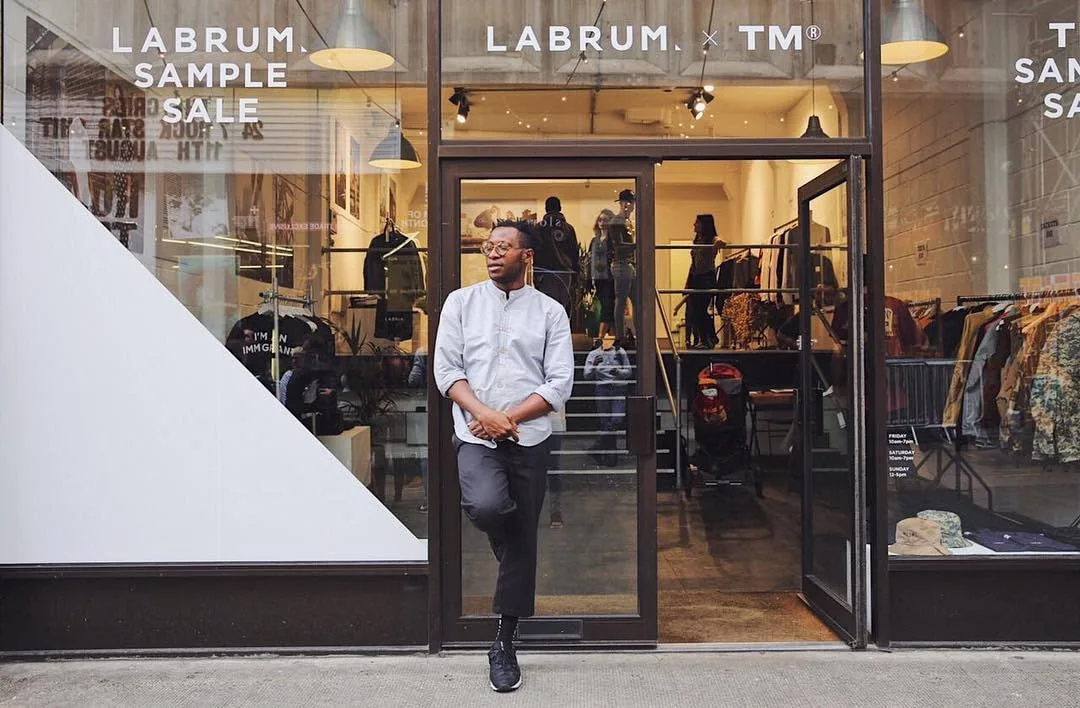
Labrum London Autumn/Winter 2021 at London Fashion Week

Not long ago, Menswear brand Labrum London launched their 2021 autumn-winter collection named St. Giles Blackbirds. The collection pays tribute to the black community that settled in London’s St. Giles area, which was full of soldiers, sailors, and former slaves.

The inspiration for the collection is Olaudah Equiano, a man who fought to abolish slavery. The collection itself utilised traditional West African fashion. For instance, the trench coat was a tribute to Equiano’s style. Moreover, the collection displayed loose-fitting tailored garments with voluminous statement ruffles with blue, beige and a pop of bright yellows.

Labrum London continued to be aware of the production wastage by having 70% of their collection made up of deadstock fabric and factory surplus from the previous seasons. They used durable materials to expand the longevity of their garments.

The accessories were made up of 80% upcycled materials.

Labrum dedicates this season to the heroes of ‘St Giles Blackbirds’. Celebrating a section of the black community comprising of; sailors, soldiers and former slaves that settled in England in the late 1700’s and soon found themselves poor, dispossessed and living within the St Giles in the Fields area of London.

Dubbed the ‘black poor’ they were dispassionately transported Sierra Leone following difficulty finding the solace that London once promised.

The group are symbolic of a familiar history and repeated tale: black people who are discarded as soon as they no longer prove useful. Today, the St Giles Blackbirds, defying the attempts of silence and being cast away, are highlighted by Labrum. Their story depicted as one of migration and great resilience.

Special thanks to; The blackbirds of St Giles Lesley Goddard at St Giles in the Fields Converse Creative Direction: Foday Dumbuya JulianKnxx
Art Direction & Styling: Ib Kamara Musicians: Anaiis Kwaye Sheila Maurice-Grey Ayo Salawu Jonathan Moko Godwin Sonzi Renato Paris
MUA: Riona O’Sullivan
MUA Assistants: Hiromi Iizuka Chiharu Wakabayashi
Hair Stylist: Shanice Noel
Hair Assistant s: Franklyn Nnamdi-Okwedy Nat Bury Muriel Cole Carl Murray Danielle Igor

Content courtesy of Our Culture & Nairobi fashion hub 


Has Black Lives Matter really helped African brands?

The first week of June 2020 was memorable for AAKS designer Akosua Afriyie-Kumi. She woke up to hundreds of orders via her brand’s online store a volume of sales unprecedented in the handbag line’s six-year history.

“I knew the Black Lives Matter protests were happening, but I was wondering, ‘why are people shopping?’,” she recalls. “Then I realised a lot of people were sharing lists of Black-owned businesses online. From June to December [the sales] never stopped.”

For AAKS, based in Ghana, direct sales online grew by 700 per cent in 2020 alone. From her home workshop in the city of Kumasi in the south of the country, the designer is preparing orders that have been placed by major international retailers over the past nine months.

Afriyie-Kumi initially felt under immense pressure when faced with the expectations of her new clients. “The majority expected me to operate like a major retailer,” Afriyie-Kumi says. “I’m a small business. It’s a challenge meeting the orders. I had the worry that they might cancel the orders.”

The process of completing one of Afriyie-Kumi’s handcrafted bags can take from 10 to 14 days. AAKS bags are handcrafted in raffia from palm tree leaves. The harvested leaves are left to dry in the sun before being soaked in vegetable dyes to create the striking colours so characteristic of the brand’s designs. Artisans in northern Ghana hand-weave the raffia; in the finishing process, leather linings, buckles, handles and straps are applied.

Fortunately for the AAKS designer, her new clients are firmly aligned with the sustainable and artisanal ethos of the brand. “Companies are so understanding once I explain the nature of our operations,” she says.

AAKS is one of many African brands that have become highly prized in the aftermath of last year’s anti-racism protests in the West. Calls to end racial and social injustice catalysed a global Black economic empowerment movement that has boosted Black businesses around the world.

South African brand Maxhosa Africa likewise experienced a surge in demand, with sales growing by 400 per cent in June 2000. The luxury knitwear line was featured on Beyonce’s Black Parade, a platform on the singer’s website to promote Black-owned brands. Its online store promptly sold out of stock.

Maxhosa’s knitwear, for both men and women, features colourful patterns in silk, mohair and wool thread that appear to have been dipped in a rainbow. They reference traditional beadwork and symbolism from designer Laduma Ngxokolo’s Xhosa heritage.

However, despite the positive interest, Ngxokolo says he is unenthusiastic about servicing the influx of requests from international retail platforms. “Unfortunately, they only place orders in very small quantities,” he explains. “Processing a very small order costs more than the revenue that you’re going to generate from that order.

I personally feel that some outlets want to be on trend, or they want some form of credibility or want to leverage demand I’ve created. It’s not really worth it.”

Ngxokolo says longer-lasting and lucrative opportunities are needed to promote meaningful change. “If you think back five years ago or even three years ago [about] boutiques that placed Black brands, do they still stock them to this day? No, they don’t.”

African Fashion Foundation creative consultant Arieta Mujay-Barg is also a touch sceptical about increased interest in African brands. “Of course, it’s a bit of a trend,” she says. Mujay-Barg has witnessed a revolving door of African creatives over the years. She urges caution: “This whole thing happened last year  let’s wait and see the figures.”

One of the most high-profile initiatives promoting Black economic empowerment is the 15 Percent Pledge, founded by Canadian designer Aurora James. The Pledge has called on major retailers to commit a minimum of 15 per cent of their shelf space to Black-owned businesses to reflect the size of the African American demographic in the US.

The Pledge has evolved into a nonprofit headed by racial justice activist LaToya Williams-Belfort. ‘We didn’t get to this moment overnight,” Williams-Belfort says. “It’s been years of systemic injustice to get here.

So it will take time and work for companies to take the pledge… Eighteen companies have taken the pledge since June and are making progress to hit their benchmarks and goals, while others are at varying stages of discussions with the organisation.”

Meanwhile, retailers are creating or reevaluating their internal diversity, equity and inclusion strategies. This includes major global luxury platform Net-a-Porter, which says its buyers are in the process of improving access for, and visibility of, Black-owned brands.

Mujay-Barg says social media has played a central role as a conduit for African creatives who have taken control of their narratives to deliver their aesthetic story directly to trend-spotting gatekeepers of the industry.

Fashion designer Phyllis Taylor highlights how social media influencers’ approval has driven transformative growth for her made-in-Africa brand Sika. The influencers’ followers post images and videos of her collections on Instagram. Sales have grown by 150 per cent since June.

Within less than a year, Taylor has hired 30 people to boost the production team in Ghana to 50 artisans. She is ramping up output to fulfil substantial orders for 10 new wholesalers keen to stock her hand-dyed batik prints.

For all the good news, Taylor describes the expansion as an uncomfortable period of “forced growth… With all these deadlines and interest we have to work at a different pace  that hasn’t been easy. I’ve gone from [being] a retailer to a production house. I’m grateful for it, but it’s not what we set out to do”.

Taylor is among a number of African designers who are considering broadening their handcrafted offer to include some elements of machine-made product.

The dilemma is that these brands could lose part of their allure and be potentially obliged to abandon some of the sustainable practices that originally attracted eco-conscious consumers and wholesalers.

Growth can be difficult but it’s also exciting and potentially transformative. “Before it was about the big brands the Guccis, the Louis Vuittons but now people are craving something different,” Afriyie-Kumi says. “The Black Lives Matter movement has prompted a conversation.”

Written By  Ijeoma Ndukwe

Content courtesy of  Vogue Business & Nairobi fashion hub 


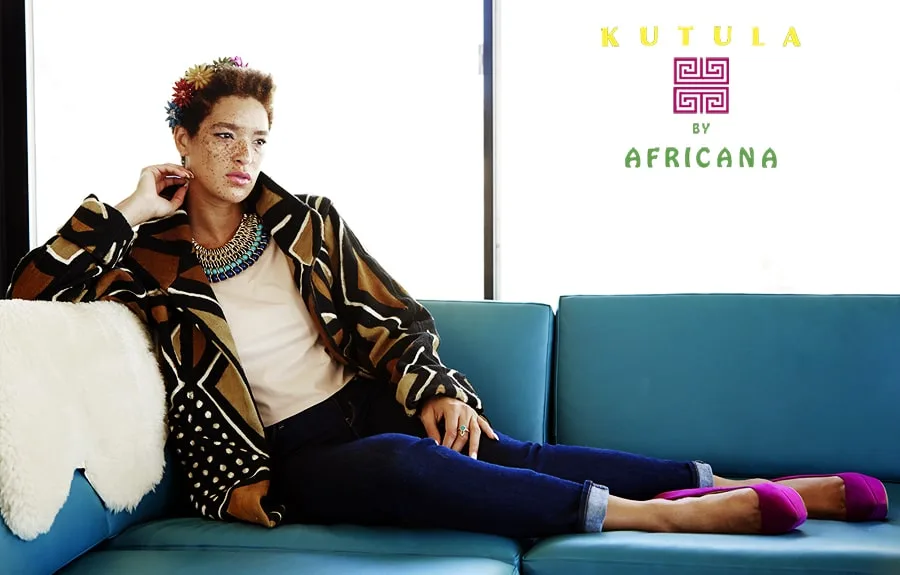
Kutula Clothing Celebrates its 50th Anniversary as a Leader in African Inspired Fashion

Kutula’s clothes are rich in color and African history. They’re a favorite on the red carpet. Stars like David Oyelowo, Angela Bassett, Lupita Nyongo, and the late Chadwick Boseman, and their family members wore them to premieres.

Kutula itself is a family story. Francesca Anuluoha started it in 1971 after she arrived in Los Angeles from Zambia. She told NBC4 about the 70s when her daughters were little and African fashion was beginning to take off as an individual expression.

“We’re adventurers, we were allowed to be adventurers and we did what we wanted to do,” said Anuluoha.

Fifty years later, Kutula’s clothes are once again the rage. The Black Lives Matter movement, and a summer of racial justice protests and awakening, have led to a new generation of Angelenos looking to express their African heritage.

“Individually people have come to us and made a decision to now start wearing clothing in their daily life,” says Nyambo Anuluoha Francesca’s daughter and co-owner of Kutula.

From formal wear, like the senator suit, a favorite of Boseman’s, to more casual wear like the dashiki, all of the clothes at Kutula have roots in Africa.
Francesca has now handed the business to her two daughters, Nyambo and Kay, who say they don’t only see each other as family, but also the community around them.

Everyone is a family member, everyone is part of the tribe, say Nyambo and Kay.

Those interested in getting an outfit, being fitted, or shopping off the rack at Kutula can visit the store in View Park-Windsor Hills. The clothes go from $50 and up.

Francesca is retired but she still travels regularly from Zambia to Los Angeles, keeping an eye on new prints, and appreciating that her daughter’s dedication has enabled Kutula to reach 50 years and beyond.

Content Courtesy of NBC Los Angeles & Nairobi fashion hub 

Step into Elsa Majimbo’s World with an all-new Collaboration Presented by Valentino

Valentino is proud to announce a special project with writer, actor, and comedian Elsa Majimbo, culminating into a soon-to-be-released collaboration. Stay tuned to find out more.

Elsa X Valentino

One of the brightest stars to emerge from 2020 is Kenya-based social media sensation, Elsa Majimbo. If you haven’t seen her viral Instagram videos, which often feature tight closeups of Majimbo rocking her Matrix-style tiny sunglasses and always showcase her infectious laugh, then you’ve likely caught her being interviewed by Anderson Cooper or heard her voice on TikTok or Instagram Reels. (Majimbo’s now-signature quotes have become a popular soundtrack for many content creators’ social media posts.)

In a year marred by anxiety and uncertainty, Majimbo’s hilarious videos have provided joy for millions around the world and continue to do so. With a reach of 1.3 million Instagram followers (and an engaged online community that only continues to thrive), and partnership deals with the likes of Fenty and MAC, the 19-year-old celebrity is proving that when it comes to fame, there are no boundaries or borders.

Majimbo’s international popularity is also proof that there’s a reward in continuously catching fans by surprise. Like stealth chess player Beth Harmon, the main character in Netflix’s The Queen’s Gambit, the beauty is that no one sees her coming.

Most recently, Majimbo dropped an ASMR-style song called “Snack Queen,” produced by Cautious Clay, to strategically coincide with U.S. Thanksgiving. It’s also an ode to Majimbo’s signature snacking habit on social media and after all, has there ever been an ASMR trap song about snacks? Well now, there is.

So who is the Internet’s favorite comedian whose Instagram biography includes the titles “15x chess champion and professional bragger”? (Spoiler alert: only one of these claims is true.)

Born and based in Nairobi, Kenya, Majimbo was studying journalism when the pandemic hit in March (she had approximately 7K followers back then).

While at home during lockdown, the teenager with natural comedic talent and timing began filming short Instagram video clips from her bedroom. As fate would have it, boredom can blossom into beautiful beginnings.

The clips went viral, especially on TikTok and Instagram’s newer feature, Reels, where people posted themselves using the audio of Majimbo’s signature voice and laugh, along with her hilarious taglines. Majimbo’s profile took off like wildfire, along with her love for binging on potato chips and streaming content.

For Majimbo, 2020 has become the year of Netflix and thrill.

Majimbo’s satirical style of comedy (punctuated by her lo-fi video technique) has struck a chord with a global audience, clearly craving humor and a dose of optimism in otherwise trying times. By leaning into her voice and relatable content, Majimbo has become a breakout star with a positive impact.

“I initially made my videos to bring joy to myself. I would make them and I’d think, I am so funny! I would watch the videos and just laugh!,” Majimbo shares. “I wouldn’t care if other people found them funny or not. Turns out, the videos have also brought other people joy, and I’m so happy they did.”

Majimbo’s lockdown-themed Instagram video with the now-famous “I want you to come over, but it’s a pandemic” is the most popular. After being nominated for the E! People’s Choice Awards in the African Social Star category, Majimbo satirically taped herself looking for her humility in a big purse (a nod to her “professional bragger” title)  she ended up winning the award.

Majimbo is also passionate about chess, a skill that has earned her the title of a 15-time chess champion. Although this is clearly stated in her Instagram biography, no one thinks she’s being serious.

But once you look deeper and notice Majimbo’s swift and strategic process, it’s clear that she conducts her business as exquisitely as a chess player. Just like a chess master, everything Majimbo does is intentional, calculating, and thought out. She is always several steps ahead when it comes to plotting her next move.

A strong theme in The Queen’s Gambit is to “never count anyone out” and this holds true for Majimbo, who is proving that success can be achieved despite the sexism, colorism, and limited resources she faces in her native Kenya.

When Majimbo’s star began to rise earlier this summer, brands were clamoring to partner with her. The thing is, for Majimbo, it’s about the long game and operating with her instincts just like in chess.

“I definitely tend to always go with my gut and trust my intuition,” Majimbo explains. If my gut says one thing and I’m like, Oh no, let me just try it, it always ends up going south. My gut is like my guardian angel, always telling me what to do. Chess is an intuitive game because you don’t know what move your opponent will make next, so you have to make yours based off your gut. I always trust my intuition.”

This is why Majimbo has what can be perceived as “the audacity” (a word she uses ironically, in her videos) to refuse certain brand partnerships, by considering and focusing on the long game. She is unapologetically betting on herself and being strategic about owning her IP and brand equity. (A critical business lesson for any creative today.)

“When you’re playing chess, it’s all about the long game. And if your opponent is equally as clever as you, you have to be really clever in everything you do. Even if the brand or company approaching you makes it seem like it’s something you need or something you want that’s when the end game comes in,” Majimbo asserts.

With partnerships like Fenty and MAC already in her portfolio, Majimbo has been discerning when it comes to the merch deals, partnerships, and ambassadorship opportunities presented to her.

https://www.instagram.com/p/CFFa9iNBixl/?utm_source=ig_embed

It’s further proof that she is doubling down on her worth and keeping her sights on long-term brand equity rather than quick wins.

“It’s big money, but I know that bigger opportunities are on the way and I’d rather wait than jump on what’s coming in right now. So I’m thinking about the long term. It definitely requires patience and hard work, and being consistent and believing in yourself.”

Another tactic in Majimbo’s arsenal is consistency, a critical tool for successful chess players. In her case, there’s a lot of A/B testing when she posts her videos to Instagram and measuring different segments of her content based on engagement. In other words: nothing is random.

“I feel like being consistent just helps my mind run and helps all the ideas flow. It keeps me happy and keeps me busy. I feel like when you’re consistent and you finally get the achieved goal, you learn that nothing can be built overnight and you learn to put one brick at a time to build your empire.”

While Instagram’s algorithm can make it challenging for content creators, Majimbo explains that the “Explore” page helped catapult her videos and content by showcasing it often: as she says, “the Explore page just ‘got me’.”

“Now I’m focusing on all my platforms. Making sure they all thrive. I’m continuously perfecting my art and I’m perfecting it until now, and I just tried to build a team around me that I trust  I removed all the negative people, all the people who just came with very wicked vibes.”

She recently put her journalistic skills to use as the host of her newly-launched IGTV series, Bedtime With Elsa (her first guests include musician Jorja Smith and comedian and talk-show host Lilly Singh). She also launched a podcast this Year 2021.

While Majimbo might joke about her work ethic in her Instagram videos (with her viral quote “Everyday slaving, everyday labor”), she is getting the last laugh.

“The fact that people told me I couldn’t do it  I think that’s what drives me so much. Maybe it’s because I’m dark-skinned or I’m African, they say that I can’t achieve certain things, and I’m like, okay, we’re gonna see about that  and I just go for everything headstrong.”

The mantra she always go by?

“Chance favors the prepared mind, and opportunity favors the bold. Because I have this opportunity and so many people would say it’s luck, but I believe there is a very thin line between luck and opportunity. I feel like there’s also quite a number of people who say, Oh you know, I’m famous now, I’m untouchable. You always need to know where your head is at and I feel like you also need to carry yourself with some type of humility. Being in such a space should humble you strangers go out of their way to support you, so you should be so incredibly grateful.”

Another parallel to The Queen’s Gambit: surrounding herself with the right people. Majimbo’s manager, Mo Kheir, helps mastermind the moves, behind the scenes. Kheir, who is an architect-turned-brand developer, is also the host of the podcast Turning Point and author of the book, Alien Of Extraordinary Ability. (Spoiler alert: while Beth Harmon in the Netflix series was a natural wonder, a big part of her success can be attributed to her support system and those in her tight circle.)

Majimbo jokes about being a “professional bragger” and binging on junk food, but in reality, she’s humble and swears by eating healthy foods for her, hydration is key!

“I like junk, but I don’t eat it as much as I imply! I also tell people not to work. I’m like, guys, don’t work, work isn’t meant for you, just rest! And I work a lot. I work so much for what I want and what I’ve achieved and for the life I’m aiming for. So I always feel like I’m cheating people but we laugh. I laugh, they laugh. So everyone wins.” Checkmate.

#ElsaXValentino

Content courtesy of Valentino, Forbes & Nairobi fashion hub 

If Rihanna herself can’t hold down a luxury fashion label in 2021, then who can?

When I heard the news that LVMH was dropping Fenty (the clothing brand) from its roster and putting it on sleep mode, (or a momentary coma with indefinite return), I flinched, but nothing automatically triggered me. I love me some Rih Rih, but I wasn’t going to have sleepless nights over the first lady of pop music and beauty becoming a little less rich.

However, something didn’t quite sit well with me. For me, it was beyond Fenty.

https://www.instagram.com/p/CGDFI_vh3uI/?utm_source=ig_embed

There was a message there and it took me a few moments to grasp it.

It’s understandable there are those that perhaps feel like her luxury fashion brand didn’t have legs as she is more of a beautiful babe. It’s a fair point. Although her undeniable sex appeal and attention to diversity do sell lingerie (Savage x Fenty heart eyes), she isn’t really a lingerie designer either, right? Nor was she a beauty pro before she launched her sell-out Fenty Beauty range.

So it made me question whether there’s something else going on and whether we should be questioning the landscape of luxury when it comes to Black ownership and where exactly representation fits into this conversation.

https://www.instagram.com/p/CG7xI4dh0Mo/?utm_source=ig_embed

One of the arguments for the closure of Fenty is that her core audience is ultimately not a luxury buyer. “I believe that the clothes haven’t done as much as beauty and lingerie, but that may be because Rihanna’s current demographic/core audience is millennial/gen Z Black, men, and women.

” says creative consultant Arrieta Mujay Bärg, 41, who was a former Head of PR and Marketing for River Island and led Rihanna x River Island 13’ collection. “However Fenty fashion house has only been opened for less than two years and it takes time to develop a following when you are doing something different from the norm,” Bärg adds.

The same may be said for a lot of Black designers like the super trendy Telfar Clemens and the super edgy, cool, and monotone Cold Laundry founder Ola Alabi, who often attract a more ‘urban demographic’ for lack of a better word.

https://www.instagram.com/p/CCRGVLHI9pj/?utm_source=ig_embed

By no means is that a bad thing, but of course for sustainable success, there is a need to appeal to as wide an audience as possible. Gaining respect across the board in that space is a hard task, but it’s lazy to assume that consumerism within the Black community or a specific generation is capped at a price point.

Bärg agrees to add: “On the same note. It would be inaccurate to say that her, having a majority Black following is the reason that the brand has failed. Developing a high-quality luxury brand and sticking to it is no easy task.” Barg believes that the same level of grace is not allowed fairly, and that may support the case as to why we see so few successful Black-owned/Black-led luxury businesses.

https://www.instagram.com/p/CDXWPW3hM3e/?utm_source=ig_embed

“Case in point: Edun – the brand fronted by Bono and wife Ali Hewson made LVMH a loss of $28million in a space of five years, and every year they were given the benefit of the doubt and they kept feeding in cash until there was no turning back,” says Bärg.

Written By Sheilla Mamona

Content courtesy of Glamour & Nairobi fashion hub 

Hamaji Studio

Hamaji, meaning “nomad” in coastal Swahili is an African designer collection created around preserving ancient textile traditions and nomadic craftsmanship whilst empowering local small-scale artisans in Africa.

Reigning from the East coast of Africa, Hamaji was born in Kenya in 2017 by designer Louise Sommerlatte.

Creating a narrative of sustainability and conscious consumerism their collections are made up of natural fibres, botanical dyes, hand craft, embroidery and up-cycled collected vintage textiles. Hamaji is inspired by East African charm and embodies a spirit of nomadic femininity in pastel hues, free flowing silhouettes and a delightful sense of elegance.


This collection was simply inspired by Hamaji journey between Kenya and India and her quest to source sustainable fabrics. The artisanal souls met along the way, the freedom in nature, wild vast landscapes, dusty roads and rickety trains.

But most importantly the feeling of travelling, the romance, nostalgia and inner peace retrieved from being alone and connected to your surroundings. It is to capture this honest feeling and portray its outstanding beauty.

The collection uses a variety of unbleached organic cotton, 100% linen, up-cycled vintage saris and what is currently known to be one of the most sustainable textiles available, 100% natural and biodegradable TencelT” By Lenzinr which is made using very minimal water and no chemicals, from tree bark.

This lucious fibre claims the breathability of linen, the wearability of cotton and the luxurious feel of silk. Garments are adorned with hand beaded collected cowry shells and various beaded embellishments. Our in house hornbill block print is made with harm free dyes and are certified Oeko-Tex’s Standard 100.

Made in rural Kenya by local artisans at the Mitumba Arts workshop in Nanyuki. The workshop consists of 20 artisans working together mostly in creating items made from second hand clothes. All the profits are collectively shared between the artists consisting of tailors, upholsters, hand headers and painters.

We are committed to equality and fairness in the workplace, pay not just living wages but decent wages, have interest in the livelihoods of our employees and to create a comfortable and kind working environment.

Content courtesy of Hamaji Studio & Nairobi fashion hub


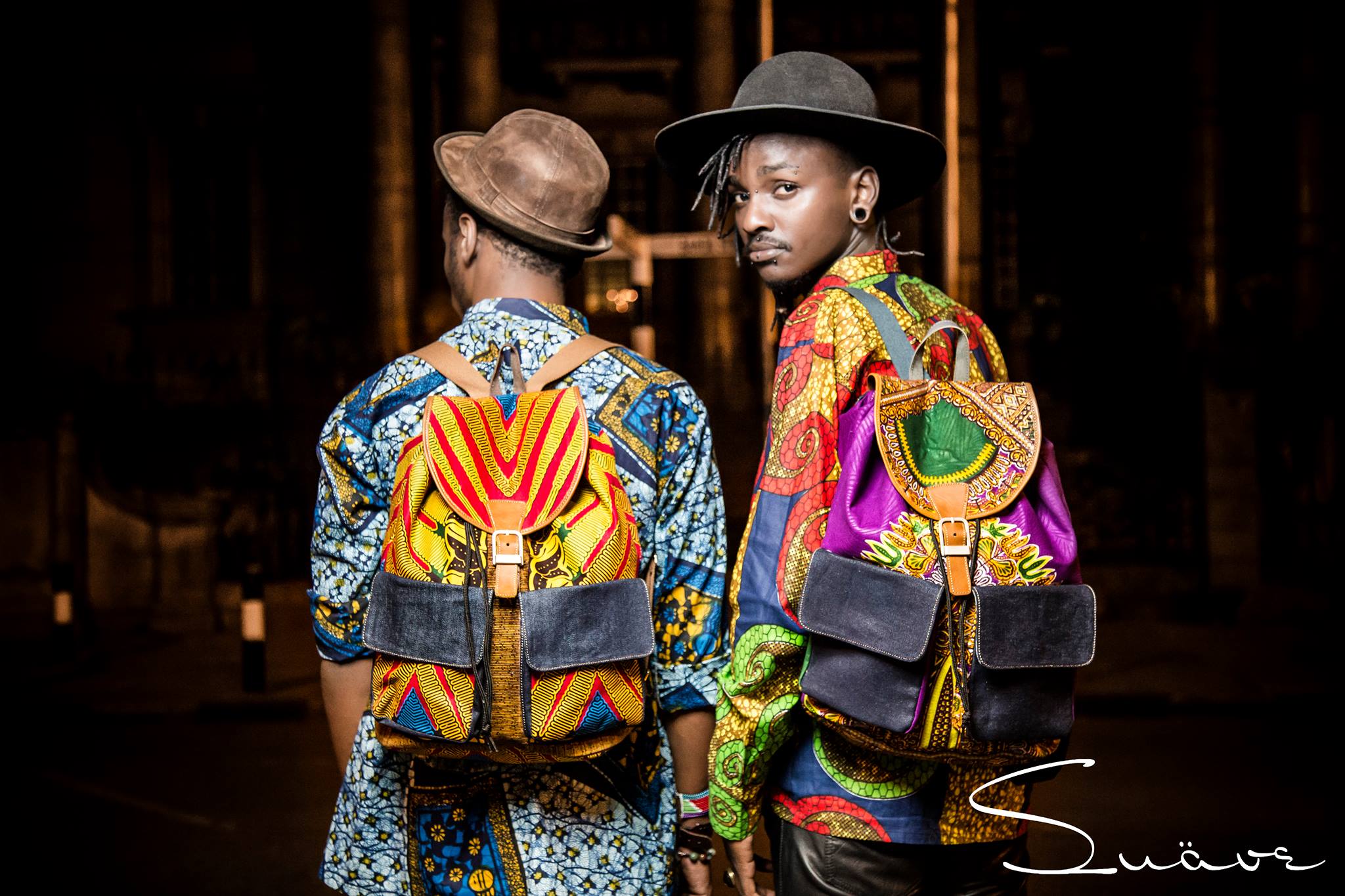
Suave Kenya

Suave Kenya was founded by Mohamed Awale in 2013. Gikomba Market, the largest open air market in East Africa, sparked a unique idea for the Kenya designer.

Over 100,000 tonnes of used clothing streams into Kenya every year, most of which would naturally end up in a landfill.

https://www.instagram.com/p/B50NwQtnw97/?utm_source=ig_embed

Suave Kenya stems from the belief that used unwanted garments can be repurposed and given a new form. Rummaging through discarded denim, the largest amount of unwanted fabric, the source material for most of the bags was decided.

https://www.instagram.com/p/B8OvLXGHmap/?utm_source=ig_embed

A tiny operation with 2 staff members at its inception, Suave Kenya blossomed into a fully-fledged brand that works to end the continuous cycle of unwanted apparel in landfills.

The bags produced by Suave Kenya are crafted with practicality in mind, and their biggest supporters are the new eco-conscious generation.

The Process

https://www.instagram.com/p/CIViMY4nKl7/?utm_source=ig_embed

Sorting Process
What goes where? Denim is always our first choice but we’re constantly experimenting with an array of fabrics. From silk shirts to leather jackets, if it’s interesting enough, we’ll definitely find a use for it.

Preparation, Ripping and Cutting.
The destruction before rebuilding: This involves lots of cutting, ripping and tearing apart. The aim is to creatively get the most out of the former (article of clothing)

Bag Making Process
The destruction before rebuilding: This involves lots of cutting, ripping and tearing apart. The aim is to creatively get the most out of the former (article of clothing)

Content courtesy of Suave Kenya & Nairobi fashion hub

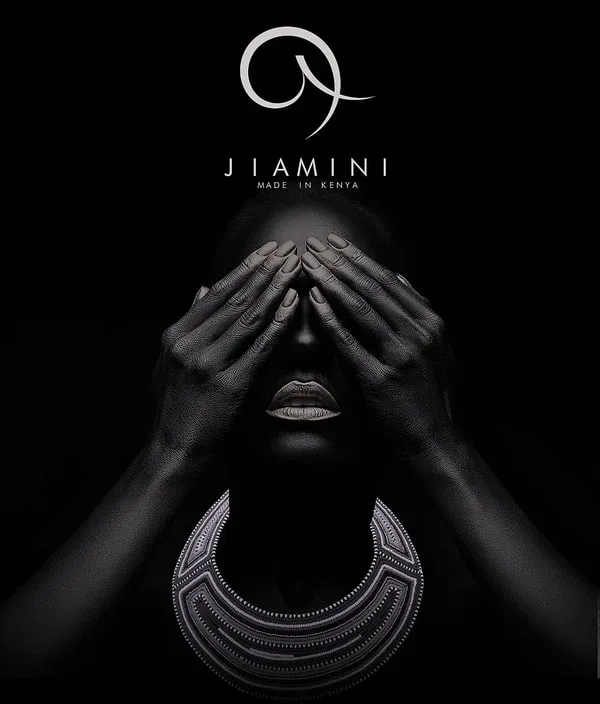
Jiamini Kenya Fashion Accessories Brand

Jiamini is a family run, Kenyan based Fashion Accessories Brand meaning believe in yourself in ‘Swahili, founded in 2016, on the belief of preserving its Traditional African Heritage.

Jiamini’s vision, through its innovative designs and use of renewable resources, seeks to combine timeless traditional technique, craftsmanship and heritage with a touch of modernity, manipulated in the construction of its delicate beaded embroidery and weave. Each piece is developed around the idea of comfort, complementing the body’s feminine form and grace.

The Brands one of a kind pieces are a reminder and encouragement to women of who they are: Bold, Brilliant, Confident, Courageous, Strong, Sensual, Liberated and more. She’s an enigma to most and a balance of delicacy and strength to those who come across her path. It’s the pep in her step, the subtle elegance she carries herself with and the silent confidence that fascinates a crowd.

Her precious Armour, ‘JIAMINI’, around her body, that only she knows the true significance of. She never forgets her roots, the broth that runs through her veins and that just like tradition, she is and always will be timeless. All that’s left to do is believe in herself.

Jiamini Kenya designs, while respecting the old – age traditions passed down from generation to generation are brought to life by skilled female artisans, Creating timeless staple pieces.

Their mission is to design an international wardrobe for today’s global woman while at the same time helping women rise above poverty through economic empowerment and employment, one stitch at a time through fashion.

Content courtesy of Jiamini Kenya & Nairobi fashion hub  

Rihanna’s Fenty fashion label to close down after 2 years

The slowdown of luxury fashion continues with the announcement that Rihanna’s ready-to-wear line Fenty has been discontinued.

The fashion line, launched in 2019, made history as the first luxury brand run by a black woman and effortlessly chimed with Generation Z’s values of inclusivity and diversity. It was also only the second luxury fashion house started from scratch by the French conglomerate LVMH after Christian Lacroix in 1987.

Although it comes as a surprise  Rihanna picked up the Urban Luxe gong for the brand at the Fashion Awards in 2019 – the end of the ready-to-wear arm of Fenty is in part a casualty of the pandemic.

The brand, known for footwear, denim items, and eyewear, has struggled with supply chain issues and the singer, who is based in the US, has been unable to travel in order to collaborate with the Parisian fashion team.

During a press conference in October, LVMH’s chief financial officer, Jean-Jacques Guiony, also hinted that they were having their share of teething problems.

“On Fenty fashion, we are obviously still in a launching phase and we have to figure out exactly what is the right offer,” he was quoted by the New York Times as saying. “It is not something that is easy. We were starting entirely from scratch. Obviously, we have the great help from Rihanna on this, but I would say it’s still a work in progress when it comes to really define what the offer will be.”

Despite other LVMH-owned fashion brands such as Dior and Louis Vuitton bucking the trend of decline during the pandemic, net profits for the parent company fell 34% in 2020, according to the WWD website.

Fenty’s final collection, a collaboration with the footwear designer Amina Muaddi, was in November last year and its last Instagram post was on 1 January.

The shuttering of the fashion arm of Fenty will not affect its side projects, the lingerie arm Savage X Fenty and Fenty Skin, which are both considered a success in their field: the former made $108m (£78m) last year and the latter, which is available in Boots, has made £26m in four months, according to WWD.

Content courtesy of The GuardianNairobi fashion hub 

South African Fashion Week 2021 to Go Digital

The event will take place online, between April 29 and May 1 2021, to showcase 26 runway shows by the likes of Lukhanyo Mdingi and Mmusomaxwell.

Like fashion events around the world, SA Fashion Week has adapted to continue connecting homegrown brands with buyers. Like its last hybrid season held in October, upcoming collections will be trans-seasonal.

In October, over 8,000 guests viewed the collections, which under pre-pandemic circumstances would’ve been seen by 6,000.

In the wake of Covid-19, the event has honed in on helping designers generate immediate sales. “It has been a superhuman challenge for these businesses to stay afloat and retain jobs in the absence of any trade or cash flows,” said Lucilla Booyzen, director of SA Fashion Week. “The opportunity to showcase their collections in preparation for summer 2021 is vital.”

South Africa Fashion Week is the country’s only business-to-business platform that allows brands to grow their collections. This upcoming season, the brands will be taking a trans-seasonal approach, best known as seasonless.

SA Fashion Week is also taking a larger focus on slow fashion to build on sustainable production. The country’s designers are calling for a “new fashion order” to create a more ethical fashion system.

Content courtesy of Business of Fashion & Nairobi fashion hub 

Ad