Thursday 30th of April 2026

Nairobi, Kenya

Gert-Johan Coetzee Discusses His New Collection, Dressing Lizzo, And Establishing A Shop In The United States.

He’s dressed TV stars, models, beauty queens, influencers, and singers both locally and internationally.
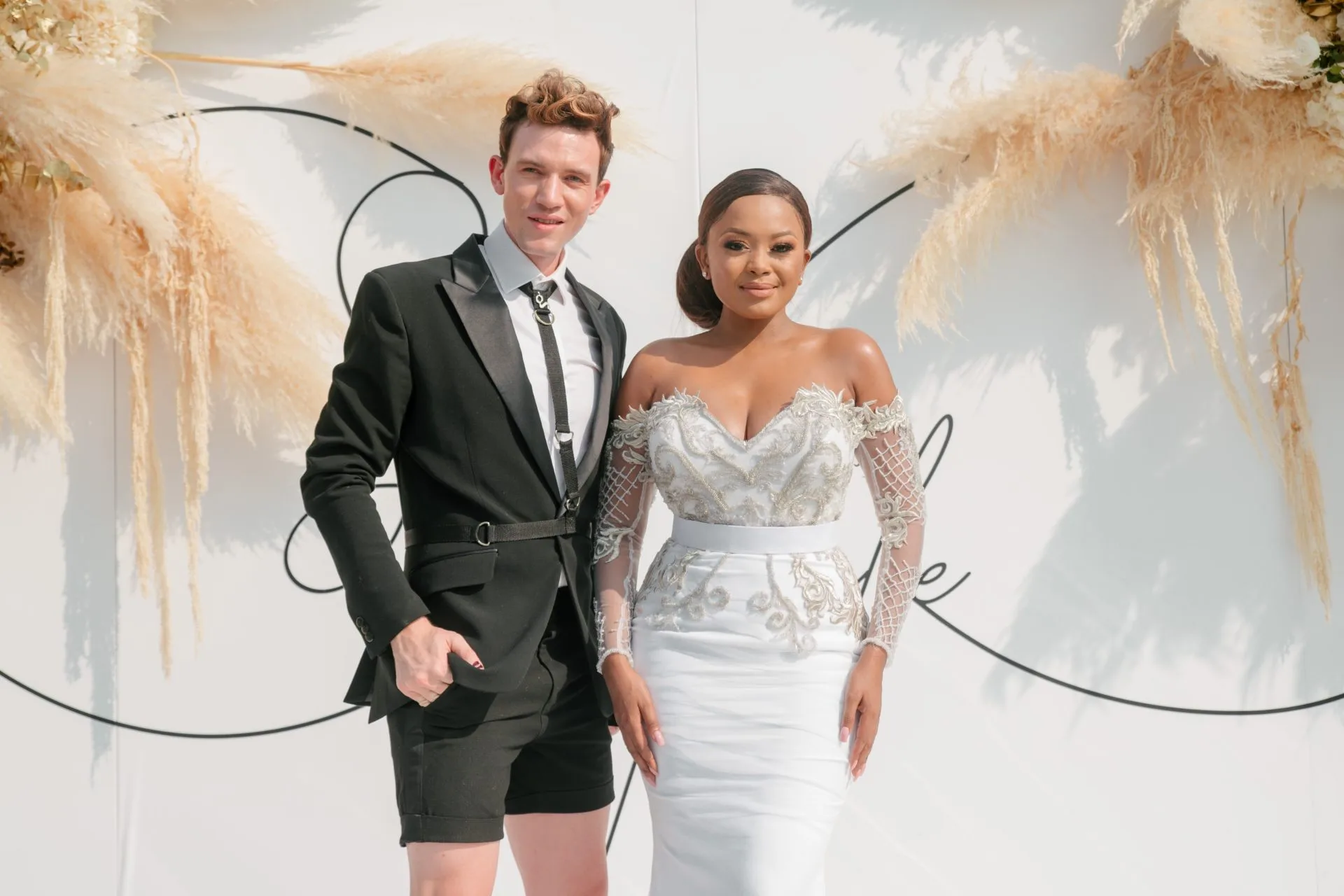
He is the celebrity’s go-to designer. Toke Makinwa, a Nigerian actress, wore his show-stopping gown to the Bridgerton Affair, which made news across the continent.

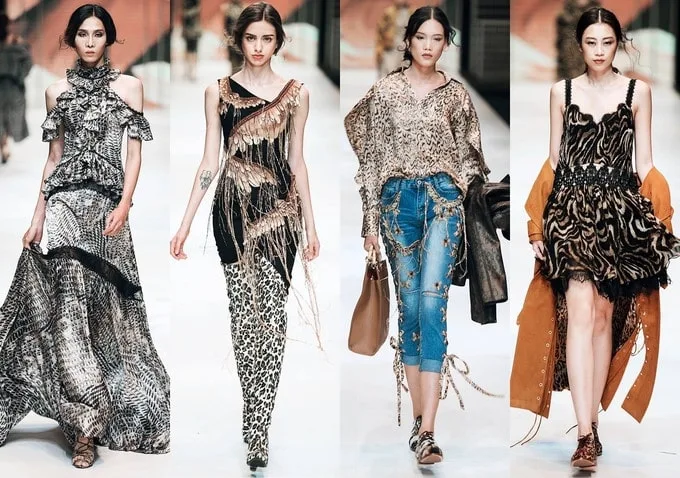
This year, fashion designer Gert-Johan Coetzee celebrates 12 years in the industry by launching his Autumn/Winter collection, which is a collaboration with Zebra Square Gallery, Chopard’s Hyde Park Corner distributor.

The collection is made up of proudly African masterpieces with a dash of Western culture and his Afrikaans ancestry.
Gert tells Drum that he intended to put a modern spin on African baroque when creating the collection.

“After my previous collection, I wanted to really show off the next level.” I drove you all the way from Cape Town to Limpopo and the rest of our country’s warmer regions. It was inspired by wildlife, nature, and all things exotic, with a modern take on African baroque.

It’s my perspective on Africa. It’s Africa with a twist, and it’s the key to why I’ve been so successful on the world stage.”

Gert claims that he is all about making clothes that people can relate to.
“I can put a twist to the Tsonga skirt (Xhibelane) or a Zulu beaded garment while honoring my Afrikaans ancestry,” he explains.

“It provides a one-of-a-kind aesthetic that hasn’t been done anywhere else in the globe.”

He chose fuller-figured models for his new line, as he did for his prior work with Barbie.

“I am all about body positivity and inclusion, yet we don’t see fuller-figured models on the runway.” I wanted everyone on the planet to be able to imagine themselves walking down the runway. “I believe it is past time to celebrate women and their flaws,” he argues.

“I work with people of all shapes and sizes.” They occasionally express dissatisfaction with their arms, boobs, or other features. However, it is what makes you who you are, and it cannot be replaced.

I’m here to bring out the best in you, to make it shine out, and to make you feel like a fashion icon. “It’s very important for everyone to be seen and represented,” he continues. “The Barbie collection was all about inclusivity, not just body types and sizes, but also diverse religious groups, races, and sexuality.”

Lizzo, a pop sensation and body positivity advocate, wears a Gert-Johan Coetzee designer garment in the new US reality program competition Watch Out for the Big Grrrls. On March 25, the show premiered on Amazon Prime Video, and it follows 13 plus-size women as they try to become Lizzo’s dancers at the Bonnaroo music festival.

“That was a crazy experience,” Gert adds.

“I never imagined dressing Lizzo or Oprah, but I have.” It all began in October of 2021. ‘Would you be willing to do a custom piece for Lizzo?’ I received a message from Lizzo’s team requesting for a custom gown.
‘You’re asking if I’m willing to breathe,’ I reasoned. Of course, I’d like to. We started working with her stylist, Jason Rembert, and he was fantastic, and we came up with the ideal color. Her outfit was going to be orange at first, but we altered it to blue after a long but lovely process.”

One of the most difficult things Gert has had to do was keep quiet about the outfit and not share the good news.

It’s surreal for him to see his aspirations come true, he says.

“I’ve always wanted to be a designer that dresses people all around the world, and seeing that happen every day is a dream come true.”

After contacting her stylist Kollin Carter, who saw his work at the 2020 Kraal Couture presentation, he dressed rapper Cardi B in a beaded gown and corset for her husband Offset’s birthday celebration in Atlanta.

The complete gown took a week to make, and the beaded skirt was totally done by hand.

It’s surreal for him to see his aspirations come true, he says.

“I’ve always wanted to be a designer that dresses people all around the world, and seeing that happen every day is a dream come true.”

After contacting her stylist Kollin Carter, who saw his work at the 2020 Kraal Couture presentation, he dressed rapper Cardi B in a beaded gown and corset for her husband Offset’s birthday celebration in Atlanta.

The complete gown took a week to make, and the beaded skirt was totally done by hand.

Gert has dressed famous women like as Oprah Winfrey and Laura Govan for the Global Citizen event in 2018. Shudufadzo Musida, Bonang Matheba, Zozi Tunzi, Lerato Kganyago, Zodwa Mkandla, Minnie Dlamini, Nadia Nakai, and most recently Toke Makinwa, who walked the red carpet at the Bridgerton Affair in a green ball gown fit for royalty, are among his clients.

“I enjoy working with Nadia Nakai because she is always willing to try new things.
I adore all of the ladies because they are all so unique. Toke and I recently had a lot of fun. “We have a same vision for the ultimate result, and she is determined to make it happen,” he says.

“What happened to her at the Bridgerton event was borderline woman abuse because the corset she wore was sinful and very tight, and she was like ‘do it.'” I adore girls like that, who are simply open to the aesthetic and willing to be transformed. Every weekend, Toke dresses up as a different character, and she is open to fashion.”

He hopes to collaborate with artists Doja Cat and Megan The Stallion on a global scale.

“That would be a dream come true, and I am confident it will occur.”

The Covid-19 pandemic has made the last two years difficult for designers, but Gert says he has not let the pandemic keep him in a rut.

“The challenges you set for yourself are exactly what you want them to be. If you perceive anything as a challenge, you will perceive it as such. I see things as they are, and it is critical for new designers not to hunt for excuses; no one will come to your rescue. You are the only one who can motivate you to stand up. “You must perceive yourself as both a creative and a businessperson or woman,” he explains.

“Not only has the pandemic given me a gorgeous body since I’ve been working out nonstop,” she says, “but it’s also pushed my creativity.” I couldn’t go back to my old ways of being creative, so I had to come up with new ones. Rather than grumbling, he claims, he “allowed chances.”

“Most bursary programs fail due to a lack of mentorship programs. Mentorship is one of the ways I lead mine, I select two students who I believe have potential and talent, mentor them, and help them turn a drab situation into a gem.
I enjoy assisting others. Christopher Gills, my assistant designer, is a graduate of my program, and I’ve had a lot of success stories.

My pride and delight is the program, and mentoring someone means helping them build a future, whether or not they become the next Gert. “It’s all about change,” he says.

The bursary program will reopen in August this year.

“But the great news is that the outfits from this new collection will be heading all the way to the United States in the next week; I’m creating a showroom or headquarters in Los Angeles, so the clothes will be accessible for use by US celebrities when they need them.”

“I don’t take four days to ship something to Cardi B or anyone else,” he claims.

“The clothing might be accessible right away.”
Gert has also begun the process of relocating his Linden studio to a larger location in Johannesburg’s northwestern suburbs.

“We’re relocating to a larger and better studio in Bryanston, expanding to a much larger facility, and expanding, all in the pursuit of the international dream.”

Content courtesy Drum News 24 of & NFH

Top 10 Kenyan Luxury Fashion Brands

Kenyan luxury brands and fashion designers are pioneering authentic African urban wear. As we focus on luxury brands from Kenya, the NFH team takes a look at some local alternative designs you can bet on if you’re looking for something different this year.

What exactly is a luxury fashion brand?
A luxury brand is distinguished by its high level of quality, exclusivity, and high price tags.
Luxury brands can be found in a variety of industries, including retail, hospitality, and automobiles.

What Characteristics Characterize a Luxury Brand?
The exclusivity of a luxury brand is the most important factor in its creation.
Of course, luxury brands will always be of high quality, but premium brands, which provide high quality and seek to sell to everyone who can afford it, can also achieve this.

Luxury brands, on the other hand, do not want to serve the masses, and they do not want their products to be widely available, even at high prices. When it comes to luxury marketing, scarcity is everything, and it’s what makes it so desirable in the first place.
The luxury sector is fuelled by people who aspire to be part of it, not by the wealthy.

Below is A list of top Kenya luxury fashion brands, do you agree? if not share your thoughts in the comment section.

1. Ami Doshi Shah

Ami Doshi Shah was born in Mombasa, Kenya, on the country’s coast. Her ancestors immigrated from India, and she is a third-generation Kenyan. In the United Kingdom, Shah studied at the Birmingham School of Art and Design.

In 2001, she earned a Bachelor of Arts degree in Jewelry and Silversmithing. She also won the Goldsmith Award for Best Apprentice Designer that year.
Shah completed a 6-month apprenticeship in Mumbai and Jaipur before returning to Kenya.
She did not, however, start making jewelry right away, Instead, she pursued a career in advertising.

Ami Doshi Shah, a designer, draws inspiration from Kenya’s natural beauty. She was trained as a jeweler and silversmith in the United Kingdom before returning to her native country and launching her namesake label twelve years after graduating. Her pieces are distinguished by their unconventional, sculptural designs and enthralling natural materials made from local metals and minerals.

2. Kiko Romeo

Ann and Iona McCreath from Nairobi, Kenya, have collaborated on KikoRomeo, which means “Adam’s Apple” in Kiswahili. The heritage lifestyle brand was founded in 1996 to promote trade and appreciation of traditional crafts while also stimulating employment. Over the last two decades, KikoRomeo has mentored many designers and artisans in Kenya and is widely credited with transforming the Kenyan fashion industry.

Iona earned a Sociology degree from the London School of Economics and a Foundation in Art and Design from UAL Central St Martin’s in 2018. She has also worked as an apprentice in the fashion industry since she was a child.

Ann has a Master of Arts from the University of Edinburgh and classical training in Italian Alta Moda.

She is the founder of FAFA (Festival of African Fashion & Arts), a global platform for African designers that launched “Fashion for Peace” in 2008.

3. Anyango Mpinga

Anyango Mpinga is a fashion designer, to put it another way, She founded the Contemporary Sustainable brand in 2015, which is inspired by white shirts, bold prints, and unconventional style that is both male and female in nature.
Her look harkens back to the Romantic Victorian era, but with a sophisticated boyish edge. She is currently working on making biodegradable textiles.

She established the Free As A Human Foundation, a non-profit organization dedicated to raising awareness about human trafficking and economic injustices in the fashion supply chain and consumer sectors that exploit workers.

4. Akinyi Odongo

MEFA Creations’ Akinyi Odongo Kenya is a high-end, rejuvenating, and invigorating African fashion line that spans the local, regional, and international apparel industries.

Akinyi Odongo Kenya has shifted the establishment with African-inspired designs exuding timeless sophistication, class, and ever-present diversity that has carved its niche in the local and international fashion arena, inspired by a Kenyan fashion industry incessantly knocking on the international market galaxy.

Odongo, Akinyi Kenya is now a bespoke designer of perfect cuts, refined details, and high-quality yet durable fabrics for everyday use, with a touch of rich African culture to distinguish it.
We know what we’re talking about when it comes to targeting high-net-worth individuals from all over the world.

First ladies of African countries, presidential candidates, and corporate high flyers have all won our jackets, dresses, skirts, and suits, which have been widely praised by fashion enthusiasts.

5. Jok A Jok

Jok A Jok has become a well-known clothing brand in the country since its introduction. This clothing line has a lot to offer. Tedd Josiah, a veteran music producer, founded it in memory of his late wife, a fashion enthusiast, and designer.
Furthermore, the name Jok A Jok is derived from one of the River-lake Nilotes sub-tribes in Western Kenya, from which Tedd Josiah is descended. Though the quality speaks for itself, Tedd describes it as a luxury, African leather brand, with materials and labor sourced from Kenya.

6. Adele Dejak

Handmade fashion accessories for the modern, sophisticated, and multidimensional woman are created by the Adèle Dejak brand.

The cutting-edge pieces, which are inspired by African shapes, textures, and traditional techniques, sit perfectly between artifact and high fashion statement designs. Adèle Dejak unites style and substance and invites you to embrace your personal style without apology!
Adele Dejak, a jewelry designer, is on a mission to create a global powerhouse brand, and she’s on her way.

Dejak has established herself as a trailblazing luminary in Kenya and across Africa, paving the way for fellow designers such as Ami Doshi Shah to follow in her footsteps.

https://www.instagram.com/reel/CZLsq_sh53h/?utm_source=ig_web_copy_link

7. Home 254 Apparels

Home is more than just a clothing line; it’s a way of life. It feels like you’re a member of an exclusive club if you own a piece of Home clothing.
Its name and logo proudly display Kenyan pride, which contributed to its popularity. Home, on the other hand, has grown in popularity in recent years as athleisure wear has become more popular. T-shirts, hoodies, and sweatsuits, which are stylish and comfortable, have become a wardrobe staple among many Kenyans, particularly on social media. They also have sizes for children.

https://www.instagram.com/p/CaBzZfbIev6/?utm_source=ig_web_copy_link

8. Looks Like Avido

The ubiquitous African Ankara prints have become a fetishized design globally to identify with Africa.
The kanga prints aren’t just for special occasions anymore; they can also be worn on regular workdays or on casual chill days, depending on how they’re styled.

Looks Like Avido has you covered with fanny packs, blazers, shorts, dandy boots, and pants.
Separating himself from cookie-cutter designers with a variety of multiple colorful patterns and minimal prints, his fabrics have made him a favorite stylist for many celebrities including Koffee, Fena Gitu, Chronixx, Jah Cure, and G-Money, among many others.

9. Sandstorm Kenya

Sandstorm Kenya, based in Nairobi, used to manufacture luxury tents for East Africa’s most prestigious safari camps. Today, they use the same traditional skills to create stylish and long-lasting safari-grade travel bags, work bags, and accessories out of the finest materials, and we’re about to introduce a new line of leather products, including briefcases and laptop bags.

In this age of outsourcing, we’re unusual in that we’re very much a manufacturer brand,’ and our unique position as an African manufacturer directly linked to the timeless glamour of safari adds to our uniqueness and appeal.

https://www.instagram.com/p/CTmaMuOgOQZ/?utm_source=ig_web_copy_link

10. El Afrique

El Afrique became known to the rest of the world after it was featured on Beyonce’s website. THEE QUEEN BEY, yes. However, they’ve been making some stylish Ankara outfits for a while.

El Afrique was one of the first clothing brands in the country to specialize in African prints. Slowly but steadily, the Ankara trend gained traction, and they are now widely recognized around the world. They have one-of-a-kind designs for both men and women.

https://www.instagram.com/p/CIdydMZhN76/?utm_source=ig_web_copy_link

11. 1v1 Garments

This edgy fashion label could be compared to Awgie, Kapital, Chrome Jeans, or River Island in Kenya.
They are proud to be number 254. You could have a punk-grunge wardrobe with well-detailed graffiti art, patched jeans, symbolic gesturing, fearless social messaging, and daring rips for a reasonable price.

It’s not for the faint of heart, but a brave risk and local support sound like the perfect combination.

12. Rose Jewelry

Rose Jewellery offers a unique collection of real diamonds, uncut diamonds, pearls, gold, rose gold, and silver jewelry. Its owners have more than 20 years of jewelry-making and stone-setting experience.

Rose Jewellery provides specialized services such as resizing, repairs, and engraving with every purchase. We’re on the first floor, in the New Wing Shop #620.

13. Esko

DJ Crème De La Crème also dabbled in the fashion industry, launching Esko Life, his own clothing line. It features innovative, out-of-the-box designs that celebrate one’s individuality.
You can go with a simple logo or something more unique like a panda or a Greek statue. T-shirts and hoodies are also available in a variety of bright and fun colors, including orange, yellow, light blue, and pink.

14. Sued Watches

SUED is a Kenyan watch brand dedicated to keeping time in the most African way possible. ‘Isn’t African Timer used to describe someone who never keeps time?’ you might wonder. Sue Mueni, the founder of SUED, used the phrase in a lighthearted manner.

The 24-year-old created her own line of Afrocentric in-house watches and customized accessories, which were delivered in beaded baskets. SUED would motivate you to keep time; or at least run fashionably late, with statement details such as beaded, hair on hide, or pure leather, as well as the choice of strap, cuff, or removable watch strap. What prompted the young entrepreneur to free up some time?

SUED is a Made in Kenya watch brand that was founded in 2015. We handcraft one-of-a-kind, statement-making Timepieces for both accessorizing and time value.
The heart of our brand is to promote the rich African culture and its long-term contribution to civilization.

15. Wazawazi

Wazawazi is a high-end brand dedicated to assisting you in creating your ideal life. Its mission is to spread the beauty of Africa’s story. Through a design-driven product that facilitates interaction with modern-day Africa, the company is an open call to all lovers of diversity, cultural experiences, and social inclusion.
Wazawazi is the epitome of high quality, uniqueness, and timeless design. Our flawless Modern-Day African Lifestyle Products bring us pride by allowing you to design your life around our creations while remaining true to our Afrocentric aesthetic.

We are steeped in a leather artisanal tradition, excellent craftsmanship, and an unabashed passion for the finer things in life.

16. Suave Kenya

Suave is a Kenyan clothing company that focuses on upcycling bags. Using Ankara fabrics, they transform ordinary bags into one-of-a-kind, personalized bags.
They have a sizable customer base both in the country and abroad, thanks to their stunning final products.

People all over the world adore these one-of-a-kind bags and wear them as a fashion statement. They are also useful and reasonably priced.

https://www.instagram.com/tv/CKT0lSPH4M8/?utm_source=ig_web_copy_link

17. Kipato Unbranded

18. Peperuka World

Kenyans are known for a variety of things, including catchphrases like “Me, I Love Kenya,” “Kwa Ground Vitu Ni Different,” and “Hii zoom ingekuwa email,” which is a personal favorite.
They are relatable to the majority of Kenyans, and they also serve as a great conversation starter when worn on a t-shirt. Peperuka lets you make a personalized t-shirt, mug, or flask out of any of your favorite Kenyan phrases.

19. Bush Princess

I’m originally from Sweden, but I’ve lived all over Europe because of my passion for fashion. My husband and I decided to move to Kenya with our children in 2007 because we wanted to change our lives. A few years prior, we had fallen in love with this country.

That was the start of the Bush Princess adventure. I wanted to create a brand that reflected my personality, combining European elegance with African colors and materials.

The challenge was to produce 100 percent locally and responsibly, which is a difficult task in this part of the world.
Bush Princess bags are all handmade in Kenya and were founded by Charlotte Lefebvre.

Each piece features traditional African craftwork and is elegantly designed in the Bush Princess signature style.

https://www.instagram.com/p/CbKxk7SIooy/?utm_source=ig_web_copy_link

20. Endo Squared

Because of the minimalist lifestyle, line drawings are in vogue. This Kenyan clothing brand is for you if you like this type of art.

The Endo sisters create line drawing-inspired jewelry, bags, t-shirts, and mugs. Furthermore, they hand-draw the designs, giving it a more genuine feel.

21. Aprelleduany

22. The Pink Savannah

23. Mzizi clothing

The brand in the business of antique baseball jerseys celebrating Kenyan reference numbers (for example, 63′ for the country’s independence) and national colors is emerging as a favorite among streetwear fans in the diaspora.
The line is simple in incorporating Kenyan elements such as the flag hues to stand out in the crowd, showing appreciation for Kenyan history and events with itsy-bitsy design effort. The calligraphy and fonts they use are also quite nice.

24. Katungulu Mwendwa

Katungulu Mwendwa creates timeless, timeless casual and semi-formal clothing that transcends seasons. Experimenting with cutting-edge techniques, cutting-edge fabrics, and time-honored methods.

In Nairobi, Kenya, she was born and raised by a base guitarist, architect, and plant-loving psychologist, along with her best friend and techie brother.
Katungulu studied fashion in the United Kingdom and returned home to Kenya to launch her own contemporary fashion line after graduating.

She spent a lot of her childhood following her late grandmother around Nairobi, where she ran and managed a curio shop that sourced work from artisanal groups she worked with within their hometown in Eastern Kenya.

Katungulu was so moved by this that she began working with community groups in the area to create pieces for her collection. She works from her Nairobi home studio, where she draws inspiration from her surroundings and everyday life. She is also influenced by traditional cultures, and she tries to create modern interpretations that are appropriate for an urban setting.

25. Ooze Coolness

Ooze Coolness is an interesting high-end streetwear brand with an eye for uniqueness. It is a distinctive streetwear brand that can have you noticed in any setting.

Their collection includes denim jackets, hoodies, shorts, and sweats, and their trademark logo makes them easy to spot if you’re looking to make a statement.

https://www.instagram.com/p/CRDoTt8lDla/?utm_source=ig_web_copy_link

26. Kangarui

Kangarui was created by Rui Yamashita. Her life experiences are reflected in each of her designs, as she was born in Japan and raised in Kenya. She has a quirky fusion style, full of color and often featuring animals from East Africa, and she wants to share her passion for safaris with the rest of the world.

Her passion has always been to get her hands dirty and be creative by experimenting with various materials and tools and layering heavily. Before launching her own brand in September 2016, her designs were sold at Urban Outfitters, Target, BHG, Houzz, and a variety of other stores around the world.

Kangarui sounds like an Australian animal, but it’s actually a combination of Kanga (or Khanga, a traditional Kenyan textile commonly used as headscarves and sarongs) and her first name, Rui. Kanga-Rui💕

https://www.instagram.com/p/CataBmMPauw/?utm_source=ig_web_copy_link

27. 2endo

The clothing line posters art pieces by one of their owners, Patti Endo, give their products a vintage original touch. A relatively new luxury house based in Nairobi, the clothing line posters art pieces by one of its owners, Patti Endo, give their products a vintage original touch.

They’re perfect for weekend wear, carrying around perishables, and looking chic in a unisexual way in any given environment, with simple casual tees and beige tote bags.

28. TengeVuli

Tengevuli is a fashion house famous for its colorful umbrellas. Isabel and David, the company’s founders, spoke with Lucy Robi about their company. When did the story begin?

Isabell usually picks up fabric all over the continent. I, on the other hand, was unemployed and in between jobs at an IT firm. We saw an umbrella for over Sh10,000 one day and thought we could make one for less. That’s how it began.
TengeVuli is a social impact company that creates one-of-a-kind, functional, and fashionable fashion and interior design items.

https://www.instagram.com/p/BchI2wRlgU9/?utm_source=ig_web_copy_link

29. Metamorphosed

The valiant dresser, designed by Instagram muse Afro Minimalist, isn’t afraid to show off his work.

The experimental organization makes clothes perfect for layering, ranging from less intricate pieces that focus solely on fabric elements to complex, chaotic, but meticulous items such as roping, bangles, zippers, and straps.

https://www.instagram.com/p/CHEMB_-sWES/?utm_source=ig_web_copy_link

30. Chillimango

ChilliMango is an Afro-Urban streetwear brand that creates iconic designs and transforms them into a variety of products that reflect contemporary Kenya’s ever-changing urban culture. Our designs are a fusion of various elements of African culture and elements from other cultures around the world. ChilliMango is thus a mash-up of cultures.

We also have a strong nostalgia for the 1980s and 1990s, so our designs incorporate many iconic elements from that era.
ChilliMango offers fresh and creative clothing that is super cozy but bold and one-of-a-kind, all handcrafted with love. Among our products are printed designs on t-shirts, sweatshirts, hoodies, bags, and other items. We’ve also begun to investigate textile design because we truly believe in the future of African-made and designed textile prints.

31. Maverick Itumo

The audacious designer, a student at a creative school, has managed to remain discreet and under the radar in releasing his limited notable collections for more than a year.

He has no limits to his mind’s reach and execution, from alternative flying saucer hats to the distinct nganya rings jewelry.

However, through his online clothing store Kenyan Vintage, you can get a variety of streetwear merchandise that you didn’t even know you wanted.

32. Against All Ads

This is the place where a woman can find her ideal gown. The stall brimming with designer gowns that bring out the best in every woman has arrived to save the day.
The store is curated for every situation or ceremony a dress can be useful for, from silks to slits, knee-lengths, drag on the floors, and every color your mind can imagine.
There are frequent sales, but be careful not to go into debt trying to buy everything from their racks.

33. Vitimbi by Oliver Asike

Oliver Asike, co-owner of creative entrepreneurs 2 many siblings, is working on a new fashion line. The brand is revolutionary because it is made from recycled waste.

The line, which debuted last year at his Thrift Social event with musician IamDDB, is divisive to say the least.
The idea of celebrating Makanga uniform by turning it into overalls excites, especially since it comes in bold base colors like dull maroon, bright yellow, and charcoal black.

The concept is novel, but it may irritate those who are not open to new ideas. They also have fantastic tie-dye material and warm fleece jackets with stylish aesthetics that are ideal for any weather.

34. Denri 

Prior to the arrival of Wazi Wazi, Jok A Jok, the Kenyan market was dominated by another bag brand called Denri. Fena Gitu, a well-known musician, is the brains behind it.
This brand appeals to a younger, more budget-conscious demographic while maintaining high quality and design standards. They also have a wide range of bags for all of your needs, including school bags, travel bags, laptop bags, handbags, and more, all at reasonable prices.

Content courtesy of NFH

This Pair Of Levi’s Has Traveled 18,000 Miles. What It Means In Terms Of Global Inequality.

The vendor hung The Jeans on his stall on a dusty street corner in a Johannesburg township early one Saturday morning. They were a used pair of Levi’s 550s. Straighten your leg. A more relaxed fit. 36″ waist, 34″ inseam Cotton, 100% cotton, in a soft, brushed blue. The hems on the left pocket were frayed, and there was a small tear above one belt loop, but The Jeans looked brand new.

The vendor knew that people who buy secondhand clothes in this area regard Levi’s as a luxury brand. Levi’s are “an American tradition, symbolizing the vitality of the West to people all over the world,” according to a message stamped on the inside of one of The Jeans’ pockets. He’d probably be able to sell them for $10.

However, The Jeans, as iconic as they are of the American West, were also global citizens. “Made in Lesotho,” said a gleaming tag stitched inside the right hip. The tiny, mountainous country, which is completely surrounded by South Africa, is approximately 250 miles away from the market where The Jeans were now hanging. Instead of a five-hour overland trip, these jeans had most likely circled the globe before being resold in southern Africa.

The Jeans’ cotton was most likely grown in one country, spun and woven into fabric in another, cut and sewn in a third, and worn and donated to charity in a fourth before arriving in South Africa, country number five.

That journey from one neighboring African country to another, via an 18,000-mile detour to the United States, is a metaphor for Africa’s role in the fast-fashion industry, as well as Americans’ role in it.

The clothing industry, which is one of the most environmentally damaging in the world, accounts for 10% of global emissions, which is more than air travel and maritime shipping combined. Meanwhile, the people who make the world’s clothing – primarily women in the Global South – rarely earn more than their country’s minimum wage, which in many African countries is less than $200 per month.
Nonetheless, the continent is increasingly bearing the burden of both manufacturing and disposing of America’s clothing.

Workers’ benefits are bare bones.
Blue jeans are possibly the most popular garment in the modern world, made from cotton, a plant fiber that has helped shape much of today’s world as we know it.

“Without cotton cloth, we would have no global economy, staggering social inequality between the Global North and South, no work for women outside the home, and no industrialization, which was all powered by slavery on expropriated and overtaxed land,” claims Maxine Bedat, author of “Unraveled: The Life and Death of a Garment.”

Denim was invented in a Nevada tailor shop in the 1870s and popularized by Levi Strauss & Co. as workwear for lumberjacks, cowboys, and railroad workers. Jeans had also become a leisure item by the mid-twentieth century. Today, the average American woman owns seven pairs of jeans. Every year, 1.25 billion pairs are sold worldwide.

The Jeans were among them at some point in the last few years.

But first, they had to be sewn. Based on their “Made in” tag, this particular pair could have been stitched together in only one location: Maseru, Lesotho’s capital, in a scruffy industrial district of aluminum factory shells.

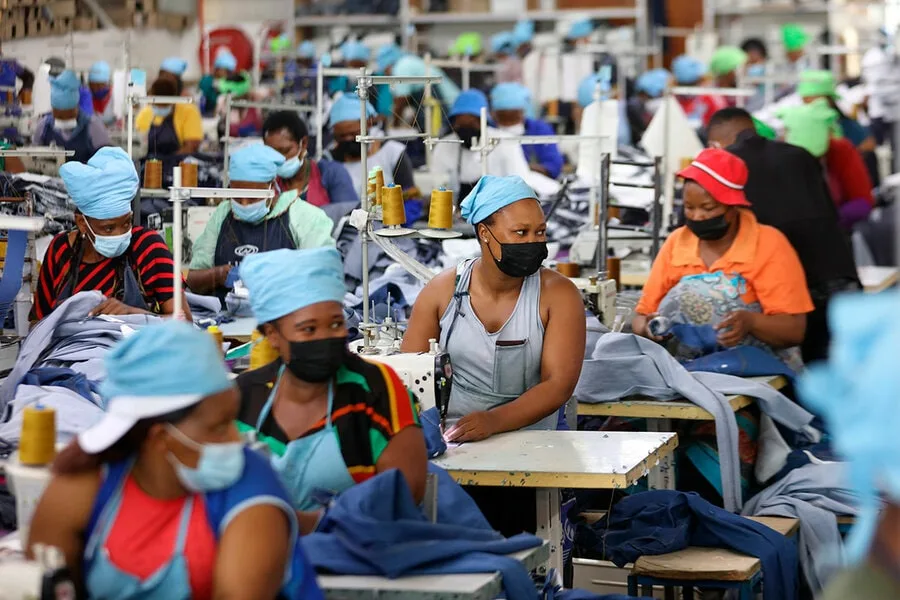
Despite the fact that the southern African country is a minor player in the global garment industry, jeans are big business in the country of 2 million people. Women make up the vast majority of those who work in clothing factories here, as they do nearly everywhere else in the world. As a result, The Jeans were almost certainly made by women in Lesotho.

About 100 of them, because that’s how many hands a pair of jeans passes through from the moment the roll of denim is unspooled on the factory floor to the moment it’s packed in a shipping container.

What would the first moments of The Jeans’ existence have looked like?

They would have made a lot of noise. A swarm of flies buzzes through the vast interior of a blue jeans factory. Hissing from irons The clacking and clattering of washing machines The only thing that isn’t silent are the workers, who are hunched over their machines, laser-focused on assembling a single item a belt loop, a pocket, a leg seam – in order to meet targets that number in the hundreds or thousands of pairs per day.

For more than a decade, Rorisang Kamoli has worked in Levi Strauss factories in Lesotho. She’s in her early thirties, petite, and wears thick-rimmed Buddy Holly glasses with long braids. Here’s what she’d have done if The Jeans had passed through her hands.

She’d run her fingers over the rivets, the tiny patented bronze buttons sewn to the front pockets of every pair of Levi’s, and the fly button. She’d twist each one to make sure it was secure, and she’d feel for rough, sharp edges that would make The Jeans dangerous to wear.

Years of quality control work have caused her thumbnails to split open and her fingers to become calloused. Her mind is equally exhausted as she considers the people in America who buy these jeans for $69.50  roughly half her monthly wage.

“Americans don’t care how we live to make these products; they just want to wear them,” she says.

Her cracked thumbnail is one of the things she suspects Americans overlook. Is it possible to raise two children on $150 per month? What it’s like to have a coworker killed in a protest while trying to persuade companies to raise the minimum wage to around $160 per month. When your life depends on blue jeans, the terror of seeing half the world swap jeans for sweatpants during a global pandemic.

Lesotho had a different export when Ms. Kamoli was growing up: its men went to work in South Africa’s gold, diamond, and platinum mines. However, the mines began to close in the 1990s. As new garment factories opened, the men returned, and the women went to work.

However, the new opportunities resulted in a bitter independence. “Sometimes I get irritated with jeans. They irritate me. Why should I have to work so hard for such a meager wage to create something like this?” Ms. Kamoli explains.

Africa is being inundated with secondhand imports.
Lesotho’s garment industry exists in large part due to an American trade agreement known as the African Growth and Opportunities Act, which has allowed Lesotho and three dozen other African countries to import certain goods, including clothing, into the United States duty-free since 2001.

It also means that nearly all of Lesotho’s Levi’s are headed to America. So it’s safe to assume that’s where The Jeans went next.

According to the clothing rental service Rent the Runway, Americans buy dozens of clothing items per year – an average of 68.

In the 1950s, American families spent 10% of their income on clothing and only bought a few items per year.

That figure is now 2%, but thanks to the rise of so-called fast fashion, that amount now buys nearly a new closet’s worth of items each year.

The Jeans were one of many purchases made by someone, somewhere.

Then there was the pandemic. The Jeans and their owner split up around that time. Who needed jeans when you could wear pants with an elastic waist and never leave the house? According to the online secondhand retailer, ThredUp, clothing donations increased by more than 50% in 2020.

Because the Jeans were in near-perfect condition, their owner could have been forgiven for thinking they would make an excellent donation to a local Goodwill or Salvation Army.
They might have reasoned that they would be snapped up quickly at a local thrift store, and the charity would earn some much-needed funds for its programs.

Except that’s not what happens to the majority of the clothes that Americans donate to charity, and it’s also not what happened to The Jeans.

American charity shops typically sell only 10% to 20% of the donations they receive. The remainder are collected by textile recyclers, which exist solely to make old clothes disappear.

They purchase donations from charity shops by weight and then sort them. According to the Secondary Materials and Recycled Textiles Association, approximately 45 percent is considered “salable,” that is, of high enough quality to be worn again. Another 50% can be recycled into rags or insulation, while the worst quality material is simply discarded.

“Watching the sorting and grading process feels a little like a visit to the slaughterhouse,” George Packer wrote of his visit to a textile recycler in Brooklyn.

70% of all donated clothing ends up in Africa. But it isn’t, as many believe, because Africans are desperate for the rest of the world’s leftovers. Many African countries had major textile industries in the decades following independence. After Western governments and global lenders began putting pressure on those countries to liberalize their economies in the 1980s, trade restrictions were lifted, and clothing imports from the rest of the world flooded in.

In recent years, some African countries have attempted to fight back. However, when an East African bloc banned the import of secondhand clothing in 2016, American textile exporters reacted predictably.

They applied pressure on lawmakers and the U.S. was threatening to withdraw from the African Growth and Opportunity Act, a trade agreement that allows African countries duty-free access to American markets for a wide range of goods. In the end, only Rwanda, a country in central Africa, stood firm.

As a result, The Jeans most likely landed in South Africa’s coastal neighbor Mozambique. Technically, importing any secondhand clothing into South Africa is illegal – a move designed to protect the country’s own clothing factories but the rule is flagrantly ignored. Every day, truckloads of goods rumble unhindered across its border, the majority of which is destined for a single market in downtown Johannesburg.

On a four-block stretch of De Villiers Street, sandwiched between a minibus taxi stand and the city’s main train station, dozens of hawkers sell secondhand clothing from bed-sized bins: gauzy blouses, T-shirts from American 5K races, vintage dresses, and, yes, jeans.

“AmaSkinnyJean! AmaSkinnyJean!” they yell, pluralizing words with the Zulu prefix. “It’s cheap, cheap, cheap!”
The market also sells to wholesalers, such as the one who purchased The Jeans. He then drove them 20 miles north to a neighborhood whose name means “Olive Wood Forest” in Afrikaans, despite the fact that it is a patch of prairie dotted with small houses and tin shacks and devoid of trees.

Olievenhoutbosch, like many South African townships – the mostly working-class bedroom communities that huddle on the outskirts of all its cities – has a clothing market, where a couple dozen vendors set up shop on a corner near a dusty police station every weekend.

Last November, The Jeans were among the clothes available.
“How much?” a customer inquired.
The vendor responded with R150. $10.
Nelson Mandela’s face shone up from the blue and red bills as she pulled them from her wallet.

Content courtesy of The Christian Science Monitor & NFH

The Collections For South African Fashion Week Begin in April.

The 25th Spring/Summer collections of SA Fashion Week (SAFW) are set to debut this month.
Some of the collection’s dynamic developments include environmental sustainability, women’s empowerment, inter-brand collaboration, and proudly local production investment.

Ephraim Molingoana for Ephymol, Amanda Laird Cherry and Palesa Mokubung of Mantsho, and cult Kasi brand, Loxion Kulca, now designed by Olé Ledimo, will unveil their 2022 collections to the media, buyers, selected VIPs, and a limited edition of public tickets.

This is in addition to exciting new stars such as 2021 New Talent winner Artho Eksteen, Fikile Zamagcino Sokhulu, and Sipho Mbuto, who both took part in the Fashion Bridges collaboration with Milan Fashion Week last year.

The 24th New Talent Search, hosted by Maps Maponyane, will once again kick off the event with a lineup of six of the most promising young designers to watch. The following are this year’s contenders:

  • Thando Ntuli – Munkus
  • Nichole Smith – Ipikoko
  • Mikhile du Plessis – MeKay Designs
  • Calvin Lunga Cebekhulu – Czene.24
  • Sanelisiwe Gcabashe – Gjenelo Couture
  • Mimangaliso Ndiko – Sixx6

What to anticipate

The Cruz Collective with Sokhulu and Mbuto, as well as another new generation notable, Michael Ludwig Studio, were also highlights of the first day.

Day two begins with The Oppo Collections, which brings together Artho Eksteen, Ezokhetho, the gender-neutral signature, The Bam Collective, and the much-loved Amanda Laird Cherry.

The high-profile trio of Cape Town-based Helon Melon, who wowed audiences in 2021 with her all-white, sustainable collection, fashion-forward Judith Atelier, an ardent supporter of South African mohair and perennial fashion week darling, Palesa Mokubung of Mantsho, follows.

BeachCult’s Joanna Hedley and Belhauzen, both Cape Town-based designer brands committed to clean fashion, will be in attendance.

Similarly, Pretoria-based Isabel de Villiers is a body-positive activist who will unveil her current, size-inclusive collection, while Johannesburg-based Kayla Stamboul of Kayla Stam proudly supports women empowerment with a 100% female-owned supply chain.

On Saturday 30 April, the SAFW Collections Men will shine a light on the excitement that is contemporary menswear design in South Africa, with a power trio consisting of Ntando Ngwenya, who merges conservative and postmodern techniques to create a distinctively new clothing presentation, Thato Mafubedu’s Afrikanswiss denimwear, and the much-loved Loxion Kulca brand currently under Olé Ledimo.

According to SAFW director Lucilla Booyzen, an exciting new collaboration between designers Fabrice Moyo of Franc Elis, menswear brands Floyd Avenue and Ephymol, and KwaZulu-Natal-based and proudly South African shoe manufacturers Eddels, Evox, and Hopewell Footwear marks an exciting grand finale for the Spring/Summer 22 Collection.

The significance of fashion
According to Nerisha Jairaj, executive director of the South African Footwear and Leather Export Council (Saflec), the South African Footwear and Leather Export Council (Saflec) is proud to be making industry history with its inaugural association with SA Fashion Week this year.

“We are thrilled to be flying the ‘Made in South Africa’ banner with the debut of three of our most exciting footwear brands for men on this high profile & prestigious platform so that a wider audience can discover the remarkable capability of fashion South Africa.”

According to Maishe Mambolo, brand manager at Cruz Vodka, fashion reflects a country’s culture. “It’s more than just clothes.” Fashion becomes an expression of your attitude. Fashion professionals value art, design, and culture, as well as a sense of beauty.”

From the 28th to the 30th of April, the SAFW’22 Spring/Summer Collections will be on display at Mall of Africa’s Parkade G5, Entrance 24.

You Can Buy Tickets Here.
Each designer’s information, biographies, and contact information can be found here.

Content courtesy of Biz Community & NFH

Sustainable Fashion Show “Completely out of Fashion” at The Alchemist, Nairobi, Kenya 

12 Kenyan fashion designers will graduate from a 6-month upcycling and incubator program on Sunday, April 3, 2022.
The Upcycled Collections Made From Post-Consumer Textile Waste Runway Show will feature their upcycled collections made entirely from post-consumer textile waste.

They will be accompanied by three Estonian Academy of Arts fashion design students who will be visiting Kenya as part of an exchange course program with Moi University in Kenya.

The textile and fashion industry is the world’s second largest polluter, with few options for recycling or extending its circularity. We consume 400% more textiles than we did 20 years ago, and this has an environmental cost.

Completely Out of Fashion, a collaboration between Reuse NGO and CXP Africa, has been mentoring 12 young Kenyan female designers from underserved communities who have a passion for fashion while being mindful of its environmental impact.
Reet Aus, an Estonian fashion designer who has been a pioneer in upcycling design for many years, gave the designers instructions.
The workshop included technical training as well as environmental knowledge in order to raise and create awareness about the negative consequences of poor textile waste management.

The main goal of the project was to take them through a series of lessons about upcycled design as a method and tool for reducing textile waste, as well as a way for them to channel their creativity and love of fashion in creating pieces out of textile waste.

Apart from the environmental aspect, each designer’s collection also highlights the cultural preservation aspect, with post-consumer ‘Mitumba’ serving as the material base for incorporating their own designs and muses into the art they make.

Documentary film maker Jaak Kilmi and his team attended the incubator project to shoot a sequel to his fashion documentary films, dubbed “Completely Out of Fashion.”

While the first version, ‘Out of Fashion,’ took the audience on a journey from Europe’s fashion stages to Bangladesh’s mass manufacturing centers, the second edition focuses on the trails of post-consumer textile waste from Europe to Kenya, as well as its potential for reuse and upcycling.

We cordially welcome you to join our cause by attending The Completely Out of Fashion Show on April 3rd from 6-9 p.m. at The Alchemist in Nairobi’s Westlands neighborhood.
From the 31st of March to the 2nd of April, a pop-up market for recycled collections will be presented at The Alchemist Bar’s Made in Kenya Store.

Both events are open to the public and are free to attend.
Completely Out of Fashion is a cooperation between the NGO Reuse and CXP Africa.
The Estonian Centre for International Development is funding the initiative, which is also supported by the European Union Regional Fund.

Collaborating partners:
Estonian Academy of Arts
Moi University, Kenya
Made in Kenya Store
African Collect Textiles
The Alchemist

Photos by Sandra Luks.

Contact:
Maria Kristiin Peterson
Completely Out of Fashion
Project Manager
maria.peterson@artun.ee

Content courtesy of Estonian Centre for International Development, European Union Regional Fund & NFH

Estonian Centre for International Development (ESTDEV) and European Union Regional Fund Present: The Completely Out of Fashion Show, Nairobi

The Completely Out of Fashion Show takes place on April 3rd, 2022, and features 15 designers from Kenya and Estonia, all of whom are working to reduce textile waste imported into Kenya by upcycling it into new, beautiful, and colorful clothes. The showcase will be held at The Alchemist in Nairobi, Kenya!

Reet Aus, an Estonian fashion designer, directs the Completely Out of Fashion upcycling fashion design incubator program.

The main goal of the project was to creatively inspire local Kenyan designers and direct them toward an ambitious adventure in transforming textile waste into sustainable fashion. As a result, a large number of used clothes from Gikomba’s market found their way into a more meaningful fashion, making their own statement.

Twelve Kenyan designers who completed the 6-month upcycling incubator will present their upcycled collections made entirely from post-consumer textile waste. They are accompanied by three fashion design students from the Estonian Academy of Arts, who are showcasing their upcycled collections created as part of an exchange program at Moi University in Kenya.

Furthermore, from March 31st to April 2nd, we will be showcasing an exclusive preview of 11 designers’ diverse collections in collaboration with the Made in Kenya shop. The event is free of charge.

The event is sponsored by the Estonian Centre for International Development (ESTDEV) and co-sponsored by the European Union Regional Fund.

Partners:
Sustainable Design and Material Lab EKA
NGO REUSE
Customer XP Africa
African Collect Textiles
Moi University
Made in Kenya store
The Alchemist

Photos by: Sandra Luks

Content courtesy Estonian Centre for International Development (ESTDEV), European Union Regional Fund & NFH

Reet Aus Fashion For The Slow, Sustainable, And Ethical

Reet Aus is a PhD-educated fashion designer and environmental activist who founded REET AUS COLLECTION® and THE UPSHIRT®. She is a pioneer in the field of industrial upcycling for fashion, and she created the UPMADE® certification to share her expertise with brands and factories.

All of this is done to reduce the environmental impact of the fashion industry and to demonstrate that change is possible!

We manage to reduce and prevent waste in the fashion manufacturing process by producing items made entirely of production leftovers. Instead of being the cause of additional waste, we are using design as a solution.

We are UPMADE® certified and provide this certification to brands and factories, which we created in collaboration with the Stockholm Environmental Institute. We provide consumers, brands, and factories with new options for sustainable consumption through this integral Industrial Upcycling method.

You’ve come to the right place if you’re looking for a sustainable alternative to a corporate shirt. We’re here to help you create a one-of-a-kind design for your corporate up-shirt while minimizing the environmental impact that regular factory-made t-shirts have.

Fashion For The Slow, Sustainable, And Ethical
Reet Aus, PhD, is a sustainable fashion designer and ardent visionary who developed industrial upcycling principles that reduce the fashion industry’s environmental impact by reusing fabrics from mass production.

We accomplish this through the process of industrial upcycling. This entails making clothing out of pre-production fabric scraps.

In mass production, 18% of new fabrics are considered pre-consumer waste and end up in landfills. Our clothes are carbon neutral due to the fact that no extra fabric is produced for us.

Furthermore, because we use virgin fabric, we ensure that the leftover fabric does not contain harmful chemicals and that production is socially responsible, meets workplace safety requirements, and, of course, does not use child labor.

This radically waste-free new production model is based on UPMADE®, a scientific core methodology. It was created in collaboration with the Stockholm Environment Institute Tallinn Center by our designer and founder PhD Reet Aus. In factories that we certify, this methodology is used to produce clothing for the Reet Aus trademark and other brands.

The garments of Reet AusTM tell the story of:

  • Quality and durability – the garments are designed to last both physically and stylistically;
  • Clean environment – on average, each garment saves 75% of the water, 88% of the energy, and emits 80% less CO2.
  • Transparency in production – Bangladesh and India production facilities meet Ethical Trading Initiative (ETI) and International Labour Organization (ILO) safety and fair pay standards; UPMADE® certification.

Out Of Fashion

Jaak Kilmi and Lennart Laberenz, who produced the documentary “Out Of Fashion” about Reet and her plan to change the world by changing the fashion industry, captured the beginning of our story.

We live in a time when the rate of consumption is increasing all the time. It’s no secret that the fashion industry nourishes and inspires some of the most destructive forms of consumerism. Thousands of third-world factories produce not only clothing for large corporations, but also tons and tons of toxic waste. This, an Estonian designer with a passion for change felt, could not go on.

Reet Aus, a fashion designer, has big plans. She has realized that the only way to combat the waste caused by the fashion industry is to fight it from within, working with the biggest brands, their thoughts in the here and now, to make a difference for future generations.

The documentary “Out of Fashion” follows Reet Aus’ journey from Tallinn to Europe’s fashion stages, cotton plantations in South America, and right into the heart of mass production in Bangladesh, in an attempt to effect real change that benefits everyone.

The documentary was shot between 2009 and 2014.
The film premiered as part of the 2015 Estonian Design Night.

Jaak and Reet are currently filming “Completely Out of Fashion,” their second documentary.

Content courtesy of Reet Aus & NFH

The Oscars Awards Are Set To Return To Normalcy, With The Exception Of All The Changes.

The Academy Awards are rolling out the red carpet at Los Angeles’ Dolby Theatre for the first time in two years in what the film academy hopes will be a return to normalcy at the Oscars. Except for everything that has changed.

The 94th Academy Awards will air live on ABC at 8 p.m. EDT, as is customary. However, little else about how this year’s Oscars will begin is traditional. Attendees will gather in the Dolby an hour before the broadcast begins for the presentation of eight awards and acceptance speeches, which will be edited into a broadcast that producer Will Packer has promised will be a tight three hours.

It’s just one of many changes, both minor and seismic, taking place in the run-up to this year’s ceremony. Following two years of pandemic and a socially distant 2021 edition with record-low ratings, the Academy Awards will attempt to reclaim their exalted place in pop culture with a revamped telecast that is expected to see a streaming service win the best picture for the first time.

It will be difficult. The film industry recovered significantly from the pandemic by 2021, but despite one of the year’s biggest hits, “Spider-Man: No Way Home,” the recovery has been patchy.

According to the Motion Picture Association, the global movie industry sold roughly half as many tickets last year as it did two years ago, $21.3 billion in 2021 compared to $42.3 billion in 2019. Hollywood pushed more of its best films into people’s homes than ever before; half of this year’s best-picture nominees were streamed at or very close to release. Even the Academy of Motion Picture Arts and Sciences has shifted entirely to a streaming platform for voters, rather than DVD screeners.
Then there’s the difficulty of commanding global attention for a night of Hollywood self-congratulation after two years of pandemic and while Russia’s war ravages Ukraine. Packer has stated that the war in Ukraine will be acknowledged respectfully during the broadcast.

Netflix’s “The Power of the Dog,” Jane Campion’s gothic western, leads the pack with 12 nominations and a strong chance of winning the top prize. But all of the attention is on Sian Heder’s deaf family drama “CODA,” which, despite only three nominations, is considered the favorite. A win would be a big win for Apple TV+, which bought the film out of the Sundance Film Festival last year and has spent a lot of money promoting it to academy members.

But “Dune,” Denis Villeneuve’s sweeping science-fiction epic, is expected to win the most awards on the night. It’s the odds-on favorite to sweep the technical categories.

After several years without a host, the Oscars will be emceed by the trio of Amy Schumer, Wanda Sykes, and Regina Hall, which will also be streamed on platforms such as Hulu Live TV, YouTubeTV, and ABC.com with provider authentication.

A star-studded lineup of performers, including Billie Eilish and Beyoncé, will perform nominated songs, while the “Encanto” cast will perform Lin-Manuel Miranda’s breakout hit “We Don’t Talk About Bruno.”

It will be a staggered start, with different stars entering the Dolby at different times. The red carpet preshow will run from 6:30 to 8 p.m., with the first hour of awards taking place inside the theater from 7-8 p.m.

The winners’ names will be announced first on social media and then woven into the telecast. The red carpet will also open an hour earlier than usual, at 4 p.m. Eastern, to accommodate the shift.

The new approach, which has been widely panned by some academy members, is likely to complicate red-carpet logistics.

The academy is urging attendees to arrive at their seats by 7 p.m. in order to give each winner an uncompromised moment. Some celebrities, such as “The Eyes of Tammy Faye” nominee Jessica Chastain, have stated that they will not participate in red carpet interviews if it means missing the presentation of awards such as best hair and makeup, which the artists of “Tammy Faye” are nominated for.

This is one of eight pre-show categories that will be awarded during the “golden hour,” as the producers refer to it. Film editing, sound, original score, production design, live-action short, animated short, and documentary short are the others.

More than 70 Oscar winners, including James Cameron, Kathleen Kennedy, and Guillermo del Toro, warned earlier this month that the change would make some nominees “second-class citizens.”

The reason for the shift is concern about the Oscars’ rapidly declining ratings. While drops have been common for all major network award shows, last year’s show drew only about 10 million viewers, less than half of the 23.6 million who watched the previous year. It was closer to 40 million a decade ago.

Some argued in the run-up to this year’s Oscars that a blockbuster like “Spider-Man: No Way Home” should have been nominated for best picture. It is only for visual effects.

Instead, a diverse range of films are in the running, including the popular Netflix apocalyptic comedy “Don’t Look Up” and the critically acclaimed three-hour Japanese drama “Drive My Car.”

One thing the producers have promised us is that the night’s final award will be for best picture. Last year’s show ended awkwardly with the unexpected awarding of the best actor to a non-present Anthony Hopkins.

Content courtesy fo Association Press & NFH 

Oscars Awards 2022 Red Carpet Fashion: Live Updates Outfits and Looks

The 94th Academy Awards ceremony has begun! Today, Hollywood’s top talent will walk the red carpet before heading inside L.A.’s Dolby Theatre for the grand ceremony, where 2021’s best films and actors will wait to see who took home this year’s awards.
Regina Hall, Amy Schumer, and Wanda Sykes will be the hosts of the event.

The Power of the Dog, West Side Story, Belfast, and Licorice Pizza are among the top films nominated for Oscars in 2022.

The evening will undoubtedly produce numerous memorable and viral moments. After all, it’s not every day that some of the world’s most famous people congregate in one room (perhaps we’ll even see a remake of that infamous, star-studded selfie in 2014?).

Better yet, all of the glitzy fashion that will take over the step and repeat beforehand will be even better. After all, the Academy Awards have a long history of producing iconic fashion moments that continue to live on.

For example, two decades later, we’re still talking about Halle Berry’s embroidered, mesh Elie Saab gown from the 2002 Oscars. Who could forget Billy Porter’s Christian Siriano gown in 2019 or Amanda Seyfried’s red-hot Armani gown just a year ago?

These outfits are fantastic.

Whoever wins big this evening, what the stars wear will be just as much of a talking point as who may or may not take home a trophy. So, keep checking back here throughout the night for all of the red carpet’s most stunning fashion moments, which will be updated in real-time so you don’t miss a thing.

The biggest stars in Hollywood arrived at the Dolby Theatre in Hollywood on Sunday, March 27 for the 2022 Oscars.

The live telecast, hosted by Regina Hall, Wanda Sykes, and Amy Schumer, will honor the best in film from the previous year. While many actors and actresses are expected to attend, viewers can also expect a few surprises.
Beyoncé, Sebastián Yatra, Billie Eilish, and Reba McEntire will perform Oscar-nominated songs. Athletes such as Shaun White, Venus, and Serena Williams will also serve as presenters.
Each celebrity must do one thing before the awards are presented: walk the red carpet. From custom jewelry and eye-catching shoes to designer gowns and tuxedos, these celebrities thought of everything before stepping out in style.

Content courtesy of Vogue Magazine, E News & NFH 

Black Influence Should Be Represented At All Levels Of Fashion.

African Americans have always prided themselves on their clothing. Ralph Lauren Corp. recently paid homage to the elite style of Historically Black Colleges and Universities (HBCUs) with its first all-Black fashion campaign, where the models, photographers, and creative directors are all Black. A multibillion-dollar fashion brand celebrating Black pride, style, and history are extremely rare, and while we applaud this, much more work remains to be done.

Recently, there has been a lot of talk about how we should celebrate diversity. In 2020, we watched on television as the Black Lives Matter movement highlighted the global inequities that Black people face. These injustices are not limited to policing; they also affect the fashion industry, including manufacturing, sales, and advertising.

However, while the world was grappling with the pandemic over the last two years, much to the surprise of the fashion industry, eyewear sales reached a new level of attention. The world has finally begun to see Black fashion designers in a new light.

The fact is that Black people continue to be underrepresented in the fashion industry. This underrepresentation includes a lack of Black people in major fashion houses’ boardrooms and executive teams of major fashion magazines. Despite the growing recognition of the value of diversity, the marketing materials of brands that Black consumers financially support are devoid of people of color.

Furthermore, the lack of Black representation is disheartening given the obvious Black influence on the products produced. For far too long, Black designs and trends have served as a model, but Black people have been excluded from the production, distribution, and display of fashion.

At every level of fashion, legitimate Black influence should be represented. It is not enough to simply include Black models in advertising campaigns. J. Franklin Wood You Specs and Lady E Specs, two Black-owned fashion businesses in our community, are challenging the status quo.

For our eyewear, we hire Black designers, Black executives, and multicultural models. We do this to give people of color the opportunity to thrive at all levels of fashion, as well as to help ensure diverse representation.

Fashion brands must incorporate the voices of people of color at all levels of fashion organizations in order to legitimately represent the populations they serve. While we applaud Ralph Lauren’s HBCU-focused fashion campaign, there is still a long way to go in terms of equity and equality in the fashion industry.

When all fashion brands embrace that representation, we will see the true influence of Black culture on fashion for generations and begin to reverse years of inequity in an industry that takes great pride in reflecting culture.

Content courtesy of Jackson Ville & NFH

LaLiga Goes Cool And Sporty With South African-inspired Fashion.

LaLiga has cemented its position in the South African football market even further by introducing a new streetwear collection inspired by Mzansi’s streets.

The Spanish league has a reputation for local activations and initiatives that resonate with the local market, and it has now released a classic LaLiga bucket hat, T-shirt, water bottle, and mug.

All of these items feature a bright pattern inspired by South Africa, making them a relatable product for any LaLiga fan in the area.

The bucket hat, which is popular on South African streets, stands out most from the collection. Marcos Pelegrin, managing director of LaLiga in Southern Africa, stated:

We’re ecstatic to have created this exciting local streetwear collection specifically for the South African market. LaLiga is a global league that is well-liked all over the world, but our goal is to bring the league closer to fans and to be relevant in local markets.

What could be more South African, cool, and sporty than a spottie?

We love the collection, and we hope that South African football fans and those who enjoy entertainment, fashion, and fun will love it as well and proudly wear it from Mamelodi to Madrid.”

The streetwear collection is just one of many local activations carried out by the league’s Southern Africa office this season.

LaLiga has also recently become the official league sponsor of the fast-growing Fives Futbol franchise, which is popular in communities across the country for its fast-paced kasi style football, as part of LaLiga’s efforts to engage directly with local football communities. The merchandise is available for purchase at LaLiga’s Experience store in Johannesburg’s Fourways Mall.

Teko Modise, Atletico Madrid’s Banyana Banyana striker Thembi Kgatlana, and former Bafana Bafana goalkeeper Brian Baloyi are among the local stars who supported the launch of the streetwear range, as are prominent local personalities such as sportscasters Carol Tshabalala and Julia Stuart, musician Chad Saaiman, DJ NV Funk, and former Western Province rugby player Ricky Schroeder.

Content courtesy of The South African & NFH

Lagos Fashion Week Teams Up With Industrie Africa For A Special Retail Partnership

Lagos Fashion Week has formed a special retail partnership with Industrie Africa, a renowned African luxury fashion e-tailer.
The ground-breaking collaboration between two major African fashion industry fixtures both of whom have tirelessly championed, elevated, and curated Africa’s strongest designers to a regional and global community will launch on March 15, 2022, and will allow patrons to shop from a number of talented brands that presented at Lagos Fashion Week’s tenth-anniversary showcase last October.

Industrie Africa will surface a new wave of designers from the continent as well as the latest collections from iconic African brands over a three-month campaign, with new styles delivered each week, demonstrating its commitment to the platform’s mission.

Andrea Iyamah, Emmy Kasbit, IAMISIGO, KikoRomeo, NKWO, Orange Culture, Lisa Folawiyo, Studio 189, Babayo, Cynthia Abila, Gozel Green, Maliko, Niuku, and Pepper Row are among the brands participating.

Omoyemi Akerele, the founder of Lagos Fashion Week, said of the inaugural collaboration, “We’re excited to be rolling out this collaboration with Industrie Africa under the Lagos Fashion Week Presents platform, which focuses on expanding access to market pathways for African brands.”


It also allows us to take advantage of a model that best combines the physical experiences of the Lagos runway shows and the emotions they evoke with opportunities for a global audience to shop some of the designers’ collections digitally after the show.”

“The inception of Industrie Africa in 2018 was predicated on a desire to grant intimate access to the continent’s exceptionally diverse designer landscape to the world at large,” said Nisha Kanabar, Founder and CEO of Industrie Africa.

We’re now taking this concept a step further by offering a limited-time opportunity to shop a curated selection of the newest Spring ’22 collections from Lagos Fashion Week’s electrifying 10th-anniversary runway. We can’t wait to see what our fashion-conscious Industrie Africa customers will gravitate toward from our biggest launch yet.”

The first phase of the Lagos Fashion Week X Industrie Africa is exclusively available on Industrie Africa.

Visit here for more information and to stay up to date on all things Lagos Fashion Week.

Content courtesy of Lagos Fashion Week, Industrie Africa & NFH

Ad